Rising from the golden sands of the Thar desert like a great sandcastle brought to life, glowing tawny by day and honey-gold at sunset, Jaisalmer Fort is one of the most beautiful and most extraordinary fortresses in all of India. Built entirely of the yellow sandstone of the desert, it is known the world over as the Golden Fort, and it holds a distinction shared by almost no other great fortress on earth, for it is a living fort, still home to thousands of people who dwell within its ancient walls as their ancestors have done for more than eight centuries.
In this article you are invited to explore the history and the architecture of this remarkable desert stronghold, from its founding by a Rajput prince in the twelfth century, through its golden age as a great trading city on the caravan routes, to the exquisite temples, palaces, and merchant mansions that adorn its interior. Jaisalmer is a fortress unlike any other, a stronghold that is also a living town, a golden city rising from the sands, and it stands as one of the great treasures of the desert kingdom of Rajasthan.
In This Article
- The Golden Fort of the Desert
- Rao Jaisal and the Founding
- The Living Fort
- A Fortress on the Caravan Routes
- Ninety-Nine Bastions
- The Four Great Gates
- The Raj Mahal Palace
- The Jain Temples
- The Golden Havelis
- Alauddin Khalji and the Jauhar
- The Merchant Wealth
- The Living Fort in Peril
- Jaisalmer Today
- Castles Nearby
- The Golden Fort of the Thar
The Golden Fort of the Desert
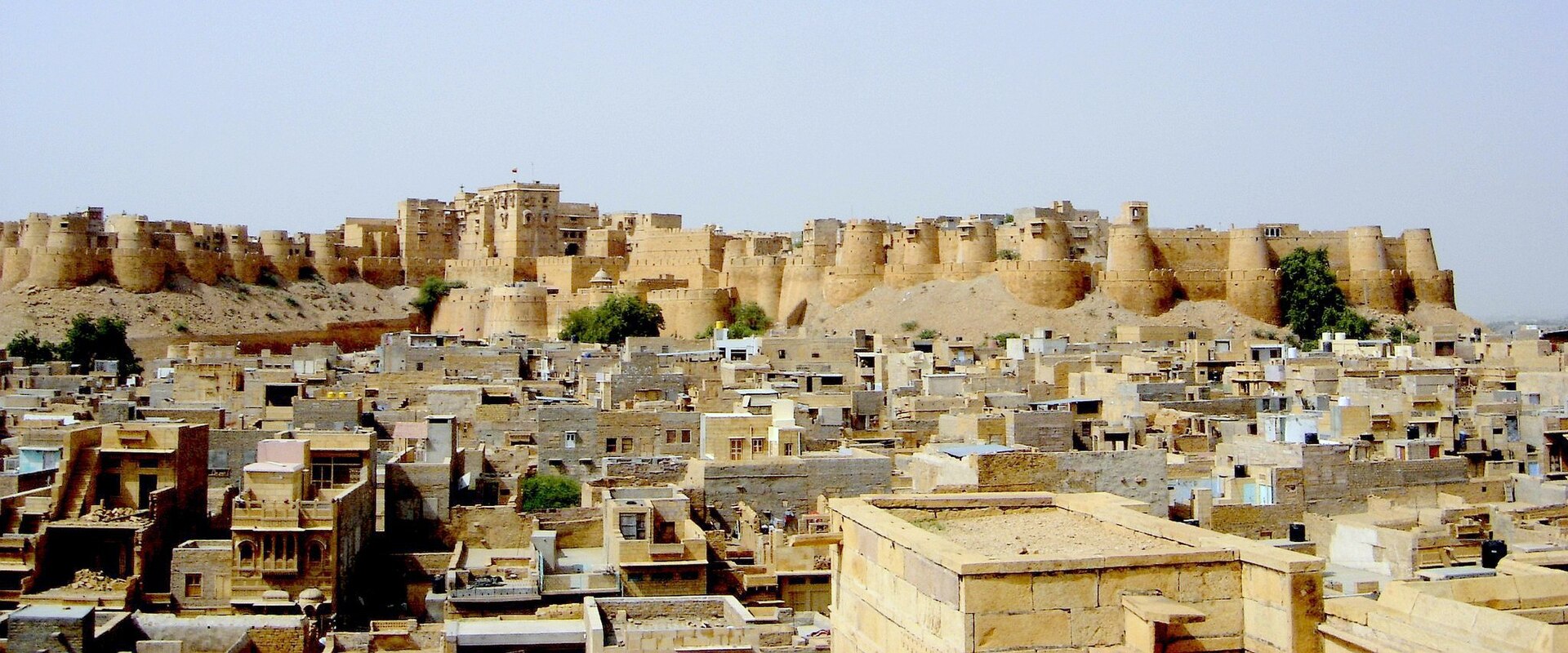
The great fortress of Jaisalmer rises from the sands of the Thar desert upon the triple-peaked hill of Trikuta, a vast pile of yellow sandstone that seems almost to grow out of the desert itself. Built entirely of the local golden stone, the fortress takes on different colors as the light changes through the day, appearing a tawny lion-color under the noonday sun and fading to a glowing honey-gold as the sun sets, giving rise to its famous names, the Golden Fort, Sonar Quila and Swarn Durg.
This extraordinary golden coloring, so perfectly in harmony with the desert that surrounds it, is one of the great glories of Jaisalmer, and the sight of the fortress glowing like living gold against the darkening sky at sunset is one of the most beautiful spectacles in all of India. Rising some seventy-six meters above the surrounding desert, the fortress dominates the landscape for miles around, a golden crown upon the sands, and it is little wonder that it has captured the imagination of travelers, writers, and filmmakers for generations.
The harmony between the golden fortress and the golden desert that surrounds it is one of the most striking aspects of Jaisalmer, for the fort seems not to impose itself upon the landscape but to grow naturally out of it, sharing the very color of the sands. This organic unity of fort and desert is unique among the great fortresses of India, and it gives Jaisalmer a dreamlike quality, as though it were a mirage of gold shimmering upon the horizon. At sunset, when the whole fortress catches fire with golden light, the effect is unforgettable.
The triple-peaked hill of Trikuta on which the fortress stands gave it both its commanding position and, according to some, its sacred character, for such distinctive natural features were often regarded as holy in the traditions of India. Rising from the flat expanse of the desert, the hill provided the only significant height for miles around, and the golden fortress that crowns it can be seen from a great distance across the sands, a beacon and a landmark for the caravans that once crossed the Thar.

Rao Jaisal and the Founding
The great fortress was founded in the year 1156 by Rawal Jaisal, a ruler of the Bhati clan of Rajputs, who moved his capital to the more defensible hill of Trikuta in the heart of the Thar desert. The fortress, and the city that grew up around it, took their name from the founder, becoming Jaisalmer, the hill fort of Jaisal. The choice of this remote desert site, at the crossroads of the great caravan routes, would prove the foundation of the city’s future prosperity and power.
The Bhati Rajputs, who ruled Jaisalmer, were among the proud warrior clans of Rajasthan, and they held their desert kingdom for many centuries, defending it against the great powers that sought to conquer it. From their golden fortress they controlled the trade that passed through the desert, and they built up a wealthy and cultured state in the midst of the arid wastes. The founding of Jaisalmer by Rao Jaisal was the beginning of one of the most remarkable of all the Rajput kingdoms, a golden city in the heart of the desert.
The Bhati Rajputs traced their lineage back through many generations of desert warriors, and they were famed for their skill as horsemen and camel-riders, well suited to the harsh conditions of the Thar. From their new capital at Jaisalmer, they built a kingdom that endured for centuries, controlling the desert and its trade and defending their golden fortress against all comers. The move to Trikuta hill by Rao Jaisal proved a stroke of great wisdom, for the new site combined natural strength with a commanding position on the vital caravan routes.
An interesting footnote to the founding of Jaisalmer is that Rao Jaisal is said to have abandoned an earlier stronghold at Lodhruva in favor of the more defensible hill of Trikuta, and the ruins of that older capital can still be seen nearby. The choice reflects the constant concern of the desert rulers for security in a land of raiders and rival powers, and the wisdom of the choice was proved by the long survival of Jaisalmer as the capital of the Bhati kingdom for many centuries after.
The Living Fort
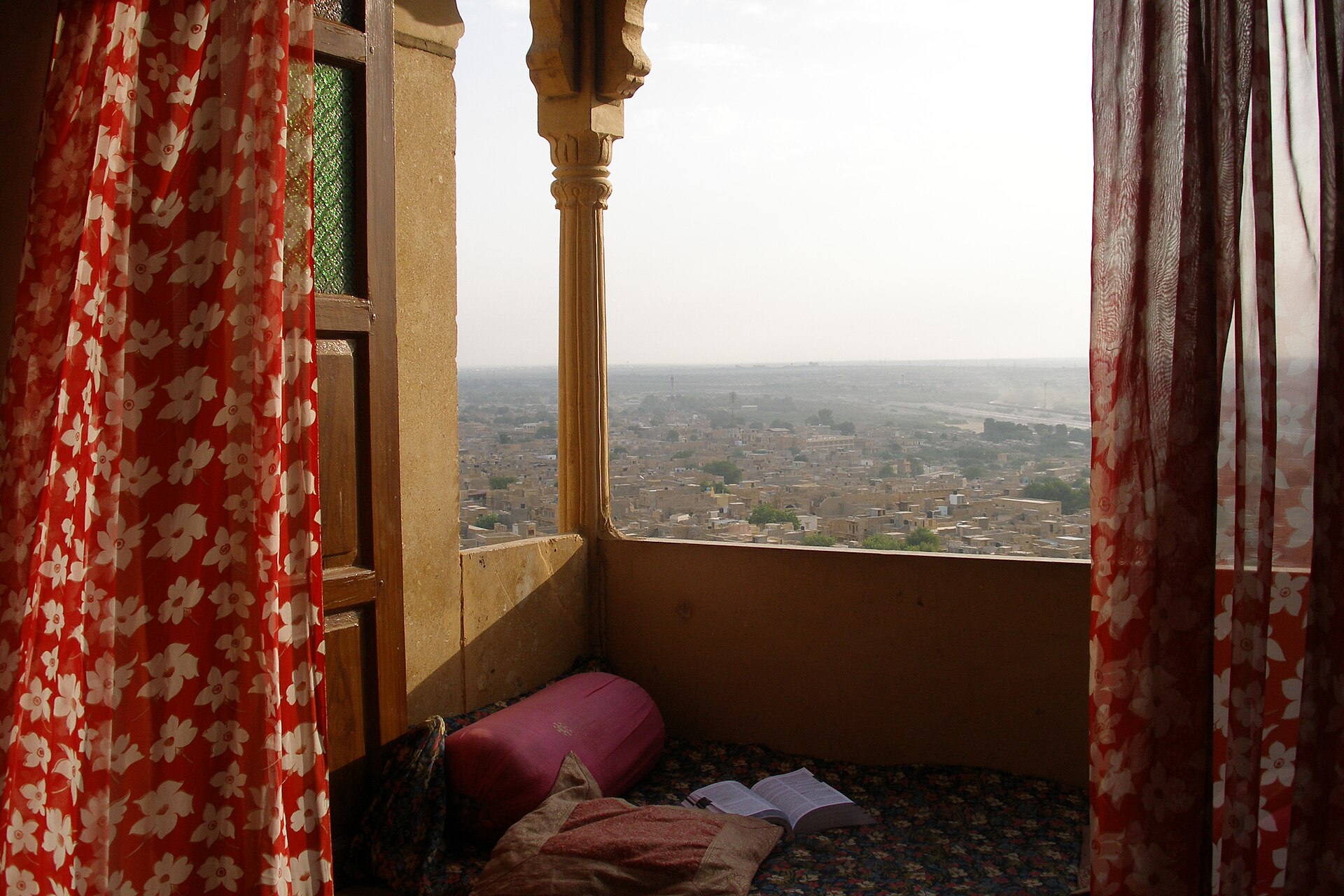
What sets Jaisalmer apart from almost every other great fortress in the world is that it is a living fort, still inhabited by a thriving community that dwells within its ancient walls as their ancestors have done for centuries. While most of the great fortresses of the world are now empty monuments, museums, or ruins, Jaisalmer remains a living town, with some thousands of people making their homes in the houses, lanes, and squares that fill the interior of the fortress.
For much of its history the entire population of Jaisalmer lived within the walls of the fort, and it was only in later centuries that the town began to spread out onto the plain below. Even today, a substantial part of the population lives inside the fortress, and its narrow lanes are full of the bustle of daily life, with homes, shops, temples, and guesthouses all crowded within the golden walls. This living character gives Jaisalmer a warmth and a vitality that no empty monument can match, and it makes a visit to the fortress a uniquely intimate encounter with the living heritage of Rajasthan.
To walk through the lanes of Jaisalmer is to experience something found in almost no other fortress on earth, for here the past is not preserved behind ropes and glass but lived in, day by day, by a real community going about its daily life. Children play in the squares, women draw water and cook, shopkeepers sell their wares, and the smoke of cooking fires rises among the ancient temples and havelis. This living continuity, stretching back more than eight centuries, gives Jaisalmer an atmosphere of extraordinary warmth and authenticity.
The continued habitation of the fort has preserved not only its buildings but its traditions, its crafts, and its way of life, so that Jaisalmer offers a living link to the culture of medieval Rajasthan that no museum could provide. Yet this same habitation places great strain upon the ancient fabric, and the tension between preservation and living use is the central dilemma of the modern fort. To visit Jaisalmer is thus to encounter not a dead monument but a living community wrestling with the challenge of carrying its heritage into the future.

A Fortress on the Caravan Routes
The wealth and the importance of Jaisalmer sprang from its position at the crossroads of the great caravan routes that crossed the Thar desert, linking India with Central Asia, Persia, and beyond, along the ancient network of trade sometimes called the Silk Road. Caravans laden with silk, spices, opium, and other precious goods passed through Jaisalmer on their long journeys across the desert, and the rulers of the fortress grew rich upon the tolls and the trade that flowed through their golden city.
For centuries this caravan trade was the foundation of the prosperity of Jaisalmer, making it a wealthy and cosmopolitan center in the heart of the desert. The merchants of the city amassed great fortunes, which they lavished upon the building of the magnificent havelis and temples that adorn the fortress and the town. The decline of the caravan trade, with the rise of sea routes and the coming of the British, would eventually diminish the fortunes of Jaisalmer, but for many centuries the golden fort was one of the great trading cities of the desert.
The goods that passed through Jaisalmer came from across half the world, from the silks and porcelains of the east to the horses and dried fruits of Central Asia, and the merchants of the golden city grew rich as the middlemen of this vast commerce. The tolls levied on the caravans filled the treasury of the Bhati rulers, while the profits of trade enriched the merchant families, and together this wealth transformed a desert stronghold into one of the great trading cities of India, adorned with monuments worthy of its prosperity.
The decline of the overland caravan trade, as sea routes and later railways drew commerce away from the desert, brought a long period of decline to Jaisalmer, and the golden city, once one of the great trading centers of India, sank into a remote and half-forgotten obscurity. Yet this very decline helped to preserve the fortress and its havelis, which were spared the redevelopment that transformed more prosperous cities, so that Jaisalmer survives today as a remarkably complete example of a medieval desert trading city.

Ninety-Nine Bastions
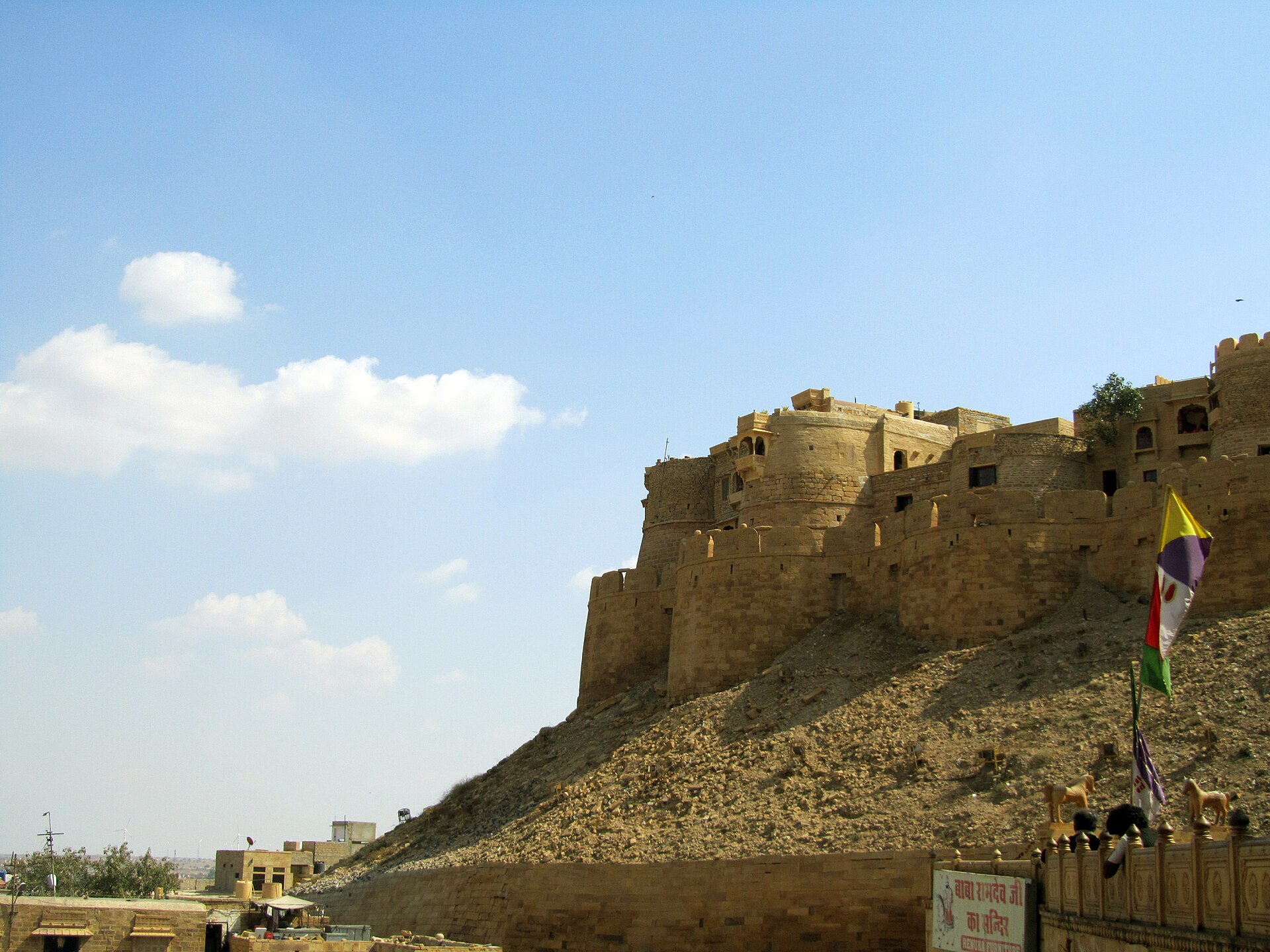
The defences of Jaisalmer, though built of the soft golden sandstone of the desert, were formidable, for the fortress was guarded by no fewer than ninety-nine great bastions ranged around its walls, most of them substantially rebuilt in the seventeenth century. These bastions, projecting from the walls, provided platforms from which the defenders could cover every approach to the fortress with their fire, and they give the golden walls of Jaisalmer their distinctive, rippling silhouette against the desert sky.
The fortress was protected by a triple ring of defences, with an outer wall guarding the approaches, and its position upon the hill of Trikuta added the strength of height to the strength of its walls. Round stones were kept upon the ramparts, ready to be rolled down upon any attacker who sought to climb the hill, and the great gates guarded the winding approach to the summit. For all the softness of its golden stone, Jaisalmer was a stronghold of real strength, well able to defend its wealth against the raiders and armies of the desert.
The soft golden sandstone of which Jaisalmer is built, so easily worked into the delicate carving that adorns its temples and havelis, was also, paradoxically, a source of vulnerability, for it is a softer and weaker stone than the granite or hard sandstone of many other Indian forts. Yet for centuries the walls and bastions of Jaisalmer, well maintained and stoutly defended, proved equal to their task, and the fortress successfully resisted many an attack. The ninety-nine bastions, ranged around the golden walls, remain one of the most distinctive features of the fort.

The Four Great Gates
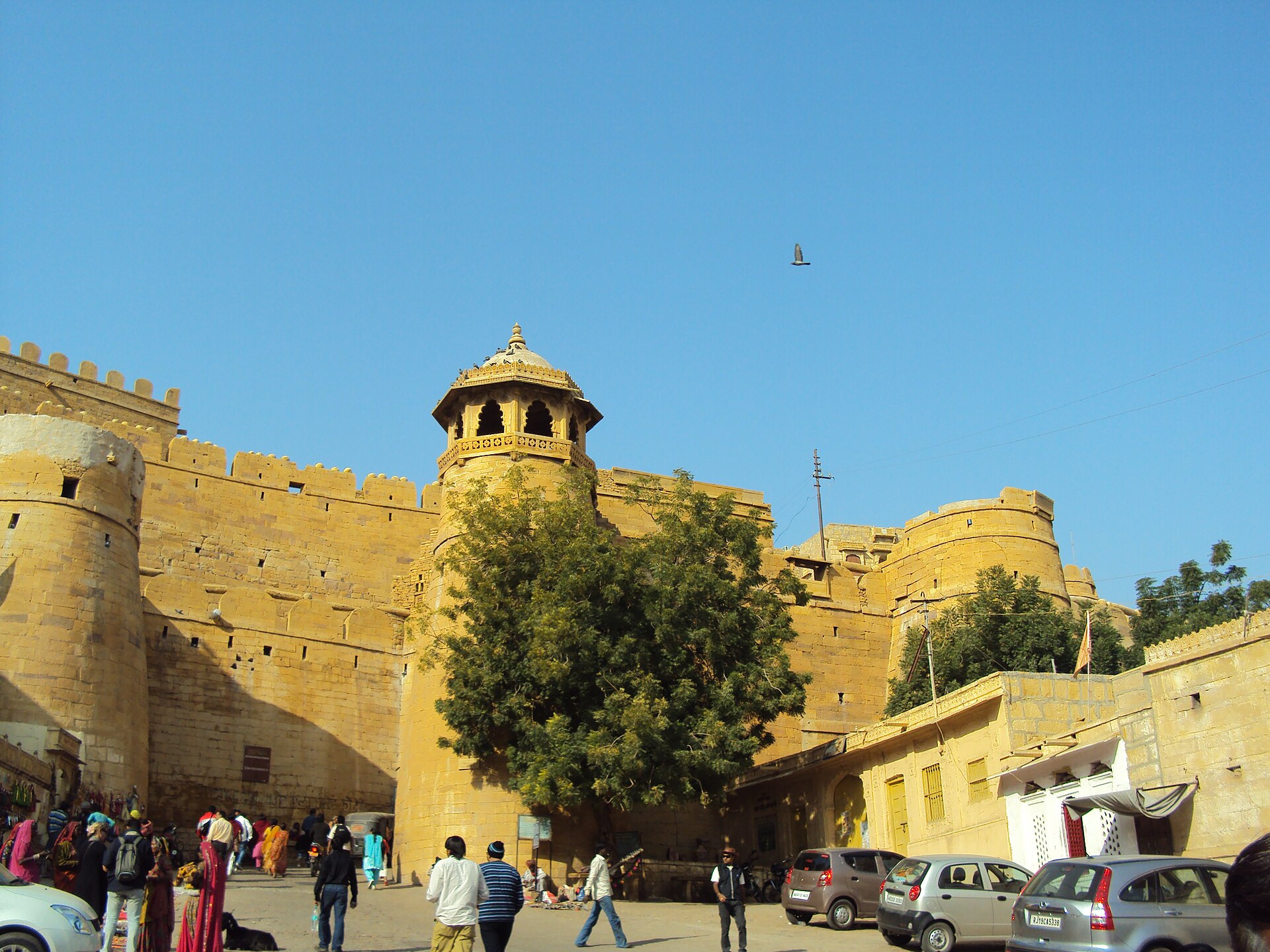
The approach to the interior of Jaisalmer leads up a winding path and through a series of four massive fortified gates, or pols, each a formidable obstacle guarding the way to the heart of the fortress. These great gates, built of the golden sandstone like the rest of the fort, forced any attacker to fight his way through one barrier after another, climbing the steep and twisting approach all the while under the fire of the defenders above.
The passage up through the four gates leads finally into the main square of the fortress, the heart of the living town within the walls, from which the narrow lanes radiate out among the houses, temples, and havelis. The gates were not only defences but also the ceremonial entrances to the fortress, and passing through them today, amid the bustle of the living town, the visitor follows the same path that merchants, soldiers, and princes have trodden for more than eight centuries. The four great gates are the thresholds of the golden city.
The narrow, angled passages between the gates were designed to slow any attacking force and to prevent the use of elephants or rams against the doors, while the defenders above rained down missiles upon the attackers below. This carefully engineered approach, winding up the hill through gate after gate, was the key to the defence of the fortress, and it remains today one of the most atmospheric parts of a visit to Jaisalmer, as the visitor climbs the same steep and twisting path into the heart of the living golden city.
The Raj Mahal Palace
At the heart of the fortress stands the Raj Mahal, the royal palace, which was the residence of the Maharawals, the rulers of Jaisalmer, for many centuries. Rising above the main square of the fortress, the palace is a fine example of the desert architecture of Rajasthan, built of the golden sandstone and adorned with the intricate carving and the delicate balconies and screens that are the glory of the Jaisalmer style.
From the balconies and terraces of the palace, the rulers could survey the fortress and the town, and gaze out over the desert that stretched away to the horizon on every side. The palace served as the center of government and of court life for the kingdom of Jaisalmer, and its rooms and halls were the setting for the ceremonies and the daily business of the Bhati rulers. Today the Raj Mahal is open to visitors as a museum, offering a glimpse into the royal life of the desert kingdom and a magnificent view over the golden fortress and the sands beyond.
The architecture of the Raj Mahal, with its delicately carved balconies, its projecting windows, and its screens of pierced stone, reflects the distinctive style of Jaisalmer, in which the soft golden sandstone was worked into a filigree of astonishing intricacy. These carved screens, known as jalis, allowed the air to circulate and the light to filter through while providing shade and privacy, an ingenious response to the fierce climate of the desert. The palace is a masterpiece of this desert architecture, combining beauty with practicality in the harsh environment of the Thar.

The Jain Temples
Among the greatest treasures of Jaisalmer are its Jain temples, a group of seven exquisitely carved shrines built within the fortress between the twelfth and sixteenth centuries by the wealthy Jain merchant community. Built, like everything else in Jaisalmer, of the golden sandstone, these temples are covered from floor to ceiling with the most intricate and delicate carving, a profusion of figures, patterns, and ornament that transforms the hard stone into something resembling fine lace.
The Jain temples of Jaisalmer are among the finest examples of the sculptor’s art in all of Rajasthan, and their interiors, cool and dim after the glare of the desert sun, are a wonder of carved pillars, ceilings, and shrines. The Jain community, grown wealthy through the caravan trade, lavished their fortunes upon these temples, and the result is a group of monuments of surpassing beauty. Together with the Laxminath temple dedicated to the Hindu gods, they reflect the deep and varied religious life of the golden fortress.
The Jain religion, with its deep commitment to non-violence and its strong association with the merchant and trading communities of India, flourished at Jaisalmer thanks to the wealth of its adherents, and the temples they built are among the glories of the fortress. The interiors, with their forests of carved pillars and their intricately worked ceilings, create an atmosphere of serene beauty, a world apart from the harshness of the desert outside. These temples are a testament to the piety and the prosperity of the Jain community that has been part of the life of Jaisalmer for many centuries.
The presence of these magnificent temples within a working fortress, surrounded by the homes and shops of the living town, is one of the distinctive features of Jaisalmer, where the sacred and the everyday exist side by side as they have done for centuries. Worshippers still come to the temples to perform their devotions, and the sound of temple bells mingles with the bustle of the lanes. In this, as in so much else, Jaisalmer preserves a way of life that has vanished from almost everywhere else in the world.

The Golden Havelis
One of the greatest glories of Jaisalmer, both within the fortress and in the town below, are its havelis, the great mansions of the wealthy merchants, adorned with some of the most exquisite stone carving to be found anywhere in the world. Built of the golden sandstone and covered with intricately carved facades, balconies, and screens, these havelis are monuments to the fabulous wealth that the caravan trade brought to the merchants of Jaisalmer.
Among the most famous of the havelis are the Patwon ki Haveli, a great complex of five mansions built by a wealthy trading family, and the Nathmal ki Haveli, said to have been built by two brothers working on opposite sides, so that the two halves are subtly different, and adorned with carved elephants at its entrance. The delicacy and the profusion of the carving on these havelis, transforming the golden stone into a filigree of astonishing intricacy, make them among the great masterpieces of the decorative architecture of India.
The havelis of Jaisalmer represent the very summit of the art of stone carving in the desert, and the skill of the craftsmen who created them, working the soft golden sandstone into facades of breathtaking delicacy, has never been surpassed. Every surface of these mansions seems to be covered with carving, from the great projecting balconies to the finest details of the screens and brackets, and the effect is one of almost unbelievable richness. The havelis are the pride of Jaisalmer, and they draw admirers from all over the world to marvel at their beauty.
The story of the Nathmal ki Haveli, said to have been built by two brothers who worked simultaneously on the two halves without consulting each other, resulting in a facade that is similar but not identical on its two sides, is one of the charming tales that attach to the great mansions of Jaisalmer. Whether or not the story is literally true, the subtle asymmetry of the haveli, and the friendly rivalry it suggests, add to the human interest of these magnificent buildings, which are as full of stories as they are of carving.

Alauddin Khalji and the Jauhar
Like the other great Rajput fortresses of Rajasthan, Jaisalmer knew its share of war and tragedy, and the most famous of its sieges came at the very end of the thirteenth century, around the year 1299, when the fortress was besieged by the powerful sultan of Delhi, Alauddin Khalji. The siege is said to have lasted for years, and when at last the defenders, reduced to starvation, could hold out no longer, the terrible rite of jauhar was performed.
As at Chittorgarh, the women of Jaisalmer, rather than fall into the hands of the enemy, are said to have ended their lives in the flames of the jauhar, while the men rode out to die in a final charge against the besiegers. This was the first of more than one such tragedy in the history of the fortress, for the golden city endured further sieges and further sacrifices in the centuries that followed. The jauhars of Jaisalmer, like those of Chittorgarh, are remembered as supreme instances of the Rajput code of honor, in which death was chosen before dishonor.
The tradition of jauhar and saka, the mass self-immolation of the women and the final suicidal charge of the men, was the ultimate expression of the Rajput code of honor, undertaken when defeat had become certain and capture inevitable. Terrible as these events appear to modern eyes, they were regarded by the Rajputs as the supreme act of courage and honor, a refusal to submit to the conqueror even at the cost of life itself. The jauhars of Jaisalmer, like those of the other great Rajput forts, are remembered with a mixture of horror and reverence as instances of this tragic and heroic ideal.

The Merchant Wealth
The prosperity of Jaisalmer rested not only upon the tolls that its rulers levied on the caravan trade but upon the enterprise of its merchants and bankers, who grew immensely wealthy through commerce and finance, and whose fortunes financed the building of the city’s finest monuments. These merchants, many of them belonging to the Jain community, were among the great traders and financiers of India, and their wealth flowed back into the golden fortress in the form of temples, havelis, and works of art.
The great havelis of Jaisalmer, with their exquisitely carved facades, are the most visible monuments of this merchant wealth, and they testify to the sophistication and the cultural ambition of the trading families who built them. The merchants of Jaisalmer were patrons of the arts as well as men of business, and the beauty of the golden city owes as much to their wealth and their taste as to the power of its rulers. In Jaisalmer, the fortress of the warrior and the mansion of the merchant stand side by side, both built of the same golden stone.
The merchants and bankers of Jaisalmer were part of a wider network of trading and financial communities that spanned the whole of India and beyond, and their letters of credit, it is said, were honored in cities as distant as the great trading centers of Central Asia. This sophisticated commercial culture, and the vast wealth it generated, made Jaisalmer far more than a mere desert fortress, transforming it into a cosmopolitan center of trade and finance whose influence reached across continents. The golden city was a hub of the medieval world economy.
The wealth of the Jaisalmer merchants also supported a rich cultural life, patronizing music, painting, and the crafts, and making the golden city a center of art as well as of commerce. The refined taste of these trading families is written in the exquisite carving of their havelis and in the treasures they accumulated, and their legacy is one of the great glories of the fortress. In Jaisalmer, the merchant was not merely a man of business but a patron of beauty, and the golden city owes much of its splendor to their enterprise and their taste.

The Living Fort in Peril
The unique character of Jaisalmer as a living fort, still inhabited by thousands, is also the source of its greatest peril, for the fortress, built of soft sandstone upon a hill of weak sedimentary rock, was never designed to bear the strains of a modern population with its demand for water and its consequent seepage and drainage. In recent decades, water seepage from modern plumbing has weakened the ancient foundations, and portions of the fortress, including part of the queen’s palace, have collapsed.
These threats have placed Jaisalmer on the watch lists of international conservation organizations, and major efforts have been made, with the support of funds from around the world, to address the problems of water, drainage, and structural decay. The challenge of preserving a living fort, balancing the needs of its inhabitants with the fragility of its ancient fabric, is a difficult and delicate one, and the future of the golden fortress depends upon its successful resolution. The very life that makes Jaisalmer so special is also the greatest danger to its survival.
The efforts to save Jaisalmer, balancing the needs and rights of the community that lives within the walls with the imperative of preserving the fragile fabric of the fortress, represent one of the great challenges of heritage conservation in the modern world. Solutions have focused on managing water and drainage, repairing the damaged structures, and finding ways for the living town to continue without destroying the monument that shelters it. The future of the golden fort depends upon the success of these efforts, and upon the care of those who love and inhabit it.
The plight of Jaisalmer has drawn the attention of conservationists and heritage organizations from around the world, and the fort has featured on international lists of endangered monuments, spurring efforts and funding to address its problems. The challenge is a delicate one, for the fort cannot simply be emptied of its inhabitants and turned into a museum without destroying the very living character that makes it unique. Finding a way for the community and the monument to survive together is the great task facing all who care for the golden fort.
Jaisalmer Today
Today Jaisalmer Fort is one of the most beloved and most visited of all the sights of Rajasthan, drawing hundreds of thousands of visitors each year to marvel at its golden walls, to wander its living lanes, and to admire its temples, palaces, and havelis. The fortress is celebrated around the world for its beauty and its unique living character, and it was made famous to a wide audience by the great filmmaker Satyajit Ray, whose film Sonar Kella, the Golden Fortress, was set within its walls.
In the year 2013 Jaisalmer was inscribed upon the list of World Heritage Sites, as part of the group of Hill Forts of Rajasthan, in recognition of its outstanding importance as an example of Rajput desert architecture and as one of the great living forts of the world. As a golden city rising from the sands of the Thar, still full of life after more than eight centuries, Jaisalmer holds a place of special affection among the historic sites of India.
The enduring magic of Jaisalmer, a golden city rising from the sands of the desert, still full of life after more than eight centuries, has made it one of the most romantic and most beloved destinations in all of India. It is a place that seems to belong as much to legend as to history, and it never fails to enchant the traveler who comes upon it across the desert. In the golden fort of Jaisalmer, the whole romance of the desert kingdom of Rajasthan is gathered into a single unforgettable monument.
The fame of Jaisalmer has spread far beyond India, and the golden fort has become a symbol of the romance of the desert and of the rich heritage of Rajasthan, drawing travelers, artists, and filmmakers from around the world. Yet for all its fame, the fort remains, at its heart, a living community, and the visitor who wanders its lanes is as likely to encounter the ordinary life of its inhabitants as the grand monuments of its past. It is this combination of grandeur and intimacy, of history and living present, that makes Jaisalmer so uniquely enchanting.
If you would like to see exactly where this golden fortress stands upon the map, you can find it here:
View on Google Maps: 26.9127, 70.9124
From its hill of Trikuta in the heart of the Thar desert, Jaisalmer has glowed golden above the sands for more than eight hundred years, and it stands there yet, the living Golden Fort of Rajasthan.

Castles Nearby
If the magic of Jaisalmer has enchanted you, you may enjoy these other great forts of Rajasthan:
- Mehrangarh Fort: The Mighty Fort of the Sun above Jodhpur
- Chittorgarh Fort: The Largest Fort in India
The Golden Fort of the Thar
Jaisalmer Fort is one of the most magical of all the fortresses of the world, the Golden Fort of the Thar desert, a great citadel of yellow sandstone that glows like living gold in the light of the setting sun. As one of the very few living forts on earth, still home to a thriving community within its ancient walls, it is a place of unique character and charm, where the past and the present are woven together as in no other fortress. Its temples, palaces, and havelis make it a treasure-house of the art and history of Rajasthan.
If you should travel to India, Jaisalmer is one of the great sights of Rajasthan, a fortress that seems to belong to the world of dreams and fairy tales. To wander its narrow lanes, still full of life, to admire the carved havelis and the golden Jain temples, and to watch the fort glow at sunset from the desert beyond is an unforgettable experience. Jaisalmer is a living monument to the history and the beauty of the desert kingdom, and it deserves its place among the most cherished fortresses on earth.
Whether you come for the golden glow of the fort at sunset, for the exquisite carving of its havelis and temples, or for the unique experience of a fortress that is still a living town, Jaisalmer will enchant you as few places on earth can, and you will carry away the memory of the Golden Fort of the Thar as one of the most magical experiences of any journey to India.
You May Like

Mafra, the Palace a King Built From a Vow