Rising from an isolated hill of sandstone that towers above the city that shares its name, in the heart of central India, Gwalior Fort is one of the most magnificent and most storied of all the strongholds of the subcontinent. So formidable was its position, and so proud its history, that the founder of the Mughal empire, the emperor Babur, described it as the pearl among the fortresses of India, while others called it the Gibraltar of India for its impregnable strength. It is a fortress of painted palaces and ancient temples, of colossal rock-carved sculptures and legends reaching back to the dawn of history.
In this article you are invited to explore the history and the architecture of this remarkable fortress, from the legend of its founding by a king cured of leprosy, through the succession of great dynasties that held it, to the exquisite palaces, temples, and sculptures that adorn its summit. Gwalior is a fortress of extraordinary richness, where the arts of the palace, the temple, and the sculptor’s chisel are gathered upon a single great hill, and it stands as one of the supreme monuments of the history of central India.
In This Article
- The Pearl among the Fortresses
- Suraj Sen and the Sage Gwalipa
- Fortress of Many Dynasties
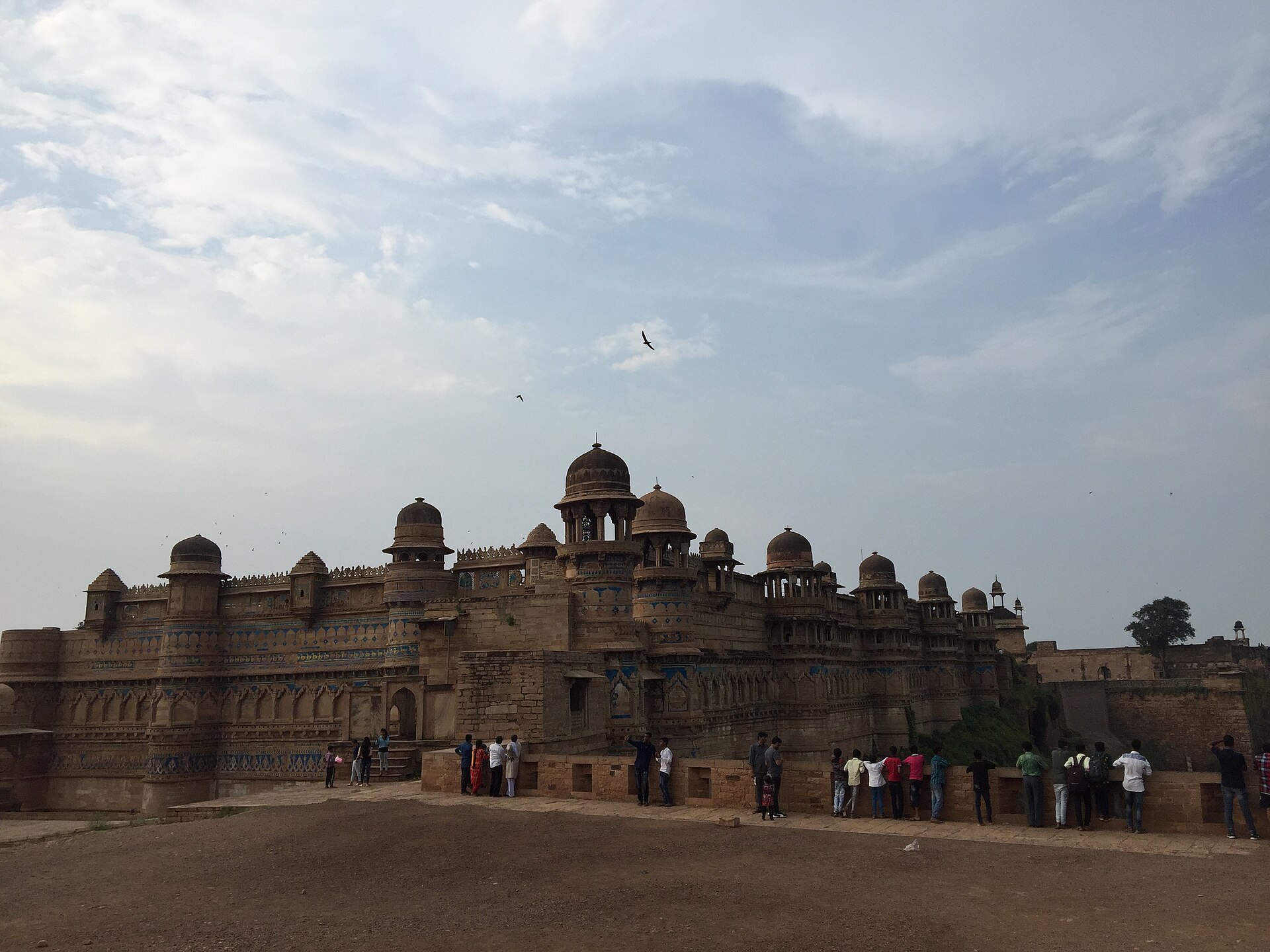
- The Man Mandir Palace
- The Blue Tile Facade
- The Elephant Gate
- The Teli ka Mandir
- The Sas Bahu Temples
- The Gujari Mahal and Queen Mrignayani
- The Jain Rock Sculptures
- The Temple of Zero
- Prison of Princes and Gurus
- Gwalior Today
- Castles Nearby
- The Pearl among the Fortresses of India
The Pearl among the Fortresses
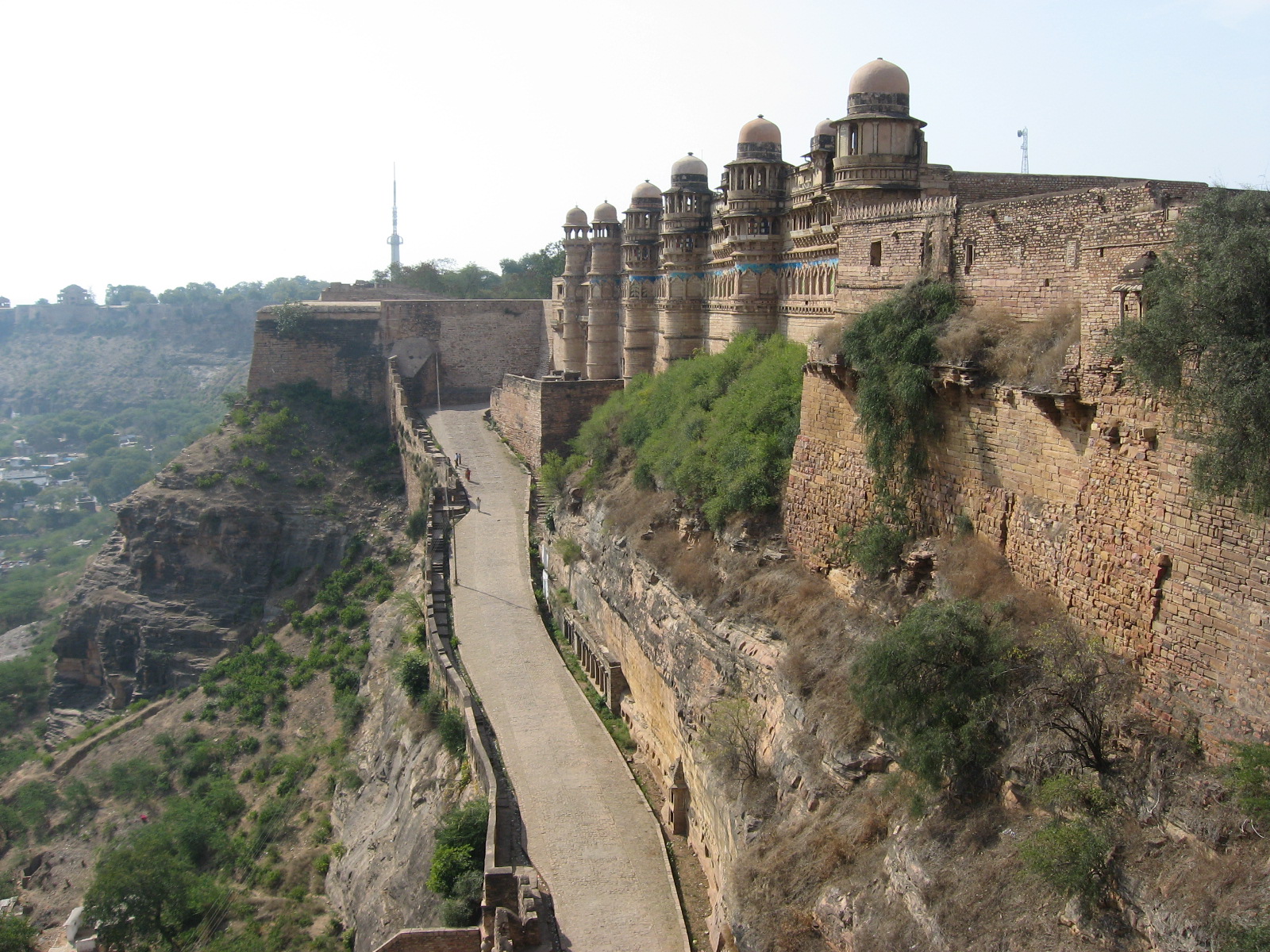
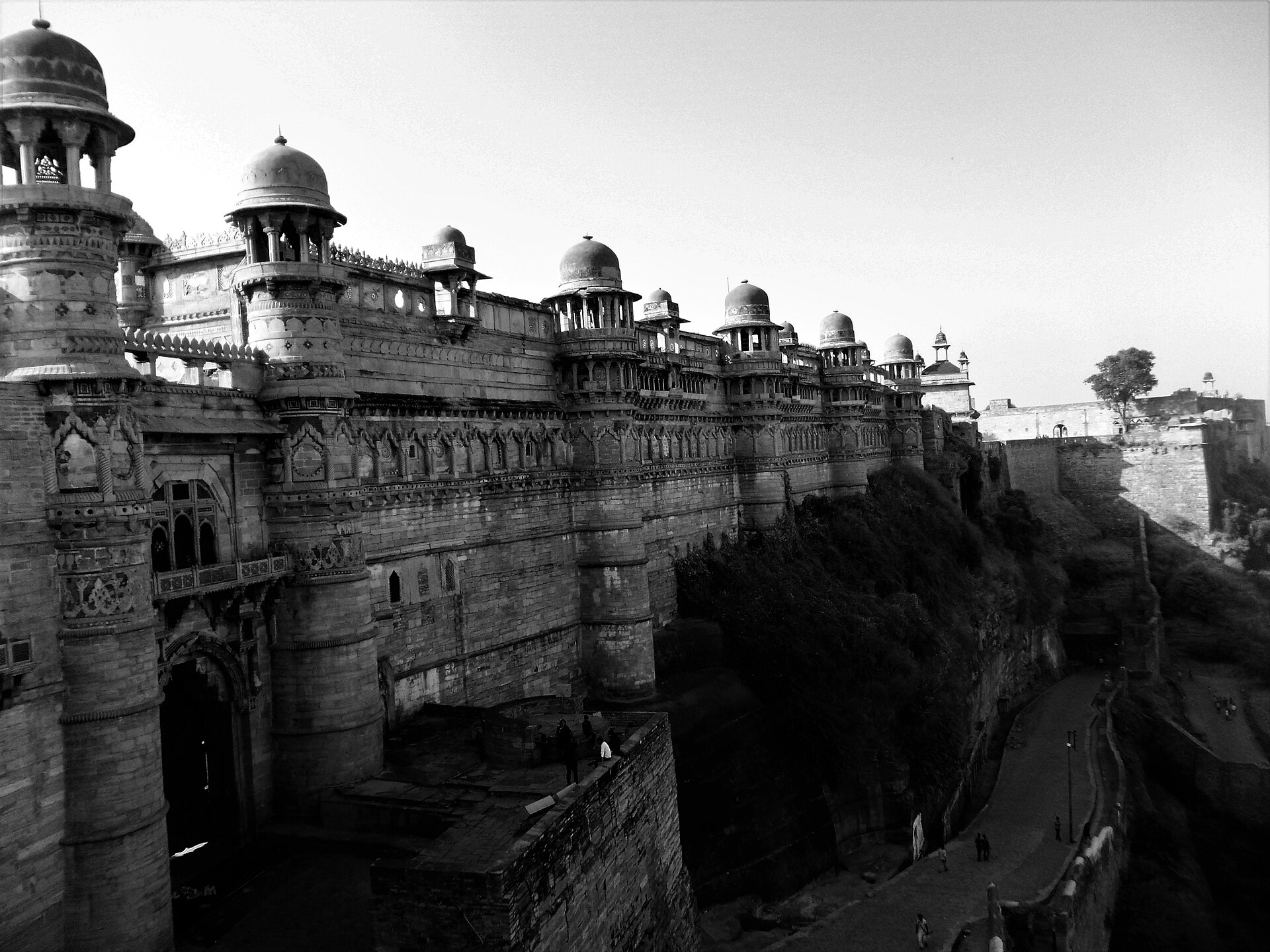
The great fortress of Gwalior occupies one of the most commanding natural positions of any stronghold in India, crowning an isolated hill of Vindhyan sandstone that rises abruptly, some hundred meters, from the plain and the city below. The hill, known anciently as Gopachal, stretches for about a mile and a half in length, its sides falling away in near-vertical precipices that made the fortress upon its summit all but impregnable to any attacker.
It was this tremendous natural strength that earned Gwalior its fame and its praise, for the emperor Babur, the founder of the Mughal dynasty, called it the pearl among the fortresses of India, and later generations dubbed it the Gibraltar of India. From its lofty summit the fortress dominates the surrounding country for miles, and its great walls, following the edge of the cliffs, enclose a whole world of palaces, temples, and sculptures upon the plateau above. Gwalior is a fortress-mountain, a stronghold whose strength lies as much in its rock as in its walls.
The comparison of Gwalior to Gibraltar, the great rock-fortress guarding the entrance to the Mediterranean, captures perfectly the sense of an impregnable stronghold set upon a commanding height, and it reflects the awe that the fortress inspired in all who beheld it. The near-vertical cliffs on every side meant that the fortress could be approached only by a few steep and easily defended paths, and the great walls that crown the edge of the plateau completed the natural defences. For much of its history, Gwalior was reckoned all but impossible to take by storm.
The fortress is well supplied with water, a vital consideration for any hilltop stronghold, and its ancient tanks and step-wells, including the great Assi Khamba ki Baoli, the step-well of eighty pillars, could hold enough water to sustain a garrison of many thousands through a long siege. This abundance of water, combined with the natural strength of the hill and the great walls, made Gwalior able to withstand the longest investment, and it was one of the reasons the fortress so rarely fell to direct assault. Water, walls, and cliffs together made it truly the Gibraltar of India.
Suraj Sen and the Sage Gwalipa
The founding of Gwalior is wrapped in a charming legend that gives the fortress its very name. According to the tale, a king named Suraj Sen was afflicted with the terrible disease of leprosy, and he was cured when a holy sage named Gwalipa gave him water to drink from a sacred pool upon the hill. In gratitude, the king built walls around the site and named the fortress after the sage who had healed him, and so Gwalior received its name.
This legend, linking the founding of the fortress to a miracle of healing and to the blessing of a holy man, reflects the deep antiquity and the sacred character of the site, which has been a place of importance since at least the sixth century and probably long before. The sacred pool of the legend, and the temples and shrines that crown the hill, mark Gwalior as a holy place as well as a mighty fortress, and the tale of Suraj Sen and Gwalipa has been cherished for many centuries as the story of its origin.
The legend of Suraj Sen and the sage Gwalipa is more than a mere origin story, for it reflects the enduring association of the hill with healing, holiness, and the blessing of the divine, an association expressed in the many temples and sacred sites that crown the fortress. The sacred pool where the king was cured, known as the Suraj Kund, can still be seen within the fortress, a tangible link to the ancient legend. In this way the story of the founding is woven into the very fabric of the place, and it continues to be told to every visitor who climbs the hill.
The name Gwalior, derived from that of the sage Gwalipa, has been borne by the fortress, the city, and later the princely state for many centuries, a lasting memorial to the holy man of the legend. Few fortresses carry so charming a story of their origin, and the tale of the leper king and the compassionate sage sets the tone for the whole history of a place that has been at once a mighty stronghold and a center of faith and healing. It is a story that captures something of the special character of Gwalior among the fortresses of India.
Fortress of Many Dynasties
The great strategic value of Gwalior ensured that, across its long history, it was held and fought over by a succession of the great powers of India. In the early Middle Ages it was held by the Pratiharas and other Hindu dynasties, before passing, in the turbulent centuries that followed, through the hands of the Delhi Sultanate, the Tomar rajas, the Mughal emperors, the Maratha Scindias, and finally the British. Each of these powers left its mark upon the fortress, adding to its buildings and its history.
This long succession of rulers reflects the central position of Gwalior in the history of northern and central India, standing as it did upon the routes that linked the great regions of the subcontinent. The fortress was a prize that every great power sought to control, and its possession was a mark of dominance over the heartland of India. The layered history of Gwalior, written in the buildings of its many rulers, makes it one of the richest and most complex of all the historic sites of the country.
The frequent changes of ruler at Gwalior, particularly in the turbulent centuries of the later Middle Ages and the early modern period, reflect the strategic importance of the fortress and the fierce competition among the great powers of India to control it. From the Hindu dynasties of the early period, through the Muslim sultans and emperors, to the Maratha Scindias and the British, each new master valued Gwalior as a key to the domination of central India. The fortress thus stands as a witness to the whole sweep of Indian history, from ancient times to the age of independence.
The final chapter of Gwalior’s history as a contested fortress came in the great uprising of 1857, when the citadel played a part in the dramatic events of that year, and it was here, in the fighting around Gwalior, that the legendary Rani of Jhansi, one of the heroines of the uprising, met her death. After the uprising was suppressed, the British eventually handed the fortress to the Scindia dynasty, who held it until Indian independence. The events of 1857 gave Gwalior a place in the stirring history of the struggle against British rule.
The Man Mandir Palace
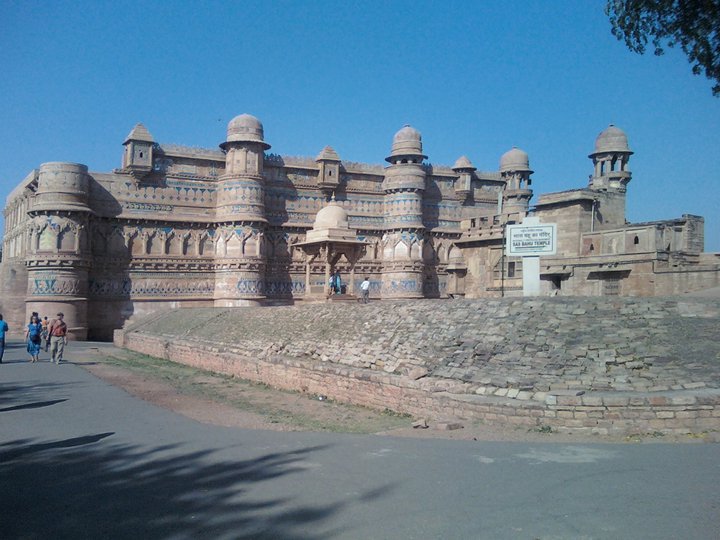
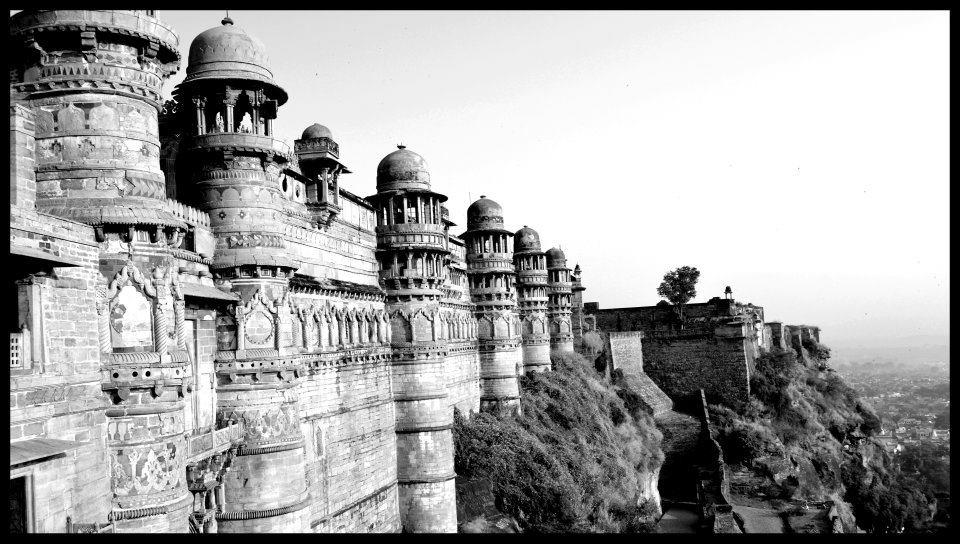
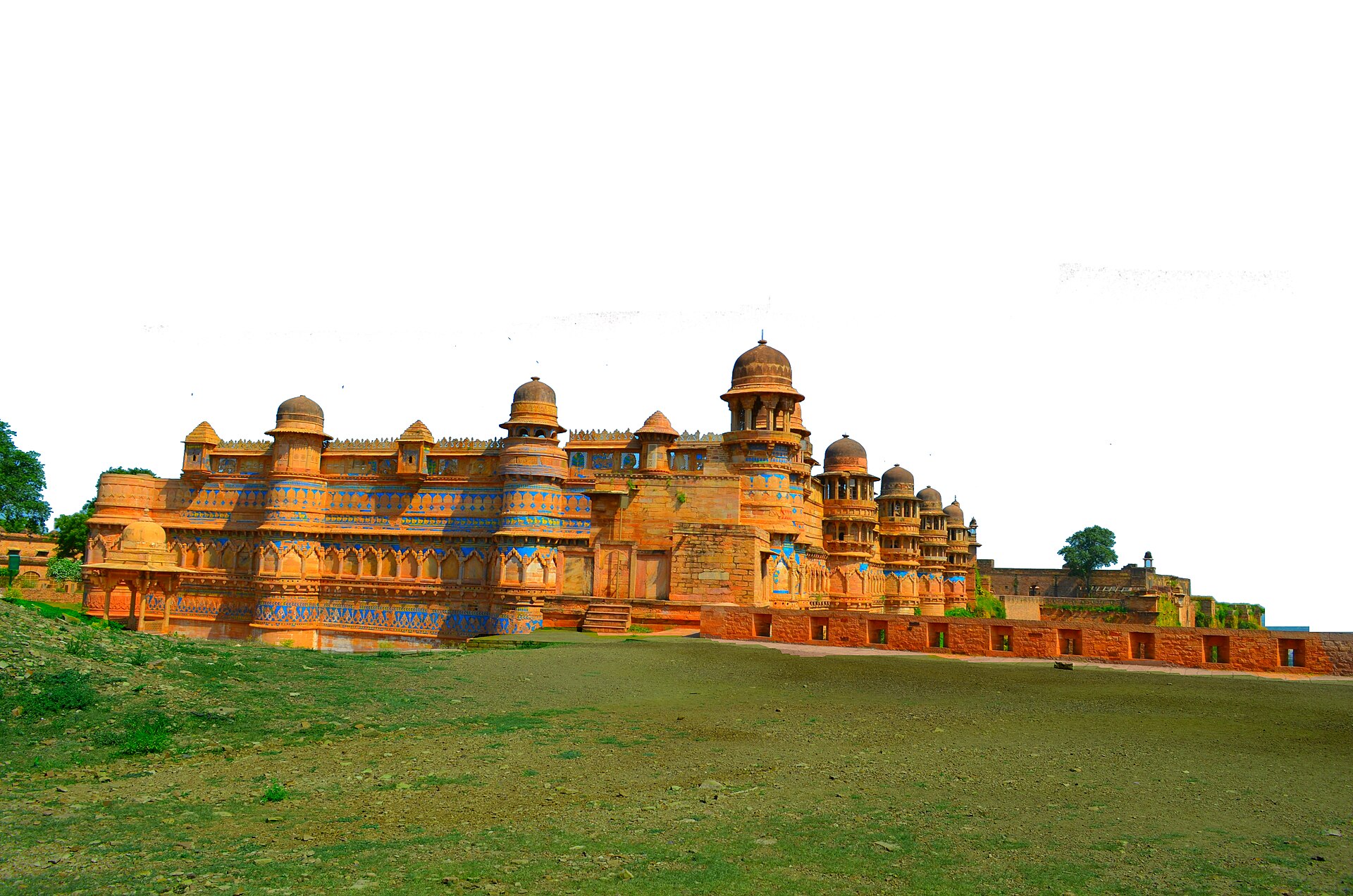
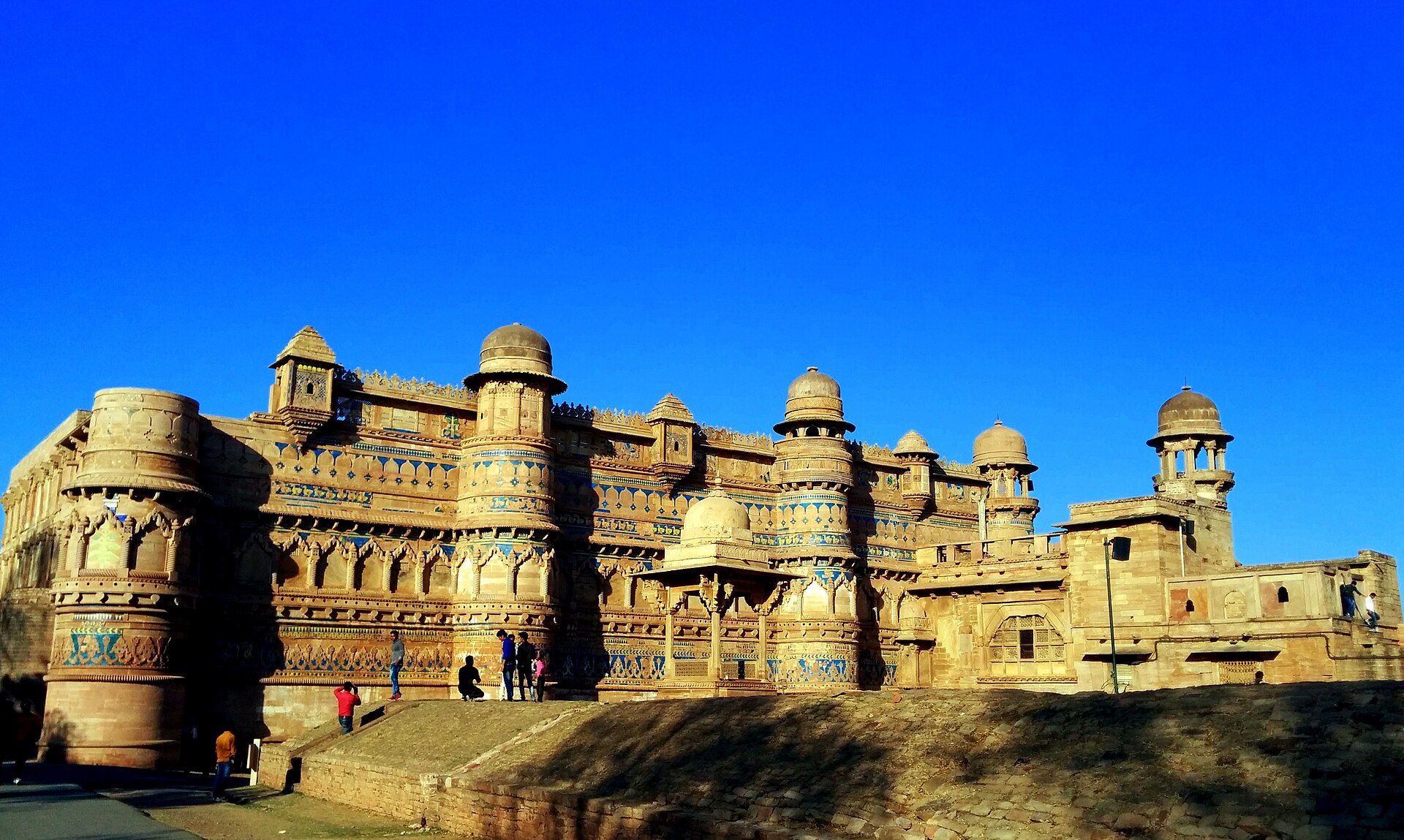
The crowning glory of Gwalior, and one of the finest palaces in all of India, is the Man Mandir, built by the great Tomar ruler Raja Man Singh Tomar in the years around 1486 to 1516. This magnificent palace, sometimes called the Painted Palace, is a masterpiece of pre-Mughal Hindu architecture, and its long facade, rising above the walls of the fortress, is one of the most beautiful and distinctive sights in the whole of India.
Raja Man Singh Tomar was the greatest of the Tomar rulers of Gwalior, a builder, a patron of the arts, and a lover of music, and the palace he raised reflects his refined taste and his ambition. Its rooms and courtyards, arranged on several levels, include chambers designed for the pleasures of the court, and the whole is adorned with exquisite decoration. The Man Mandir is the heart of the fortress and the supreme expression of the golden age of Tomar rule, a palace of surpassing beauty crowning the great hill of Gwalior.
The Man Mandir is celebrated not only for its beauty but for its ingenious design, which included cool underground chambers where the royal family could retreat from the fierce heat of the Indian summer, and clever arrangements for light and air. It was in these very chambers, in later times, that some of the most illustrious prisoners of the fortress were held and even executed. The palace thus combines, in a single structure, the height of artistic refinement with the grimmer realities of the fortress’s role as a prison, a duality that runs through much of its history.
Raja Man Singh Tomar was, above all, a great patron of music, and it was under his rule that Gwalior became one of the foremost centers of Indian classical music, developing a distinctive style that would influence the whole tradition. The palace he built was designed as much for the pleasures of music and the court as for defence, and its cool chambers and elegant courtyards were the setting for the artistic flowering of his reign. In the Man Mandir, the martial strength of the fortress was joined to the refined delights of a cultivated and music-loving court.
The Blue Tile Facade
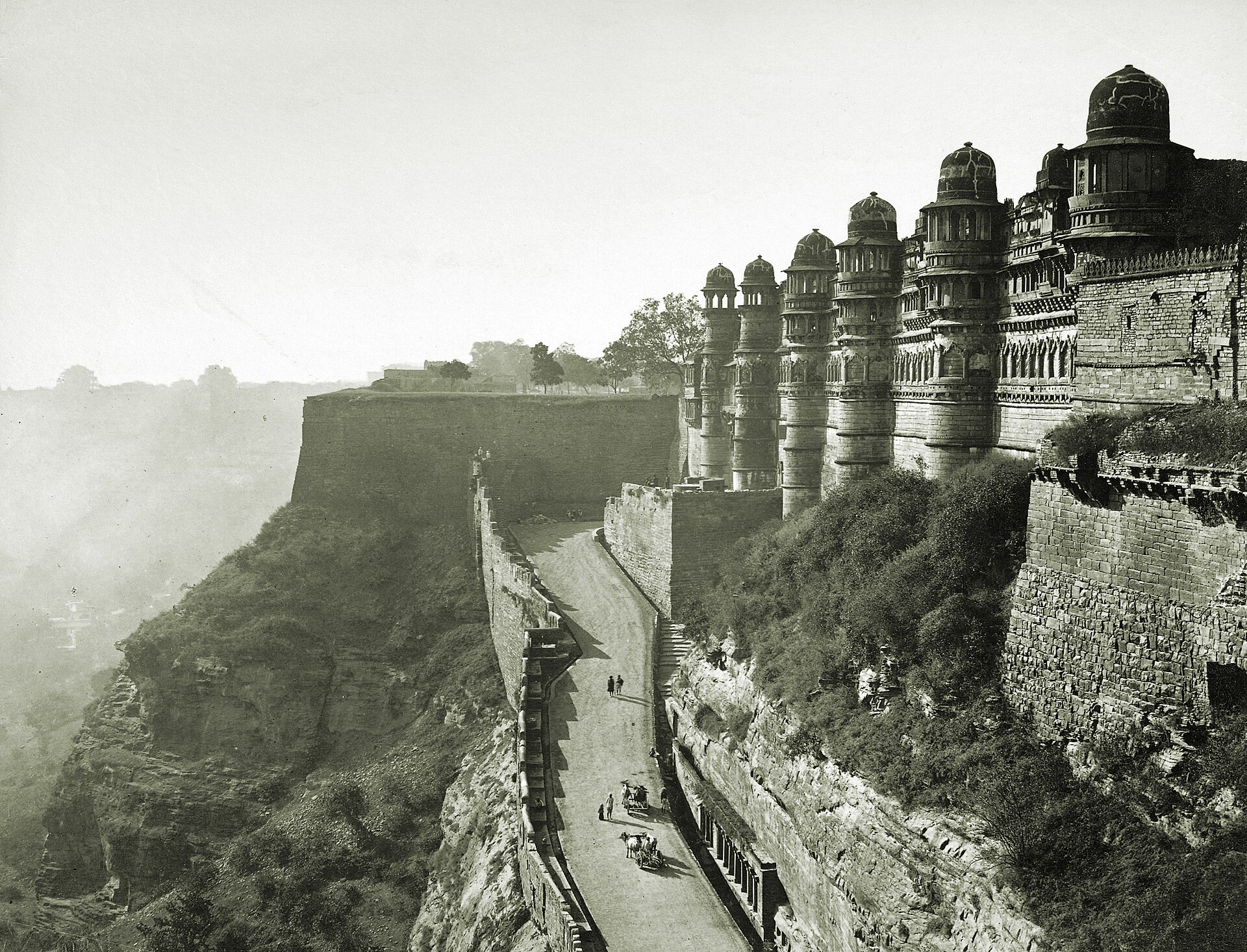
The most celebrated feature of the Man Mandir is its facade, adorned with brilliant mosaics of glazed tiles in shades of turquoise blue, green, and yellow, arranged in patterns of ducks, elephants, peacocks, and geometric designs. These tiles, glowing with color against the golden sandstone of the palace, give the Man Mandir its distinctive and beautiful appearance, and they are among the finest surviving examples of the tile-work of medieval India.
The blue tiles of Gwalior have become the very emblem of the fortress, and the sight of the long facade of the Man Mandir, its tiles catching the sun, is one of the most photographed and most beloved images of the citadel. The use of such brilliant color upon the exterior of a building was a distinctive feature of the architecture of the age, and it reflects the wealth and the artistic ambition of Raja Man Singh Tomar. The tiled facade of the Man Mandir is a jewel of Indian decorative art, and it never fails to delight the visitor.
The technique of glazed tile-work, which reached such heights at Gwalior, was one that had come to India from the Islamic world of Persia and Central Asia, and its adoption by a Hindu ruler like Man Singh Tomar reflects the rich cultural exchange of the age. The brilliant blues and greens of the tiles, so different from the natural tones of stone, brought a new kind of beauty to Indian architecture, and the facade of the Man Mandir is one of its earliest and finest expressions. The tiles have been carefully restored over the years to preserve their original brilliance.
The motifs of the tiles, including rows of ducks, elephants, tigers, and peacocks, drew upon the rich imagery of Indian art and nature, and they lend the facade of the Man Mandir a lively and joyful character quite different from the severity of a mere fortress. To stand before the palace and to trace these bright designs across its long front is one of the great pleasures of a visit to Gwalior, and it gives a vivid sense of the color and the delight that once filled the court of Raja Man Singh Tomar.
The Elephant Gate
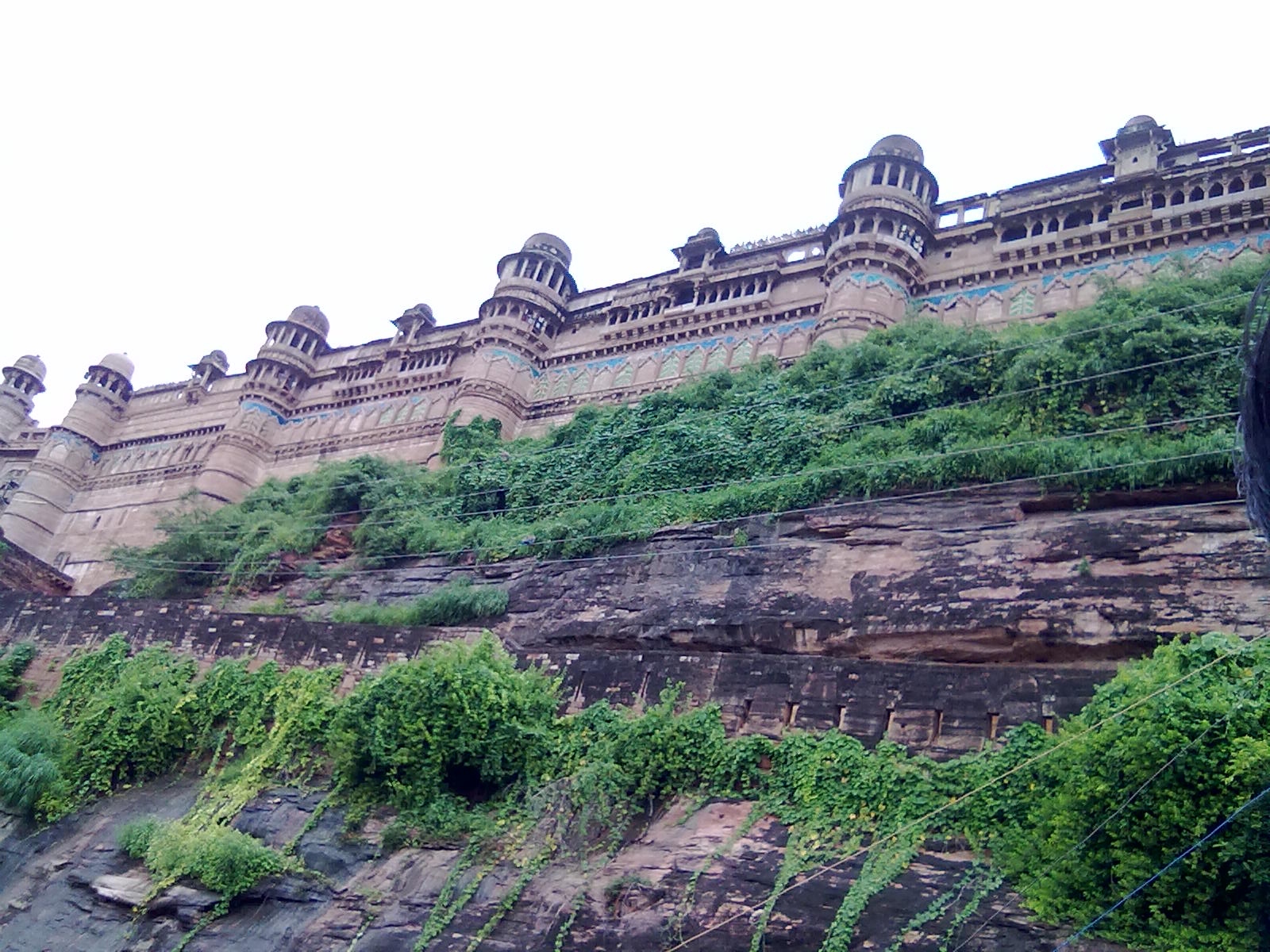
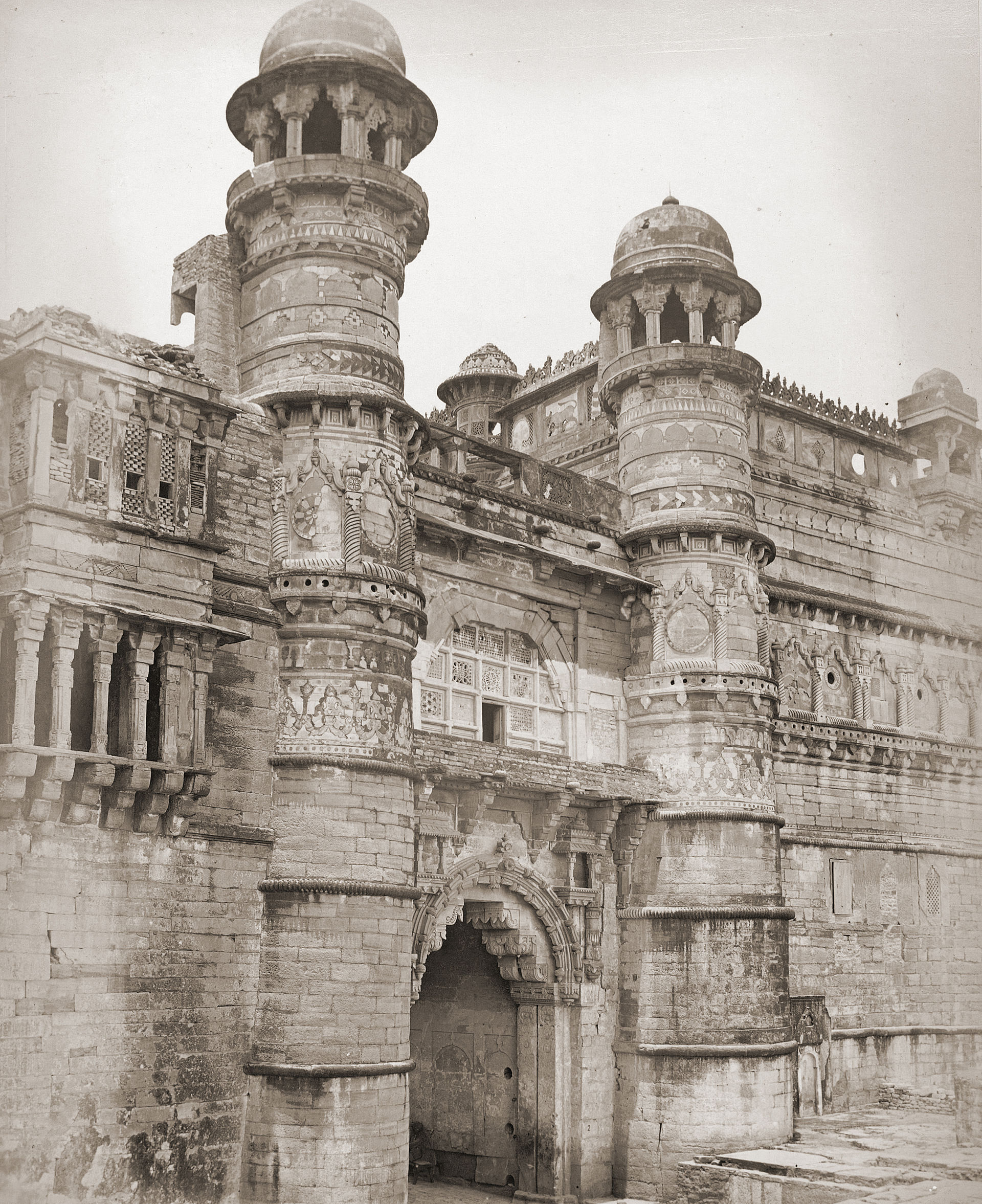
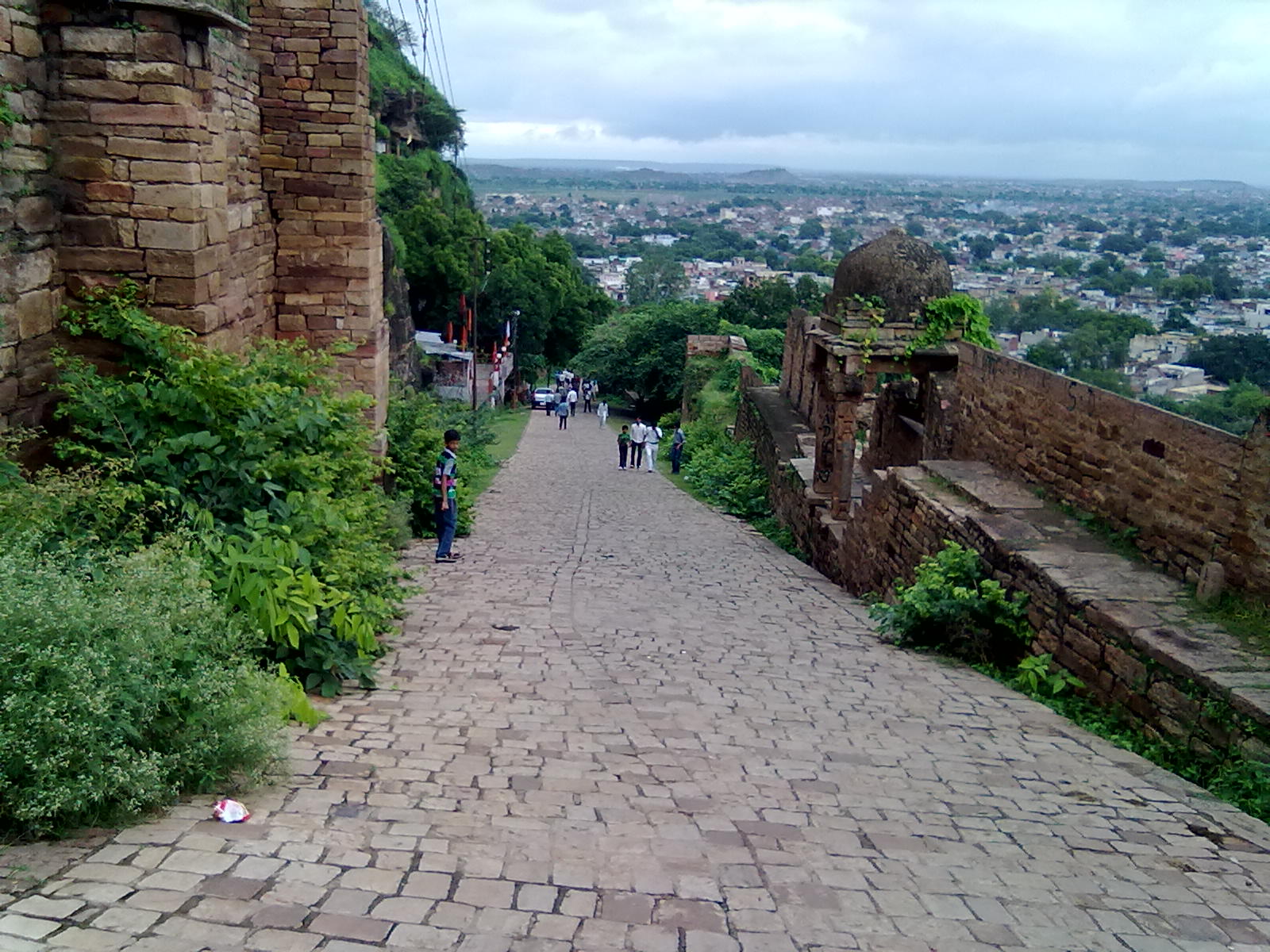
The approach to the summit of Gwalior leads up a steep ramp and through a series of great gates, the principal of which is the Hathi Pol, the Elephant Gate, so named for a life-sized sculpture of an elephant that once stood beside it. This great gateway, flanked by cylindrical towers crowned with domed cupolas, is the main entrance to the fortress, and it opens directly beside the beautiful facade of the Man Mandir Palace.
The gates of Gwalior were formidable defences, guarding the long and steep approach up the hillside and forcing any attacker to fight his way through one barrier after another. The Elephant Gate, with its towers and its cupolas, is a fine example of the fortified gateway of medieval India, combining strength with architectural elegance. The ascent through the gates, past the ancient rock-carved sculptures and up to the palace and temples at the summit, is a dramatic introduction to the wonders of the fortress.
The long, winding ascent to the fortress, climbing past the great rock-carved sculptures and up through the successive gates, was a formidable defensive gauntlet, but it is also, for the modern visitor, a dramatic and beautiful approach to the wonders of the summit. Each gate marked a stage in the climb, and the whole was designed to slow and expose any attacker while impressing all who came in peace with the strength and the majesty of the fortress. The Elephant Gate, opening beside the tiled facade of the Man Mandir, is a fitting climax to the ascent.
The Teli ka Mandir
Among the many temples of Gwalior, the most striking is the Teli ka Mandir, a tall and imposing structure that rises some twenty-five meters, making it the highest building in the fortress. Built in the ninth century by a ruler of the Pratihara dynasty, the temple is remarkable for its unusual architecture, which blends the styles of northern and southern India, with a barrel-vaulted roof in the northern Nagara manner rising above a form that recalls the temples of the south.
The Teli ka Mandir is a monument of great antiquity and architectural interest, its tall tower dominating the skyline of the fortress and its walls adorned with fine sculptural decoration. Originally dedicated to a form of the goddess and later restored as a temple of Shiva, it has survived the ravages of the centuries to stand as one of the most impressive of the ancient temples of Gwalior. Its unusual blend of architectural styles makes it a fascinating study for those interested in the development of Indian temple architecture.
The unusual architecture of the Teli ka Mandir, blending the temple styles of northern and southern India, has long fascinated scholars, for it is rare to find such a fusion in a single building, and it testifies to the wide connections and the cosmopolitan culture of the Pratihara dynasty that built it. Standing taller than any other structure in the fortress, the temple dominates the skyline and serves as a landmark visible from afar. Its survival, through so many centuries and so many changes of ruler, is a remarkable testament to the enduring power of the sacred at Gwalior.
The Sas Bahu Temples
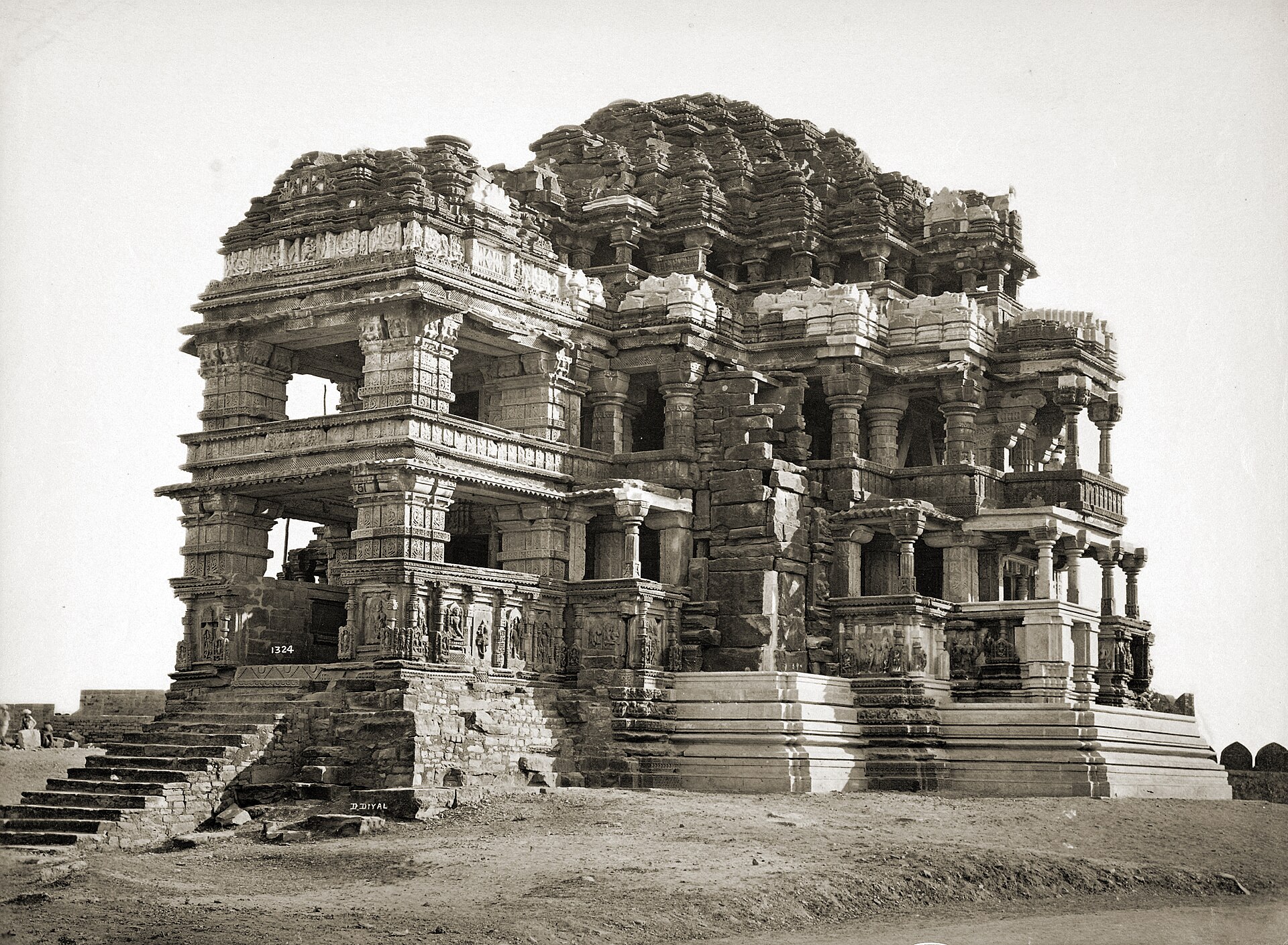
Another pair of remarkable temples within the fortress are the Sas Bahu temples, built in the late eleventh century by the Kachchhapaghata dynasty and dedicated to the great gods of Hinduism. Built of red sandstone, these temples are elaborately carved with intricate sculptural decoration, and their pyramidal forms and richly ornamented interiors make them among the finest examples of the temple architecture of their age.
The curious name of the temples, Sas Bahu, which means mother-in-law and daughter-in-law, is thought to be a corruption of an older name, and it has given rise to various local legends. The larger and smaller temples, standing side by side, display the extraordinary skill of the medieval Indian sculptors, whose chisels transformed the hard red sandstone into a lace-like profusion of gods, goddesses, and ornament. The Sas Bahu temples are among the great treasures of Gwalior, and they testify to the deep religious devotion and the artistic genius of the age that built them.
The intricate carving of the Sas Bahu temples, covering their walls and pillars with a profusion of divine figures and ornament, represents the high point of the sculptor’s art in medieval central India, and it rewards the closest examination. Every surface seems to teem with life, from the great gods and goddesses to the smallest decorative detail, all executed with extraordinary skill and delicacy. The temples are a reminder that Gwalior was not only a fortress and a palace but a great center of religious devotion and of the sacred arts, adorned with some of the finest temples of its age.
The larger of the two Sas Bahu temples was dedicated to Vishnu and the smaller to Shiva, and together they represent the flourishing of temple-building under the Kachchhapaghata rulers who held Gwalior in the eleventh century. Though damaged over the centuries, they retain much of their original magnificence, and their richly carved facades and interiors are among the finest achievements of the temple architecture of central India. They stand as a reminder of the deep religious life that has always centered upon the sacred hill of Gwalior.
The Gujari Mahal and Queen Mrignayani
Among the most romantic of the buildings of Gwalior is the Gujari Mahal, a palace built by Raja Man Singh Tomar for his beloved ninth wife, the queen Mrignayani, who came from the Gujar community. The story goes that Mrignayani, a woman of great beauty and spirit whom the king had met and fallen in love with, agreed to marry him on the condition that he build her a separate palace with its own supply of water from her native river, and the Gujari Mahal was the result.
This palace, standing at the foot of the hill, was supplied with water by an aqueduct that brought it from the river, fulfilling the queen’s condition. Today the Gujari Mahal has been converted into an archaeological museum, housing a fine collection of Hindu and Jain sculptures and other antiquities from the region, some dating back two thousand years. The story of Man Singh and Mrignayani, and the palace he built for her, adds a note of romance to the martial and religious history of the great fortress.
The story of Mrignayani, the spirited queen from the common Gujar community who won the love of a king and had a palace built to her own conditions, is one of the most beloved tales of Gwalior, and it reflects the romantic traditions that have gathered around the great fortress. That the palace built for her should survive today as a museum, preserving the ancient sculptures and antiquities of the region, gives her story a happy continuation, and the Gujari Mahal remains one of the most visited and most cherished of the buildings associated with the fortress.
The Jain Rock Sculptures
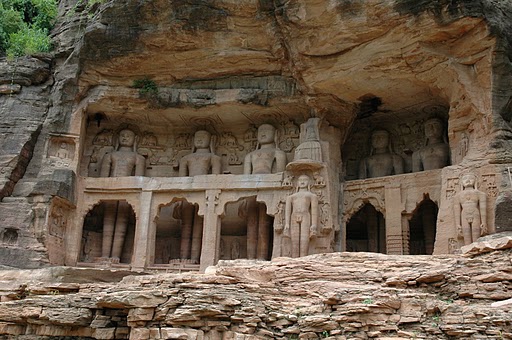
One of the most astonishing features of Gwalior is the vast array of Jain sculptures carved into the very rock of the hillsides, particularly along the approaches to the fortress. These sculptures, numbering perhaps some fifteen hundred in all, depict the tirthankaras, the great saints of the Jain religion, and they range in size from a few inches to colossal figures more than seventeen meters in height, carved directly into the living cliff.
The largest of these figures, a great seated or standing image of a tirthankara, is among the most impressive rock sculptures in all of India, a testament to the deep devotion of the Jain community and to the extraordinary skill of the sculptors who created them. Grouped in clusters along the rock faces, these sculptures create a remarkable spectacle, a whole gallery of sacred images carved from the mountain itself. They are among the great wonders of Gwalior, and a monument to the important place of Jainism in the history of the region.
The colossal Jain sculptures of Gwalior, carved directly into the cliffs over the course of the fifteenth century, are among the largest and most impressive rock sculptures in all of India, and they represent an astonishing feat of devotion and of craftsmanship. That such enormous figures could be carved from the living rock, with the simple tools of the age, is a testament to the skill and the faith of those who created them. Damaged in later times but since restored, these great images remain one of the most extraordinary sights of the fortress, a whole pantheon of sacred figures hewn from the mountain.
The Jain sculptures were carved during a period when the fortress was under the control of the Tomar rulers, who, though Hindu, permitted and even patronized the flourishing of Jainism, one of the ancient religions of India, known for its profound commitment to non-violence. The great images, grouped along the rock faces of the approaches to the fortress, would have made a powerful impression upon all who climbed to the citadel, proclaiming the devotion of the Jain community. That they survive today, restored after the damage of later centuries, is a precious inheritance.
The Temple of Zero
Among the many temples of Gwalior is one of unique importance to the history of science and mathematics, the Chaturbhuj temple, which contains one of the oldest known inscriptions in the world to use the numeral zero with place value. This inscription, some fifteen hundred years old, records a grant of land and a garden, and in doing so it uses the symbol for zero in a way that marks a crucial moment in the development of the number system that the whole world uses today.
The concept of zero as a number, and the place-value system that depends upon it, was one of the great intellectual achievements of ancient India, and it revolutionized mathematics when it spread, through the Arab world, to Europe and beyond. That one of the earliest surviving records of this momentous idea should be found in a modest temple within the fortress of Gwalior gives the citadel a special place in the history of human thought. The Temple of Zero is a monument not to war or to art, but to the power of the human mind.
The invention of zero and the place-value system stands among the very greatest contributions of India to the civilization of the world, for it made possible the whole of modern mathematics, science, and technology, which could not exist without it. That so momentous an idea should be commemorated in a humble inscription at Gwalior connects the fortress to one of the pivotal moments in the intellectual history of humankind. Visitors who come for the palaces and the sculptures often leave with a new appreciation of the fortress as a monument to the genius of ancient Indian thought.
It is a delightful and humbling thought that a small temple within a fortress in central India should hold so precious a record of one of humanity’s greatest ideas, and the Chaturbhuj temple has become a place of pilgrimage for those who care about the history of mathematics. The modest inscription, easily overlooked amid the grander monuments of the fortress, connects Gwalior to the whole modern world, for every calculation, every computer, and every equation depends ultimately upon the concept of zero that it records.
Prison of Princes and Gurus
For much of its later history, the great strength of Gwalior made it a natural prison, and under the Mughals and later the British it was used to hold prisoners of state, including princes, rebels, and holy men. Among the most famous of its prisoners was Guru Hargobind, the sixth of the Sikh gurus, who was imprisoned here in the early seventeenth century by the emperor Jahangir, and whose eventual release is still commemorated by the Sikh community.
Other notable prisoners of Gwalior included princes of the Mughal royal house, among them a brother and a nephew of the emperor Aurangzeb, who were confined and in some cases executed within the fortress. The Man Mandir Palace itself, for all its beauty, served as a place of imprisonment and execution for these unfortunate captives. The role of Gwalior as a prison, holding some of the most important figures of its age, is a dark but fascinating chapter in the long history of the fortress.
The imprisonment of Guru Hargobind at Gwalior, and his eventual release, is an event of great significance in the history of the Sikh religion, commemorated to this day in the festival of Bandi Chhor Divas, the Day of Liberation, which coincides with the great festival of Diwali. According to tradition, the guru refused to leave his prison unless the other princes held there were freed with him, and his compassion and his release are honored by Sikhs around the world. The dark history of Gwalior as a prison thus includes moments of great spiritual meaning.
The use of so magnificent a fortress as a place of imprisonment reflects the practical realities of power in the age, for a stronghold as strong and as remote as Gwalior was the ideal place to hold dangerous rivals and prisoners of state, secure against both escape and rescue. The contrast between the beauty of the palaces and temples and the grim purpose they sometimes served is one of the recurring themes of the history of the fortress, a reminder that even the loveliest of buildings could witness dark and tragic events.
Gwalior Today
Today Gwalior Fort is one of the most important and most visited historic sites in central India, drawing visitors from around the world to marvel at its painted palace, its ancient temples, its colossal sculptures, and its deep and storied history. The fortress is also celebrated for its association with the great tradition of Indian classical music, for it was the home of Tansen, the legendary musician of the court of the Mughal emperor Akbar, whose tomb in the city below is a place of pilgrimage for musicians.
The fortress passed in the modern era to the Scindia dynasty, the Maratha rulers of Gwalior, who built the great Jai Vilas Palace in the city and founded the famous Scindia School within the fortress itself. In the evenings, a sound and light show brings the long history of the fortress to life for visitors, and the citadel remains a source of great pride for the people of Gwalior and of India.
The association of Gwalior with the great musician Tansen, one of the legendary figures of Indian classical music and one of the nine jewels of the court of the emperor Akbar, adds a dimension of artistic glory to the history of the fortress and its city. Each year a great music festival is held in Gwalior in his honor, drawing musicians and lovers of music from across India. In this way the fortress and its city remain a living center of the musical tradition that is one of the glories of Indian culture, a fitting legacy for the citadel of the music-loving Man Singh Tomar.
The Scindia dynasty, who ruled Gwalior in the modern era, were among the most important of the Maratha ruling houses, and their legacy is visible throughout the city, from the great Jai Vilas Palace with its famous chandeliers to the prestigious Scindia School founded within the fortress itself. Under their rule, and since independence, Gwalior has flourished as a center of culture and education, and the great fortress upon its hill remains the proud symbol of the city, linking its modern life to its immensely long and storied past.
If you would like to see exactly where this magnificent fortress stands upon the map, you can find it here:
View on Google Maps: 26.2306, 78.1692
From its great sandstone hill above the city, Gwalior Fort has watched over the heart of India for many centuries, and it stands there yet, the pearl among the fortresses of the land.
Castles Nearby
If the wonders of Gwalior have captured your imagination, you may enjoy these other great forts of India:
- Chittorgarh Fort: The Largest Fort in India and the Legend of the Jauhar
- Golconda Fort: The Fortress of Diamonds
The Pearl among the Fortresses of India
Gwalior Fort is one of the great fortresses of India, the pearl among the strongholds of the land, a mighty citadel upon its hill that has been fought over and adorned by a succession of great dynasties across many centuries. Its painted palace, its ancient temples, its colossal rock-carved sculptures, and its deep and storied history combine to make it one of the most impressive and most fascinating of all the monuments of central India, a fortress worthy of the praise that the emperor Babur bestowed upon it.
If you should travel to India, Gwalior is one of the great sights of the central heartland, a fortress that rewards the visitor with beauty, history, and wonder in abundance. To climb to its summit, to admire the blue tiles of the Man Mandir, to marvel at the giant Jain sculptures, and to stand amid the ancient temples is an unforgettable experience. Gwalior Fort is a monument to the whole long history of central India, and it deserves its place among the greatest fortresses of the world.
Whether you come for the beauty of the tiled Man Mandir, for the colossal Jain sculptures carved from the cliffs, or for the deep and varied history of the pearl among the fortresses of India, Gwalior will reward your journey beyond all expectation, and you will carry away the memory of this magnificent citadel upon its hill as one of the great experiences of any journey through the heart of India.
You May Like

Mafra, the Palace a King Built From a Vow