Where the mighty Danube, the great river of central Europe, narrows dramatically to force its way through the mountains, there stands one of the most magnificent fortresses in all of the Balkans. Golubac rises on the Serbian bank at the very entrance to the spectacular gorge known as the Iron Gates, its ten great towers climbing the steep cliffs above the water in a scene of breathtaking drama. For centuries this stronghold guarded the river and the vital route through the mountains, and it is rightly celebrated as the guardian of the Danube.
Golubac is a fortress whose whole history was shaped by its command of one of the great strategic points of Europe, the narrow passage where the Danube squeezes between the mountains. Whoever held Golubac controlled the river and the road, and so the stronghold was fought over ceaselessly by the great powers of the region, by the kingdom of Hungary, the medieval Serbian state, and the mighty Ottoman Empire. Its dramatic setting is matched by an equally dramatic history of siege and conquest, and today, magnificently restored, it stands as one of the most spectacular sights in all of Serbia. In this article you will explore the whole of it. Come and discover the guardian of the Danube.
What makes Golubac so unforgettable is the way it unites so many kinds of drama in a single place. The spectacle of the ten towers climbing the cliffs, the grandeur of the great river entering its gorge, and the long and bloody history of the struggle for this vital point all combine into an experience of rare power. Few fortresses anywhere command such a setting or carry such a history, and it is this union of natural wonder and human drama that has made the guardian of the Danube one of the most magnificent sights in all of the Balkans.

In This Article
- The Guardian of the Danube
- Where the Great River Narrows
- Ten Towers Climbing the Cliffs
- A Fortress of Contested Origins
- Between Three Powers
- The Great Battle of 1428
- Centuries Under the Ottomans
- Guarding the River Road
- The Legend of the Dove Town
- A Fortress Reborn
- Walking the Walls Today
- A Wonder of the Đerdap Gorge
- Finding Golubac Fortress
- Castles Nearby
The Guardian of the Danube
Where the mighty Danube, the great river of central Europe, narrows dramatically to force its way through the mountains, there stands one of the most magnificent fortresses in all of the Balkans. Golubac rises on the Serbian bank of the river at the very entrance to the spectacular gorge known as the Iron Gates, its ten great towers climbing the steep cliffs above the water in a scene of breathtaking drama. For centuries this fortress guarded the river and the route through the mountains, and it is rightly known as the guardian of the Danube.
Golubac is a fortress whose strength lay in its command of one of the great strategic points of Europe, the narrow passage where the Danube squeezes between the mountains. Whoever held Golubac controlled the traffic on the river and the road along its bank, and so this stronghold was fought over again and again by the great powers of the region across the centuries. Its dramatic setting is matched by an equally dramatic history of siege and conquest, and today, beautifully restored, it stands as one of the most spectacular and rewarding sights in all of Serbia. This is the story of the guardian of the Danube.
There is a grandeur to Golubac that comes as much from its setting as from its stones, for few fortresses anywhere are so perfectly wedded to their landscape. The great river, the towering cliffs, and the marching line of towers combine into a single overwhelming spectacle, and the whole scene has a wild, romantic beauty that is unforgettable. It is little wonder that Golubac has become one of the most celebrated images of Serbia, a place that seems to embody the drama and the beauty of the Balkan past in a single sweeping view above the Danube.
Where the Great River Narrows
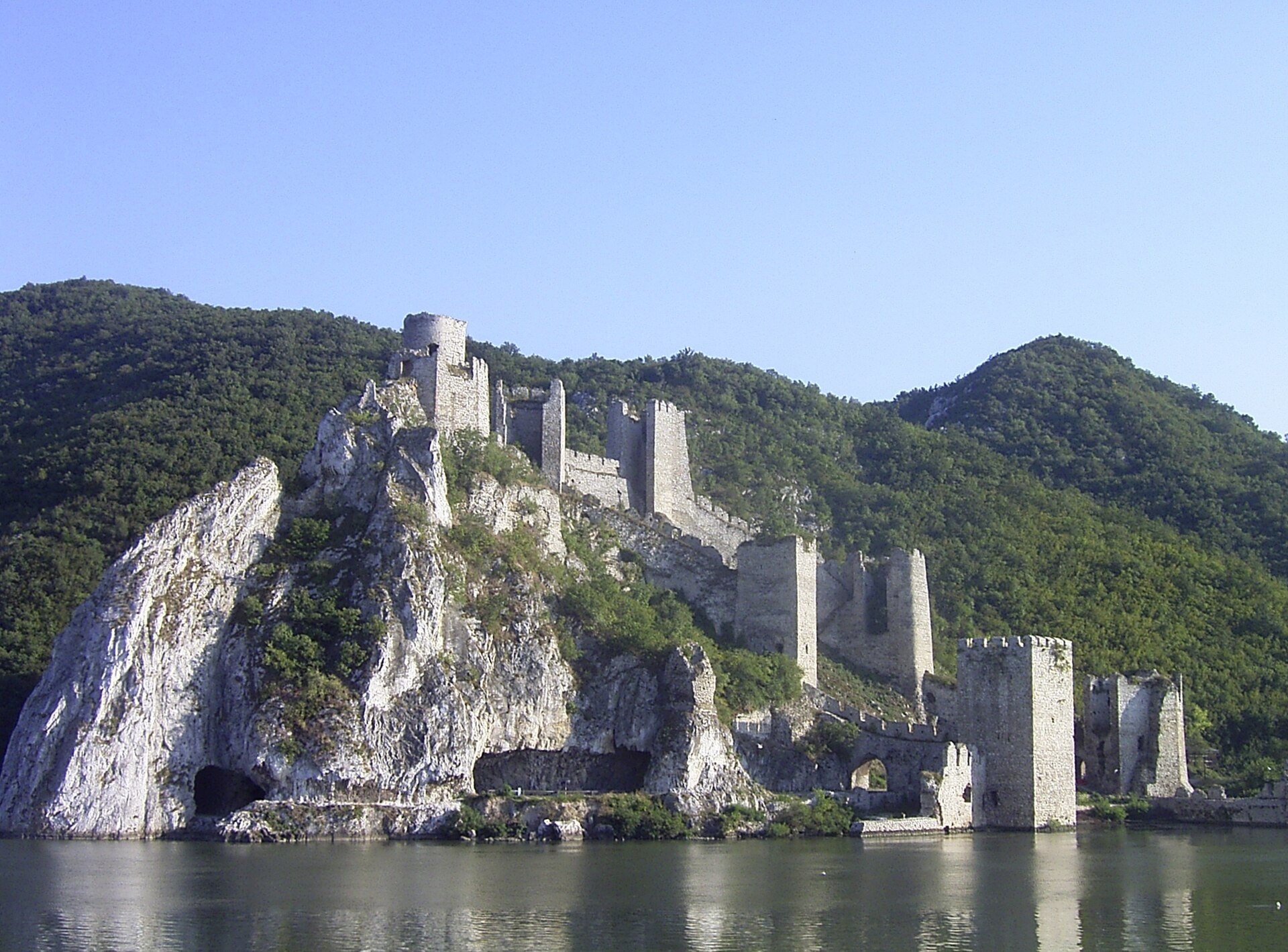
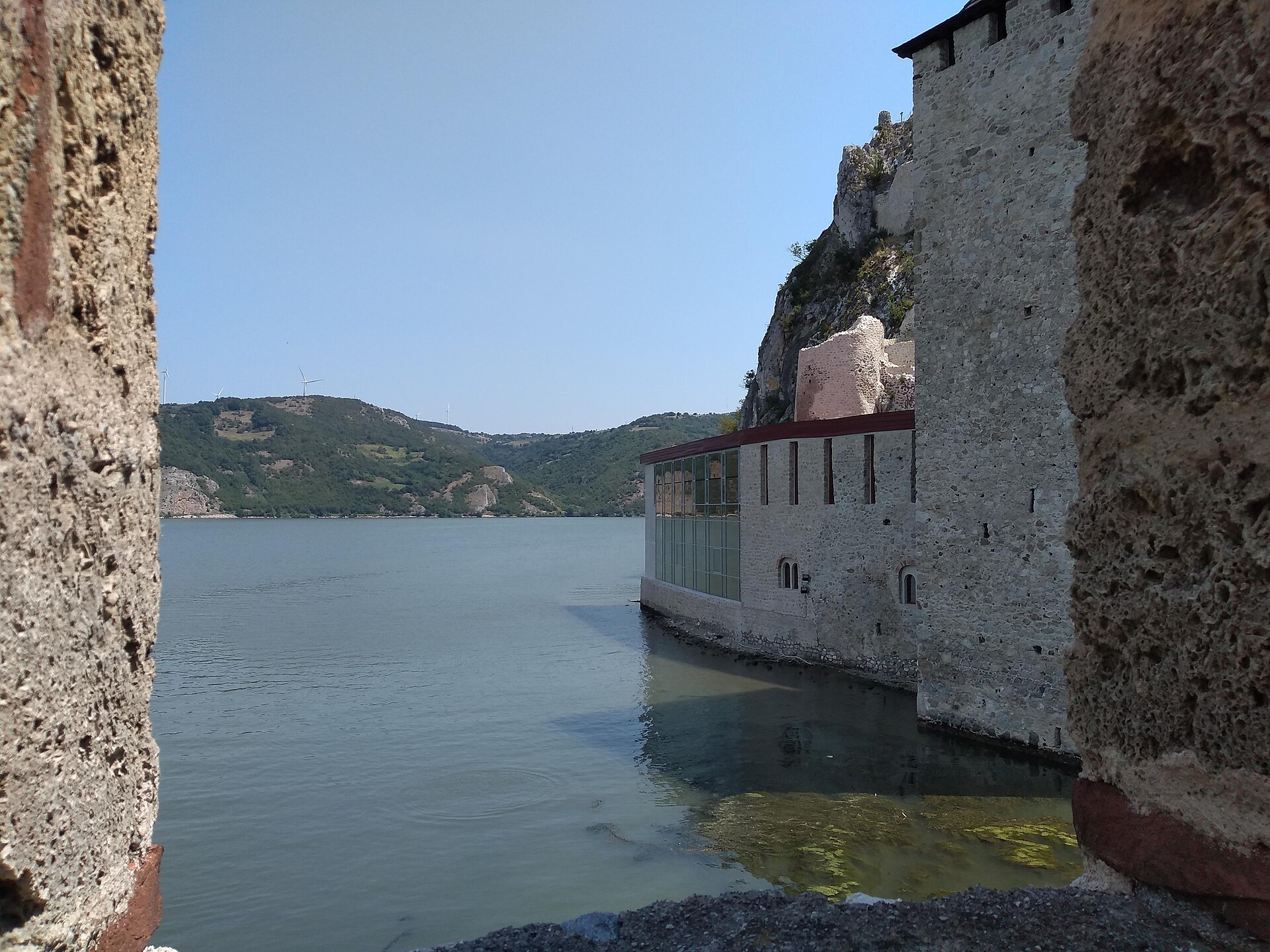
To understand Golubac you have to understand its extraordinary position, for the fortress stands at the very mouth of the Iron Gates, the dramatic gorge where the Danube cuts through the Carpathian mountains in a series of narrow passages between towering cliffs. Here the great river, elsewhere so broad and placid, is forced into a narrow channel, and the landscape becomes wild and spectacular. It was this natural chokepoint that gave Golubac its immense strategic importance, for the fortress commanded the entrance to the gorge and all who wished to pass.
The setting is one of the most beautiful and dramatic to be found anywhere along the whole length of the Danube, a place where the river, the mountains, and the fortress combine to overwhelming effect. The steep slopes rising from the water gave the builders a superb defensive position, and they made full use of it, setting their towers and walls to climb the cliffs above the narrows. To stand at Golubac and look out over the river as it enters the gorge is to understand at once why a fortress was built here, and why it was so fiercely contested through the centuries.
The Iron Gates gorge is one of the great natural wonders of Europe, a place where the second-longest river on the continent has carved a passage of extraordinary depth and drama through the mountains. For thousands of years this narrow passage has been both a barrier and a highway, a place of danger and of vital importance, and the fortress that guards its entrance shares in that long significance. To appreciate Golubac fully is to appreciate the gorge, for the two are inseparable, the fortress the man-made key to a natural gateway of the greatest importance.

Ten Towers Climbing the Cliffs
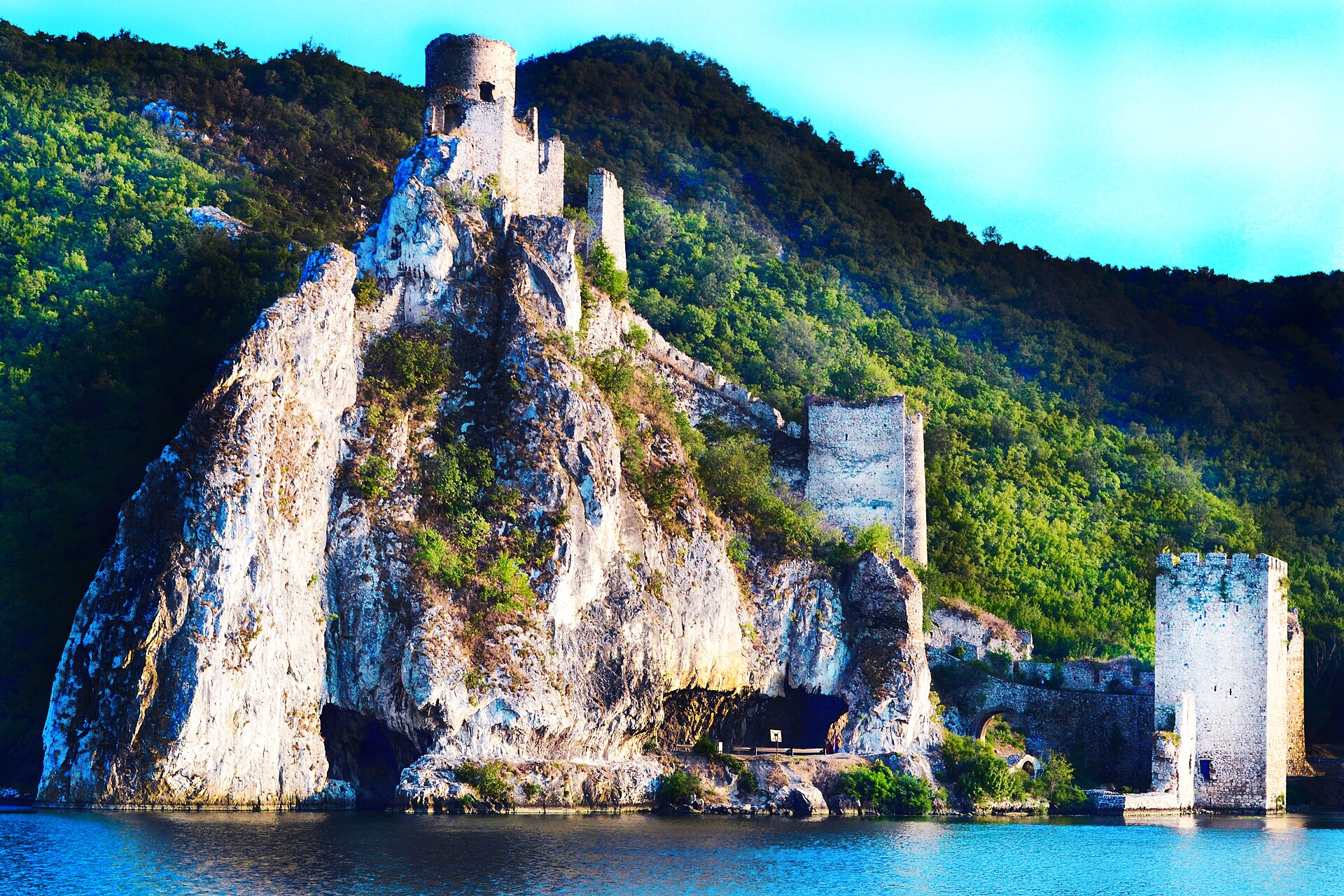
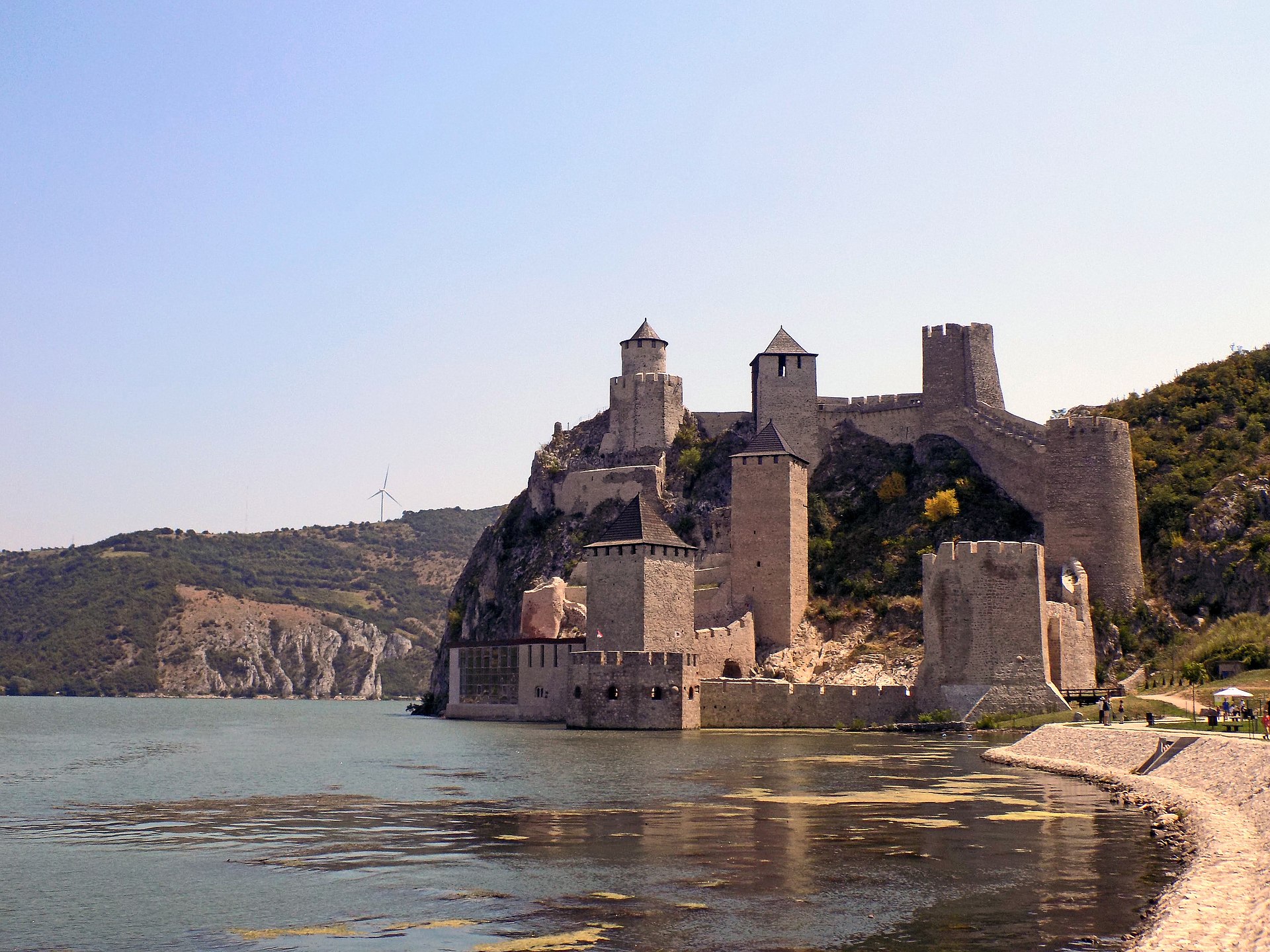
The most striking feature of Golubac is its array of great towers, ten in all, which climb the steep hillside above the Danube in a dramatic line, linked by strong curtain walls. This is one of the things that makes the fortress so spectacular, for rather than clustering on a single level, the towers ascend the slope in stages, following the contours of the cliff so that the whole stronghold seems to cascade down toward the river. The effect is unforgettable, a great chain of towers marching up the mountainside above the water.
Each of the towers played its part in the defence of the fortress, guarding the walls and commanding the approaches from the river and the land, and together they made Golubac one of the strongest fortresses on the whole Danube. The lowest of the towers stands right at the water’s edge, controlling the river itself, while the highest crown the heights above. This tiered arrangement, exploiting the steep terrain to the full, is a masterpiece of medieval military design, and it gives Golubac its unique and dramatic silhouette, one of the most recognisable and admired in all of the Balkans.
The way the towers climb the hillside is not merely picturesque but deeply practical, for by ascending the slope the fortress commanded the heights above as well as the water below, denying any attacker the advantage of high ground. This tiered design turned the difficult terrain into a source of strength, and it made Golubac far harder to assault than a fortress built on level ground. The result is a stronghold that is at once beautiful and formidable, its dramatic silhouette the outward sign of a sophisticated understanding of the art of defence.
Seen from the river, especially, the full drama of the tiered design reveals itself, as the towers rise one above another up the steep face of the hill to crown the heights. It is a sight that has amazed travellers on the Danube for centuries, and it remains one of the most photographed and admired views in all of Serbia. The genius of building a fortress that climbs a cliff, rather than merely sitting atop it, gives Golubac a verticality and a drama that few other strongholds can match, and it is central to the fortress’s enduring fame and beauty.
A Fortress of Contested Origins
The origins of Golubac reach back into the mists of the medieval past, and the exact date of its founding is not certainly known. There may have been fortifications on this superb strategic site since ancient times, but the great fortress that survives took shape in the medieval period, emerging into the light of history in the fourteenth century as one of the key strongholds guarding this stretch of the Danube. From its earliest recorded days, it was a place of the highest strategic importance, coveted by all who sought to control the great river and its trade.
The uncertainty surrounding its beginnings is itself a reflection of the turbulent history of this frontier region, a borderland where empires and kingdoms met and clashed and where the written record is often fragmentary. What is certain is that by the later Middle Ages, Golubac had become one of the most important fortresses on the Danube, a prize fought over by the great powers of the region. Its position at the gateway to the Iron Gates made it far too valuable to be left in any one hand for long, and its history became a story of almost constant struggle for its possession.
The turbulent and contested nature of this frontier region is written into the very uncertainty of the fortress’s origins, for in a land fought over so relentlessly, records were lost, destroyed, or never kept. What matters is that Golubac emerged, by the later Middle Ages, as one of the great fortresses of the Danube, its strategic value ensuring that it would be at the centre of events for centuries to come. Its early history, glimpsed only in fragments, is a fitting prelude to the dramatic and well-documented struggles that would later swirl around its walls.
Between Three Powers
For much of its history, Golubac stood at the meeting point of three great powers, and it was fought over ceaselessly among them. To the north lay the powerful Kingdom of Hungary, ever seeking to extend and defend its frontier along the Danube. The fortress itself lay in the lands of the medieval Serbian state, which struggled to maintain its independence between its mighty neighbours. And from the south and east came the rising power of the Ottoman Empire, expanding relentlessly into the Balkans and hungry for the strongholds that controlled the great rivers and roads.
Caught between these three powers, Golubac changed hands repeatedly, its possession shifting with the fortunes of war and the shifting balance of power in the region. Each of the contending powers understood the immense value of the fortress, and each sought to hold it, so that the stronghold became a focus of the long and violent struggle for control of the Danube frontier. This history of contention gave Golubac a dramatic and often bloody past, and it made the fortress a witness to some of the most important events in the history of the medieval Balkans.
The position of Golubac at the meeting point of three great powers made it one of the most fought-over places in all of southeastern Europe, a prize that none of the contending states could afford to leave in another’s hands. This constant contention shaped not only the history of the fortress but the whole character of the region, a borderland perpetually poised between war and uneasy peace. Golubac stood at the very heart of this struggle, its possession a barometer of the shifting balance of power along the great river frontier.
The Great Battle of 1428
The most famous single event in the history of Golubac came in the year 1428, when the fortress was the scene of a great battle between the Kingdom of Hungary and the Ottoman Empire. The fortress had come into Ottoman hands, and the Hungarian king led a great army to besiege and retake it, determined to wrest this vital stronghold back from the Turks. The siege was hard fought, but the arrival of a great Ottoman relief force turned the tide, and the Hungarian army was defeated and forced to retreat across the Danube in disarray.
The battle became famous throughout Europe, and it is remembered in particular for the death of a celebrated knight, a Polish champion renowned across the continent for his valour, who fell in the fighting at Golubac and whose loss was mourned far and wide. The failure of the Hungarian king to retake the fortress confirmed Ottoman control of this vital point on the Danube, and it marked an important moment in the long advance of the Ottomans into central Europe. The Battle of Golubac thus took its place among the significant events of the age, and it forever linked the fortress to one of the great dramas of the fifteenth century.
The death of the famous Polish knight at Golubac lent the battle a particular poignancy and fame, for he was one of the most celebrated champions of his age, renowned across Europe as a model of chivalry. His fall in the fighting here was mourned as the loss of a great and noble warrior, and it fixed the Battle of Golubac in the memory of Christian Europe. The episode is a reminder that this remote fortress on the Danube was not isolated from the wider currents of European history but stood at their very centre in the great struggle against the advancing Ottomans.
The Battle of Golubac also marked a sobering moment in the long defence of central Europe against the Ottoman advance, for the failure to retake the fortress showed how difficult it would be to halt the expansion of the empire along the Danube. In the decades and centuries that followed, the frontier would continue to shift, and fortresses like Golubac would remain at the centre of the struggle. The battle of 1428 thus stands as an important marker in one of the great geopolitical dramas of European history, played out on the banks of the great river.
Centuries Under the Ottomans
Following the great struggles of the fifteenth century, Golubac passed firmly into the hands of the Ottoman Empire, and it remained an Ottoman stronghold for a very long time, one of the chain of fortresses by which the Ottomans controlled the Danube and their frontier in the Balkans. Under Ottoman rule, the fortress continued to guard the entrance to the Iron Gates, its garrison watching over the river traffic and the road, and it was maintained and used as an important military post on the northern edge of the empire’s European lands.
The long centuries of Ottoman control were a significant period in the history of Golubac, and they left their own mark upon the fortress and the region. As the frontier between the Ottoman Empire and the Christian powers to the north shifted back and forth over the generations, Golubac remained a key strongpoint, its command of the Danube narrows as valuable to the Ottomans as it had been to those who held it before. Only in more recent times, as the Ottoman Empire receded from the Balkans, did the fortress finally lose its military role and pass into the history of modern Serbia.
The long period of Ottoman rule at Golubac reflects the wider history of the Balkans in these centuries, when much of the region lay under the control of the great empire based in Constantinople. For the fortress, it meant a continuation of its ancient role as a guardian of the Danube, now in the service of a new master, and its strategic value was as great to the Ottomans as it had ever been to their predecessors. The centuries under the crescent are an essential chapter in the story of Golubac, part of the rich and layered history that makes the fortress so fascinating.
Guarding the River Road
The whole purpose of Golubac was to control the passage of the Danube at the entrance to the Iron Gates, and in this it was superbly successful. The fortress commanded the narrows so completely that no ship could pass without its leave, and the tower at the water’s edge could bar the river itself. In an age when the great rivers were among the most important highways of trade and war, this command of the Danube gave Golubac immense value, both as a source of revenue from the tolls it could levy and as a strategic key to the whole region.
Alongside the river, the fortress also guarded the road that ran along its bank through the gorge, the vital land route through this difficult country. Whoever held Golubac held the gateway to the Iron Gates by both land and water, and could open or close the passage at will. This double command of river and road is what made the fortress so precious and so fiercely contested, for it was one of the great strategic locks of the Danube. To control Golubac was to control one of the most important crossings and passages in all of southeastern Europe.
This command of both river and road made Golubac one of the great strategic locks of the whole Danube, a place whose possession could determine the flow of trade and the movement of armies across a vast region. In an age before railways and modern roads, control of such a passage was of incalculable value, and it explains why the fortress was so lavishly built and so fiercely contested. To hold Golubac was to hold a key to southeastern Europe, and its story is inseparable from the long struggle for control of the great river highway.

The Legend of the Dove Town
Like many great fortresses, Golubac has its legends, and the very name of the place is wrapped in story. The name is often connected to the word for a dove, and Golubac is sometimes rendered as something like the town of doves, a gentle name for so mighty a stronghold. Local tradition tells tender and tragic tales to explain the name, including stories of a maiden whose fate became bound up with the fortress, in the manner of the folk legends that gather around so many of the great castles of the Balkans and beyond.
These legends, whatever their historical truth, are a precious part of the heritage of Golubac, for they show how deeply the fortress became woven into the imagination and the storytelling of the people who lived in its shadow. A great stronghold is never only a military structure but also a place of memory and myth, and the tales told of Golubac add a note of romance and humanity to its otherwise stern and warlike history. To know the legends is to understand something of what the fortress has meant to the people of this region across the long centuries of its existence.
Legends such as these are a precious part of the intangible heritage of Golubac, connecting the great stone fortress to the living traditions and imagination of the people of the region. They remind us that a castle is never only a matter of walls and battles but also of stories, memories, and meanings that accumulate around it over the centuries. The tender tale behind the name of the dove town gives a human warmth to this stern military stronghold, and it is a lovely example of how history and folklore intertwine in the great castles of the Balkans.

A Fortress Reborn
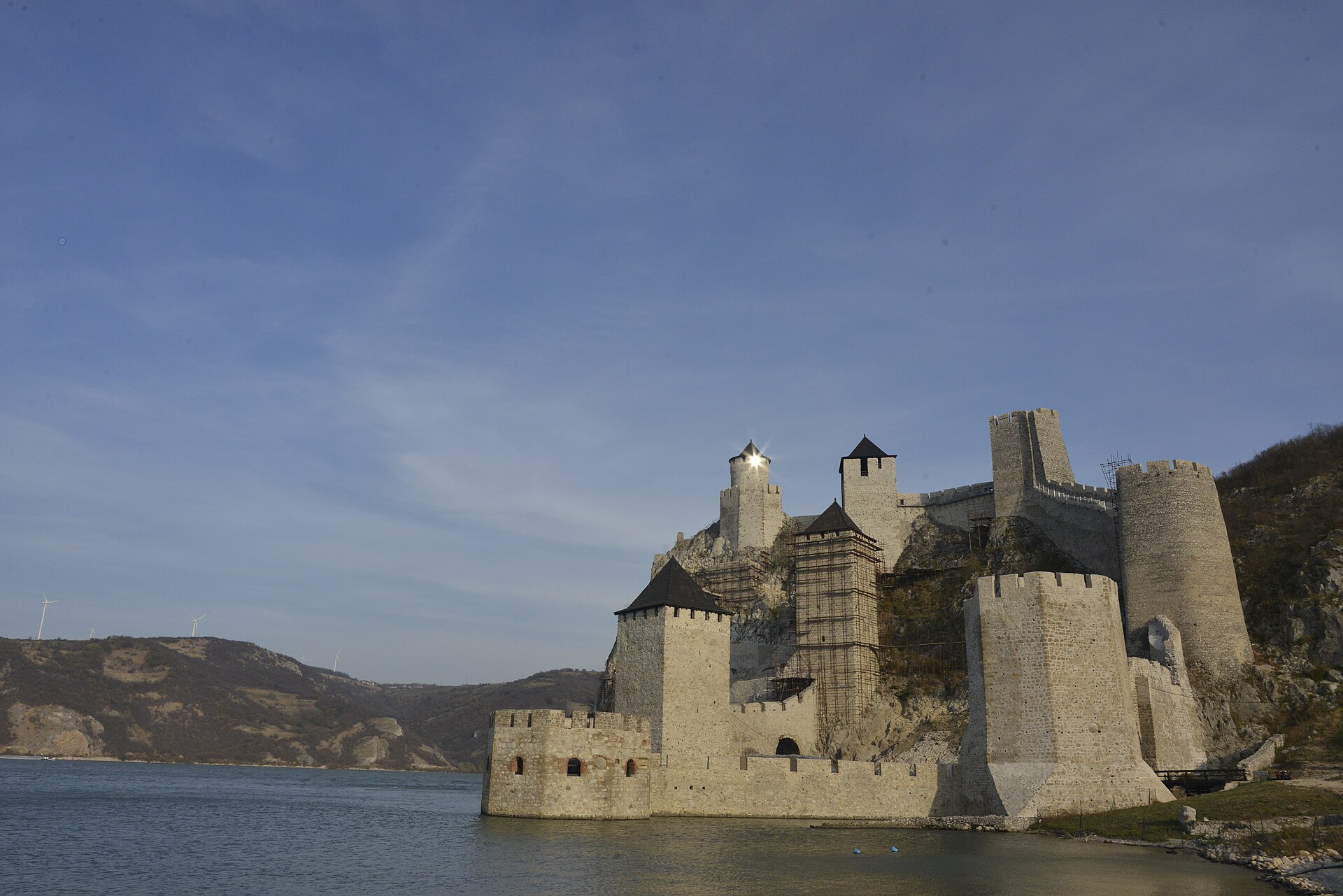
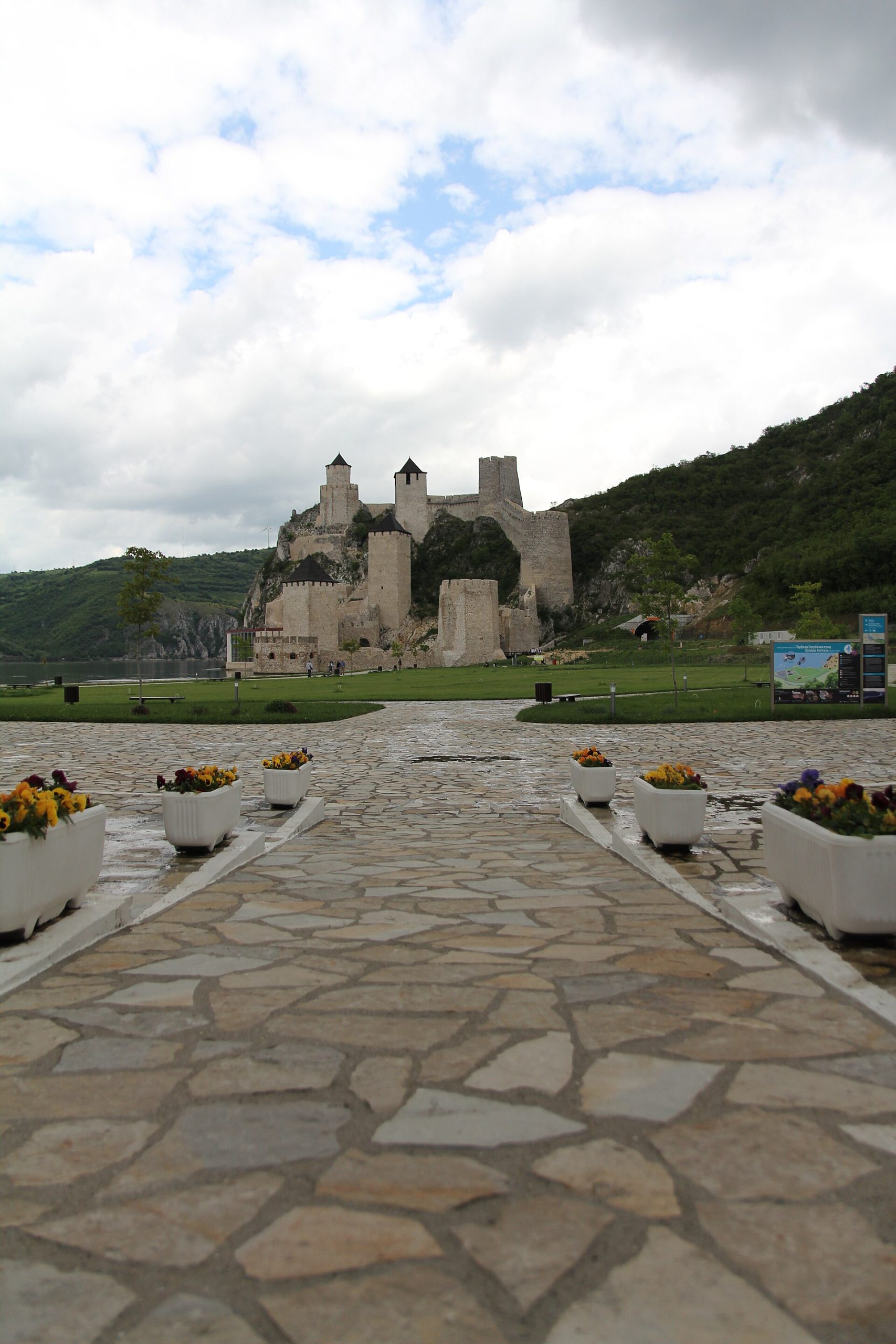
For a long time, Golubac stood as a magnificent but neglected ruin above the Danube, its great towers weathering slowly and a modern road running awkwardly right through the lowest of them. But in recent years the fortress has been reborn, thanks to a major programme of restoration and reconstruction that has returned it to something of its former glory. The old road was rerouted away from the walls, the towers were repaired and made safe, and the whole fortress was carefully restored and opened to visitors as a major attraction.
The restoration of Golubac has been a great success, transforming a crumbling ruin into one of the most spectacular and popular historical sites in all of Serbia. Where once the fortress could only be admired from a distance, visitors can now explore its towers and walls, climb its heights, and enjoy magnificent views over the Danube and the entrance to the gorge. The rebirth of Golubac has given Serbia back one of its greatest monuments, ensuring that this guardian of the Danube will be preserved and enjoyed by generations to come.
The rerouting of the modern road, which had once run incongruously through the lowest tower of the fortress, was a particularly satisfying part of the restoration, freeing the great stronghold at last from an indignity it had long suffered. The care taken to restore the fortress properly, respecting its history while making it safe and accessible, has been widely praised, and the result is a model of how a great monument can be brought back to life. Golubac today stands as a proud symbol of Serbia’s determination to cherish and preserve its rich heritage.

Walking the Walls Today
A visit to the restored Golubac today is a wonderful experience, for the fortress has been made accessible to visitors in a way that allows its dramatic architecture and setting to be fully appreciated. You can walk among the great towers, climb the walls that ascend the hillside, and stand at the heights looking out over the Danube as it enters the Iron Gates, a view of quite extraordinary beauty. Moving through the fortress, you gain a vivid sense of its scale and strength, and of the ingenuity with which it was fitted to its steep and dramatic site.
The restored fortress presents its long and turbulent history through its architecture and its exhibitions, and exploring it brings to life the many centuries of struggle for this vital stronghold. From the lowest tower at the water’s edge to the highest on the heights above, the whole fortress rewards exploration, each level offering new perspectives on the towers, the walls, and the magnificent river below. Few historical sites anywhere combine such dramatic architecture with such a spectacular natural setting, and a visit to Golubac is an experience that stays long in the memory.
The magnificent views from the restored towers and walls are among the great rewards of a visit to Golubac, for from the heights the whole grandeur of the setting is revealed, with the Danube entering the gorge far below and the mountains rising on every side. It is a prospect that fully repays the climb, and it helps the visitor to understand at a glance the strategic genius of the fortress’s position. Standing on the walls where soldiers once kept watch over the river, you feel the full drama of the place and its long and eventful history.

A Wonder of the Đerdap Gorge
Golubac stands within one of the most beautiful natural areas in all of Serbia, the great national park that protects the Iron Gates gorge and the surrounding country. This is a landscape of dramatic beauty, where the Danube winds through steep wooded mountains in a series of spectacular narrows, and the fortress at its entrance is the perfect gateway to this natural wonderland. The combination of the mighty fortress and the magnificent gorge makes this one of the most rewarding destinations in the whole region.
The national park is home to rich wildlife and stunning scenery, and a visit to Golubac can be combined with the exploration of the wider gorge, whether by road, by boat on the Danube, or on foot along the many trails. The fortress and the gorge together form an unforgettable ensemble, a meeting of human history and natural grandeur on the banks of one of Europe’s greatest rivers. For anyone travelling in this part of the Balkans, Golubac and its gorge offer an experience of rare drama and beauty, well worth the journey to this spectacular corner of Serbia.
The pairing of the great fortress with the natural wonders of the gorge makes a visit to Golubac uniquely rewarding, offering both a journey into history and an encounter with some of the most spectacular scenery in the Balkans. Whether your interest lies in the medieval past, in dramatic architecture, or in the beauty of the natural world, the fortress and its gorge together provide an experience of rare richness. It is this combination that has made Golubac one of the most beloved destinations in all of Serbia.
Finding Golubac Fortress
Golubac Fortress lies in the east of Serbia, on the right bank of the Danube at the entrance to the Iron Gates gorge, within the great national park that protects this beautiful stretch of the river. Though it stands some distance from the largest cities, the fortress is well worth the journey, and the drive along the Danube to reach it, through increasingly dramatic scenery, is a pleasure in itself. The first sight of the great fortress climbing the cliffs above the river is one that no visitor soon forgets.
The setting could hardly be more magnificent, and a visit to Golubac can easily be combined with the exploration of the wider Iron Gates region, one of the great natural and historical treasures of the Balkans. The fortress makes a superb centrepiece for a journey along this spectacular section of the Danube, and it rewards every visitor with drama, history, and beauty in equal measure. Here are the exact coordinates so you can find your way to the great guardian of the Danube.
View on Google Maps: 44.6575, 21.6339

Castles Nearby
If Golubac has drawn you into the history of the Balkan frontier, two more great strongholds of the region make a fine next stop.
- Kamianets-Podilskyi Castle in Ukraine guards a peninsula in a dramatic river canyon.
- Predjama Castle in Slovenia is the astonishing fortress built into a cliff.
The Guardian of the Danube
Few fortresses anywhere command so dramatic a setting or so strategic a position as Golubac. Rising with its ten great towers above the Danube at the very entrance to the Iron Gates, it guarded one of the most important passages in all of Europe, and its long history is a story of the ceaseless struggle for that vital point among the great powers of the Balkans. From its contested medieval origins through the famous battle of the fifteenth century and the long centuries of Ottoman rule, Golubac stood always at the heart of the fight for the Danube frontier.
That is what makes a visit to Golubac so rewarding. You are not just admiring a spectacular fortress but standing at one of the great crossroads of history and geography, in a place where the river, the mountains, and the stronghold combine to unforgettable effect. To climb its towers, walk its walls, and gaze out over the Danube as it enters the gorge is to feel the full drama of the Balkan past. Beautifully reborn through restoration, Golubac is once again the proud guardian of the Danube, and it remains one of the most magnificent sights in all of Serbia.
If your travels ever take you to Serbia, a visit to Golubac is not to be missed. Follow the Danube east into the increasingly dramatic country of the Iron Gates, and come upon the great fortress climbing the cliffs above the river. Explore its towers, walk its walls, and gaze out over the water as it enters the gorge, and let the drama of the place and its history work upon you. Golubac has guarded this great crossing for centuries, and beautifully restored, it is ready once more to share its story with everyone who comes to the banks of the Danube.
You May Like

Mafra, the Palace a King Built From a Vow


2 thoughts on “Golubac Fortress: The Guardian of the Danube at the Iron Gates”