In the rolling country of western Ukraine, in the historic land of Podillia, stands one of the most spectacularly sited fortresses in all of Europe. Kamianets-Podilskyi Castle guards a rocky peninsula almost entirely encircled by the deep canyon of the Smotrych River, its great towers and walls rising above sheer cliffs in a position of astonishing natural strength. Linked to the old town by a historic bridge across the ravine, the fortress presents one of the most dramatic sights in the whole country, and it is rightly celebrated as one of the true wonders of Ukraine.
Yet Kamianets-Podilskyi is far more than a beautiful sight, for across the centuries it stood as one of the great border strongholds of eastern Europe, a bulwark on the violent frontier between the Christian Commonwealth and the mighty Ottoman Empire. Its walls witnessed one of the most famous sieges in the region’s history, nearly three decades under the crescent flag of the sultan, and a dramatic return to Christian rule. From medieval castle to Ottoman stronghold to national treasure, its story is as remarkable as its setting. In this article you will explore the whole of it. Come and discover the fortress in the canyon.
What makes Kamianets-Podilskyi so unforgettable is the way nature and history combine here to overwhelming effect. The extraordinary canyon setting alone would make it remarkable, and the mighty layered fortress alone would make it important, but together they create something truly extraordinary, a place where the drama of the landscape and the drama of the past reinforce one another at every turn. Few sites anywhere leave so powerful an impression, and it is this union of natural wonder and human history that has made the fortress one of the most cherished places in all of Ukraine.

In This Article
- The Fortress in the Canyon
- An Island Made by a River
- A Stronghold of Many Ages
- The Great Towers of the Castle
- The Bridge and the Old Town
- The Southeastern Bulwark
- On the Frontier of Empires
- The Great Ottoman Siege of 1672
- Under the Crescent Moon
- The Return and the New Castle
- From Fortress to Prison to Museum
- A Wonder of Ukraine Today
- Finding Kamianets-Podilskyi
- Castles Nearby
The Fortress in the Canyon
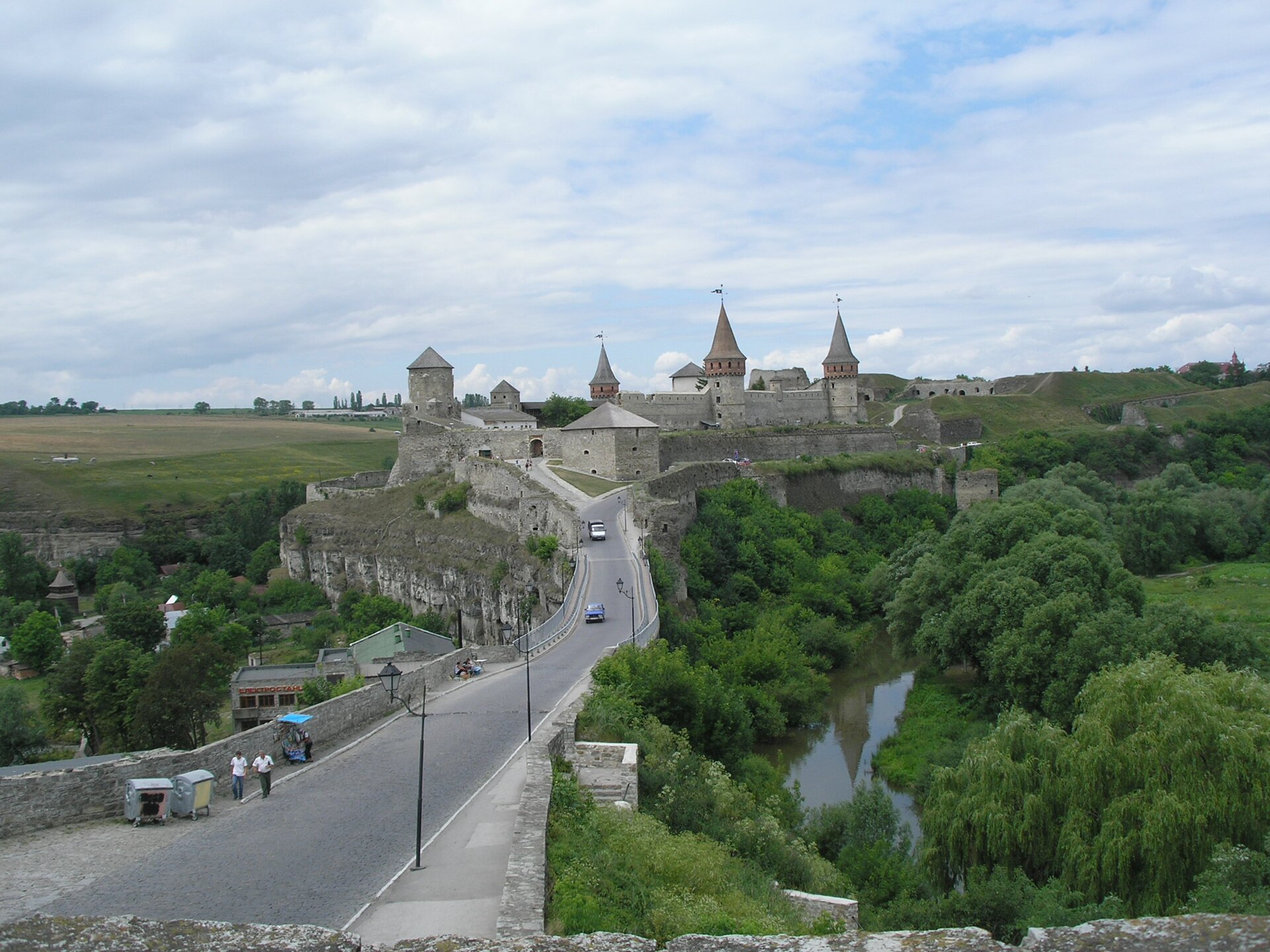
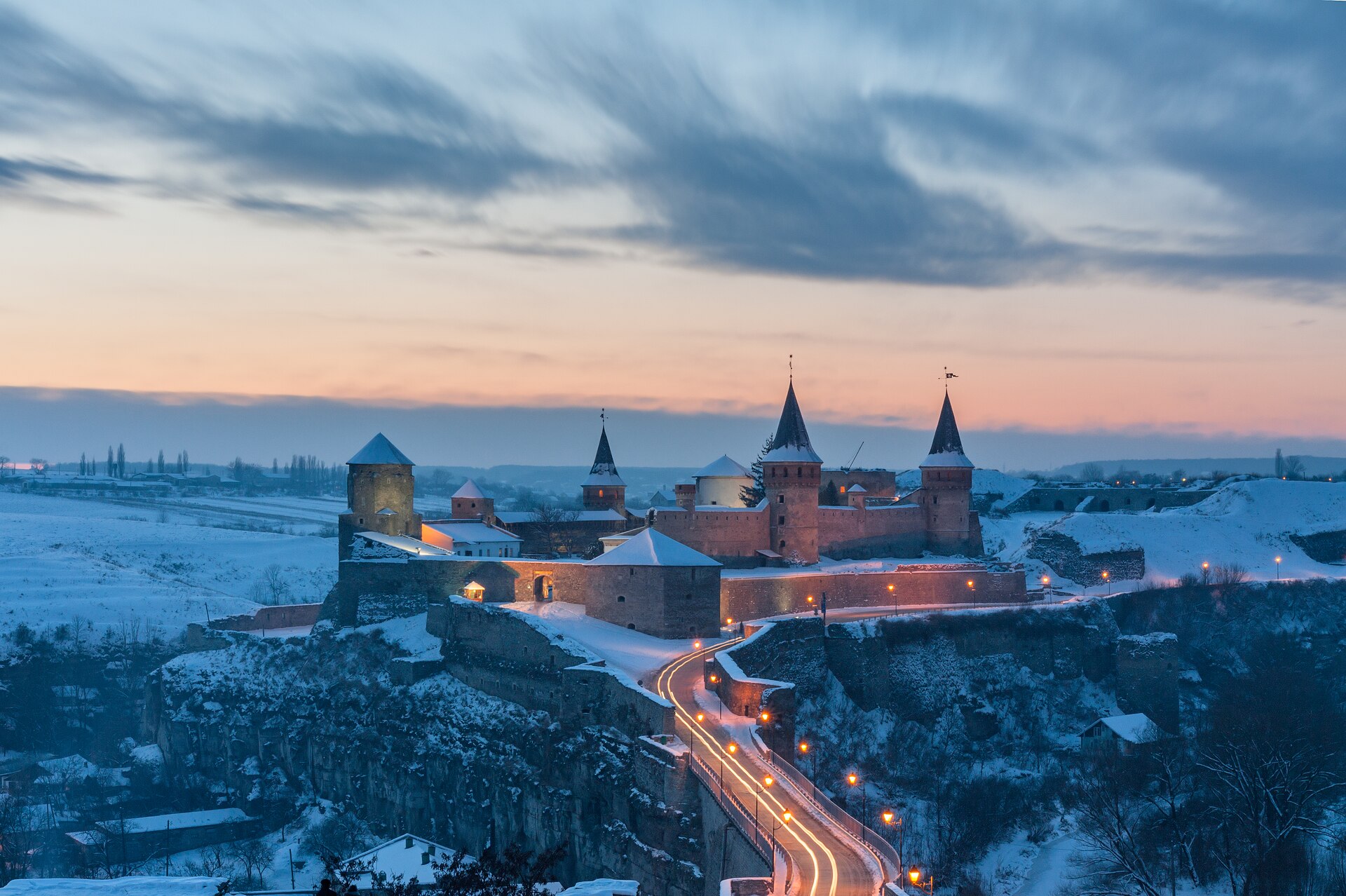
In the rolling country of western Ukraine, in the historic region of Podillia, stands one of the most spectacularly sited fortresses in all of Europe. Kamianets-Podilskyi Castle guards a rocky peninsula almost entirely encircled by the deep canyon of the Smotrych River, its towers and walls rising above sheer cliffs in a position of extraordinary natural strength. The sight of the great stone fortress standing above its canyon, connected to the old town by a narrow bridge, is one of the most dramatic in the whole country, and it has made Kamianets-Podilskyi one of the true wonders of Ukraine.
This is a castle whose strength lies as much in its remarkable setting as in its walls, for nature itself created here a near-perfect fortress that the builders of the Middle Ages had only to complete. Across the centuries it stood as one of the great border strongholds of eastern Europe, a bulwark on a violent and contested frontier, and it saw some of the most dramatic events in the history of the region, including a famous siege by the mighty Ottoman Empire. To visit is to step into a landscape where history and nature combine to overwhelming effect. This is the story of the fortress in the canyon.
There is a moment, as you first approach Kamianets-Podilskyi and the great fortress reveals itself above its canyon, that stays with you forever. The sheer drama of the setting, the walls and towers rising from the cliffs with the river running far below, is unlike almost anything else in Europe, and it explains at once why this place has captured the imagination of so many. It is a fortress that seems to belong as much to legend as to history, and yet every stone of it is real, a genuine survivor of one of the most turbulent frontiers of the past.
An Island Made by a River
The secret of Kamianets-Podilskyi lies in its extraordinary geography, for the Smotrych River, winding through the soft rock of the region, has carved a deep canyon that loops around almost in a complete circle, leaving a rocky island of land connected to the surrounding country by only the narrowest neck. Upon this natural island grew the old town of Kamianets, protected on nearly every side by the sheer cliffs of the canyon and the river running far below, a defensive position of almost unbelievable strength created entirely by nature.
The castle itself stands guarding the narrow land bridge that connects this island town to the mainland, sealing the one weak point in the natural defences. Together, the river canyon and the castle made Kamianets-Podilskyi one of the most formidable strongholds imaginable, a fortress town that could defy the mightiest of armies. The genius of the site is that the defenders had only to hold the narrow isthmus and its guarding castle, and the whole town behind them was safe. Few places anywhere illustrate so perfectly how the shape of the land itself could create an all but impregnable fortress.
The way the river has sculpted the land here is a marvel of nature in its own right, quite apart from the fortress that crowns it. Over countless ages the Smotrych carved its deep, looping canyon through the rock, leaving behind the extraordinary near-island on which the town would rise. It is a striking example of how geography can shape human history, for without this remarkable formation there would have been no great fortress town here at all. The land itself invited the building of a stronghold, and the people of the Middle Ages accepted the invitation.
Seen from the air, the loop of the Smotrych around the town is one of the most remarkable urban landscapes anywhere, an almost perfect natural ring of protection encircling the old settlement. It is little wonder that people have prized and fortified this site for so long, or that it has inspired such wonder in all who see it. The canyon is not merely a backdrop to the fortress but the very reason for its existence, the natural foundation upon which the whole extraordinary story of Kamianets was built.

A Stronghold of Many Ages
The fortress of Kamianets-Podilskyi grew and changed across many centuries and under a succession of different rulers, each of whom left their mark upon its walls. There may have been fortifications on this superb defensive site since ancient times, but the great stone castle that survives today developed largely in the later medieval and early modern periods, when the region passed under the control of the Lithuanian and then the Polish crowns. Under these rulers, the castle was steadily expanded and strengthened into a mighty stronghold.
The result of this long process of building is a fortress of great complexity and interest, its walls and towers representing the work of many different periods and hands. What began as a medieval castle was continually updated to meet the changing demands of warfare, especially as the threat of gunpowder artillery grew, and later additions transformed and reinforced the older core. Exploring the castle today, you can trace this long evolution in its stonework, reading the whole history of the fortress in the layers of its construction, from medieval tower to early modern bastion.
The passing of the fortress through the hands of so many different rulers, from Lithuanian princes to Polish kings and beyond, mirrors the complex and much-contested history of the whole region of Podillia. This was a borderland where the interests of many powers met and clashed, and its fortresses changed hands and were rebuilt again and again as the balance of power shifted. Kamianets, as the greatest stronghold of the region, was always the prize most fought over, and its walls carry the memory of all those who held and shaped it across the centuries.

The Great Towers of the Castle
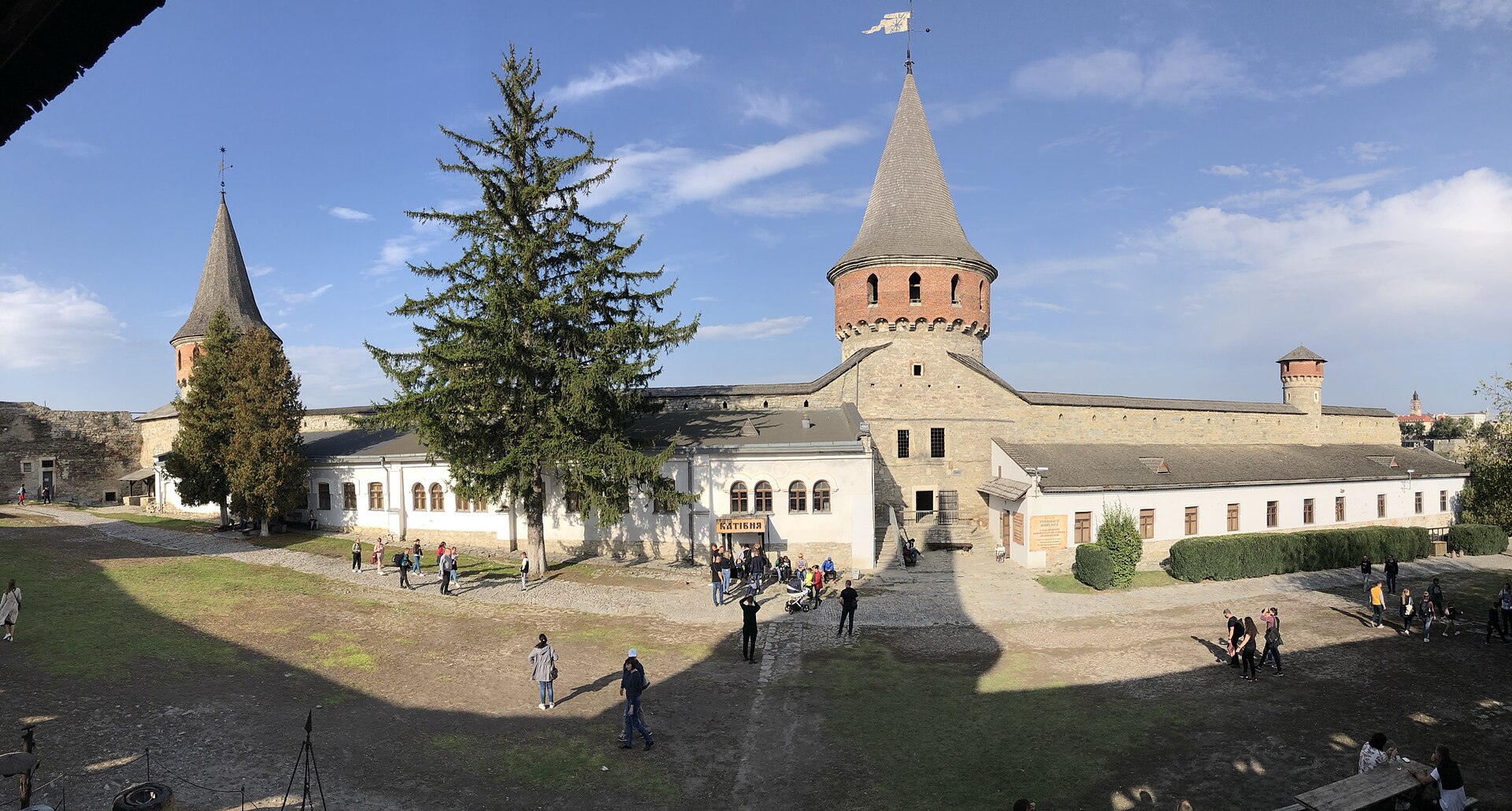
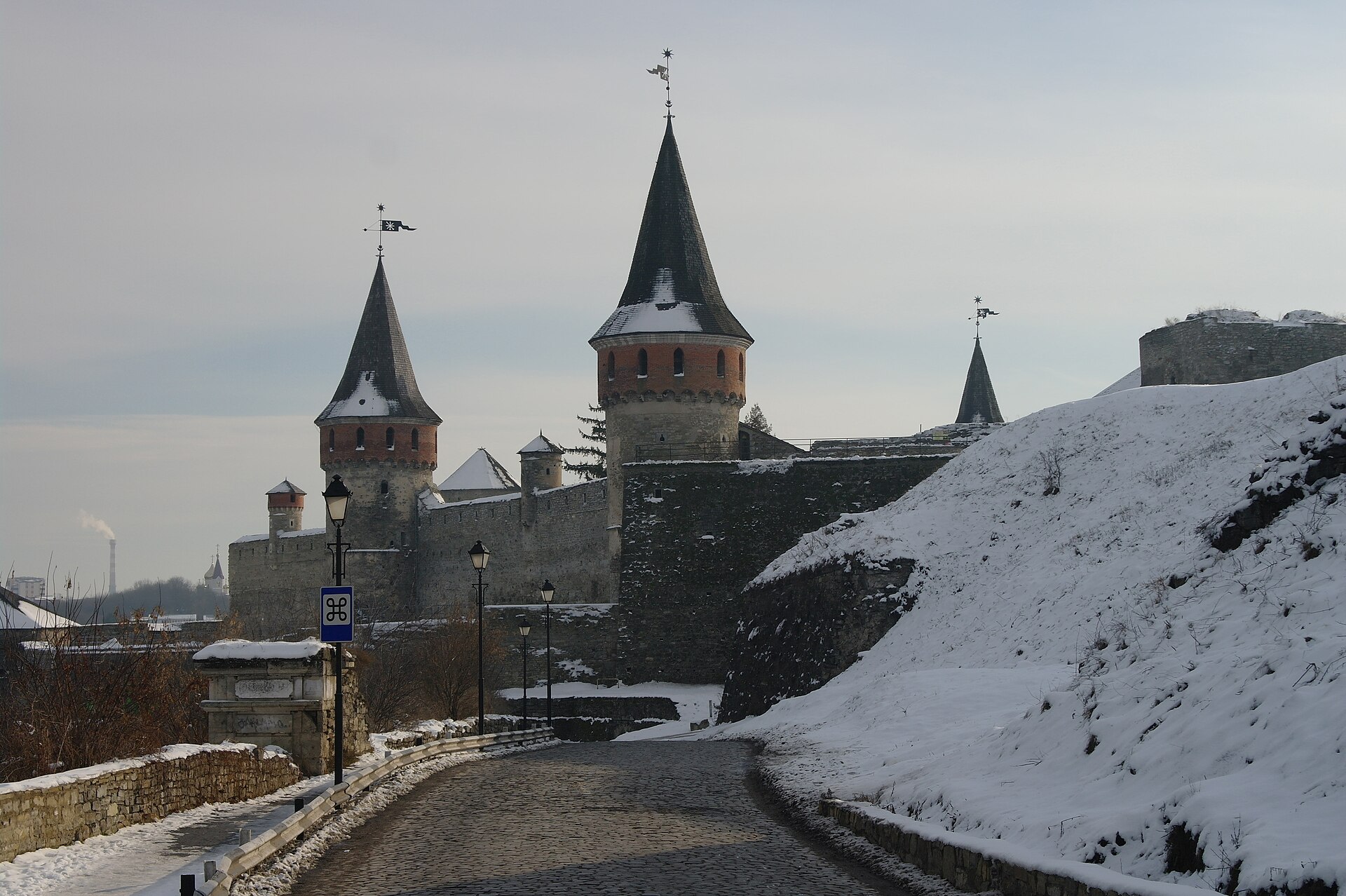
One of the most striking features of Kamianets-Podilskyi is its array of great towers, which rise above the walls and give the fortress its bristling, many-pointed silhouette. Each of these towers has its own name and its own history, and several were built or rebuilt by the Polish kings who held the fortress, adding to its strength and its grandeur. The towers served as strongpoints in the defence, as places of residence and command, and as platforms for the guns that defended the castle, and they remain among its most memorable features.
Walking among the towers today, you can appreciate both their military purpose and their considerable architectural beauty, for they were built with real care and skill. Some are round and some are square, some tall and some squat, and together they create a wonderfully varied and picturesque ensemble against the sky. The towers embody the long and layered history of the fortress, having been raised and rebuilt by different rulers across the centuries, and they are a constant delight to explore, each one offering its own perspective on the castle and the dramatic canyon that surrounds it.
Each of the great towers has accumulated its own stories and legends over the centuries, and local tradition attaches tales and names to many of them, adding a rich layer of folklore to the history of the fortress. To wander among them is to move through a landscape of memory as well as of stone, where every tower seems to hold some echo of the past. This blend of solid history and living legend is part of what gives Kamianets its special atmosphere, and it makes exploring the towers a journey of the imagination as much as of the feet.
The Bridge and the Old Town
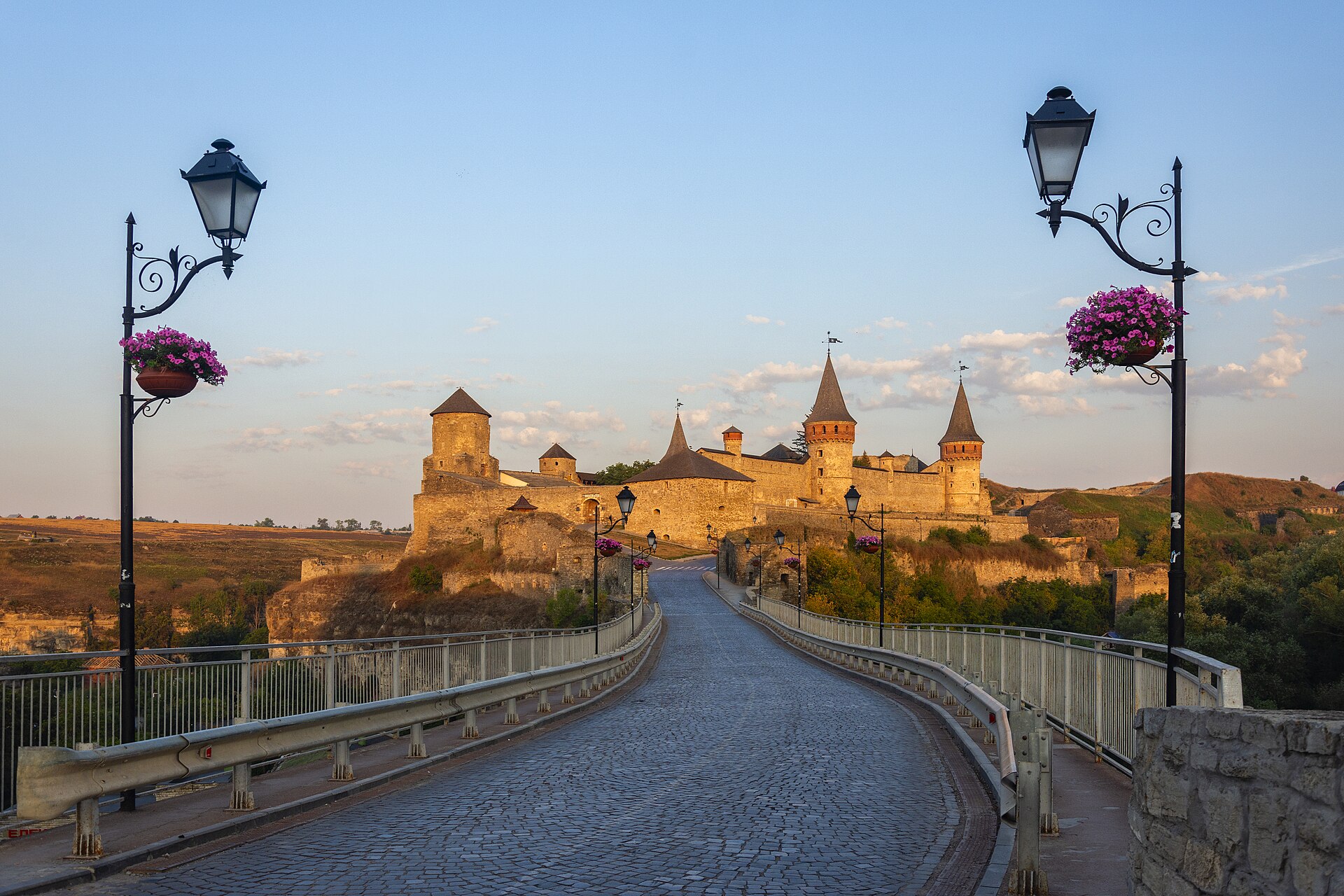
The castle of Kamianets-Podilskyi is inseparable from the old town it guards, and the two are linked by a historic bridge that crosses the canyon to connect the fortress with the island of land on which the town stands. This bridge, of great age and its own long history, is the vital link across the deep ravine, and crossing it is one of the memorable experiences of a visit, offering dramatic views down into the canyon and across to the fortress rising on the far side.
The old town of Kamianets-Podilskyi is itself a treasure, a historic settlement crowded onto its rocky island within the loop of the river, filled with churches, monuments, and buildings from across the centuries. The town and the castle together formed a single fortified whole, the castle guarding the approach and the town sheltering within the natural walls of the canyon. To explore both is to understand how completely this remarkable site was shaped for defence, and to appreciate the rich history of one of the most important towns of the whole Podillia region.
The dramatic approach across the bridge, with the canyon falling away on either side, is one of the defining experiences of a visit to Kamianets, and it perfectly captures the relationship between the fortress and the town it guarded. Standing on the bridge, poised between the stronghold and the island town, you grasp at once the logic of the whole remarkable site. The bridge is not merely a means of access but a key part of the story, the vital thread that connected the guardian fortress to the community it existed to protect.
The old town on its island rewards unhurried exploration, for it preserves layer upon layer of history within its compact bounds, from ancient churches to the traces of the many peoples who have lived here across the centuries. Together with the fortress, it forms a single extraordinary historic ensemble, and a full visit takes in both the guardian castle and the treasure it protected. To see one without the other would be to miss half the story of this remarkable place.

The Southeastern Bulwark
For much of its history, Kamianets-Podilskyi served as one of the most important border fortresses of the great state known as the Polish-Lithuanian Commonwealth, guarding its southeastern frontier. This vast realm, one of the largest in Europe in its day, faced constant danger along its southern and eastern borders from the raiding of the Crimean Tatars and, above all, from the might of the expanding Ottoman Empire. Against these threats, Kamianets stood as a crucial bulwark, its strong walls and superb natural position making it a keystone of the frontier defences.
The strategic importance of the fortress can hardly be overstated, for it commanded a key route into the heart of the Commonwealth, and its fall would open the way for an invading army. The rulers of the Commonwealth understood this well, and they invested heavily in strengthening the fortress and maintaining its garrison. Kamianets became known as a great shield of the realm, a fortress upon which the security of a vast region depended. Its role as a frontier bulwark shaped its whole history and made it the scene of some of the most dramatic events in the long struggle between the powers of eastern Europe.
The defence of this frontier was one of the great and continuous tasks of the Polish-Lithuanian Commonwealth, absorbing vast resources and shaping the whole character of the southeastern borderlands. Kamianets stood at the very heart of this effort, and the fortunes of the fortress were bound up with the security of the entire realm. To hold Kamianets was to hold the gate; to lose it was to lay the country open. This immense strategic weight explains why the fortress was so lavishly fortified and so fiercely contested, and why its fall would send shockwaves across all of Europe.

On the Frontier of Empires
Kamianets-Podilskyi stood on one of the great fault lines of European history, the long and shifting frontier between the Christian states of central Europe and the Muslim empire of the Ottomans to the south. This was a border of constant tension and frequent violence, where raiding, warfare, and the clash of civilisations shaped the lives of all who lived there. As one of the strongest fortresses on this frontier, Kamianets was in the front line of that great confrontation, its garrison ever watchful against the threat from the south.
Life on such a frontier was hard and dangerous, and the fortress and its town knew the constant possibility of attack. Yet this exposed position also made Kamianets a place of great importance and a meeting point of different peoples and cultures, for frontiers are places of exchange as well as of conflict. The fortress guarded not just a border but a whole way of life, standing firm against the tides of war that swept back and forth across this contested land. Its history is inseparable from the great struggle between empires that defined this corner of Europe for centuries.
Frontiers like this one were among the most dynamic and dangerous places in the early modern world, zones where empires ground against one another and where the fate of whole peoples could turn on the strength of a single fortress. Kamianets was one of the great anchors of this frontier, a fixed point of Christian power projecting into a contested land. The men who garrisoned it lived always in the shadow of possible attack, and their vigilance guarded not only the fortress but the whole region behind it from the ever-present threat of raid and invasion.
The Great Ottoman Siege of 1672
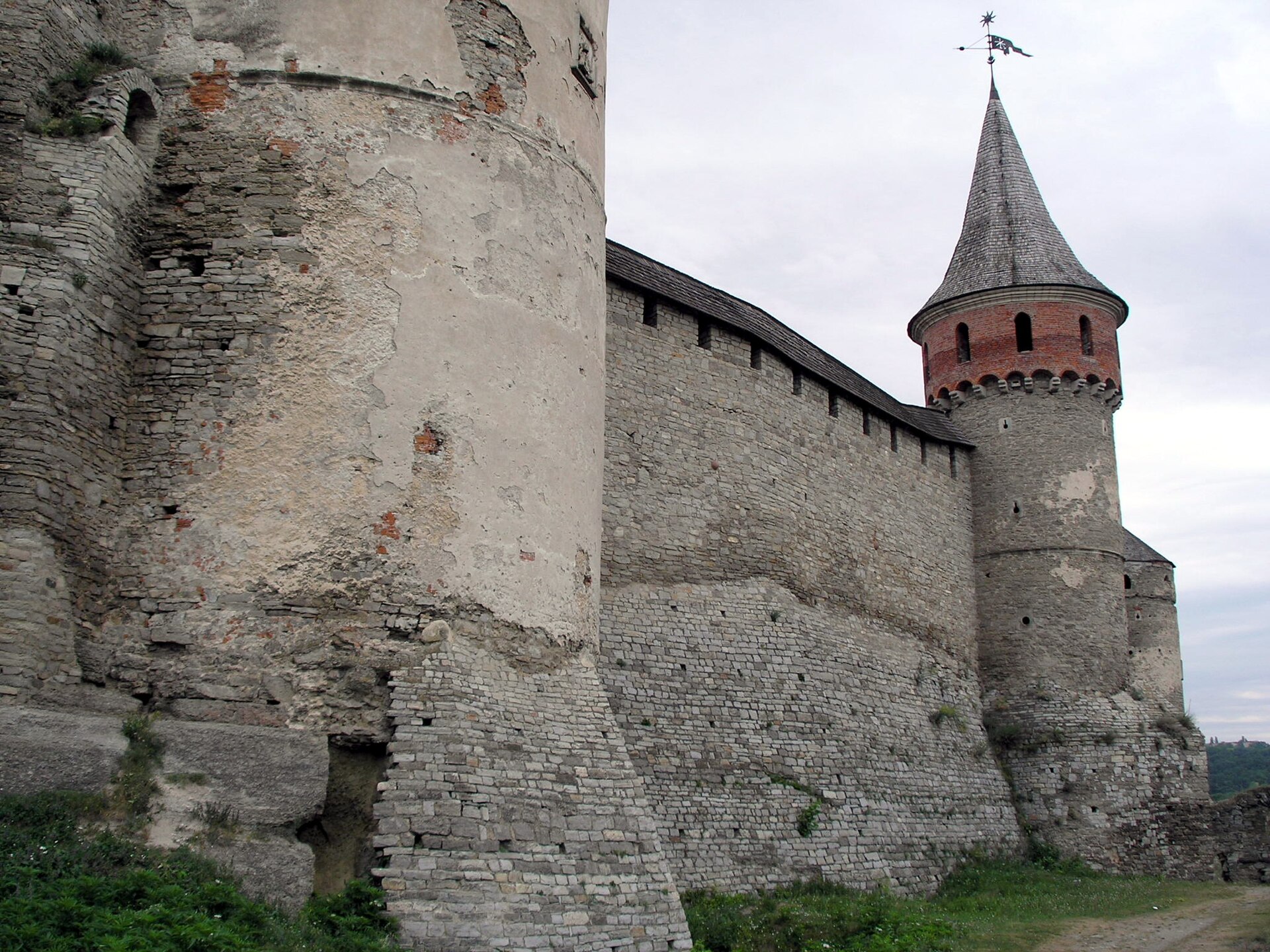
The most dramatic event in the whole history of Kamianets-Podilskyi came in the year 1672, when the fortress faced the full might of the Ottoman Empire. A vast Ottoman army, led by the sultan himself, marched into the region and laid siege to the great fortress, bringing to bear the enormous resources and formidable artillery of one of the most powerful states in the world. The defenders, though brave, were heavily outnumbered, and after a fierce siege the fortress was forced to surrender to the overwhelming Ottoman force.
The fall of Kamianets was a momentous event, for it meant the loss of the great bulwark of the Commonwealth’s southeastern frontier and opened the region to Ottoman control. The siege has become one of the most famous episodes in the history of the wars between the Commonwealth and the Ottomans, remembered in story and legend, and it marked the beginning of a new and very different chapter in the life of the fortress. For the first time, the great Christian stronghold passed into the hands of the Ottoman sultan, and the crescent moon rose over its ancient walls.
The siege of 1672 sent a shock through the whole of Christian Europe, for the fall of so mighty a fortress to the Ottomans seemed to open the way for further advances into the heart of the continent. The event was recorded, mourned, and remembered, and it became a symbol of the great Ottoman threat that hung over Europe in that age. For Kamianets itself, the siege marked the most dramatic turning point in its entire history, the moment when the great Christian bulwark passed, however temporarily, into the hands of the sultan.
It is worth remembering that the defenders of Kamianets faced an all but impossible task in 1672, standing against one of the largest and best-equipped armies of the age with only a modest garrison. Their resistance, though ultimately unsuccessful, was remembered as a brave defence of a great fortress against overwhelming odds. The siege thus became a story not only of loss but of courage, and it took its place among the celebrated episodes of the long wars along this embattled frontier.
Under the Crescent Moon
For nearly three decades after its capture, Kamianets-Podilskyi was held by the Ottoman Empire, becoming the centre of a new Ottoman province and the northernmost great fortress of the sultan’s vast domains. Under Ottoman rule, the town and its fortress took on a new character, and the conquerors made their own mark upon the place, most notably by converting the main church of the town into a mosque and adding to it a tall minaret, a striking symbol of the change in the fortunes of the fortress.
This period of Ottoman rule was a remarkable interlude in the history of Kamianets, a time when this deep in the lands of eastern Europe there stood a great fortress under the crescent flag of the sultan. The Ottomans valued Kamianets as a strategic strongpoint and a base for their power in the region, and they maintained and used the fortress that they had won at such cost. The nearly thirty years of Ottoman control left their traces on the town and its monuments, adding yet another layer to the extraordinarily rich and varied history of this frontier stronghold.
The Ottoman interlude gives Kamianets a fascinating dual heritage found in few other places so far into eastern Europe, for here the cultures of the Christian Commonwealth and the Muslim empire met and left their traces side by side. The minaret raised beside the old church remains the most visible symbol of this remarkable period, a lasting reminder that the crescent once flew over these Christian walls. This layering of cultures is part of what makes the history of Kamianets so rich and so unusual, a true crossroads of civilisations.

The Return and the New Castle
At the very end of the seventeenth century, the fortunes of Kamianets-Podilskyi changed once more, for by the terms of a great peace treaty the fortress and its region were returned from Ottoman control to the Polish-Lithuanian Commonwealth. The crescent gave way once again to the cross, and in a famous gesture a golden statue of the Virgin Mary was placed atop the very minaret that the Ottomans had raised, a striking symbol of the return of the fortress to Christian rule that can still be seen today.
With the fortress back in the hands of the Commonwealth, further work was done to strengthen and modernise its defences, including the building of new bastioned fortifications designed to withstand the artillery of the age. The lessons of the great siege had been learned, and the defenders sought to make Kamianets stronger than ever against any future attack. This later phase of building added to the already complex fabric of the fortress, and the combination of the old medieval castle and the newer bastions gives Kamianets much of the fascinating layered character that it retains today.
The gesture of placing a statue of the Virgin Mary atop the Ottoman minaret is one of the most striking and memorable symbols in the whole history of the fortress, capturing in a single image the dramatic reversal of fortunes that the return to Christian rule represented. Rather than tearing down the minaret, the returning rulers chose to crown it with their own emblem, transforming a symbol of Ottoman conquest into one of Christian restoration. It remains today a unique and evocative monument to the extraordinary history of this frontier stronghold.
From Fortress to Prison to Museum
As the centuries passed and the frontiers of Europe shifted once more, the military importance of Kamianets-Podilskyi gradually declined, and the fortress that had guarded the frontier for so long found itself far from any active border. Like many great strongholds whose fighting days were over, it was put to other uses, and for a time it served as a prison, its mighty walls now confining prisoners rather than repelling armies. It was a humbler role for so proud a fortress, but it kept the old castle in use through a quieter age.
In more recent times, the true value of Kamianets-Podilskyi as one of the great historical monuments of Ukraine came to be recognised, and the fortress was preserved and turned into a museum. Today it stands as a protected historical and architectural treasure, its walls and towers open to visitors who come from across the country and beyond to marvel at its dramatic setting and its long and eventful history. The transformation from frontier fortress to prison to museum is a familiar one among Europe’s great castles, and at Kamianets it has ensured the survival of one of the country’s most precious sites.
The long decline of Kamianets from vital frontier fortress to quiet prison mirrors the fate of countless great strongholds across Europe, whose military purpose faded as borders shifted and the nature of warfare changed. Yet the very strength of the old walls, which had once repelled armies, now made them useful for confining prisoners, and this humbler role at least kept the fortress in use and cared for through the centuries when many other castles were left to crumble into ruin. In this way the fortress survived to be appreciated and preserved by a later age.
A Wonder of Ukraine Today
Today Kamianets-Podilskyi is celebrated as one of the true wonders of Ukraine, and it has been officially recognised among the greatest treasures of the nation. Its combination of a dramatic natural setting, a mighty and ancient fortress, and a rich and eventful history has made it one of the most beloved and most visited places in the whole country, a source of national pride and a magnet for travellers drawn by its beauty and its stories. To stand before it is to understand at once why it holds so special a place in the affections of Ukrainians.
A visit to the fortress today is a wonderful experience, offering the chance to explore its many towers and walls, to walk the historic bridge, to gaze down into the dramatic canyon, and to discover the rich history of the town it guards. The whole ensemble of the castle, the canyon, and the old town forms one of the most remarkable historic landscapes in eastern Europe, a place where nature and history combine to unforgettable effect. Kamianets-Podilskyi is a jewel of Ukraine, and it rewards every visitor with an experience of rare drama and beauty.
The recognition of Kamianets-Podilskyi as a national treasure reflects the deep place it holds in the identity and imagination of Ukraine, a country rich in history and proud of its heritage. The fortress has become a powerful symbol of the nation’s past, a place where the long and often difficult history of these lands is made visible in stone. For Ukrainians it is far more than a tourist attraction; it is a monument to the endurance and the heritage of their nation, and a source of enduring pride.
For the visitor, the sheer variety of things to see and do at Kamianets ensures that a visit is never dull, from exploring the depths of the towers to admiring the sweeping views and delving into the many-layered history of the site. The fortress rewards both the casual visitor drawn by its beauty and the dedicated enthusiast fascinated by its history, and it leaves everyone with an unforgettable impression. It is a place that lives up entirely to its billing as one of the great wonders of the nation.
Finding Kamianets-Podilskyi
Kamianets-Podilskyi lies in the west of Ukraine, in the historic region of Podillia, set among the rolling countryside through which the Smotrych River winds its dramatic canyon. Though it stands somewhat apart from the largest cities, the fortress is well worth the journey, and it has long been a favourite destination for travellers exploring the rich heritage of western Ukraine. The approach to the town and the first sight of the great fortress above its canyon are experiences not soon forgotten.
The fortress and its old town form the heart of a region full of history and natural beauty, and a visit to Kamianets-Podilskyi can be combined with the exploration of the wider Podillia region and its many other historic sites. The dramatic landscape of canyons and rivers that surrounds the town is beautiful in its own right, adding to the appeal of a visit. Here are the exact coordinates so you can find your way to the great fortress in the canyon.
View on Google Maps: 48.6733, 26.5628

Castles Nearby
If Kamianets-Podilskyi has drawn you into the history of the eastern frontier, two more great fortresses of the region make a fine next stop.
- Malbork Castle in Poland is the colossal brick fortress of the Teutonic Knights.
- Trakai Island Castle in Lithuania is the island stronghold of the grand dukes.
The Fortress in the Canyon
Few fortresses anywhere combine such natural drama and such eventful history as Kamianets-Podilskyi. Guarding its rocky peninsula within the loop of a deep river canyon, it is one of the most spectacularly sited strongholds in all of Europe, and its long story is worthy of its setting. This was a great bulwark of the frontier, a fortress that stood against the raiding of the Tatars and the might of the Ottomans, that fell after a famous siege and rose again, and that has come down through the centuries to become one of the most beloved treasures of Ukraine.
That is what makes a visit to Kamianets-Podilskyi so unforgettable. You are not just admiring a picturesque castle but standing at a great crossroads of history and nature, in a place where the shape of the land itself created a fortress and where the tides of war between empires washed back and forth for centuries. To walk its towers, cross its bridge, and gaze down into its canyon is to feel the full drama of the eastern European past. Kamianets-Podilskyi is the fortress in the canyon, and it remains one of the true wonders of Ukraine.
If your travels ever take you to Ukraine, Kamianets-Podilskyi deserves a place at the very top of your list. Make the journey into the Podillia countryside, cross the historic bridge above the canyon, and explore the towers and walls of one of the most spectacularly sited fortresses in all of Europe. Gaze down into the ravine, trace the long and dramatic story in the layered stonework, and let the sheer wonder of the place work upon you. Kamianets-Podilskyi has stood guard above its canyon through centuries of war and change, and it is ready to share its extraordinary story with everyone who comes.
You May Like
Mafra, the Palace a King Built From a Vow


3 thoughts on “Kamianets-Podilskyi Castle: Ukraine’s Fortress in the Canyon”