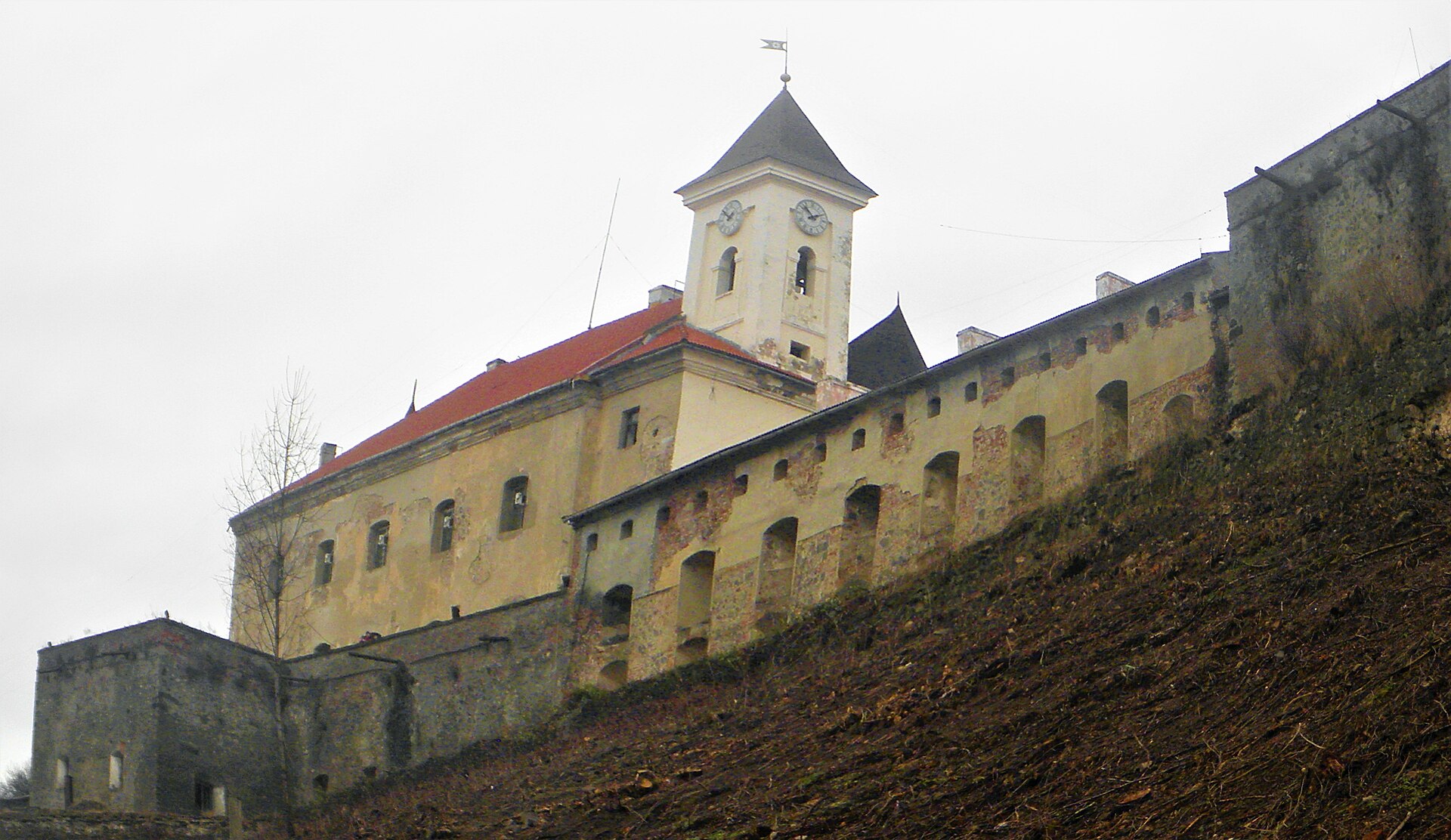
In the far west of Ukraine, in the beautiful region of Transcarpathia beyond the great arc of the Carpathian mountains, a mighty medieval castle crowns a lone hill rising abruptly from the surrounding plain. Palanok Castle, standing high above the town of Mukachevo on an ancient volcanic height, is one of the finest and best-preserved fortresses in all of Ukraine, its three tiers of walls and towers climbing the steep slopes of the hill. The sight of the great castle rising alone above the flat countryside is unforgettable, and it has made Palanok one of the most beloved historic sites in the region.
Palanok is a castle whose long history is bound up with the much-contested past of Transcarpathia, and above all with one of the most remarkable episodes in all of European history, a heroic three-year defence led by a woman, Ilona Zrínyi, that has become legendary. From medieval stronghold to the princely seat of the Rákóczi family, from the cradle of a great war of independence to a prison and finally a museum, its story is as dramatic as its setting. In this article you will explore the whole of it. Come and discover the castle on the volcanic hill.
What makes Palanok so unforgettable is the way it unites a spectacular setting with a truly stirring history. The sight of the tiered fortress on its lone volcanic hill would be memorable enough on its own, but combined with the epic story of the three-year defence led by a heroic woman, and the castle’s ties to a great struggle for freedom, it becomes something extraordinary. Few castles anywhere gather so much drama and beauty into a single place, and it is this rare combination that has made the castle on the hill one of the great treasures of Ukraine.
In This Article
- The Castle on the Volcanic Hill
- A Fortress Above the Plain
- Guardian of the Carpathian Gateway
- Three Castles in One
- The Age of the Rákóczis
- Ilona Zrínyi, the Heroine of Palanok
- The Three-Year Siege
- Cradle of a War of Independence
- The Deep Well and the Castle’s Secrets
- From Fortress to Prison
- A Museum on the Hill
- Exploring Palanok Today
- Finding Palanok Castle
- Castles Nearby
The Castle on the Volcanic Hill
In the far west of Ukraine, in the beautiful region of Transcarpathia beyond the great arc of the Carpathian mountains, a mighty medieval castle crowns a lone hill rising abruptly from the surrounding plain. Palanok Castle, standing high above the town of Mukachevo, is one of the finest and best-preserved fortresses in all of Ukraine, its tiered walls and towers climbing the slopes of an ancient volcanic hill. The sight of the great castle rising alone above the flat countryside is unforgettable, and it has made Palanok one of the most beloved historic sites in the region.
Palanok is a castle whose long history is bound up with the complex and much-contested past of Transcarpathia, a borderland that has passed through the hands of many powers across the centuries. Above all, the castle is famous for one of the most remarkable episodes in all of European history, a heroic defence led by a woman that has become legendary. From medieval stronghold to princely seat to prison and finally to museum, its story is as dramatic as its setting. In this article you will explore the whole of it. This is the story of the castle on the volcanic hill.
There is a special drama to a fortress that stands alone above a plain, visible from far off and commanding all around it, and Palanok possesses this quality in full. Rising on its solitary hill, the castle dominates the whole landscape of Mukachevo and its surroundings, an unmistakable landmark that draws the eye from every direction. This commanding presence, at once beautiful and formidable, is part of what has made the castle so beloved, and it explains why Palanok has become one of the great symbols of Transcarpathia and of western Ukraine.
A Fortress Above the Plain
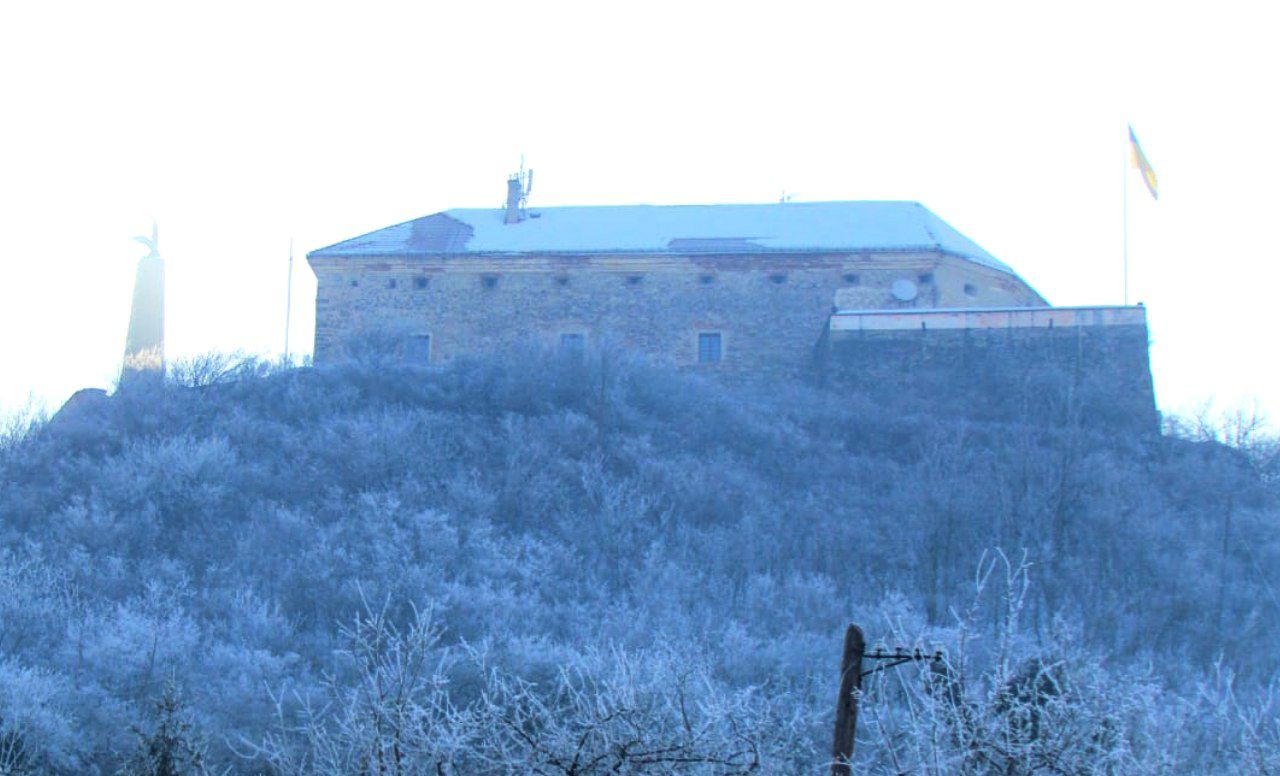
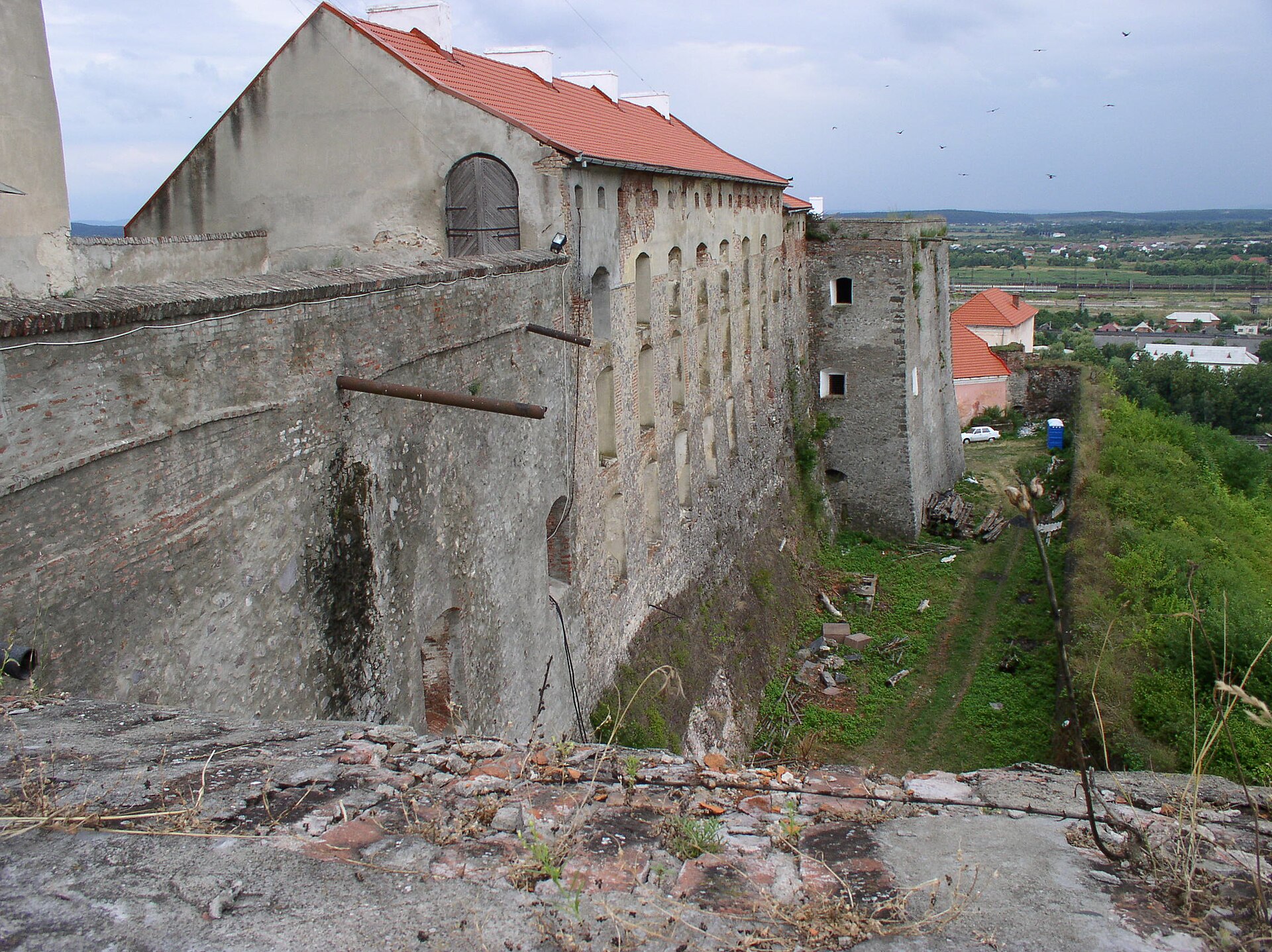
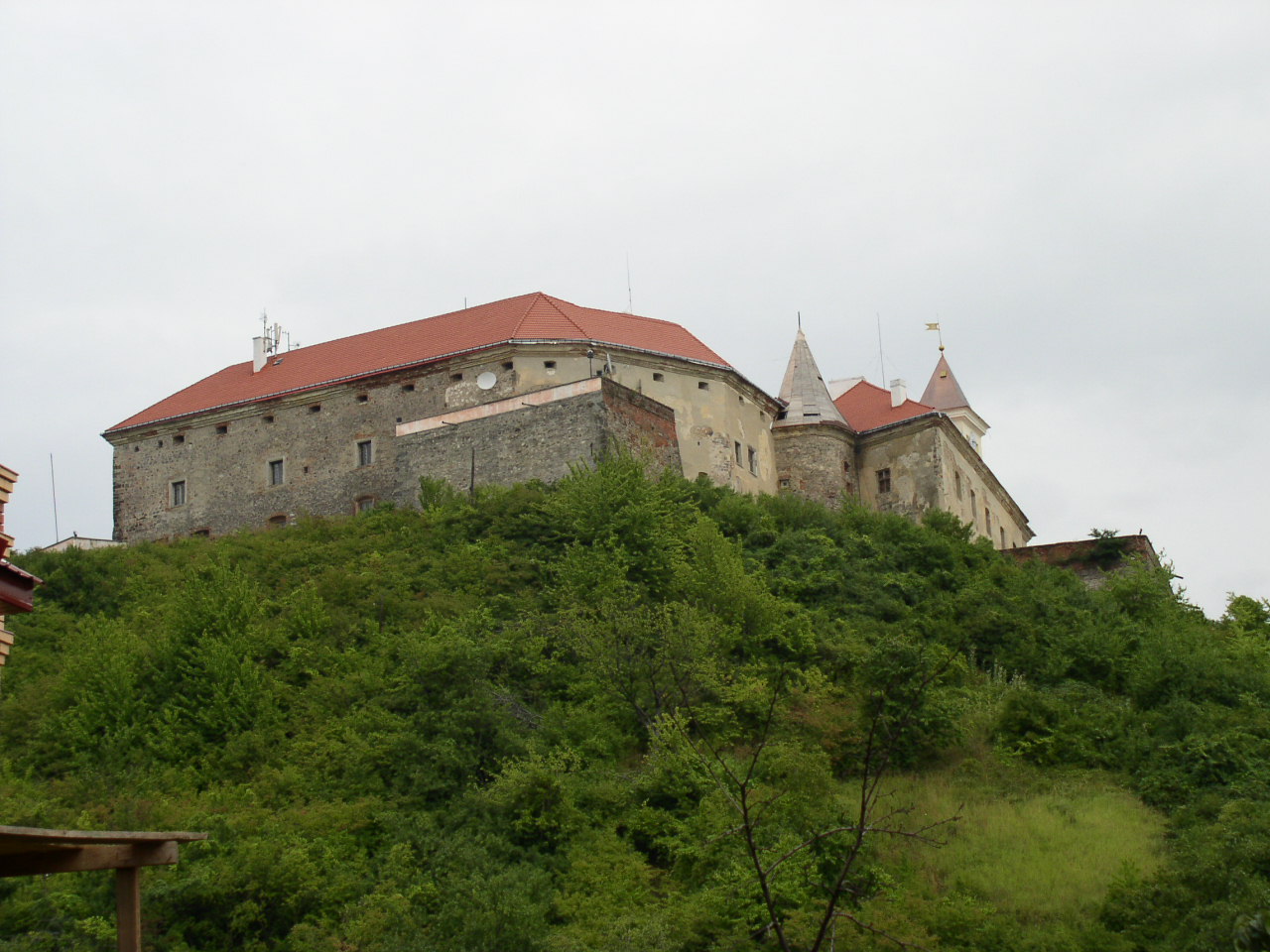
The great strength of Palanok Castle lies in its remarkable natural position, for it stands upon a hill that rises steeply and abruptly from the flat plain around Mukachevo, an ancient volcanic height that lifts the fortress high above the surrounding country. From every side, an attacker would have to climb the steep slopes under the eyes and weapons of the defenders, while the castle above commanded a magnificent view over the plain and the approaches. This lone hill, rising so dramatically from the level land, made a natural fortress that the builders exploited to the full.
The isolation of the hill, standing apart from any other height, added greatly to the castle’s defensive strength, for it could not be easily approached or bombarded from higher ground. The steep slopes and the commanding position made Palanok one of the strongest fortresses in the whole region, and its garrison could watch over the plain and the important routes that crossed it. The dramatic setting, with the great tiered castle crowning the abrupt volcanic hill above the town, is one of the glories of Palanok, and it explains at once why so mighty a stronghold was raised on this particular spot.
The volcanic origin of the hill is itself a fascinating detail, for it means that the castle stands upon the remains of ancient geological forces, a height thrown up long ago and now crowned by the works of man. This union of a dramatic natural formation with a mighty human fortress is one of the things that gives Palanok its special character. The builders who chose this hill understood its value perfectly, and in raising their castle upon it they created a stronghold whose strength came as much from the earth itself as from the walls they built.
Guardian of the Carpathian Gateway
For much of its history, Palanok Castle guarded an important gateway in the region of Transcarpathia, watching over the routes that crossed this borderland between the great plain of central Europe and the passes through the Carpathian mountains. This was a strategic position of real importance, for whoever held the castle commanded the approaches to and from the mountains, and the fortress played a key role in the defence and control of the region across the medieval and early modern periods.
Transcarpathia was for long centuries a part of the Kingdom of Hungary, and Palanok, as one of its chief fortresses, belonged to a succession of powerful Hungarian noble families who held it as a stronghold and a residence. The castle grew and was strengthened over the generations as its owners and the demands of warfare required, developing into the formidable tiered fortress that survives today. Its role as a guardian of this Carpathian gateway shaped its whole history, and it made Palanok a prize valued and fought over by the powers that contested this important borderland.
The borderland of Transcarpathia has always been a meeting place of peoples and powers, a region where the histories of many nations overlap and intertwine, and Palanok stands as a monument to that complex heritage. As one of the great fortresses of the region, it was caught up in the shifting fortunes of the many states that have held this land, and its walls carry the memory of all of them. Understanding this rich and layered history is the key to appreciating Palanok, for the castle is a witness to the whole dramatic story of the Carpathian borderlands.
Three Castles in One
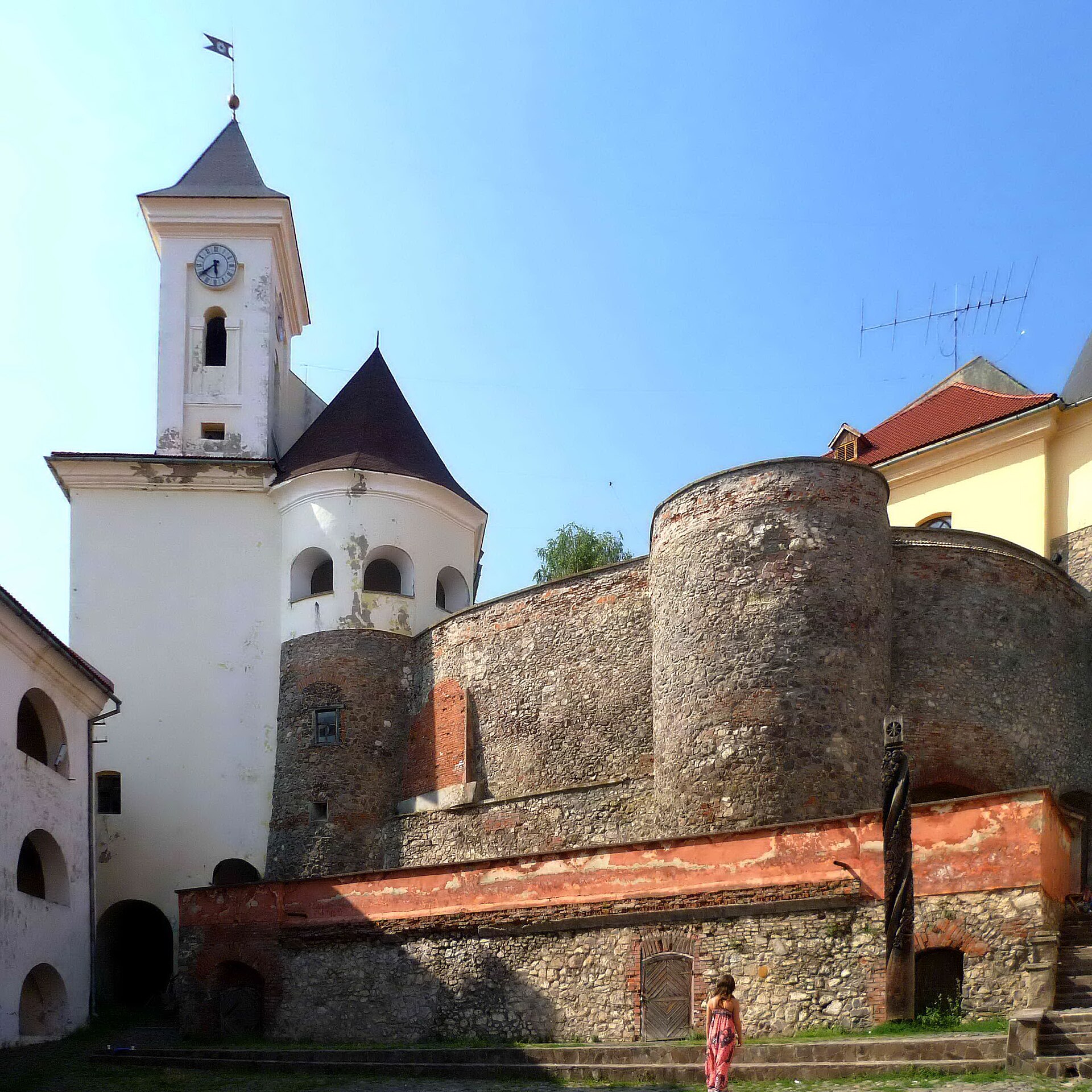
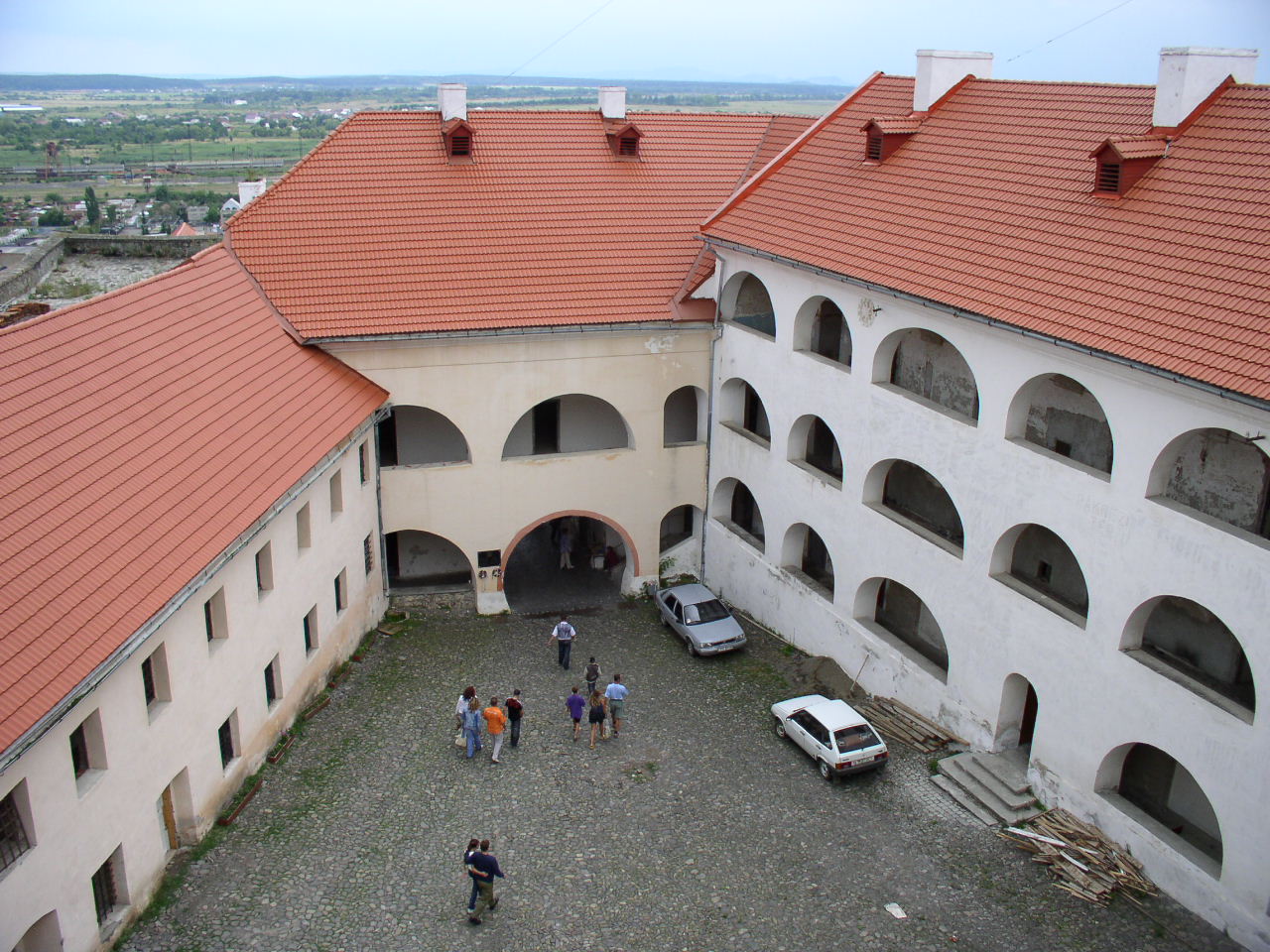
One of the most distinctive features of Palanok is the way it is built on three separate levels, ascending the volcanic hill in a series of terraces so that the fortress is, in effect, three castles in one. At the bottom stands the Lower Castle, the first line of defence and the largest part of the complex; above it the Middle Castle occupies the slopes; and crowning the very summit stands the High Castle, the oldest and most strongly defended part, the ultimate stronghold of the fortress. Together these three levels form a magnificent and formidable whole.
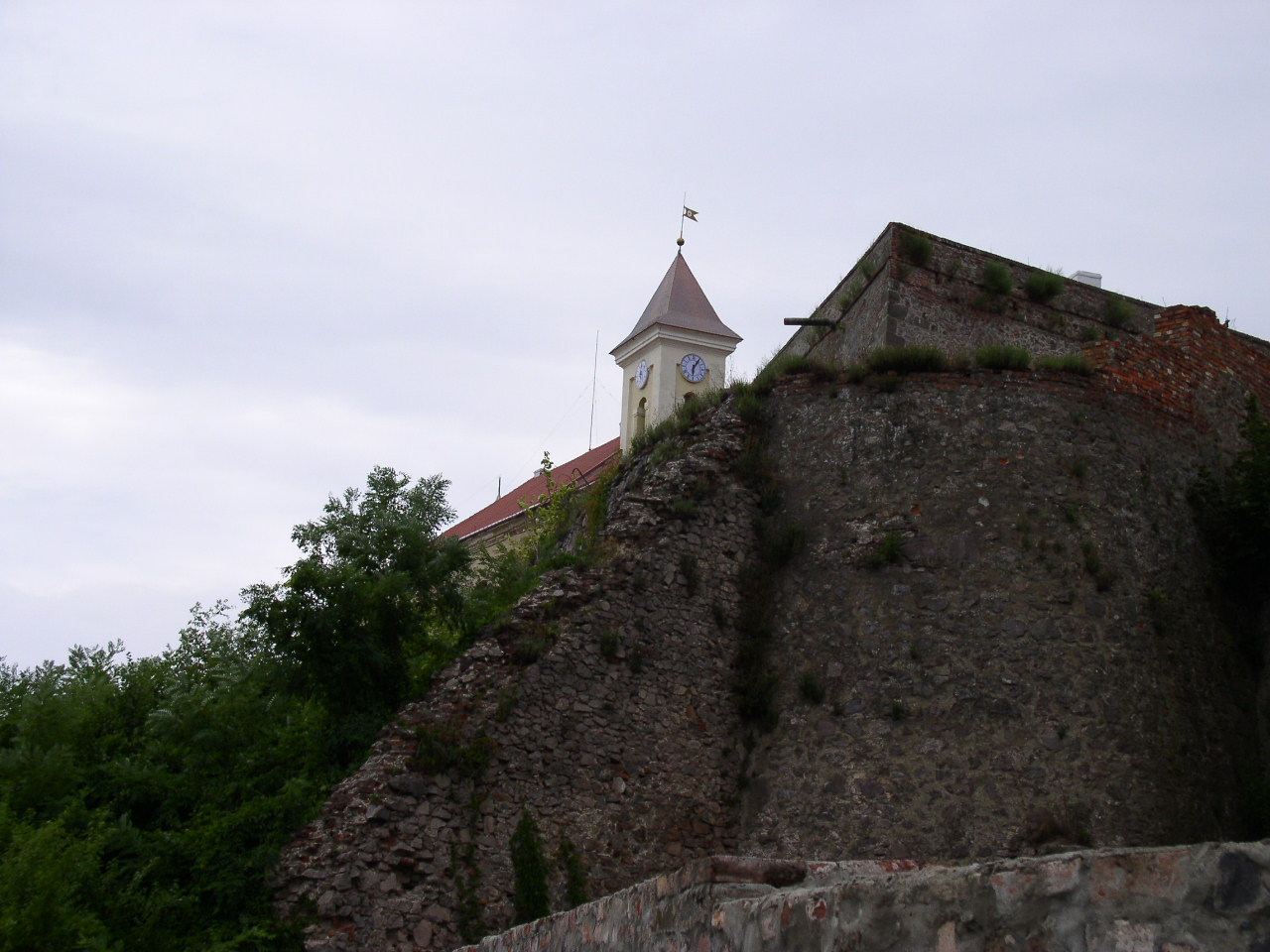
This tiered arrangement, exploiting the shape of the hill, was a brilliant piece of defensive design, for an attacker who broke into the Lower Castle would still face the daunting task of storming the Middle and then the High Castle above. Each level could be defended in turn, and the summit remained a last redoubt of great strength. Exploring the three levels of Palanok today, climbing from the Lower Castle up through the Middle to the High Castle at the top, gives a vivid sense of the ingenuity of the design and the strength of the fortress, and it is one of the great pleasures of a visit.
The three-tiered design of Palanok is not merely impressive to look at but represents a sophisticated understanding of the art of defence, for it turned the shape of the hill into a series of successive obstacles that an attacker would have to overcome one by one. Few castles anywhere are so clearly organised into distinct defensive levels, and the arrangement gave Palanok a depth of defence that made it exceptionally strong. It is a design that repays close study, and moving through the three levels today, one can appreciate the skill and forethought that went into the making of this great fortress.
The Age of the Rákóczis
The most glorious and famous period in the history of Palanok Castle came when it passed into the hands of the Rákóczi family, one of the most powerful noble houses of the region, whose princes ruled over Transylvania and led the Hungarian people in their struggles for freedom. Under the Rákóczis, Palanok became a princely seat and a centre of power, its walls associated with some of the most dramatic events in the history of Hungary and Transcarpathia. The family made the castle one of their chief strongholds, and it became bound up with their fortunes and their fame.
It was during the age of the Rákóczis that Palanok played its part in the great struggles of the Hungarian people against the domination of the Habsburg Empire of Austria, which sought to bring all of Hungary and Transylvania under its control. The castle became a symbol of resistance to that domination, a stronghold of the princely house that led the fight for Hungarian liberty. This association with the Rákóczis and their struggles gives Palanok a special place in the history of the region, and it forms the background to the most famous episode of all in the story of the castle.
The Rákóczi family were among the most important figures in the history of Hungary and Transylvania, leaders in the long struggle to preserve the liberties of their people against the centralising power of the Habsburg Empire. That Palanok should have been one of their chief strongholds ties the castle directly to some of the greatest events and personalities of central European history. The association with so illustrious a family gave the castle a fame and importance far beyond its region, and it set the stage for the heroic events that would make Palanok legendary.
Ilona Zrínyi, the Heroine of Palanok
Palanok Castle is above all famous for one extraordinary figure and one extraordinary event, for it was here that the noblewoman Ilona Zrínyi, a member of the Rákóczi family by marriage, led one of the most heroic defences in all of European history. When the armies of the Habsburg Empire came to besiege the castle, seeking to crush the resistance of the Rákóczis, it was Ilona Zrínyi who took command of the defence, and under her leadership the garrison of Palanok held out against the might of the empire with a courage and determination that astonished all of Europe.
That a woman should command the defence of a great fortress against a besieging imperial army was remarkable in itself, and Ilona Zrínyi’s leadership has made her one of the great heroines of the history of Hungary and the region. Her name is inseparable from Palanok, and she is remembered and honoured to this day as a symbol of courage and defiance. The story of her defence of the castle has become legendary, a tale of a brave woman holding a mighty fortress against overwhelming odds, and it is the most celebrated chapter in the whole long history of Palanok.
The figure of Ilona Zrínyi has become a powerful symbol of courage, patriotism, and the strength of women, celebrated not only in the region but across the lands that share in the history of her struggle. Her defence of Palanok was remarkable not only for its length and its heroism but for the fact that it was led by a woman in an age when such a role was almost unheard of, and this has only added to her fame. She is remembered as one of the great heroines of European history, and her name will forever be linked to the great fortress she so bravely defended.
Statues, songs, and stories have kept the memory of Ilona Zrínyi alive across the generations, and her defence of Palanok is taught and honoured as a great example of heroism and devotion to freedom. For visitors to the castle, knowing her story transforms the experience of walking its walls, for every stone seems to carry the memory of that extraordinary three-year stand. She remains the beating heart of the legend of Palanok, and it is impossible to visit the castle without feeling the presence of the brave woman who made it famous throughout Europe.

The Three-Year Siege
The defence of Palanok led by Ilona Zrínyi was no brief affair but an epic siege that lasted for around three years, an astonishing feat of endurance against the overwhelming power of the Habsburg Empire. For year after year, the garrison held out behind the tiered walls of the fortress, repelling assault after assault and refusing to surrender, even as the besiegers pressed them hard and the situation grew ever more desperate. The length and heroism of the defence made it one of the most famous sieges in the history of central Europe.
For three long years the great fortress on its volcanic hill defied the empire, a lone stronghold of resistance held together by the will of a remarkable woman. In the end, after a defence of extraordinary length and courage, the castle was at last given up, but the heroism of the resistance had already passed into legend. The three-year siege of Palanok stands as one of the great epics of the struggle for Hungarian liberty, and the memory of Ilona Zrínyi’s defiance has echoed down the centuries, giving the castle a fame that reaches far beyond the region.
Sieges of such length were rare even in an age of frequent warfare, and the endurance of the defenders of Palanok through three long years is a testament to their courage, their determination, and the strength of the fortress that sheltered them. Each passing year of the siege added to the fame of the defence, as word spread of the great fortress that would not fall and the brave woman who led its resistance. By the time the castle was finally given up, the siege had already become a legend, a story of heroism that would be told and retold for generations.
It is worth reflecting on what it must have meant to endure such a siege, year after year, with no certainty of relief and the might of an empire arrayed outside the walls. The courage and resolve required to hold out for so long, under the leadership of Ilona Zrínyi, were extraordinary, and they have rightly earned the defenders of Palanok a lasting place in the history of the region. The three-year siege stands as one of the supreme examples of heroic endurance in all of central European history.

Cradle of a War of Independence
The story of Palanok is bound up with one of the greatest struggles in the history of Hungary, the great war of independence waged against the Habsburg Empire under the leadership of the Rákóczi family. The son of Ilona Zrínyi, who as a child had lived through the great siege of Palanok, grew up to become the leader of a mighty uprising of the Hungarian people against Habsburg rule, one of the most important movements for national freedom in the history of central Europe. The castle, so closely tied to his family, was caught up in these great events.
The heritage of resistance embodied in the heroic defence of Palanok, and in the struggles of the Rákóczi family, made the castle a powerful symbol of the fight for Hungarian liberty. The great war of independence, though it ultimately did not succeed in throwing off Habsburg rule, became a cherished chapter in the national memory, and the figures associated with it, including the defenders of Palanok, were honoured as heroes. The castle thus stands as a monument not only to a famous siege but to a whole great struggle for freedom, one of the defining episodes in the history of the region.
The great war of independence that grew out of the struggles of the Rákóczi family was one of the defining events in the history of the Hungarian people, a mighty effort to throw off foreign domination and secure the freedom of the nation. Though it did not in the end succeed, it left a lasting legacy of national pride and a cherished memory of the fight for liberty. Palanok, so closely tied to the family that led this struggle, shares in that legacy, and it stands as a monument to one of the great freedom struggles of central European history.
The Deep Well and the Castle’s Secrets
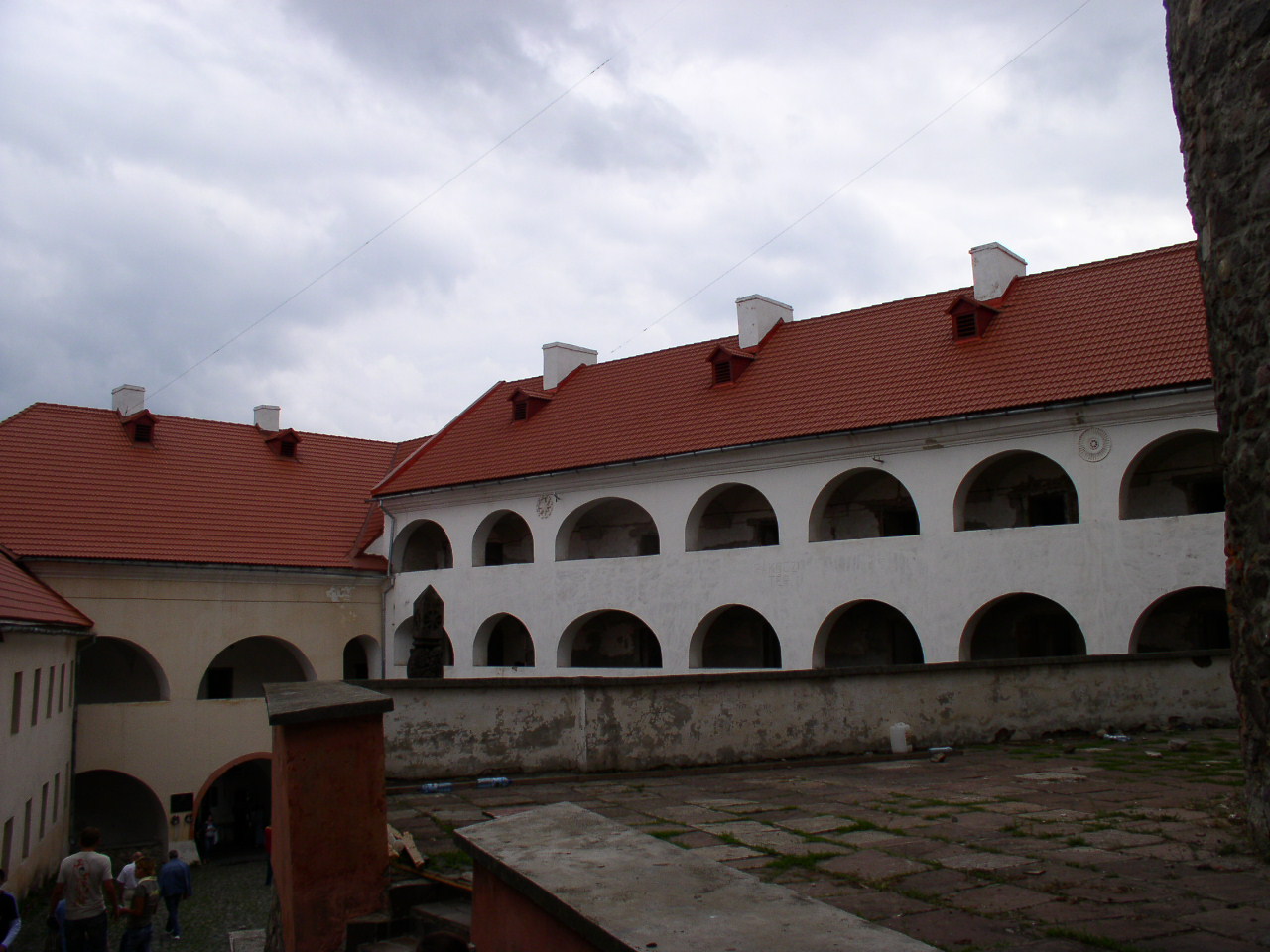
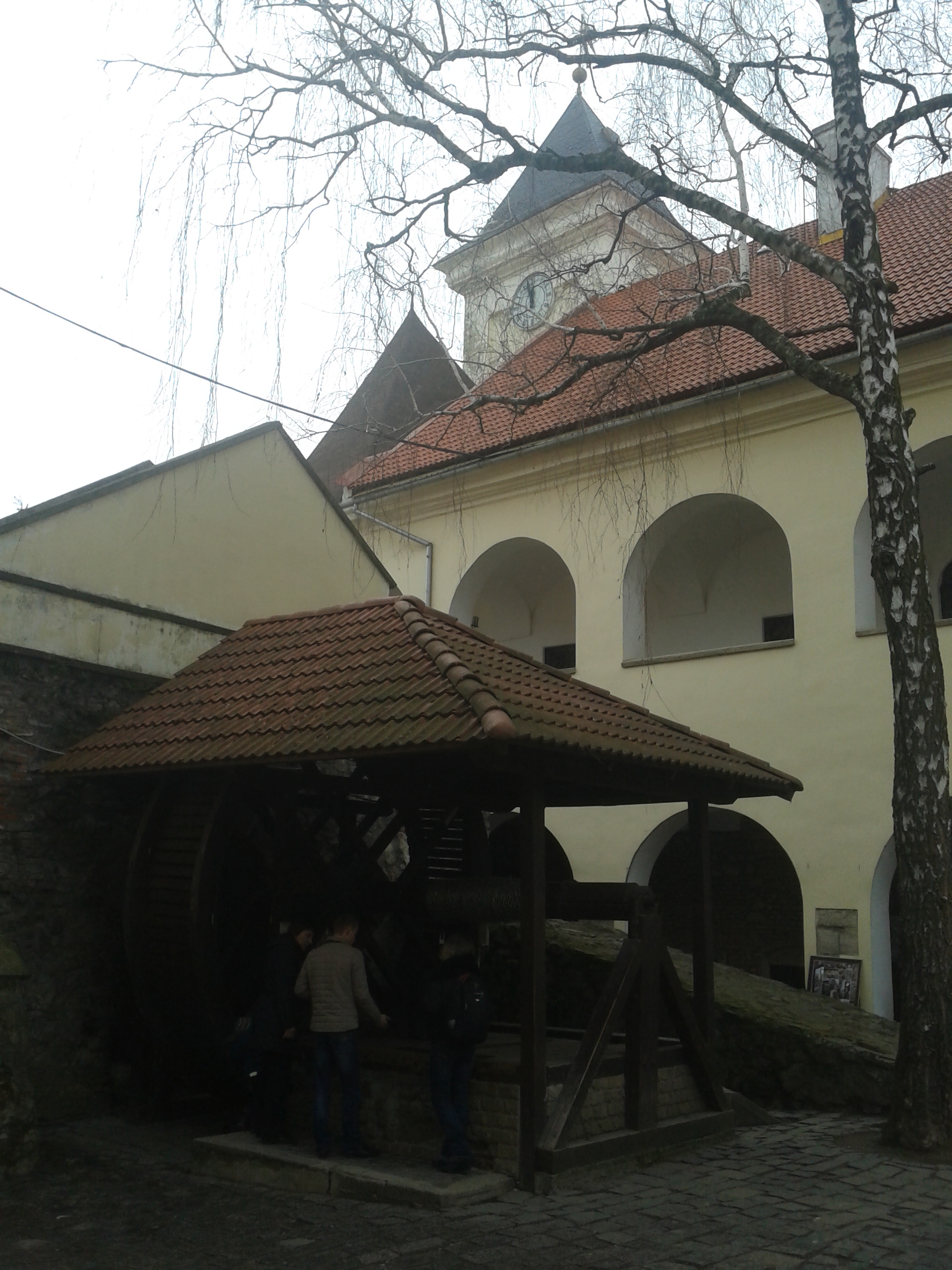
Among the most remarkable features of Palanok is its deep well, a shaft sunk to an astonishing depth through the volcanic rock of the hill to reach water far below. This well was vital to the survival of the fortress, for a castle under siege depended above all on a reliable supply of water, and the deep well of Palanok ensured that the garrison could hold out even when cut off from the world outside. It was one of the keys to the castle’s ability to withstand long sieges, including the epic three-year defence.
The digging of so deep a well through solid rock was a formidable feat of engineering, and the well remains one of the most impressive and memorable sights within the castle. Around it, as around all great fortresses, legends have gathered, adding to the mystery and romance of the place. The well is a reminder of the practical realities that lay behind the great sieges and dramas of the castle’s history, for it was such unglamorous but essential features as a reliable water supply that made possible the heroic defences for which Palanok is famous.
Features like the deep well remind us that behind the drama and heroism of the great sieges lay the hard practical realities of survival, and that a fortress was only as strong as its ability to feed and water its defenders. The engineering skill and effort that went into sinking so deep a shaft through volcanic rock were considerable, and the result was a resource of vital importance to the castle. The well is one of the most memorable sights of Palanok, and it offers a fascinating glimpse into the practical foundations upon which the great dramas of the castle’s history were built.
From Fortress to Prison
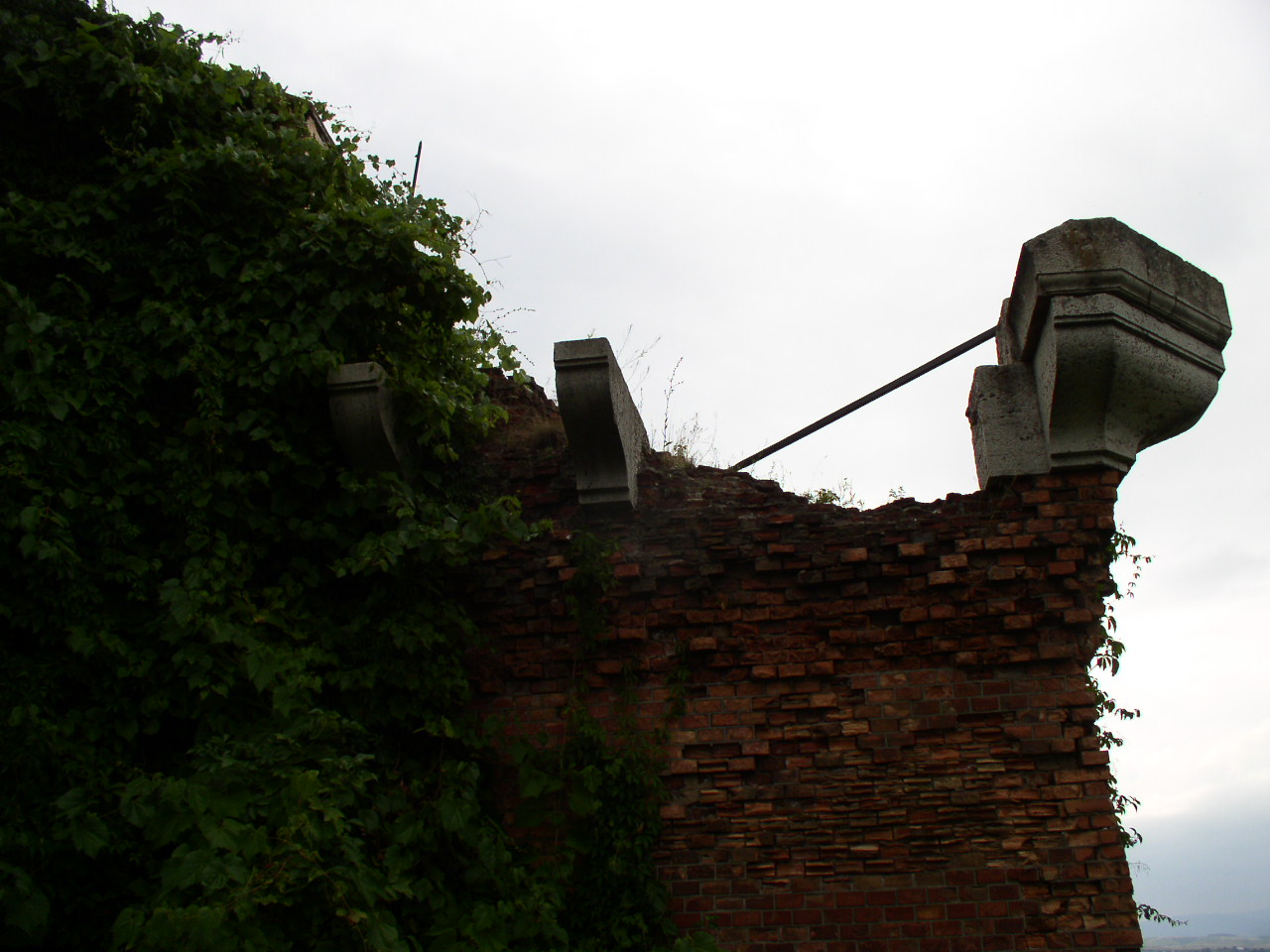
After the great age of sieges and struggles came to an end, and the Habsburg Empire established its firm control over the region, the military importance of Palanok gradually declined, and the great fortress that had defied an empire was put to a very different use. For a long period, the castle served as a prison, its mighty walls that had once sheltered heroic defenders now confining prisoners of the state. It was a humbler and darker role for so proud a fortress, but it kept the old castle in use through a quieter and more sombre age.
The period as a prison is a significant chapter in the later history of Palanok, and it left its own mark upon the castle and its memory. The transformation of a great stronghold into a place of confinement is a fate shared by many of Europe’s fortresses once their fighting days were over, and at Palanok, as elsewhere, it represents a melancholy interlude between the glory of the castle’s martial past and its eventual rebirth as a monument. The prison years are part of the long and varied story of the fortress, adding a further layer to its rich and dramatic history.
The prison years, though a melancholy chapter, are an important part of the honest history of Palanok, for they show how the fortunes of even the greatest fortresses could change once their military purpose had passed. That the castle survived this period, rather than being demolished or left to ruin, was ultimately fortunate, for it meant that Palanok endured to be recognised and cherished as a monument in a later and more appreciative age. The prison chapter is a reminder of the many different lives that a great castle can lead across the long centuries of its existence.
A Museum on the Hill
In more recent times, the true value of Palanok as one of the great historical monuments of the region has come to be recognised, and the castle has been preserved and turned into a museum. Today it stands as one of the finest and most visited castles in all of Ukraine, its three tiers of walls and towers open to visitors who come from across the country and beyond to explore its history and to marvel at its dramatic setting. The transformation from prison to museum has given the great fortress a new and honourable role as a keeper of the region’s heritage.
As a museum, Palanok presents the long and dramatic story of the castle and the region through its buildings and its exhibitions, bringing to life the medieval origins, the age of the Rákóczis, the heroic defence by Ilona Zrínyi, and the many other chapters of its history. Exploring the castle, visitors can climb through its three levels, discover its deep well, and take in the magnificent views over the town and the plain. The rebirth of Palanok as a museum has ensured that this remarkable fortress is preserved and shared, and it has made the castle a source of pride and a magnet for visitors.
The recognition of Palanok as one of the treasures of Ukraine reflects the deep place it holds in the heritage and identity of the region, and the care taken to preserve it has ensured that its remarkable history will endure. As a museum, the castle not only preserves the fabric of the fortress but tells its story to new generations, keeping alive the memory of the great siege and the many other dramas of its past. This work of preservation and interpretation has given Palanok a vital role in the cultural life of the region, and it has made the castle a cherished national monument.
Exploring Palanok Today
A visit to Palanok today is a wonderfully rewarding experience, for the castle offers a rich combination of dramatic architecture, fascinating history, and magnificent views. Climbing through the three levels of the fortress, from the Lower Castle up to the High Castle at the summit, is an adventure in itself, and at each level there is something new to discover, from the exhibitions and historic rooms to the deep well and the sweeping views over the town and plain below. The whole castle rewards exploration, and its long and dramatic story comes vividly to life as you go.
From the heights of the High Castle, the views over Mukachevo and the surrounding country are magnificent, and they help the visitor to understand at once the strategic genius of the castle’s position on its lone volcanic hill. The combination of the fortress itself, with its tiers and towers and its epic history, and the beauty of its setting makes Palanok one of the most memorable castles in all of Ukraine. Whether you come for the history of the great siege, the architecture of the tiered fortress, or simply the drama of the castle on its hill, Palanok offers an experience not soon forgotten.
Take your time as you climb through the levels of Palanok, for the castle rewards an unhurried visit, with much to discover at each stage of the ascent and magnificent views opening out as you rise. There are quiet corners to explore, historic rooms to admire, and the ever-present drama of the great fortress on its hill to enjoy. The more slowly and attentively you explore, the more of the castle’s long and eventful history you will feel, and the more memorable your visit to this remarkable stronghold will be.
Finding Palanok Castle
Palanok Castle stands in the town of Mukachevo, in the region of Transcarpathia in the far west of Ukraine, beyond the Carpathian mountains. Though it lies some distance from the largest cities, the castle is well worth the journey, and it has long been one of the most popular historic destinations in western Ukraine. The first sight of the great tiered fortress rising on its lone volcanic hill above the town is one that no visitor soon forgets, and the approach through the beautiful Transcarpathian countryside is a pleasure in itself.
The region of Transcarpathia is one of the most beautiful and historically rich in Ukraine, a land of mountains, forests, and a fascinating blend of cultures and histories, and a visit to Palanok can easily be combined with the exploration of this remarkable corner of the country. The castle is the great historic centrepiece of Mukachevo and one of the treasures of the whole region. Here are the exact coordinates so you can find your way to the castle on the volcanic hill.
View on Google Maps: 48.4256, 22.6803
Castles Nearby
If Palanok has drawn you into the history of eastern Europe, two more great strongholds of the region make a fine next stop.
- Kamianets-Podilskyi Castle is Ukraine’s dramatic fortress in a river canyon.
- Predjama Castle in Slovenia is the astonishing fortress built into a cliff.
The Castle on the Volcanic Hill
Few castles anywhere combine such a dramatic setting with such a stirring history as Palanok. Rising on its lone volcanic hill above the plain, its three tiers climbing to the summit, it is one of the finest fortresses in Ukraine, and its story is worthy of its setting. This was the princely seat of the Rákóczis, the scene of one of the most heroic defences in European history led by the remarkable Ilona Zrínyi, and a stronghold bound up with a great struggle for freedom. In its walls the whole dramatic history of Transcarpathia is gathered together.
That is what makes a visit to Palanok so rewarding. You are not just admiring a spectacular castle but standing where a brave woman once held a mighty fortress against an empire for three long years, in a place bound up with the great struggles of a whole region. To climb its three tiers, to peer into its deep well, and to gaze out over the plain from the summit is to feel the full drama of the past. Palanok is the castle on the volcanic hill, and it remains one of the true treasures of western Ukraine.
If your travels ever take you to western Ukraine, a visit to Palanok is not to be missed. Journey into the beautiful region of Transcarpathia, come upon the great fortress rising on its lone hill above Mukachevo, and climb through its three tiers to the summit. Hear the stirring tale of Ilona Zrínyi and her heroic three-year defence, peer into the deep well, and take in the magnificent views over the plain. It is an experience of history and drama unlike any other, and it leaves every visitor with a lasting memory of one of the finest castles in all of Ukraine.
You May Like
Mafra, the Palace a King Built From a Vow