Some castles are famous for a single dramatic moment, a great siege or a legendary lord, and once you know that one story you feel you have understood the place. Osaka Castle is not like that. It is a place that has died and been reborn so many times that its history reads less like a single tale and more like the biography of a city, folded and refolded across four hundred years of ambition, war, fire, and stubborn devotion. To stand before it is to stand before all of those lives at once.
You may come knowing only that it is beautiful, that its white and gold keep is one of the great images of Japan, and that is a fine reason to come. But by the time you leave, if you let the place tell you its story, you will carry away something richer. You will understand why this particular rise of ground has drawn warrior-monks and peasant-emperors and shoguns and modern citizens, each of whom found here something worth building, defending, and rebuilding again.
This is the story of that ground and the tower that crowns it, from the fortress-temple that stood here before the castle, through the golden ambition of the man who built it and the cunning that destroyed his line, to the concrete keep a modern city raised for love of its own past. Come and walk it with me, and see how much history one silhouette can hold.
In This Article
- When You First Stand Beneath the Great Keep
- The Fortress-Temple That Stood Here First
- Hideyoshi’s Grand Ambition Rises From the Ashes
- Reading the Language of Stone and Water
- The Winter the Tokugawa Came
- The Bargain That Doomed the Defenders
- The Summer the Toyotomi Line Ended
- How the Victors Rebuilt in Their Own Image
- When the Sky Itself Struck the Tower
- From Samurai Stronghold to Modern Arsenal
- The Tower the City Chose to Raise Again
- The Bombs, the Survival, and the Museum
- Making the Castle Your Own on a Visit
When You First Stand Beneath the Great Keep
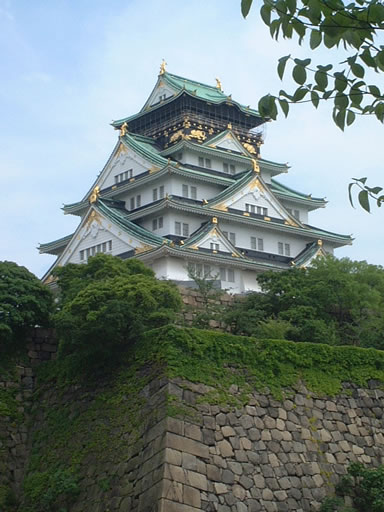
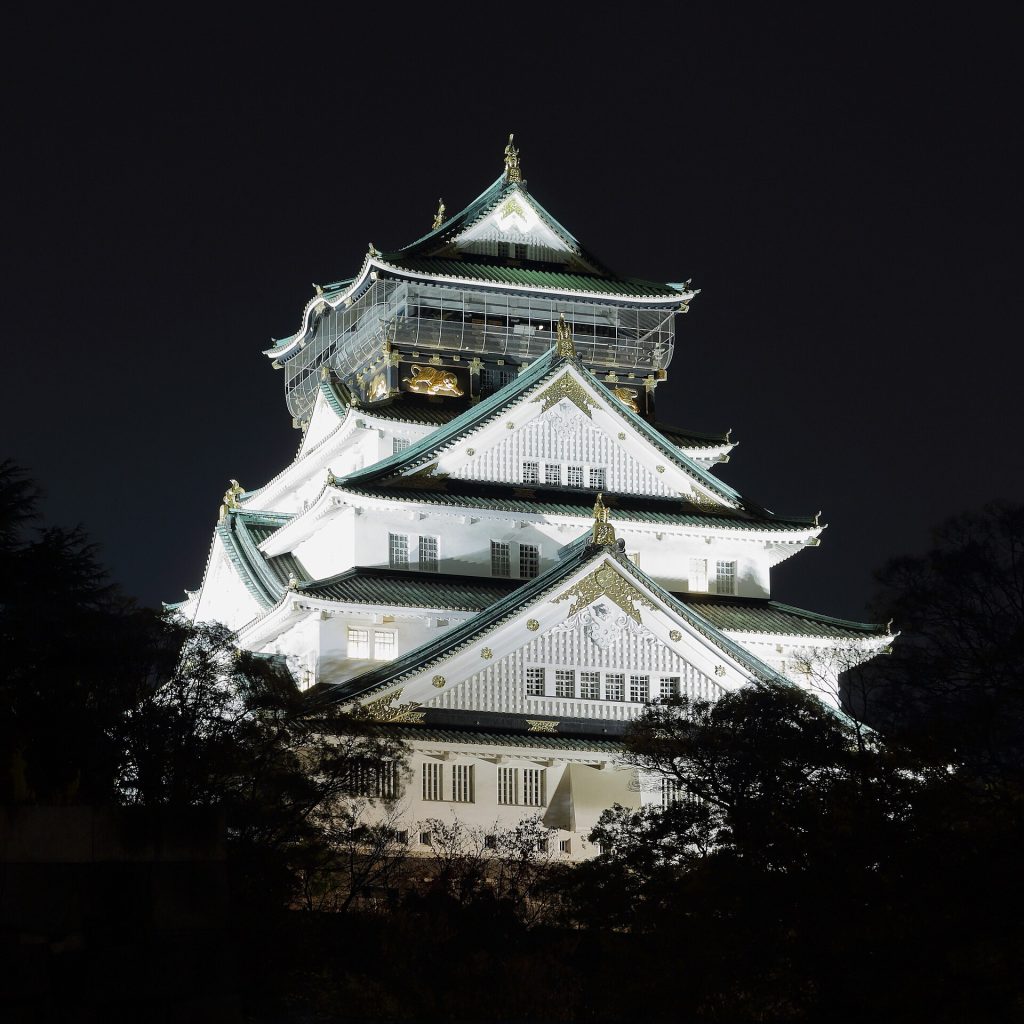
You do not so much arrive at Osaka Castle as you are drawn toward it, because from almost any point in the surrounding park the great keep announces itself over the treetops, its white plaster catching the light and its curved green roofs stacked upward like the tiers of some enormous ceremonial cake. There is a moment, once you pass through the outer gates and the modern city drops away behind the walls, when you feel the scale of the thing settle over you. The tower is five stories on the outside and eight within, and the gold that traces its gables and glints along its eaves is not decoration you have to look for. It is meant to be seen from far off, meant to make you stop.
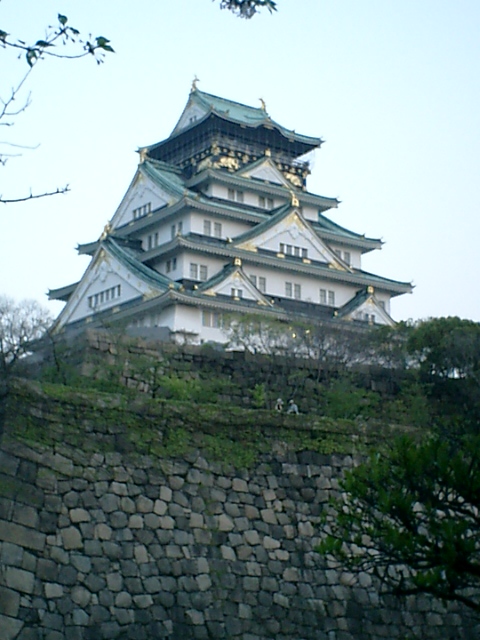
What makes the first impression so strange and so wonderful is the collision of centuries you are standing inside. The stone base beneath the keep is monumental and ancient, its boulders fitted together without mortar in a way that has held for four hundred years. The tower resting on top of it, however, is younger than the airplane, poured in reinforced concrete in 1931 and refreshed in the 1990s. You are looking at a samurai fortress and a modern monument at the same time, and somehow the two do not quarrel. They tell you, before you have read a single plaque, that this is a place that has been destroyed and rebuilt more than once, and that its story is one of stubborn return.
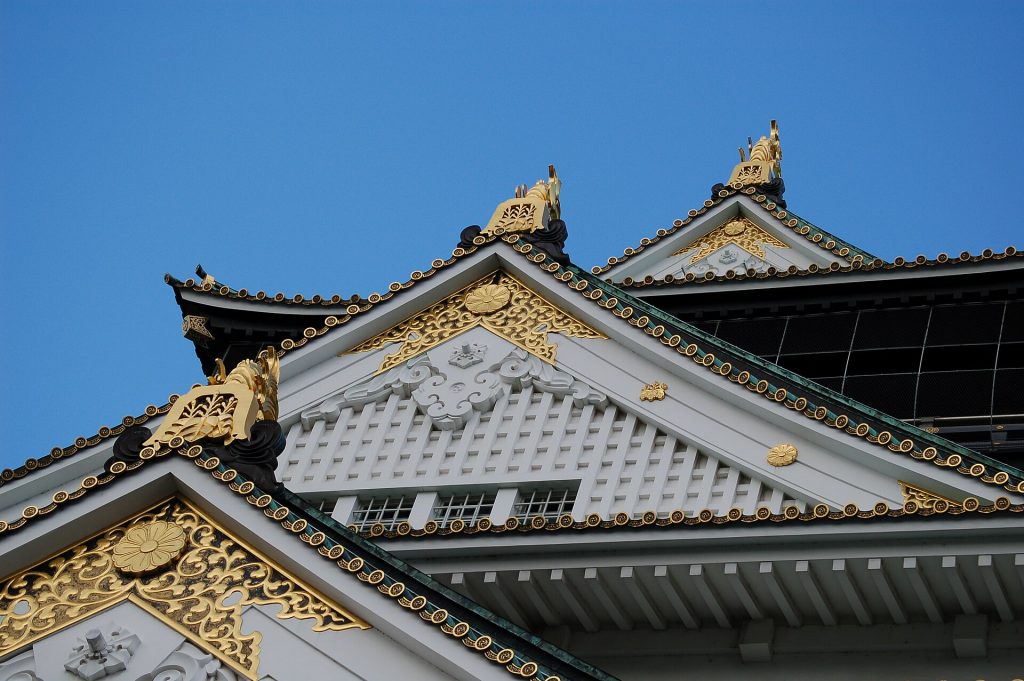
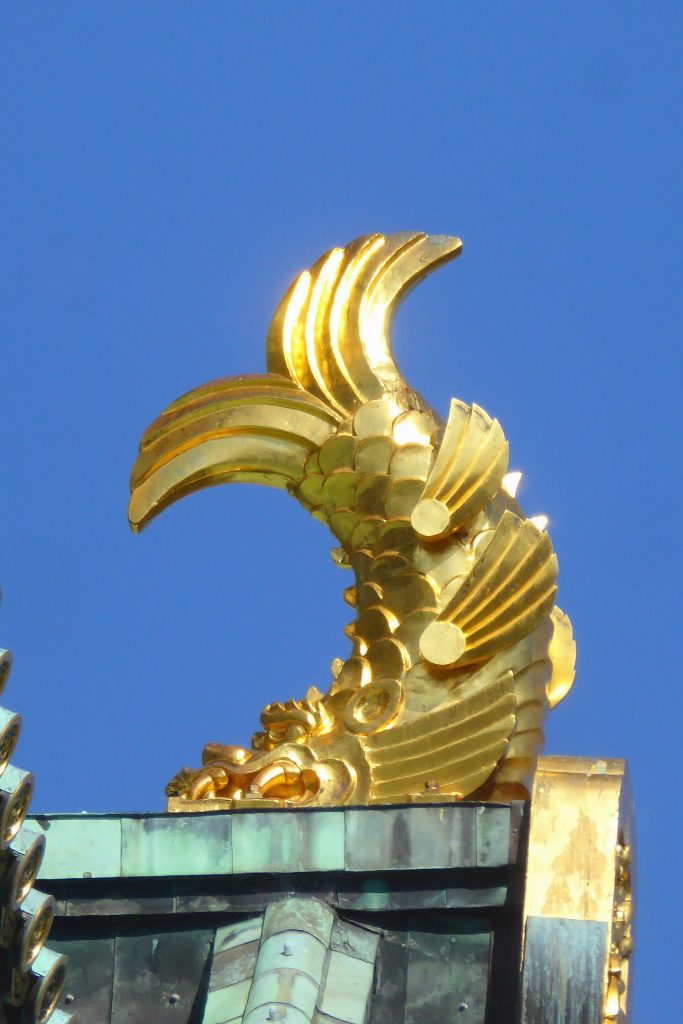
Take your time in that first courtyard. Look up at how the walls of the keep lean and taper, at the small barred windows from which defenders once watched, at the two golden fish ornaments called shachihoko that guard the ridge of the roof against fire. Then look down at the plaza around you, full of visitors from every corner of the world, and understand that you are standing on ground that has decided the fate of Japan more than once.
The Fortress-Temple That Stood Here First
Before there was ever a castle on this rise of land, there was a temple, and not a quiet one. The Ishiyama Hongan-ji was the fortified headquarters of the Ikko-ikki, a militant league of warrior-monks and their followers who held this strategic bluff above the water for much of the sixteenth century. Its position was no accident. The site commanded the routes between the sea and the interior, sat above rivers that carried trade and armies alike, and could be defended with a tenacity that frustrated even the most ambitious warlords of the age.
That tenacity was tested to its limit by Oda Nobunaga, the ferocious unifier who spent a full decade trying to break the temple’s power. The struggle against the Ishiyama Hongan-ji was one of the longest sieges in Japanese history, a grinding contest of blockade, betrayal, and endurance that ended only when the monks finally surrendered their stronghold in 1580. The buildings were burned, and the bluff that had defied Nobunaga for ten years lay open and empty.
When you walk the castle grounds today, it is worth holding this earlier chapter in your mind, because the men who built the castle chose this exact spot for exactly the reasons the monks had. The geography that made the temple nearly unconquerable is the same geography that would soon carry the ambitions of the man who wanted to rule all of Japan. Nothing here was built on a blank slate. The castle inherited a fortress instinct that the land itself seemed to demand.
The destruction of the temple cleared the way, but it also left a warning written into the ashes. Whoever held this ground held a prize worth generations of blood, and the next man to raise his banner here understood that better than anyone.
Hideyoshi’s Grand Ambition Rises From the Ashes
The man who claimed the site was Toyotomi Hideyoshi, and his life was the most improbable in all of Japanese history. Born a peasant with no name worth recording, he rose through sheer intelligence and nerve to become Nobunaga’s most trusted general, and after his master’s assassination he outmaneuvered every rival to become the effective ruler of the country. In 1583 he began to build here the castle that would be the seat of his power, and he intended it to overwhelm.
Hideyoshi took as his model the famous Azuchi Castle that Nobunaga had built, but he did not want to equal it. He wanted to surpass it so completely that no one would ever again mistake who stood at the summit of the realm. The plans called for a towering keep with gold leaf worked into its sides, chambers of astonishing luxury, and a footprint that swallowed roughly a full square kilometre of ground. The inner donjon was finished by 1585, and the wider works dragged on for more than a decade, mobilizing tens of thousands of labourers and the resources of provinces across the country.
There was cunning in the spectacle. Hideyoshi understood that power was as much performance as force, and a castle drenched in gold told every visiting lord a story about wealth without limit and authority without rival. Ambassadors and daimyo were brought through rooms designed to make them feel small. The building was a weapon aimed not only at armies but at the imagination of anyone who might dream of challenging him.
For a brief and dazzling window, it worked exactly as intended. Hideyoshi had unified Japan under his own hand, and from the golden heart of Osaka he ruled a country that had known nothing but war for a century. But he was mortal, and the succession he left behind was terribly fragile. When he died in 1598, the great castle passed to a child, and a child cannot hold a country that a hundred ambitious swords are watching.
Reading the Language of Stone and Water
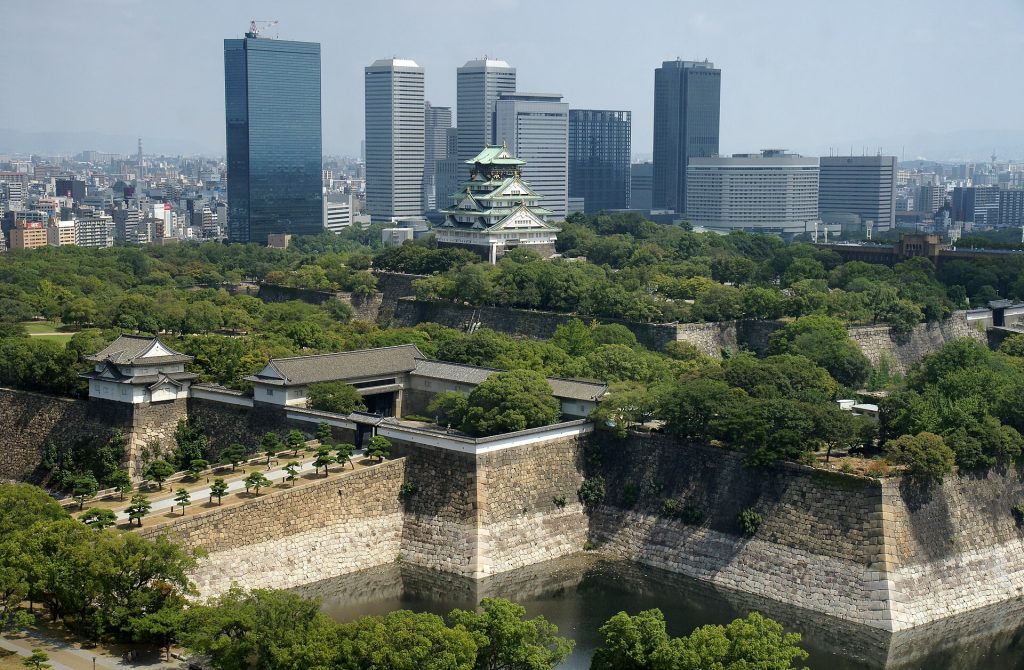
If you want to understand why this castle mattered so much, you have to learn to read its walls and its water, because together they form a defensive argument written in granite. The moats come in two great rings. The inner moat wraps close around the central keep, part of it filled with water and part left dry, while the outer moat opens into broad channels that once made the approach a nightmare for any attacker. Standing at the edge of these moats, looking across at the sheer stone rising from the far bank, you feel in your stomach how hopeless a direct assault would have been.
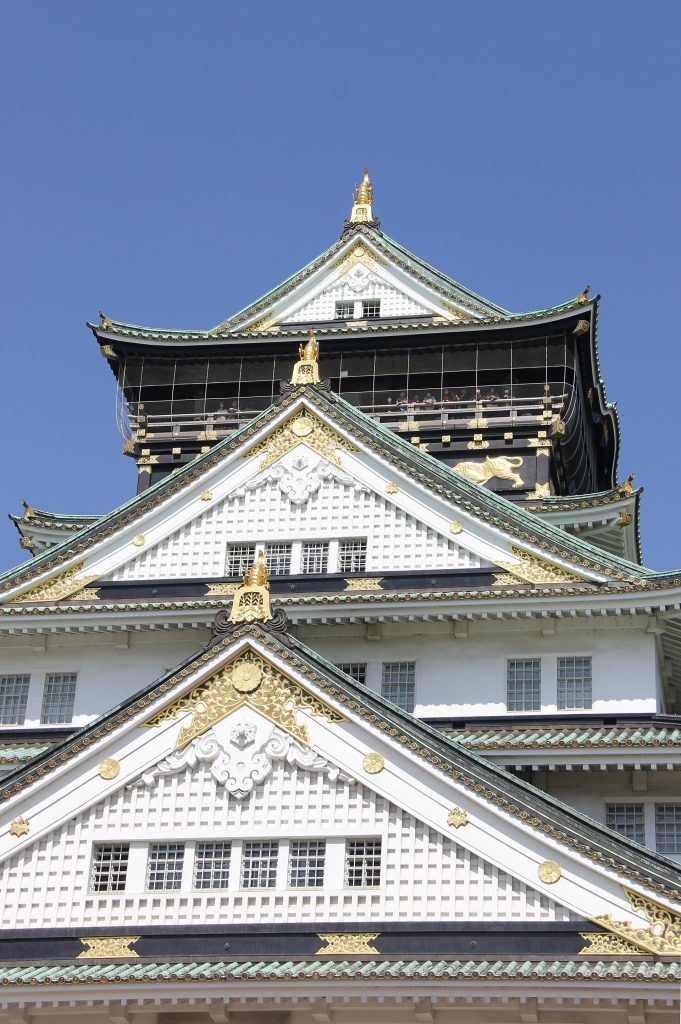
The stonework itself rewards slow attention. The walls were assembled from enormous interlocked granite boulders set without a drop of mortar, their faces fitted so precisely that the whole mass holds through friction and weight and clever geometry alone. Many of the stones were floated in from quarries near the Seto Inland Sea, and some of the largest weigh as much as small buildings. The feat of moving and placing them, using only rope, timber, muscle, and ingenuity, is almost impossible to grasp until you stand beside one.
Look closely and you will see marks cut into some of the boulders. These are the crests of the samurai families who were ordered to supply and transport the stones during the great rebuilding of the 1620s. Each lord wanted his contribution recognized, and each mark is a small signature of obligation and pride, a reminder that the wall was not built by one hand but assembled from the compelled labour of many domains.
The genius of the design lies in how the walls turn and fold. Corners are angled so defenders could rake attackers with fire from multiple directions, gates are set into tight enclosed courtyards that trap intruders in killing spaces, and the height of the ramparts forces any climber to expose himself for an unbearable length of time. This was not a wall meant merely to keep people out. It was a machine meant to make the attempt lethal.
Try, as you stand there, to think in terms of centuries rather than moments. A wall like this was not built for a single battle but for the imagined wars of generations yet unborn, and the men who raised it expected it to still be standing long after they were dust. That confidence, that willingness to build for a future they would never see, is written into every fitted stone, and it is part of what gives the place its quiet grandeur even now.
The Winter the Tokugawa Came
After Hideyoshi’s death, the balance of the country tilted toward Tokugawa Ieyasu, the patient and formidable warlord who won the decisive battle of Sekigahara in 1600 and became shogun three years later. Yet the Toyotomi family still held Osaka Castle, and around the young heir Hideyori there gathered masterless samurai, loyalists, and anyone with a grievance against the new order. To Ieyasu, this glittering fortress full of resentful swords was a wound that would not close, and in the winter of 1614 he marched to close it.
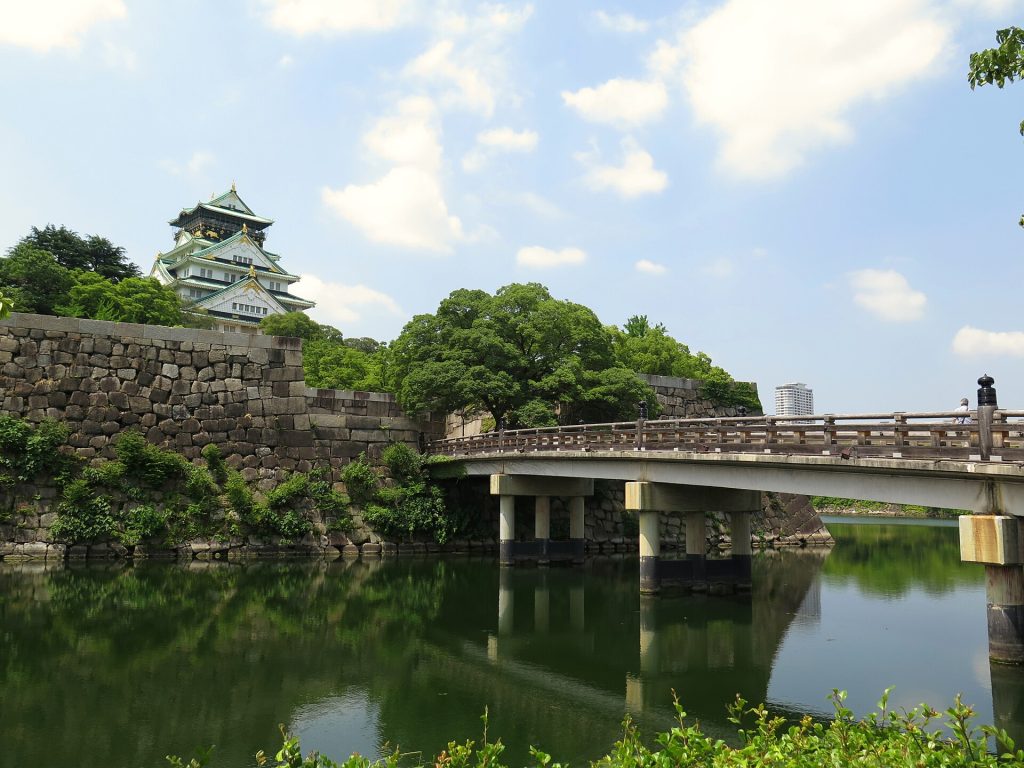
The numbers were daunting for the defenders. Ieyasu brought an army that has been counted around two hundred thousand strong, and the men inside the walls were outnumbered by something close to two to one. Yet the castle was everything its builders had promised. Wave after wave of attackers broke against the stone and the water, and the defenders, fighting with the desperation of people who knew surrender meant extinction, held the great fortress through the cold months.
One of the heroes of that winter was Sanada Yukimura, a brilliant tactician who built an outwork now remembered as the Sanada-maru and used it to bleed the Tokugawa forces at fearful cost. The stories of his defense have become the stuff of legend, retold in countless plays and paintings, because they represent the last flare of a warrior world that was about to be extinguished. For a season, it seemed that the castle Hideyoshi built might yet defy even the shogun.
But Ieyasu had not become the master of Japan by throwing men at walls. When brute force failed, he turned to guile, and the trap he set would prove far more dangerous to the Toyotomi than any siege engine. The winter campaign ended not with a breach but with a negotiation, and in that negotiation lay the seeds of the castle’s doom.
The Bargain That Doomed the Defenders
The peace that ended the winter siege looked, on its face, like a reasonable settlement. As part of the terms, the outer moat of the castle was to be filled in, a gesture presented as a mutual step toward reconciliation. But Ieyasu’s men interpreted the agreement with ruthless breadth, and they did not stop at the outer moat. They pressed on and filled portions of the inner defenses as well, stripping away in a matter of weeks the very features that had made the castle nearly impregnable.
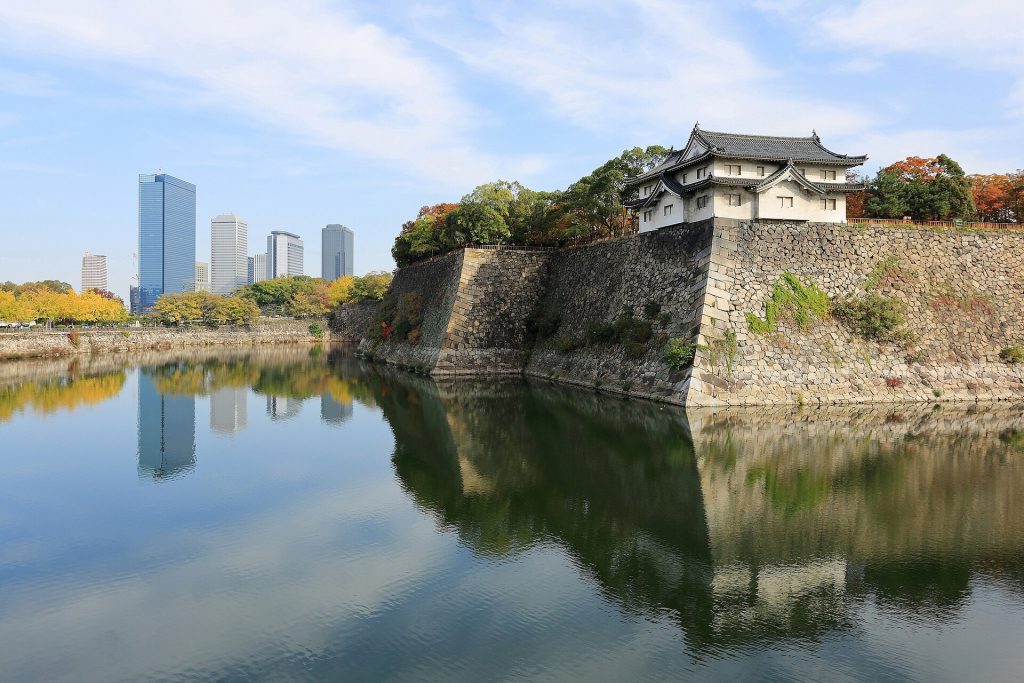
It was one of the most consequential acts of deception in Japanese history, and it teaches a hard lesson about the difference between winning a siege and winning a war. The defenders had held their walls magnificently, but they had lost at the negotiating table what they had defended so fiercely in the field. When the moats were gone, the castle that had shrugged off two hundred thousand men was suddenly a shell of what it had been, its greatest advantages shovelled into the ground.
You can stand today at the edge of the reconstructed moats and try to imagine the sight of them being deliberately filled, cartload after cartload of earth tipped into the water that had kept an army at bay. For the people inside the walls, watching their protection vanish, it must have felt like watching the tide go out and knowing it would not come back in time. They had traded their strongest shield for a promise, and the promise would not be kept.
When Hideyori’s supporters, sensing the danger too late, began to dig the moats out again and restore their defenses, they handed Ieyasu the pretext he had been waiting for. The restoration was cast as a breach of the peace, and the old shogun gathered his forces once more. This time there would be no negotiated winter. This time he meant to finish it.
The Summer the Toyotomi Line Ended
The summer campaign of 1615 was swift and merciless. With the moats gone, the defenders could no longer hide behind their walls, and they were forced into open battle in the fields and streets around the castle. The fighting was ferocious, and for a moment the Toyotomi forces even threatened Ieyasu’s own position, but the outcome was no longer truly in doubt. On the fourth of June the defending army was routed, its lines broken and its greatest champions cut down.
Sanada Yukimura, the hero of the winter, died in that final battle, and with him died the last real hope of the Toyotomi cause. As the Tokugawa forces poured into the grounds, the great castle that Hideyoshi had built to proclaim his family’s eternal glory went up in flames. Toyotomi Hideyori and his mother, Yodo-dono, took their own lives amid the burning buildings, and the line that had risen from a nameless peasant to the summit of Japan was extinguished in smoke and ruin.
It is one of history’s sharp ironies that the castle built to guarantee a dynasty became the tomb of that same dynasty. Everything Hideyoshi had feared for his son came to pass within the very walls he raised to prevent it. The gold, the towering keep, the square kilometre of fortifications, none of it could save a family once the balance of power and the cunning of a rival turned against them.
The fall of Osaka Castle marked more than the end of a family. It marked the true beginning of the long Tokugawa peace, the more than two centuries of stability that would follow. The last great fortress standing against the shogunate had fallen, and with its ashes the age of endless civil war finally came to a close. When you walk the quiet park today, you are walking across the ground where an entire era of Japanese history came to its violent end.
How the Victors Rebuilt in Their Own Image
Victory did not mean the Tokugawa left the site in ruins. Beginning in 1620, the shogunate undertook a total reconstruction of the castle, and it was a reconstruction with a purpose beyond mere repair. Under the direction of skilled castle-builders, the entire fortress was rebuilt on a grand scale, its stone walls raised even higher and its layout redrawn. The new keep matched the old in its stories, five outside and eight within, and the work was completed around 1628.
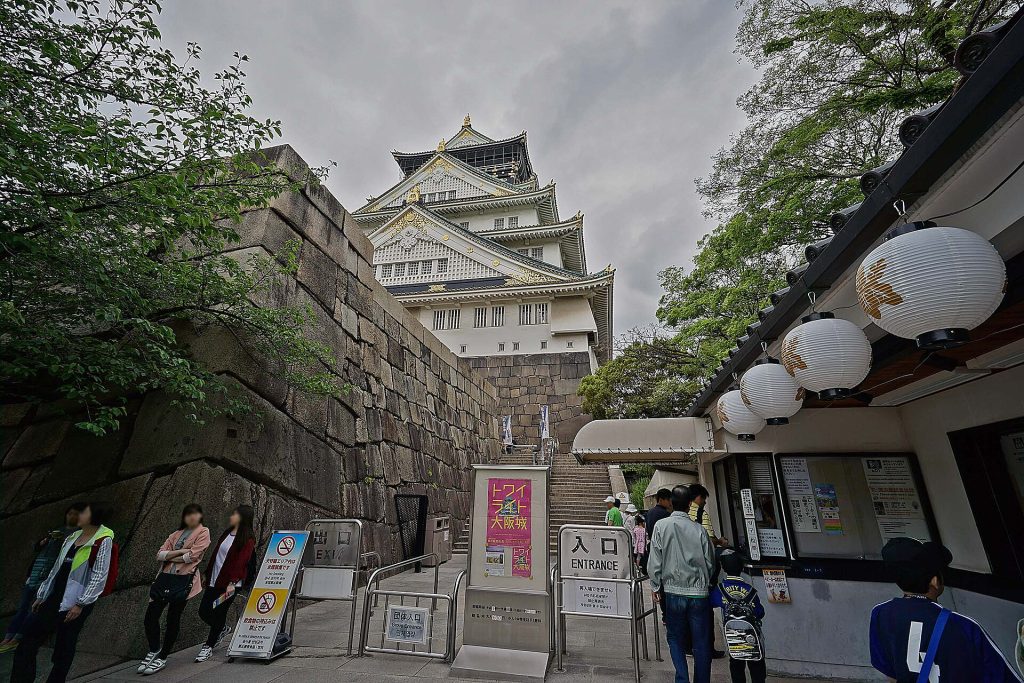
But the Tokugawa did something quietly telling. Rather than simply restoring Hideyoshi’s castle, they buried much of the original beneath their own construction, raising their walls and platforms over the Toyotomi foundations. In doing so they physically covered the legacy of the family they had destroyed, planting their own authority literally on top of it. The castle you see is, in its bones, a Tokugawa statement of dominance dressed in the form of the fortress they had conquered.
This second castle was in many ways even more imposing than the first, a monument to a regime that had won the whole country and meant to hold it. The stones grew larger, the geometry more refined, the whole complex a demonstration of what a unified state could command when it turned its full resources to a single project. It was less the seat of a rising ambition than the emblem of a settled and total power.
For a time this rebuilt castle stood as one of the great fortresses of the land. Yet the story of Osaka Castle has never been one of quiet endurance. The same forces that had shaped it, fire and lightning and the slow indifference of time, were already gathering, and the Tokugawa masterpiece would not survive intact for even a full lifetime.
It is easy to walk past this fact without feeling its weight, so let it land for a moment. The castle you photograph, the one whose image you will carry home, sits atop the deliberately buried remains of an older castle, a conqueror’s monument raised over the grave of the conquered. History here is not beside you or behind glass. It is literally beneath your feet, layer upon layer, the losers of one age sealed under the triumphs of the next.
When the Sky Itself Struck the Tower
Fire has always been the great enemy of Japanese architecture, and Osaka Castle suffered its share. In 1660 a bolt of lightning struck a gunpowder store within the grounds, and the resulting explosion and blaze tore through part of the complex. It was a foretaste of a greater loss to come. Just five years later, in 1665, lightning struck again, and this time it set the great keep itself ablaze.
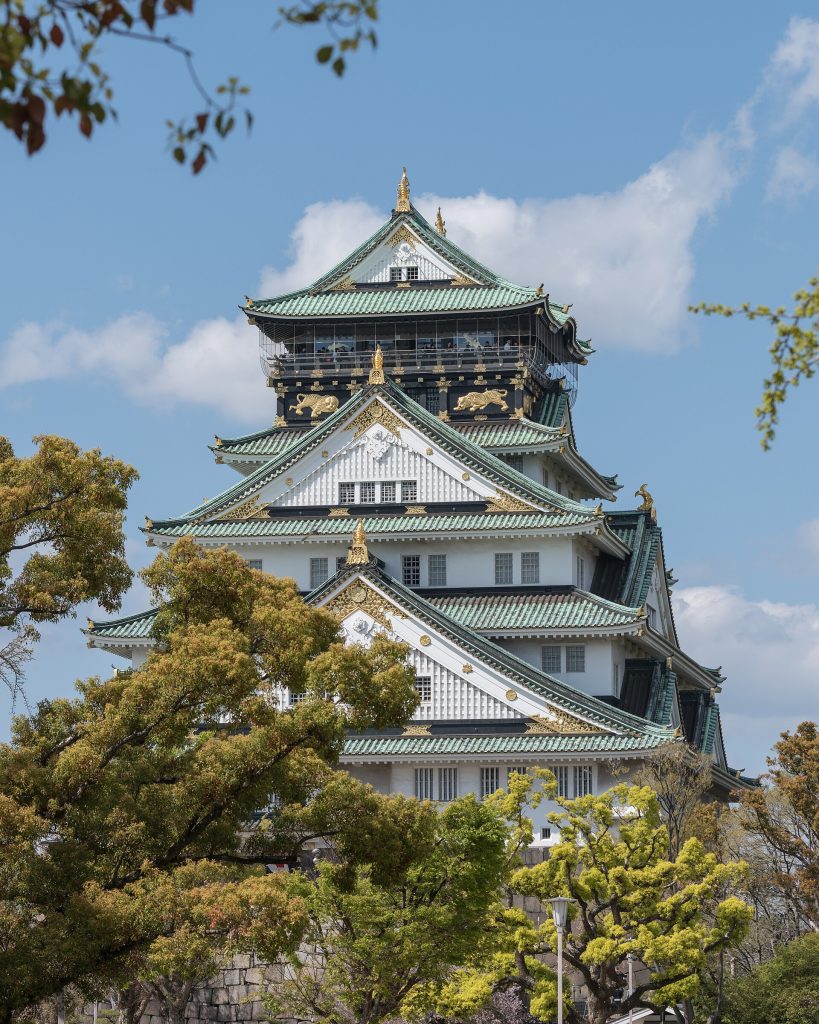
The tower that the Tokugawa had raised with such effort burned to the ground, and in a decision that speaks volumes about the priorities of the age, it was not rebuilt. The long peace of the Tokugawa era meant there was little military need for a towering keep, and so for well over two centuries the castle stood without its crowning symbol. The walls remained, the moats remained, the gates and turrets remained, but the great tower that gave the fortress its silhouette was simply gone.
It is worth pausing over how long that absence lasted. Generations of people were born, lived, and died in Osaka without ever seeing a keep atop the castle base. The empty platform became the normal state of things, a monumental foundation waiting for a crown that would not come for over two hundred years. Whatever the castle was in this long interval, it was not the picture we now carry in our minds.
The castle drifted into a period of decline and neglect, its glory fading into memory even as its stones endured. Repairs came and went, but the fortress was no longer the beating heart of power it had once been. It waited, as it had waited before, for a new age to decide what to do with the ground that had already meant so much.
From Samurai Stronghold to Modern Arsenal
The nineteenth century swept away the world of the samurai, and Osaka Castle was carried along with it. When the Tokugawa shogunate fell during the upheavals of the Meiji Restoration in 1868, the castle again saw fire and fighting, and it passed into the hands of the new imperial government. What that government chose to do with it reveals how completely Japan was reinventing itself.
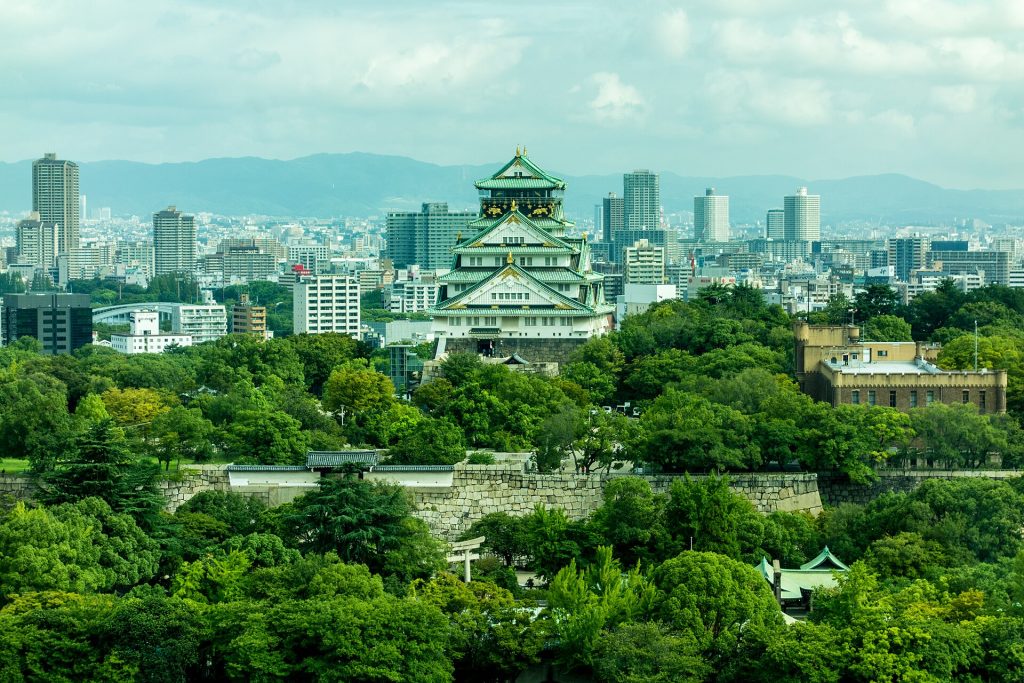
The grounds that had once housed warrior-monks and golden audience chambers were turned over to industry and war. An enormous army arsenal was established here, manufacturing weapons and munitions for a nation racing to modernize its military. For decades the castle site was one of the most important centers of armaments production in the entire country, its ancient walls surrounding not the retinue of a lord but the machinery of a modern industrial military.
There is something jarring and yet fitting in this transformation. The site had always been about power, and in the modern age power meant factories and firepower rather than moats and keeps. The castle simply adapted to a new definition of the same old idea, its strategic ground once again bent to the service of the strongest force in the land.
That role would carry the castle into the darkest chapter of its modern history. As Japan went to war across Asia and the Pacific, the arsenal at Osaka became a target, and the twentieth century would visit upon the ancient site a destruction as total as anything the samurai had known. But before that catastrophe came, the castle would first, remarkably, get its tower back.
The Tower the City Chose to Raise Again
In 1931, after more than two and a half centuries without a keep, the people of Osaka decided to rebuild it. The project was funded in large part by donations from ordinary citizens, an outpouring of civic pride that raised the money to restore the city’s greatest landmark. The new tower was built not in timber but in ferroconcrete, a thoroughly modern structure designed to evoke the historic keep while standing on the foundations of the past.
This was a bold and unusual choice for its time, and it tells you how much the castle meant to the city that surrounds it. Rather than leaving the base as a romantic ruin, Osaka chose to give it back its silhouette, to make the skyline whole again. The 1931 keep is the direct ancestor of the tower you see today, and it has now stood far longer than the original Tokugawa keep ever did before the lightning took it.
The decision to build in concrete has sometimes drawn criticism from purists who long for authentic timber reconstruction, but it also had an unexpected virtue. When the horrors of the Second World War came to Osaka, that modern construction would prove far more durable than wood could ever have been, and it allowed the tower to survive when almost everything around it did not.
So the castle that greets you is a genuine product of the twentieth century’s affection for its own past, a monument built by a modern city to honor a fortress that had shaped its identity. It is a reconstruction, yes, but it is also an authentic expression of memory and devotion, raised by the descendants of the people whose lives had unfolded in the castle’s long shadow.
The Bombs, the Survival, and the Museum
The Second World War brought fire to Osaka Castle once more, and this time it fell from the sky in the form of bombing raids aimed at the great arsenal on the grounds. In the closing days of the war, in August 1945, a devastating raid struck the site, destroying the overwhelming majority of the arsenal and killing hundreds of people. The ground that had made weapons for the war was scorched by the war’s final violence.
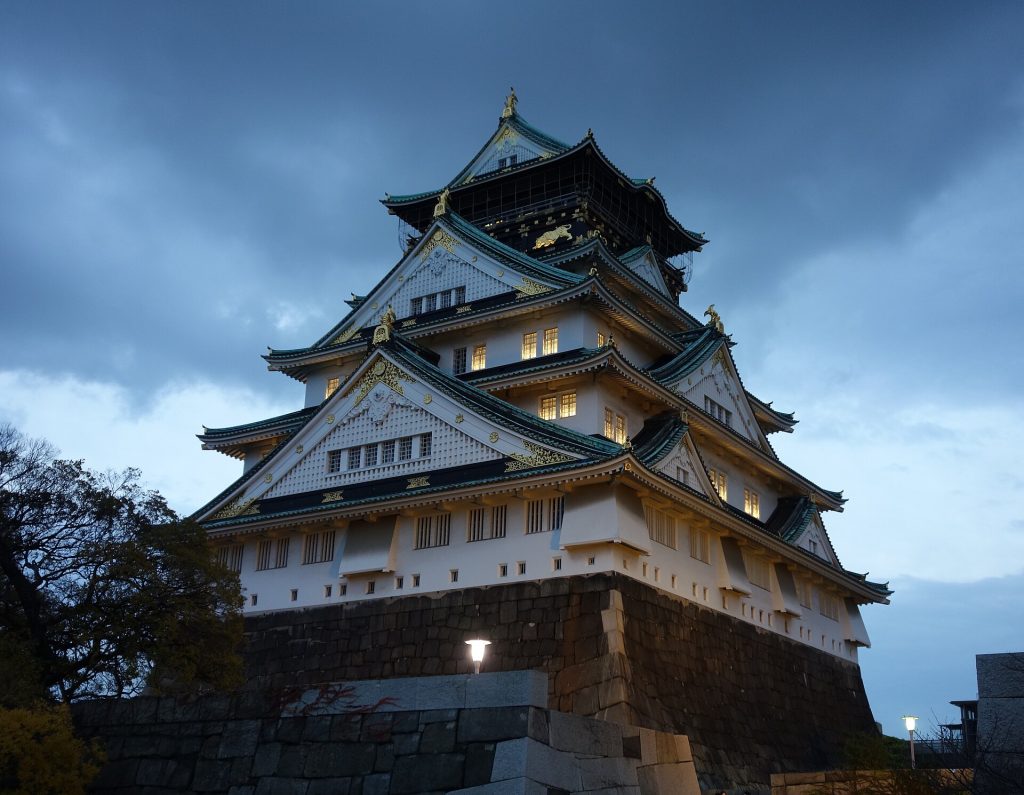
Yet through the smoke and rubble, the concrete keep of 1931 endured. The tower that some had criticized for being un-authentic proved its worth by simply surviving, standing amid the destruction as a battered but unbroken symbol of continuity. It had outlasted the arsenal, outlasted the war, and would go on to outlast the ruins, becoming once again the heart of the site as Osaka rebuilt itself in the peace that followed.
A major restoration in the 1990s renewed the keep and turned its interior into a modern museum devoted to the castle’s own extraordinary history. Today you can climb through its floors and encounter armor, swords, folding screens, and detailed models that walk you through the whole sweep of the story, from Hideyoshi’s ambition to the Tokugawa conquest to the modern age. At the top, an observation deck opens onto a panorama of the city that grew up around these walls.
So when you visit, you are visiting many castles at once, layered on the same ground. There is the temple that stood before, the golden fortress of Hideyoshi, the conquering monument of the Tokugawa, the arsenal of a modernizing nation, and the beloved concrete tower a city raised for love of its own past. Few places on earth compress so much history into a single silhouette.
View on Google Maps (34.6873, 135.5259)
Making the Castle Your Own on a Visit
For all its weight of history, Osaka Castle is a wonderfully alive place to spend a day, and the surrounding park is one of the great green spaces of the city. In spring the grounds erupt into clouds of cherry blossom, and crowds gather beneath the trees for the ancient pleasure of hanami, picnicking under the flowers with the great keep floating above them. In autumn the leaves turn, and the moats catch the color of the changing trees.
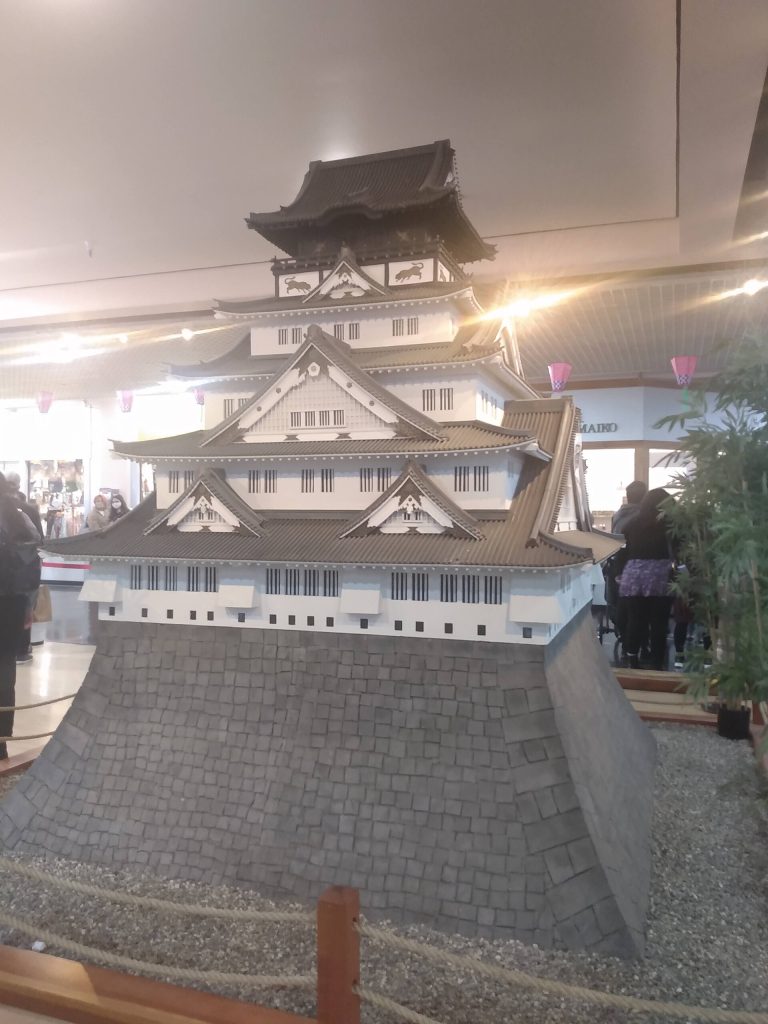
Give yourself time to walk the full circuit of the walls rather than rushing straight to the tower. The scale of the fortifications only reveals itself when you follow the moats around, watching the great stone ramparts change with your angle, discovering the massive gate stones and the quiet corners where the modern city falls away entirely. The Nishinomaru garden offers some of the finest views of the keep, especially when framed by blossoms or evening light.
When you do climb the keep, take the time to move slowly through the museum floors, because the models and artifacts turn the abstract story into something you can see and touch. The reconstructed golden tea room and the displays on Hideyoshi bring the human drama close, and the observation deck at the summit rewards the climb with a view that stitches the historic ground to the living metropolis around it.
Osaka Castle is easy to reach from the heart of the city, well served by trains and a short walk through the park, and it makes a natural centerpiece for a day of exploring. Whether you come for the history, the blossoms, the views, or simply the pleasure of standing beneath something magnificent, the castle gives back more than you expect. It has been destroyed and reborn again and again, and it stands now, patient and golden, waiting for you to add your own footsteps to the millions that have crossed its stones.
Bring a little patience and a little imagination, and the castle will meet you more than halfway. Read the marks on the stones, trace the line of the vanished moats, picture the golden keep of Hideyoshi where the concrete tower now stands, and the place stops being a backdrop for photographs and becomes something closer to a conversation across four hundred years. That, in the end, is the gift Osaka Castle offers to anyone willing to slow down and listen.
Castles Nearby
If the story of Osaka Castle has stirred your appetite for Japan’s great fortresses, two more masterpieces stand within easy reach and reward the journey:
You May Like
Mafra, the Palace a King Built From a Vow


2 thoughts on “Osaka Castle: The Golden Fortress That Rose, Fell, and Rose Again”