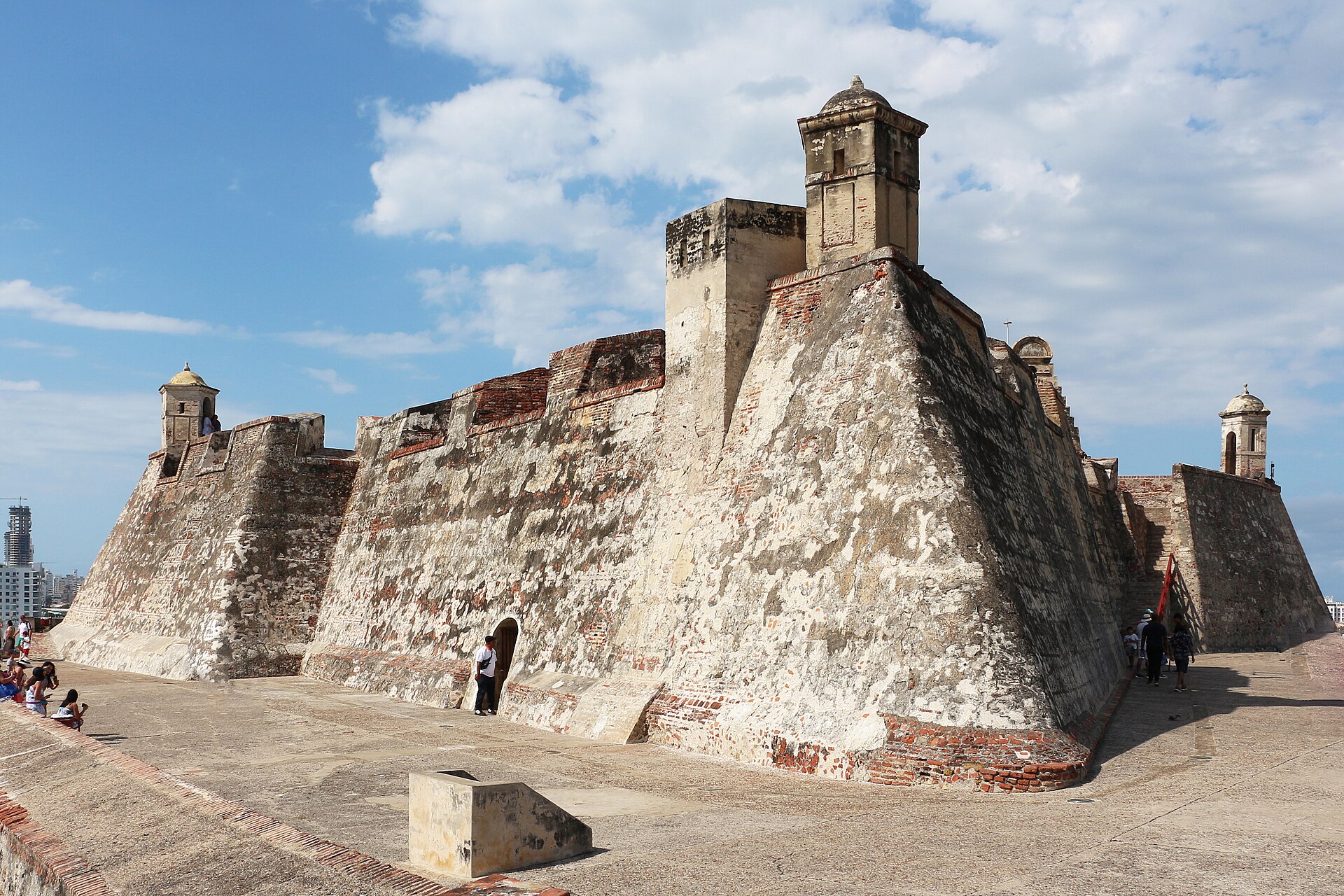
On a steep hill overlooking the old walled city of Cartagena, on the Caribbean coast of Colombia, sprawls one of the greatest fortresses ever built in the Americas. The Castillo San Felipe de Barajas is a vast, angular mountain of stone and earth, bristling with cannon, honeycombed with tunnels, and designed to be all but impossible to take. For centuries it stood as the ultimate guardian of one of the richest and most coveted ports in the Spanish empire.
Cartagena de Indias was a jewel of Spanish America, a fortified harbour through which flowed the silver and gold of the New World and the enslaved Africans brought to work it. Such wealth made the city a magnet for every enemy of Spain, and so the Spanish crown lavished extraordinary resources on its defence. San Felipe was the crowning masterpiece of that effort, a fortress whose walls turned back one of the largest invasion fleets ever sent against the Americas.
In this guide you will explore the whole story of this colossal stronghold: why Cartagena mattered so much, how the fortress was built and expanded over more than a century, the ingenious design of its tiered batteries and tunnels, the epic siege of 1741 when a one-armed, one-legged, one-eyed admiral humbled a mighty British fleet, and its life today as a proud World Heritage monument. It is a place that rewards both the history lover and the curious wanderer.
A note before you begin: San Felipe is a fortress on a scale that photographs struggle to convey. It is not a compact castle to be taken in at a glance but a whole hillside transformed into a weapon, a sprawling system of walls, ramps, batteries, and tunnels that took generations to build. Keeping that scale in mind as you read will help you understand why it earned its reputation as the fortress that could not be conquered.
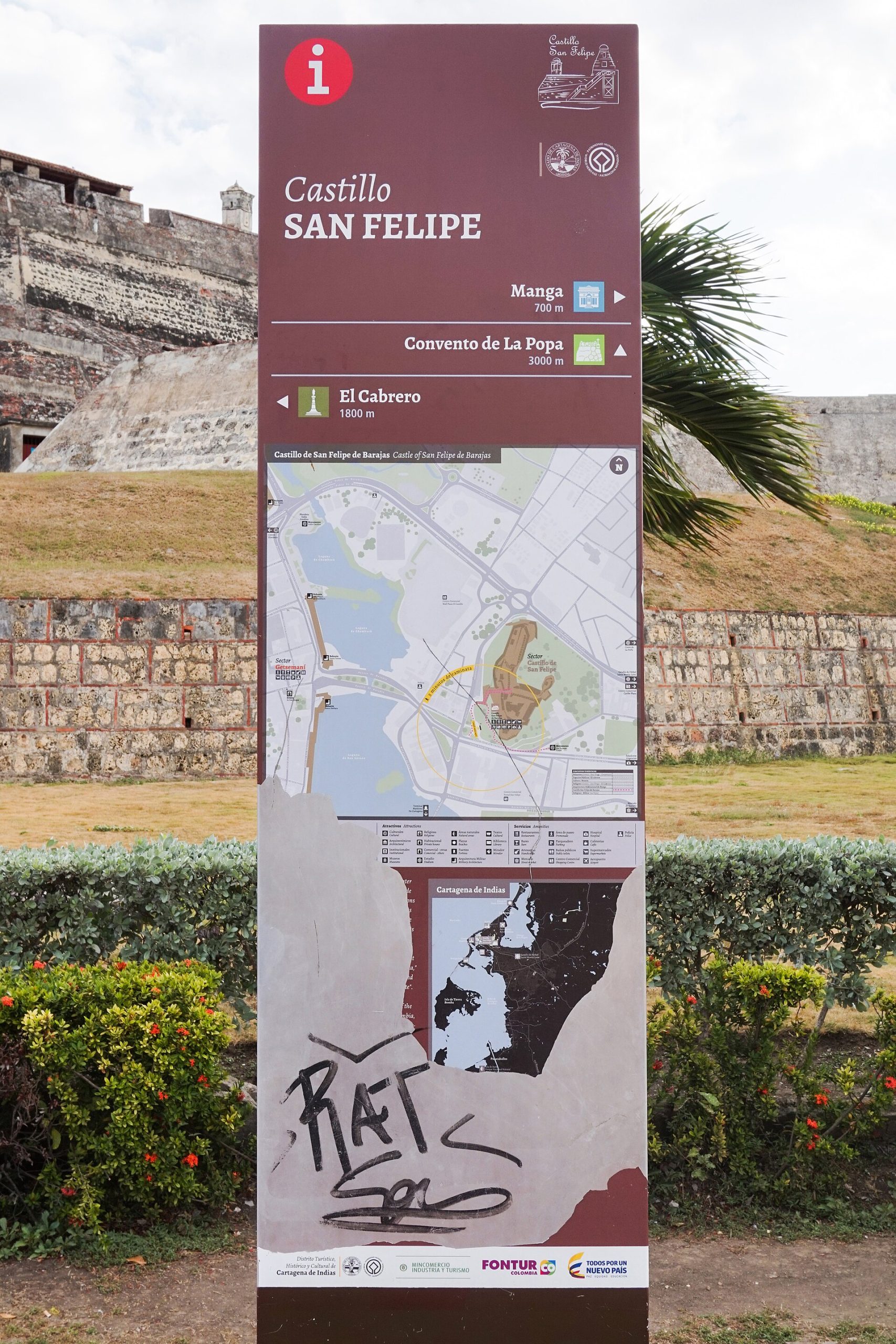
In This Article
- Cartagena, Jewel of the Spanish Main
- The Fortress on the Hill of San Lázaro
- A Century of Construction
- Batteries, Angles, and Overlapping Fire
- The Labyrinth of Tunnels
- Blas de Lezo, the Half-Man Who Saved a City
- The Great Siege of 1741
- The Greatest Fortress in the Americas
- The Fortress and the Walled City
- Life and Labour in the Fortress
- From Spanish Bastion to National Monument
- A World Heritage Fortress
- Visiting Castillo San Felipe
Cartagena, Jewel of the Spanish Main
To understand San Felipe, you must first understand the prize it protected. Cartagena de Indias was one of the most important cities in Spanish America, a great fortified port on the Caribbean coast through which passed an immense flow of wealth. It was a gathering point for the treasure fleets, a centre of commerce, and one of the principal hubs of the Atlantic trade in enslaved people.

This concentration of riches made Cartagena a target of overwhelming temptation for Spain’s rivals and enemies. Pirates, privateers, and the fleets of hostile nations all coveted the city, and over the centuries it was attacked and even sacked more than once. The wealth that made Cartagena great also made it perpetually endangered, and its survival depended on defences equal to the threats it faced.
The Spanish response was to turn Cartagena into one of the most heavily fortified cities in the entire hemisphere, ringed with massive walls and guarded by a system of forts. San Felipe de Barajas was the greatest of these, the keystone of the whole defensive scheme, positioned to dominate the land approaches to the city and to serve as its ultimate stronghold in time of danger.
The flow of wealth through Cartagena is hard to overstate. Silver from the mines of South America, goods from across the Spanish empire, and the grim commerce in enslaved human beings all passed through its harbour, making the city a linchpin of the whole colonial economy. This made its defence a matter of the highest priority for a Spanish crown utterly dependent on the safe movement of American riches.
Cartagena’s role in the slave trade is an inseparable and painful part of its history as a great port. It was one of the principal points through which enslaved Africans were brought into Spanish South America, and the wealth and importance that made the city worth such elaborate defence were bound up with this brutal commerce, a reality that any full account of the fortress must acknowledge.
The Fortress on the Hill of San Lázaro
What sets San Felipe apart from many great fortresses is its commanding position. It was built upon the hill of San Lázaro, a height overlooking the city and its approaches, and this elevation was a crucial part of its strength. From the hilltop, the fortress commanded the surrounding terrain, making it extremely difficult for any attacker to assault the city without first dealing with the guns above them.
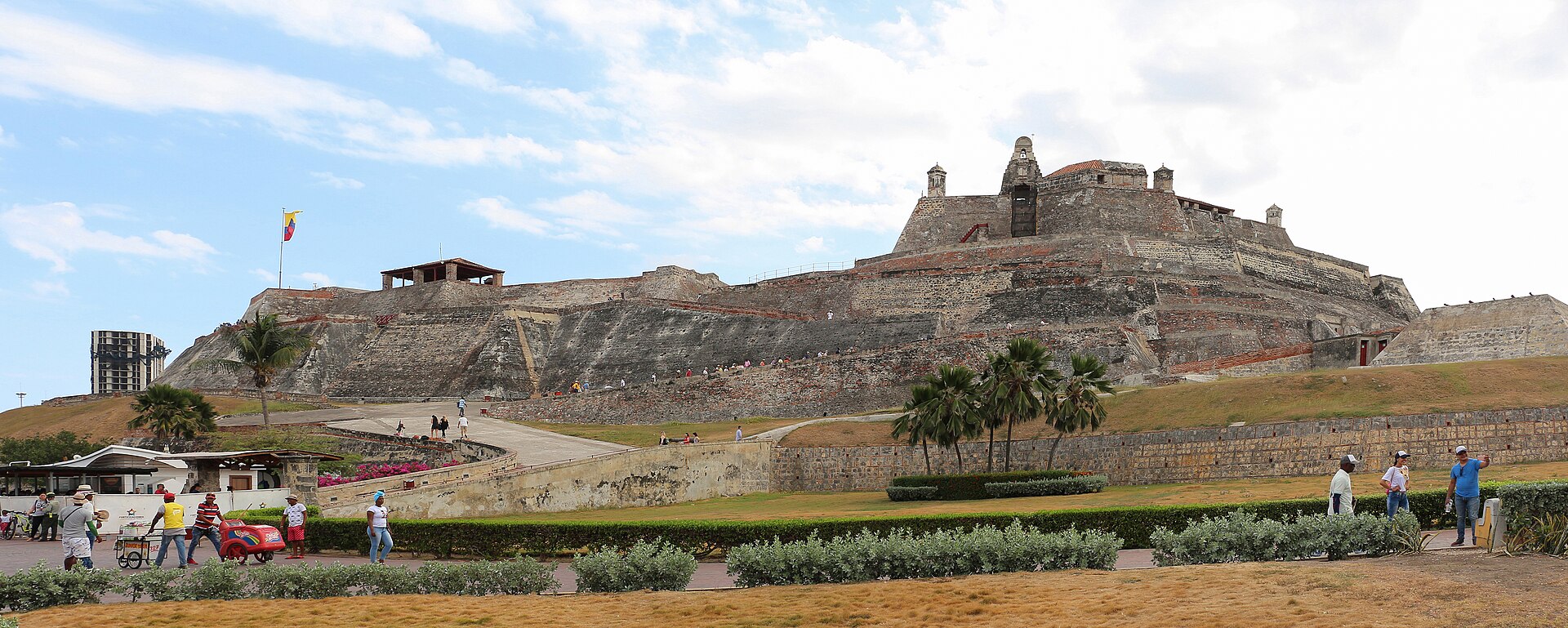
The choice of the hill was a stroke of strategic genius. An enemy advancing on Cartagena by land would find themselves under the fire of a fortress they could neither easily bypass nor easily storm, perched as it was on high ground and defended by every device the military engineers of the age could contrive. The hill turned the fortress into a natural bastion dominating the whole scene.
The fortress was named San Felipe de Barajas in honour of the Spanish king, tying this distant colonial stronghold to the crown it served. As with El Morro in Puerto Rico, the name was a declaration that this was part of the grand imperial project of defending Spain’s New World empire, a project pursued with enormous determination and expense across the whole Caribbean.
Standing on the summit today and looking out over Cartagena, you immediately grasp the logic of the site. The whole city and its approaches lie spread out below, and it is obvious that guns placed here could dominate everything within range. The engineers who chose this hill understood that whoever held it held the key to the city, and they built accordingly, on a scale to match the importance of the prize.
The name of the hill, San Lázaro, and of the fortress itself, San Felipe, root the great stronghold firmly in the Spanish and Catholic world that built it. These were not neutral labels but expressions of the identity and faith of the empire, stamped onto the landscape of the New World, and they remain in use today as reminders of the long colonial era that shaped Cartagena.
A Century of Construction
San Felipe was not built in a single campaign but grew over more than a century into the giant we see today. The initial fortress was constructed in the seventeenth century, a substantial work in its own right, designed to guard the hill and the approaches to the city. But this was only the beginning of a much longer process of expansion and strengthening.
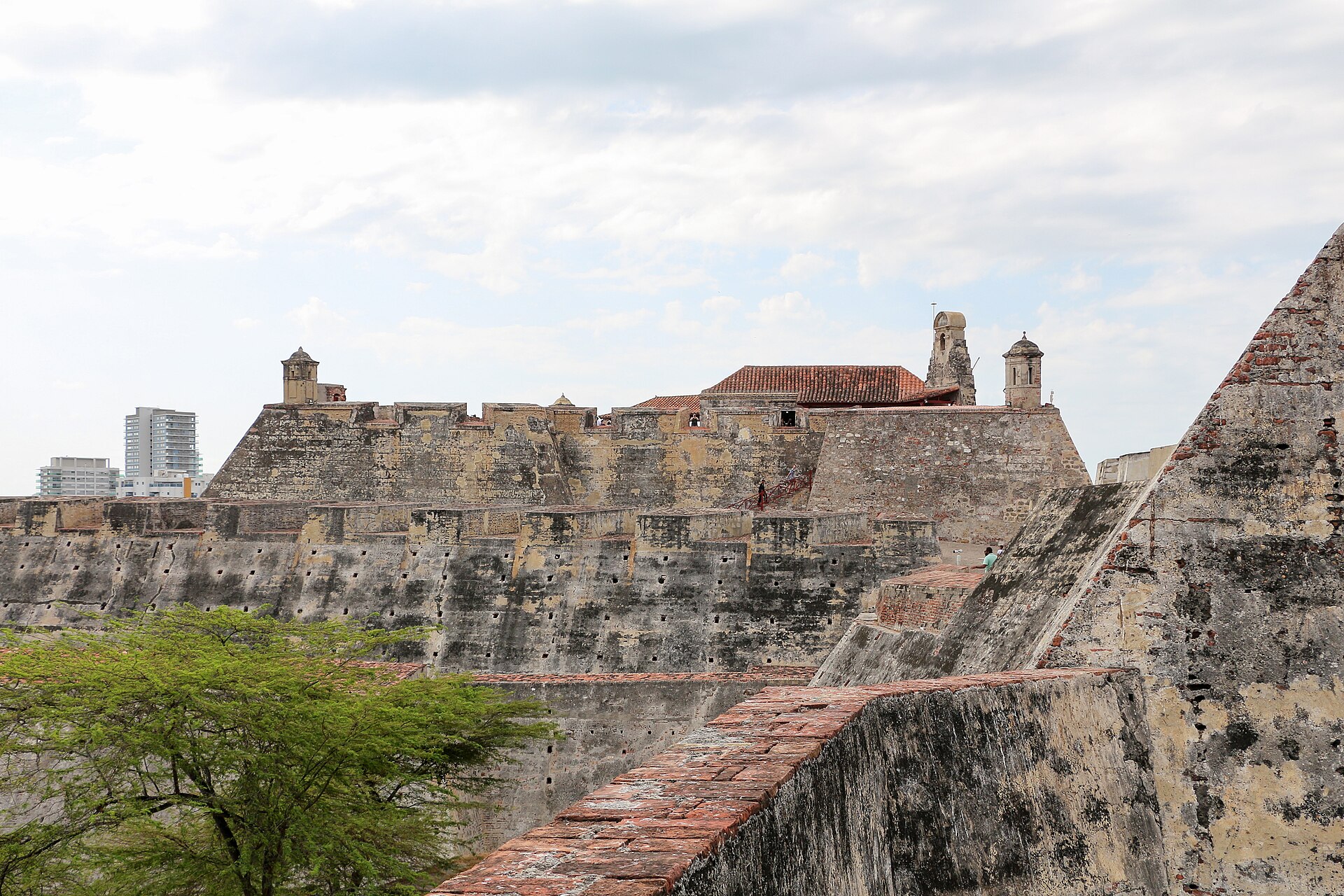
The great transformation came in the eighteenth century, when the fortress was massively expanded and rebuilt to counter the ever more powerful armies and fleets of the age. Under the direction of the skilled military engineer Antonio de Arévalo, the fortress was enlarged with new batteries and defences, reaching the vast extent that makes it the largest fortification the Spanish built anywhere in the Americas.
This long process of building reflects the constant arms race of colonial warfare. As artillery grew more powerful and enemies more ambitious, the defences had to be continually upgraded to keep pace. The San Felipe you visit today is the product of that ongoing effort, a layered masterpiece of military engineering that embodies the accumulated experience of generations of Spanish fortress-builders.
The scale of the undertaking meant that generations of engineers, soldiers, and labourers devoted their working lives to the fortress, each adding to what their predecessors had begun. In this sense San Felipe was never truly finished but was continually evolving, a living project that grew and adapted across more than a century in response to the shifting demands of colonial warfare in the Caribbean.
The engineer Antonio de Arévalo, who directed the great eighteenth-century expansion, deserves to be remembered as one of the master builders of colonial America. Under his direction the fortress reached its full, formidable extent, and his work represents the culmination of the long process that had begun a century earlier, transforming a strong fort into the unrivalled colossus that stands on the hill today.
Batteries, Angles, and Overlapping Fire
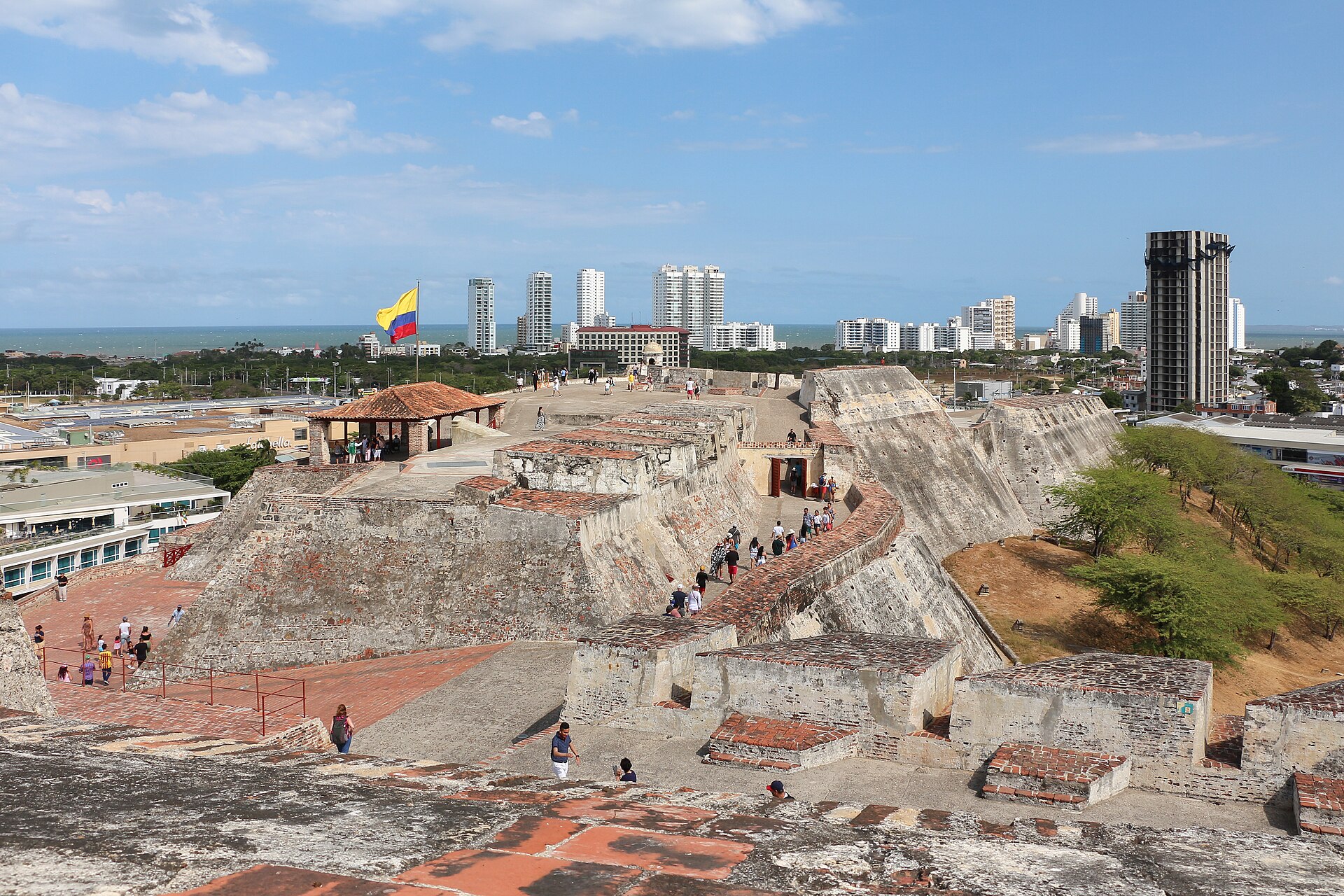
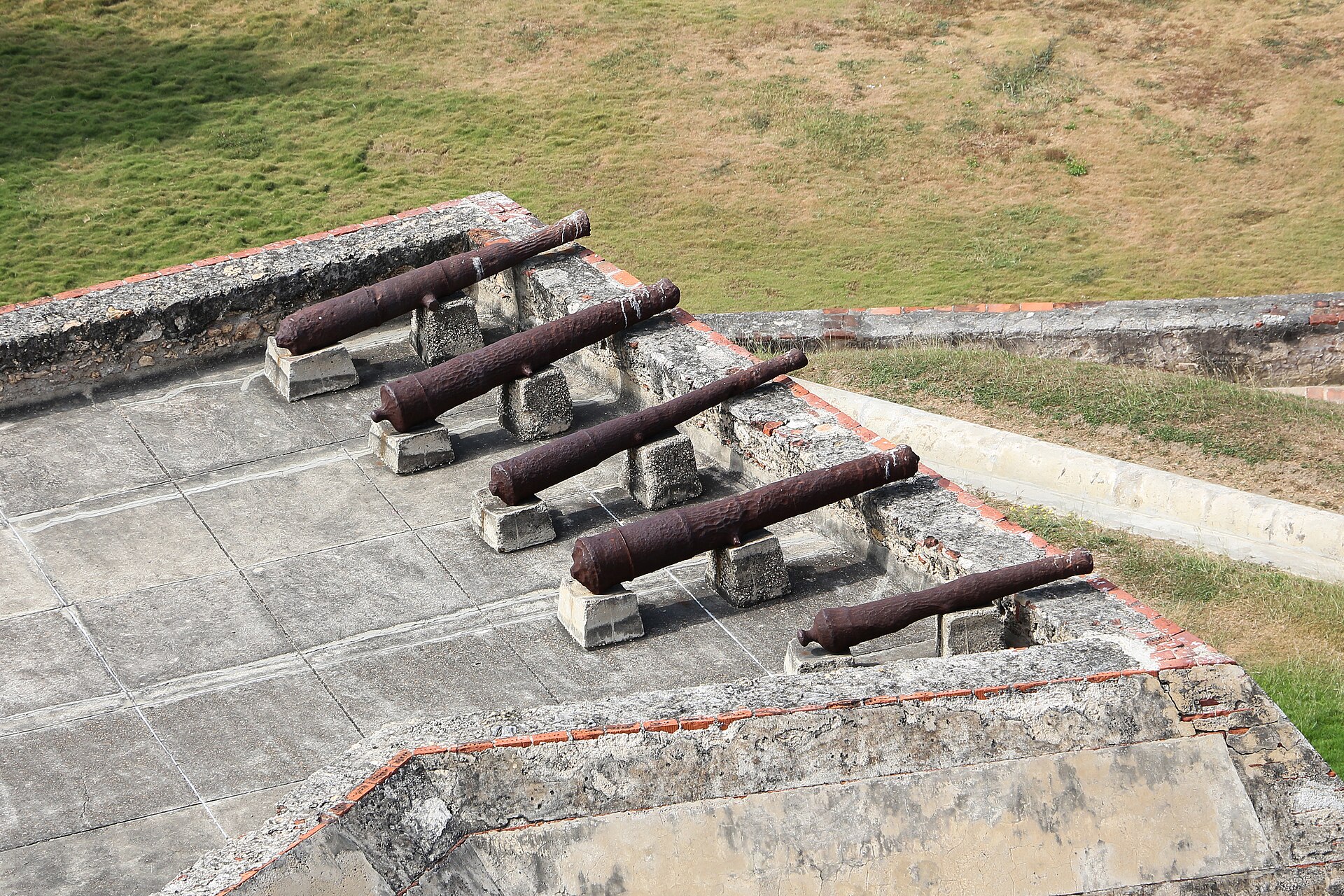
The design of San Felipe is a triumph of the military science of its era. Built in a broadly triangular form crowning the hill, it presents a series of batteries arranged at different levels, so that its guns could sweep the approaches with overlapping fields of fire. An attacker faced not a single wall but a whole system of interlocking defences, each supporting the others.

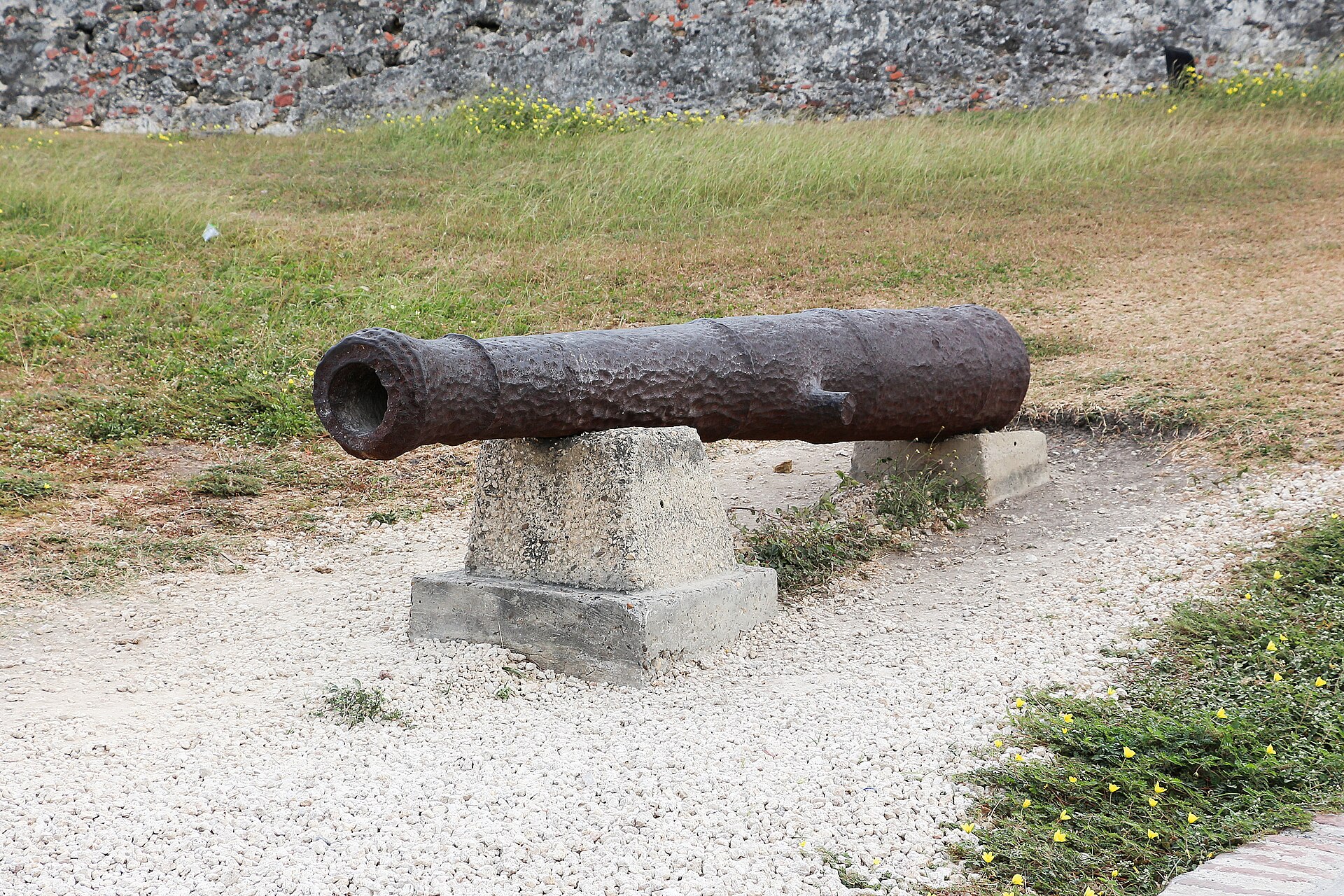
The fortress was studded with cannon positioned to command every avenue of approach, and its sloping walls and angular bastions were shaped to deflect enemy shot and to deny attackers any safe foothold. This was the mature European art of fortification, adapted brilliantly to the hilltop site, and it made San Felipe a fortress that could pour destruction on any force rash enough to assault it.
Crucially, the layout was designed so that even if part of the fortress fell, the defenders could fall back to inner positions and continue to resist. This defence in depth meant that taking San Felipe would require an attacker to fight through layer after layer of prepared positions, a daunting and bloody prospect that helped make the fortress one of the most formidable in the world.
The principle of defence in depth, so central to the fortress, meant that its strength did not depend on any single wall or position. An enemy might, at terrible cost, seize an outer battery, only to find themselves facing fresh defences and exposed to fire from higher levels. This layering multiplied the difficulty of an assault and was a large part of what made the fortress so nearly impossible to take by storm.
The genius of the design lay in turning the natural advantage of the hill into an artificial masterpiece, sculpting the height into a series of mutually supporting works. The engineers did not simply place a fort on a hill; they reshaped the whole eminence into a single integrated fortress, so that the land itself became part of the defensive machine, an achievement that still impresses military historians today.
The Labyrinth of Tunnels
One of the most famous and atmospheric features of San Felipe is its network of tunnels, a complex maze of underground galleries burrowing through the fortress. These passages allowed the defenders to move troops and supplies in secret and in safety, to reach different parts of the fortress unseen, and to spring surprises on any enemy who managed to breach the outer defences.
The tunnels were cleverly designed with acoustics in mind, so that the sound of any approaching enemy digging or moving would be carried and amplified, giving the defenders warning. Some passages were built to be defended easily, funnelling attackers into killing zones where a few defenders could hold off many. The whole underground system was a masterpiece of subterranean military engineering.
For visitors today, exploring the accessible portions of these tunnels is one of the most memorable parts of a visit. Moving through the cool, dim passages beneath the great fortress, you get a vivid sense of the ingenuity that went into its defence and the claustrophobic reality of the underground war it was designed to wage. The tunnels bring the fortress’s deadly cleverness to life.
The psychological effect of the tunnels on an attacker must have been considerable. Even a force that breached the walls could never be sure what lurked in the darkness beneath their feet, or from where a counterattack might suddenly erupt. This uncertainty, added to the physical strength of the defences, made assaulting San Felipe a genuinely terrifying prospect for any would-be conqueror.
Wandering the accessible passages, visitors often remark on the sudden drop in temperature and the strange, enclosed hush of the underground world, so different from the sun-blasted ramparts above. It is easy, in that dim and echoing space, to imagine the tension of soldiers listening for the enemy, and the tunnels remain one of the most evocative and popular parts of the entire fortress to explore.
Blas de Lezo, the Half-Man Who Saved a City
No account of San Felipe is complete without its greatest hero, the Spanish admiral Blas de Lezo. He was a figure of almost legendary toughness, a career sailor who had lost a leg, an eye, and the use of an arm in earlier battles, earning grim nicknames that celebrated his mutilations. In 1741 this half-broken warrior found himself charged with defending Cartagena against the greatest threat it ever faced.
Despite his disabilities and the overwhelming odds against him, Blas de Lezo organised a defence of extraordinary skill and determination. With a relatively small force, he made the most of Cartagena’s fortifications, above all San Felipe, and refused to yield even as the enemy pressed hard against the city. His leadership became the stuff of legend, an example of courage and resolve in the face of near-impossible odds.
Blas de Lezo’s stand at Cartagena is remembered as one of the great feats of Spanish military history, and his statue stands proudly before the fortress today. That a man so physically broken should have masterminded the defeat of a vast invasion fleet only adds to the power of the story, making him an enduring symbol of the fortress and of the spirit of the city he saved.
The contrast between the broken body of Blas de Lezo and the magnitude of his achievement is central to his enduring fame. He embodied the idea that willpower, skill, and courage could overcome even overwhelming material odds, and his defence of Cartagena has been retold and celebrated ever since as one of the supreme examples of leadership and determination in the face of seemingly certain defeat.
Stories of his defiance abound, including his reported scorn for the overconfident enemy and his refusal to countenance surrender. Whether every tale is literally true or burnished by legend, they capture the essence of a man who became, in death, far more than a soldier: a national hero and an enduring symbol of resistance against overwhelming odds, forever linked to the fortress whose defence crowned his extraordinary career.
The Great Siege of 1741
The supreme test of San Felipe came in 1741, during the war between Britain and Spain, when the British launched one of the largest amphibious operations ever mounted against the Americas. A massive fleet under Admiral Edward Vernon, carrying a huge army, descended on Cartagena, confident of seizing the great Spanish port and its riches. Medals were even struck in advance to celebrate the anticipated victory.
What followed was a catastrophe for the attackers. Cartagena’s defences, with San Felipe at their heart, and the brilliant, stubborn defence organised by Blas de Lezo, held the huge invading force at bay. The British assault on the fortress was repulsed with heavy losses, and as the siege dragged on, tropical disease began to devastate the attacking army, killing far more men than Spanish guns ever could.
In the end the great expedition failed utterly, and Vernon was forced to withdraw his shattered forces, having lost thousands of men. It was one of the most humiliating defeats in British military history and one of the most glorious victories in Spanish. San Felipe had proven its worth beyond all doubt, standing firm against the mightiest assault ever thrown at it and cementing its legend forever.
The premature British victory medals, struck before the outcome was known and proclaiming the fall of Cartagena, became a lasting emblem of hubris punished. Vernon’s confident boasts turned to ashes as his great expedition disintegrated on the hill of San Lázaro and in the fever-ridden camps around the city, a reversal so complete that it echoed through the politics and pride of both nations for years afterward.
The defeat had lasting strategic consequences, for it preserved Spanish control of the vital Caribbean port and dealt a heavy blow to British ambitions in the region. Had Cartagena fallen, the balance of power in the Americas might have shifted dramatically. Instead, the stubborn walls of San Felipe and the genius of its defender kept the great port in Spanish hands, altering the course of the long imperial contest.
The Greatest Fortress in the Americas
The successful defence of 1741 confirmed San Felipe’s status as the supreme fortress of Spanish America. In sheer scale and strength it surpassed all the other fortifications the Spanish raised across their vast New World empire, a colossus of stone and earth that dominated its city and its coast. Nothing else the Spanish built in the Americas quite matched it.

Its vast extent is difficult to grasp until you stand before it and begin to climb its ramps and explore its levels. The fortress covers the whole hill, its batteries and walls sprawling across the height in a complex arrangement that took generations to perfect. Everywhere you look there are guns, galleries, ramps, and defensive works, all knitted together into a single overwhelming system.
This scale was a direct measure of Cartagena’s importance and of the determination of the Spanish crown to hold it. San Felipe was expensive, laborious, and slow to build, but the wealth it protected justified the cost many times over. It stands today as the ultimate expression of Spanish colonial military engineering, a fortress built to be, and for a long time genuinely was, unconquerable.
To appreciate the fortress fully, it helps to remember that it was the product of the same imperial system that built El Morro in Puerto Rico, the walls of Havana, and the fortifications of Portobelo and beyond. San Felipe was the greatest of them all, the supreme expression of a coordinated effort to fortify the vital nodes of the Spanish Caribbean against a world of enemies.
The claim to be the greatest fortress in the Americas is not idle boasting but a reflection of measurable fact, in the scale of its works and the resources poured into it. San Felipe was the pinnacle of an entire tradition of colonial fortification, and to visit it is to encounter that tradition at its most ambitious and accomplished, a fitting climax to the long story of Spanish military engineering in the New World.
The Fortress and the Walled City
San Felipe never stood alone but formed part of a much larger defensive system that made Cartagena one of the most heavily fortified cities in the Americas. Ringing the old town was a great circuit of walls, punctuated by bastions and gates, and along the coast and harbour stood additional forts and batteries, all designed to work together to make the port impregnable.
Within this system, San Felipe played the role of the ultimate stronghold and the guardian of the land approaches. While the sea walls and coastal forts guarded against attack from the water, the great fortress on its hill dominated the routes by which an enemy might advance overland, closing off the back door to the city. The whole scheme was a model of comprehensive defence.
Seeing the fortress in this wider context deepens the appreciation of a visit. To walk the old city walls and then climb to San Felipe is to trace the outline of an entire strategy of defence, and to understand how the Spanish turned a single vulnerable port into a fortress-city that could defy the greatest powers of the age. The two together tell the full story of colonial Cartagena.
The combination of hilltop fortress and walled port made Cartagena a genuinely exceptional case, a city that could defend itself against attack from land and sea alike. Few colonial cities anywhere achieved so complete a system of defence, and the survival of so much of it today is what makes Cartagena such an extraordinary place to explore for anyone interested in the military history of the age.
Exploring both the fortress and the walls in a single visit gives you a rare and complete picture of how an entire city was engineered for war. Cartagena is one of the few places where so much of this ambitious defensive vision survives intact, and the experience of tracing it, from the sea walls to the great fortress on the hill, is among the most rewarding that the historic Caribbean has to offer.
Life and Labour in the Fortress
Behind the grand strategy and famous battles lay the daily reality of maintaining and manning this enormous fortress. A large garrison was needed to serve its many guns and hold its extensive works, and keeping such a place supplied, repaired, and ready was a constant labour under the fierce tropical sun of the Caribbean coast.

The construction and upkeep of the fortress relied heavily on the labour of many hands, including that of enslaved Africans and others whose toil built the walls and dug the tunnels. Any honest account of San Felipe must acknowledge this, for the magnificent fortress that so impresses visitors today was raised in part through the forced labour of people caught up in the brutal colonial system that Cartagena also served as a slave-trading port.
For the soldiers who garrisoned it, life combined long stretches of routine with the ever-present possibility of sudden, deadly action. Disease, as the siege of 1741 showed, was often a greater killer than the enemy, and a posting to this Caribbean fortress was no easy assignment. The worn stones of San Felipe hold the memory of all these lives, the famous and the forgotten alike.
The reliance on coerced and enslaved labour to build and maintain the fortress is a sobering counterpoint to its grandeur, and it links San Felipe directly to the darker history of Cartagena as a major slave-trading port. The magnificence of the stronghold and the suffering of those who helped raise it are inseparable parts of a single, complicated history that deserves to be remembered in full.
The tropical setting shaped every aspect of life in the fortress, from the constant battle against heat and humidity to the ever-present danger of the fevers that thrived in the Caribbean climate. Soldiers, labourers, and officers alike endured conditions that were often gruelling, and the human cost of building and holding San Felipe, in sweat, sickness, and coerced toil, was immense, a hidden foundation beneath its towering walls.
From Spanish Bastion to National Monument
The great age of San Felipe as an active fortress could not last forever. As the Spanish empire in the Americas crumbled in the nineteenth century and Colombia won its independence, the fortress lost its original imperial purpose, though its commanding position ensured it remained militarily significant through the turbulent years that followed.
Over time, as the nature of warfare changed and the old fortress became obsolete as a modern defence, San Felipe passed from being a working stronghold to being a monument, a symbol of Cartagena’s dramatic history and of the extraordinary events that had unfolded on its hill. Its preservation allowed the memory of those events to endure for future generations.
Today the fortress is a source of immense pride for Cartagena and for Colombia, a national landmark that draws visitors from around the world. It has hosted important events and stands as one of the most recognisable symbols of the city, its silhouette on the hill as much a part of Cartagena’s identity as the colourful streets of the old walled town below.
The endurance of San Felipe through the upheavals of independence and the changing fortunes of the nineteenth and twentieth centuries speaks to the sheer solidity of its construction. Built to withstand the fury of siege warfare, it easily outlasted the empire that raised it, standing firm on its hill as Cartagena grew and changed around it into the vibrant modern city of today.
As Cartagena blossomed into a major tourist destination in modern times, San Felipe became one of its star attractions, drawing travellers eager to experience its dramatic history and its commanding views. Its transformation from a jealously guarded military secret into a welcoming public monument mirrors the broader journey of the city itself, from embattled colonial port to vibrant, open, and celebrated modern city.
A World Heritage Fortress
The outstanding importance of San Felipe has been recognised internationally. The fortress, together with the historic port and the remarkable ensemble of fortifications and monuments of Cartagena, was inscribed on the UNESCO World Heritage List in 1984, honouring the city as one of the finest examples of the military architecture of the colonial age anywhere in the Americas.
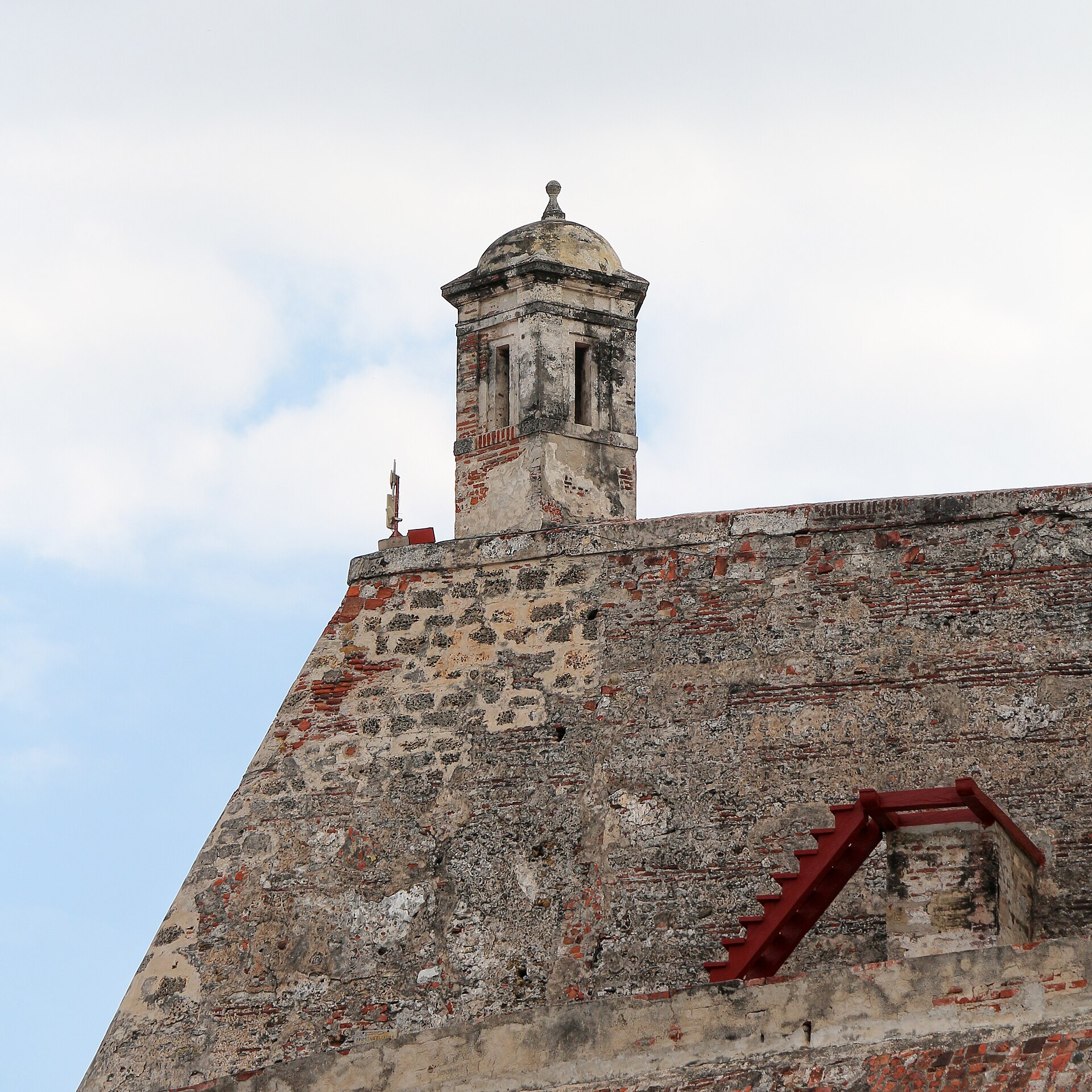
The listing recognised Cartagena as a whole system, in which San Felipe played the leading role, alongside the great city walls and the other defensive works that together made the port so formidable. This ensemble represents an exceptional achievement of engineering and a vivid record of the strategic importance of the Caribbean in the age of empires and treasure fleets.
For Colombia, the World Heritage status affirms the global significance of Cartagena’s heritage and helps ensure its protection. San Felipe is not only a national treasure but a monument acknowledged as belonging to the shared history of humanity, a place whose preservation matters to the whole world and whose story illuminates a pivotal era in the history of the Americas.
The World Heritage designation also underlines the responsibility to conserve this immense structure against the wear of time, weather, and mass tourism. Maintaining a fortress of such scale in a tropical climate is a continual challenge, and ongoing preservation work aims to keep San Felipe sound and accessible while protecting the authenticity that makes it so valuable a witness to the past.
Recognition on the world stage has also helped Cartagena embrace its layered heritage, encouraging thoughtful presentation of both the triumphs and the tragedies bound up in the fortress and the old city. San Felipe stands not only as a monument to military ingenuity and heroic defence but as a place to reflect on the full complexity of the colonial era, with all its grandeur and all its cruelty.
Visiting Castillo San Felipe
A visit to San Felipe is one of the highlights of any trip to Cartagena, and the fortress sits just outside the old walled city, easily reached and impossible to miss. From the moment you approach its great sloping walls, climbing the ramps toward the summit, you feel the scale and power of the place, and the views back over the city and the Caribbean grow more magnificent with every step.

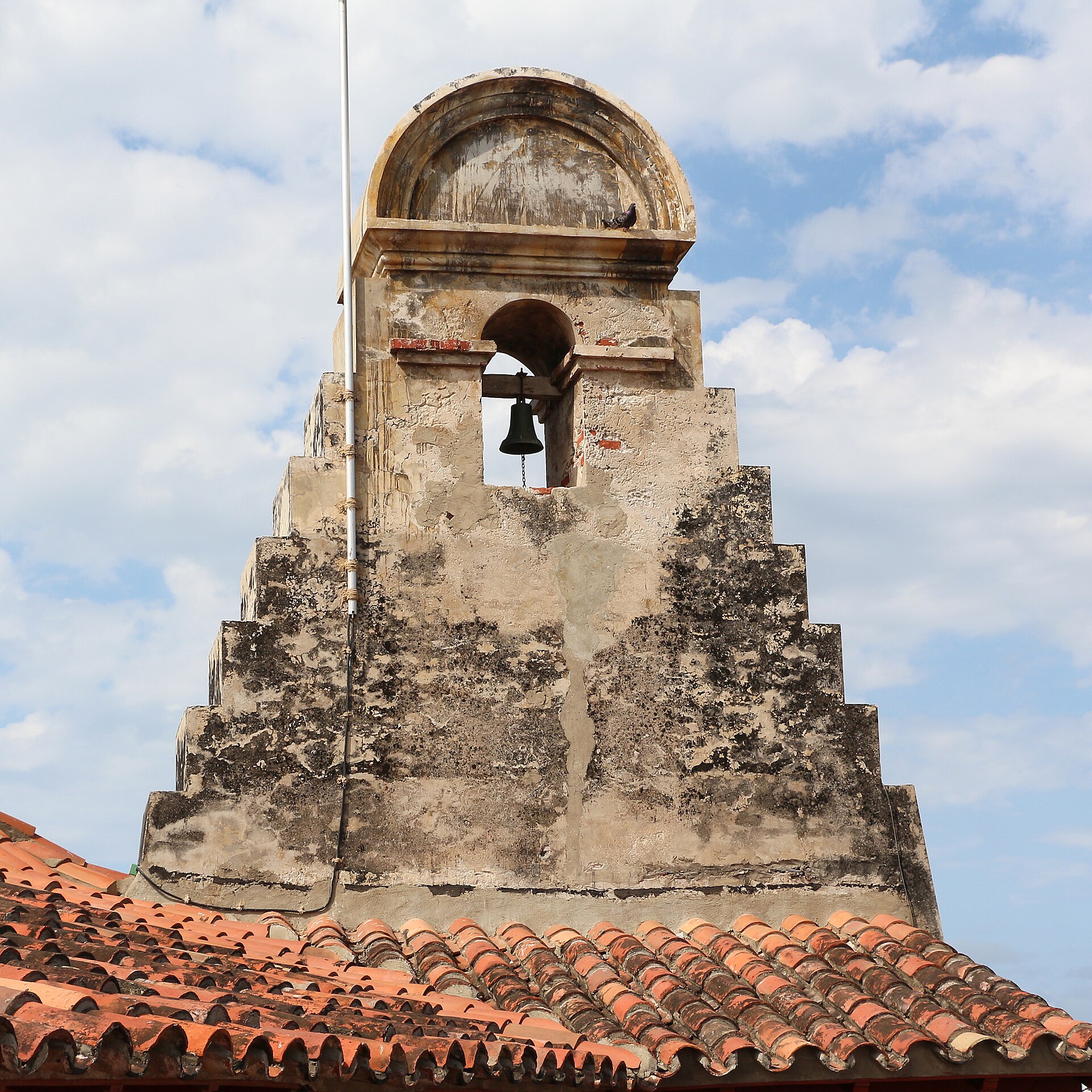
Inside, take time to explore the different levels and batteries, to seek out the cannon still guarding the ramparts, and, above all, to venture into the accessible tunnels that burrow through the fortress. Each part of the complex tells a piece of the story, and moving through it you come to appreciate the ingenuity that made San Felipe so formidable. The statue of Blas de Lezo below is an essential stop.
View 10.4225, -75.5392 on Google Maps
Come prepared for heat and sun, as the fortress is largely open and exposed, and consider visiting earlier or later in the day for cooler temperatures and softer light. A guide can bring the history vividly to life, especially the epic siege of 1741. However you explore it, San Felipe offers an unforgettable encounter with the age of empires, and an unbeatable vantage point over the beautiful old city it was built to defend.
Many visitors find that the most powerful moment comes at the summit, where the whole ambition of the place reveals itself in a single sweeping view of city, harbour, and sea. In that instant the fortress ceases to be a mere collection of walls and becomes a vivid window onto the age of empires and the epic struggles that were fought for control of these bright and coveted Caribbean waters.
Practical tips aside, the deepest reward of a visit is the sense of connection it offers to a pivotal chapter of history. To stand where Blas de Lezo’s defenders once stood, looking out over the city they saved, is to feel the past come alive in a way that no book can quite match, and it is this vivid encounter with history that makes San Felipe so unforgettable a destination.
Castles Nearby
You May Like
Fort Ticonderoga: The Star Fort Whose Cannon Helped Win a Revolution


