High on a limestone ridge in the cloud forests of northern Peru, wrapped in mist and hung with orchids, stand the towering walls of one of the most extraordinary and least known fortresses in the Americas. This is Kuélap, the great citadel of the Chachapoya people, a colossal stone stronghold raised centuries before the rise of the Inca, whose immense walls enclose the ruins of a lost mountain city.
The Chachapoya, known to history as the Warriors of the Clouds, built Kuélap on a scale that astonishes all who reach it. Its perimeter walls soar up to nearly twenty metres high, and by some measures the sheer volume of stone used to build the citadel exceeds that of the Great Pyramid of Egypt. Yet for all its grandeur, Kuélap remains far less famous than the Inca sites to the south, a hidden wonder of the Andes.
In this guide you will explore the whole remarkable story of Kuélap: the mysterious cloud-forest civilisation that built it, the staggering scale of its walls, the hundreds of round stone houses within, its ingenious and sinister defensive entrances, its eventual absorption by the Inca and then the Spanish, and its modern reawakening as travellers finally discover this astonishing site. It is a monument to a vanished people, high among the clouds.
A word before you begin: Kuélap is often called the Machu Picchu of the north, but the comparison, while it captures the site’s importance, does it a disservice, for Kuélap is older, built by a different people, and utterly distinct in character. Rather than measure it against its famous cousin, come to Kuélap on its own terms, ready to meet the Warriors of the Clouds and their extraordinary cloud-forest fortress as something wholly their own.
In This Article
- The Warriors of the Clouds
- The Colossal Walls
- A City of Round Houses
- The Deadly Narrow Entrances
- El Tintero and the Torreón
- A Fortress in the Cloud Forest
- The Inca Absorb the Chachapoya
- The Coming of the Spanish
- A Lost Citadel Rediscovered
- Uncovering the Chachapoya
- Reaching the Citadel Today
- Why Kuélap Matters
- Visiting Kuélap
The Warriors of the Clouds
To understand Kuélap, you must first meet the people who built it, the Chachapoya. This was a civilisation that flourished for centuries in the remote cloud forests of the eastern Andes of northern Peru, a rugged land of steep mountains, deep valleys, and perpetual mist. The very name by which they are known, often translated as the Warriors of the Clouds, evokes the misty highland world they inhabited.
The Chachapoya were a distinct culture, separate from the better-known peoples to the south, and they developed their own traditions of architecture, burial, and craft in their isolated mountain domain. They were skilled builders in stone, and they had a reputation as fierce warriors, defending their homeland from outsiders and eventually resisting even the mighty Inca Empire.
Because the Chachapoya left no writing and much of their history is lost, they retain an air of mystery, and Kuélap is the greatest surviving monument to their achievement. The citadel is our clearest window into this remarkable cloud-forest civilisation, a people who raised one of the most impressive fortified sites in the Americas high in the mists of the northern Peruvian Andes.
The Chachapoya are also remembered for other haunting monuments beyond Kuélap, including their extraordinary cliff burials, the mummies and sarcophagi they placed in inaccessible ledges high on rock faces overlooking the valleys. These practices, together with their round-house architecture, mark them out as a truly distinctive people, and they add to the sense of mystery surrounding this cloud-forest civilisation and its greatest fortress.
The Chachapoya were also famed among their neighbours, and later in Spanish accounts, for a striking physical reputation, being described as notably tall and fair compared with other Andean peoples, a description that has fed much speculation over the years. Whatever the truth of such accounts, they add to the aura of mystery surrounding this distinctive cloud-forest people and their remarkable citadel.
The Colossal Walls
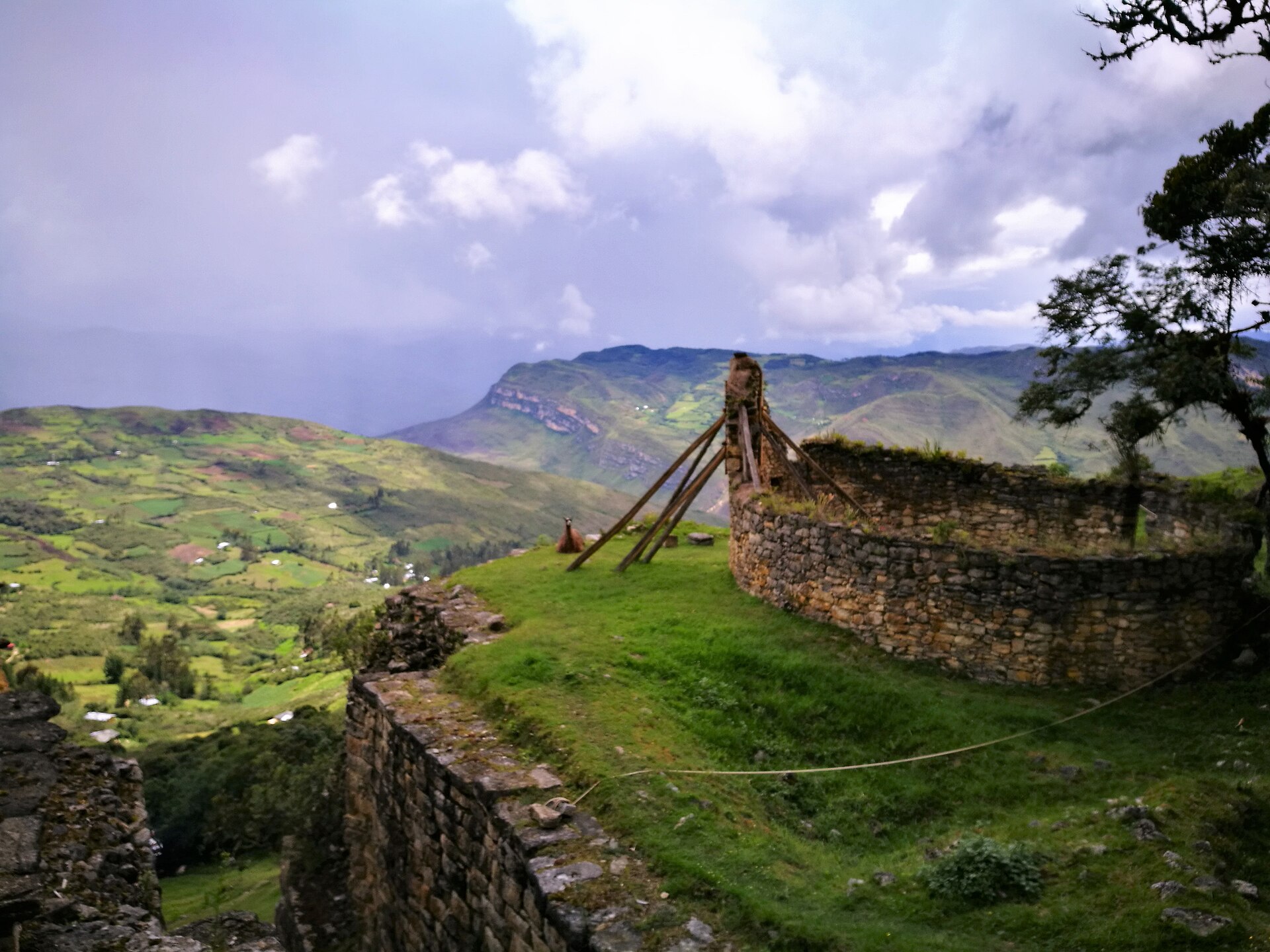
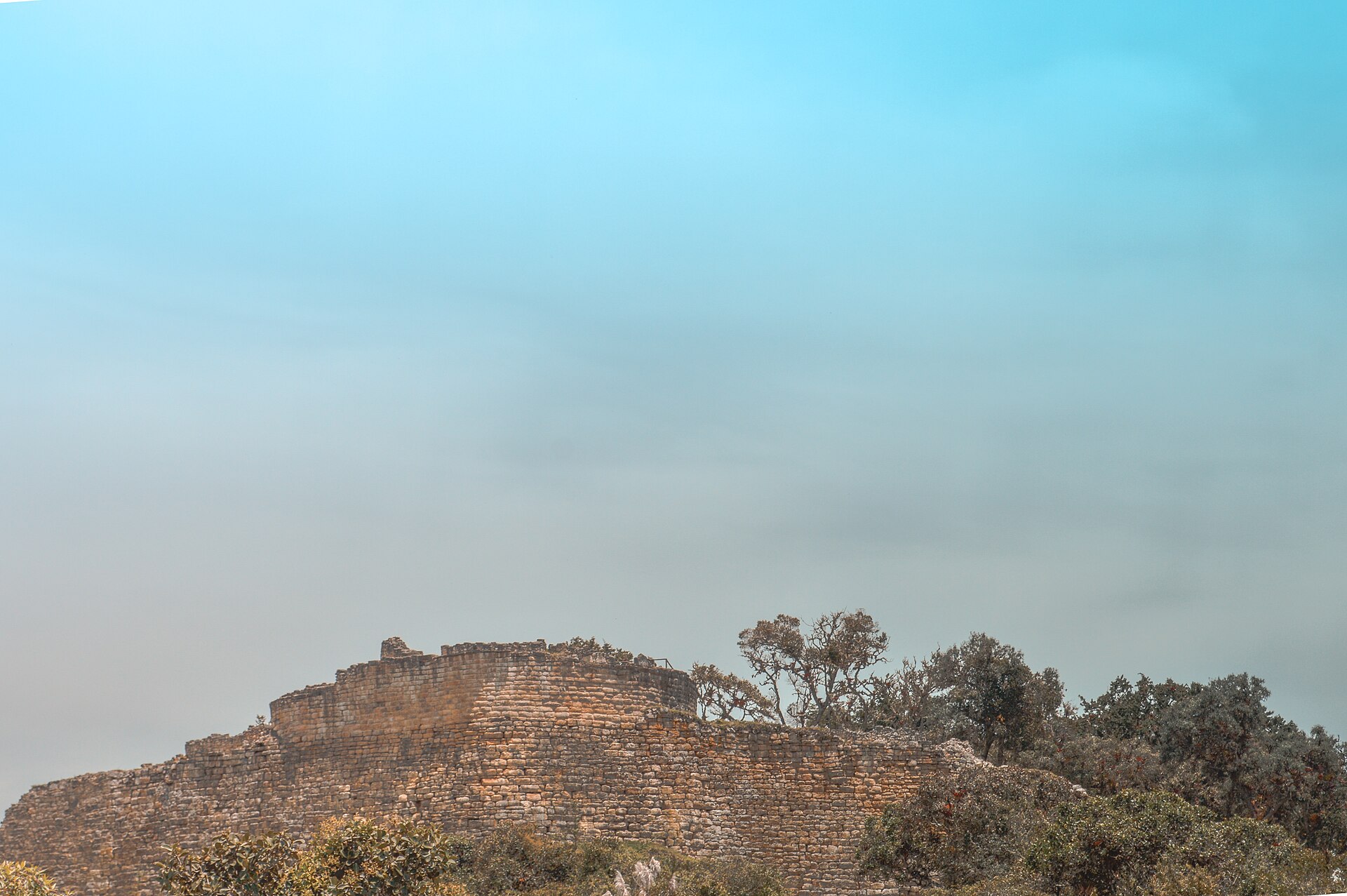
The feature that overwhelms every visitor to Kuélap is its immense outer wall. Built of limestone blocks, this great rampart encircles the entire citadel, rising in places to a height approaching twenty metres, a truly colossal barrier of stone that follows the contours of the ridge on which the fortress stands. The scale of it is difficult to grasp until you stand at its foot and look up.
So massive is this construction that, by some estimates, the total volume of stone used to build Kuélap exceeds even that of the Great Pyramid of Giza. This makes the citadel one of the largest stone structures in the ancient Americas, a staggering achievement for a people building by hand in the difficult terrain of the high cloud forest, without the resources of a great centralised empire.
The walls served both to defend the citadel and to elevate its interior, for the great enclosure was in effect a huge raised platform, its summit built up behind the mighty ramparts. Standing atop the walls, or looking up at them from below, you feel the full ambition of the Chachapoya builders, who transformed a mountain ridge into a fortress-city of extraordinary and enduring grandeur.
Precisely how the Chachapoya quarried and raised the vast quantity of stone required for the walls, on a remote mountain ridge and without the organisational resources of a great empire, remains a subject of admiration and study. The achievement testifies to a society capable of remarkable feats of communal labour and engineering, one that has been too often overlooked in the shadow of the Inca.
To walk the base of the great wall and crane your neck toward its distant top is to feel small in the presence of a truly monumental human achievement. The comparison with the Great Pyramid, while it concerns volume rather than height, captures something real about the scale of the ambition here, and it helps convey to the wider world just how significant a monument the cloud-forest people left behind.
A City of Round Houses
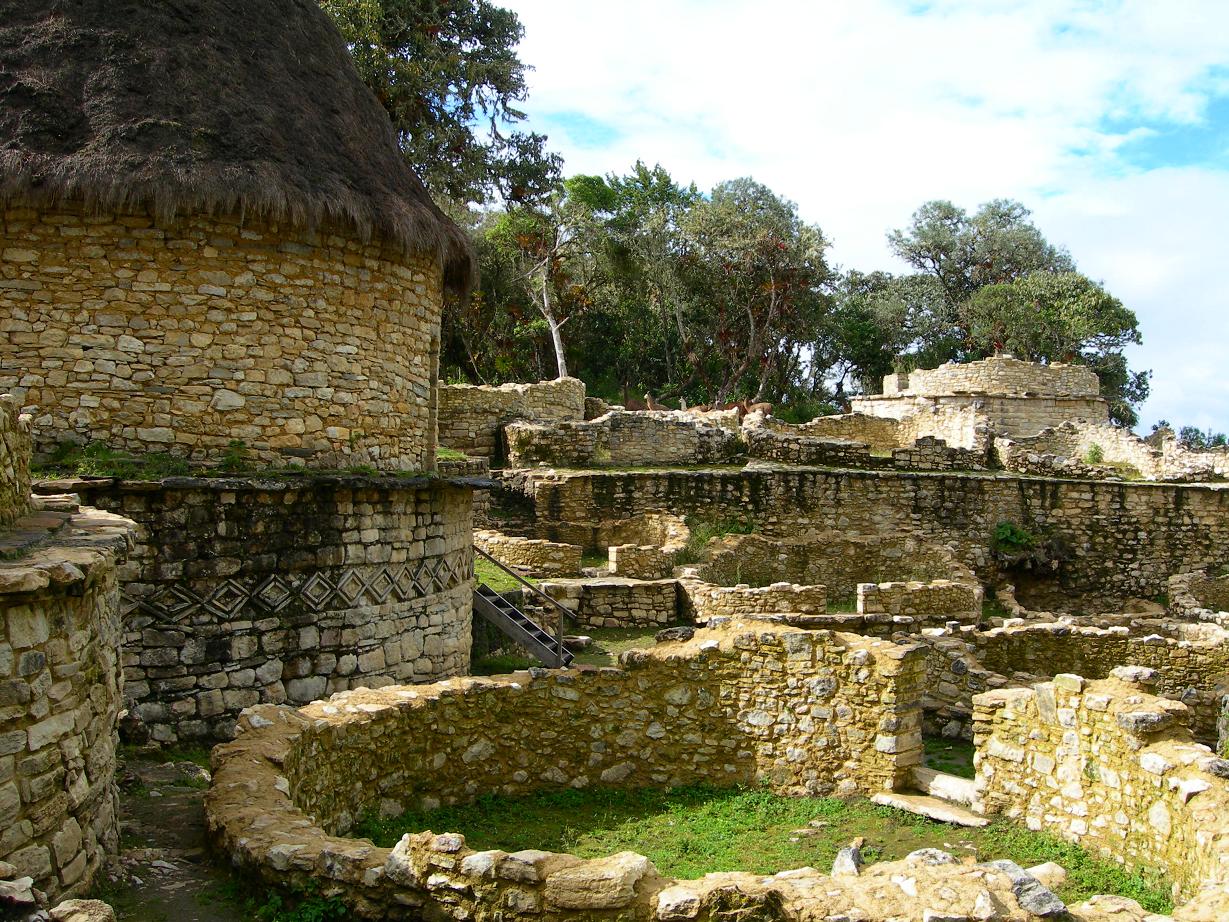
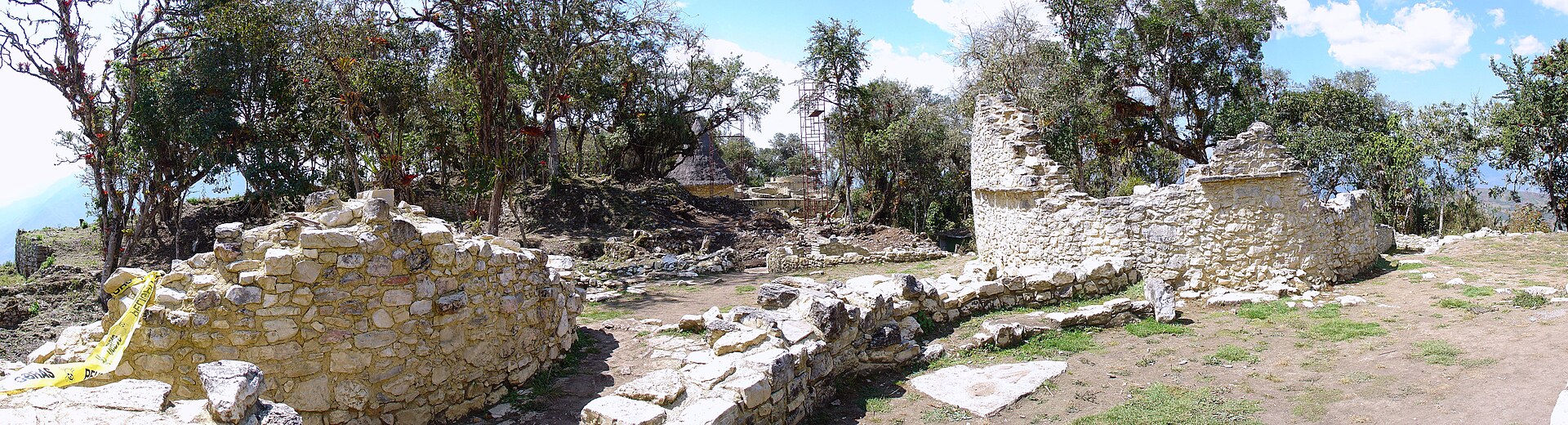
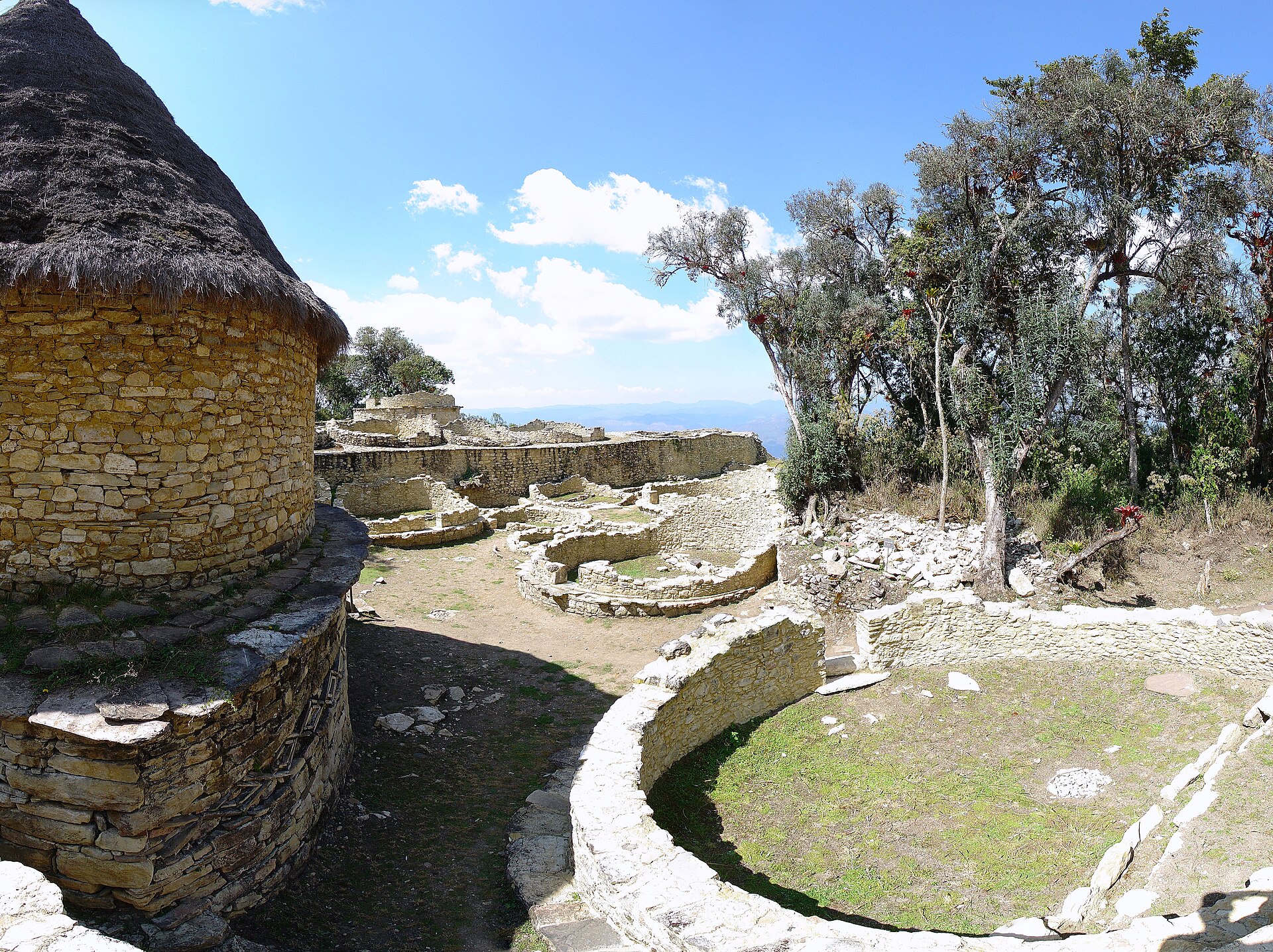
Within the great walls of Kuélap lie the remains of a whole city, and its most distinctive feature is the form of its buildings. The citadel contains the ruins of several hundred structures, the great majority of them circular in plan, the round stone houses that are a hallmark of Chachapoya architecture and quite different from the rectangular buildings of many other Andean cultures.
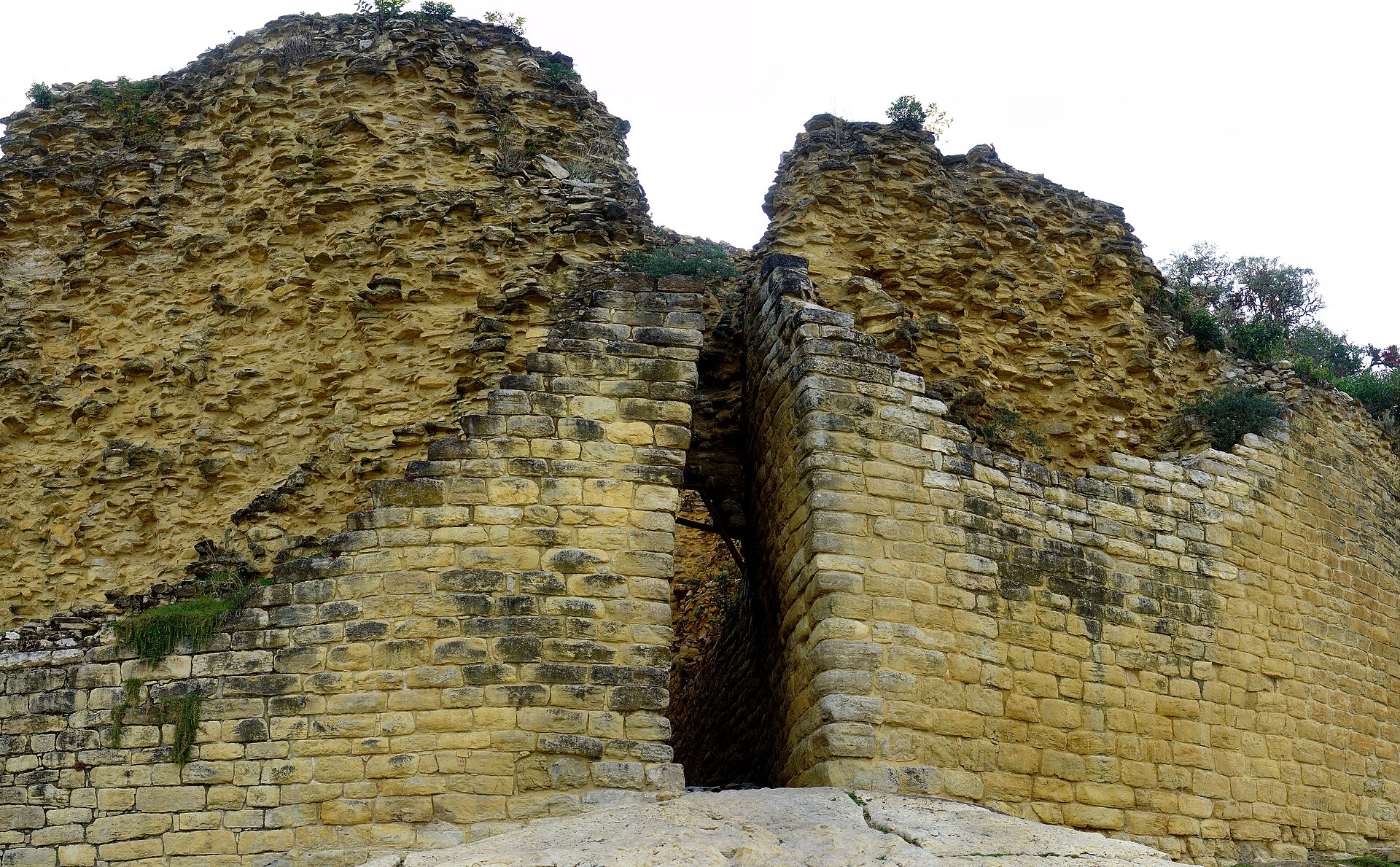
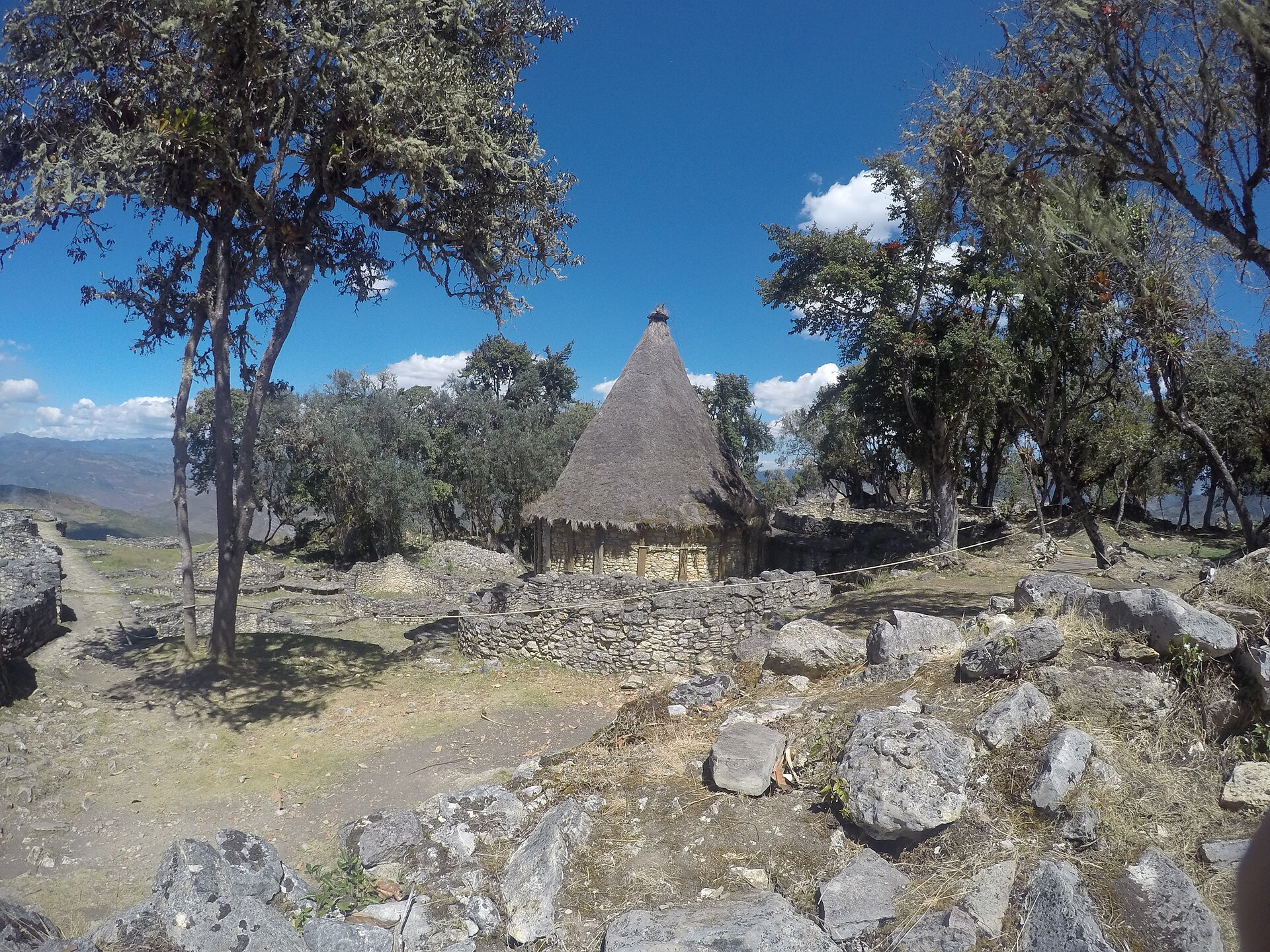
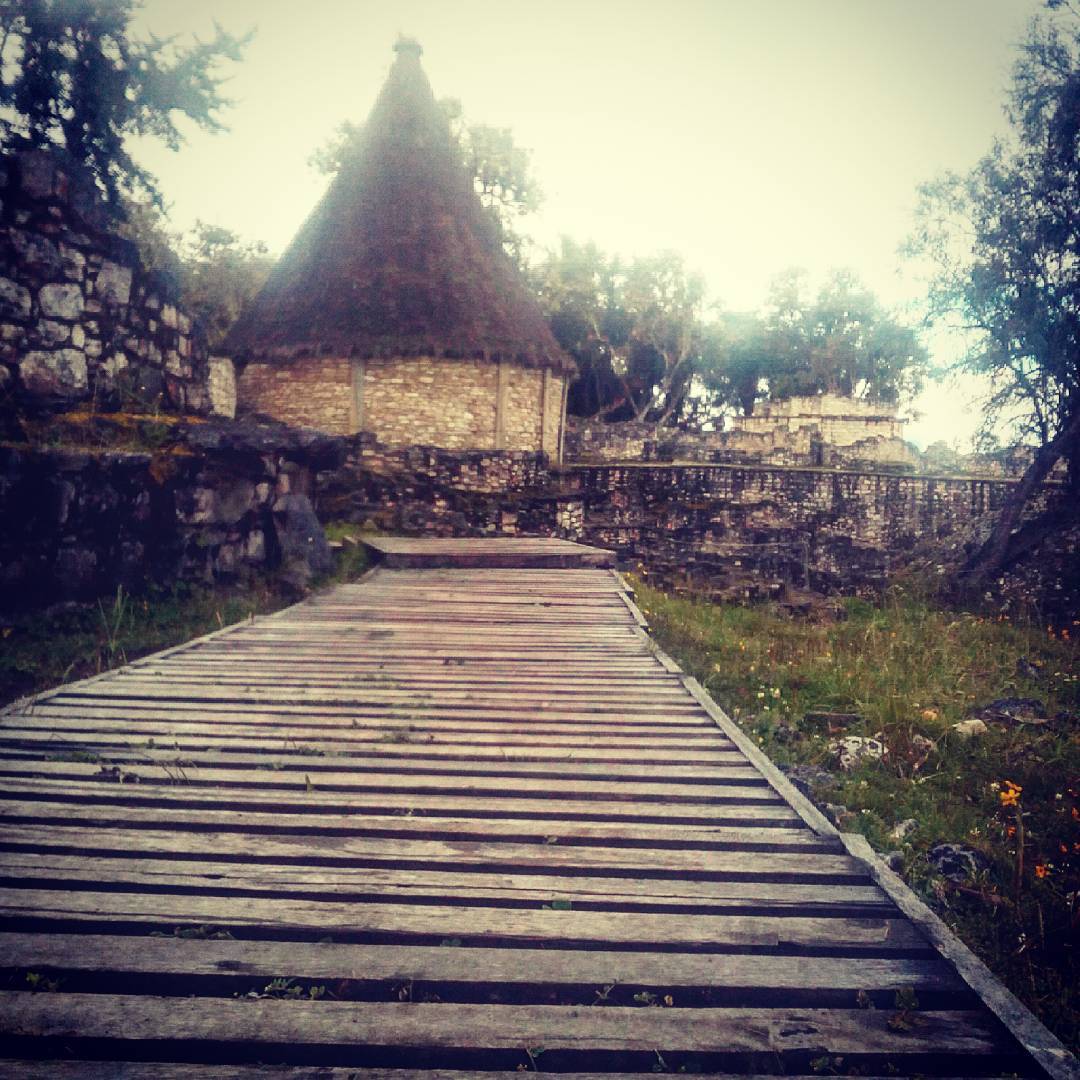
These roundhouses, of which there are more than four hundred, were once topped with conical thatched roofs, and they would have housed the population of the citadel, thought to have numbered in the thousands at its height. Many of the houses are decorated with distinctive geometric friezes, zigzags and rhombus patterns carved or built into their stone walls, adding an artistic dimension to the domestic architecture.
Wandering among these circular ruins, often draped in moss and vegetation in the damp cloud-forest climate, you can imagine the crowded life of the mountain city that once thronged here. The round houses give Kuélap a character all its own, a distinctive signature of the Chachapoya people, and they help make the citadel one of the most atmospheric and evocative ancient sites in all of Peru.
The geometric friezes that decorate many of the houses, with their bold zigzags and diamond patterns, are among the most distinctive artistic features of Chachapoya culture, and they lend the domestic architecture of Kuélap a striking visual character. These patterns may have carried symbolic or social meaning, marking status or lineage, though their precise significance, like so much about the Chachapoya, remains uncertain.
The circular form of the houses may have been well suited to the wet cloud-forest climate, shedding rain efficiently from their conical thatched roofs, as well as reflecting cultural preference. Reconstructions of these houses, with their tall thatch, help visitors picture the living city that once filled Kuélap, transforming the bare stone rings into homes where a whole community once dwelt high among the clouds.
The Deadly Narrow Entrances
One of the most ingenious and unsettling features of Kuélap is the design of its entrances. Rather than broad gateways, the citadel is accessed through narrow, funnel-shaped passages that begin relatively wide but taper as they penetrate the great wall, until at their innermost point they narrow so much that only a single person can pass through at a time.
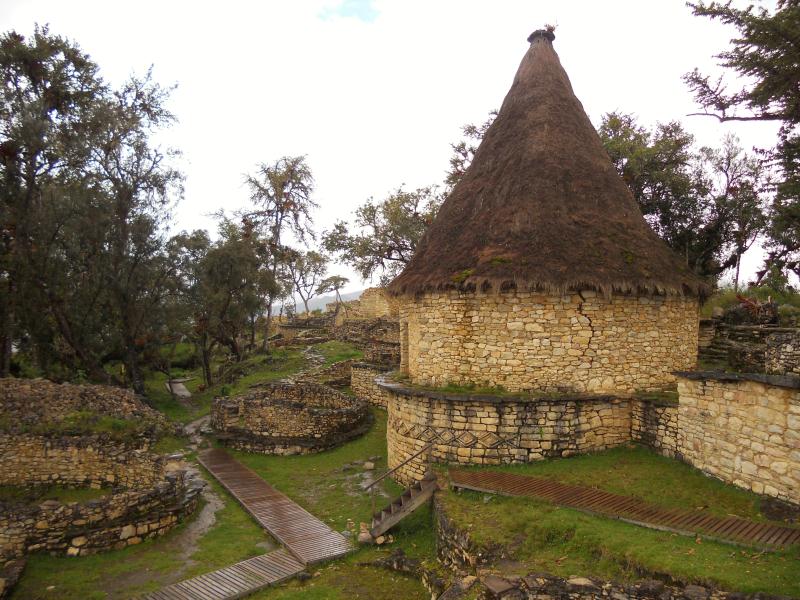
This clever design was a formidable defensive measure. Any attacker attempting to force an entrance would be funnelled into an ever-narrowing corridor, squeezed into single file and utterly exposed to the defenders above, who could rain down missiles on the helpless intruders. The narrowing passages turned the entrances into deadly traps, allowing a small force to hold off a much larger one.
Passing through one of these entrances today, feeling the walls close in around you as the passage narrows, is one of the most memorable experiences of a visit to Kuélap. It brings home vividly the defensive genius of the Chachapoya builders and the martial character of a people who earned their reputation as warriors, and it is a striking reminder that this was, above all, a fortress.
The narrowing entrances are a brilliant illustration of how the Chachapoya turned the very approach to their citadel into a weapon, using architecture itself to defend the site. In an age of hand-to-hand combat and thrown or shot missiles, forcing attackers into single file beneath the defenders was a devastating advantage, and it speaks to the sophistication of Chachapoya military thinking.
Standing in the deepest part of the narrowing entrance, hemmed in by the towering stone on either side, the modern visitor experiences a faint echo of the vulnerability an ancient attacker would have felt. It is one of the most viscerally memorable moments of a visit, a direct, physical encounter with the defensive genius of the Chachapoya, translated across the centuries into a simple, unforgettable sensation.
El Tintero and the Torreón
Among the many structures within Kuélap, a few stand out as especially intriguing. One is a distinctive building known as El Tintero, or the inkwell, named for its unusual shape, a large structure that broadens toward the top in an inverted cone form, unlike anything else at the site. Its purpose remains debated, but it is thought to have had a ceremonial or religious function.
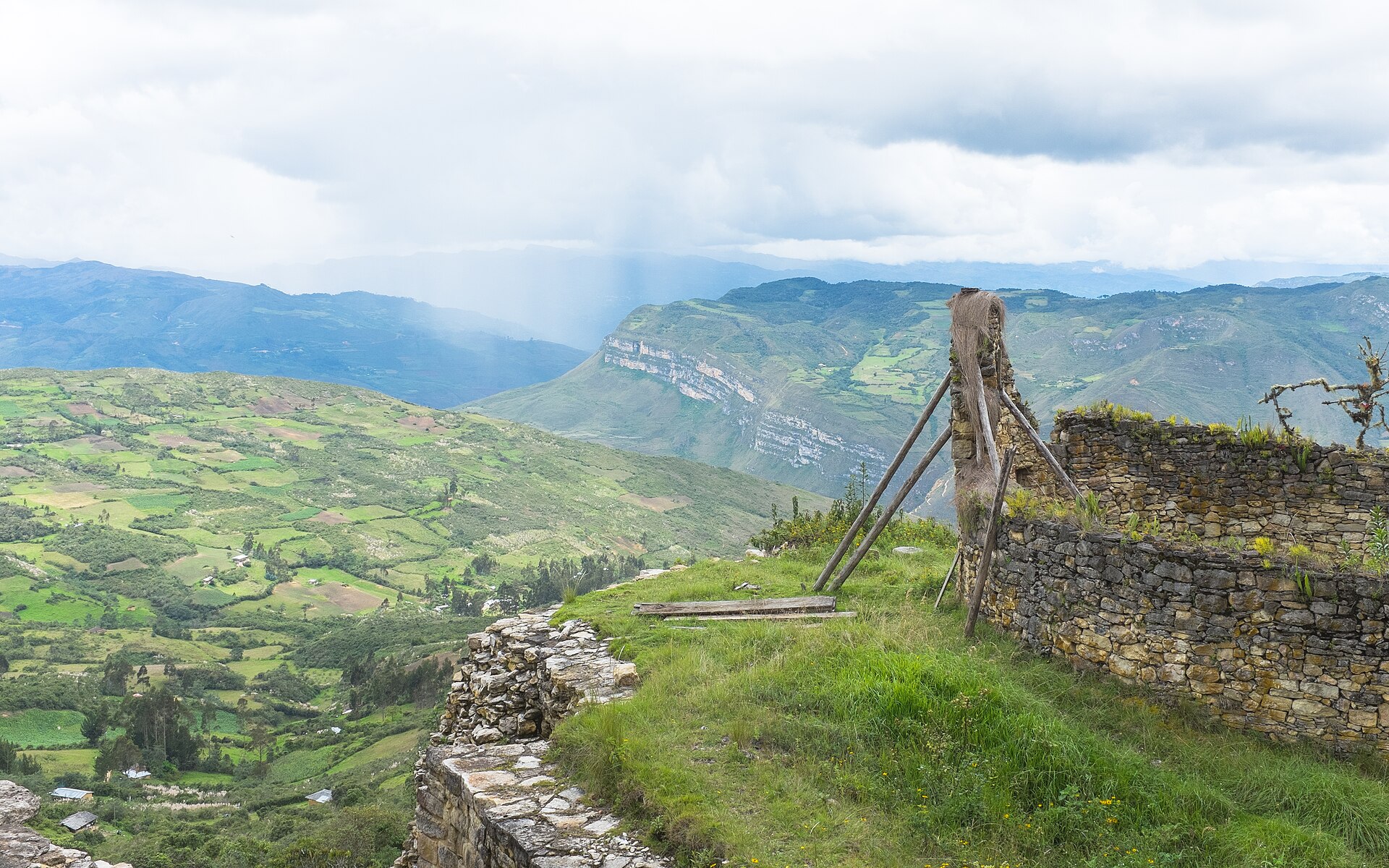
Another notable structure is the Torreón, a tower positioned at one end of the citadel that appears to have served a defensive role, commanding the approaches and forming a strongpoint within the fortress. The presence of such a tower reinforces the military character of Kuélap and the importance the Chachapoya placed on defending their great mountain stronghold.
These special structures, along with the hundreds of houses, show that Kuélap was a complex and multifaceted site, serving as a residence, a fortress, and a place of ritual all at once. Puzzling over their purposes is part of the fascination of the citadel, for the Chachapoya left no written records to explain them, and much about the life once lived within these walls remains tantalisingly mysterious.
The enigmatic character of structures like El Tintero is part of what makes Kuélap so intriguing, for without written records their functions can only be inferred from their form and their contents. The inverted-cone shape of El Tintero is genuinely unusual, and the theories surrounding it, from religious use to astronomical observation, reflect the tantalising uncertainty that surrounds so much of the Chachapoya world.
Because the Chachapoya built without written records, structures like the Torreón and El Tintero invite us to read the intentions of a vanished people from stone alone, an exercise that is as much imaginative as scholarly. This interpretive challenge is part of the enduring appeal of Kuélap, drawing archaeologists and visitors alike into the effort to understand a civilisation that speaks to us only through its architecture.
A Fortress in the Cloud Forest
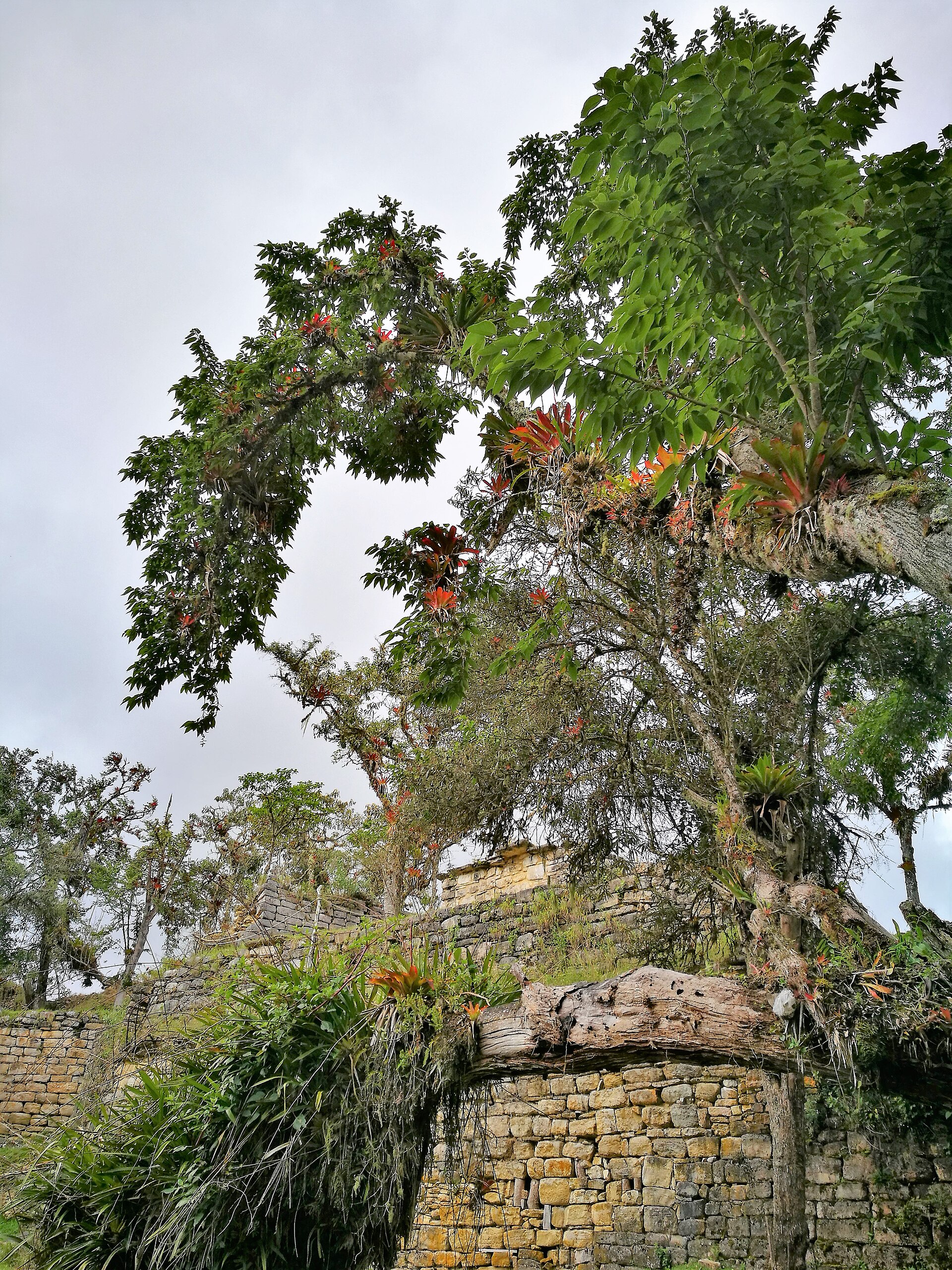
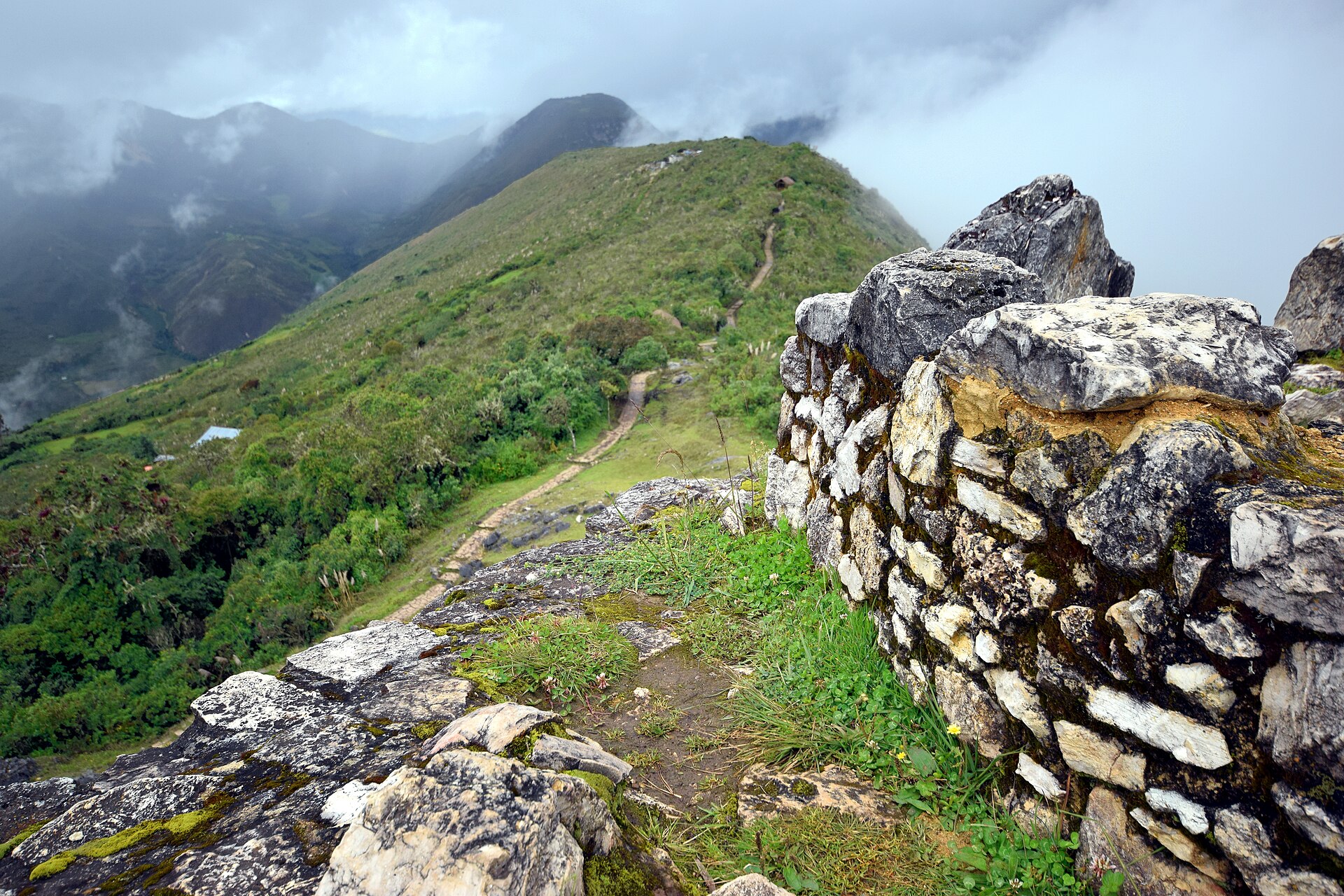
The setting of Kuélap is inseparable from its character. The citadel stands on a high ridge at around three thousand metres, wrapped much of the time in the mist and cloud that give the region its name, and surrounded by the lush, dripping vegetation of the cloud forest, with orchids, bromeliads, and mosses clinging to the ancient stones.
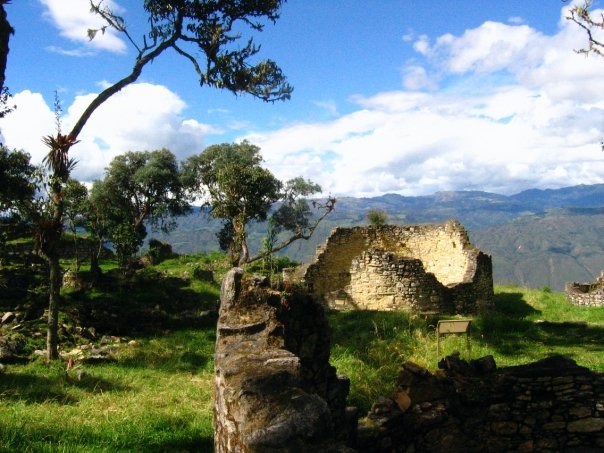
This misty, verdant environment lends Kuélap an atmosphere quite unlike the arid Andean sites further south. The great grey walls emerging from swirling cloud, the round houses softened by moss and fern, and the sense of remoteness and mystery all combine to create a place of haunting beauty. It feels like a lost city in the truest sense, hidden away in its highland fastness.
The cloud-forest location also shaped the life of the Chachapoya, who farmed the steep slopes and adapted to their challenging environment. The very isolation that the mountains provided helped them maintain their independence and their distinctive culture for centuries, and it is fitting that their greatest monument should stand here, high among the clouds that gave the Warriors of the Clouds their name.
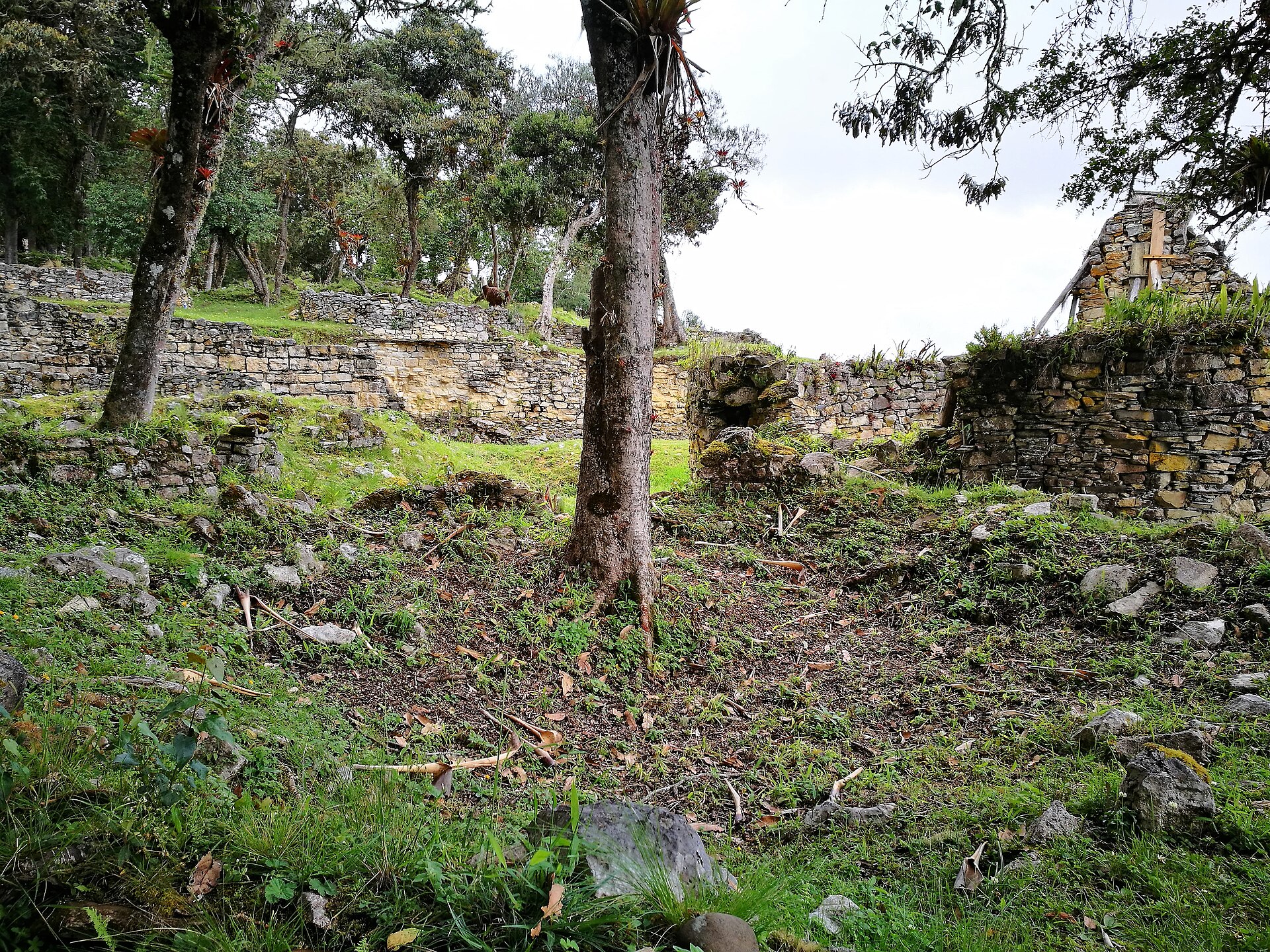
The lush vegetation that softens the ruins is both a beauty and a challenge, for the same damp, fertile environment that makes the setting so atmospheric also threatens the ancient stones, as roots and moisture work to break them down. Managing this vegetation is one of the ongoing tasks of preserving Kuélap, part of the delicate balance between conserving the site and maintaining its wild, cloud-forest character.
The biodiversity of the cloud forest surrounding Kuélap is itself remarkable, a rich ecosystem of orchids, ferns, and abundant birdlife that adds to the wonder of a visit. The citadel is thus not only an archaeological treasure but a place of great natural beauty, where the works of a lost civilisation and the lushness of the Andean cloud forest are inextricably intertwined.
The Inca Absorb the Chachapoya
For centuries the Chachapoya maintained their independence in their mountain domain, but in the later fifteenth century they faced a powerful new threat from the south: the expanding Inca Empire. As the Incas pushed the boundaries of their vast state ever outward, they eventually turned their attention to the wealthy and warlike cloud-forest people and their strongholds.
The Chachapoya resisted the Inca fiercely, living up to their warrior reputation, and their conquest was not easily achieved. But the might of the Inca Empire eventually prevailed, and the Chachapoya were brought under Inca rule, though they remained restless subjects who sometimes rebelled and sought to regain their freedom. Kuélap and the other Chachapoya sites passed under the shadow of the empire.
The Inca conquest marked a turning point in the history of Kuélap, incorporating the once-independent citadel into the wider Andean world of the empire. Yet the distinctive Chachapoya character of the site endured, and the great walls and round houses remained as they had been built, a monument to a people who, even in defeat, retained their proud identity within the empire that had absorbed them.
The fierce resistance of the Chachapoya to the Inca, and their later willingness to ally with the Spanish against their Inca overlords, reveal a proud and independent people who never fully reconciled themselves to domination. This spirit of independence is written into the very defences of Kuélap, and it forms an important part of the story of a civilisation determined to hold its mountain homeland.
The Inca dealt with the troublesome Chachapoya in part by relocating populations, a common imperial strategy, moving groups of people across the empire to break their cohesion and reduce the risk of rebellion. Such policies disrupted Chachapoya society even before the Spanish arrived, and they form part of the complex story of how this proud independent people were gradually drawn into, and unsettled by, the wider Andean world.
The Coming of the Spanish
The Inca domination of the Chachapoya did not last long, for it was soon followed by an even greater upheaval: the arrival of the Spanish. When the conquistadors overthrew the Inca Empire in the early sixteenth century, the Chachapoya, resentful of their Inca overlords, at first saw the newcomers as potential allies against them, and some sided with the Spanish.
But the coming of the Spanish proved catastrophic for the Chachapoya, as it did for the Indigenous peoples of the Americas generally. The diseases the Europeans brought devastated the population, and the disruptions of the conquest shattered the old way of life. The great mountain citadels, including Kuélap, were gradually abandoned as the world that had built and sustained them fell apart.
By the later sixteenth century, Kuélap had been left to the encroaching cloud forest, its round houses emptied and its walls given over to moss and vegetation. The Warriors of the Clouds, decimated by disease and conquest, faded from history, and their great citadel slipped into a long slumber, forgotten by the wider world for centuries as the jungle slowly reclaimed it.
The tragedy of the Chachapoya’s fate mirrors that of countless Indigenous peoples across the Americas, whose populations were devastated by introduced diseases against which they had no immunity. The abandonment of Kuélap was thus not a simple military defeat but part of a vast demographic and cultural catastrophe, one of the most profound consequences of the European arrival in the New World.
The story of the Chachapoya’s alliance with the Spanish against the Inca, only to suffer catastrophe under Spanish rule, is a poignant illustration of the tragic dilemmas faced by Indigenous peoples during the conquest. Choices made in the hope of preserving independence often led, through disease and disruption, to devastation, and the empty walls of Kuélap stand as a silent memorial to that painful history.
A Lost Citadel Rediscovered
For a long time Kuélap lay forgotten, known only to the local people of the surrounding valleys, its great walls hidden in the remote cloud forest far from the centres of power and knowledge. The wider world had lost all memory of the Chachapoya and their citadel, which slumbered undisturbed in its highland isolation.
Then, in the nineteenth century, the site came to the attention of the outside world, brought to notice by a local official whose account began to reveal the existence of this extraordinary place. Over the following decades, explorers and scholars gradually documented the citadel, recognising it as a monument of great importance and beginning the long process of studying and understanding it.
Even after its rediscovery, however, Kuélap remained difficult to reach and little visited for a long time, overshadowed by the fame of the Inca sites to the south. Only in recent times has it begun to receive the attention it deserves, as archaeological research has deepened our knowledge and as improved access has finally started to bring the wonders of the Chachapoya citadel to a wider audience.
The gradual re-emergence of Kuélap into wider knowledge over the past two centuries is a reminder of how much of the human past can lie hidden and forgotten, waiting to be rediscovered. That so vast a monument could slumber unknown to the wider world for so long speaks both to the remoteness of the cloud forest and to the completeness with which the Chachapoya world had been erased.
The long obscurity of Kuélap, even after its formal rediscovery, meant that generations of travellers to Peru knew nothing of it while flocking to the Inca sites, and only in recent decades has the balance begun to shift. The story of its slow emergence into fame mirrors a wider awakening to the richness of Peru’s pre-Inca past, of which the Chachapoya citadel is among the most spectacular expressions.
Uncovering the Chachapoya
Modern archaeology has done much to illuminate the once-mysterious world of the Chachapoya and their great citadel. Ongoing excavation and study at Kuélap and other Chachapoya sites have gradually revealed details of how the people lived, built, and buried their dead, piecing together the story of a civilisation that left no written records of its own.
This research has uncovered evidence of the citadel’s long history of occupation, the phases of its construction, and the daily life of its inhabitants, as well as the distinctive Chachapoya practices such as their remarkable cliff tombs and sarcophagi found at other sites in the region. Each discovery adds another piece to the puzzle of who the Chachapoya were and how they created their impressive works.
The work of understanding Kuélap continues, and the citadel remains a rich field for study, with much still to be learned about its purpose, its people, and its place in the wider Andean world. This ongoing research ensures that Kuélap is not a static ruin but a living subject of discovery, its secrets slowly yielding to the patient work of archaeologists in the cloud forest.
The Chachapoya’s lack of a writing system means that archaeology carries almost the entire burden of recovering their history, making sites like Kuélap invaluable as sources of knowledge. Every excavation, every artifact, and every architectural detail helps to reconstruct a civilisation that would otherwise be almost entirely lost, and the ongoing work continues to enrich our picture of the Warriors of the Clouds.
Conservation and archaeology at Kuélap must contend with the challenges of the cloud-forest environment, where damp and vegetation constantly threaten the ancient stone, making the preservation of the site an ongoing labour. The work of stabilising the great walls and the round houses, while continuing to study them, is essential to ensuring that this fragile monument endures for future generations.
Reaching the Citadel Today
For most of its history since rediscovery, Kuélap was extremely difficult to reach, requiring a long and arduous journey followed by a steep climb, which kept visitor numbers low and preserved the site’s remote, undiscovered atmosphere. Reaching the citadel was an adventure in itself, undertaken only by the most determined travellers.
In recent years, however, access has been transformed by the construction of a cable car, a modern aerial tramway that carries visitors up toward the citadel, dramatically shortening the journey and opening Kuélap to far greater numbers of people. Gliding above the deep valley toward the great walls on the ridge is now a spectacular experience in its own right.
This improved access has brought new attention and new visitors to Kuélap, helping to reveal one of Peru’s great treasures to the wider world at last. While some lament the loss of the site’s former remoteness, the greater accessibility allows many more people to experience the wonder of the Chachapoya citadel, and it has begun to secure Kuélap’s place among the celebrated ancient sites of the Andes.
The debate over the cable car, weighing greater access against the preservation of the site’s remote character and the pressures of increased tourism, is one that many important heritage sites face in the modern world. At Kuélap, the transformation has undeniably opened the citadel to many more visitors, and with careful management it holds the promise of sharing this wonder while safeguarding it for the future.
For the visitor, the aerial approach offers a breathtaking perspective on the citadel and its dramatic setting, sweeping over deep green valleys toward the ridge where the great walls stand. This spectacular arrival sets the mood for the encounter with Kuélap, framing the fortress within the vast cloud-forest landscape that shaped and sheltered the Chachapoya for so many centuries.
Why Kuélap Matters
Kuélap holds a special place among the ancient wonders of the Americas, both for its intrinsic grandeur and for what it represents. As the greatest monument of the Chachapoya, it is our finest window into a remarkable civilisation that flourished in the cloud forests of Peru for centuries before the Inca, a culture too often overshadowed by its more famous neighbours.
The citadel also reminds us of the astonishing diversity of the ancient Andean world, which was home not to a single civilisation but to many, each with its own distinctive achievements. The round houses and colossal walls of Kuélap, so different from the works of the Inca, testify to the rich variety of cultures that rose and fell in the mountains and forests of pre-Columbian South America.
For all these reasons, Kuélap deserves to be far better known than it is, and its growing fame is richly deserved. To stand within its misty walls, among the ruins of a lost mountain city, is to encounter one of the great and haunting monuments of the Americas, and to feel the presence of the Warriors of the Clouds who raised it in their highland fastness so long ago.
The growing recognition of Kuélap and the Chachapoya is part of a broader appreciation of the extraordinary diversity of pre-Columbian America, a world of many civilisations whose achievements are only now being fully acknowledged. In taking its place among the celebrated ancient sites of the Andes, Kuélap helps to tell a fuller, richer story of the human past in the Americas.
Placed alongside the Inca sites to the south, Kuélap enriches our understanding of the Andean past by reminding us that the region’s history did not begin with the Inca, whose empire was in fact a relative latecomer. The Chachapoya and other cultures had built their own remarkable civilisations centuries earlier, and Kuélap stands as a magnificent testament to this deeper and more varied heritage.
To visit Kuélap is thus to broaden one’s understanding of what the ancient Americas achieved, and to pay tribute to a people whose story deserves to be far more widely known. The Warriors of the Clouds built a monument to rival the greatest works of their contemporaries, and in its misty grandeur it stands as a lasting reminder of the depth and diversity of the human past in the Andes.
Visiting Kuélap
Kuélap lies in the Amazonas region of northern Peru, a beautiful and less-travelled part of the country, and reaching it is part of the adventure. The usual base for a visit is the town of Chachapoyas, from which travellers make their way toward the citadel, now greatly aided by the cable car that carries visitors up toward the great walls on their misty ridge.
On a visit you can walk through the deadly narrowing entrance, explore the hundreds of round houses within the walls, marvel at the colossal ramparts, and take in the atmosphere of this lost city in the clouds. Give yourself time to absorb the scale and mystery of the place, and to imagine the vanished world of the Chachapoya who once thronged its streets and defended its walls.
View -6.4181, -77.9236 on Google Maps
Be prepared for the high altitude and the damp, changeable weather of the cloud forest, and dress accordingly, for mist and rain are common. Combine your visit with the other wonders of the Chachapoya region, from cliff tombs to waterfalls, to experience the full richness of this remarkable corner of Peru. Kuélap offers an unforgettable encounter with a lost civilisation and one of the great hidden fortresses of the Americas.
Many visitors find that the mist-shrouded atmosphere of Kuélap, with its great walls looming out of the cloud and its round houses draped in green, creates an experience of extraordinary and slightly eerie beauty, quite unlike any other ancient site. It is this haunting quality, combined with the sheer scale of the citadel, that makes a visit to the fortress of the Warriors of the Clouds so unforgettable.
The journey to Kuélap through the dramatic landscapes of the Amazonas region is itself one of the rewards of a visit, taking travellers through a beautiful and little-known part of Peru far from the well-trodden tourist trails. For those willing to venture off the beaten path, the region offers a wealth of natural and cultural wonders, with the great citadel of Kuélap as its crowning glory.
Castles Nearby
You May Like
Tulum: The Walled Maya City on the Cliffs of the Caribbean