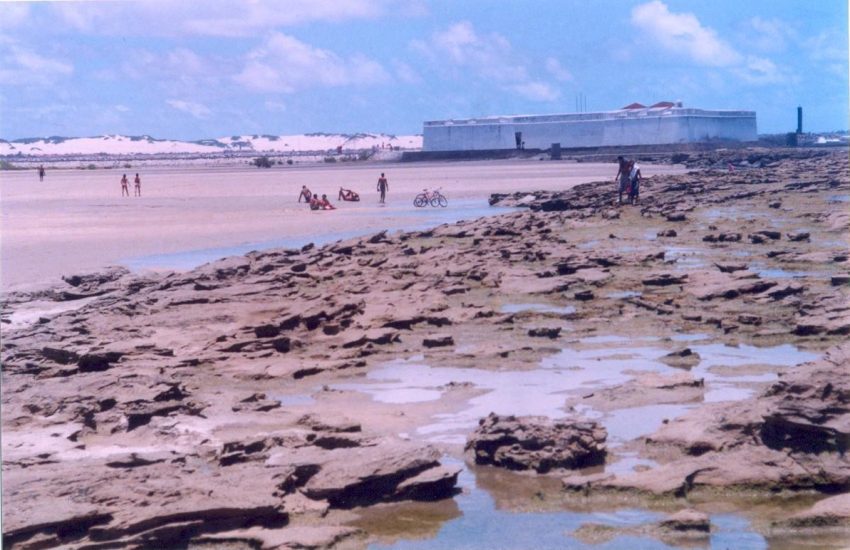
On a bluff overlooking the mouth of the Ozama River, in the heart of the oldest European city in the Americas, stands a fortress that can claim a truly remarkable distinction. The Fortaleza Ozama in Santo Domingo is the oldest formal European military structure in the entire New World, a medieval-looking stone castle raised at the very dawn of the European presence in the Americas, when the age of Columbus was still a living memory.
Santo Domingo itself was the first permanent European city in the Americas, the base from which the Spanish launched their conquest of the continent, and the Fortaleza Ozama was its guardian. From this stronghold, the wealth and ambition of the Spanish empire flowed outward to Mexico, Peru, and beyond, making it, in a very real sense, the axis around which the whole conquest of the Americas turned.
In this guide you will explore the whole extraordinary story of this pioneering fortress: why it was built at the birth of Spanish America, the mighty Tower of Homage at its heart, its role guarding the first European city on the continent, the famous pirates and armies that assailed it, its long and grim service as a prison, and its place today as part of a treasured World Heritage colonial city. It is a place where the history of a hemisphere begins.
A word before you begin: to appreciate the Fortaleza Ozama fully, set aside any expectation of the vast star forts found elsewhere in the Caribbean. This is something older and rarer, a medieval-style castle from the very first years of European America, more modest in scale than its later cousins but immeasurably richer in age and origin. Its significance lies not in its size but in its place at the absolute beginning of the whole story.
In This Article
- The First City of the New World
- The Oldest Fortress in the Americas
- The Mighty Tower of Homage
- A Medieval Castle in the Tropics
- Guarding the Mouth of the Ozama
- The Axis of the Conquest
- When Drake Came to Santo Domingo
- A Fortress of Many Flags
- Five Centuries of Imprisonment
- The Chronicler of the Indies
- Gates and Additions Through the Ages
- Part of the First Colonial City
- Visiting the Fortaleza Ozama
The First City of the New World
To understand the Fortaleza Ozama, you must first appreciate the unique place of Santo Domingo in history. Founded at the very end of the fifteenth century, in the years immediately following the voyages of Columbus, it was the first permanent European settlement in the Americas, the original beachhead of the whole European colonisation of the New World. Everything that followed began here.
Santo Domingo became the capital of Spain’s first American colony and the launching point for the expeditions that would go on to conquer vast empires on the mainland. From this city, conquistadors sailed to Mexico and Peru, and through its port passed the people, goods, and ideas that would transform two continents. It was, for a crucial period, the very centre of the Spanish New World.
The Fortaleza Ozama was built to guard this all-important city and its harbour. As the stronghold of the first European capital in the Americas, it held a position of extraordinary strategic and symbolic importance, and the Spanish considered it, in a phrase of the time, the axis of the conquest. To stand within its walls is to stand at the very origin point of European America.
Santo Domingo’s claim to primacy is remarkable and well founded, for here were built the first cathedral, the first university, and the first hospital of the Americas, alongside the first fortress. The city was a laboratory in which the institutions and forms of European colonial life were first established in the New World, and the Fortaleza Ozama stood guard over this whole pioneering enterprise from its earliest days.
The layout of Santo Domingo, with its regular grid of streets, became a model for the many Spanish colonial cities that would later be founded across the Americas, so that the very form of the Latin American city can be traced back to this pioneering settlement. The Fortaleza Ozama guarded not just a city but a template, the original from which countless later colonial towns would be copied.
For the modern visitor, walking these streets and standing before this fortress offers a rare chance to touch the very beginning of a story that would reshape the world. Here, more than five centuries ago, two hemispheres that had developed in total isolation from one another were brought into permanent contact, and the Fortaleza Ozama stood at the centre of that momentous and irreversible meeting of worlds.
The Oldest Fortress in the Americas
The Fortaleza Ozama holds the distinction of being the oldest formal European military fortification still standing in the Americas, a genuine link to the earliest days of the European presence on the continent. Constructed in the first decade of the sixteenth century, it predates almost every other colonial structure in the New World, making it a monument of truly exceptional antiquity by American standards.
Its construction, in the years following 1500, was directed under the Spanish colonial governor, and it was built to bring the defence of the young capital up to European standards. The fortress represented the transplantation of centuries of European military knowledge to the shores of a newly encountered continent, a statement that the Spanish intended their presence in the Americas to be permanent and secure.
Because it stands at the very beginning of the long history of European fortification in the Americas, the Fortaleza Ozama occupies a special place in that story. It is the ancestor of all the great colonial fortresses that would follow across the hemisphere, from Havana to Cartagena to St. Augustine, the first of a mighty line, and it retains the distinctive character of its early, medieval-influenced origins.
To grasp the antiquity of the fortress, it helps to remember that it was completed when the conquest of Mexico and Peru still lay in the future, when the map of the Americas was almost entirely unknown to Europeans. The men who built and first garrisoned it belonged to the generation of Columbus himself, which gives the stones a connection to the very origins of the transatlantic encounter that reshaped the world.
The survival of the fortress across such an immense span of time, through wars, occupations, earthquakes, and the ordinary erosion of centuries, is itself remarkable, a testament to the solidity of its construction. That the very first European fortress in the Americas should still stand, largely intact, five centuries after its building is a piece of extraordinary good fortune for which lovers of history can be grateful.
The Mighty Tower of Homage
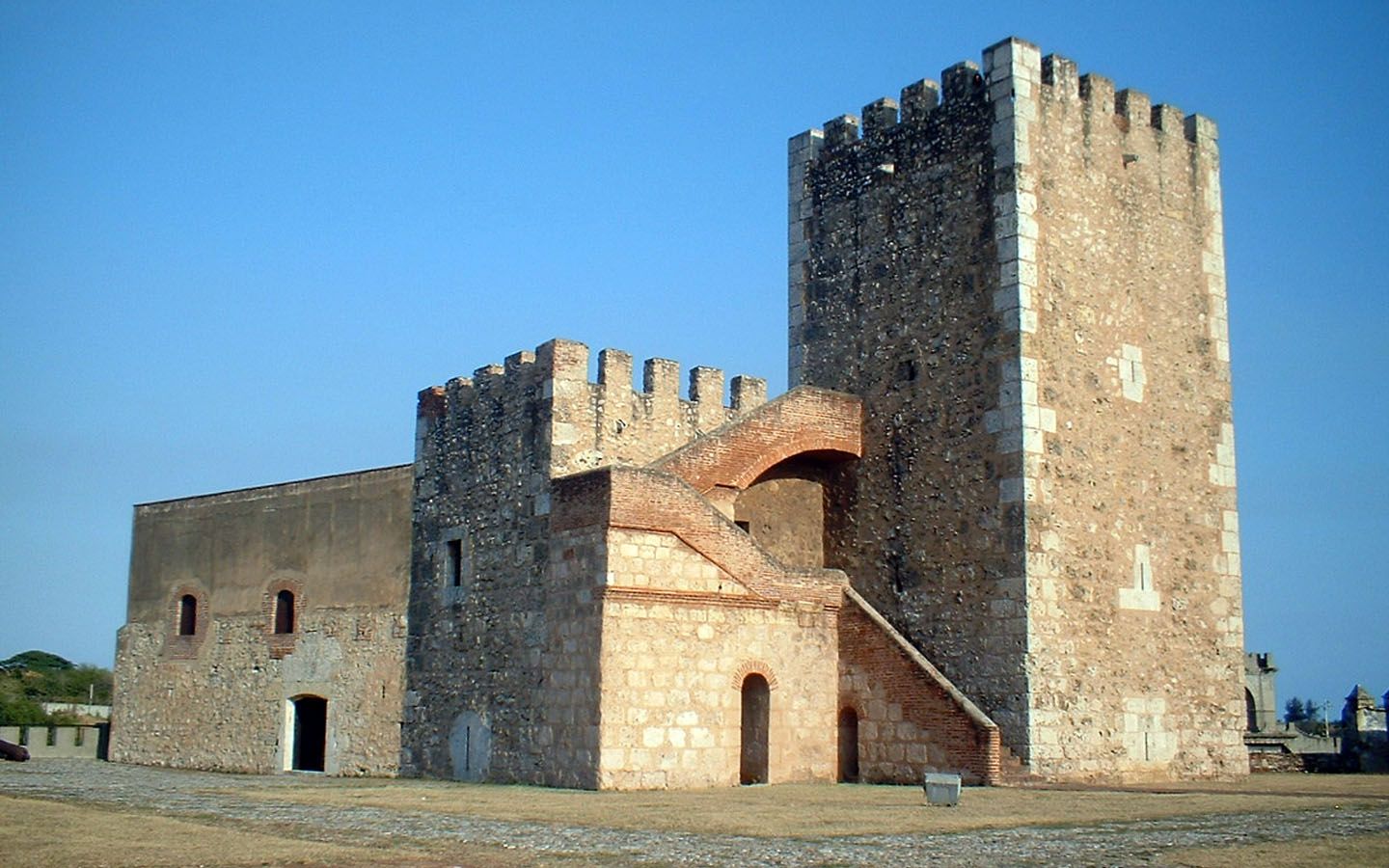
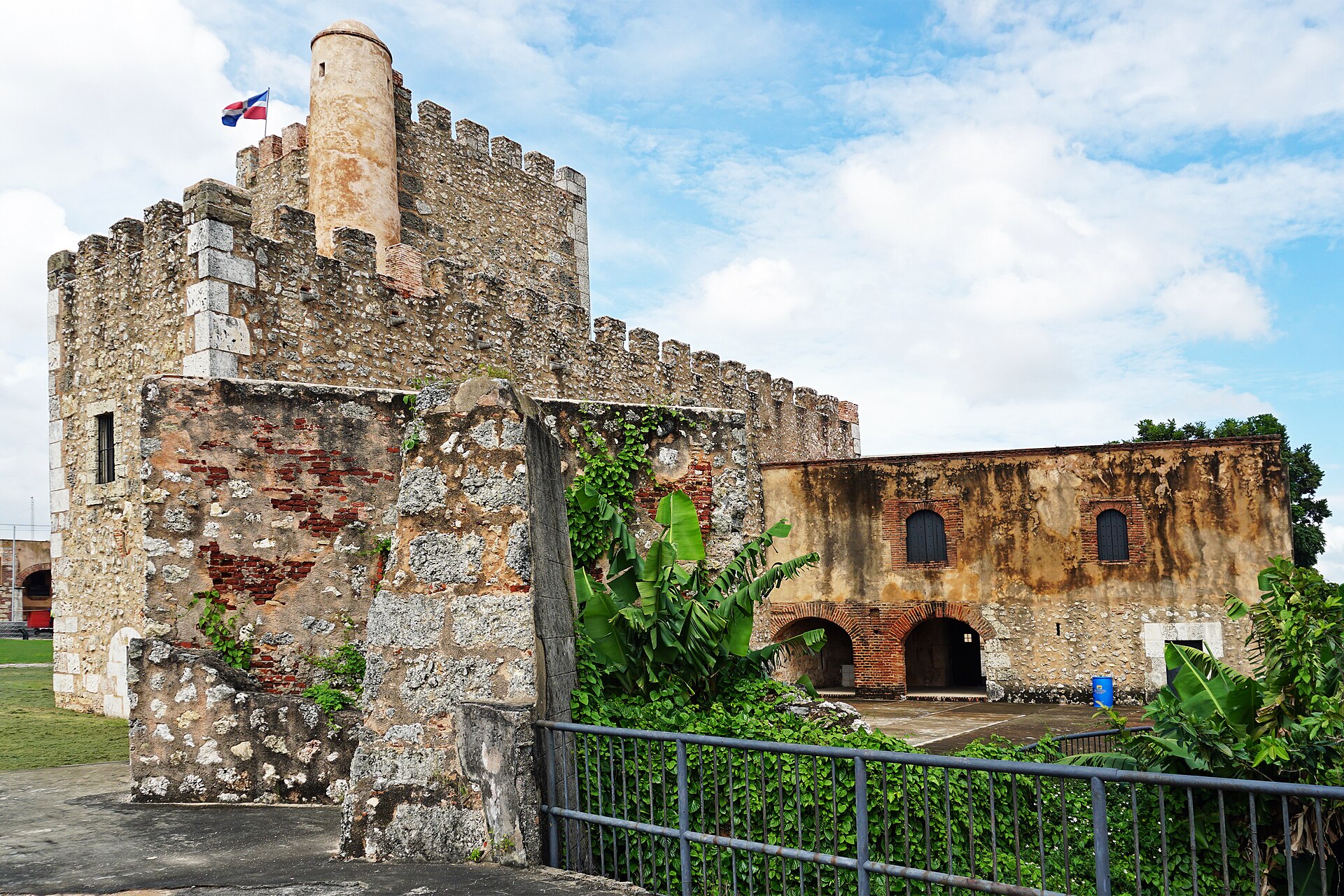
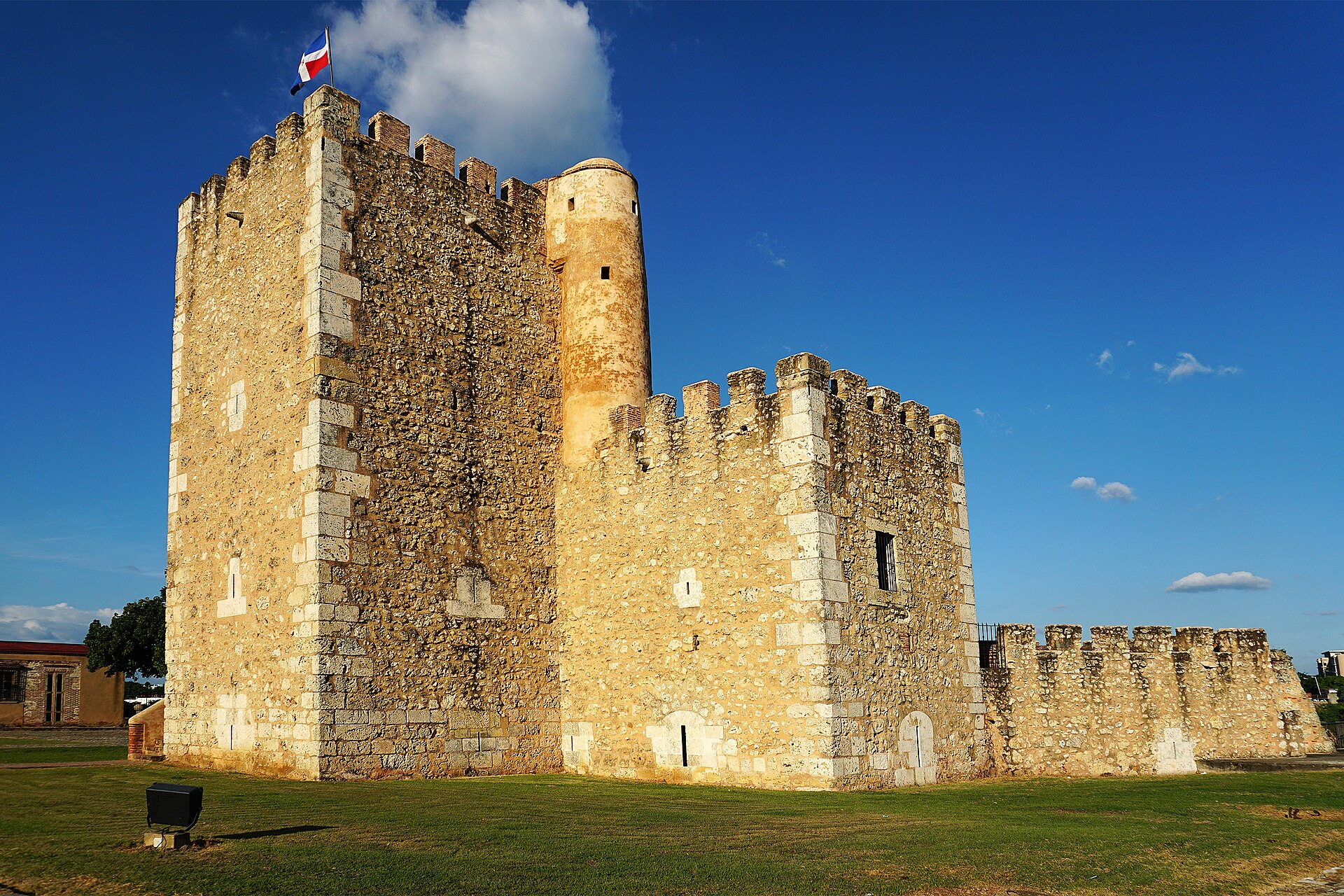
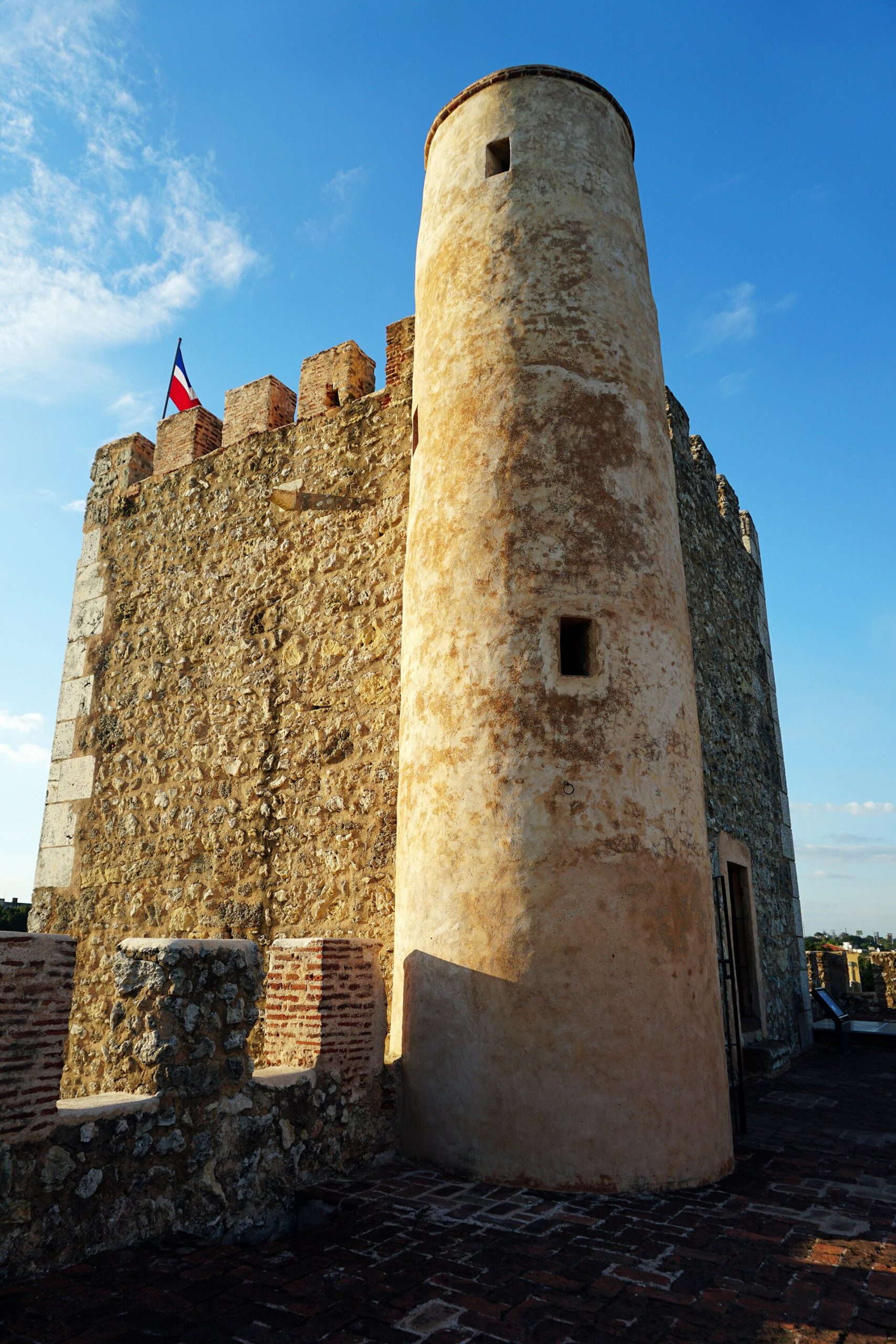
The centrepiece and most striking feature of the fortress is its great central tower, the Torre del Homenaje, or Tower of Homage. This massive stone keep rises high above the walls, its thick masonry giving it the appearance of a medieval European castle transplanted to the Caribbean, and it has dominated the skyline of old Santo Domingo for more than five centuries.
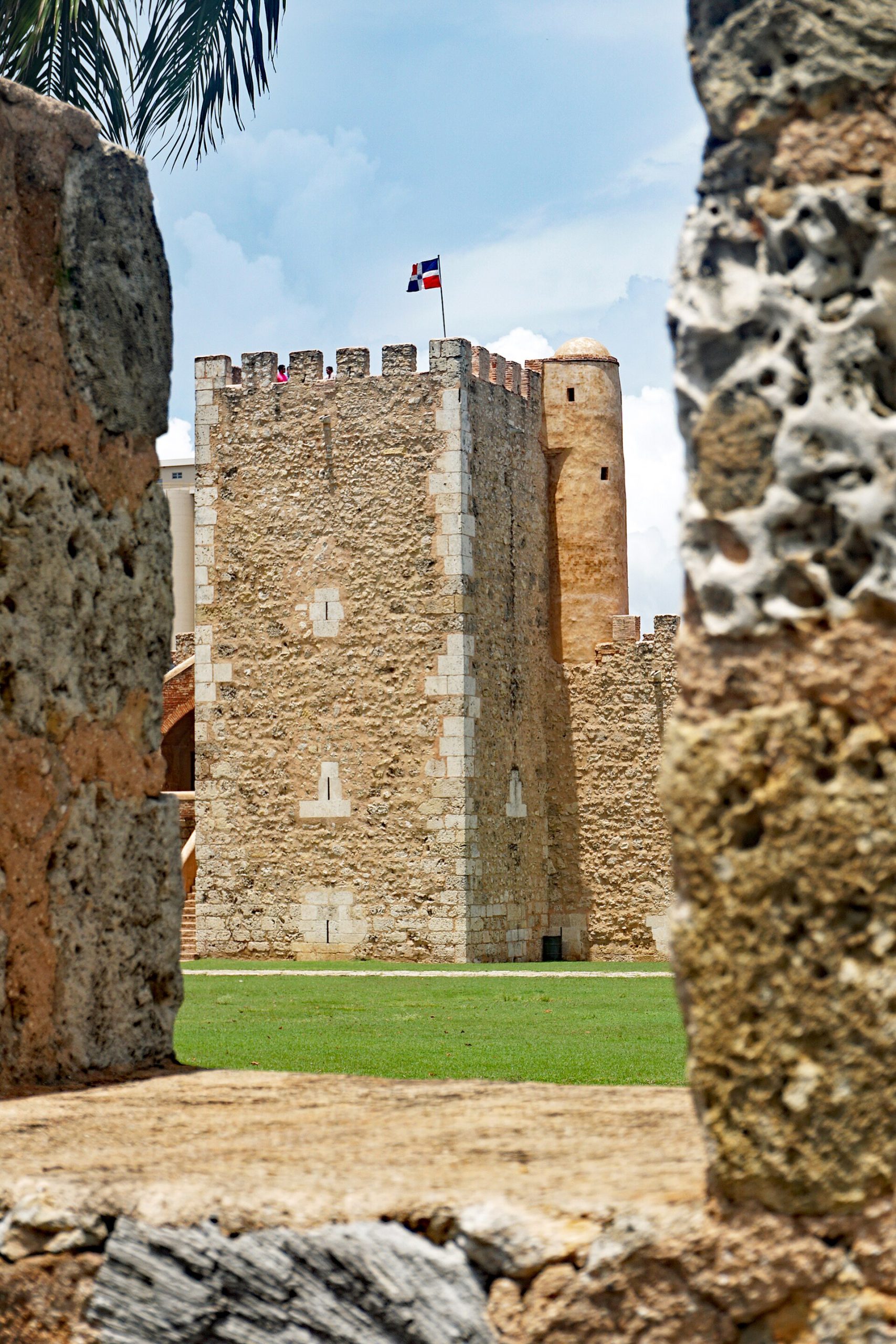
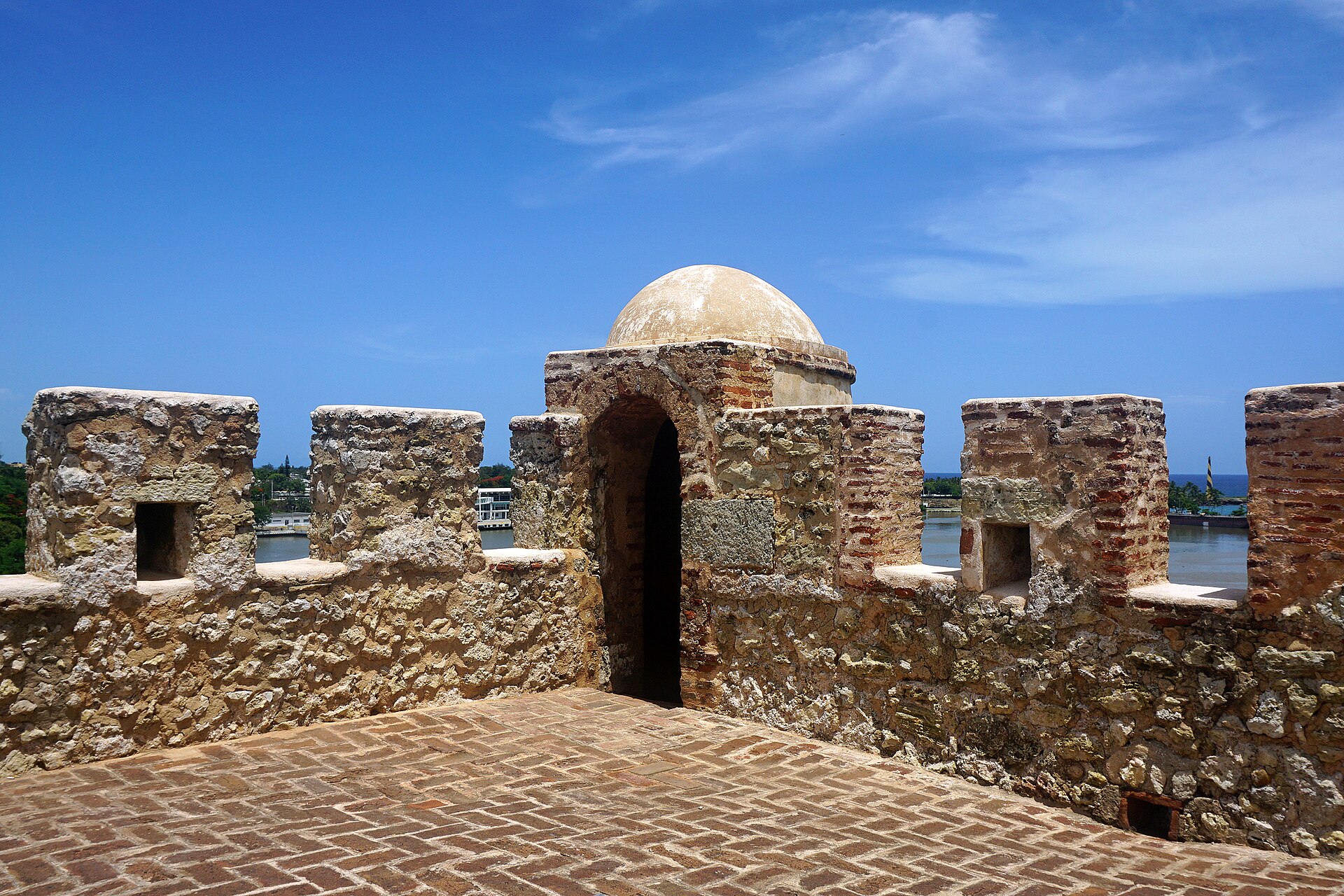
The tower was the heart of the fortress, the strongest point of its defences and the last refuge in the event of an attack. Its great height allowed defenders to watch over the river and the approaches to the city, and its immensely thick walls made it a formidable stronghold in its own right. From its summit, one commands a sweeping view over the mouth of the Ozama River and the old colonial city.
The medieval character of the Tower of Homage reflects the period in which it was built, at the very transition between the medieval and the early modern world. Unlike the low, angular bastioned forts that would later become standard, the tower harks back to the tall keeps of European castles, giving the Fortaleza Ozama a unique and venerable appearance among the fortifications of the Americas.
The Tower of Homage takes its name from a medieval tradition in which vassals would pay homage to their lord in such a keep, and the name itself is a reminder of the feudal, medieval world from which the fortress’s builders came. Climbing its worn stone stairs today, you follow in the footsteps of five centuries of soldiers, governors, and prisoners who knew this great tower as the heart of the fortress.
The Tower of Homage served not only as a military stronghold but as a symbol of authority, the visible seat of colonial power at the heart of the first European capital in the Americas. From its heights, the governors of the young colony could survey their domain, and its imposing bulk announced to all who approached the river the presence and permanence of Spanish rule in the New World.
A Medieval Castle in the Tropics
One of the most fascinating aspects of the Fortaleza Ozama is its architectural style, which looks back to the Middle Ages rather than forward to the modern age of gunpowder fortification. Built at the very cusp of the transition between the two eras, it has the character of a medieval European castle, with its tall central keep and stout walls, quite different from the low, angular star forts that would later dominate.
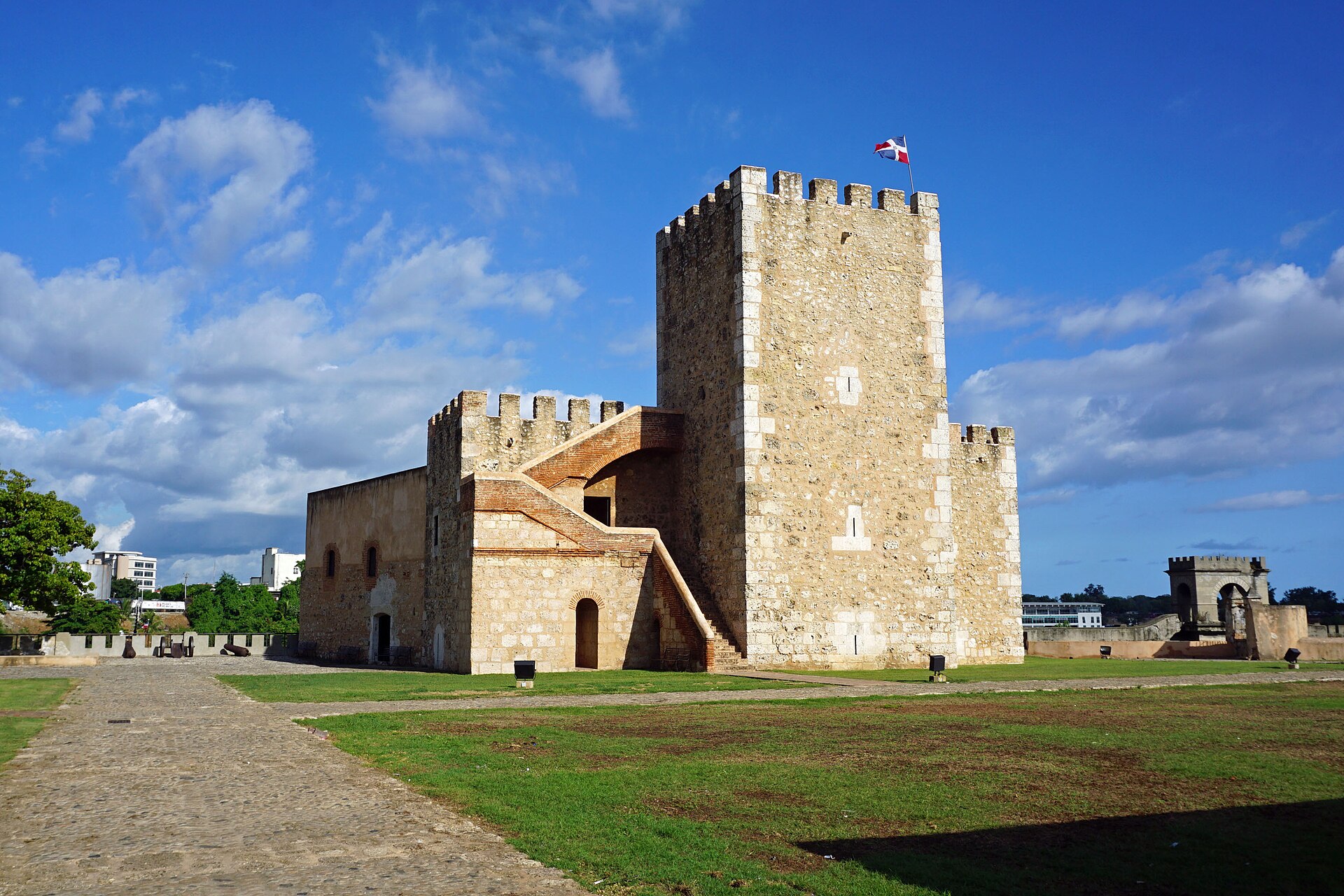
This medieval flavour is a direct consequence of the fortress’s great antiquity. When it was raised in the early sixteenth century, the revolution in fortification prompted by ever more powerful cannon was only beginning, and the builders naturally drew on the castle traditions they knew from Europe. The result is a stronghold that feels older and more romantic than the geometric fortresses of later centuries.
For the visitor, this gives the Fortaleza Ozama a special charm and a powerful sense of stepping far back in time. To encounter a tall medieval-style keep on the shores of the Caribbean is to be reminded vividly of just how early this fortress belongs, at the very dawn of the European age in the Americas, when the men who built it had themselves grown up in a still-medieval world.
The contrast between the Fortaleza Ozama and the later bastioned forts of the Caribbean, such as those at Havana and Cartagena, neatly illustrates the evolution of military architecture across the colonial period. Where the later forts are all low angles and geometry, designed to counter heavy artillery, the Ozama fortress still speaks the older language of height and mass, a living record of a fortification tradition on the verge of transformation.
The romance of a medieval keep on a tropical river has made the Fortaleza Ozama a beloved icon of Santo Domingo, appearing in countless images of the city and drawing visitors eager to experience its unique atmosphere. There is something deeply evocative about the combination of Old World form and New World setting, and it lends the fortress a poetic quality that few other colonial monuments can match.
Guarding the Mouth of the Ozama
The fortress was strategically sited to guard the mouth of the Ozama River, where it meets the Caribbean Sea, controlling access to the harbour of Santo Domingo. From its commanding position on the bank, the fortress could watch over and defend the river entrance, the lifeline of the colonial city, through which all its seaborne trade and communication passed.
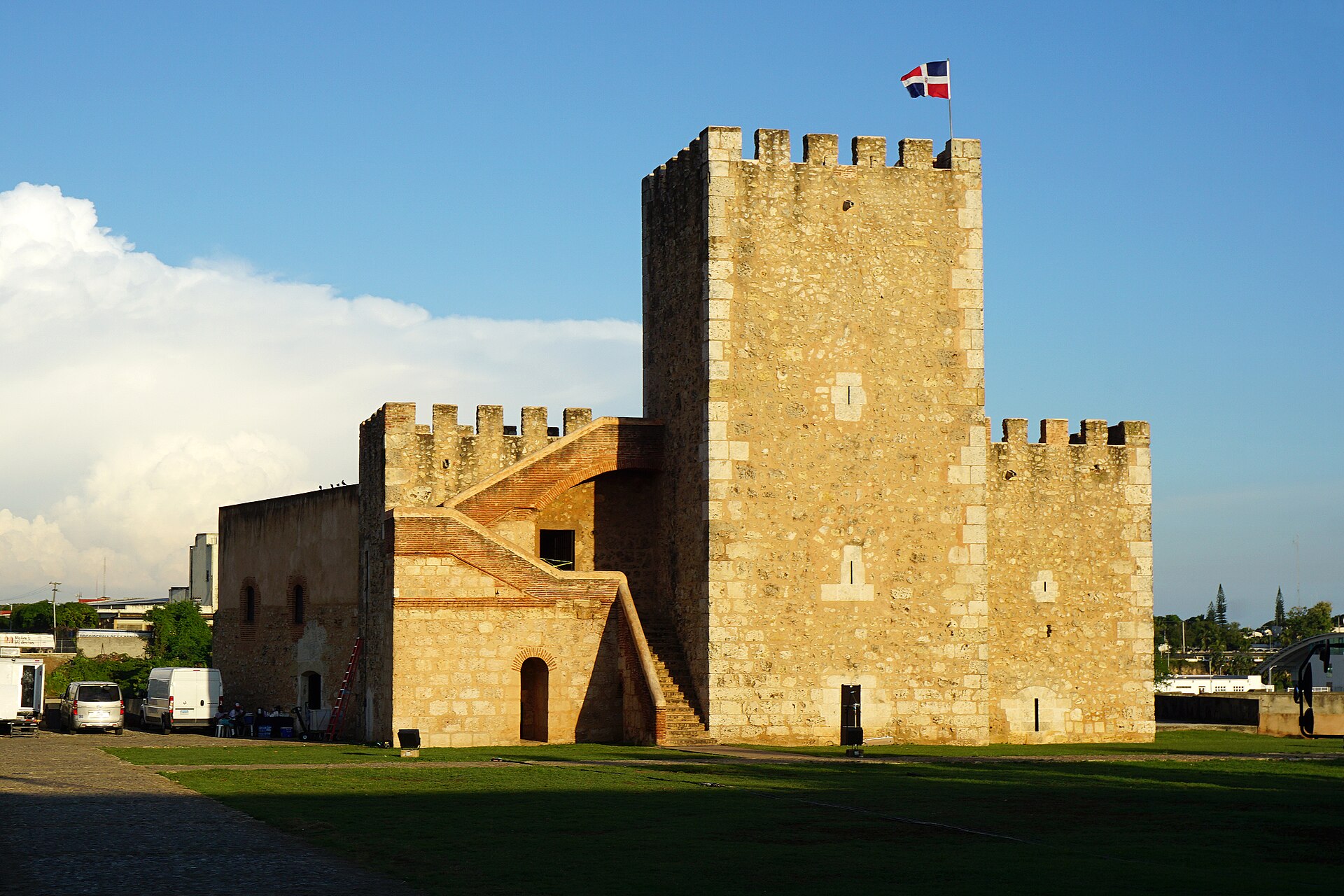
This position made the fortress the key to the security of the whole city. Any hostile ship seeking to attack Santo Domingo by way of the river had to come within range of the fortress’s guns, and the stronghold served as the anchor of the city’s defences. Its walls, built to great thickness, were designed to withstand assault and to protect the vital harbour it overlooked.
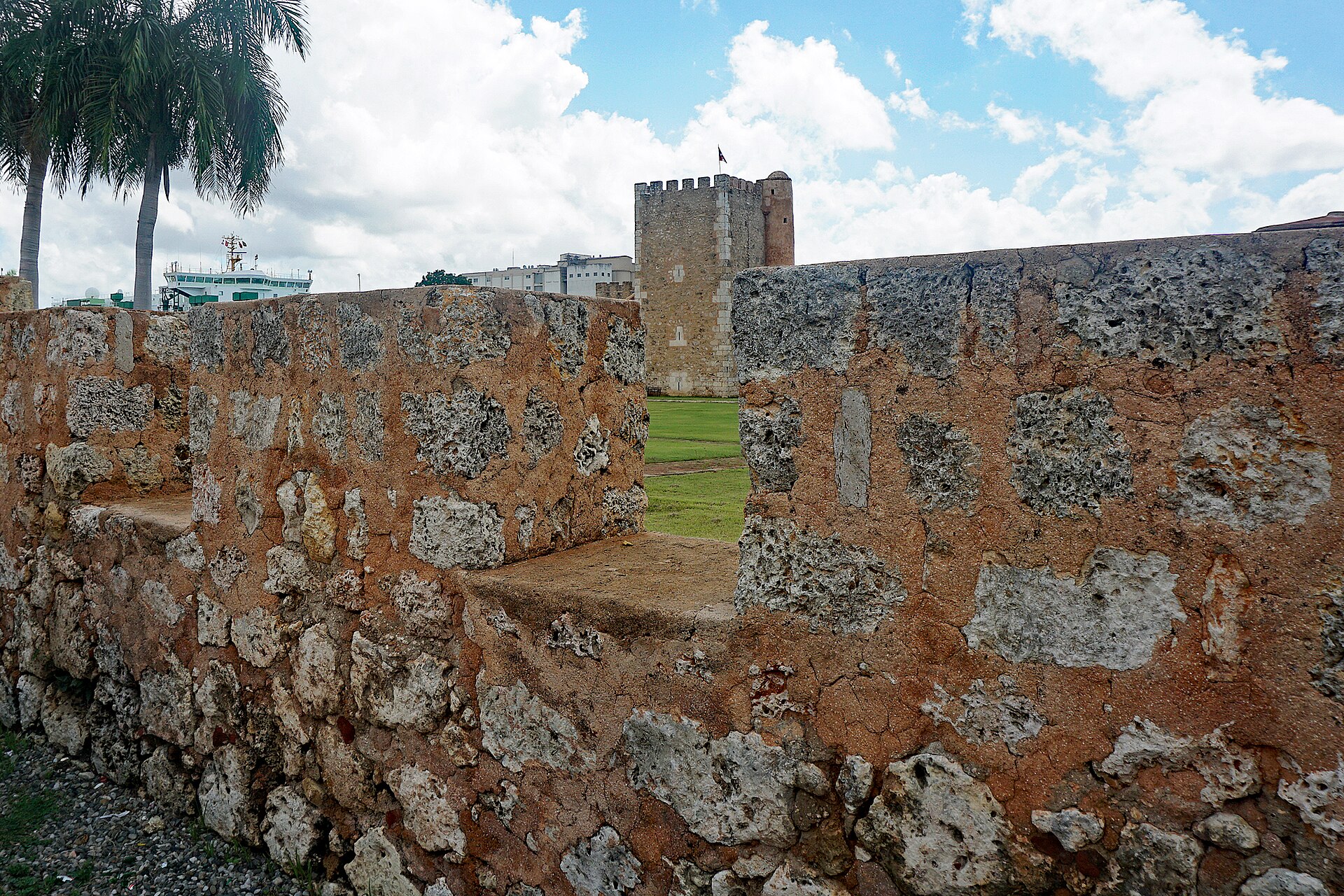
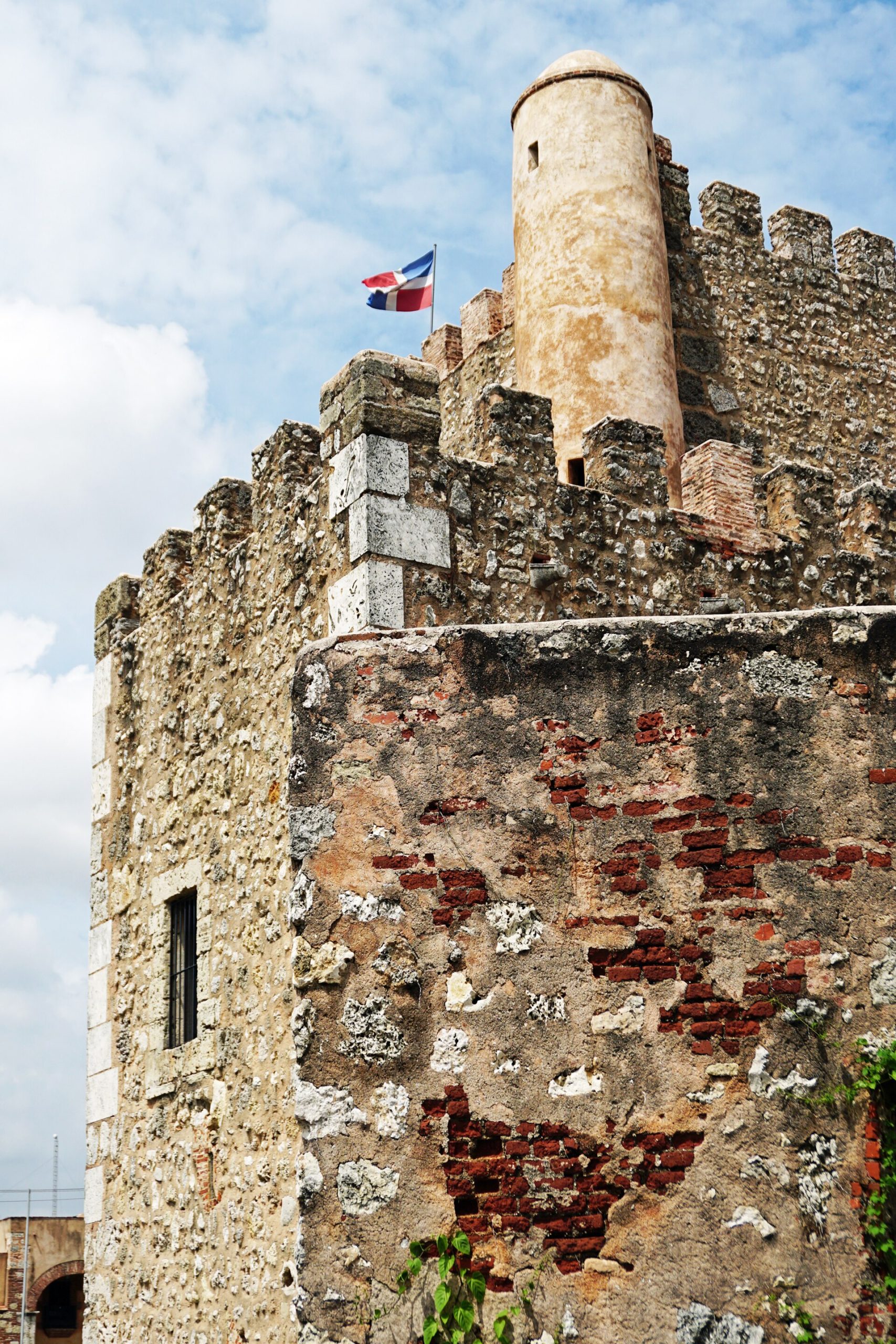
The fortress was constructed largely of coral stone, quarried from the sea, a material well suited to the local conditions and used in many of the early buildings of Santo Domingo. Its solid walls and commanding tower made it a reassuring presence for the citizens of the young colonial capital, the visible guarantee that their pioneering city on the edge of a new world was secure.
The use of coral stone, hewn from the sea and hardening in the walls, ties the fortress physically to its Caribbean setting, and the same material can be seen in other early buildings of Santo Domingo. This local stone, combined with the European design, produced a structure that is at once thoroughly of the Old World in form and thoroughly of the New World in substance, a fitting emblem of the colonial encounter.
The strategic value of controlling the river mouth remained important throughout the colonial period, and the fortress’s position ensured its continuing relevance long after its original construction. As the guardian of the harbour through which the life of the city flowed, the Fortaleza Ozama was never a mere relic but an active part of the defence of Santo Domingo across many generations.
The Axis of the Conquest
The Spanish of the era regarded the Fortaleza Ozama and its city as the axis of the conquest, and the phrase captures a profound truth. In the early sixteenth century, Santo Domingo was the organising centre from which Spanish power radiated outward into the Americas, and the fortress was the strongpoint at the heart of that centre.
Through the fortress and the city passed the great figures of the age of conquest, the governors, soldiers, priests, and adventurers who would go on to shape the destiny of the Americas. Santo Domingo was where expeditions were planned and provisioned, where the machinery of colonial administration was first developed, and where the patterns of Spanish rule in the New World were established.
In this sense the Fortaleza Ozama witnessed the very birth of colonial Latin America. The ambitions and the cruelties, the achievements and the tragedies of the Spanish conquest all had their starting point in this city, guarded by this fortress. To understand the sweep of Latin American history, one must begin here, at the axis around which it all first turned.
It is worth pausing on the darker implications of the phrase axis of the conquest, for the enterprise that radiated from Santo Domingo brought catastrophe as well as expansion. The Indigenous peoples of Hispaniola and the wider Caribbean suffered devastating losses through violence and disease in these early decades, and the fortress that guarded the colonial capital was also, inescapably, part of the machinery of that conquest.
Holding both truths together, the fortress as a symbol of pioneering achievement and as an instrument of conquest and colonisation, is essential to an honest engagement with the site. Its story is inseparable from the wider, deeply ambivalent story of the European arrival in the Americas, and to visit it thoughtfully is to reflect on both the grandeur and the tragedy of that world-changing encounter.
When Drake Came to Santo Domingo
Like the other great treasure ports of the Spanish Caribbean, Santo Domingo attracted the attention of Spain’s enemies, and in the late sixteenth century it faced one of the most famous raiders of the age. The English privateer Sir Francis Drake descended on the city, and in a major assault he succeeded in capturing and occupying Santo Domingo, seizing the fortress in the process.
Drake’s capture of the city was a serious blow to Spanish prestige and a demonstration that even the oldest and most established of their American possessions was not safe from attack. He held the city for a time, extracting a ransom and causing considerable damage before finally departing. The episode revealed the vulnerability of Santo Domingo despite its fortifications.
The raid was part of the wider war between England and Spain and of Drake’s broader campaign against Spanish possessions in the Americas. That he should have targeted Santo Domingo, the very first of Spain’s New World cities, underlines the symbolic as well as the material importance of the place, and the attack is one of the most dramatic episodes in the long history of the Fortaleza Ozama.
Drake’s raid on Santo Domingo was part of a spectacularly destructive expedition through the Spanish Caribbean, and his brief occupation of the first city of the New World sent shockwaves through the Spanish world. That the very cradle of Spanish America could be taken and ransomed by an English privateer was a humiliation that underscored the growing challenge to Spain’s once-unquestioned dominance of the region.
The vulnerability exposed by Drake’s raid prompted the Spanish to strengthen the defences of their Caribbean ports in the following years, part of the great wave of fortification that produced the mighty strongholds of Havana, Cartagena, and San Juan. In this way the humbling of Santo Domingo indirectly spurred the creation of the very fortresses that would define Spanish Caribbean defence for centuries.
A Fortress of Many Flags
Over its long life, the Fortaleza Ozama witnessed the turbulent history of the island of Hispaniola, which saw the flags of several powers fly over its territory. While built and long held by the Spanish, the fortress and the city passed through periods of upheaval as the island became a contested ground between competing European powers and, later, between emerging new nations.
At various times, forces of different powers held sway over Santo Domingo, including periods connected to French control of the island and to the neighbouring nation of Haiti, which for a time governed the whole island. Through all these changes, the ancient fortress endured, its stout walls and mighty tower outlasting the successive regimes that occupied them.
This long succession of rulers makes the Fortaleza Ozama a witness to the whole complex history of Hispaniola, from the first Spanish colony through the age of piracy and imperial rivalry to the birth of the modern Dominican Republic. Few structures have looked down upon so many chapters of a nation’s story, and the fortress carries the memory of them all in its weathered coral stone.
The complex history of Hispaniola, eventually divided between the Spanish-speaking Dominican Republic and French-speaking Haiti, is unique in the Americas, and the Fortaleza Ozama witnessed the whole tangled saga. The fortress endured through Spanish rule, foreign occupations, and the emergence of new nations, a silent stone witness to one of the most complicated colonial and post-colonial histories anywhere in the hemisphere.
The fortress’s endurance through the division of Hispaniola and the birth of the Dominican Republic made it a natural symbol of national identity and continuity for the new nation. As the oldest and most storied of its historic monuments, the Fortaleza Ozama came to embody the deep roots of the Dominican people’s history, linking the modern republic to the very origins of the European presence in the Americas.
Five Centuries of Imprisonment
For much of its long existence, the Fortaleza Ozama served a grim function that ran alongside its role as a defensive stronghold: it was a prison. Across the centuries, the fortress held captives of many kinds within its thick walls, from pirates and criminals to political prisoners caught up in the turbulent politics of the island.
The great tower and the fortress’s other chambers, so well suited to keeping enemies out, were equally effective at keeping prisoners in, and generation after generation of the confined passed through its gates. This long history of imprisonment gives the fortress a darker dimension beyond its military and symbolic significance, a reminder of the many who suffered within its walls.
The fortress continued to serve as a prison remarkably late into modern times, ceasing this function only in the twentieth century. Its extraordinarily long career as a place of confinement, spanning nearly the entire history of the European presence in the Americas, is one of the most striking aspects of its story, linking the age of the conquistadors directly to the modern era.
The transformation of the fortress from a place of confinement into a public plaza in the modern era marked a symbolic turning of the page, converting a site associated with imprisonment into one of open access and remembrance. Today, where prisoners once languished, visitors wander freely, and the grim chapters of the fortress’s history are commemorated rather than perpetuated, a fitting evolution for so ancient a monument.
The many prisoners held here over five centuries form a shadowy counter-history to the fortress’s official story of conquest and defence, a reminder of the human cost of the colonial and national struggles that swirled around it. Their largely nameless presence haunts the ancient walls, and any thoughtful visit must spare a thought for the countless individuals confined within this venerable stronghold.
The Chronicler of the Indies
The Fortaleza Ozama is connected to one of the great figures of early colonial history, the writer and official Gonzalo Fernández de Oviedo, who served as the commander, or alcaide, of the fortress for many years in the sixteenth century. From this post, Oviedo occupied a central position in the life of the young colony.
Oviedo is remembered above all as one of the first great chroniclers of the Americas, the author of an important history that described the lands, peoples, plants, and animals of the New World for European readers hungry for knowledge of the newly encountered continent. His writings are an invaluable, if not unproblematic, source for understanding the early Spanish presence in the Americas.
That such a significant figure should have been so closely associated with the fortress adds an intellectual and literary dimension to its history. From within these walls, Oviedo observed and recorded the extraordinary new world unfolding around him, and his connection to the Fortaleza Ozama links the stronghold to the very origins of the written history of the Americas.
Oviedo’s dual role, as both the practical commander of a frontier fortress and a learned chronicler of the New World, embodies the mixture of action and observation that characterised the early colonial enterprise. His presence links the Fortaleza Ozama not only to the military history of the conquest but to its intellectual history, to the very effort to comprehend and record the astonishing new reality of the Americas.
The chronicles that Oviedo produced from his post at the fortress helped shape how Europe understood the New World for generations, for better and for worse, mingling careful observation with the prejudices of his age. His association with the Fortaleza Ozama thus connects the stronghold to one of the foundational, and most debated, sources for the early history of the Americas.
Gates and Additions Through the Ages
Over its five centuries, the Fortaleza Ozama was not static but was modified and added to by the successive generations who used it. Various gates and structures were built at different periods, each reflecting the needs and styles of its age, so that the fortress today is a layered record of the long history it has witnessed.
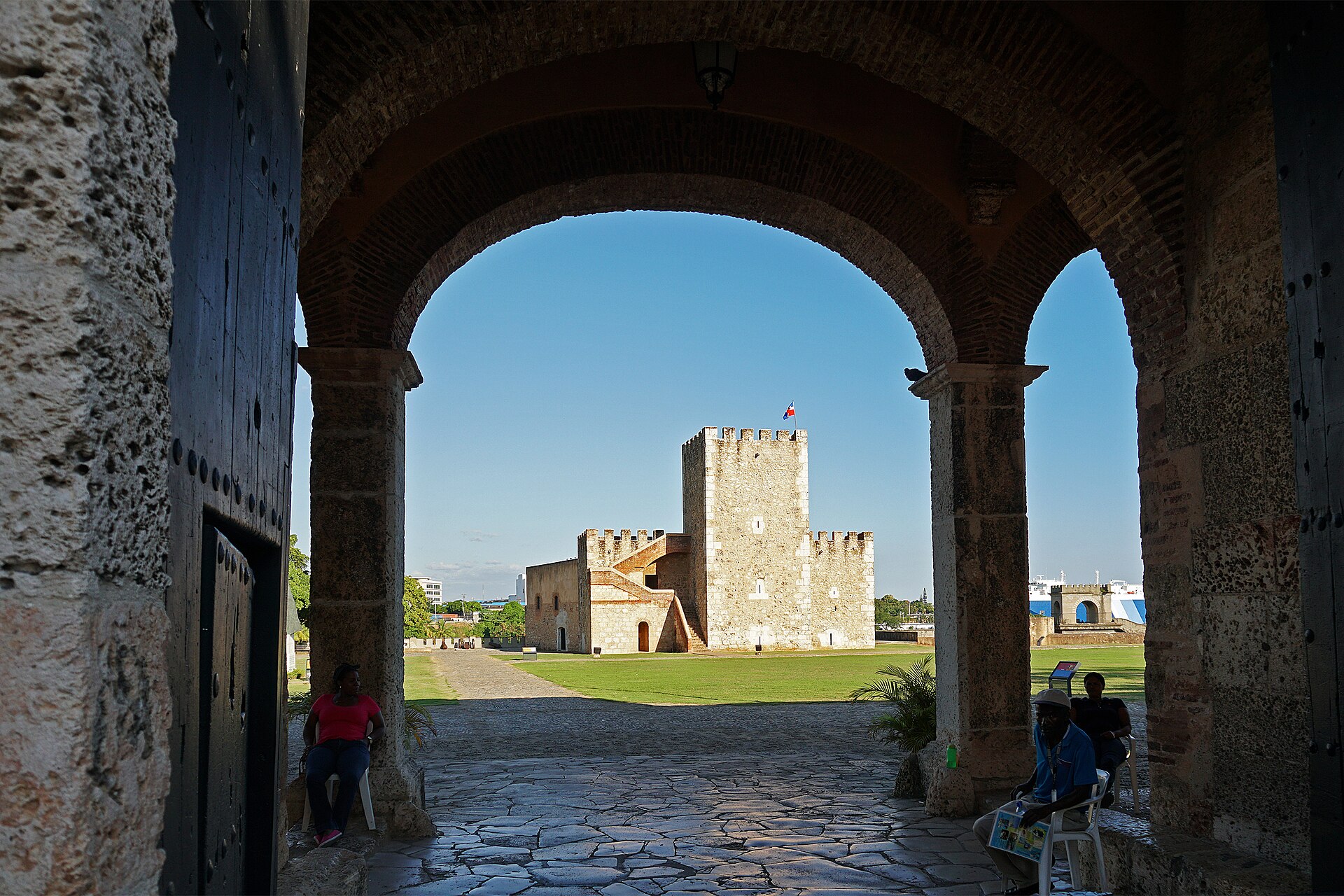
Notable among these additions are the ceremonial gates constructed in later centuries, which mark the changing tastes and rulers of the colony, and the modifications made in the modern era. Each such feature tells a small story of the fortress’s continuing life, and together they show how a single structure can be continually adapted across the ages while retaining its essential character.
Exploring these varied elements as you walk the fortress reveals the depth of its history. From the original early sixteenth-century core to the gates of later Spanish monarchs and the interventions of the twentieth century, the Fortaleza Ozama is a palimpsest of the entire colonial and national history of the Dominican Republic, all layered within a single venerable site.
The reinforced additions of the twentieth century, made under the long dictatorship that ruled the Dominican Republic in that era, are themselves now part of the fortress’s story, illustrating how each generation leaves its mark. Even the bullet holes reportedly visible from a period of civil conflict in the 1960s bear witness to the fortress’s continuing involvement in the turbulent history of the nation right up to modern times.
The layering of additions across the centuries means that a careful visitor can trace the whole arc of the fortress’s history simply by attending to the different styles and periods visible in its fabric. From the medieval core to the colonial gates to the modern reinforcements, the Fortaleza Ozama is a three-dimensional history book, its chapters written in stone and concrete by successive generations.
Part of the First Colonial City
The Fortaleza Ozama does not stand alone but forms part of one of the most important historic ensembles in the Americas: the colonial city of Santo Domingo. This historic district, the oldest of its kind in the New World, was inscribed on the UNESCO World Heritage List, honouring it as the first European city in the Americas and a place of exceptional historical significance.
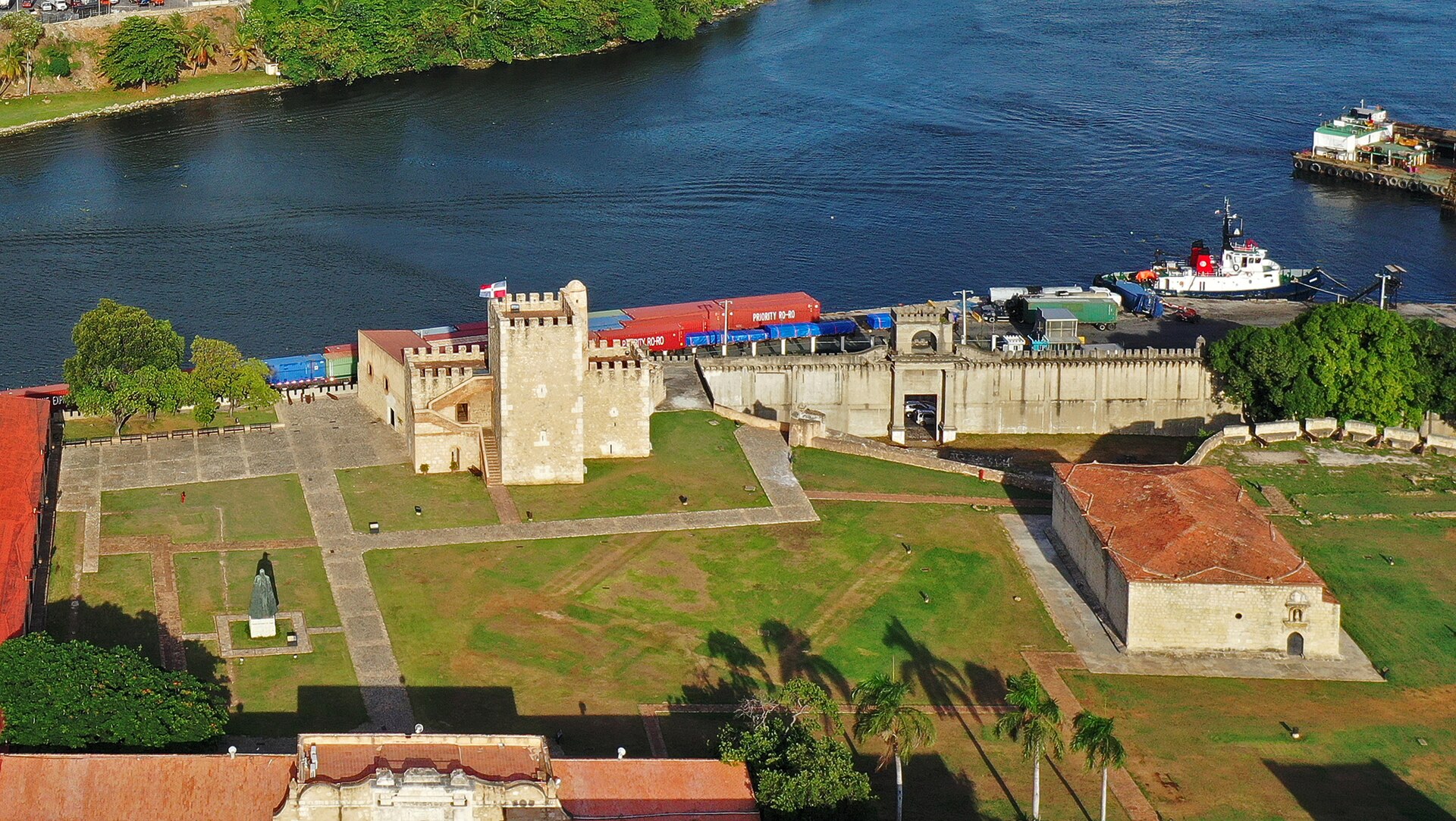
The listing recognised the whole colonial city, with its grid of streets, its cathedral, its palaces, and its fortifications, as a monument to the beginning of the European presence in the Americas. As the great fortress guarding this pioneering city, the Fortaleza Ozama is one of the most important elements of the ensemble, embodying the defensive and strategic dimension of the first colonial capital.
For the Dominican Republic, the World Heritage status affirms the global significance of Santo Domingo and its fortress as the birthplace of European America. The Fortaleza Ozama, as the oldest military structure of its kind on the continent, holds a place of special honour within this heritage, and its preservation ensures that this origin point of a whole hemisphere’s history will endure.
The concentration of firsts in Santo Domingo, the first city, cathedral, university, and fortress of the Americas, gives its World Heritage status a special weight, for this is quite literally where the European chapter of American history began. The Fortaleza Ozama, as the guardian of that pioneering city, shares fully in this exceptional significance and stands as one of its most tangible and impressive symbols.
The ongoing conservation of the Fortaleza Ozama and the wider Colonial Zone is a responsibility of great importance, for these are irreplaceable monuments to the origins of a whole hemisphere’s modern history. The interest and respect of visitors from around the world help to sustain this effort, ensuring that the oldest fortress in the Americas will continue to stand and to tell its extraordinary story.
Visiting the Fortaleza Ozama
The Fortaleza Ozama stands in the heart of the Colonial Zone of Santo Domingo, the historic district that is one of the great attractions of the Dominican Republic, and it is easily reached on foot as part of an exploration of this remarkable old city. Its location, overlooking the river at the edge of the colonial quarter, makes it a natural and rewarding stop.
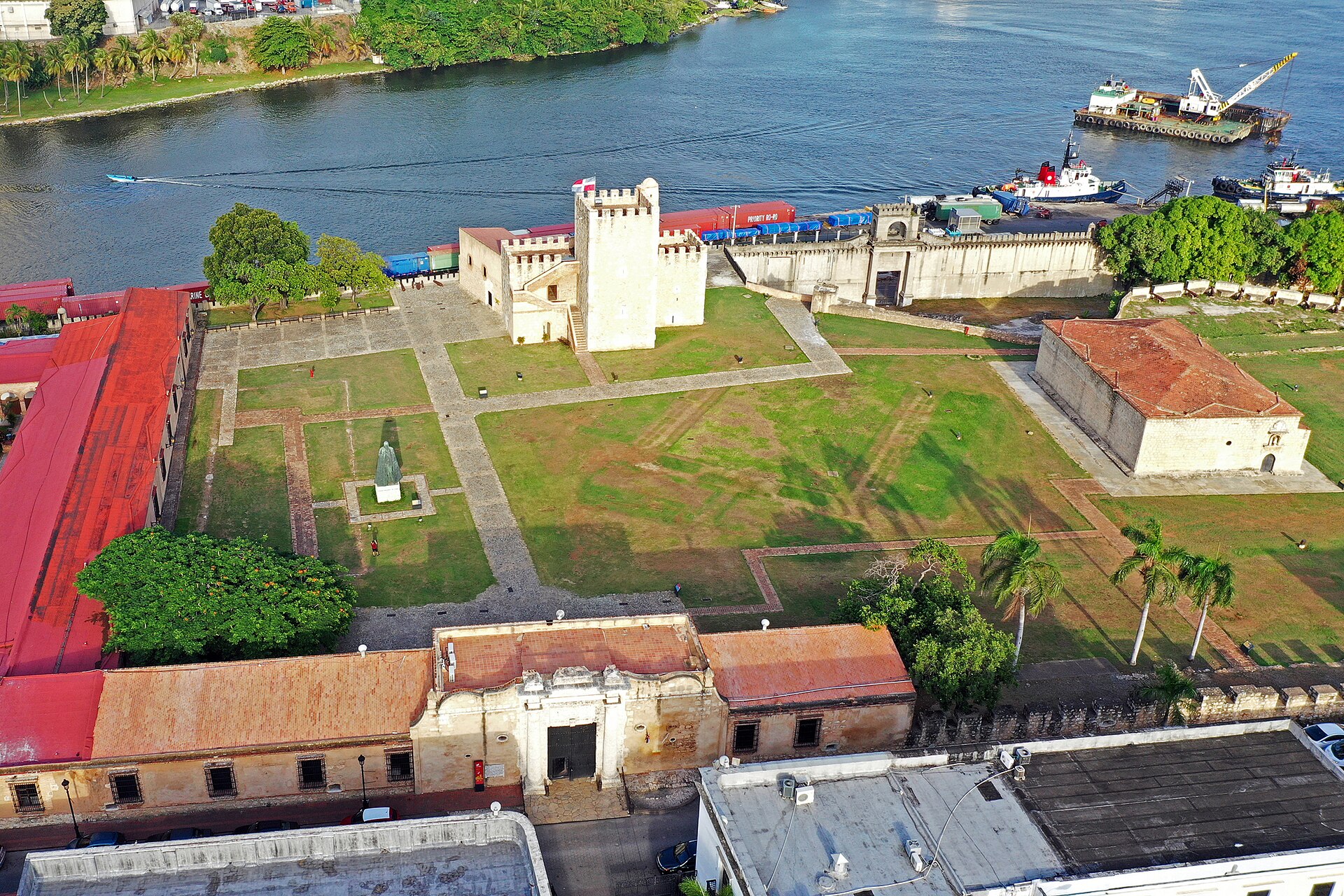
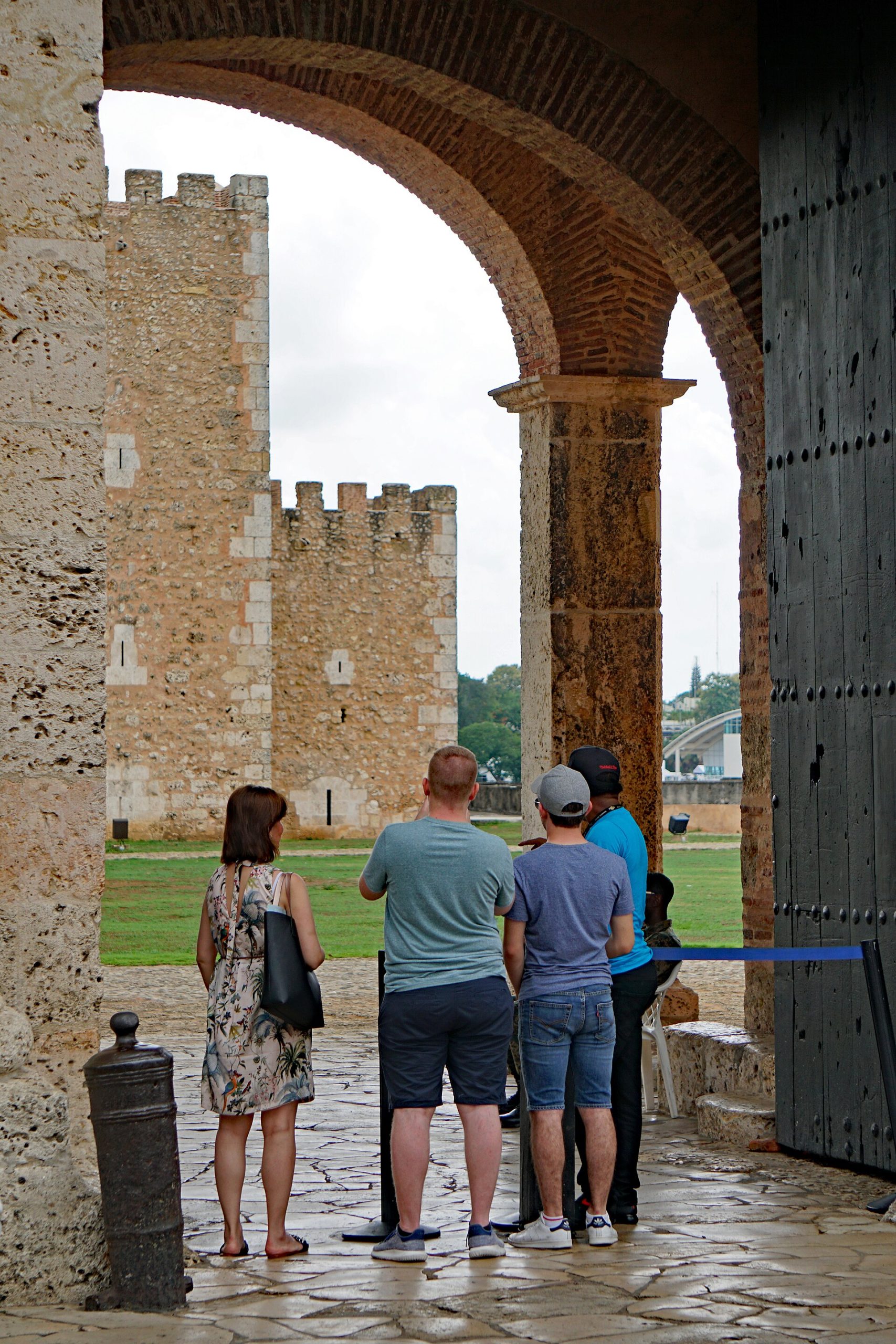
On a visit you can explore the grounds, walk among the ancient walls and gates, and, most memorably, climb the great Tower of Homage for its commanding views over the Ozama River and the rooftops of the old city. Standing atop this five-hundred-year-old keep, at the very origin point of European America, is an experience of real historical resonance.
View 18.4733, -69.8817 on Google Maps
Combine your visit with a walk through the surrounding Colonial Zone, with its cathedral, palaces, and cobbled streets, to experience the full richness of the first city of the New World. Come prepared for the tropical heat, and take your time to absorb the extraordinary antiquity of the place. The Fortaleza Ozama offers an unforgettable encounter with the very beginning of the long and dramatic history of the Americas.
Many visitors find that the greatest reward of a visit comes at the top of the Tower of Homage, where the view over the river and the ancient city brings the whole history of the place into focus. To stand there, at the summit of the oldest fortress in the Americas, looking out over the first European city of the New World, is to feel the immense sweep of history in a single, unforgettable moment.
The surrounding Colonial Zone rewards unhurried exploration, for it contains an astonishing concentration of the oldest European buildings in the Americas, from the first cathedral to grand early palaces. A visit to the Fortaleza Ozama thus opens the door to a whole district where the origins of European America can be experienced at every turn, making it an ideal starting point for exploring this unique historic city.
Castles Nearby
You May Like
Tulum: The Walled Maya City on the Cliffs of the Caribbean