Nallıhan Bird Sanctuary, which is located in the Sakarya River basin on the historical Silk Road, at the closest distance to Ankara, and was taken under protection in 1994 during the period of our fellow countryman Nevzat CEYLAN as the General Directorate of National Parks; Nallıhan is within the borders of Davutoğlan village.
It is home to more than 168 bird species that migrate, winter and breed. Since it has a wide variety of ecosystems with wetlands, mud flats, woods, steppes and rocky areas, it provides the opportunity for many species to feed and shelter.
The endangered BLACK STORK is most commonly seen here in Turkey. All 6 species of herons in Turkey, 10 species of birds of prey, 5 species of owls, 35 species of water birds, 80 species of songbirds, especially nightingales, species such as black kite, stork and sky raven are the most common birds.
Endangered species; Little cormorant, golden eagle, quail guide, summer duck, saker falcon, barn owl, little kestrel, white-tailed eagle, fish eagle, black vulture and peregrine falcon can be seen here. One of the 30 breeding places of Peregrine Falcon in Turkey is here.
Located on the bird migration route coming from the Istanbul and Dardanelles Straits, this area is a stopover for migrating birds in spring and autumn for feeding, resting, sheltering and breeding of some species. It is the most important wetland of Central Anatolia.
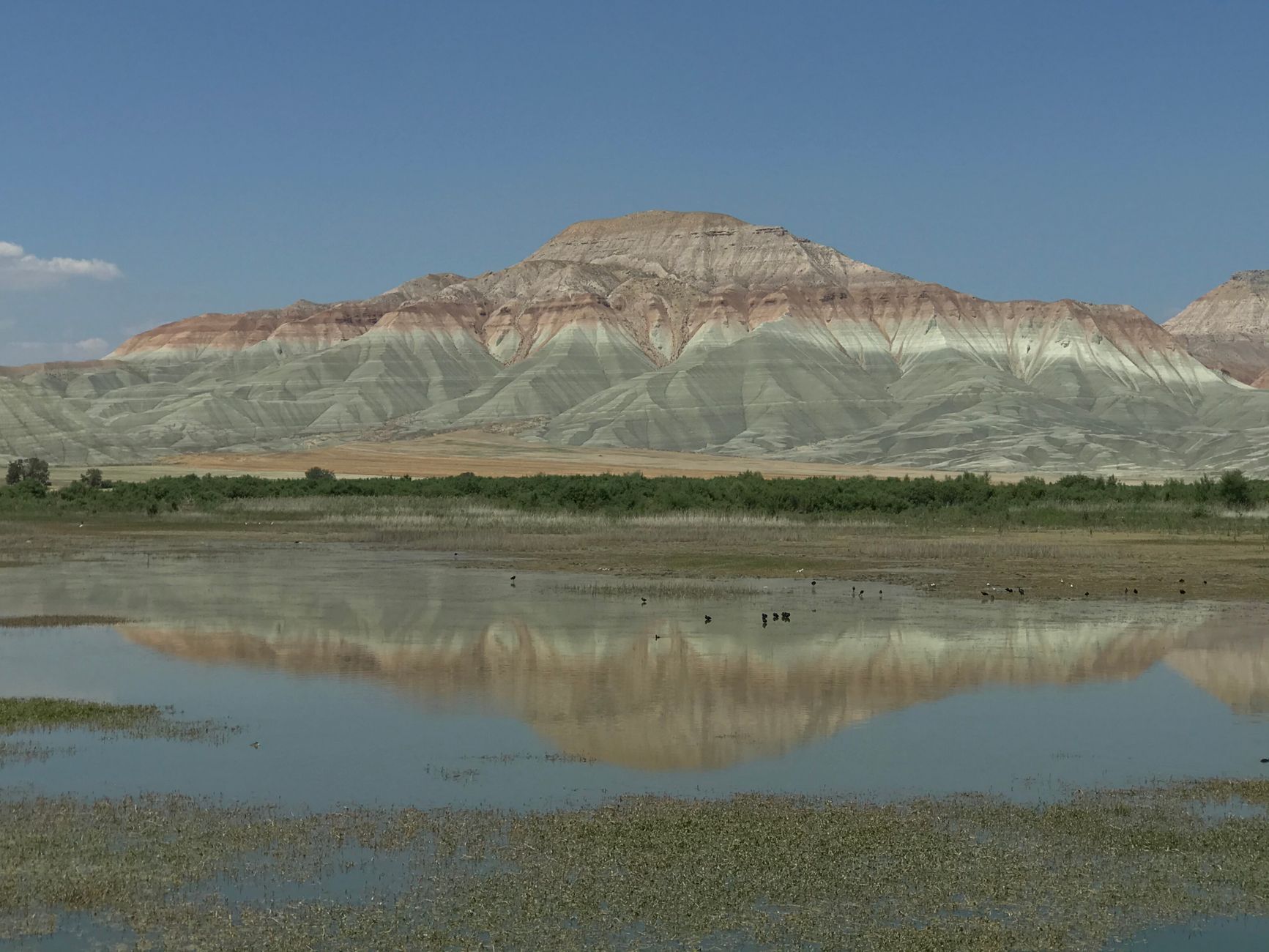
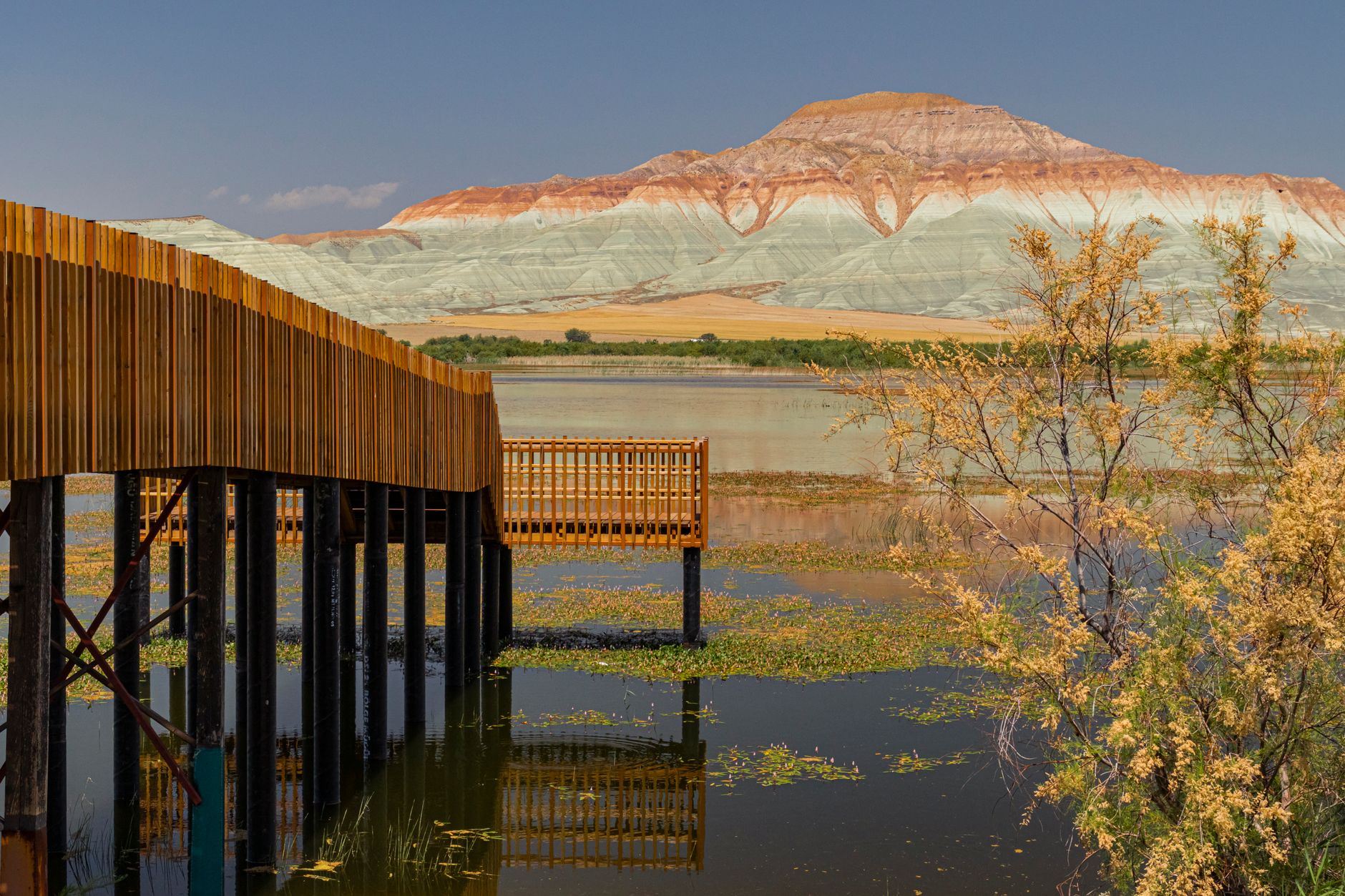
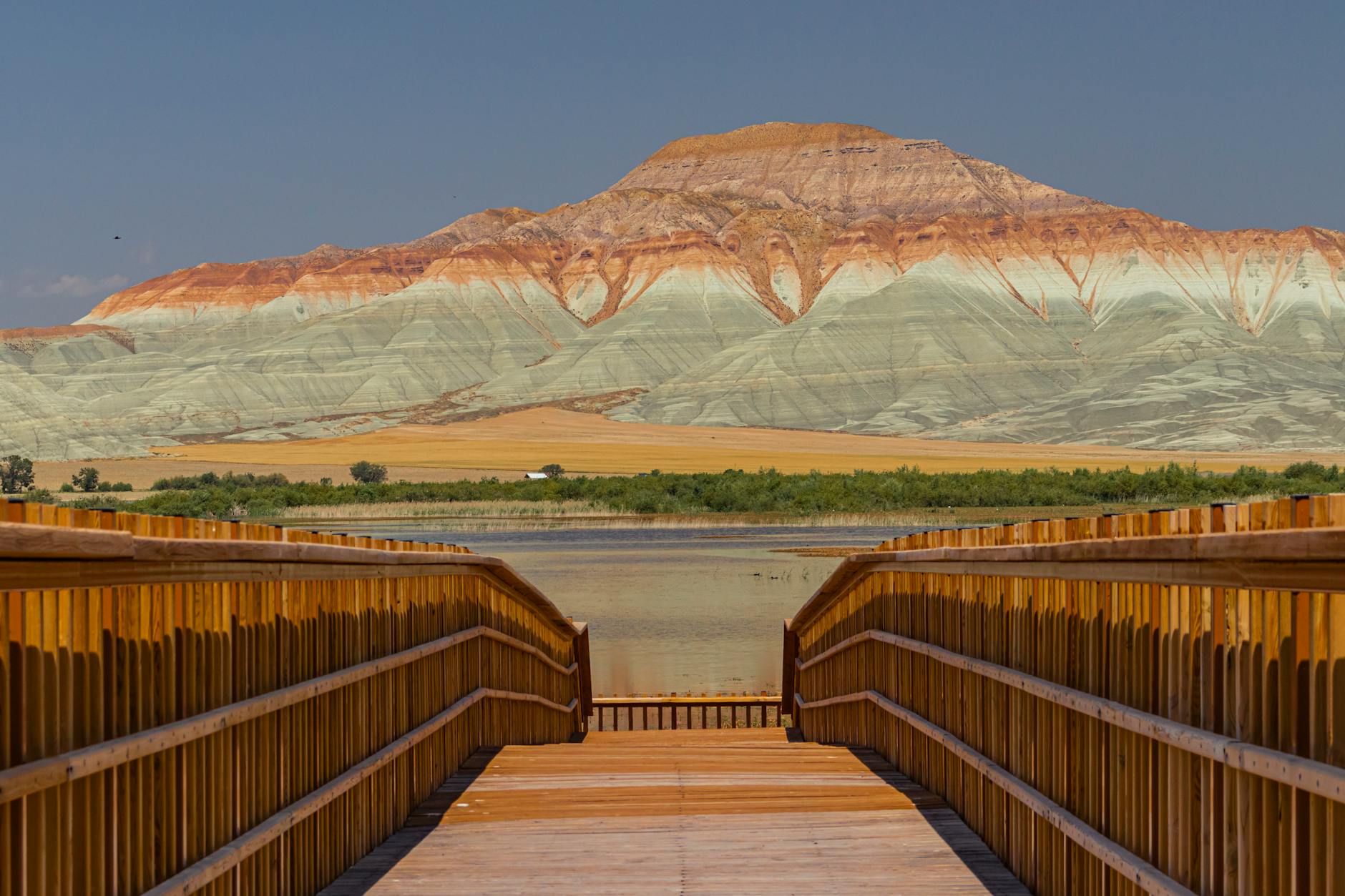
The field, which offers an open laboratory quality with its geological structure, has a visually superior landscape beauty with the repetition of yellow, brown and reddish layers reflecting the characteristics of the depositional environment.
Ankara – Nallıhan 160 kmAnkara – Çayırhan 125 kmAnkara – Davutoğlan village (Nallıhan Bird Sanctuary) 130 kmNallıhan – Nallıhan Bird Sanctuary 30 kmBeypazarı – Nallıhan Bird Sanctuary 30 kmÇayırhan – Nallıhan Bird Sanctuary 5 kmİstanbul – Nallıhan 300 kmBolu – Nallıhan 100 kmEskişehir – Nallıhan 130 kmIN NALLIHAN BIRD PARADISE FOR A YEAR
BIRD SPECIES THAT MAY BE FOUND
Bahri (winter migrant)
Black-necked grebe (winter migrant)
Kestrel (native)
saz weevil (native)
crop borer (winter migrant)
Prairie weed (transitional and summer migrant)
Hawk (passage and winter migrant)
Redhawk (native)
peregrine falcon (native)
* Vulture (native) A. İnce
Griffon vulture (native) F.Orbay
Little vulture (summer migrant)
Bearded vulture (native but rare)
Black vulture (native but rare)
Black Rookie (summer migrant)
Born with moustache (rare)
White-tailed eagle (seen in winter)
golden eagle (native)
Imperial eagle (rarely seen in winter)
Atmaca (parades) A. İnce
Goshawk (parading)
Stork {summer migrant)
Black stork (summer migrant)
Great white heron (winter migrant)
Little white heron (summer migrant) A. İnce
Gray heron (native) M. Maden
Judas heron (summer migrant)
Pied Heron (summer migrant) A. ince
Night heron (summer migrant) A. ince
Cattle heron (rare)
Little bittern (summer migrant)
bittern (rarely seen)
Angit (native)
Cormorant (summer migrant but rare)
Hungarian duck (winter migrant)
mallard
Teal (winter migrant)
Gray duck (winter migrant)
Fiyu (winter migrant)
Pintail (winter migrant)
Chikrıkçın (winter migrant)
Spoonbill (winter migrant)
Elmabaş (winter migrant)
Summer duck (winter migrant)
Sutlabi (winter migrant)
Little seagull (winter migrant)
Silver gull (winter migrant)
Black-headed gull (winter migrant)
Slender-billed gull (parading)
Laughing tern (parades)
Clumsy goose (winter migrant)
Gray goose (winter migrant)
Crane (parades)
Swan (parades)
Water guide (native)
Sakarmeke (native A.İnce)
Stilt (summer migrant)
reed chicken (native)
Quail guide (domestic)
Quail (summer migrant)
Henna partridge (native)
freckled partridge (native)
Swamp water fowl (parades)
Lapwing (native)
Swamp whistler (winter migrant and migratory)
Deredüdükçınü (winter and passage)
Forest whistler (passage)
Green whistler (parade)
Greenlegs (passage)
Redshank (native and crossover)
Döğüşkenkuş (winter and parade)
Marsh swallow (passage)
Tern (winter and passage)
Stepmother (summer migrant)
Turtle Dove (native)
Rock pigeon (native)
Cuckoo (summer migrant)
Puhu (summer migrant) F. Orbay
Barren owl (winter migrant)
Tawny owl (native)
scops bird (summer migrant)
little owl (native)
Wood-eared owl (native)
Swift bird (summer migrant)
Bee-eater (summer migrant)
Gökkuzgun (summer migrant) M. F. Özçelik
Kingfisher (native) N. Eren
hoopoe (summer migrant)
Pied woodpecker (native)
Dönerboyun (parades)
barn swallow (summer migrant)
House swallow (summer migrant)
Sand swallow (summer migrant)
Rock swallow (summer migrant)
Eared lark (native)
Bozkırtoygan (native)
Ringneck lark (native)
Crested lark (native)
Skylark (native)
Meadow Pipit (passage – winter migrant)
Pipit (winter migrant)
White-tailed wag (summer migrant)
Yellow wagtail (summer migrant)
Gray wagtail (winter migrant)
Greater shrike (winter migrant)
Red-backed Shrike (summer migrant) A. İnce
Black-fronted shrike (parading)
Masked shrike (parades) A. Akyurt
River warbler (summer migrant)
Greater reed warbler (summer migrant)
Sedge warbler (summer migrant)
reed warbler (native)
White mukallit (summer migrant)
white-throated warbler
Lesser white-throated warbler
Striped warbler (summer migrant)
Masked warbler (parades)
Willow warbler (passerine)
Spotted flycatcher (summer migrant)
Ringed flycatcher (passage maker)
Stonebird (native)
Meadow lamprey (parades)
Gray wagtail (summer migrant) S. Karagöz
Caracal-eared monk (summer migrant)
Gökardıç (native)
Black redstart (parading)
Redstart (parading)
Robin (native)
Wheat warbler (parades)
Nightingale (summer migrant)
Chickadee (summer migrant)
Blackbird (native)
Field thrush (winter migrant)
Song juniper (native)
Whiskered tit (native)
Penguin (native)
Pine tit (native)
Great tit (domestic)
Blue tit (native)
Garden woodcreeper (native)
rock plasterer (native)
Wren (native)
field bunting (native)
Marsh bunting (native)
Black-capped bunting (summer migrant)
Bunting (summer migrant) A. Antakyalı
finch (winter migrant)
Saka (native)
Florya (winter migrant)
Iskete (winter migrant)
Linnet (native)
Lesser siskin (winter migrant)
house sparrow (native)
Tree sparrow (native)
Willow sparrow (summer migrant)
Starling (native)
Pink starling (common in some years)
Oriole (summer migrant)
jay (native)
Raven (native)
magpie (native)
magpie (native)
Jackdaw (native)
Carrion crow (native) A. ince
Red-billed chough (native)
DO YOU KNOW THESE?
BENEFITS OF SOME BIRDS FOUND IN NALLIHAN BIRD PARADISE
STARLING: 1000 starlings consume 20 tons of grasshoppers in a month, and 400 insects a day during the breeding season.
GÖK KUZGUN: Consumes half its body weight in insects per day.
STORK: Large amounts of mice, snakes, nomadic grasshoppers, etc. consumes.
OWL: Mouse. insect etc. consumes. During the breeding season, it consumes 45-60 mice per day.
KUKUMAN: Mouse, insect, grasshopper, etc. consumes.
KESTRENZ: Consumes mice, insects,
Sparrowhawk: Consumes mice
RED HAWK: Consumes 25-30 mice a day.
LITTLE VULTURE: Consumes carrion.
BLACK Rookie: Consumes mice and insects.
EBABİL: More than 28 thousand flying insects, flies, etc. per day during the breeding season. consumes. He always carries around 900 flies in his fly bag. If it cannot find a fly, it can travel 1000 km away.
SWALLOW: Consumes flying flies.
GREAT TITT: It consumes around 900 insects a day during the breeding season.
Partridge: Consumes more than 2000 slugs a day.
QUAIL: Consumes sunflowers, worms and insects. It consumes insects and pests under tree bark. With wings close to 90cm, it eats 1000 ants. It eats arthropods, bird birds, spiders, tree-dwelling insects, large forest ants, chrysalis and adults of ants.
WOODPEckers: It feeds on ants, starflies, spiders, caterpillars, maggots, bees, dragonflies, beetles and flies.
HOOPON: Consumes large amounts of bark beetles and caterpillars.
Birds are very voracious; A bird consumes more insects per day than its own weight. If a person had the same appetite, he would consume more than 100 loaves of bread a day. Birds are our friends; They protect us from insects, mice and other pests.
Bird species and numbers in Nallıhan Bird Sanctuary:
Little grebe 7, Little cormorant 4, Egret 80, Little egret 2, Great egret 6, Gray heron 34, Judas egret 2, Black stork 1, Stork 584, Paddy 11, Spoonbill 7, Rubble 512, Egret 50, Gray duck 1, Teal 2410, Mallard 3, Pintail 27, Pochard 1350, Spoonbill 360, Hungarian duck 5, Applehead pochard 282, Crested pochard 4, Black kite 1, Little vulture 1, Snake eagle 3, Saz hawk 24, Gökçe hawk 1, Sparrowhawk 1, Hawk 2, Red hawk 6, Little forest eagle 99, Small kestrel 1, falcon 1, common hawk 2, common grouse 15, coot 1270, stilt 22, bigeye 1, golden plover 25, lapwing 326, red sandpiper 2, black-bellied sandpiper 5, ptarmigan 1750, sandpiper 38, mud sandpiper 169, curlew 7, Black lark 1, Red lark 14, Green lark 7, Forest lark 4, Black-headed gull 2, Rock dove 25, Common swift 1, Kingfisher 1, Hoopoe 4, Steppe lark 1, Crested lark 4, Lark 2, Meadow pipit 11, Yellow wagtail 450, Yellow-headed wagtail 1, Wagtail 180, Chickwright 1, Robin 2, Stonefinch 3, Wagtail 2, Blackbird 1, Whiskered Warbler 1, Warbler 2, Warbler 13, Whiskered Chickwright 10, Rock Nuthatch 1, Magpie 4, Jackdaw 10, Common Crow 292, Carrion Crow 11, Common Starling 250, Chaffinch 2, Little Siskin 4, Goldfinch 4, Linnet 22, Swamp Bunting 20, Field Bunting 4.
The Sakarya River bed, where the Sarıyar Dam is located, hosts various bird species, and bird nests and egg-laying areas occupy a large area in the reeds.
The wetland around Davutoğlan Village in the Sarıyar Dam lake basin has been protected as Nallıhan Bird Sanctuary by the General Directorate of National Parks of the Ministry of Forestry. 168 species of birds live in this area. The protection of the birds growing in this area will be possible by raising the awareness of the local people.
Night heron in a poplar grove on the southern shores of Sarıyar dam, black stork on the rocks, little vulture and whiskered falcon are mostly seen. Nallıhan Bird Sanctuary is an important accommodation center for storks and shepherds (during migration). It also breeds in the same colony with little egret, gray heron and night heron. Black kites and peregrine falcons breed, and the occasional white-tailed eagle is observed. It most likely breeds in close proximity.
Some of these species in Sarıyar Dam Lake are migratory birds. The other part spends the winter in its location. Untimely hunting in the national park area causes birds to become extinct. Bird species such as partridge, quail, wild chicken and wild goose are mostly hunted.
Observations and Determinations of Famous Photographer Haluk ÖZÖZLÜ:
Hawk, falcon, eagle, Egyptian vulture, tawny heron, spoonbill, mallard, cormorant, pintail, crane, partridge, sandpiper, quail, geese and water chickens; They fly, feed and live on colorful plateaus that resemble cream cakes. Thorny flowers, green-free mountains, hills, colorful layers and strange surface formations; It makes people feel like they are on another planet. On this trip, we will take a trip to Nallıhan Bird Sanctuary.
While the Kızılırmak and Sakarya rivers, which give life to the steppe areas, flow at an altitude of 1500 meters above the sea, the surroundings of these important water resources have been residential areas throughout history. “Nallıhan Bird Sanctuary”, which is one of the 70 bird sanctuaries in Turkey and has more than 150 bird species, was taken under protection by the General Directorate of National Parks, Hunting and Wildlife in 1994.
In the region where birds such as hawks, falcons, eagles, Egyptian vultures, tawny herons, spoonbills, mallards, cormorants, pintails, cranes, partridges, sandpipers, quails, geese and water fowl can be seen, you may think that you are at the mouth of an active crater or on a planet with the effect of eerie loneliness, among the colorful plateaus similar to cream cake. It is stated as an erosion zone on professional maps between the Ankara, Istanbul, Bolu and Eskişehir quadrilateral.
You may be wondering, “Where did this place come from?” A question may arise: Our aim is to introduce new places, to bring them to tourism, to provide a new activity to those living between two big cities, and to provide passage from here when going somewhere…
On one side there is a lush bird paradise, on the other side there is a natural wonder, there is no erosion zone, no grass. Explain the danger of erosion and campaign as much as you want. The effect and reaction of seeing it on site are different.
Our journey begins in Nallıhan-Çayırhan, the erosion zone pointed out by geomorphologist Muammer Atiker and the maps, who made a meticulous and valuable study on the surface shapes of the region years ago. As soon as we leave Akyazı and go to Nallıhan via Mudurnu, leaving behind the Aynalıkaya pass at an altitude of 1210 m, a metamorphosis is observed in the nature structure of the 25 km route.
As you approach Nallıhan in the region, the eerie visuality is also reflected in the tree and plant texture. Thorny flowers, green-free mountains, hills, colorful layers and strange surface formations; It makes people feel like they are on another planet. While the images of fluid lava coming out of the crater and freezing attract your attention, you finally say “oh” with the dam water collection basins you come across.
As if there is water, there is life, you cross the bridge and come to the lake shore, through the narrow road branching off to the left, and to the bird watching station with a two-storey terrace. Picnic tables were scattered around, and some flowers and saplings were planted. The caretaker of the picnic area, which is now a haven of peace for weekend holidaymakers who have just discovered the region, is watering the saplings assigned to Nallıhan, while previously working at the Sarıyar dam in the same region.
My heart wishes that there would be a small sales section at the Nallıhan Bird Paradise bird observation station selling equipment such as binoculars, telescopes, films, bird pictures and souvenirs. But there is neither a kiosk selling cold soft drinks nor even a brochure introducing the region and its birds! With a small investment, this unique region on the Istanbul-Bolu-Ankara line can be provided with both an educational and relaxing activity.
Picnics are held, meanwhile rented telescopes and binoculars finance themselves. Promotional publications and cards are sold. Local people sell quilts and lace embroidered with bird motifs, and trinkets made of local stones are marketed.
Families give a very important message to the children who feel the brutal nakedness of the rock structure on the soles of their feet, in terms of embracing the country. The dam lake, which is located among interesting rocks, bare on both sides and surrounded by reeds, is like an oasis in the desert. I crossed the bridge in one breath, as if scraping the asphalt in the shadow of the colorful layers, and took a break at the fountain. Ecological balance, the mud brought by the wet environment, lots of insects and flies. Fish eat these.
Birds feed on fish. Eagles and hawks waiting for opportunities on top of the rocks are waiting for the birds.
We leave the colorful layered rocks, mostly composed of claystone, clayey sandstone, volcanic ash, tuff, sandstone and fine gravel, and look into the world of birds. Nallıhan Bird Sanctuary, some parts of the lake surroundings are reeds. Herons and storks are the most visible varieties. Crested herons, herons, wild ducks, and even partridges are flying here and there with the peace of being at home.
Another feature of the region is the coexistence of birds of prey and waterfowl on the tops of the cliffs. Getting to know birds is possible by observing them in nature. The first rule for successful observation is to be patient and quiet. Bird watchers can easily watch with binoculars from the terrace of the observatory or from the tent they set up in nature.
Although land and field pesticides threaten the bird generation, dam water collection basins are considered suitable environments for birds to feed and reproduce.
Storks that feed on creatures such as snakes, frogs and worms, herons that wander in shallow waters and catch fish, and coots that swim easily in all kinds of wetlands with their wide toes without webbed feet and run on the water surface for a long time to take off, are the bird species you will most often encounter in Nallıhan Bird Sanctuary.
You May Like
Aspendos Ancient Theater Travel Guide