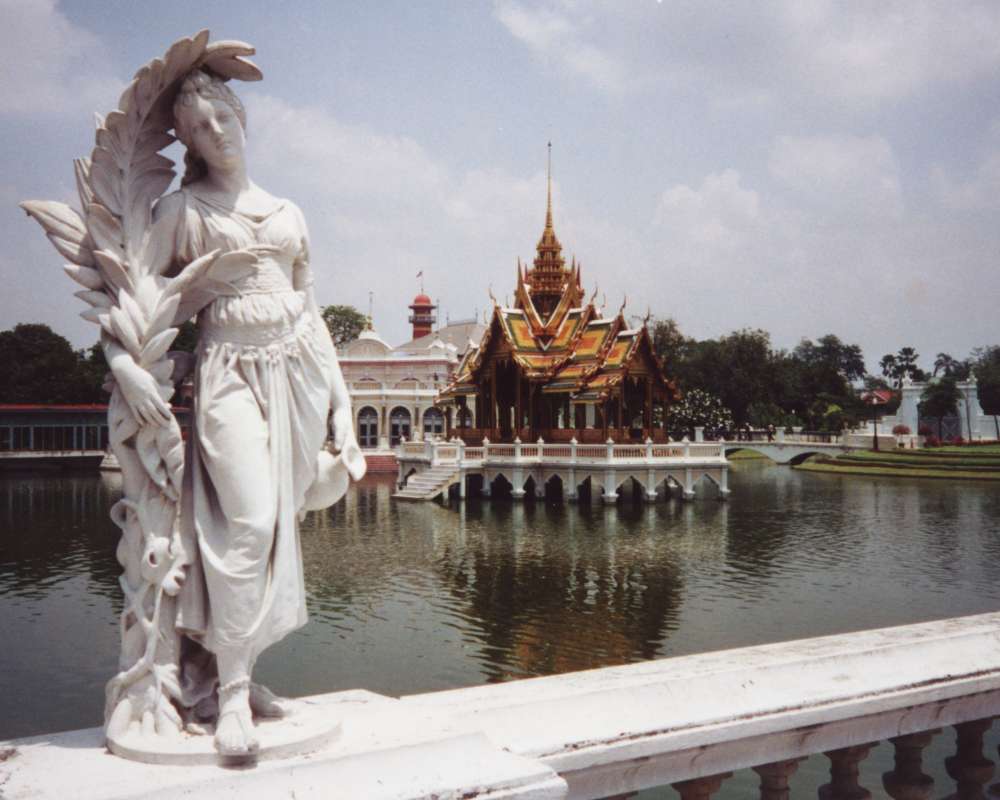
On a bend of the Chao Phraya River, a short journey upstream from Bangkok and just below the ruins of the old capital of Ayutthaya, lies one of the most charming royal retreats in Asia. Bang Pa-In is a summer palace of gardens and water, where pavilions in a dozen different styles stand among lawns, topiary, and ornamental lakes. At its heart, on a small pond, floats the most photographed structure in Thailand, a delicate golden pavilion in the purest Thai style, its tiered roof mirrored in the still water.
Bang Pa-In is a palace unlike the fortresses and citadels found elsewhere in this series. There are no great walls here, no ramparts or moats built for war. Instead there is a landscape of pleasure, a royal park where the kings of Thailand came to escape the heat and the ceremony of the capital, and where they indulged a taste for architecture drawn from around the world. Thai, Chinese, Italian, and Gothic buildings stand side by side, an eclectic assembly that is the palace’s special delight.
The history of the place reaches back to the seventeenth century, when it was a retreat of the kings of Ayutthaya, the great capital whose ruins lie just to the north. Abandoned after the fall of that city, it was revived in the nineteenth century by the kings of the present dynasty, above all by the great modernizing monarch Chulalongkorn, who rebuilt it as the exuberant garden palace that visitors enjoy today.
This is the opening palace of a group of great Southeast Asian royal residences in this series, and it offers a gentle and beautiful introduction to the courtly world of the region. To wander the gardens of Bang Pa-In, from the floating Thai pavilion to the Chinese mansion and the Italianate hall, is to see a Thai king’s delight in the architecture of the whole world, gathered into a single serene and lovely park on the river.
In This Article
- A Garden Palace on the River
- The Kings of Ayutthaya
- The Revival Under the Chakri Kings
- A Meeting of Many Worlds
- The Floating Pavilion
- The Royal Residential Hall
- The Chinese Mansion
- The Sages’ Lookout Tower
- Lawns, Topiary, and Water
- A Memorial of Royal Grief
- A Buddhist Temple in Gothic Dress
- A Living Royal Palace
- Bang Pa-In Today
A Garden Palace on the River
Bang Pa-In is best understood as a garden rather than a building, a landscaped royal park in which a collection of pavilions, halls, and monuments is set among lawns, waterways, and ornamental plantings. The whole composition is designed for pleasure and repose, a place of shade and water in the heat of central Thailand.
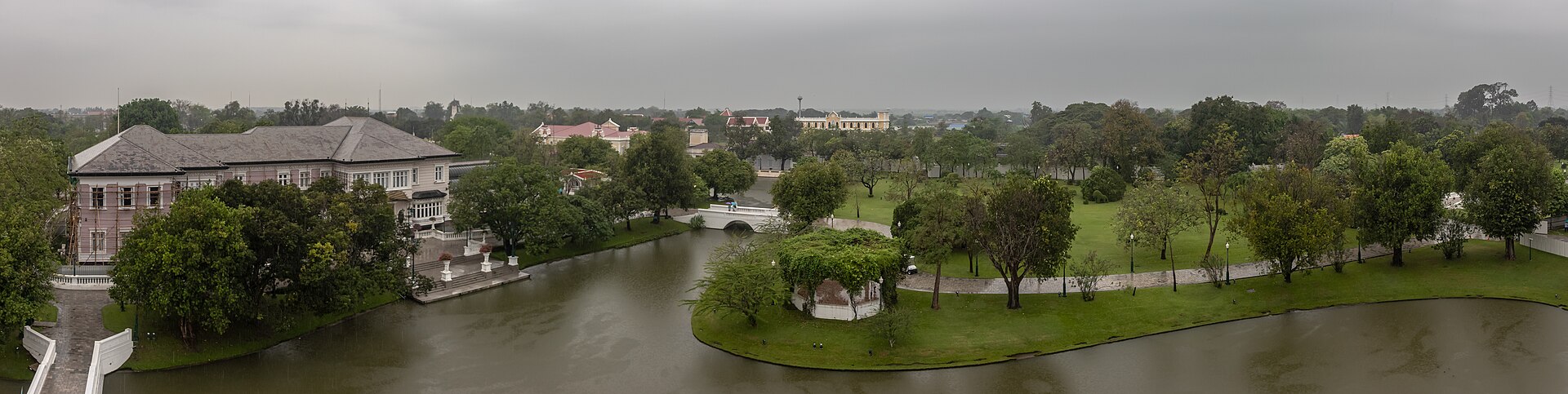
The palace is organized around ornamental lakes and canals, with the buildings disposed around and even upon the water. This intimate relationship with water is central to the character of the place, giving it a cool, reflective serenity and allowing the pavilions to be mirrored in the ponds around which they stand.
What most distinguishes Bang Pa-In is the variety of its architecture. The buildings are executed in a range of styles, traditional Thai, Chinese, Italianate European, and Gothic, so that walking through the park is like turning the pages of a book of the world’s architecture, each pavilion a different chapter in a single eclectic collection.
This eclecticism reflects the age in which the palace was largely built, the later nineteenth century, when Thailand was opening to the wider world and its kings were fascinated by foreign ideas and forms. The palace became a place to explore and display that fascination, a royal experiment in the architecture of many nations.
For the visitor, the effect is enchanting rather than incoherent. The gardens tie the varied buildings together, and the whole park has a light, playful, and slightly dreamlike quality quite unlike the solemn grandeur of the fortress-palaces elsewhere. Bang Pa-In is a place to stroll and to linger, a royal pleasure ground preserved in beauty on the river.
Set against the fortress-palaces that dominate much of this series, Bang Pa-In is a revelation of a different kind of kingship. The khans of Central Asia and the Rajputs of India built on high ground behind strong walls, their palaces bound up with war; here a Thai king, secure and outward-looking, built a palace with no defenses at all, given over entirely to pleasure, curiosity, and the enjoyment of beauty. The contrast says much about the different worlds that royal architecture can express.
The Kings of Ayutthaya
The origins of Bang Pa-In lie in the age of Ayutthaya, the great kingdom that ruled Thailand, then known as Siam, for centuries from its island capital just to the north. Ayutthaya was one of the wealthiest and most cosmopolitan cities of the world in its heyday, a center of trade linking the courts of Asia and, in time, of Europe.
By tradition the site of Bang Pa-In became a royal retreat in the seventeenth century, associated with a king of Ayutthaya who built a palace and a temple on the river here. The place served the kings of that era as a country residence, a retreat from the capital set amid the waterways and rice fields of the Chao Phraya plain.
The story of the site’s founding is wrapped in the legend typical of such places, tied to a king and to the birth of a royal heir, and it gave Bang Pa-In an association with the dynasty from its earliest days. Whatever the exact origins, the location on the river, close to but apart from the capital, made it a natural royal retreat.
The glory of Ayutthaya came to a catastrophic end in the eighteenth century, when the city was sacked and destroyed by an invading army, and the kingdom’s capital was abandoned in ruins. In the disruption that followed, the royal retreat at Bang Pa-In was abandoned as well, its buildings left to decay through the following century.
For roughly a hundred years the site lay neglected, a forgotten royal ground overtaken by the jungle, while the center of the kingdom shifted downstream to a new capital at Bangkok. The Bang Pa-In that visitors see today is thus not the palace of the Ayutthaya kings but a nineteenth-century revival raised upon the memory of that vanished retreat.
It is worth making the short trip to the ruins of Ayutthaya itself to feel the full weight of this history. There, among the broken towers and headless Buddhas of a once-magnificent capital, you sense the scale of what was lost when the old kingdom fell, and you return to Bang Pa-In understanding that its nineteenth-century revival was an act of reaching back across a century of ruin to reclaim a royal past.
The Revival Under the Chakri Kings
The palace as it stands today is the creation of the Chakri dynasty, the royal house that has ruled Thailand from Bangkok since the late eighteenth century. It was under these kings, and above all in the reign of the fifth of the line, that the abandoned retreat at Bang Pa-In was gloriously revived.
The revival began under King Mongkut, the fourth Chakri king, a learned and outward-looking monarch who took an interest in the old royal ground and began its restoration. But it was his son and successor who transformed Bang Pa-In into the palace of pavilions and gardens that we know, making it the great project of his long reign.
King Chulalongkorn, the fifth king of the dynasty, was one of the most important monarchs in Thai history, a great reformer and modernizer who guided his kingdom through a dangerous age of European imperialism and kept it independent when its neighbors fell to colonial powers. His wide curiosity about the world is written all over Bang Pa-In.
Chulalongkorn used the palace as a favored summer retreat and lavished attention on its buildings and gardens. Fascinated by the architecture and technology of the West and of China, he filled the park with structures in foreign styles alongside the traditional Thai pavilions, creating the eclectic ensemble that reflects his cosmopolitan spirit.
Under his hand Bang Pa-In became both a pleasure ground and a statement, a place where a modernizing king could indulge his tastes and display his openness to the wider world. The palace is in large part his personal creation, and it remains inseparable from the memory of the reforming monarch who made it the loveliest royal retreat in Thailand.
The achievement of Chulalongkorn in keeping Thailand independent through the high age of European empire is worth dwelling on, because it shapes how one reads the palace. All around him, the kingdoms of Southeast Asia were falling one by one to colonial powers, yet Siam survived, in part through exactly the kind of selective, confident engagement with the wider world that Bang Pa-In embodies. The garden of foreign styles is, in a sense, a monument to a successful strategy of survival.
A Meeting of Many Worlds
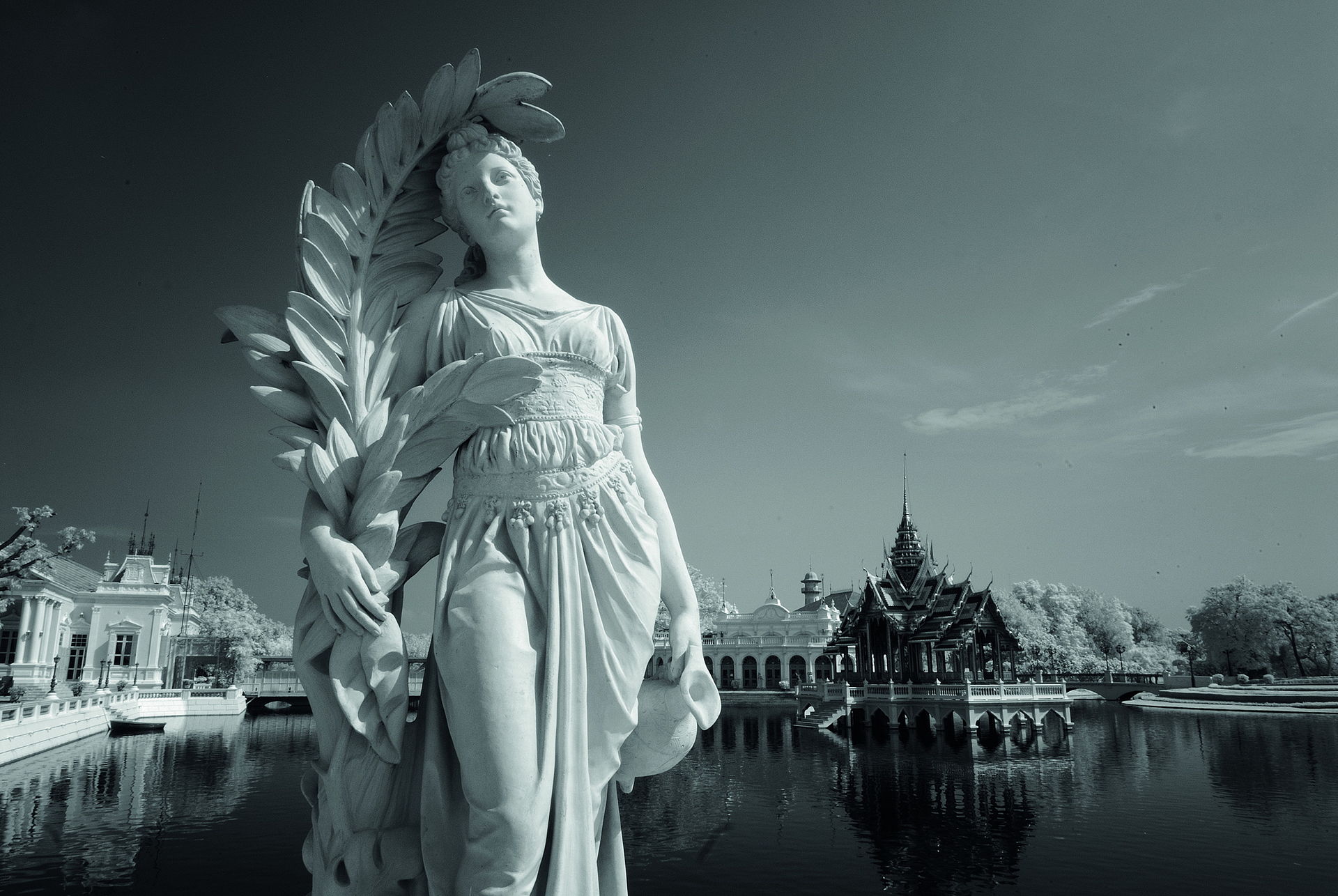
What gives Bang Pa-In its unique character is the deliberate gathering, in a single royal park, of architecture from many different cultures. Within a short walk the visitor passes from a classical Thai pavilion to a Chinese mansion, a European neoclassical hall, an eccentric observatory tower, and a Gothic temple across the river.
This eclecticism was not accidental but expressed the outlook of the age in which the palace was made. The later nineteenth century was a time when Thailand was engaging intensely with the wider world, absorbing foreign ideas, technologies, and forms even as it fought to preserve its independence, and the palace made that engagement visible.
For King Chulalongkorn, the collecting of architectural styles was of a piece with his broader program of modernization and openness. Just as he studied and adapted foreign systems of government, education, and technology to strengthen his kingdom, so he gathered the architecture of many nations into his summer retreat, sampling the world.
There is a confidence in this eclecticism that is worth noting. Rather than being overwhelmed by foreign forms, the Thai monarchy took what pleased it and set it within its own royal garden on its own terms, mixing Thai and foreign freely. The palace expresses not submission to the West but a sovereign curiosity about the whole world.
The result is a place that could exist nowhere else, a Thai royal park that is also a museum of world architecture, held together by its gardens and its royal purpose. This meeting of many worlds in a single serene landscape is the essence of Bang Pa-In and the source of its enduring fascination for visitors.
The Floating Pavilion
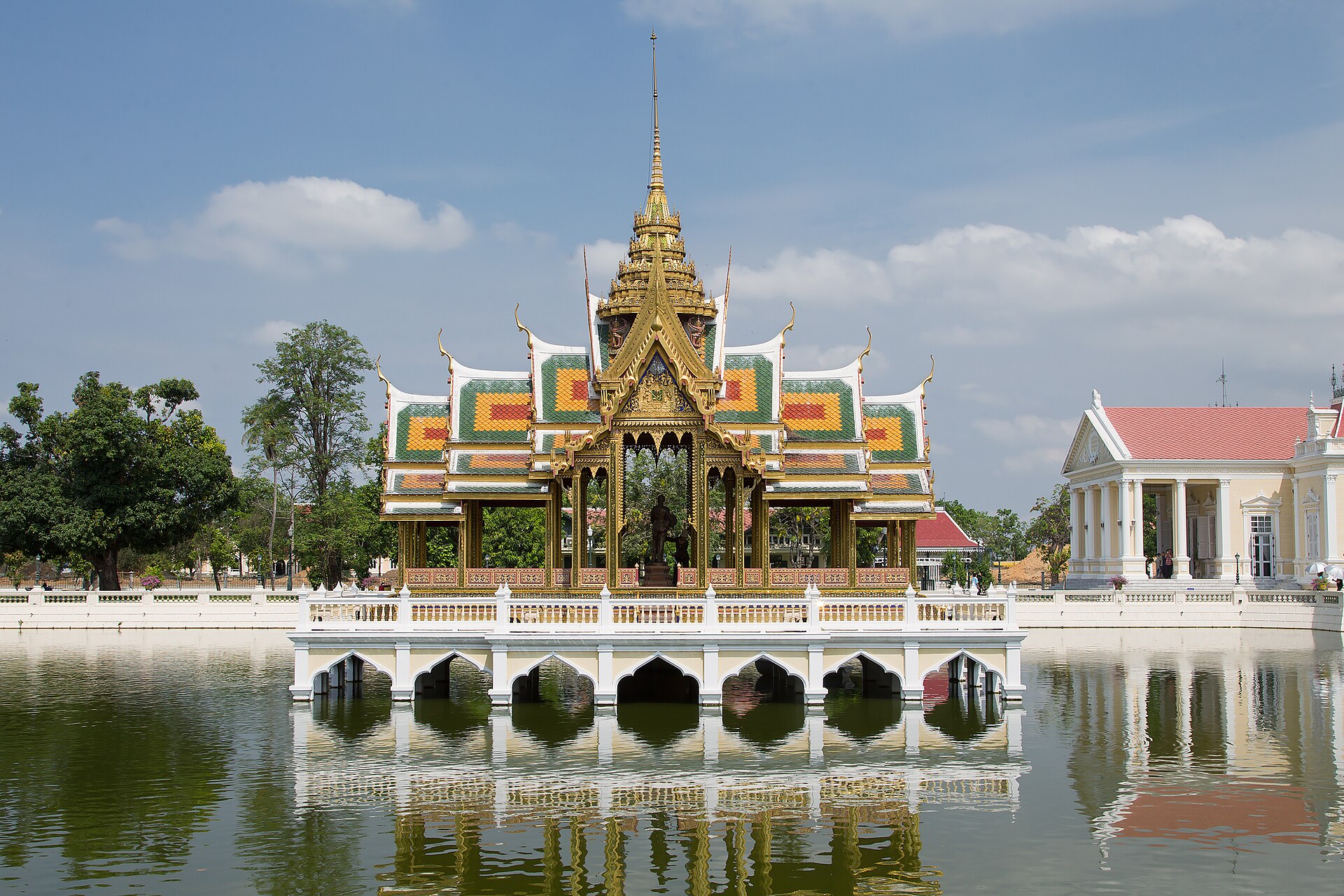
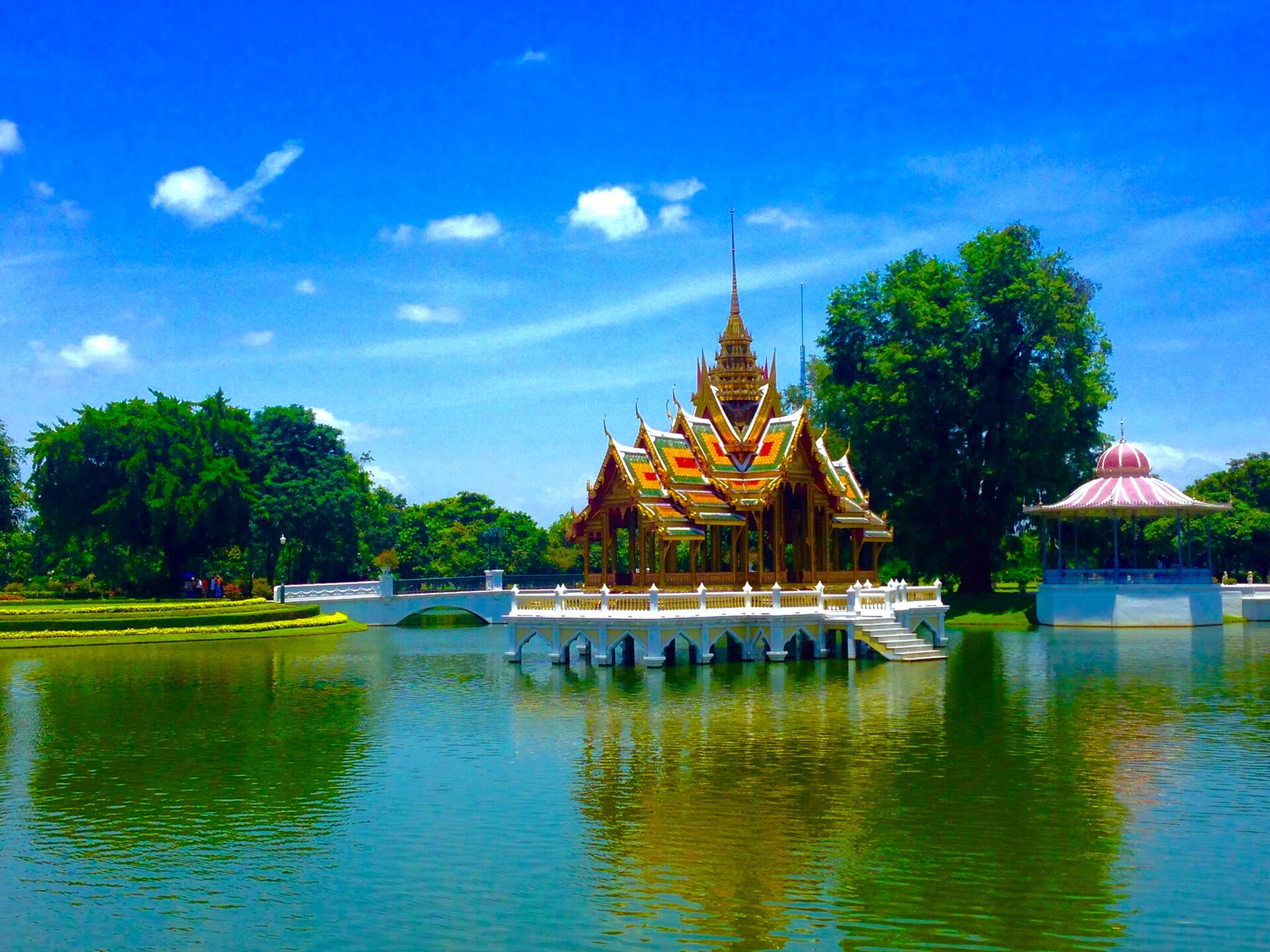
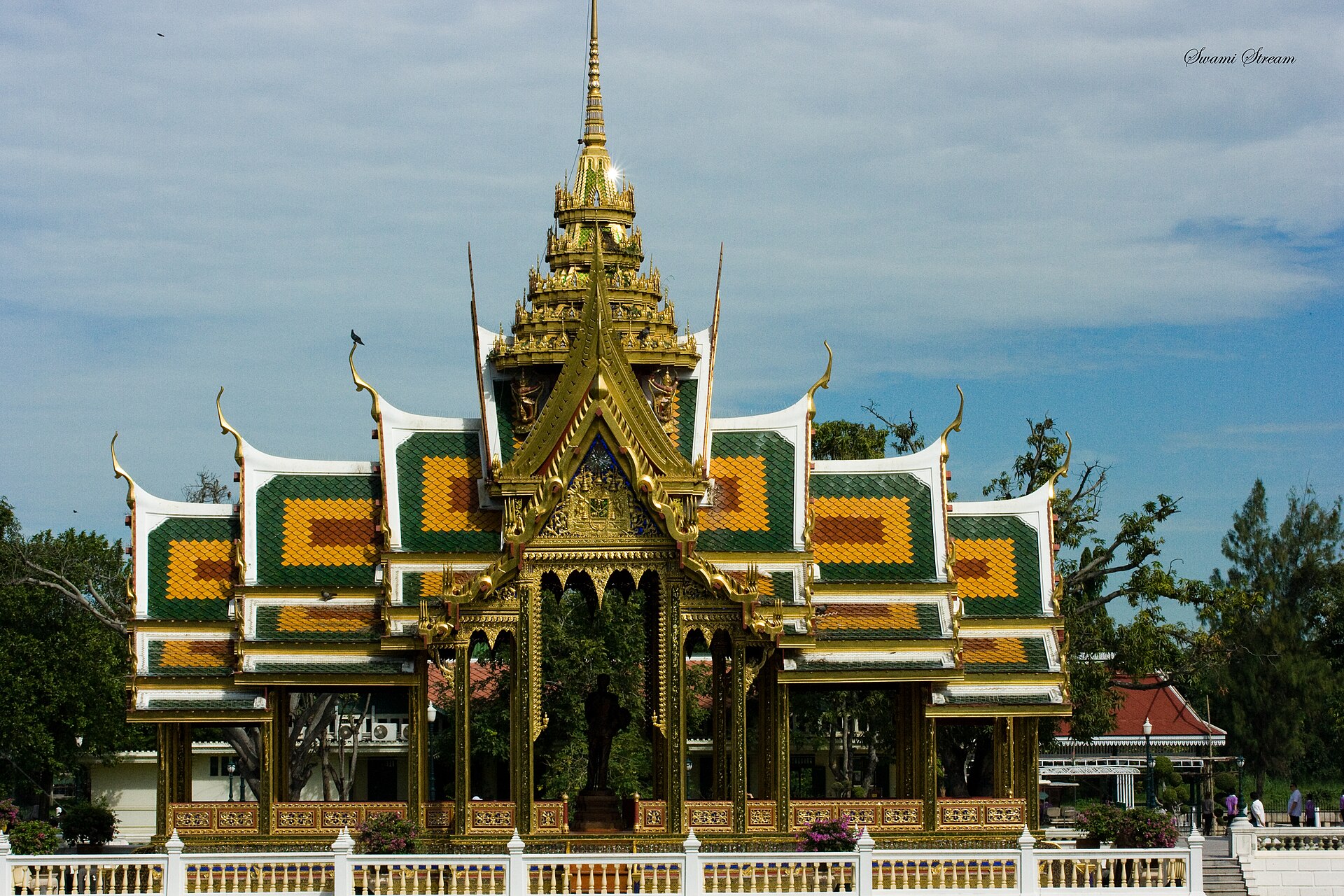
The single most famous structure at Bang Pa-In, and one of the best-known images of Thailand, is the Aisawan Thiphya-Art, a small pavilion in the purest classical Thai style that stands upon a pond at the heart of the palace. Slender and graceful, crowned with a soaring tiered roof and a delicate spire, it seems to float upon the water.
The pavilion is a jewel of traditional Thai architecture, its form derived from the sacred and royal buildings of the kingdom. The multiple tiers of its roof, sweeping up to a fine central spire, and its gilded and richly worked detail embody the elegance of the Thai architectural tradition at its most refined.
Set alone upon its pond, mirrored in the still water and approached across the surrounding lake, the Aisawan Thiphya-Art achieves an effect of perfect serenity and balance. It is a composition designed to be seen and reflected, the building and its image together forming a single harmonious whole.
Within the pavilion stands a statue of King Chulalongkorn, honoring the monarch who did so much to create the palace, so that the structure serves as a memorial as well as an ornament. The pavilion thus ties together the beauty of the place and the memory of the king who shaped it.
For most visitors the floating pavilion is the defining sight of Bang Pa-In, the image they carry away and the picture that represents the palace to the world. In its combination of classical Thai grace and its serene setting upon the water, it distills the whole spirit of the garden palace into a single perfect building.
The Royal Residential Hall
Among the grandest of the palace buildings is the Warophat Phiman, the principal residential hall, a substantial structure in a European neoclassical style that served as the main royal residence and throne hall of the revived palace. Its dignified classical architecture reflects the nineteenth-century taste for European forms.
The hall housed the living and ceremonial quarters of the king during his stays at Bang Pa-In, and its interiors were furnished and decorated in a manner blending Thai and Western elements. Here the business of the court could be conducted in the intervals of royal leisure, the palace serving as a working seat of monarchy as well as a retreat.
The building’s European classicism is one of the clearest expressions of the outward-looking spirit that shaped the palace. A Thai king chose to house himself, in his own country retreat, in a hall modeled on the architecture of Europe, a striking sign of the cosmopolitan confidence of the age of Chulalongkorn.
From the residential hall a covered bridge leads across to other parts of the palace, an elegant piece of planning that linked the royal quarters to the gardens and pavilions beyond. The bridge is decorated with screens that allowed the royal women to cross unseen, a Thai adaptation of the concern for privacy found in palaces across Asia.
The Warophat Phiman anchors the palace as its principal building, the residence around which the pleasure grounds were arranged. In its European dress it stands in deliberate contrast to the Thai pavilions nearby, embodying the eclectic spirit of Bang Pa-In within the single most important structure of the royal park.
The covered bridge with its screened windows repays a moment’s thought, for it is a small but telling detail. In a palace that borrowed so freely from Europe, this quiet provision for the seclusion of royal women shows how Thai custom persisted within the foreign forms, adapting the imported architecture to the enduring social patterns of the court. The palace absorbed foreign styles without simply abandoning its own ways.
The Chinese Mansion
One of the most remarkable buildings at Bang Pa-In is the Wehart Chamrun, a Chinese-style mansion of great richness, presented to King Chulalongkorn by the Chinese community of Thailand and built by Chinese craftsmen in the authentic manner of a Chinese hall. It stands as the finest expression of the palace’s fascination with China.
The mansion is a masterpiece of Chinese decorative art, its halls filled with intricately carved and gilded woodwork, fine ceramics, lacquer, and ornament imported from China and assembled by Chinese artisans. Entering it, the visitor is transported from the Thai gardens outside into the world of a Chinese palace hall.
The gift reflected the important place of the Chinese community in the life of Thailand, a community long established in the kingdom and central to its trade and economy. The presentation of so magnificent a building to the king was both a mark of loyalty and a celebration of the cultural ties between the two peoples.
The Wehart Chamrun served as a residence and, by tradition, a place where the king could observe Chinese religious and ceremonial customs. Its authentic Chinese architecture, standing amid the Thai and European buildings of the park, adds yet another distinct world to the eclectic collection that makes Bang Pa-In so unusual.
For visitors the Chinese mansion is one of the highlights of the palace, a building of extraordinary craftsmanship that rewards close attention to its carved and gilded detail. It stands as a monument to the meeting of Thai and Chinese culture and to the cosmopolitan spirit that gathered the architecture of many lands into a single royal garden.
Take your time inside the Chinese mansion, where the quality of the craftsmanship rewards the closest looking. The carved screens, the inlaid furniture, the ceramics and lacquer were the work of master artisans, and the whole interior was assembled with a care that a quick walk-through cannot appreciate. In its dim, richly worked halls you feel most strongly the wealth and the cultural reach that lay behind the seemingly light and playful garden outside.
The Sages’ Lookout Tower
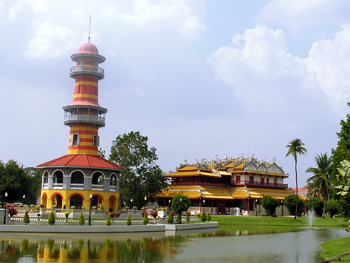
Rising above the gardens on an island in the lake stands one of the most distinctive structures of the palace, the Ho Withun Thasana, a tall observatory tower whose name means the sages’ lookout. Painted in cheerful colors and crowned with a viewing platform, it was built so that the king could climb it to survey the surrounding countryside.
The tower is a slender, brightly colored structure of several storeys, its exterior painted in bands of color that give it a festive, almost fairground appearance. A spiral stair within leads up to the observation deck at the top, from which the flat landscape of the Chao Phraya plain spreads out in every direction.
From the lookout the king and his guests could enjoy the panorama of the palace, the river, and the rice fields and villages beyond, a pleasure that combined the delight of a fine view with the practical interest of a monarch keen to observe his surroundings. The tower embodies the curious, outward-looking spirit of its age.
Its architecture belongs to no single tradition but has an eclectic, playful character all its own, in keeping with the varied styles of the palace. Standing on its island, reflected in the water and rising above the greenery, it is one of the most recognizable and best-loved of the Bang Pa-In buildings.
Climbing the tower remains one of the pleasures of a visit, offering the same wide views that delighted the king and a fine vantage point over the whole layout of the garden palace. From the top, the disposition of pavilions, lakes, and lawns can be seen as a single composition, revealing the plan of the royal park.
There is something wonderfully characteristic of Chulalongkorn in the very idea of the lookout tower. A king who wanted to see, to survey, to understand his surroundings and the wider world built himself a tower for exactly that purpose, and painted it in cheerful colors for the pleasure of it. The little tower captures in miniature the curious, energetic, and optimistic spirit of the monarch who made the whole palace.
Lawns, Topiary, and Water
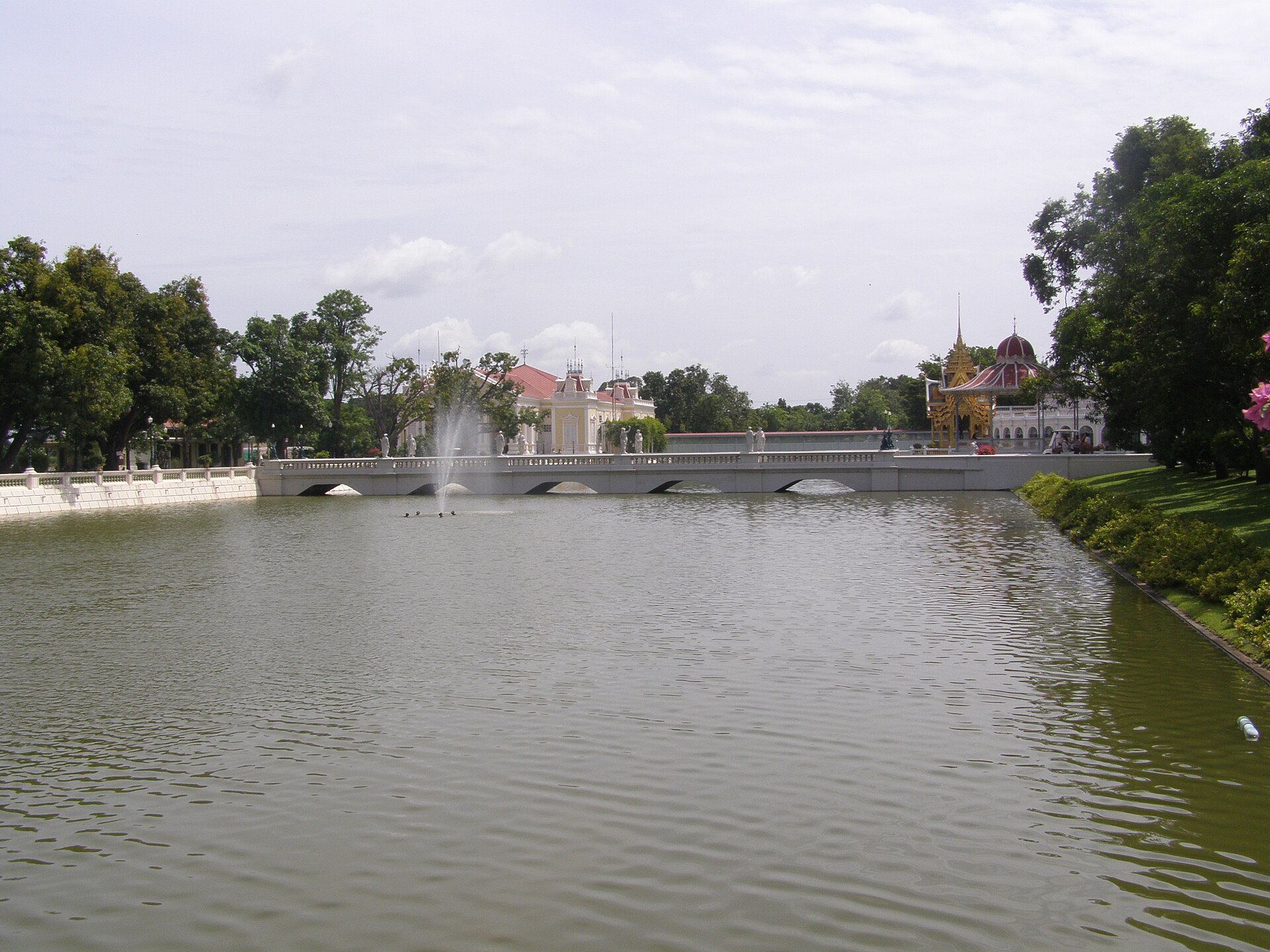
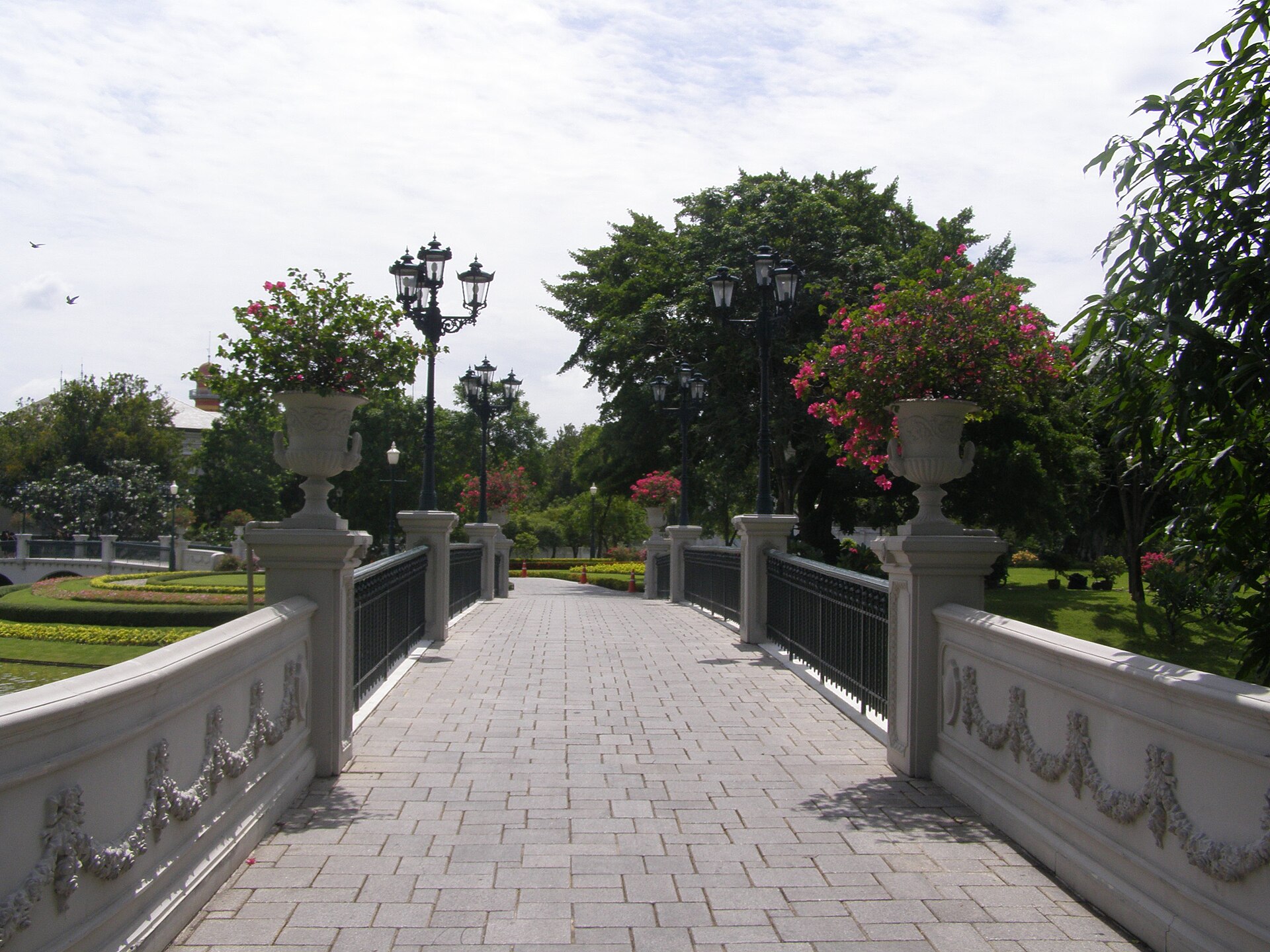
The gardens are the connecting fabric of Bang Pa-In, the green setting in which all its varied buildings are placed, and they are a delight in their own right. Broad lawns, ornamental lakes, canals, and carefully tended plantings create a landscape of order and beauty in the manner of a great designed park.
A special feature of the gardens is their topiary, shrubs and trees clipped into ornamental shapes, including, famously, forms resembling animals such as elephants. This art of living sculpture adds a note of whimsy and craft to the grounds and reflects the care lavished on every aspect of the royal park.
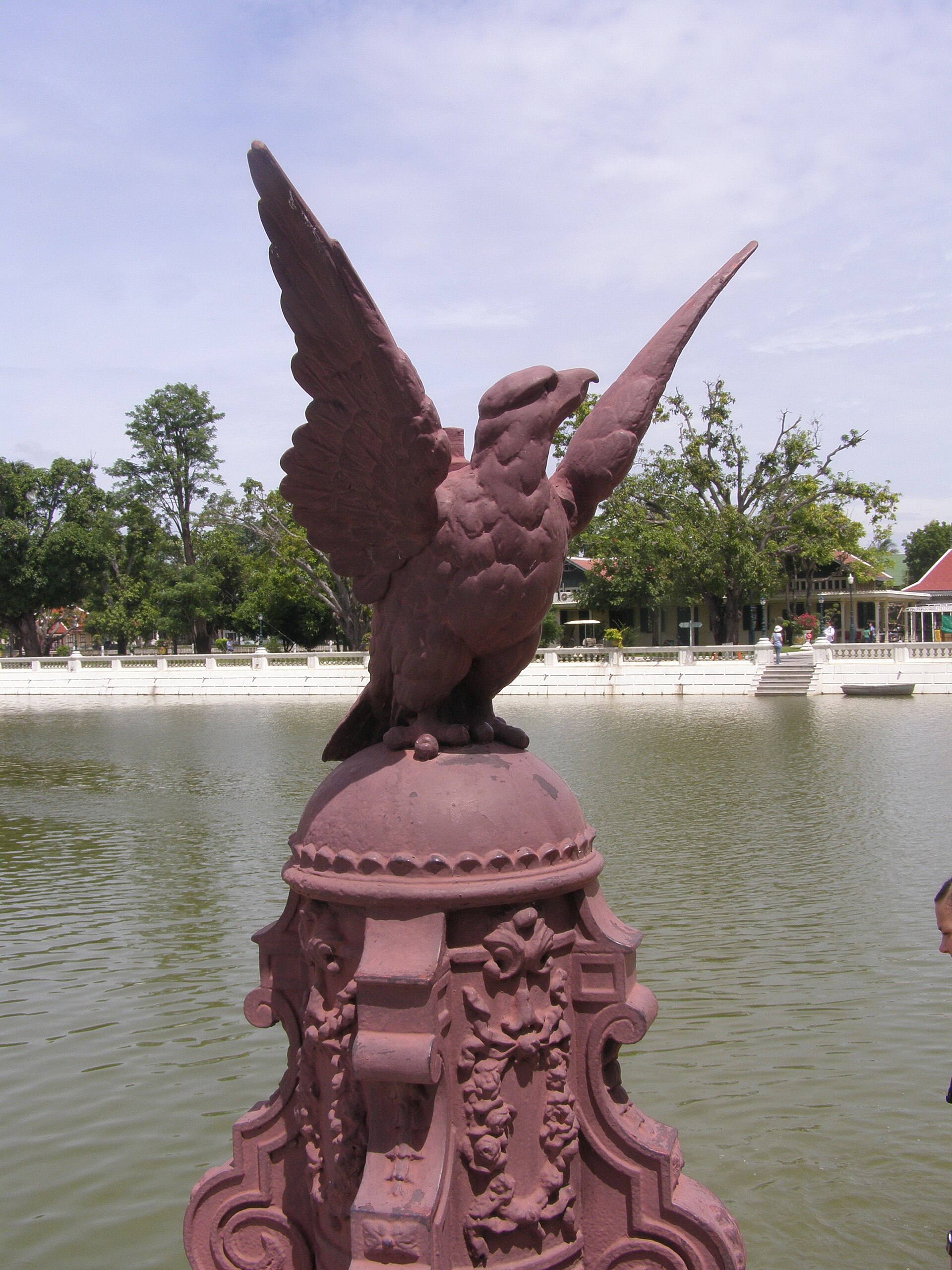
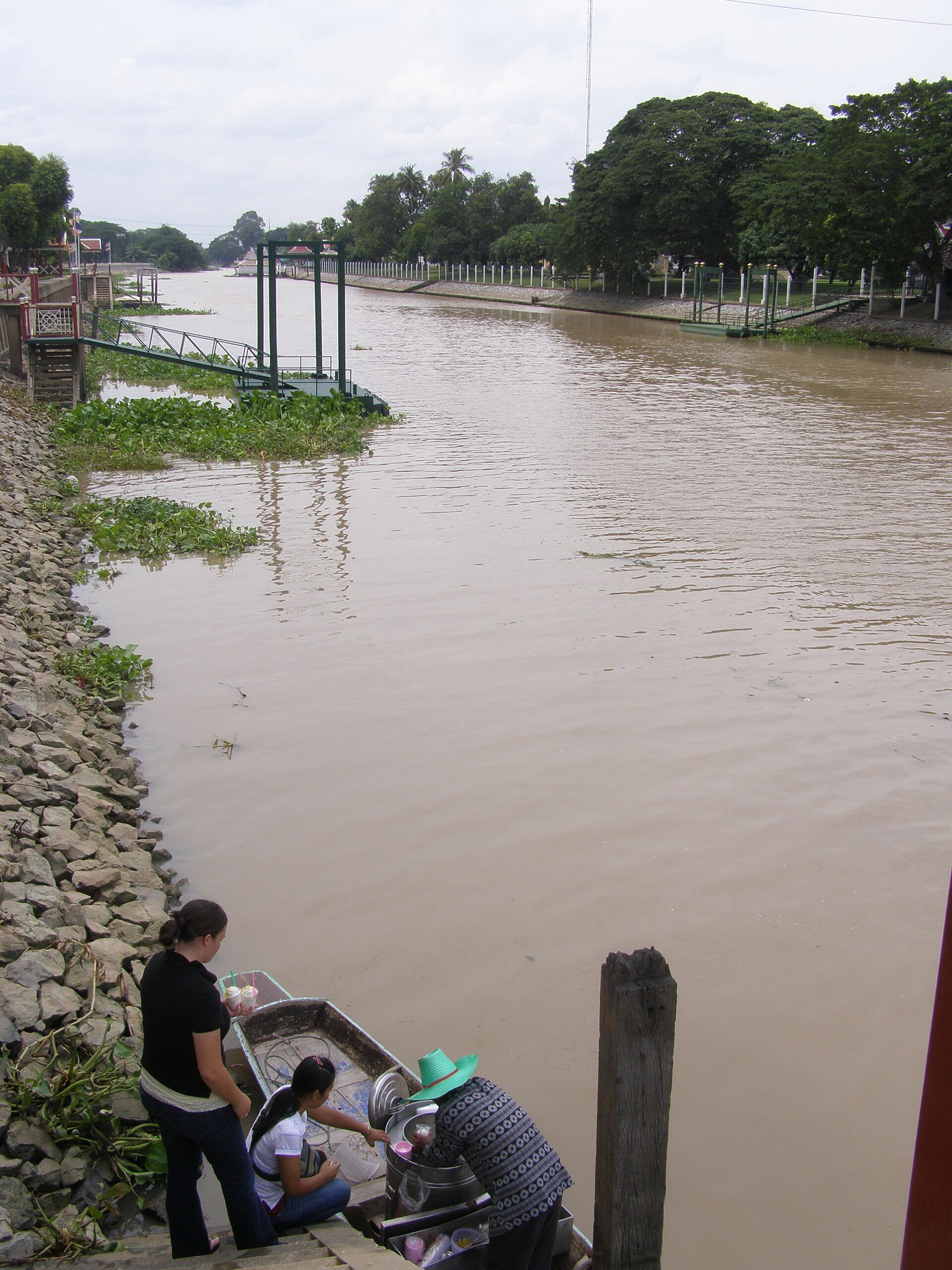
Water is everywhere at Bang Pa-In, in the lakes that mirror the pavilions, the canals that thread the grounds, and the river that borders the palace. This abundance of water cools the air, sustains the greenery, and provides the reflective surfaces that double the beauty of the buildings, making it central to the character of the place.
The plantings combine ornamental flowers, shade trees, and manicured lawns into a landscape designed for strolling and repose. Bridges cross the canals, paths wind among the buildings, and shaded spots invite the visitor to pause, so that the gardens reward a slow and wandering exploration rather than a hurried tour.
Together the lawns, water, topiary, and plantings make Bang Pa-In one of the most beautiful garden landscapes in Thailand. The gardens are not a mere backdrop to the buildings but an essential part of the palace’s art, the element that unifies its eclectic architecture into a single serene and harmonious royal park.
A Memorial of Royal Grief
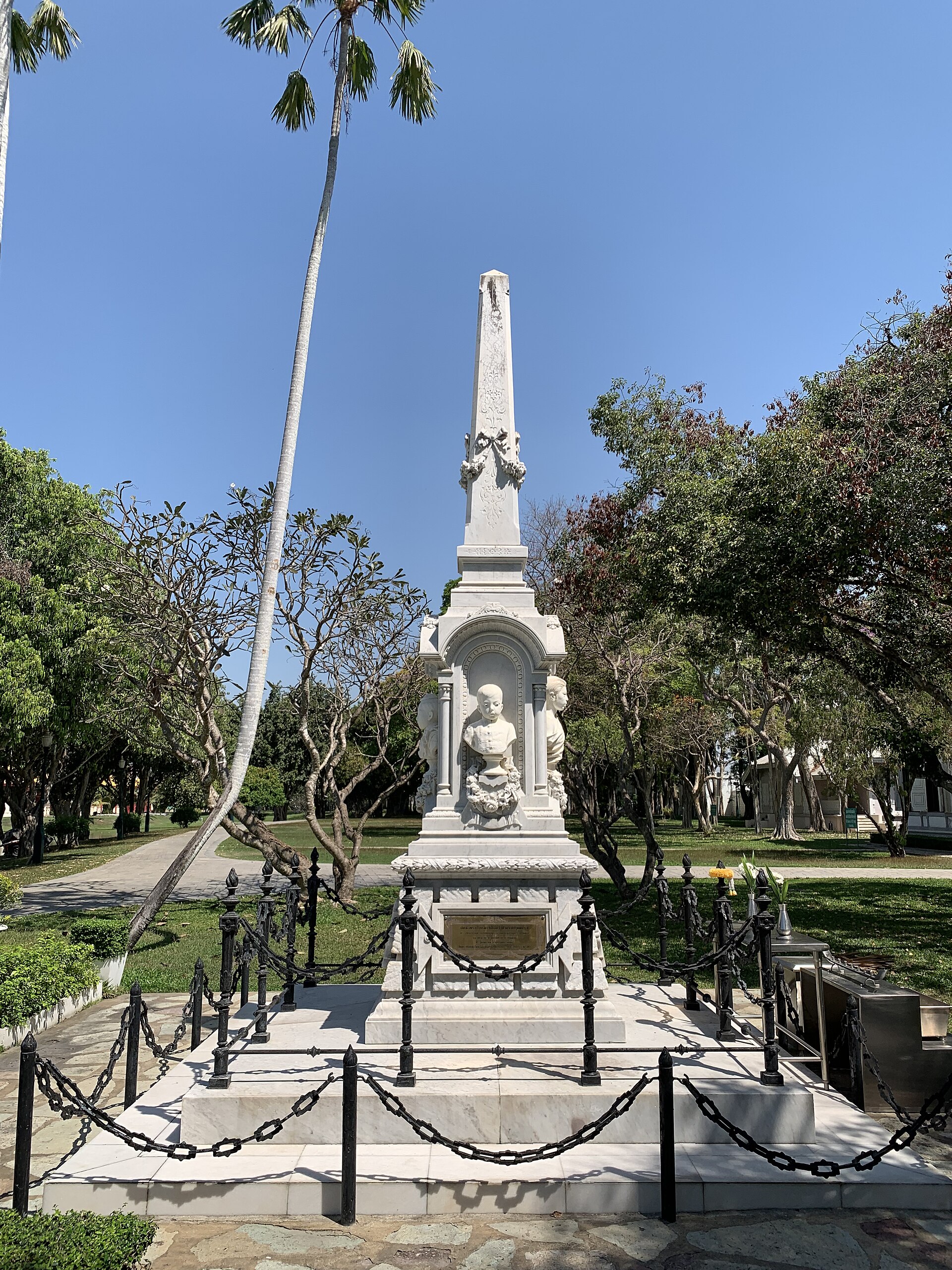
Amid the pleasures of the garden palace stands a monument of deep sadness, a memorial raised by King Chulalongkorn to his beloved queen, Sunandha, who died in a tragic accident nearby. The story of her death and the king’s grief is one of the most poignant tales associated with Bang Pa-In.
Queen Sunandha drowned when the royal boat carrying her to the palace capsized on the river. According to the accounts that have come down, an old law forbidding commoners to touch a royal person on pain of death is said to have prevented onlookers from saving her, a detail that made the tragedy all the more terrible.
The grief-stricken king raised a memorial in the palace grounds to honor his lost queen, inscribed with words of mourning that express his profound sorrow. The monument stands as a moving testament to royal love and loss amid the beauty of the gardens, a note of human tragedy in the pleasure ground.
The tragedy is said to have influenced the king in his broader work of reform, strengthening his resolve to sweep away outdated laws and customs that no longer served his people. In this reading, the personal loss of the monarch became bound up with the modernization of the kingdom that was the great work of his reign.
For the visitor, the memorial adds emotional depth to the lightness of the garden palace. Among the playful pavilions and pretty lakes, it recalls that this was a real royal home touched by real human sorrow, and it honors a queen whose tragic death is remembered as one of the sad legends of the Thai monarchy.
The old law that is said to have doomed the queen, forbidding commoners to touch a royal person, is a chilling reminder of how rigid and sometimes cruel court custom could be, even in a kingdom on the edge of modernization. That the tragedy is said to have spurred the king toward reform gives the sad monument a further meaning, tying private grief to the slow, difficult work of changing a whole society.
A Buddhist Temple in Gothic Dress
Across the river from the main palace stands one of the most surprising buildings associated with Bang Pa-In, a Buddhist temple built entirely in the style of a European Gothic church. The Wat Niwet Thammaprawat, with its pointed arches, spire, and stained glass, looks from the outside exactly like a Christian church, yet within it is a Buddhist temple.
The temple was built under King Chulalongkorn as part of his fascination with European forms, and it represents the boldest expression of that taste at Bang Pa-In. Complete with a tall spire, ribbed vaults, and colored glass windows, it adopts the whole vocabulary of Gothic church architecture for a Buddhist purpose.
Inside, the Gothic forms frame a traditional Buddhist shrine, and the principal Buddha image sits where a Christian altar would stand, beneath windows of European stained glass. The effect is startling and fascinating, a complete fusion of Western form and Eastern faith unlike almost anything else in the Buddhist world.
The temple is reached from the palace by a small cable ferry across the river, itself a charming survival, and its separation on the far bank adds to the sense of discovery when the visitor comes upon this Gothic apparition in the Thai countryside. It stands as the most extreme example of the palace’s architectural eclecticism.
For all its European appearance, the temple remains a working Buddhist monastery, its monks and its worship continuing in the Gothic setting. It is a monument to the openness of King Chulalongkorn’s age, when a Thai king could clothe his own religion in the architecture of another and create something entirely, delightfully new.
A Living Royal Palace
Bang Pa-In remains to this day a property of the Thai crown, an official royal palace that is still used on occasion for royal functions and for the reception of visiting dignitaries. Unlike many palace-museums, it is not a wholly dead monument but a living part of the institution of the monarchy.
Because it remains in royal use, parts of the palace may be closed to visitors at times, and the grounds are maintained with the care befitting an active royal residence. This continuing function gives Bang Pa-In a special status among the historic palaces of Thailand, tying it directly to the reigning dynasty.
The palace has been used to host foreign guests and to stage royal ceremonies, its beautiful gardens and pavilions providing an elegant setting for occasions of state. In this it continues the role for which it was revived, a retreat and a showcase where the monarchy could present itself amid beauty and repose.
The connection to the living monarchy also shapes the atmosphere of a visit, for the palace is treated with the respect due to a royal property, and visitors are asked to dress and behave accordingly. This is not merely a tourist attraction but a place bound up with the dignity of the Thai crown.
That Bang Pa-In endures as a working royal palace, more than a century after its revival, is a mark of the success of Chulalongkorn’s creation. The garden he made for his own pleasure and that of his court still serves the monarchy he strengthened, a living link between the modernizing king and the Thailand of today.
Bang Pa-In Today
Today Bang Pa-In is one of the most popular day trips from Bangkok, easily combined with a visit to the nearby ruins of Ayutthaya, and it welcomes visitors from across Thailand and around the world to its gardens and pavilions. Its beauty, variety, and serenity make it a favorite of travelers to the kingdom.
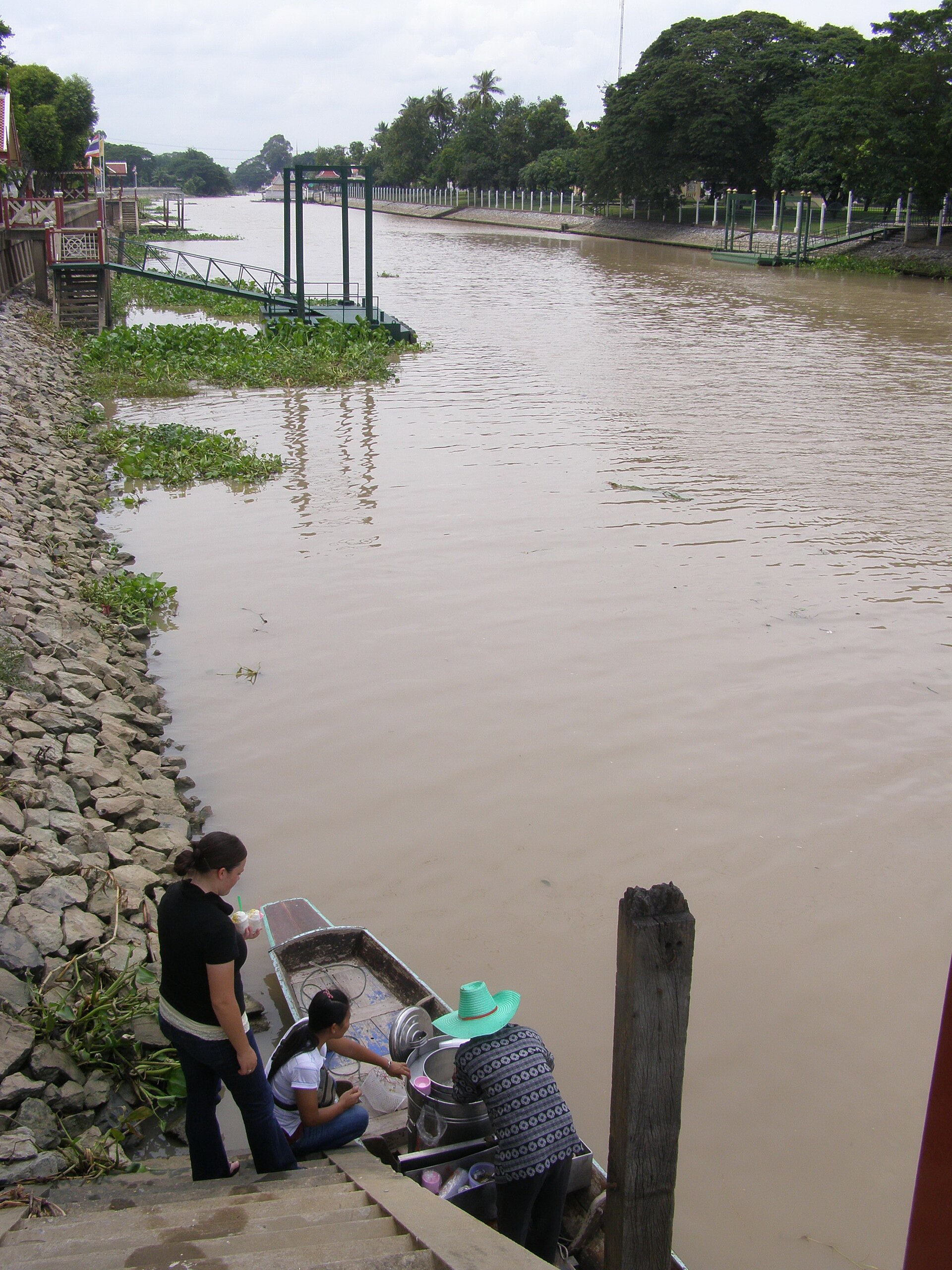
View the exact location on Google Maps
The palace offers a gentle and rewarding experience, its flat, open grounds easily explored on foot or by the small electric carts available to visitors, its buildings and gardens providing endless delight to the eye. The floating pavilion, the Chinese mansion, the observatory tower, and the Gothic temple are among its most admired sights.
Set close to the World Heritage ruins of Ayutthaya, Bang Pa-In forms part of a rich landscape of Thai royal history, offering the living beauty of a garden palace alongside the melancholy grandeur of the ruined old capital. Together they tell the long story of the Thai monarchy from Ayutthaya to the present.
For the modern visitor the palace is above all a place of pleasure and peace, a green and watery retreat where the architecture of many nations stands in harmony amid the gardens. It preserves the spirit in which it was created, a royal pleasure ground made for delight rather than for power or war.
To stroll the lawns of Bang Pa-In, from the golden pavilion floating on its pond to the Chinese hall and the Gothic temple across the river, is to enter the cosmopolitan imagination of a great Thai king. His garden palace endures as one of the loveliest royal landscapes in Southeast Asia, a serene and joyful monument to an age of openness on the Chao Phraya River.
Come, if you can, on a weekday morning when the grounds are quiet, and give yourself a couple of unhurried hours to wander. Bang Pa-In is not a place to rush; its pleasures are those of the stroll, the pause by the water, the turn of a path that reveals another unexpected building. Taken slowly, in the cool of the early day, it is one of the most purely delightful royal sites in all of Southeast Asia.
Palaces Nearby
Bang Pa-In opens a new group of great royal residences of Southeast Asia that we will gather here. More palaces of the region, from the courts of the Mekong and beyond, will join it soon, to trace the varied splendor of the kingdoms of this part of the world.
You May Like
The Alcazar of Seville: A Christian Palace of Moorish Splendor


2 thoughts on “Bang Pa-In: The Garden Palace of the Thai Kings”