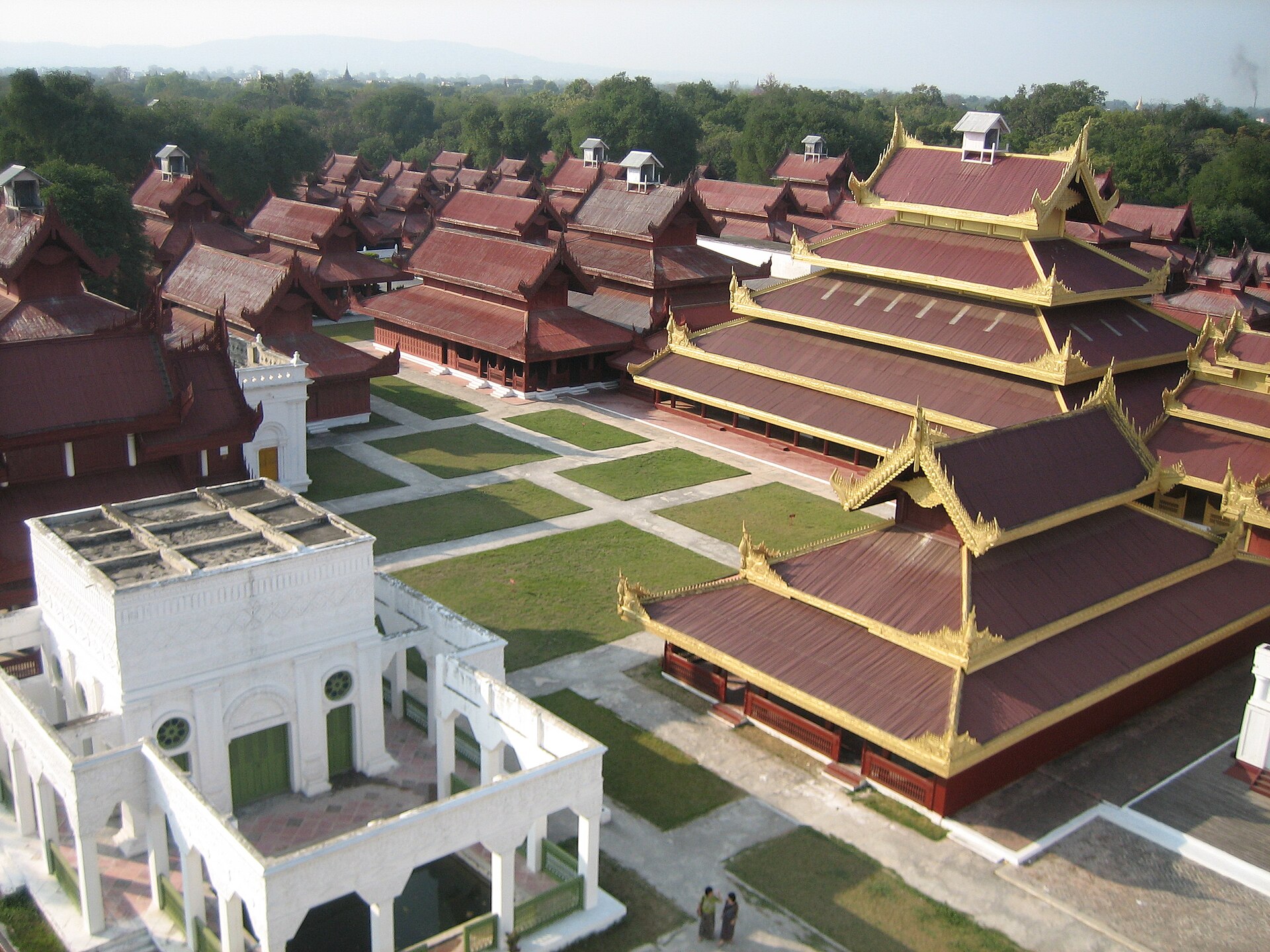
In the center of the Burmese city of Mandalay, ringed by a vast square moat and miles of towering brick walls, lies the last royal palace of the kings of Burma. Approach across one of the bridges over the wide water, pass beneath the crenellated ramparts, and you enter an enormous walled enclosure at whose heart stands a compound of teak buildings with tiered, gilded roofs and a soaring seven-storey spire. This is Mandalay Palace, the golden city of the Konbaung kings, the seat from which the Burmese monarchy ruled until it was swept away by British conquest.
Mandalay Palace is a monument of both magnificence and loss. Built in the middle of the nineteenth century as the centerpiece of a new royal capital, it was the home of the last two kings of Burma and the stage for the final act of an ancient monarchy. Within a few decades of its completion the kingdom fell to the British, the last king was carried into exile, and the palace passed from royal residence to colonial garrison and, in time, to ruin.
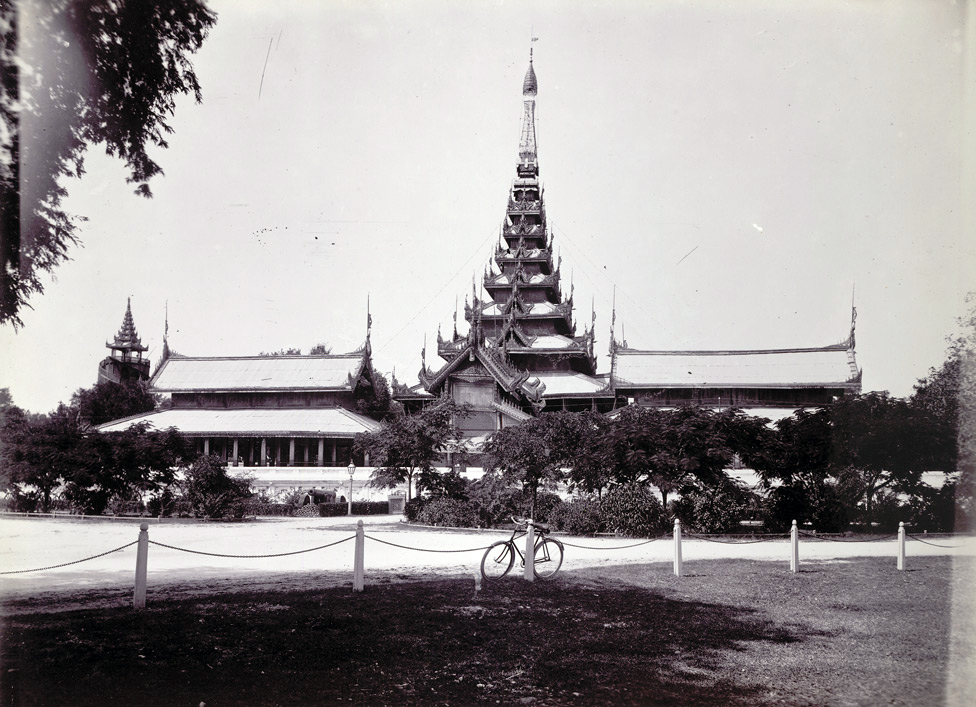
The palace that visitors see today is largely a reconstruction, for the original teak buildings were destroyed by fire in the Second World War, leaving only the walls, the moat, and a few structures of the great citadel. Yet the reconstruction follows the old plans, and within the mighty ramparts the golden-roofed halls and the tall central spire once more rise as they did in the days of the kings, evoking the vanished splendor of royal Burma.
This is the third palace of a group of great Southeast Asian royal residences in this series, joining the garden palace of Bang Pa-In in Thailand and the golden hall of Luang Prabang in Laos, and it completes a portrait of the monarchies of the region in their final age. To enter the walls of Mandalay is to step into the world of the last kings of Burma, a world of gilded halls and ancient ceremony that came to a sudden and total end.
In This Article
- A Golden City Within Walls
- The Konbaung Dynasty
- King Mindon and the Founding of Mandalay
- The Walls, the Moat, and the Gates
- The Palace Compound
- The Lion Throne and the Great Audience Hall
- The Spire, the Watchtower, and the Relic Hall
- The Glass Palace and the Royal Apartments
- Life at the Burmese Court
- King Thibaw and the Fall of the Kingdom
- Fort Dufferin and the Colonial Years
- Destruction in the Second World War
- Reconstruction and the Palace Today
A Golden City Within Walls
Mandalay Palace is not a single building but a whole royal city, a compound of halls, pavilions, and residences set within an immense walled and moated enclosure. The citadel that contains it is a vast square, more than a mile and a half on each side, ringed by a wide moat and high brick walls, so that the palace stands at the heart of a fortress-city of its own.
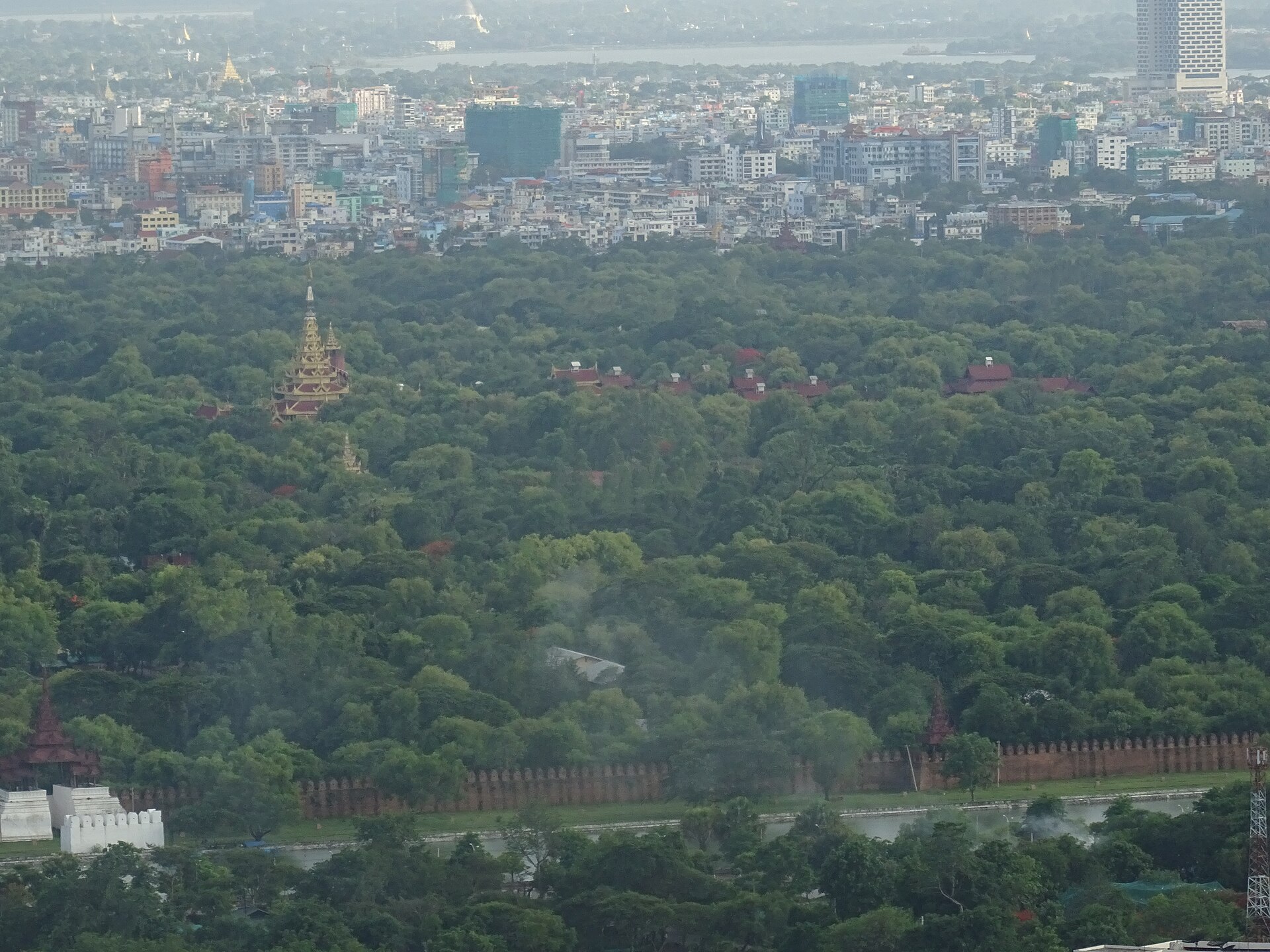
Within these walls, at the center of the enclosure, lies the palace compound proper, a dense grouping of buildings that housed the king, his court, and the machinery of the monarchy. Beyond it the vast enclosure once held gardens, quarters, and open ground, the whole forming a royal precinct sealed off from the ordinary city outside.
The buildings of the palace were constructed of teak, the great timber of Burma, their walls and pillars often gilded and their roofs rising in the tiered, spired forms characteristic of Burmese royal and religious architecture. The effect was of a golden city, glittering with gilt and crowned with a forest of ornate roofs.
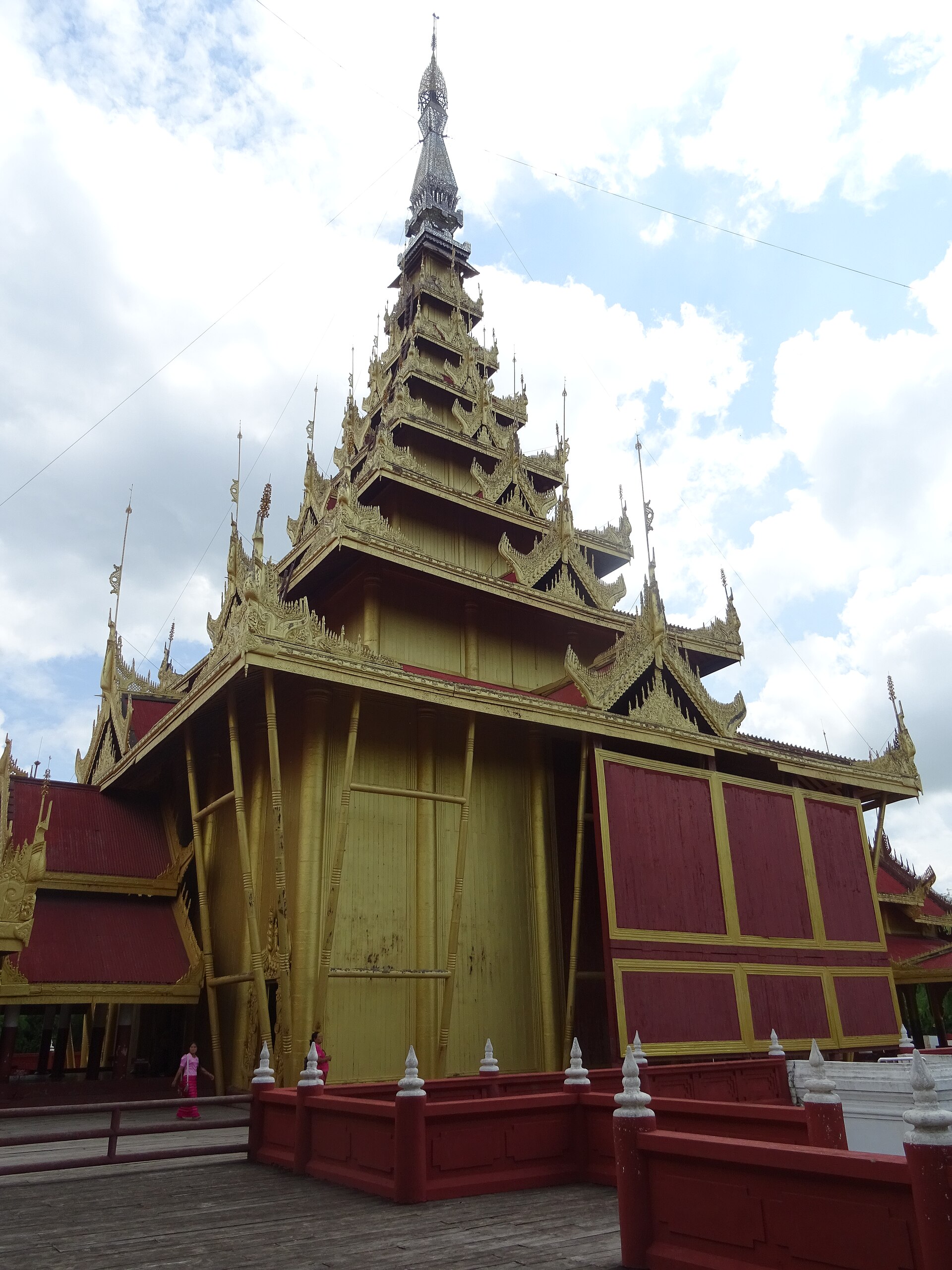
At the center of the compound rose the tallest and most sacred structure, a seven-tiered spire that soared above the throne hall and marked the very heart of the kingdom. Beneath it stood the great Lion Throne, the seat of the king, so that the spire crowned the point where royal and cosmic authority were held to meet.
The whole design expressed a conception of the palace as the center of the world, the axis around which the kingdom and the cosmos turned. Its scale, its walls, and its golden spire all proclaimed the majesty of the Burmese crown, making Mandalay Palace one of the grandest royal complexes of nineteenth-century Asia.
Set beside the other Southeast Asian palaces in this series, Mandalay makes a striking contrast in fate. Bang Pa-In was built by a monarchy that survived and still owns it; Luang Prabang lost its kings but keeps its original golden hall intact; Mandalay lost both its kingdom and its buildings, the one to conquest and the other to war, so that what stands today is a reconstruction within original walls. The three palaces together trace the whole spectrum of what befell the monarchies of the region.
The Konbaung Dynasty
Mandalay Palace was the seat of the Konbaung dynasty, the last royal house of Burma, which ruled the kingdom from the middle of the eighteenth century until the British conquest in the nineteenth. Under the Konbaung kings, Burma was one of the major powers of mainland Southeast Asia, an expansionist and martial state.

At its height the Konbaung kingdom was a formidable power, waging war against its neighbors and building an empire that stretched across a wide territory. The dynasty prided itself on its military prowess and its role as the protector of Buddhism, and its court maintained an elaborate ceremony expressing the sacred majesty of the king.
But the nineteenth century brought the Konbaung kings into collision with the expanding power of the British empire in India. In a series of wars, the British steadily reduced the Burmese kingdom, annexing its coastal provinces and pressing ever closer to the royal heartland in the interior along the Irrawaddy River.
It was in the shadow of this British pressure that the palace at Mandalay was built, as the kings sought to maintain the splendor and the independence of their throne even as the empire that threatened them grew stronger. The palace was thus, like several others in this series, a magnificent assertion of sovereignty raised in the last age of a doomed kingdom.
The Konbaung dynasty and its palace stand as the final expression of the independent Burmese monarchy, an institution of great antiquity and prestige that had ruled the land for centuries. The story of the palace is inseparable from the story of that dynasty’s last kings and the catastrophe that overtook them.
The wars between the Konbaung kingdom and British India, remembered as the Anglo-Burmese wars, were among the most consequential conflicts in the modern history of Southeast Asia. Fought over decades and ending in the total annexation of Burma, they extinguished one of the region’s great independent monarchies and folded it into the British empire. The palace at Mandalay was built in the interval between the second and third of these wars, in the shadow of a conflict that all could see was coming.
King Mindon and the Founding of Mandalay
The palace and the city of Mandalay were the creation of King Mindon, one of the last and most capable kings of Burma, who founded the new capital in the 1850s. A thoughtful and reforming monarch, Mindon moved his court to a new site and built there a great royal city, of which the palace was the centerpiece.

The founding of Mandalay was bound up with religious prophecy and royal tradition, for the new capital was laid out according to sacred principles, and its establishment was seen as fulfilling a prophecy connected with the Buddha. The city and its palace were designed as a cosmic and religious center as well as a seat of government.
Mindon was a patron of Buddhism and of learning, and under his rule Mandalay became a great center of the faith, adorned with monasteries and pagodas and famous for a grand council of the Buddhist religion that he convened. The palace stood at the heart of a city conceived as the pious capital of a Buddhist realm.
As a ruler, Mindon sought to preserve his kingdom’s independence through reform and diplomacy, modernizing aspects of his state and maintaining relations with foreign powers even as British pressure mounted. His reign was a period of relative stability and cultural flourishing in the last decades of the Burmese monarchy.
In founding Mandalay and building its palace, Mindon gave the Burmese monarchy its final and most splendid seat. The golden city he raised on the plain by the Irrawaddy became the enduring symbol of royal Burma, and though the kingdom would not long survive him, the capital he created remains his great monument.
Mindon is remembered as a wise and pious king who did his best to steer his kingdom through impossible times, and there is a poignancy in his achievement. He built a magnificent capital and convened a great council of his faith, acts of confidence and devotion, even as the empire that would destroy his dynasty pressed ever closer. That he died before the final catastrophe, leaving the fall of the kingdom to his successor, only deepens the sense of his reign as a last golden moment.
The Walls, the Moat, and the Gates
The most enduring feature of Mandalay Palace is its fortifications, the vast square of walls and moat that survived even the destruction of the palace within. The citadel forms an immense enclosure, each side stretching for well over a mile, ringed by a wide moat and high walls of brick crowned with battlements.
The moat, broad and deep, encircles the entire citadel, a great square of water that both defended the palace and set off its walls in beautiful reflection. Crossed by bridges at the gates, the moat remains one of the most striking sights of Mandalay, its calm surface mirroring the ramparts and the sky.
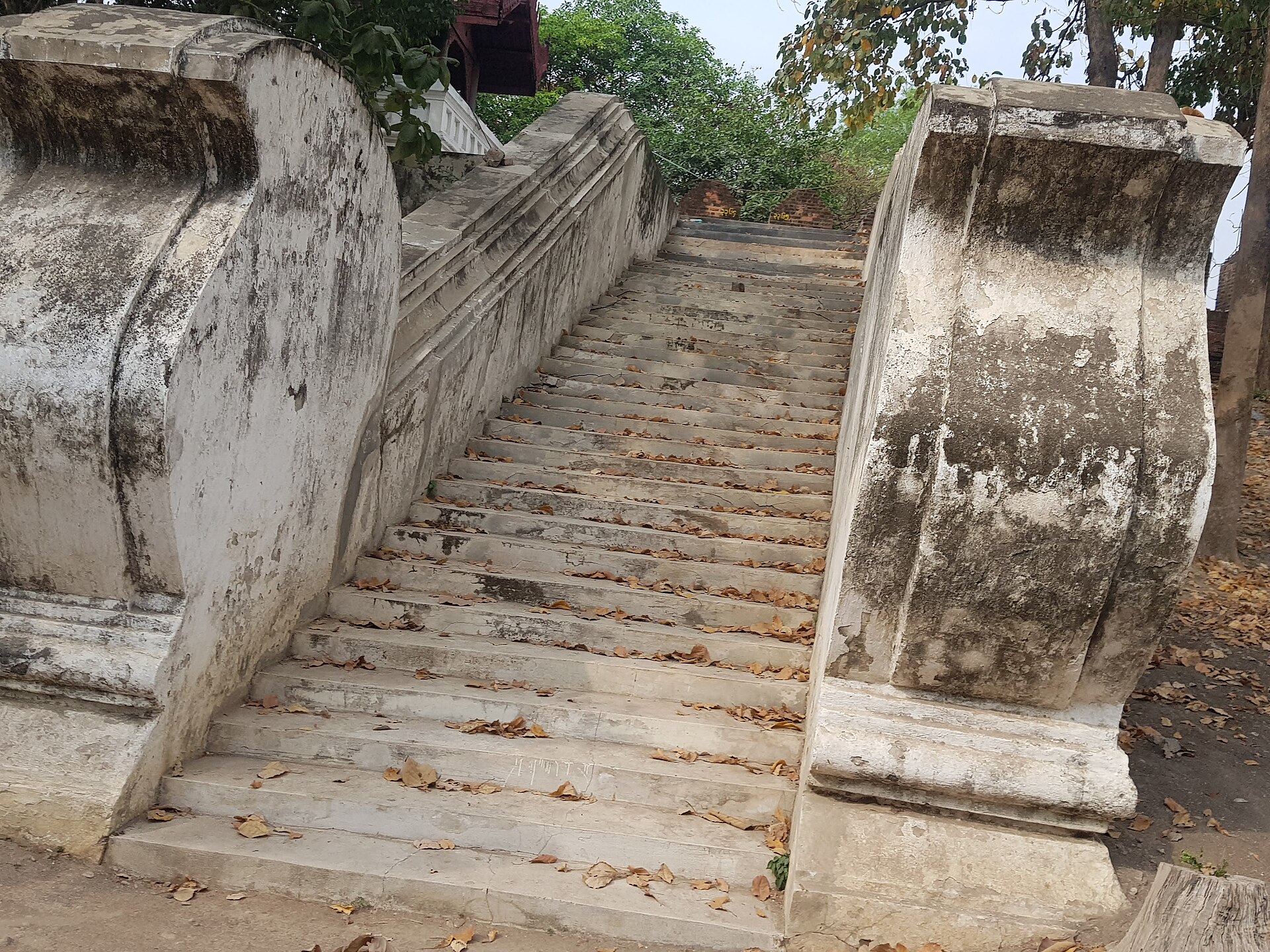
The walls are pierced by gates on each side, each surmounted by an ornate tiered pavilion whose golden, spired roofs rise above the ramparts. These gate-towers, with their characteristic Burmese roofs, punctuate the long lines of the walls and mark the ceremonial points of entry into the royal city.
The scale of the fortifications is imposing, and they were built both for defense and for the display of royal power, enclosing the palace in a mighty square that proclaimed the majesty and security of the throne. Even today, approaching across the moat and beneath the walls, the visitor feels the grandeur of the royal citadel.
Because the walls and moat survived the destruction that consumed the palace buildings, they remain the most authentic part of Mandalay Palace, the original nineteenth-century work of King Mindon’s builders. They frame the reconstructed palace within and preserve, in their vast square, the true footprint of the royal city.
The sheer scale of the citadel is hard to grasp until you try to walk or cycle around it, a journey of some miles along the moat. The vast square of water and wall, laid out with geometric precision on the flat plain, was itself a statement of royal order imposed upon the land, and it remains the most powerful and authentic expression of King Mindon’s vision, the true footprint of the golden city preserved when all else was lost.
The Palace Compound
At the center of the great enclosure stands the palace compound proper, the dense grouping of buildings that formed the royal residence and the seat of government. Arranged according to a strict plan, the compound was divided into distinct zones for ceremony, administration, and the private life of the royal family.
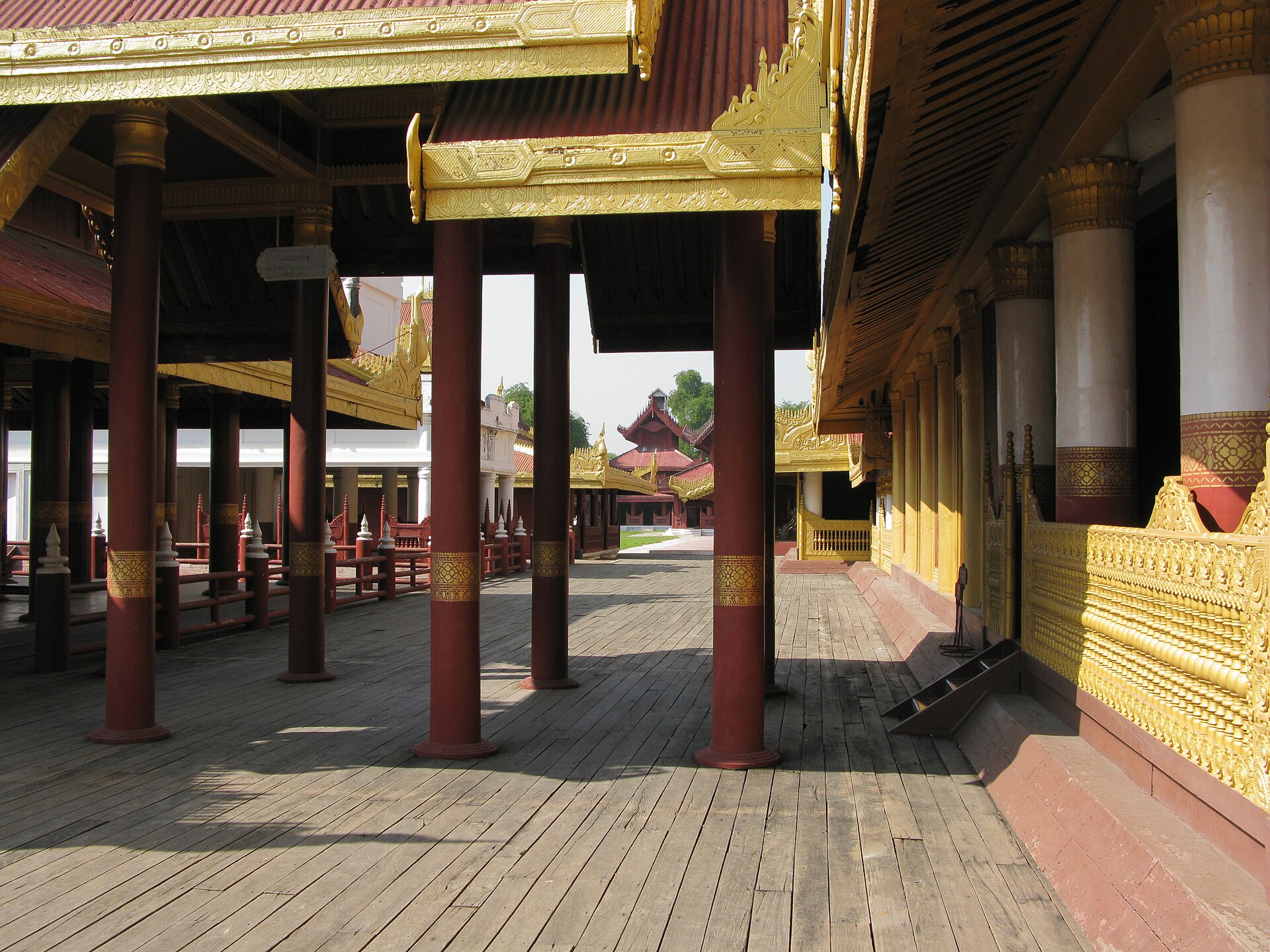
The buildings were constructed of teak, raised on platforms and connected by covered passages, their walls and pillars gilded and their roofs rising in the tiered forms of Burmese architecture. The compound was a golden labyrinth of halls and pavilions, each with its own function in the elaborate life of the court.
The plan of the compound reflected the hierarchy and the cosmology of the Burmese monarchy. The eastern part, associated with audience and ceremony, contained the great throne halls, while the western part held the more private royal apartments, and the whole was oriented and arranged according to sacred principles.
Covered walkways and successive enclosures controlled movement through the compound, so that access to the king became more restricted as one approached the innermost halls. This graded approach, common to the palaces of Asia, expressed the sanctity of the royal person and the hierarchy of those permitted to draw near.
The compound was thus a microcosm of the kingdom, its layout embodying the order of the state and the cosmos with the king at its center. To move through it was to move through the ranked world of the Burmese court, from the public halls of audience to the guarded privacy of the royal household.
The Lion Throne and the Great Audience Hall
At the ceremonial heart of the palace stood the Great Audience Hall, containing the most important of the royal thrones, the Lion Throne, from which the king presided over the grandest ceremonies of state. Above this hall rose the tall central spire, marking the throne as the very center of the kingdom.
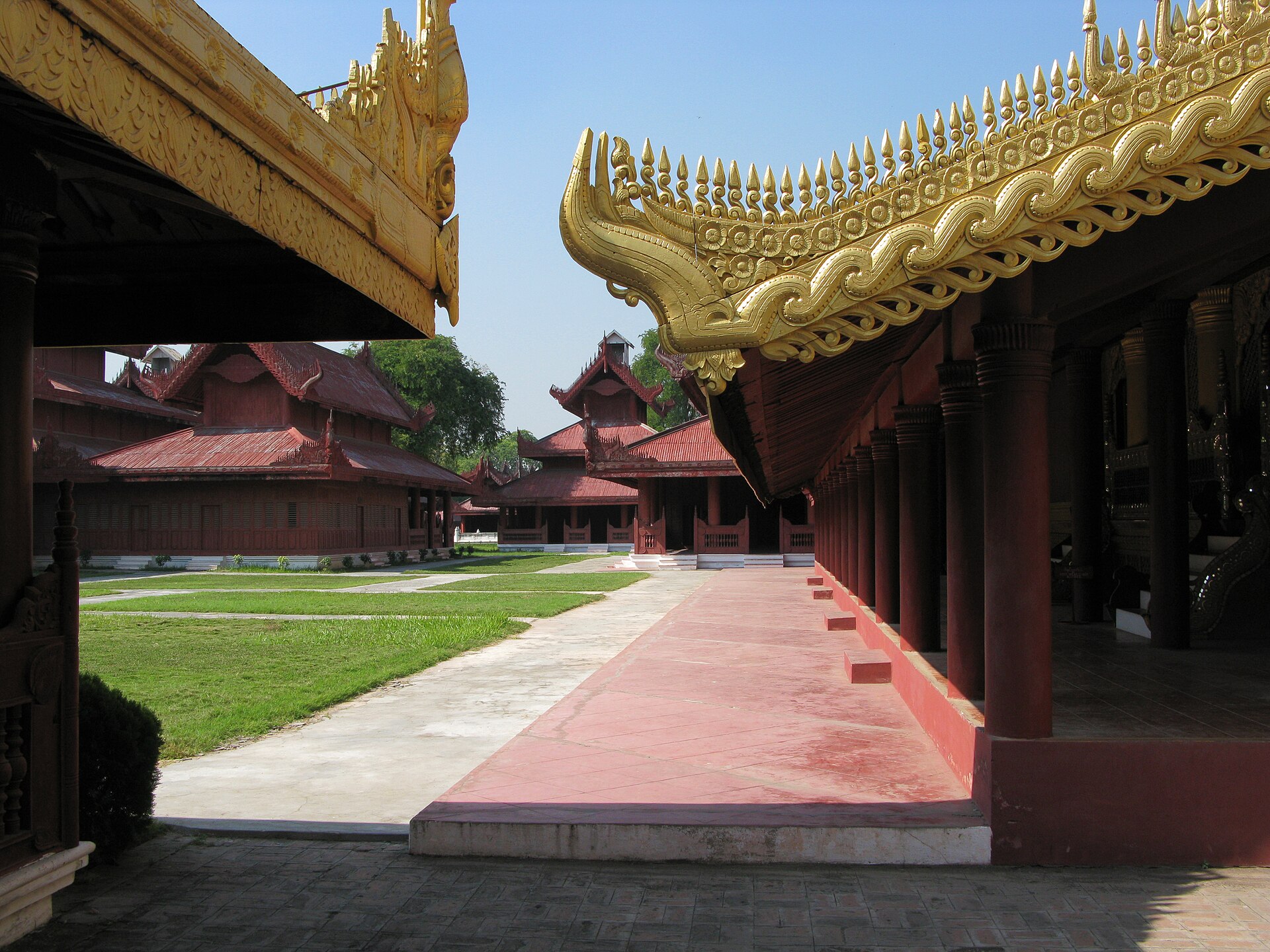
The Lion Throne was the principal of several great thrones in the palace, each associated with a different hall and a different function, and each a masterpiece of gilded and carved woodwork. The thrones were among the most sacred objects of the monarchy, the seats from which the king embodied his sacred authority.
The Great Audience Hall, with its soaring gilded columns and its tiered spire above, was designed to overwhelm those admitted to the royal presence. Here the king received his ministers and officials, foreign envoys, and tributary princes, seated upon the Lion Throne in a setting of concentrated splendor.
The ceremonies performed in this hall followed an elaborate protocol that expressed the cosmic role of the king. Officials and visitors approached in ranked order and prostrated themselves before the throne, in rituals designed to place the monarch at the sacred center of the state and to display the majesty of the crown.
The Lion Throne and its hall, crowned by the great spire, were the symbolic heart of Mandalay Palace and of the Burmese kingdom. It was here that the majesty of the monarchy was most fully expressed, and the reconstruction of this hall and its spire has restored to the palace the focus of its ceremonial and cosmic design.
The Spire, the Watchtower, and the Relic Hall
Among the structures of the palace compound are several that give the royal city its distinctive skyline and mark its sacred and practical functions. Chief among them is the great central spire above the throne hall, but the compound also held a tall watchtower and a hall preserving sacred relics of the monarchy.
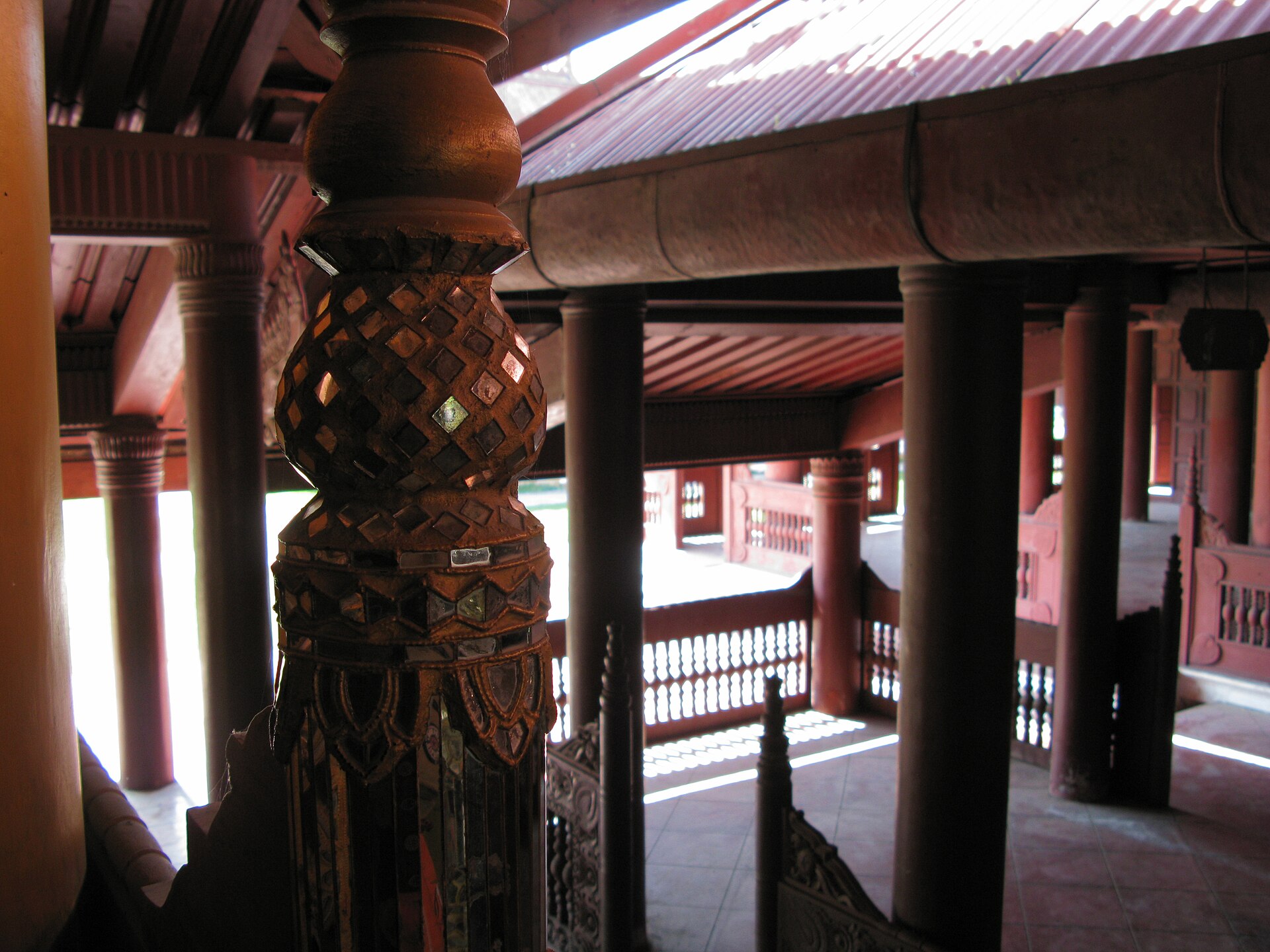
The central spire, rising in seven diminishing tiers above the Lion Throne, was the tallest and most sacred structure of the palace, marking the throne as the axis of the kingdom. Its soaring, gilded form, crowned with a finial, was visible above the walls and proclaimed the presence of the king at the center of the royal city.
A tall watchtower stood within the compound, from which the guards could survey the palace and the surrounding city, a spiralling structure that combined the practical function of a lookout with the ornament of Burmese architecture. From its heights the whole royal city and the plain beyond could be observed.
The palace also contained halls devoted to the preservation of sacred objects and the regalia of the monarchy, expressing the religious foundations of the Burmese crown. In a kingdom where the king was the protector of Buddhism, the sacred and the royal were inseparable, and the palace served religious as well as political functions.
Together these structures, the spire, the watchtower, and the sacred halls, completed the palace as a center of royal, cosmic, and religious authority. Their reconstruction has restored to the citadel the vertical accents that once marked the golden city, allowing the visitor to grasp again the soaring silhouette of the royal capital.
The Glass Palace and the Royal Apartments
Beyond the great audience halls lay the more private quarters of the king and his household, among them the celebrated Glass Palace, a hall whose interior was adorned with glittering glass mosaic in the manner beloved of the Burmese court. These apartments were the domestic and intimate heart of the royal residence.
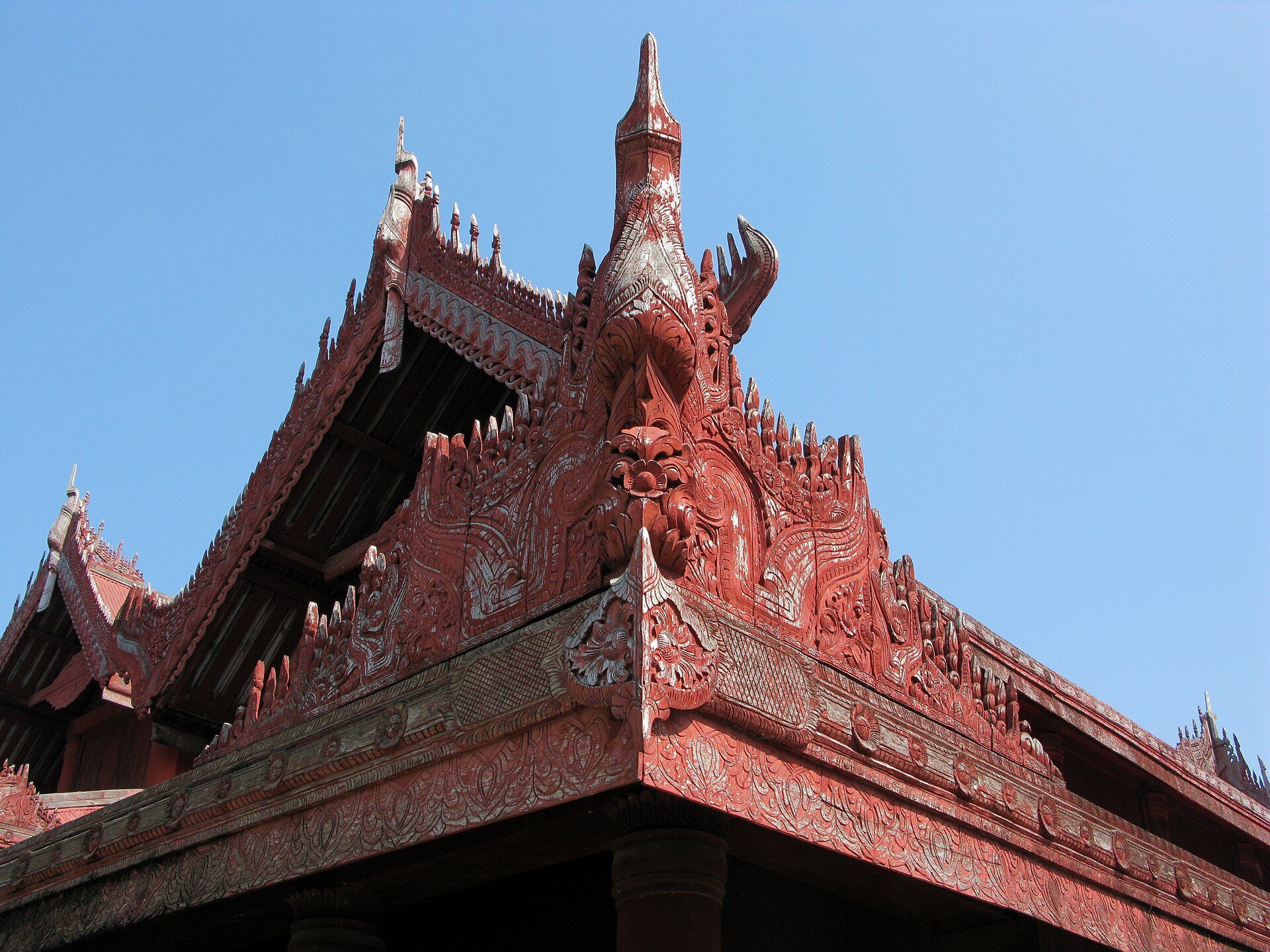
The Glass Palace took its name from the mirrored and glass-mosaic decoration that covered its interior, catching the light and filling the hall with brilliance. Such decoration, related to the glass mosaics found in Burmese temples and in the palaces of neighboring lands, was among the glories of the royal apartments.
These private quarters housed the king, the chief queen, and the royal family, together with the many attendants of the inner palace. Life here followed the elaborate customs of the Burmese court, ordered by rank and ceremony, hidden from the outer world within the innermost enclosures of the compound.
The inner palace was a world of women and attendants as well as of the royal family, a complex household governed by strict protocol and centered on the person of the king. Its life, largely sealed off from the public halls, was the private counterpart to the ceremonial splendor of the audience chambers.
The Glass Palace and the royal apartments completed the palace as both a stage for the majesty of the monarchy and a home for the royal family. In their glittering decoration and their guarded privacy, they preserved the intimate world of the last kings of Burma, the domestic heart of the golden city.
Life at the Burmese Court
The court of Mandalay was one of the most elaborate and ceremonious in Asia, governed by a strict etiquette that regulated every aspect of life in the royal presence. The king was regarded as a being of exalted, almost sacred status, and the whole life of the palace revolved around the expression of his majesty.
Rank and hierarchy ordered the court with great precision, expressed in dress, in the right to approach the king, and in the elaborate titles and insignia of the nobility and officials. The ministers and courtiers who served the crown moved within a rigid framework of protocol that governed their every gesture.
Ceremony filled the calendar of the court, tied to the seasons, the Buddhist religion, and the rituals of the monarchy. Great audiences, religious observances, and royal festivals were staged with elaborate splendor, and the palace provided the setting for a continuous round of ceremonial that expressed the sacred role of the king.
The court was also a center of Burmese culture, patronizing the arts, letters, and the Buddhist faith. Music, dance, and craftsmanship flourished under royal patronage, and the palace was the apex of a courtly civilization that had developed over centuries and reached its final flowering under the Konbaung kings.
This intense ceremonial life gave the palace its character as the sacred center of the kingdom. To be admitted to the court was to enter a world of overwhelming formality and splendor, in which the majesty of the Burmese crown was expressed through every detail of dress, gesture, and ritual, a world swept away by the conquest that ended the monarchy.
The elaborate court protocol of Mandalay struck the Europeans who encountered it as both magnificent and, to their eyes, impossibly rigid, and their accounts, however biased, preserve vivid pictures of its ceremony. The requirement that all approach the king barefoot and prostrate, the intricate gradations of rank, the sacred aura surrounding the royal person, all belonged to a conception of kingship of great antiquity, and they made the collision with the matter-of-fact power of the British empire all the more jarring.
King Thibaw and the Fall of the Kingdom
The last king to reign at Mandalay was Thibaw, who came to the throne after King Mindon and ruled through the final years of the Burmese kingdom. His reign was troubled from the start, and it ended in catastrophe with the British conquest and the abolition of the monarchy.
Thibaw’s reign was marked by court intrigue and by the mounting pressure of the British empire, which had already annexed much of Burma and sought pretexts to complete its conquest. Relations between the court at Mandalay and the British deteriorated, and in the mid-1880s the empire launched its final war against the kingdom.
The war was short and decisive. British forces advanced up the Irrawaddy, and Mandalay fell with little resistance, the palace and the kingdom passing into British hands. King Thibaw and his queen were taken prisoner in their own palace, their reign brought to an abrupt and humiliating end.
The captured king and queen were carried into exile in India, never to return, and the Burmese monarchy that had endured for centuries was abolished. The removal of the royal family from their golden palace marked the end of Burmese independence, and the country was absorbed entirely into British India.
The fall of Thibaw and the end of the kingdom give the palace its deepest note of tragedy. The golden city built to proclaim the majesty of the Burmese crown became, within a generation, the scene of that crown’s extinction, and the exile of its last king remains one of the most poignant episodes in the history of Burma.
The exile of Thibaw and his queen has become one of the enduring stories of the end of royal Burma, a tale of a proud dynasty carried off to spend its last years far from home in colonial India. The image of the royal couple removed from their own golden palace, never to see it again, captures the completeness of the kingdom’s fall, and it has fixed the last king in Burmese memory as a symbol of lost independence.
Fort Dufferin and the Colonial Years
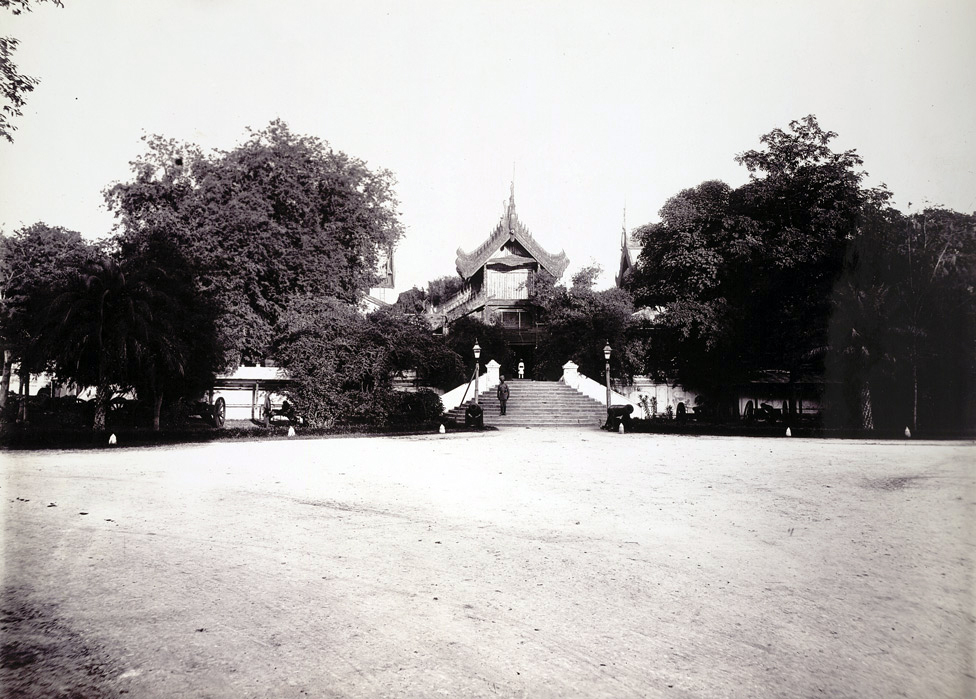
After the conquest the British took over the palace and the citadel, renaming the walled enclosure and turning it into a military and administrative center of their new colonial possession. The royal city became a garrison, its golden halls put to the uses of the empire that had destroyed the kingdom.

The palace buildings were used for various colonial purposes, and the great enclosure became a fort and cantonment housing British and Indian troops. The transformation of the sacred royal city into a colonial garrison was a profound humiliation for the Burmese, a visible sign of the loss of their independence.
Throughout the colonial period the palace stood as a monument to the vanished monarchy, its teak halls preserved but stripped of their royal function, surrounded by the apparatus of foreign rule. For the Burmese it remained a powerful symbol of the kingdom that had been lost and of the hope of its eventual recovery.
The presence of the colonial garrison within the royal walls would have fateful consequences, for it made the citadel a military target in the great war that lay ahead. The use of the palace as a fort ensured that, when war came to Burma, the golden city would be caught in the fighting.
The colonial years thus saw the palace endure as a captive monument, a royal city held by a foreign power, awaiting the catastrophe that would consume its ancient buildings. The transformation of Mandalay from royal seat to colonial fort was the second act in the long tragedy of the palace, between the fall of the kingdom and the destruction of the buildings themselves.
Destruction in the Second World War
The catastrophe came during the Second World War, when Burma became a battleground between Japanese and Allied forces. The citadel, used as a military base, became the scene of heavy fighting, and in the course of the battle the historic teak palace buildings were destroyed by fire.
The conflagration consumed almost all of the original palace, the teak halls, the gilded pavilions, and the great spire burning to the ground. Centuries of royal craftsmanship, and the finest surviving expression of Burmese palace architecture, were lost in the fighting, leaving only the walls, the moat, and a few structures.
The destruction of the palace was one of the great cultural losses of the war in Asia, erasing the physical heart of the Burmese monarchy. What generations of kings had built and the British had preserved as a captive monument was destroyed in a matter of days amid the violence of the global conflict.
After the war the citadel stood largely empty, its great walls enclosing the ruins and open ground where the golden city had been. The loss of the original buildings meant that the palace of the Konbaung kings survived only in photographs, plans, and memory, its authentic fabric almost wholly gone.
The destruction gives the story of Mandalay Palace its final tragic turn. The monarchy had fallen to conquest, the royal city had been made a garrison, and now the buildings themselves were consumed by war, so that the palace that visitors see today is a reconstruction raised upon the site of a great and total loss.
The loss of the teak palace in the fighting of 1945 is worth mourning as one of the great architectural tragedies of the war in Asia, comparable to the destruction visited on historic cities across the world in those years. The buildings that burned were irreplaceable, the accumulated craftsmanship of a royal civilization, and no reconstruction, however faithful to the plans, can recover the artistry that was lost in those days of fire within the ancient walls.
Reconstruction and the Palace Today
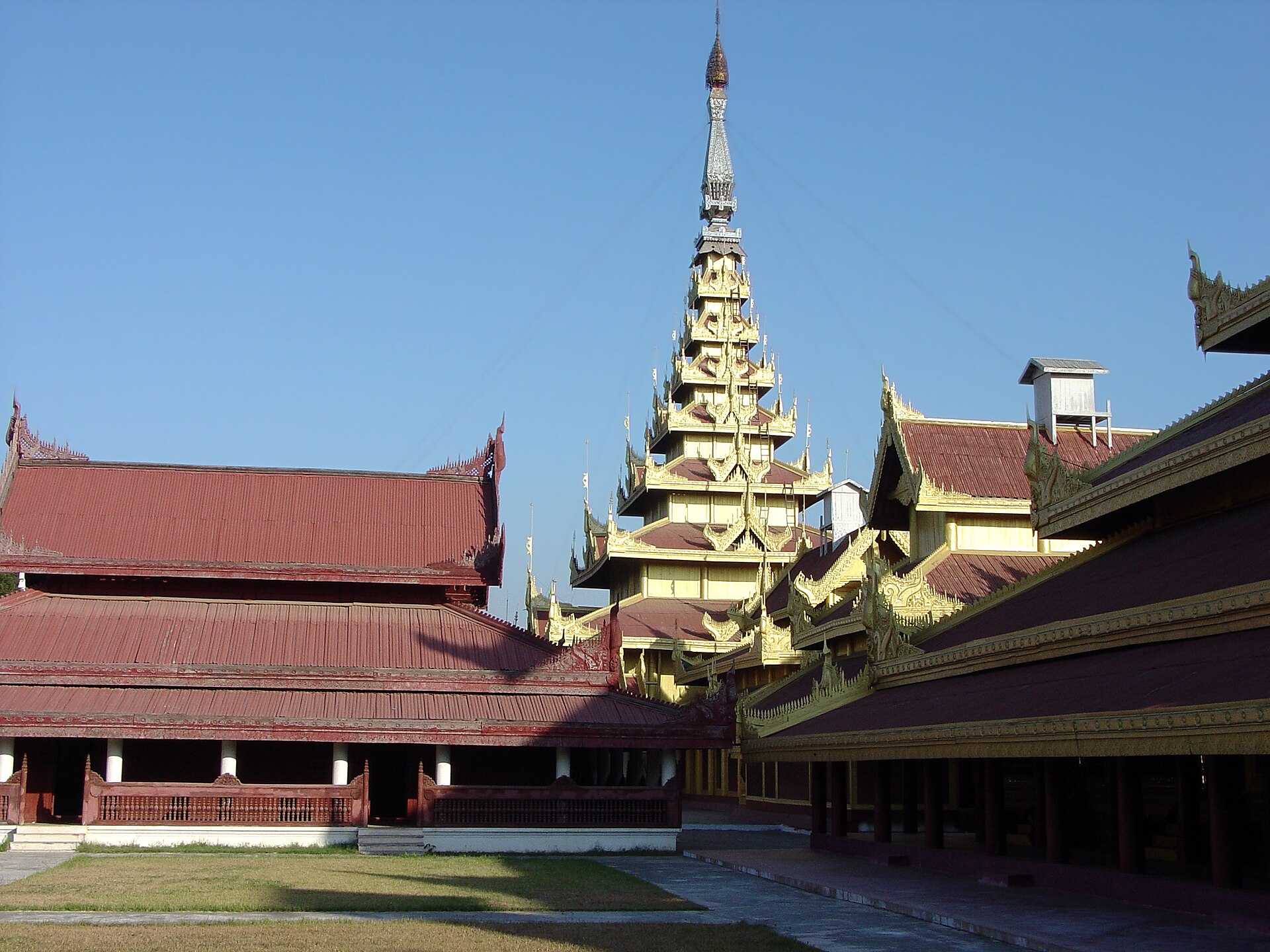
In the 1990s the Burmese authorities undertook a reconstruction of the palace, rebuilding many of the principal buildings on their original sites and according to the old plans, so that the golden-roofed halls and the great central spire once more rise within the ancient walls. The reconstruction restored the outline of the vanished royal city.
The rebuilt palace, while not the original, follows the historic layout and forms, allowing visitors to grasp the scale and arrangement of the royal compound as it once was. The reconstruction has been the subject of debate, but it has given the empty citadel back its centerpiece and evokes the lost splendor of the monarchy.
The original walls and moat, which survived the destruction, remain the most authentic part of the palace, and together with the reconstructed buildings they form the great monument at the heart of Mandalay. A small museum within the compound preserves objects and images relating to the history of the palace and the monarchy.
For the people of Myanmar the palace remains a powerful symbol of the nation’s history and of the vanished Burmese kingdom. It stands at the heart of Mandalay, the last royal capital, a reminder of the independent monarchy that ruled before the colonial conquest and of the rich civilization of which it was the center.
To stand within the walls of Mandalay Palace today, before the reconstructed halls and the golden spire, with the great moat encircling the citadel, is to feel both the grandeur and the tragedy of royal Burma. The kingdom fell, the buildings burned, but the golden city has been raised again within its ancient walls, a monument to the last kings of a vanished realm.
The reconstruction of the palace is not without its critics, and it is worth understanding why. The rebuilt halls, raised quickly and with modern materials in places, cannot reproduce the craftsmanship of the vanished teak originals, and some feel the result is more a symbol than a true restoration. Yet standing within the walls, before the golden spire risen again over the Lion Throne, most visitors find that the reconstruction succeeds in its essential aim, giving form once more to the heart of a vanished kingdom.
Palaces Nearby
The golden city of Mandalay completes a trio of great royal residences of Southeast Asia. Travel on to the garden palace of the Thai kings, or to the golden hall of the Lao kings by the Mekong, to continue the journey through the courts of the region.
You May Like
The Alcazar of Seville: A Christian Palace of Moorish Splendor