Behind long yellow walls beside the great river in the heart of Phnom Penh rises a vision of golden spires and tiered roofs, their tips curling up to the sky like flames. This is the Royal Palace of Cambodia, the residence of the Khmer kings, a walled compound of throne halls, pavilions, and temples that is the living heart of one of the oldest monarchies in Asia. Its golden roofs and its famous Silver Pagoda make it one of the most beautiful royal complexes in Southeast Asia, and unlike so many palaces in this series, it remains to this day the home of a reigning king.
The palace stands where the mighty Mekong meets the Tonle Sap river, at the center of the Cambodian capital, and its architecture is a pure and glorious expression of the classical Khmer style. Steep, layered roofs, gilded finials, and slender spires rise above courtyards and gardens, echoing the temple architecture of Cambodia and reaching back, in spirit, to the great age of Angkor, the medieval empire whose monuments remain the glory of the nation.
Built in the second half of the nineteenth century, the palace is the seat of a monarchy far older than its own walls, an institution that traces its descent through the kingdoms that followed Angkor and claims a heritage reaching back more than a thousand years. Through colonial rule, war, and one of the darkest chapters of the twentieth century, the Cambodian monarchy endured, and its palace remains the symbol of the nation’s continuity.
This is the opening palace of a new group of royal residences of southern and Himalayan Asia in this series, and it offers a rare thing among the palaces gathered here, a royal court that is still alive. To stand before the golden throne hall of Phnom Penh, or on the silver floor of the royal temple, is to enter the living world of the Khmer monarchy, a survival of ancient splendor at the heart of modern Cambodia.
In This Article
- A Golden Compound by the River
- The Khmer Monarchy and the Legacy of Angkor
- King Norodom and the Founding of the Palace
- The Classical Khmer Style
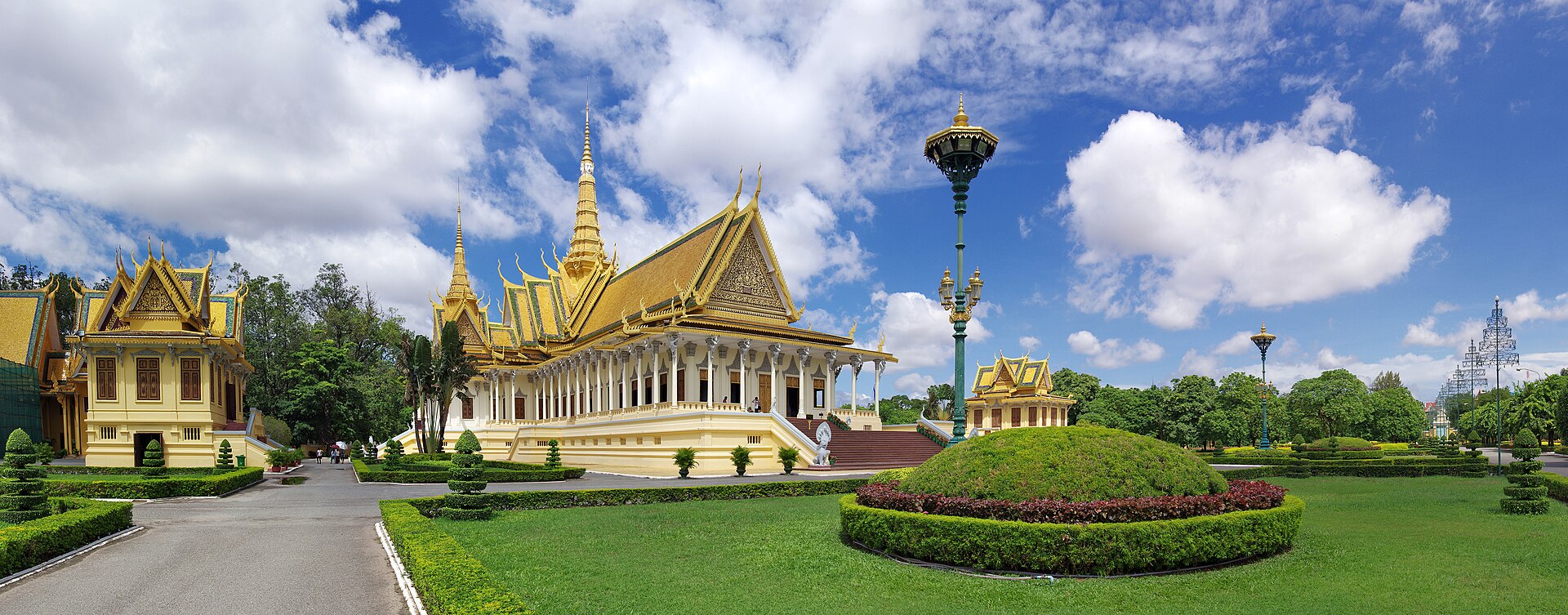
- The Throne Hall
- The Moonlight Pavilion
- The Silver Pagoda
- The Reamker Mural
- The Napoleon III Pavilion
- Gardens, Galleries, and Grounds
- The Royal Residence
- The Monarchy Through War and Survival
- A Living Royal Palace Today
A Golden Compound by the River
The Royal Palace of Phnom Penh is a walled compound in the center of the city, a rectangular enclosure containing a collection of buildings set among courtyards and gardens. Behind its long walls rise the throne hall, the royal residence, ceremonial pavilions, and, in its own southern compound, the celebrated royal temple known as the Silver Pagoda.
The whole complex is oriented toward the river and the rising sun, following the principles of Khmer sacred architecture, and its buildings are arranged in ordered zones for ceremony, residence, and worship. The compound is divided by internal walls, with the most sacred and private areas set apart, so that the palace is a series of enclosures within enclosures.
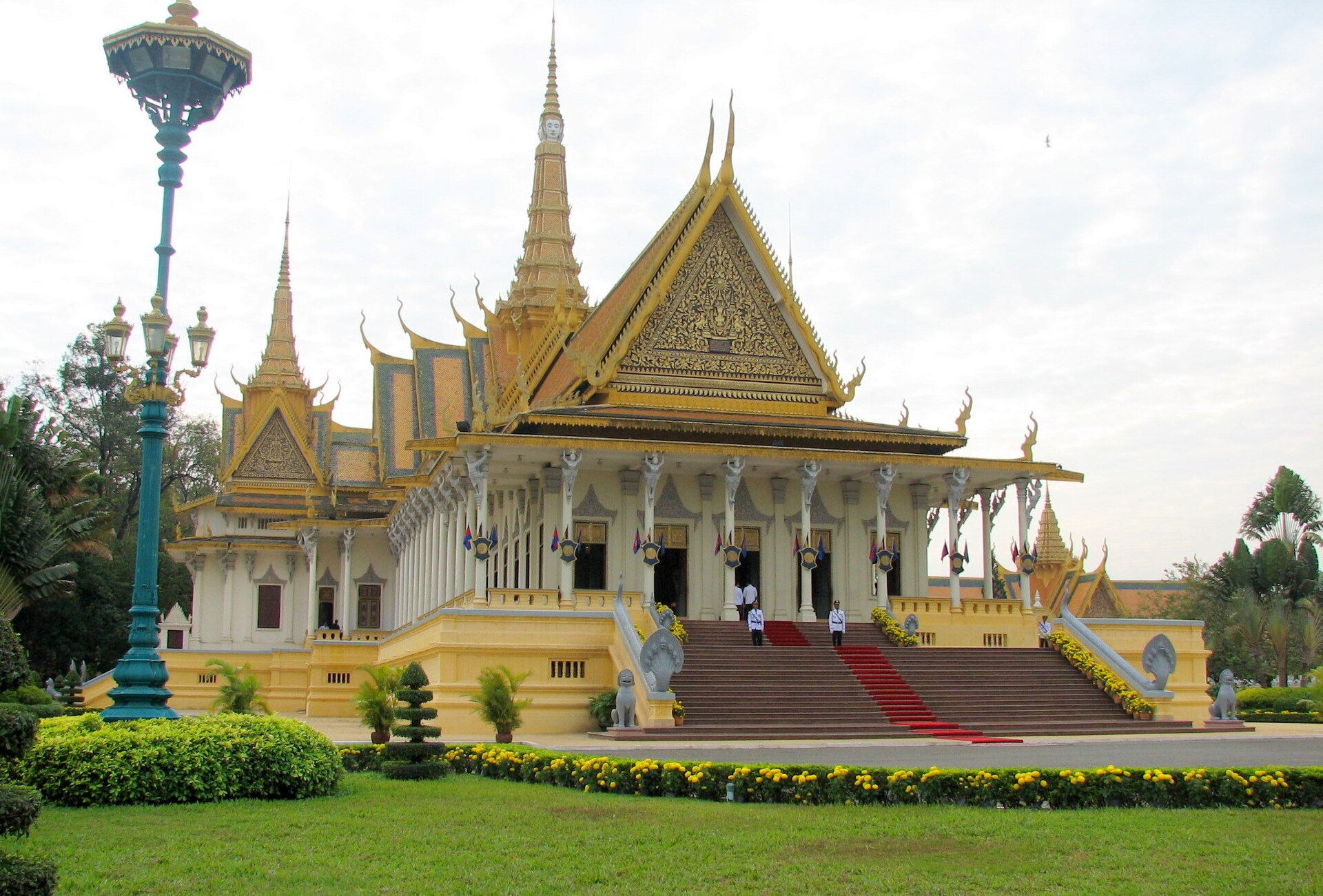
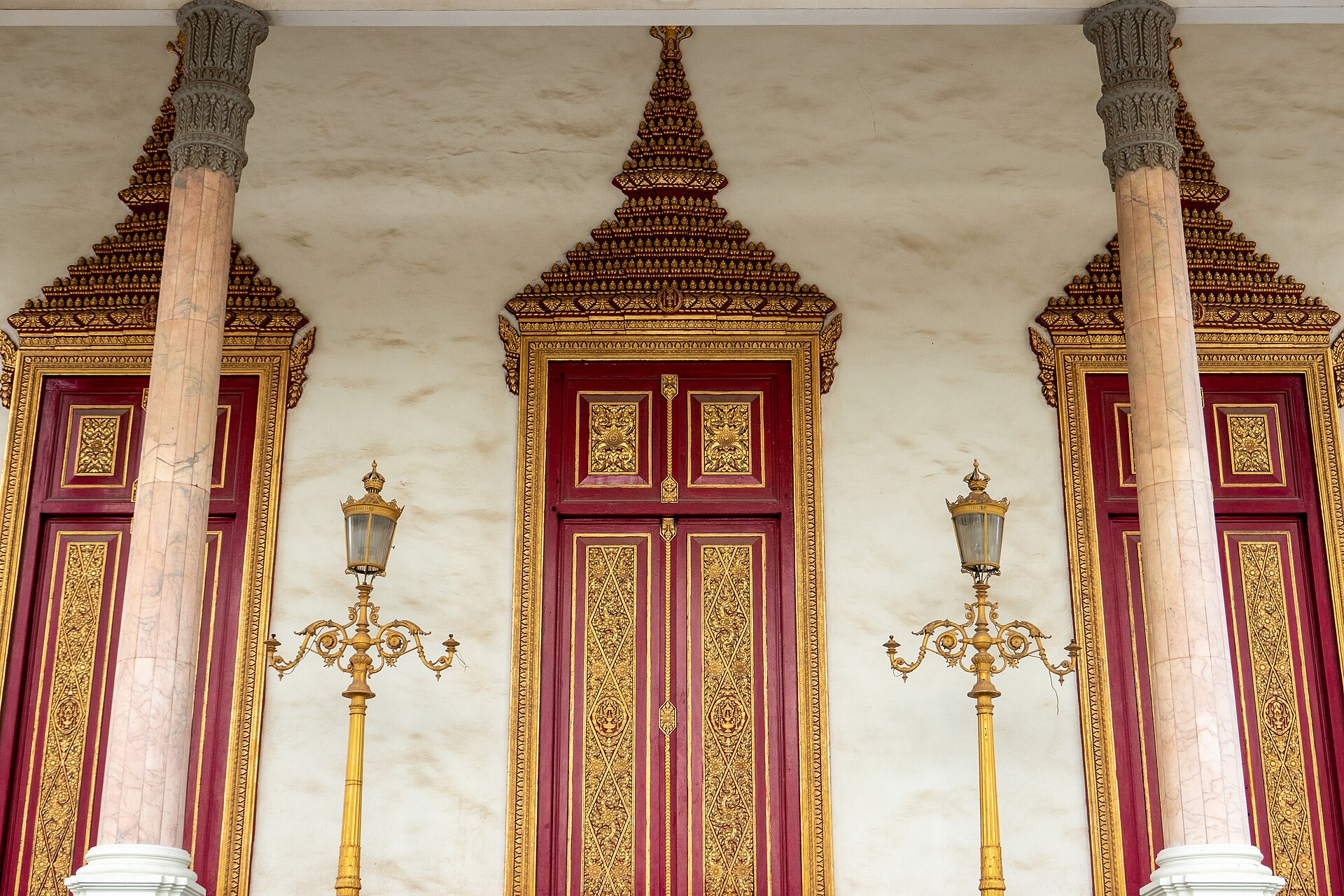
The buildings are masterpieces of the classical Khmer style, their steep tiered roofs rising in layers to gilded ridges and finials, crowned with slender spires. Yellow and white walls, golden roofs, and richly ornamented gables give the palace its characteristic glittering beauty, unmistakably Cambodian and rooted in the temple architecture of the land.
Colors carry meaning in the palace. The dominant yellow and white of the buildings are said to represent Buddhism and Hinduism, the two great religious currents that have shaped Cambodian civilization, and the whole complex expresses the fusion of royal, religious, and cosmic order that lies at the heart of Khmer kingship.
For the visitor, the palace offers a feast of golden architecture set amid gardens, from the grand throne hall to the jewel-like Silver Pagoda. That it remains a working royal residence lends the whole complex a living dignity, and the areas open to the public give a vivid sense of the splendor and the continuity of the Cambodian monarchy.
Among the palaces gathered in this series, the Royal Palace of Phnom Penh belongs to a small and precious group that remain living royal residences rather than museums. Like Bang Pa-In in Thailand, it houses a monarchy that survived into the present, but it goes further, for here the king actually resides and reigns. That living quality changes everything about the place, giving its golden halls the dignity of a functioning court rather than the melancholy of a preserved relic.
The Khmer Monarchy and the Legacy of Angkor
The palace is the seat of the Khmer monarchy, one of the oldest continuous royal traditions in the world, whose roots reach back through the kingdoms of Cambodia to the great empire of Angkor and beyond. To understand the palace is to understand that it houses an institution far older than its nineteenth-century buildings.
The empire of Angkor, which flourished for centuries in the medieval period, was one of the greatest civilizations of Asia, its capital adorned with the temple-mountains of Angkor Wat and the Bayon, whose ruins remain the supreme monuments of Cambodian art. The kings of Angkor ruled a vast realm and left a legacy of architecture and kingship that later ages revered.
After the decline of Angkor, the Cambodian monarchy continued through a succession of capitals and kingdoms, its power much reduced but its royal tradition unbroken. The kings who eventually built the palace at Phnom Penh saw themselves as the heirs of Angkor, custodians of an ancient royal and religious heritage.
The architecture of the palace consciously echoes this heritage, its temple-like forms and its sacred symbolism drawing on the traditions perfected in the age of Angkor. The palace is thus a modern expression of a very old idea of Khmer kingship, in which the king stands at the center of a cosmic and religious order.
This deep continuity gives the palace a significance beyond its beauty. It is not merely a fine royal residence but the living seat of a monarchy that connects modern Cambodia to the glory of Angkor and to more than a thousand years of Khmer civilization, a thread of continuity through all the upheavals of the nation’s history.
To feel the full depth of this continuity, it helps to have seen Angkor, whose vast temple-mountains rise from the forests to the north. The kings who built Phnom Penh were the distant heirs of the god-kings who raised Angkor Wat, and though their power was a shadow of that medieval empire, the same idea of sacred kingship runs through both. The modern palace is a late chapter in a story that began more than a thousand years ago in the greatest city of its age.
King Norodom and the Founding of the Palace
The palace was built in the second half of the nineteenth century under King Norodom, who moved the royal capital to Phnom Penh and raised there a new residence for the Cambodian crown. The founding of the palace marked the establishment of Phnom Penh as the permanent capital of the kingdom, a role it has held ever since.
Norodom’s reign came at a critical moment in Cambodian history, when the kingdom, long pressed by its powerful neighbors, came under the protection of France. The palace was built during this period of the French protectorate, and its construction reflected both the revival of the monarchy under French support and the enduring traditions of Khmer kingship.
The move to Phnom Penh and the building of the palace gave the monarchy a splendid new seat at a strategic location on the rivers, at the heart of the kingdom. The site, where the Mekong and the Tonle Sap meet, was of great importance, and the establishment of the royal capital there shaped the future of the nation.
Under Norodom and his successors the palace grew, with new buildings added over the following decades, including the throne hall and the Silver Pagoda in their present forms. The complex thus took shape gradually, the work of several reigns, each adding to the splendor of the royal compound.
In founding the palace, King Norodom gave the Cambodian monarchy the seat it still occupies, anchoring the ancient crown in a new capital for the modern age. The palace remains his enduring legacy, the royal residence from which his successors have reigned through all the dramatic history of Cambodia since his time.
The founding of the palace under the French protectorate reflects an ambiguity that runs through much of this period, for the monarchy was at once revived and constrained by its foreign protectors. The French supported and stabilized the Cambodian throne, giving it a splendid new capital and palace, while at the same time drawing the real levers of power into their own hands. The golden buildings rose, in part, as the ceremonial face of a kingdom whose sovereignty had been quietly compromised.
The Classical Khmer Style
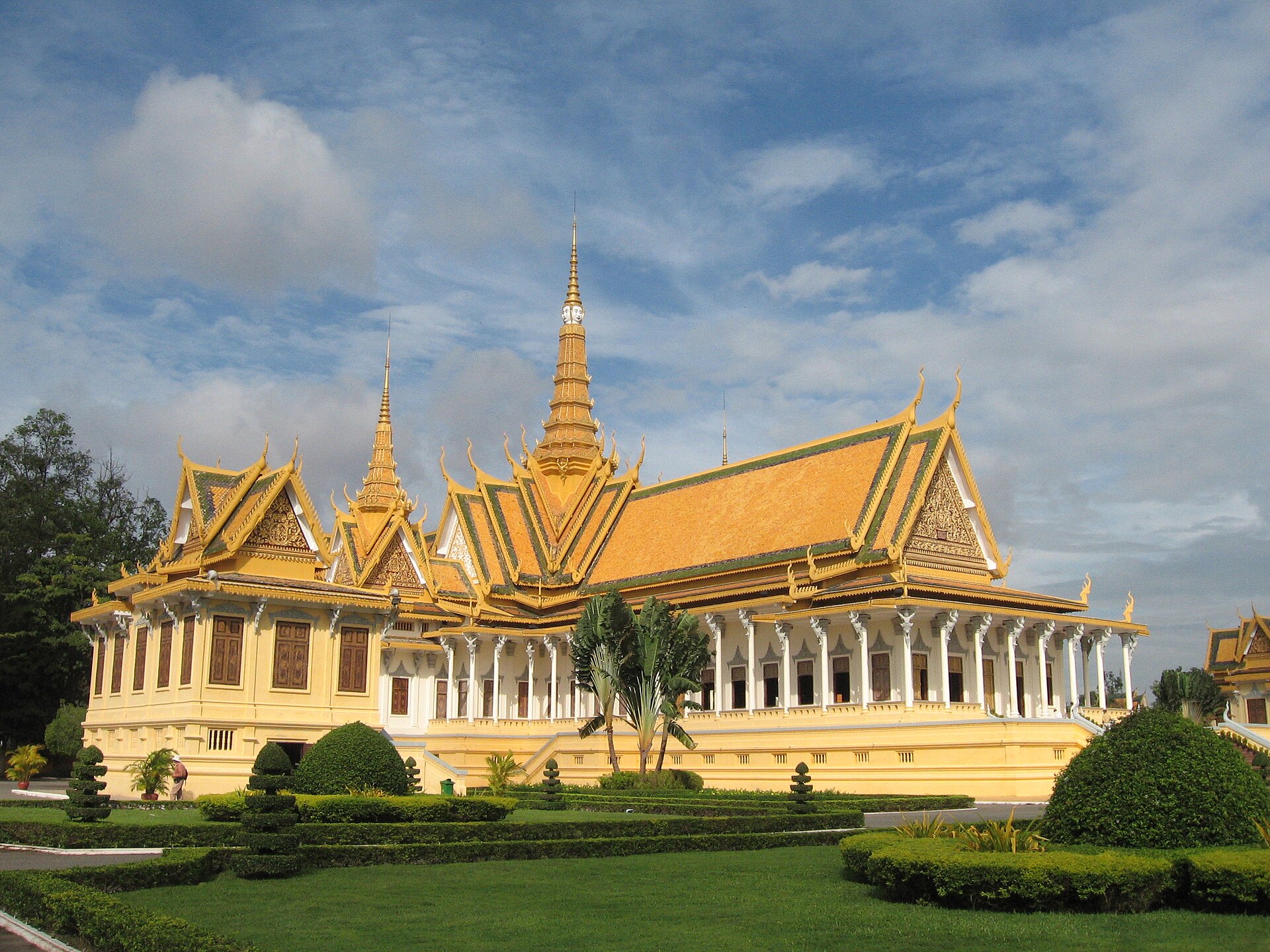
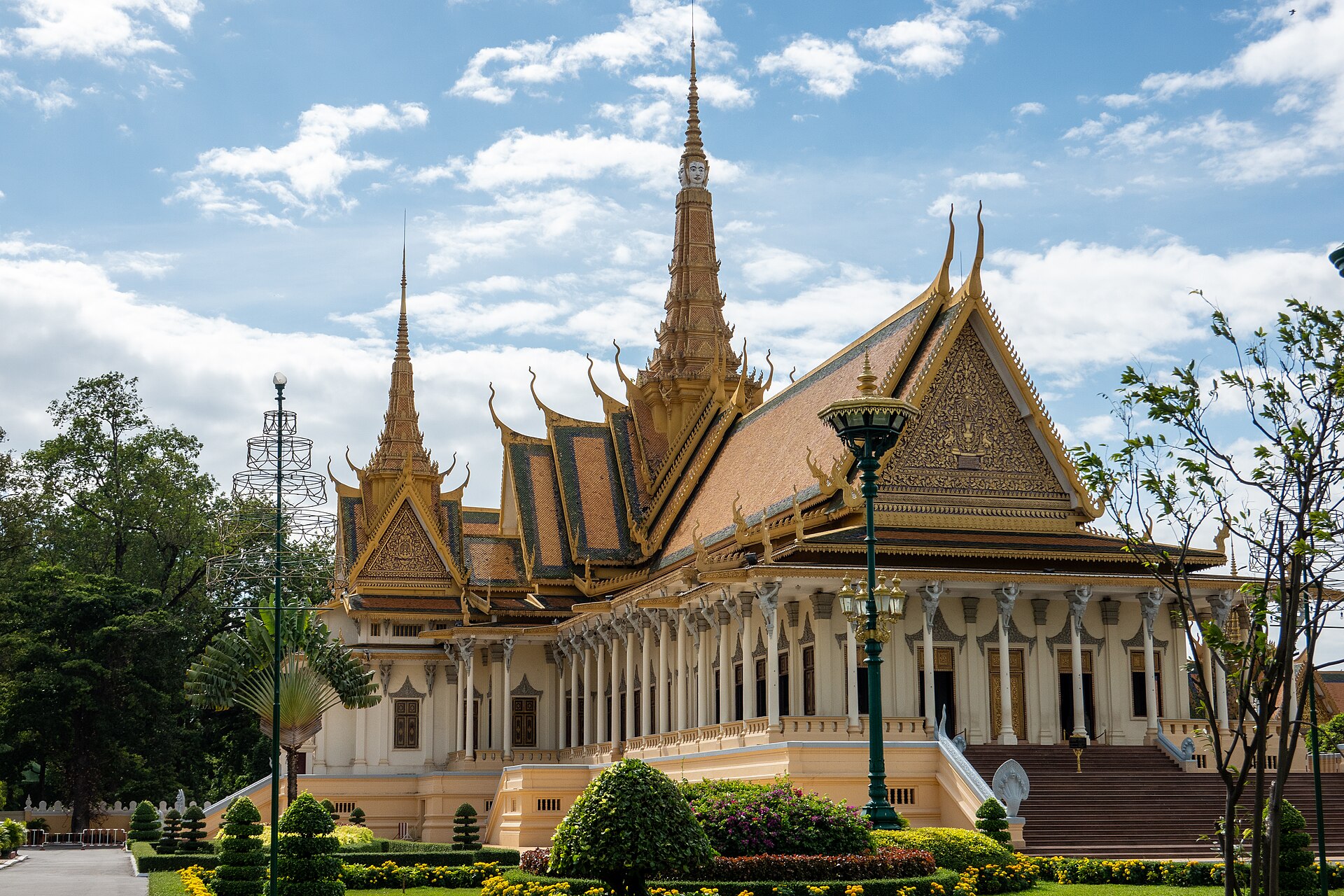
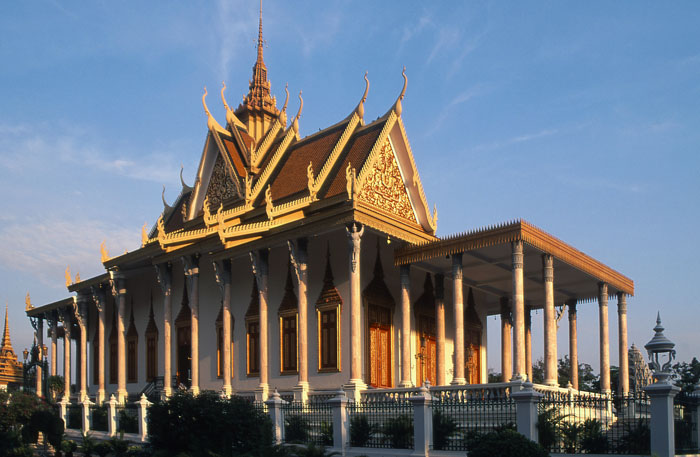
The architecture of the palace is a glorious expression of the classical Khmer style, the tradition of building perfected in Cambodian temples and adapted here to the buildings of a royal court. Its most striking feature is the roofs, steep and tiered, rising in diminishing layers to sharp golden ridges and finials.
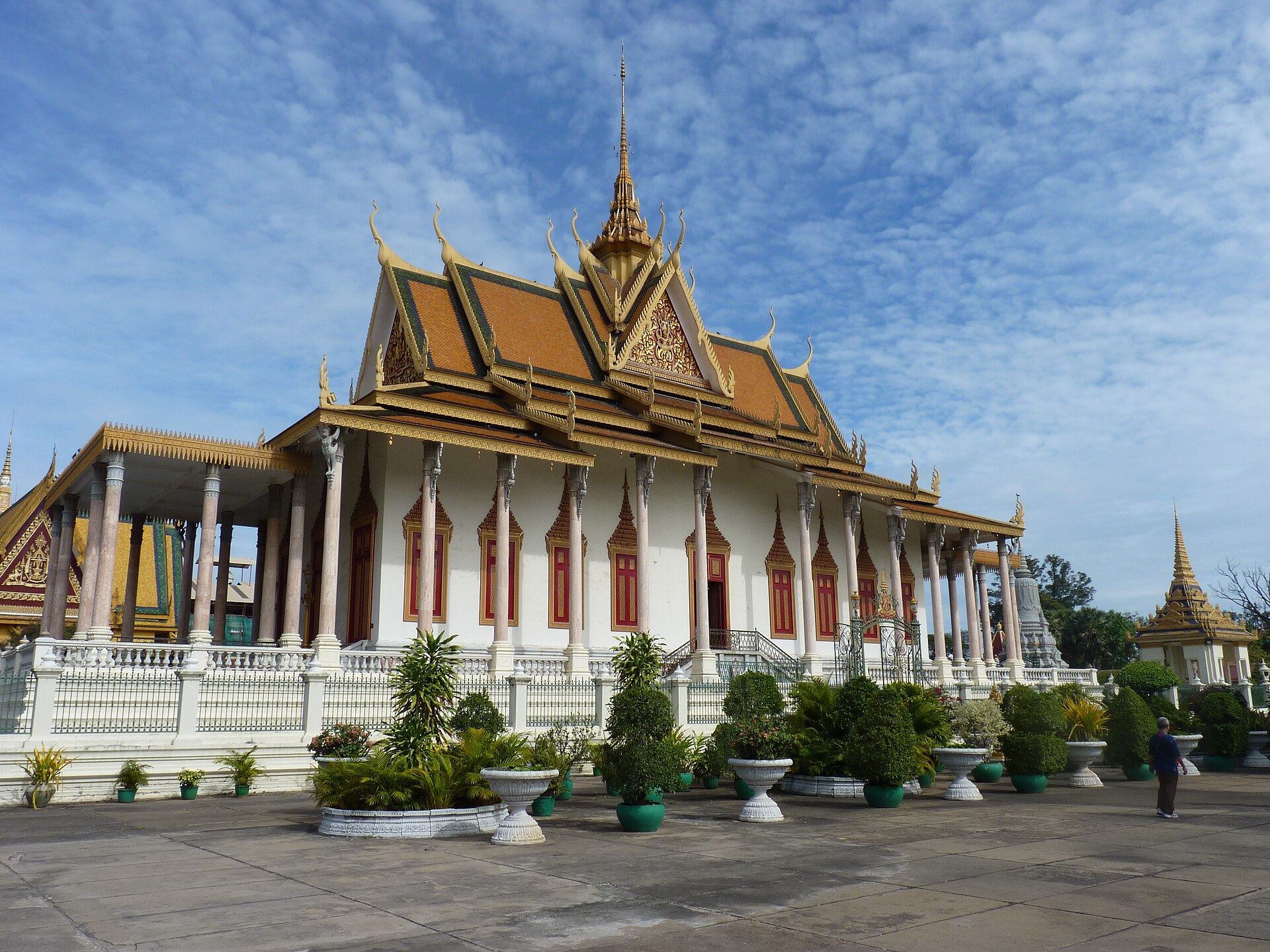
The roofs are crowned with slender ornaments and, on the most important buildings, with towering spires that lift the eye toward the sky. The ridges terminate in curling finials shaped like flames or serpents, and the whole roofline seems to flicker and soar, giving the buildings their characteristic upward, aspiring quality.
The gables and walls are richly decorated with gilded and carved ornament, drawing on the vocabulary of Khmer religious art, with its serpents, garudas, and celestial figures. This ornament ties the palace to the sacred architecture of Cambodia and expresses the religious foundations of the monarchy it houses.
The style is unmistakably Cambodian, distinct from the architecture of neighboring Thailand and Laos even as it shares with them the tiered roofs and golden splendor of Southeast Asian royal building. In the palace, the Khmer tradition finds its finest modern expression, a living continuation of the art of Angkor.
For the visitor, the architecture is the great delight of the palace, its golden roofs and spires rising above the gardens in compositions of soaring beauty. Each building is a masterpiece of the style, and together they form one of the most beautiful royal complexes in Asia, a modern monument to an ancient art.
It is worth learning to read the roofs, for they are the signature of the whole style. The number of tiers, the height of the spires, and the elaboration of the finials all signal the importance and sacred character of a building, so that the eye, once trained, can tell the throne hall from a residence or a gate by its silhouette alone. This legibility is part of the genius of Khmer architecture, in which form itself announces function and rank.
The Throne Hall
The grandest building of the palace is the Throne Hall, known in Khmer as the Preah Tineang Tevea Vinicchay, the sacred seat of judgment, where the king holds his most important ceremonies. A long, majestic building crowned with a soaring central spire, it is the ceremonial heart of the palace and of the kingdom.
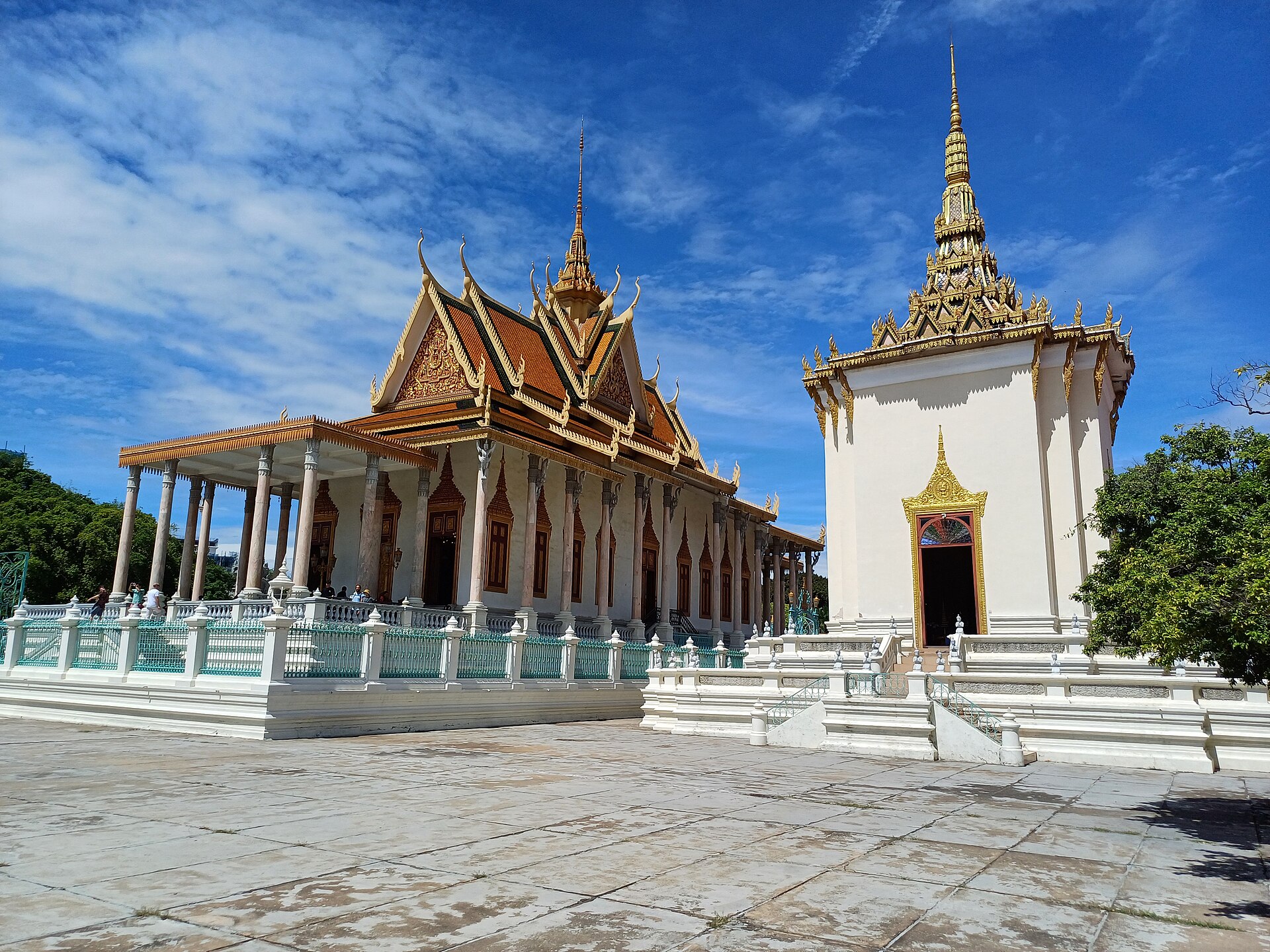
The Throne Hall rises to a tall tiered spire above its center, marking the throne beneath as the sacred focus of the realm. Its long facade, its layered golden roofs, and its central tower make it the most imposing structure of the compound, designed to express the majesty of the Cambodian crown.
Within, the hall contains the royal thrones and is used for coronations, royal weddings, and the reception of foreign dignitaries, as well as for great ceremonies of state. It is here that the king performs the most solemn rituals of the monarchy, seated in a setting of gilded splendor beneath the central spire.
The interior is richly decorated, with painted ceilings depicting scenes from Cambodian legend and religious tradition, and with the gilded ornament characteristic of the palace. The hall is designed to overwhelm those admitted to the royal presence with the sacred majesty of the king and the antiquity of his office.
The Throne Hall remains in active use for the ceremonies of the living monarchy, giving it a significance that a mere museum-piece could not have. To see it is to behold the ceremonial center of a functioning royal court, the hall in which the ancient rituals of Khmer kingship are still performed in the modern age.
The Moonlight Pavilion
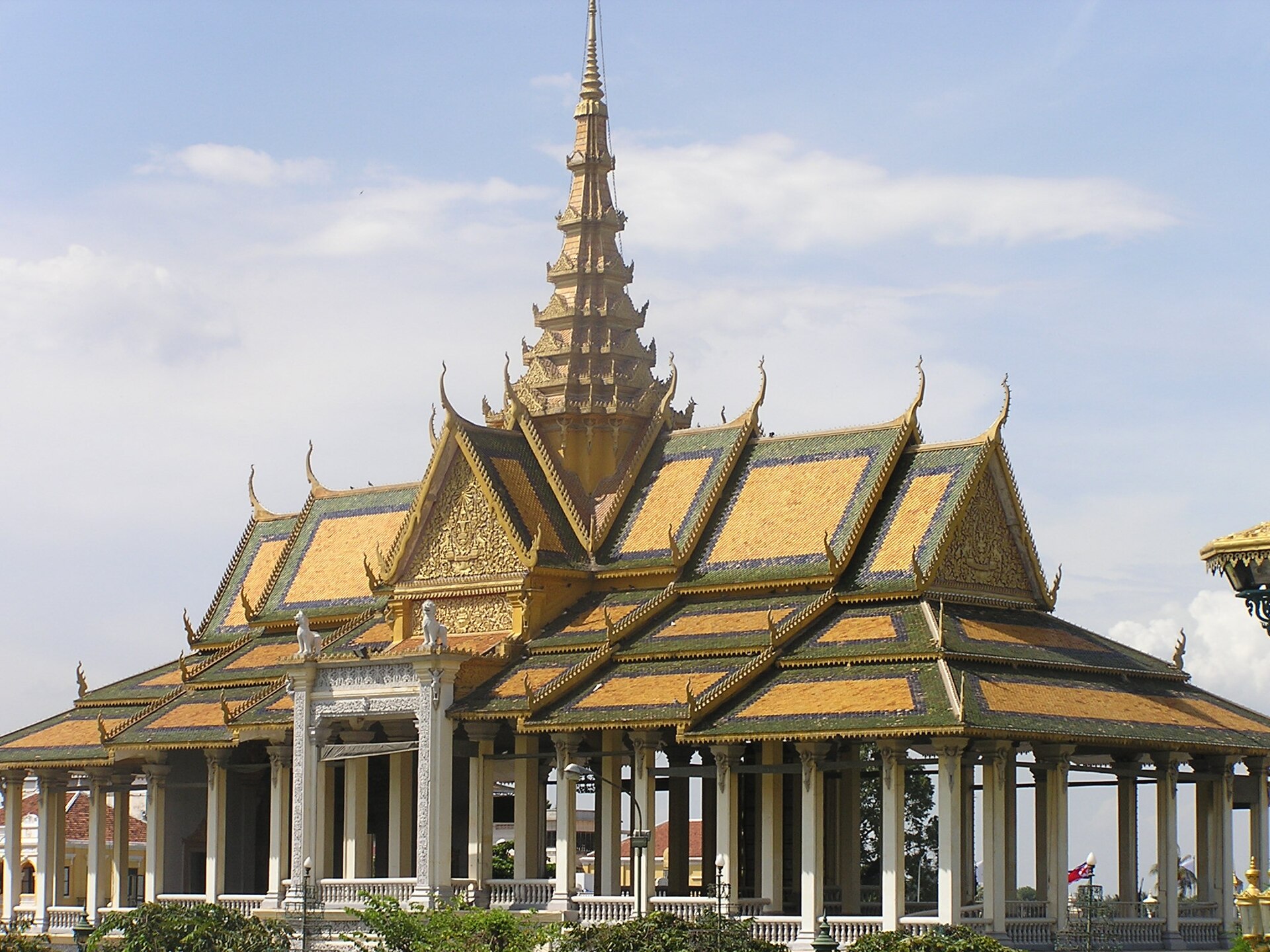
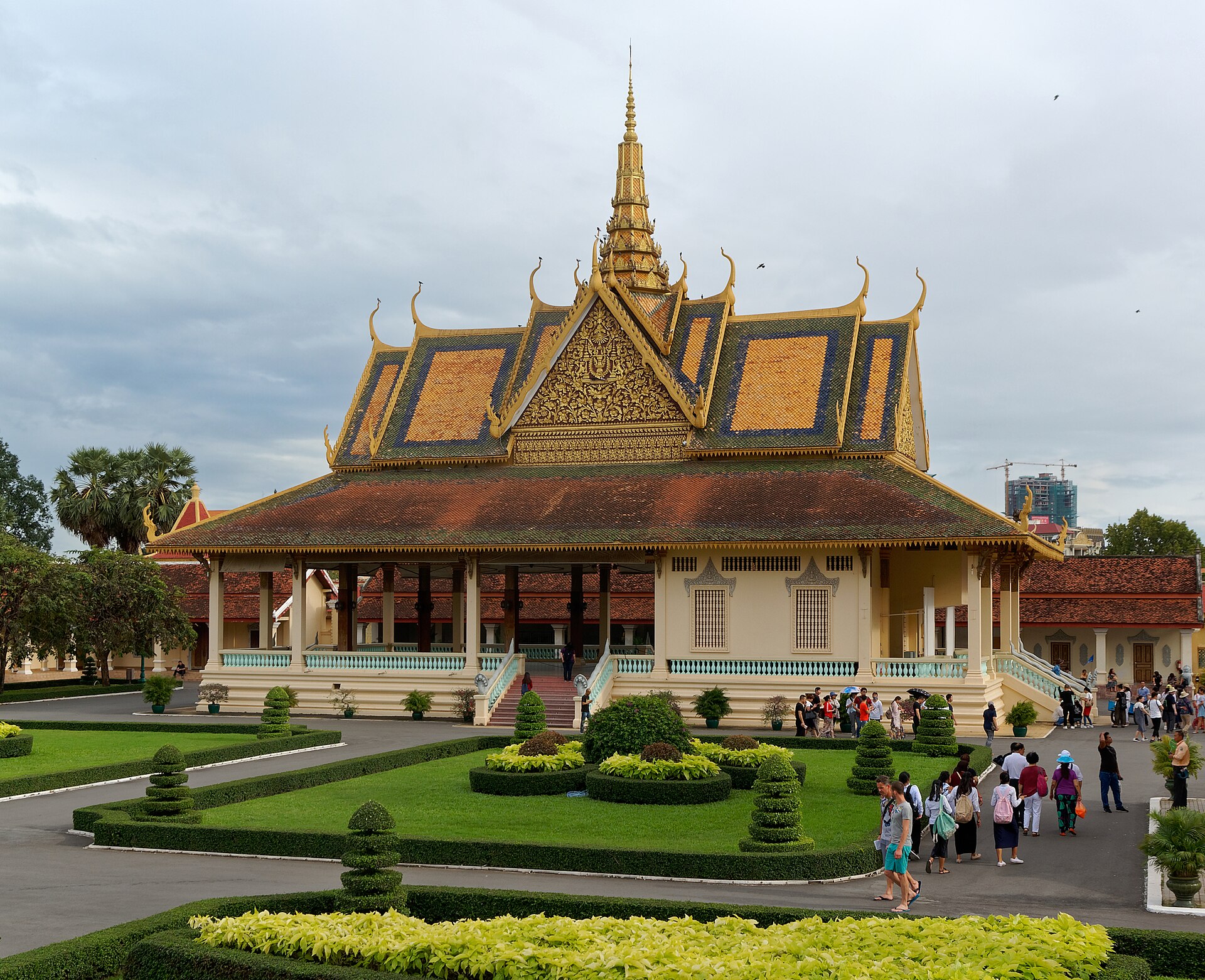
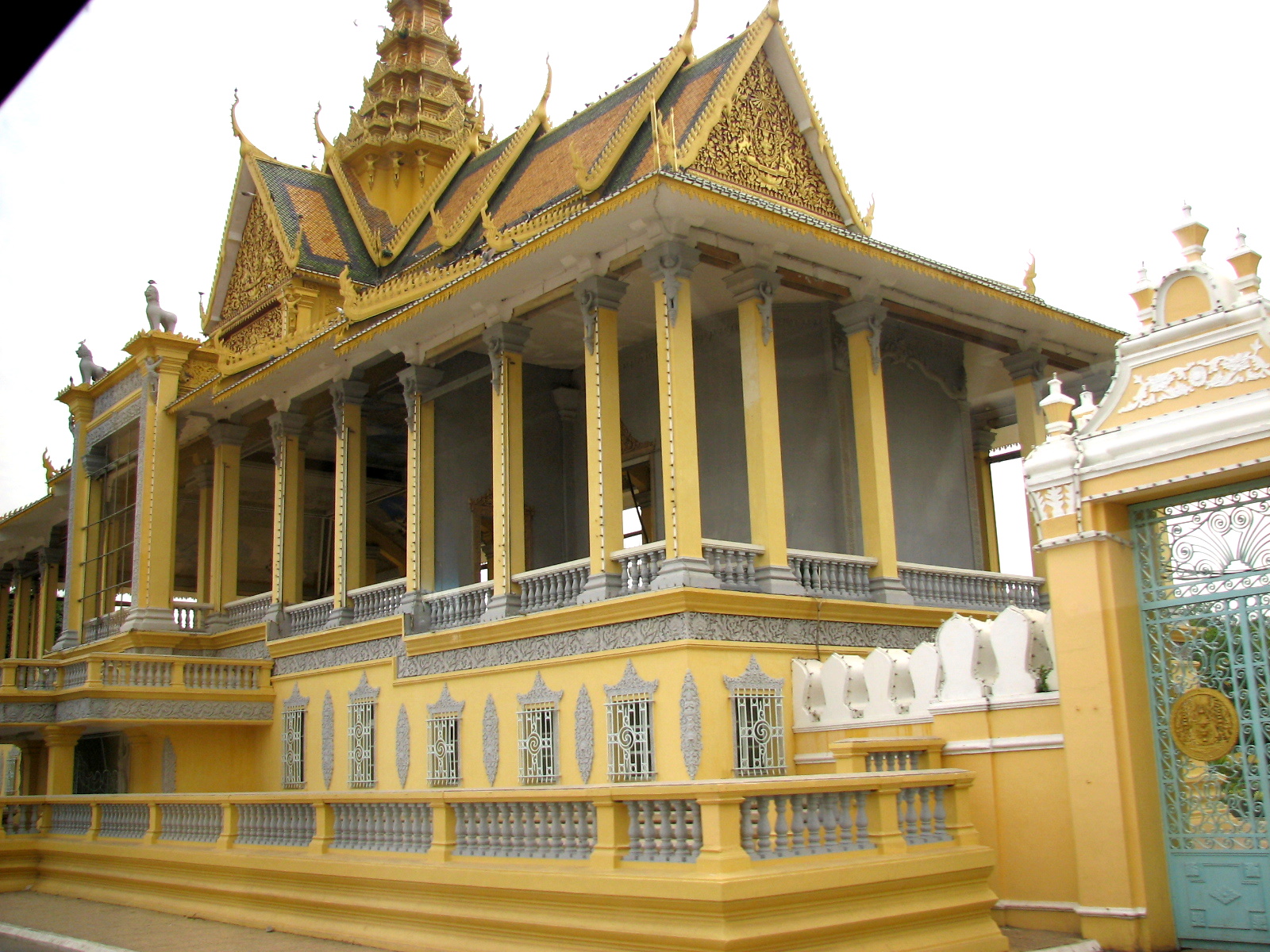
Facing the wall along the riverside stands one of the most graceful buildings of the palace, the Chan Chhaya Pavilion, the Moonlight Pavilion, an open-sided hall raised on a terrace above the boulevard. Its position on the outer wall allowed it to serve as a stage facing the public space beyond.
The pavilion was traditionally used as a stage for the royal dancers, the celebrated performers of Cambodian classical dance, and as a place from which the king could appear before his people. Its open sides and its position on the wall made it a link between the enclosed world of the palace and the city outside.
Cambodian classical dance, with its stylized gestures and elaborate costumes, is one of the great arts of the kingdom, descended from the temple dancers of Angkor and revived and cherished by the monarchy. The Moonlight Pavilion was the setting for these performances, a stage for the living heritage of Khmer court dance.
The pavilion also served for public ceremonies and appearances, a place where the monarchy presented itself to the nation. Illuminated on festival nights, facing the crowds along the riverside, it was one of the points where the splendor of the court met the life of the city.
Elegant and airy, raised above the boulevard with its tiered roof and open sides, the Moonlight Pavilion is one of the most charming buildings of the palace. It remains a symbol of the connection between the monarchy and the people, and a reminder of the classical dance that is among Cambodia’s most precious traditions.
The classical dance for which this pavilion was a stage came perilously close to extinction in the twentieth century, when the Khmer Rouge years killed a great many of its master performers. That it survived at all is due to the handful of dancers and teachers who lived through the catastrophe and painstakingly rebuilt the tradition afterward. To watch Cambodian classical dance today is to see an art brought back almost from the dead, and the graceful pavilion recalls the courtly world in which it once flourished.
The Silver Pagoda
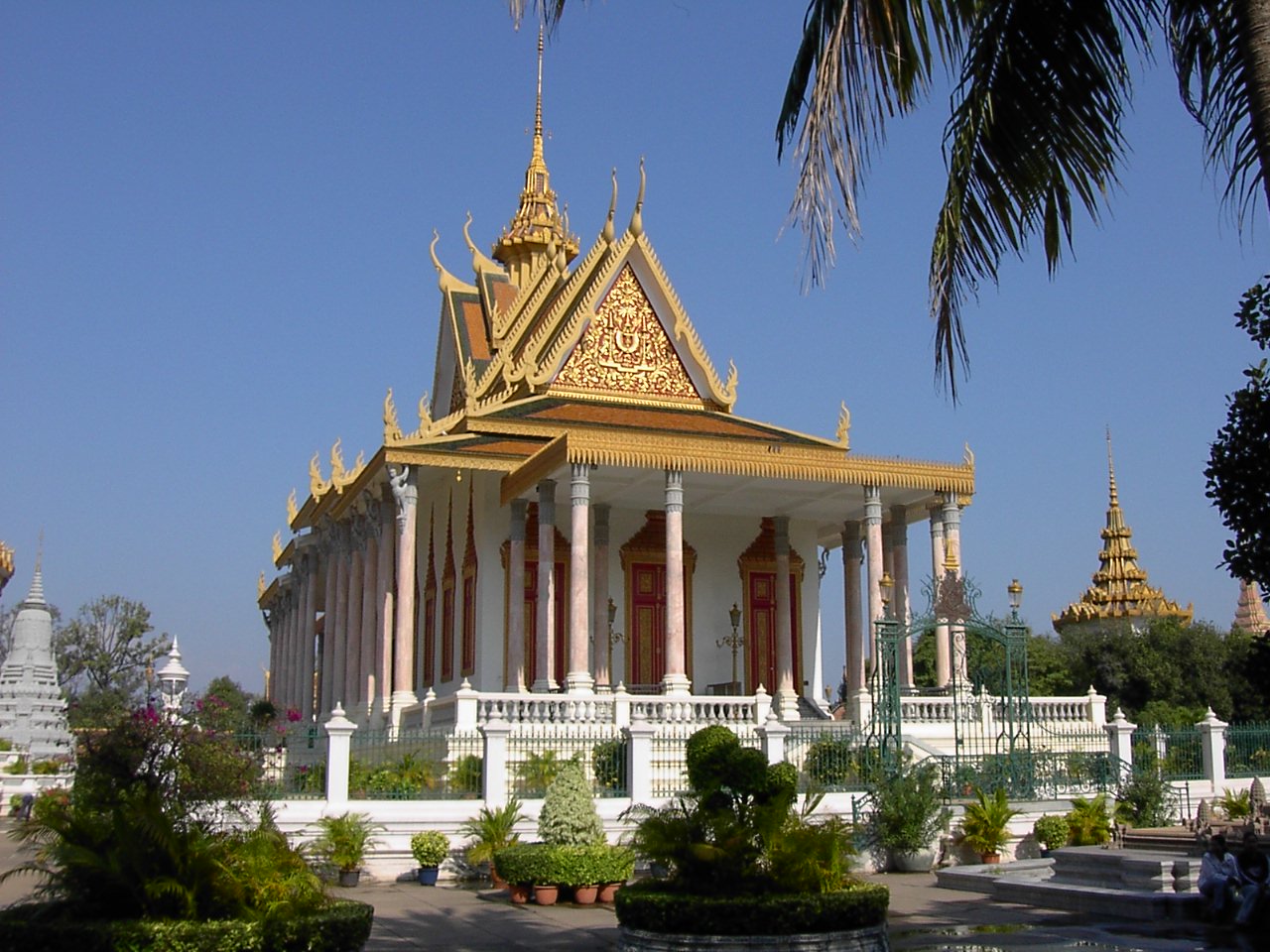
In its own compound south of the main palace stands the most famous treasure of the whole complex, the royal temple officially named Wat Preah Keo Morakot, the temple of the Emerald Buddha, but known to all as the Silver Pagoda. It is the private chapel of the king and one of the great treasure-houses of Cambodia.
The temple takes its popular name from its floor, which is covered with thousands of solid silver tiles, so that visitors walk, in the sacred parts of the temple, upon a floor of silver. This extraordinary feature, together with the treasures the temple holds, has made the Silver Pagoda one of the wonders of the palace.
Within, the temple holds a dazzling collection of sacred and precious objects, chief among them a small Buddha image of emerald-green crystal, from which the temple takes its formal name, and a life-sized golden Buddha adorned with a great many diamonds. These treasures represent the accumulated devotion and wealth of the monarchy.
The temple served as the royal chapel, the place where the king performed his most sacred religious observances and where the monarchy expressed its role as the protector of Buddhism. In a kingdom where the king was bound to the faith, the Silver Pagoda was the spiritual counterpart to the throne hall.
The walls of the compound surrounding the temple are painted with a great mural depicting the Reamker, the Cambodian version of the epic of Rama, one of the finest surviving works of Khmer mural painting. Together with the silver floor and the jeweled Buddhas, it makes the Silver Pagoda a treasury of Cambodian art and faith.
Walking upon a floor of solid silver is one of those experiences that sounds like exaggeration until you are actually doing it, treading carefully across the cool metal tiles in the dim, treasure-filled temple. Most of the floor is kept covered to protect it, with only a portion exposed, but that glimpse is enough to fix the Silver Pagoda in the memory as one of the most extraordinary sacred interiors in Asia, a chamber where the very ground beneath your feet is precious metal.
The Reamker Mural
One of the artistic glories of the palace is the great mural that runs along the inner walls of the gallery surrounding the Silver Pagoda compound, depicting the Reamker, the Khmer retelling of the ancient epic of Rama. Painted around the whole enclosure, it is among the most important works of Cambodian painting.
The Reamker is the Cambodian version of a story shared across much of Asia, the tale of the prince Rama, his abduction of his wife by a demon king, and the great war to recover her. Adapted to Khmer culture and infused with local meaning, it is one of the foundational stories of Cambodian art and theatre.
The mural depicts the epic in a continuous sequence of scenes, filling the long gallery walls with a vivid pictorial narrative of gods, demons, heroes, and battles. Executed in the traditional Khmer style, it is a masterpiece of storytelling in paint, unfolding around the sacred compound of the royal temple.
The painting is a precious record of Cambodian art and of the epic tradition that has shaped the kingdom’s culture, its dance, and its theatre. The same story told in the mural is performed in the classical dance for which the palace was a stage, tying the visual and performing arts of the court together.
Weathered by time and climate, the mural has required careful conservation, and its preservation is an ongoing concern, for it is one of the great treasures of Cambodian heritage. To walk the gallery beneath its unfolding scenes is to move through the epic imagination of the Khmer people, painted around the holiest temple of the crown.
The Napoleon III Pavilion
Amid the golden Khmer buildings of the palace stands a startling exception, an iron and glass pavilion in the European style of the mid-nineteenth century, the Napoleon III Pavilion. Grey and Western amid the golden roofs, it is a curious and fascinating relic of the colonial age.
The pavilion was a gift from France, associated with the French emperor Napoleon III and his empress, and it was given to the Cambodian king and re-erected within the palace grounds. Prefabricated in iron in the European manner, it stands in complete contrast to the Khmer architecture around it.
Its presence in the palace reflects the period of the French protectorate, during which Cambodia’s monarchy maintained its throne under French oversight and the two cultures met, sometimes uneasily, at the royal court. The pavilion is a physical memento of that relationship, a piece of imperial France set among the Khmer buildings.
The structure served various ceremonial and residential functions over the years, a European hall within the Asian palace. Its ironwork and glass, so different from the timber and gilding of the Khmer buildings, make it an object of curiosity and a record of a particular moment in Cambodian history.
For the visitor, the Napoleon III Pavilion adds an unexpected note to the palace, a reminder of the colonial chapter in the story of the monarchy. Standing incongruous amid the golden spires, it embodies the meeting of France and Cambodia that shaped the modern history of the kingdom and its royal house.
Gardens, Galleries, and Grounds
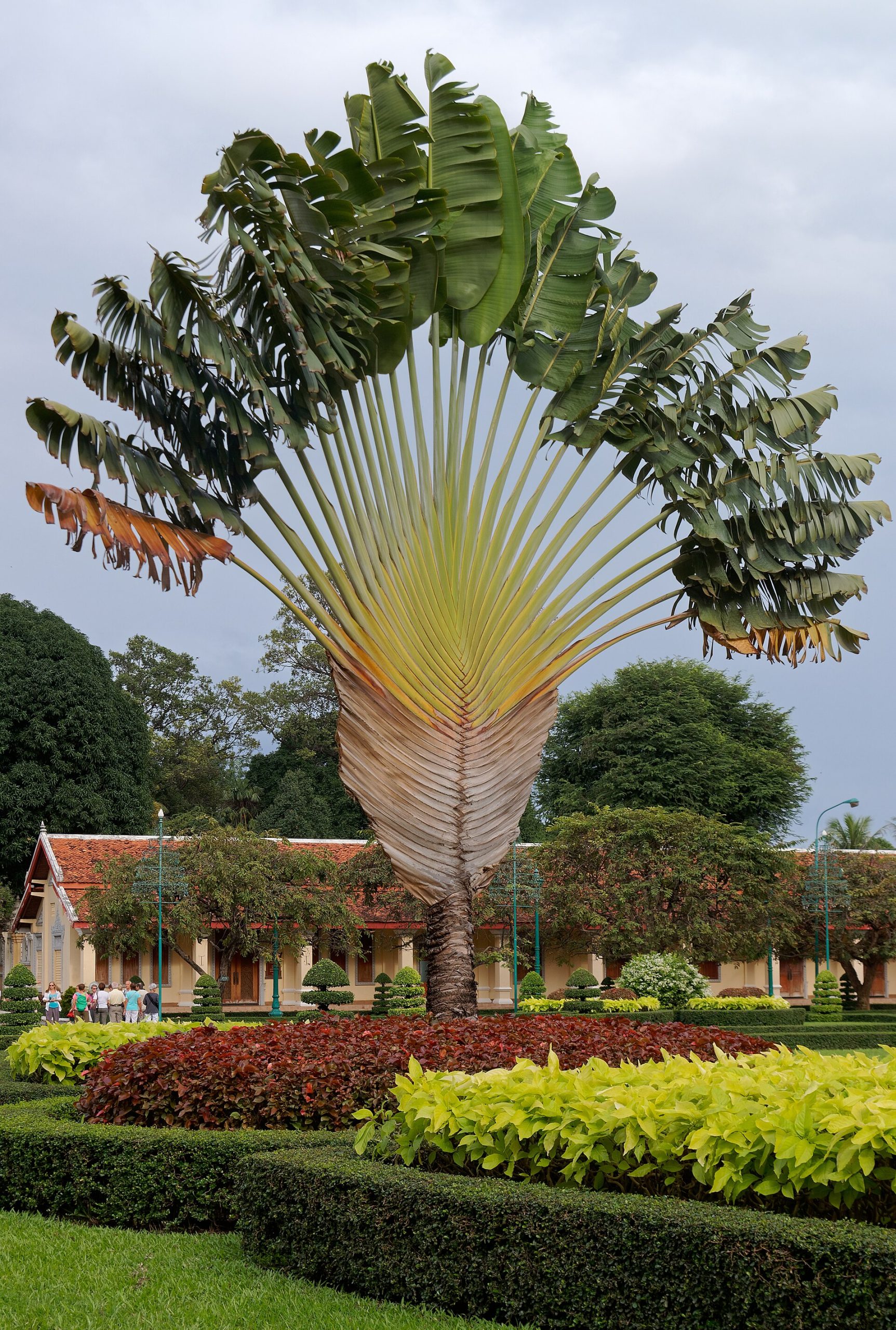
Between the golden buildings of the palace lie beautiful gardens, courtyards, and galleries that tie the complex together and give it much of its serene charm. Tropical plantings, manicured lawns, ornamental trees, and topiary create a green setting for the gilded architecture, cool and shaded in the heat of the Cambodian climate.
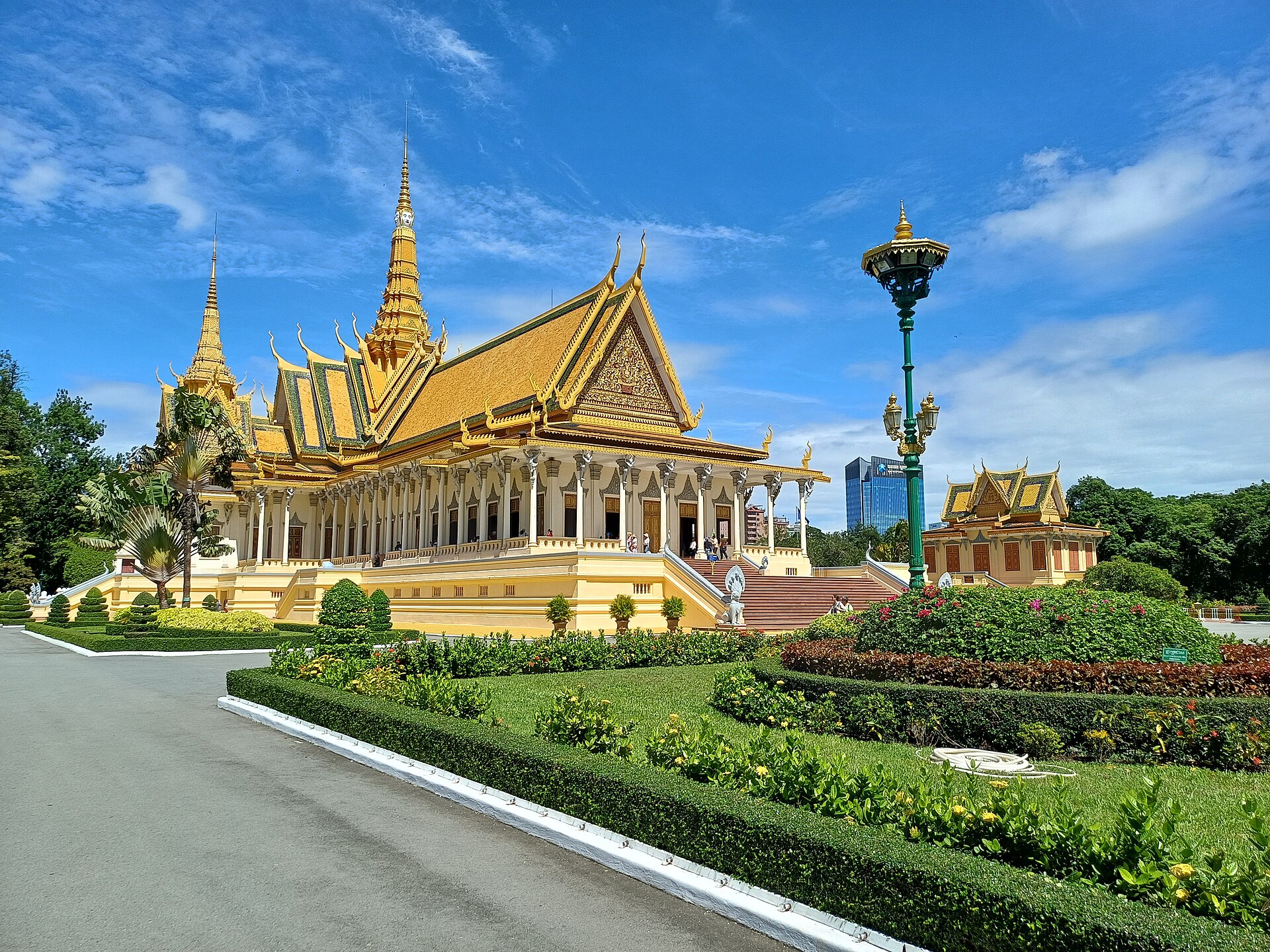
The gardens are laid out with care, their paths, lawns, and flowering plants arranged to complement the buildings and to provide the visitor with changing views of the golden roofs and spires rising above the greenery. In the tropical warmth, the shaded courtyards and gardens offer welcome relief and a sense of ordered calm.
Galleries and covered walkways connect parts of the compound, sheltering passage between the buildings and framing views of the courtyards. These transitional spaces, ornamented in the Khmer style, are part of the careful composition of the palace, guiding movement through its enclosures.
The grounds also contain smaller structures, stupas, and monuments, including memorials associated with the royal family, adding further interest to the complex. Each contributes to the sense of the palace as a complete royal world, a compound rich in buildings, art, and greenery.
The gardens make the palace a place to stroll and to linger as well as to admire, a green oasis in the busy capital. Together with the golden architecture they form a harmonious whole, and they are among the quiet pleasures of a visit, softening the grandeur of the buildings with the beauty of the living landscape.
The Royal Residence
Because the palace remains the home of the reigning king, part of the compound is given over to the private royal residence, known as the Khemarin Palace, the palace of the Khmer king. This is the living quarter of the monarchy, closed to the public and reserved for the king and the royal household.
The residence occupies its own section of the compound, separated from the ceremonial and public areas, so that the private life of the monarchy is screened from the visitors who come to see the throne hall and the Silver Pagoda. When the king is in residence, his presence is marked by the flying of the royal flag.
This continuing residential function distinguishes the palace of Phnom Penh from the many royal residences in this series that have become mere museums. The Cambodian palace is not a relic but a living home, the seat of a monarchy that still reigns, giving the whole complex a vitality and dignity that a dead palace could not possess.
The presence of the living court means that parts of the palace are closed when royal functions require, and the whole complex is maintained with the care due to an active royal residence. The monarchy’s continuing life shapes the visitor’s experience, for this is a working palace, not a preserved ruin.
The royal residence thus anchors the palace as the home of the Cambodian crown, the private heart of a public monument. It is a reminder that behind the golden ceremonial buildings lies a living family, the reigning house of a monarchy whose survival through the terrible history of modern Cambodia is itself a remarkable story.
The Monarchy Through War and Survival
The twentieth century brought the Cambodian monarchy through some of the most dramatic and terrible events in the nation’s history, and the palace stood at the center of them. The towering figure of the modern monarchy was King Norodom Sihanouk, whose long and turbulent career shaped Cambodia through independence, war, and revolution.
Sihanouk led Cambodia to independence from France in the mid-twentieth century and dominated its political life for decades, as king, as head of state, and as a central figure through the country’s descent into the wider conflicts of the region. The palace was the seat of the monarchy through all these upheavals.
The darkest chapter came with the rule of the Khmer Rouge in the 1970s, a period of revolution and mass death in which the monarchy was abolished and the royal family confined, and during which a vast number of Cambodians perished. The palace itself survived the era, but the nation endured unimaginable suffering.
After the fall of the Khmer Rouge and the long recovery that followed, the monarchy was eventually restored, and Sihanouk returned to the throne before abdicating in favor of his son, the present king. The survival and restoration of the monarchy, against such odds, is one of the remarkable features of modern Cambodian history.
That the palace and the monarchy came through this history at all is extraordinary, and it gives the living court of Phnom Penh a special poignancy. The golden throne hall and the silver floor of the royal temple endured through revolution and catastrophe, and the ancient crown they house still reigns over a nation that has known terrible sorrow.
The abolition of the monarchy under the Khmer Rouge and its later restoration make the survival of the palace all the more striking. Regimes that set out to erase the past could not, in the end, erase the crown, and the golden halls that revolutionaries might have destroyed instead came through to house a restored monarchy. In a nation that suffered so grievously, the endurance of this ancient institution became, for many Cambodians, a thread of continuity and identity reaching back beyond the years of horror to the deep past of their civilization.
A Living Royal Palace Today
Today the Royal Palace of Phnom Penh remains the official residence of the King of Cambodia and the ceremonial center of the kingdom, as well as one of the most visited monuments in the country. Parts of the compound are open to visitors, while the royal residence and the most private areas remain closed.
The palace continues to host the great ceremonies of the monarchy, from coronations and royal weddings to the reception of foreign heads of state and the religious festivals of the Cambodian calendar. It is a working royal court, its throne hall and its temple in active use for the rituals of the living crown.
For the Cambodian people the palace is a cherished symbol of national identity and continuity, the seat of a monarchy that connects the modern nation to the glory of Angkor and that survived the darkest years of its history. It stands as an emblem of the endurance of Khmer civilization.
Visitors come to admire the golden throne hall, the jeweled treasures and silver floor of the Silver Pagoda, the graceful Moonlight Pavilion, and the beautiful gardens of the compound. The palace offers one of the great sights of Southeast Asia, a living royal court of surpassing beauty at the heart of the capital.
To stand within the walls of the Royal Palace of Phnom Penh, before the soaring golden spire of the throne hall, is to encounter a rare survival, a monarchy still living amid the splendor of its ancient art. The Khmer crown endures, and its golden palace by the river remains the beating heart of the Cambodian nation.
If you visit, dress respectfully and go in the cool of the morning, remembering that this is a working religious and royal site, not merely a tourist attraction. The dress code is enforced, and rightly so, for the Silver Pagoda is an active place of worship and the palace the home of a reigning king. Approached with that awareness, a visit becomes something more than sightseeing, an encounter with a living tradition of great antiquity and dignity.
Palaces Nearby
The golden palace of Phnom Penh opens a new group of royal residences of southern and Himalayan Asia that we will gather here. More palaces of the region, from the Himalayan valleys to the island kingdoms, will join it soon, to trace the varied splendor of the courts of this part of the world.
You May Like

Qasr Al Hosn: The White Fort Where Abu Dhabi Began


2 thoughts on “The Royal Palace of Phnom Penh: The Living Court of the Khmer Kings”