In the heart of the old city of Damascus, one of the oldest continuously inhabited cities on earth, hidden behind a plain wall near the Umayyad Mosque, lies one of the most beautiful houses in the Arab world. The Azm Palace is a masterpiece of the Damascene courtyard house, a serene world of shaded courts, fountains, orange trees, and richly decorated halls, built in the eighteenth century by an Ottoman governor as his private residence. Behind its modest exterior, it opens into a paradise of the traditional architecture of Damascus.
The palace was built by As’ad Pasha al-Azm, a member of the powerful Azm family who governed Damascus and other provinces on behalf of the Ottoman sultans in the eighteenth century. It served as his private residence, a grand version of the courtyard house that was the classic form of the Damascene home, and it remains the finest surviving example of that tradition, a jewel of Ottoman-era domestic architecture.
Unlike the fortress-palaces and grand royal residences elsewhere in this series, the Azm Palace is a domestic building, the house of a great family rather than the seat of a monarch. Yet in its scale, its beauty, and its craftsmanship it is a palace in every sense, and it preserves the art of living of the Damascene elite in the age of the Ottomans more completely than any other building.
This is the second palace of a group of royal and princely residences of the Middle East in this series, following the mountain court of Beiteddine in Lebanon. To pass from the narrow lanes of old Damascus through the door of the Azm Palace into its courtyards of fountains and orange trees is to enter the serene and sophisticated world of the great houses of the ancient city, a paradise hidden behind a plain wall.

In This Article
- A Paradise Behind a Plain Wall
- Damascus in the Ottoman Age
- As’ad Pasha and the Azm Family
- The Building of the Palace
- The Damascene Courtyard House
- The Selamlik, the Public Quarter
- The Haramlik, the Family Quarter
- The Great Reception Hall
- Courtyards, Fountains, and Citrus
- The Painted Rooms of Damascus
- The Palace Baths
- The Museum of Popular Traditions
- The Azm Palace Today
A Paradise Behind a Plain Wall
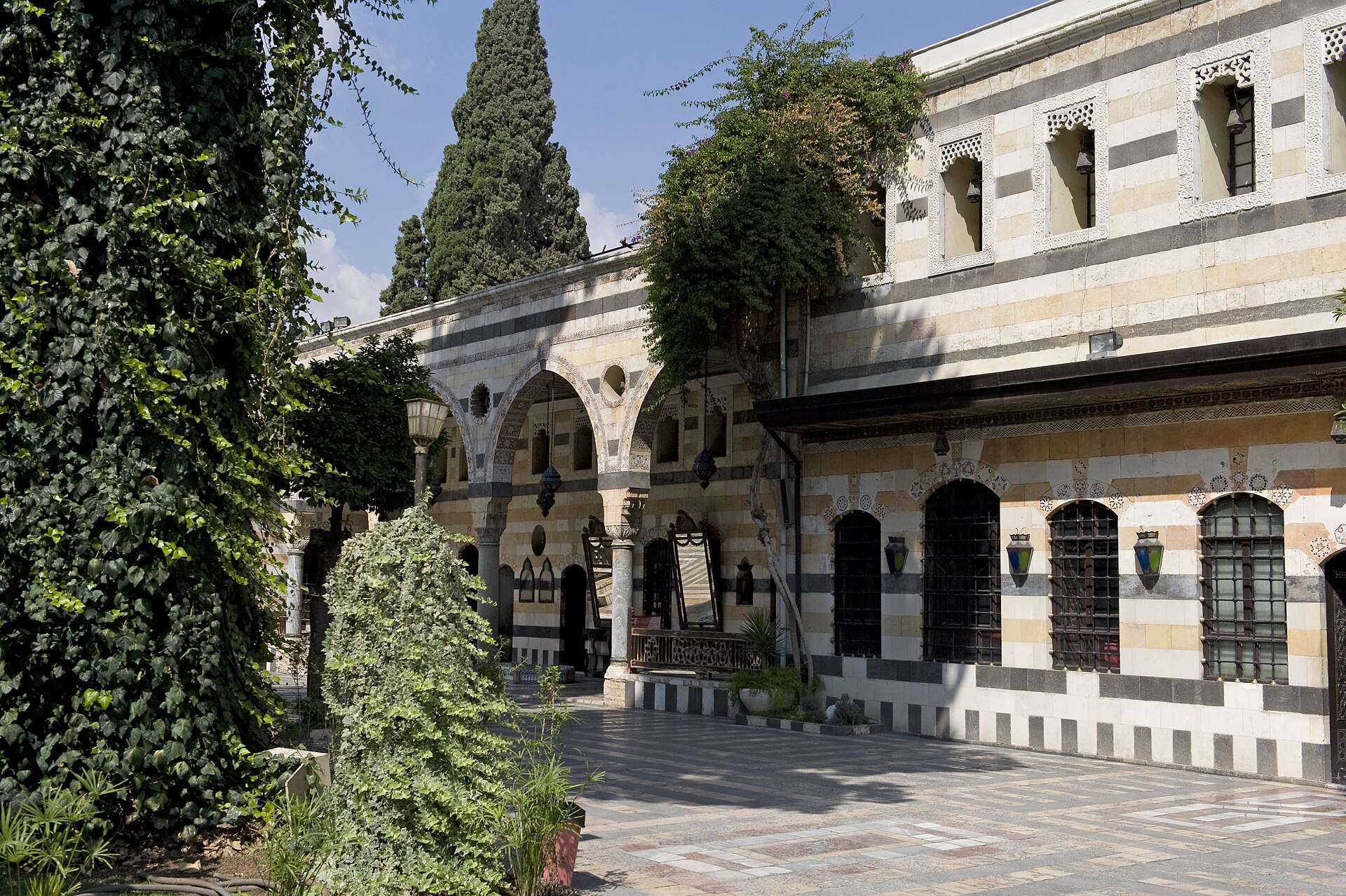
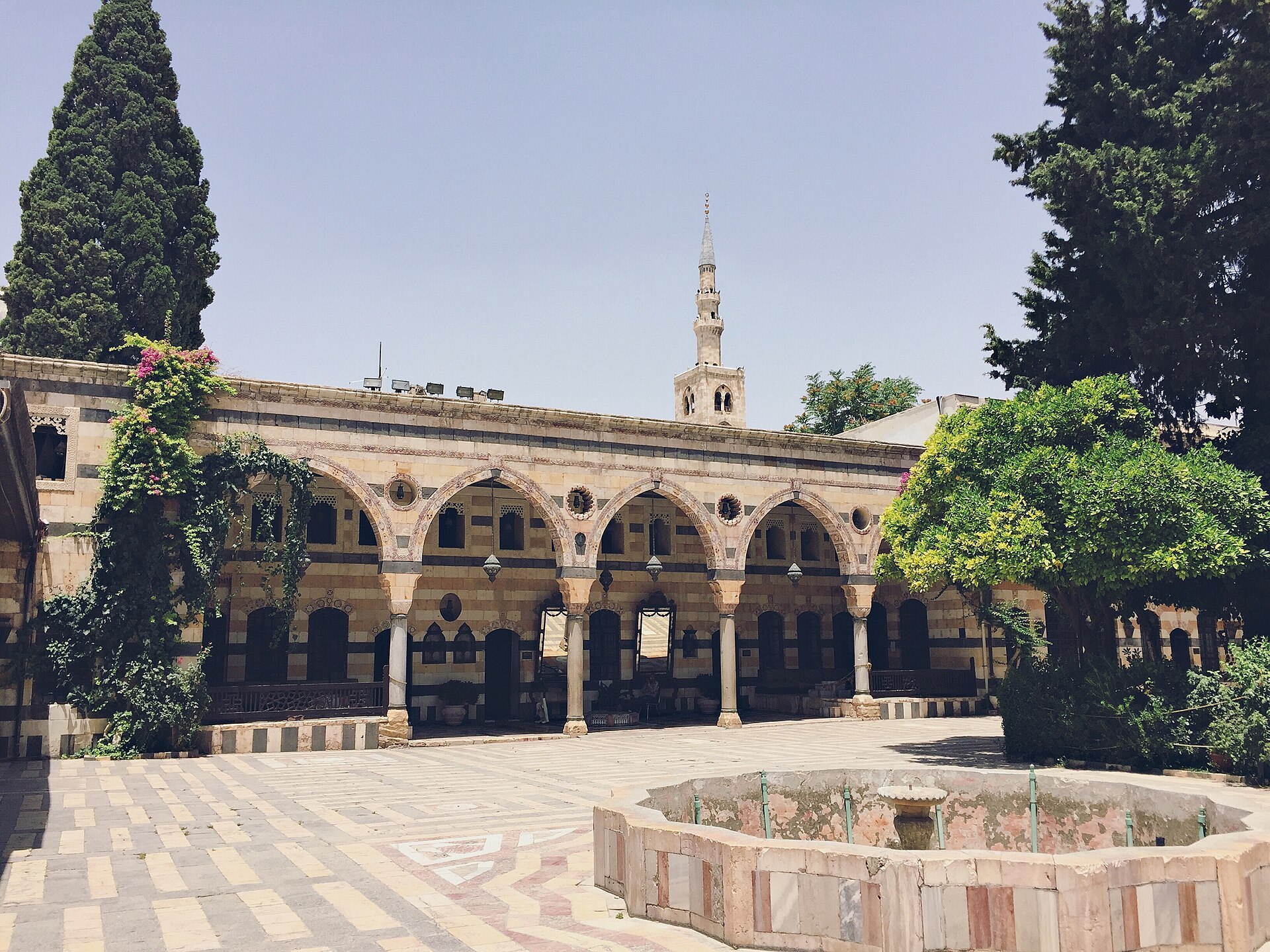
The Azm Palace is a grand example of the traditional Damascene courtyard house, arranged around open courts with fountains and gardens, surrounded by richly decorated rooms. In the manner of the region, it presents a plain and unremarkable face to the street, hiding all its beauty within, so that entering it is a revelation.
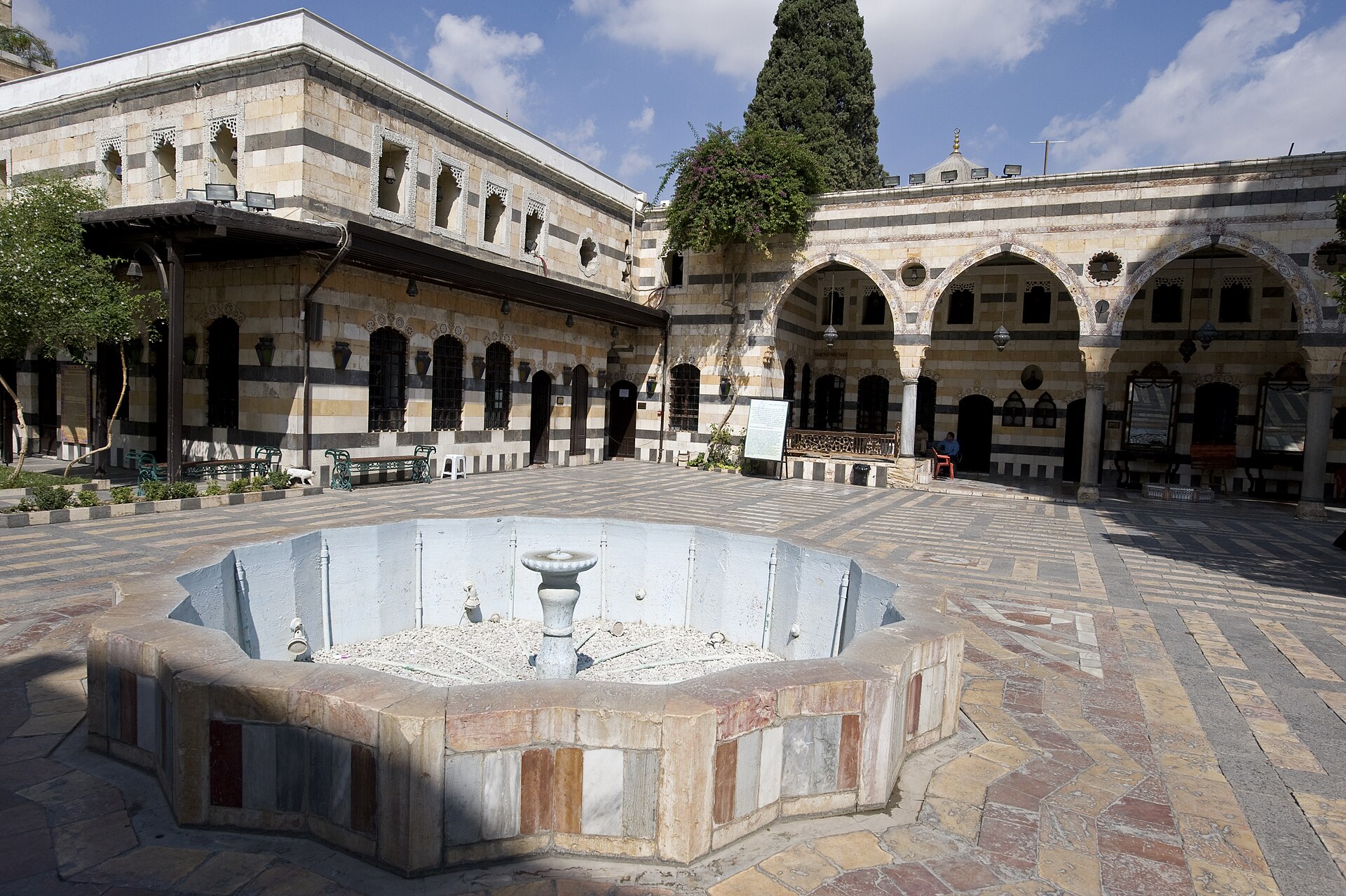
The palace is divided, as such houses were, into two main parts, the selamlik, the public quarter where guests were received, and the haramlik, the private family quarter. Each is arranged around its own courtyard with fountains and plantings, and each contains halls and rooms decorated in the rich Damascene style.
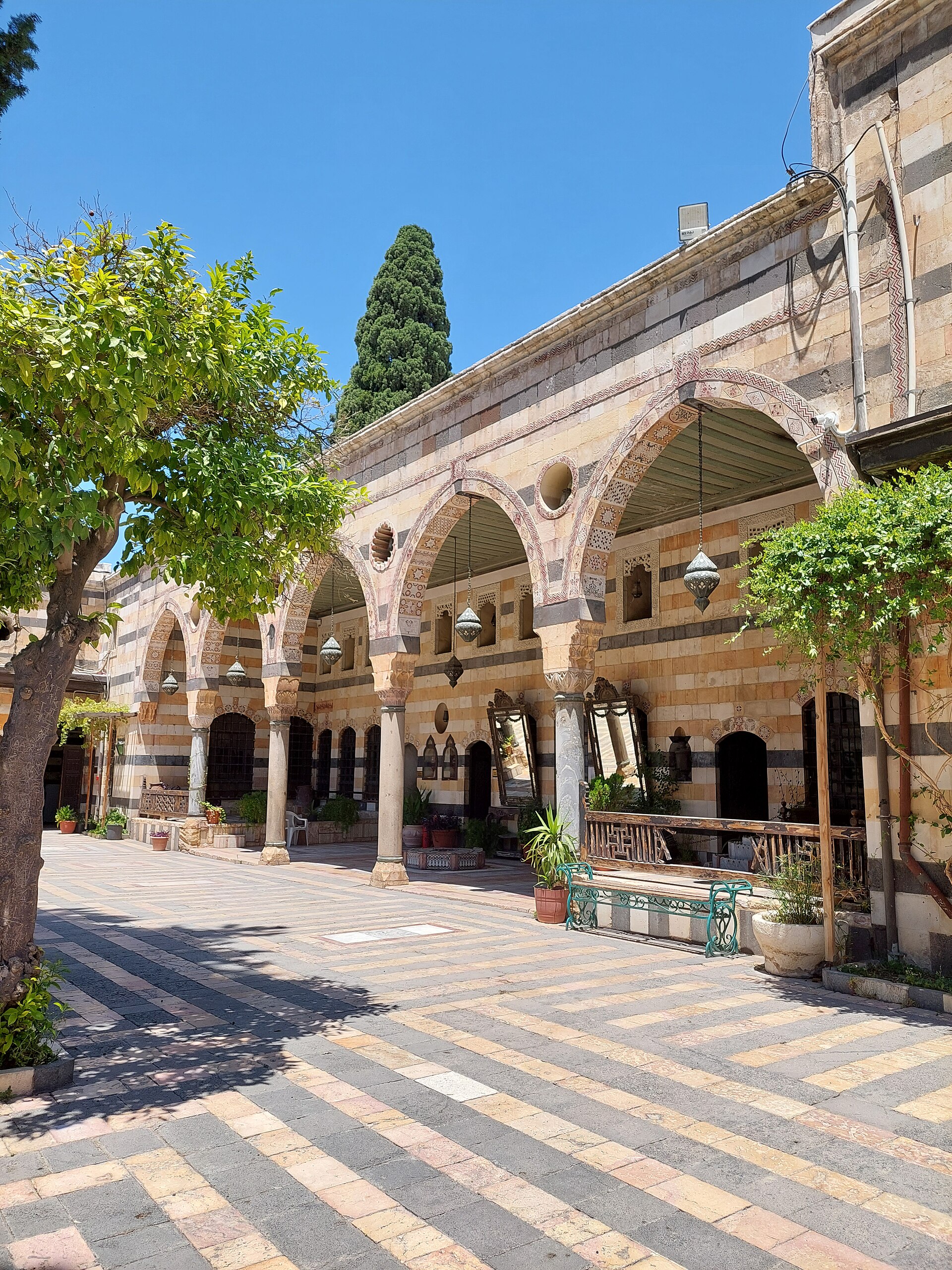
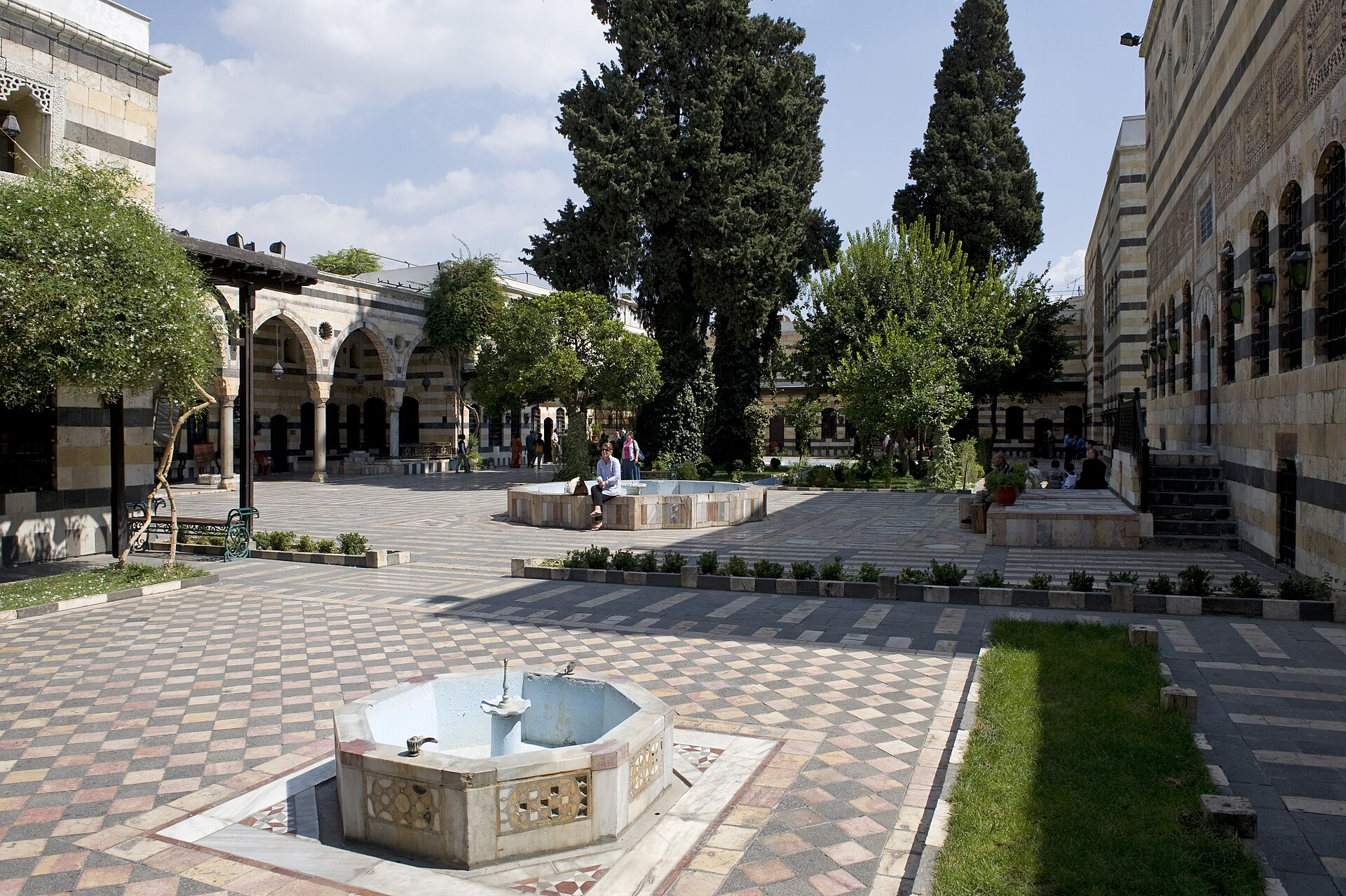
The courtyards are the heart of the palace, paved and planted, cooled by fountains and pools, and shaded by citrus and other trees. In the hot, dry climate of Damascus, these open courts, with their water and greenery, created a microclimate of coolness and calm, an earthly paradise at the center of the house.
The rooms and halls opening onto the courts are decorated with the arts of Damascus, painted and carved wooden ceilings and panels, marble floors and inlay, and fine ornament. The famous iwans, the tall vaulted recesses open to the courts, provided shaded seating and are among the most characteristic features of the house.
For the visitor, the Azm Palace offers an immersion in the traditional world of Damascus, a serene sequence of courts and halls of great beauty. It is the finest surviving Damascene courtyard house and one of the treasures of the old city, a paradise of shade, water, and ornament hidden behind its plain outer wall.
Among the palaces gathered in this Middle Eastern group, the Azm Palace makes an instructive contrast with the mountain court of Beiteddine. Both are Ottoman-era residences of the Levant, sharing a common vocabulary of courtyards, fountains, and painted rooms, yet where Beiteddine commands a mountain ridge, the Azm Palace hides in the dense fabric of an ancient city, turning entirely inward. Together they show the two faces of the great house of the region, the commanding seat and the secret paradise.
Damascus in the Ottoman Age
To understand the palace is to understand Damascus, one of the oldest cities in the world and a great center of the Islamic world for many centuries. In the Ottoman period, Damascus was a major provincial capital of the empire, a city of mosques, markets, and great houses, and the starting point of the annual pilgrimage caravan to Mecca.
The city had been a capital of the early Islamic caliphate and remained a center of learning, trade, and craftsmanship through the centuries. Under the Ottomans it was the seat of a provincial government and a hub of commerce and religion, its old city packed with monuments from many periods of its long history.
The great houses of Damascus, of which the Azm Palace is the grandest, were built by the wealthy and powerful families of the city, the merchants, officials, and notables who formed its elite. These courtyard houses, plain without and sumptuous within, expressed the wealth and refinement of their owners while preserving the privacy prized in the culture.
Damascus was famous for its crafts, above all the arts of the interior, the painted and carved woodwork, the marble inlay, and the fine decoration that adorned its houses and mosques. The city gave its name to damask, the patterned textile, and its craftsmen were renowned throughout the region for the beauty of their work.
The Azm Palace was built at the height of this world, as the residence of the Ottoman governor of the city, and it embodies the art of living of the Damascene elite in the age of the empire. It stands as the supreme monument of the domestic architecture of one of the great cities of the Islamic world.
It is worth remembering just how old Damascus is, for the city was ancient when Rome was young, and it has been continuously inhabited for thousands of years. The Azm Palace, for all its beauty, is a relatively recent addition to a city layered with the remains of many civilizations, from the Roman temple beneath the Umayyad Mosque to the medieval markets and the Ottoman houses. To visit the palace is to touch only the most recent stratum of an immensely deep history.
As’ad Pasha and the Azm Family
The palace was built by As’ad Pasha al-Azm, the most famous member of the Azm family, who served as Ottoman governor of Damascus in the mid-eighteenth century. The Azm family were powerful provincial notables who provided governors for Damascus and other provinces over several generations.
As’ad Pasha governed Damascus for many years, an unusually long tenure that reflected his skill and his standing with the Ottoman authorities. Under his rule the city prospered, and he was responsible for important building, including markets and khans as well as his great palace.
One of the governor’s most important responsibilities was the organization and protection of the annual pilgrimage caravan to Mecca, a great undertaking that set out from Damascus each year. As’ad Pasha’s success in this role enhanced his prestige and his wealth, contributing to the resources that built his palace.
The Azm family’s power, like that of provincial notables throughout the Ottoman Empire, rested on a combination of official position, wealth, and local influence. Their great houses, above all the palace at Damascus, expressed this power and standing, monuments to the provincial elite of the empire.
As’ad Pasha built the palace as his private residence, a home worthy of his position as governor and notable. It remains his great monument, a masterpiece of the domestic architecture of the age, preserving the world of the Azm family and the Damascene elite in the eighteenth century.
The career of As’ad Pasha illustrates how the Ottoman Empire governed its Arab provinces through powerful local families, granting them office and autonomy in exchange for loyalty, tribute, and the maintenance of order. The Azm family’s long dominance of Damascus, and the palace that crowned it, are monuments to this system of provincial notables, which gave the empire’s distant cities rulers who were at once its servants and local magnates in their own right.
The Building of the Palace
The Azm Palace was built in the mid-eighteenth century, over a short period of a few years, as the residence of As’ad Pasha. The governor gathered the finest craftsmen of Damascus for the work, and used the wealth of his office to create a house of exceptional beauty and refinement.
The palace was built on the site of earlier buildings, incorporating some older materials, in the heart of the old city near the great Umayyad Mosque. Its position in the crowded old city meant that, like all Damascene houses, it turned inward, hiding its courts and gardens behind plain walls.
The construction employed the traditional building materials and techniques of Damascus, above all the striped masonry of alternating light and dark stone known as ablaq, a characteristic feature of the architecture of the region. This striped stonework, along with the courtyards and iwans, gives the palace its distinctive character.
The finest craftsmen of the city worked on the decoration, the painters and carvers of wood, the workers of marble, and the other artisans whose skills adorned the great houses of Damascus. The palace gathered these crafts in one great house, a showcase of the decorative arts of the city.
The result was the grandest and most beautiful of the Damascene courtyard houses, a palace that expressed the wealth and taste of its builder and the artistic traditions of the city. Built quickly but with the finest skill, it has survived as the supreme example of its kind.
The Damascene Courtyard House
The Azm Palace is the masterpiece of the Damascene courtyard house, the traditional form of the great homes of the city, and its architecture repays close attention. The essential principle is the inward-facing house, arranged around open courts, presenting a plain face to the street and reserving all beauty for the interior.
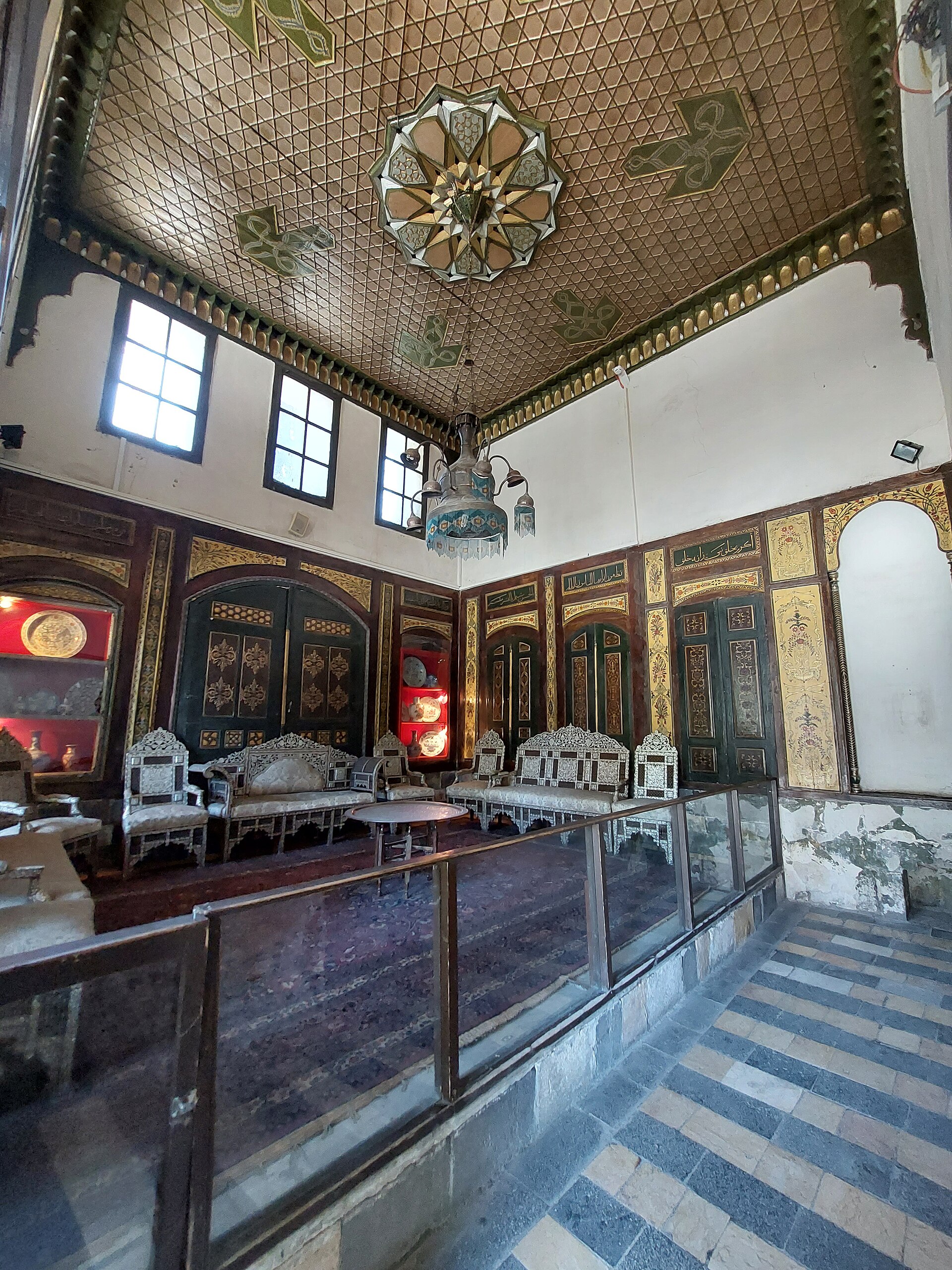
The house is built around courtyards, each an open space paved and planted, with a central fountain or pool and shaded by trees. The rooms and halls open onto these courts, so that the life of the house is oriented inward, toward the private world of the courtyard rather than the public world of the street.
A characteristic feature is the iwan, a tall vaulted recess open on one side to the courtyard, which provided shaded seating cooled by the nearby fountain. Facing north to catch the shade, the iwan was a favored place to sit in the heat of the day, open to the court yet sheltered from the sun.
The striped masonry of ablaq, alternating courses of light and dark stone, decorates the walls and arches, a hallmark of the architecture of Damascus and the wider region. Combined with the carved and painted woodwork of the interiors, it gives the palace its rich and distinctive appearance.
This architecture, developed over centuries in Damascus, achieved a perfect adaptation to the climate and the culture, creating cool, private, and beautiful homes in the hot, crowded city. The Azm Palace is its supreme expression, a house that embodies the art of living of the Damascene elite.
The genius of the Damascene courtyard house lies in how completely it answers its setting, turning the harsh, dry, crowded conditions of the old city into an advantage. By presenting blank walls to the dusty street and opening entirely onto private courts of water and greenery, the house creates its own cool, fragrant, and serene world within, indifferent to the heat and bustle outside. It is one of the great vernacular architectures of the world, perfected over centuries in the service of a whole way of life.
The Selamlik, the Public Quarter
The public part of the palace, the selamlik, was the quarter where the governor received his guests, conducted business, and displayed the splendor of his house to visitors. Arranged around its own courtyard, it contained the grandest reception rooms and was the face the household showed to the outside world.
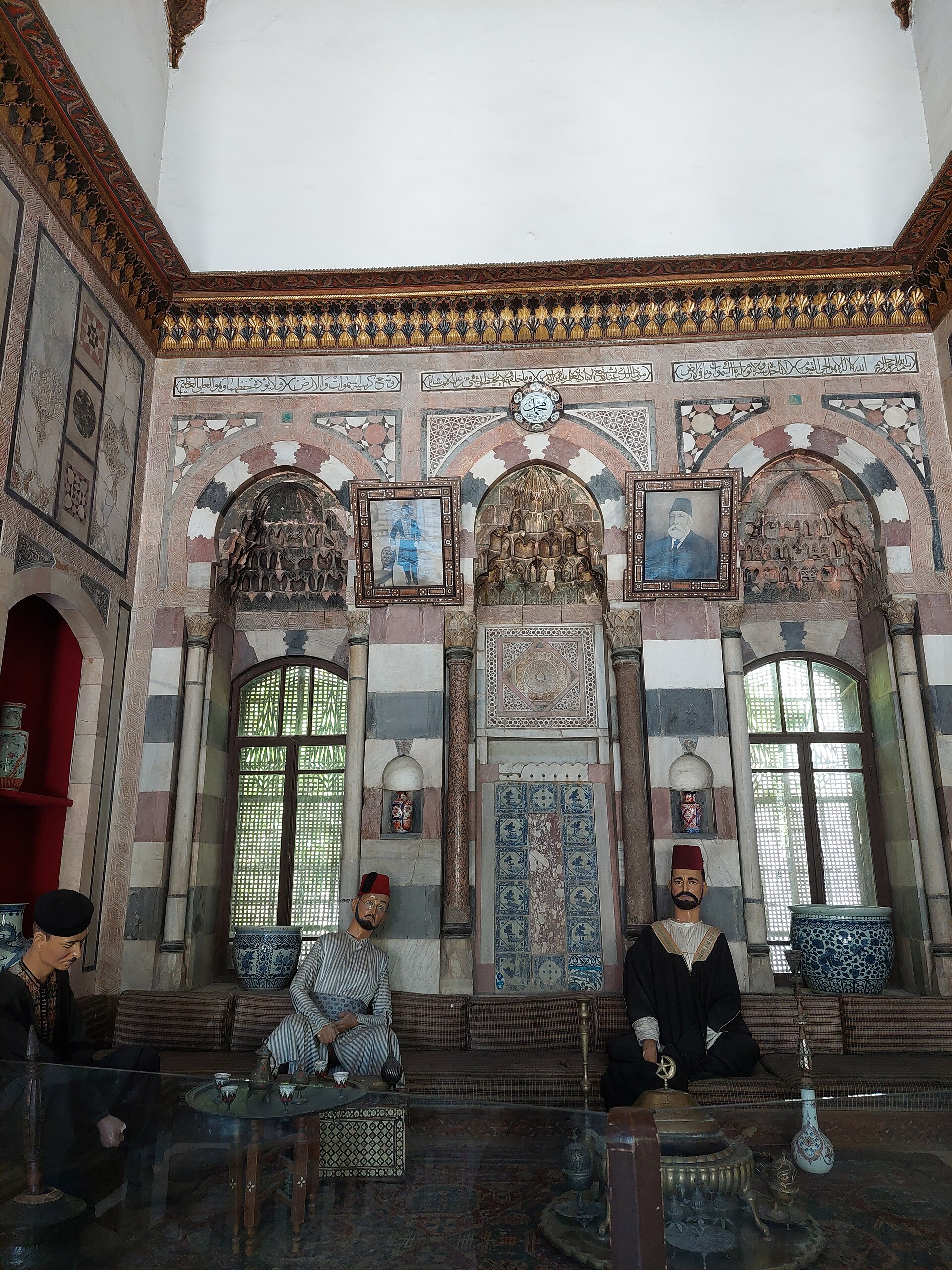
The selamlik courtyard is a beautiful space, paved and planted, with a central pool and fountain and shaded by trees, surrounded by the arcades and iwans of the public rooms. Here guests were received in the open court or in the halls around it, in a setting designed to impress.
The reception rooms of the selamlik are among the most richly decorated in the palace, their walls and ceilings covered with the painted and carved woodwork for which Damascus was famous. These were the rooms where the governor met important visitors and displayed the wealth and taste of his household.
The division of the house into a public selamlik and a private haramlik was a fundamental principle of the Damascene home, separating the world of guests and business from the private life of the family. The selamlik was the setting for the social and official life of the household.
For the visitor today, the selamlik provides the first courtyards and halls of the palace, an introduction to the beauty and refinement of the house. Its fountains, its iwans, and its decorated rooms convey the world of hospitality and display that was central to the life of the Damascene elite.
The division between selamlik and haramlik is one of the defining features of the traditional Islamic house, and moving between the two quarters of the Azm Palace makes the principle vivid. The selamlik was, in a sense, a stage, the part of the house designed to be seen, where the family presented its wealth and hospitality to the world; and its grandeur was calculated to impress, for in a culture where the home was largely hidden, the reception of a guest was a carefully managed act of display.
The Haramlik, the Family Quarter
The private part of the palace, the haramlik, was the domestic quarter reserved for the family and the intimate life of the household, screened from the guests received in the selamlik. Arranged around its own courtyard, it was the private heart of the house, closed to outsiders.

The haramlik courtyard, like that of the selamlik, is a serene space of fountains, pools, and plantings, surrounded by the rooms of the family. Here the daily life of the household was lived, away from the public world, in the privacy prized by the culture of Damascus.
The rooms of the haramlik included the living quarters of the family and the spaces of domestic life, decorated, like the rest of the palace, with the fine woodwork and ornament of Damascus. Though private, these rooms shared in the beauty of the house, comfortable and richly appointed.
The separation of the family quarter reflected the customs of privacy and the seclusion of family life that governed the Damascene home. The haramlik was the world of the family, its women, and its children, protected from the eyes of guests and the public.
For the visitor, the haramlik reveals the domestic side of the palace, the private world behind the public splendor. Its courtyards and rooms, arranged for the intimate life of the family, complete the picture of the Damascene great house, from the world of guests to the world of the home.
The Great Reception Hall
The grandest interior of the palace is its principal reception hall, or qa’a, a great room of the utmost richness where the governor received his most important guests. It represents the height of the domestic decorative arts of Damascus, a masterpiece of the painted and carved interior.
The reception hall follows the classic form of the Damascene qa’a, entered from the courtyard and centered on a lower area with a fountain, from which raised seating areas look out. The cool fountain and the raised platforms created the ideal setting for receiving and entertaining guests.
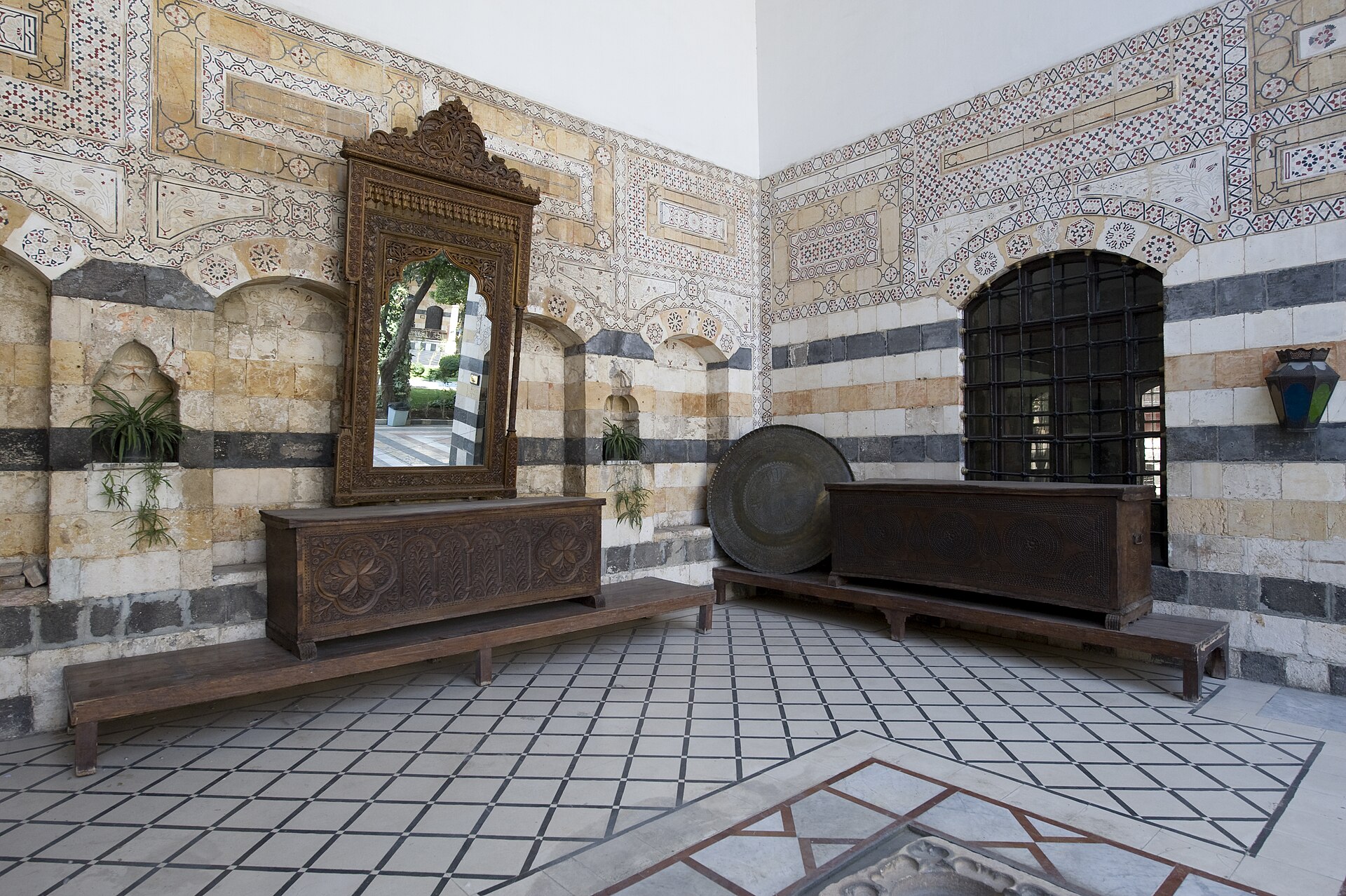
The walls and ceiling of the hall are covered with the famous decorated woodwork of Damascus, painted and carved in intricate patterns and glowing with color and gilding. Marble panels and inlay adorn the lower walls and floor, and the whole room is a fabric of ornament.
This decorated woodwork, known by the technique of ajami, was the great glory of the Damascene interior, and the reception halls of the Azm Palace preserve some of its finest examples. The painted panels and ceilings, worked with floral and geometric patterns, created interiors of extraordinary richness.
The great reception hall remains one of the highlights of the palace, its painted woodwork, marble, and fountain preserving the splendor of the Damascene qa’a. It is a supreme example of the reception rooms of the great houses of Damascus, a monument to the domestic art of the city.
To stand in the great qa’a and look up at its painted ceiling is to understand why the reception room was the summit of the Damascene decorative arts. Everything in the space was arranged to honor the guest and to delight the eye, from the play of the fountain to the coolness of the marble to the glowing panels overhead, and the whole room was a demonstration that hospitality, in the culture of Damascus, was among the highest of the arts.
Courtyards, Fountains, and Citrus
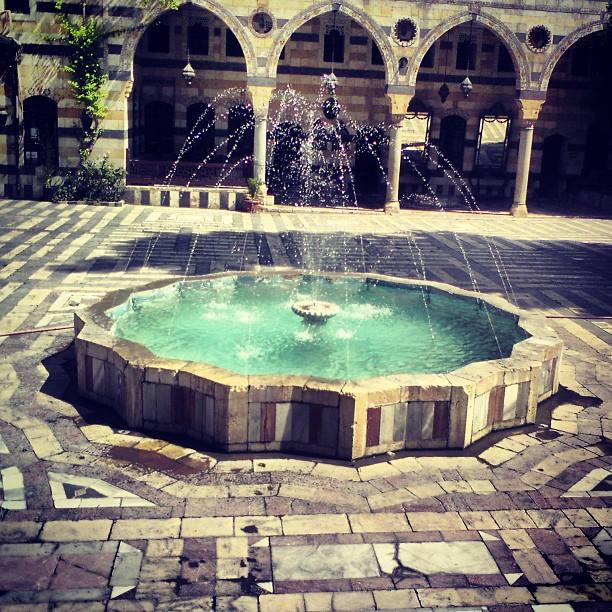
The courtyards are the heart and soul of the Azm Palace, the open spaces around which the whole house is arranged and which give it its character of a hidden paradise. Paved with patterns of colored stone, cooled by fountains and pools, and shaded by citrus and other trees, they are spaces of serene beauty.
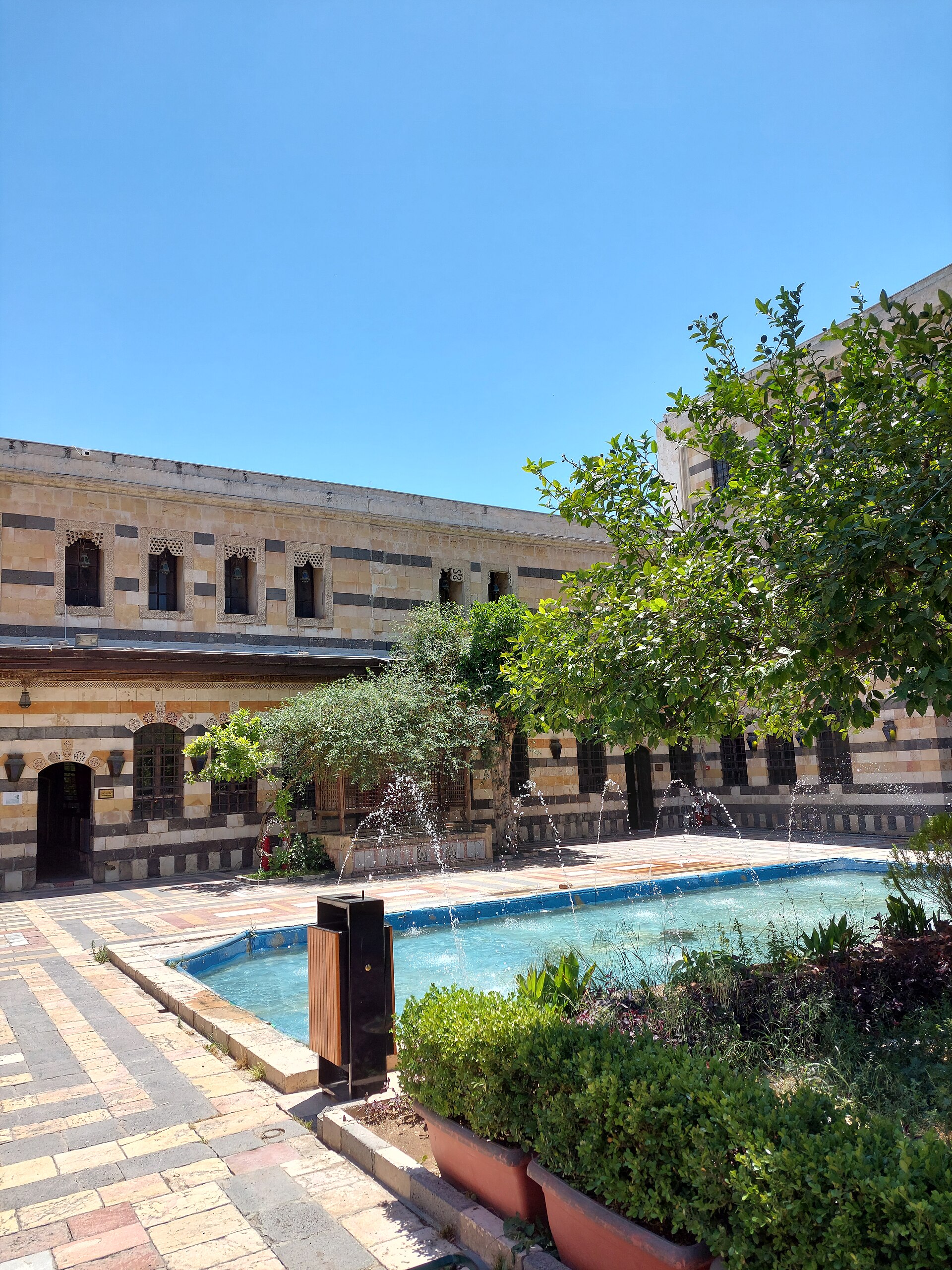
Water is central to the courtyards, with fountains and pools bringing coolness, movement, and the sound of running water into the house. In the hot, dry climate of Damascus, this water was both a practical necessity and a source of delight, and the sound of the fountains fills the courts.
The plantings of the courtyards, above all the citrus trees with their fragrant blossom and fruit, brought greenery and scent into the house, together with jasmine and other flowers. The combination of water, greenery, and shade created a cool and fragrant microclimate at the center of the home.
The courtyards were the living heart of the house, where the family gathered, where guests were received in the open air, and where the daily life of the household unfolded. In the traditional Damascene home, life was oriented toward these private courts rather than toward the street.
For the visitor, the courtyards are the great delight of the Azm Palace, serene spaces of water, greenery, and shade that embody the art of the Damascene courtyard house. To sit in an iwan by the fountain, in the shade of the citrus trees, is to understand the paradise that the great houses of Damascus created behind their plain walls.
There is a particular magic to the courtyards in the late afternoon, when the sun has left the paved floor and the fountains play in the shade of the citrus trees. In that hour the deep wisdom of the Damascene house reveals itself, for the court has become a pool of coolness and calm at the heart of the burning city, fragrant with orange blossom and filled with the sound of water. It is easy to understand why the people of Damascus poured their wealth and art into these hidden gardens.
The Painted Rooms of Damascus
The interiors of the Azm Palace are a showcase of the decorative arts of Damascus, above all the famous painted and carved woodwork that adorned the great houses of the city. Ceilings, walls, and panels are covered with intricate ornament in color and gilding, among the finest examples of the art.
The technique, known as ajami, involved the application of relief ornament and painting to wooden panels and ceilings, worked into floral, geometric, and calligraphic patterns and finished with color and gold. It created interiors of shimmering richness, and it was the special glory of the Damascene home.
Marble was used with great skill in the floors, fountains, and lower walls, worked into patterns of inlay and combined with the striped ablaq masonry. The combination of marble below and painted wood above created the characteristic layered richness of the Damascene reception room.
The decoration drew on the wider vocabulary of Islamic art, with its geometry, its stylized vegetation, and its calligraphy, adapted to the domestic setting and the traditions of Damascus. Every surface was an opportunity for ornament, transforming the rooms into works of art.
Together these decorative arts make the Azm Palace a museum of Damascene craftsmanship, preserving the traditions of the painted room and the carved interior in one of their finest settings. The palace is a monument to the skill of the craftsmen of Damascus, whose art made the great houses of the city so beautiful.
The painted ajami rooms of Damascus have become, in recent times, a subject of great scholarly and conservation interest, for they are fragile and increasingly rare, and the Azm Palace preserves some of the finest. To look up at a painted ceiling glowing with faded gold and color, worked with flowers and arabesques and lines of poetry, is to see one of the most refined domestic arts the Islamic world ever produced, an art made not for palaces of state but for the pleasure of a family at home.
The Palace Baths
Like the great houses of Damascus generally, the Azm Palace contained its own hammam, a private bath complex for the use of the household, built in the tradition of the Islamic bath. A sequence of domed chambers, it provided the ritual and pleasure of the bath within the home.

The hammam follows the classic arrangement, with rooms progressing from cool to hot, their domed ceilings pierced with small glazed openings that admit shafts of light. Bathers passed through the chambers in the traditional manner, and the bath was a place of relaxation as well as cleansing.
The private bath was a mark of the wealth and refinement of a great house, sparing the family the need to use the public baths of the city. Its presence in the Azm Palace reflects the completeness of the household as a self-contained world, providing for every need.
The domed chambers of the hammam, lit by shafts of light from above, are among the atmospheric spaces of the palace, evoking the culture of the bath that was central to life in Damascus. The bath was a social and sensory pleasure as well as a practical necessity.
The hammam of the Azm Palace, preserved among the rooms of the house, illustrates the role of the bath in the domestic life of Damascus. It reminds the visitor that the great courtyard house provided for every aspect of life, from the ceremonial reception to the private ritual of the bath.
The Museum of Popular Traditions
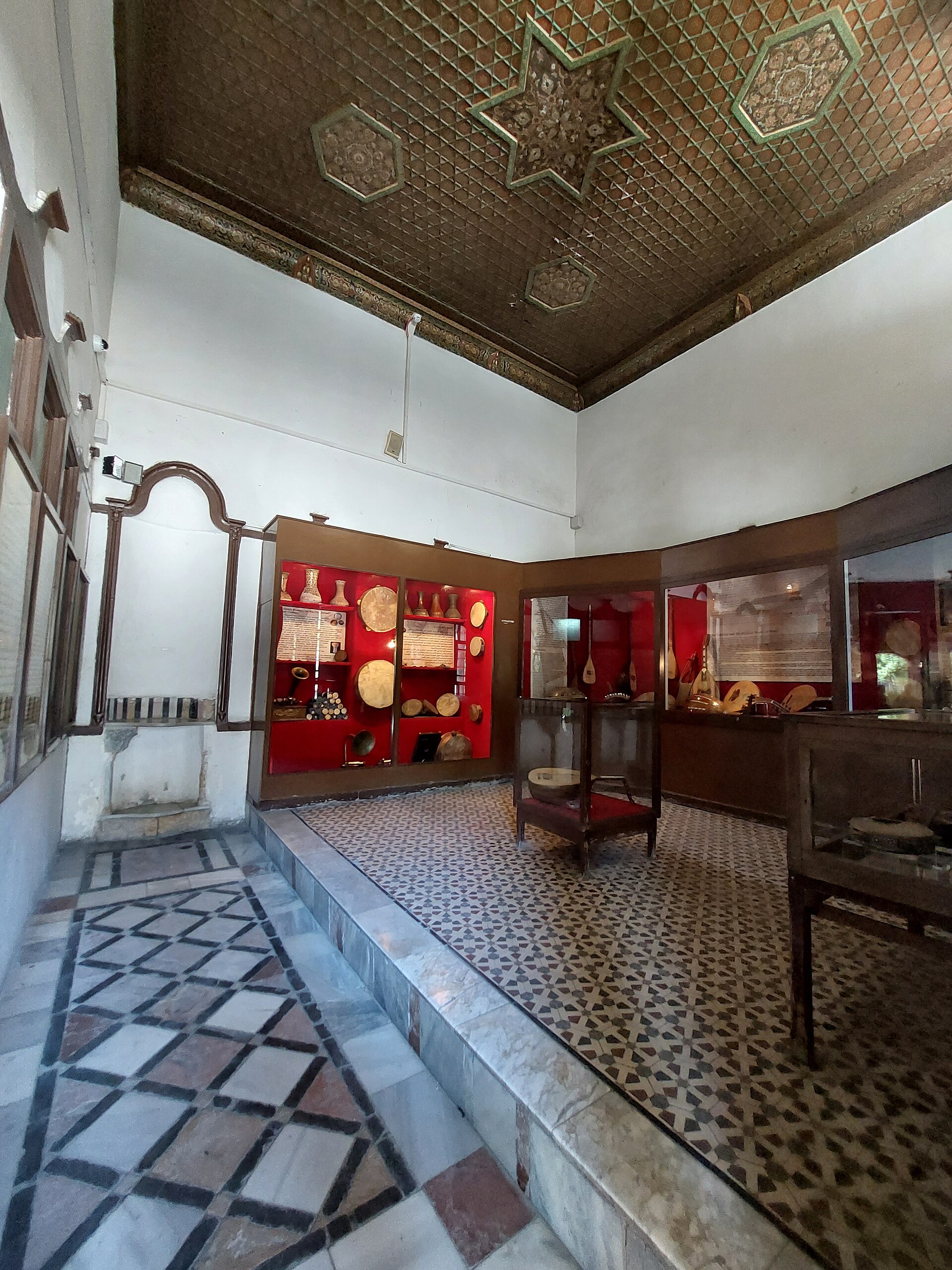
Today the Azm Palace houses the Museum of Arts and Popular Traditions, and its rooms display collections illustrating the traditional life, crafts, and customs of Damascus and Syria. The setting of the great courtyard house makes an ideal home for these collections, tying the objects to the world that produced them.
The museum displays the crafts of Damascus and Syria, including textiles, metalwork, ceramics, glass, weapons, and the tools and objects of traditional life. Rooms are sometimes arranged to show scenes of domestic and social life, peopled with figures in traditional dress.
The collections illuminate the material culture of Damascus, from the famous crafts of the city to the customs of family and social life. Displayed within the palace, they bring to life the world of the Damascene home, the setting for which they were made.
The palace itself, with its courtyards, halls, and decoration, is the greatest exhibit of the museum, a complete example of the traditional great house of Damascus. To tour the museum is to explore both the collections and the building that houses them, each illuminating the other.
For the visitor, the museum makes the Azm Palace a place to understand both the architecture and the culture of Damascus, the great house and the way of life it sheltered. It preserves the heritage of the city within one of its finest monuments, a treasury of Damascene art and tradition.
There is a fitting harmony in a house of Damascus becoming a museum of the traditions of Damascus, for the building and its collections illuminate one another. The textiles, the metalwork, the costumes and crafts on display were made for exactly the kind of life the palace was built to shelter, and to see them in their proper setting, amid the courts and painted rooms they were meant to adorn, is to understand them far better than any ordinary gallery could allow.
The Azm Palace Today
The Azm Palace has endured through the modern history of Damascus, suffering damage at times, including during the French bombardment of the city in the 1920s, after which it was restored. It has survived as the great monument of Damascene domestic architecture and a treasure of the old city.
The old city of Damascus, in which the palace stands, is inscribed on the UNESCO World Heritage List, recognized for its outstanding value as one of the oldest continuously inhabited cities in the world and a great center of Islamic culture. The Azm Palace is among the treasures of this ancient city.
In recent times, the wider troubles of Syria have brought new dangers to its heritage, and the preservation of monuments like the Azm Palace has become a matter of concern. The palace remains a symbol of the rich cultural heritage of Damascus and of the traditions of its great houses.
For Syria and for the wider Arab world, the Azm Palace is a cherished monument, the finest surviving example of the Damascene courtyard house and a repository of the crafts and traditions of the city. It stands as a testament to the art of living of one of the great cities of the Islamic world.
To sit in a courtyard of the Azm Palace, by a fountain in the shade of the orange trees, surrounded by the painted rooms of Damascus, is to enter the serene and sophisticated world of the great houses of the ancient city. The age of the Ottoman governors is long past, but their paradise behind the plain wall endures, a jewel of the old city of Damascus.
The recent history of Syria casts an inevitable shadow over any account of the Azm Palace, for the country’s monuments have been placed at risk by conflict, and the fate of its heritage has become a matter of international concern. That makes the preservation of a treasure like the Azm Palace all the more precious, and all the more a symbol of the enduring cultural richness of Damascus, a city that has survived and rebuilt itself many times across its long history.
Palaces Nearby
The Azm Palace belongs with the other royal and princely residences of the Middle East and the Levant gathered here. Travel to the mountain court of the Lebanese emirs, and watch this space for another palace of the region to join them soon.
You May Like
Changgyeonggung: The Gentle Garden Palace of Seoul


One thought on “The Azm Palace of Damascus: A Hidden Paradise of the Old City”