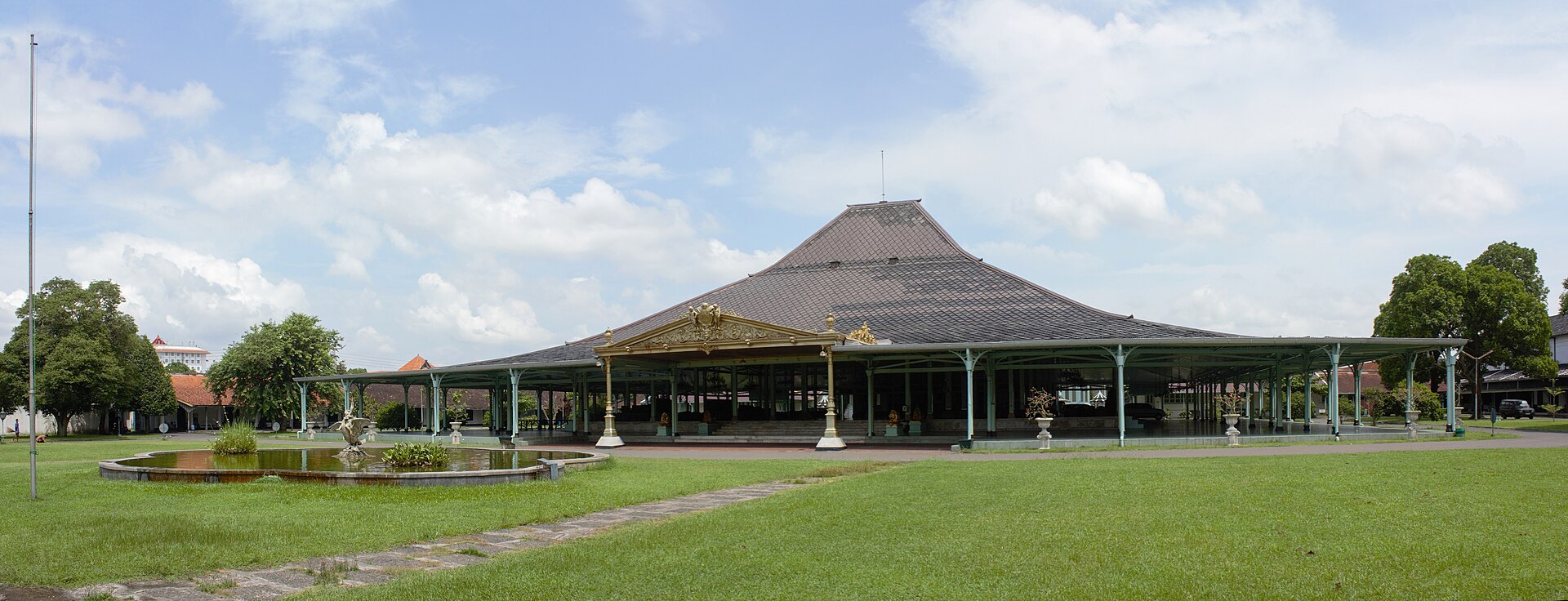
In the city of Solo in central Java, a short distance from the great court of the Susuhunan, stands a second and quite distinct royal palace, the seat of a princely house with a proud and independent history. The Pura Mangkunegaran is the palace of the Mangkunegaran, a minor princely court founded by a rebel prince who won his own domain by the sword, and it is famous above all for its Pendopo Ageng, a vast open pavilion said to be the largest of its kind in Indonesia, its towering roof supported by great pillars and painted with the colors of the Javanese zodiac.
The Mangkunegaran is one of the four royal courts of central Java, the two senior thrones of Surakarta and Yogyakarta and the two minor princely houses that split from them. Founded in the eighteenth century, it developed its own distinctive court culture, its own style of dance and music, and its own artistic traditions, rivalling the greater courts in the refinement if not the scale of its culture.
The palace blends the classical Javanese court style with European influences absorbed over the centuries, reflecting the wide connections and cosmopolitan tastes of its princes. Its grand pendopo, its residence turned museum, and its famous library preserve the heritage of a court that, though minor in rank, was major in culture, a jewel of Javanese civilization in the city of Solo.
This is the second palace of a group of Javanese and Indonesian royal courts in this series, following the senior Kraton of Surakarta, and it deepens the portrait of the classical culture of Java. To enter the great pendopo of the Pura Mangkunegaran, beneath its painted roof, is to encounter the living heritage of a proud princely house, one of the four royal courts of the Javanese heartland.
In This Article
- The Palace of a Princely House
- Raden Mas Said, the Warrior Prince
- One of the Four Courts of Java
- The Legion of the Prince
- The Great Pendopo Ageng
- The Painted Roof
- The Residence and Its Treasures
- The Reksa Pustaka Library
- The Mangkunegaran Style of Dance
- Music and the Court Gamelan
- Gardens and European Touches
- A Court Revived
- The Pura Mangkunegaran Today
The Palace of a Princely House
The Pura Mangkunegaran is a royal palace in the city of Solo, the seat of the princely house of Mangkunegaran, one of the four courts of central Java. Smaller than the great Kraton of the Susuhunan nearby, it is nonetheless a palace of great beauty and cultural importance, the center of a distinct court tradition.
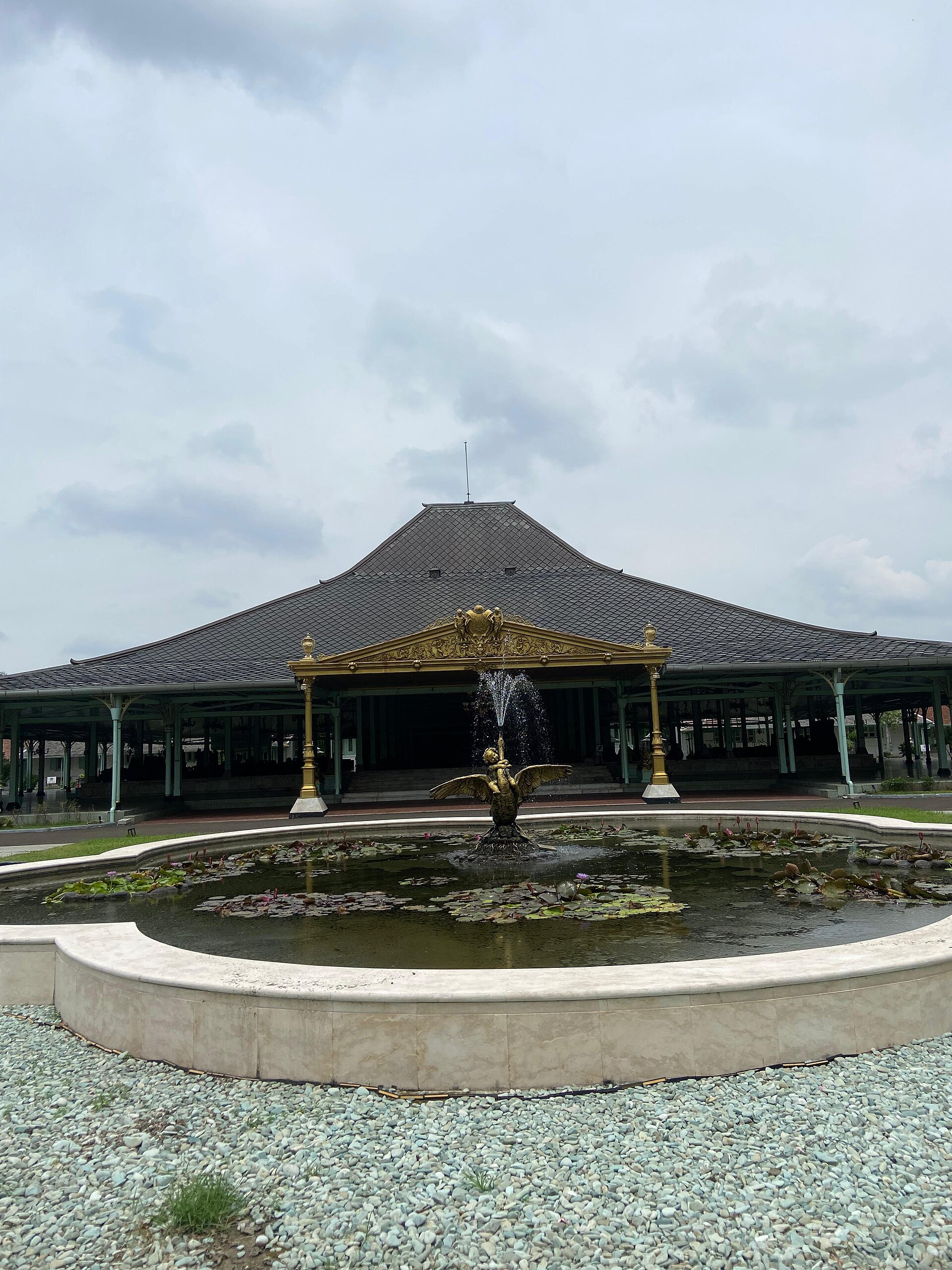
The palace is arranged, like the other Javanese courts, around courtyards and pavilions, with the great Pendopo Ageng at its heart, followed by the residence and the private quarters. The compound combines the classical Javanese arrangement with elements absorbed from European architecture over the centuries.
The most celebrated feature of the palace is the Pendopo Ageng, an enormous open pavilion of the joglo type, its towering pyramidal roof supported by great teak pillars. Said to be the largest pendopo in Indonesia, it is the ceremonial heart of the court, the setting for its dances and gatherings.
Beyond the pendopo lies the Dalem, the residence of the prince, now largely given over to a museum displaying the treasures and heirlooms of the court, and beyond that the private quarters and gardens. The palace also houses a famous library, one of the great collections of Javanese manuscripts.
For the visitor, the Pura Mangkunegaran offers an encounter with the culture of a Javanese princely court, its grand pendopo, its treasures, and its living traditions of dance and music. As one of the four royal courts of central Java, it preserves a distinct and refined strand of the classical culture of the island.
Set beside the senior Kraton of Surakarta explored just before it, the Pura Mangkunegaran reveals how the royal culture of central Java was not a single tradition but a family of related courts, each with its own accent. The Mangkunegaran, junior in rank but proud in spirit, cultivated its own style of dance, its own gamelan, and its own art, and its cosmopolitan openness to European influence gives it a character distinct from the more inward senior court.
Raden Mas Said, the Warrior Prince
The Mangkunegaran was founded by Raden Mas Said, a prince of the Mataram royal house who became one of the great warrior figures of Javanese history. Known by the fearsome epithet Sambernyawa, meaning the soul-taker, he waged a long and stubborn guerrilla war that won him his own princely domain.
Raden Mas Said rose in rebellion against the established order in the mid-eighteenth century, during the turbulent years of the division of Mataram, and fought a prolonged campaign against the combined forces of the courts and the Dutch. His skill and determination as a guerrilla leader made him a formidable and celebrated warrior.
After years of war, a settlement was reached in which Raden Mas Said was granted his own princely domain and title, becoming Mangkunegara the First and founding the princely house of Mangkunegaran. He established his seat at Solo, near the court of the Susuhunan, as a semi-autonomous prince.
The founding of the Mangkunegaran by a rebel who won his domain by the sword gave the house a proud and independent character, distinct from the senior courts. Mangkunegara the First was both a warrior and a cultivated ruler, and he established the traditions of his court, including its own military corps and its own artistic style.
The memory of the warrior-founder, Sambernyawa, remains central to the identity of the Mangkunegaran, a house born from rebellion and forged in war. His legacy is the proud and distinct court that bears his title, one of the four royal houses of central Java, founded by one of the great heroes of Javanese history.
The epithet Sambernyawa, the soul-taker, gives some sense of the fear that Raden Mas Said inspired in his enemies during his long guerrilla war, and it remains a proud title in the memory of the house. That the founder of the Mangkunegaran won his domain not by inheritance but by years of stubborn fighting gives the court a heroic origin story, and the memory of the warrior-prince is woven into the identity of the house he founded.
One of the Four Courts of Java
The Mangkunegaran is one of the four royal courts of central Java, a group that arose from the division and subdivision of the old kingdom of Mataram. The two senior courts, the Kraton of Surakarta under its Susuhunan and the Kraton of Yogyakarta under its Sultan, were each accompanied by a minor princely house.
Within Surakarta, the minor princely house was the Mangkunegaran, founded by Raden Mas Said, while within Yogyakarta the corresponding house was the Pakualaman. These four courts together preserved and developed the classical culture of Java, each with its own traditions and its own distinct identity.
The princely houses, though junior in rank to the senior courts, were semi-autonomous, with their own domains, their own courts, and their own military corps. The Mangkunegaran maintained a legion, a military force that reflected the martial origins of the house and its founder.
The rivalry and interplay among the four courts enriched the culture of central Java, as each cultivated its own styles of dance, music, art, and dress. The Mangkunegaran developed a distinctive court culture, blending Javanese tradition with the cosmopolitan tastes of its princes.
The Mangkunegaran thus holds a distinct place among the royal houses of Java, a princely court with its own proud history and culture. Together with the senior Kraton and the other courts, it forms part of the rich constellation of the Javanese monarchy, preserving the classical civilization of the island.
The Legion of the Prince
Reflecting its martial origins, the Mangkunegaran maintained its own military corps, a legion that was among the marks of the semi-autonomous status of the princely house. Founded by a warrior prince, the court preserved a military tradition distinct from those of the other Javanese houses.

The legion of the Mangkunegaran was a disciplined military force, at times organized and trained in the European manner, reflecting the openness of the court to foreign ideas and its determination to maintain an effective fighting force. It was a source of pride and a symbol of the house’s autonomy.
The military tradition of the Mangkunegaran descended from its founder, Raden Mas Said, whose success as a guerrilla commander won the house its domain. The legion preserved the memory of this martial origin and provided the princes with a force of their own.
The uniforms, the drill, and the ceremonies of the legion were part of the distinctive culture of the Mangkunegaran, and the corps played a role in the ceremonial life of the court as well as in its defense. It embodied the proud and independent character of the princely house.
The military tradition of the Mangkunegaran, rooted in the warrior origins of the house, added a distinctive dimension to its court culture. The legion was a mark of the semi-autonomous status of the princely house and a living memorial to its founder, one of the great warriors of Javanese history.
The Great Pendopo Ageng
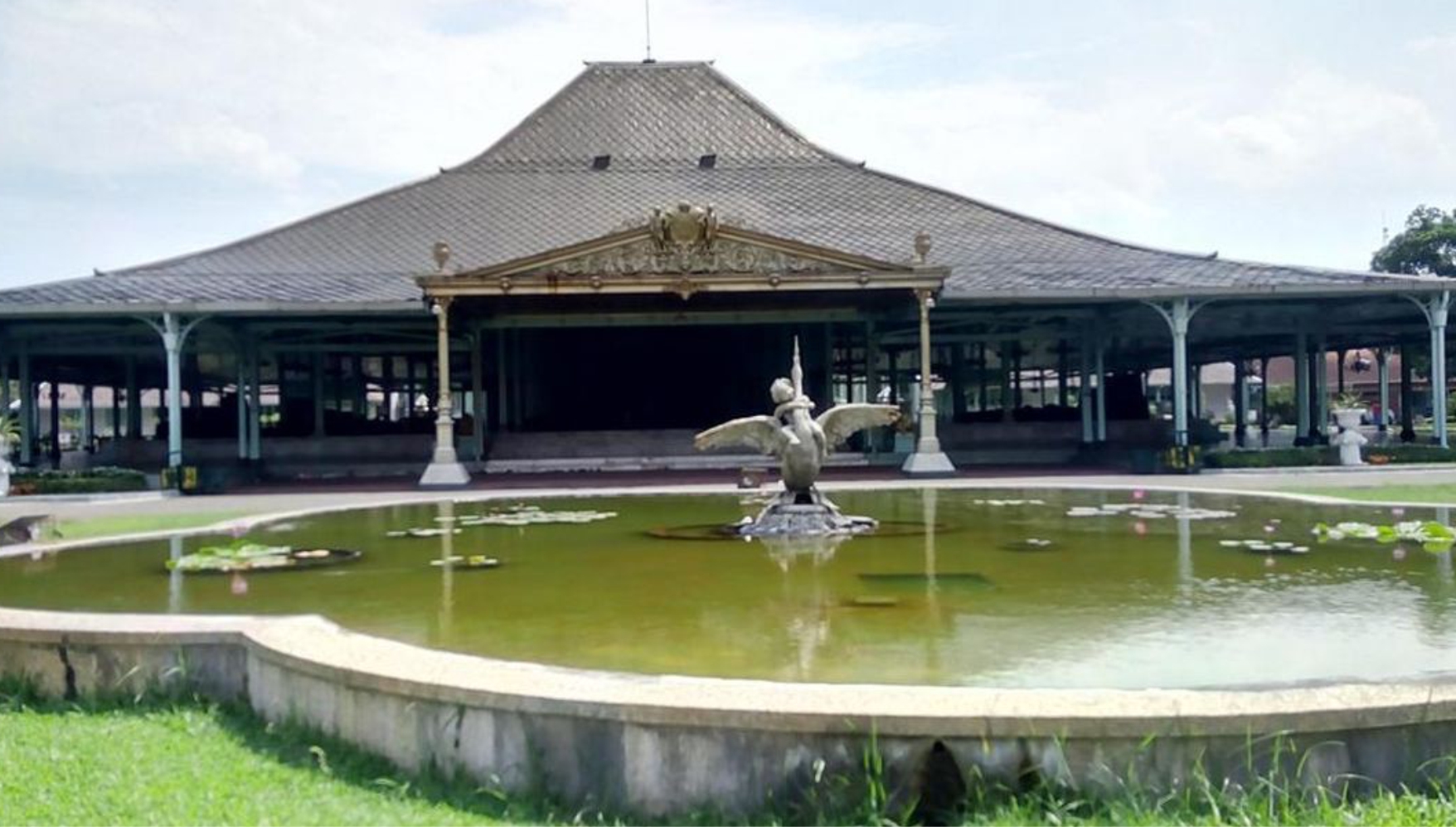
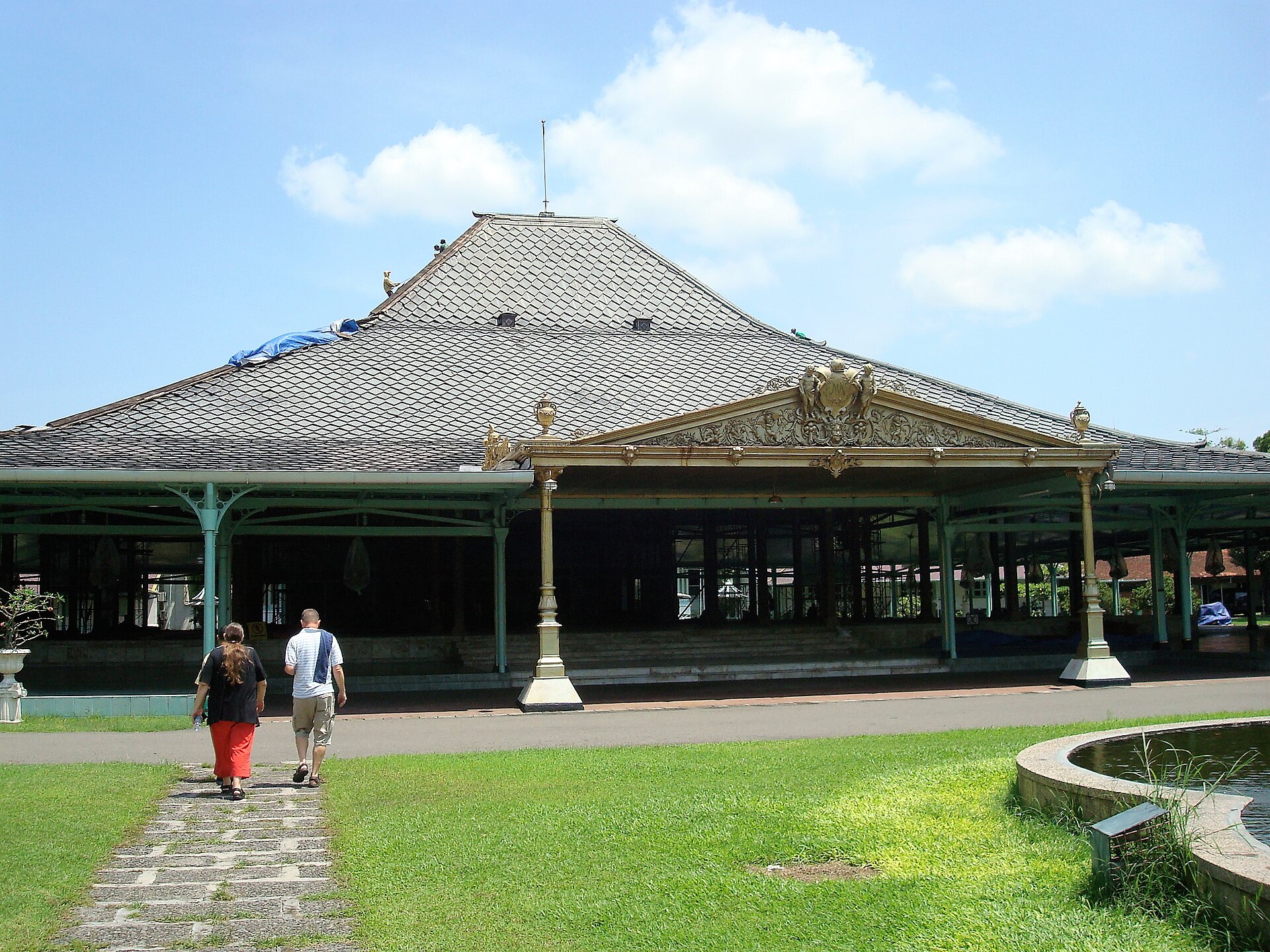
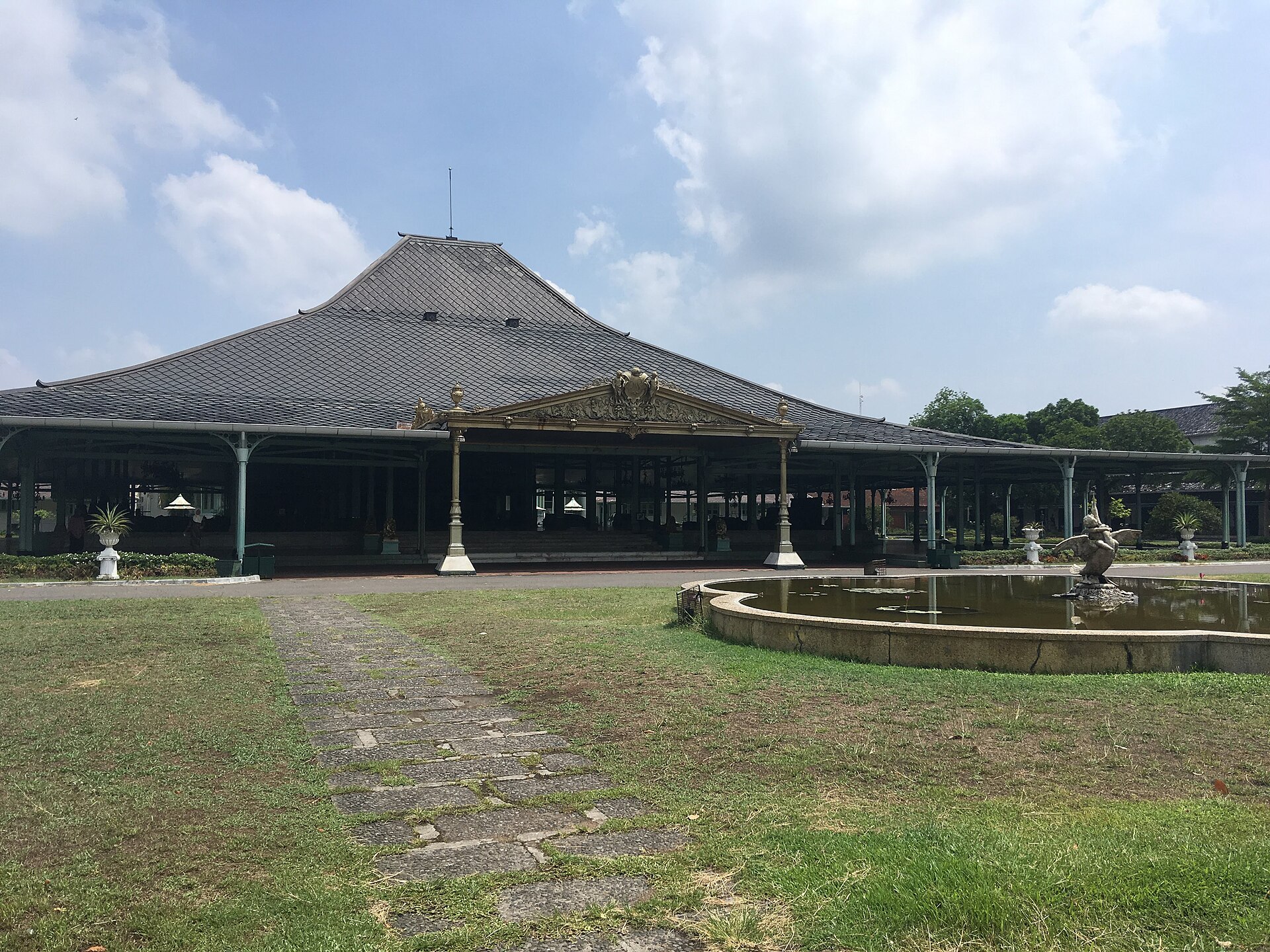
The glory of the Pura Mangkunegaran is its great pavilion, the Pendopo Ageng, an enormous open hall said to be the largest pendopo in Indonesia. Its vast pyramidal roof, of the joglo type, is supported by great pillars of teak, creating a soaring open space at the ceremonial heart of the palace.
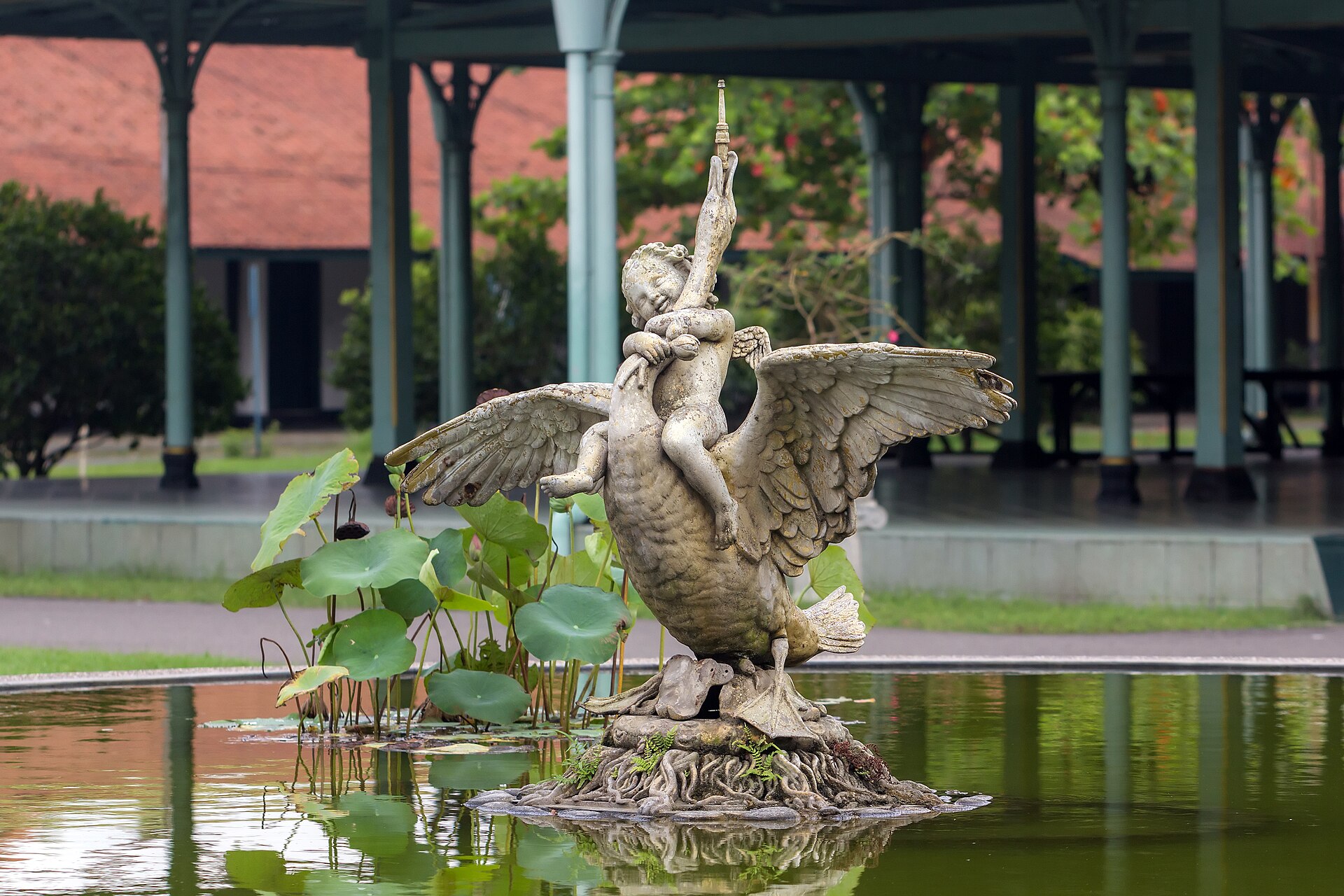
The pendopo is the classic form of the Javanese public pavilion, an open hall without walls, its roof supported by pillars, expressing the ideal of openness and accessibility in the culture of the court. The Pendopo Ageng of the Mangkunegaran is the grandest expression of this form, immense in scale and majestic in proportion.
The great teak pillars that support the roof are massive columns of hardwood, and the towering roof rises in the tiered, pyramidal form of the joglo, the highest and most prestigious of Javanese roof types. The scale of the pavilion conveys the grandeur and ambition of the court.
The Pendopo Ageng is the setting for the great ceremonies and dances of the court, an open stage where the traditions of the Mangkunegaran are performed. Its openness allows the music and dance to be seen and heard, and its scale accommodates the gatherings of the court.
The great pendopo, with its towering roof and its massive pillars, is the pride of the Pura Mangkunegaran and one of the wonders of Javanese architecture. To stand beneath its soaring roof is to grasp the grandeur of the princely court and the majesty of the classical pavilion of Java at its greatest.
The claim that the Pendopo Ageng is the largest pavilion of its kind in Indonesia is one that a visitor is inclined to believe on standing beneath it, for the sense of soaring open space is extraordinary. There are no walls to enclose it, only the forest of great teak pillars and the vast roof above, and the effect is of a space that is at once monumental and open to the air, a perfect expression of the Javanese ideal of the pavilion.
The Painted Roof
One of the most beautiful features of the Pendopo Ageng is its painted ceiling, the underside of the great roof, decorated with a striking design centered on the Javanese zodiac. The ceiling is painted in a distinctive scheme of colors, each associated with meaning and protective power in Javanese belief.
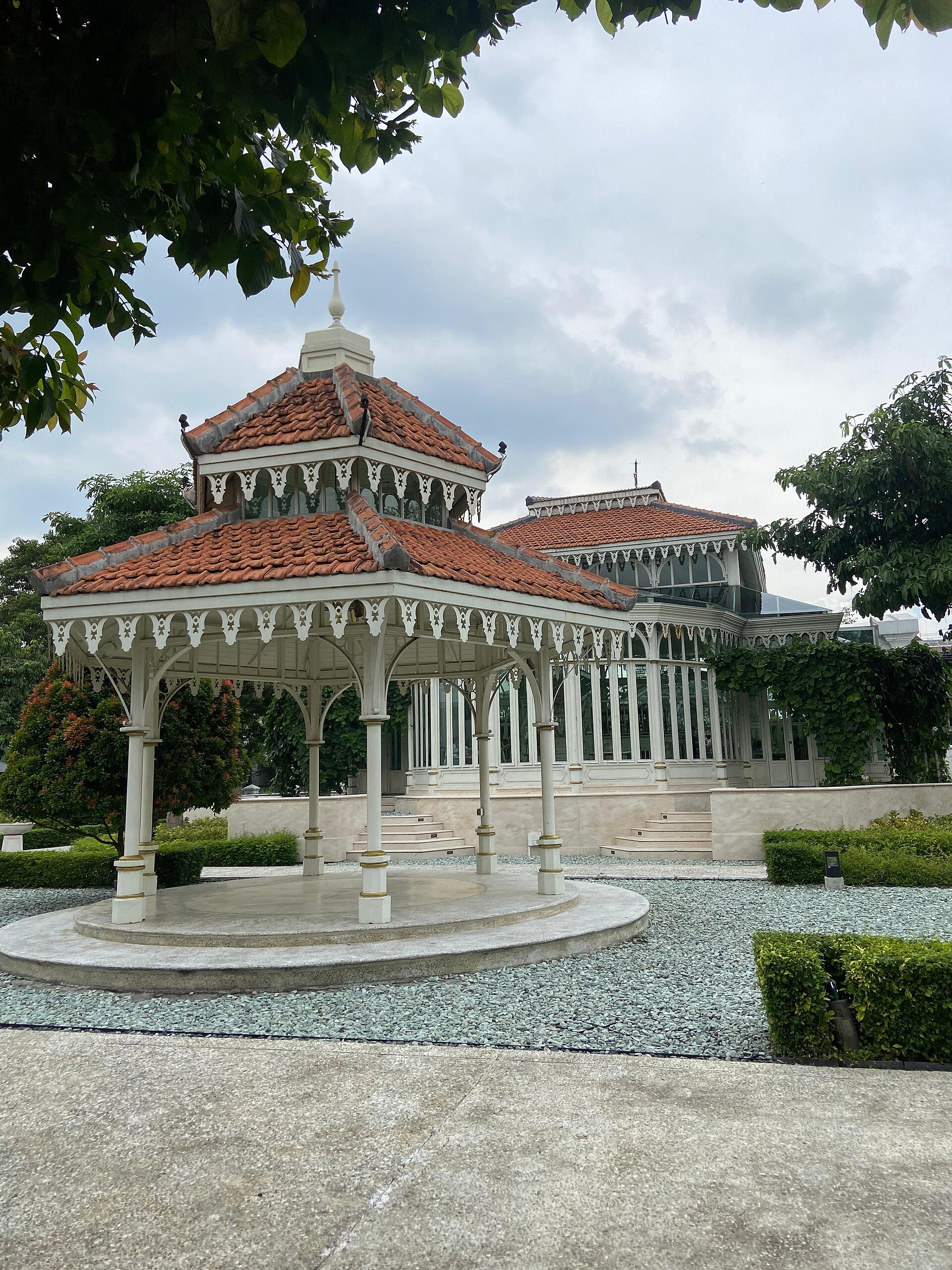
At the center of the ceiling is a design representing the Javanese zodiac, surrounded by a border of colors, each of which is held to have a particular significance, offering protection against various dangers and misfortunes. The painted roof is thus not merely decorative but charged with symbolic and protective meaning.
The colors of the ceiling, yellow, blue, black, green, and others, each carry associations in Javanese thought, and their combination in the roof of the pendopo was intended to bring blessing and protection to the pavilion and the court. The design reflects the mystical dimension of Javanese court culture.
The painted ceiling, glowing above the great open space of the pendopo, is one of the most admired features of the palace, combining beauty with meaning. Looking up into the soaring roof, the visitor sees the zodiac and its colors, a cosmological design set at the heart of the court.
The painted roof of the Pendopo Ageng embodies the union of art, architecture, and belief that characterizes the Javanese court. Its zodiac and its colors, protective and beautiful, crown the great pavilion, making the ceiling one of the treasures of the Pura Mangkunegaran and a masterpiece of Javanese decorative art.
The idea that a ceiling should protect as well as adorn is characteristic of the Javanese court, where beauty and mystical function were rarely separated, and the painted roof of the pendopo is a fine example. Each color in its border answers, in the traditional understanding, to a particular danger or misfortune, so that the whole ceiling forms a kind of shield spread above the pavilion, and to look up into it is to see not only a decorative scheme but a diagram of the Javanese cosmos and its protective powers.
The Residence and Its Treasures
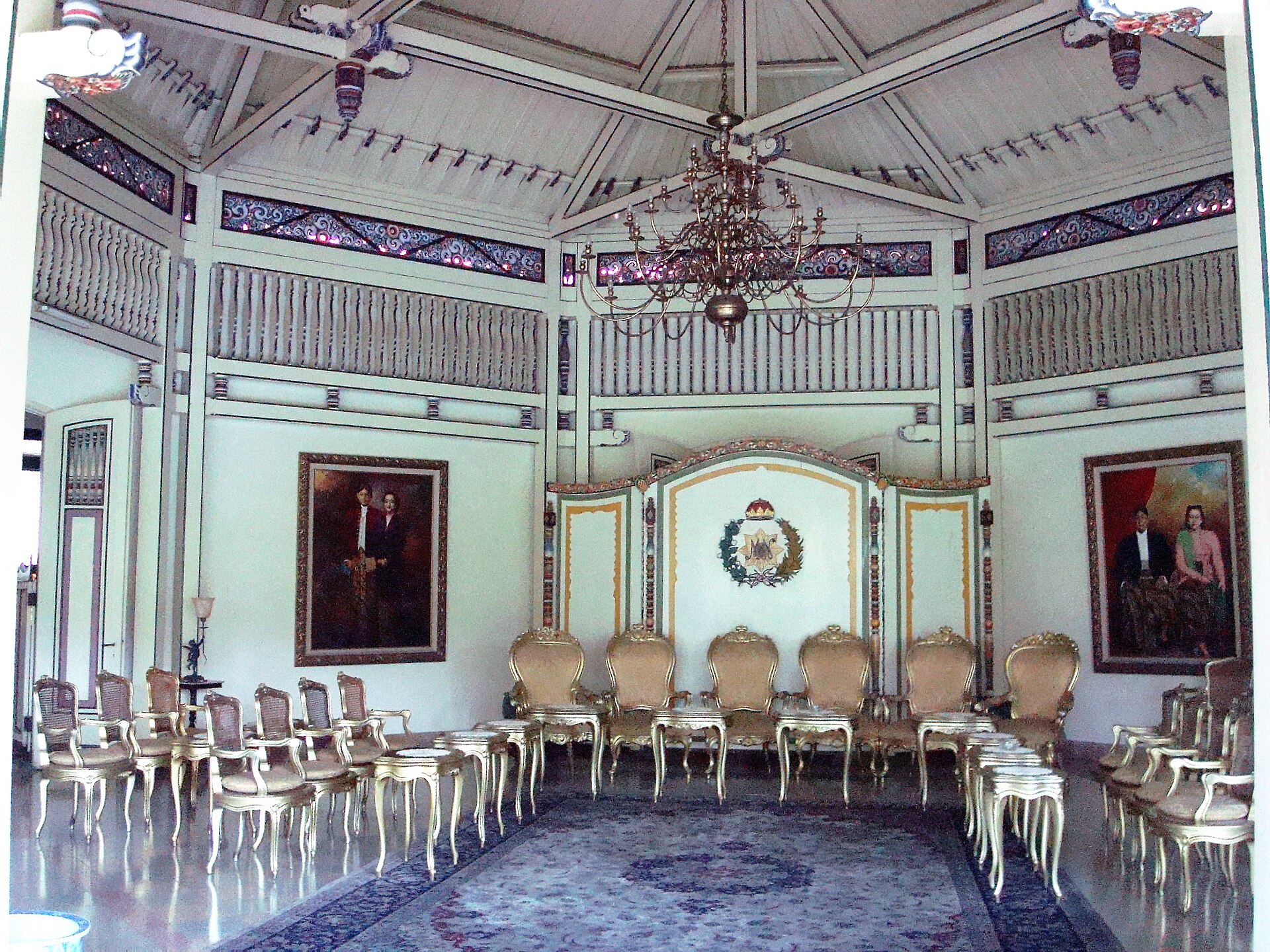
Behind the great pendopo lies the Dalem Ageng, the residence of the prince, a large hall that was the private and ceremonial heart of the household and that now houses a museum of the treasures of the court. Here the heirlooms and art of the Mangkunegaran are displayed, illuminating the culture of the princely house.
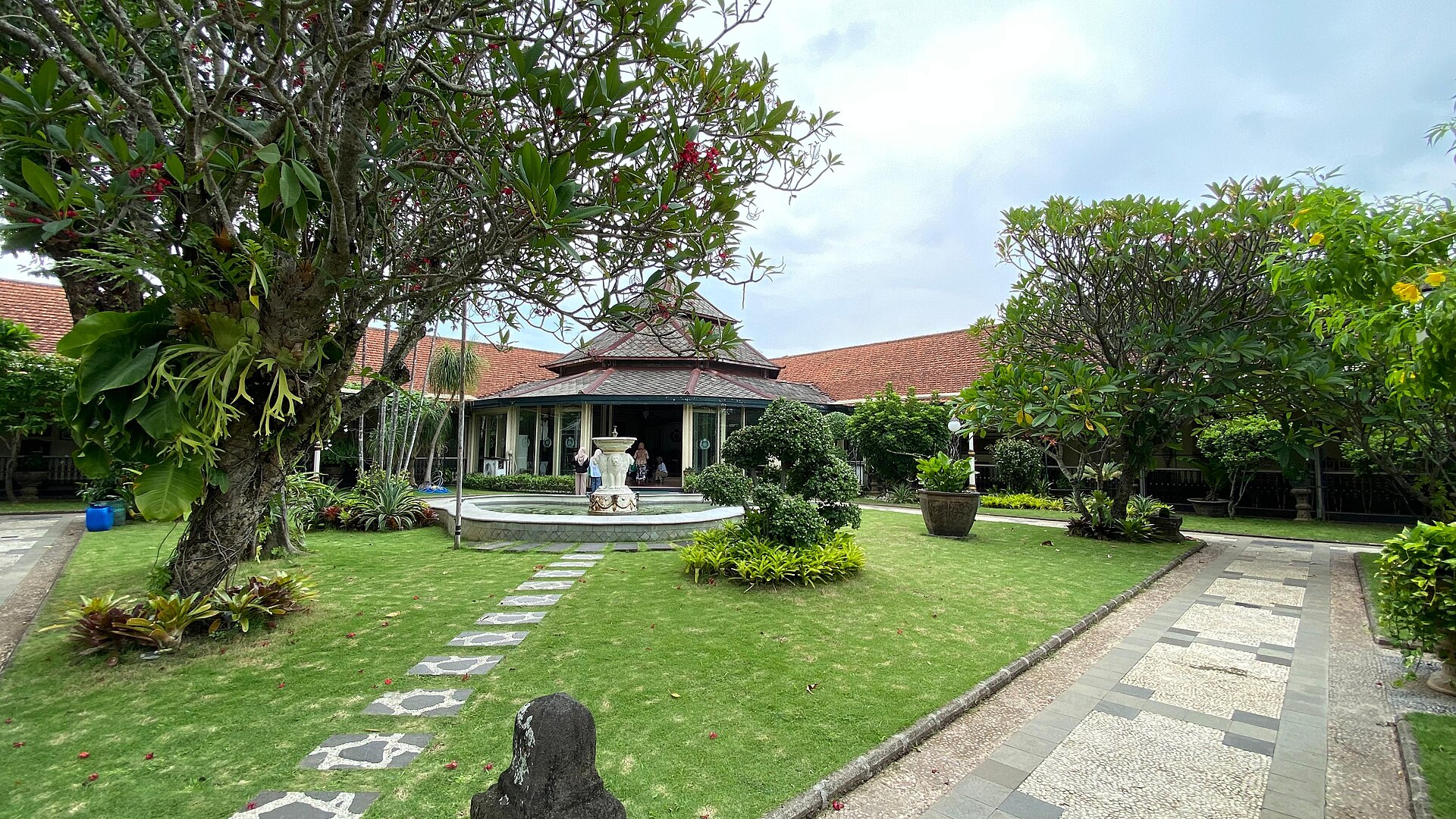
The Dalem was traditionally the residence and the most sacred inner space of the palace, and it retains an atmosphere of dignity and antiquity. Its collections include the regalia and heirlooms of the court, objects of gold and jewels, and the sacred and ceremonial possessions of the princely house.
Among the treasures displayed are dance ornaments, jewelry, coins, weapons including the sacred kris, and other objects of the court, reflecting the wealth and refinement of the Mangkunegaran. The collection is a rich record of the material culture of a Javanese princely court.
The museum in the Dalem allows the visitor to explore the history and culture of the Mangkunegaran through its treasures, from the ceremonial objects of the court to the personal possessions of its princes. Each object carries the traditions and the sacred significance of the house.
The residence and its museum are among the highlights of a visit to the Pura Mangkunegaran, preserving the treasures and the memory of the princely court. Together with the great pendopo, they convey the wealth and the refinement of one of the four royal houses of central Java.
The transformation of the Dalem from a sacred residence into a museum is typical of the way the Javanese courts have adapted to the modern age, opening their most private spaces to visitors while preserving their treasures. To walk through the hall where the prince once lived, now filled with the heirlooms of the house, is to feel both the intimacy of the old court and the care with which its heritage is now preserved and shared.
The Reksa Pustaka Library
Among the treasures of the Pura Mangkunegaran is its famous library, the Reksa Pustaka, one of the great collections of Javanese manuscripts and a center of scholarship and learning. Founded in the nineteenth century, it preserves the literary and intellectual heritage of the court.
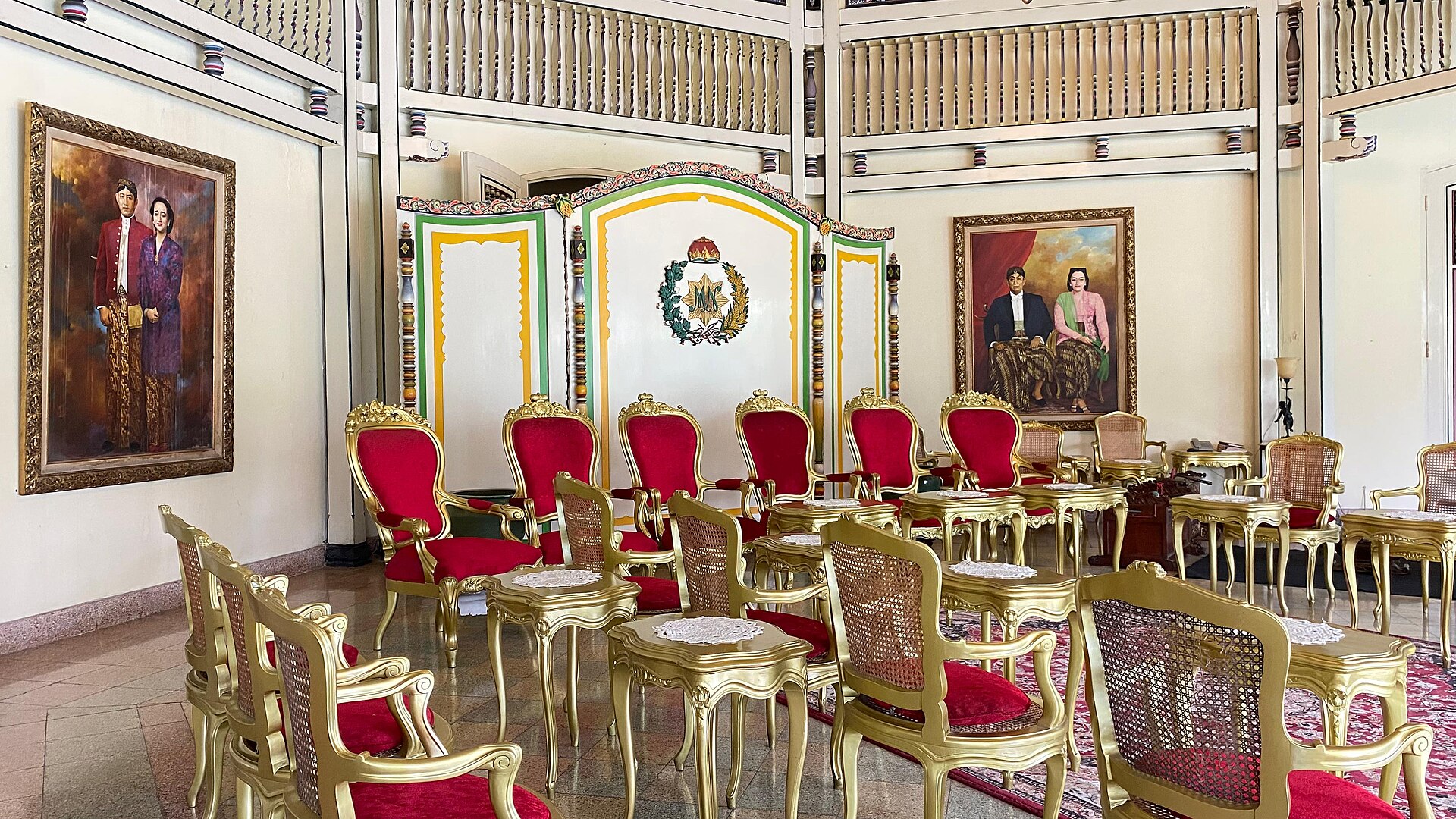
The library holds a rich collection of manuscripts, books, and documents, including works of Javanese literature, history, religion, and court lore, many of them of great rarity and value. It is one of the most important repositories of Javanese manuscript culture.
The Mangkunegaran court was a center of learning and literature, and the library reflects the intellectual dimension of Javanese court culture, in which the composition and preservation of texts was a princely pursuit. The court patronized scholars and writers, and the library preserves the fruits of their work.
The Reksa Pustaka is a living center of scholarship, used by researchers studying the manuscript heritage of Java, and its collections are of great importance for the understanding of Javanese literature, history, and culture. It is a treasure of the court and of the wider heritage of the island.
For the visitor and the scholar alike, the library adds a dimension of learning to the culture of the Pura Mangkunegaran, preserving the literary heritage of the court. It reflects the ideal of the Javanese prince as a patron of learning as well as a ruler, and it is among the great treasures of the palace.
The Reksa Pustaka deserves to be better known, for libraries of this kind are among the most precious survivals of the Javanese courts, preserving a manuscript tradition that recorded the literature, history, mysticism, and lore of a whole civilization. That a minor princely house maintained so important a collection speaks to the seriousness with which the Mangkunegaran took its role as a patron of learning, and the library remains a resource of the first importance for the study of Javanese culture.
The Mangkunegaran Style of Dance
The Pura Mangkunegaran is one of the great homes of Javanese classical dance, and it developed its own distinctive style, distinct from those of the senior courts. The dance tradition of the Mangkunegaran is among the treasures of the court and a living heritage practiced to this day.

Javanese court dance, marked by its slowness, control, and refinement, developed differently at each of the four courts, and the Mangkunegaran style has its own characteristic qualities, cultivated over generations at the court. The great pendopo is the setting for its performance.
The court preserved and developed both the sacred and the more secular forms of dance, and its dancers were trained in the exacting discipline of the tradition. The dance of the Mangkunegaran, accompanied by the court gamelan, is performed on ceremonial occasions and for visitors.
The dance tradition reflects the cultivation of the arts that characterized the Mangkunegaran court, which despite its minor rank was a major center of Javanese culture. The refinement of its dance was a mark of the court’s status and its devotion to the classical traditions of Java.
For the visitor, a performance of Mangkunegaran dance in the great pendopo is one of the highlights of the palace, a living expression of the classical culture of Java. The dance tradition, preserved and practiced at the court, connects the modern palace to the deep roots of Javanese art.
To understand Javanese court dance one must abandon the expectation of spectacle and enter into a slower, more inward mode of attention, for the art lies in restraint and control rather than display. In the Mangkunegaran style, as in the others, a single controlled movement, a turn of the wrist or an inclination of the head, carries meaning and weight, and the effect, accompanied by the slow music of the gamelan, is meditative and profound, a discipline of the body raised to the level of a spiritual practice.
Music and the Court Gamelan
Music, and above all the gamelan, is central to the life of the Pura Mangkunegaran, as at all the Javanese courts, and the palace preserves fine gamelan ensembles used to accompany its dances and ceremonies. The court gamelan is among the treasures of the Mangkunegaran and its cultural life.
The gamelan, the orchestra of bronze instruments, is the classic music of the Javanese court, and each of the four courts cultivated its own repertoire and style. The Mangkunegaran gamelan accompanies the dances and ceremonies of the court, filling the great pendopo with its shimmering, meditative sound.
The court was a patron of music as of the other arts, and its musicians preserved and developed the gamelan tradition, contributing to the rich musical culture of central Java. The gamelan of the Mangkunegaran is played on ceremonial occasions and for the performance of the court dances.
The slow, layered music of the gamelan, inseparable from the dance it accompanies, creates the atmosphere in which the ceremonies of the court unfold. Its meditative sound, rising in the open pendopo, is one of the characteristic experiences of the Javanese court.
The gamelan of the Pura Mangkunegaran, preserved and played to this day, is a living tradition of great beauty and antiquity. Together with the dance, it forms the artistic heart of the court, connecting the modern palace to the deep musical heritage of Java.
The relationship between the gamelan and the space of the pendopo is worth noting, for the open pavilion is the ideal setting for the music, allowing its sound to fill the air and to blend with the surroundings. The Javanese did not build concert halls for their gamelan; they played it in these open pavilions, where the music mingled with the sounds of the palace and the air of the tropics, and something of that quality is lost in any other setting.
Gardens and European Touches
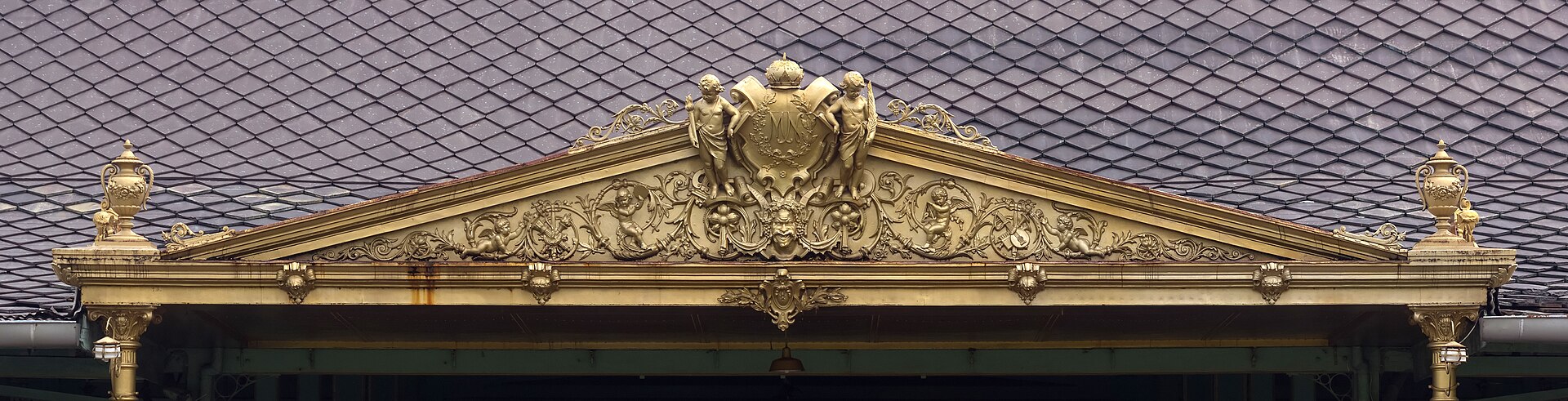
The Pura Mangkunegaran combines the classical Javanese court style with European influences absorbed over the centuries, reflecting the cosmopolitan tastes and wide connections of its princes. This blend is visible in the architecture, the decoration, and the gardens of the palace.

The residence and other structures show European influences in their design and furnishing, and the palace preserves European furniture, mirrors, and decorative objects alongside the Javanese heirlooms. The Mangkunegaran princes were open to the wider world, and their palace reflects this openness.
The palace includes gardens and more private spaces, such as the Pracimayasa, that provided settings for the leisure and pleasure of the court. These spaces, blending Javanese and European elements, reflect the refined and cosmopolitan life of the princely house.
The combination of Javanese tradition and European influence gives the Pura Mangkunegaran a distinctive character among the courts of Java, expressing the particular culture of a princely house open to the wider world. The blend is harmonious, the European elements absorbed into the fundamentally Javanese whole.
For the visitor, the gardens and the European touches add variety and interest to the palace, reflecting the cosmopolitan culture of the Mangkunegaran. They express the character of a court that combined the deep traditions of Java with an openness to the world beyond, a distinctive strand of Javanese court culture.
A Court Revived
In recent years the Pura Mangkunegaran has experienced a notable revival, as a new generation of leadership has worked to renew the court, restore its buildings, and revitalize its cultural traditions and its role in the life of the city. The palace has become a focus of renewed interest and activity.
The revival has included the restoration and beautification of the palace and its grounds, the revitalization of its cultural programs, and efforts to make the court a living center of Javanese culture and a place of engagement with the community and with visitors. The Mangkunegaran has become newly prominent.
The court has hosted cultural events, performances, and gatherings, drawing new audiences to its great pendopo and its traditions. The revival reflects a wider interest in Javanese heritage and a determination to keep the culture of the court alive and relevant in the modern age.
The renewal of the Mangkunegaran demonstrates that a traditional court can find new life and purpose in the modern world, as a center of culture, heritage, and community. The palace, once a quiet relic, has become again a vibrant part of the life of Solo.
For the visitor, the revival means that the Pura Mangkunegaran is a living and active court, its traditions practiced and its buildings cared for, its great pendopo once more a center of cultural life. The revival has given the ancient princely house a vigorous new presence in the modern city.
The renewal of the Mangkunegaran has drawn attention in Indonesia as an example of how heritage can be made vital again, and it has brought new energy to the cultural life of Solo. The palace has become a gathering place and a stage once more, and its revival suggests that the future of the Javanese courts may lie not in preservation alone but in active reinvention, keeping the old traditions alive by giving them new roles in the life of the present.
The Pura Mangkunegaran Today
Today the Pura Mangkunegaran is a living royal court, the seat of the princely house of Mangkunegaran and a center of Javanese culture in the city of Solo. Open to visitors, it preserves and displays the treasures and traditions of one of the four royal courts of central Java.
The palace continues to perform the dances and music of its tradition, to maintain its library and its collections, and to serve as a center of Javanese heritage. Its great pendopo remains the setting for ceremonies, performances, and cultural events, a living stage for the classical culture of Java.
For the people of Solo and of Java, the Pura Mangkunegaran is a cherished part of their heritage, a princely court with a proud history founded by one of the great heroes of Javanese tradition. It stands, with the senior Kraton and the other courts, as part of the rich royal culture of central Java.
The recent revival of the court has given it a new prominence and vitality, drawing visitors and renewing its cultural traditions. The Mangkunegaran demonstrates the enduring vitality of Javanese court culture and its capacity to find new life in the modern age.
To enter the great pendopo of the Pura Mangkunegaran, beneath its painted roof, to hear its gamelan and see its dance, is to encounter the living heritage of a proud Javanese princely house. Founded by a warrior prince and cultivated over generations, the court endures as one of the four royal thrones of central Java, a jewel of the classical culture of the island.
The recent revival of the Pura Mangkunegaran has been one of the more heartening developments in the world of the Javanese courts, showing that these ancient institutions can find fresh purpose and vitality in the modern age. Under renewed leadership the palace has become a lively center of culture again, its pendopo filled with performances and gatherings, and it demonstrates that the classical heritage of Java remains a living and evolving tradition rather than a museum piece.
Palaces Nearby
The Pura Mangkunegaran belongs with the other Javanese royal courts gathered here. Visit the senior court of the Susuhunan nearby in the same city of Solo, and watch this space for another palace of the archipelago to join them soon.
You May Like
Changgyeonggung: The Gentle Garden Palace of Seoul


One thought on “The Pura Mangkunegaran: A Warrior Prince’s Court in Java”