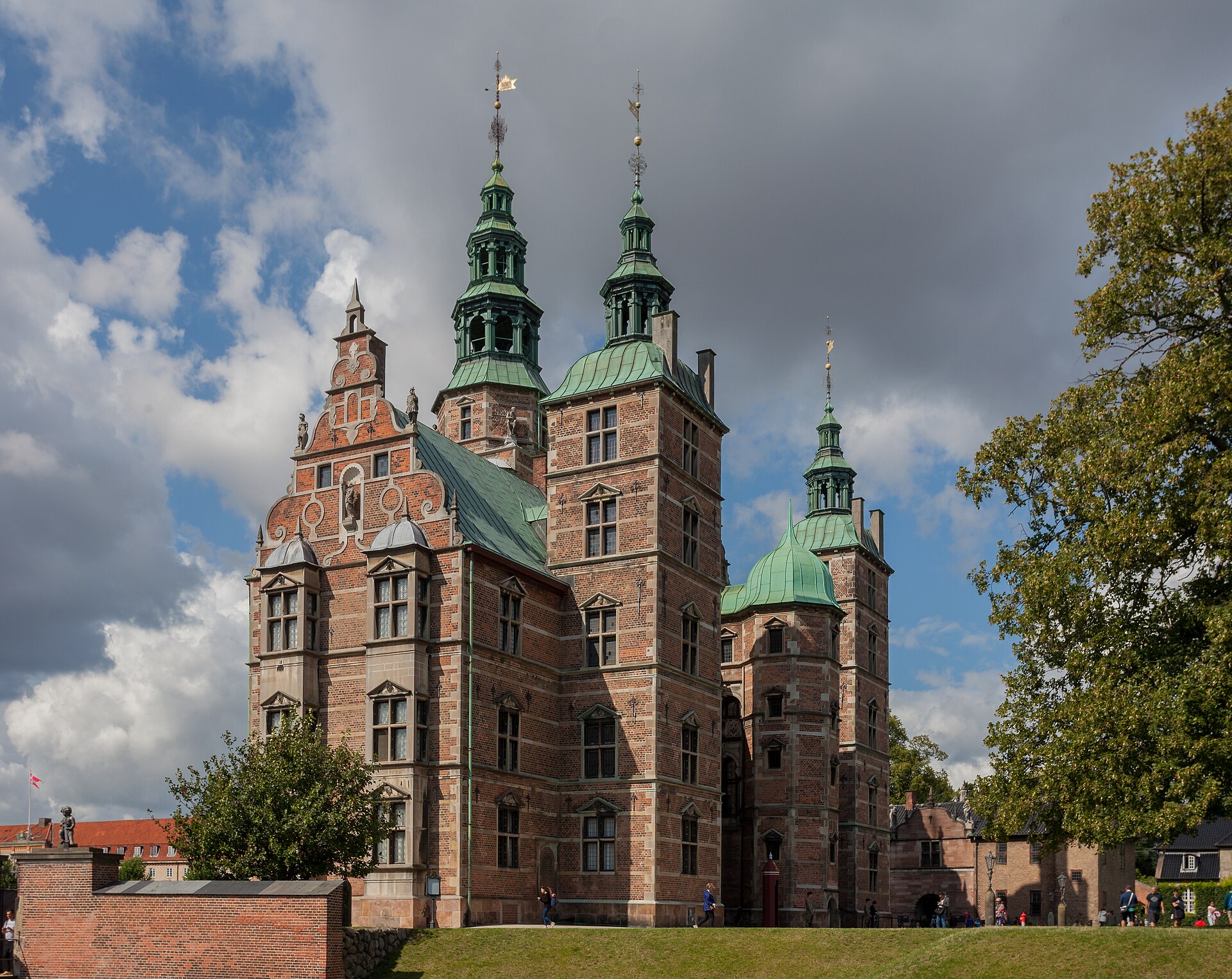
In the middle of Copenhagen, surrounded by the oldest and best-loved park in the Danish capital, stands a fairy-tale castle of red brick and copper-green spires that seems to have stepped straight out of a story. Rosenborg is not a vast palace of endless wings and echoing halls, but a compact, richly ornamented Renaissance castle, intimate in scale yet dense with history, and packed with treasures that tell the story of the Danish crown across four centuries.
Rosenborg was built as a summerhouse and pleasure palace by one of the most energetic and colourful of all Danish kings, a monarch of boundless ambition whose personality is stamped on every corner of the building. It grew from a modest garden retreat into a splendid royal residence, and though the court eventually moved elsewhere, the castle was never abandoned. Instead it became a treasure house, a place where the crown preserved its most precious possessions.
Today Rosenborg holds the Danish crown jewels and royal regalia, displayed deep within its walls, along with a dazzling collection of thrones, tapestries, portraits, and objects assembled by generations of kings. Its rooms survive in remarkable condition, offering an almost unbroken journey through the tastes and ambitions of the Danish monarchy from the Renaissance onward. Around it spreads the King’s Garden, a green heart of the city enjoyed by all.
In this article you will get to know Rosenborg fully: the extraordinary king who built it, its distinctive Renaissance architecture, its magnificent interiors and famous halls, the crown jewels and regalia it guards, the celebrated garden that surrounds it, and its life today as one of the most enchanting and beloved sights in all of Scandinavia, a jewel box of a castle at the heart of Copenhagen.
In This Article
- A Fairy-Tale Castle in the City
- The King Who Built It
- From Summerhouse to Royal Castle
- Renaissance Style in Brick and Copper
- Interiors Rich with History
- The Great Hall and the Silver Lions
- The Crown Jewels and Royal Regalia
- Treasures of Many Kinds
- The King’s Garden
- Soldiers, Barracks, and the Living Crown
- A Preserved Royal World
- Rosenborg Among the Palaces of Copenhagen
- Visiting Rosenborg Today
A Fairy-Tale Castle in the City
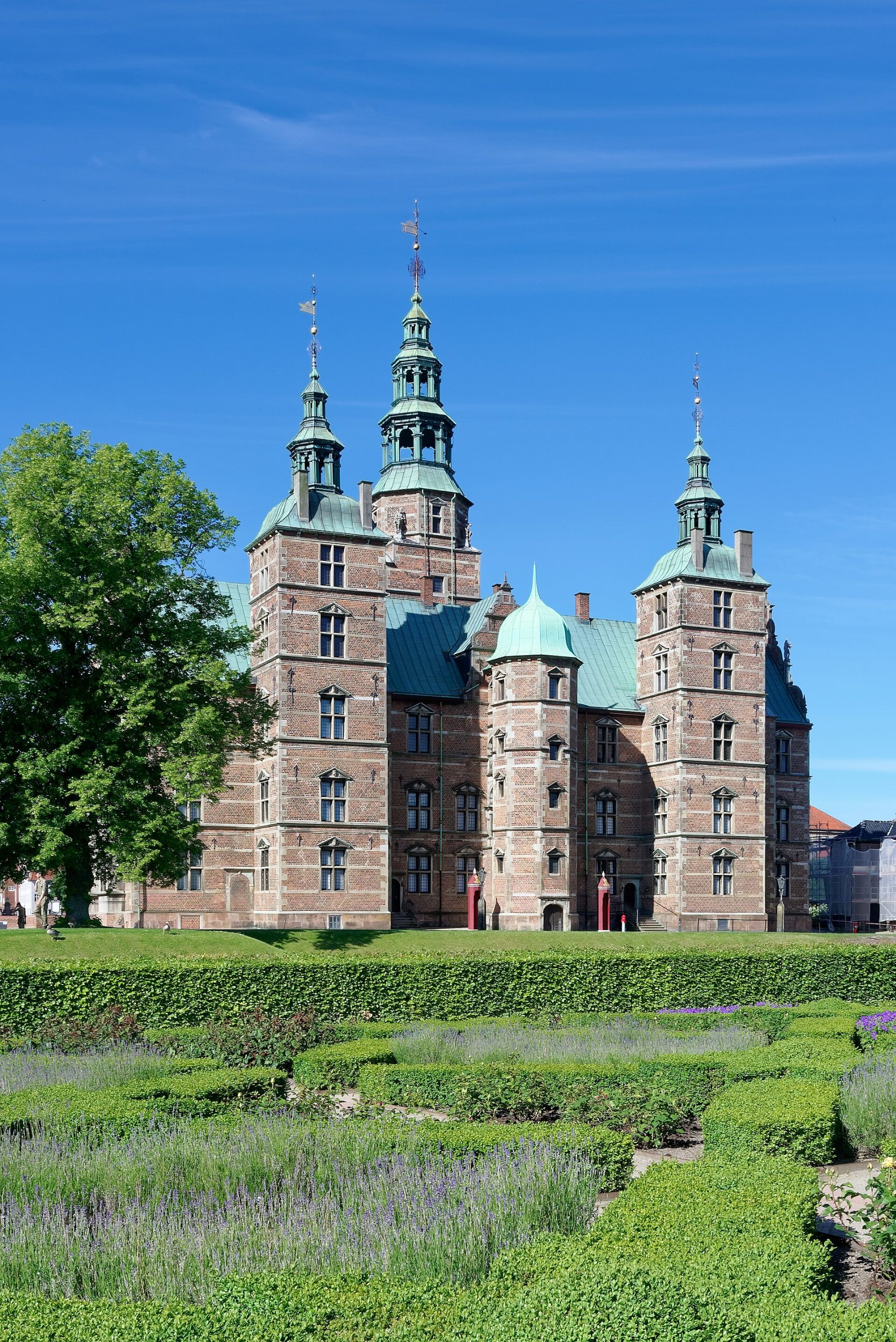
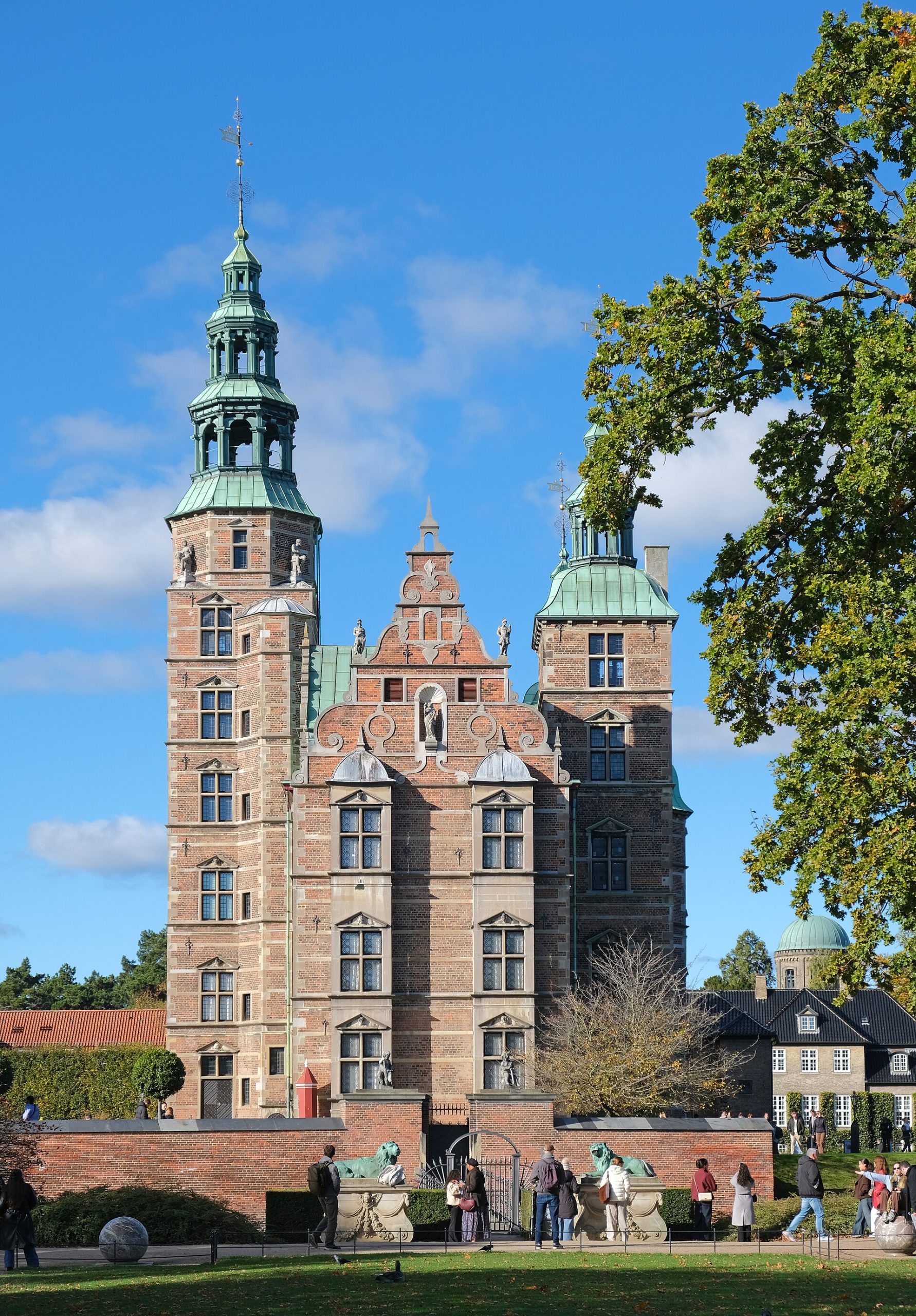
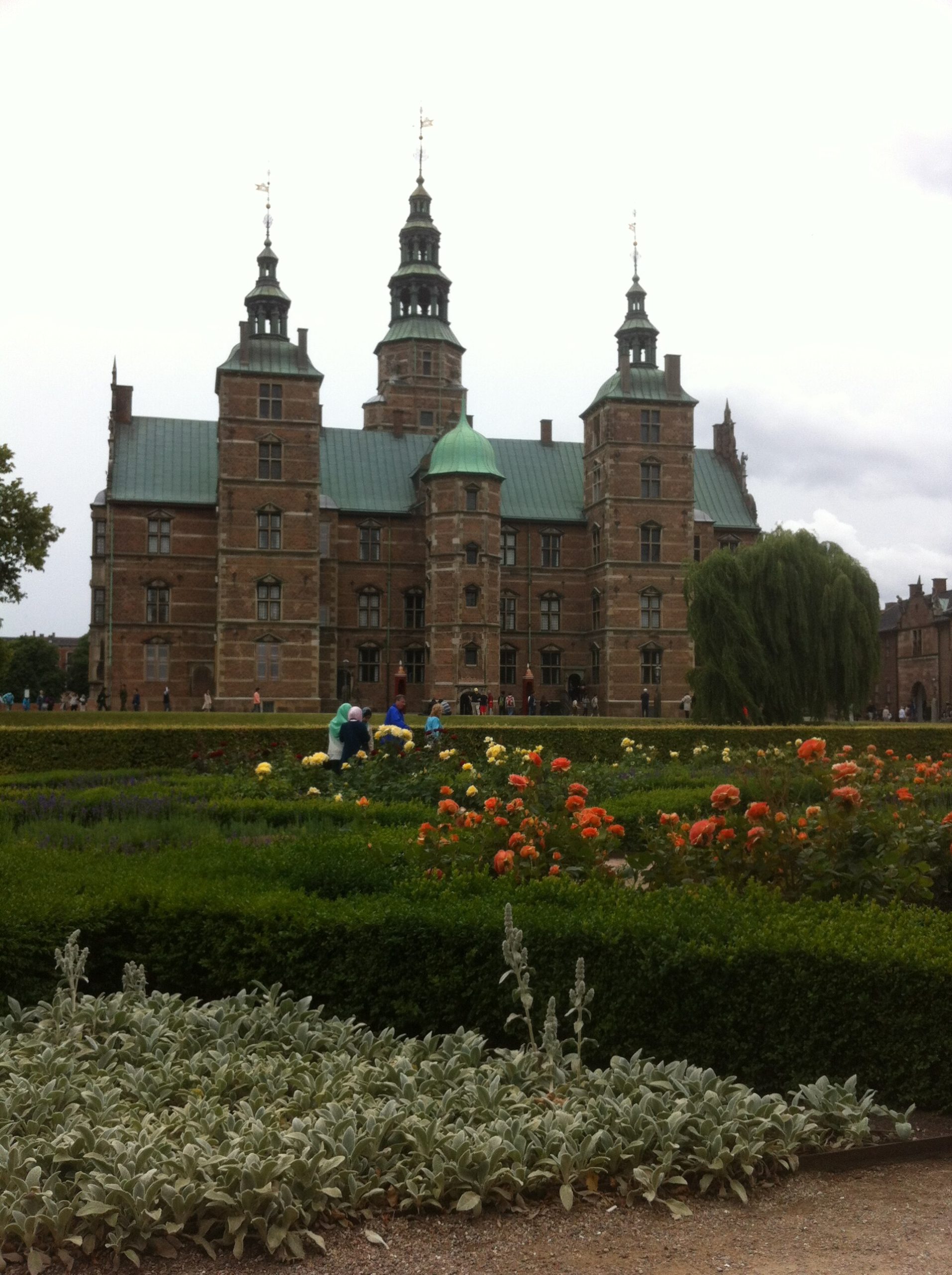
Rosenborg makes an immediate impression. Rising from the greenery of its garden, its red-brick walls, sandstone dressings, and copper-clad towers create a silhouette of storybook charm, at once grand and inviting. Unlike the sprawling palaces of the great continental monarchies, Rosenborg is compact and vertical, a castle you can take in at a glance, and all the more captivating for it.
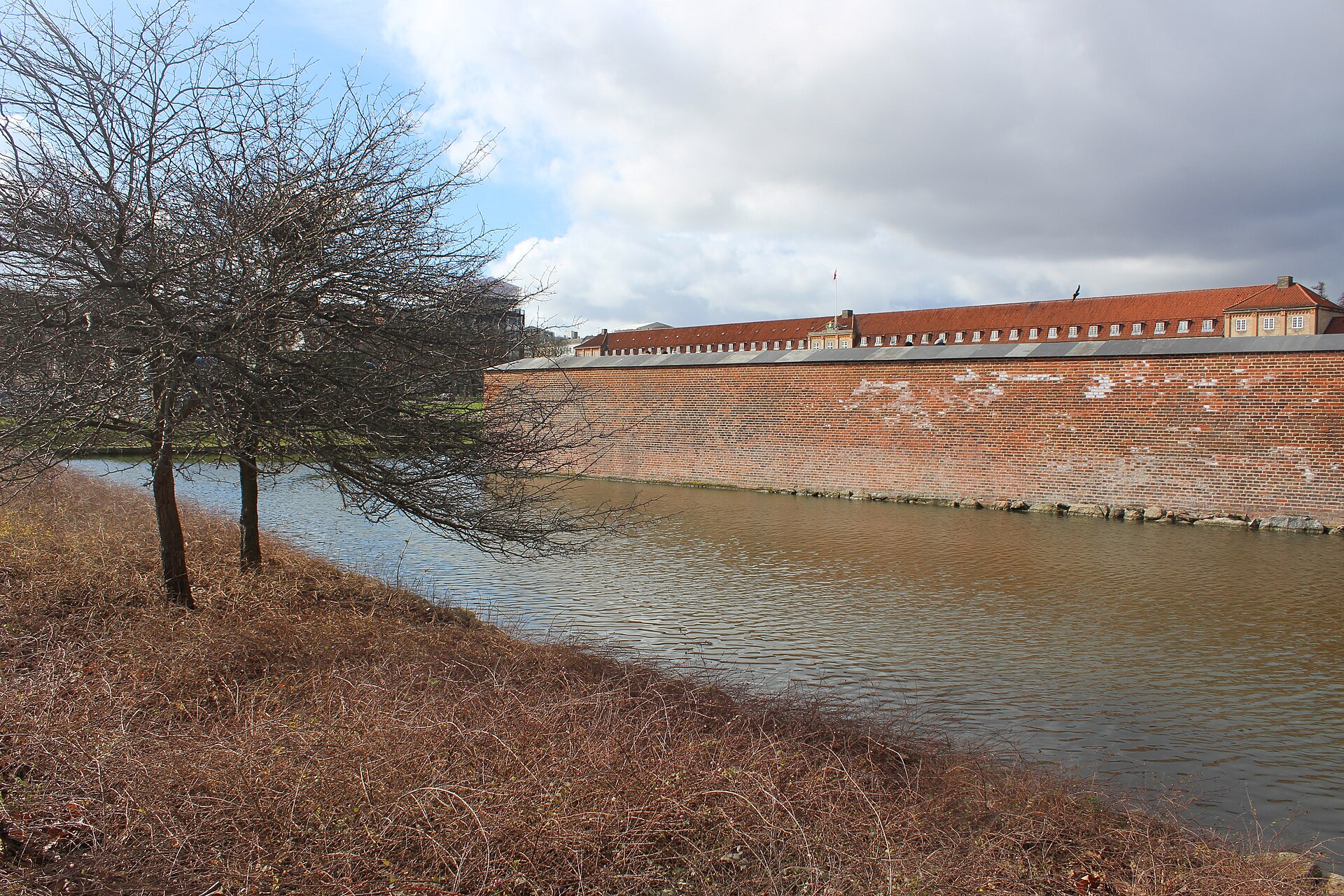
The castle sits within the King’s Garden in the heart of Copenhagen, so that it is woven into the daily life of the city in a way few royal residences are. Locals stroll and picnic in the park around it, and the castle presides over the scene like a benevolent presence from another age. This intimacy between castle and city is one of the defining qualities of Rosenborg.
For all its modest size, the castle is extraordinarily rich. Behind its picturesque exterior lies a sequence of rooms crammed with the treasures of the Danish crown, and beneath it, in a vaulted treasury, glitter the crown jewels themselves. Rosenborg proves that a royal residence need not be vast to be magnificent, and that concentration can be as impressive as scale.
There is a lesson at Rosenborg for anyone who assumes that royal grandeur requires immense size. The castle achieves its effect not through endless corridors but through richness and concentration, packing into a modest building a density of treasure and history that larger palaces cannot match. That quality of a jewel box, small but precious, is precisely what makes Rosenborg so memorable and so beloved.
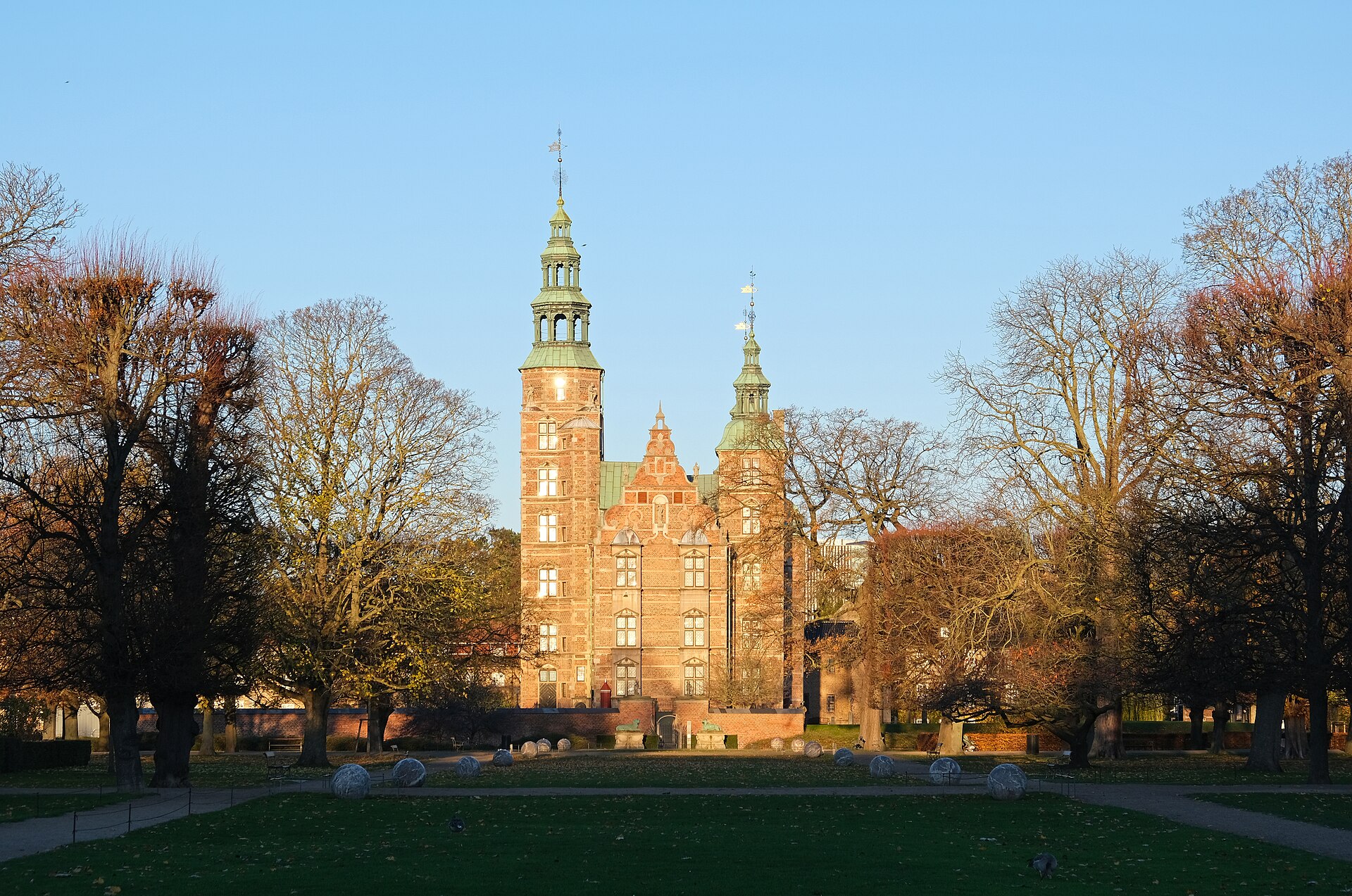
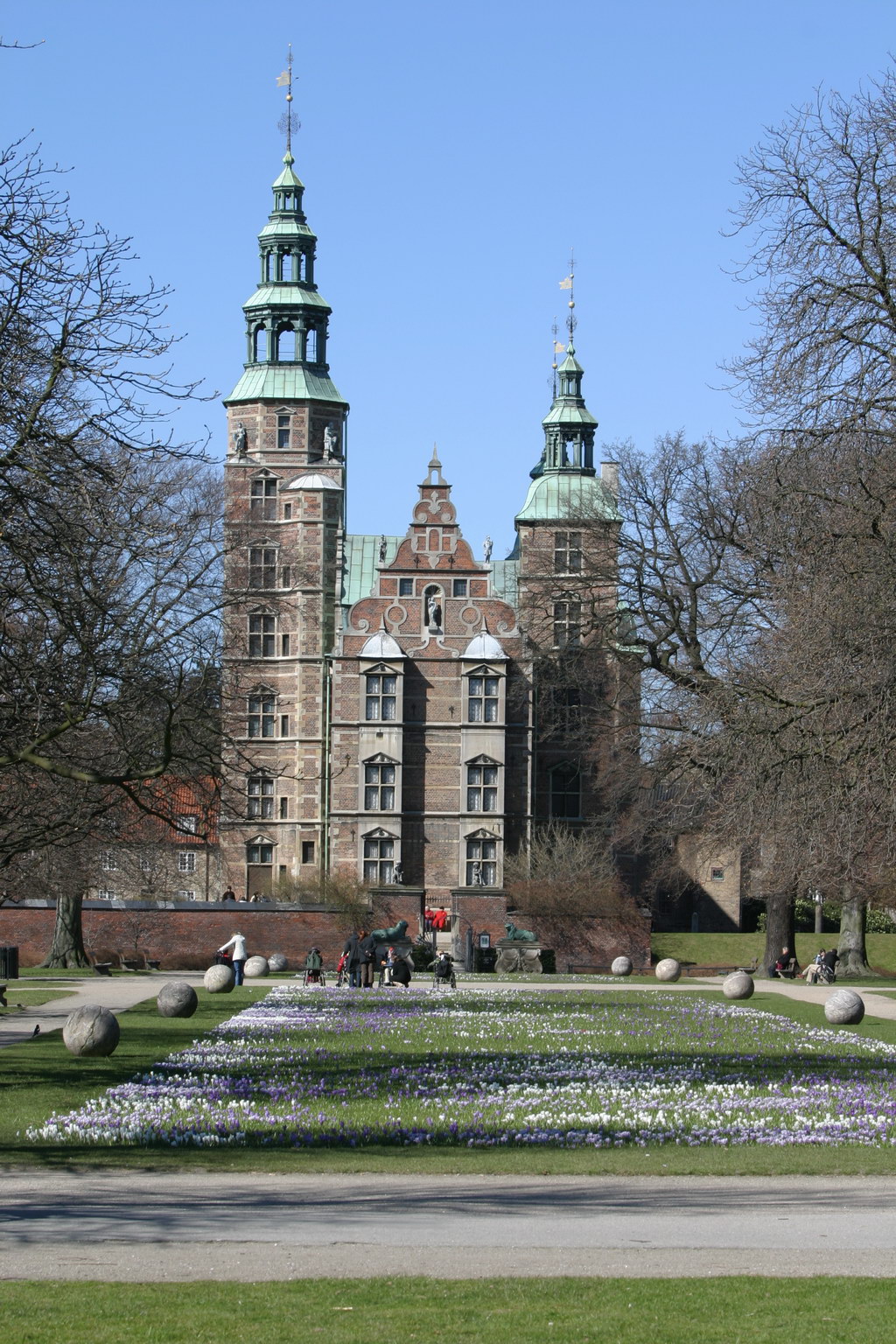
Approaching through the King’s Garden, with the castle’s spires appearing above the trees, is the ideal way to arrive. The gradual reveal, past strolling families and flowerbeds, builds a sense of anticipation that the building richly repays. By the time you reach its walls, Rosenborg has already worked its particular magic, promising the wonders that wait within.
The King Who Built It
Rosenborg is inseparable from the king who created it, one of the longest-reigning and most memorable monarchs in Danish history. A man of restless energy and grand ambition, he was a builder on an enormous scale, dotting his kingdom with castles, towns, and monuments, and Rosenborg was among his most personal and beloved projects.
He took an intense interest in every detail of the castle’s design and decoration, and much of its character reflects his own vigorous, flamboyant personality. He lived here, worked here, and died here, and his presence still seems to fill the rooms he shaped. To understand Rosenborg is to encounter this extraordinary king, whose vision and taste gave the castle its enduring form.
His reign was not without its troubles, marked by costly wars and setbacks that strained the kingdom. Yet his passion for building left Denmark with an incomparable architectural legacy, and Rosenborg is perhaps its most charming expression. The castle stands as a monument to a king who poured his energy and imagination into stone, brick, and copper, and whose spirit animates it still.
Visitors interested in this remarkable king will find that Rosenborg is, in effect, his self-portrait in brick and copper. His energy, his love of display, his fascination with craftsmanship and novelty are all written into its walls. Few buildings anywhere so vividly convey the personality of their creator, and to walk through the castle is to spend time in the company of one of the great characters of Danish history.
The king’s building projects extended far beyond Rosenborg, reshaping the capital and the kingdom, but nowhere is his personal touch felt more intimately than here. This was his retreat, his pleasure, and finally the place of his death, and the sense of his presence lingers in a way that his grander public works cannot match. Rosenborg is, above all, his private masterpiece.
His long reign coincided with a flowering of Danish art and architecture, and Rosenborg gathers that cultural energy into a single, concentrated expression. In its craftsmanship and its ornament one sees the ambitions of a king who wished his kingdom to shine among the courts of Europe, and who left, in this castle, a lasting emblem of that aspiration.
From Summerhouse to Royal Castle
Rosenborg began not as a grand palace but as a modest summerhouse, a retreat on the edge of the city where the king could escape and enjoy his garden. Over the years, however, it was enlarged and enriched in stages, growing from a simple pavilion into the splendid Renaissance castle we see today, as the king’s ambitions for it expanded.
This gradual growth gave Rosenborg its distinctive character. Rather than being conceived all at once, it developed organically under the guidance of its royal builder, acquiring towers, wings, and ever richer decoration as it went. The final result is a harmonious whole, but one that grew out of a personal, evolving vision rather than a single grand plan imposed from above.
For a time Rosenborg served as a favoured royal residence, a place of pleasure and retreat close to the capital. As the centuries passed and the court’s needs changed, the royal family came to live elsewhere, but Rosenborg was never given up. Instead it took on a new and lasting role, as the keeper of the crown’s history and treasures, which it fulfils to this day.
The gradual transformation of a summerhouse into a royal castle mirrors the growth of the king’s own ambitions. What began as a private pleasure grew into a statement of royal magnificence, and the stages of that growth can still be read in the fabric of the building. This organic development gives Rosenborg a warmth and individuality that a coldly planned palace would lack.
Renaissance Style in Brick and Copper
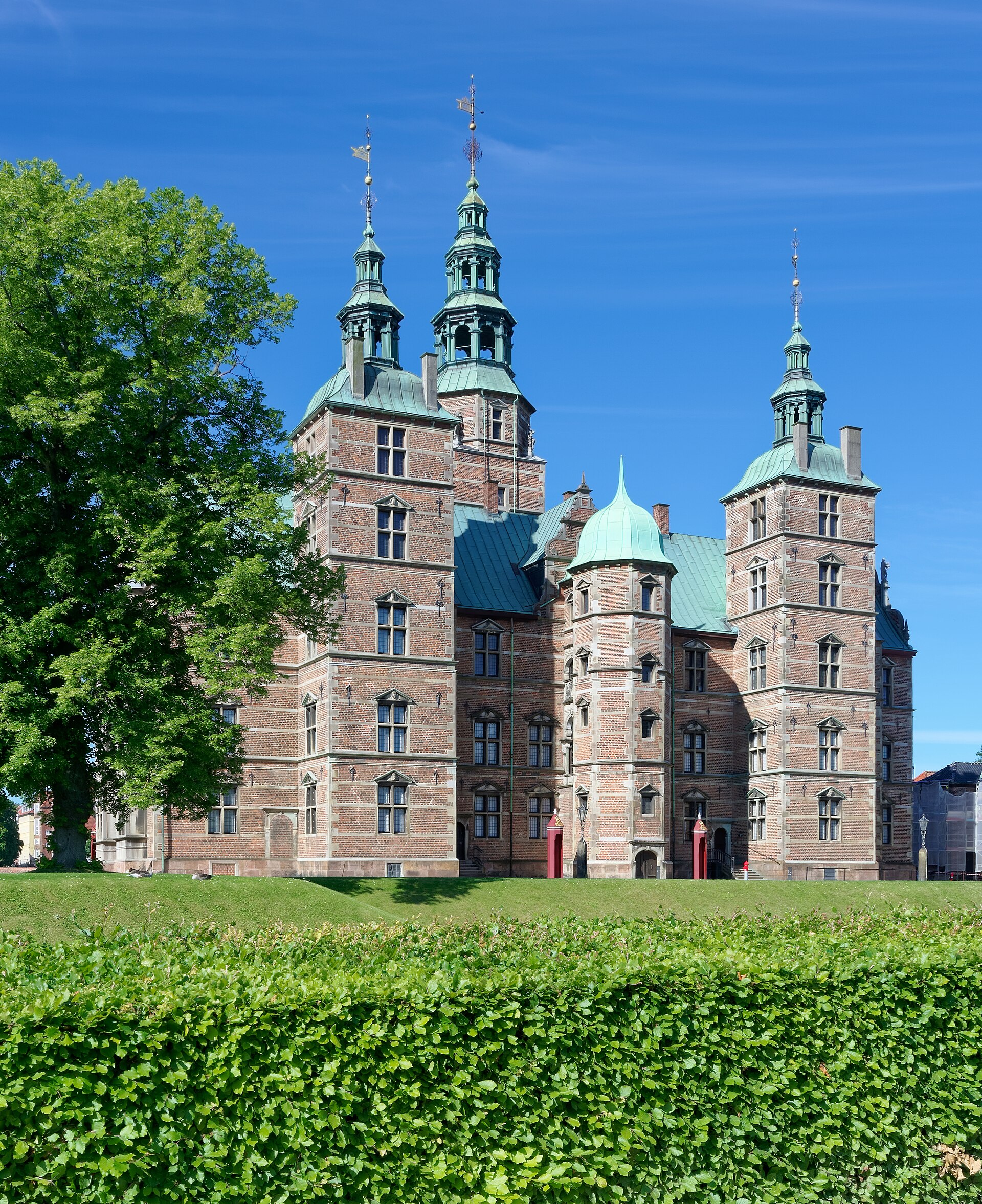
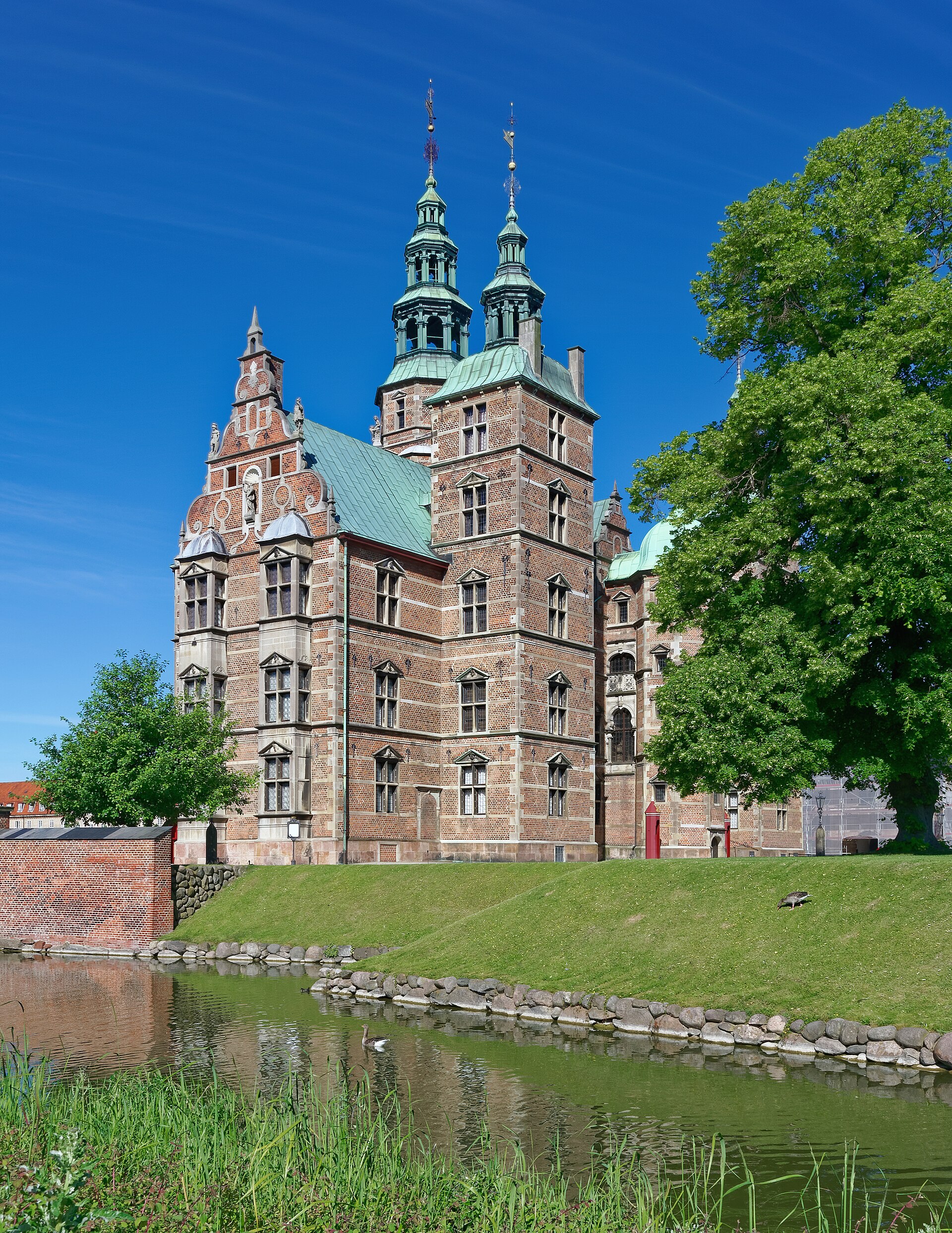
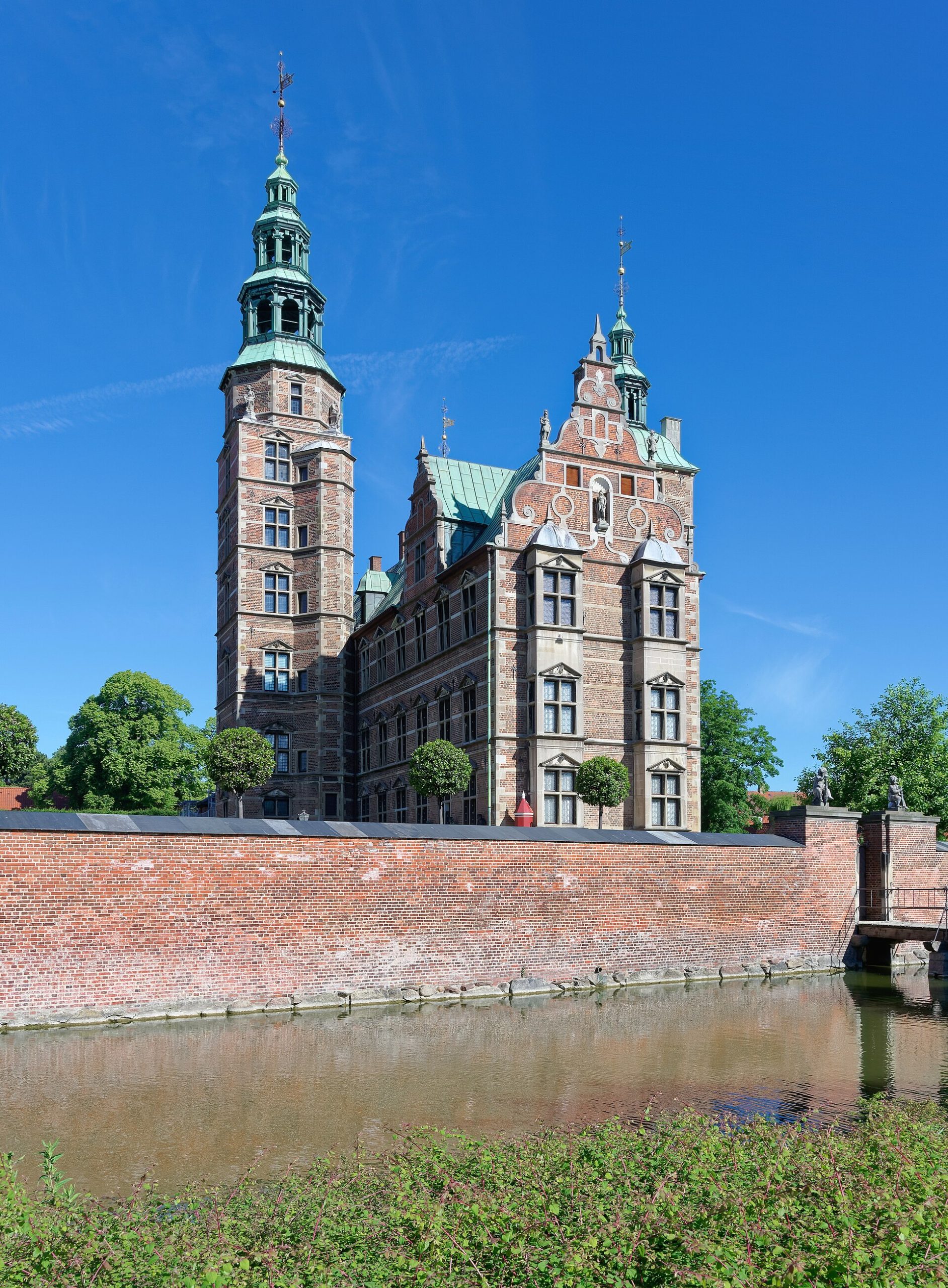
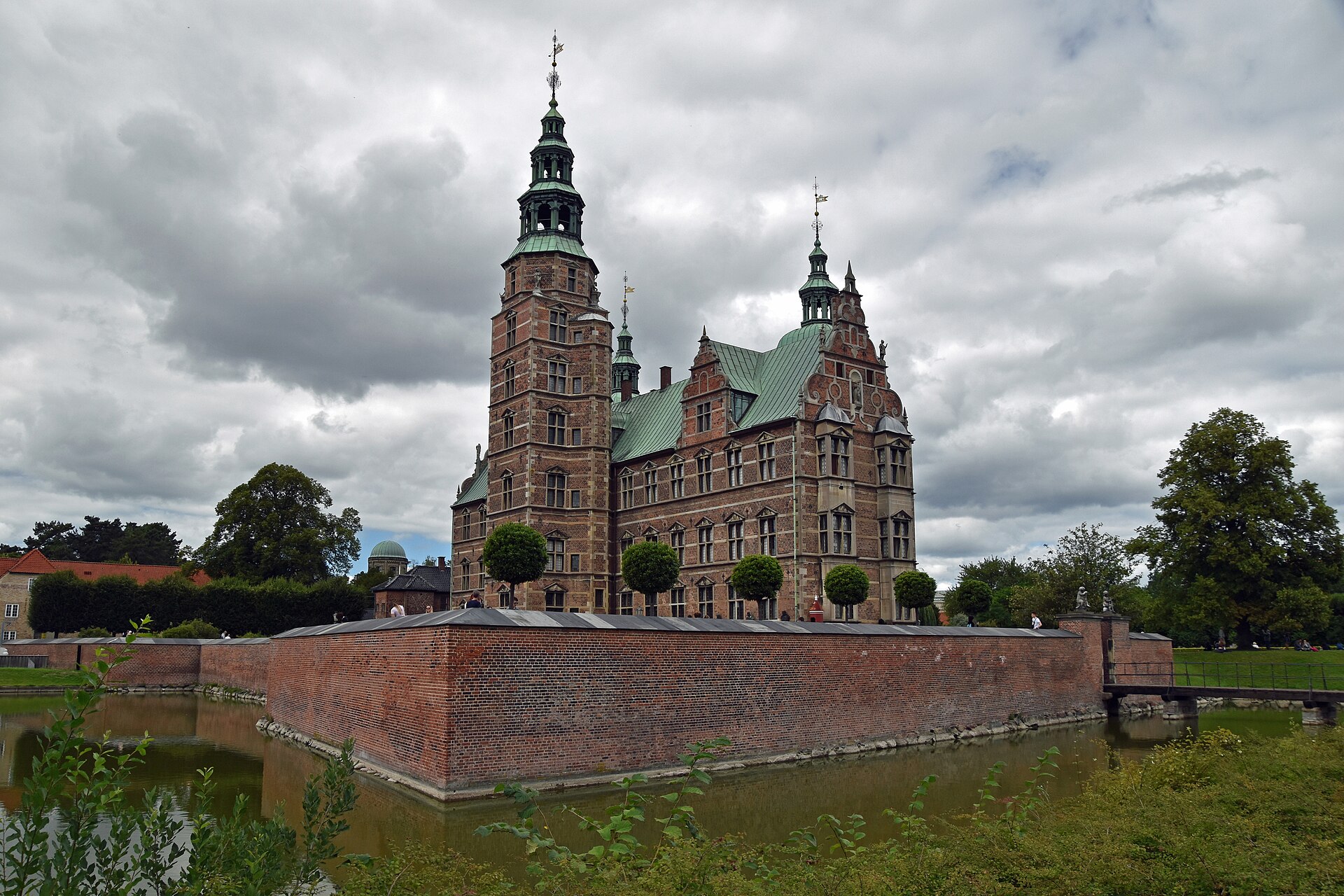
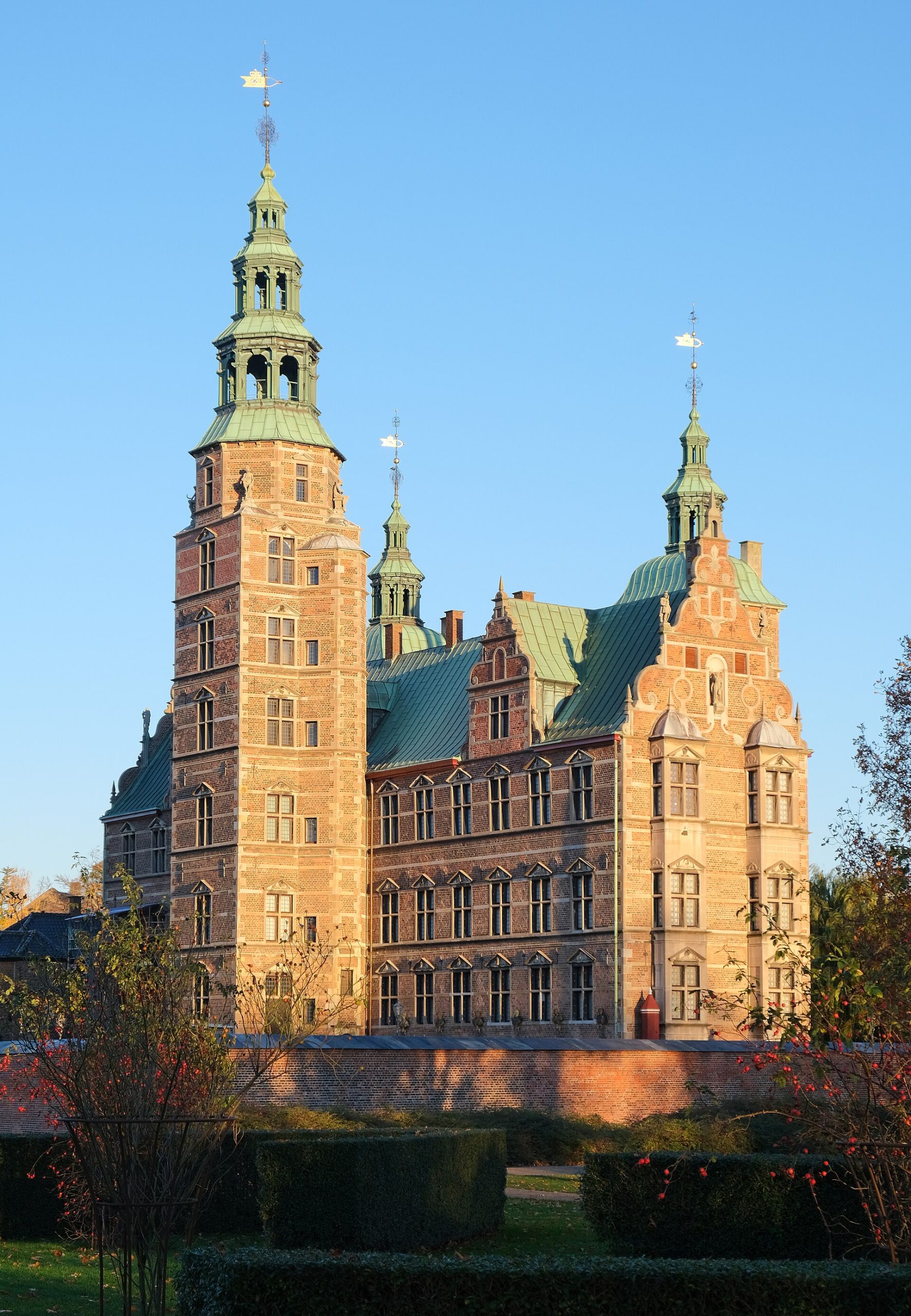
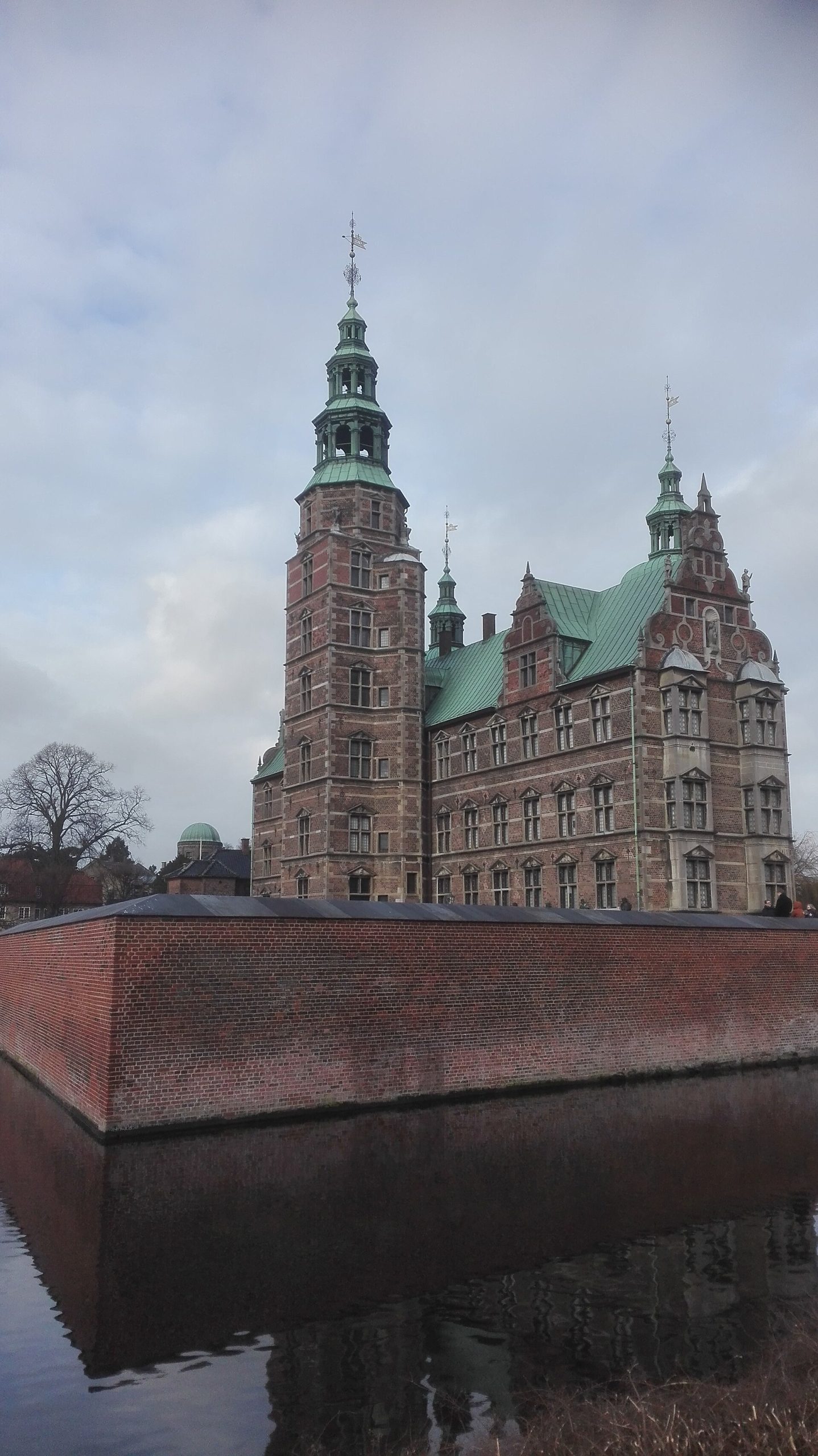
Architecturally, Rosenborg is a superb example of the Renaissance style that flourished in northern Europe, drawing on Dutch and other continental models. Its red brick, contrasting sandstone details, decorative gables, and slender towers with copper spires are characteristic of the period, and together they create a building of great richness and vitality.
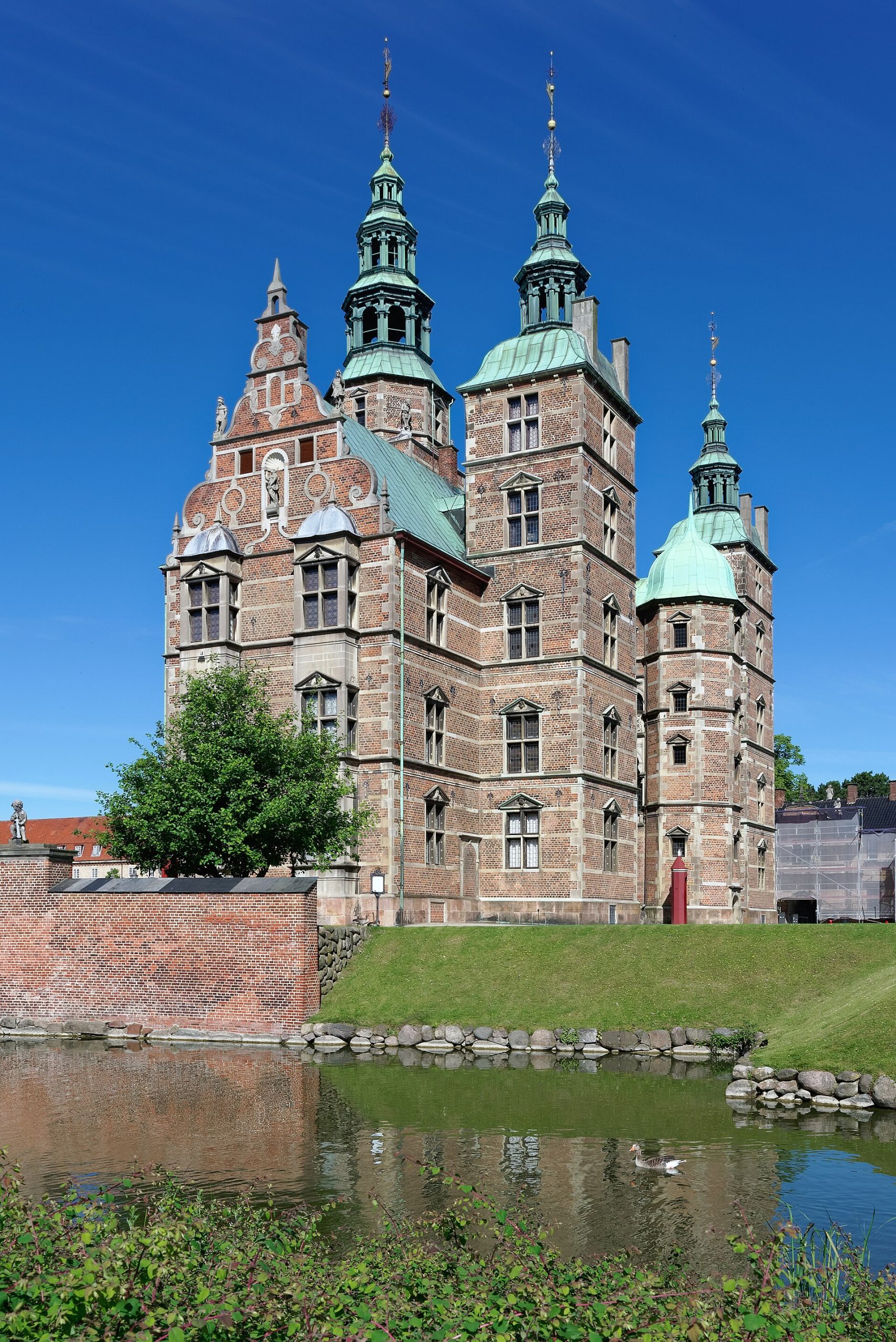
The castle’s design balances symmetry with picturesque variety, its towers and gables giving it a lively, animated skyline. The warm red of the brick, the pale stone dressings, and the green of the weathered copper form a harmonious and distinctive palette that has become one of the visual signatures of royal Copenhagen. Every facade rewards close attention with its wealth of ornament.
This northern Renaissance style sets Rosenborg apart from the classical and baroque palaces that dominate elsewhere in Europe. It belongs to a particular moment and place, the flowering of Renaissance culture in the Nordic and Dutch world, and it preserves that moment with rare completeness. The castle is thus not only beautiful but historically important as an outstanding survival of its architectural age.
The distinctive palette of red brick, pale stone, and green copper has become so associated with royal Copenhagen that it is hard to imagine the city without it. Rosenborg is the finest expression of this northern Renaissance manner, and its influence can be felt across the architecture of the Danish capital. It is a style rooted in its time and place, and the castle preserves it with unusual purity.
The animated skyline of towers and gables gives Rosenborg a vertical drama unusual among royal residences, which more often spread horizontally to convey their power. Here the effect is achieved by rising rather than reaching outward, and the copper spires against the sky have become one of the enduring images of Copenhagen, instantly recognisable and much loved.
Interiors Rich with History
Within, Rosenborg unfolds a sequence of rooms that are among the best-preserved royal interiors of their era anywhere. Many chambers retain their original decoration, furnishings, and atmosphere, allowing visitors to move through the actual living spaces of the Danish kings across several centuries. The sense of authenticity is powerful and rare.
The rooms are crowded with treasures: portraits of kings and queens, tapestries recording royal victories, ornate furniture, and countless objects of gold, silver, ivory, and glass. Each room reflects the taste of a particular reign, so that a walk through the castle becomes a journey through the changing styles and preoccupations of the Danish monarchy over time.
Some of the smaller chambers are especially evocative, intimate spaces decorated with exquisite craftsmanship that reveal the private world of royalty. From studies and bedchambers to cabinets crammed with curiosities, these rooms bring the past to life with an immediacy that grander but emptier palaces often lack. At Rosenborg, history feels close enough to touch.
The survival of so much original decoration and furnishing is what gives these rooms their extraordinary power. In many palaces, later generations swept away the old to make way for the new; at Rosenborg, the layers accumulated instead, each reign adding without erasing. The result is a building that preserves, room by room, the actual living texture of the Danish court across the centuries.
Moving from room to room, the visitor becomes aware of the changing tastes of successive reigns, each chamber reflecting the fashions and preoccupations of its age. This layering turns the castle into a chronicle written in decoration, where the story of the Danish monarchy can be read not in words but in the furnishings, portraits, and ornaments that fill its rooms.
The Great Hall and the Silver Lions
The climax of a visit to Rosenborg is its great hall, a magnificent long room that stretches across the top floor of the castle and served as the setting for the grandest ceremonies. Richly decorated and hung with tapestries celebrating royal triumphs, it is one of the finest ceremonial spaces in Scandinavia, designed to overwhelm and impress.
At one end of the hall stand the coronation thrones, objects of extraordinary craftsmanship, one famously made of narwhal tusk, believed in its day to possess magical properties. Guarding the thrones are three life-size silver lions, splendid beasts that stand watch over the seat of Danish kingship. Together they form one of the most striking royal tableaux in Europe.
The great hall gathers into a single space the majesty and mythology of the Danish crown. Its thrones, its lions, its tapestries, and its rich decoration all speak of the sacred and theatrical dimension of monarchy, the sense of kingship as something set apart and adorned with wonder. To stand in this room is to feel the full ceremonial weight of the institution the castle was built to serve.
The narwhal-tusk throne repays a moment’s reflection. In the age it was made, such tusks were believed to come from unicorns and to hold protective powers, and to fashion a throne from this rare and magical material was to surround the monarch with an aura of wonder. The throne is thus not only a masterpiece of craftsmanship but a window into the beliefs and imagination of the age that produced it.
Standing in the great hall, surrounded by tapestries of royal triumph and watched over by the silver lions, a visitor feels the full theatrical intent of the space. Everything here was designed to impress upon guests the majesty and legitimacy of the crown, to stage kingship as something magnificent and set apart. It remains one of the most powerful ceremonial interiors to be found anywhere in the north.
The Crown Jewels and Royal Regalia
Deep within Rosenborg, in a secure treasury beneath the castle, are kept the Danish crown jewels and royal regalia, among the most precious possessions of the nation. Here glitter the crowns of kings and queens, along with sceptres, orbs, swords, and the jewels worn on the greatest state occasions, all displayed in a setting of appropriate splendour.
The regalia include the crowns used in the coronations of Danish monarchs, masterpieces of the goldsmith’s art encrusted with precious stones. Alongside them are the crown jewels proper, sets of magnificent jewellery still worn by the Danish queen on the most important occasions, linking the historic collection to the living monarchy of today.
The treasury is the glittering heart of Rosenborg, the ultimate reason the castle became a repository of the crown’s greatest treasures. To descend into its vaults and gaze upon the crowns and jewels is to come face to face with the material splendour of monarchy, and to understand why Rosenborg is regarded as the treasure house of the Danish royal house.
That the crown jewels kept here are still worn by the reigning queen on great occasions gives the treasury a living dimension few such collections possess. These are not merely historic curiosities but the working regalia of a functioning monarchy, brought out to grace the ceremonies of the present. The connection between the glittering vault and the living crown could hardly be more direct.
Descending into the treasury is the dramatic climax of any visit, a passage from the historic rooms above into a vault where the ultimate treasures of the crown are gathered. The transition heightens the sense of entering the sanctum of the monarchy, and the sight of the crowns and jewels, glittering in their cases, rarely fails to draw a gasp from those who behold them.
Treasures of Many Kinds
Beyond the regalia, Rosenborg houses a wealth of other collections that reflect the wide interests of the Danish kings. There are magnificent works in glass and ivory, elaborate clocks and automata, fine porcelain, and cabinets of curiosities filled with rare and wonderful objects gathered from around the world in the age of exploration and collecting.
Among the treasures are famous sets of glassware and richly decorated rooms devoted to particular materials or themes, testifying to the refinement and curiosity of their royal owners. These collections turn the castle into a kind of museum of royal taste, showing not only the grandeur of the monarchy but its delight in beauty, craftsmanship, and the marvels of the world.
Taken together, the collections give Rosenborg a depth and variety that few castles can match. They record not just the power of the Danish crown but its culture, its passions, and its engagement with the wider world. Every room offers new discoveries, and the sheer density of treasures makes even a long visit feel too short.
The cabinets of curiosities in particular capture the spirit of the age that assembled them, when kings delighted in gathering the rare, the exotic, and the marvellous from every corner of the known world. To explore these collections is to enter the mind of the Renaissance and baroque collector, for whom beauty, knowledge, and wonder were inseparable, and for whom a castle could be a microcosm of creation.
The famous glass and porcelain rooms are among the highlights for many visitors, their walls lined with gleaming treasures arranged with dazzling effect. These specialised chambers show how the collecting impulse of the royal house could turn a single material into a whole environment of beauty, transforming rooms into jewel-like settings for the objects they were designed to display.
The King’s Garden
Rosenborg is set within the King’s Garden, the oldest royal garden in Denmark and one of the most cherished green spaces in Copenhagen. Laid out in the Renaissance era alongside the castle, the garden has evolved over the centuries but remains a beloved retreat, its lawns, avenues, and flowerbeds enjoyed by citizens and visitors throughout the year.
The garden was from the beginning an essential part of the royal retreat, a place of pleasure and display where the king could walk, entertain, and enjoy the fruits of his passion for horticulture. Over time it has become a public park, one of the busiest and best-loved in the city, yet it retains its historic character and its intimate relationship with the castle at its heart.
Today the King’s Garden is a place where the royal and the everyday meet. Beneath the towers of Rosenborg, people sunbathe, picnic, and stroll, while the castle presides over the scene. This blending of grand history and ordinary life gives the garden its special charm, and makes it, together with the castle, a green and gracious heart for the Danish capital.
The King’s Garden has a special place in the affections of Copenhageners, who have enjoyed it for generations as a green refuge in the heart of the city. Its long history as the oldest royal garden in Denmark gives it a dignity, while its role as a public park gives it life, and the combination makes it one of the most delightful spaces in the capital, inseparable from the castle it surrounds.
In summer especially, the garden fills with life, and the contrast between the carefree crowds on the lawns and the ancient castle above them captures something essential about modern Denmark, where monarchy and everyday life coexist so comfortably. This easy mingling of the royal and the ordinary is one of the most appealing aspects of a visit, and it is nowhere more evident than in the King’s Garden.
Soldiers, Barracks, and the Living Crown
Rosenborg’s connection to the living monarchy is expressed in more than its treasures. The castle and its garden are associated with the royal guard, and the area retains a military dimension, with barracks nearby and soldiers a familiar sight. The ceremonial guardsmen, in their distinctive uniforms, form part of the daily spectacle of royal Copenhagen.
This living military tradition links Rosenborg to the wider institutions of the Danish crown and state. The castle is not an isolated relic but part of a continuing royal world, connected to the guard, the ceremonies, and the traditions that keep the monarchy present in the life of the nation. The sight of guardsmen near the castle is a reminder that the crown Rosenborg celebrates is still very much alive.
These traditions add colour and continuity to a visit. They remind the visitor that the crowns and thrones within the castle are not mere museum pieces but the regalia of a functioning monarchy, and that Rosenborg, for all its historic atmosphere, belongs to a living royal culture that continues to evolve and to enchant.
The presence of the royal guard around the castle and garden is a reminder that Rosenborg belongs to a monarchy that is still very much alive. The guardsmen, with their ceremonial uniforms and bearing, connect the historic castle to the living traditions of the Danish crown, and their daily routines add a note of colour and continuity that delights visitors and locals alike.
A Preserved Royal World
Part of what makes Rosenborg so remarkable is the completeness of its preservation. Because the castle was turned into a treasure house rather than modernised or abandoned, its interiors, collections, and atmosphere have survived with exceptional continuity. It offers a rare, near-unbroken window into the world of the Danish monarchy across four centuries.
This preservation was no accident but the result of a deliberate decision to keep Rosenborg as a repository of the crown’s history. Generation after generation added to its collections while respecting its historic character, so that the castle accumulated treasures without losing its authenticity. The result is a royal world preserved with rare integrity.
For historians and visitors alike, this makes Rosenborg invaluable. It is not a reconstruction or an approximation but the genuine article, a royal castle that has come down to the present with its rooms and treasures intact. In an age when so much has been lost or altered, Rosenborg stands as a precious survival, a complete and authentic royal world at the heart of a modern city.
The decision to preserve Rosenborg as a treasure house rather than modernise it was, in retrospect, an act of extraordinary foresight. It spared the castle the alterations that have compromised so many royal residences, and it ensured that this complete royal world would survive intact. Future generations owe much to those who chose to keep Rosenborg as it was, a decision whose value only grows with time.
Standing amid its intact rooms and treasures, one senses the quiet triumph of continuity. Wars, fires, and the upheavals of centuries have swept away countless royal buildings across Europe, yet Rosenborg endures, its world preserved almost whole. That survival is itself part of the castle’s meaning, a testament to the care of those who guarded it and to the enduring place of the crown in Danish life.
Rosenborg Among the Palaces of Copenhagen
Rosenborg is one of several royal residences that grace Copenhagen, each with its own history and role. While later palaces became the working homes of the monarchy, Rosenborg holds a special place as the oldest and most atmospheric, the castle where the crown’s story is most vividly preserved and displayed.
Its relationship to the other royal sites of the city reflects the evolution of the Danish monarchy over time. As the crown’s needs changed, new residences were built and older ones took on new roles, and Rosenborg found its enduring purpose as the guardian of the regalia and the treasures of the past. It complements the living palaces of the monarchy with its rich historical presence.
For the visitor seeking to understand royal Copenhagen, Rosenborg is essential. It provides the deep historical background against which the later palaces and the living monarchy can be understood, and it offers, in its treasures and interiors, the most direct and enchanting encounter with the long history of the Danish crown to be found anywhere in the city.
Understanding Rosenborg’s place among Copenhagen’s royal sites enriches a visit to any of them. The castle represents the historic root from which the later royal Copenhagen grew, and its treasures provide the background against which the living monarchy of the present can be understood. It is the keeper of the story that the other palaces continue to write.
Copenhagen rewards the visitor who takes the time to trace the story of its monarchy across its several royal sites, and Rosenborg is the ideal place to begin. Here the foundations of the royal narrative are laid out in the richest and most engaging form, providing the context that gives meaning to the grander but less intimate residences of the later crown.
Visiting Rosenborg Today
Today Rosenborg is one of the most popular and rewarding attractions in Copenhagen, drawing visitors from around the world to marvel at its treasures and atmosphere. Easily reached in the heart of the city and surrounded by its beautiful garden, the castle offers an experience that is both grand and intimate, rich in history yet human in scale.
A visit takes the traveller through the historic rooms, up to the great hall with its thrones and silver lions, and down into the treasury with its crown jewels, a journey through the splendour and history of the Danish monarchy. The surrounding King’s Garden invites a leisurely walk before or after, making Rosenborg a destination for a full and varied visit.
To experience Rosenborg is to be enchanted by a castle that combines fairy-tale charm with genuine historical depth. In its brick and copper, its treasures and thrones, its garden and its living traditions, the long story of the Danish crown is gathered together and offered to all. It stands, deservedly, among the most captivating royal sites in Scandinavia, a jewel box at the heart of Copenhagen.
For visitors planning their time, it is worth remembering that Rosenborg rewards a slower pace than its modest size might suggest. The density of treasures means there is far more to see than a quick walk-through allows, and the surrounding garden invites lingering. Those who give the castle the attention it deserves come away with a rich and lasting impression of the Danish crown.
Whether drawn by the crown jewels, the fairy-tale architecture, the historic interiors, or simply the beauty of the garden, visitors to Rosenborg seldom leave disappointed. The castle has a way of exceeding expectations, offering far more than its modest exterior promises, and it lingers in the memory as one of the highlights of any visit to the Danish capital.
Palaces Nearby
Rosenborg is one of the great royal residences of Scandinavia, and its story finds echoes in the palaces of the neighbouring Nordic crowns. Two more of the region’s royal residences make natural companions to a visit here, each with its own distinctive character.
- Drottningholm – the Versailles of the North, the Swedish royal residence near Stockholm.
- The Royal Palace of Oslo – the crown of an independent Norway.
You May Like


One thought on “Rosenborg Castle: The Jewel Box of the Danish Crown”