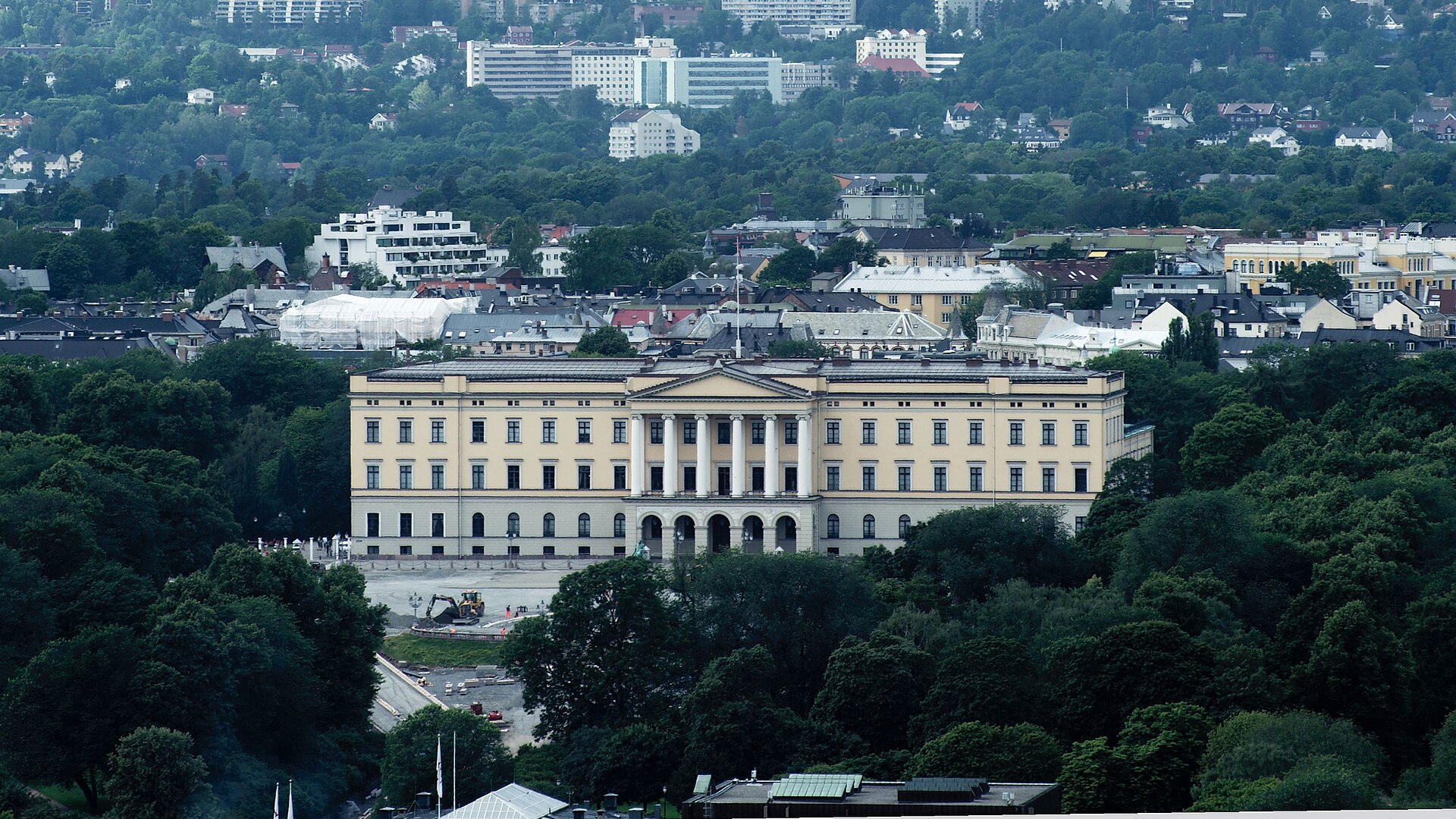
At the top of Oslo’s grandest avenue, raised on a gentle hill above the heart of the Norwegian capital, stands a long, dignified building of pale yellow that closes the great vista like the final chord of a piece of music. This is the Royal Palace, the official residence of the King of Norway, and though it is younger than many of Europe’s royal houses, it carries a weight of meaning out of all proportion to its age. For Norwegians it is the symbol of a hard-won independence and a modern monarchy that belongs unmistakably to its people.
The palace was built in the first half of the nineteenth century, in an age of neoclassical taste, for a king who ruled over a union of Scandinavian crowns. Yet its deeper story belongs to Norway’s long road to full sovereignty, a road that ran through union, national awakening, and finally the establishment of an independent Norwegian monarchy in the twentieth century. The palace has been the stage for that story, and it remains its living centre.
Unlike the fortress-castles and baroque pleasure palaces of older monarchies, the Royal Palace of Oslo is a restrained and elegant building, its grandeur expressed through proportion and setting rather than lavish ornament. It presides over a beloved public park, and its famous changing of the guard draws visitors daily. It is a working royal residence, modern in spirit, open in part to the public, and woven into the everyday life of the city it crowns.
In this article you will get to know the Royal Palace of Oslo fully: the king who built it, its neoclassical architecture and elegant interiors, its role in Norway’s journey to independence, the guards and ceremonies that surround it, the great park that spreads before it, and its life today as the working home of a monarchy that stands among the most admired and approachable in the world.
In This Article
- A Palace Crowning the Capital
- The King Who Built It
- Neoclassical Elegance
- The State Rooms Within
- A Palace Through Union and Independence
- Home of a Modern Monarchy
- The Changing of the Guard
- The Palace Park
- The Avenue and the Founder’s Statue
- The Palace and National Celebration
- A Symbol of Nation and Continuity
- Among the Royal Houses of Scandinavia
- Visiting the Royal Palace Today
A Palace Crowning the Capital
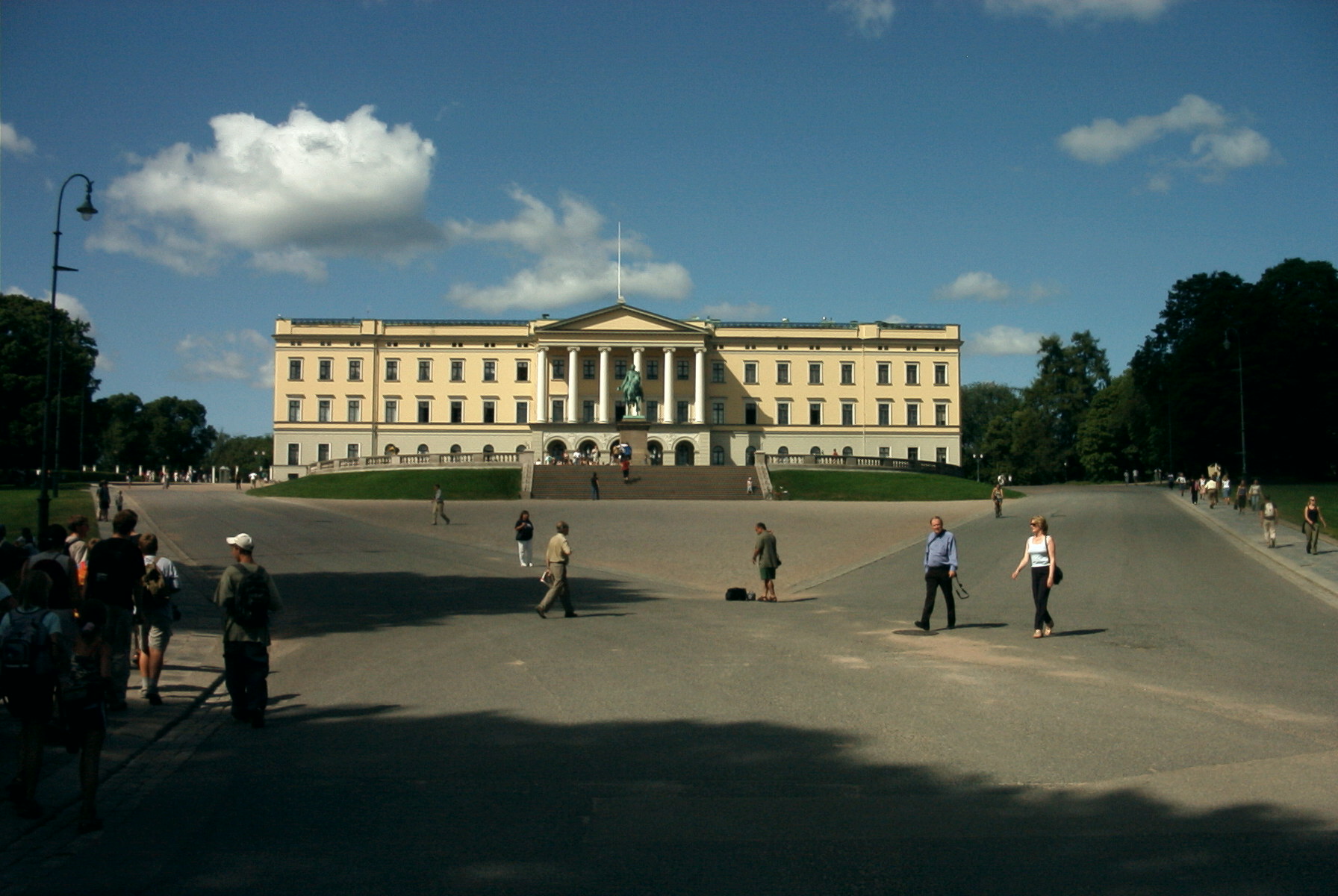
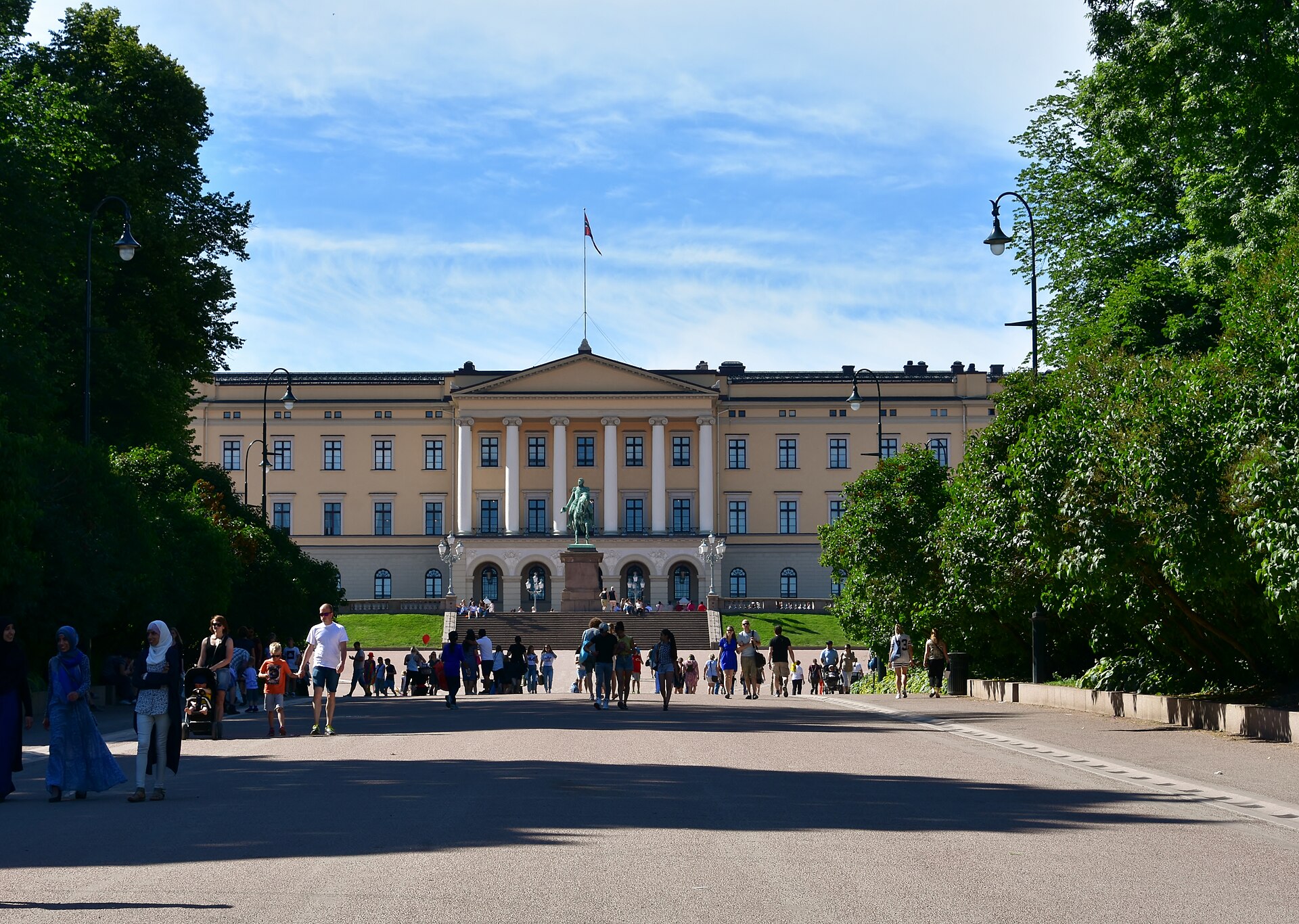
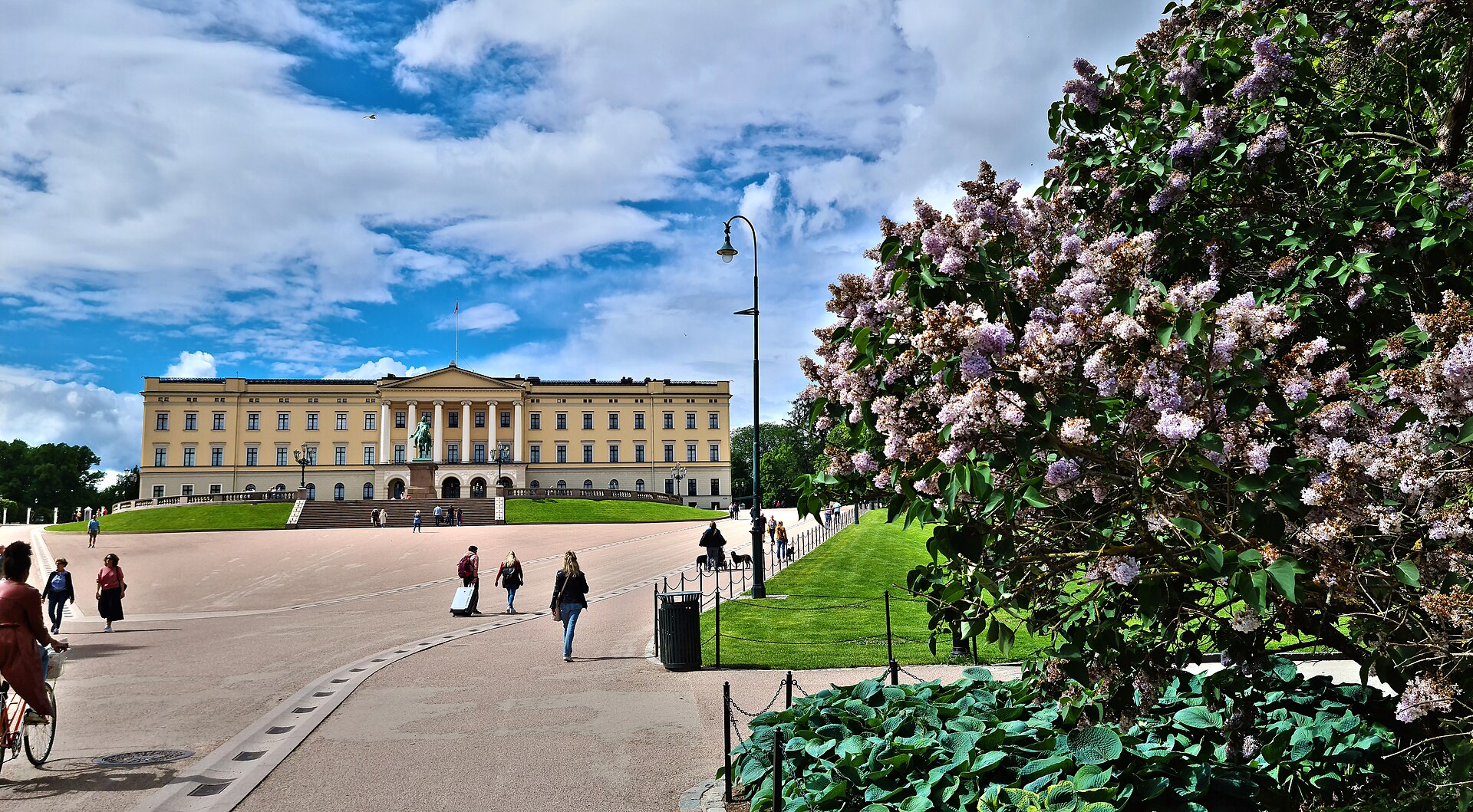
The Royal Palace occupies one of the finest sites in Oslo, at the top of the long ceremonial avenue that runs through the heart of the city. From its hill it looks down the avenue toward the parliament and the older centre, closing the great axis of the capital and presiding over it with quiet authority. The approach up the rising ground toward the palace is one of the defining experiences of the city.
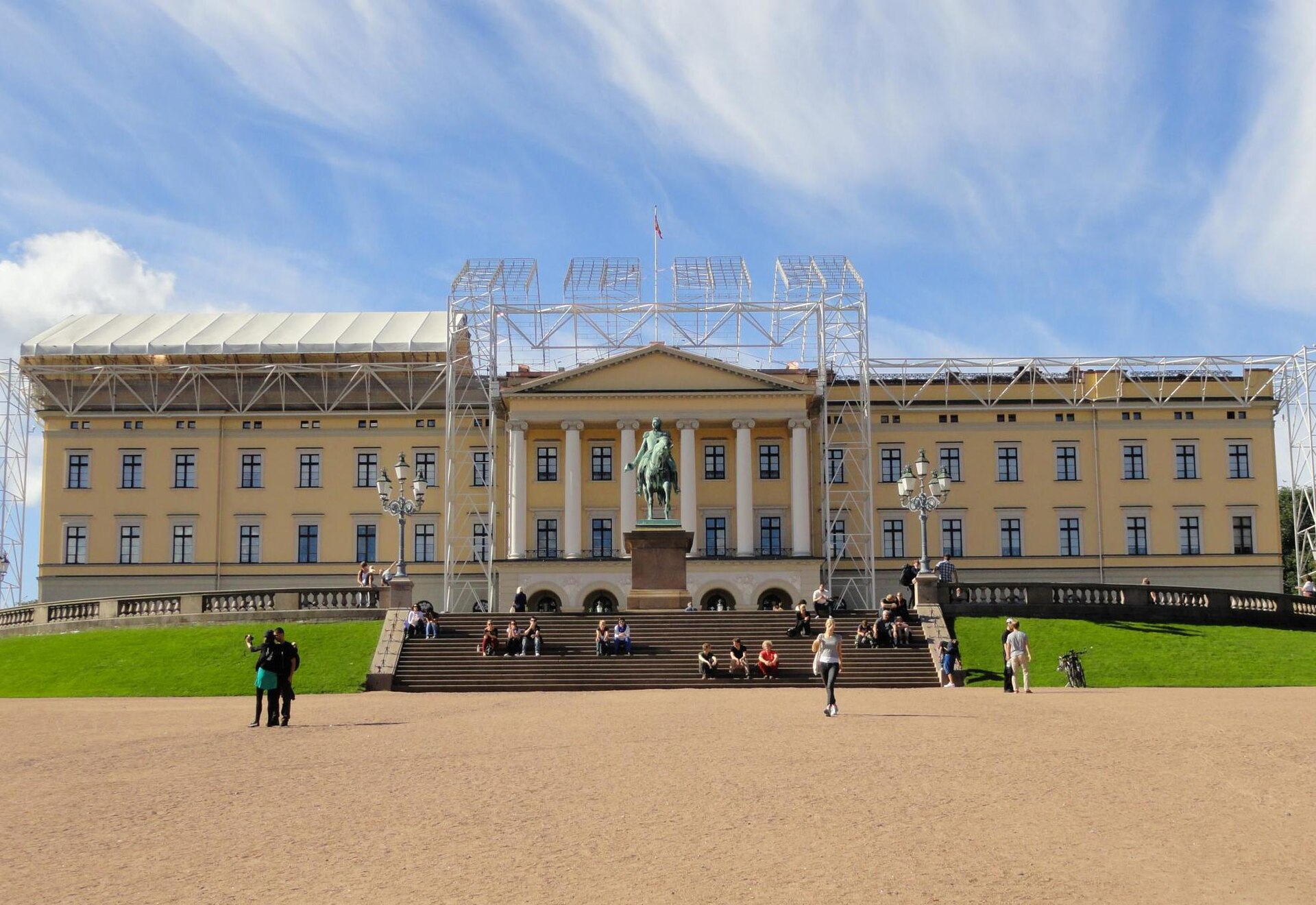
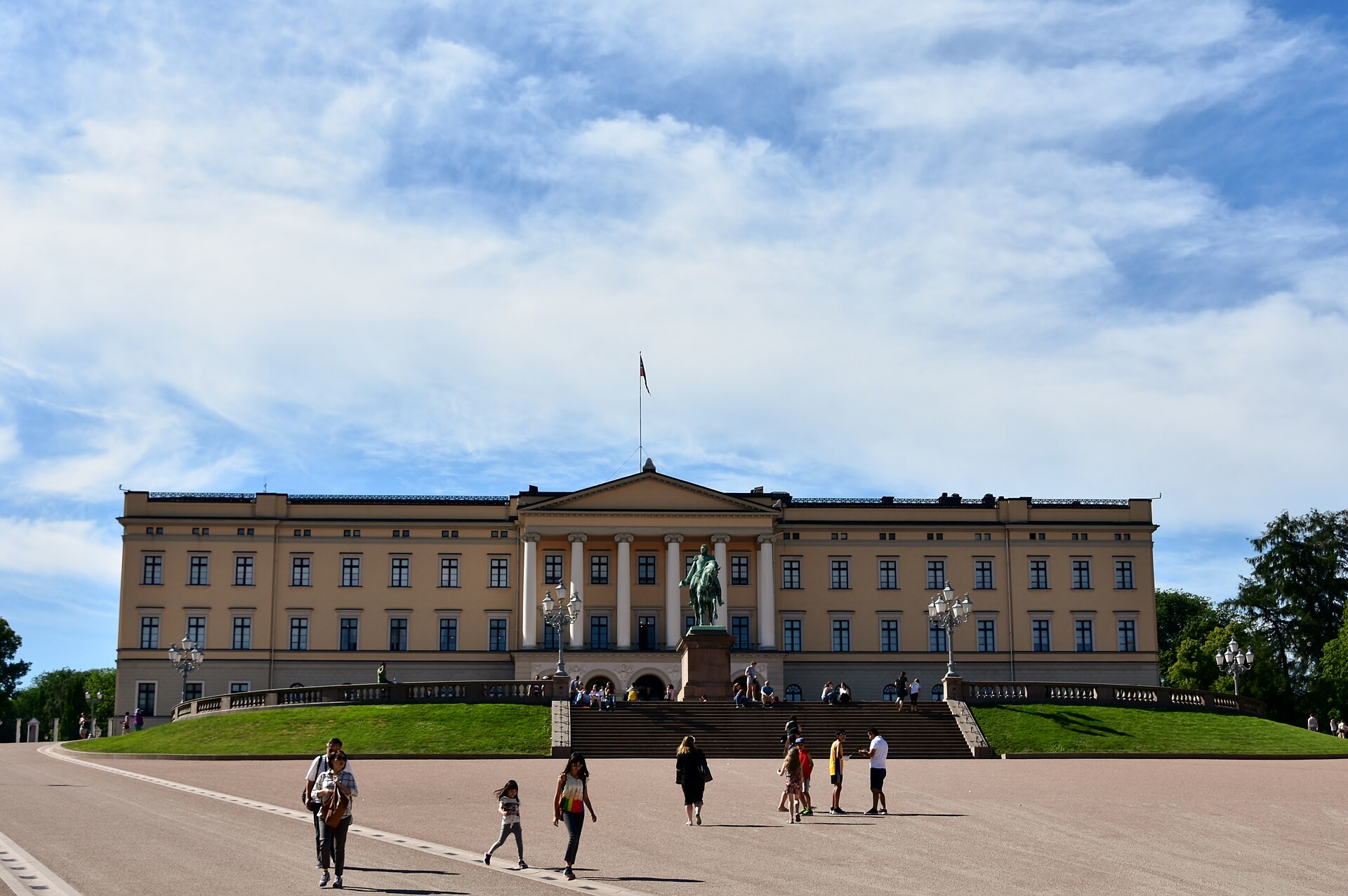
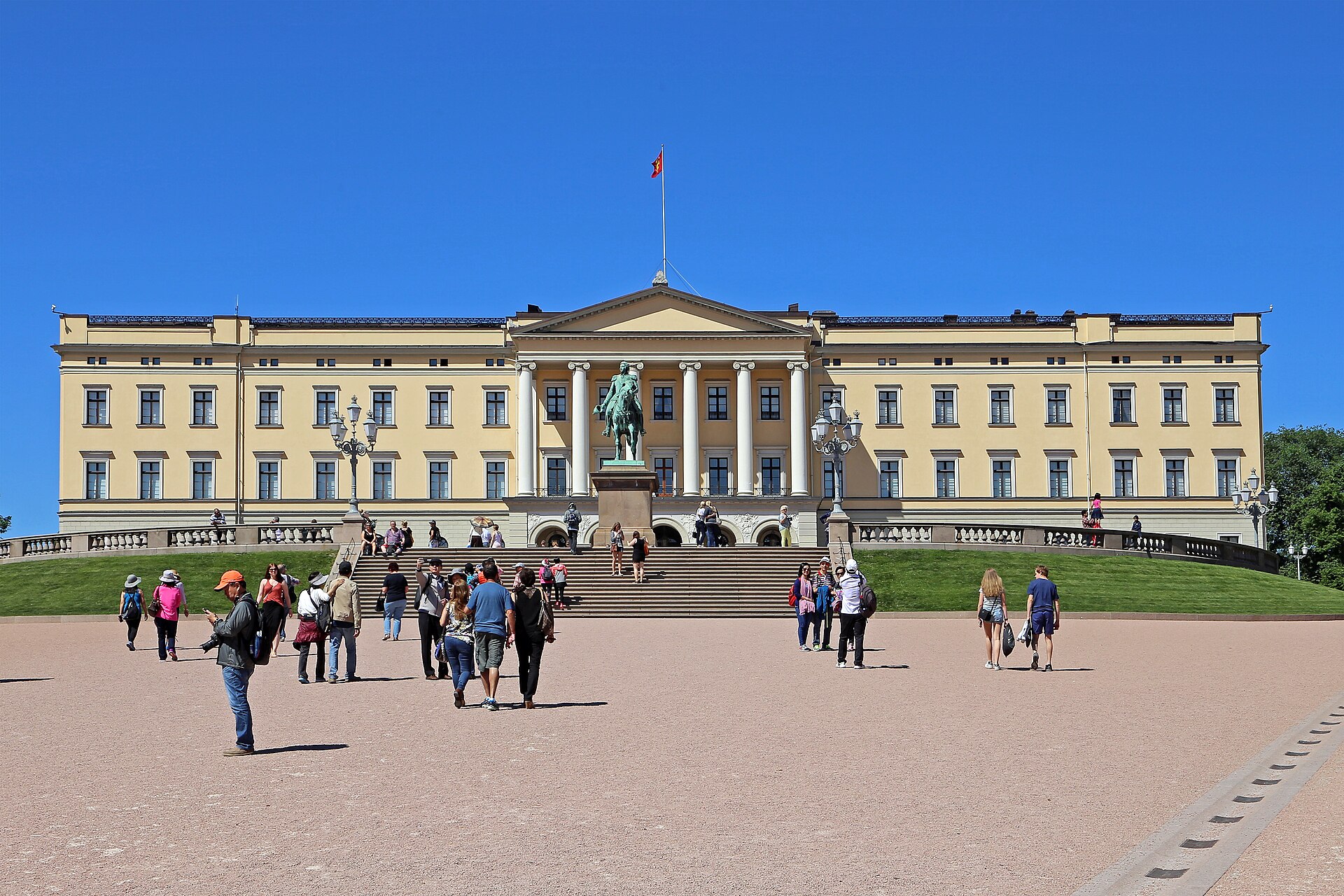
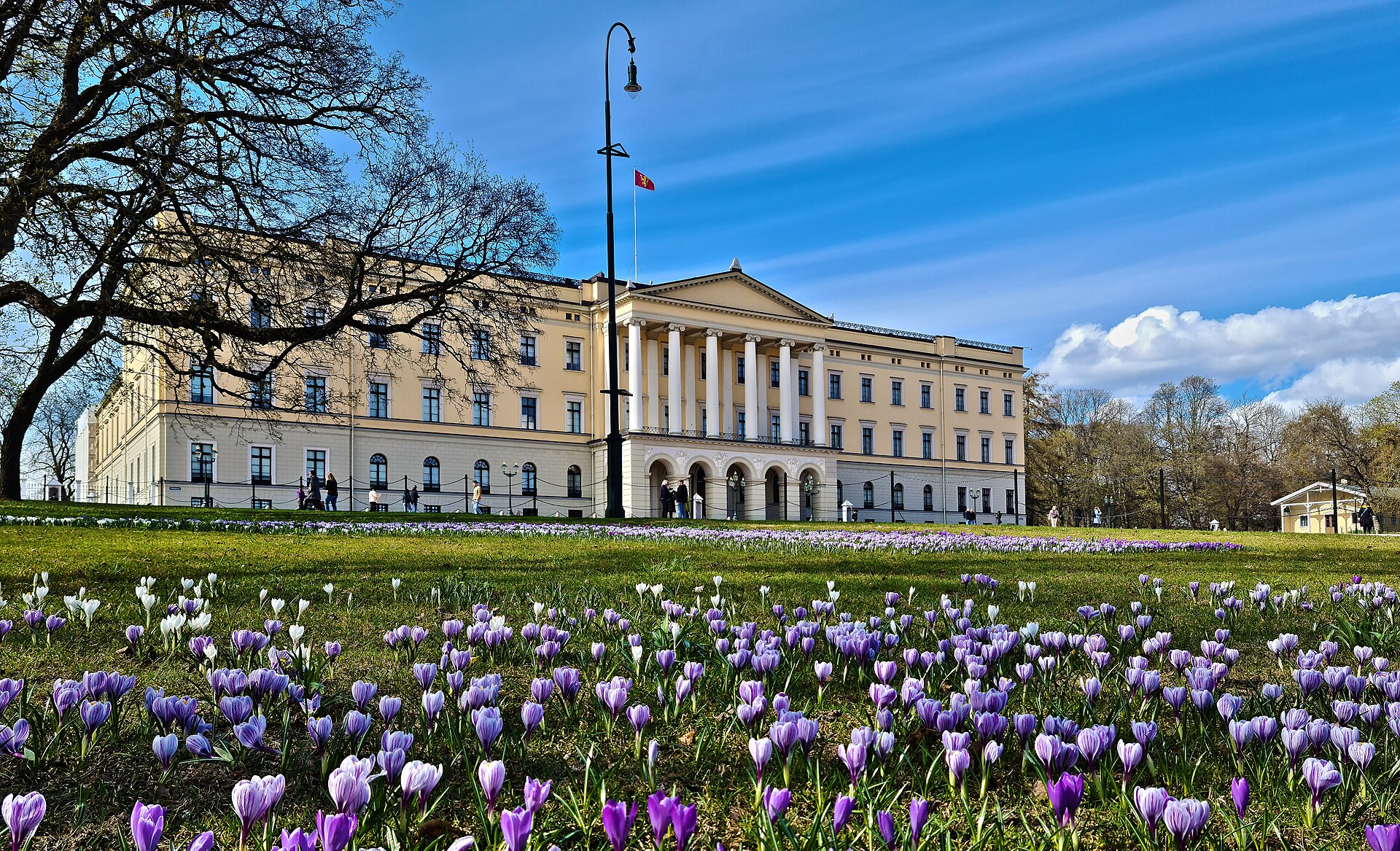
The building itself is long and low, its pale facade articulated with restrained classical detail, crowned by a central portico. There is nothing overwhelming or forbidding about it; its dignity comes from harmony and proportion rather than sheer scale or elaborate decoration. It reads as a building of the age of reason and refinement, confident but unostentatious.
This character suits the monarchy it serves. The Norwegian crown has long prized accessibility and closeness to the people, and its palace reflects that ethos. Grand enough to embody the dignity of the state, yet human enough to feel part of the city, the Royal Palace strikes a balance that captures something essential about modern Norway and its relationship to its royal house.
Walking up the slope toward the palace, with the long yellow facade growing steadily before you and the city falling away behind, you understand how carefully the building was sited. It was meant to be arrived at, approached along a rising axis that builds anticipation and gives the modest building a commanding presence. The setting does much of the work that ornament does elsewhere, lending the palace a quiet grandeur.
There is a lesson in the palace’s restraint. It shows that a monarchy can project dignity without extravagance, that authority can rest on harmony and setting rather than on overwhelming display. In an age when many older palaces can seem like relics of vanished excess, the Royal Palace of Oslo feels quietly contemporary, its modest confidence well suited to the democratic nation it serves.
The King Who Built It
The palace was built for the king who reigned over Norway in union with its neighbour in the early nineteenth century, a monarch of remarkable origins whose life story reads like an epic of the age. Rising to prominence in the turbulent years of European war and revolution, he was eventually chosen to found a new royal line in Scandinavia, and he set about giving his northern kingdom a palace worthy of a modern European monarchy.
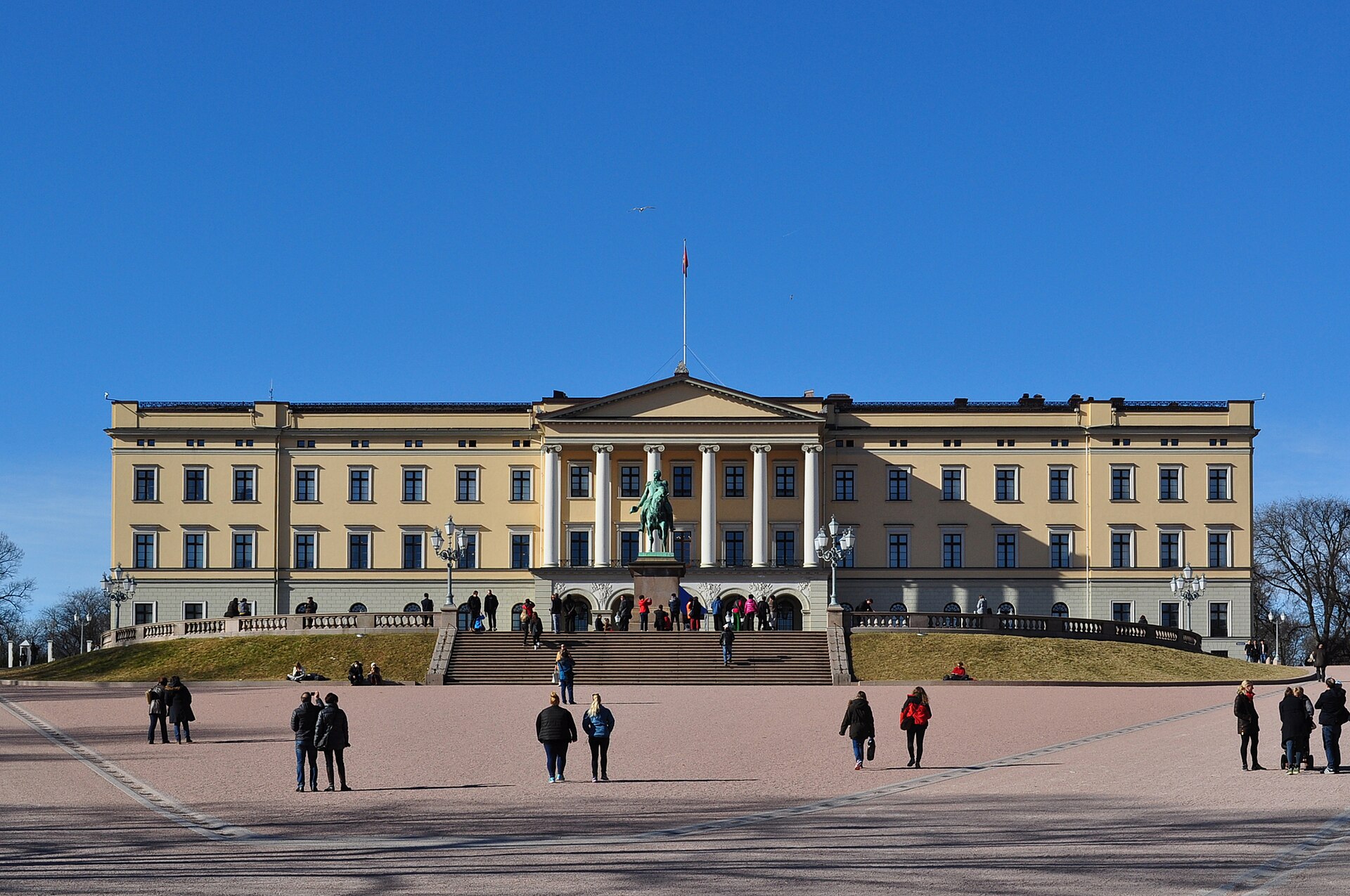
The construction of the palace was a major undertaking for a small and not wealthy country, and it proceeded over many years, its plans revised as circumstances and budgets changed. The king intended it as a residence for himself and his successors when they were in the Norwegian capital, a symbol of the crown’s presence in a land that was, at the time, the junior partner in a royal union.
The great avenue that leads to the palace bears the king’s name, a lasting tribute to the founder of the dynasty and the builder of the palace. His statue stands before it, gazing down the avenue that carries his name. In building the palace, he gave Norway not only a royal residence but a focal point for the capital and a monument to the beginning of a new royal era.
The founder’s remarkable rise, from relatively humble beginnings to the throne of a northern kingdom, lends a romantic dimension to the palace’s origins. That such a figure should have established a lasting dynasty and built this residence at the edge of Europe speaks to the extraordinary upheavals of his age. The palace stands as the monument of a self-made king who founded a royal line that endures to this day.
The years-long construction, stretched out and repeatedly revised as means allowed, is itself a story of a young and modest kingdom striving to give its monarchy a fitting home. That perseverance paid off in a building that has served the crown faithfully for generations, and the difficulties of its making only add to the sense of achievement it represents for the nation.
Neoclassical Elegance
Architecturally, the Royal Palace is a fine example of the neoclassical style that dominated European building in its era, drawing on the ordered forms and restrained ornament of classical antiquity. Its long facade, central columned portico, and balanced proportions embody the ideals of harmony, clarity, and dignity that defined the style.
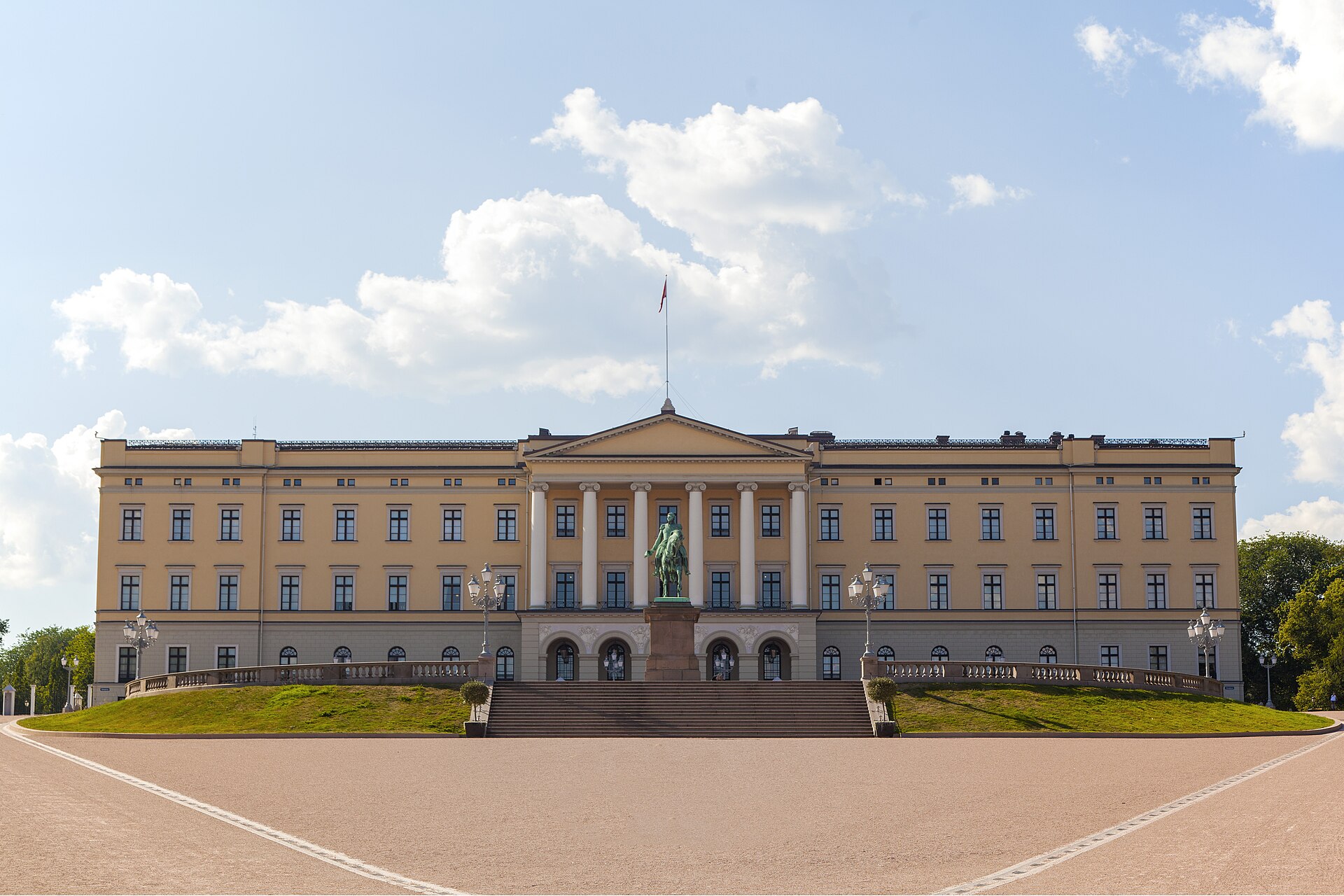
The building’s restraint is deliberate and expressive. Rather than the exuberance of the baroque or the fantasy of the picturesque, it offers the calm authority of classical order, a fitting architectural language for a monarchy that wished to present itself as modern, rational, and enduring. The pale colour of the walls and the clean lines of the design reinforce this sense of serene confidence.
The palace was the work of architects and builders adapting continental neoclassical models to Norwegian conditions and means. The result is a building that belongs to the international language of its age while remaining rooted in its northern setting. It stands as one of the principal monuments of neoclassical architecture in Norway, a distinguished example of the style that shaped the public buildings of the period.
The choice of neoclassicism was itself a statement. In adopting the calm, rational language of classical antiquity, the palace aligned Norway with the enlightened currents of European culture and presented the monarchy as modern and reasoned rather than archaic. The style’s restraint has aged gracefully, and the building looks today as dignified and self-assured as it did when it was raised.
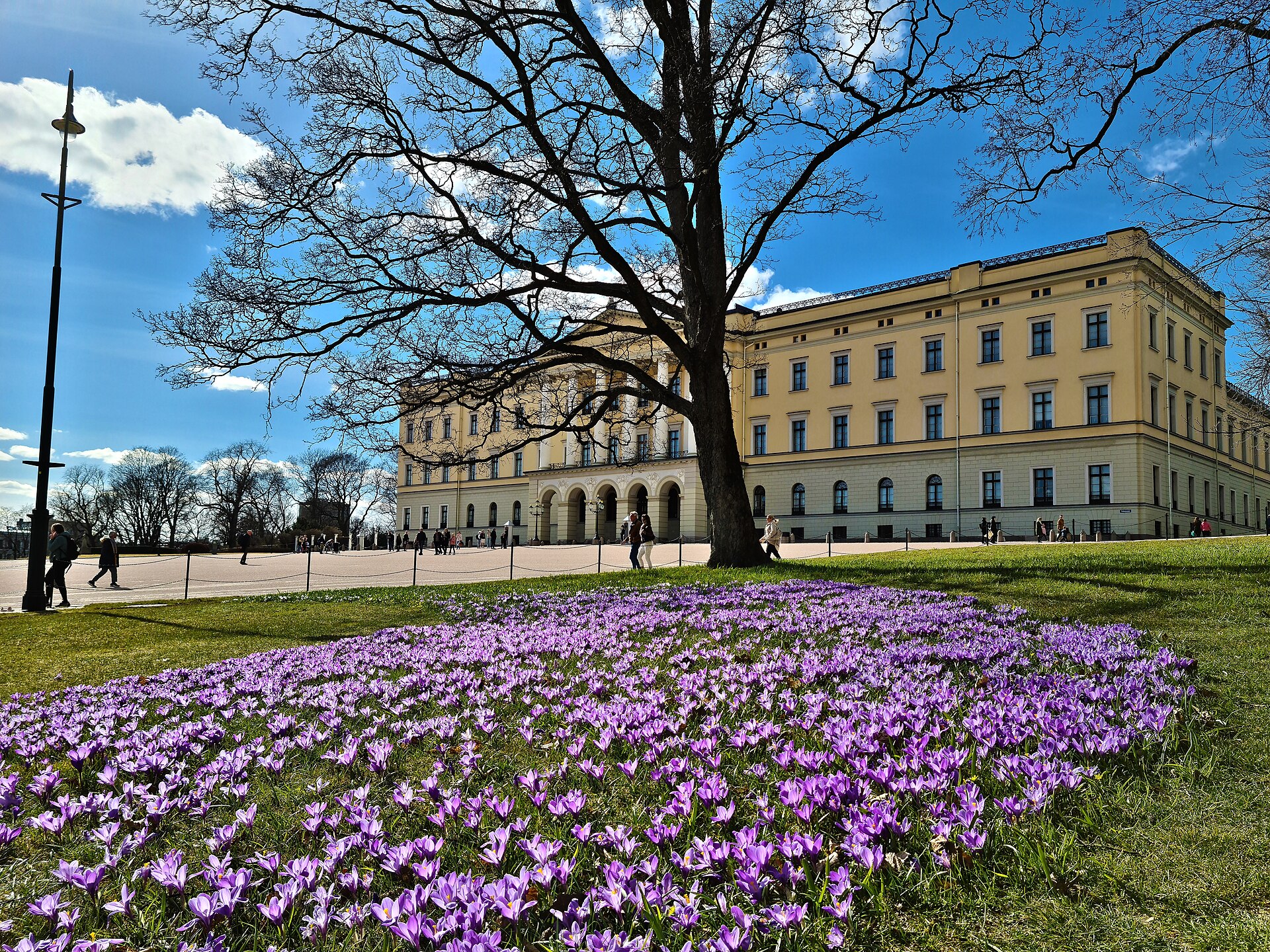
Set against the greenery of its park and the sky of the north, the pale facade takes on a serene, luminous quality, especially in the long light of a Nordic summer evening. The building seems to belong to its landscape, its calm classical lines answering the openness of the setting. This harmony between architecture and place is among the palace’s quiet pleasures, easily missed but deeply felt.
The State Rooms Within
Within, the Royal Palace unfolds a sequence of elegant state rooms used for the official functions of the monarchy. These include grand halls for banquets and ceremonies, reception rooms for the receiving of guests and dignitaries, and spaces for the conduct of state business, all decorated in a manner befitting a royal residence yet in keeping with the building’s overall restraint.
The interiors reflect the taste of the nineteenth century and the successive reigns that have used and adorned them, with fine plasterwork, chandeliers, paintings, and furnishings that create an atmosphere of dignified splendour. Some rooms are richly decorated for the grandest occasions, while others are more intimate, reflecting the practical life of a working residence.
During the summer months, when the royal family is away, parts of the palace are opened to the public through guided tours, allowing visitors to experience the state rooms and learn about their history and use. This openness reflects the accessible character of the Norwegian monarchy, and it offers a rare chance to see inside a working royal residence at the heart of the capital.
The opening of the state rooms to summer visitors is a characteristically Norwegian gesture, extending to the public a glimpse of the working heart of the monarchy. Walking through these rooms, one senses both the dignity of the crown and the practical life of a residence still very much in use, a combination that gives the interiors a living quality quite different from that of a museum.
A Palace Through Union and Independence
The Royal Palace was built during the period when Norway was joined in a union of crowns with its neighbour, sharing a monarch while retaining its own constitution and institutions. For much of the palace’s early life, the king who reigned here divided his time between the two kingdoms, and the palace served as the royal residence during his stays in the Norwegian capital.
The great turning point came at the beginning of the twentieth century, when the union was peacefully dissolved and Norway became a fully independent kingdom with its own monarch. The palace, built under the old union, now became the residence of an independent Norwegian royal house, taking on a new and profound significance as the seat of a sovereign national monarchy.
This transition gives the palace a special place in the national story. It stands as a witness to Norway’s journey from junior partner in a union to fully independent nation, and as the home of the monarchy that has embodied that independence ever since. The building thus carries within it the whole arc of modern Norwegian history, from union to sovereignty.
The peaceful dissolution of the union stands as one of the more remarkable episodes in modern European history, a parting achieved without war between two neighbouring peoples. That the palace passed so smoothly from the residence of a union monarch to the seat of an independent Norwegian crown reflects the maturity of the nations involved, and it gives the building an honoured place in the story of that peaceful transition.
For Norwegians, the palace’s passage through the union years and into full independence makes it a witness to the nation’s coming of age. Within these walls the story of a people finding their own sovereign voice reached its fulfilment, and that history lends the building an emotional resonance that its calm exterior scarcely hints at but that every Norwegian understands.
Home of a Modern Monarchy
The Royal Palace is the official residence and principal workplace of the King of Norway, the living centre of one of the world’s most admired constitutional monarchies. From here the monarch carries out the duties of the office, receiving the government, welcoming foreign heads of state, and representing the nation on ceremonial occasions.
The Norwegian monarchy has cultivated a reputation for accessibility, modesty, and closeness to the people, and the palace reflects this modern royal style. It is a working residence rather than a museum, its rooms in daily use for the business of the crown, yet it remains open in spirit, its grounds freely accessible and part of it shared with the public in summer.
This blend of dignity and approachability captures the character of the Norwegian crown. The palace is grand enough to embody the state, yet it is not remote or forbidding; it belongs to a monarchy that walks among its people and sees itself as their servant. In this the Royal Palace expresses a distinctly modern and Scandinavian idea of what a monarchy can be.
The reputation of the Norwegian monarchy for humility and closeness to the people is not mere image but a deeply held tradition, and the palace embodies it. A residence that shares its grounds as a public park and opens its doors in summer expresses a philosophy of kingship as service rather than domination, a philosophy that has won the crown deep and lasting affection among Norwegians.
The Changing of the Guard
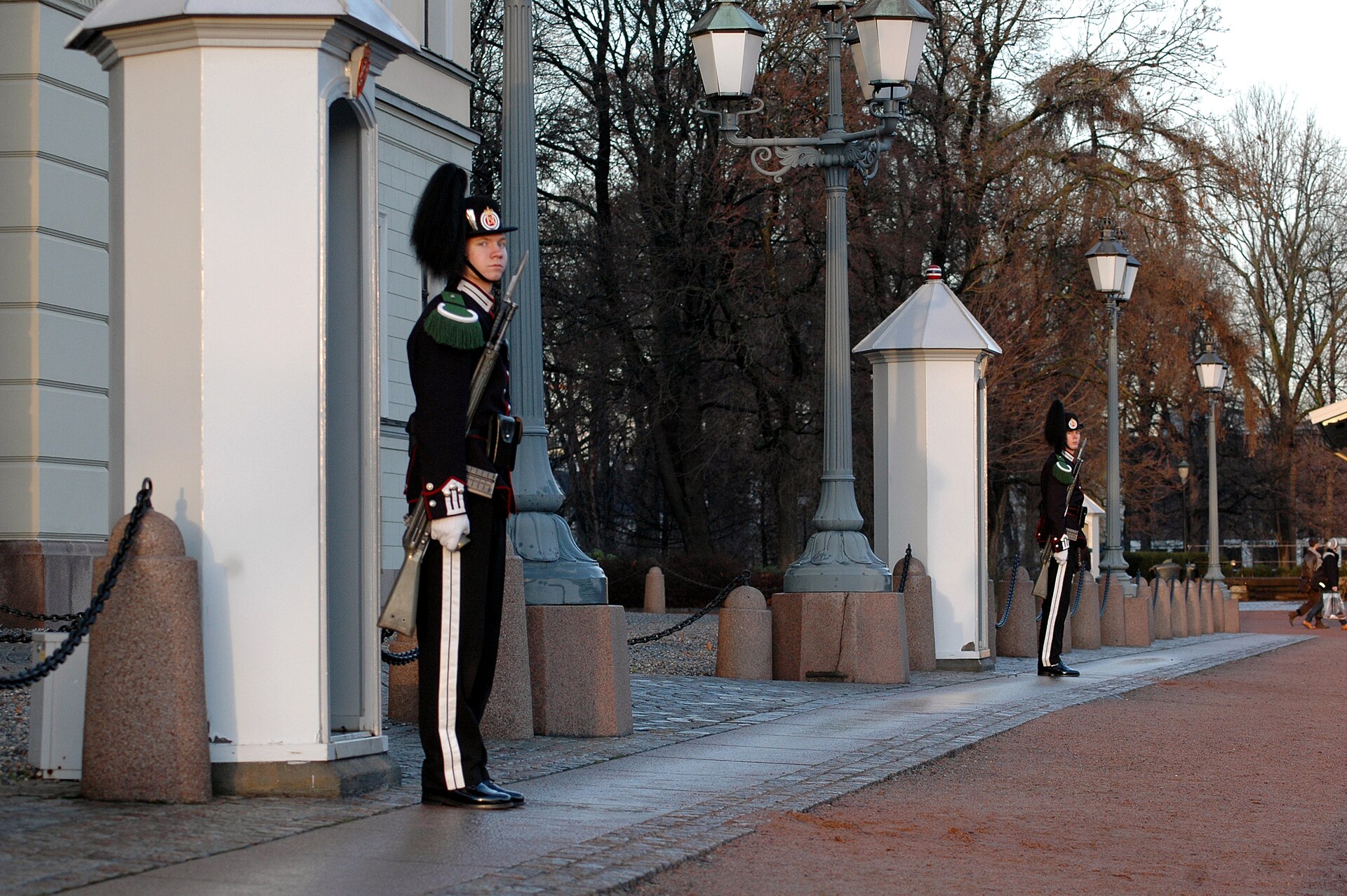
One of the most popular sights at the Royal Palace is the daily changing of the guard, performed by the soldiers of the royal guard in their distinctive uniforms. The ceremony, with its marching, drill, and music, draws crowds of visitors and provides one of the great spectacles of royal Oslo, a splash of colour and tradition before the palace facade.
The royal guard is not merely ceremonial but a genuine military unit charged with the protection of the monarch and the royal residences. Its soldiers combine their guard duties with real military training, and the guard holds a place of honour in the Norwegian armed forces. The daily ceremony thus links pageantry to a living military tradition.
For visitors, the changing of the guard offers an accessible and memorable encounter with royal ceremony. Staged in the open before the palace, free to watch and full of colour and precision, it embodies the approachable spirit of the Norwegian monarchy, sharing its traditions openly with citizens and visitors alike in the heart of the capital.
The pride the royal guard takes in its dual role, as both a ceremonial body and a genuine military unit, gives the daily ceremony an authenticity that mere pageantry would lack. The soldiers who march before the palace are real guardsmen with real duties, and this grounding in genuine service lends their ceremonial performance a dignity and meaning that visitors instinctively sense.
Crowds gather well before the ceremony begins, drawn by the promise of colour, music, and precision, and the performance rarely disappoints. For many visitors it is their first and most vivid encounter with the Norwegian monarchy, and its accessibility, free, open, and staged in the heart of the city, perfectly captures the approachable spirit that defines the crown.
The Palace Park
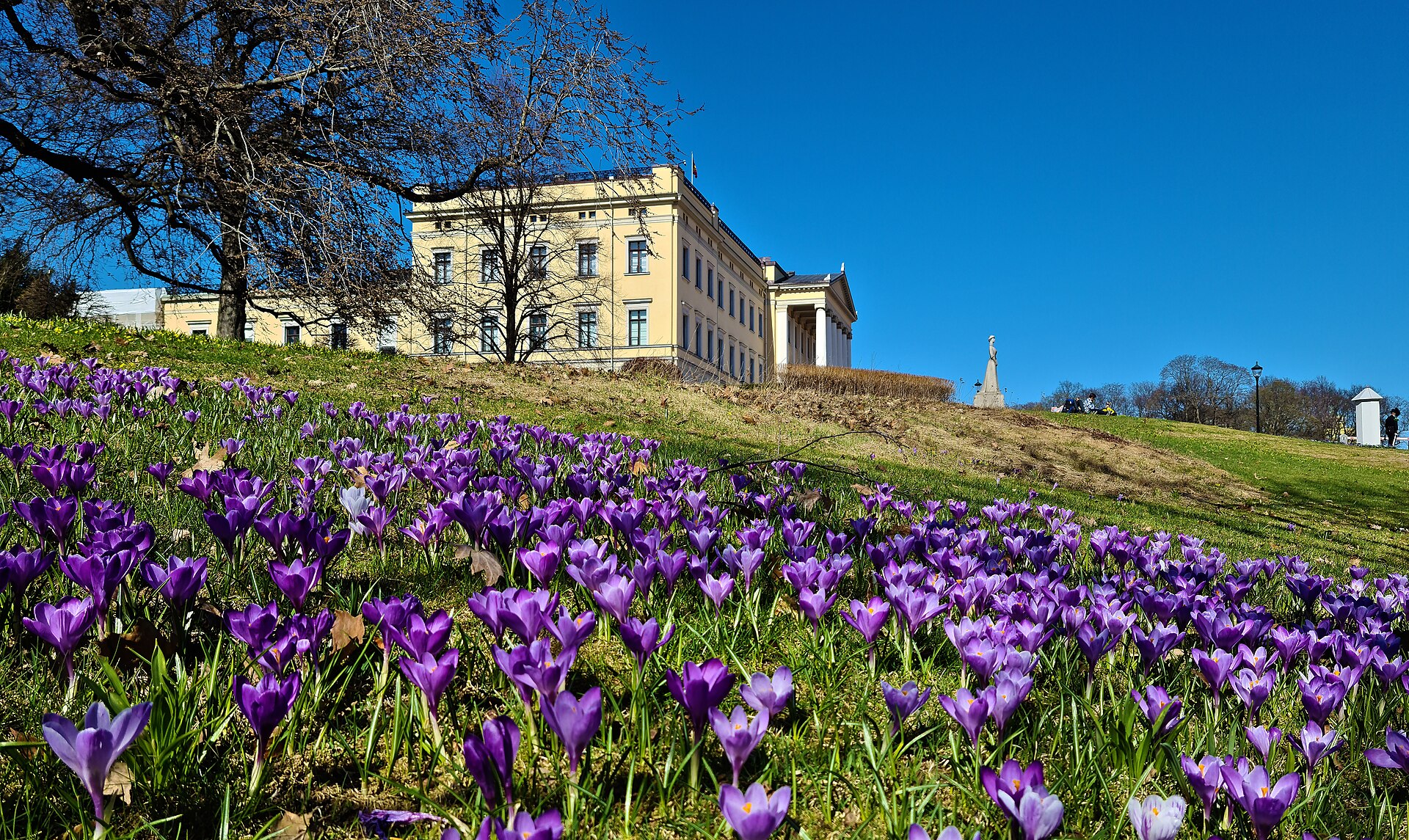
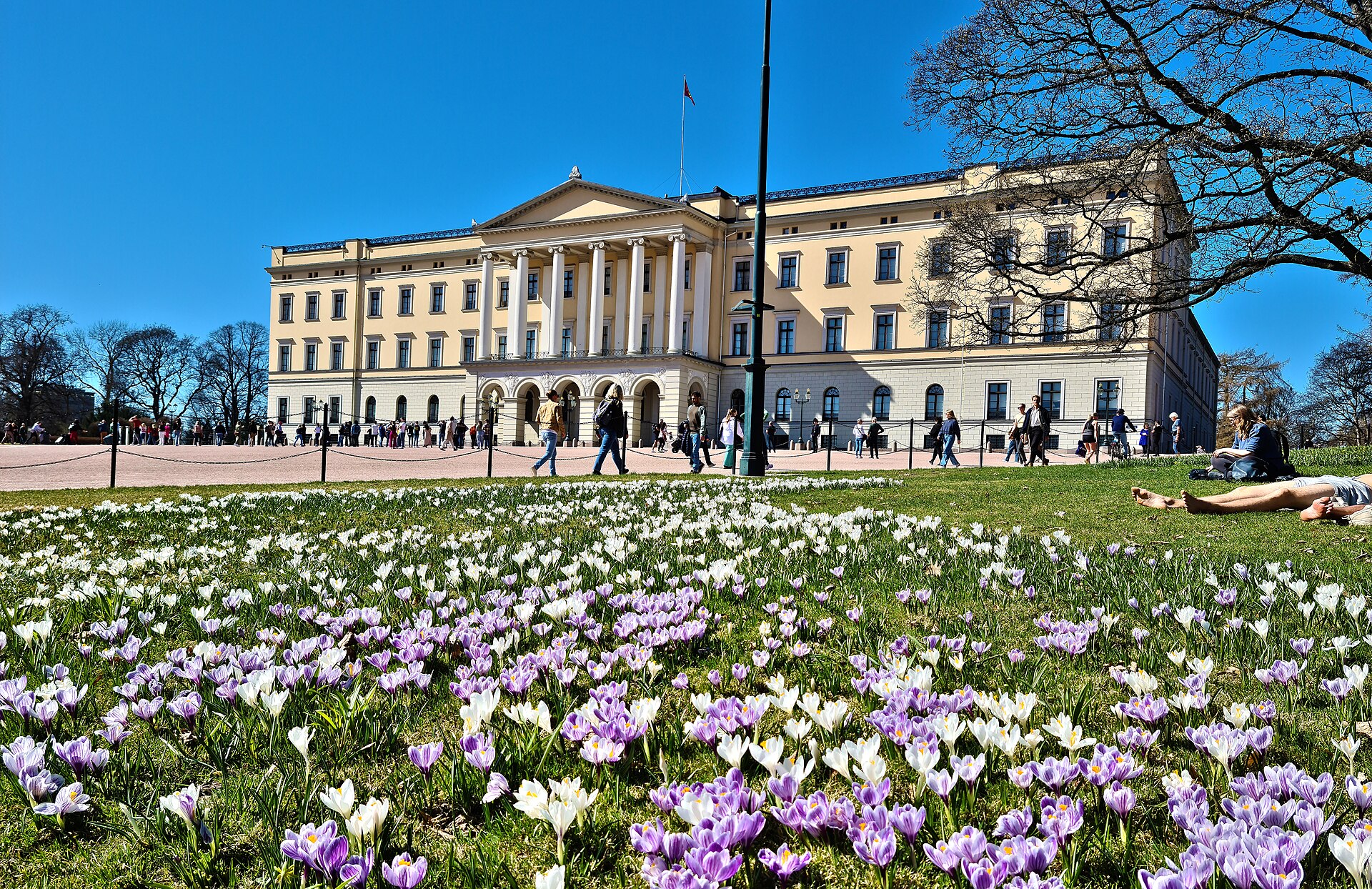
Spreading around and before the Royal Palace is its great park, a large and beautiful green space that is one of the most cherished in Oslo. Unlike the enclosed private gardens of many royal residences, the palace park is freely open to the public, a democratic green heart of the city where citizens and visitors stroll, relax, and enjoy the grounds beneath the royal windows.
The park is laid out with lawns, avenues of trees, ponds, statues, and flowerbeds, offering a place of beauty and recreation in every season. It softens the setting of the palace and connects it to the life of the city, so that the royal residence is surrounded not by walls and barriers but by a shared public space enjoyed by all.
This openness is characteristic of the Norwegian monarchy and its relationship to the people. That the grounds of the royal palace should be a freely accessible public park speaks volumes about the values of the crown and the country. The park is a place where the royal and the everyday meet, and it is inseparable from the character and appeal of the palace it surrounds.
The freely open park is perhaps the single most eloquent expression of the Norwegian monarchy’s values. In many countries the grounds of a royal palace are jealously enclosed; here they are a beloved public space, shared without reservation. That generosity, extended in the most literal way to the ground beneath the royal windows, says more about the character of the crown than any proclamation could.
In summer the park fills with life, its lawns dotted with picnickers and its paths busy with strollers, while in winter it takes on a quiet, snow-covered beauty. Through all the seasons it remains a place where the people of Oslo feel entirely at home beneath the royal windows, a shared ground that belongs as much to them as to the crown, and that is enjoyed with easy familiarity.
The Avenue and the Founder’s Statue
Before the palace, at the head of the great avenue that runs through the city, stands the equestrian statue of the king who built it, gazing down the boulevard that bears his name. The statue and the avenue together form a grand civic ensemble, linking the palace to the parliament and the older heart of Oslo along a single ceremonial axis.
This axis is the backbone of central Oslo, a processional route used for the great occasions of national life, from royal celebrations to the joyous parades of the national day. The palace crowns one end, the historic city the other, and the avenue between them ties the monarchy to the institutions and the people of the nation in a single grand composition.
The founder’s statue is a reminder of the origins of the modern Norwegian monarchy and of the man who gave the capital its palace and its principal avenue. Standing before the building he raised, at the head of the street that carries his name, it anchors the whole ensemble in history and gives the heart of Oslo its royal and ceremonial character.
The grand axis linking palace, avenue, and city is the ceremonial spine of Oslo, and understanding it is key to understanding the capital. Along this line the great events of national life unfold, and the placement of the palace at its head gives the monarchy a central, visible role in the life of the city. It is urban design in the service of national symbolism, and it works to powerful effect.
The Palace and National Celebration
The Royal Palace plays a central role in the great celebrations of Norwegian national life, above all the joyous festivities of the national day, when the capital fills with people, flags, and children’s parades. On that day the avenue before the palace becomes the focus of the nation’s celebration, and the royal family appears to greet the crowds from the palace balcony.
This tradition, in which the monarch and family wave to the passing parades of schoolchildren, captures the warm and familial character of the Norwegian monarchy. It is a moment of national unity and joy, in which the crown and the people come together in celebration, and the palace is at its very heart, the backdrop and focus of the day.
Such occasions reveal the palace not as a remote seat of power but as a shared national symbol, a gathering point for the celebration of Norwegian identity and independence. The building’s role in these festivities binds it to the emotional life of the nation, making it far more than an architectural monument, a living emblem of the country itself.
The sight of the royal family greeting the children’s parades from the balcony has become one of the most cherished images of Norwegian national life. In that simple, warm gesture the whole character of the monarchy is expressed, familial, joyful, and close to the people. The palace, as the setting for this annual ritual, is woven into the happiest memories of generations of Norwegians.
On that great day the whole axis from the historic centre to the palace becomes a river of flags and song, and the atmosphere is one of pure, unforced joy. The presence of the royal family at the palace, greeting the endless parades, completes the scene, binding the monarchy to the happiest expression of national feeling and making the palace, for one day above all, the beating heart of the nation.
A Symbol of Nation and Continuity
Beyond its practical functions, the Royal Palace serves as a powerful symbol of the Norwegian nation and its continuity. As the home of the monarchy that embodies the country’s independence and unity, it represents the enduring institutions of the state and the shared identity of the people, standing above the changes of politics and the passing of governments.
The monarchy, and with it the palace, has come to be seen as a unifying force in Norwegian life, a symbol that belongs to all citizens regardless of party or persuasion. In times of crisis and celebration alike, the crown and its palace have provided a focus for national feeling, a source of continuity and stability across the generations.
This symbolic role gives the palace a significance that transcends its architecture and its ceremonies. It is a place where the identity and history of a nation are gathered and expressed, a monument not merely to a royal family but to the idea of Norway itself. In this the Royal Palace fulfils the deepest purpose of a national royal residence.
In moments of national trial, the crown and its palace have repeatedly served as a rallying point for the country, a symbol of unity and resilience above the divisions of ordinary politics. This capacity to embody the nation as a whole, transcending party and faction, is among the deepest values of the monarchy, and the palace stands as its most visible and enduring emblem.
That the monarchy should stand above politics, belonging equally to all citizens, is a principle the palace quietly embodies. As the seat of an institution that unites rather than divides, it offers the nation a shared symbol untouched by the quarrels of the day, and this role as a point of common belonging is among the most valued functions the crown and its palace perform.
Among the Royal Houses of Scandinavia
The Royal Palace of Oslo takes its place among the royal residences of Scandinavia, the group of northern monarchies that share deep historical ties and a common reputation for accessible, modern kingship. Together with the palaces of its neighbours, it forms part of a distinctive Nordic tradition of monarchy, rooted in history yet adapted to the values of contemporary democratic society.
Each of these northern royal houses has its own palaces and traditions, shaped by its particular history, yet they share a family resemblance in their combination of dignity and approachability. The Royal Palace of Oslo, younger than some but no less significant, embodies this shared spirit in its own distinctive way, reflecting Norway’s particular journey to independence and nationhood.
For the visitor exploring the royal heritage of Scandinavia, the Royal Palace of Oslo is an essential stop, completing the picture alongside the residences of the neighbouring crowns. It offers a distinctively Norwegian expression of the northern royal tradition, and its story illuminates both the shared and the particular in the monarchies of the region.
The shared spirit of the Scandinavian monarchies, dignified yet approachable, historic yet modern, is one of the distinctive features of northern European public life. The Royal Palace of Oslo expresses this spirit in a form shaped by Norway’s particular history, and seeing it alongside the residences of its neighbours reveals both the common tradition and the individual character of each of these admired royal houses.
What unites these northern crowns is not only shared history but a shared philosophy of monarchy as a public trust, exercised with restraint and in close touch with the people. The Royal Palace of Oslo, presiding over its open park at the head of the city, gives that philosophy an especially clear and moving architectural form.
Visiting the Royal Palace Today
Today the Royal Palace is one of the principal sights of Oslo, drawing visitors to admire its architecture, watch the changing of the guard, and enjoy the surrounding park. Situated at the top of the city’s grand avenue, it is easily reached and forms a natural focal point for any exploration of the Norwegian capital.
In summer, guided tours allow visitors to see inside the state rooms and learn about the history and workings of the monarchy, a rare opportunity to enter a functioning royal residence. At other times, the exterior, the guard ceremony, the statue, and the park offer plenty to enjoy, making the palace rewarding to visit in any season.
To experience the Royal Palace of Oslo is to encounter a monarchy that is at once dignified and approachable, historic and modern. In its elegant architecture, its ceremonies, its park, and its central place in national life, the palace embodies the character of Norway and its crown. It stands, quietly and confidently, as one of the great royal residences of the north, and as a beloved symbol of the nation it crowns.
For visitors with an interest in how a modern monarchy actually lives and works, the Royal Palace of Oslo offers unusual rewards. It is neither a frozen relic nor a distant fortress but a living residence at the heart of a democratic nation, and to visit it is to glimpse a model of kingship that many around the world regard with admiration and even affection.
Whatever the season and whatever draws them, visitors to the Royal Palace of Oslo come away with a sense of having encountered something distinctive, a monarchy and a palace that wear their dignity lightly and share themselves generously. It is an experience that lingers, offering a glimpse of a northern kingdom at ease with itself and with the crown that has come to symbolise its hard-won independence.
Palaces Nearby
The Royal Palace of Oslo belongs to the family of Scandinavian royal residences, and its story is echoed by the palaces of the neighbouring Nordic crowns. Two more of the region’s royal residences make natural companions to a visit here, each with its own distinctive character.
- Drottningholm – the Versailles of the North, the Swedish royal residence near Stockholm.
- Rosenborg Castle – the fairy-tale castle and treasure house of the Danish crown in Copenhagen.
You May Like


