On a limestone hill above the Vistula, at the heart of the ancient Polish city of Krakow, rises a complex of towers, walls, and spires that holds within it the very soul of a nation. Wawel is more than a castle; it is the place where Poland crowned and buried its kings, where its greatest treasures were kept, and where, through centuries of glory, partition, and rebirth, the idea of Poland itself was preserved. To Poles, no other place carries such a weight of national memory.
The hill of Wawel has been a seat of power for more than a thousand years, and upon it stand two great monuments side by side: the royal castle, a magnificent Renaissance residence built around one of the most beautiful arcaded courtyards in Europe, and the cathedral, the coronation church and burial place of Polish monarchs, national heroes, and poets. Together they form a single sacred ensemble, the spiritual and historical centre of the Polish state.
Wawel’s story is inseparable from the story of Poland, with all its triumphs and tragedies. It was the residence of kings during the golden age of the Polish crown, a centre of Renaissance culture that rivalled any in Europe. In darker times, when Poland vanished from the map, Wawel became a symbol of lost independence and enduring identity, a place of pilgrimage for a nation that refused to disappear.
In this article you will get to know Wawel fully: the legendary dragon of its hill, the kings who made it their seat, its magnificent Renaissance castle and famous courtyard, the cathedral with its royal tombs and mighty bell, the treasures it guards, its role as a symbol of Polish nationhood through partition and war, and its life today as the beloved heart of Krakow and of Poland itself.

In This Article
- The Sacred Hill of a Nation
- The Legend of the Wawel Dragon
- A Thousand Years of Power
- The Renaissance Castle
- The Arcaded Courtyard
- State Rooms and Royal Apartments
- The Cathedral of Kings
- The Great Sigismund Bell
- The Crown Treasury and Armoury
- Symbol of a Nation That Would Not Die
- Occupation and Survival
- Wawel and the City of Krakow
- The Heart of Krakow Today
The Sacred Hill of a Nation
Wawel is best understood not as a single building but as a hill crowned with the accumulated monuments of Polish history. Rising above the old city of Krakow and the winding Vistula, the hill carries the royal castle, the great cathedral, fortifications, and gardens, all gathered into one commanding ensemble. It is a place where architecture, history, and national feeling are fused into something greater than the sum of its parts.

For Poles, Wawel occupies a position no other site can rival. It is at once the cradle of the monarchy, the coronation and burial place of kings, and the resting place of national heroes and poets. To visit Wawel is, for a Pole, to come into the presence of the nation’s history in its most concentrated form, a place saturated with meaning accumulated over a thousand years.
This density of significance gives Wawel an atmosphere quite unlike that of an ordinary palace or castle. Every stone seems to carry a story, every corner a memory. The hill has been fortress, palace, church, and shrine, and it remains all of these at once, the enduring symbol of a nation that has known both the heights of power and the depths of loss.
There is a reason Wawel is sometimes called the Polish acropolis, for like the great hill of Athens it gathers into one elevated place the religious, royal, and national monuments of a whole civilisation. To ascend it is to rise, in a sense, out of ordinary time into the concentrated memory of a people, where a thousand years of history press close on every side.
Approaching the hill from the old town, you pass through gates and up ramps that heighten the sense of ascent toward something sacred. By the time you reach the summit, with the castle and cathedral rising before you and the Vistula glinting below, the journey itself has prepared you to feel the weight of the place. Few historic sites orchestrate their approach to such powerful effect.
The Legend of the Wawel Dragon
No account of Wawel can begin without its most famous legend, the tale of the dragon that once lived in a cave beneath the hill. According to the story, a fearsome dragon terrorised the early settlement, devouring livestock and maidens, until a clever hero, sometimes said to be a humble cobbler, defeated it by trickery, feeding it a sheep stuffed with sulphur that left it with an unquenchable thirst until it burst.
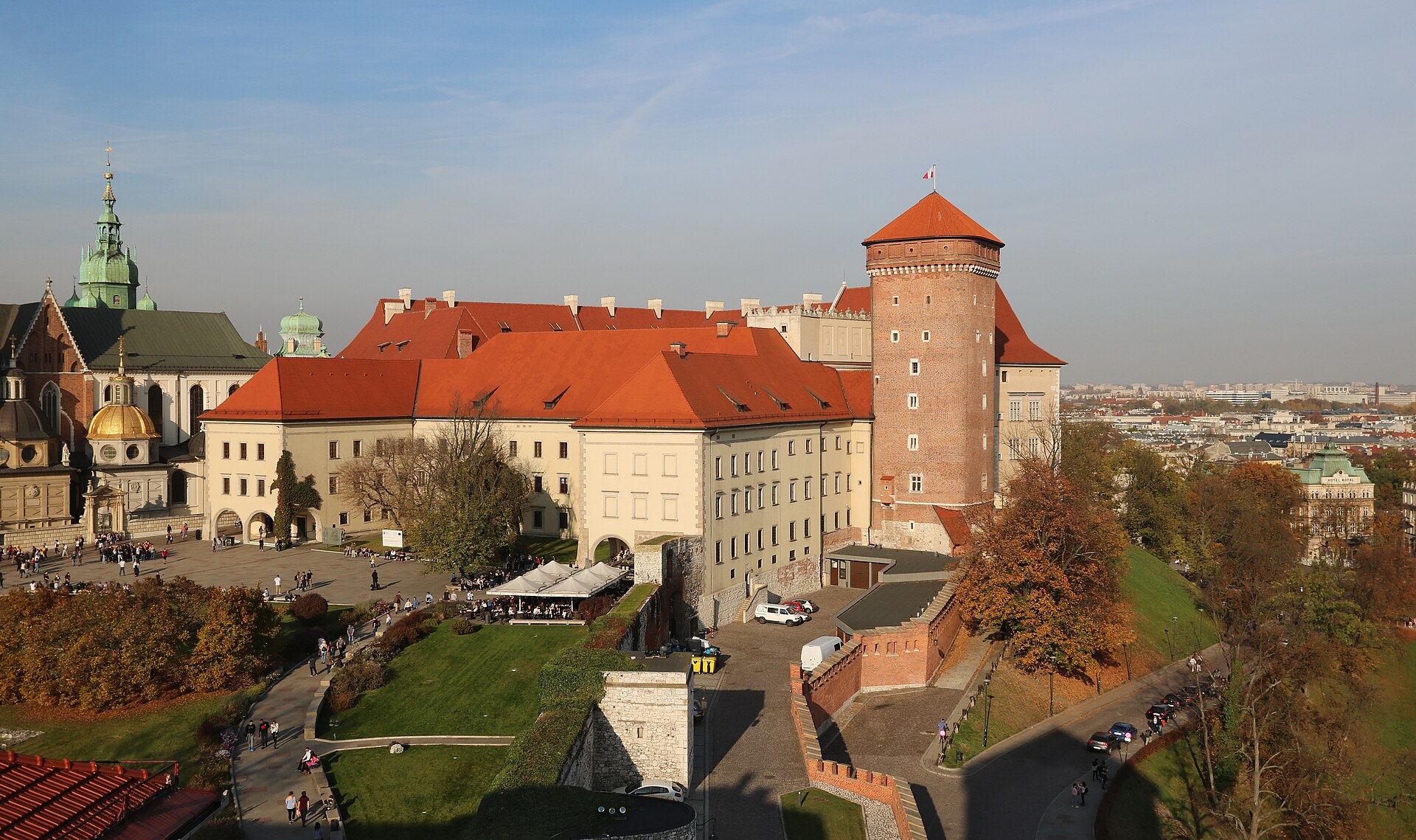
The legend of the dragon is woven deep into the identity of Krakow and Wawel. A cave beneath the hill is still shown as the dragon’s lair, and a fire-breathing dragon statue nearby delights visitors, especially children. The tale, however fanciful, expresses something real: the sense that Wawel is a place of origins, where the founding stories of the city and the nation are rooted.
Such legends are not mere entertainment but part of the mythic foundation of a people. The dragon story gives Wawel and Krakow a heroic beginning, a tale of danger overcome and a settlement founded, and it links the hill to the deepest layers of Polish folklore. It is the perfect introduction to a place where history and legend are everywhere intertwined.
Children in particular are captivated by the dragon, and the fire-breathing statue by the river has become one of Krakow’s most beloved sights. But the legend also serves a deeper purpose, giving the hill a sense of primeval origin, a time before recorded history when heroes and monsters walked. It roots Wawel not merely in the documented past but in the timeless world of myth.
Beneath the castle, the so-called dragon’s den, a real limestone cave open to visitors, gives the legend a tangible home. Descending into its cool, winding passages, one can almost believe the old story, and emerging beside the river to face the fire-breathing statue completes the experience. It is a reminder that at Wawel, even the myths have an address.
A Thousand Years of Power
The hill of Wawel has been a centre of power since the earliest days of the Polish state, more than a thousand years ago. From the beginning it was the seat of rulers, and upon it were raised successive fortifications, residences, and churches as the young Polish realm took shape. Wawel grew with the nation, its buildings reflecting each stage of the kingdom’s development.
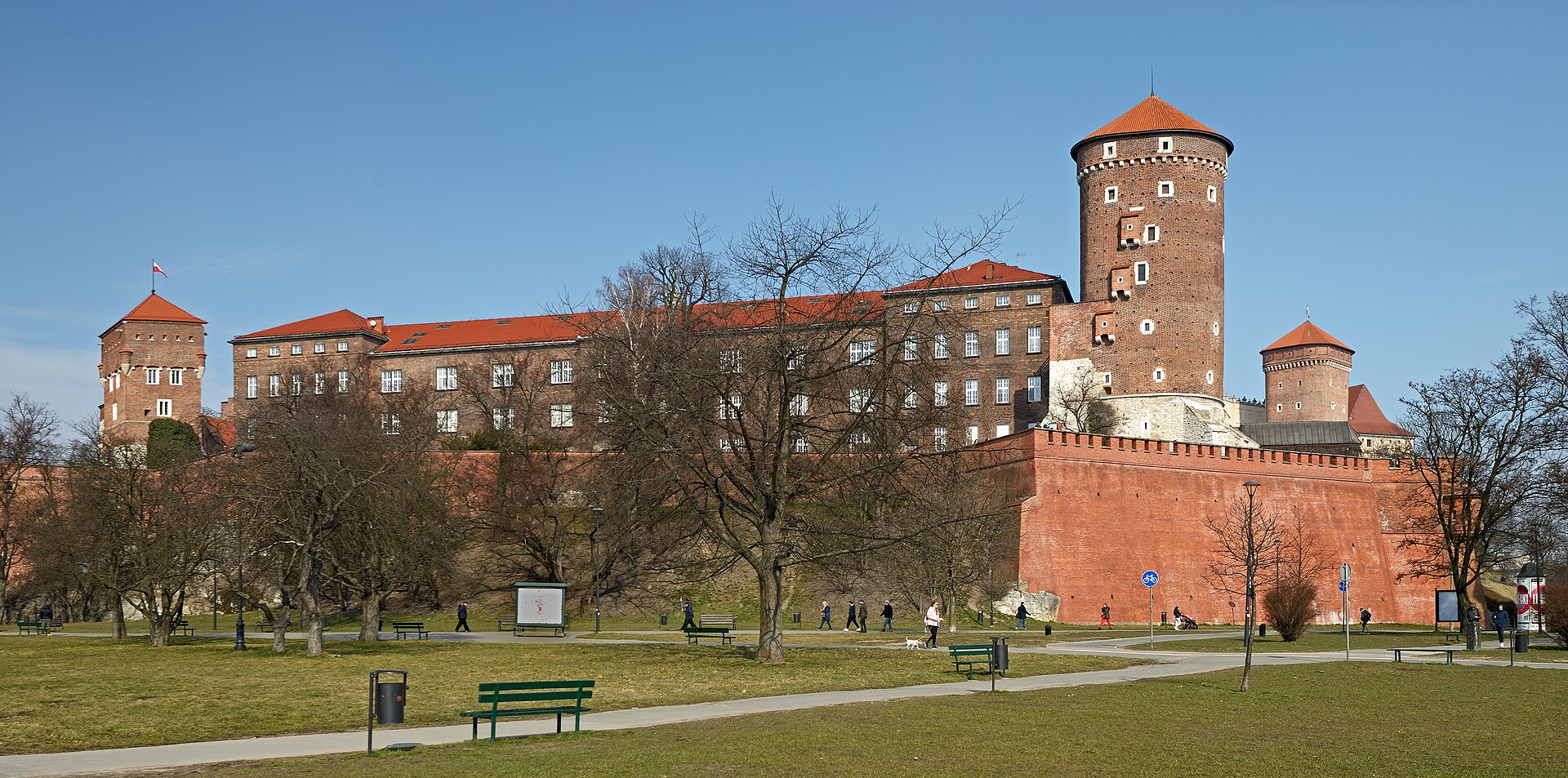
As Krakow rose to become the capital of Poland, Wawel became the principal seat of its kings, the place where royal power was exercised and displayed. Over the centuries the hill accumulated a succession of structures, from early stone churches to medieval castles, each layer building upon the last, so that Wawel became a palimpsest of Polish history written in stone.
This long continuity as a seat of power gives Wawel its extraordinary depth. Few places in Europe have served as the centre of a nation’s life for so long and so continuously. The hill has witnessed the entire span of Polish history, from the founding of the state through its rise to greatness, and its stones hold the memory of that whole immense story.
Archaeologists have uncovered on the hill the traces of its earliest structures, layer upon layer of building reaching back to the dawn of the Polish state. These remains, some of them preserved and displayed, allow visitors to glimpse the deep foundations upon which the later castle and cathedral rose, and to sense the sheer antiquity of Wawel as a seat of power.
The Renaissance Castle
The Wawel castle that we admire today owes its greatest glory to the Renaissance, when Polish kings transformed the medieval fortress into one of the most magnificent royal residences in Europe. Inspired by Italian models and employing Italian and local masters, they rebuilt the castle around a spectacular arcaded courtyard, creating a masterpiece of Renaissance architecture in the north.

This transformation reflected the golden age of the Polish crown, a period of power, wealth, and cultural flowering when Krakow was one of the great capitals of Europe. The kings who rebuilt Wawel were patrons of art and learning, and they made their castle a showcase of Renaissance splendour, filling it with treasures and drawing to it the finest artists and scholars of the age.
The result was a residence that combined the strength of a fortress with the elegance of an Italian palace, a fitting seat for monarchs who ruled over a vast and powerful realm. The Renaissance castle of Wawel stands as one of the supreme achievements of Polish art and architecture, a monument to an age when Poland stood among the leading powers and cultures of Europe.
The employment of Italian masters alongside local craftsmen made Wawel a meeting point of cultures, where the ideas of the Italian Renaissance were transplanted to Polish soil and transformed. This creative exchange produced something genuinely new, a northern Renaissance of distinctive character, and it marked Krakow as one of the great centres where the new learning and art of the age took root.
The golden age that produced the Renaissance castle was a time when Poland, united with Lithuania, ruled one of the largest realms in Europe and stood as a major power on the continent. Wawel expressed the confidence and ambition of that era, and to understand the castle is to glimpse a Poland at the height of its strength and cultural brilliance, a golden age remembered with pride.
The Arcaded Courtyard
The heart of the Renaissance castle is its famous arcaded courtyard, one of the most beautiful and influential of its kind in Europe. Surrounded on all sides by tiers of graceful arcades rising through several storeys, the courtyard creates an enclosed world of light, shadow, and rhythm, a space of extraordinary harmony and elegance that has enchanted visitors for centuries.
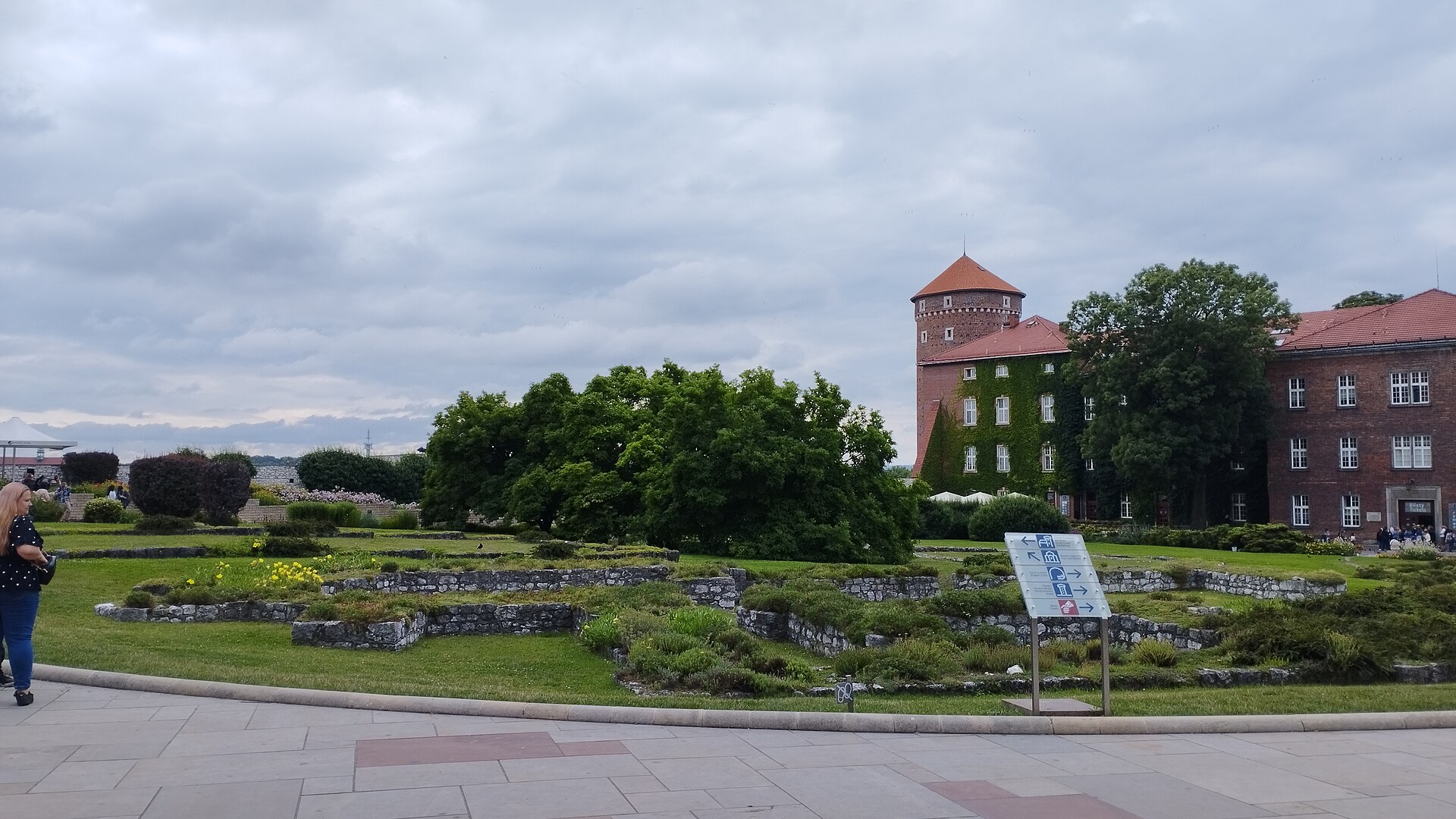
The design of the courtyard reflects the direct influence of Italian Renaissance architecture, adapted to the northern setting with distinctive features such as the unusually tall upper storey, designed to shed snow and to give the arcades their soaring proportions. The result is a space that is both classically Italian in inspiration and characteristically Polish in execution, a perfect fusion of influences.
Standing in the courtyard, surrounded by the rising tiers of arcades, a visitor feels the full refinement of the Renaissance vision that shaped Wawel. It is a space designed not for defence or display alone but for beauty, a stage for courtly life bathed in the changing light of the seasons. The arcaded courtyard is the jewel of the castle and one of the finest Renaissance interiors in all of central Europe.
The tall upper storey of the arcades, an adaptation to the northern climate, gives the courtyard its soaring, slightly attenuated elegance, quite distinct from its Italian models. It is a perfect example of how a borrowed form was reshaped by local conditions into something original, and it accounts for much of the courtyard’s peculiar and memorable beauty.
State Rooms and Royal Apartments
Within the castle, a sequence of state rooms and royal apartments preserves the splendour of the Polish court at its height. These chambers, richly decorated and furnished, were the setting for the ceremonies of monarchy and the daily life of the royal household, and they retain much of the magnificence with which the kings adorned them.

Among the greatest treasures of the interiors are the famous tapestries, a magnificent collection commissioned by the kings to adorn the castle walls on the grandest occasions. Woven in the finest workshops of Europe and depicting biblical scenes, animals, and ornament, they are among the most precious possessions of the Polish nation and a highlight of any visit to Wawel.
The rooms also preserve painted ceilings, decorative friezes, and collections of art and furniture that convey the richness of the royal court. Each chamber reflects the taste and ambition of the monarchs who created it, and together they offer a vivid picture of the culture and magnificence of the Polish crown during its golden age, preserved and displayed for visitors today.
The great tapestries deserve special attention, for they represent one of the largest and finest collections of their kind ever assembled by a European court. Their survival through the calamities of Polish history, evacuated and returned across continents, makes them not only masterpieces of art but symbols of the nation’s endurance, and their display in the castle is deeply moving.
The Cathedral of Kings
Standing beside the castle is Wawel Cathedral, one of the most important churches in Poland and the very heart of the nation’s spiritual and royal life. For centuries it was the coronation church of Polish kings and their principal burial place, and its walls enclose the tombs of monarchs, saints, and national heroes, making it a pantheon of Polish greatness.
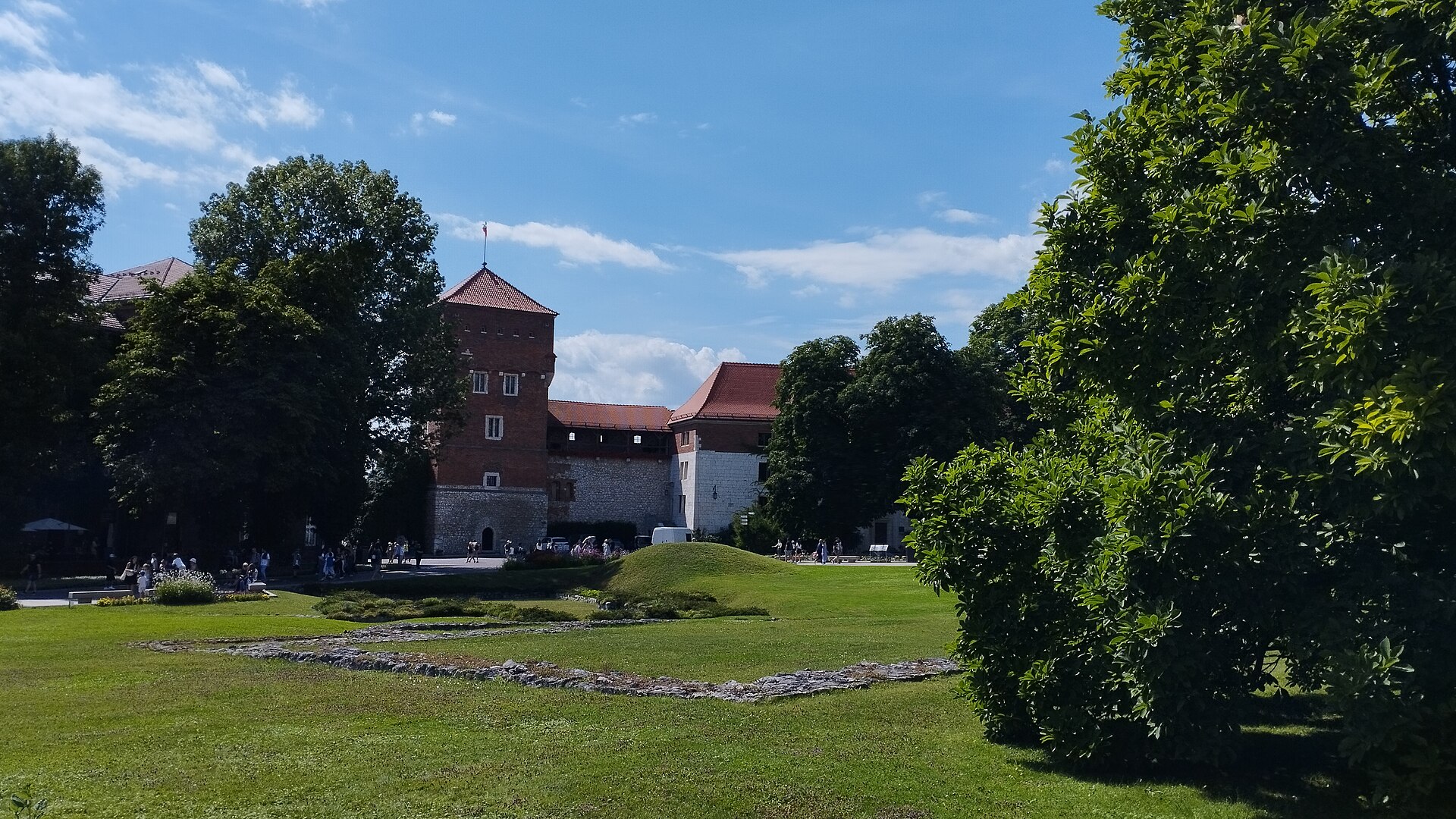
The cathedral is a treasury of art and history, its interior filled with chapels, tombs, and monuments spanning many centuries and styles, from the medieval to the baroque. Each chapel and tomb tells part of the story of Poland, and to walk through the cathedral is to move among the effigies of the men and women who shaped the nation’s destiny across a thousand years.
Among the cathedral’s greatest treasures is a magnificent Renaissance chapel, considered one of the finest examples of its kind north of the Alps, built as a royal mausoleum and crowned with a golden dome that gleams above the hill. The cathedral is not only a religious monument but the sacred core of Polish national identity, where the crown and the nation are joined in stone and memory.
To walk among the royal tombs is to encounter the whole pageant of Polish history, from medieval kings to the heroes of the modern struggle for independence. The cathedral gathers them all into one sacred space, so that the visitor moves among the effigies of a nation’s greatest figures, each tomb a chapter in the long story of Poland told in stone and bronze.
The magnificent domed royal chapel, gleaming with gold above the hill, is widely regarded as one of the purest expressions of Renaissance art north of the Alps. Built as a royal mausoleum, it gathers the ideals of the age into a single perfect space, and its golden dome has become one of the most recognisable and beloved landmarks of Krakow, visible across the city.
The Great Sigismund Bell
High in the cathedral’s tower hangs one of the most famous objects in Poland, a colossal bronze bell cast in the sixteenth century and named after the king who commissioned it. Enormous in size and requiring many people to ring it, the bell is sounded only on the greatest occasions of national and religious importance, and its deep, resonant tone is regarded as the voice of the nation itself.

The bell has become a powerful symbol of Poland, its ringing associated with the most solemn and joyful moments of the country’s history. To hear it toll is, for Poles, to hear the voice of their history and their faith, and popular belief holds that touching the bell’s clapper brings good fortune, so that generations of visitors have reached up to it in hope.
The great bell embodies the way Wawel gathers together the religious, royal, and national dimensions of Polish life. Cast for a king, hung in the coronation cathedral, and sounded for the nation’s greatest moments, it links crown, church, and people in a single resonant symbol. Its voice, heard across Krakow on the great days, is one of the most stirring expressions of Polish identity.
The ritual of reaching up to touch the bell’s great clapper, performed by countless visitors in hope of good fortune, has polished the metal to a shine. It is a small, human gesture that connects each visitor personally to this mighty symbol of the nation, and it captures the affection in which the bell is held, at once a solemn voice of history and an object of intimate hope.
The Crown Treasury and Armoury
Within the castle, the Crown Treasury and Armoury preserve some of the most precious relics of the Polish monarchy and state. Here are kept royal insignia, arms, and treasures that survived the turbulent history of the nation, including objects of the greatest symbolic importance to the Polish crown and its long martial tradition.
The most famous treasure is a legendary coronation sword, a ceremonial weapon used in the crowning of Polish kings and regarded as one of the supreme symbols of the monarchy. Around it are gathered arms, armour, banners, and trophies that recall the military glory of Poland, a realm that for centuries stood as a great power and a bulwark of Europe.
These collections carry a poignant significance, for much of the royal treasure of Poland was lost or scattered during the centuries of partition and occupation. What survives is therefore doubly precious, a remnant of the material splendour of the Polish crown and a tangible link to the nation’s proud and often tragic history. The treasury is one of the most moving parts of a visit to Wawel.
The story of how these treasures survived, spirited away to safety in times of danger and eventually returned, is itself one of the great sagas of Polish heritage. Each surviving object carries not only its own history but the history of its preservation, a testament to the determination of Poles to save the symbols of their nationhood through every catastrophe.
Set against the losses of the partition years, the surviving regalia and arms take on the character of relics, cherished remnants of a vanished splendour. To view them is to feel both the former greatness of the Polish crown and the tragedy of its dispersal, and to understand why their preservation and display mean so much to the nation that so nearly lost them entirely.
Symbol of a Nation That Would Not Die
Wawel’s meaning deepened immeasurably during the long period when Poland was erased from the map, partitioned among its powerful neighbours. Deprived of statehood, Poles clung to their history and identity, and Wawel, as the ancient seat of their kings and the burial place of their heroes, became the supreme symbol of the nation that had been taken from them but refused to die.

During these years the hill suffered indignities under foreign rule, its buildings misused and its dignity diminished. Yet it remained a place of pilgrimage, where Poles came to remember their lost independence and to draw strength from the memory of their past greatness. The burial of national poets and heroes in the cathedral turned Wawel ever more firmly into a shrine of national identity.
When Poland regained its independence, Wawel was restored to its rightful place as the sacred heart of the nation, and the work of recovering and honouring it became a matter of the highest national importance. The story of Wawel through the age of partition is the story of Poland itself, a testament to the power of memory and identity to outlast even the loss of the state.
The decision to bury national poets and heroes in the cathedral during the years of partition was a deliberate act of defiance and remembrance, transforming Wawel into a pantheon of the nation’s spirit. In the absence of a state, the hill became the place where Polish identity was kept alive, a sanctuary of memory that no occupying power could truly possess.
For a people deprived of their state, such places of memory were everything, and Wawel stood at the summit of them all. Pilgrimages to the hill became acts of quiet patriotism, ways of affirming that Poland endured in spirit even when it had vanished from the map. In this sense Wawel did not merely symbolise the nation; for a time, it helped to keep the nation alive.
Occupation and Survival
The twentieth century brought fresh trials to Wawel, above all during the occupation of Poland in the Second World War, when the hill was seized by the occupiers and used as a seat of their administration. The castle that symbolised Polish nationhood was taken over by those who sought to destroy that nationhood, a bitter reversal at the very heart of the country.

Yet Wawel survived. Its most precious treasures, including the famous tapestries and the coronation sword, had been evacuated abroad for safekeeping before the occupation, carried on an epic journey to safety and eventually returned to Poland after the war. The survival and return of these treasures became a symbol of the endurance of the nation and its heritage through catastrophe.
The experience of occupation and survival added yet another layer to Wawel’s meaning. The hill had once more been at the centre of Poland’s ordeal, and once more it had endured. The return of its treasures and its restoration to the nation affirmed, yet again, the resilience of Polish identity and the enduring power of Wawel as its symbol, tested and preserved through the darkest of times.
The epic journey of Wawel’s treasures to safety during the war, across seas and continents and back again, reads like an adventure, but it was in truth a desperate act of cultural preservation. That these symbols of Polish nationhood were saved and returned affirmed that the nation’s heritage, like the nation itself, could survive even the most determined attempts to destroy it.
After the war, the return of the tapestries and the coronation sword to Wawel was celebrated as a national event, a homecoming of the very symbols of Polish identity. Their restoration to the hill affirmed that the thread of continuity, though stretched almost to breaking, had held, and that Wawel remained, as it had always been, the keeping-place of the nation’s soul.
Wawel and the City of Krakow
Wawel cannot be separated from the ancient city that grew around it. Krakow, one of the great historic cities of Europe, developed at the foot of the hill, its medieval market square, churches, and university forming a setting worthy of the royal seat above. For centuries the city and the castle rose together, the capital of a powerful kingdom and a centre of learning and art.

The relationship between hill and city shaped both. Wawel provided Krakow with its royal dignity and its spiritual centre, while the city gave the castle its living context, a thriving community of merchants, scholars, and craftsmen. Together they formed one of the great capitals of medieval and Renaissance Europe, a place where power, faith, and culture flourished side by side.
To this day the sight of Wawel rising above the Vistula, seen from the old streets of Krakow or from across the river, is one of the defining images of Poland. The hill crowns the city as it crowns the nation, and the two remain inseparable, a royal seat and its capital preserved together as one of the finest historic ensembles in all of Europe.
For the visitor, exploring Wawel and Krakow together reveals the full meaning of each. The castle gains depth from the city that surrounds it, and the city gains grandeur from the hill that presides over it. Together they offer an unforgettable encounter with the history and spirit of Poland, gathered in one of the most beautiful urban landscapes on the continent.
The old university of the city, one of the oldest in Europe, added learning to the royal and religious dignity of the capital, making Krakow a centre of the mind as well as of power and faith. This concentration of crown, church, and scholarship gave the city and its hill an intellectual and cultural richness that few capitals could match, and that still marks Krakow today.
That Krakow escaped the wholesale destruction visited on so many other Central European cities means that the historic relationship between the city and its royal hill survives largely intact. To wander from the great market square up to Wawel is to trace a living connection between capital and crown that has endured for centuries, a rare and precious survival in a much-scarred continent.
The Heart of Krakow Today
Today Wawel is among the most visited and beloved places in Poland, a national monument and museum that draws visitors from around the world to experience the heart of Polish history. The castle and cathedral are open to the public, their treasures displayed, their stories told, and the hill has resumed its ancient role as the focus of national memory and pride.

A visit to Wawel offers an extraordinary richness of experience: the magnificent Renaissance courtyard and state rooms, the priceless tapestries, the coronation treasures, the great cathedral with its royal tombs and mighty bell, and the legendary dragon’s cave below. Few places anywhere gather so much history, art, and meaning into a single site, and the setting above the Vistula is among the loveliest in Europe.
To stand on Wawel hill is to stand at the very centre of Poland’s thousand-year story. Here the nation was crowned and buried, here it preserved its identity through partition and war, and here it celebrates its heritage today. Wawel is not merely a castle and a cathedral but the enduring symbol of a nation, the sacred hill where the soul of Poland is kept, and one of the most moving royal sites in all of Europe.
For the modern visitor, Wawel rewards not just a quick tour but a lingering exploration, for its meanings unfold slowly. The more one learns of Poland’s history, the more the hill reveals, until it becomes not merely a collection of monuments but a living book of the nation, to be read with growing wonder by anyone willing to give it time.
The setting above the Vistula, with the old city spread below and the river curving past the foot of the hill, is among the most beautiful of any historic site in Europe. Whether seen at dawn, in the golden light of afternoon, or illuminated at night, Wawel presents an image of such power and beauty that it lingers in the memory of everyone who sees it, an emblem of Poland itself.
Palaces Nearby
Wawel is one of the great royal residences of Central Europe, and its story finds echoes in the castles that crown the neighbouring capitals of the region. Two more of these royal seats make natural companions to a visit here, each guarding the history of its own nation.
- Prague Castle – a thousand years of power above the Vltava in Prague.
- Buda Castle – the resilient crown of Budapest above the Danube.
You May Like
Cardiff Castle: Two Thousand Years and a Gothic Dream


2 thoughts on “Wawel: The Royal Hill at the Heart of Poland”