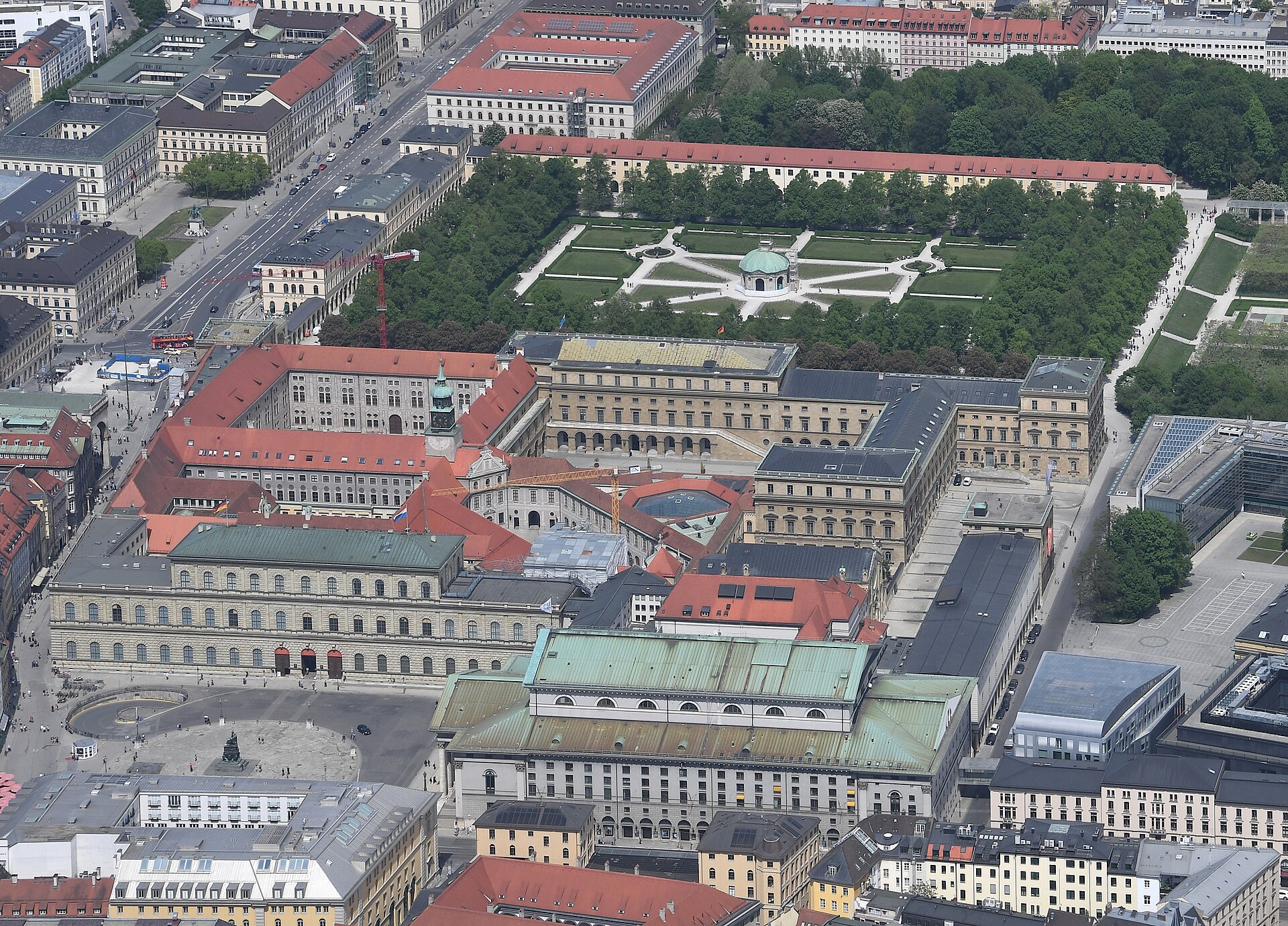
In the very heart of Munich, the capital of Bavaria, stands one of the largest and most magnificent city palaces in all of Germany, a sprawling complex of buildings, courtyards, and halls that served for centuries as the seat of the Wittelsbach dynasty, the rulers of Bavaria. The Munich Residenz was the principal residence of the dukes, electors, and kings of Bavaria, and it grew over the centuries into a vast and richly decorated palace that reflects the whole history of the dynasty and the city.
Unlike the fantastical creations of King Ludwig II, hidden away in the mountains and on lakes, the Residenz stands in the center of the city, the working seat of a dynasty rather than the private dream of a single king. It grew organically over some six centuries, from a modest fortress into an immense complex of hundreds of rooms, decorated in every style from the Renaissance through the baroque and rococo to the neoclassical, a living record of the tastes of successive rulers.
The Residenz today is one of the great museums of Europe, its state rooms, chapels, treasury, and theater open to visitors who come to admire the accumulated splendor of the Bavarian court. Within its walls are gathered some of the finest interiors in Germany, from the vast Renaissance hall known as the Antiquarium to the dazzling rococo of the later apartments and the priceless treasures of the royal collection.
Over the following pages you will explore the whole story of this remarkable place, from the dynasty that built it and the centuries of construction that shaped it, through its great halls, treasury, and theater, to its destruction and rebuilding and its life today as a museum. Come and discover the Munich Residenz, the ancient seat of the kings of Bavaria.
In This Article
- The Wittelsbach Dynasty
- From Fortress to Palace
- The Antiquarium
- The State Rooms and Ancestral Gallery
- The Treasury
- The Chapels and Grottoes
- The Cuvillies Theatre
- Destruction and Rebuilding
- The Residenz as a Museum
- A Symbol of Bavaria
- The Court Garden
- See the Munich Residenz for Yourself
- Visiting the Munich Residenz Today
The Wittelsbach Dynasty
The Munich Residenz is inseparable from the Wittelsbach dynasty, one of the oldest and most important ruling houses in the history of Europe, which governed Bavaria for more than seven centuries. From their rise in the medieval period to the end of the monarchy in the twentieth century, the Wittelsbachs shaped the history of Bavaria, and the Residenz was the center of their power.
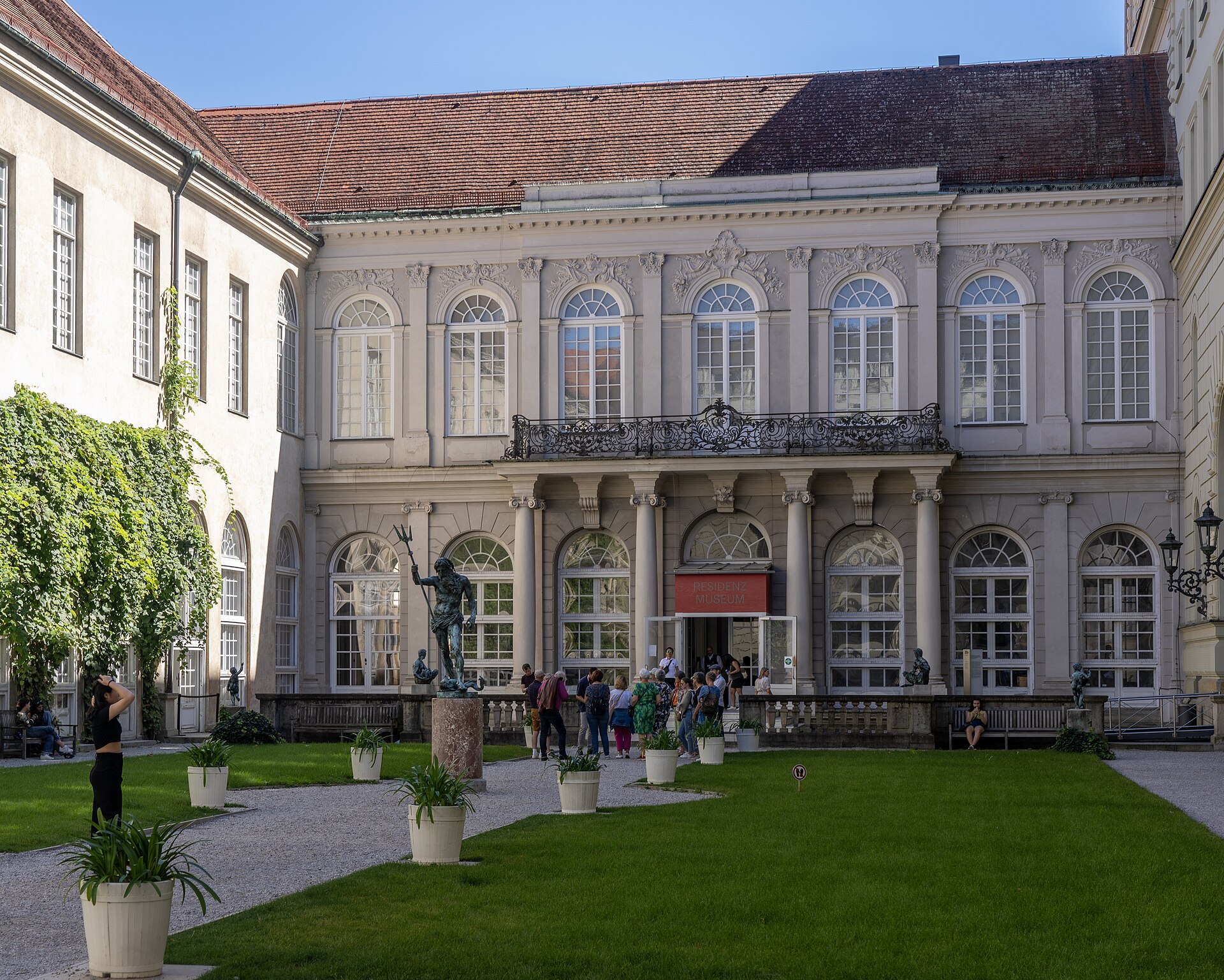
Over the centuries, the members of the dynasty rose in rank and importance, from dukes to electors, entitled to participate in the election of the Holy Roman Emperor, and finally to kings, when Bavaria became a kingdom in the early nineteenth century. At each stage, the growing status of the dynasty was reflected in the expansion and embellishment of their principal residence.
The Wittelsbachs were notable patrons of the arts, and their court at Munich became a center of culture, attracting artists, architects, and craftsmen who adorned the Residenz and the city with masterpieces. The dynasty’s love of art and display is written into every part of the palace, from its grand halls to its priceless collections.
The long history of the dynasty, and its central role in the affairs of Bavaria and of the Holy Roman Empire, gives the Residenz a profound historical significance, for it was from this palace that Bavaria was governed through the great events of European history, and its walls witnessed the whole rise and evolution of one of the continent’s great ruling houses.
The endurance of the Wittelsbachs, ruling continuously for more than seven hundred years, places them among the most durable of all European dynasties, outlasting empires and surviving the great upheavals of European history. The Residenz, growing and changing alongside the dynasty, is the physical embodiment of that remarkable continuity.
From Fortress to Palace
The origins of the Munich Residenz lie in the medieval period, when the rulers of Bavaria built a fortress at the edge of the city to serve as their stronghold and residence. This original castle, modest by comparison with the later palace, was the seed from which the vast Residenz would grow over the following centuries.
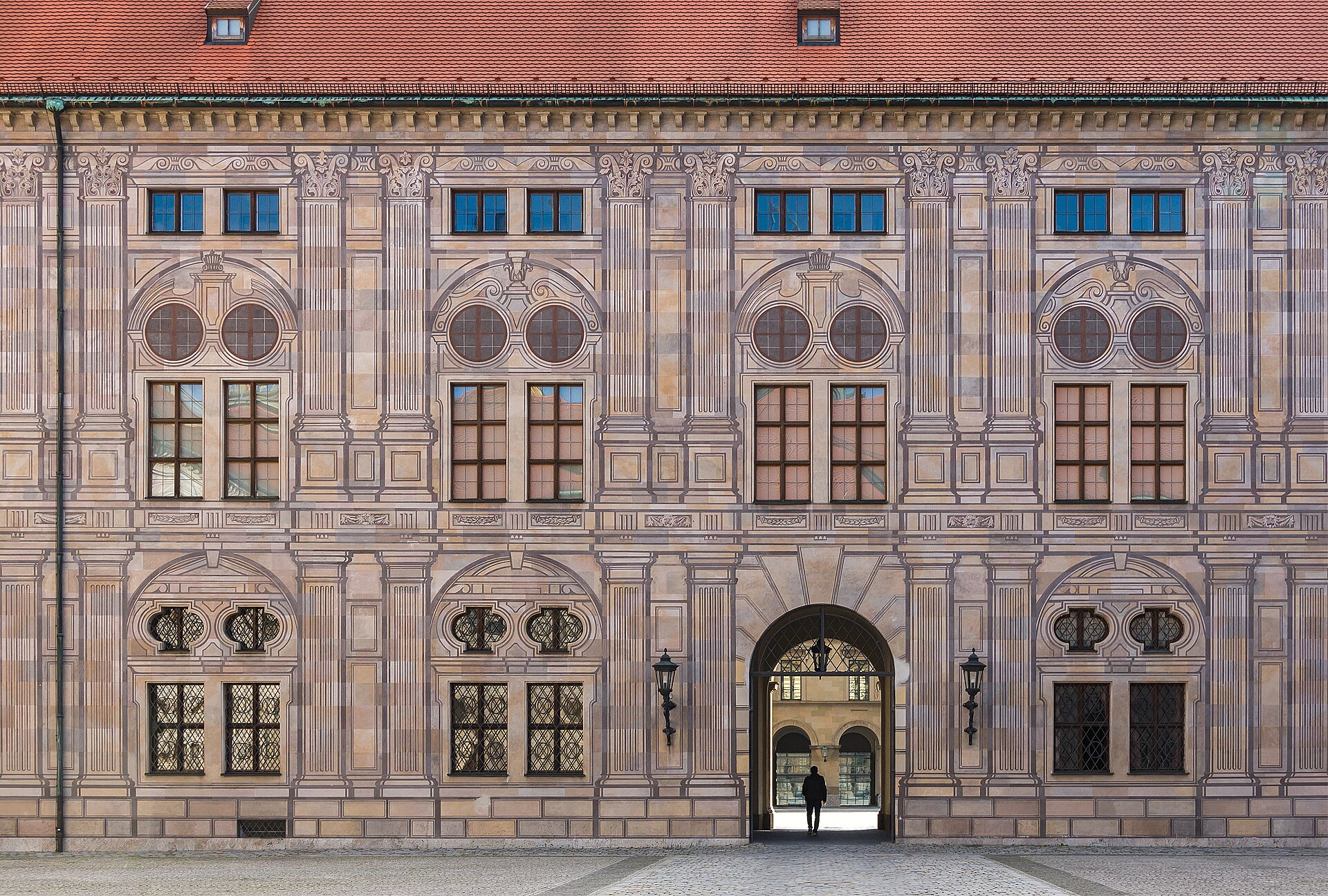
Over time, as the dynasty prospered and its ambitions grew, the fortress was expanded and transformed, and new buildings, wings, and courtyards were added to accommodate the growing needs and pretensions of the court. The Residenz grew outward and upward, absorbing and replacing the older structures in a continuous process of expansion.
This process of growth continued over some six centuries, so that the Residenz as it exists today is not the creation of a single period or architect but the accumulated work of many generations. Each ruler added or rebuilt according to the fashions of the age, so that the palace became a kind of architectural record of the changing tastes of the centuries.
The result is a complex of extraordinary size and variety, in which buildings and rooms from many different periods are woven together into a single vast palace. To move through the Residenz is to move through the history of European architecture and decoration, from the Renaissance to the nineteenth century, all gathered within a single great seat of power.
This organic, accretive growth gives the Residenz a character quite different from palaces built to a single grand design. There is no one architect, no single unifying plan, but rather a rich accumulation of buildings and rooms from many periods, so that the palace has the depth and complexity of a small city grown up over centuries.
The contrast between the Residenz and Ludwig II’s later fantasy palaces is instructive, for where the Dream King built in flight from his age, the Residenz grew in step with its times, a working seat of power that adapted continuously to the changing needs and tastes of a living dynasty across six centuries of history.
The Antiquarium
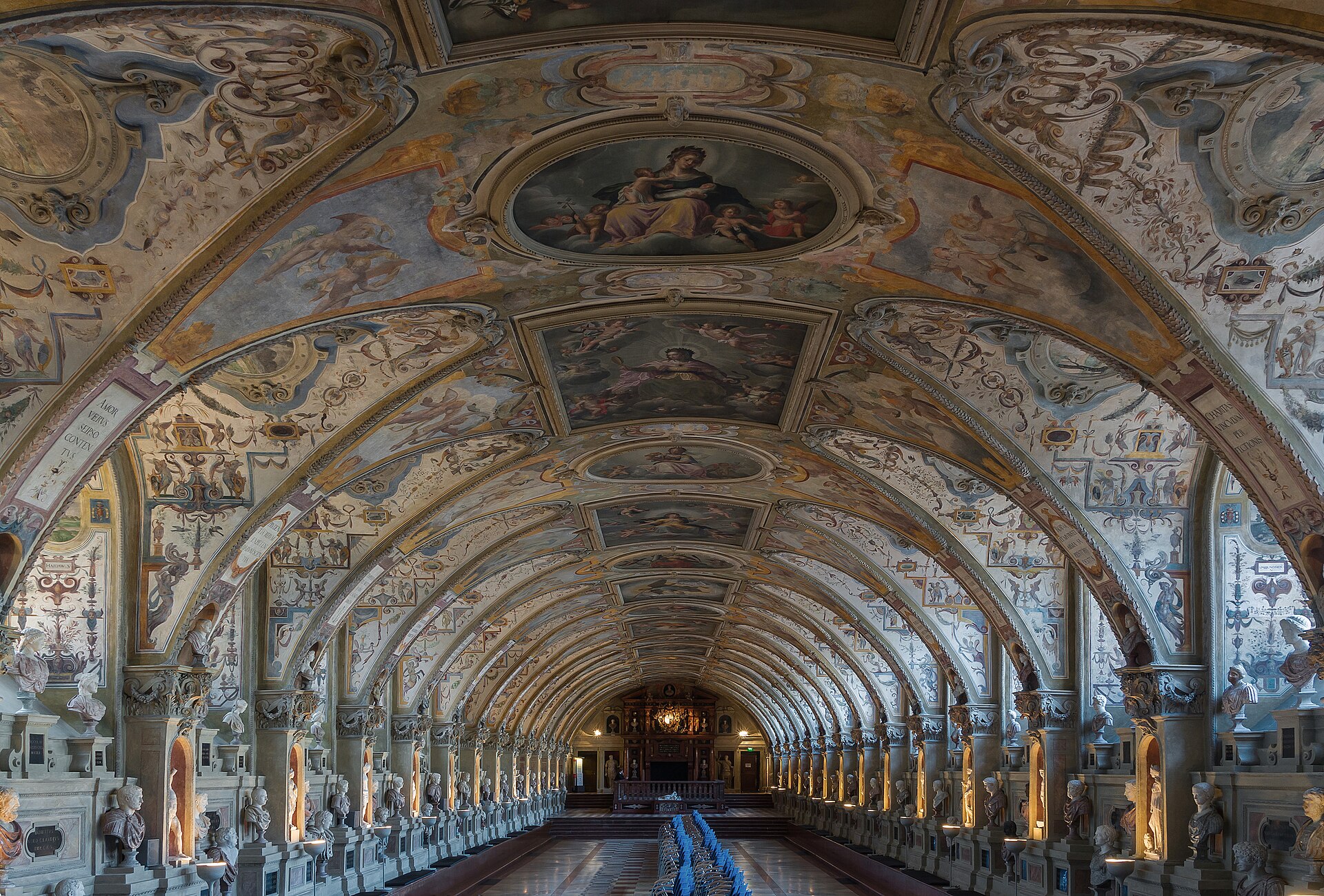
Among the oldest and most magnificent of the interiors of the Residenz is the Antiquarium, a vast Renaissance hall built to house the collection of antique sculpture assembled by the dukes of Bavaria. This great barrel-vaulted room, one of the largest and finest Renaissance interiors north of the Alps, is among the treasures of the palace.
The Antiquarium was created in the sixteenth century to display the antiquities and to serve as a hall for festivities and banquets. Its long vaulted ceiling is covered with paintings, and its walls are lined with the busts and sculptures of the ducal collection, creating an interior of great grandeur and scholarly ambition that reflects the humanist culture of the Renaissance court.
The room expresses the aspirations of the Wittelsbach dukes to be seen as cultivated Renaissance princes, patrons of learning and the arts, collectors of the treasures of antiquity. In creating so magnificent a hall for their collection, they proclaimed their place among the sophisticated ruling houses of Europe.
The Antiquarium remains one of the highlights of a visit to the Residenz, a spectacular interior that transports the visitor into the world of the Renaissance court, and a reminder of the deep roots of the palace and of the dynasty’s long tradition of patronage and collecting.
The very existence of so grand a hall dedicated to the display of antique sculpture tells us how seriously the Renaissance dukes took their role as patrons of learning and collectors of the classical past, seeking to place their court among the sophisticated centers of humanist culture that were transforming Europe in the sixteenth century.
The State Rooms and Ancestral Gallery
The Residenz contains a vast sequence of state rooms and apartments, decorated in the styles of successive centuries, from the Renaissance through the baroque and rococo to the neoclassical. These grand rooms served the ceremonial and residential functions of the court, and they display the changing tastes of the dynasty across the ages.
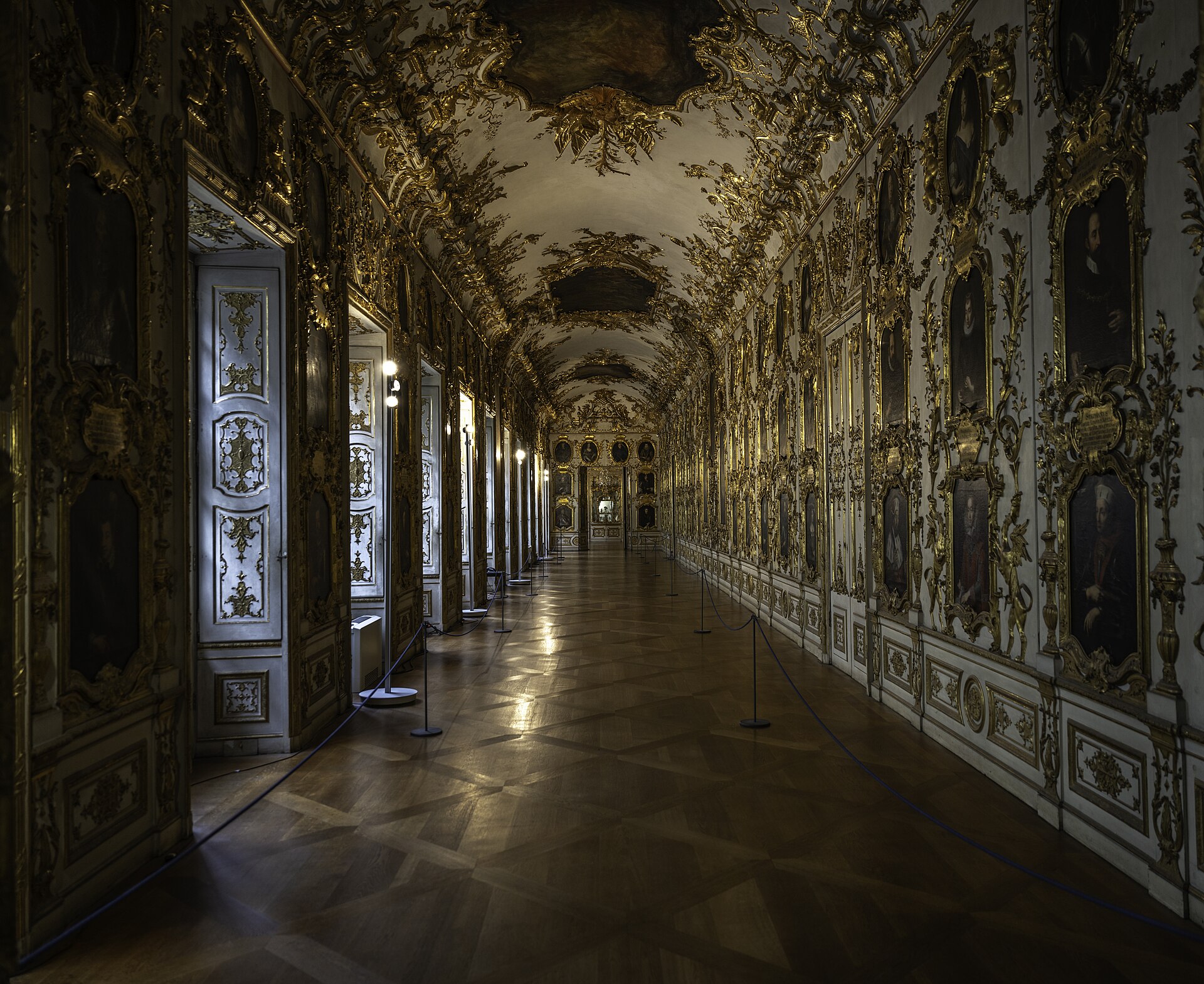
Among the most remarkable is the Ancestral Gallery, a long hall lined with portraits of the members of the Wittelsbach dynasty, tracing the lineage of the house back through the centuries. This gallery, richly decorated in gold, was designed to proclaim the antiquity and the legitimacy of the dynasty, presenting its long line of rulers to all who passed through.
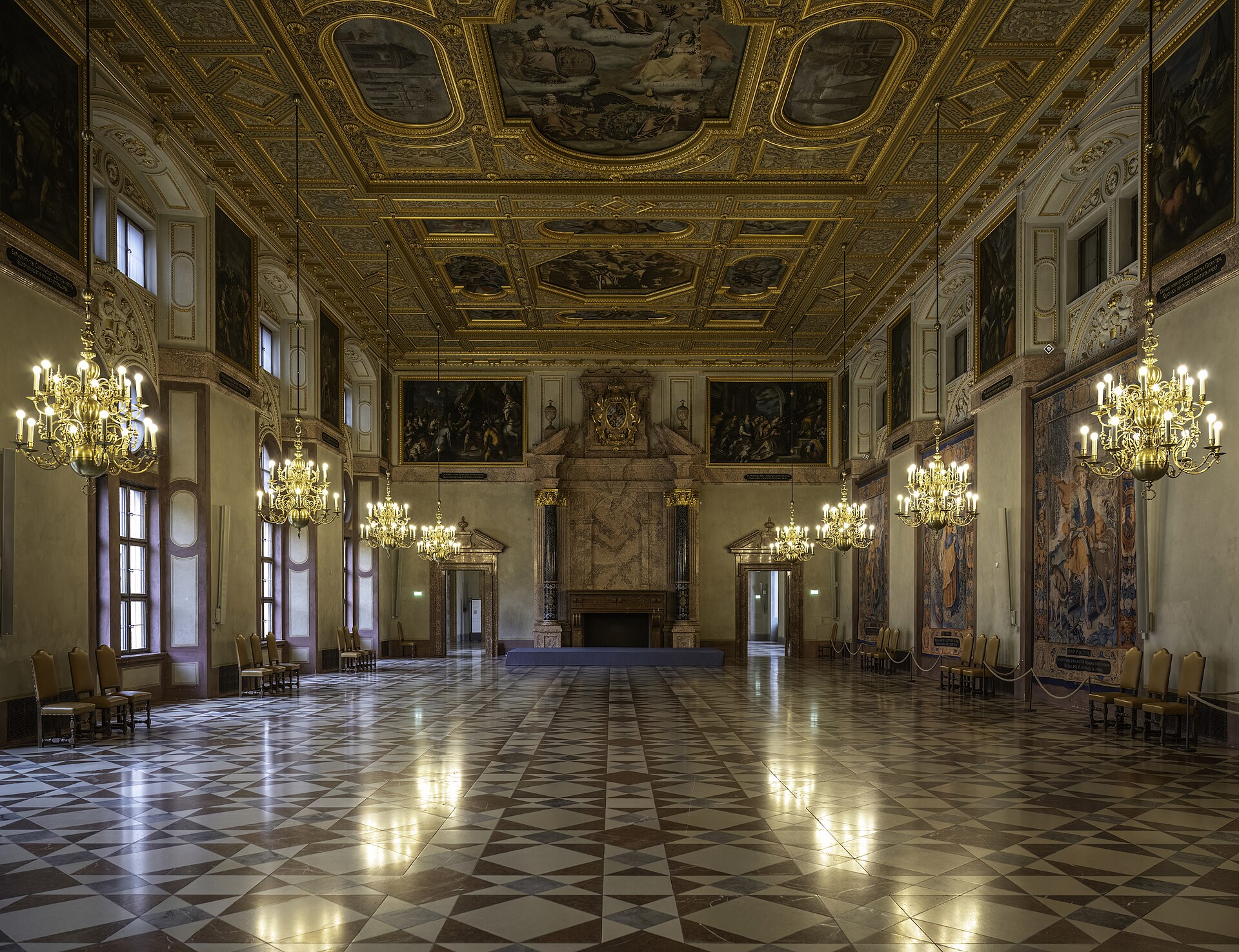
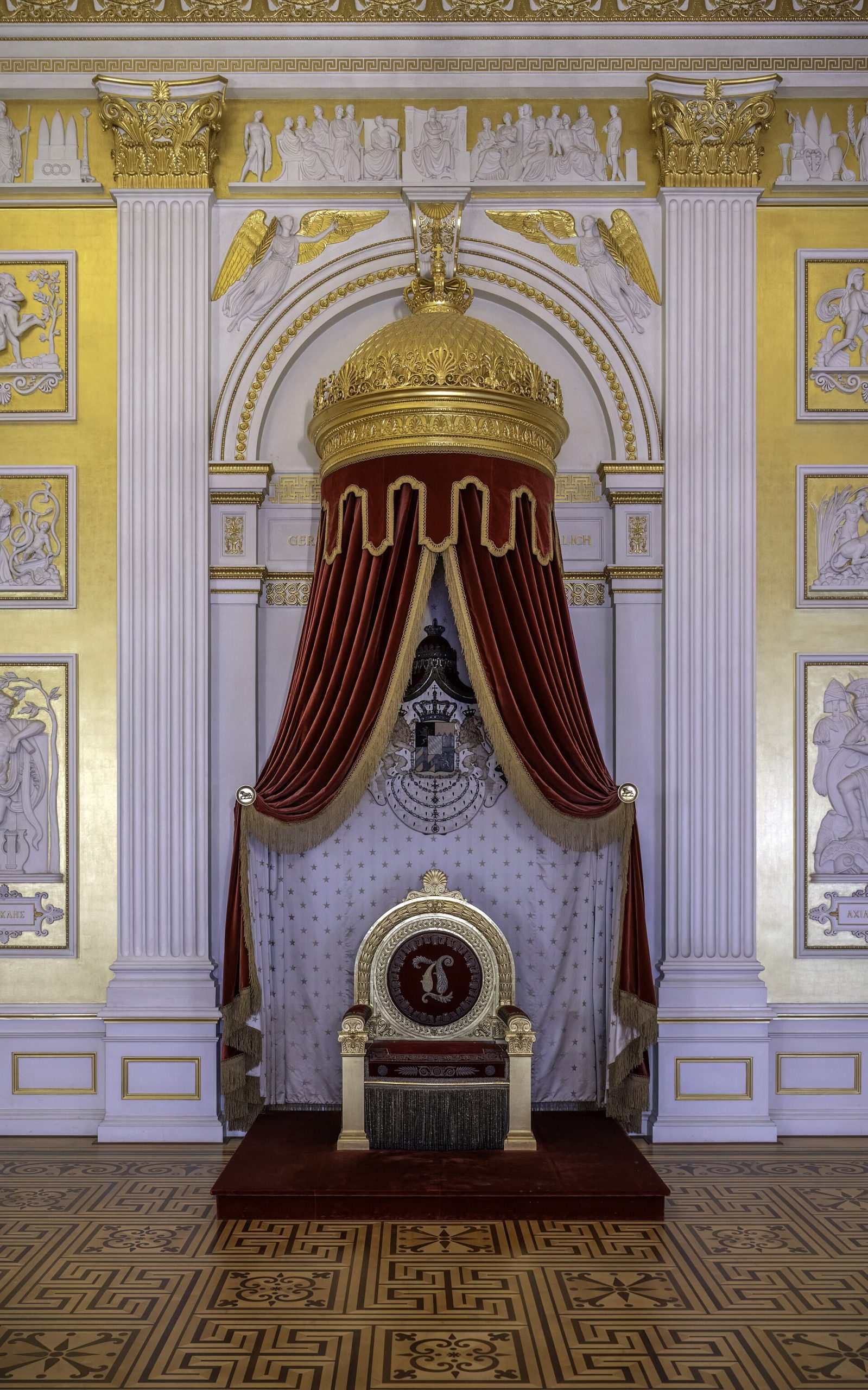
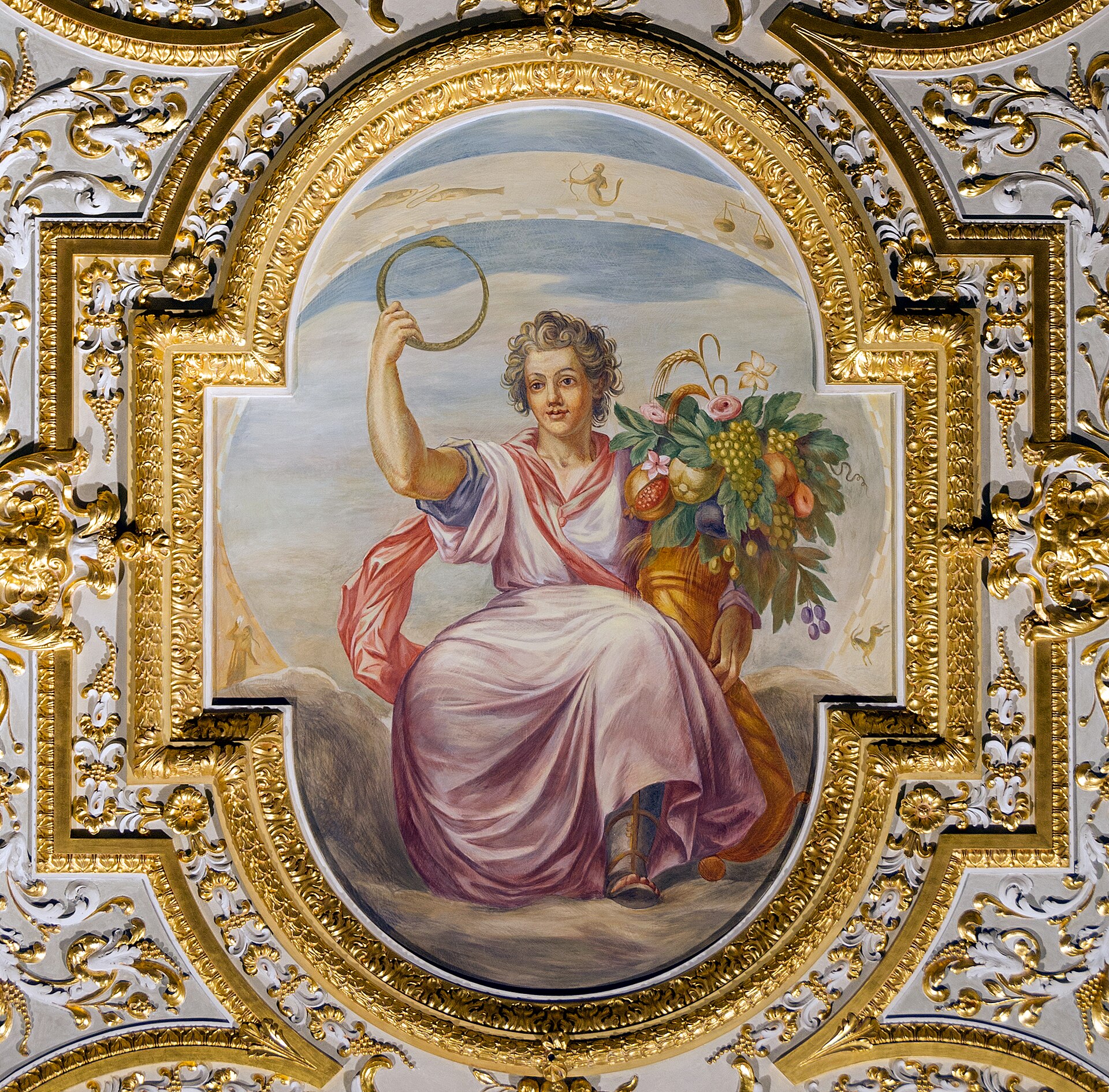
Other great rooms include imperial and ceremonial halls, throne rooms, and reception chambers, each decorated with the appropriate magnificence and reflecting the style of the period in which it was created. Together they form a sequence of interiors of extraordinary richness and variety, a survey of European decorative art across several centuries.
The visitor moving through these rooms experiences the whole range of the palace’s decoration, from the sober grandeur of the Renaissance through the exuberance of the baroque and rococo to the restraint of the neoclassical, all gathered within the single vast complex of the Residenz, a treasury of European interior design.
The Ancestral Gallery, with its long line of painted forebears, served a serious political purpose beyond mere decoration, for in an age when legitimacy rested on lineage, the visible presentation of an ancient and unbroken ancestry was itself an argument for the right to rule, a claim made in gold and paint along the length of the hall.
The Treasury
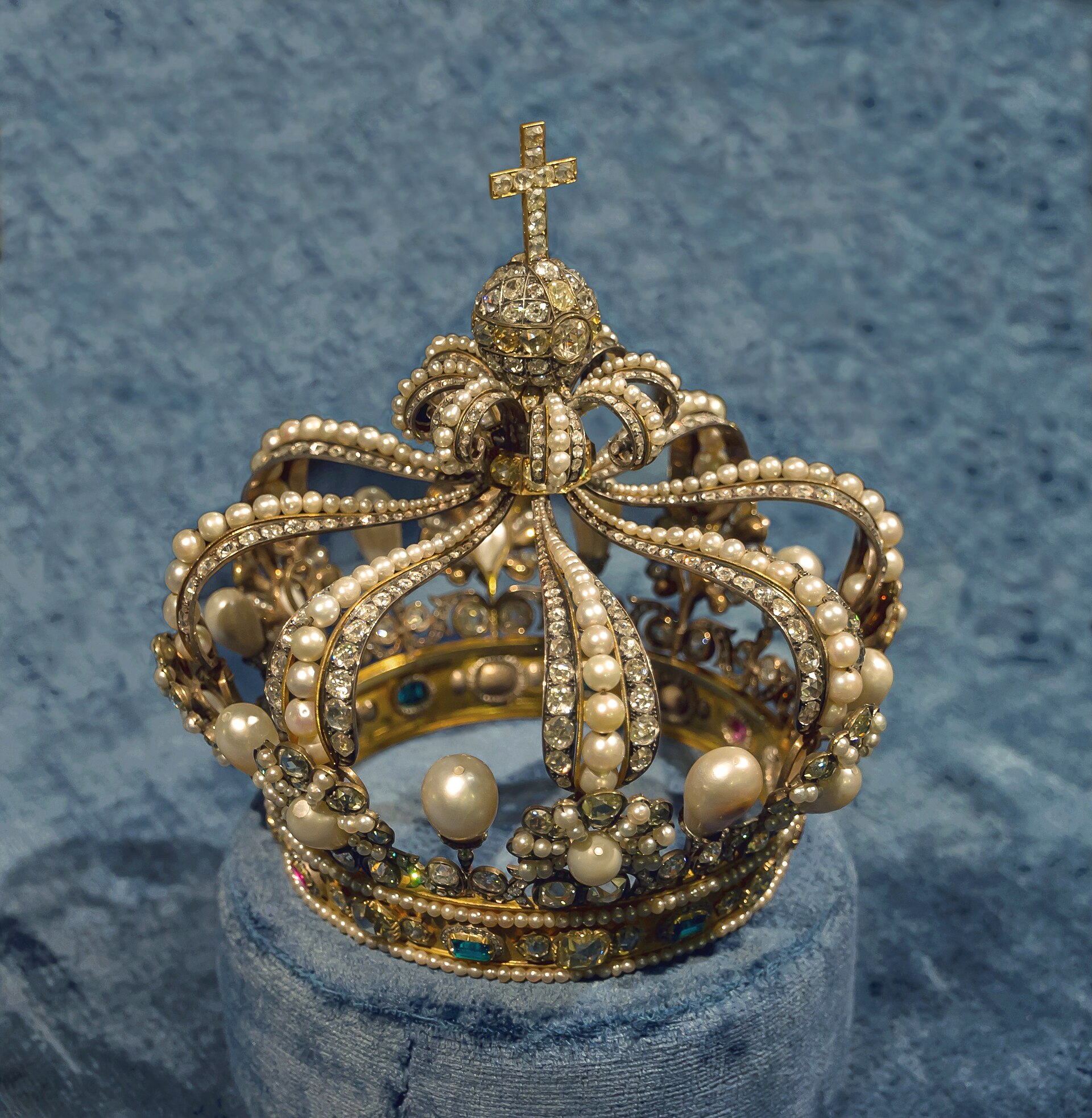
One of the greatest attractions of the Residenz is its treasury, the Schatzkammer, which houses one of the most important collections of royal treasures in Europe. Accumulated by the Wittelsbach dynasty over the centuries, this collection includes crowns, jewels, goldsmith’s work, and precious objects of extraordinary value and craftsmanship.
Among the treasures are the crowns and regalia of the Bavarian monarchy, masterpieces of the goldsmith’s art from the medieval period through the Renaissance and baroque, and objects of great beauty and rarity gathered from across Europe and beyond. The collection reflects the wealth of the dynasty and its role as a patron of the finest craftsmanship.
The treasury displays objects of religious, ceremonial, and personal significance, from sacred vessels and reliquaries to the personal jewels of the rulers, offering a glimpse into the material splendor of the Bavarian court across the centuries. Each object is a work of art in itself, and together they form a collection of the first importance.
For visitors, the treasury is one of the highlights of the Residenz, a chamber of accumulated wealth and beauty that reveals the material culture of one of Europe’s great dynasties, and that ranks among the finest collections of its kind anywhere in the world.
The survival of so rich a treasury through the centuries, including the destruction of the Second World War, is itself remarkable, and it allows us to see, gathered in one place, the accumulated wealth and artistic patronage of a great dynasty across many generations, an inheritance of beauty and craftsmanship of the first rank.
The Chapels and Grottoes
The Residenz contains several chapels, reflecting the piety of the Catholic Wittelsbach dynasty and their role as defenders of the faith. These chapels, decorated with appropriate richness, served the religious life of the court, and they include spaces of great beauty that add a dimension of devotion to the palace.
Among the notable features is the court chapel, a richly decorated space for the worship of the court, and other more private chapels used by the rulers and their families. These spaces reflect the central place of religion in the life of the dynasty and the court, and they are decorated with the same care and magnificence as the secular rooms.
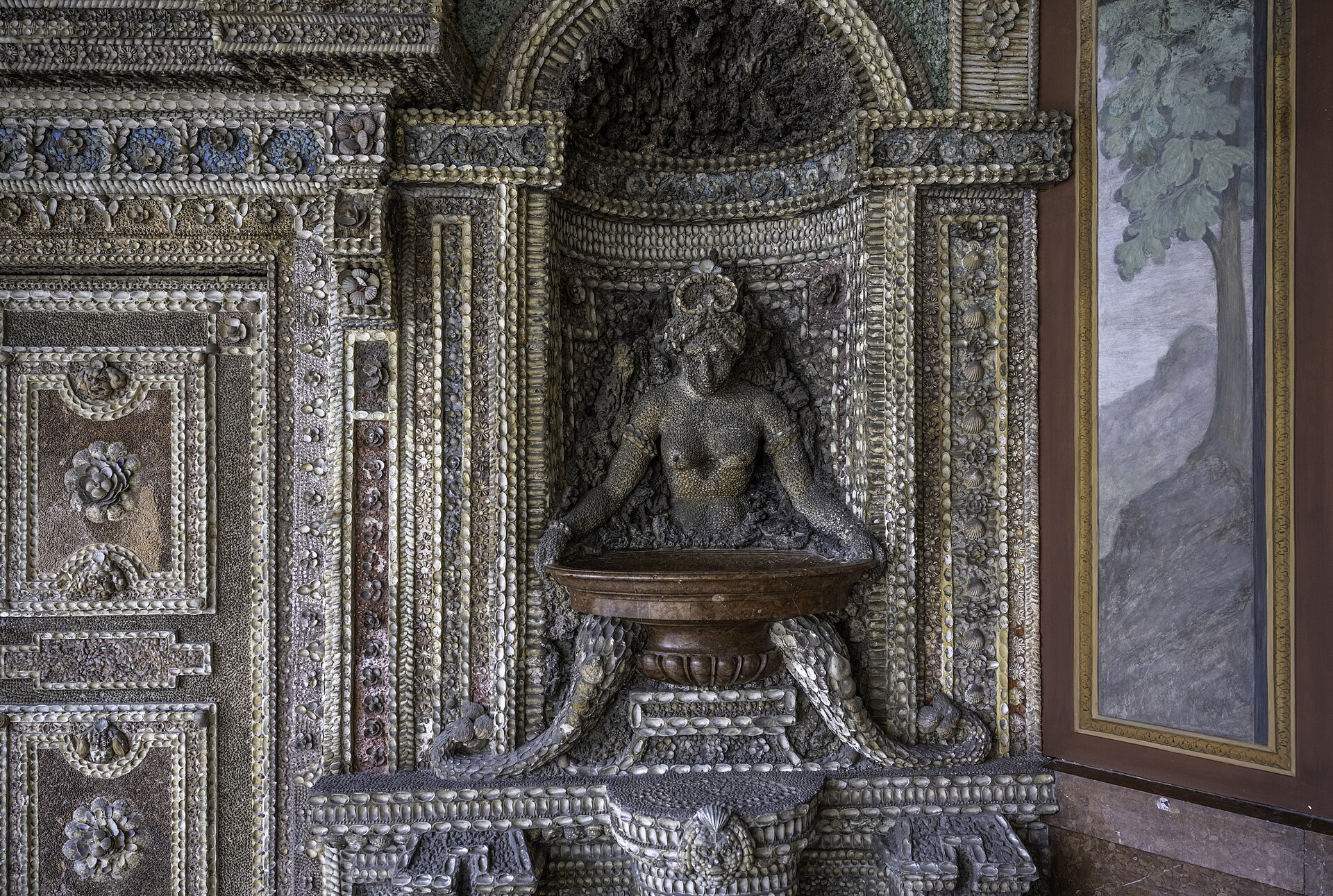
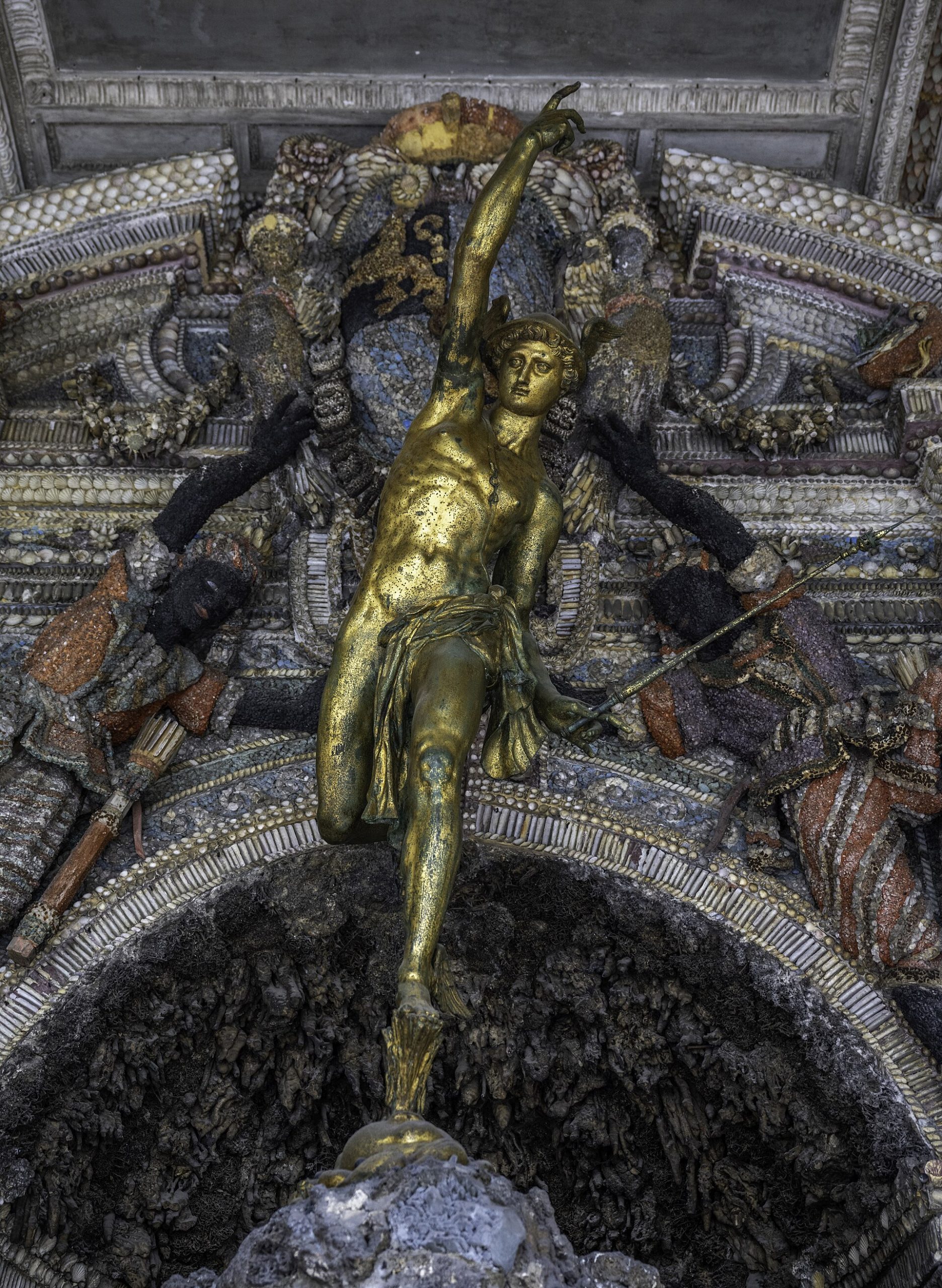
The palace also contains a famous grotto court, the Grottenhof, an early feature that reflects the Renaissance taste for artificial grottoes decorated with shells, stones, and sculptures. This charming courtyard, with its shell-encrusted grotto and its fountain, is one of the more unusual and delightful features of the Residenz.
Together these chapels, grottoes, and courtyards add variety and richness to the palace, offering the visitor a sequence of contrasting spaces, from the devotional to the playful, that reflect the many facets of court life and the changing tastes of the centuries during which the Residenz was created.
The presence of both grand public chapels and more intimate private ones reflects the layered religious life of the court, in which the ruler worshipped both as a public figure, defender of the Catholic faith, and as a private individual, and the Residenz provided settings for both dimensions of that devotion.
The Cuvillies Theatre
One of the most exquisite features associated with the Residenz is the Cuvillies Theatre, a jewel of rococo architecture that ranks among the most beautiful court theaters in Europe. Named for its architect, this small theater is a masterpiece of the rococo style, its interior a dazzling confection of gilded carving and rich color.
The theater was built in the eighteenth century to serve the court, providing a setting for the opera and theatrical performances that were an important part of court life. Its tiers of boxes, richly decorated with gilded ornament, rise around the auditorium in a display of rococo splendor that few theaters anywhere can match.
The Cuvillies Theatre is a masterpiece of its kind, a perfect expression of the rococo love of elegance, refinement, and ornament. Its intimate scale and its exquisite decoration create an atmosphere of jewel-like beauty, and it remains in use for performances, so that visitors can experience it as a living theater rather than a mere museum piece.
For lovers of the rococo and of the performing arts, the Cuvillies Theatre is one of the great treasures associated with the Residenz, a perfect small theater of the eighteenth century, and a reminder of the central place of music and drama in the cultural life of the Bavarian court.
That so fragile and exquisite a creation as the Cuvillies Theatre should have survived, its decoration dismantled and hidden away during the war and then reinstalled, is one of the happier chapters in the story of the Residenz, preserving for us a perfect example of the rococo theater at the height of its refinement.
Destruction and Rebuilding
The Munich Residenz, like much of the city, suffered terribly during the Second World War, when Allied bombing raids devastated Munich and reduced large parts of the palace to ruins. The centuries of accumulated splendor were severely damaged, and much of the historic fabric of the Residenz was destroyed in the bombing.
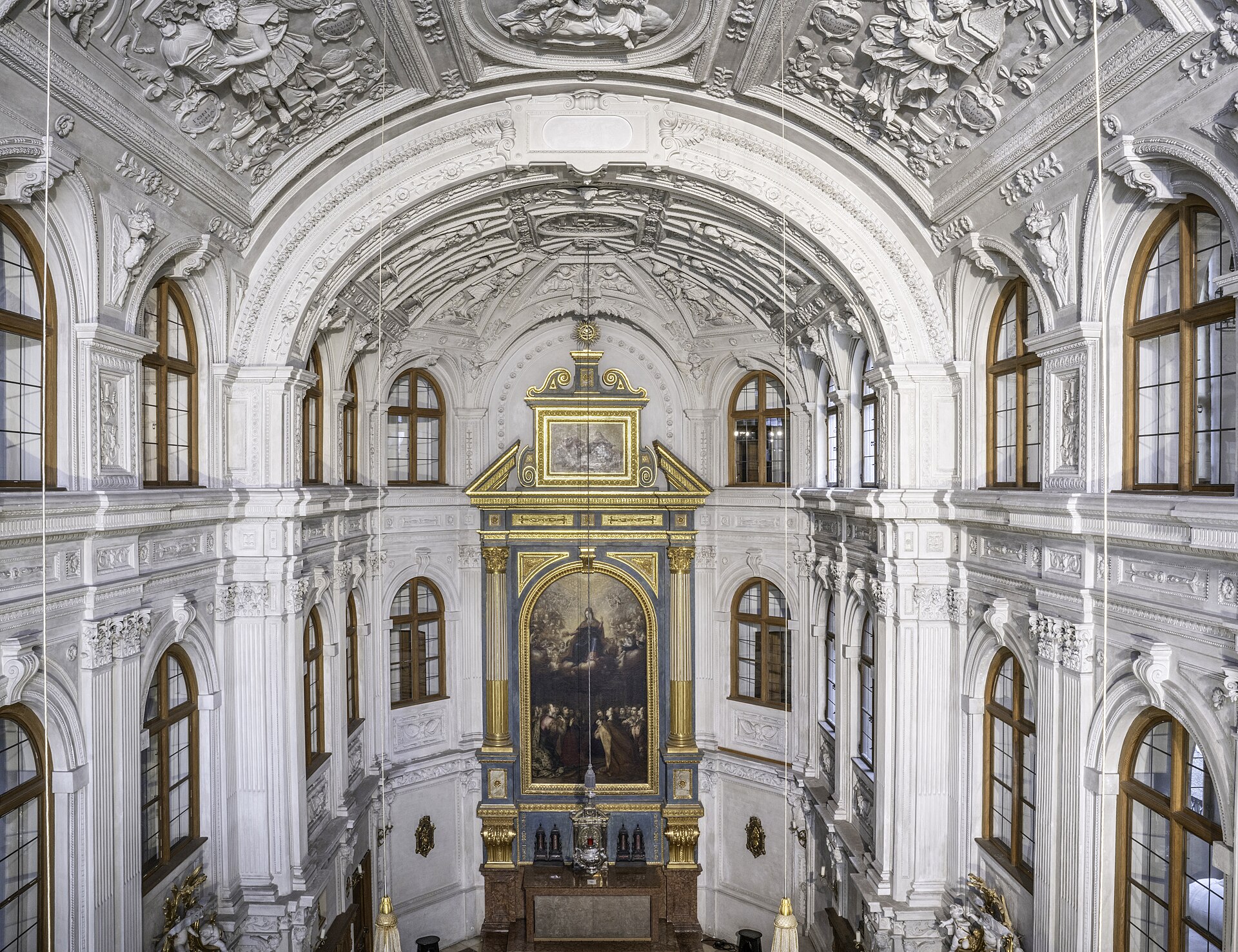
The destruction was a catastrophe for the cultural heritage of Bavaria, for the Residenz was one of the great palaces of Europe, and its loss would have been irreparable. Yet even amid the ruins, the decision was taken to rebuild, and the long and painstaking work of reconstruction began in the years after the war.
The rebuilding of the Residenz was one of the great works of postwar reconstruction, a decades-long effort to restore the palace to its former glory. Many of the fragile decorations had been dismantled and stored for safety before the bombing, allowing them to be reinstalled, while other elements had to be recreated by skilled craftsmen working from records and photographs.
The result of this immense effort is the restored Residenz that visitors admire today, a palace risen from the ruins of war, in which the accumulated splendor of the centuries has been recovered and preserved. The reconstruction stands as a testament to the determination of Bavaria to preserve its heritage and to the skill of those who accomplished the restoration.
Standing in the restored halls today, it is difficult to imagine the scenes of destruction that reduced them to rubble, and this very difficulty is a measure of the success of the reconstruction, which recovered not merely the appearance but something of the spirit of the lost interiors, a triumph of patience and craftsmanship over the devastation of war.
The Residenz as a Museum
Today the Munich Residenz is one of the great palace museums of Europe, its state rooms, treasury, and theater open to visitors who come to admire the accumulated splendor of the Wittelsbach dynasty. The palace is managed as a museum, and its many rooms and collections offer one of the richest cultural experiences in Germany.
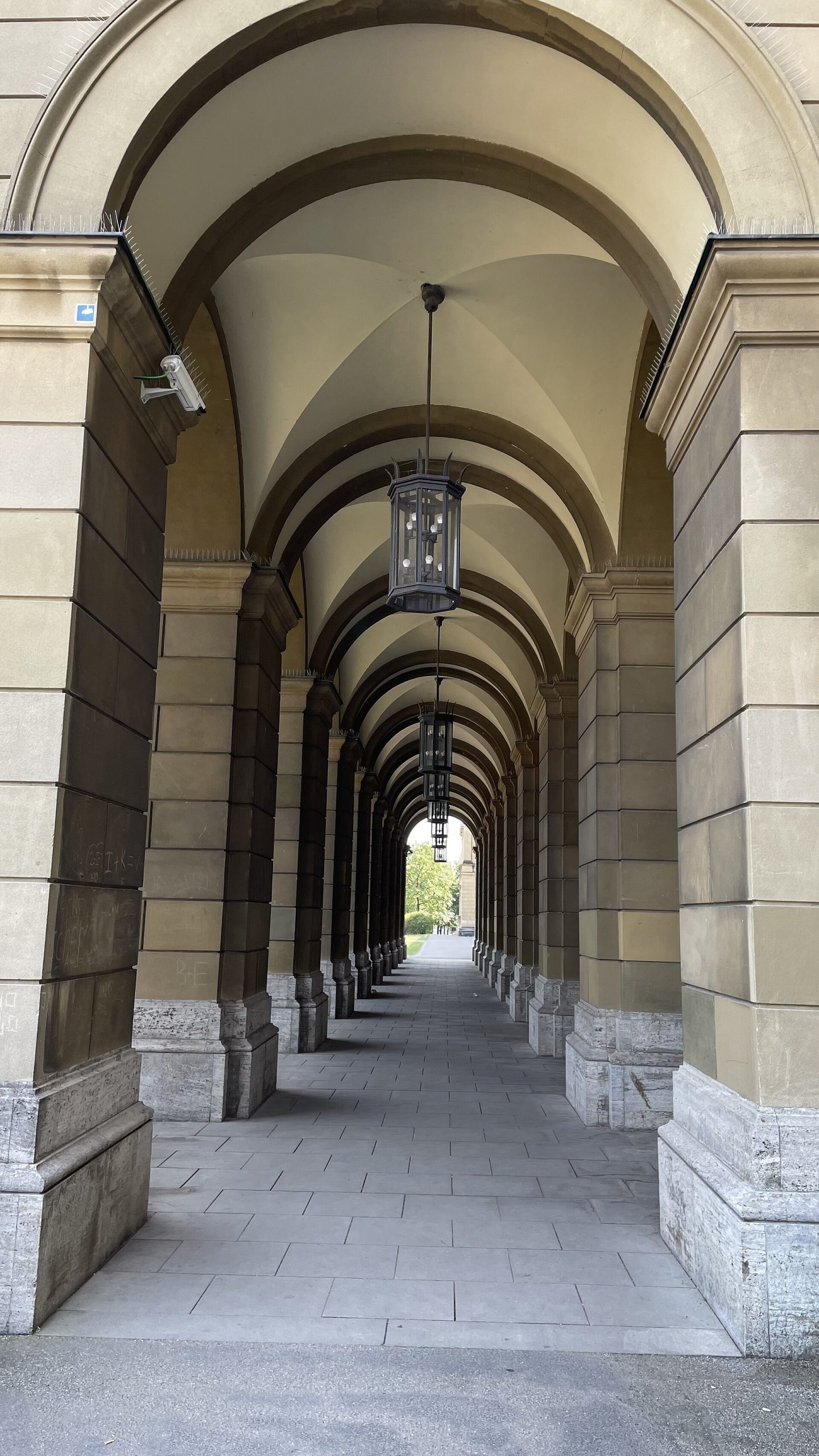
The Residenz Museum allows visitors to explore the state rooms and apartments, tracing the development of the palace and the changing tastes of the dynasty across the centuries. The treasury displays the royal jewels and precious objects, and the Cuvillies Theatre can be visited and still hosts performances, offering a rich and varied experience.
The scale of the Residenz is such that a full visit requires considerable time, for the palace contains hundreds of rooms and vast collections, a survey of European art and decoration across many centuries. It is one of the largest and most comprehensive palace museums in the world, a treasury of the cultural heritage of Bavaria.
For visitors, the Residenz offers an unparalleled journey through the history of the Bavarian court and of European art, from the Renaissance to the nineteenth century, gathered within a single vast palace at the heart of Munich, a monument to the long and glorious history of the Wittelsbach dynasty.
The sheer comprehensiveness of the Residenz, spanning as it does the whole development of European court art from the Renaissance to the nineteenth century within a single complex, makes it an unrivaled place to study the evolution of taste and the changing image of monarchy across the centuries, a museum of the very idea of the palace.
The very completeness of the collection makes the Residenz an essential destination for anyone seeking to understand not only Bavaria but the wider history of the European court, a place where the grand traditions of princely display are preserved in unmatched depth.
A Symbol of Bavaria
The Munich Residenz stands as one of the great symbols of Bavaria and of its long history under the Wittelsbach dynasty. As the ancient seat of the dukes, electors, and kings of Bavaria, it embodies the whole history of the dynasty and the state, and it remains a monument of the first importance in the cultural landscape of Germany.
For Bavarians, the Residenz is a source of pride, a reminder of the long and distinguished history of their homeland and of the dynasty that ruled it for so many centuries. It stands at the heart of Munich, a physical link to the past and a monument to the achievements of the Wittelsbach court in the arts and in governance.
The palace also represents the resilience of Bavarian heritage, a building that survived the catastrophe of war and was painstakingly restored, so that the accumulated splendor of the centuries could be preserved for future generations. Its survival and restoration are themselves a testament to the value placed on this heritage.
In all these ways, the Residenz is far more than a museum. It is a symbol of Bavaria itself, of its history, its culture, and its identity, an ancient palace that stands at the heart of Munich and that continues to embody the long and glorious story of one of Europe’s great dynasties.
In a Germany that became a unified nation only in the nineteenth century, the Residenz stands also as a reminder of the older, more fragmented order of kingdoms, duchies, and free cities that preceded unification, and of the distinct identity of Bavaria within the larger German whole, an identity of which Bavarians remain proud to this day.
The Court Garden
Adjoining the Residenz lies the Hofgarten, the court garden, a formal Renaissance and baroque garden that provided the rulers and their court with a place of recreation and repose at the heart of the city. Laid out in the geometric style of its age, the garden offers a green and tranquil counterpoint to the grandeur of the palace.
At the center of the garden stands a graceful pavilion, and the whole is arranged in the formal manner, with axial paths, parterres, and fountains that reflect the taste of the period in which it was created. The garden was designed as an integral part of the palace complex, extending the ordered magnificence of the Residenz into the open air.
The Hofgarten served the leisure of the court, a place for walking, for gatherings, and for the enjoyment of the open air within the security of the palace precinct. It reflects the importance of the garden in the life of a European court, as a setting for both recreation and display.
Today the Hofgarten is a public park, enjoyed by the people of Munich and by visitors to the Residenz, a green oasis at the heart of the city that offers a moment of calm amid the bustle and a pleasant complement to a visit to the palace, preserving something of the atmosphere of the old court garden.
The survival of the Hofgarten as a public park, freely enjoyed by the citizens of Munich, is a fitting afterlife for a royal garden, for it has passed from the exclusive pleasure of the court into the shared possession of the people, much as the palace itself has become a museum open to all.
See the Munich Residenz for Yourself
The scale and splendor of the Munich Residenz, with its hundreds of rooms, its great halls, its treasury, and its theater, are best appreciated by seeing the palace for yourself, moving through its magnificent interiors and admiring the accumulated splendor of the centuries. A video conveys the atmosphere of the place in a way that words and still images cannot fully capture.
The short video below offers a walk through the Munich Residenz, taking in its great halls, its state rooms, and its treasures. It is an ideal companion to everything you have read here, giving you a feel for the extraordinary richness and variety of this vast palace before you visit in person.
As you watch, consider the centuries of history embodied in the Residenz, from the Renaissance to the nineteenth century, and the long line of Wittelsbach rulers who created and inhabited this magnificent seat of power. Then, when you visit Munich, you will recognize the Residenz not just as a grand museum but as the ancient heart of the Bavarian monarchy.
Visiting the Munich Residenz Today
For the modern traveler, the Munich Residenz is one of the essential sights of the Bavarian capital, a palace whose scale and splendor make it a highlight of any visit to Munich. Located in the very center of the city, the Residenz is easily reached and forms a natural part of any exploration of the historic heart of Munich.
Visitors can explore the state rooms and apartments of the Residenz Museum, admire the royal treasures in the Schatzkammer, and visit the exquisite Cuvillies Theatre, which still hosts performances. The scale of the palace is such that visitors should allow plenty of time to take in its many rooms and collections at a comfortable pace.
The Residenz lies at the heart of Munich, close to the city’s other great attractions, and a visit can easily be combined with exploration of the surrounding historic center. As always, it is worth checking current opening arrangements before you go, as different parts of the vast complex may have varying hours and access.
However you approach it, the Munich Residenz rewards the visitor who understands its story. This is not merely a grand museum but the ancient seat of the Wittelsbach dynasty, the rulers of Bavaria for more than seven centuries, a palace that grew over six hundred years into one of the great cultural treasures of Europe, and a monument to the long and glorious history of Bavaria and its ruling house.
Given the vast scale of the complex, many visitors choose to focus on particular highlights, such as the Antiquarium, the treasury, and the theater, rather than attempting to see everything in a single visit, and the Residenz rewards repeated visits, each revealing new treasures among its hundreds of rooms.
However you approach it, a visit to the Residenz repays the effort of understanding its long and layered history, for behind every gilded hall and every glittering treasure lies a chapter in the story of Bavaria and of the dynasty that shaped it over the course of seven remarkable centuries.
Palaces Nearby
If the ancient seat of the Wittelsbach dynasty has drawn you into the world of the Bavarian royal palaces, two more great residences make natural companions to a visit here, both the fantastical creations of the dynasty’s most famous and tragic king.
- Schloss Linderhof — the intimate rococo villa of King Ludwig II, the only one of his palaces completed in his lifetime.
- Schloss Herrenchiemsee — Ludwig’s unfinished island recreation of Versailles on a lake in the Bavarian Alps.
You May Like
The Bardo, a Palace of the Beys Filled With Roman Mosaics


One thought on “Six Centuries of Bavarian Power Under One Roof in Munich”