In the central Indian city of Gwalior, below the great fortress that crowns its hill, stands a palace that seems to have been transported wholesale from the grand boulevards of nineteenth-century Europe. The Jai Vilas Mahal, built by the Scindia dynasty that ruled here, is a riot of Italianate columns, Tuscan and Corinthian flourishes and gilded splendor, a maharaja’s vision of European royalty realized on an Indian scale.
You come to Jai Vilas to witness the extravagance of India’s princely age at its most dazzling. This is the palace of the famous chandeliers so vast that elephants were sent onto the roof to test whether it could bear their weight, of a solid silver train that once carried after-dinner brandy around the banquet table, and of a durbar hall whose opulence still takes the breath away.
In this guide you will get to know Jai Vilas beyond its glittering surface. We will trace the rise of the Scindia dynasty, explore the palace’s European-inspired architecture, step into the legendary durbar hall, marvel at its most famous treasures, and understand why this grand residence remains a proud symbol of Gwalior. By the end you will see why Jai Vilas stands among the most spectacular palaces of princely India.
In This Article
- Arriving at the Jai Vilas Mahal
- The Mighty Scindia Dynasty
- A Maharaja’s European Dream
- A Fusion of Classical Styles
- The Spectacular Durbar Hall
- The Chandeliers Elephants Tested
- The Silver Train of the Banquet Table
- Treasures of the Scindia Court
- The Jiwaji Rao Scindia Museum
- A Palace Still Lived In
- The Palace in the City of Gwalior
- A Closer Look on Film
- Jai Vilas Mahal Today
Arriving at the Jai Vilas Mahal
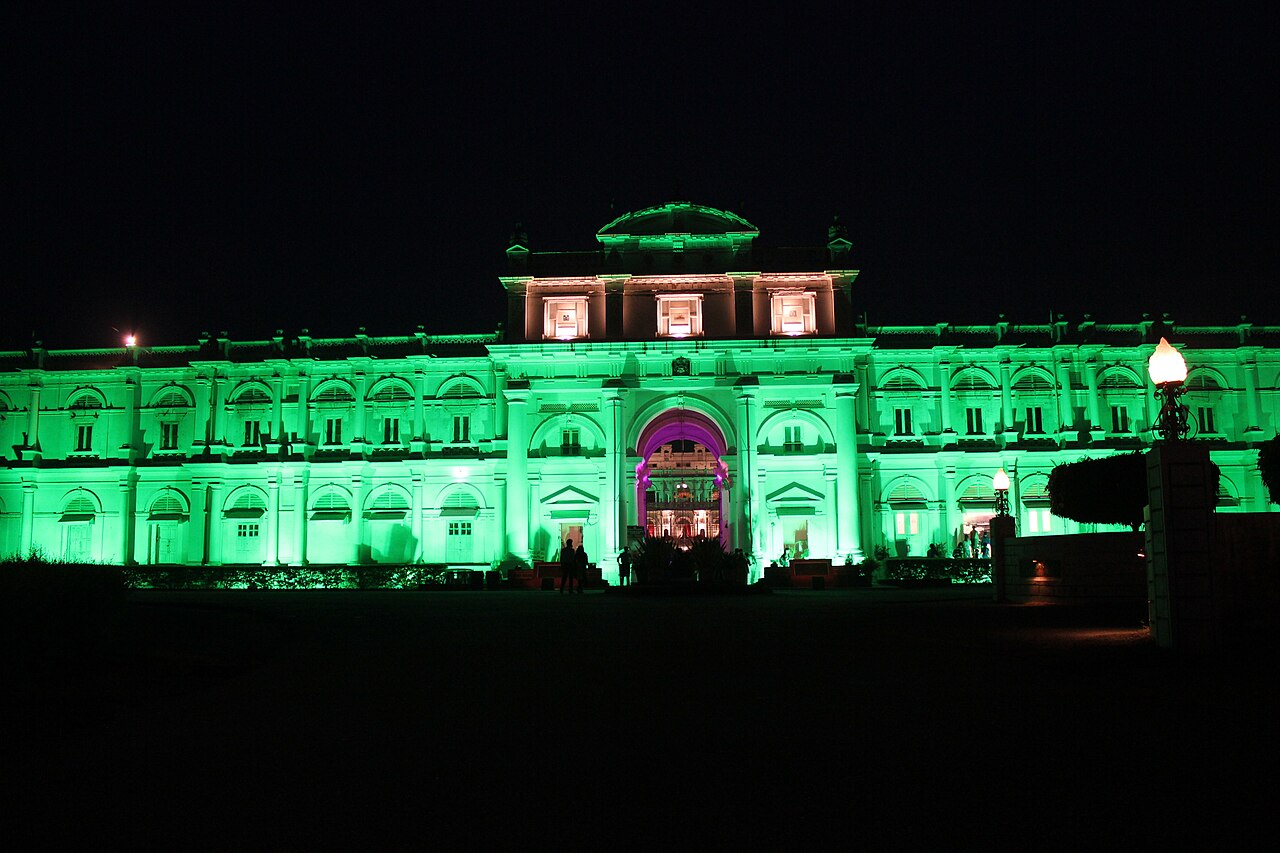
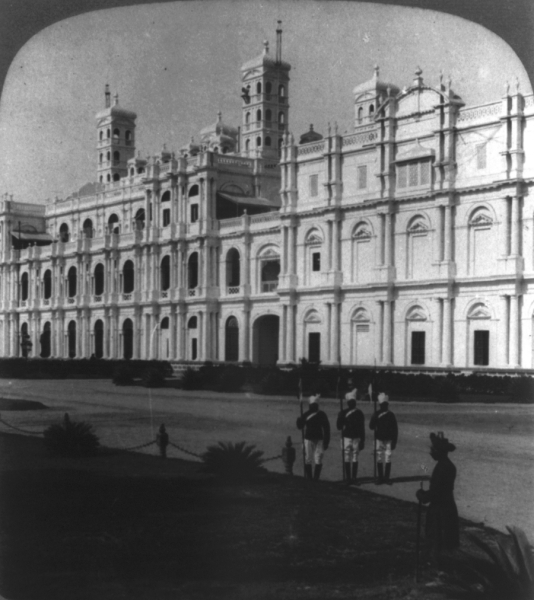
Your first sight of Jai Vilas is of a sprawling, palatial building of gleaming facades, grand columns and classical proportions, more reminiscent of a European palace than anything you might expect in central India. Its scale alone announces the wealth and ambition of the dynasty that raised it.
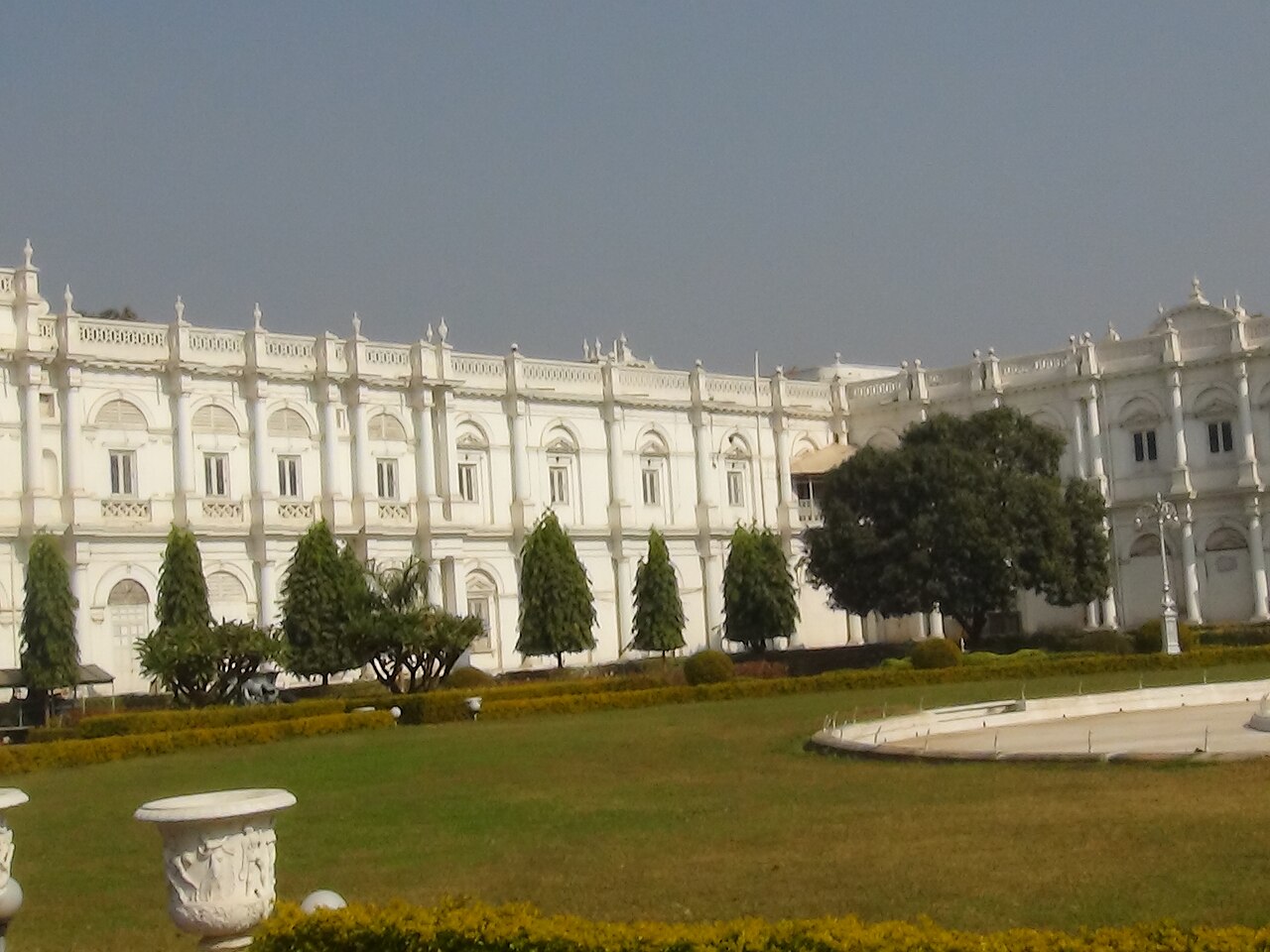
Set within extensive grounds, the palace presents a composed and stately face, its architecture a confident fusion of European styles. Fountains, lawns and formal approaches frame the building, heightening the sense of grandeur as you draw near.
As both a royal residence and a museum, the palace welcomes those who come to explore its treasures. Much of it is given over to displaying the astonishing collections of the Scindia family, while part remains the home of their descendants.
Take a moment to appreciate the building’s European character before going in. The columns, the symmetry and the sheer scale all speak of a princely house that looked to the great palaces of Europe for its inspiration.
The approach, through grounds laid out in a formal European manner, builds anticipation, each step revealing more of the palace’s extraordinary scale.
First-time visitors are often astonished to find so thoroughly European a palace in the heart of central India, and that surprise is part of its enduring appeal.
However you come to it, the palace makes an overwhelming first impression, setting the tone for a visit rich in wonder and extravagance.
The building’s vast footprint means that even a leisurely tour reveals only a portion of its splendors, leaving visitors eager to return.
It is a palace best savored slowly, room by dazzling room.
The grounds and fountains that surround the palace soften its monumental scale, offering gracious foregrounds from which to admire the facades.
It is a place that asks to be experienced unhurried, each hall unfolding new wonders for those who take their time.
The Mighty Scindia Dynasty
To understand Jai Vilas, you must understand the Scindias. This was one of the most powerful princely houses of India, rulers of a major state whose influence once extended across large swathes of the subcontinent. Their wealth and standing were immense, and the palace reflects both.
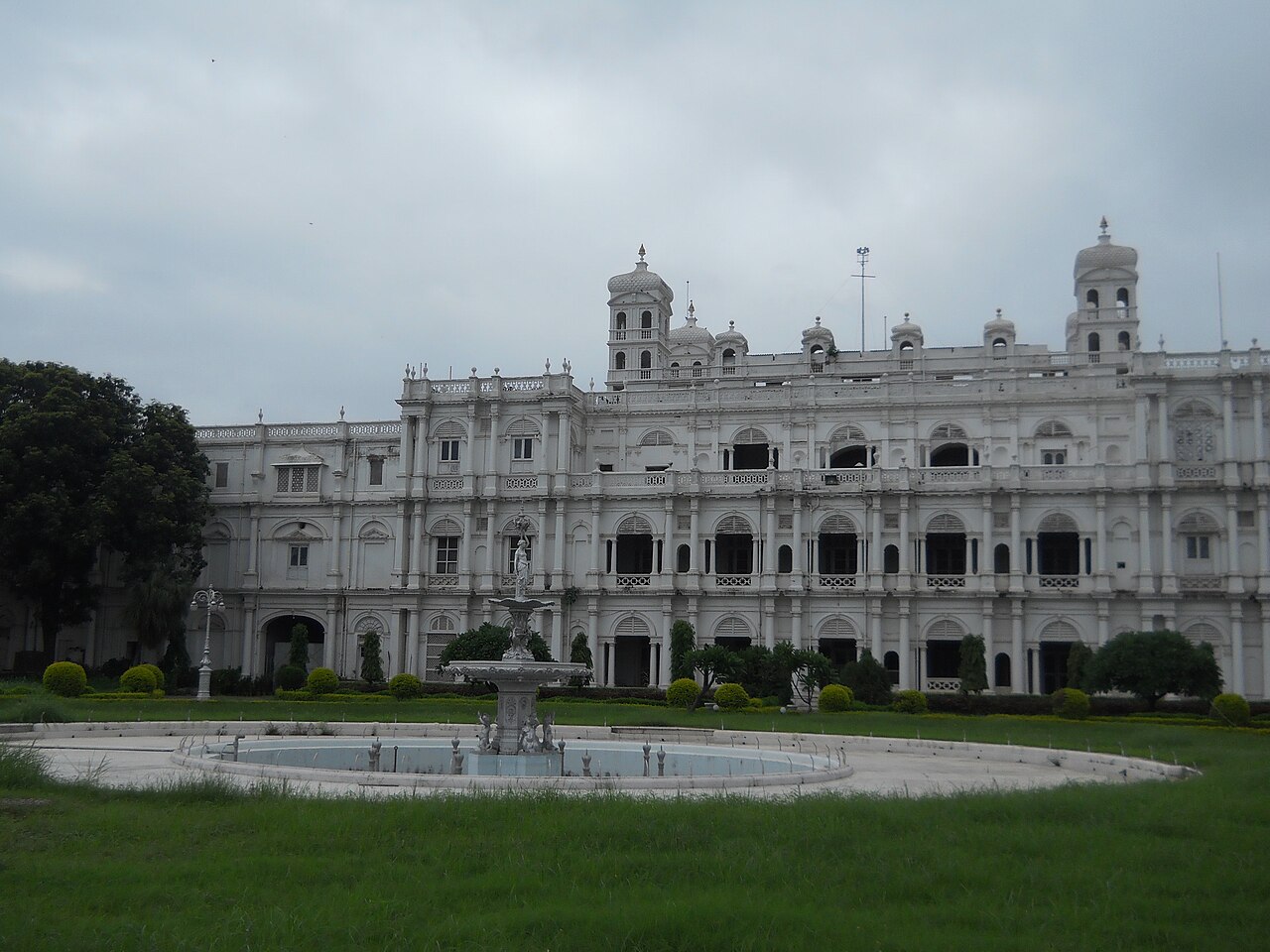
The Scindias rose to prominence as a leading power in the complex politics of their age, and even under the changed circumstances of later times they remained among the wealthiest and most prestigious of India’s princely families. Gwalior was the heart of their domain.
The palace is the crowning expression of this dynasty’s status. Built to impress rulers, dignitaries and rivals alike, Jai Vilas announced the Scindias’ place among the great houses of India in the most emphatic terms possible.
Keeping this in mind transforms a visit. Jai Vilas is not merely a beautiful building but the seat of a dynasty whose power and wealth helped shape the history of central India.
At the height of their power the Scindias commanded armies, territories and resources that made them a force in the affairs of the subcontinent.
Even as the political landscape changed, the family retained extraordinary wealth and prestige, which found lavish expression in their Gwalior palace.
The dynasty’s story is woven into the broader history of central India, and the palace stands as its most visible and splendid monument.
The family’s influence extended into many spheres, from politics to culture, and they were patrons of the arts on a grand scale.
Their continued prominence into the modern era is itself remarkable, a sign of the deep roots they had put down in the life of central India.
The palace, more than any document, conveys the magnitude of what the Scindias achieved and the confidence with which they wielded their wealth.
To walk the palace is to feel the weight of that legacy, the sense of standing in the home of a dynasty that helped shape the destiny of a region.
The Scindias remain among the most recognized of India’s former royal families, and their Gwalior palace is the enduring symbol of their distinction.
In the grandeur of their palace, the Scindias left a monument that continues to speak of their greatness long after the age of princes has passed.
A Maharaja’s European Dream
The Jai Vilas Mahal was conceived in the later nineteenth century by a ruler who looked to Europe for his model of royal splendor. Rather than building in a traditional Indian style, he chose to raise a palace in the grand European manner, a bold statement of cosmopolitan ambition.

This choice reflected the spirit of the age, when many Indian princes embraced European fashions, furnishings and architecture as marks of modernity and sophistication. At Jai Vilas, that impulse reached one of its most complete and lavish expressions.
The result is a palace that wears its European inspiration proudly, from its classical facades to its sumptuous interiors. Yet it remains unmistakably the creation of an Indian maharaja, Indian in its scale of ambition and in the dynasty it was built to glorify.
As you explore, keep this vision in mind. Every column and chandelier reflects a ruler’s determination to meet the royalty of Europe on their own terms, and to proclaim his dynasty’s grandeur in a language the whole world would understand.
The maharaja and his architect drew directly on the grand residences of Europe, adapting their forms to create something new and magnificent.
In choosing this style, the ruler was making a statement about his dynasty’s place in a rapidly changing and increasingly interconnected world.
Standing before the completed palace, one senses the pride its creator must have felt in realizing so ambitious a dream in his own capital.
The embrace of European style did not mean a rejection of Indian identity; rather, it was a way of asserting equality with the great powers of the world.
Many princely rulers of the era made similar choices, but few pursued them with such lavish thoroughness as at Jai Vilas.
The palace thus stands as a vivid document of a particular moment in India’s history, when its princes looked outward with supreme confidence.
In every gleaming hall, the ambition of that original vision still shines through as brightly as ever.
It is a palace that could only have been born of an age of supreme confidence, and that confidence still radiates from every gleaming surface.
Visitors familiar with the great houses of Europe often feel a jolt of recognition here, finding echoes of Versailles and the Italian palazzi transplanted to the Indian plains.
A Fusion of Classical Styles
The architecture of Jai Vilas is a deliberate blend of European classical styles, drawing on Tuscan, Italian-Corinthian and Baroque influences across its different sections. The designer wove these traditions together into a single grand composition of remarkable coherence.

The exterior presents a stately procession of columns, pediments and ornament, while the interiors unfold in a sequence of ever more lavish rooms. The whole building was conceived as a unified work of art, each part contributing to an overwhelming impression of magnificence.
This eclectic classicism was fashionable among the great builders of the nineteenth century, and the palace stands as one of its most ambitious expressions in India. The confidence with which the styles are combined is itself a mark of the dynasty’s resources and taste.
Exploring the building, you appreciate how thoroughly the European language of architecture was mastered and adapted here. Jai Vilas is a monument to an age when Indian princes built on a scale to rival the courts of Europe.
The palace is often admired as a textbook of nineteenth-century eclecticism, combining its borrowed styles with a confidence that verges on the theatrical.
Local craftsmen worked alongside European influences to realize the design, producing a building that is at once foreign in inspiration and Indian in execution.
The sheer coherence of the result, across so many rooms and styles, is a tribute to the vision that guided its construction.
It is a building that rewards close attention, its every cornice and column part of a grand and deliberate composition.
The palace continues to be studied and admired as one of the finest examples of European-inspired architecture in India.
In its masterful blend of borrowed styles, the palace achieves a grandeur that still impresses architects and visitors alike.
That a single building could so confidently marshal the grammar of several European traditions is a measure of both its architect’s skill and its patron’s ambition.
The Spectacular Durbar Hall
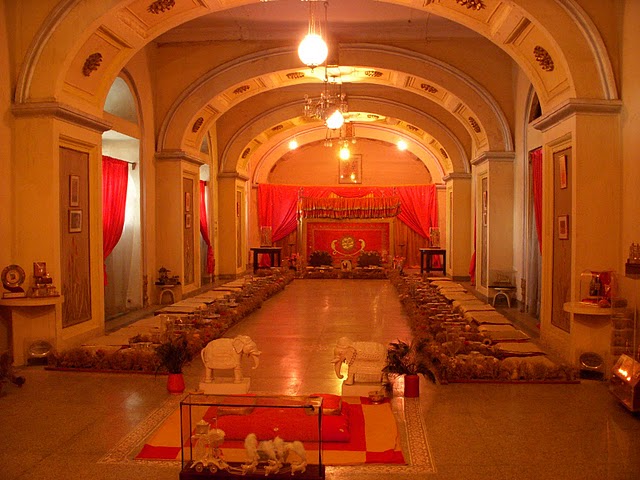
At the heart of Jai Vilas lies its crowning glory, the great durbar hall, a vast ceremonial space of almost overwhelming opulence. Gilded surfaces, rich furnishings and soaring proportions combine to create one of the most magnificent interiors in all of India.
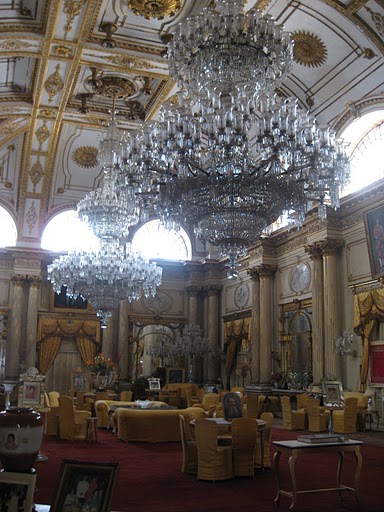
The hall was designed for the grandest occasions of state, receptions and ceremonies at which the Scindia rulers displayed their wealth and power to the world. Every surface was conceived to dazzle, from the gold leaf to the sumptuous carpets underfoot.
Standing in the hall, you are surrounded by an extravagance that still astonishes visitors more than a century after it was created. It is a space that was meant to leave guests speechless, and it continues to do exactly that.
Take your time here, for the durbar hall is the climax of any visit. It embodies the spirit of the whole palace, a place where no expense was spared in the pursuit of sheer, breathtaking splendor.
The hall was the setting for the most important ceremonies of the state, occasions on which the full majesty of the Scindia dynasty was put on display.
Its proportions are so vast and its decoration so rich that visitors often struggle to take it all in at a single glance.
Few interiors anywhere so completely embody the ideal of royal magnificence, and the hall remains the undisputed highlight of the palace.
The gilding alone is said to have consumed a staggering quantity of gold, a measure of the resources poured into the room.
Every detail, from the painted ceiling to the patterned floor, was designed to contribute to an overwhelming impression of magnificence.
It is the kind of room one does not so much visit as experience, a total immersion in the splendor of a bygone royal age.
Visitors frequently describe it as the most dazzling interior they have ever seen, and few leave it unmoved.
To enter it is to step into the heart of the palace’s ambition, where every element was marshalled toward a single overwhelming effect.
Long after the visit, it is the memory of this one room, above all, that visitors carry away with them.
The Chandeliers Elephants Tested
The durbar hall is famous above all for its pair of colossal chandeliers, said to be among the largest in the world. Enormous constructions of glittering crystal, they hang from the ceiling like frozen cascades of light, and they are the single most celebrated feature of the palace.

A wonderful story surrounds their installation. Before the chandeliers were hung, the strength of the ceiling is said to have been tested by hoisting elephants onto the roof to ensure it could bear their immense weight. True or embellished, the tale captures the scale of the undertaking.
The chandeliers were a statement of wealth and engineering ambition, objects designed to amaze all who beheld them. Even today, their sparkling presence dominates the hall and draws gasps from every visitor who looks up.
For many, the chandeliers alone justify a visit to Jai Vilas. They are the perfect symbol of the palace’s spirit, grand, extravagant and utterly unforgettable.
Each chandelier is a masterpiece of the glassmaker’s art, composed of countless pieces of crystal arranged to catch and scatter the light.
Hanging in pairs above the durbar hall, they transform the space into a dazzling cavern of light, the crowning touch of an already magnificent room.
The elephant story, whether literal or legendary, has become inseparable from the chandeliers, adding a touch of myth to their already astonishing presence.
To stand beneath them and look up is to understand at once the scale of ambition that drove the whole palace.
In the evening light, when the crystal catches the glow of the hall, the chandeliers achieve their fullest and most magical effect.
No description quite prepares a visitor for their scale; they must be seen in person to be believed.
They remain, quite simply, the defining image of Jai Vilas, and among the most famous objects of their kind anywhere in the world.
The Silver Train of the Banquet Table
Among the most charming treasures of Jai Vilas is a model train made of solid silver, which once ran along the great dining table of the palace. After dinner it would carry decanters of brandy, cigars and other delights to the guests, gliding along its miniature rails.

This ingenious and whimsical device perfectly captures the playful opulence of the Scindia court. It was a conversation piece designed to delight and impress, a toy fit for a maharaja and his distinguished guests.
Stories tell of the train’s workings and of the amusement it brought to banquets, and it remains one of the most beloved curiosities in the palace. It speaks of a court that combined grandeur with a sense of fun and ingenuity.
For the visitor, the silver train is a delightful highlight, a reminder that the splendor of Jai Vilas was matched by a taste for clever and extravagant novelties.
The craftsmanship of the little train is exquisite, a miniature marvel wrought in precious metal for the amusement of a royal table.
It is the kind of object that captures the imagination, conjuring vivid scenes of the lavish banquets once held within the palace.
Visitors invariably smile at the thought of brandy and cigars gliding around the table on silver rails, a perfect emblem of princely whimsy.
It stands today as one of the most photographed and talked-about treasures in the entire palace, a small marvel that delights every visitor.
Such ingenious extravagances were the delight of princely courts, and few survive in such fine condition as this one.
Treasures of the Scindia Court
Beyond its famous highlights, Jai Vilas holds a vast collection of treasures accumulated by the Scindia dynasty. European furniture, chandeliers, paintings, sculptures, weapons and countless precious objects fill its rooms, forming one of the richest princely collections in India.

Wandering among these treasures is like stepping into the private world of a great royal house. Each object reflects the taste, wealth and connections of the dynasty, and together they tell the story of a family that moved easily between India and the wider world.
The collection ranges from the grand to the intimate, encompassing both ceremonial splendor and the personal belongings of the rulers. It offers a vivid and detailed picture of princely life at its most luxurious.
For those who explore the palace, these treasures bring its history to life. Each room reveals new wonders, rewarding the curious visitor with glimpses into a world of almost unimaginable richness.
Among the collections are objects that reflect the family’s close ties with European courts and craftsmen, from fine furniture to decorative art.
Weapons and ceremonial items recall the martial traditions of the dynasty, while paintings and portraits preserve the faces of its rulers.
Together the collections form a portrait of a dynasty that was both deeply Indian and thoroughly cosmopolitan.
For the visitor, lingering over these objects is the surest way to feel the presence of the dynasty that gathered them.
The breadth of the collection reflects the dynasty’s wide connections and its appetite for the finest objects the world could offer.
To move through the rooms is to trace the tastes of a family that collected on a truly royal scale.
Each generation of the family added to the collections, so that the palace holds layer upon layer of accumulated splendor.
Among the rooms, the dining hall with its famous silver train and the gilded durbar hall remain the most celebrated of all.
Together, they make the palace not just a monument but a living archive of princely splendor.
The Jiwaji Rao Scindia Museum
Much of Jai Vilas today functions as a museum dedicated to the memory of the Scindia dynasty, preserving and displaying the family’s remarkable heritage. The museum allows visitors to experience the grandeur of the palace and the richness of its collections firsthand.

The transformation of part of the palace into a museum was a way of sharing this extraordinary heritage with the public while keeping the collections intact. It has made Jai Vilas one of the leading cultural attractions of central India.
Through its displays, the museum tells the story of the dynasty across the generations, from its rise to power to its role in the modern era. It is both a treasure house and a record of a remarkable family.
For the visitor, the museum is the gateway to the palace’s wonders, offering a carefully presented journey through the splendor and history of the Scindia court.
The museum’s displays are arranged to guide visitors through the splendor of the palace while telling the story of the family that created it.
It has become a point of pride for Gwalior, drawing visitors from across India and beyond to marvel at its treasures.
Through careful curation, the museum ensures that the splendor of the Scindia court can be appreciated by new generations of visitors.
The careful preservation of the collections ensures that this extraordinary heritage will endure for generations to come.
For many visitors, the museum is the highlight of a trip to Gwalior, a treasure house without equal in the region.
A visit to the museum is, in effect, a journey into the heart of princely India at its most opulent.
The result is a cultural destination of national importance, safeguarding the legacy of the Scindia dynasty for the future.
It stands today among the finest palace-museums in all of India, a fitting guardian of the Scindia legacy.
A Palace Still Lived In
Unlike many historic palaces that have become purely museums, part of Jai Vilas remains the residence of the Scindia family’s descendants. This continuity gives the palace a living quality, a sense that its story is not yet over.
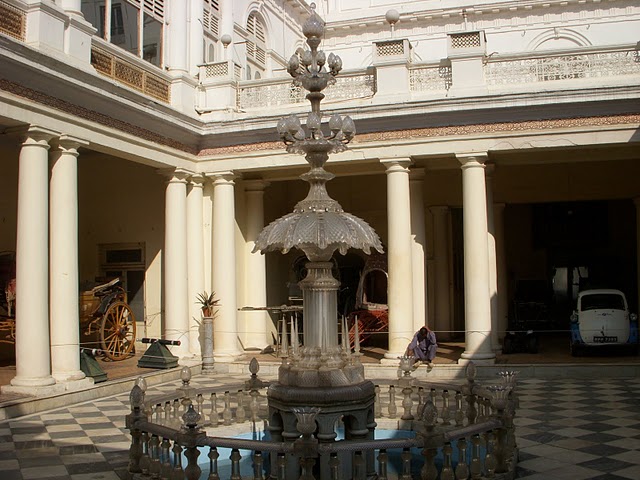
The presence of the family lends the palace an unusual intimacy and authenticity. It is not merely a preserved relic but a home, still connected to the dynasty that built it, still part of the ongoing life of Gwalior.
This blend of museum and residence is part of what makes Jai Vilas distinctive. Visitors experience both the public grandeur of the state rooms and the sense of a palace that remains, in part, a living family home.
For the visitor, this living dimension adds depth to the experience. You are encountering not a closed chapter of history but a palace still inhabited by the heirs of the dynasty that raised it.
The continued presence of the family means that the palace is maintained with evident care and affection, rather than left to the slow decay that befalls some historic houses.
This living connection lends the whole site a warmth and authenticity that a mere museum could never match.
This rare combination of living home and public museum gives Jai Vilas a character all its own among the great palaces of India.
In this way, Jai Vilas bridges past and present, a historic treasure that remains part of the ongoing life of its dynasty.
The Palace in the City of Gwalior
Jai Vilas does not stand in isolation but within the historic city of Gwalior, long one of the great centers of central India. The palace is part of a wider landscape of royal power that includes the famous hilltop fortress rising dramatically above the town.
The relationship between palace and city tells you much about the Scindia dynasty’s role. As rulers of Gwalior, the Scindias shaped the character of the place, and Jai Vilas became the modern seat of a power long associated with the ancient fort above.
Where the great fortress speaks of older centuries of warfare and dominion, the European palace below represents the dynasty’s embrace of a new age of wealth, diplomacy and cosmopolitan splendor. Together they map the long arc of Gwalior’s royal history.
Exploring the city, you sense how the palace fits into this layered story. Jai Vilas is the glittering modern chapter in the long saga of a city that has been a seat of power for many centuries.
For the visitor, appreciating this setting enriches a visit, placing the palace within the grand sweep of Gwalior’s history rather than viewing it in isolation.
The city itself rewards exploration, and the palace makes a natural centerpiece for any visit to Gwalior’s many historic sites.
Seen against the backdrop of the ancient fort, the palace completes a royal landscape that spans many centuries of Indian history.
Few Indian cities offer so rich a combination of ancient fortress and modern palace within easy reach of one another.
Together these monuments make Gwalior a destination of real depth for anyone drawn to royal history.
In this layered landscape of fort and palace, the whole history of Gwalior’s royal power can be read at a glance.
The palace, in the end, is inseparable from the proud city that surrounds it, and a visit to one is incomplete without the other.
Many who come for the fort find themselves equally captivated by the palace, and leave with a fuller picture of the city’s long royal heritage.
A Closer Look on Film
To appreciate the full splendor of Jai Vilas, from its towering chandeliers to its gilded durbar hall, film offers a fine complement to a visit. The short video below helps bring the palace and its treasures to life.
Watching it, you can better sense the scale of the architecture, the dazzle of the interiors and the richness of the collections, details that reward a closer look. It makes an ideal companion to understanding this magnificent palace.
Jai Vilas Mahal Today
Today the Jai Vilas Mahal endures as one of the grandest and most celebrated palaces in central India, a dazzling symbol of the Scindia dynasty and of the princely age at its most extravagant. Its chandeliers, its durbar hall and its treasures continue to astonish all who visit.

For travelers, the palace offers a rare and rewarding encounter with the opulence of princely India. To stand beneath its great chandeliers, surrounded by the treasures of a mighty dynasty, is to feel the full dazzle of a vanished world of royal splendor.
There is a lesson in the endurance of Jai Vilas. It shows how the heritage of a great dynasty can be preserved and shared, kept alive as both museum and living home for future generations to admire.
When you finally turn to leave, glance back at the European facades gleaming above their grounds. You will carry with you the memory of colossal chandeliers, a silver train and a durbar hall of pure gold, and a vivid sense of the grandeur of princely India.
Long after leaving, travelers find the image of those colossal chandeliers returning to mind, a lasting symbol of princely India’s dazzling extravagance.
It remains a place of pilgrimage for all who wish to experience the opulence of the maharajas firsthand.
It stands, in the end, as a glittering testament to the wealth and ambition of one of India’s greatest princely houses.
For anyone drawn to the romance of princely India, the palace is an essential and unforgettable destination.
Whatever route brings you here, Jai Vilas rewards the journey many times over.
And so Jai Vilas endures, a palace of chandeliers and gold, keeping alive the dazzling memory of princely India.
It leaves every visitor with a deeper appreciation of the grandeur that India’s princely houses once commanded.
In its gilded halls and beneath its great chandeliers, the dazzling world of the maharajas lives on for all who come to see it.
For the traveler willing to venture into central India, the reward is one of the most sumptuous palace experiences the country has to offer.
View the location on Google Maps
Palaces Nearby
If the gilded splendor of Jai Vilas has deepened your love of India’s princely palaces, two more royal residences of the subcontinent make fitting companions to this one.
- Rambagh Palace in Jaipur, the garden jewel and glamorous home of the maharajas of Jaipur.
- the Cooch Behar Palace, a domed, European-style mansion built by a reforming maharaja of Bengal.
You May Like
Konopiste the Bohemian Castle of a Doomed Archduke


One thought on “Jai Vilas Mahal, the Gwalior Palace of Elephant-Tested Chandeliers”