On the edge of the Pink City of Jaipur, set within acres of gardens where peacocks stroll across manicured lawns, stands a palace often called the Jewel of Jaipur. Rambagh Palace began life as a modest garden house and grew, over the course of a century, into the glamorous principal residence of the maharajas of Jaipur, a place forever associated with one of the most celebrated royal couples of twentieth-century India.
You come to Rambagh to step into a world of marble corridors, scalloped arches and Mughal-inspired gardens, a palace that blends the grandeur of a royal residence with an atmosphere of serene, flower-scented luxury. This was the home of the dashing Maharaja Sawai Man Singh II and his famously beautiful queen, and something of their golden age still lingers in its halls.
In this guide you will get to know Rambagh beyond its romantic reputation. We will trace its evolution from garden retreat to royal palace, explore its distinctive architecture and gardens, recall the glittering royal couple who made it famous, and understand how it became one of the most celebrated palace hotels in the world. By the end you will see why Rambagh remains the very image of Jaipur’s royal glamour.

In This Article
- Arriving at Rambagh Palace
- From Garden House to Palace
- The Maharaja and His Queen
- The Architecture of the Jewel
- The Mughal-Inspired Gardens
- Marble Halls and Elegant Rooms
- The Splendor of the Dining Hall
- Birth of a Legendary Hotel
- A Legend of Royal Glamour
- A Jewel of the Pink City
- Polo, Sport and the Princely Life
- A Closer Look on Film
- Rambagh Palace Today
Arriving at Rambagh Palace
Your first sight of Rambagh is of a graceful, cream-colored palace set amid sweeping green gardens, its domed pavilions, scalloped arches and marble detailing glowing softly in the Rajasthan light. After the bustle of Jaipur, the calm of its grounds comes as a serene and welcome contrast.

The approach through the gardens is part of the magic. Broad lawns, formal plantings and the famous peacocks that roam the grounds frame the palace beautifully, and the sense of space and tranquility prepares you for the elegance within.
Though Rambagh now operates as a celebrated luxury hotel, it has lost none of its palatial character. The building wears its royal heritage openly, and to arrive here is to feel yourself entering a world of refined, old-world grandeur.
Take a moment to appreciate the setting before going in. The combination of elegant architecture, lush gardens and roaming peacocks is one of the loveliest sights in Jaipur, and it rewards an unhurried, appreciative gaze.
The transition from the lively streets of Jaipur to the hushed calm of Rambagh’s grounds is striking, and it heightens the sense of entering a place apart.
Whatever the season, the palace holds its serene beauty, its cream facades glowing warmly in the Rajasthan sun.
It is a place that invites you to slow down from the first moment, trading the energy of the city for the measured elegance of a royal home.
First-time visitors often remark that Rambagh feels less like a monument than a living home, welcoming rather than austere.
However you come to it, Rambagh makes a serene and elegant first impression, setting the tone for a visit steeped in royal romance.
The palace seems to invite lingering, each terrace and garden path offering a new perspective on its graceful beauty.
From Garden House to Palace
Rambagh did not begin as a palace at all. Its origins lie in a modest garden house built in the early nineteenth century, a quiet retreat set among the trees well outside the walls of the old city. It is a humble beginning for a building that would become a byword for royal glamour.
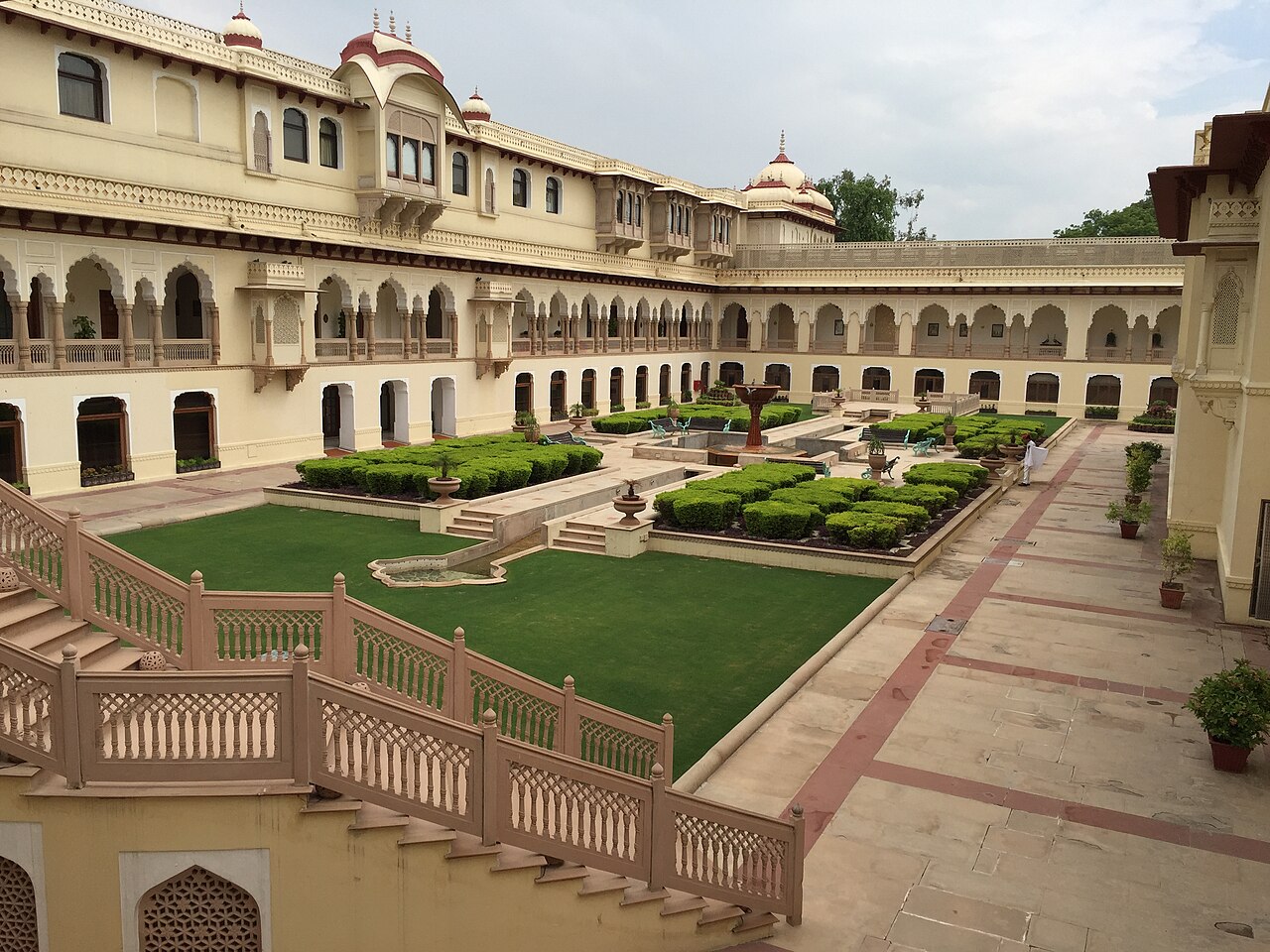
Over the following decades the property was enlarged and transformed, serving at various times as a royal hunting lodge and guest house before being elevated to the status of a principal royal residence. Each stage added to its grandeur and its grounds.
This gradual evolution gives Rambagh a layered character, the accumulated result of generations of royal attention. What began as a garden pavilion grew, step by step, into one of the most splendid palaces in Rajasthan.
Knowing this history deepens a visit. The palace you see today is the product of a long transformation, a garden retreat that blossomed over a century into a royal home of extraordinary beauty.
Each generation that shaped the property left its mark, enlarging the buildings and extending the gardens that are so central to its charm.
The name Rambagh, evoking a garden, recalls these origins even now, a reminder of the green retreat from which the palace grew.
This slow blossoming from garden house to palace is one of the most charming aspects of Rambagh’s long story.
In its earliest days the retreat was valued above all for its greenery and its distance from the crowded city, qualities that remain central to its appeal.
Successive rulers saw in the property a chance to create something special, and they invested steadily in its beauty.
By the time it reached its full flowering, the humble garden house had become almost unrecognizable, transformed into a palace fit for kings.
That so grand a palace grew from so modest a seed is part of what makes its story so appealing.
The gardens that gave the palace its name remain its heart, a living link to the retreat from which everything else grew.
It is this unhurried growth, from garden to palace, that gives Rambagh its uniquely gentle grandeur among the great royal houses of Rajasthan.
The Maharaja and His Queen
Rambagh is forever associated with Maharaja Sawai Man Singh II of Jaipur, the dashing polo-playing prince who made it his principal residence, and above all with his third wife, a queen whose beauty and style made her famous around the world. Together they turned the palace into a center of glamour and gaiety.

The maharaja was a celebrated sportsman and a figure of international renown, while his queen became an icon of elegance, admired far beyond India. Their life at Rambagh, filled with sport, entertaining and the company of distinguished guests, became the stuff of legend.
The couple embodied the glamour of India’s princely twilight, moving with ease between the worlds of Indian royalty and international high society. Rambagh was the stage on which much of that glittering life unfolded.
To understand the palace is to understand this famous couple. Rambagh is suffused with the memory of their golden age, and something of their style and charm still clings to its elegant halls.
Their life together became emblematic of a glamorous era, when Indian royalty mingled easily with the international elite.
Tales of their entertaining, their travels and their style have become part of the romance that surrounds the palace to this day.
The queen in particular became a global symbol of grace, and her association with Rambagh lends the palace much of its enduring romance.
Their era represented the last golden flowering of princely life, and the palace remains its most beautiful monument.
The palace was the setting for a social life of extraordinary brilliance, drawing visitors from Indian and international high society alike.
Through the couple, Rambagh became linked to a wider world of glamour, fashion and celebrity that few other Indian palaces could claim.
Their legend has only grown with time, and it remains inseparable from the romance of the palace.
It is impossible to think of Rambagh without recalling the famous couple whose glamour defined its most brilliant years.
Their story, played out in part within these very walls, continues to draw admirers to the palace from around the world.
In remembering them, visitors touch the most glamorous chapter of the palace’s long and storied history.
Their era stands as the brilliant sunset of princely India, and Rambagh is its most luminous memorial.
The Architecture of the Jewel
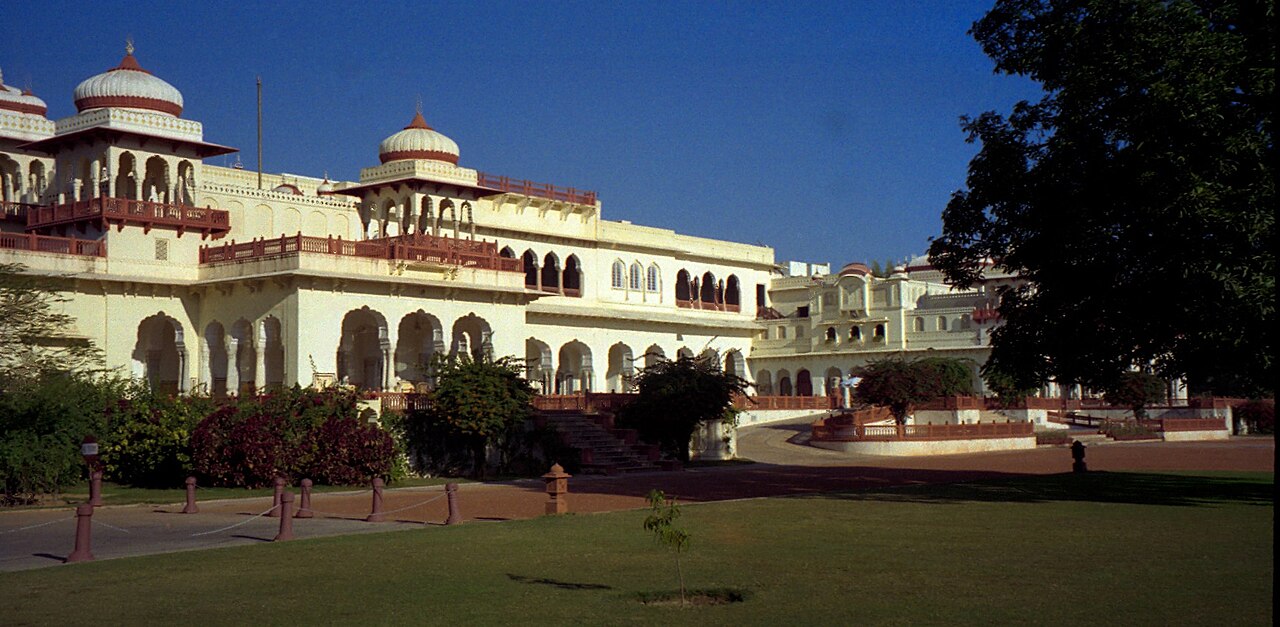
The architecture of Rambagh is a graceful expression of the Indo-Saracenic style, blending traditional Rajput and Mughal elements with a refined, palatial sensibility. Scalloped arches, domed pavilions, marble latticework and delicate detailing give the palace its distinctive beauty.
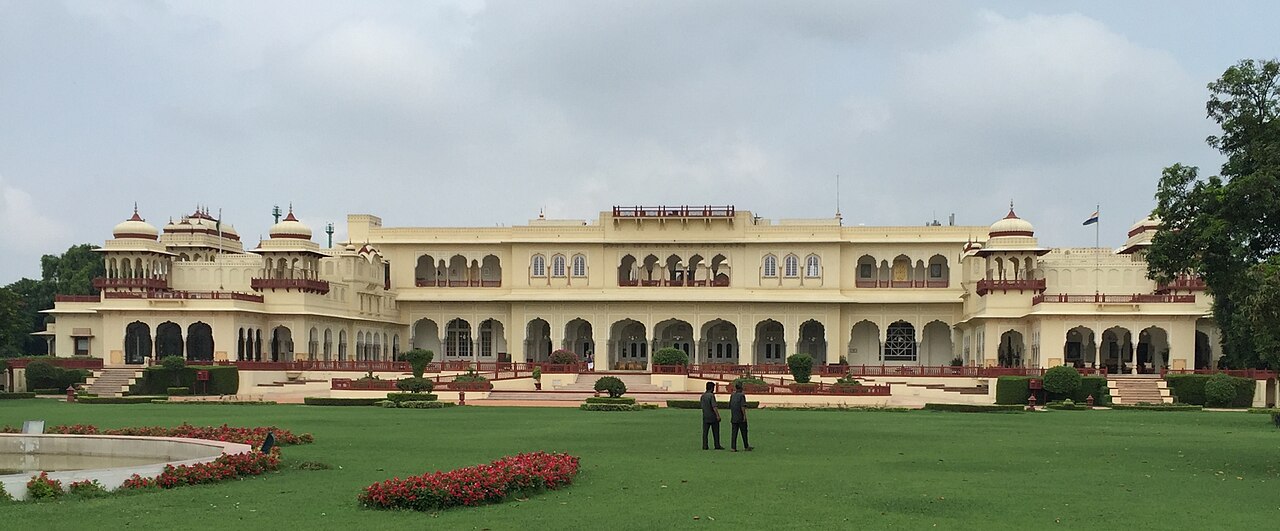
The building is designed to delight the eye at every turn, from its elegant facades to its cool marble corridors. There is a lightness and grace to the architecture that sets Rambagh apart, a sense of refinement rather than overwhelming grandeur.
Inside, the palace unfolds in a sequence of beautifully appointed rooms and halls, each reflecting the taste for luxury and elegance that defined the Jaipur court. The craftsmanship throughout is exquisite, rewarding close attention.
Exploring the building, you appreciate how its architecture balances royal splendor with an intimate, almost domestic charm. Rambagh is grand, but it is also graceful and welcoming, a palace built for living as well as for display.
The use of marble and fine stone throughout gives the palace a cool, luminous quality well suited to its hot climate.
Delicate carved screens and latticework filter the light, casting intricate patterns across the floors and walls.
The overall effect is one of harmony and grace, a palace that charms rather than overwhelms.
It is this balance of grandeur and elegance that has earned Rambagh its reputation as a jewel among palaces.
Architectural historians admire Rambagh as a refined example of the Indo-Saracenic style, which married Indian tradition with European planning.
The interplay of domes, arches and open terraces gives the palace a rhythm that is both grand and graceful.
Every vista seems carefully composed, a testament to the thought that went into its design.
Taken as a whole, the palace is a masterclass in how to combine grandeur with grace, a lesson in elegant restraint.
It is a building that rewards slow exploration, revealing new graces at every turn of its marble corridors.
The lacy marble screens, cool verandas and shaded terraces all speak of a design perfectly attuned to the rhythms of royal life in a hot climate.
In Rambagh, the Indo-Saracenic ideal finds one of its most charming and livedin expressions, grand without ever becoming forbidding.
The Mughal-Inspired Gardens
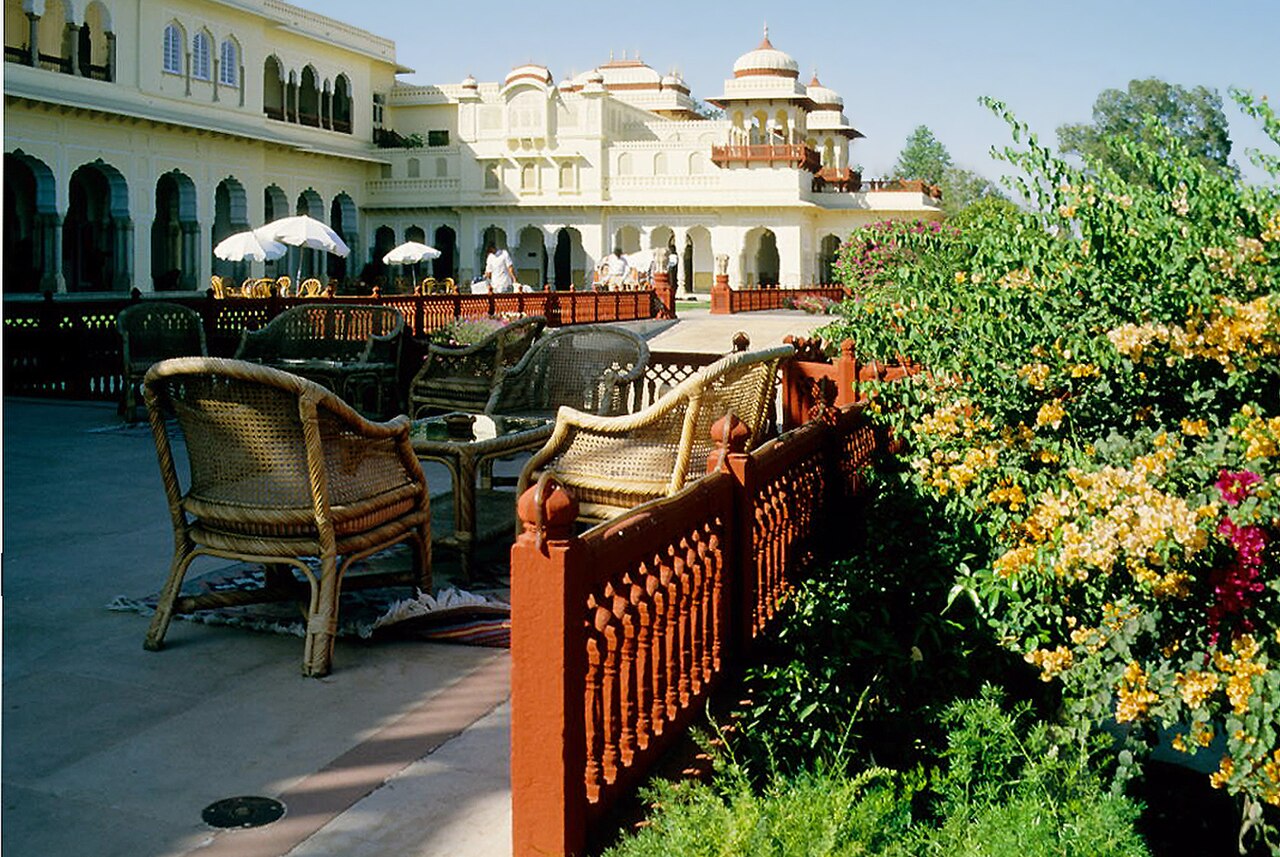
The gardens of Rambagh are among its greatest glories. Laid out in a style inspired by the great Mughal gardens, with formal lawns, fountains, flowerbeds and shaded walks, they provide a serene green setting that perfectly complements the elegance of the palace.
These gardens were designed to be enjoyed as well as admired, offering cool retreats from the Rajasthan heat and spaces for leisure and entertainment. Strolling among them, you sense the leisured world of the court at ease.
The famous peacocks that roam the grounds add to the magic, their iridescent plumage a splash of living color against the greenery. The gardens are a highlight of any visit, a place of beauty and tranquility in their own right.
Whether you come for the flowers, the fountains or simply the calm, the gardens round out the experience of the palace. They are an essential part of Rambagh’s charm, and of its reputation as the Jewel of Jaipur.
In the cool of the morning and evening, the gardens are at their most enchanting, alive with birdsong and the calls of the peacocks.
Generations of visitors have found these grounds a place of rare serenity, a green oasis in the heart of Rajasthan.
The scent of flowers, the play of fountains and the sight of peacocks combine to create an atmosphere of enchantment found in few other places.
Little wonder that the gardens have become as famous as the palace they surround.
The formal layout, with its axes, water channels and symmetrical beds, recalls the great garden traditions of Mughal India.
Yet the gardens are also made for pleasure, dotted with pavilions and shaded corners perfect for repose.
Many guests count a quiet morning in the gardens, coffee in hand and peacocks nearby, among the most memorable moments of their stay.
The gardens remain, as they have always been, the soul of Rambagh, the green setting that makes the jewel shine.
It is in these gardens, more than anywhere, that the enduring enchantment of Rambagh can be felt most strongly.
Marble Halls and Elegant Rooms
Step inside Rambagh and you enter a world of cool marble, delicate ornament and refined luxury. The interiors were appointed with great care, blending Indian craftsmanship with the comforts and elegance expected of a modern royal residence.

Marble corridors, graceful arches, fine furnishings and decorative details combine to create spaces of understated splendor. There is a lightness to the interiors that matches the architecture, an elegance that never tips into excess.
These rooms were the setting for the glittering life of the Jaipur court, from intimate gatherings to grand entertainments. Each space reflects the taste and style that made Rambagh famous as a center of royal glamour.
Wandering these halls, you appreciate the refined luxury of the palace. Rambagh was designed for a life of elegance and ease, and its interiors still convey that sense of effortless, old-world sophistication.
The blend of Indian artistry and modern comfort gave the interiors a distinctive character, luxurious yet never cold.
Each room seems designed for a life of elegance, from intimate conversation to grand celebration.
To move through them is to trace the taste of a court that prized elegance above ostentation.
The quality of light within the marble halls, filtered through carved screens, is one of the quiet pleasures of a visit.
In their cool elegance, the interiors capture the particular grace that has always set Rambagh apart.
The Splendor of the Dining Hall
Among the most magnificent spaces at Rambagh is its grand dining hall, a room of royal splendor where the Jaipur court once dined in style. With its rich decoration and elegant proportions, it offers a vivid glimpse of the palace’s golden age of entertaining.
The hall was designed to impress, a fitting setting for the lavish banquets and receptions that were a feature of life at Rambagh. Every detail speaks of the refinement and hospitality of the Jaipur court.
Today this splendid room continues to serve as a dining space, allowing visitors to dine amid royal surroundings and to experience something of the atmosphere of a maharaja’s banquet. It is one of the most atmospheric rooms in the palace.
For the visitor, the dining hall is a highlight, a place where the splendor of Rambagh’s past can still be savored in the most literal sense. It captures the spirit of a palace built for a life of elegance and pleasure.
The cuisine served here draws on the rich culinary traditions of the Indian royal courts, offering a taste of the lavish hospitality for which the palace was known.
To dine beneath its decorated ceiling is to experience something of the grandeur of a maharaja’s banquet.
Few dining rooms anywhere combine history and splendor so completely.
It remains one of the most sought-after settings for a memorable meal in all of Jaipur.
The grandeur of the setting transforms even an ordinary meal into a memorable occasion, rich with the atmosphere of the past.
The hall stands as proof that Rambagh’s splendor was meant to be lived in and enjoyed, not merely admired from afar.
It is, quite simply, one of the most magnificent rooms in which one could ever hope to dine.
Dining here, surrounded by royal splendor, is for many the highlight of a stay at the palace.
Birth of a Legendary Hotel
In the mid-twentieth century, as the age of the princes drew to a close, Rambagh began a new chapter in its history. The palace was converted into a luxury hotel, one of the first of the great royal residences of India to open its doors to paying guests.

This transformation preserved the palace and its way of life, allowing visitors from around the world to experience the splendor of a maharaja’s home. Rambagh became a pioneer of the palace-hotel concept that would later spread across Rajasthan.
The conversion was handled with great care, retaining the character and grandeur of the royal residence while adapting it to its new role. Guests could now sleep in rooms once occupied by royalty and dine in the halls where maharajas had entertained.
This new life as a hotel secured Rambagh’s future and spread its fame around the world. It became, and remains, one of the most celebrated palace hotels anywhere, a byword for royal luxury.
The pioneering conversion set a template that many other Rajasthani palaces would later follow, helping to preserve a whole heritage of royal architecture.
Guests from around the world were drawn by the chance to live, however briefly, like royalty.
The move ensured that the palace would be cared for and admired for generations rather than falling into decline.
Today it stands as the flagship of a whole tradition of palace hospitality, admired the world over.
The careful stewardship of the palace as a hotel has kept its fabric and spirit intact where other royal homes have been lost.
Visitors today benefit from this foresight, able to experience the palace much as its royal occupants once did.
Its success helped persuade a generation that India’s palaces could have a dignified future rather than fading into ruin.
In securing the palace’s future, the transformation also secured its place in the affections of travelers everywhere.
The model it pioneered has since given new life to palaces across Rajasthan, but Rambagh remains the most celebrated of them all.
A Legend of Royal Glamour
Few palaces are so steeped in glamour as Rambagh. Through its association with its famous royal couple and its later life as a celebrated hotel, it became an icon of Indian royal style, drawing distinguished guests from around the world.

Over the years, royalty, celebrities and dignitaries have passed through its halls, adding to its mystique. Rambagh came to represent a particular ideal of elegance, the romance and splendor of princely India preserved into the modern age.
This reputation is part of what makes a visit so evocative. To stay or dine at Rambagh is to step into a world of old-world glamour, to experience something of the life that made the palace legendary.
Understanding this dimension enriches a visit. Rambagh is not just a beautiful building but a living legend, its halls alive with the memory of a glittering royal world.
The guest book of Rambagh over the years reads like a roll call of the famous, adding to the palace’s aura of exclusivity and romance.
This heritage of glamour is carefully cherished, part of what sets Rambagh apart from ordinary luxury hotels.
To walk its halls is to feel the lingering presence of a glittering world.
For many, simply to cross its threshold is to feel part of that storied world, if only for an evening.
The romance of Rambagh has inspired writers, photographers and travelers for decades, cementing its place in the popular imagination.
It has come to stand, in many minds, as the very image of royal India at its most glamorous.
In an age of standardized luxury, Rambagh offers something rarer: the authentic atmosphere of a royal home steeped in history.
To experience it is to understand why, for so many, the name Rambagh has become synonymous with the glamour of royal India.
In the end, it is this aura of living legend, as much as its beauty, that makes the palace unforgettable.
A Jewel of the Pink City
Rambagh is inseparable from Jaipur, the famous Pink City of which it is one of the great ornaments. As one of the principal royal residences of the Jaipur rulers, the palace is woven into the identity and heritage of the city.

The relationship between palace and city tells you much about the Jaipur court, which combined royal grandeur with a love of art, architecture and beauty. Rambagh is one of the finest expressions of that refined sensibility.
Set within the wider landscape of Jaipur’s palaces, forts and gardens, Rambagh holds a special place as the glamorous modern residence of the maharajas. It complements the older monuments of the city with its own distinctive elegance.
For the visitor, Rambagh is an essential part of any exploration of Jaipur’s royal heritage, a jewel that shines among the many treasures of the Pink City.
Jaipur itself, with its planned streets and rose-colored buildings, provides a fitting setting for so elegant a palace.
Rambagh takes its place among the city’s great monuments as the embodiment of its more recent royal glamour.
No visit to the Pink City feels complete without an encounter with this, its most glamorous palace.
Rambagh completes the picture of Jaipur as a city of royal splendor, adding its own note of modern glamour to the ancient grandeur around it.
Together with the city’s forts and older palaces, Rambagh helps make Jaipur one of the great royal destinations of India.
As the glamorous modern face of Jaipur’s royalty, Rambagh holds a place all its own among the city’s many wonders.
Polo, Sport and the Princely Life
Life at Rambagh in its royal heyday was defined in large part by sport, above all by polo, the game at which the maharaja of Jaipur excelled on the international stage. The palace and its grounds were the backdrop to a glamorous world of games, hunts and outdoor pleasures.

The maharaja’s prowess on the polo field made him famous far beyond India, and the sport became closely associated with the glamour of the Jaipur court. Rambagh was home to a lifestyle in which sporting excellence and royal elegance went hand in hand.
Beyond polo, the princely life at Rambagh encompassed shikar expeditions, riding and the whole round of pursuits that filled the days of Indian royalty in the early twentieth century. The palace was a base for an active, outdoor existence as much as a setting for formal grandeur.
This sporting culture was part of what gave Rambagh its particular glamour, blending aristocratic leisure with athletic achievement. It was a world of horses, games and open air, lived against the backdrop of a beautiful palace.
For the visitor, recalling this dimension adds color to the palace’s story. Rambagh was not only a place of marble halls and banquets but the home of a vigorous, glamorous sporting life.
The traditions of horsemanship and sport remain part of the palace’s identity, echoes of the vigorous life once led within its grounds.
In this blend of elegance and energy lies much of the particular charm that has always defined Rambagh.
Photographs from the era capture the dash and glamour of this sporting world, and they remain among the most evocative images of the palace’s heyday.
The spirit of those golden years still seems to hover over the lawns and pavilions of Rambagh.
To stroll the grounds today is to imagine the polo ponies and hunting parties that once animated this elegant estate.
That union of athletic vigor and courtly refinement gave the Jaipur court a distinctive character that still colors the palace’s legend today.
A Closer Look on Film
To appreciate the full beauty of Rambagh, from its marble halls to its peacock-filled gardens, film offers a fine complement to a visit. The short video below helps bring the palace and its royal atmosphere to life.
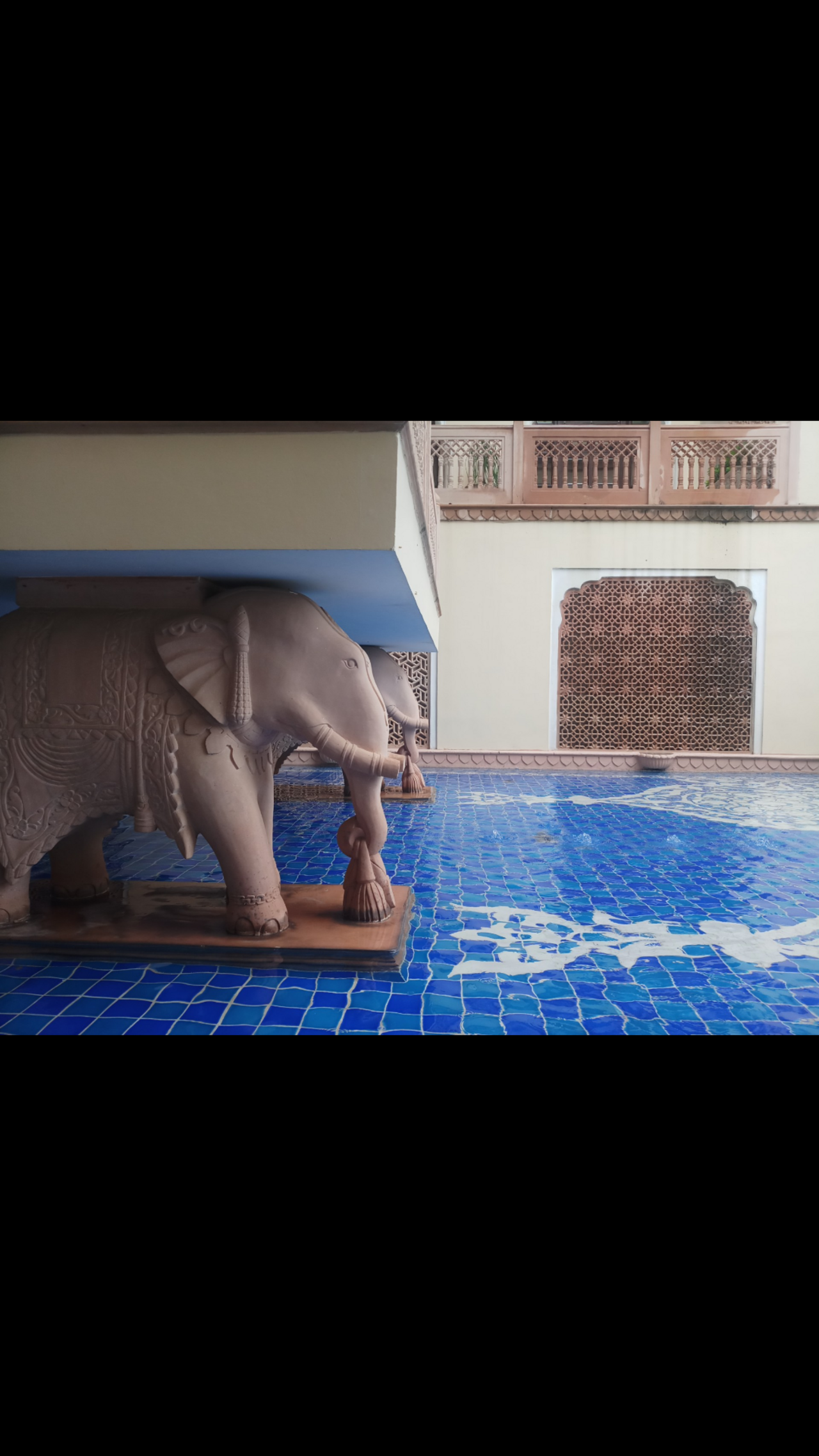
Watching it, you can better sense the elegance of the architecture, the serenity of the gardens and the glamour of the palace’s history, details that reward a closer look. It makes an ideal companion to understanding this celebrated residence.
Rambagh Palace Today
Today Rambagh endures as one of the most celebrated palaces in India, cherished as a symbol of Jaipur’s royal glamour and renowned around the world as a legendary luxury hotel. Its marble halls, its gardens and its romantic history continue to enchant all who visit.
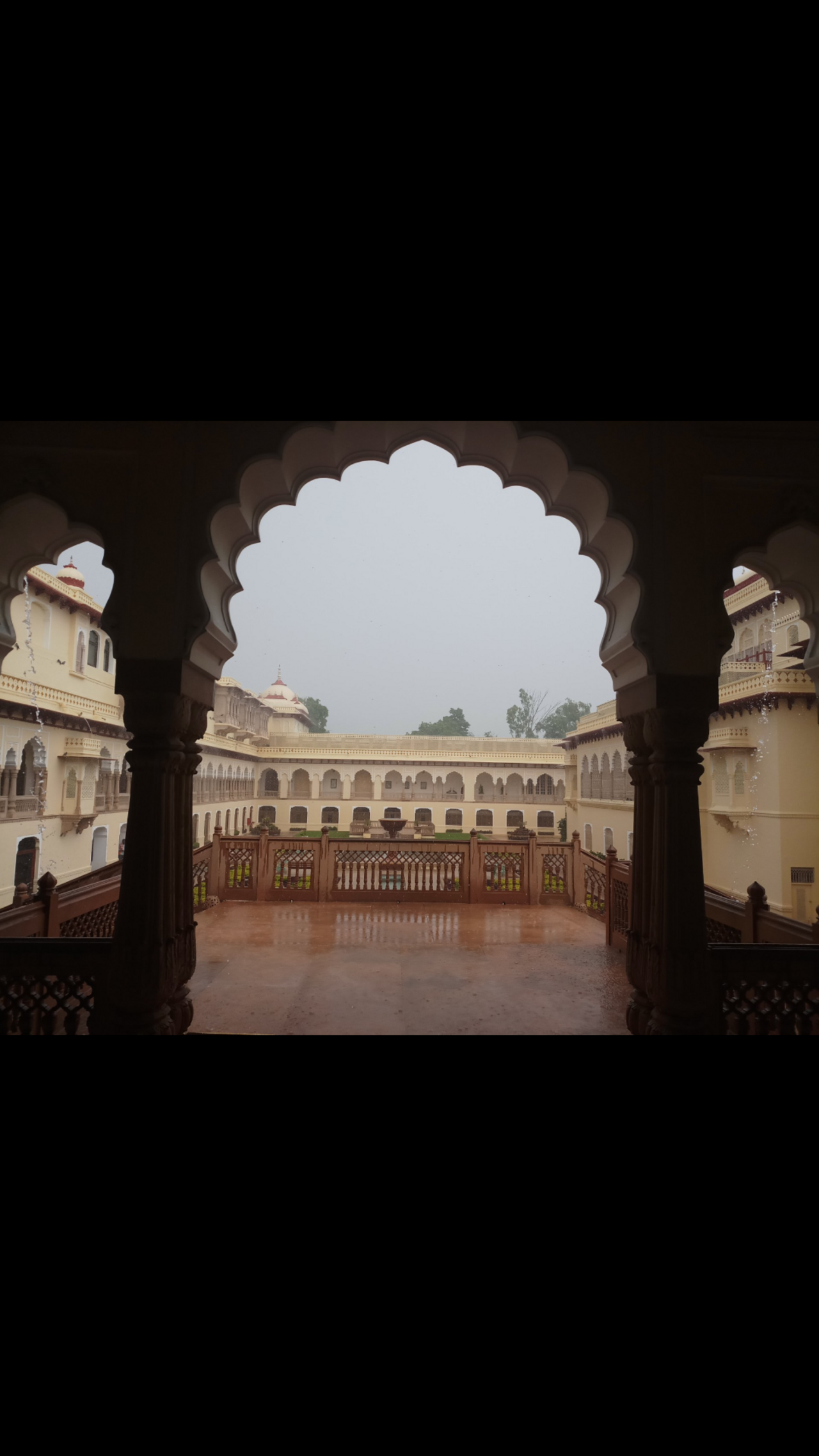
For travelers, the palace offers a rare chance to experience the life of princely India firsthand, to walk the halls and gardens once graced by a famous royal couple. Its blend of elegance, history and living luxury creates an experience that lingers in the memory.
There is a lesson in Rambagh’s graceful reinvention. It shows how a royal residence can find new life and purpose while preserving its character, keeping the romance of princely India alive for new generations.
When you finally turn to leave, glance back at the cream-colored palace amid its gardens, with a peacock perhaps stepping across the lawn. You will carry with you the image of the Jewel of Jaipur, and a vivid sense of the glamour of India’s princely age.
It stands, in the end, as the enduring symbol of Jaipur’s royal glamour, as captivating now as in its golden age.
For anyone drawn to the romance of princely India, Rambagh is an essential and unforgettable destination.
Its continued life as a beloved destination ensures that the story of Rambagh is still being written, chapter by chapter.
Long after leaving, travelers find the image of the cream-colored palace amid its gardens returning to mind, a lasting symbol of Jaipur’s royal romance.
It remains, by any measure, one of the most romantic places to experience the lingering magic of princely India.
And so Rambagh endures, the Jewel of Jaipur, keeping alive the elegance and romance of a vanished royal world.
For the traveler seeking the romance of the maharajas, few places deliver it so completely and so memorably as Rambagh.
Whatever route brings you here, the Jewel of Jaipur rewards the journey many times over, leaving every visitor touched by its elegance.
In its gardens and marble halls, the glamour of a vanished age lives quietly on, waiting to enchant each new generation of visitors.
View the location on Google Maps
Palaces Nearby
If the glamour of Rambagh has deepened your love of India’s princely palaces, two more royal residences of the subcontinent make fitting companions to this one.
- the Jai Vilas Mahal of Gwalior, the Scindia palace of colossal chandeliers and a solid silver train.
- the Cooch Behar Palace, a domed, European-style mansion built by a reforming maharaja of Bengal.
You May Like
Konopiste the Bohemian Castle of a Doomed Archduke


One thought on “Rambagh Palace, the Garden Jewel Where Jaipur’s Royals Lived in Glamour”