In the far north of West Bengal, where the plains of India begin their gentle rise toward the Himalayan foothills, stands a palace that seems to have wandered east from the great capitals of Europe. The Cooch Behar Palace, also known as the Victor Jubilee Palace, is a stately red-brick and stucco mansion crowned with a soaring dome, built by a reforming maharaja who modeled his home on the grandest royal residences of the West.
You come to Cooch Behar to meet a kingdom that stood at the meeting point of worlds, an old dynasty of the northeastern frontier that embraced European architecture, modern reform and cosmopolitan connections. The palace, with its classical facades and great central dome, is the proud monument of a royal house that looked confidently outward to the wider world.
In this guide you will get to know Cooch Behar beyond its striking silhouette. We will trace the history of the Koch dynasty that built it, explore the European-inspired architecture and its famous dome, step into its grand interiors, and understand why this elegant palace remains a cherished landmark of northern Bengal. By the end you will see why Cooch Behar stands among the most distinguished palaces of eastern India.

In This Article
- Arriving at the Cooch Behar Palace
- The Koch Dynasty of the Frontier
- A Reforming Maharaja’s Vision
- A Palace Modeled on the West
- The Soaring Central Dome
- Grand Interiors and Fine Detail
- Etched Glass and Craftsmanship
- The Remarkable Women of the Court
- A Palace Near the Himalayas
- A Protected Monument and Museum
- A Court of Sport and Shikar
- A Closer Look on Film
- Cooch Behar Palace Today
Arriving at the Cooch Behar Palace
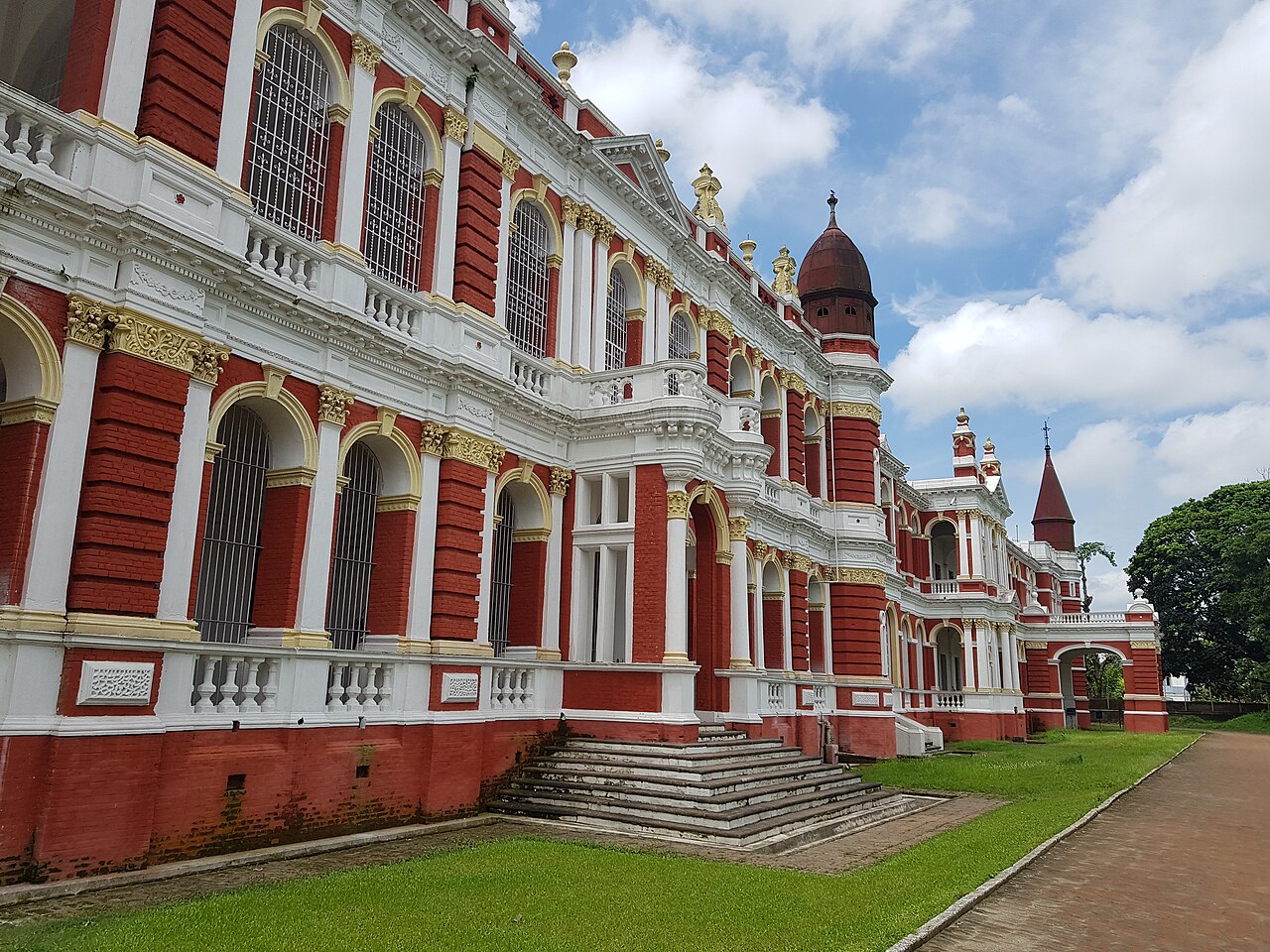
Your first sight of the Cooch Behar Palace is of a long, dignified building of warm brick and pale stucco, its classical facades stretching across spacious grounds and its great dome rising at the center. The effect is unmistakably European, a surprise amid the landscapes of northern Bengal.

Set within extensive lawns and gardens, the palace presents a composed and stately face. The symmetry of its design, the rhythm of its columns and the grandeur of its central dome all speak of a royal house that aspired to the elegance of the great palaces of Europe.
As a protected monument and museum, the palace welcomes those who come to explore its history and architecture. Approaching across the grounds, you feel yourself entering a world where the traditions of a frontier kingdom met the fashions of the wider world.
Take a moment to appreciate the building’s proportions and its dome before going in. The classical grandeur of the facade, set against its Bengali surroundings, is one of the most striking sights in the region, and it rewards an unhurried, appreciative gaze.
The approach across the broad lawns builds a sense of anticipation, the dome growing ever more impressive as you draw near.
First-time visitors are often astonished to find so European a palace in this corner of Bengal, and that surprise is part of its lasting appeal.
It is a place that invites you to slow down and take in its grandeur, each view of the dome and facade more impressive than the last.
However you come to it, the palace makes an unforgettable first impression, setting the tone for a visit rich in history and grandeur.
The scale of the building only becomes fully apparent as you walk its length, the classical facade unfolding grandly before you.
There is a quiet thrill in encountering so grand and unexpected a building, and that first impression lingers long after the visit.
The Koch Dynasty of the Frontier
To understand Cooch Behar, you must understand the Koch dynasty that ruled here. This was an old royal house of the northeastern frontier of India, presiding over a kingdom set between the plains and the Himalayan foothills. Its rulers governed a land of rivers, forests and fertile fields on the edge of the subcontinent.
Over the centuries the kingdom navigated the shifting politics of the region, maintaining its identity and its dynasty through changing times. By the later nineteenth century, under a reforming ruler, it embraced modern ideas with remarkable enthusiasm.
The palace is the crowning expression of this dynasty’s confidence and ambition. Built by a ruler who looked outward to Europe and the wider world, it announced the Koch kingdom’s place among the modern, cosmopolitan states of its age.
Keeping this in mind transforms a visit. Cooch Behar is not merely a handsome building but the seat of a frontier dynasty that embraced the modern world while preserving its own proud heritage.
The dynasty’s long history gave it deep roots in the region, and a prestige that it carried into the modern age.
Even as the wider political landscape changed, the royal house retained its identity and its connection to the land it had long ruled.
The palace remains the most visible and splendid monument to all that the dynasty achieved.
The kingdom’s position on the frontier made it a meeting point of cultures and influences, which lent its court a distinctive openness.
The dynasty’s willingness to embrace new ideas, while honoring its ancient roots, is one of the most striking aspects of its story.
This balance of tradition and modernity is written into the very fabric of the palace.
To walk the palace is to feel the weight of that long and remarkable history, preserved in brick, stucco and soaring dome.
The survival of the dynasty and its palace through the upheavals of history is itself a remarkable story, a testament to the resilience of the Koch royal house.
For the people of the region, the palace remains a source of pride and a link to a distinguished royal past.
In the palace, the long story of the Koch dynasty finds its most splendid and enduring expression.
That a frontier kingdom could produce so grand and cosmopolitan a palace is itself a measure of the Koch dynasty’s remarkable ambition.
A Reforming Maharaja’s Vision
The Cooch Behar Palace was the creation of a forward-looking maharaja who, in the later nineteenth century, set out to give his kingdom a residence worthy of a modern, enlightened state. Well-educated and widely connected, he was a reformer who embraced progressive ideas in many spheres of life.

His vision extended far beyond architecture. He championed education and social reform, and his court became known for its openness to new ideas and its connections with the wider world. The palace was the physical embodiment of this modernizing spirit.
In choosing to build in the grand European manner, the maharaja made a clear statement about his kingdom’s aspirations. Cooch Behar would be a modern state, engaged with the world, confident in its place among the nations of the age.
As you explore the palace, keep this vision in mind. Every classical facade and grand interior reflects the ambition of a ruler determined to lead his kingdom into the modern era with elegance and confidence.
His commitment to education and reform made his court one of the more progressive of its day, admired by observers across India.
The palace stands as the architectural expression of that enlightened and forward-looking reign.
Standing before the completed palace, one senses the pride and ambition of a ruler determined to bring his kingdom fully into the modern age.
His connections extended across India and beyond, bringing cosmopolitan influences into the heart of his frontier kingdom.
The reforms he championed left a lasting mark on the region, and the palace stands as their most visible symbol.
Few rulers of his time pursued modernization with such conviction and style.
In the palace, his vision of a modern, enlightened kingdom found its most complete and enduring expression.
His was a reign that looked firmly to the future, and the palace he built remains the most eloquent monument to that forward-looking spirit.
Visitors who learn his story come away with a richer appreciation of the palace as the monument of an enlightened and ambitious reign.
A Palace Modeled on the West
The design of Cooch Behar Palace was famously inspired by the great royal residences of Europe, and it is often said to have taken Buckingham Palace in London as a model. Whatever the precise inspiration, the building wears its European heritage proudly, from its classical proportions to its grand central dome.
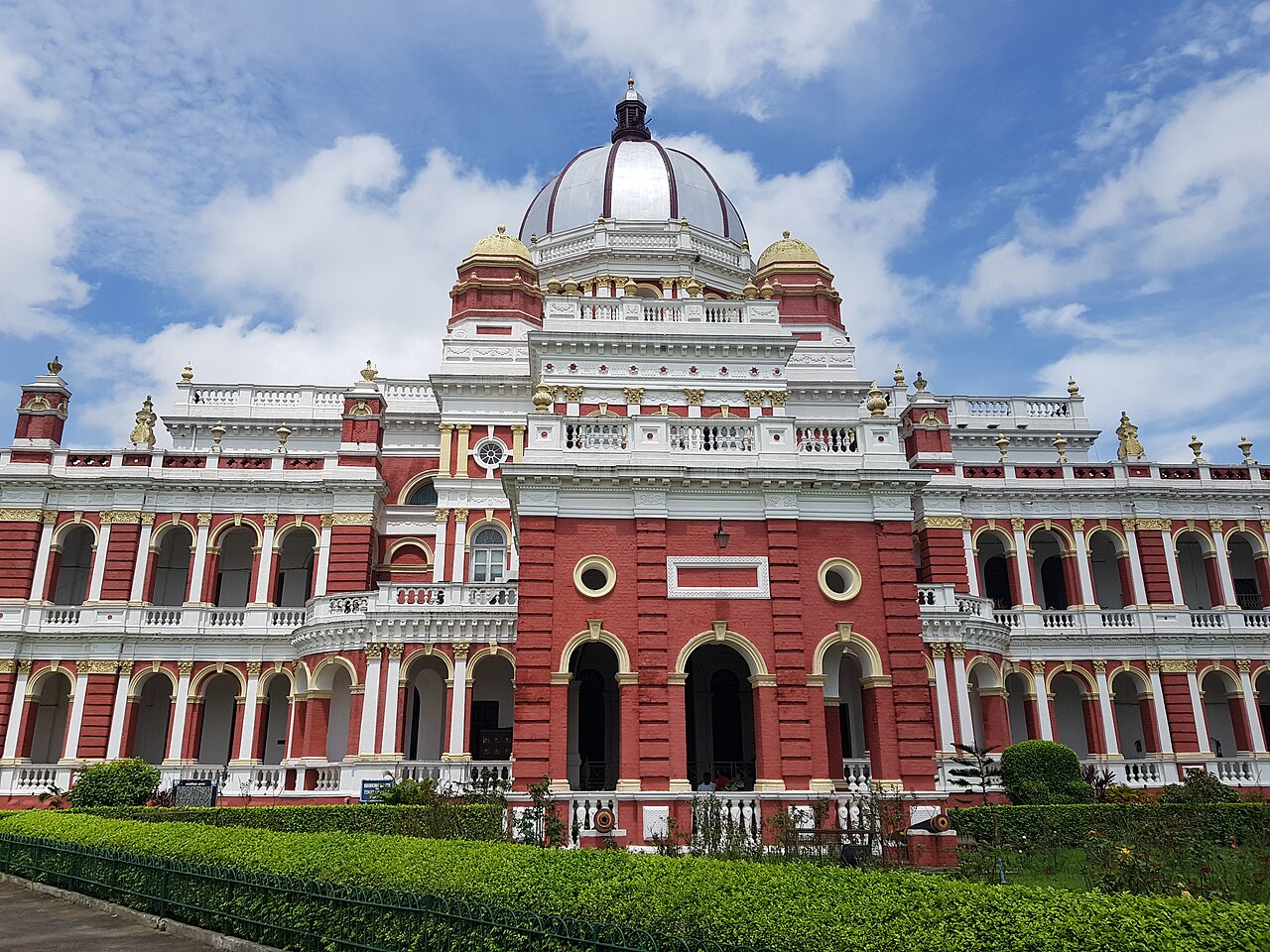
This choice reflected the cosmopolitan outlook of the ruler and the spirit of an age when many Indian princes embraced European architecture as a mark of modernity. At Cooch Behar, that impulse produced one of the most thoroughly European palaces in eastern India.
The result is a building that would not look out of place in a European capital, yet remains unmistakably the creation of an Indian maharaja. Its grandeur speaks of a dynasty that sought to meet the royalty of Europe on equal terms.
As you take in the facade, keep this inspiration in mind. Cooch Behar is a vivid monument to an age when the princes of India looked westward with confidence, building palaces to rival those of the great powers.
The comparison with the great palaces of Europe was a deliberate statement of ambition, and the building lives up to it in both scale and grandeur.
Yet for all its European inspiration, the palace belongs firmly to its Indian setting, a hybrid creation of a confident age.
Visitors familiar with the royal residences of Europe often feel a jolt of recognition here, finding their forms transplanted to the Bengal plains.
The building’s European character was no mere imitation but a confident statement of the kingdom’s place in a connected world.
It remains one of the most thoroughly European palaces to be found anywhere in eastern India.
To encounter it unexpectedly, far from the capitals that inspired it, is one of the quiet surprises of travel in eastern India.
The ambition behind the comparison is itself revealing, a sign of a dynasty that measured itself against the greatest in the world.
The Soaring Central Dome
The crowning feature of Cooch Behar Palace is its great central dome, a soaring structure that rises above the building and dominates its silhouette. Elegant and imposing, the dome is said to have been inspired by the classical domes of Europe, and it gives the palace its most distinctive feature.

The dome crowns the grand entrance and the central hall beneath it, lending the whole building a sense of height and majesty. From across the grounds, it is the dome that draws the eye, announcing the grandeur of the palace from afar.
Beneath the dome lies one of the most impressive spaces in the palace, a soaring hall designed to receive visitors in appropriate state. The interplay of height, light and classical ornament creates an atmosphere of real magnificence.
For many visitors, the dome is the defining image of Cooch Behar, a symbol of the palace’s European aspirations and of the ambition of the dynasty that raised it. It remains the building’s most celebrated and recognizable feature.
Rising high above the surrounding plains, the dome can be seen from a considerable distance, a beacon announcing the seat of the kingdom.
Its elegant form remains the single most memorable feature of the whole palace.
To stand beneath it and look up is to grasp at once the scale of ambition that drove the whole design.
In the changing light of the day, the dome takes on different moods, from bright splendor under the sun to a softer dignity at dusk.
It is, quite simply, the feature by which the palace is known and remembered.
Few architectural features in eastern India are as instantly recognizable, and none says ‘Cooch Behar’ so completely.
Beneath it, the central hall gathers the light into a space of real majesty, the heart of the whole palace.
Grand Interiors and Fine Detail
Step inside Cooch Behar Palace and you enter a world of classical grandeur. The interiors were designed in the European manner, with grand halls, elegant staircases and finely detailed ornament reflecting the taste and ambition of the Koch court.
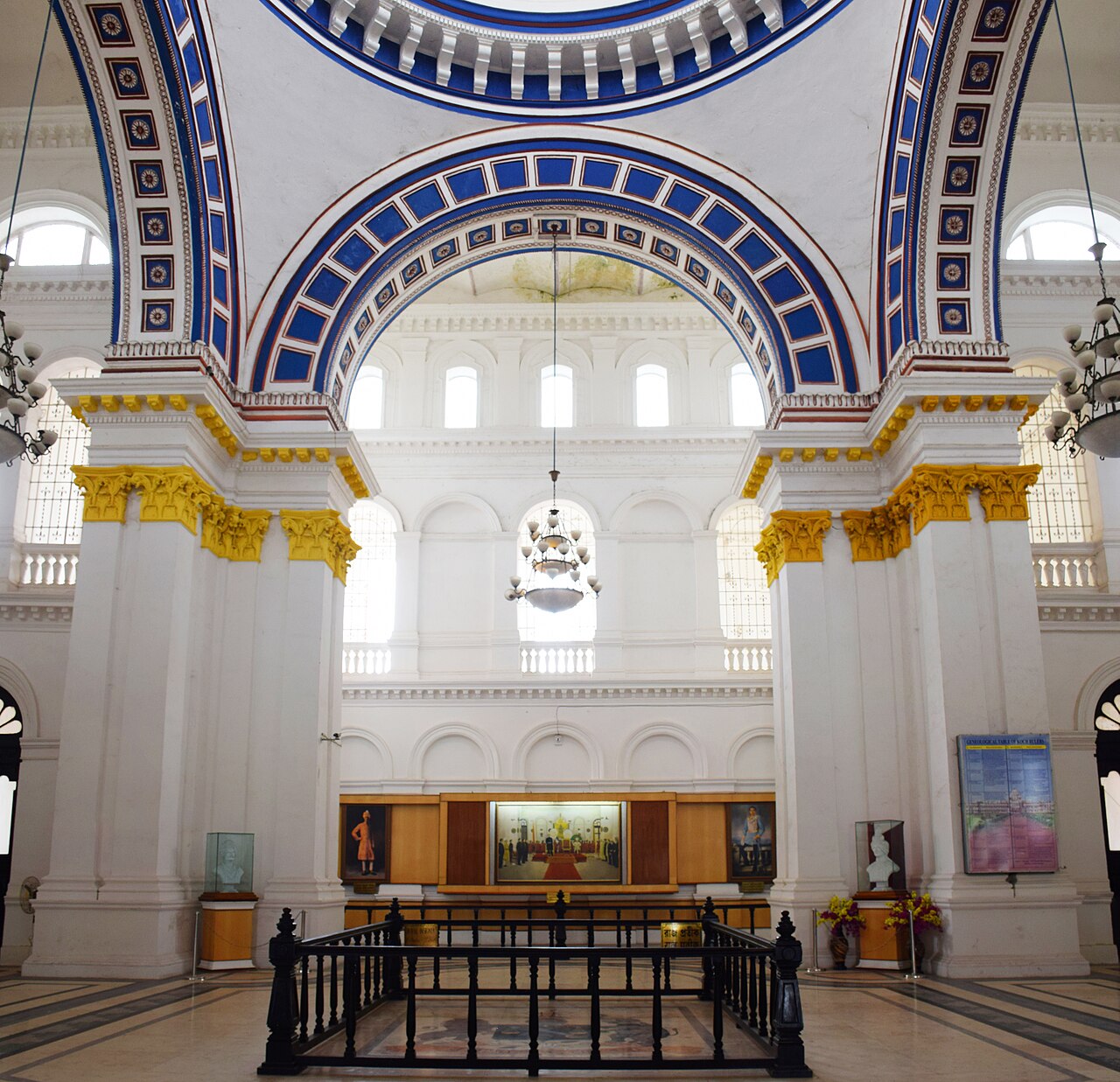
Among the highlights are the beautifully crafted details that adorn the building, from decorative glasswork to ornamental plasterwork and fine fittings. These touches reveal the care lavished on the palace and the skill of those who built it.
The grand rooms were designed for the life of a modern royal court, from formal receptions to the daily business of the kingdom. Each space reflects the blend of European elegance and royal dignity that defined the palace.
Wandering these interiors, you appreciate the sophistication of the Cooch Behar court. The palace was built for a life of elegance and modernity, and its rooms still convey that sense of confident, cosmopolitan refinement.
The craftsmanship of the fittings and finishes reflects the resources and taste the dynasty brought to the project.
Each hall was designed to impress visitors with the modern sophistication of the Cooch Behar court.
To move through them is to trace the tastes of a court that embraced the elegance of the wider world.
The grand staircase and reception rooms were designed to impress, each contributing to an atmosphere of modern royal dignity.
Even today, the interiors convey the confident sophistication of the court that created them.
In their scale and detail, the interiors fully match the grandeur promised by the palace’s imposing exterior.
It is in these grand rooms that the palace’s European character is felt most strongly, a world away from its frontier setting.
To wander them unhurried is the surest way to appreciate the ambition and refinement of the Cooch Behar court.
Etched Glass and Craftsmanship
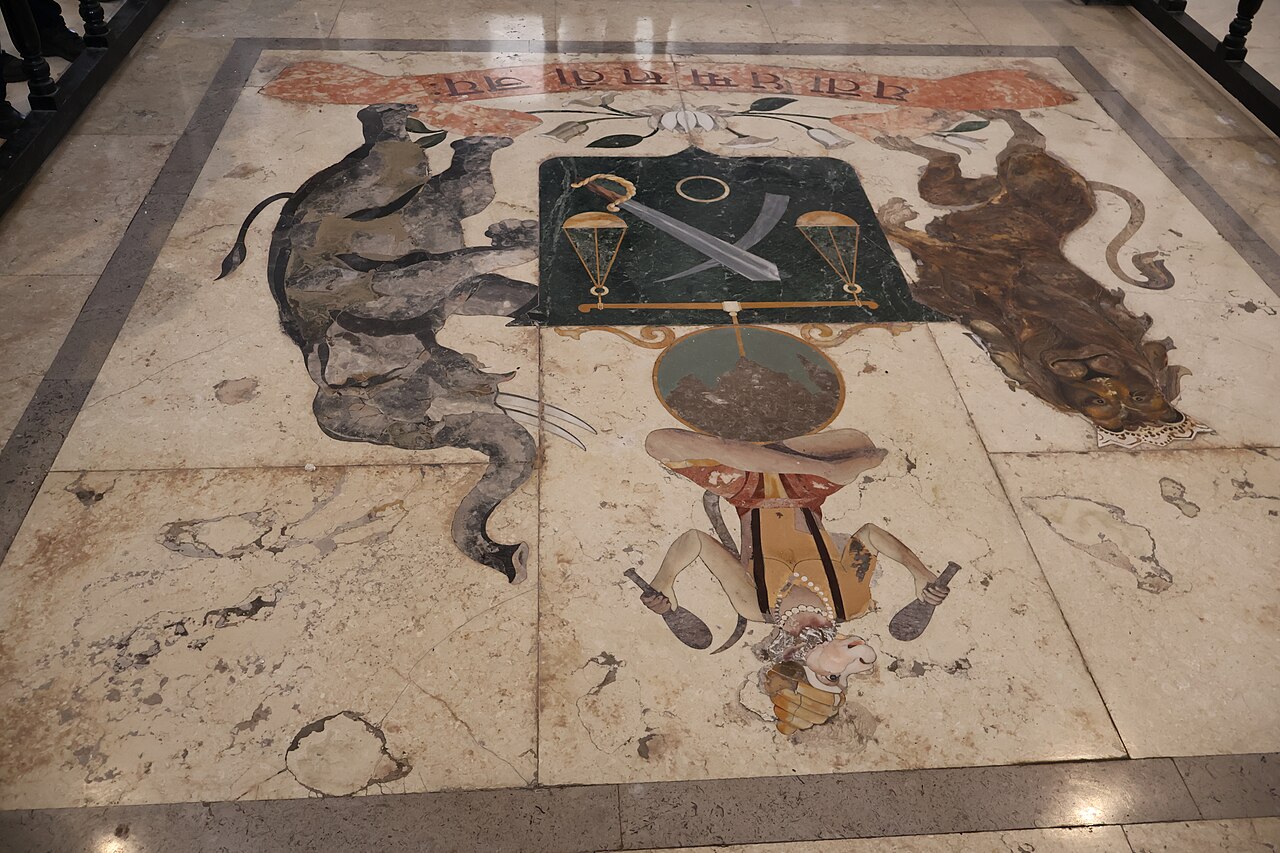
Among the most beautiful details of Cooch Behar Palace are its finely crafted ornaments, including exquisite etched glass panels that adorn its doors and fittings. These delicate works reveal the artistry that went into the building and the taste of those who commissioned it.

Such craftsmanship was a mark of the palace’s quality, combining imported techniques and materials with skilled workmanship. The attention to detail throughout the building speaks of a royal house that valued beauty as well as grandeur.
These ornamental touches reward the attentive visitor, who will find delight in the small details as well as the grand spaces. They are part of what gives the palace its character and its charm.
For those who explore the building closely, the craftsmanship of Cooch Behar is a quiet pleasure, a reminder that the palace was a work of art in its details as well as its overall design.
The etched glass in particular catches the light beautifully, casting delicate patterns through the palace’s grand spaces.
Such refinements show that the builders cared as much for beauty in the details as for grandeur in the whole.
These are the touches that reward a slow and attentive exploration of the building.
For the visitor, these quiet details are among the most rewarding discoveries the palace has to offer.
Each delicate panel is a small masterpiece, a reminder that the palace was conceived as a work of art in every detail.
Together, these refined details complete the picture of a palace built with care at every scale, from the grand dome to the smallest pane of glass.
The Remarkable Women of the Court
The story of Cooch Behar is enriched by the remarkable women associated with its royal house. The palace was home to maharanis celebrated for their intelligence, their beauty and their role in reform and society, figures who became famous well beyond their frontier kingdom.

These women played important roles in the social and cultural life of their time, some championing education and reform, others becoming icons of style and grace admired across India. Their stories add a vivid human dimension to the palace’s history.
The connections of the Cooch Behar royal house extended through marriage and friendship to other great families of India, weaving the frontier kingdom into the wider tapestry of Indian royalty. The palace was a center of this cosmopolitan world.
Understanding these figures enriches a visit. Cooch Behar was not only a building of grand architecture but the home of a remarkable family whose women, in particular, left a lasting mark on their age.
Through their marriages and friendships, the women of Cooch Behar linked the kingdom to other great royal houses across India.
Their influence extended into reform, culture and society, making them figures of real consequence in their age.
Their stories remain among the most compelling threads in the history of the palace.
Their legacy lends the palace a warmth and humanity that its grand architecture alone could never convey.
To learn their stories is to discover one of the most human and compelling aspects of the palace’s rich history.
Among them, the connections to other royal houses of India wove Cooch Behar into a wider world of princely glamour and reform.
Their lives, spanning tradition and modernity, mirror the character of the palace itself.
Their enduring fame ensures that the human story of Cooch Behar is remembered alongside its grand architecture.
A Palace Near the Himalayas
The Cooch Behar Palace enjoys a beautiful setting in the far north of Bengal, where the plains give way to the foothills of the Himalayas. This location, between the fertile lowlands and the distant mountains, gives the kingdom and its palace a distinctive character.

The surrounding region is one of rivers, forests and rich farmland, long valued for its natural abundance. The palace sits at the heart of this landscape, the seat of a kingdom shaped by the land and waters around it.
The proximity of the Himalayan foothills lends the area a scenic grandeur, and the palace forms a striking human counterpoint to the natural beauty of its surroundings. Together they create a memorable setting.
For the visitor, appreciating this setting enriches the experience. Cooch Behar is a palace of the frontier, where the architecture of Europe meets the landscapes of the eastern Himalayas.
The rivers that lace the region have long shaped life here, bringing both fertility and, at times, the challenge of floods.
Against this backdrop of water, forest and distant mountains, the classical palace strikes a memorable contrast.
It is a setting that lends the whole site a particular beauty and character.
Few palaces anywhere enjoy so dramatic a natural backdrop as the distant Himalayan foothills.
The abundance of the surrounding land long sustained the kingdom, and its beauty still lends the palace a memorable setting.
To see the classical facade against the backdrop of the northern landscape is to understand the unique character of Cooch Behar.
It is a palace of the frontier in the truest sense, where the elegance of Europe meets the wild beauty of the eastern Himalayas.
The meeting of plains and mountains here has always lent the region a special atmosphere, which the palace shares.
In few other places does classical European architecture sit so strikingly amid the landscapes of the eastern Himalayan foothills.
On clear days, with the mountains faint on the horizon, the palace seems to bridge two worlds, the ordered elegance of its architecture and the wild grandeur of the frontier beyond.
A Protected Monument and Museum
Today the Cooch Behar Palace is a protected monument, cared for and preserved as an important part of India’s architectural heritage. Much of the building functions as a museum, allowing visitors to explore its grand spaces and learn the story of the Koch dynasty.
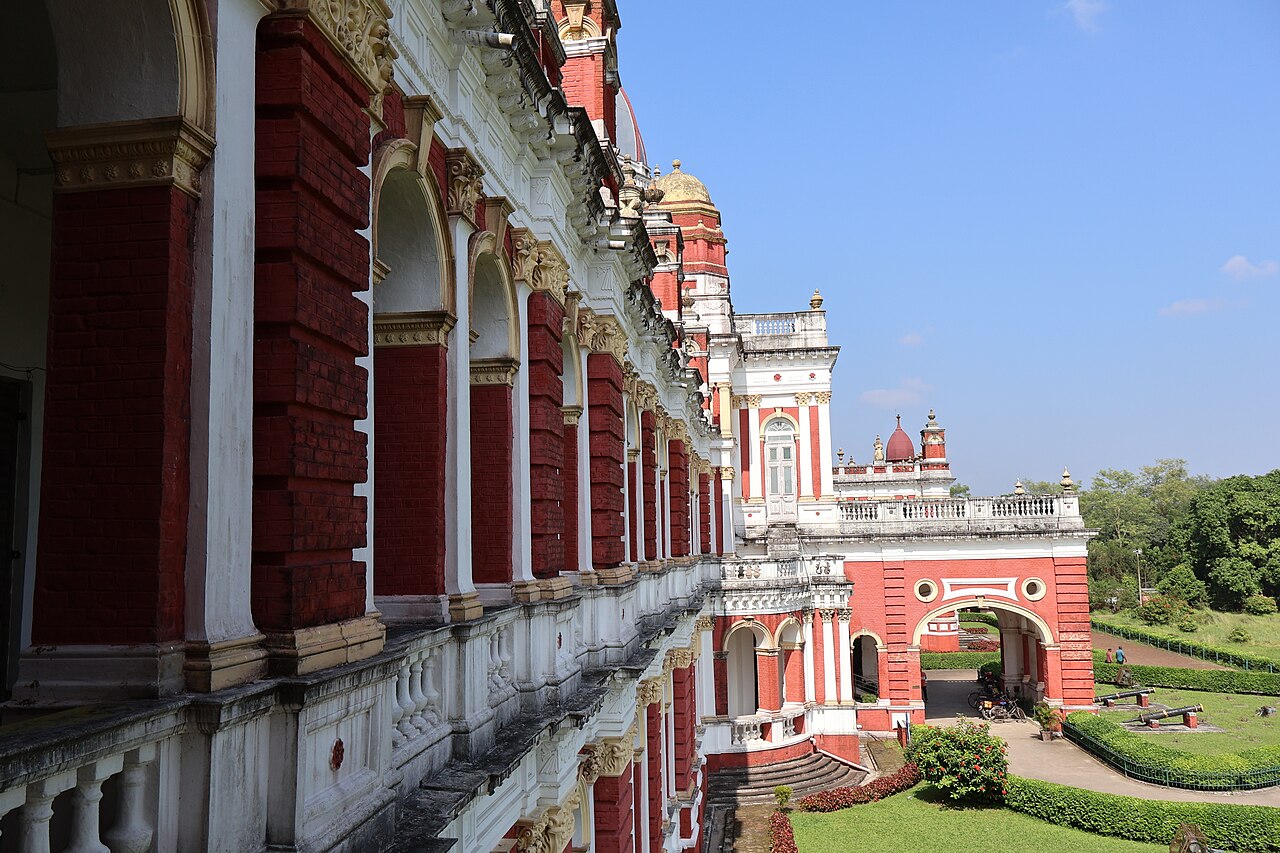
The protection and preservation of the palace reflect the deep value placed on it as a monument of history and architecture. Its care ensures that this remarkable building will endure for future generations to admire.
Through its displays and its very fabric, the palace tells the story of the kingdom and the dynasty that built it, from its frontier origins to its embrace of the modern world. It is both a treasure and a record of a remarkable royal house.
For the visitor, the museum is the gateway to the palace’s wonders, offering a carefully preserved journey through the grandeur and history of the Cooch Behar court.
The displays guide visitors through the splendor of the palace and the history of the dynasty that created it.
Its status as a protected monument ensures that its future is secure for generations to come.
A visit to the museum is, in effect, a journey into the history of one of India’s most fascinating frontier kingdoms.
It stands today among the most distinguished palace-museums of eastern India, a fitting guardian of the Koch legacy.
For many visitors, exploring the palace-museum is the highlight of a journey into the northern reaches of Bengal.
Its careful preservation stands as a model of how a historic palace can be kept alive for the enjoyment of all.
A Court of Sport and Shikar
The maharajas of Cooch Behar were renowned across India for their love of sport and, above all, for their prowess in the great shikar expeditions of the frontier. The kingdom’s forests and grasslands teemed with game, and the royal hunts became famous far and wide.

These expeditions were grand affairs, meticulously organized and often attended by distinguished guests from India and abroad. They reflected both the natural abundance of the kingdom and the adventurous spirit of its rulers.
The culture of sport and the outdoors was an important part of life at the Cooch Behar court, complementing the European refinement of the palace with a vigorous, frontier energy. It gave the dynasty a distinctive character among India’s royal houses.
Records and accounts of these hunts contributed to the fame of the kingdom, and they remain a colorful part of its history. They speak of a court at home both in the drawing rooms of Europe and in the wild landscapes of the frontier.
For the visitor, recalling this heritage adds another dimension to the palace. Cooch Behar was the seat of a dynasty that combined cosmopolitan elegance with a deep connection to the land and its wildlife.
The fame of these expeditions spread the name of Cooch Behar far beyond its borders, adding to the mystique of the kingdom.
To imagine those grand expeditions setting out from the palace is to glimpse the adventurous spirit of the dynasty.
It was a world of both courtly refinement and frontier vigor, and the palace was its elegant heart.
The contrast between drawing-room elegance and frontier adventure gives the Cooch Behar story its unique flavor.
Today those days of grand expeditions belong to history, but their memory still colors the romance of the kingdom.
They remind us that the Cooch Behar court was as much at home in the wild as in the drawing room.
This blend of refinement and adventure remains one of the most appealing aspects of the Cooch Behar story.
The kingdom’s forests were among the richest hunting grounds in India, and the royal expeditions that set out from the palace were famous across the country.
A Closer Look on Film
To appreciate the full grandeur of Cooch Behar Palace, from its soaring dome to its elegant interiors, film offers a fine complement to a visit. The short video below helps bring the palace and its setting to life.
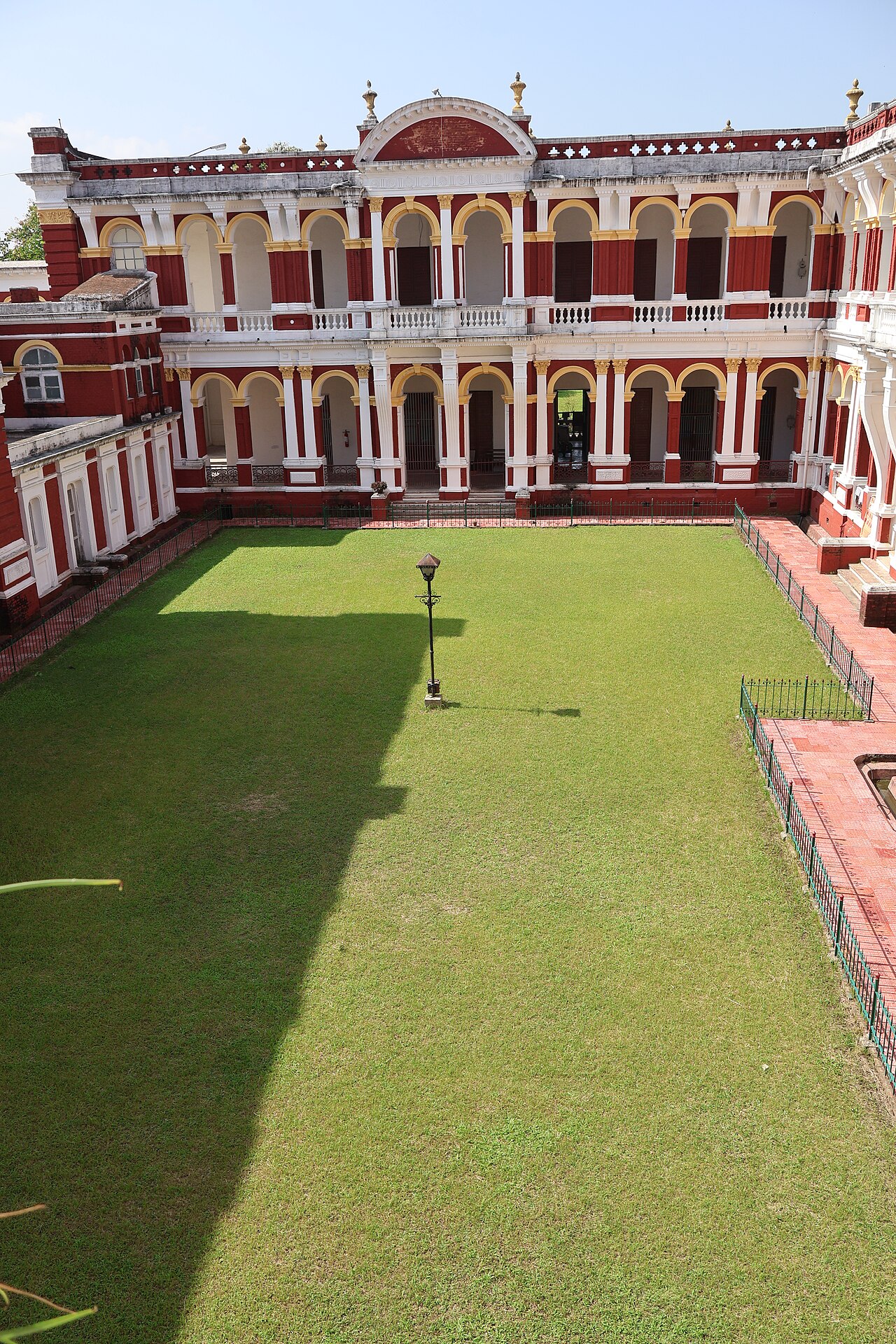
Watching it, you can better sense the scale of the architecture, the beauty of the dome and the atmosphere of the grounds, details that reward a closer look. It makes an ideal companion to understanding this distinguished palace.
Cooch Behar Palace Today
Today the Cooch Behar Palace endures as one of the most distinguished historic buildings in eastern India, a proud symbol of the Koch dynasty and of a frontier kingdom that embraced the modern world. Its European grandeur and soaring dome continue to impress all who visit.
For travelers, the palace offers a rewarding encounter with a lesser-known chapter of India’s royal history. To stand before its classical facades, so far from the capitals that inspired them, is to feel the reach and ambition of a remarkable dynasty.
There is a lesson in the endurance of Cooch Behar. It shows how the heritage of a frontier kingdom can be preserved and shared, kept alive as a monument and museum for future generations to admire.
When you finally turn to leave, glance back at the great dome rising above the lawns. You will carry with you the image of a European palace set on the edge of the Himalayas, and a vivid sense of a dynasty that confidently embraced the wider world.
Long after leaving, travelers find the image of the great dome rising above the lawns returning to mind, a lasting symbol of a bold and cosmopolitan dynasty.
Its continued preservation ensures that the story of this remarkable kingdom will endure for future generations.
For anyone drawn to the lesser-known corners of India’s royal history, the palace is a rewarding and memorable destination.
Whatever route brings you here, Cooch Behar rewards the journey with a glimpse of a confident and cosmopolitan dynasty.
In its grand dome and classical halls, the ambition of a remarkable dynasty lives on for all who come to see it.
It endures, in the end, as a proud reminder that India’s royal heritage extends far beyond its most famous capitals, into frontier kingdoms of real distinction.
To stand before its dome today is to be reminded of how far the ambition of a frontier kingdom once reached.
And so the Cooch Behar Palace endures, its great dome rising over the northern plains, keeping alive the memory of a bold and cosmopolitan kingdom.
For the traveler willing to journey to this northern corner of Bengal, the reward is an encounter with one of India’s most unexpected and distinguished palaces.
View the location on Google Maps
Palaces Nearby
If the frontier grandeur of Cooch Behar has deepened your love of India’s princely palaces, two more royal residences of the subcontinent make fitting companions to this one.
- the Jai Vilas Mahal of Gwalior, the Scindia palace of colossal chandeliers and a solid silver train.
- Rambagh Palace in Jaipur, the garden jewel and glamorous home of the maharajas of Jaipur.
You May Like
Konopiste the Bohemian Castle of a Doomed Archduke