Deep in the Hungarian countryside stands a palace so grand that it was called the Hungarian Versailles, the vast baroque and rococo residence built by the fabulously wealthy Esterhazy princes at Fertod. But Esterhazy is famous for more than its architecture, for within these walls the great composer Joseph Haydn spent much of his career, creating some of the greatest music ever written in the service of his princely patron.
The palace was the creation of a prince whose wealth and love of magnificence earned him a memorable nickname, and who spared no expense in building a residence to rival the greatest courts of Europe. He filled it with art, entertainment, and above all music, making Esterhazy one of the most brilliant cultural centers of its age.
This is the third and final article in a set on the grand palaces of Hungary, following Godollo and Festetics. Esterhazy crowns the series with its sheer scale, its rococo splendor, and its extraordinary musical legacy. By the end you will understand why this Hungarian Versailles, where Haydn made music for a prince, holds such a special place in the cultural history of Europe.
In This Article
- Arriving at the Hungarian Versailles
- The Richest Family in Hungary
- The Prince Who Built a Palace
- A Palace to Rival Versailles
- The Rococo State Rooms
- Joseph Haydn, the Court Composer
- The Opera House and Marionette Theatre
- The Story of the Farewell Symphony
- Legendary Festivities and Splendor
- The Grand Gardens
- Decline and Restoration
- Esterhazy on Film
- Visiting Esterhazy Today
Arriving at the Hungarian Versailles

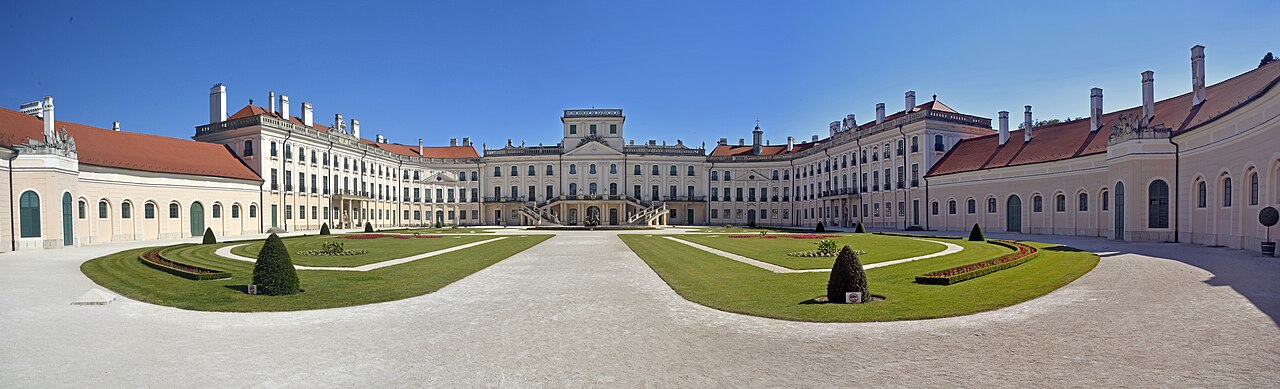
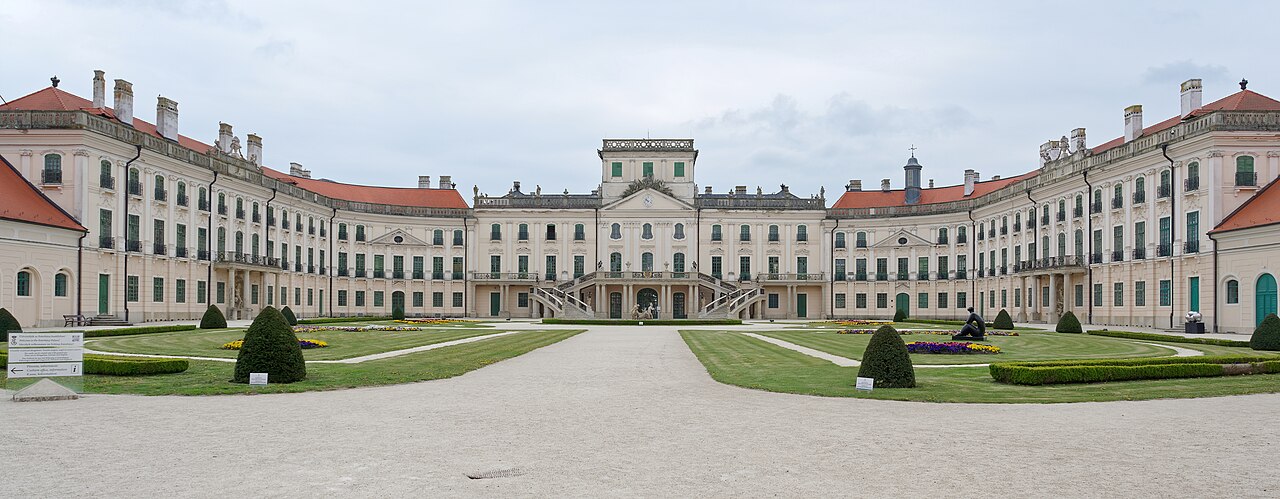
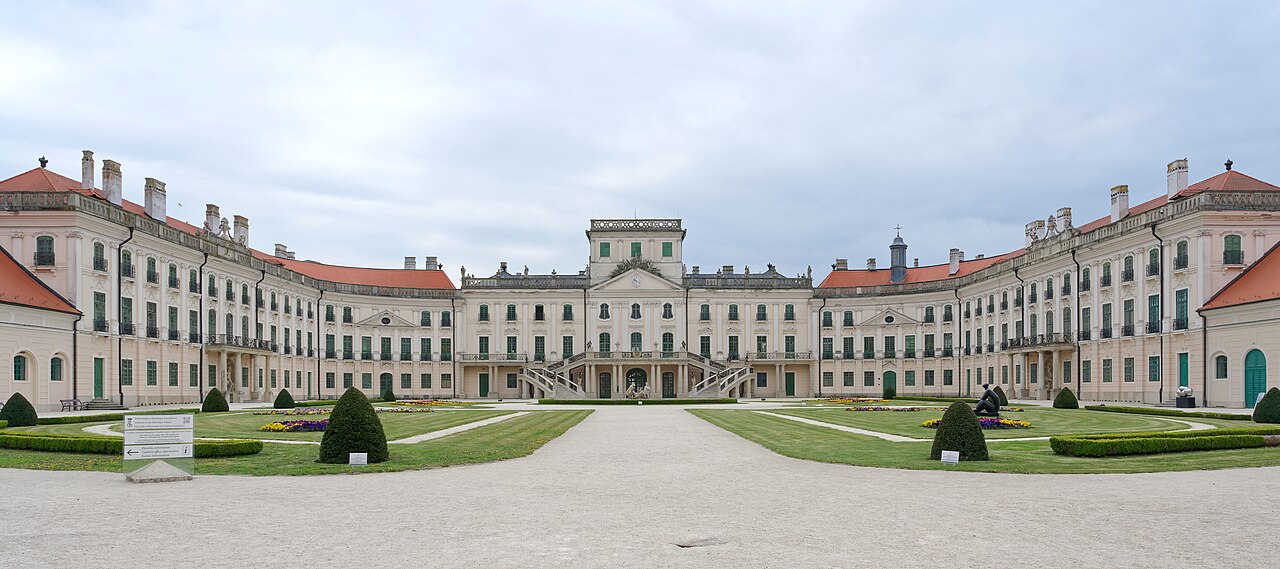
The Esterhazy Palace at Fertod makes an overwhelming first impression, a vast baroque and rococo residence spreading its wings across a great forecourt, richly ornamented and painted in warm tones. Its scale and splendor justify its nickname as the Hungarian Versailles, a palace conceived to rival the grandest in Europe.
The approach, through grand gates and across the forecourt, builds a sense of anticipation, drawing the eye toward the ornate central block with its sweeping wings. Everything about the composition speaks of ambition and magnificence, the creation of a prince determined to proclaim his wealth and taste on the grandest scale.
Set in the Hungarian countryside, the palace seems all the more remarkable for its remote location, a dazzling monument to princely splendor rising from the rural landscape. This setting, far from any great city, was part of its character, a self-contained court created by the will and wealth of a single extraordinary patron.
As you arrive, take in the sheer scale and ornamental richness of the palace. Understanding Esterhazy as the creation of one of the wealthiest and most magnificent princes of his age, and as a center of art and music, prepares you for the splendor within and for the remarkable cultural story the palace has to tell.
The warm ornamental facades, the grand gates, and the sweeping forecourt combine to create a sense of theater, preparing the visitor for the splendor within. Few palaces in central Europe convey so vividly the ambition of the age of absolutism, when princes sought to proclaim their glory through architecture on the grandest scale.
The Richest Family in Hungary
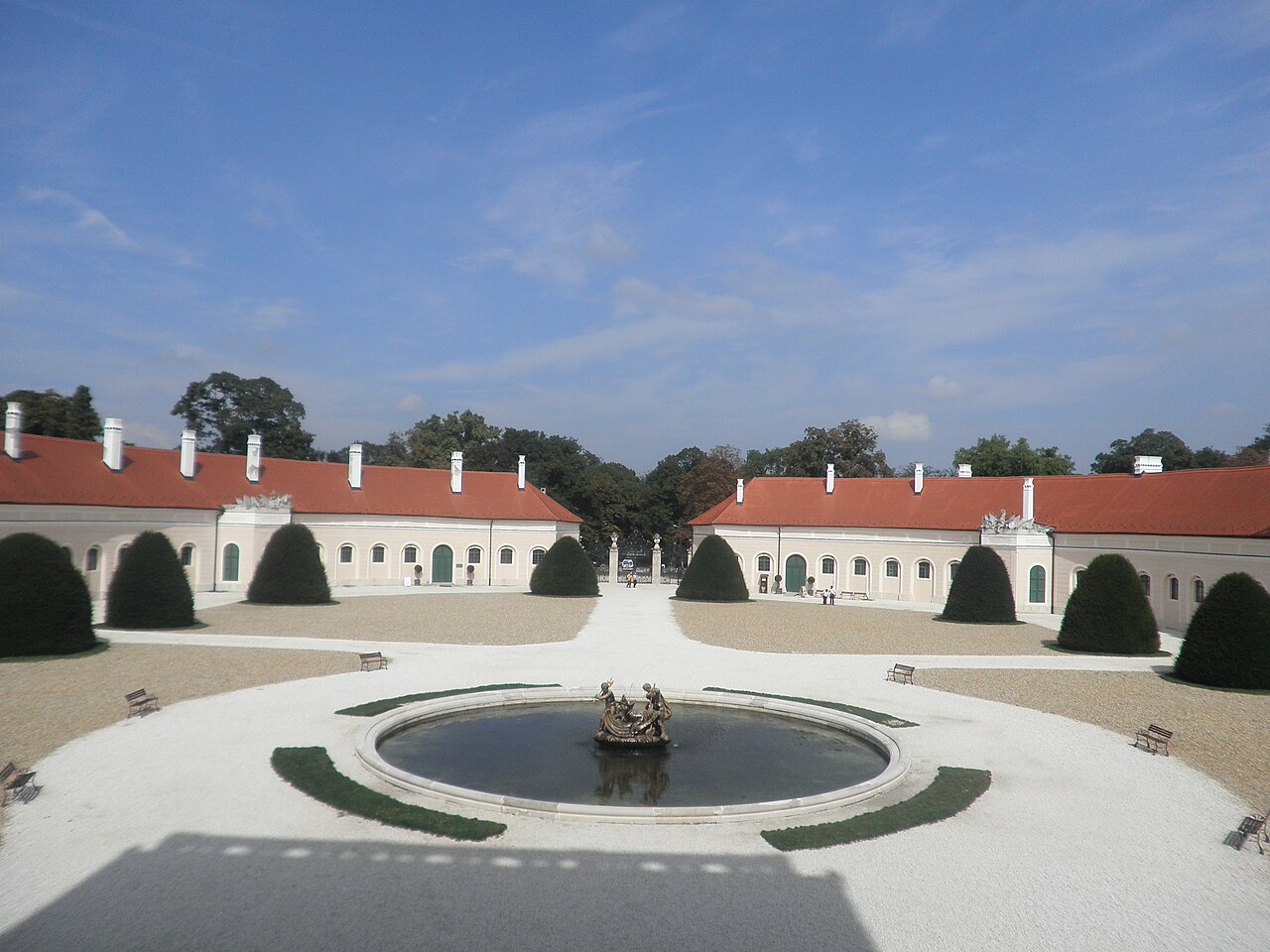
The palace was the creation of the Esterhazy family, the wealthiest and most powerful aristocratic house in Hungary. Through vast landholdings, loyal service to the crown, and advantageous marriages, the family amassed a fortune of staggering proportions, placing them among the richest nobles in all of Europe.
Their wealth allowed the Esterhazys to live on a truly princely scale, building palaces, patronizing the arts, and maintaining a court of great splendor. They were patrons of music, architecture, and culture, and their resources enabled them to realize ambitions that few other families could match.
The family’s prominence extended over centuries, during which they played leading roles in the life of Hungary and the wider monarchy. Their palaces and collections testify to their extraordinary wealth and their commitment to magnificence, and Esterhazy at Fertod was the supreme expression of these ambitions.
Understanding the family is essential to appreciating the palace. Esterhazy was built to proclaim the wealth and status of one of Europe’s richest houses, and its scale and splendor are a measure of the family’s resources and ambitions. The palace stands as a monument to a dynasty that lived and spent like royalty.
The family’s patronage of music in particular set them apart, for they maintained one of the finest private musical establishments in Europe. This commitment to the art reached its peak at Fertod, where the combination of wealth, taste, and vision produced one of the great cultural courts of the age.
The family survives to this day, and their historic foundations continue to care for parts of their vast heritage, ensuring that their legacy endures. Among the many monuments to their wealth and taste, the palace at Fertod remains the most splendid and the most famous.
The Prince Who Built a Palace
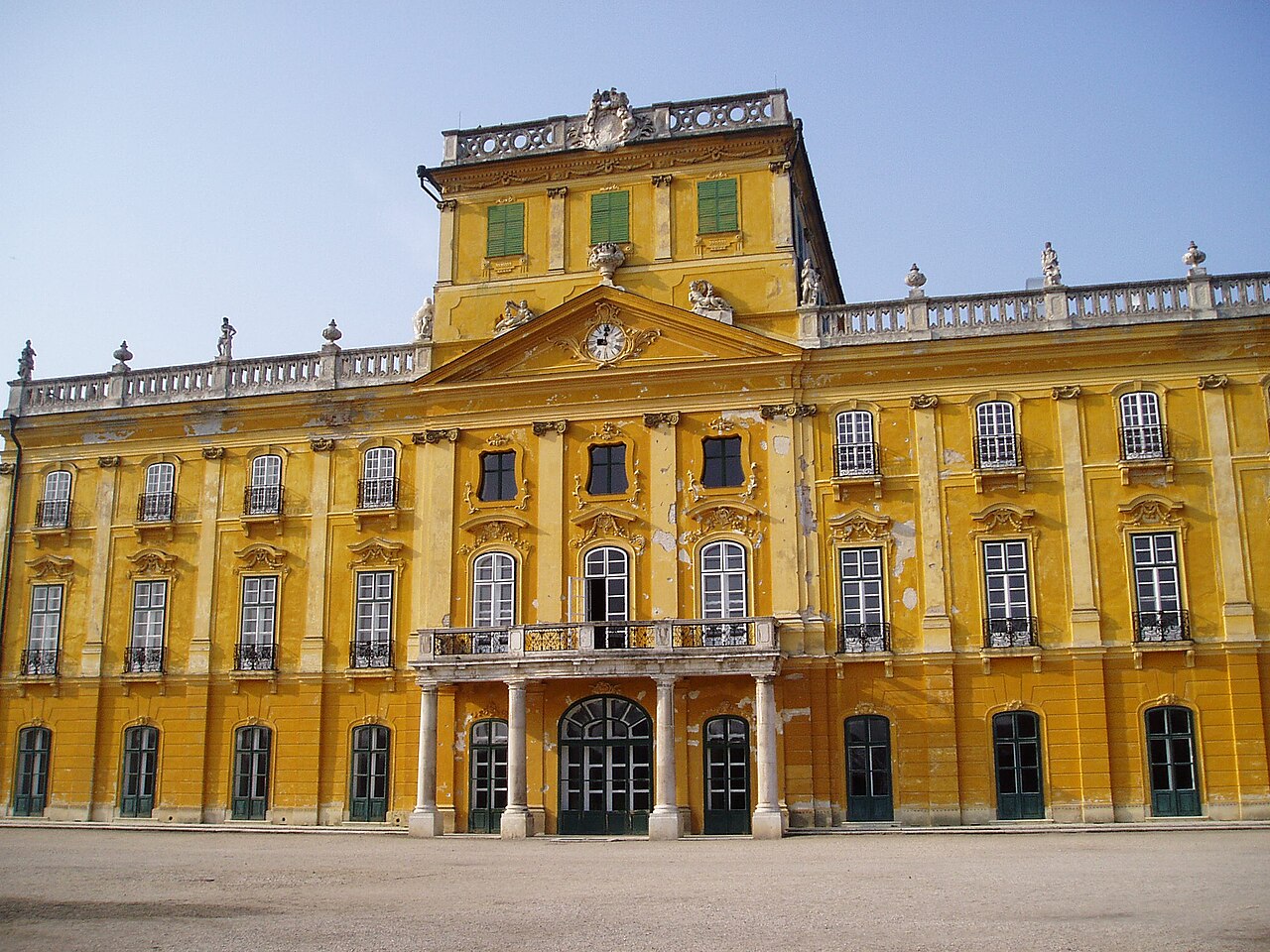
The palace at Fertod was the creation of a prince whose love of splendor earned him the epithet the Magnificent. Determined to build a residence worthy of his wealth and ambitions, he transformed an earlier house into the vast baroque and rococo palace that survives today, sparing no expense in its construction and decoration.
This prince was a man of refined taste and boundless ambition, inspired by the great courts of Europe and determined that his own should rival them. He devoted enormous resources to the palace and to the entertainments and cultural pursuits that made it famous, creating a brilliant court in the Hungarian countryside.
His patronage extended above all to music, and it was he who employed the great composer who would make the palace famous throughout the musical world. The prince’s love of the arts, combined with his wealth and ambition, made Esterhazy one of the most remarkable cultural centers of its age.
Understanding this prince is key to understanding the palace. Esterhazy is the expression of his personality and ambitions, a residence built to embody his magnificence and to provide a setting for the art and entertainment he loved. The palace stands as a monument to a patron of extraordinary vision and generosity.
His nickname was well earned, for he lived and spent on a scale that astonished even his wealthy contemporaries. Yet his magnificence was not mere extravagance; it was directed toward the creation of beauty and the cultivation of the arts, leaving a legacy that far outlasted the festivities of his lifetime.
Under his direction the court at Fertod became a magnet for artists, musicians, and distinguished guests, a brilliant center of culture in the Hungarian countryside. His vision transformed a rural estate into one of the most celebrated residences of the age, and his name remains inseparable from the glory of the palace.
A Palace to Rival Versailles

Esterhazy was consciously conceived to rival the greatest palaces of Europe, above all the French royal palace that set the standard for princely magnificence. The scale of the complex, with its grand central block, sweeping wings, opera house, and gardens, reflects this ambition, earning it the nickname of the Hungarian Versailles.
The comparison was deliberate, part of the prince’s determination to create a court worthy of comparison with the greatest in Europe. The palace was designed not merely as a residence but as a complete princely world, with everything needed for the splendid life of a great court, from state rooms to theaters and gardens.
The baroque and rococo architecture, with its ornamental richness and grand proportions, embodied the fashionable taste of the age at its most magnificent. Every element was designed to impress, from the ornate facades to the lavish interiors, creating an environment of overwhelming splendor.
For visitors, the scale and ambition of Esterhazy remain astonishing, a testament to the wealth and vision of its creator. The palace stands as one of the grandest baroque residences in central Europe, a Hungarian answer to the great courts of the age and a monument to princely magnificence.
The decision to build on such a scale in a relatively remote location was itself a statement of confidence and ambition, a declaration that the Esterhazy court could create its own center of brilliance far from any capital. The palace drew the fashionable world to the Hungarian countryside, if only for its celebrated festivities.
Visitors familiar with the great palaces of western Europe are often surprised to find so magnificent a rival in the Hungarian countryside, a testament to the wealth and ambition of the Esterhazy princes. The palace stands as proof that the splendor of the age was not confined to the famous capitals but flourished wherever a great patron willed it.
The Rococo State Rooms

Inside, the palace presents a sequence of splendid state rooms decorated in the rococo style, with gilding, painting, fine materials, and ornamental richness creating interiors of great beauty. From the grand ceremonial hall to the more intimate apartments, the rooms display the taste and wealth of the princely owners.
The decoration reflects the rococo love of delicacy, playfulness, and ornament, combined with the grandeur appropriate to a great princely residence. Painted ceilings, gilded detailing, and fine furnishings created settings of dazzling splendor, worthy of the entertainments and ceremonies that took place within them.
Particular spaces, such as the grand hall and the ceremonial rooms, were designed as settings for the brilliant social and cultural life of the court, including the famous musical performances. The interiors provided a magnificent backdrop for the festivities that made Esterhazy renowned throughout Europe.
Much of the palace suffered in later years, and restoration has worked to recover the splendor of these interiors. Walking through the restored state rooms, visitors can appreciate the beauty of the rococo decoration and imagine the brilliant court life that once filled these halls with music and festivity.
The grand ceremonial hall, with its painted ceiling and rich decoration, served as the setting for the most important occasions, including concerts and balls. Its splendor matched the brilliance of the entertainments held within it, creating an environment where art, music, and architecture came together in perfect harmony.
The quality of the craftsmanship throughout the interiors reflected the prince’s insistence on the finest work, drawing on skilled artists and artisans to realize his vision. Even in their restored state, the rooms convey the extraordinary ambition and refinement that made Esterhazy a byword for splendor.
Joseph Haydn, the Court Composer
The greatest glory of Esterhazy is its association with Joseph Haydn, one of the supreme composers in the history of music, who served the Esterhazy princes for much of his career. For around three decades Haydn worked as the court composer, and much of his vast output was created in the service of his princely patrons.
Haydn’s long employment at the Esterhazy court was extraordinarily productive, and the palace provided the setting and the resources for his work. With an orchestra, singers, and the opera house at his disposal, he composed symphonies, operas, chamber music, and much more, developing the forms that would shape the course of Western music.
The relationship between the composer and his patrons was central to his career, providing him with security, resources, and the opportunity to experiment and develop his art. In return, Haydn brought unparalleled musical brilliance to the court, making Esterhazy famous throughout the musical world.
For music lovers, the association with Haydn makes Esterhazy a place of pilgrimage. It was here that one of the greatest composers created much of his finest work, and the palace preserves the memory of this extraordinary partnership between genius and patronage, one of the most fruitful in the history of music.
During his long service, Haydn developed from a talented musician into one of the towering figures of Western music, often called the father of the symphony and the string quartet. The stability and resources of the Esterhazy court gave him the freedom to experiment and to perfect his art, and the results transformed the course of musical history.
Isolated at times in the countryside, Haydn later reflected that this very seclusion had forced him to become original, as he had no one nearby to imitate. The palace thus played a direct role in shaping his distinctive genius, making Esterhazy a cradle of some of the greatest music ever written.
The music composed here spread the fame of both the composer and his patrons far beyond Hungary, carrying the name of Esterhazy into concert halls across Europe and, eventually, the world. In this sense the palace’s greatest export was not an object but an art, the enduring music created within its walls.
The Opera House and Marionette Theatre

Among the most remarkable features of the palace were its theaters, including an opera house and a marionette theatre, which hosted performances that were central to the cultural life of the court. These venues allowed the prince to indulge his love of music and spectacle, and they provided the setting for Haydn’s operatic works.
The opera house was a magnificent venue where operas, many composed or directed by Haydn, were performed for the court and its guests. Opera was among the grandest entertainments of the age, and the Esterhazy opera house allowed the court to enjoy performances of a quality rivaling the great theaters of Europe.
The marionette theatre added a further dimension to the entertainments, offering puppet performances that delighted audiences and showcased the inventiveness of the court’s cultural life. Together the theaters made Esterhazy a center of performance and spectacle, as well as of music.
These venues reflect the comprehensive nature of the princely court, which provided for every kind of entertainment and cultural pursuit. The theaters were essential to the brilliant life of Esterhazy, and their association with Haydn and with the lavish festivities of the court adds to the palace’s extraordinary cultural significance.
The scale of musical activity at the court was remarkable, with regular performances requiring a steady stream of new works, many supplied by Haydn himself. The opera house in particular was a jewel of the complex, and the operas staged there placed Esterhazy among the notable musical centers of Europe.
The loss and later restoration of these theatrical spaces mirror the fortunes of the palace as a whole, and efforts to revive them honor the central role that performance once played in the life of the court. To imagine these venues filled with music and spectacle is to glimpse the brilliance of Esterhazy at its height.
The Story of the Farewell Symphony
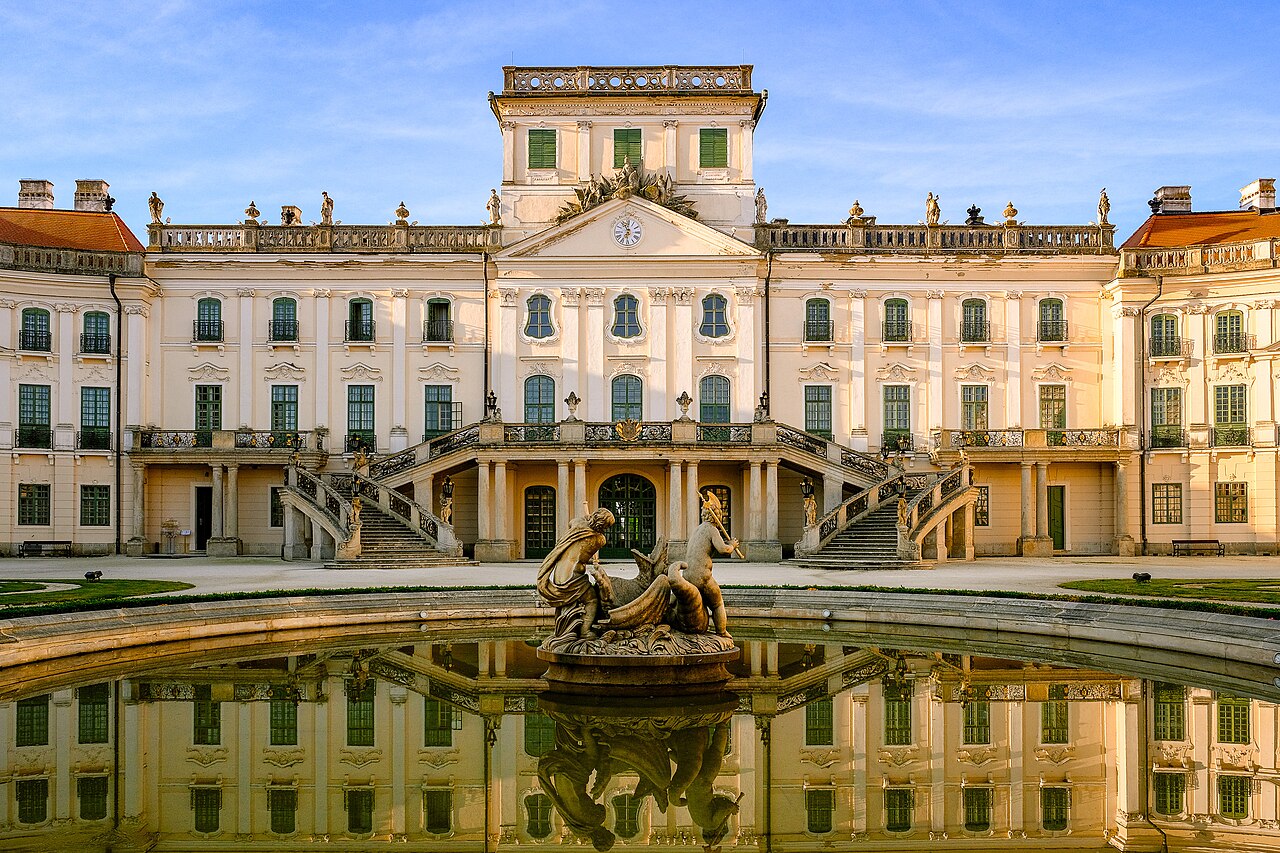
One of the most charming stories associated with Esterhazy concerns Haydn’s famous Farewell Symphony, composed, according to tradition, to send a gentle message to the prince. The tale, whether literally true or embellished over time, has become one of the best-loved anecdotes in the history of music.
According to the story, the musicians of the court had been kept long at the palace, away from their families, and Haydn composed a symphony whose final movement sees the players depart one by one, extinguishing their candles and leaving the stage, until only a few remain. The gentle hint was understood, and the court soon returned home.
The anecdote captures the close and human relationship between the composer, the musicians, and their patron, and it reflects Haydn’s wit and ingenuity. Whether or not every detail is accurate, the story has endeared the Farewell Symphony to audiences and linked it forever to the palace where it was created.
For visitors, the tale adds a delightful human touch to the grandeur of Esterhazy, a reminder that behind the splendor lay real people with their own needs and feelings. It is one of the many ways in which the palace’s association with Haydn enriches its story, connecting great music to the life of the court.
The enduring popularity of the symphony and its story has helped keep the memory of the Esterhazy court alive in the wider world, long after the festivities ended. It remains one of the most beloved pieces in the repertoire, forever linked to the palace and the remarkable partnership between composer and prince.
Legendary Festivities and Splendor
The Esterhazy court was famous for its lavish festivities, which drew guests from across Europe and dazzled all who attended. The prince hosted celebrations of extraordinary magnificence, with music, opera, feasting, fireworks, and every kind of entertainment, making Esterhazy renowned as a center of princely splendor.
These festivities were among the grandest of the age, and accounts of them spread the fame of the palace far and wide. The combination of beautiful surroundings, superb music, and lavish hospitality created experiences of unparalleled brilliance, and attending a celebration at Esterhazy was a mark of the highest favor.
The entertainments reflected the prince’s love of magnificence and his desire to create a court worthy of comparison with the greatest in Europe. They also provided the setting for Haydn’s music and for the opera performances that were central to the cultural life of the palace.
For a time, Esterhazy was one of the most brilliant courts in Europe, a place of music, art, and festivity that rivaled far larger and more famous capitals. The memory of these legendary entertainments is part of the palace’s enduring fame, evoking an age of princely splendor at its height.
Distinguished visitors, including royalty, were received with celebrations of dazzling splendor, and accounts of these occasions spread the fame of the palace throughout the continent. The combination of music, theater, feasting, and fireworks created experiences that guests remembered for the rest of their lives.
The Grand Gardens

The palace was surrounded by extensive formal gardens, laid out in the grand style of the age to complement the splendor of the building. With avenues, parterres, fountains, and ornamental features, the gardens extended the magnificence of the palace into the landscape, providing a setting worthy of the Hungarian Versailles.
The gardens were designed as an integral part of the palace’s grandeur, following the fashion for formal French-style landscapes that framed and enhanced the architecture. They provided settings for strolling, for outdoor entertainments, and for the display of the prince’s taste and wealth.
Over time the gardens, like the palace, suffered neglect and change, but restoration efforts have worked to recover something of their original splendor. The grounds remain an important part of the ensemble, essential to appreciating the palace as its creators intended.
For visitors, the gardens provide a beautiful setting for the palace and a pleasant complement to the interiors. They help convey the scale and ambition of Esterhazy as a complete princely world, in which architecture and landscape were conceived together to create an environment of overwhelming magnificence.
In their prime the gardens were adorned with statues, fountains, and ornamental buildings that extended the artistic program of the palace into the landscape. They provided a magnificent setting for outdoor festivities and a fitting frame for the grand architecture of the Hungarian Versailles.
Decline and Restoration

After the great age of the prince and Haydn, the palace entered a long period of decline. The court dispersed, the family’s attention turned elsewhere, and over the following generations Esterhazy suffered neglect and damage, its splendor fading and its fabric decaying through the difficult centuries that followed.
The twentieth century was especially hard on the palace, which endured the upheavals of war and changing regimes, and much of its former magnificence was lost. For a time the great Hungarian Versailles stood diminished and neglected, a melancholy shadow of its brilliant past.
In more recent times, however, a major restoration effort has worked to recover the palace and its splendor. Progressively, the interiors have been restored, the gardens revived, and the palace opened to visitors, bringing Esterhazy back to life as a monument to its extraordinary history.
This ongoing restoration allows visitors to experience the recovered splendor of the palace and to appreciate its remarkable story. Knowing the decline from which it has been rescued makes the restoration all the more impressive, and it ensures that the legacy of Esterhazy and Haydn is preserved for future generations.
The contrast between the palace’s brilliant heyday and its later decline is poignant, a reminder of how even the grandest creations can fade with changing times. The ongoing restoration seeks to reverse this decline and to restore Esterhazy to something of its former glory, a fitting tribute to its remarkable history.
Each phase of the restoration has recovered more of the palace’s lost splendor, and the reopening of restored rooms and spaces has been welcomed as a revival of an irreplaceable cultural monument. The work continues, promising to return still more of the Hungarian Versailles to its former glory.
Esterhazy on Film

Because Esterhazy combines architectural grandeur with a rich musical history, a video walkthrough is a fine way to appreciate it. On film you can take in the vast baroque facade, move through the rococo state rooms, and sense the scale of the palace that earned its nickname as the Hungarian Versailles.
As you watch, keep in mind the palace’s association with Haydn and the brilliant musical life that unfolded within its walls. Seeing the halls and theaters while knowing their musical history brings the story to life, connecting the splendor of the architecture to the genius of the music created here.
Video also conveys the scale of the complex and its gardens, which can be hard to grasp from still images. Following a camera through the palace and grounds, you gain a vivid sense of why Esterhazy is considered the grandest baroque palace in Hungary and one of the great cultural monuments of central Europe.
Visiting Esterhazy Today
Today the Esterhazy Palace at Fertod is open to visitors, offering the chance to explore its restored state rooms, learn its remarkable history, and appreciate its association with Joseph Haydn. Its scale, splendor, and musical legacy make it one of the most rewarding palace visits in Hungary.
The palace lies in the Hungarian countryside near the Austrian border, reached by road and often visited as part of a tour of the region. Its combination of baroque grandeur and musical history gives it a special appeal, particularly for lovers of music drawn by the connection with Haydn.
Because the palace is undergoing restoration and hosts cultural events, including concerts and a Haydn festival, it is worth checking current opening arrangements and programs before visiting. Attending a musical performance in the palace, where Haydn once made music, is an especially memorable experience.
You will find the Esterhazy Palace at Fertod in Hungary; see the map below to help plan your route: see the map below. Whether you come for the grand baroque architecture, the rococo interiors, or the extraordinary legacy of Haydn and the brilliant court he served, Esterhazy offers one of the most magnificent and culturally rich palace experiences in all of central Europe.
For those who make the journey, the palace offers a powerful sense of a vanished world of princely splendor and musical genius. The combination of grand architecture, rococo interiors, and the enduring legacy of Haydn makes Esterhazy one of the most rewarding cultural destinations in Hungary.
View the location on Google Maps
Palaces Nearby
If you are exploring the grand palaces of Hungary, these two pair naturally with a visit here:
You May Like
Konopiste the Bohemian Castle of a Doomed Archduke


One thought on “The Esterhazy Palace at Fertod, the Hungarian Versailles Where Haydn Made Music”