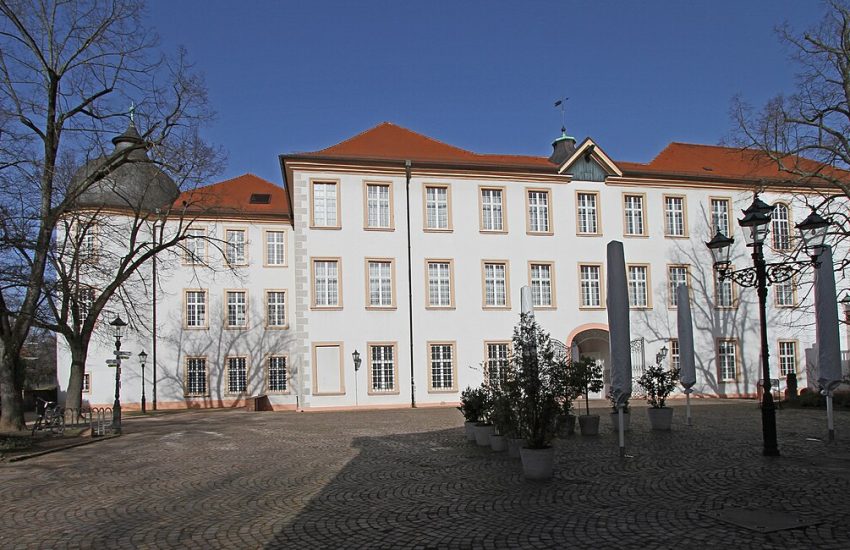
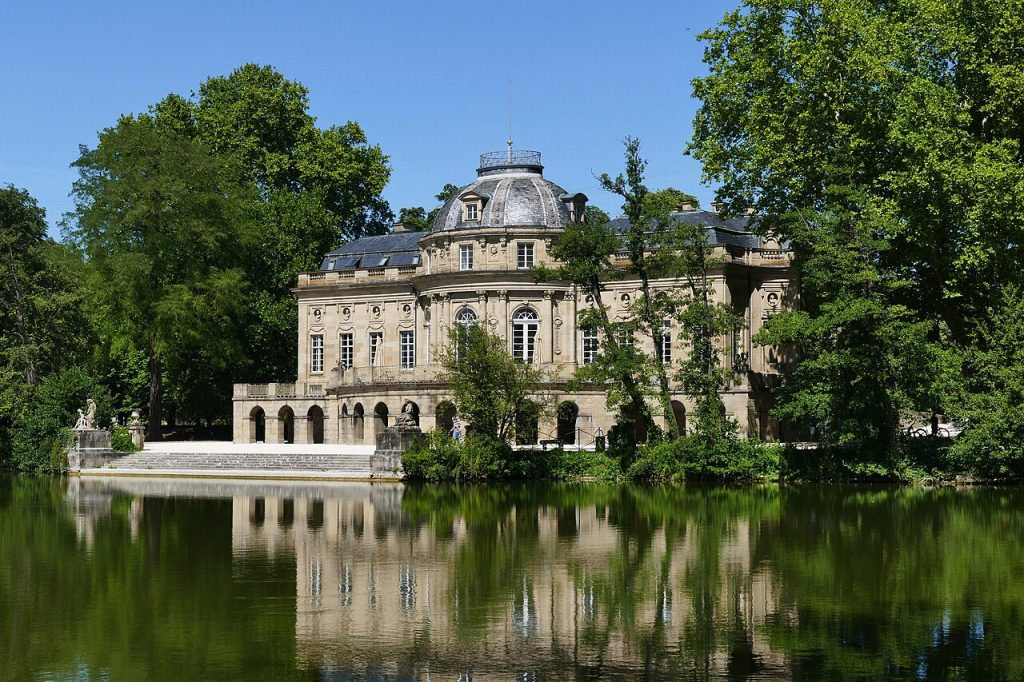
Just north of Ludwigsburg, at the edge of a shimmering lake surrounded by meadows, vineyards and old trees, stands one of the most romantic palaces in southern Germany. Monrepos Lake Palace, whose name means my rest, was begun in the 1760s for Duke Carl Eugen of Wurttemberg as a pleasure house on the water and later transformed into an elegant classical retreat by the first king of Wurttemberg.
With its domed central pavilion reflected in the lake, its curving wings and its peaceful park, Monrepos feels like a dream of the eighteenth century preserved in the present. Today it remains in the possession of the house of Wurttemberg and forms the heart of an estate with a winery, a hotel and beautiful walks.
In this article we will explore Monrepos from its origins as a ducal lake house to its royal transformation, its setting on the water and its life today, and we will finish with practical tips for your visit.
In This Article
- A Palace on the Water
- Carl Eugen and the Lake House
- Dome, Wings and Classical Grace
- The Transformation by King Frederick
- The Lake and Its Islands
- Monrepos in Summer
- Statues and Garden Buildings
- Views From the Shore
- A Palace Framed by Trees
- Avenues, Meadows and Wildlife
- The Monrepos Estate Today
- Monrepos on Video
- Visiting Monrepos Today
A Palace on the Water
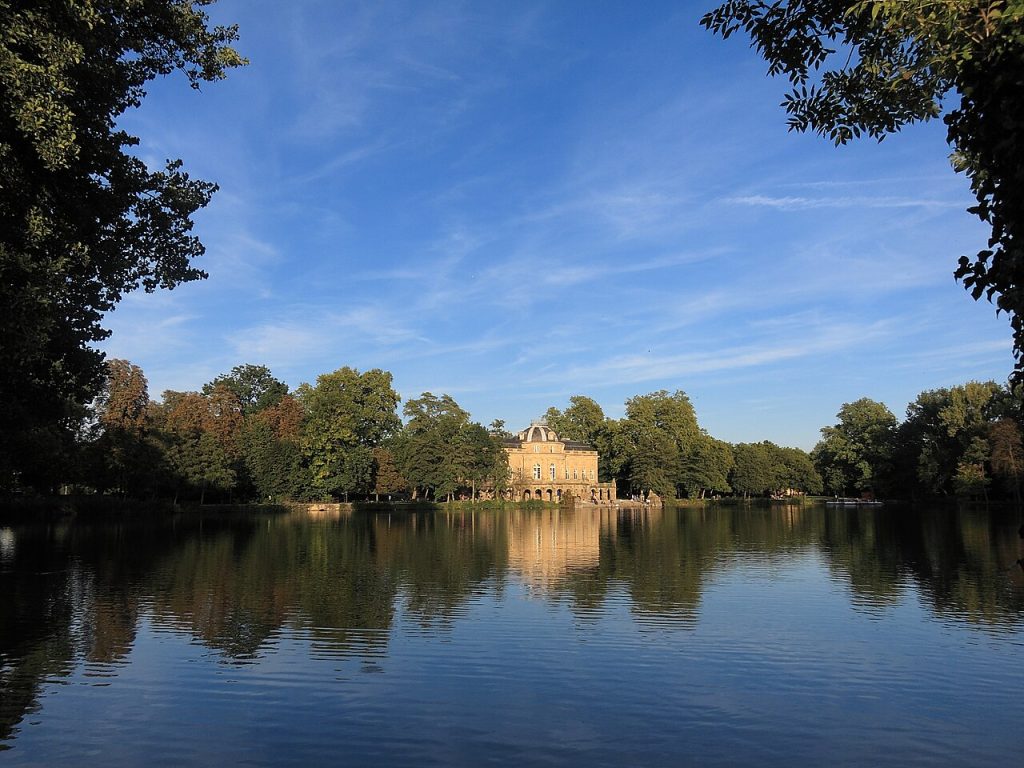
The first view of Monrepos is unforgettable. Across the calm surface of the lake, the pale palace rises from the shore, its central dome and curved wings mirrored in the water. On still mornings the reflection is almost perfect, doubling the building into a vision of symmetry.
The palace is small compared with the great residence of Ludwigsburg nearby, but its setting gives it a unique charm. Trees frame the lake, swans glide across the water and meadows stretch away toward the vineyards.
Monrepos lies only a few kilometres from the centre of Ludwigsburg, yet it feels far removed from the city, a place of calm and reflection.
What makes Monrepos special is the harmony between architecture and landscape. The palace was designed to be seen from the water and to look out over it, creating a dialogue between building and nature.
Walkers, cyclists and families come here at weekends to enjoy the lake and the park, and the estate has become one of the most popular leisure spots in the region.
Arriving early in the morning, you may have the lake almost to yourself, with only the sound of birds and the gentle movement of the water breaking the silence.
The name Monrepos suits the place perfectly. Even on busy days, there is a sense of calm here, as if the palace itself invited visitors to slow down and rest.
Its closeness to Ludwigsburg makes it easy to include in a day of sightseeing, but many people find themselves staying longer than planned, simply enjoying the peace of the lake.
Carl Eugen and the Lake House
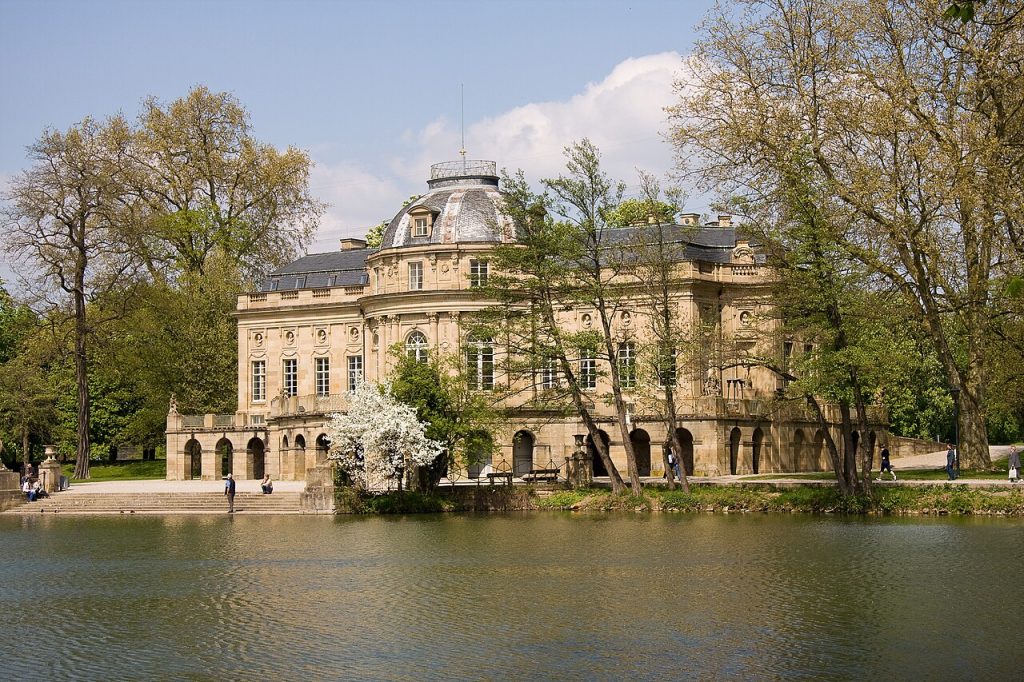
The story of Monrepos begins in 1764, when Duke Carl Eugen of Wurttemberg commissioned a lake house on the shore of an existing pond north of Ludwigsburg. He wanted a small pleasure palace where he could relax, entertain guests and enjoy boating and festivities on the water.
The architect was Philippe de La Guepiere, who also designed Solitude and the New Palace in Stuttgart. He created an elegant building with a central oval hall crowned by a dome and wings curving along the shore.
Construction was completed around 1768, and the duke used the lake house for festivals, water parties and fireworks, which were among the most spectacular entertainments of his court.
At first the building was known simply as the Lake House, and only later did it receive the name Monrepos, reflecting its role as a place of rest and retreat.
Carl Eugen’s water festivals were legendary, with illuminated boats, music on the lake and fireworks reflected in the water, delighting guests from across Europe.
The lake house was part of a wider network of ducal residences around Ludwigsburg, including the main palace, the hunting lodge of Favorite and later Solitude, all linked by avenues and views.
After Carl Eugen’s death, the building was neglected for a time, until the new royal family rediscovered its charm.
Dome, Wings and Classical Grace
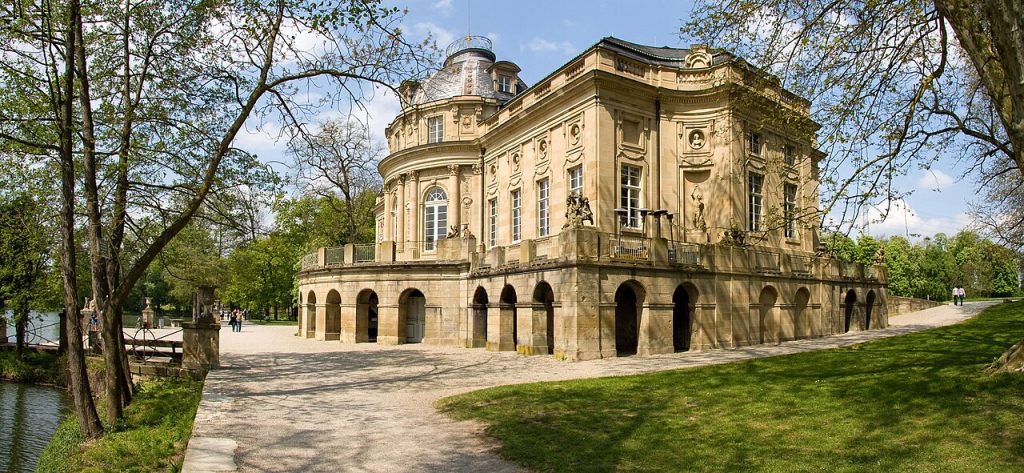
The architecture of Monrepos combines the grace of late rococo with the clarity of early classicism. The central pavilion, with its dome and columned entrance, forms the focal point, while the curved wings embrace the shore and the water.
The facades are pale and restrained, with tall windows that open toward the lake and the park. The overall effect is light and harmonious, perfectly suited to a summer retreat.
From the lake side, a terrace and steps lead down to the water, where boats could land, recalling the days of ducal water festivals.
The proportions of the building are carefully balanced, and its modest size makes it feel intimate and welcoming rather than imposing.
La Guepiere’s design was later adapted, but its basic form remains, giving Monrepos its distinctive silhouette.
The dome over the central hall is the palace’s most recognisable feature, visible from all around the lake and reflected beautifully in the water.
Inside, the central oval hall was the main reception room, while smaller rooms in the wings served as apartments and cabinets for the duke and his guests.
The Transformation by King Frederick
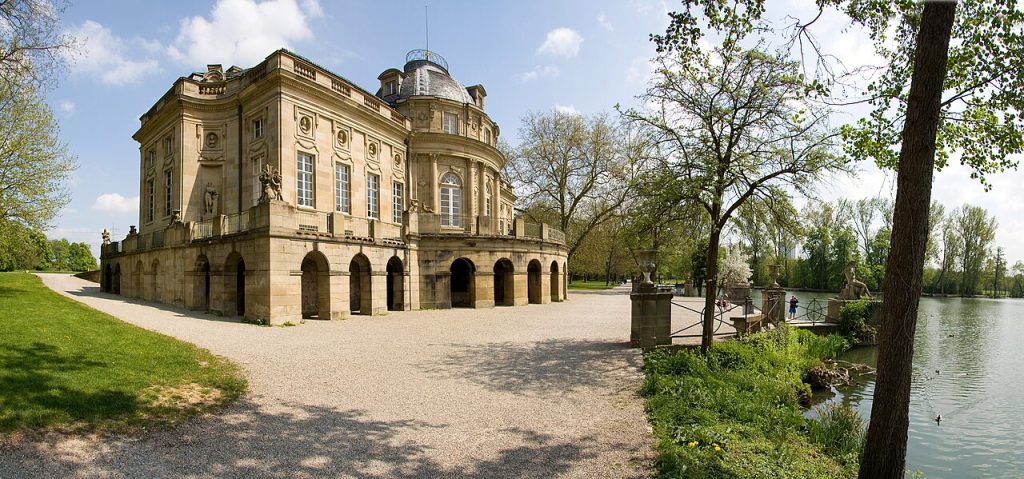
At the beginning of the nineteenth century, Monrepos was transformed by Frederick I, the first king of Wurttemberg. Raised to royal rank by Napoleon in 1806, Frederick wanted residences that reflected his new status and the latest fashions.
He commissioned the architect Nikolaus Friedrich von Thouret to remodel the interiors in the elegant classical style of the Empire period, with refined decoration, fine furniture and harmonious colours.
Frederick also reshaped the surroundings, enlarging the lake, creating islands and laying out the park in the English landscape style, with paths, groves and garden buildings.
It was under Frederick that the palace received the name Monrepos, and it became one of his favourite retreats, where he enjoyed hunting, boating and the company of a small circle of guests.
The royal transformation gave Monrepos the character it still has today, a graceful classical palace in a romantic landscape.
Frederick was a large, forceful man with strong tastes, and the interiors he created at Monrepos reflect the elegance and luxury of the Napoleonic era.
The Empire interiors created under Frederick include elegant salons with painted walls, gilded furniture and fine textiles, some of which survive and are shown during special events.
The king also built a small church and other buildings on the estate, turning Monrepos into a complete royal retreat.
The Lake and Its Islands
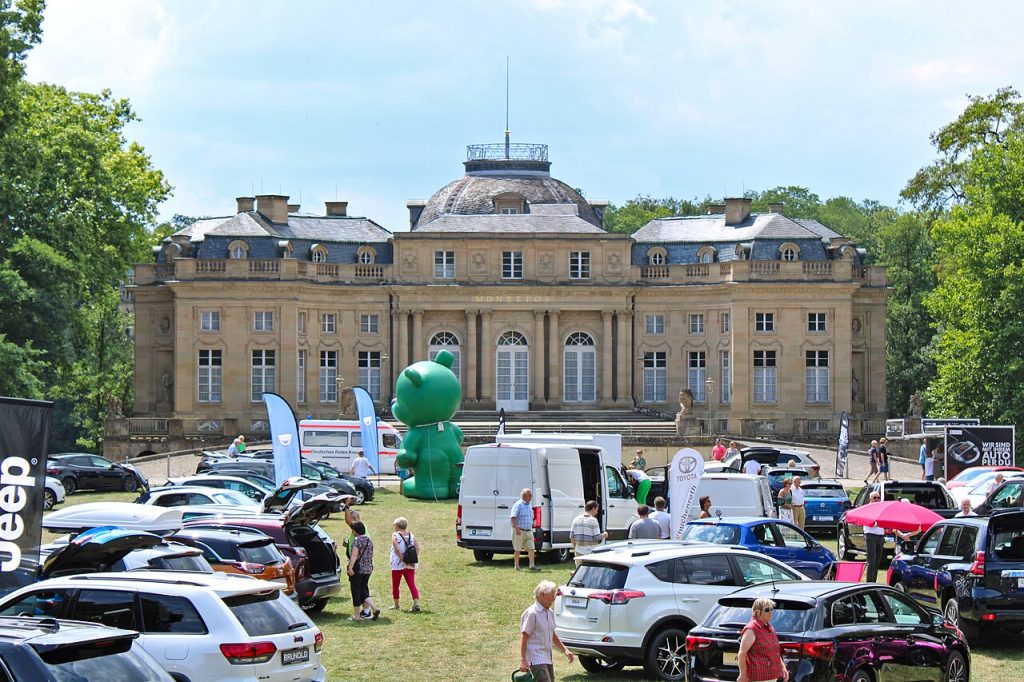
The lake is the soul of Monrepos. Enlarged under King Frederick, it stretches in front of the palace, its surface broken by small islands planted with trees.
On one of the islands stands a small temple, a romantic garden building that serves as a focal point for views across the water.
In summer, rowing boats can be hired on the lake, allowing visitors to enjoy the palace from the water just as the duke and the king once did.
Swans, ducks and other birds make their home on the lake, and its banks are lined with reeds and old trees, creating a rich and peaceful habitat.
The lake is fed by small streams and springs, and its level was carefully managed to preserve the reflections that make the palace so photogenic.
In winter, when the lake freezes, the scene takes on a magical quiet, and the palace seems to rise from a field of ice.
The island temple, visible from many points around the shore, creates a romantic focal point that draws the eye across the water.
Monrepos in Summer
Summer is the perfect time to visit Monrepos. The park is green and lush, the lake glitters in the sunshine, and the meadows are dotted with wildflowers.
On warm evenings, the light softens and the palace glows golden in the setting sun, reflected in the still water.
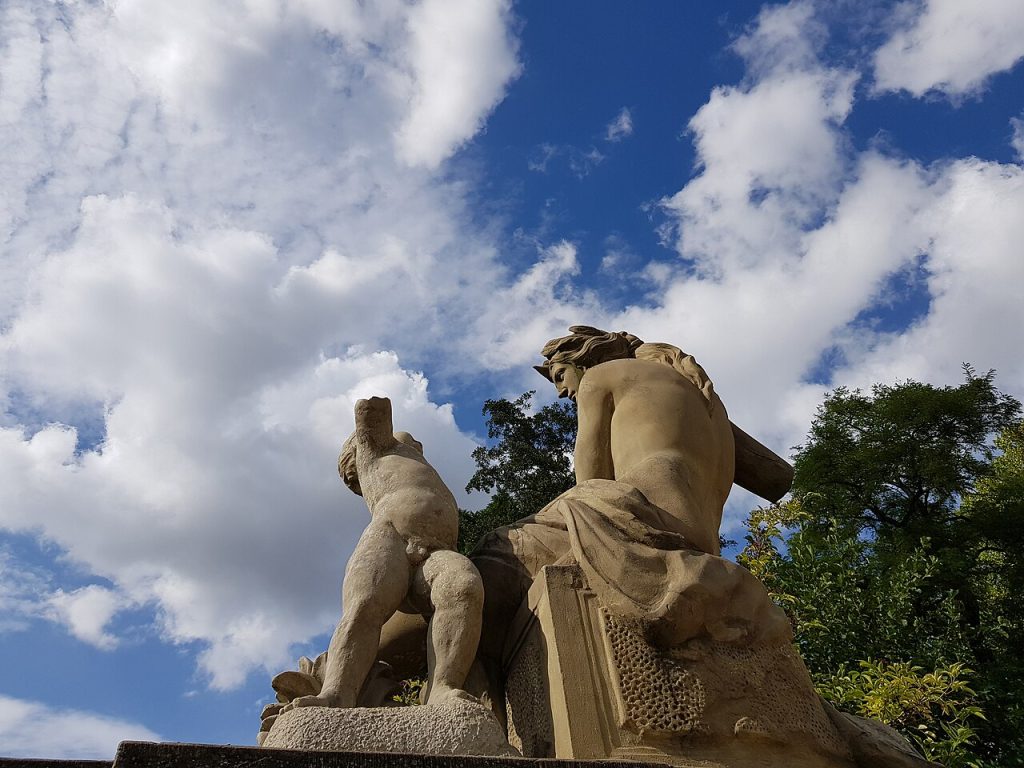
Events such as concerts, open air theatre and festivals are held on the estate during the summer months, bringing the spirit of the old ducal festivities back to life.
Families often come to picnic, stroll and row on the lake, making Monrepos a lively yet relaxing place to spend a summer day.
Ice cream and refreshments are available near the lake, and the lawns are perfect for relaxing in the sun.
Rowing on the lake is especially popular with families and couples, and seeing the palace from a boat gives a perspective that many visitors remember long after their trip.
Statues and Garden Buildings
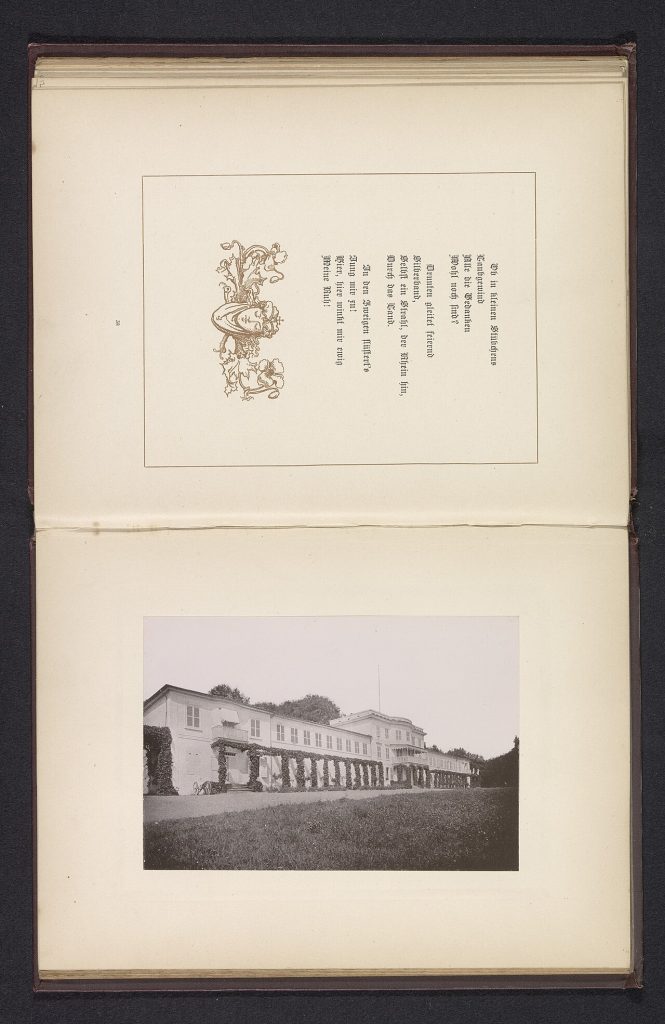
Scattered around the lake and the park are statues, benches and small garden buildings that add interest to a walk. Some recall the classical gods and heroes beloved by eighteenth century patrons, while others are simple ornaments placed to frame views.
These features were part of the romantic landscape created under King Frederick, designed to evoke emotions and memories as visitors moved through the park.
Looking for them is part of the pleasure of a visit, and each one offers a different perspective on the palace and the water.
Many of the statues have weathered over the centuries, their surfaces softened by time, adding to the romantic atmosphere of the park.
Some of the sculptures depict figures from classical mythology, chosen to evoke the ideal landscapes of ancient Arcadia that inspired romantic garden designers.
Views From the Shore
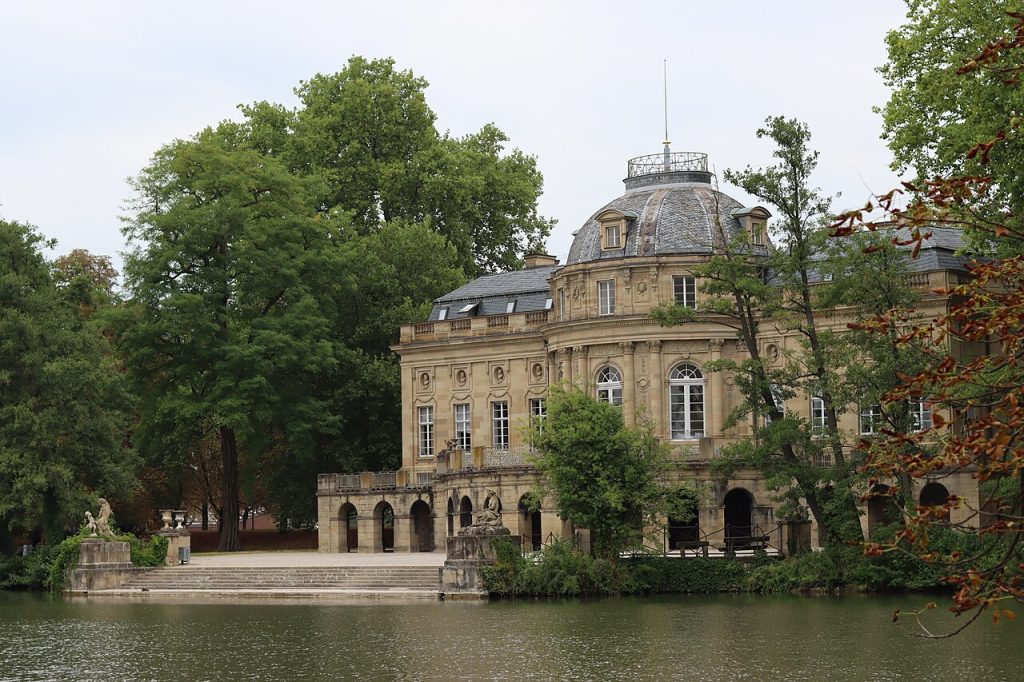
Walking around the lake, you discover ever changing views of the palace. From the far shore it appears small and delicate against the trees, while from closer it reveals its graceful details.
Benches placed along the path invite you to sit and enjoy the scene, and photographers find endless compositions combining the palace, the water and the sky.
In autumn, the colours of the trees reflected in the lake create especially beautiful images, and in winter, frost and mist give the scene a dreamlike quality.
The circuit around the lake takes less than an hour and is one of the most pleasant walks in the Ludwigsburg area.
The path around the lake is flat and easy, suitable for all ages, and it can be combined with longer walks into the surrounding countryside.
A Palace Framed by Trees
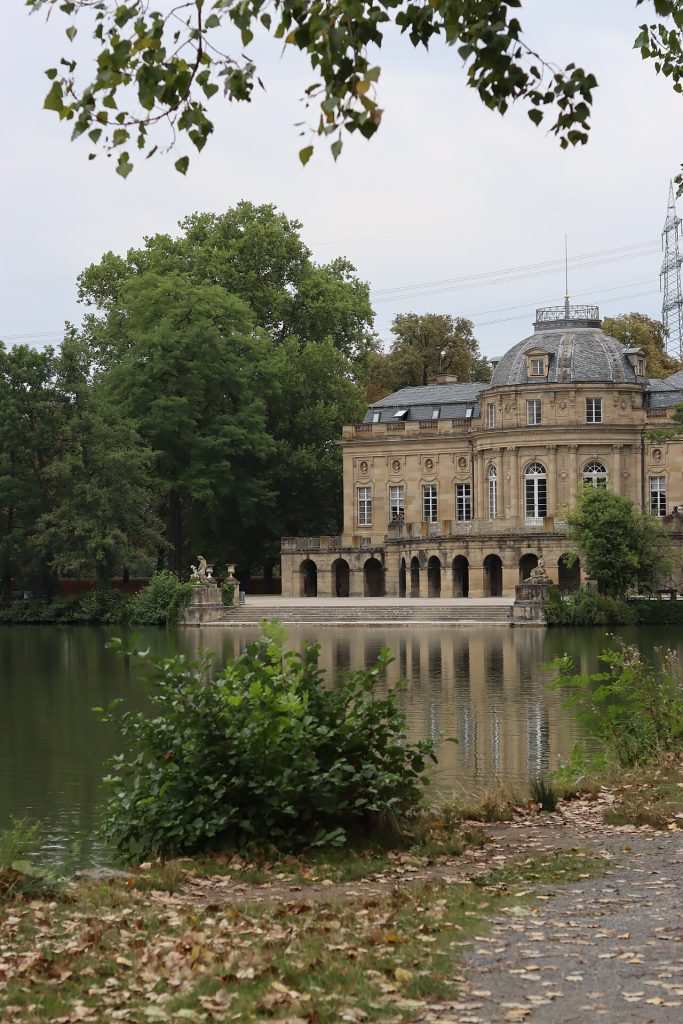
Old trees surround the palace and line the paths of the park, many of them planted in the early nineteenth century during the royal transformation. Their size and age give the landscape a mature, dignified character.
The trees frame views of the palace from different angles, revealing it gradually as you walk, a classic technique of English landscape design.
In spring, the fresh green of the leaves contrasts with the pale facades, and in summer the deep shade offers welcome relief from the heat.
Some of the trees are rare species collected by the king, reflecting the botanical interests of the period.
Autumn is a particularly beautiful time to visit, when the old trees blaze with red, orange and gold, and their reflections fill the lake with colour.
Avenues, Meadows and Wildlife
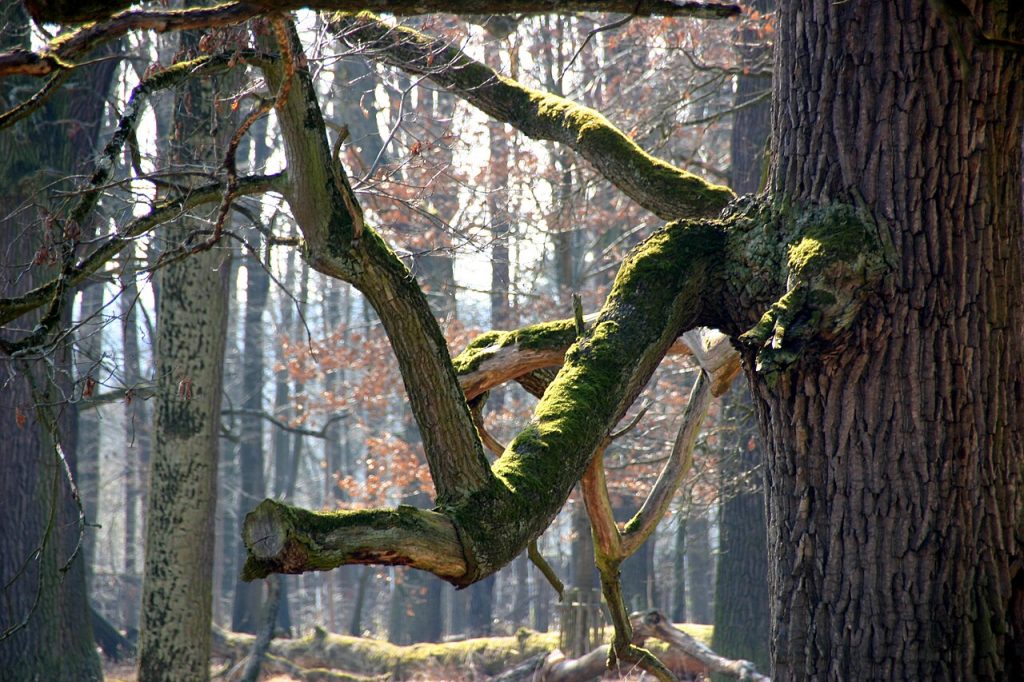
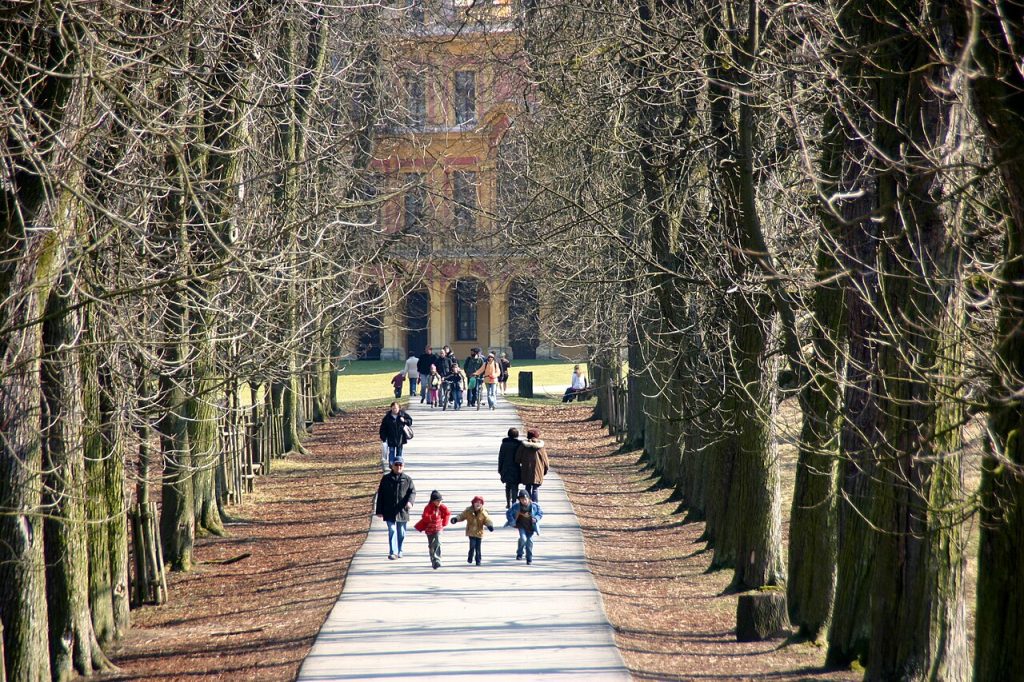
Beyond the lake, the Monrepos estate includes meadows, fields and avenues of trees that stretch toward the vineyards on the surrounding slopes. It is a working estate as well as a historic landscape.
Deer can sometimes be seen in the park, and the meadows are home to many birds and insects, making the estate a haven for wildlife close to the city.
Long avenues invite walking and cycling, and they connect Monrepos with Ludwigsburg and the surrounding countryside.
The combination of history, nature and agriculture gives Monrepos a unique character, very different from the formal gardens of Ludwigsburg Palace.
The estate’s fields and meadows are farmed in traditional ways, and their changing colours through the seasons add to the beauty of the landscape.
The Monrepos Estate Today

Monrepos remains the property of the house of Wurttemberg, the former royal family, which manages the estate as a family business. The palace itself is used for private events and is generally not open for regular tours.
Around the lake, the estate includes a winery producing wines from the surrounding vineyards, a hotel, restaurants and a golf course, making it a popular destination for leisure and events.
The wines of the Monrepos estate are well regarded, and tastings offer a pleasant way to experience the agricultural traditions of the region.
Even without visiting the interiors, the palace, the lake and the park make Monrepos a rewarding place to spend a few hours.
The hotel and restaurants on the estate make Monrepos a popular place for weddings, celebrations and conferences, bringing new life to the historic setting.
Monrepos on Video
For a look at the palace and its lake before your visit, the video below presents Monrepos near Ludwigsburg.
Watch for the reflections of the palace in the water and the peaceful park around it.
The video also captures the peaceful atmosphere of the lake and the surrounding landscape.
If the video inspires you, read on for practical tips.
Visiting Monrepos Today
Monrepos lies about three kilometres north of the centre of Ludwigsburg and is easy to reach by bus, bicycle or car. There is parking near the lake.
The park and the lakeside paths are open to the public, and rowing boats can be hired in the warmer months. The palace interiors are usually closed to the public except for special events.
Plan to combine your visit with Ludwigsburg Palace and its gardens, and perhaps with Favorite Palace in Ludwigsburg, a small hunting lodge set in its own park.
Monrepos also pairs well with Solitude, linked to Ludwigsburg by the famous avenue, which together tell the story of Carl Eugen’s remarkable building projects.
Whenever you visit, Monrepos offers a moment of calm and beauty, a perfect complement to the grand splendour of Ludwigsburg Palace nearby.
View the location on Google Maps
Palaces Nearby
If Monrepos has charmed you, Wurttemberg holds more remarkable palaces. Here are two more well worth adding to your journey:
- Solitude Palace – the hilltop pleasure palace of Duke Carl Eugen above Stuttgart.
- Ludwigsburg Palace – the grand baroque seat of the dukes of Wurttemberg with its famous gardens.
You May Like
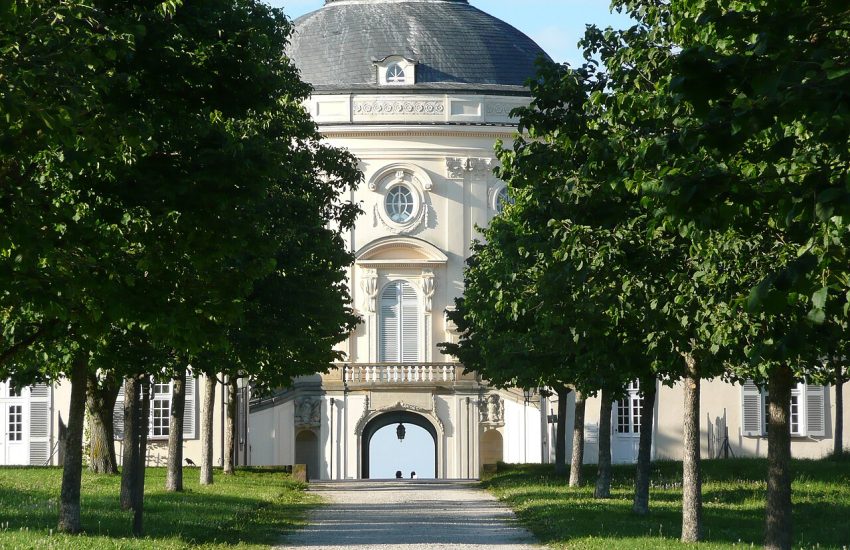
Solitude Palace and the Hilltop Dream of Duke Carl Eugen