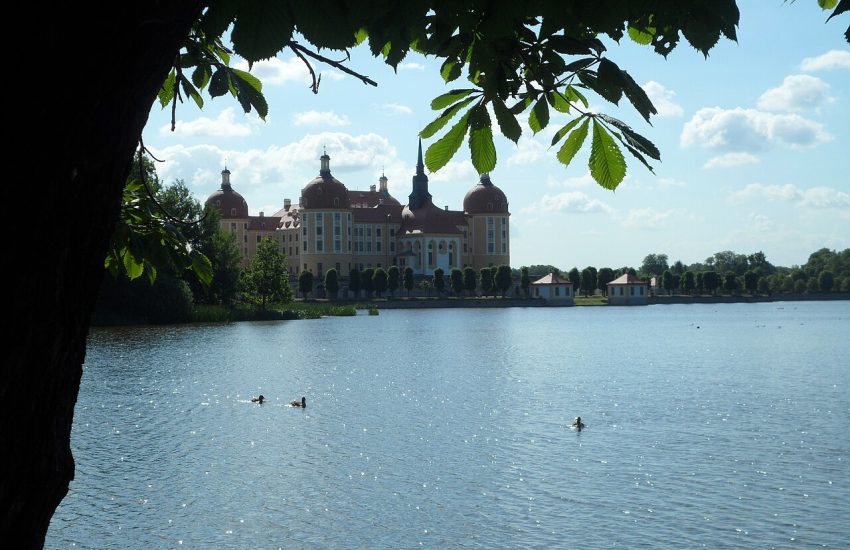
Germany has many baroque palaces, but few can match the sheer scale of Ludwigsburg, a vast complex of buildings and gardens near Stuttgart that is often called the Swabian Versailles. With hundreds of rooms spread across numerous wings and pavilions, surrounded by famous gardens that bloom through the seasons, it is one of the largest baroque palaces in the country and one of the best preserved.
Ludwigsburg was the creation of an ambitious duke of Wurttemberg who set out to build a residence worthy of the grandest courts of Europe, and his successors continued to expand and embellish it for generations. The result is a palace that showcases the full sweep of taste from baroque exuberance through rococo delicacy to neoclassical restraint, all within a single magnificent ensemble.
This is the third and final article in a short set on the grand baroque palaces of Germany, following the Zwinger and the Residenzschloss of Dresden. Ludwigsburg offers something those great Saxon sites cannot, a baroque palace that survived the wars of the twentieth century largely intact, so that visitors today can experience its original splendor directly. By the end you will see why this Swabian Versailles is one of the treasures of southern Germany.
In This Article
- Arriving at the Swabian Versailles
- The Duke Who Built a Palace
- One of the Largest Baroque Palaces in Germany
- Interiors from Baroque to Neoclassical
- The Historic Palace Theatre
- The Grand Halls of the Palace
- The Court of Wurttemberg
- The Famous Blooming Baroque Gardens
- A Garden of Fairy Tales
- Porcelain and the Palaces Nearby
- A Rare Survival, Now a Museum
- Ludwigsburg on Film
- Visiting Ludwigsburg Today
Arriving at the Swabian Versailles

The first thing that strikes you about Ludwigsburg is its size. This is not a single grand building but a sprawling complex of wings, pavilions, and courtyards, arranged around spacious gardens and stretching across a vast area. Approaching it, you understand at once why it earned its nickname as the Swabian Versailles, a palace conceived on the grandest possible scale.
The architecture is baroque at its most confident, with long symmetrical facades, ornamental detailing, and a sense of order and grandeur that speaks of princely ambition. The complex unfolds around central courtyards and opens onto the famous gardens, creating a harmonious whole in which buildings and landscape are closely integrated.
Unlike many great palaces that were damaged or destroyed in the wars of the last century, Ludwigsburg came through largely unscathed, which means that much of what you see is original rather than reconstructed. This gives the palace a special authenticity, a direct connection to the age that built it that is increasingly rare among Europe’s great baroque residences.
As you take in the scale of the ensemble, it helps to remember that this was a complete princely world, with everything a court could need gathered in one place, from grand state rooms and a theatre to chapels, gardens, and service buildings. Ludwigsburg was designed to be self-sufficient, a glittering capital in miniature for the dukes of Wurttemberg.
The approach across the forecourt gives a sense of theater, the long wings reaching out to frame the space and draw you toward the heart of the complex. Even visitors who have seen many palaces are often surprised by how extensive Ludwigsburg is, and the realization that so much of it is authentic rather than rebuilt only deepens the impression.
The Duke Who Built a Palace
Ludwigsburg owes its existence to the ambition of Duke Eberhard Ludwig of Wurttemberg, who in the early eighteenth century set out to create a grand new residence away from the old ducal capital. What began as a hunting lodge grew, under his direction, into one of the largest baroque palaces in Germany, a project that consumed enormous resources and reshaped the region.
The duke’s ambition was fired by the example of the great courts of Europe, above all the splendor of Versailles, which set the standard for princely magnificence. Determined that Wurttemberg should have a residence to match, he expanded his plans ever further, adding wing after wing until the palace reached its vast extent.
So central was the palace to his vision that a whole new town grew up around it, planned and developed alongside the residence to serve the court and its needs. The duke’s creation thus shaped not only a palace but a city, leaving a lasting mark on the map of the region that endures to this day.
Understanding the duke’s driving ambition is key to understanding Ludwigsburg. The palace is the expression of one ruler’s determination to project power and sophistication through architecture, and its sheer scale is a measure of how far he was willing to go in pursuit of that goal. His successors would inherit and build upon this extraordinary foundation.
The project grew far beyond its modest beginnings as the duke’s ambitions expanded, and successive building campaigns transformed the original lodge into a sprawling residence. This organic growth gave the palace its enormous extent and its varied character, as different phases of construction added new wings and new styles over the decades.
His decision to shift the center of the duchy to his new creation had lasting consequences, drawing the court and much of the life of the state to the growing town. In this sense the duke did not merely build a palace but founded a new center of power, reshaping the geography of his realm around his personal vision.
One of the Largest Baroque Palaces in Germany
Ludwigsburg’s claim to be among the largest baroque palaces in Germany is no exaggeration. The complex comprises numerous buildings and hundreds of rooms, arranged around courtyards and set within extensive grounds, a scale that places it among the greatest princely residences of its age anywhere in Europe.
This vastness reflects the ambitions of the rulers who built and expanded it over generations. Rather than a single phase of construction, the palace grew through successive campaigns, each adding to its extent and splendor, so that it eventually encompassed everything from grand state apartments to a theatre, chapels, and service buildings.
The scale is not merely a matter of size but of completeness. Ludwigsburg was conceived as a total princely environment, a self-contained world where the court could live, govern, worship, and entertain without leaving the complex. This comprehensiveness is part of what makes it so impressive and so rewarding to explore.
For visitors, the size of Ludwigsburg means there is a great deal to see, from the many state rooms to the theatre and the gardens. It rewards a generous allowance of time and offers a rich and varied experience, a chance to immerse yourself in the complete world of a great baroque court.
The comparison with Versailles was deliberate, part of a wider fashion among European rulers who sought to emulate the splendor of the French court. Ludwigsburg was Wurttemberg’s answer to that model, a statement that the duchy could hold its own among the great powers, and the nickname has stuck as a tribute to its grandeur and ambition.
The town that grew up around the palace was itself laid out with baroque regularity, its grid of streets and squares reflecting the ordered vision of its founder. Visiting Ludwigsburg today, you experience not just a palace but a planned baroque town, a complete expression of the ideals of its age.
Interiors from Baroque to Neoclassical

Because Ludwigsburg was built and furnished over a long period, its interiors display a fascinating range of styles, from the exuberance of the baroque through the delicacy of the rococo to the restraint of neoclassicism. Walking through the palace is like moving through a history of taste, each room reflecting the fashion of its age.
The earliest rooms carry the full richness of the baroque, with elaborate decoration, bold ornament, and a sense of grandeur. Later rooms soften into the lighter, more playful rococo, with its delicate curves and refined detailing, while still later apartments embrace the cooler elegance of the neoclassical style that followed.
This variety is one of the palace’s great attractions. Rather than a single unified scheme, Ludwigsburg offers a sequence of contrasting interiors, each beautiful in its own way, and the shifts between styles keep a visit constantly engaging. The palace becomes a living museum of changing decorative fashion across the decades.
The fact that so much of this survives in original condition makes the experience especially valuable. Where other palaces show reconstructed interiors, Ludwigsburg often preserves the genuine article, allowing visitors to see authentic baroque, rococo, and neoclassical rooms as they were created, a rare and precious survival.
The transitions between styles tell a story of changing times and rulers, each leaving their mark according to the fashion of their day. A visitor attentive to these shifts can read the history of European taste in the rooms of a single palace, a rare and instructive pleasure that few other residences offer so completely.
The furnishings, too, span the periods, with pieces of furniture, tapestries, and decorative objects that complement the architecture of each room. This completeness, the survival not just of the rooms but of much of their contents, is what makes Ludwigsburg such an exceptional window into the material world of a baroque court.
The Historic Palace Theatre

Among the treasures of Ludwigsburg is its palace theatre, one of the oldest preserved baroque court theatres in Europe. This remarkable survival includes historic stage machinery and gives a vivid sense of the theatrical entertainments that were central to court life, when opera and drama were among the chief pleasures of a princely residence.
Court theatres like this were essential features of the grandest palaces, where rulers staged performances to entertain their guests and display their sophistication. That Ludwigsburg’s theatre survives, complete with its original workings, is a rare piece of good fortune, offering a direct window into the performance culture of the baroque age.
The theatre’s historic stage technology is of particular interest, allowing scholars and visitors to understand how elaborate scenic effects were achieved in an age before modern technology. The ingenious machinery for changing scenes and creating illusions reflects the creativity and ambition of baroque stagecraft.
For visitors, the palace theatre is a highlight that brings the social and cultural life of the court vividly to life. It reminds us that these palaces were not just homes and seats of power but centers of art and entertainment, where music and theatre played a central role in the life of the ruling house.
To sit in the historic theatre is to feel the presence of the performers and audiences of centuries past, in a space that has changed remarkably little. For lovers of music and theatre history, it is a place of real significance, a rare survival from an age when court theatres were at the heart of cultural life.
Performances are still occasionally held in the historic theatre, allowing modern audiences to experience something of the magic that once entertained the court. To attend such an event is a rare privilege, connecting the present directly to the theatrical traditions of the baroque age.
The Grand Halls of the Palace
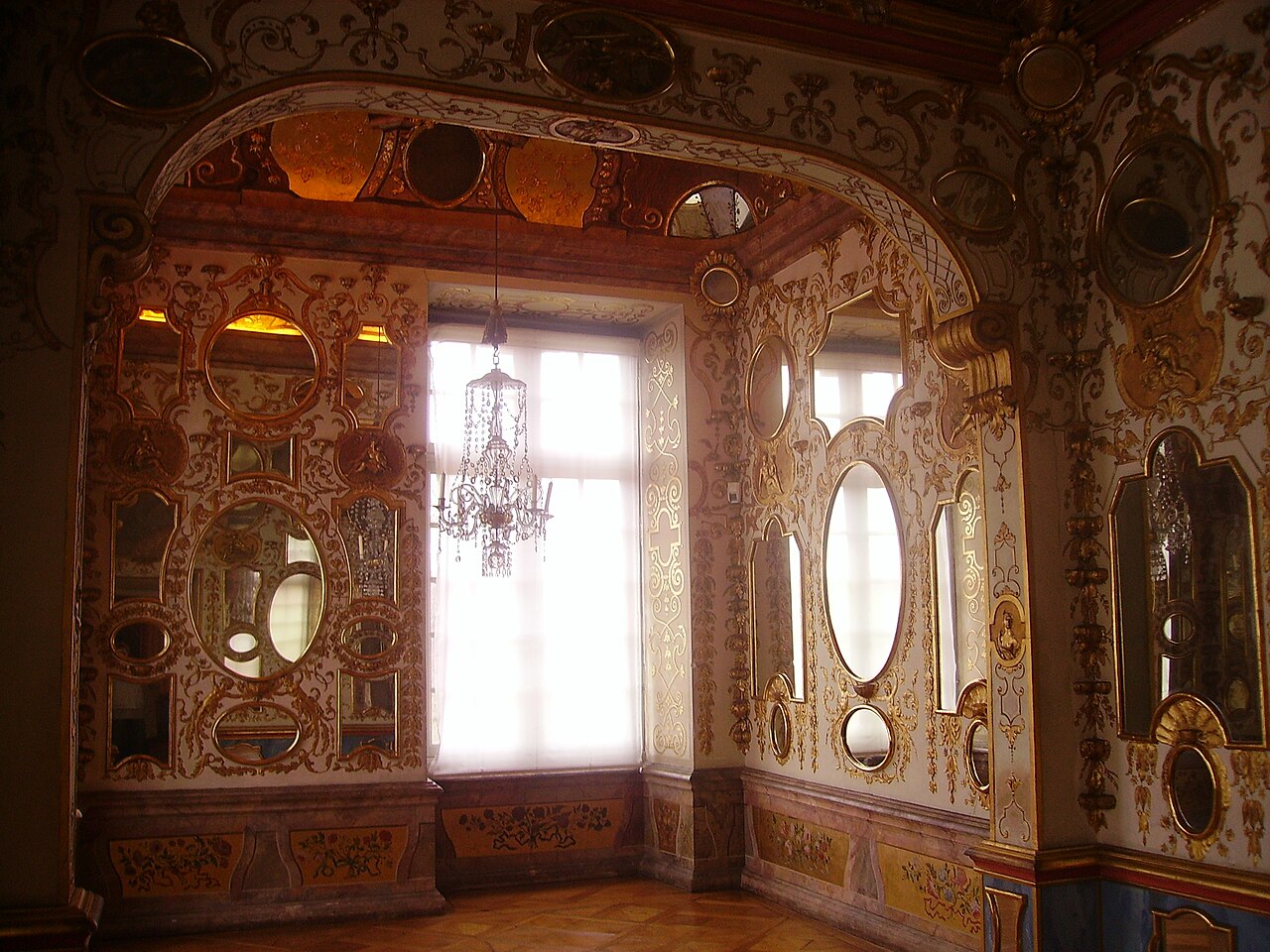
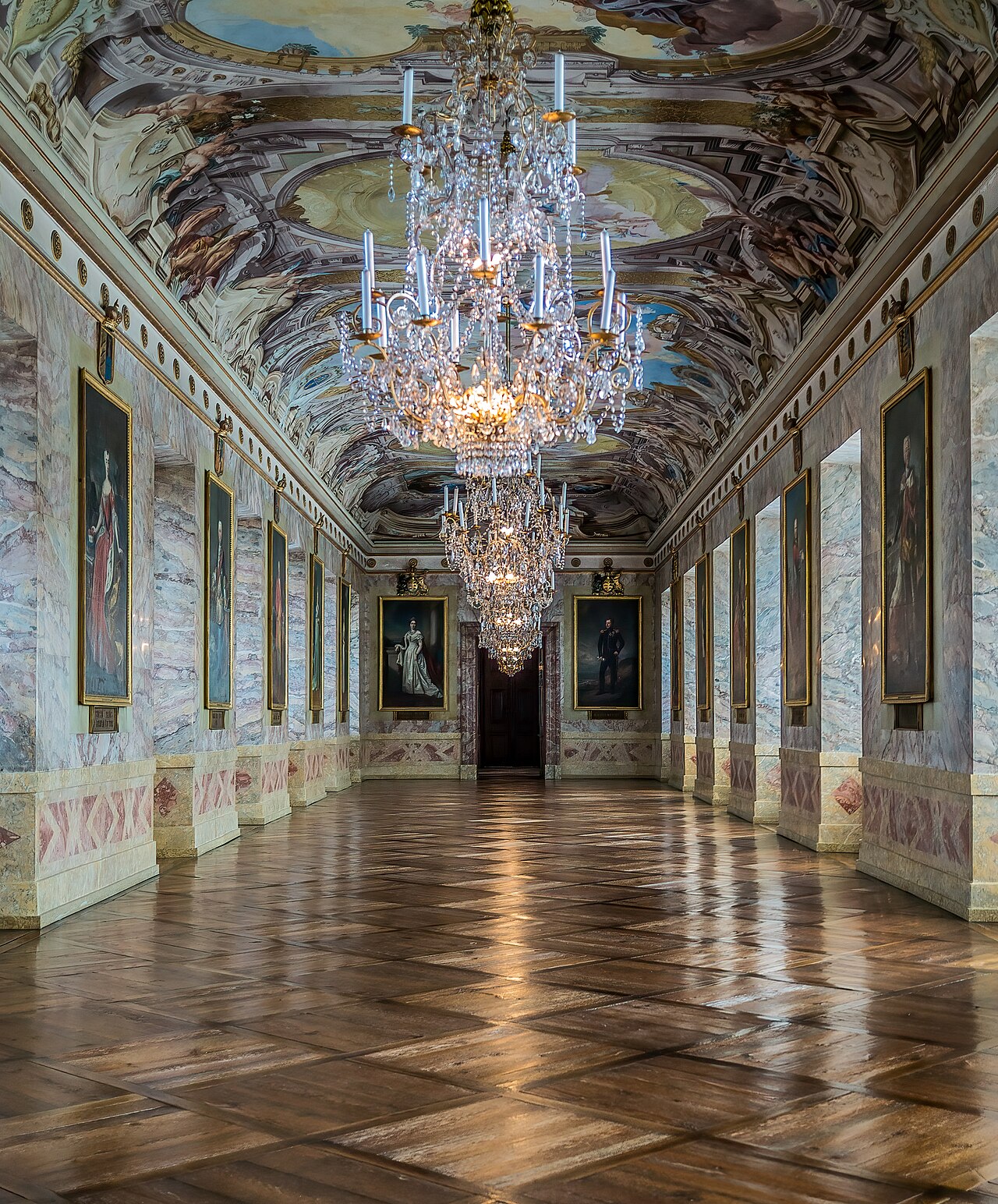
Ludwigsburg contains a series of magnificent state halls designed for ceremony and display, among them splendid rooms such as the order hall and the mirror hall, decorated with the richness appropriate to the grandest occasions. These were the spaces where the court gathered for its most important events, and they represent the palace at its most magnificent.
The decoration of these halls combines architecture, painting, and ornament into dazzling ensembles, with painted ceilings, gilded detailing, and fine materials creating an overwhelming impression of splendor. They were designed to impress and to proclaim the status of the ruling house, and they still achieve that effect today.
Each hall had its particular function and character, from spaces for formal receptions to rooms associated with chivalric orders and dynastic display. Together they form the ceremonial heart of the palace, the setting for the rituals and celebrations through which a great court expressed its power and prestige.
Walking through these halls, you experience the baroque love of grandeur at its height. The scale, the richness, and the artistry combine to create spaces of real magnificence, and they remain among the most memorable interiors in a palace full of beautiful rooms.
The mirror hall in particular dazzles with its play of reflected light, a device beloved of baroque designers who used mirrors to multiply candlelight and create an impression of endless, glittering space. On a bright day the room seems to glow from within, and it is easy to imagine the effect it would have had on guests arriving for a grand evening.
The painted ceilings of these halls deserve special attention, their illusionistic scenes drawing the eye upward into imagined heavens populated by gods and allegorical figures. This fusion of architecture and painting was a hallmark of the baroque, designed to overwhelm the senses and to glorify the ruler whose halls they adorned.
The Court of Wurttemberg
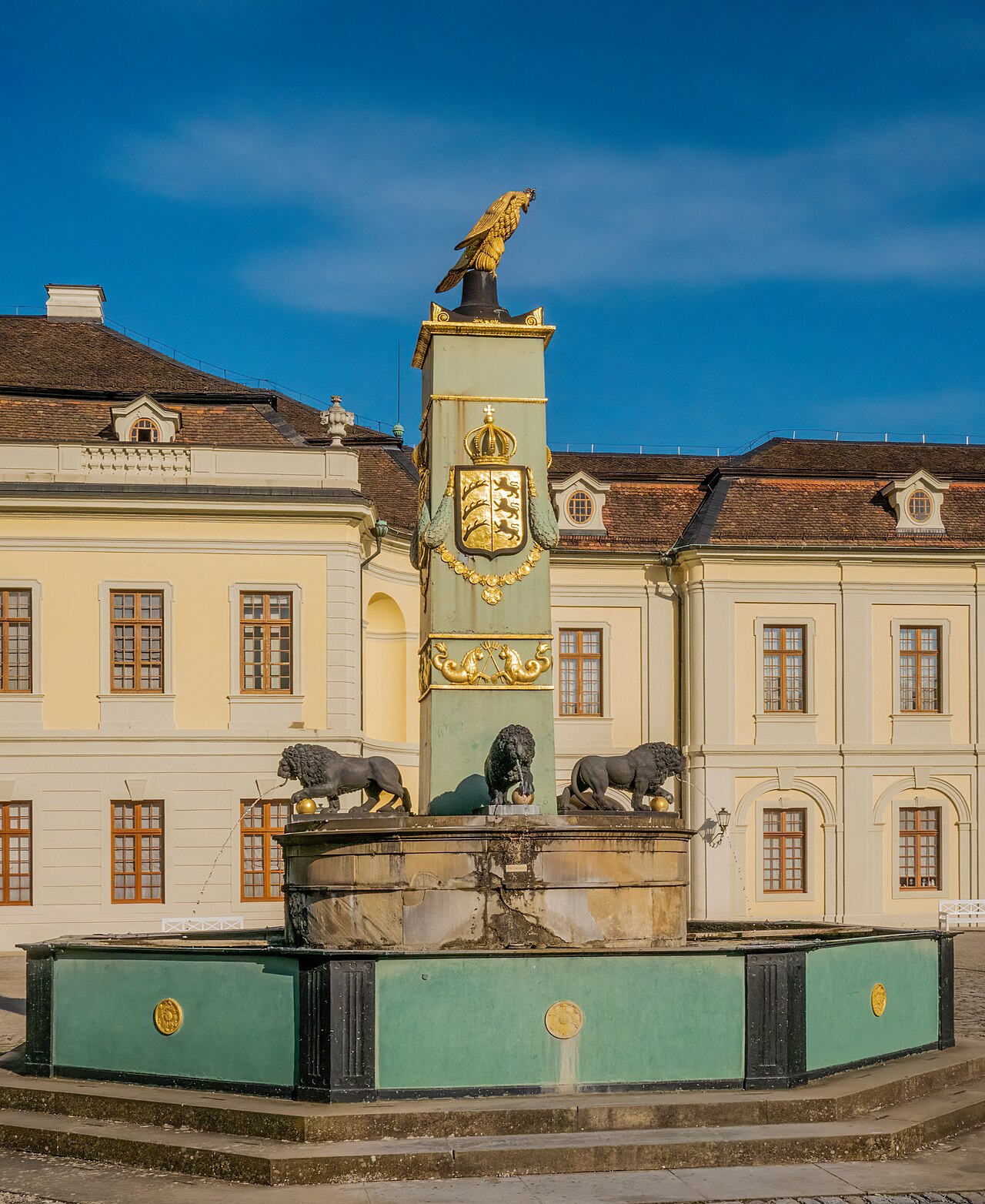
For a long period Ludwigsburg served as the principal residence of the rulers of Wurttemberg, who later rose in rank to become kings. The palace was thus the center of the court and of the government of the land, the place where power resided and where the business and ceremony of rule were conducted.
As the seat of the court, Ludwigsburg witnessed the full pageantry of princely and later royal life, from grand ceremonies and entertainments to the daily routines of government. The many rooms of the palace accommodated the complex household of a ruling dynasty, with spaces for every function from the most public to the most private.
The elevation of the rulers of Wurttemberg to royal status added further prestige to the palace, confirming its place among the great residences of Europe. Successive rulers left their mark on the building and its collections, so that Ludwigsburg became a record of the dynasty’s history and ambitions.
This role as the heart of a ruling house gives the palace its historical depth. Beyond its architectural splendor, Ludwigsburg was a living center of power for generations, and understanding this adds weight and meaning to the beautiful rooms and grand halls that visitors explore today.
The daily life of the court, with its elaborate etiquette, entertainments, and routines, filled these rooms for generations. Imagining that life, the processions and receptions, the music and ceremony, helps bring the beautiful but silent rooms to life and reminds us that this was a working residence at the center of a living state.
The Famous Blooming Baroque Gardens

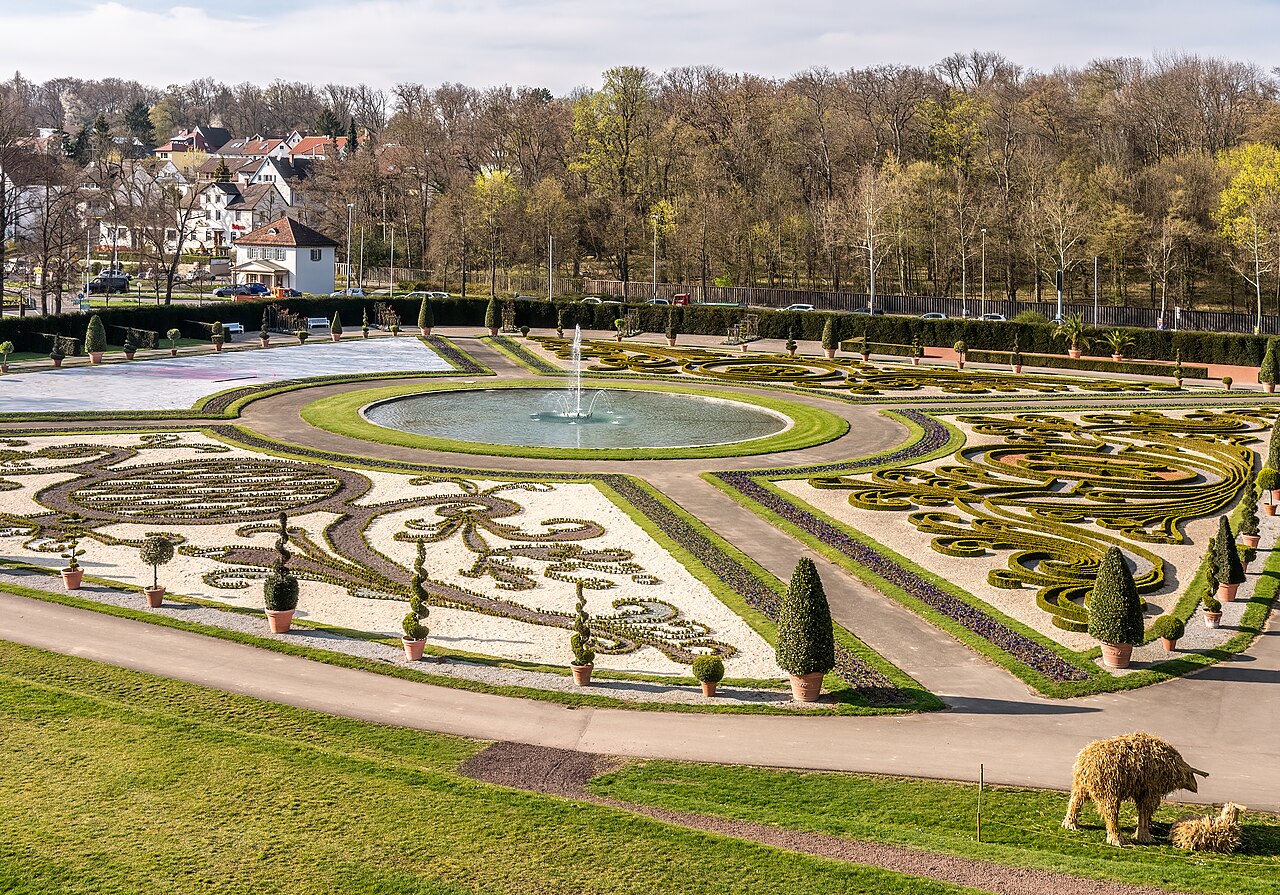
Ludwigsburg is as celebrated for its gardens as for its buildings, and the surrounding grounds are among the finest palace gardens in Germany. Known for their spectacular seasonal displays, they combine formal baroque design with abundant planting to create a landscape that changes and delights throughout the year.
The gardens are famous for their flowers, with displays that bloom in succession through the seasons, filling the grounds with color from spring through autumn. This emphasis on flowering plants has given the gardens their reputation as a place of continual blossoming, a living complement to the splendor of the palace.
Formal elements such as geometric beds, avenues, and ornamental features provide structure, while the rich planting adds color and life. The combination creates a landscape that is both orderly and exuberant, reflecting the baroque love of designed nature and providing a beautiful setting for the palace.
For many visitors the gardens are a highlight in their own right, offering hours of pleasant wandering amid flowers, fountains, and ornamental features. They extend the experience of the palace into the open air and demonstrate the baroque genius for shaping nature into a work of art.
The gardens have become a destination in their own right, drawing visitors who come as much for the flowers as for the palace. Seasonal highlights, from spring bulbs to autumn displays, ensure that the grounds offer something different throughout the year, and the careful planning behind the planting reflects a long tradition of horticultural excellence.
The marriage of formal baroque structure with exuberant seasonal planting embodies a particular philosophy of the garden, in which nature is both disciplined and celebrated. Strolling the grounds, you sense the same ambition that shaped the palace, turned here to the living materials of flowers, water, and greenery.
A Garden of Fairy Tales

One of the most charming features of the Ludwigsburg gardens is a dedicated fairy-tale garden, designed especially to delight children and families with scenes and figures from beloved stories. This enchanting addition brings a playful, magical dimension to the grounds, setting Ludwigsburg apart from more purely formal palace gardens.
The fairy-tale garden features illustrated scenes and animated displays that bring well-known tales to life, creating a world of wonder for younger visitors. It reflects a thoughtful approach to making the palace and its grounds welcoming to families, ensuring that there is something to enchant visitors of every age.
This family-friendly spirit has helped make Ludwigsburg a popular destination not just for lovers of architecture and history but for everyone. The combination of grand palace, beautiful gardens, and magical fairy-tale world offers a rich and varied day out with broad appeal.
The presence of the fairy-tale garden captures something of the welcoming, celebratory character of Ludwigsburg today. Where once the gardens served the pleasures of a princely court, they now delight a wide public, and the enchantment they offer to children is a happy expression of the palace’s continuing life as a place of joy.
Boats, animated figures, and story scenes turn a walk through the fairy-tale garden into an adventure for young imaginations, and parents often find themselves as charmed as their children. It is a reminder that a visit to Ludwigsburg can be as much about delight and play as about history and architecture.
Porcelain and the Palaces Nearby
Ludwigsburg is associated with its own porcelain manufactory, part of the fashion among German courts for producing fine porcelain, which was prized as a luxury and a symbol of sophistication. The manufactory added to the cultural and economic life of the court and produced wares admired for their quality and artistry.
The palace complex is also complemented by smaller residences in the surrounding area, built as retreats and places of pleasure for the court. These included a hunting lodge and a lakeside pavilion set in the nearby parkland, offering the rulers places to escape the formality of the main palace and enjoy the pleasures of the countryside.
These satellite buildings extended the world of the court beyond the main palace, providing variety and recreation. Set amid parkland and water, they offered different experiences from the grand ceremony of the residence, from hunting to quiet lakeside leisure, and they form part of the larger Ludwigsburg ensemble.
Together the manufactory and the surrounding residences reveal the breadth of the court’s life and interests, from the production of luxury goods to the enjoyment of the countryside. They enrich the picture of Ludwigsburg as a complete princely world, offering more to discover for those who venture beyond the main palace.
The nearby hunting lodge, with its own elegant rooms and setting, offered the court a place for the chase and for more informal gatherings, while the lakeside pavilion provided a serene retreat by the water. Together with the main palace, they formed a constellation of residences that gave the court variety and pleasure across the surrounding landscape.
A Rare Survival, Now a Museum

One of the most remarkable things about Ludwigsburg is that it survived the wars of the twentieth century largely intact, escaping the destruction that devastated so many other great German palaces. This good fortune means that the palace preserves an exceptional wealth of original interiors, furnishings, and decoration, a rarity among Europe’s baroque residences.
This authenticity gives Ludwigsburg a special value. Where many palaces offer reconstructions, here visitors can experience genuine historic interiors, seeing the rooms much as they were created and furnished. The sense of direct connection to the past is powerful and increasingly uncommon, making the palace a precious survival.
Today Ludwigsburg is open to the public as a museum, its state rooms, theatre, and collections accessible to visitors, and its gardens a popular destination throughout the year. Careful conservation ensures that this great survival is preserved for future generations to enjoy, maintaining its interiors and grounds in excellent condition.
The combination of scale, authenticity, and preservation makes Ludwigsburg one of the most rewarding palace visits in Germany. Knowing that so much is original adds to the pleasure of exploring its rooms and gardens, and the palace stands as a living monument to the age that created it, remarkably complete after three centuries.
This survival is all the more striking when set beside the fate of the Dresden palaces, which had to be painstakingly rebuilt from ruins. Ludwigsburg’s good fortune allows it to serve as a benchmark of what an authentic baroque palace looks like, a reference point of inestimable value for scholars and visitors alike.
The careful stewardship of the palace in modern times has ensured that its authenticity is matched by excellent presentation, with knowledgeable guides and well-maintained rooms. Visitors leave with a rare sense of having stepped directly into the baroque age, unmediated by the compromises that reconstruction so often requires.
Ludwigsburg on Film
Because Ludwigsburg is so large and varied, a video walkthrough is a helpful way to appreciate its scale and to preview its highlights. On film you can take in the vast facades and courtyards, move through the sequence of state rooms, glimpse the historic theatre, and see the famous gardens in their seasonal glory.
As you watch, notice the range of interior styles, from baroque through rococo to neoclassical, and the way the palace and its gardens form a single grand ensemble. Seeing the complex in motion helps convey its enormous size and the richness of its interiors, which can be hard to grasp from still images alone.
Video also helps capture the beauty of the gardens, with their flowering displays and the magical fairy-tale garden. Following a camera through the palace and grounds, you gain a vivid sense of why Ludwigsburg is called the Swabian Versailles and why it remains one of the most beloved baroque palaces in Germany.
Visiting Ludwigsburg Today

Today Ludwigsburg Palace is one of the great attractions of southern Germany, open to visitors who come to tour its state rooms, see its historic theatre, and enjoy its famous gardens. Located near Stuttgart, it is easily reached and makes a rewarding day out for lovers of architecture, history, and gardens alike.
The palace offers a rich variety of experiences, from guided tours of the interiors to free wandering in the extensive grounds, and the fairy-tale garden makes it especially appealing for families. Because there is so much to see, it is worth planning your visit and checking opening arrangements, particularly for the interiors and the theatre, in advance.
Allow plenty of time, as the scale of the palace and gardens rewards an unhurried visit. The seasonal garden displays mean that different times of year offer different pleasures, from spring blossom to autumn color, so there is no wrong time to come, only different versions of the same beautiful place.
You will find Ludwigsburg Palace near Stuttgart in southern Germany; see the map below to help plan your route: see the map below. Whether you come for the grand baroque architecture, the authentic historic interiors, the famous gardens, or the magic of the fairy-tale world, Ludwigsburg offers one of the most complete and rewarding palace experiences in all of Germany.
Of the three great German palaces in this set, Ludwigsburg offers the most complete and authentic experience of a baroque residence, precisely because it was spared the destruction that befell the others. It makes a fitting conclusion to any tour of the country’s palaces, a place where the splendor of the age survives not as a reconstruction but as a living inheritance.
View the location on Google Maps
Palaces Nearby
If you are exploring the great baroque palaces of Germany, these two pair naturally with a visit here:
You May Like
Konopiste the Bohemian Castle of a Doomed Archduke