If the Zwinger was Dresden’s festival ground, the Residenzschloss, the royal castle, was the beating heart of Saxon power, the home of its rulers for centuries and the treasure house of their astonishing wealth. Behind its long walls lies one of the richest collections of princely splendor anywhere in Europe, including a treasury so dazzling it is known as the Green Vault, crammed with jewels, gold, and marvels of the goldsmith’s art.
This is a palace of deep history, the ancestral seat of the Wettin dynasty who ruled Saxony for generations, rebuilt and embellished across the centuries from the Renaissance to the baroque. On its outer wall runs one of the most famous images in Germany, a vast mural of porcelain tiles showing a procession of the rulers who lived here, a unique record of a long and powerful line.
This is the second of three articles on the grand baroque palaces of Germany, following the Zwinger. The Residenzschloss complements its festive neighbor with the serious business of rule and the private splendor of a great dynasty. By the end you will understand why this castle, destroyed in war and reborn through decades of patient work, is one of the great treasure houses of Europe and a cornerstone of Dresden’s identity.
In This Article
- Arriving at the Royal Castle of Saxony
- The Wettin Dynasty and Centuries of Rule
- From Renaissance Castle to Baroque Palace
- The Procession of Princes on the Wall
- The Historic Green Vault, a Treasury of Wonders
- The New Green Vault and Its Masterpieces
- The Turkish Chamber and Exotic Splendor
- The Armoury and the Hall of Giants
- A Dynasty of Great Collectors
- Courtyards and the Historic Stable Yard
- Destruction and a Long Reconstruction
- The Castle and Its Treasures on Film
- Visiting the Residenzschloss Today
Arriving at the Royal Castle of Saxony
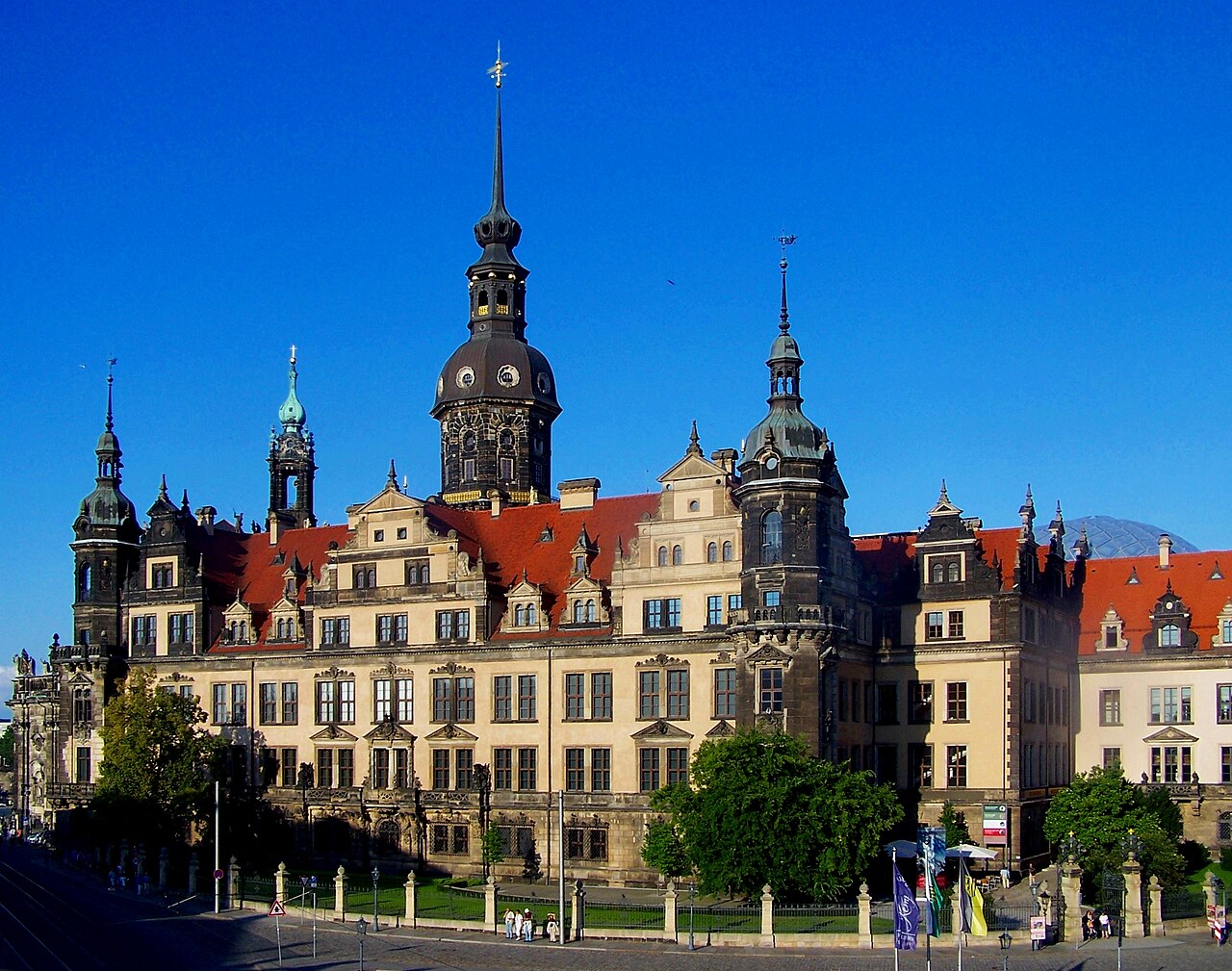
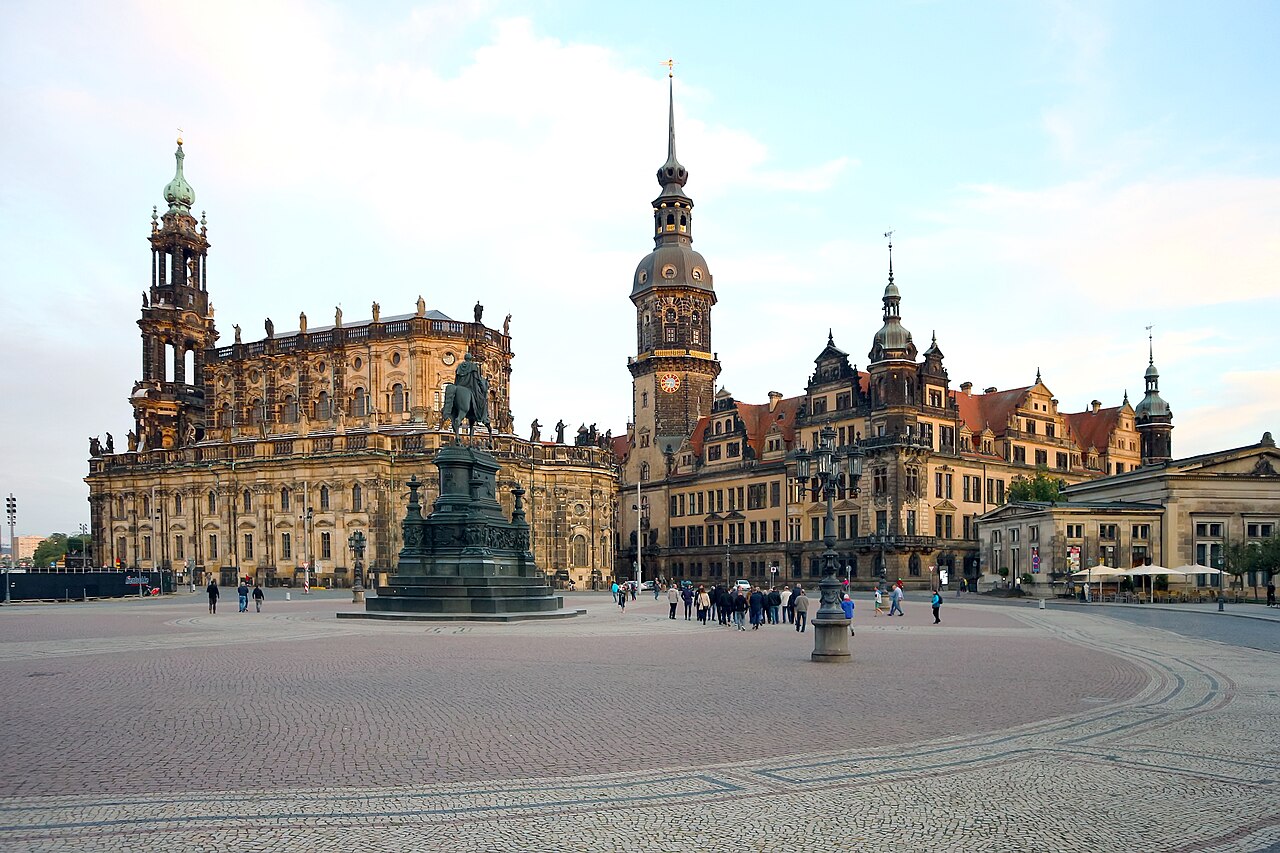
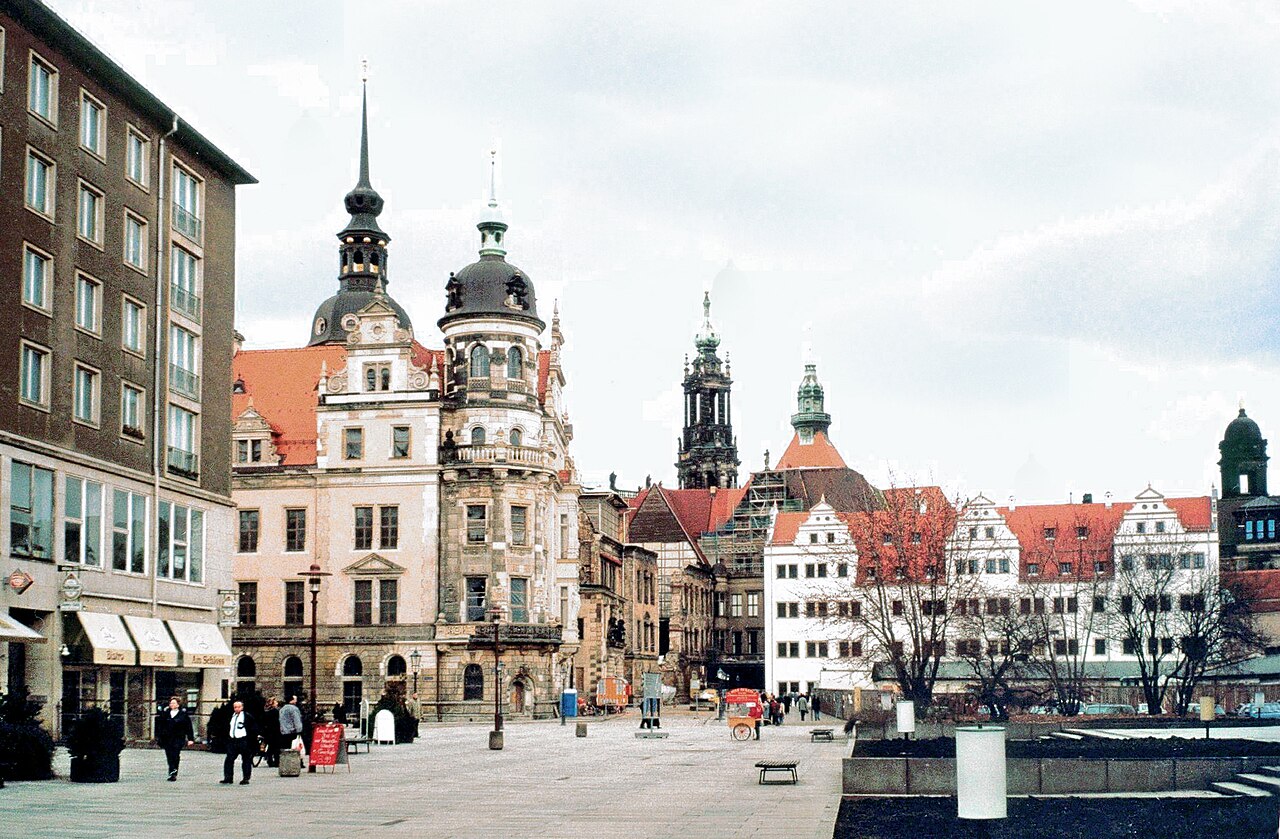
The Residenzschloss presents itself as a great complex of buildings rather than a single facade, the product of centuries of building and rebuilding at the heart of Dresden. Towers, courtyards, and long wings combine into a sprawling royal castle, and approaching it you feel the weight of history, the sense of a place that has been the center of power for a very long time.
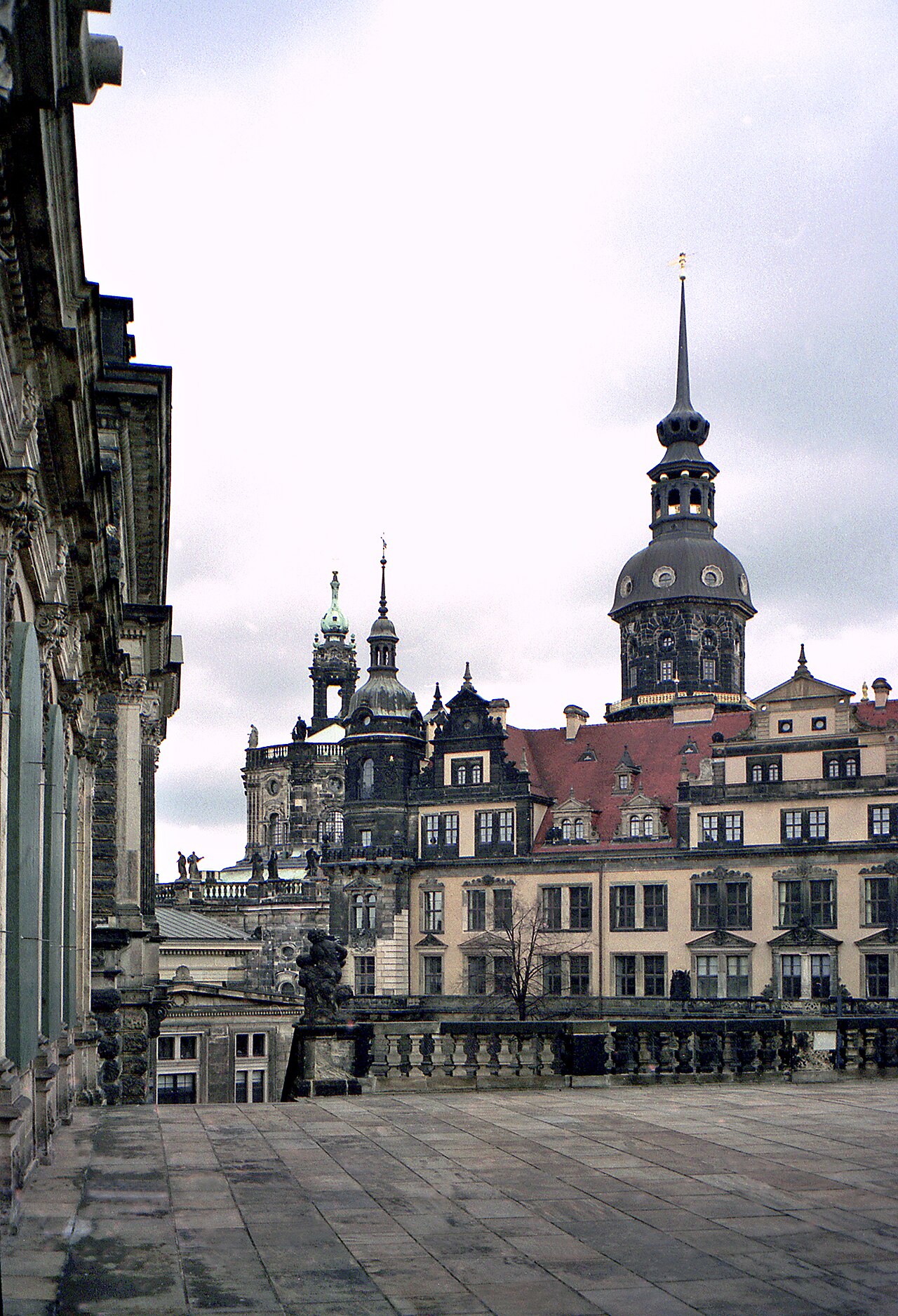
One of the first features to catch the eye is the tall tower that rises above the complex, a landmark of the Dresden skyline and a reminder of the castle’s long history. Around it cluster the various wings and courtyards added by successive rulers, each leaving their mark, so that the building reads as a layered record of Saxon history in stone.
Unlike a purpose-built baroque showpiece, the Residenzschloss grew organically over time, and this gives it a different character from its festive neighbor the Zwinger. Here the emphasis is on continuity and dynasty, on the long line of rulers who made this their home and filled it with the treasures that still astonish visitors today.
As you approach, look for the famous tiled mural on the outer wall, one of the castle’s most celebrated features, before you enter to discover the treasures within. The contrast between the long public mural outside and the concentrated splendor of the treasury inside captures the dual nature of the castle as both a public symbol and a private hoard of wealth.
There is a satisfying sense, in visiting both the Zwinger and the Residenzschloss, of seeing the two complementary faces of Saxon splendor, the one devoted to festivity and display, the other to rule, dynasty, and treasure. Together they tell the full story of Dresden’s golden age, and the castle provides the deeper, more historical half of that tale.
The Wettin Dynasty and Centuries of Rule
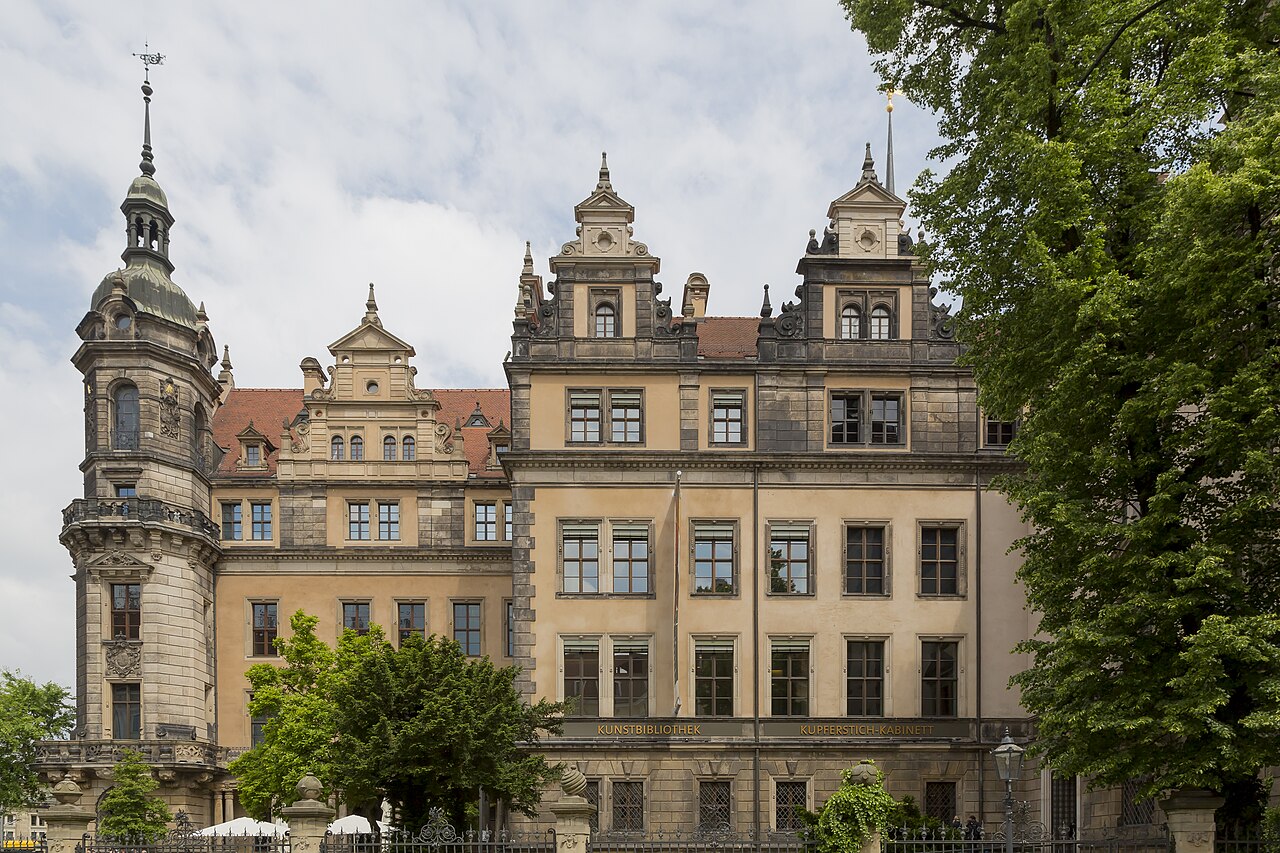
The Residenzschloss was the seat of the Wettin dynasty, the family that ruled Saxony for centuries as electors and later kings, and whose history is inseparable from that of the castle. Generation after generation lived, ruled, and built here, making the castle the enduring center of their power and the repository of their accumulated wealth and prestige.
The length of this dynasty’s rule is remarkable, spanning many centuries and surviving great changes in the fortunes of Saxony and of Europe. The castle reflects this continuity, with each era adding to the building and its collections, so that the Residenzschloss became a living archive of the family’s long and eventful history.
Among the most famous members of the dynasty was Augustus the Strong, whose passion for art, collecting, and splendor transformed Dresden and filled the castle with treasures. But he was only the most flamboyant of a long line of rulers who shaped the castle and the city, each contributing to the legacy visitors enjoy today.
Understanding the dynasty is key to understanding the castle. This was not a building erected in a single burst of ambition but the ancestral home of a ruling house, shaped by centuries of continuous occupation. That depth of history gives the Residenzschloss a gravity and richness that sets it apart from more recently built palaces.
The family’s influence extended well beyond Saxony, shaping European affairs through marriages, alliances, and the dual crown that linked Saxony to Poland for a time. This wider reach brought wealth and prestige that flowed back into the castle and its collections, making the Residenzschloss a center of not merely regional but European importance during the height of the dynasty’s power.
Traces of individual rulers survive throughout the castle, in the rooms they commissioned, the treasures they acquired, and the building projects they financed. Walking through the complex is thus a way of meeting the dynasty one ruler at a time, each having left some mark on the great castle that was their family’s home for so many centuries.
From Renaissance Castle to Baroque Palace
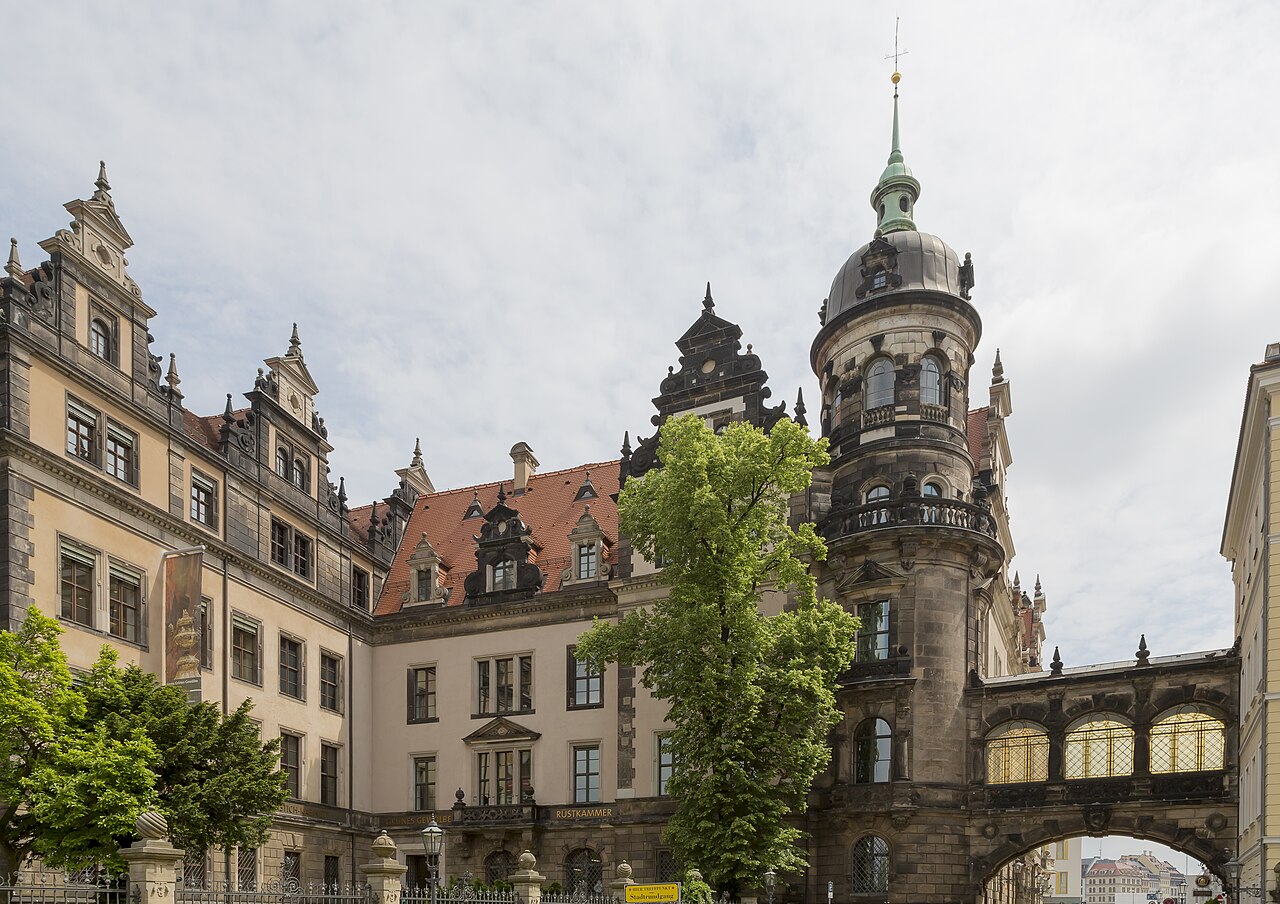
The architecture of the Residenzschloss spans several centuries and styles, reflecting its long evolution from a medieval and Renaissance castle into a grand princely residence. Elements of different periods survive and combine within the complex, making it a fascinating study in how a great building changes and grows over time.
The Renaissance left a particularly strong mark, giving the castle some of its most distinctive features and courtyards, while later rulers added baroque splendor in keeping with the tastes of their age. The result is a layered architectural whole in which the different eras of Saxon history can be read in the stones and decoration.
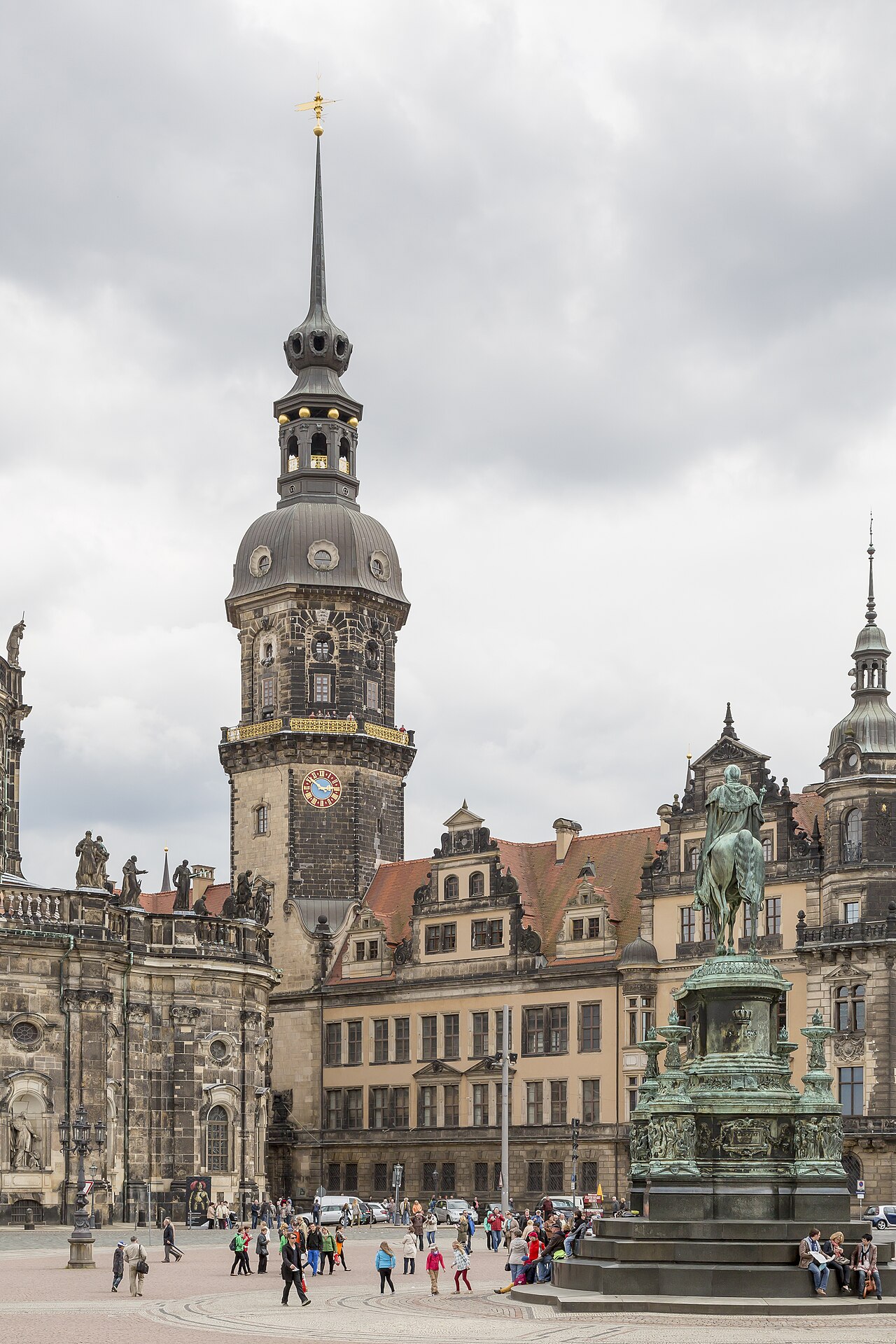
The great tower, a landmark of the complex, is among its oldest and most recognizable features, rising above the surrounding wings to dominate the skyline. Around it the various parts of the castle unfold, from courtyards to long galleries, each contributing to the sense of a building that has accumulated its character over many generations.
This architectural richness makes the Residenzschloss rewarding to explore slowly. Rather than a single unified statement, it offers a sequence of spaces and styles, each with its own history, and part of the pleasure of a visit lies in tracing how the castle grew and changed across the long centuries of Wettin rule.
Visitors with an eye for architectural history can trace the seams where one era met another, where Renaissance work gives way to baroque embellishment or modern reconstruction. Far from spoiling the effect, this layering enriches it, turning the castle into a three-dimensional chronicle of changing taste and ambition across the long life of the ruling house.
The Procession of Princes on the Wall
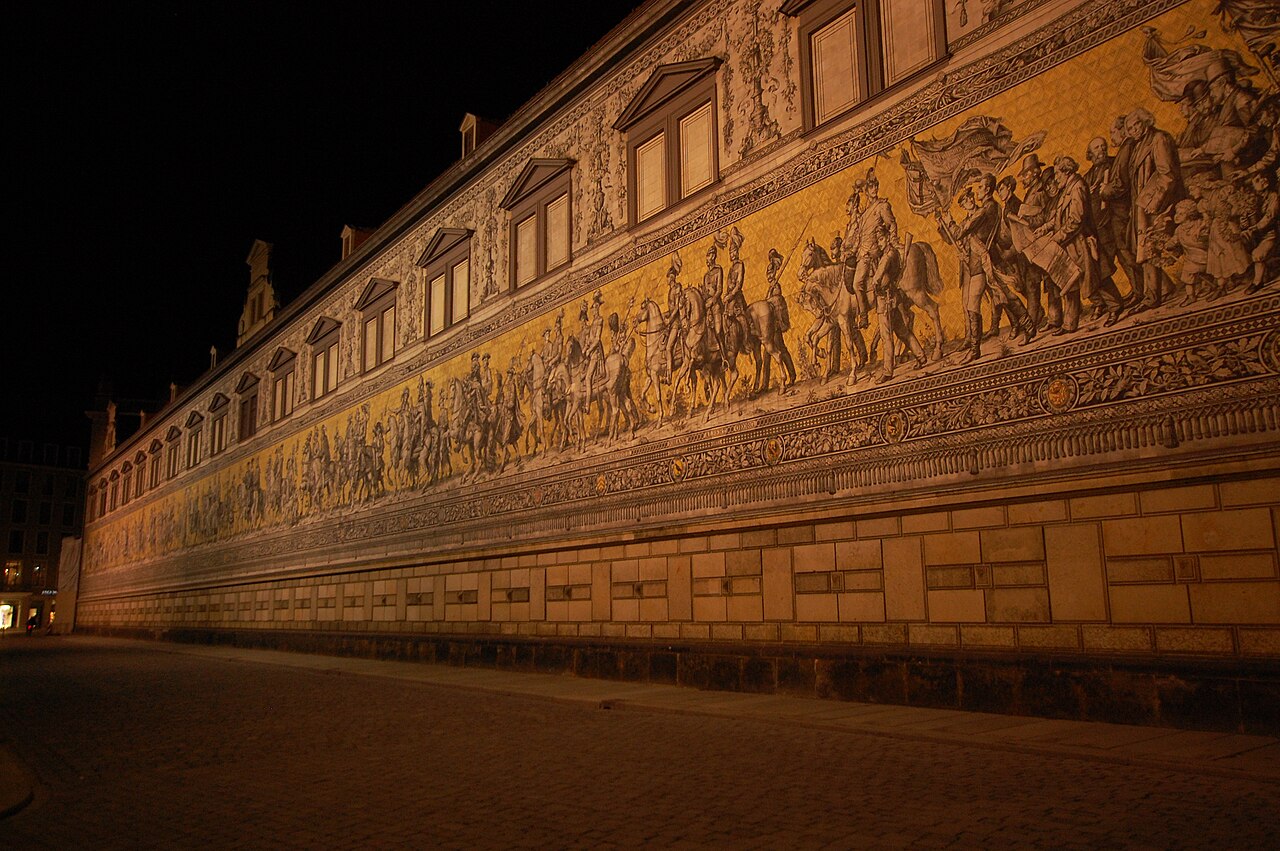
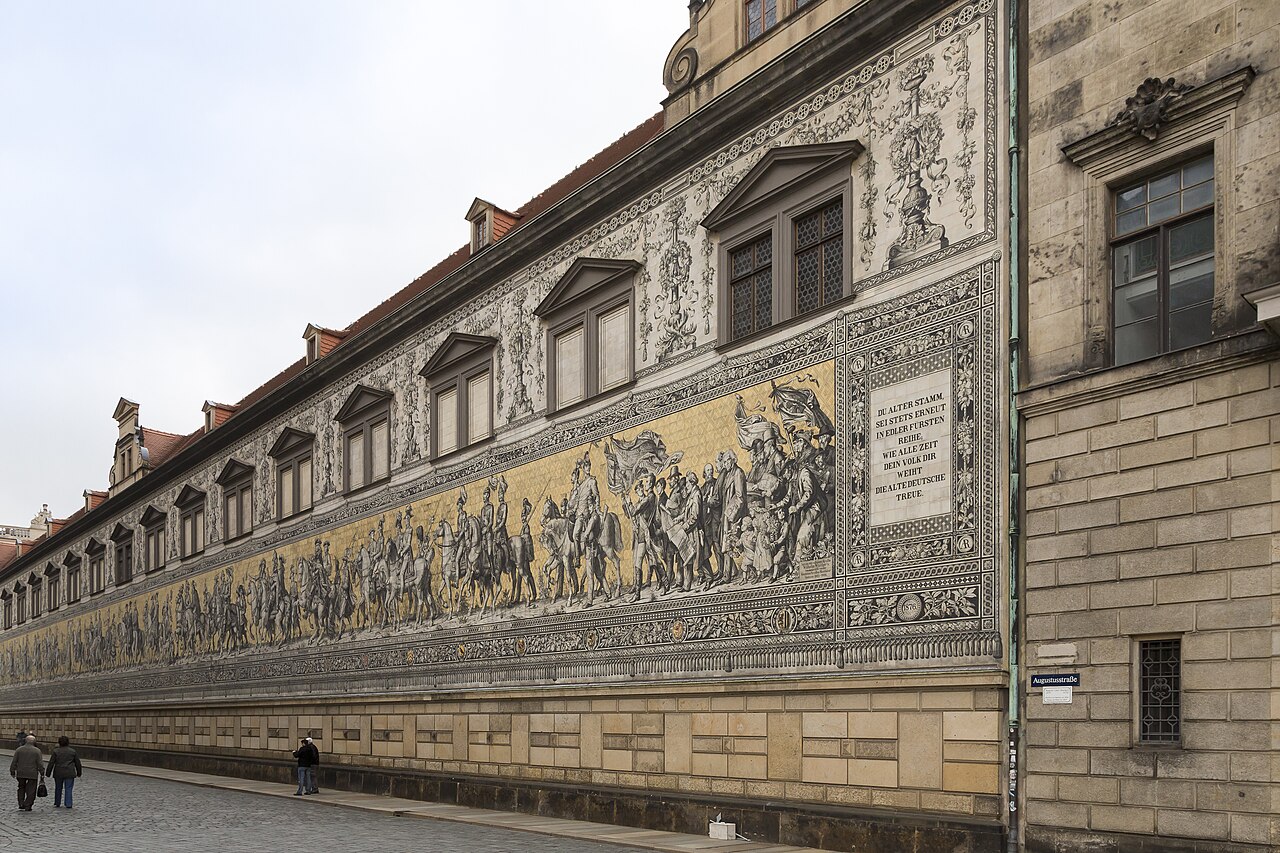
One of the most famous sights in Dresden runs along the outer wall of the castle complex, a vast mural depicting a procession of the rulers of Saxony across the centuries. Known as the Procession of Princes, it shows the long line of Wettin electors and kings on horseback, a unique visual record of the dynasty that ruled from this castle.
What makes the mural especially remarkable is that it is made from thousands of tiles of the famous local porcelain, which allowed it to survive the wartime destruction that devastated so much of the city around it. This durability has made it one of the most beloved and enduring images of Dresden, a direct link to the long history of the ruling house.
The mural stretches for a great length along the street, and walking its full extent is a journey through centuries of Saxon history, with each ruler identified and depicted in the style of his age. It is both a work of art and a history lesson, a public celebration of the dynasty whose castle it adorns.
For visitors, the Procession of Princes is an essential and freely accessible sight, requiring no ticket to enjoy. Standing before it, you grasp at a glance the extraordinary continuity of the Wettin dynasty and the pride the city takes in its long history, a perfect introduction to the castle and the family that made it their home.
The survival of the mural through the devastation that flattened so much of the surrounding city is often described as something close to a miracle, and it gave Dresdeners a powerful symbol of continuity amid loss. In the years of rebuilding, the intact Procession of Princes stood as a reminder of the city’s deep roots and of the heritage that was worth restoring.
Guides often point out that the mural was originally painted and only later rendered in the durable porcelain tiles, a change that unwittingly ensured its survival. That happy accident of material has left Dresden with one of its most cherished treasures, a work that is admired by nearly everyone who visits the city and photographed countless times every day.
The Historic Green Vault, a Treasury of Wonders

The greatest treasure of the Residenzschloss is the Green Vault, one of the richest treasuries in Europe and a highlight of any visit to Dresden. Founded as a secure treasure chamber and developed into a spectacular showcase by Augustus the Strong, it holds an astonishing collection of jewels, goldwork, and precious objects accumulated by the Saxon rulers.
The historic rooms of the Green Vault are themselves works of art, richly decorated chambers designed to display the treasures in a sequence of mounting splendor. Mirrored walls, gilded decoration, and carefully arranged objects create an overwhelming impression of wealth and artistry, exactly as Augustus the Strong intended when he opened his treasury to admiring visitors.
The objects on display defy description in their variety and craftsmanship, from vessels of precious stone to intricate works of gold, enamel, and jewels. Each is a masterpiece of the goldsmith’s or jeweler’s art, and together they form a collection whose richness and quality few other treasuries in the world can match.
To walk through the historic Green Vault is to experience princely splendor at its most concentrated, a dazzling accumulation of beauty and value gathered by one of the most splendor-loving dynasties in Europe. It is an unforgettable highlight and the single most famous treasure of the Residenzschloss.
Augustus the Strong’s decision to open his treasury as a kind of early museum was itself remarkable, transforming a private hoard into a showcase meant to be admired. The sequence of rooms was carefully designed to build toward a climax of splendor, an early masterpiece of museum display that still shapes how visitors experience the treasures today.
The experience of moving from room to room, each more dazzling than the last, is carefully controlled to heighten the sense of wonder, and visitor numbers are limited to protect the treasures and preserve the atmosphere. This makes a visit feel special and intimate, a privileged encounter with one of the world’s great concentrations of princely splendor.
The New Green Vault and Its Masterpieces
Alongside the historic rooms, a modern presentation known as the New Green Vault displays further treasures in a different setting, allowing individual masterpieces to be studied closely. Here the focus is on the artistry of particular objects, shown in conditions designed to reveal every detail of their extraordinary craftsmanship.
Among the celebrated works are elaborate creations by the greatest goldsmiths and jewelers of the age, including intricate miniature scenes crowded with tiny figures, fashioned from gold, enamel, and precious stones. These dazzling objects represent the peak of the decorative arts and reward the closest attention, revealing new wonders the longer you look.
The New Green Vault complements the historic rooms by offering a quieter, more focused encounter with the treasures. Where the historic vault overwhelms with cumulative splendor, this presentation invites contemplation of individual masterpieces, each a small universe of skill and imagination.
Together the two presentations of the Green Vault offer an unmatched experience of princely treasure, combining the drama of the historic rooms with the intimacy of close study. For lovers of the decorative arts, they are among the great destinations in all of Europe, a concentration of goldsmith’s genius without equal.
The craftsmanship of these objects can scarcely be believed, with details so fine they reward examination through the magnifying lenses sometimes provided. Each piece represents months or years of painstaking work by master craftsmen, and together they constitute a summit of the European decorative arts that has few rivals anywhere.
The setting of the New Green Vault, with its dark walls and focused lighting, is designed to make each treasure glow like a jewel in a case, isolating it so that nothing distracts from its beauty. This modern approach contrasts deliberately with the historic rooms, giving visitors two very different but equally memorable ways to experience the Saxon treasures.
The Turkish Chamber and Exotic Splendor
Among the castle’s most striking collections is the Turkish Chamber, one of the oldest and most important collections of Ottoman art outside the Islamic world. It reflects the long fascination of European courts with the splendor of the Ottoman Empire, gathered over generations by the Saxon rulers.
The collection includes magnificent tents, weapons, textiles, and objects of Ottoman origin, displayed in a dramatic presentation that evokes the exotic splendor that so captivated European princes. A great ceremonial tent is among the highlights, a rare survival that transports visitors to a very different world of courtly magnificence.
Such collections had many meanings for their owners, from trophies and diplomatic gifts to expressions of a romantic fascination with the East. For the Saxon court, the Turkish Chamber was both a treasure and a statement, demonstrating wealth, worldliness, and connection to the wider currents of European and Ottoman relations.
For visitors today, the Turkish Chamber offers a fascinating contrast to the European treasures elsewhere in the castle, a reminder of the connections and rivalries that linked Europe to the great empires beyond. It is one of the most atmospheric and unusual of the castle’s many collections.
The sheer scale of some of the objects, above all the great tent, makes the Turkish Chamber one of the most theatrical spaces in the whole castle. Few European collections can offer such a vivid encounter with Ottoman material culture, and the presentation has been designed to let visitors feel the wonder that these exotic treasures once inspired at the Saxon court.
The Armoury and the Hall of Giants
The Residenzschloss also houses a magnificent armoury, one of the great collections of ceremonial weapons and armor in the world, reflecting the martial traditions and princely display of the Saxon court. Splendid suits of armor, richly decorated weapons, and tournament equipment fill its halls in a dazzling array.
Many of the pieces are works of art as much as instruments of war, decorated with elaborate ornament and crafted to the highest standards. They were used not only in battle but in the great tournaments and ceremonies through which princes displayed their magnificence, and they capture the splendor of courtly life at its most theatrical.
The collection includes equipment for the spectacular tournaments that were a feature of court life, as well as parade armor and ceremonial weapons of extraordinary richness. Together they evoke a world in which martial skill, display, and artistry were closely intertwined, central to the identity of a ruling prince.
For visitors, the armoury is a highlight that connects the castle’s treasures to the chivalric and ceremonial traditions of the court. Its dazzling displays of armor and weaponry reveal another dimension of Saxon splendor, complementing the jewels and goldwork with the magnificence of princely arms.
Among the most spectacular displays are the mounted figures in full tournament armor, arranged as if frozen in the moment of a joust, which bring the chivalric world vividly to life. These dramatic tableaux help visitors imagine the great contests that once took place in the castle’s courtyards, when armored riders clashed before cheering crowds of courtiers.
A Dynasty of Great Collectors

The treasures of the Residenzschloss are the fruit of a long tradition of collecting by the Saxon rulers, who gathered art, jewels, weapons, and curiosities on an epic scale. This passion reached its height under Augustus the Strong, but it was shared by many members of the dynasty across the centuries.
Collecting on this scale was both a pleasure and a statement of power. A great treasury announced the wealth and sophistication of a ruler, impressing visitors and rivals alike, and the Saxon rulers pursued it with particular energy, assembling collections that placed Dresden among the foremost treasure houses of Europe.
The range of the collections is extraordinary, spanning jewels and goldwork, arms and armor, exotic treasures and scientific instruments, all gathered under one roof. This breadth reflects the wide curiosity and ambition of the dynasty, which sought to assemble a universe of beauty and wonder within its castle.
For the modern visitor, these collections make the Residenzschloss a treasure house without equal, offering encounter after encounter with masterpieces of craftsmanship and beauty. They are the enduring legacy of a dynasty of great collectors, preserved and displayed for all to admire.
This tradition of collecting also had lasting consequences for Dresden as a whole, helping to make the city one of the great cultural capitals of Europe. The treasures gathered by the dynasty became, in time, a shared heritage, drawing visitors and scholars from around the world and anchoring the city’s identity as a place of art and beauty.
It is worth remembering that these collections were not static but grew and changed over time, as rulers added new acquisitions and reorganized what they had inherited. The treasures on display today are the cumulative result of this long process, a layered inheritance built up over generations of passionate and competitive collecting.
Courtyards and the Historic Stable Yard
Beyond its treasure-filled rooms, the Residenzschloss has notable courtyards and spaces that reveal the castle’s life as a working royal residence. Among them is a historic stable yard, a long courtyard once used for tournaments and equestrian displays, lined with galleries from which spectators could watch the action below.
These outdoor spaces were essential to court life, providing settings for ceremonies, tournaments, and the daily business of a great household. The stable yard in particular evokes the chivalric traditions of the court, a place where the spectacular contests beloved of the age could be staged before an audience of nobles and guests.
The courtyards also show the practical side of the castle, the spaces needed to house horses, carriages, and the apparatus of a princely household. Together with the grand interiors, they help complete the picture of the Residenzschloss as a living center of power rather than merely a treasury.
Exploring these spaces adds depth to a visit, revealing the castle as a complex, multifaceted world. From the glittering treasury to the open courtyards, the Residenzschloss offers a full picture of princely life, combining the display of wealth with the practical workings of a great royal household.
The galleries overlooking the stable yard were themselves richly decorated, turning the space into a kind of open-air theater for the spectacles staged below. In an age when tournaments and equestrian displays were among the grandest entertainments a court could offer, such a purpose-built arena was a mark of real princely ambition.
Destruction and a Long Reconstruction
Like so much of Dresden, the Residenzschloss was devastated in the bombing at the end of the Second World War, which left the great castle a burned-out ruin. The destruction was catastrophic, and for decades the shell of the castle stood as a stark reminder of the war that had engulfed the city.
The reconstruction of the castle has been one of the great long-term cultural projects of modern Germany, carried out patiently over many years and continuing into recent times. Wing by wing and room by room, the castle has been rebuilt and its interiors recreated, allowing its treasures to return and its halls to open once more to the public.
This painstaking work has combined careful restoration of historic elements with sensitive modern interventions, creating a castle that honors its past while serving the present. The return of the great collections, above all the Green Vault, to the rebuilt castle has been a particular triumph, restoring Dresden’s treasure house to its rightful home.
Knowing this history deepens appreciation of the castle. The splendor visitors enjoy today is the result of decades of dedicated effort to recover what war had destroyed, a testament to the value placed on cultural heritage and to the determination of a city to reclaim its past. The Residenzschloss is thus a monument both to Saxon history and to modern perseverance.
Each newly reopened section of the castle has been greeted as a milestone in Dresden’s long recovery, a tangible sign of the city reclaiming its heritage piece by piece. The project stands alongside the rebuilding of the city’s other great monuments as proof of a remarkable collective determination to restore what had been lost.
The Castle and Its Treasures on Film

Because the Residenzschloss contains so much to see, a video walkthrough is a valuable way to prepare for a visit or to revisit its highlights. On film you can take in the exterior and the famous mural, then move inside to glimpse the treasures of the Green Vault and the other great collections that fill the castle.
As you watch, notice the contrast between the long history written in the castle’s architecture and the concentrated splendor of its treasuries. Seeing the collections in sequence helps convey the extraordinary wealth and artistry gathered here, from jewels and goldwork to armor and exotic treasures.
Video also helps convey the scale of the reconstruction, the transformation of a wartime ruin into the magnificent treasure house visitors see today. Following a camera through the castle and its collections, you gain a vivid sense of why the Residenzschloss ranks among the great cultural destinations of Europe.
Visiting the Residenzschloss Today

Today the Residenzschloss is a major museum complex, home to several of Dresden’s most important collections, and a highlight of any visit to the city. You can admire the famous mural on the outer wall for free, then explore the treasures within, above all the celebrated Green Vault, along with the armoury, the Turkish Chamber, and more.
The castle stands in the heart of Dresden’s historic center, close to the Zwinger and other major sights, making it easy to include in a day of exploring the city. Because the Green Vault and other collections have their own ticketing and sometimes require advance booking, especially the historic treasury, it is wise to check arrangements before you visit.
Allow plenty of time, as the castle contains far more than can be seen quickly. The collections are vast and rich, and the famous treasury in particular rewards unhurried attention. Planning ahead and prioritizing the highlights will help you make the most of this extraordinary treasure house.
You will find the Residenzschloss in the historic center of Dresden; see the map below to help plan your route: see the map below. Whether you come for the glittering Green Vault, the famous Procession of Princes, or the many other treasures of the Saxon rulers, the Residenzschloss offers one of the richest and most rewarding experiences in all of Germany.
For anyone with an interest in treasure, craftsmanship, or the history of Europe’s ruling dynasties, the Residenzschloss is an unmissable destination. Together with its neighbor the Zwinger, it makes Dresden one of the richest cultural cities in Germany, and a visit to its collections lingers long in the memory.
View the location on Google Maps
Palaces Nearby
If you are exploring the great baroque palaces of Germany, these two pair naturally with a visit here:
You May Like
Konopiste the Bohemian Castle of a Doomed Archduke


One thought on “The Residenzschloss of Dresden and the Dazzling Treasures of the Green Vault”