Some palaces are places to live; the Zwinger in Dresden was a place to celebrate. Built by one of the most flamboyant rulers of his age as a vast open-air setting for festivals, tournaments, and sheer princely display, it is less a conventional palace than a jewelled courtyard framed by galleries, pavilions, and fountains, one of the supreme achievements of the German baroque.
The man behind it, Augustus the Strong, was famous for his ambition, his extravagance, and his love of beauty, and the Zwinger was his playground and his showcase. Into it he poured the wealth of Saxony and the talents of brilliant architects and sculptors, creating a space designed to astonish, and today, filled with world-class museums, it continues to astonish visitors from around the globe.
This is the first of three articles on the grand baroque palaces of Germany, and the Zwinger makes a dazzling place to begin. By the end you will understand why this extraordinary ensemble, destroyed in war and lovingly rebuilt, is considered one of the masterpieces of European architecture and the crowning glory of Dresden, the city once known as the Florence on the Elbe.
In This Article
- Entering a Baroque Wonderland
- Augustus the Strong and His Grand Vision
- The Architect and the Sculptor
- The Crown Gate and the Grand Entrances
- The Pavilions and the Famous Carillon
- The Great Courtyard and the Nymphs Bath
- A Feast of Baroque Sculpture
- The Old Masters Gallery and the Sistine Madonna
- The Porcelain Collection and a Royal Obsession
- The Salon of Science and Instruments
- Destruction in War and a Faithful Rebuilding
- The Zwinger on Film
- Visiting the Zwinger Today
Entering a Baroque Wonderland
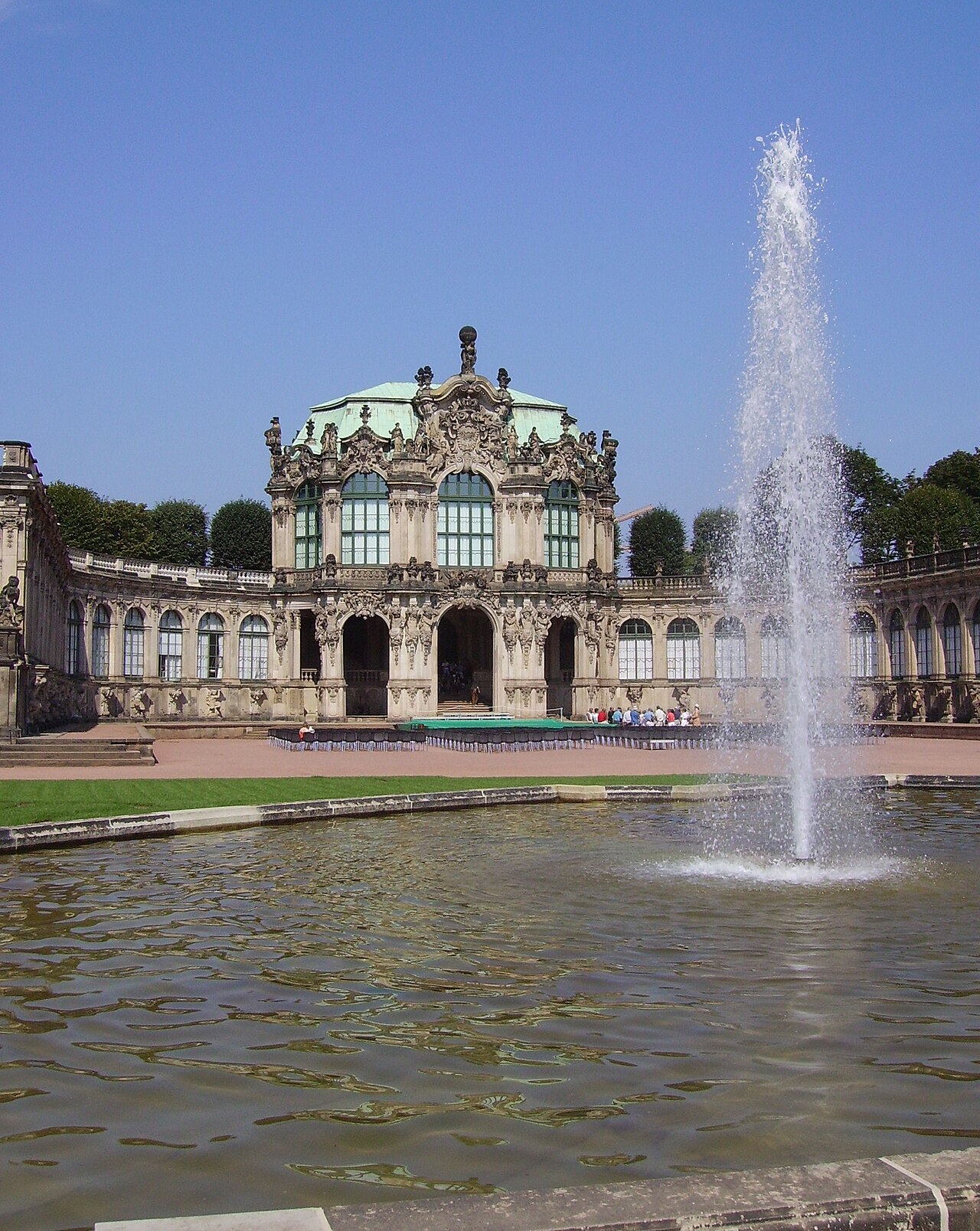
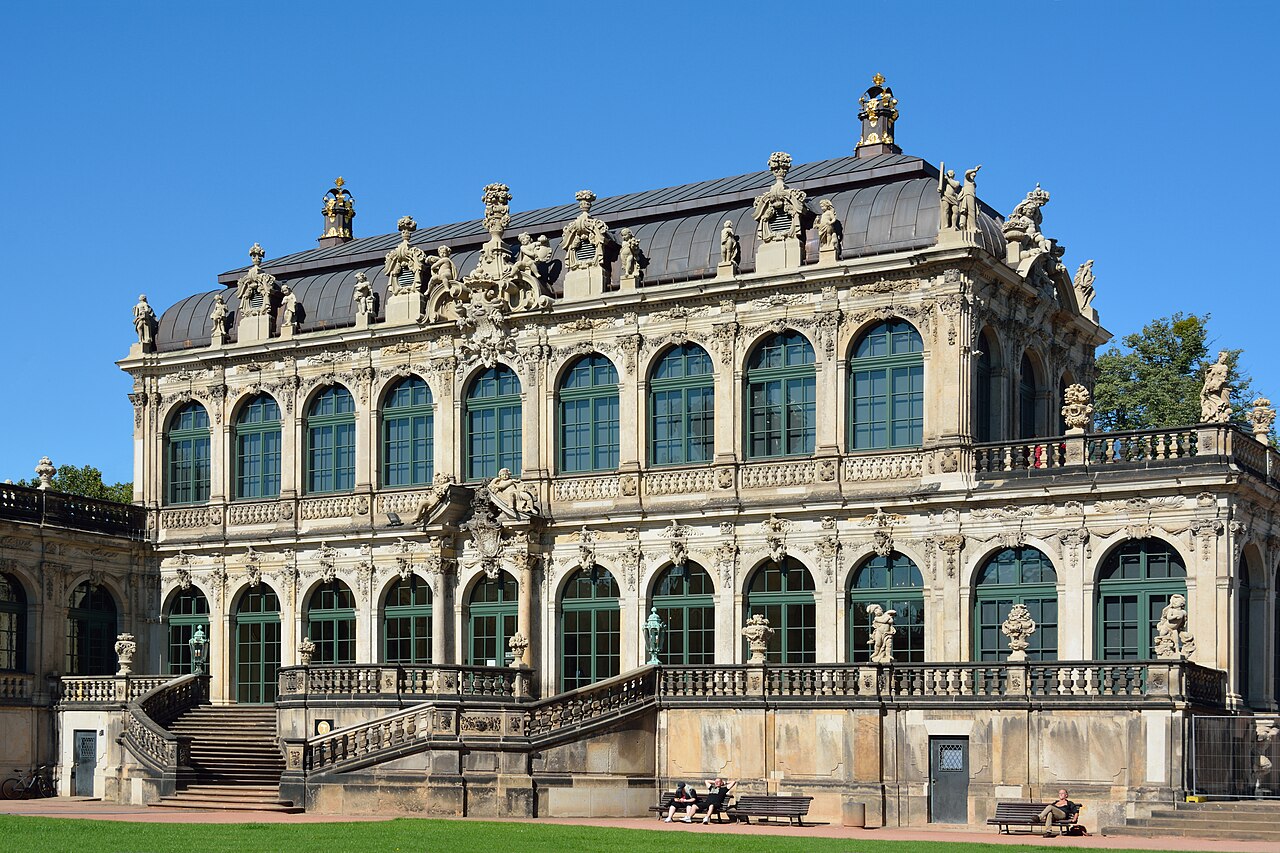
Stepping into the Zwinger is unlike entering any ordinary palace. Instead of a single grand building, you find yourself in a vast open courtyard surrounded on all sides by elegant galleries and crowned at intervals by ornate pavilions, the whole composition alive with sculpture, fountains, and baroque exuberance. It feels less like a house and more like a stage set for a royal festival, which is close to what it was.
The scale and openness are striking. Where most palaces turn inward, the Zwinger embraces you in a great public space, designed for crowds, ceremonies, and spectacle. Walking into the courtyard, you are surrounded by a harmonious ensemble of buildings that frame the sky and draw the eye from one ornamented pavilion to the next, a carefully orchestrated experience of beauty and grandeur.
Everywhere you look there is detail to admire, from the carved stone figures that populate the facades to the fountains and the sweeping flights of steps. The baroque love of movement, richness, and theatrical effect is on full display, and the result is a space that lifts the spirits, exactly as its creator intended when he built it as a setting for the pleasures of his court.
Take time to stand in the center of the courtyard and turn slowly, taking in the whole ensemble. Only from here can you appreciate how the different parts, galleries, gates, and pavilions, work together as a single composition. The Zwinger was designed to be experienced as a whole, a complete baroque world, and that is how it rewards the visitor who pauses to take it in.
There is a reason the Zwinger appears on so many images of Dresden and draws visitors from around the world. Few places capture the exuberance and confidence of the baroque so completely, and few offer such a rich combination of architecture, sculpture, gardens, and art within a single, unforgettable space.
Augustus the Strong and His Grand Vision
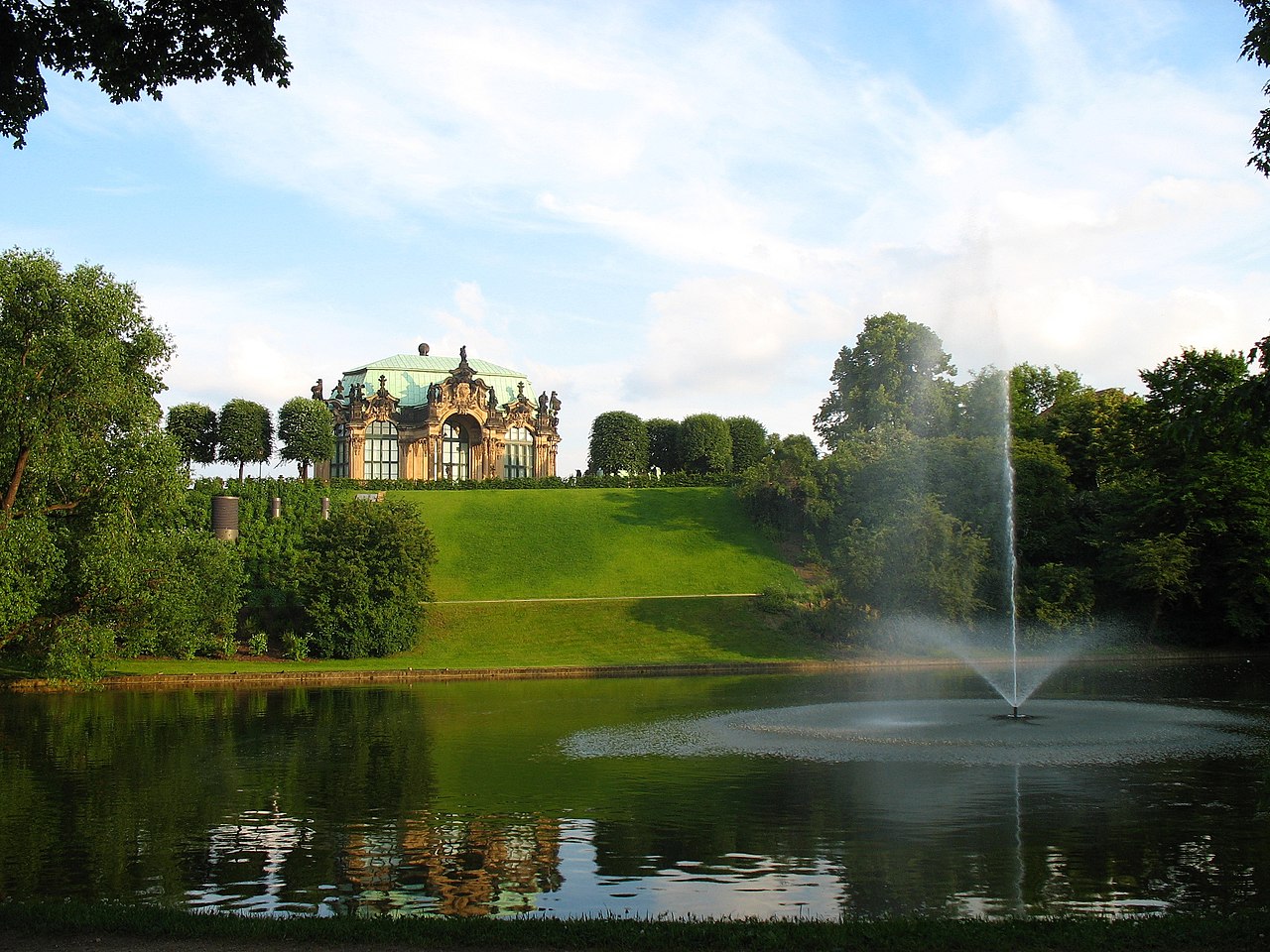
The Zwinger is inseparable from the extraordinary personality of Augustus the Strong, the ruler of Saxony who also became king of Poland and one of the most ambitious princes of his era. Famous for his physical strength, his lavish tastes, and his boundless appetite for splendor, he set out to make Dresden one of the most magnificent cities in Europe, and the Zwinger was central to that dream.
Augustus had seen the great palaces and gardens of other courts, and he was determined that his capital should rival or surpass them. He gathered the finest talents of the age and commissioned works on a grand scale, using art and architecture to project the power and glory of his reign. The Zwinger was conceived as a brilliant setting for the festivities through which he displayed his magnificence.
His passion extended to collecting on an epic scale, from paintings and porcelain to scientific instruments and treasures of every kind. These collections, among the greatest in Europe, would eventually find homes within the Zwinger itself, turning the festival ground into a treasure house and cementing Dresden’s reputation as a center of art and culture.
Understanding Augustus is key to understanding the Zwinger. It is the creation of a ruler who believed in splendor as an expression of power and who had the wealth, taste, and ambition to realize his vision on a breathtaking scale. The ensemble stands as a monument to his personality, flamboyant, cultured, and utterly committed to the pursuit of beauty.
His dual role as elector of Saxony and king of Poland gave him both the resources and the motivation for such grand projects, as he sought to match the prestige of the great monarchies of Europe. Dresden became the stage for this ambition, and the Zwinger its most brilliant act, a place where the wealth and confidence of his reign could be displayed to the world.
For all his extravagance, Augustus left a legacy that endures long after the festivities he loved have faded, in the form of collections and buildings that still enrich the world. The Zwinger is the finest proof that his pursuit of splendor, whatever its cost, produced something of lasting value and beauty.
The Architect and the Sculptor

The Zwinger was brought to life by the collaboration of a brilliant architect and a gifted sculptor, whose partnership defined its character. The architect designed the overall plan and the elegant structures that frame the courtyard, while the sculptor and his workshop populated them with the vivid baroque figures that give the ensemble so much of its life and movement.
The architect’s achievement was to create a unified composition of great sophistication, balancing openness and enclosure, movement and harmony. His galleries and pavilions are masterpieces of baroque design, playful yet disciplined, and they frame the courtyard with a rhythm that carries the eye around the whole space in a continuous, satisfying flow.
The sculptor’s contribution was equally vital. His figures, nymphs, gods, and allegorical characters, swarm across the facades and fountains, turning stone into something alive and dynamic. Their energy and sensuality are hallmarks of the German baroque at its finest, and they give the Zwinger a warmth and vivacity that pure architecture alone could not achieve.
Together these two artists created something greater than either could have made alone, a total work of art in which architecture and sculpture are perfectly fused. The Zwinger is celebrated as one of the great collaborative masterpieces of the baroque, and the names of its creators are honored as among the finest talents Germany produced in that golden age of court art.
Their collaboration unfolded over years of intensive work, as the ensemble took shape piece by piece under the demanding eye of their royal patron. The close understanding between architect and sculptor allowed the figures and the buildings to be conceived together, so that neither feels added to the other, a unity that is one of the secrets of the Zwinger’s enduring appeal.
The Crown Gate and the Grand Entrances
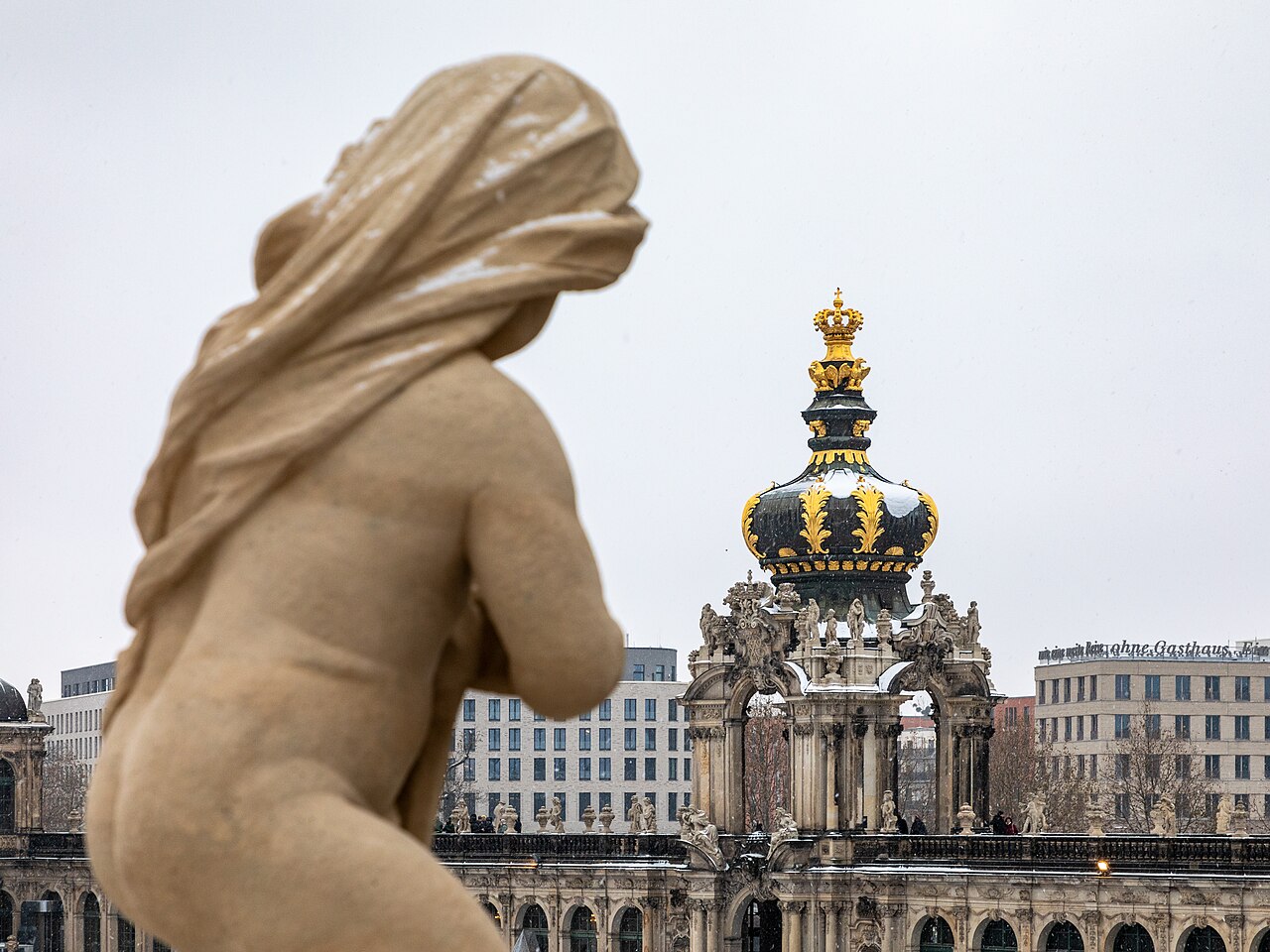
Among the most beloved features of the Zwinger is its crown gate, a splendid baroque gateway topped with a great gilded crown that symbolizes the royal ambitions of its builder. Elaborately decorated and crowned with sculpture, it is one of the iconic images of Dresden and a perfect expression of the ensemble’s blend of architecture, ornament, and symbolism.
The gate was designed to impress all who passed through it, announcing the royal character of the space beyond. Its rich decoration and the glittering crown above proclaim the status of Augustus as both elector and king, turning a simple entrance into a statement of power and a work of art in its own right.
The other entrances and gateways of the Zwinger are similarly treated, each contributing to the sense of ceremony and splendor. Moving through these ornate thresholds, you feel the baroque love of staged arrivals, the way a grand entrance can heighten anticipation and prepare the visitor for the magnificence within.
The crown gate remains one of the most photographed features of the entire ensemble, and rightly so. It captures in a single image the spirit of the Zwinger, royal, exuberant, and gloriously decorative, and it has become a symbol of Dresden itself, instantly recognizable and endlessly admired by the visitors who stream through it.
Approaching the Zwinger through this gateway is the ideal way to begin a visit, for it frames the courtyard beyond and sets the tone for everything that follows. The transition from the busy city to the serene, ordered world within is one of the great pleasures of the ensemble, and the crown gate marks that threshold in the grandest possible style.
The Pavilions and the Famous Carillon

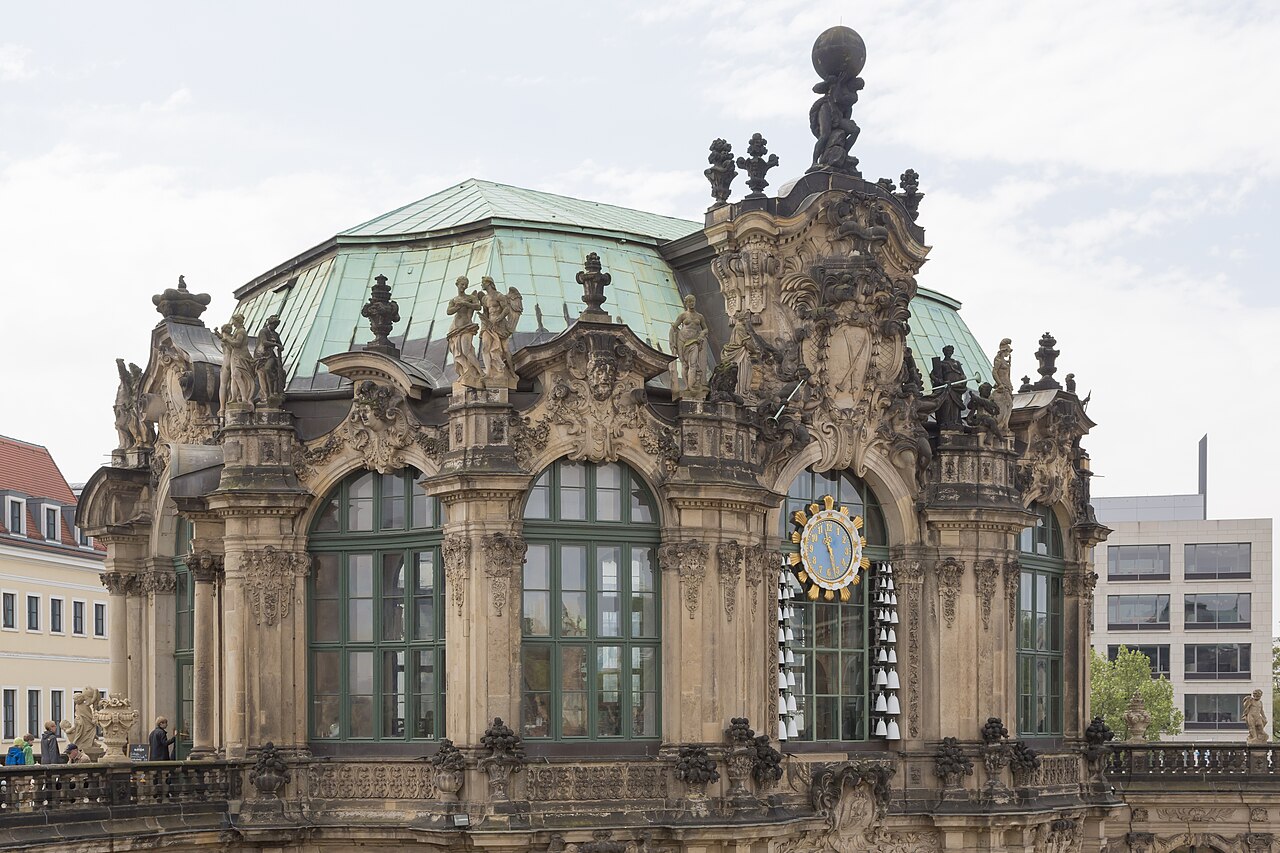
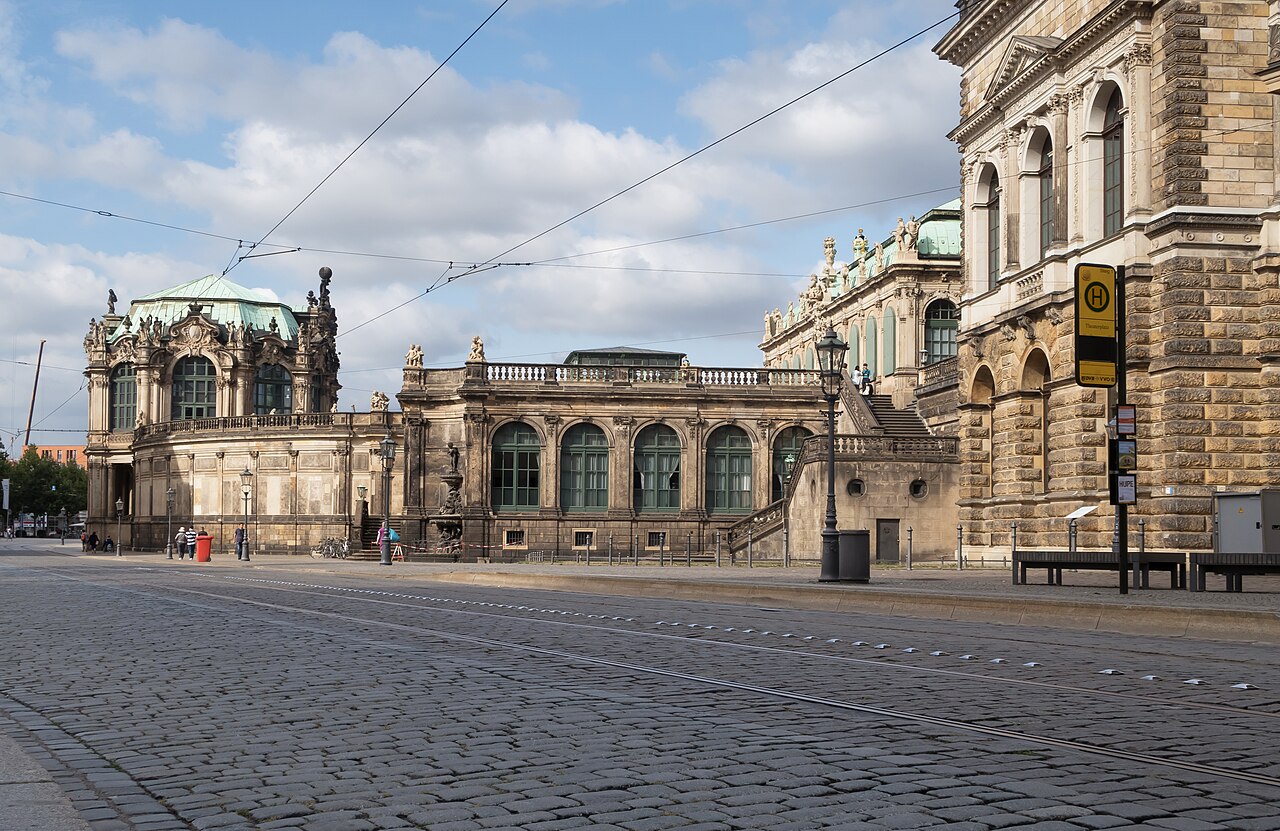
The Zwinger’s galleries are punctuated by ornate pavilions that serve as focal points of the composition, each a baroque masterpiece in miniature. Among them is a wall pavilion crowned with a famous figure and rich with sculpture, considered one of the high points of the whole design and a favorite subject for admirers of baroque architecture.
Perhaps the most charming is the pavilion that houses a carillon of porcelain bells, made from the celebrated local porcelain for which Saxony became famous. This glockenspiel plays melodies at intervals, delighting visitors with its clear, bright chimes and linking the architecture to another of Augustus the Strong’s great passions, the production of fine porcelain.
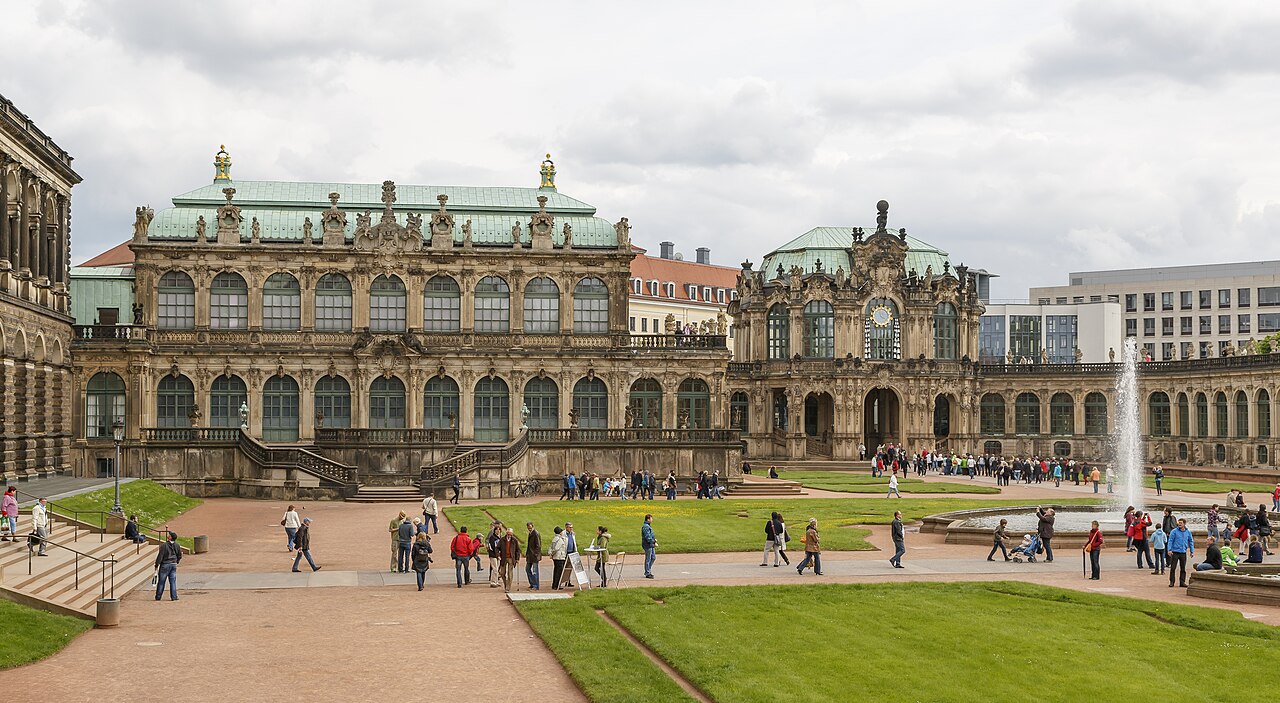
The pavilions give the Zwinger its distinctive skyline, rising above the galleries with their domes, sculptures, and ornamented crowns. They break up the horizontal sweep of the surrounding structures and provide visual drama, drawing the eye upward and adding to the sense of festive abundance that defines the ensemble.
Exploring the pavilions up close reveals the extraordinary quality of the craftsmanship, from the carved stone to the gilded details. Each is a world of baroque invention, and together they form a sequence of highlights around the courtyard, rewarding the visitor who takes the time to study them individually as well as to appreciate the ensemble as a whole.
The decision to use local porcelain for the carillon was a stroke of genius, uniting architecture, music, and the craft that Saxony had pioneered in a single charming feature. Visitors who linger to hear the bells chime experience a small, perfect expression of everything the Zwinger represents, the marriage of art, craft, and princely delight.
The Great Courtyard and the Nymphs Bath

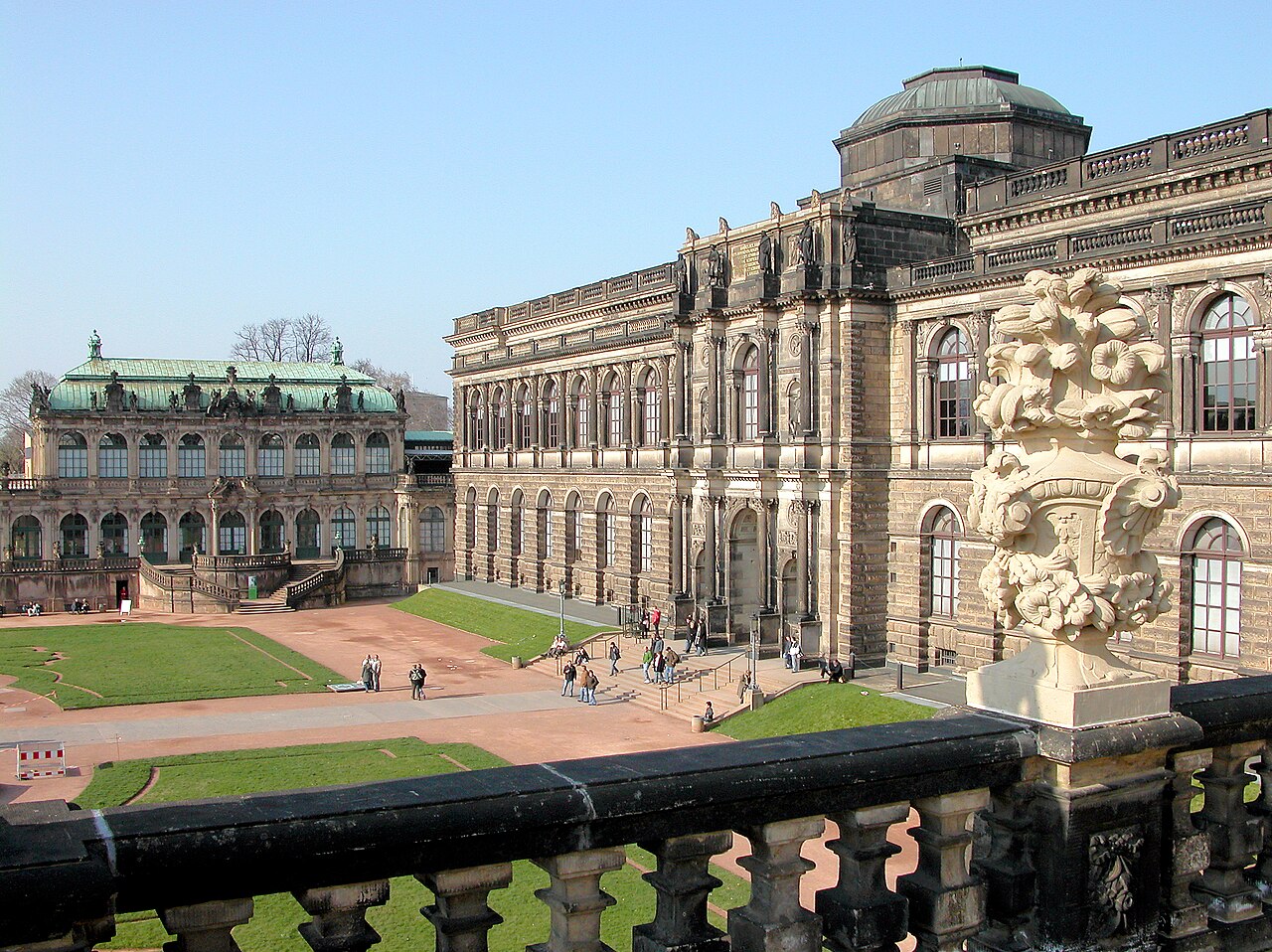
At the heart of the Zwinger lies its great courtyard, a vast formal space designed for festivals, with gardens, fountains, and ornamental planting arranged in geometric baroque patterns. This was the stage on which Augustus the Strong held his celebrated entertainments, and even empty it conveys a powerful sense of ceremony and grandeur.
One of the most enchanting features hidden within the complex is a fountain court often called the nymphs’ bath, a secluded baroque water feature adorned with sculpted figures and cascades. This intimate, richly decorated space is one of the treasures of the Zwinger, a jewel of fountain design where water, stone, and sculpture combine in a scene of baroque fantasy.
The gardens and fountains were essential to the original purpose of the Zwinger as a pleasure ground. Water play, greenery, and open space provided a setting for outdoor festivities, and the careful arrangement of these elements shows the baroque genius for turning a courtyard into a theatrical environment designed to delight and impress.
Wandering the courtyard and discovering the fountain court is one of the pleasures of a visit. These spaces reveal the Zwinger not just as a frame for museums but as a work of landscape and water design in its own right, a reminder that it was created above all as a place of celebration and pleasure for a splendor-loving court.
In the age of Augustus the Strong, these spaces would have been filled with crowds for great occasions, with music, fireworks, and all the apparatus of baroque festivity. Picturing the courtyard alive with such celebrations helps you understand its original purpose and the spirit of extravagant pleasure that lay behind its creation.
A Feast of Baroque Sculpture

Sculpture is everywhere in the Zwinger, and it is one of the chief glories of the ensemble. The facades, gates, and pavilions teem with carved figures, from gods and nymphs to allegorical personifications, all rendered with the energy, sensuality, and movement characteristic of the German baroque at its height.
These sculptures are not mere decoration but an integral part of the design, giving the architecture life and meaning. They tell stories, convey ideas, and animate the stone, so that the whole ensemble seems to pulse with activity. The interplay between the architecture and the figures that inhabit it is central to the Zwinger’s effect.
The quality of the carving is exceptional, the product of a great sculptor and his skilled workshop working at the peak of their powers. Every figure is full of character and dynamism, caught in dramatic poses and gestures that embody the baroque love of theatrical emotion. Together they form one of the richest displays of outdoor sculpture in Europe.
For visitors, the sculpture rewards close attention. Beyond the overall impression of abundance, individual figures reveal remarkable artistry and invention, and taking the time to study them deepens appreciation of the Zwinger as a total work of art in which architecture and sculpture are inseparably joined.
The themes of the sculpture, drawn largely from classical mythology, reflect the learning and taste of the age, which saw in the gods and heroes of antiquity a rich language of allegory and beauty. Reading these figures as the baroque audience would have done adds another layer of meaning to the visual feast they provide.
The Old Masters Gallery and the Sistine Madonna
Today the Zwinger houses some of the greatest museums in Germany, chief among them the celebrated gallery of old master paintings. This collection, assembled largely by Augustus the Strong and his successors, ranks among the finest in the world, rich in masterpieces by the greatest European painters and a magnet for art lovers from everywhere.
The gallery’s most famous treasure is a renowned Renaissance masterpiece by Raphael, one of the most beloved paintings in all of art, whose two little angels at the bottom have become famous in their own right. To stand before it in the Zwinger is one of the great experiences available to any visitor to Dresden, a direct encounter with a supreme work of the Italian Renaissance.
Around this celebrated painting hang countless other masterpieces, forming a collection of extraordinary depth and quality. The gallery reflects the discerning taste and immense resources of the Saxon court, which gathered art on a scale few other princes could match, and it turns the Zwinger into a shrine of European painting.
The presence of such a collection within the baroque splendor of the Zwinger creates a doubly rewarding experience. Visitors come for the architecture and stay for the art, or come for the art and are enchanted by the architecture, and the combination makes the Zwinger one of the essential cultural destinations in all of Germany.
The gathering of such a collection required not only wealth but vision and connoisseurship, qualities the Saxon rulers possessed in abundance. Agents were sent across Europe to acquire masterpieces, and the results placed Dresden among the foremost artistic capitals of the continent, a reputation the gallery upholds to this day.
Visitors often spend far longer in the gallery than they planned, drawn from one masterpiece to the next through rooms of consistently high quality. The experience of encountering so many great works in such beautiful surroundings is one of the enduring reasons the Zwinger ranks among the world’s finest cultural destinations.
The Porcelain Collection and a Royal Obsession
Augustus the Strong was famously obsessed with porcelain, which he called his white gold, and the Zwinger houses one of the greatest collections of it in the world. His passion drove the development of the famous local porcelain manufactory, which became the first in Europe to produce true porcelain, a breakthrough of enormous importance.
The collection displayed in the Zwinger includes both the prized imports from the East that first captivated the king and the superb products of his own manufactory. Together they tell the story of a European obsession and of the scientific and artistic triumph that allowed Saxony to rival the finest porcelain of Asia.
Augustus’s love of porcelain was almost without limit, and stories of his acquisitions and ambitions have become legendary. The collection reflects both the aesthetic delight he took in these beautiful objects and the prestige that a great porcelain collection conferred on a princely court in the eighteenth century.
For visitors, the porcelain collection is a highlight that connects directly to the carillon in the pavilion outside, both expressions of the same royal passion. It offers a fascinating window into the tastes and ambitions of Augustus the Strong and into the history of one of Europe’s most celebrated luxury crafts.
The story of how Saxony cracked the secret of true porcelain, long a closely guarded mystery of the East, is one of the great tales of early modern science and industry, and the collection in the Zwinger is its living monument. It connects the beauty on display to a dramatic history of experiment, ambition, and discovery.
The Salon of Science and Instruments
Alongside its art and porcelain, the Zwinger holds a remarkable collection of historic scientific instruments, clocks, globes, and mathematical devices, reflecting the enlightened interests of the Saxon court. This salon of science shows that the rulers of Dresden valued knowledge and precision alongside beauty and splendor.
The instruments on display are often works of art in themselves, beautifully crafted in precious materials and designed to delight the eye as well as to serve their scientific purposes. They reflect an age when science, craftsmanship, and courtly display were closely intertwined, and when a fine instrument could be both a tool and a treasure.
This collection adds another dimension to the Zwinger, broadening its appeal beyond art and architecture to the history of science and technology. It reveals the court as a center of learning and curiosity, interested in measuring and understanding the world as well as in celebrating its own magnificence.
For visitors with an interest in the history of science, the salon is a fascinating stop, and for everyone it deepens the picture of the Zwinger as a place where many strands of culture came together. Art, craft, and knowledge all found a home here, making the ensemble a true microcosm of the baroque court at its most ambitious.
Among the treasures are globes, telescopes, and elaborate timepieces that reveal how the educated elite of the baroque age sought to measure and comprehend the cosmos. These objects bridge the worlds of art and science, showing that curiosity about the natural order was itself a form of princely magnificence.
Destruction in War and a Faithful Rebuilding
The Zwinger’s beauty makes its twentieth-century history especially moving. In the closing months of the Second World War, Dresden suffered devastating bombing that reduced much of the city, including the Zwinger, to ruins. The glorious ensemble, the pride of Saxony, was left shattered and burned, a symbol of the catastrophe that engulfed the city.
The decision to rebuild was an act of cultural determination. Over the years that followed, the Zwinger was painstakingly reconstructed, its damaged structures repaired and its lost details recreated using old records, photographs, and surviving fragments. The work required great skill and patience, and it restored one of Germany’s greatest monuments to its former splendor.
This rebuilding is part of the larger story of Dresden’s recovery, a city that has worked hard to reclaim its heritage after wartime devastation. The Zwinger stands as one of the great successes of that effort, a monument not only to the baroque age that created it but to the modern determination to preserve and restore what war had destroyed.
Knowing this history adds depth to any visit. The splendor you see is not an untouched survival but a careful resurrection, a testament to the value people place on beauty and to the possibility of recovery even after terrible loss. The Zwinger is thus a monument twice over, to the age of Augustus the Strong and to the resilience of the city that rebuilt it.
The contrast between the images of the ruined Zwinger in 1945 and the splendid ensemble visitors see today is almost impossible to believe, and it stands as one of the most inspiring examples of postwar cultural restoration anywhere in Europe. It is a reminder that beauty, once lost, can sometimes be reclaimed through patience, skill, and determination.
The Zwinger on Film
Because the Zwinger is best understood as a complete ensemble, a video walkthrough is an excellent way to appreciate how its parts fit together. On film you can move through the courtyard, take in the galleries and pavilions, approach the crown gate, and discover the fountain court, gaining a sense of the whole composition that individual photographs cannot provide.
As you watch, notice the interplay of architecture and sculpture, the way the figures animate the facades and the pavilions punctuate the skyline. Seeing the ensemble in motion helps you grasp the baroque genius for staging space and spectacle, and it conveys the festive, celebratory spirit that lies at the heart of the design.
Video also helps convey the richness of the museums within, from the old master paintings to the porcelain and scientific instruments. Following a camera through the galleries and the courtyard, you gain a vivid impression of the Zwinger as both a work of art and a treasure house, and of why it remains the crowning glory of Dresden.
Visiting the Zwinger Today
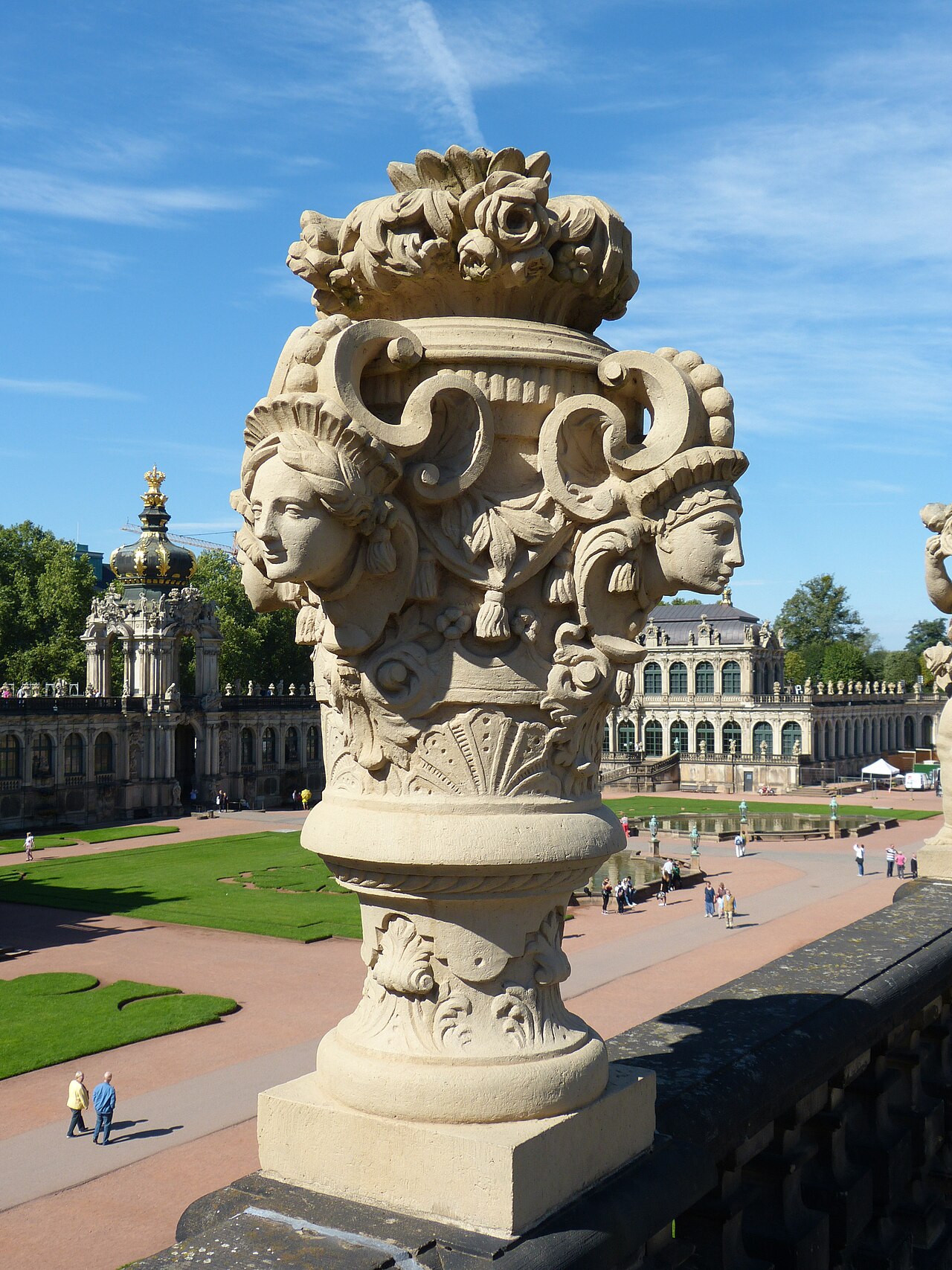
Today the Zwinger is one of the great cultural attractions of Germany, open to visitors who come to admire both its baroque architecture and the world-class museums it contains. You can wander the courtyard and gardens freely, climb to the galleries, and visit the collections of paintings, porcelain, and scientific instruments housed within its walls.
It stands at the heart of Dresden’s historic center, close to other major sights, making it easy to include in a day exploring the city once known as the Florence on the Elbe. Because the museums have their own opening hours and ticketing, it is worth checking arrangements in advance, especially if you wish to see the famous painting gallery and the porcelain collection.
Allow plenty of time to enjoy both the architecture and the art. The courtyard, gates, and pavilions reward unhurried exploration, and the museums could occupy hours on their own, so the Zwinger easily fills a rich and satisfying day. Knowing the story of its creation and its rebuilding adds greatly to the experience.
You will find the Zwinger in the historic center of Dresden; see the map below to help plan your route: see the map below. Whether you come for the baroque splendor of the architecture, the treasures of its museums, or the moving story of its destruction and rebirth, the Zwinger offers one of the most rewarding experiences in all of Germany, a dazzling monument to the age of Augustus the Strong.
For anyone exploring the baroque heritage of Germany, the Zwinger is close to essential, a place where the ambitions of a splendor-loving ruler, the genius of great artists, and the resilience of a proud city all come together. It rewards the visitor many times over and stands as one of the supreme achievements of its age.
View the location on Google Maps
Palaces Nearby
If you are exploring the great baroque palaces of Germany, these two pair naturally with a visit here:
You May Like
Konopiste the Bohemian Castle of a Doomed Archduke


One thought on “The Zwinger of Dresden, a Baroque Festival Palace of Augustus the Strong”