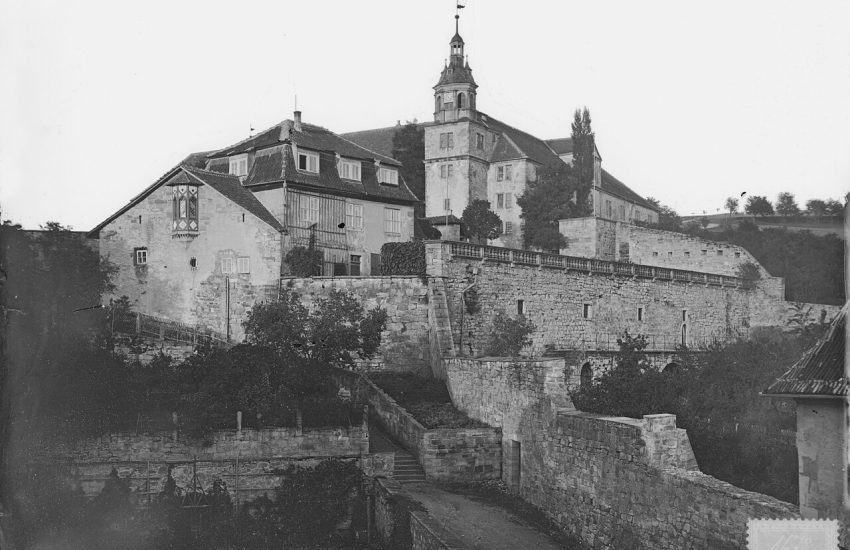
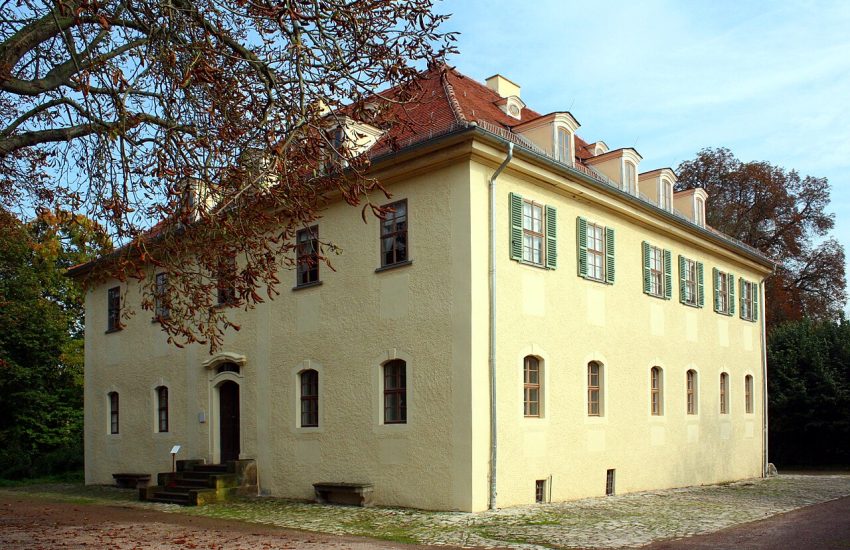
In the green valley of the Werra river, at the southern edge of the Thuringian Forest, lies the small town of Meiningen, and at its heart stands a baroque palace with a story that reaches far beyond its size. Elisabethenburg Palace was the residence of the dukes of Saxe Meiningen, and in the nineteenth century one of them, Duke Georg II, turned this quiet court into one of the most influential centres of theatre and music in Europe.
Behind the three long wings of the palace lie state rooms, a chapel, collections of paintings and musical instruments, and memories of Johannes Brahms, Richard Strauss and Max Reger, all of whom worked with the famous Meiningen Court Orchestra. Today the palace houses the Meiningen Museums, and the town proudly calls itself a city of theatre and music.
In this article we will explore Elisabethenburg from the duke who built it to the theatre duke who made it famous, through its architecture, its rooms, its collections and its gardens, and we will finish with practical tips for your visit.
In This Article
- A Baroque Palace in the Werra Valley
- The Dukes of Saxe Meiningen
- Three Wings Around a Courtyard
- The Court of Honour
- Georg II, the Theatre Duke
- The Court Theatre and Its Legacy
- Brahms, Bulow and the Court Orchestra
- State Rooms and Apartments
- Paintings and Collections
- The Palace Chapel
- The English Park
- Elisabethenburg on Video
- Visiting Elisabethenburg Today
A Baroque Palace in the Werra Valley
Arriving in Meiningen, you quickly notice that the town feels larger and grander than its size would suggest. Wide streets, elegant buildings, a theatre with a classical portico and a large English park all speak of a town that was once a princely capital.
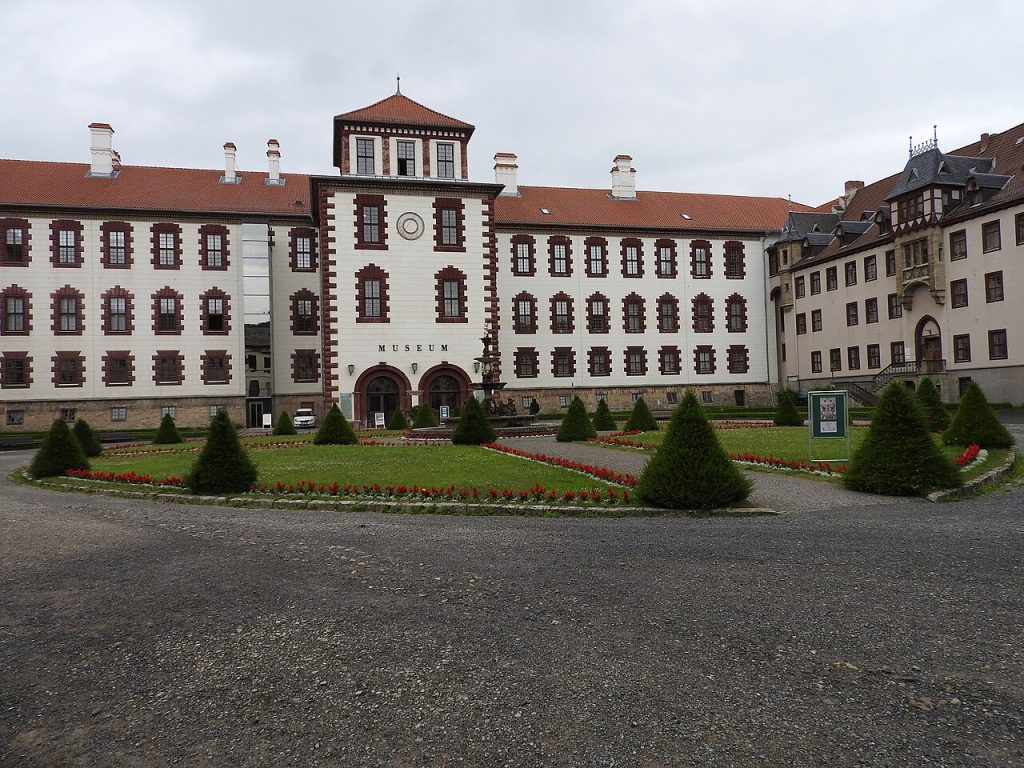
The palace stands at the northern edge of the old town, its three wings forming a horseshoe around a broad courtyard that opens toward the town. The pale facades, regular rows of windows and steep roofs give it a dignified, orderly appearance.
At first glance it looks like a typical German residence of the baroque period, solid and calm rather than flamboyant. Its real treasures lie inside, in the rooms, collections and stories that it holds.
What makes Elisabethenburg special is the way its history connects a small duchy in Thuringia with the great cultural movements of Europe, from baroque court life to the modern theatre and the music of the Romantic age.
Many visitors arrive expecting a modest local museum and leave amazed at how much there is to see, from historic interiors to paintings, musical instruments and theatre memorabilia.
The palace is also a perfect starting point for exploring Meiningen, whose theatre, parks and museums are all within easy walking distance.
Meiningen has kept much of its nineteenth century character, and walking from the station to the palace you pass villas, gardens and public buildings that were built when the town was the proud capital of an active and cultured duchy.
The Dukes of Saxe Meiningen
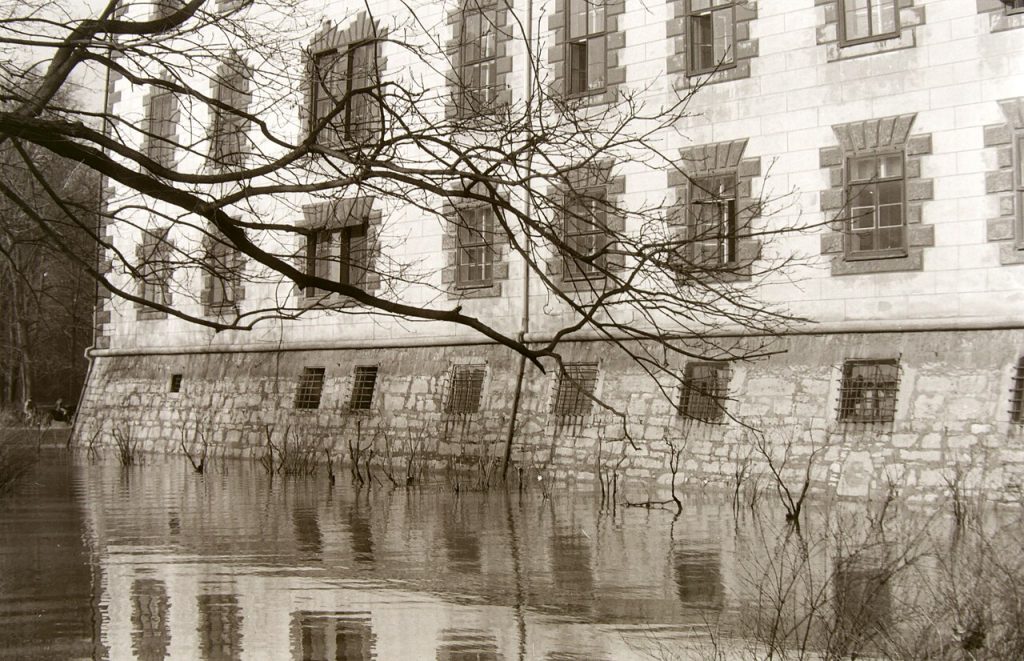
The duchy of Saxe Meiningen was created in 1680, when the lands of Duke Ernst the Pious of Saxe Gotha were divided among his sons. One of them, Bernhard I, received a territory in southern Thuringia with Meiningen as its capital.
A small medieval castle already stood in the town, but it was far too modest for a new ducal residence. Bernhard decided to build a palace worthy of his status, and work began in 1682.
The new palace was named Elisabethenburg in honour of Bernhard’s second wife, Elisabeth Eleonore of Brunswick Wolfenbuttel, a sign of the close ties between the Thuringian dukes and the Guelph family of northern Germany.
The dukes of Saxe Meiningen ruled their small state for more than two centuries, until the end of the German monarchies in 1918. Although their territory was small, they were well connected through marriage with many European royal houses.
One of the most famous daughters of the house was Adelaide of Saxe Meiningen, who married the future King William IV of the United Kingdom and became queen. The Australian city of Adelaide is named after her.
The division of Ernst the Pious’s lands created a patchwork of small Saxon duchies in Thuringia, each with its own court, palace and capital. This fragmentation was politically weak, but it encouraged a remarkable flowering of culture, as every duke wanted his court to shine.
Bernhard I was a pious and scholarly ruler, and he built not only the palace but also churches and schools, laying the foundations of Meiningen as a residence town.
Over the following generations, the dukes added new institutions to the town, including a library, an art collection and later the court theatre and orchestra.
Three Wings Around a Courtyard
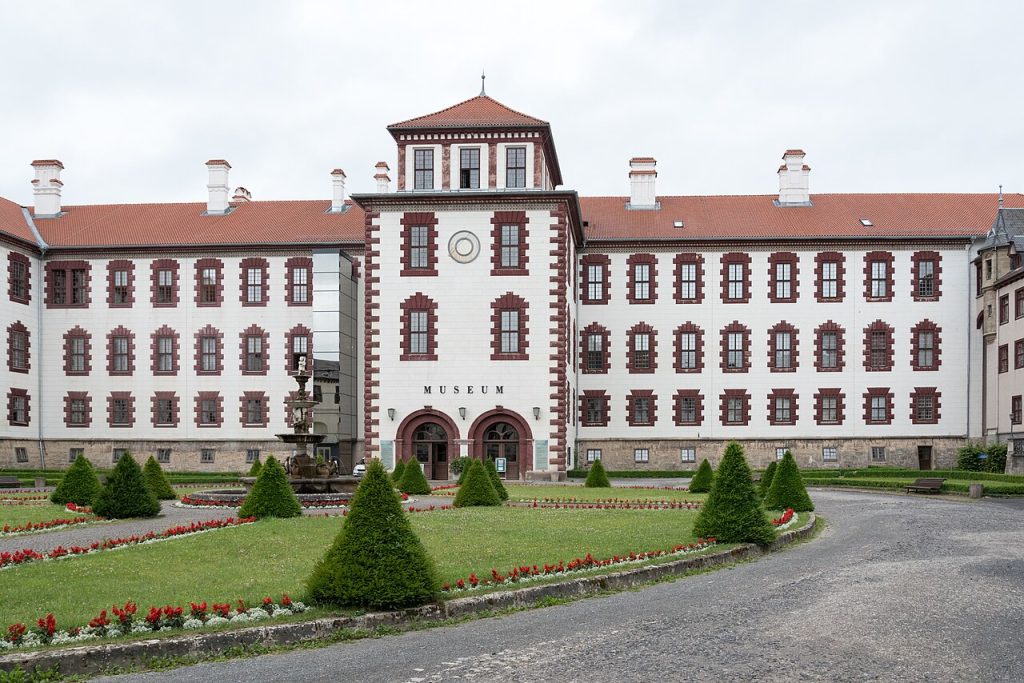
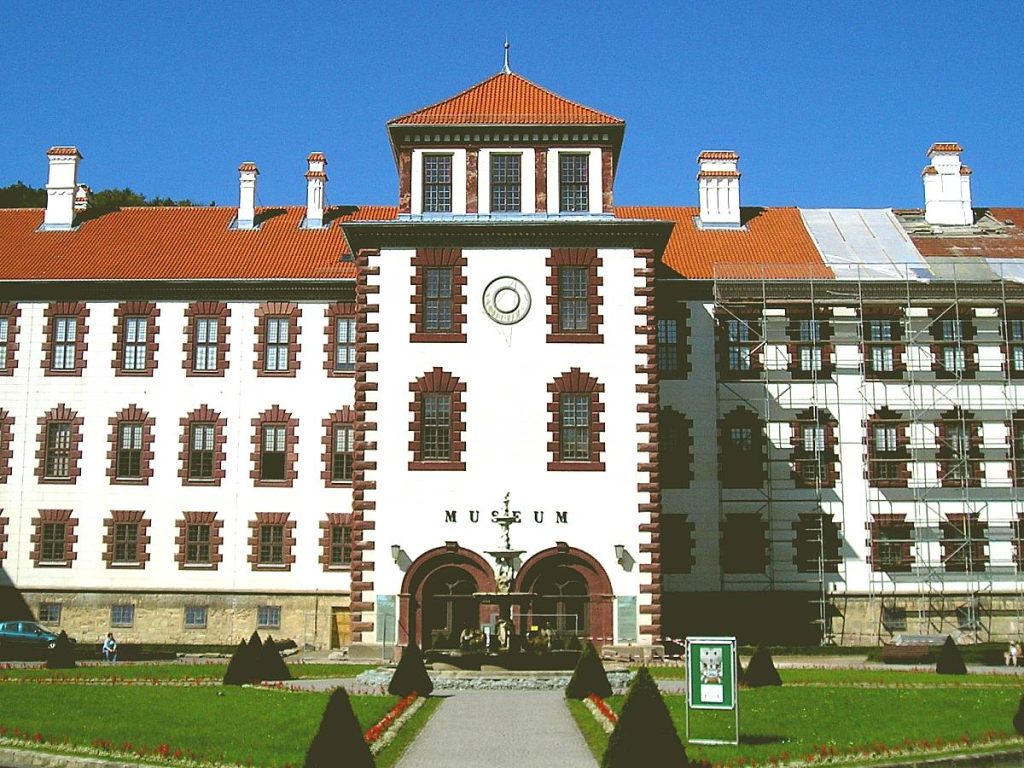
The palace was built between 1682 and 1692 in the early baroque style, with three wings arranged around a large court of honour. This layout, open toward the town, was typical of German residences of the period and expressed the relationship between the ruler and his capital.
The facades are relatively simple, with regular windows and modest decoration, reflecting the limited means of a small duchy and the sober taste of the late seventeenth century.
Parts of the older medieval castle and Renaissance buildings were incorporated into the new palace, so that its walls contain traces of several centuries of building history.
Later generations of dukes remodelled the interiors in the rococo and classical styles, adding new rooms, staircases and decoration, while the outward appearance of the palace changed relatively little.
Walking around the courtyard, you can see how the different wings connect with each other and with the surrounding town, creating a calm and harmonious ensemble.
In the evening, when the facades are lit, the courtyard takes on a quiet, almost theatrical atmosphere, a fitting setting for a palace so closely linked with the stage.
The roofs of the palace, with their dormer windows and towers, are one of its most distinctive features, and they can be seen from many points in the town.
Inside, staircases and corridors connect the wings, and some of the original baroque stairwells survive, with sturdy balustrades and stone steps worn by centuries of use.
The palace was never destroyed by war or fire, so it preserves an unusual continuity of history, with each generation leaving its mark without erasing the past.
The Court of Honour
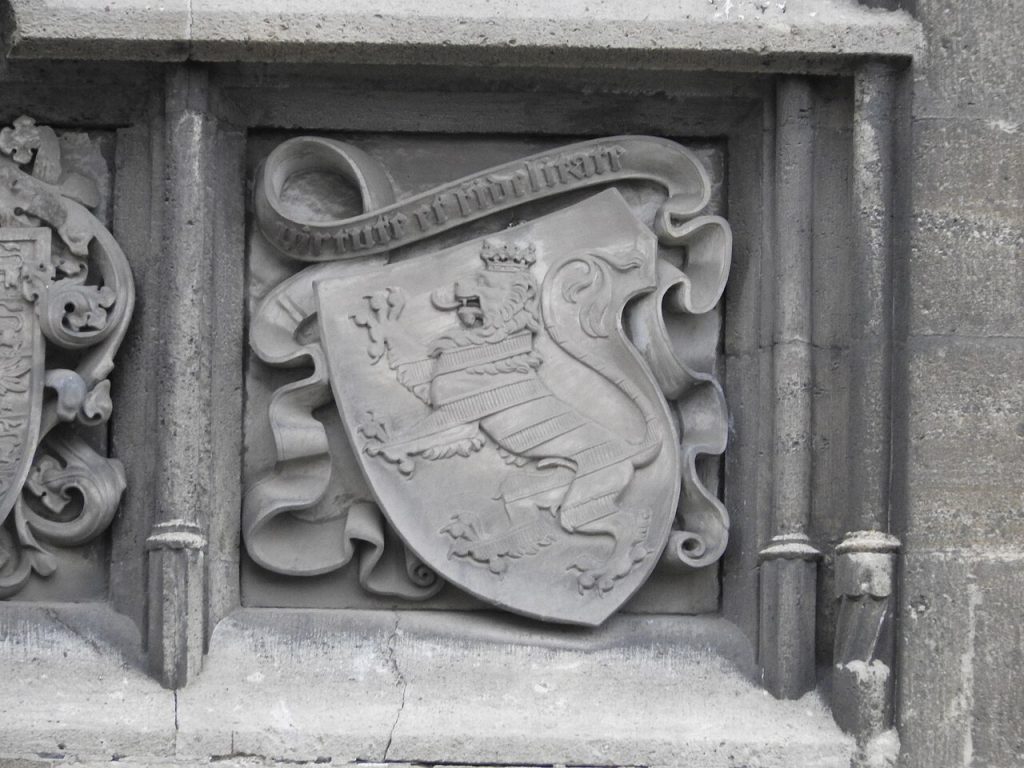
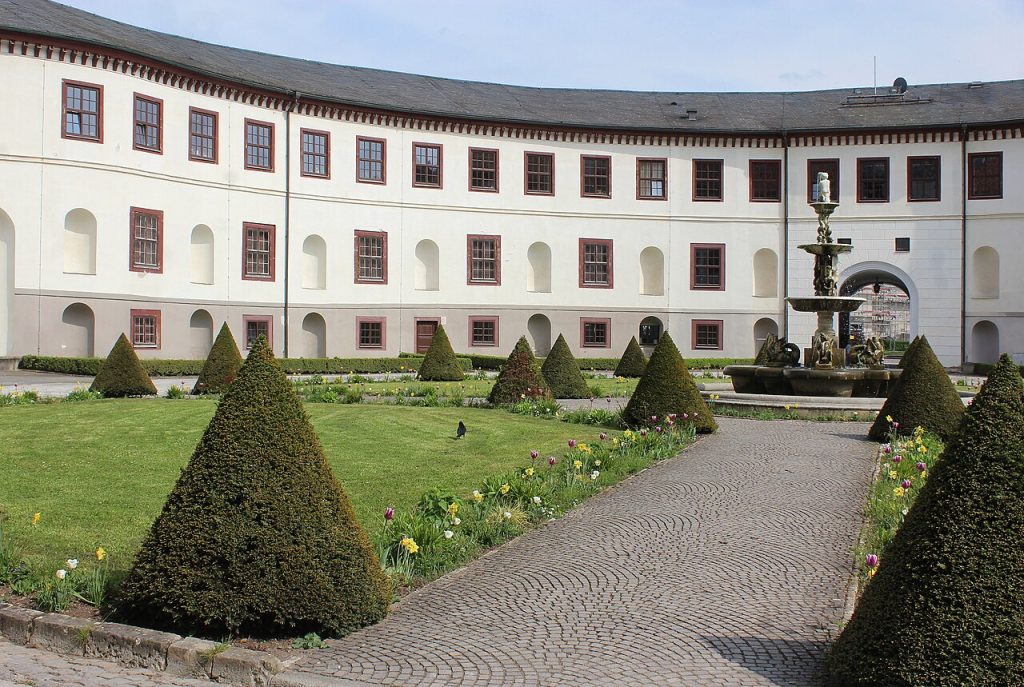
The court of honour in front of the palace is a wide, open space framed by the three wings. In the days of the dukes, carriages arrived here and ceremonies were held for important visitors.
Today the courtyard is a public space, used for events, concerts and markets, and it offers the best view of the palace as a whole.
From the courtyard, doors lead into the different wings, including the entrance to the museums and the palace chapel.
On a sunny day, the pale facades reflect the light and make the courtyard a pleasant place to pause before exploring the interiors.
Looking around, you can imagine the bustle of a small court, with officials, servants and guests moving between the wings and the town.
During the summer, the courtyard is sometimes transformed into an open air stage for concerts and theatre, continuing the tradition of performance that made Meiningen famous.
The wide space also allows visitors to step back and appreciate the proportions of the palace, which are best seen from the centre of the court.
Georg II, the Theatre Duke
The most famous ruler of Saxe Meiningen was Duke Georg II, who reigned from 1866 to 1914. A gifted artist and passionate lover of the theatre, he devoted much of his life and fortune to the court theatre in Meiningen.
Georg II took a personal interest in every aspect of production, designing sets and costumes himself and insisting on historical accuracy and careful ensemble work. With his wife, the actress Ellen Franz, and the director Ludwig Chronegk, he created a new style of theatre that emphasised realism, crowd scenes and the unity of the whole production.
From 1874 to 1890, the Meiningen court theatre toured Europe, performing in Berlin, London, Moscow and many other cities. Their productions of Shakespeare and Schiller amazed audiences and influenced theatre makers such as Konstantin Stanislavski.
Because of these tours, theatre historians often speak of the Meininger as one of the founders of modern stage direction, and the duke became known as the Theatre Duke.
His love of the arts also extended to music, painting and architecture, and he left his mark on the palace, the town and its institutions.
Georg II was also a passionate supporter of education and public welfare, and he founded or modernised many institutions in his duchy, from schools to hospitals.
His marriage to Ellen Franz, an actress from a middle class background, was unusual for a reigning duke, and she was given the title Baroness von Heldburg. Together they devoted themselves to the theatre and to the cultural life of Meiningen.
The duke spent his summers at Veste Heldburg, a castle in the south of his duchy, which he restored in the romantic style and which today houses the German Castle Museum.
The Court Theatre and Its Legacy
The theatre that made Meiningen famous stands a short walk from the palace. The present building, with its classical facade and columned portico, was rebuilt in the early twentieth century after a fire destroyed the earlier theatre in 1908.
Today the Meiningen State Theatre continues the tradition of the court theatre, with a full programme of drama, opera, ballet and concerts.
In the palace, exhibitions tell the story of the theatre duke and his company, with stage designs, costumes, photographs and documents from the famous tours.
Another museum in the town presents a remarkable collection of historic stage scenery, painted backdrops and theatre machinery, giving a vivid picture of how the Meininger productions looked.
For lovers of theatre, Meiningen is a place of pilgrimage, where the roots of modern staging can still be felt.
The Meininger style was based on long rehearsals, a strong ensemble and detailed attention to costumes and scenery, ideas that were revolutionary at a time when star actors usually dominated the stage.
Productions such as Julius Caesar, with its carefully choreographed crowd scenes, became legendary, and critics across Europe wrote enthusiastically about the company.
The theatre museum, housed in the former riding hall of the court, displays original painted backdrops from the duke’s productions, some of them several metres high, offering a rare glimpse of nineteenth century stagecraft.
Brahms, Bulow and the Court Orchestra
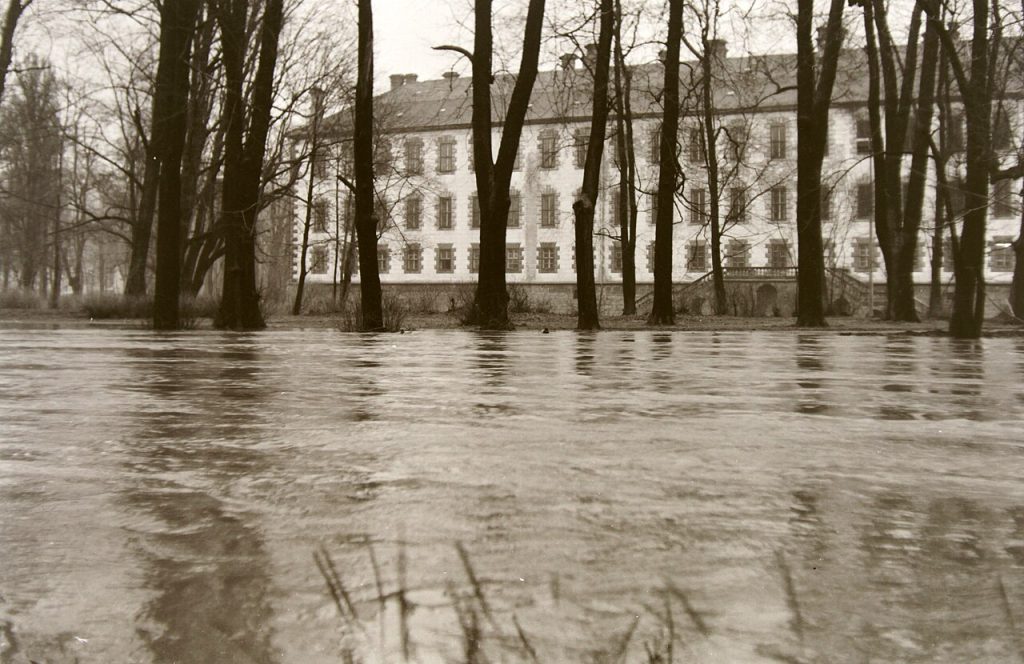
Music was as important as theatre at the court of Meiningen. The Meiningen Court Orchestra became one of the finest in Europe in the late nineteenth century under the conductor Hans von Bulow.
Johannes Brahms was a close friend of the duke and the orchestra, and he conducted the premiere of his Fourth Symphony in Meiningen in 1885. He visited the town many times and played a central role in its musical life.
The young Richard Strauss worked in Meiningen as assistant and then successor to Bulow, gaining experience that launched his career as one of the great composers of the twentieth century.
Later, Max Reger served as director of the court music, and his memory is preserved in the town through an archive and exhibitions.
The palace museums display musical instruments, manuscripts and memorabilia from this golden age, and concerts are still held in the palace and the theatre.
Hans von Bulow, one of the most famous conductors of his time, transformed the Meiningen orchestra into a disciplined ensemble that toured widely and set new standards for orchestral playing.
Brahms valued the orchestra so highly that he tried out new works with it before presenting them elsewhere, and his friendship with the duke and duchess was warm and lasting.
Today the Meiningen Court Orchestra still exists as the orchestra of the State Theatre, making it one of the oldest orchestras in Germany with an unbroken tradition.
State Rooms and Apartments
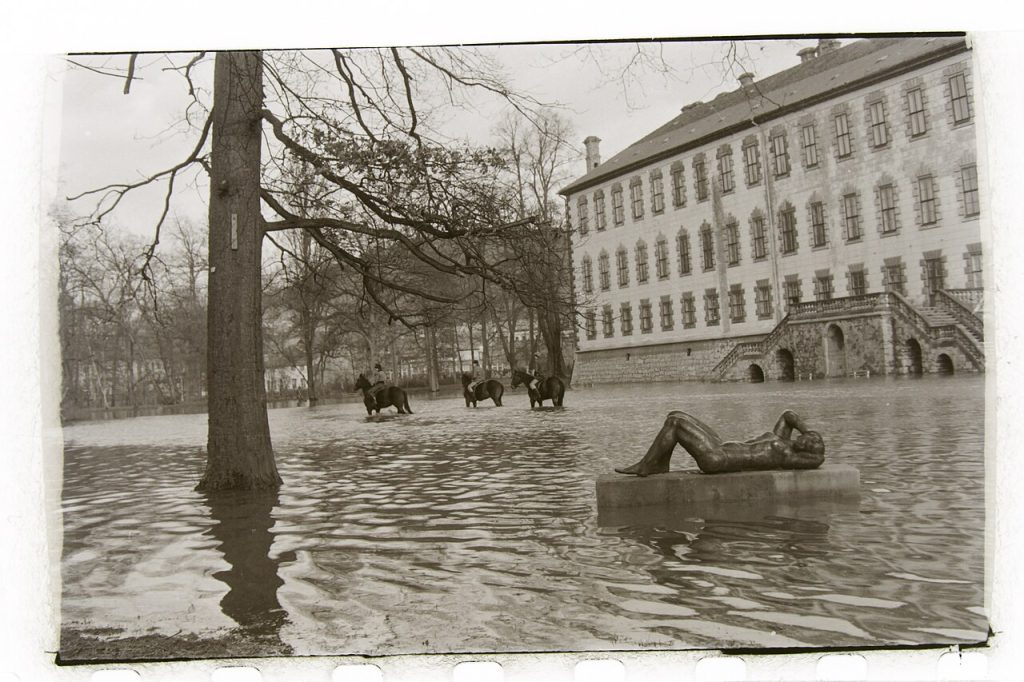
Inside the palace, a series of state rooms and apartments reveal the life of the ducal family over several centuries. The rooms are furnished with period furniture, paintings, porcelain and decorative objects.
Some rooms preserve baroque and rococo decoration, while others reflect the classical and historicist taste of the nineteenth century, when the palace was modernised by the later dukes.
Portraits of the dukes and their families hang in many rooms, introducing visitors to the people who shaped the history of Saxe Meiningen.
The elegant halls were used for receptions, concerts and family celebrations, and they still host events today.
Guided tours and information panels explain the history of each room and the objects on display.
Some rooms have been furnished to evoke the time of Georg II, with furniture, paintings and objects that reflect his artistic interests and the cultured atmosphere of his household.
Look out for fine tiled stoves, carved doors and painted ceilings, which show the craftsmanship of the Thuringian artisans who worked for the court.
Paintings and Collections
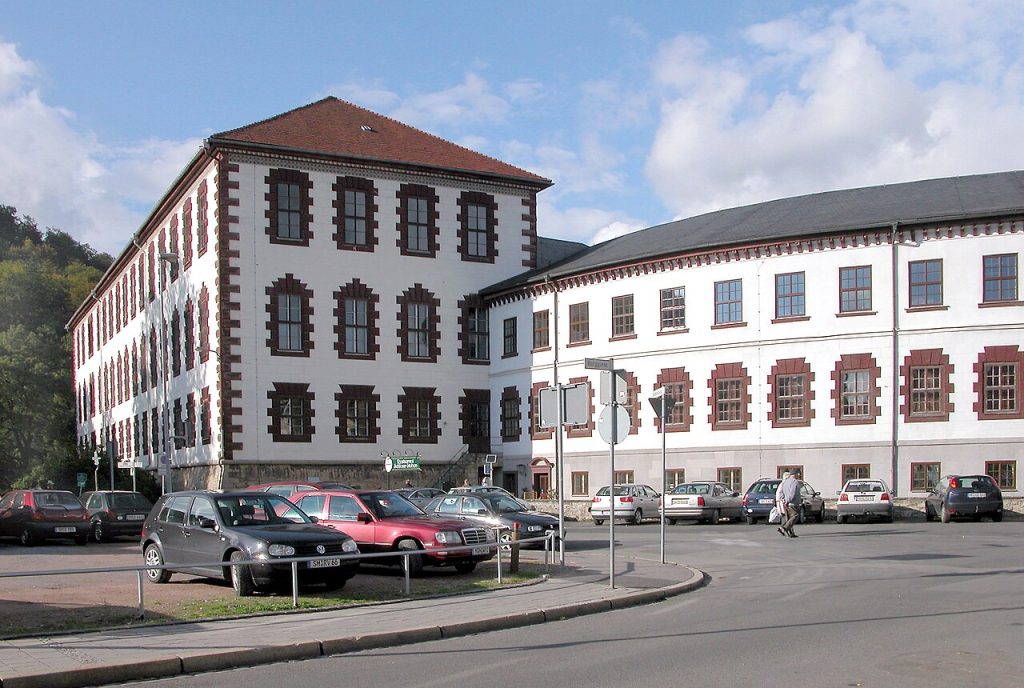
The Meiningen Museums hold rich collections of art, including paintings by German, Dutch and Italian masters gathered by the dukes over generations.
Georg II was himself a talented painter and draughtsman, and his drawings and designs for the theatre are among the most interesting items in the collection.
The museums also display sculptures, decorative arts and objects from the ducal household, giving a picture of court life in a small German state.
Temporary exhibitions explore themes from the history of the duchy, the theatre and music, so there is often something new to discover.
Art lovers will appreciate the quality of the collections, which are surprisingly rich for such a small town.
Among the highlights are works by Italian Renaissance and Baroque painters, Dutch masters and German artists of the nineteenth century, many acquired by the dukes during their travels.
The collection of musical instruments, including historic keyboard instruments and wind instruments, is particularly interesting for music lovers.
The Palace Chapel
The palace chapel, located in one of the wings, served the religious life of the ducal family and court. Its interior reflects the Protestant tradition of Thuringia, with galleries and a pulpit placed for preaching.
The chapel was used for baptisms, weddings and services, and it remains a calm and dignified space within the palace.
Concerts are sometimes held here, making use of its acoustics and intimate atmosphere.
The chapel is a reminder that faith was an important part of court life, alongside politics, art and entertainment.
The chapel’s simple elegance contrasts with the richer decoration of the state rooms, emphasising the Protestant ideals of the Thuringian dukes.
The English Park

Next to the palace lies the English Garden, a landscape park laid out in the late eighteenth and early nineteenth centuries. With its lawns, old trees, ponds and winding paths, it is one of the most attractive green spaces in Thuringia.
The park contains monuments and memorials, including a memorial to the dukes and to the composer Max Reger, and it offers pleasant walks close to the town centre.
In spring and summer, the park is full of colour, and in autumn its old trees glow in shades of gold and red.
From the park, there are fine views of the palace and the town, and it is easy to imagine the ducal family strolling here with their guests.
The park also connects with the river Werra, and paths lead along the water into the surrounding countryside.
Benches and shaded paths make the park a pleasant place for a rest after visiting the museums, and on summer evenings it fills with residents enjoying the fresh air.
The park was designed in the English landscape style, with carefully composed views, groups of trees and open lawns, reflecting the romantic taste of the time.
Elisabethenburg on Video

For a look at the palace and the town of Meiningen, the video below takes you to Elisabethenburg Palace and its surroundings.
Watch for the courtyard, the state rooms and the traces of the theatre duke.
If the video inspires you, read on for practical tips on visiting Meiningen.
Visiting Elisabethenburg Today

Elisabethenburg Palace houses the Meiningen Museums, which are open throughout the year except on certain days. The state rooms, art collections, musical history exhibitions and theatre displays can be visited individually or on guided tours.
Meiningen lies in southern Thuringia, on the railway line between Eisenach and Schweinfurt, and is easy to reach by train or car.
Plan at least half a day for the palace and its museums, and longer if you want to see the theatre museum, walk in the English Garden and enjoy a performance at the State Theatre.
Meiningen also makes a good base for exploring the Thuringian Forest and the Rhon mountains, with their hiking trails and small historic towns.
Combine your visit with Wilhelmsburg Castle in Schmalkalden, a short drive away, and Molsdorf Palace near Erfurt for a journey through the princely heritage of Thuringia.
Whenever you visit, Elisabethenburg offers a fascinating encounter with a small court that left a large mark on the history of European theatre and music.
Meiningen hosts several festivals and theatre events throughout the year, and booking a performance in advance is a wonderful way to experience the living tradition of the theatre duke.
The town also has good restaurants and cafes, many of them serving Thuringian specialities such as dumplings and grilled sausages.
View the location on Google Maps
Palaces Nearby
If you have enjoyed this palace, the region holds more remarkable residences. Here are two more well worth adding to your journey:
- Wilhelmsburg Palace – the untouched Renaissance palace of the landgraves of Hesse in Schmalkalden.
- Molsdorf Palace – the rococo pleasure palace of Count Gotter near Erfurt.
You May Like