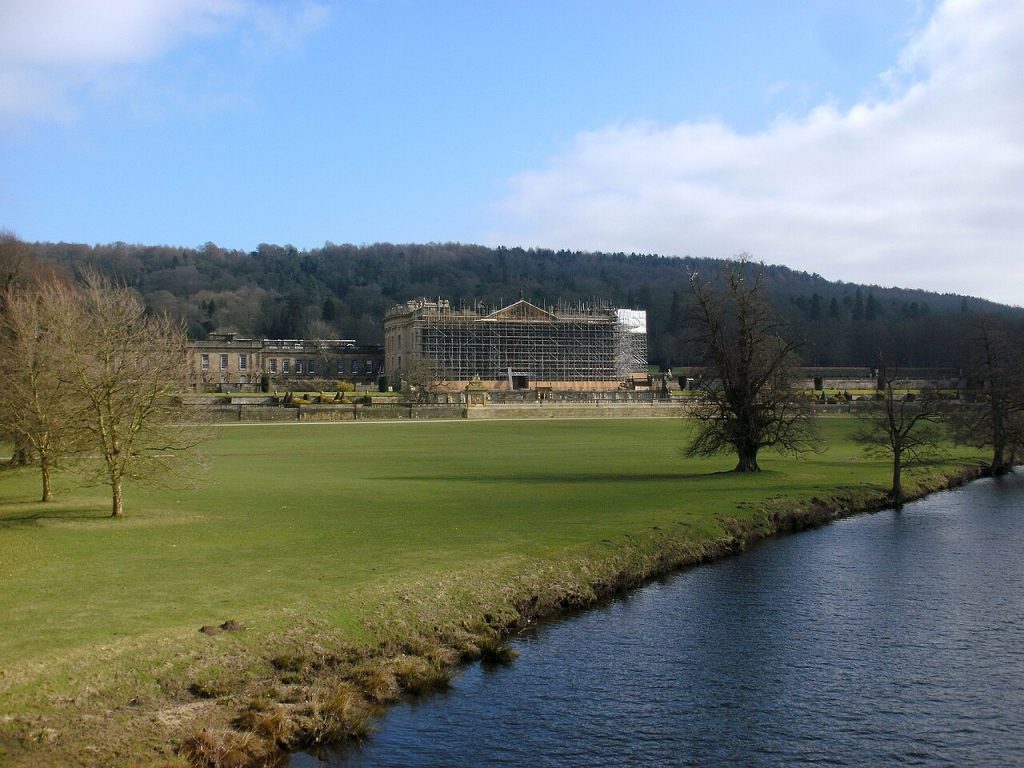
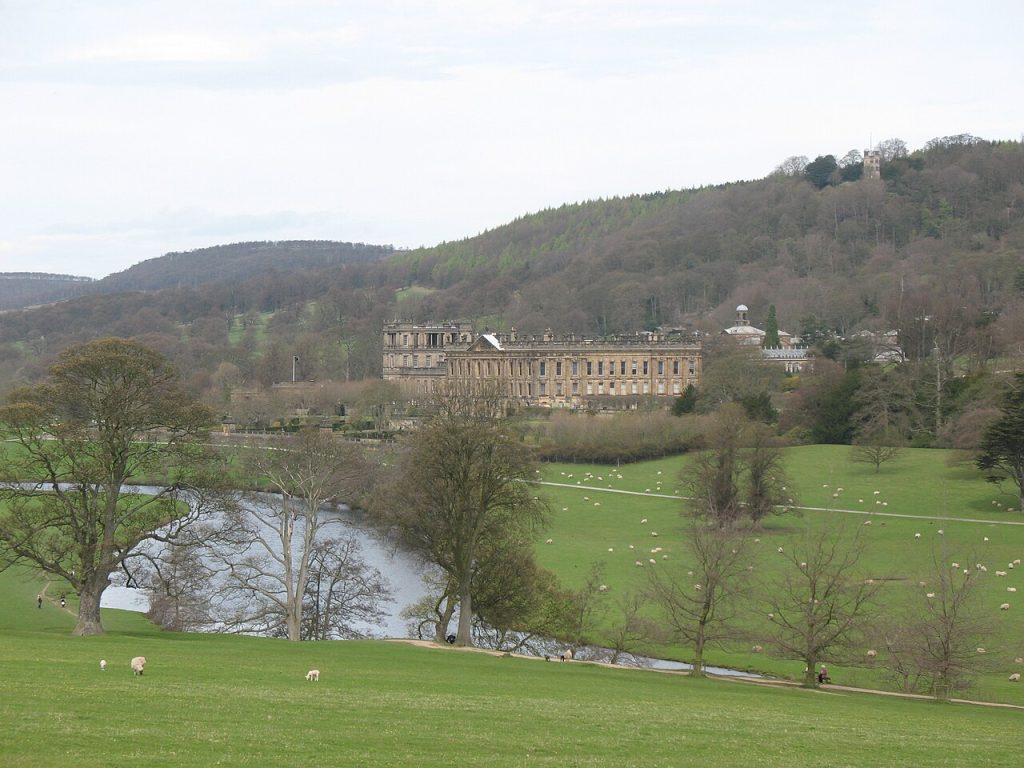
In the Derwent valley on the eastern edge of the Peak District, where moorland drops into parkland and the river runs over a weir beside a stone bridge, a house of pale gritstone with a gilded balustrade and tall sash windows stands against a wooded hill, with a cascade falling down the slope behind it and a single jet of water rising ninety metres into the Derbyshire sky. It is Chatsworth, home of the Cavendish family and the Dukes of Devonshire for sixteen generations, and the house the eighteenth century nicknamed the Palace of the Peak, which it has gone on being ever since: not a royal palace at all, but a private house that has out-collected, out-gardened and out-lasted most of the royal ones.
Chatsworth’s history is a relay of builders. Bess of Hardwick, the most formidable businesswoman of the Tudor century, began a house here in 1552 and held Mary, Queen of Scots in it as a prisoner; the first Duke, a Whig conspirator who helped put William of Orange on the throne, pulled Bess’s house down front by front between 1687 and 1707 and left the Baroque block that still stands; the fourth Duke brought in Capability Brown to sweep away the formal gardens and move a village; the sixth Duke, the Bachelor Duke, spent a fortune he did not have on a new north wing, a sculpture gallery and a young gardener named Joseph Paxton, whose Chatsworth glasshouses taught him how to build the Crystal Palace; and in 1950 the eleventh Duke inherited an eighty per cent death duty bill and a shut-up house, and he and his wife Deborah, the youngest Mitford sister, saved it by making it pay. This is the third stop of the British chapter.
Walk with me over the bridge and up to the Painted Hall, through the state apartments, the library and the sculpture gallery, out to the cascade, the rock garden and the Emperor Fountain, with Bess, six dukes, a gardener of genius and a Mitford in order. The contents are below.
In This Article
- The Derwent Valley and the Palace of the Peak
- Bess of Hardwick and the Tudor House
- Mary, Queen of Scots, a Prisoner at Chatsworth
- The First Duke Rebuilds, 1687 to 1707
- The Painted Hall and the State Apartments
- The Cascade and the Baroque Waterworks
- Capability Brown and the Moved Village
- Georgiana, the Duchess Who Ran Politics
- The Bachelor Duke and Joseph Paxton
- The Emperor Fountain and the Tsar Who Never Came
- The Devonshire Collection
- 1950: Death Duties and the Fight for the House
- The Chatsworth House Trust Today
- Chatsworth on Video
- Visiting Chatsworth Today
- Palaces Nearby
The Derwent Valley and the Palace of the Peak
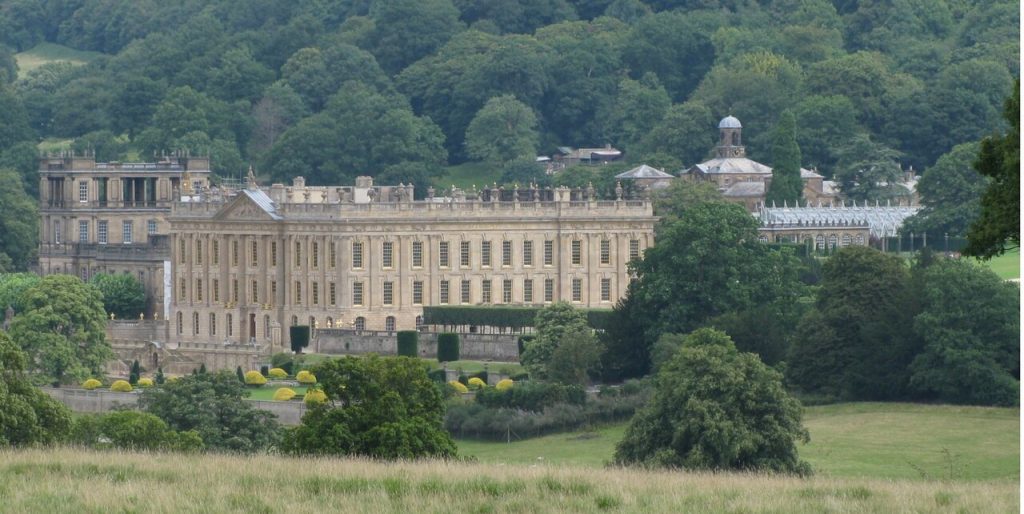
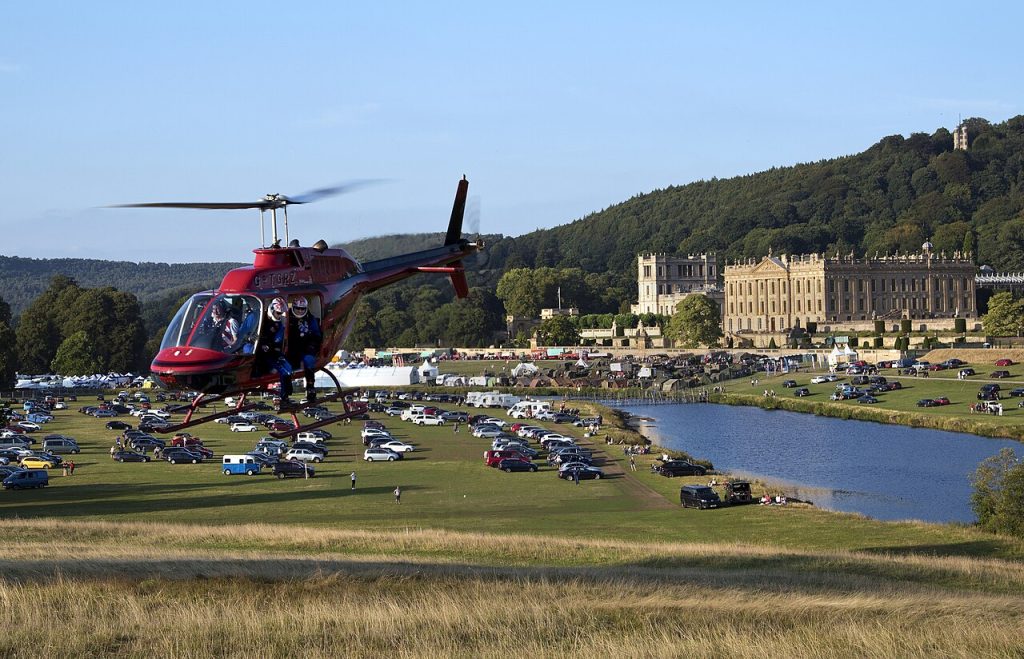
The setting is the first thing Chatsworth does to you. You come over the hill from Baslow or Beeley into four hundred hectares of park laid out so that the house appears across the river as a single bright object in a composed landscape of water, turf, oaks and grazing sheep, with the bulk of the moor behind it and Bess of Hardwick’s Elizabethan hunting tower on the skyline. The house is a square block around a courtyard with a long nineteenth-century wing to the north, built of local gritstone that weathers gold and grey, its roofline carrying a gilded balustrade and urns. The garden climbs the slope behind, and the whole estate of thirteen thousand hectares runs up onto the moors toward Sheffield.
Now, stop here at the one-arch bridge and look up at the west front. Everything about that view was arranged on purpose in the 1760s, including the river’s apparent width and the absence of a village that used to stand where you are looking.
Bess of Hardwick and the Tudor House
Elizabeth Hardwick, a Derbyshire squire’s daughter who married four times, each time upward, and who built Hardwick Hall, Oldcotes and Chatsworth, bought the Chatsworth estate with her second husband Sir William Cavendish in 1549 and began building in 1552, a tall courtyard house that she went on finishing after his death. Bess founded the family’s fortune and its builder’s instinct; her son by Cavendish became the first Earl of Devonshire, and her descendants have held the estate ever since, making Chatsworth one of the longest continuous family seats in Britain. Nothing of her house survives above ground except the hunting tower on the hill and, in the cellars, some vaulting.
She is the reason the Cavendishes are rich and the reason they build: five centuries later, the current family’s interventions in the house are still described by their own curators as being in Bess’s line of business.
Mary, Queen of Scots, a Prisoner at Chatsworth
Bess’s fourth husband, George Talbot, Earl of Shrewsbury, was given the thankless office of keeping Mary, Queen of Scots in honourable captivity, and from 1570 the deposed queen was lodged at Chatsworth several times, in apartments on the east side of the Tudor house, with a garden walk to take the air and a view she was not allowed to leave. The rooms are long gone, but the house still calls the suite above the chapel the Queen of Scots Apartments and shows a bed and hangings associated with her; the stone seat in the garden known as Queen Mary’s Bower, a raised platform on arches surrounded by water, is said to be where she was permitted to sit.
The custody wrecked the Shrewsbury marriage and Bess’s temper; the queen went on to Tutbury, Sheffield and Fotheringhay, and Chatsworth kept the legend.
The First Duke Rebuilds, 1687 to 1707
William Cavendish, fourth Earl and from 1694 first Duke of Devonshire, was a Whig of the fiercest kind, one of the Immortal Seven who invited William of Orange to England in 1688, and his dukedom was the reward. Rusticated at Chatsworth after a brawl at court, he began in 1687 to rebuild the south front, intending nothing more; the work went so well that he carried on, east front, west front and north, over twenty years, employing William Talman for the first fronts, then quarrelling with him, and Thomas Archer for the north, with the result that Chatsworth is a Baroque house built in four campaigns that nonetheless reads as one. The gardens were laid out in the Franco-Dutch manner with canals, parterres and the cascade, and the painters Laguerre, Verrio and Thornhill filled the ceilings.
Now, stop here on the south lawn and look at the facade’s pilasters and the gilded window frames: this is the first great Baroque house in England outside the royal works, and it was built by a man who had just helped to change the dynasty.
The Painted Hall and the State Apartments
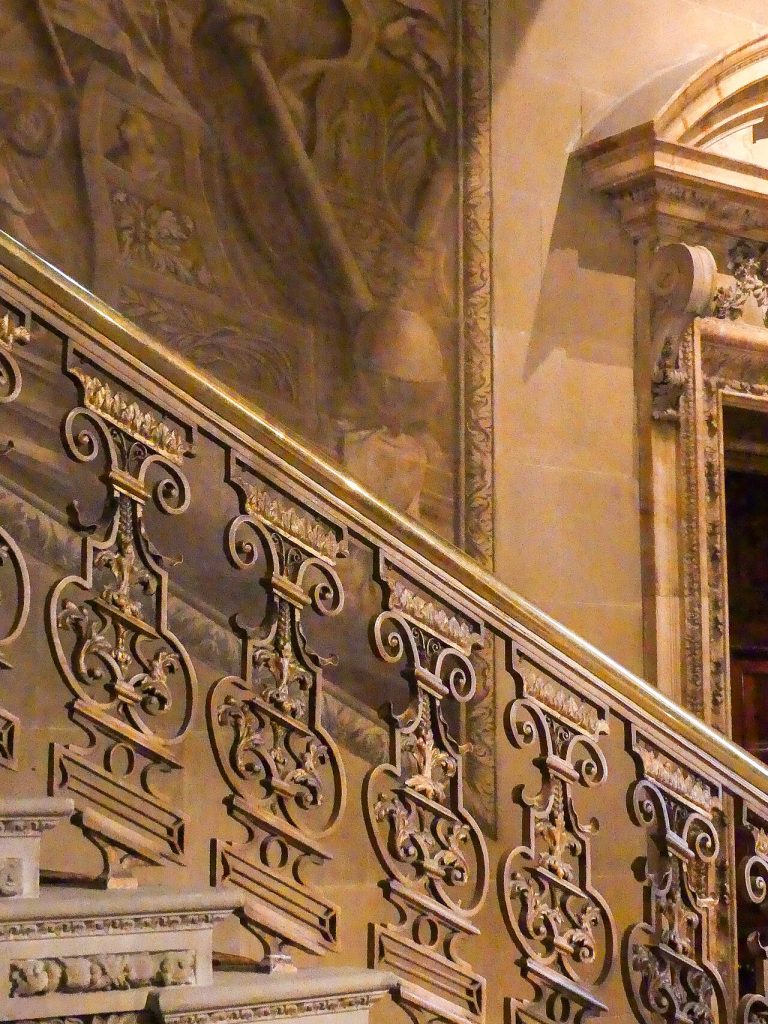
The visit enters through the Painted Hall, a double-height room with a black and white marble floor, a grand staircase of the 1920s and walls and ceiling covered by Louis Laguerre’s cycle of the life of Julius Caesar, painted in 1694 and intended, with its themes of tyranny and liberty, as a Whig political statement in oil. Above, the state apartments run the length of the second floor, built for a royal visit that never came: Great Chamber, State Drawing Room, State Music Room with its celebrated trompe-l’oeil door painted with a violin on a peg, State Bedchamber and State Closet, with Verrio and Thornhill ceilings, Mortlake tapestries, the carved limewood of Samuel Watson in the manner of Grinling Gibbons, and gilded leather hangings.
The violin on the door, painted by Jan van der Vaart about 1723, fools nearly every visitor who walks past it; stop, look twice, and then accept that it is paint.
The Cascade and the Baroque Waterworks
Behind the house the Cascade falls from a domed temple down twenty-four flights of stone steps, each of slightly different height so that the water sings in different notes, two hundred metres of controlled falling water designed in 1696 by a Frenchman named Grillet, said to have been a pupil of Le Nôtre, and rebuilt in 1703 with the Thomas Archer temple at its head whose dome and statues sprout jets of their own. It has run on gravity alone for three centuries, fed from lakes on the moor above, with no pumps anywhere; the first Duke’s other water tricks, the Willow Tree Fountain that squirts unsuspecting visitors from its copper branches, the Sea Horse Fountain, the canal pond, all survive.
Now, stop here at the foot of the Cascade and walk up beside it. Garden historians rate it the finest water staircase in Britain, and it is the one great Baroque garden feature in England that was never swept away by fashion.
Capability Brown and the Moved Village
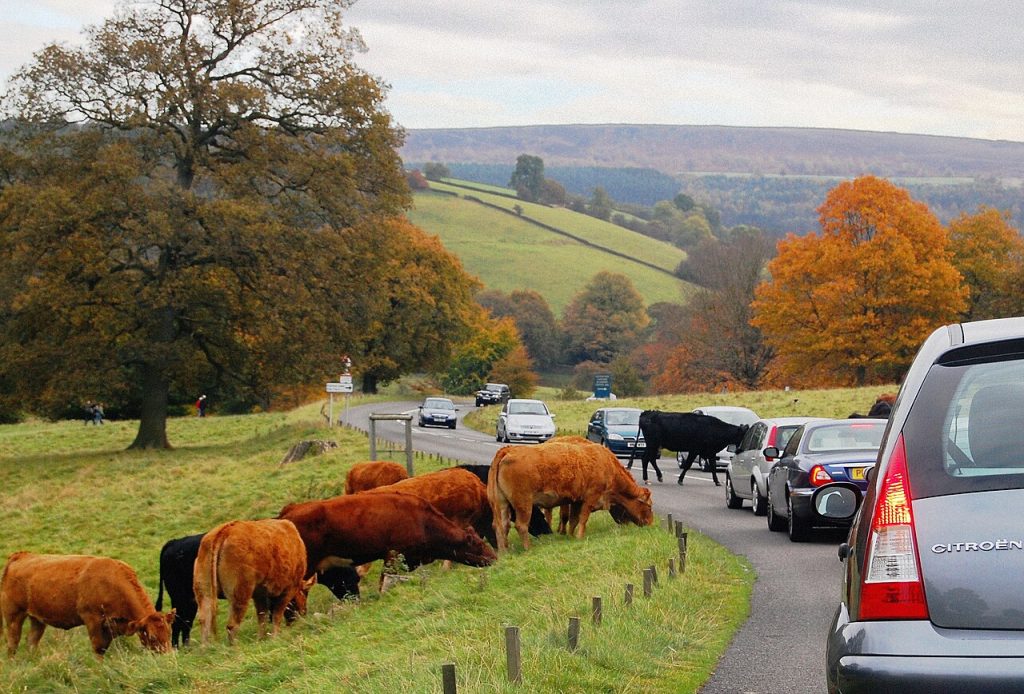
In the 1760s the fourth Duke, who had briefly been prime minister, brought in Lancelot Capability Brown to modernise the setting: the formal parterres and most of the canals went, the river was widened and given its serpentine line, the hills were planted with belts and clumps, the bridge was rebuilt by James Paine where the view needed it, and the stable block went up on the hill. Part of the village of Edensor, which stood in the way of the view from the house, was removed and rebuilt out of sight, a piece of landscape surgery that was entirely normal in 1760 and makes modern visitors wince; one cottage was left standing, the story goes, because its tenant refused to move.
Brown’s park is why Chatsworth looks natural, and nothing about it is: the turf, the trees, the water’s edge and the sheep are a designed picture two centuries and a half old.
Georgiana, the Duchess Who Ran Politics
Georgiana Spencer married the fifth Duke in 1774 at seventeen and became the most famous woman in England: a political operator who canvassed the streets for Charles James Fox, a fashion leader whose hats and hair were copied across Europe, a writer, a gambler with debts that terrified her husband, and the central figure of the extraordinary household at Chatsworth and Devonshire House in which she, the Duke and her friend Lady Elizabeth Foster lived together for years in a ménage that produced children on both sides. Her Chatsworth was the Whig party’s country headquarters; her correspondence is one of the best sources for Georgian politics; and her descendant Diana, Princess of Wales, came from the same Spencer family.
Her portraits by Reynolds and Gainsborough hang in the house, and the gambling debts, it turned out, outlived her: the sixth Duke spent his life paying them and then creating debts of his own.
The Bachelor Duke and Joseph Paxton
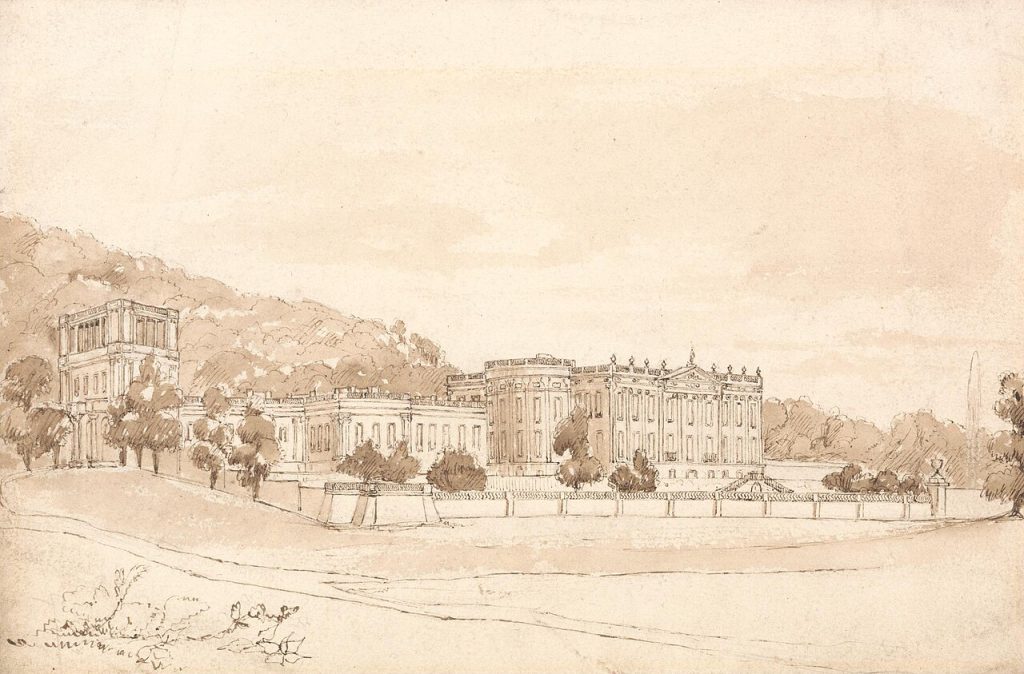
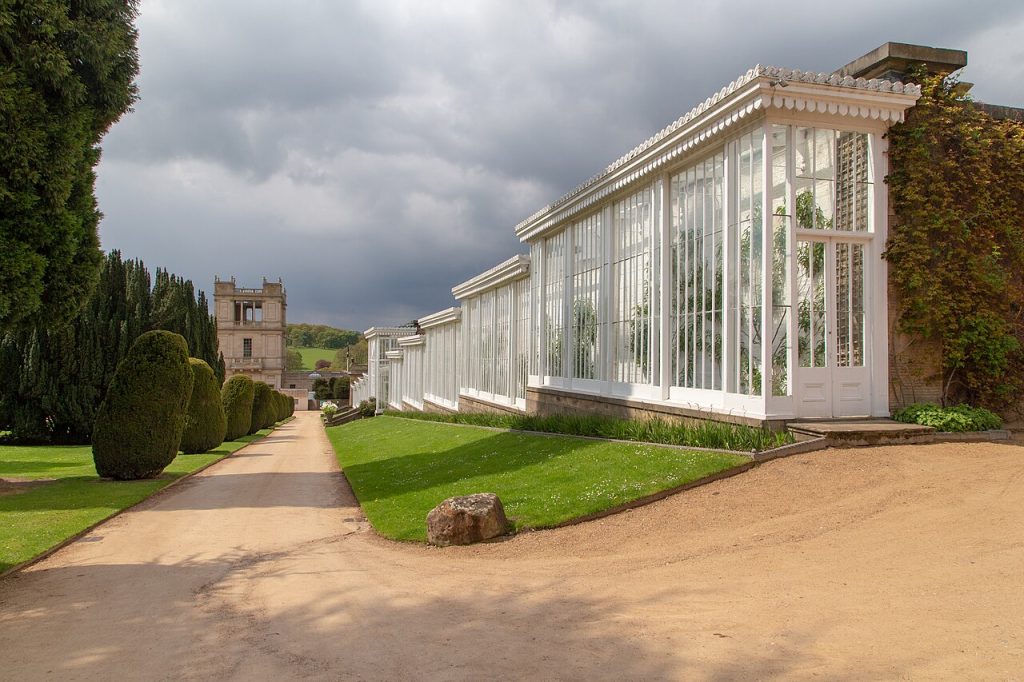
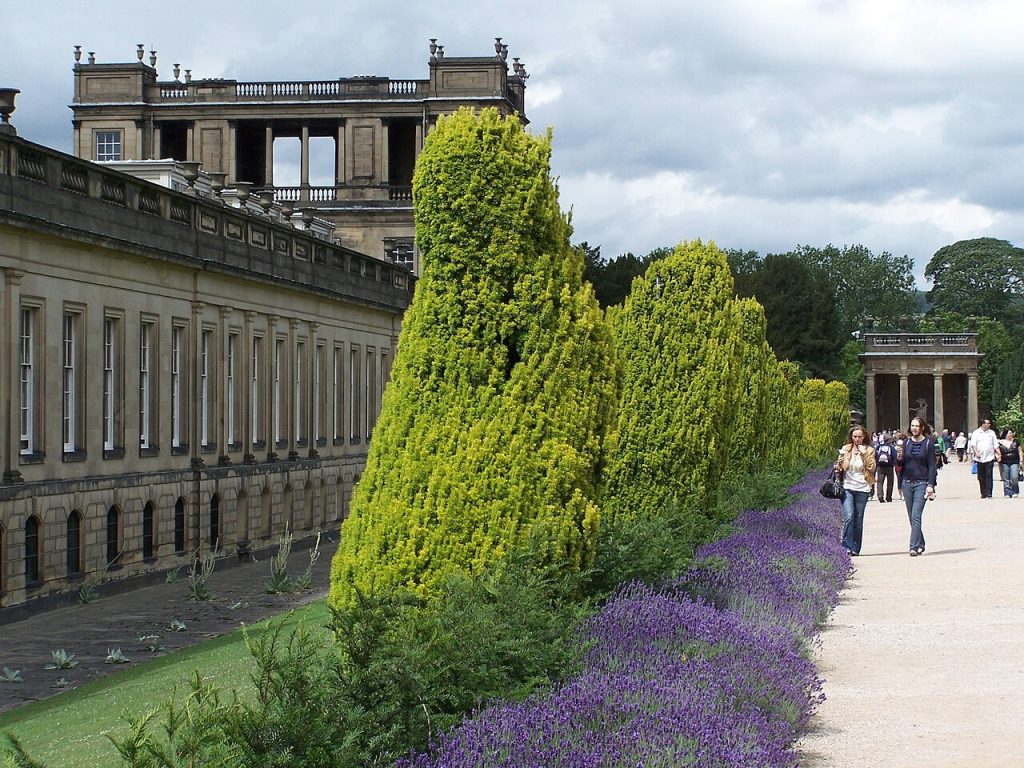
William Spencer Cavendish, sixth Duke, inherited in 1811 with vast rents and vaster ambitions, never married, and spent fifty years making Chatsworth extraordinary: Jeffry Wyatville built him the long north wing with its belvedere tower, a theatre, a dining room and the Sculpture Gallery, filled with contemporary marbles by Canova, Thorvaldsen and the English neoclassicists that remain the best such collection in a British house. In 1826 the Duke, passing through the Horticultural Society’s garden at Chiswick, met a twenty-three-year-old gardener named Joseph Paxton, offered him the job at Chatsworth on the spot, and set in motion one of the great partnerships: the rock garden with its boulders the size of cottages, the Arboretum, the hundred-metre-long Great Conservatory of 1836 to 1841, then the largest glass building in the world, and the lily house built to flower the Amazonian Victoria regia.
Paxton’s ridge-and-furrow glazing and iron frames at Chatsworth were the direct prototype of the Crystal Palace of 1851, which he designed in nine days; the Great Conservatory itself, unheatable after the First World War, was blown up in 1920, and its walls now hold a maze.
The Emperor Fountain and the Tsar Who Never Came
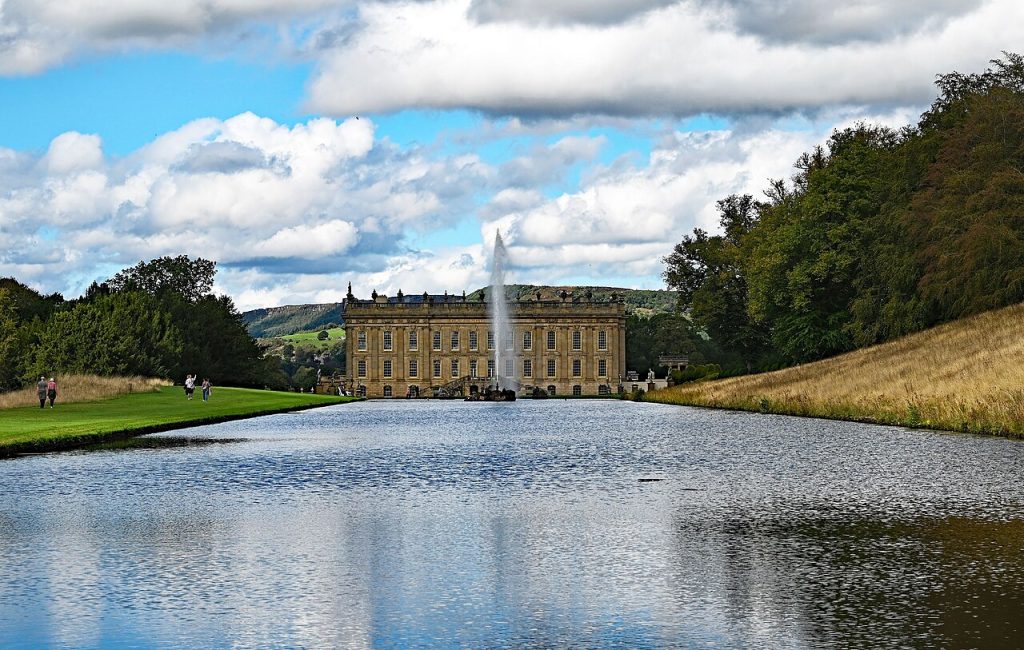
In 1843 the Duke heard that Tsar Nicholas I, whom he had met in Russia at the coronation of 1826, might visit Chatsworth, and ordered Paxton to produce a fountain grander than anything at Peterhof. Paxton dug a lake of three and a half hectares on the moor a hundred metres above the house, cut a conduit nearly four kilometres long, and in six months produced the Emperor Fountain, whose single jet, powered by nothing but the weight of water in the hill, has reached ninety metres, the tallest gravity fountain in the world. The Tsar never came. The fountain has been playing for the public ever since, usually at a more modest height to spare the pipes, and on calm days it is turned up for visitors.
Now, stop here on the canal pond’s edge when the jet goes up and the wind takes the spray over the lawn. It was built for a guest who cancelled, and it has entertained some fifty million other people instead.
The Devonshire Collection
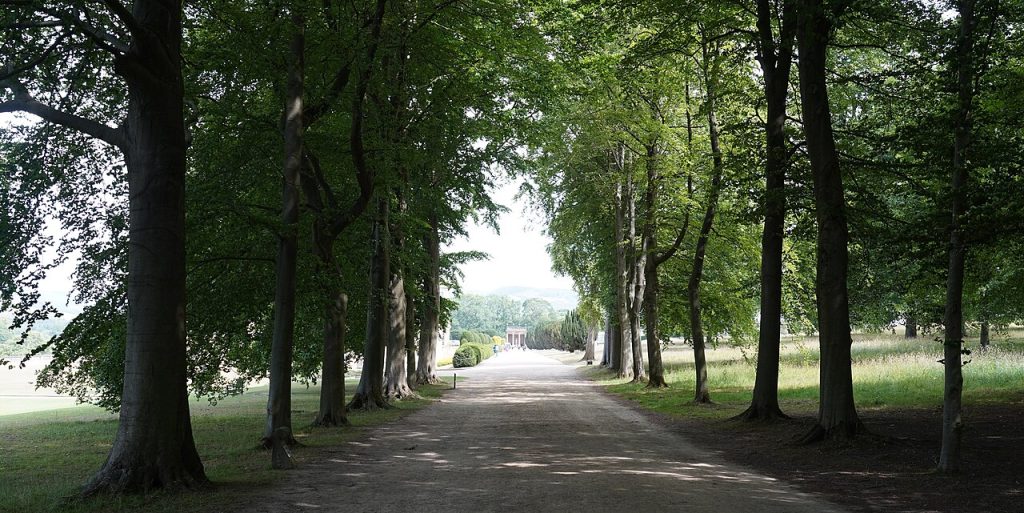
Chatsworth’s collection is one of the largest in private hands anywhere: a drawings cabinet with Leonardo, Raphael, Rembrandt and Dürer sheets; paintings by Rembrandt, Van Dyck, Veronese, Reynolds, Gainsborough and Landseer; Tudor and Stuart portraits including the Elizabethan Cavendishes; Greek and Roman sculpture bought by the sixth Duke; the library of some seventeen thousand volumes with Caxtons and the first editions of the scientific revolution, for the family produced Henry Cavendish, the chemist who weighed the world, and endowed the Cavendish Laboratory at Cambridge; and a continuing programme of modern commissions, Lucian Freud, Edmund de Waal, Damien Hirst and others, bought or commissioned by the eleventh and twelfth Dukes.
The house is hung as a home rather than a gallery, so a Rembrandt and a family snapshot can share a wall, and the sculpture gallery’s marbles are still arranged as the sixth Duke placed them.
1950: Death Duties and the Fight for the House
The tenth Duke died suddenly in 1950, fourteen weeks before a tax-planning deadline, and the estate faced death duties at eighty per cent, some seven million pounds, on an inheritance that had already been thinned by two wars, the loss of the heir Billy Hartington in 1944 and the sale of Devonshire House in London. Seventeen years of negotiation, land sales, the surrender of Hardwick Hall to the National Trust and the handing over of old masters to the nation paid the bill. Andrew Cavendish, the eleventh Duke, and his wife Deborah, the youngest of the Mitford sisters, moved back into the house in 1959 after two decades of its being half shut, and made it a business: proper visitor access, a farm shop that invented the modern country-house retail model, a garden centre, an adventure playground and a farmyard, run with Deborah’s unsentimental eye for what people would actually pay for.
In 1981 the family put house, collection and garden into the Chatsworth House Trust, a charity, leasing them from the family for a nominal rent; the arrangement is now the textbook example of how a great British house survives.
The Chatsworth House Trust Today
Chatsworth today receives around six hundred thousand visitors a year to the house, twenty-four hectares of garden, the farmyard and adventure playground, the free park, and the shops and restaurants in the stables and at Pilsley; a masterplan of repairs costing some thirty-two million pounds, the largest conservation project on any British country house, ran from 2008 to 2018 and left the gritstone cleaned, the roofs sound and the windows regilded. The gardens keep adding to themselves, a maze on the conservatory’s foundations, Paxton’s rock garden restored, the kitchen garden productive, a sculpture programme through the grounds, and the Christmas decoration of the house each winter has become an event in itself.
Now, stop here a last time on the bridge at the end of the day with the gilded balustrade catching the light. Sixteen generations have built, planted, gambled, collected and nearly lost this place; what keeps it standing is not a crown or a state but a family that kept finding reasons to spend money on it, and a great many people willing to pay to look.
Chatsworth on Video
Visiting Chatsworth Today
Chatsworth is open most of the year with timed tickets booked online, covering the house’s thirty rooms, the garden with cascade, rock garden, maze and Emperor Fountain, and the farmyard and playground as a separate or combined ticket; the park is free and open always. Allow a full day, start with the house at opening, eat in the stables or at the Pilsley farm shop, and walk up to Bess’s hunting tower for the best view in Derbyshire. The Christmas season, from early November, sells out early and the house is dressed to a different theme each year.
Chatsworth is near Bakewell in Derbyshire, half an hour from Sheffield and an hour from Manchester or Nottingham by car on the A619 and B6012, with buses from Bakewell, Sheffield and Chesterfield, whose station is the nearest railhead at twenty minutes by taxi. Castle Howard is two and a half hours north, Blenheim three hours south. Here is the exact spot: Chatsworth House on Google Maps.
Palaces Nearby
You May Like
Sandringham House and the Christmas Estate of the British Kings