We travel first to Assos and then to Sokakağzı beach, located in another bay on the same coast. Assos, B.C. It is accepted that it was founded by the Metymna people of Lesbos (Lesbos) in the 10th century. Assos, the powerful and rich city of the Troas region, BC. In 560, it came under the rule of Lydia and then the Persians. The city, ruled by Persian governors, later fell into the hands of Hermias.
During this period, Hermias, a student of Plato, invited his study friend Aristotle to the city. Aristotle, B.C. He stayed in Assos between 348-345 and founded the first philosophy school. The city, which gained independence during Alexander the Great’s Asian campaign, passed to the Kingdom of Pergamon after his death. Kent B.C. Although it was transferred to the Great Roman Empire in 331, it fell to the Byzantine Empire during the disintegration and became a bishopric center. 1.
Assos, which joined the Ottoman lands during the reign of Murat, suffered great damage during the Crusades. Since Assos is located on the Çanakkale-İzmir road, it hosts guests from the Aegean and Marmara. In addition to its clean air, sea, history, peaceful, quiet environment and seafood; Assos offers its guests a convenient holiday environment with its touristic facilities.
“Assos”, the reflection of history in the 21st century, and the hidden paradise in its shadow, “Sokakağzı”, the coastal district of Koyunevi village… Assos, located in Behramkale village of Çanakkale’s Ayvacık district, watches the Aegean from a hill 238 meters above sea level.
The eyes of Assos in this pleasant cruise are the Temple of Athena on the hill, and the seaweed smell of the sea is breathed in by the small harbor on the coast. Although Assos is a port city, there is a significant level difference between the port and the city. Its 3 km long walls reaching 20 meters, two main entrance gates from the east and west and 8 towers create the impression that the city is in a safe location.
Assos with its necropolises, gymnasium, agora foundations, temple converted into a church, administrative structure and parliament building, water cisterns and horseshoe-shaped amphitheater; Even though it was ruined, it has managed to survive until today. The excavations started by the American Institute of Archeology between 1881 and 1883 are currently carried out by Prof. Dr. on behalf of the Ministry of Culture and Tourism. It is carried out by Turkish Archaeologists led by Ümit Sertoğlu.
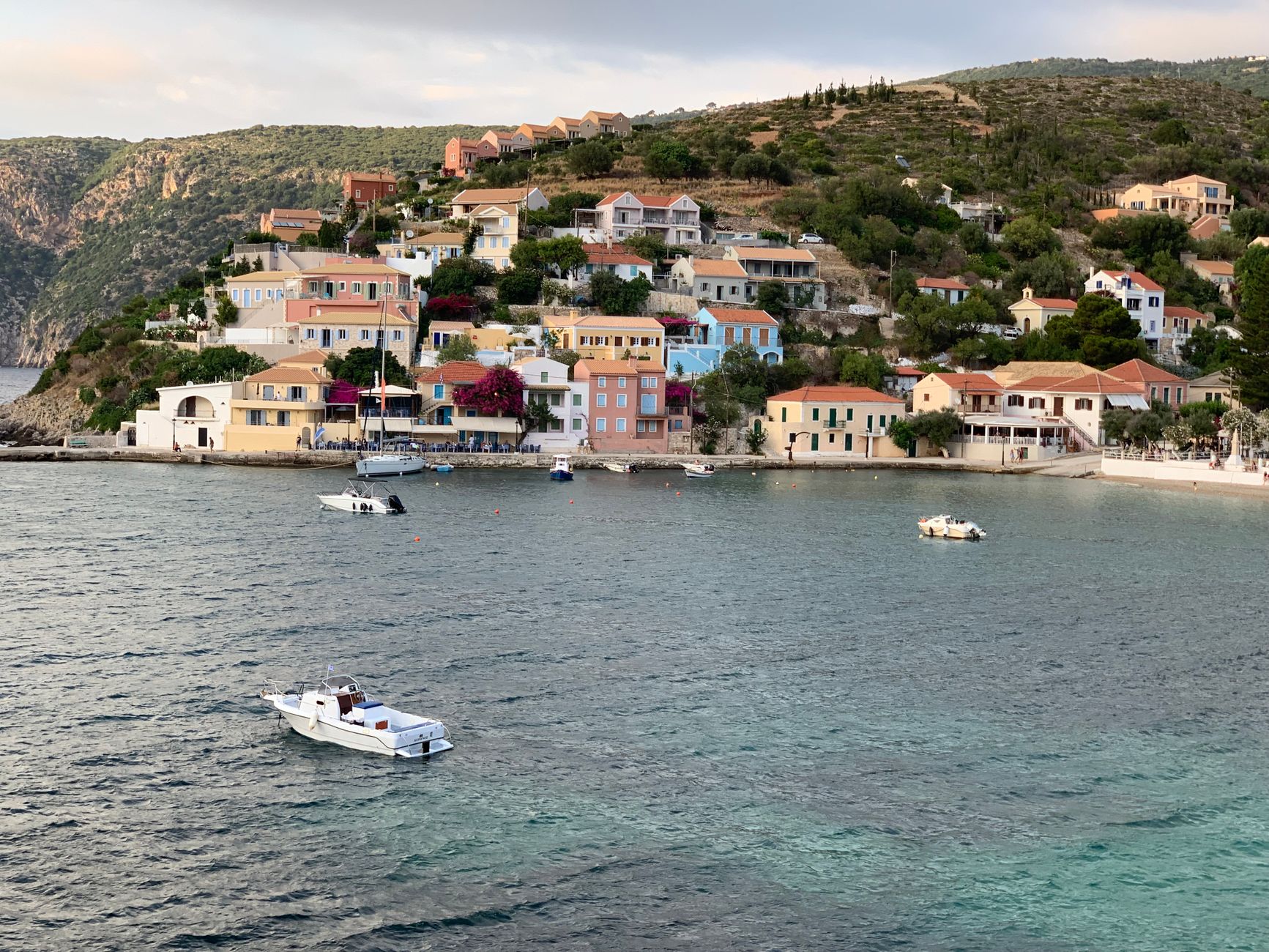
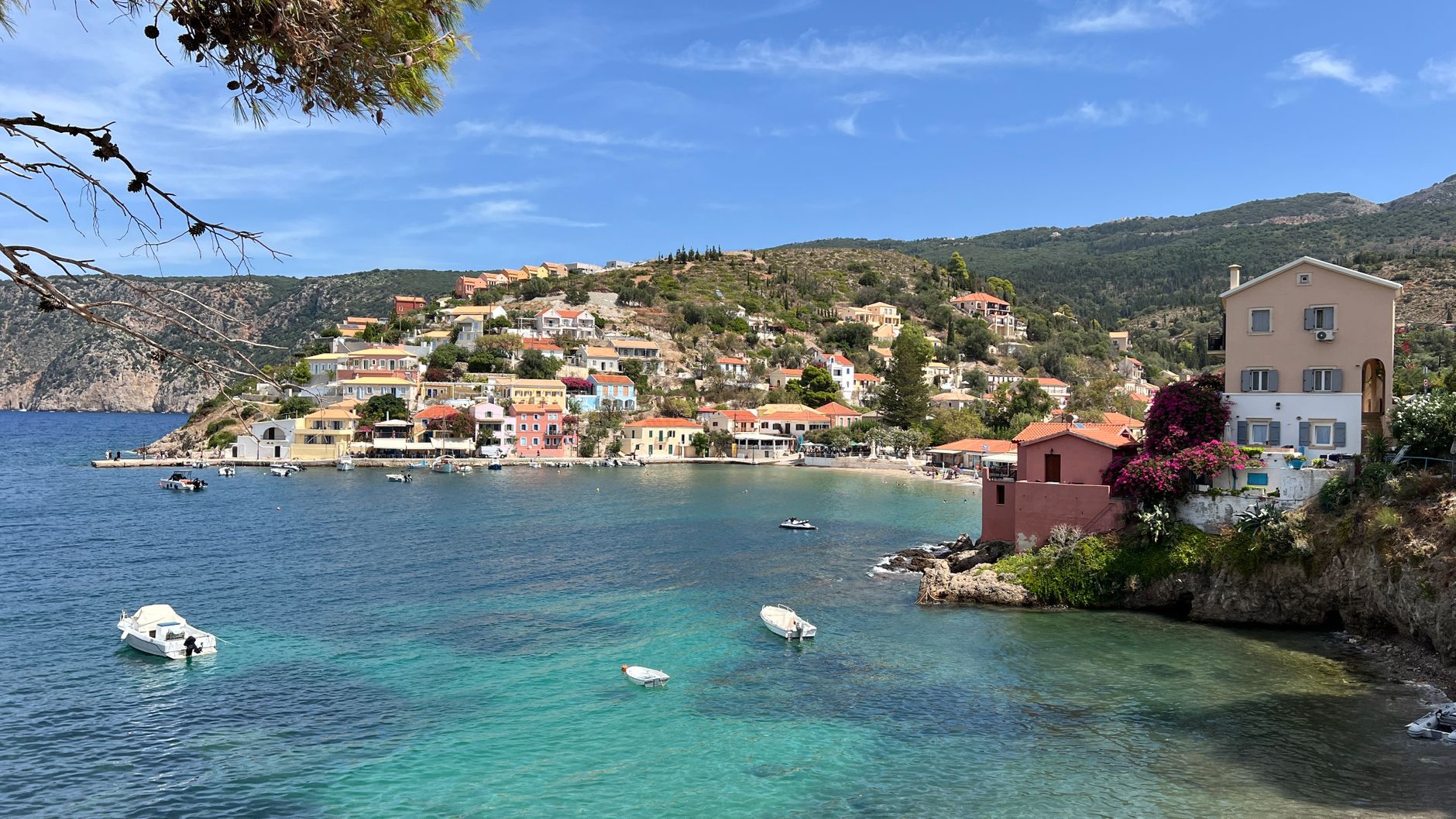
Life in Assos In Behramkale and Assos, where history gushes from every corner, the colorful life is lived around the small port. Those who come to this beach, where hotels, bars and restaurants are densely packed into a narrow area, descend a very steep, cobblestone-covered slope, leave their vehicles on the side of the road, and then walk down to the beach.
It is enjoyable to walk on the Assos harbor breakwater, which has a different atmosphere day and night, to sit in the beach cafes, to eat in the sea in the restaurants that overflow into the sea. In Assos, which does not have a long beach to swim in and there is a shortage of beaches, touristic businesses have found a solution in the wooden piers built into the sea.
Outside the harbour, those who lie on the colorful floor pillows placed on the sun terraces built on both sides and generally used by hotel guests, meet their needs of the sea and the sun without getting sandy, while cooling off with the beverage services provided. On the terraces, which are open and do not receive hot reflections from the ground, they are more comfortable than being on the shore, thanks to the coolness and breeze of the sea.
places to see
Temple of Athena; Athena, the daughter of Zeus and one of the 12 Olympian Gods, is a war goddess born from the head of her father Zeus, with a gun and a crow in her hand. She is also known as the goddess who protects handicrafts and crafts. According to mythology, he taught women weaving. Carpet and rug weaving in Behramkale and its surroundings perhaps owes its development to Athena.
The Assos Athena Temple is of great importance because it is the only example built on Doric in Anatolia during the Anchaic era and has relief friezes. Entrance to the ancient site, which has a vehicle road up to the temple, is paid. The surviving columns are composition material for those who paint as well as those who take photographs. Watching the sun set against the magnificent view of the Aegean Sea is another pleasure…
Behramkale
Behramkale Village, located right next to the ancient city, its historical mosque, ancient stone bridge, sarcophagus and castle walls on the road are among the places to see in the region. If you are interested in environmental trips, you can visit the Temple of Apollo Smintheion on the Babakale road, the repairs of which were carried out with the contributions of the Mercedes Benz company, the last castle built by the Ottomans in Babakale, the fountain from which the Ottoman Navy took water when going on a sea expedition, the mosque, Kestanbol Thermal Springs and the Kumburnu beach. You can see the sheltered war trenches that have survived intact from past to present. You can cross to Bozcaada by ferry from Odunluk Pier, as well as visit other ancient cities in the surrounding area such as Troy and Bergama. The Assos Festival, sponsored by Eden Beach and Eden Garden Hotels, is held in September.
Koyunevi Village, Sokakağzı Beach
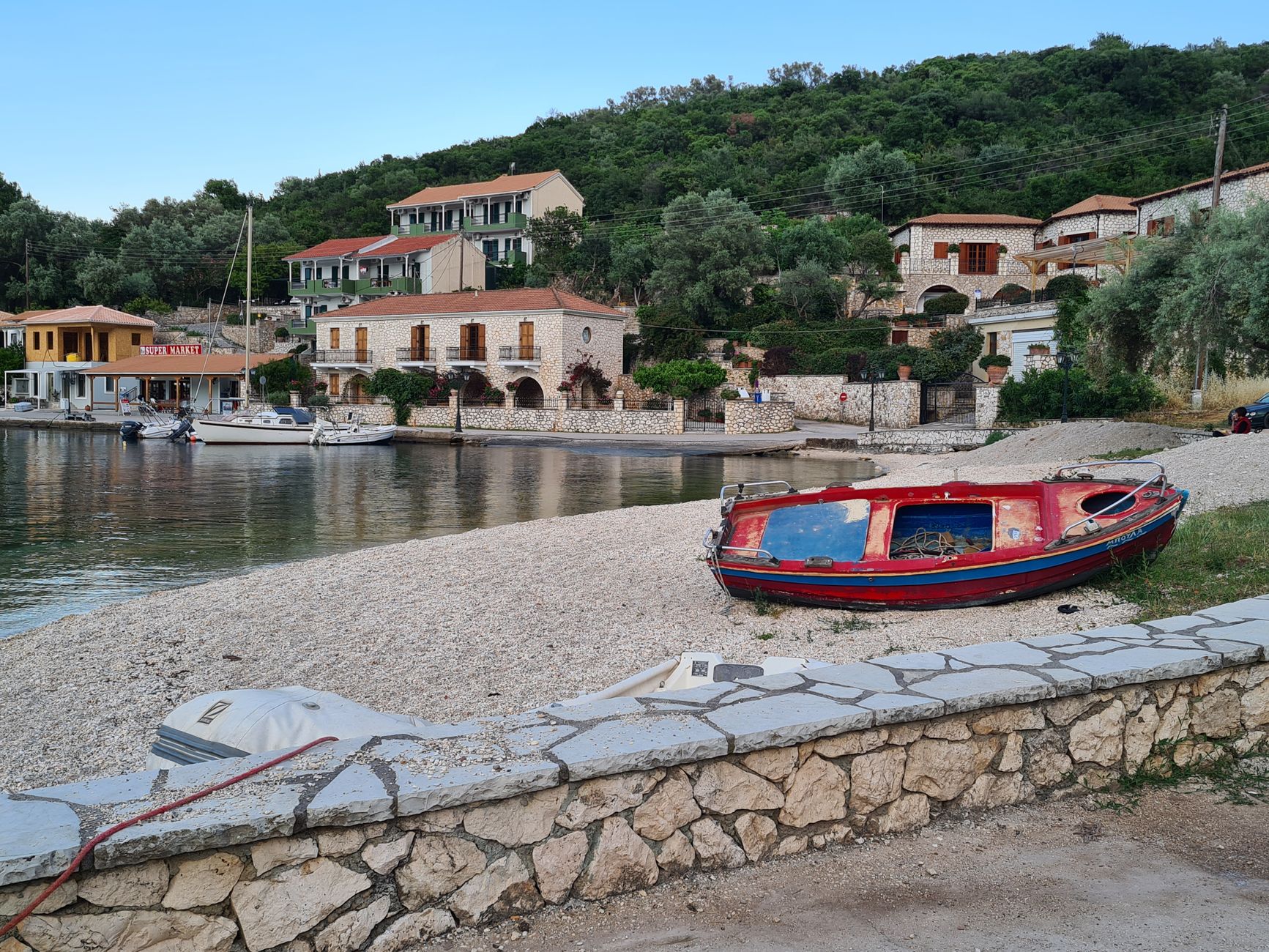
The coastal district, 18 km away from Assos, on the same coast, is located on the ancient city of Polymedium. There is no one in sight at the intersection of four roads in the village, which backs onto steep slopes. But hostel and hotel signs give the impression that there is life on the beach. As soon as you start going down the ramp, you encounter a view of the Aegean sea equivalent to the panorama seen from the Athena Temple of Assos and you feel the warm wind on your face.
No excavations have been carried out yet in the village, which is located on the historical ancient city of Polymedium. There are several hostels, cafes and some summer houses behind the wide and long sandy beach of the protected area. Facilities open in summer and winter in the modest residential area welcome guests all year round. Since it is less known than Assos, this is a haven of peace with more economical prices.
It is the choice of families who are not looking for luxury, with its clean air, sea and sandy beach much larger than Assos. You can participate in daily excursions and boat tours in the region, which has rich bays for fishing with a fishing rod and underwater spearfishing. There is suitable wind for surfing enthusiasts. Land hunting is also done during the hunting season. There is an abundance of fish, especially bluefish, in September.
It is possible to find wild sea bream, mullet, mullet, sea bream, bream and other fish varieties. Coasts such as Assos-Babakale-Kumburnu, which are on the migration route of fish that go from the Mediterranean to the Aegean, Marmara and the Black Sea to lay eggs, are truly a seafood paradise. You can buy handcrafted souvenirs from the villages in the region, whose originality has never been damaged.
During your trip between Koyunevi and Assos, you may also come across people making charcoal by making clusters of oak trees and burning them inside.
You May Like
Aspendos Ancient Theater Travel Guide