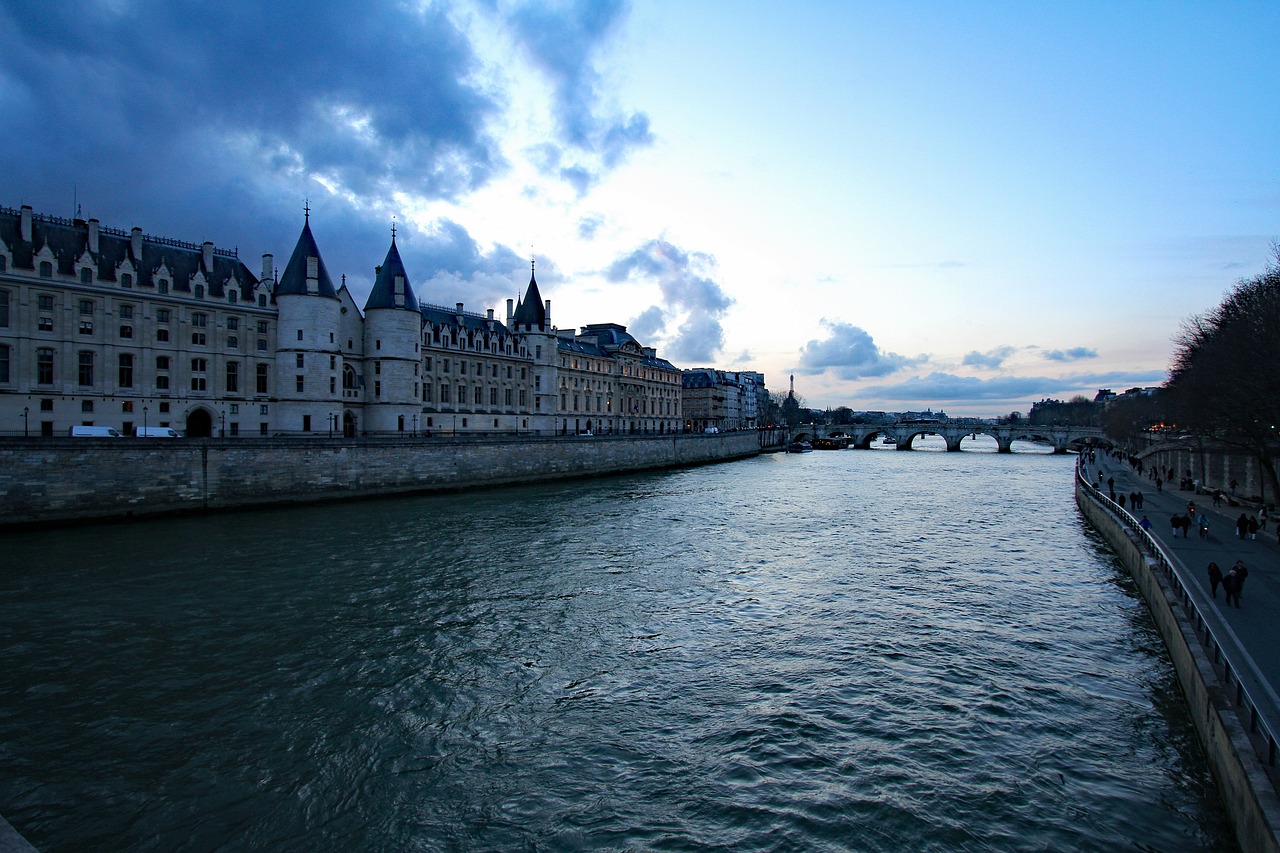
On the Île de la Cité, its pointed towers reflected in the Seine, the Conciergerie is one of the most history-laden buildings in Paris. Once part of the original royal palace, it later became a grim revolutionary prison — most famously the place where Queen Marie Antoinette spent her final days before the guillotine. Today it’s a fascinating monument where soaring medieval architecture meets the dark drama of the French Revolution.
A Royal Palace
The Conciergerie began as part of the Palais de la Cité, the seat of French royal power from the 10th to the 14th centuries. Its greatest surviving treasure from this era is the magnificent Salle des Gens d’Armes, a vast, beautifully vaulted Gothic hall — one of the largest surviving medieval halls in Europe. Walking through it gives a real sense of the grandeur of the early French monarchy.
Prison of the Revolution
After the kings moved to the Louvre, the building became a courthouse and prison. During the Revolution’s Reign of Terror, it became the antechamber to the guillotine: thousands of prisoners were held here awaiting trial and execution. Its most famous prisoner was Queen Marie Antoinette, held in a cell here before her death in 1793. The building’s history turns from royal splendor to chilling tragedy.

Marie Antoinette’s Cell
A key part of any visit is the area dedicated to Marie Antoinette, including a reconstruction of the cell where she spent her last weeks and a memorial chapel built on the site. Exhibitions tell the story of her imprisonment and the many others held here, bringing the human drama of the Revolution vividly and movingly to life.
Modern Touches
The Conciergerie uses clever modern technology to help visitors understand its layered past. Interactive tablets (the “Histopad”) use augmented reality to show how the rooms looked in different eras, letting you see the medieval palace and revolutionary prison reconstructed around you. It’s an engaging way to peel back the centuries of history within these walls.
Planning Your Visit
The Conciergerie is near Cité and Saint-Michel stations, on the Île de la Cité. There’s an admission charge, and a combined ticket with the neighboring Sainte-Chapelle offers good value — the two are right next to each other and easily visited together. Allow around an hour. It’s also a short walk from Notre-Dame, making for a rich morning of history on the island.
More Paris guides: explore the full Paris Travel Guides series.


