Rising from a solitary conical mountain in the gentle hills of southern Germany, Hohenzollern Castle is one of the most dramatic and romantic sights in all of Europe. On clear days it stands proud against the sky, its towers and turrets crowning the summit; on misty mornings it floats above a sea of cloud, seeming to hang between heaven and earth. It is a castle straight out of a dream, and it is the ancestral seat of one of the greatest dynasties in the history of Germany.
For this was the cradle of the House of Hohenzollern, the family that would rise from these Swabian hills to become kings of Prussia and, in time, emperors of a united Germany. From this mountain their fortunes climbed, over many centuries, to the very summit of European power, and the castle on the peak remained the symbolic heart of the dynasty, the rock from which they sprang.
The castle we see today, however, is not the ancient fortress of the medieval Hohenzollerns but a magnificent nineteenth-century recreation, built by a Prussian king who wished to honour his ancestors and to give his family a worthy monument. Grand, romantic and steeped in history, Hohenzollern Castle is a place where the story of a dynasty is written in stone. Let us climb the mountain to Hohenzollern and discover the seat of the kings and emperors of Germany.

In This Article
- The Mountain of the Dynasty
- The House of Hohenzollern
- Three Castles on One Peak
- A King’s Romantic Vision
- Building the Neo-Gothic Castle
- The Winding Approach
- Within the Walls
- Two Chapels for Two Faiths
- The Catholic Chapel
- The Prussian Crown and Its Treasures
- A Castle in the Clouds
- A Living Family Seat
- Visiting Hohenzollern Castle
The Mountain of the Dynasty
Hohenzollern Castle owes everything to its extraordinary setting. It stands on the summit of a steep, isolated mountain that rises abruptly from the surrounding hills of Swabia, in the south of Germany, commanding views for miles in every direction. The mountain, and the castle upon it, gave their name to the family that held it, the Hohenzollerns, one of the most important dynasties in all of European history.
The choice of such a dramatic site was no accident. In the Middle Ages, when the first castle was raised here, a mountain-top fortress was both a formidable stronghold and a powerful symbol of lordship, visible to all the surrounding country. From this height, the counts of Hohenzollern could dominate their lands and proclaim their power, and the castle became inseparable from the identity of the family.
To this day, the castle on its mountain remains one of the most striking sights in Germany. Whether seen rising clear against a blue sky or floating above a blanket of morning mist, it has an air of romance and grandeur that few castles can match. It is the perfect embodiment of the fairy-tale castle on the mountain, and a fitting seat for the great dynasty that took its name from this lonely peak.
The mountain on which the castle stands is part of the range known as the Swabian Alb, a region of rolling limestone hills and dramatic escarpments in the south of Germany. The isolated, conical peak of Hohenzollern rises strikingly from this landscape, a natural stronghold that seems almost designed to bear a castle. It is this dramatic geography, as much as the history of the dynasty, that has made Hohenzollern one of the most photographed castles in the country.
The very name Hohenzollern is thought to derive from the German words for a high crag or hill, a fitting origin for a family whose fortunes were bound so closely to their mountain. From this high place the dynasty took its name and its identity, and however far its members travelled and however high they rose, the mountain remained the symbolic root of the whole great house.

The House of Hohenzollern
The family that gave the castle its name would rise, over the centuries, to become one of the greatest ruling houses in the history of Europe. From their origins as counts in these Swabian hills, the Hohenzollerns extended their power steadily, acquiring new lands and titles, until a branch of the family gained control of the distant northern territory of Brandenburg, with its capital at Berlin.
From this base, the Hohenzollerns climbed ever higher. They became kings of Prussia, building one of the most powerful states in Europe, and produced some of the most famous rulers of their age, including the brilliant soldier-king Frederick the Great. Finally, in the nineteenth century, the head of the family became the emperor of a newly united Germany, the ruler of one of the greatest powers on earth.
Through all these centuries of rising fortune, the ancestral castle in Swabia remained the symbolic root of the dynasty, the place from which the family had sprung. Though the Hohenzollerns ruled from Berlin and Potsdam, far to the north, they never forgot their origins on the mountain in the south, and the castle there kept its special place in the heart and the imagination of the family.
The rise of the Hohenzollerns is one of the most remarkable success stories of European history. Beginning as relatively minor counts in the south, they built their power patiently over centuries through war, marriage, diplomacy and sheer persistence, seizing every opportunity to add to their lands and titles. Their acquisition of Brandenburg in the far north, and later of the duchy of Prussia, laid the foundations for their eventual greatness.
The transformation of the Hohenzollern lands into the kingdom of Prussia, and then into the leading power in Germany, was the work of a series of able and ambitious rulers, none more famous than Frederick the Great, whose military genius and reforming zeal made Prussia a great power. The unification of Germany under Prussian leadership in the nineteenth century brought the dynasty to the very summit, as its head became the German emperor.

Three Castles on One Peak
The castle that stands on the mountain today is in fact the third to occupy the site, for the story of Hohenzollern is one of destruction and rebuilding across the centuries. The first castle, raised in the Middle Ages, was a mighty fortress praised as the finest in all of Swabia, but it came to a violent end. After a long and bitter siege in the fifteenth century, it was captured and destroyed, its garrison starved into surrender.
A second castle was then built on the same peak, larger and stronger than the first, and it served the family for a long period. But as the Hohenzollerns moved their main residences elsewhere and their attention turned to their great northern territories, the old ancestral castle in the south was neglected, and over time it too fell into decay, until little remained but ruins on the mountain-top.
For a long period, the great mountain of the dynasty carried only crumbling ruins, a melancholy reminder of former greatness. It seemed that the ancestral seat of the Hohenzollerns might be lost forever, its stones returning to the mountain. But in the nineteenth century, a Prussian king would look upon these ruins and resolve to raise the castle again, more magnificent than ever before.
The destruction of the first castle after its long siege in the fifteenth century was a serious blow to the prestige of the family, and its rebuilding was a matter of honour as well as of practical necessity. The second castle, raised on the ruins of the first, reflected the family’s determination to maintain their presence on the ancestral mountain, even as their interests increasingly drew them northward towards Brandenburg and Berlin.
The slow decay of the second castle, as the family’s attention turned elsewhere, is a common story in the history of great houses, whose ancestral seats often fell into neglect once the centre of their power had shifted. That the Hohenzollerns eventually returned to rebuild their mountain castle, at the very height of their imperial glory, is a striking testament to the enduring hold that the ancestral home retained over the imagination of the dynasty.

A King’s Romantic Vision
The rebuilding of Hohenzollern Castle was the dream of King Frederick William IV of Prussia, one of the most romantic and artistically minded of the Prussian kings. As a young man, he had visited the ruins of his family’s ancestral castle and been deeply moved by the sight, and he conceived a lifelong ambition to raise the castle again as a fitting monument to the glory of his house.
Frederick William IV was a king steeped in the romantic spirit of his age, with a deep love of the Middle Ages and of the history of his dynasty. For him, the rebuilding of Hohenzollern was not merely a building project but an act of piety towards his ancestors, a way of honouring the roots of the family and of proclaiming its greatness. He wanted the new castle to be a shrine to the Hohenzollern past.
In the middle of the nineteenth century, the king set his plan in motion, commissioning a leading architect to design a magnificent new castle on the mountain. The result would be one of the great achievements of German romantic architecture, a castle that combined the memory of the medieval fortress with the grandeur and comfort demanded by a royal dynasty at the height of its power.
Frederick William IV was a complex and cultivated king, deeply religious and artistic, whose romantic imagination shaped many of his projects. His reign was troubled by the political upheavals of his age, including the revolutions that swept Europe in the middle of the nineteenth century, and his rebuilding of the ancestral castle can be seen, in part, as an assertion of the ancient legitimacy of his dynasty at a time when monarchy itself was under challenge. The castle was his answer, in stone, to the uncertainties of his age.
The rebuilding of the ancestral castle was part of a wider nineteenth-century enthusiasm across Germany for restoring and reimagining the great monuments of the medieval past. In an age of rising national feeling, such projects served to connect the present with a romanticised national history, and the Hohenzollerns, as the leading dynasty of a newly unified Germany, had a special interest in celebrating their ancient roots. Hohenzollern Castle was among the grandest expressions of this movement.

Building the Neo-Gothic Castle
The new Hohenzollern Castle was built in the middle decades of the nineteenth century, in the elaborate neo-Gothic style that was then fashionable for such romantic royal projects. The architect drew on the forms of the medieval castle, with towers, battlements, gates and pointed roofs, but combined them with a scale and a richness that no genuine medieval fortress could have matched, creating an idealised vision of a great ancestral seat.
The construction of a large and elaborate castle on such a steep and isolated mountain-top was a considerable feat of engineering, requiring the transport of vast quantities of materials up to the summit. The result was a complex of buildings ringed by walls and towers, entered through a winding, heavily defended approach that climbs around the mountain, so that the visitor spirals slowly upward towards the castle at the peak.
The finished castle was a triumph of the romantic imagination, a perfect fairy-tale fortress crowning its mountain. Bristling with towers and turrets, its silhouette became one of the most recognisable in Germany, and it fulfilled the king’s dream of a worthy monument to his dynasty. Though built in the nineteenth century, it seems to belong to the age of chivalry, a dream of the medieval past made real.
The architect chosen to realise the king’s vision was one of the leading figures of nineteenth-century German architecture, and he approached the task with great care and imagination. He studied the history of the site and the traditions of medieval castle-building, and he sought to create a castle that would evoke the glory of the family’s past while meeting the needs and tastes of a modern royal dynasty. The result was a masterpiece of the romantic, historicist architecture of the age.
The neo-Gothic style in which the castle was built was more than a matter of fashion; it was a deliberate expression of the values and aspirations of the dynasty. By clothing their ancestral seat in the forms of the Middle Ages, the Hohenzollerns proclaimed the antiquity and legitimacy of their rule, linking themselves to the age of chivalry and to the deep roots of German history. The castle was, in this sense, a piece of dynastic propaganda in stone.

The Winding Approach
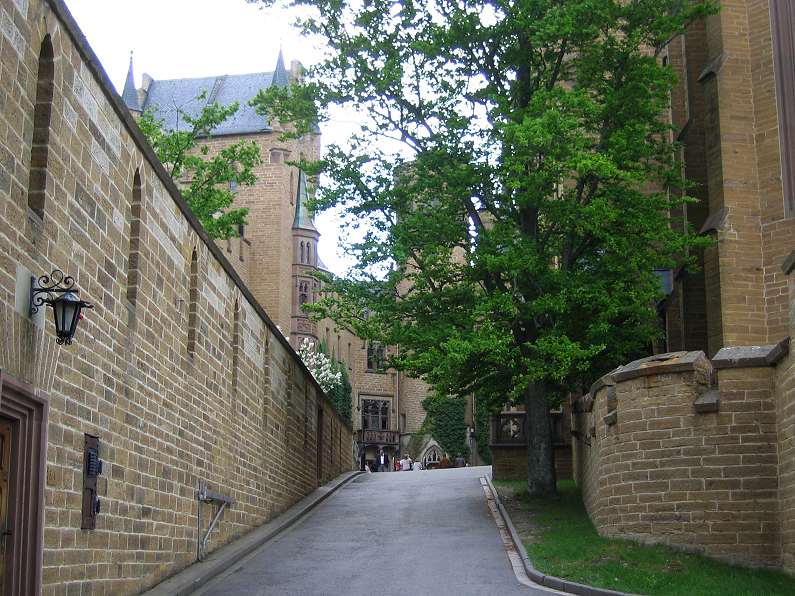
Reaching the castle at the summit is an experience in itself, for the way up winds around the steep sides of the mountain in a long, spiralling ascent, passing through gates and beneath towers designed to defend the approach. This dramatic route, climbing ever higher around the peak, builds a sense of anticipation and reveals the castle gradually, from ever-changing angles, before the visitor finally emerges at the top.
The defences that guard the approach, though built in the nineteenth century, follow the logic of medieval fortification, using the natural strength of the mountain to make the castle almost impregnable. Bastions and towers command the winding path at every turn, so that any attacker would face a long and deadly climb. The whole ascent is a piece of romantic theatre, designed to impress upon the visitor the strength and majesty of the castle above.
Emerging at last onto the summit, within the walls of the castle, the visitor is rewarded with breathtaking views over the surrounding country, spread out far below on every side. It is easy to understand, standing here, why this mountain was chosen as the seat of a great dynasty, and why the sight of the castle upon it has stirred the imagination of so many across the centuries.
The spiralling ascent to the castle was carefully designed to heighten the drama of the arrival, revealing the fortress from ever-changing angles as the visitor climbs. This theatrical approach, common to many romantic castles of the period, turned the simple act of reaching the summit into a memorable experience, building anticipation and impressing upon the visitor the strength and majesty of the great castle above. It is a masterstroke of romantic design.

Within the Walls
Passing through the gates and into the heart of the castle, the visitor enters the inner courtyard, ringed by the great buildings of the fortress and overlooked by its towers. Here, at the summit of the mountain, is the ceremonial and residential heart of Hohenzollern, a space designed to impress and to proclaim the dignity of the dynasty whose seat this is.
The courtyard and the buildings around it combine defensive strength with the elegance and comfort expected of a royal residence. Statues, coats of arms and other heraldic decoration proclaim the history and the greatness of the House of Hohenzollern, turning the castle into a monument to the family and its achievements. Everywhere, the visitor is reminded of the dynasty that rose from this mountain to rule an empire.
From the courtyard and the terraces, the views over the surrounding landscape are magnificent, a fitting reward for the climb to the summit. On a clear day, the eye can range for miles across the hills and forests of Swabia, while on misty mornings the castle seems to float above the clouds, cut off from the world below. It is one of the most romantic and unforgettable settings of any castle in Germany.
The heraldic decoration that adorns the castle, with its coats of arms, statues and inscriptions, turns the whole building into a genealogical monument, a proclamation of the history and connections of the dynasty. For a family so conscious of its ancestry and so proud of its rise to greatness, such decoration was not mere ornament but a vital part of the castle’s purpose, asserting the antiquity, legitimacy and glory of the House of Hohenzollern.
Two Chapels for Two Faiths
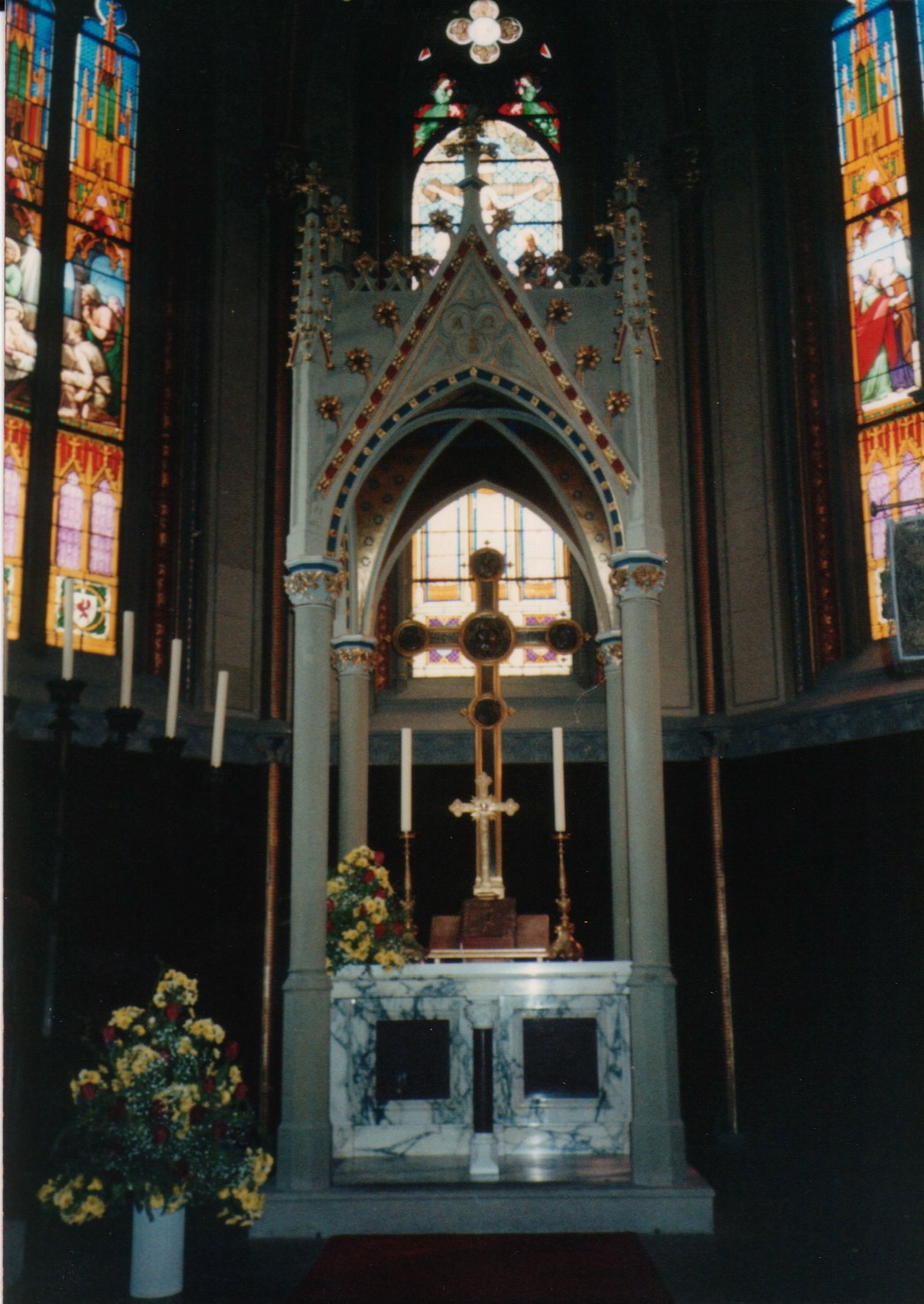
One of the more unusual features of Hohenzollern Castle reflects the religious complexity of the family that built it, for the castle contains two chapels, one Catholic and one Protestant, side by side. This arrangement mirrors the division of the Hohenzollern family itself, which had branches of both faiths, and it made the castle a place of worship for members of the dynasty whatever their religion.
The Protestant chapel served the branch of the family that ruled Prussia and, later, the German Empire, which had adopted the reformed faith. The Catholic chapel, by contrast, served the branch of the family that had remained Catholic and that held lands in the south, closer to the ancestral mountain. That both faiths should be accommodated within a single castle is a striking testament to the family’s desire to unite its different branches around their common origin.
The chapels are among the most beautiful and richly decorated spaces in the castle, their architecture and ornament reflecting the wealth and taste of the dynasty. They are also places of memory, for members of the Hohenzollern family are associated with the castle in death as well as in life, and the chapels form part of the castle’s role as a shrine to the history and the faith of the great German dynasty.
The religious division within the Hohenzollern family reflected the wider divisions of German history, in which the Protestant Reformation had split the country and its ruling houses along confessional lines. That the family should build two chapels within their ancestral castle, one for each faith, was a way of transcending these divisions and of uniting all the branches of the house around their common origin, a gesture of reconciliation carried out in stone.
The Catholic Chapel
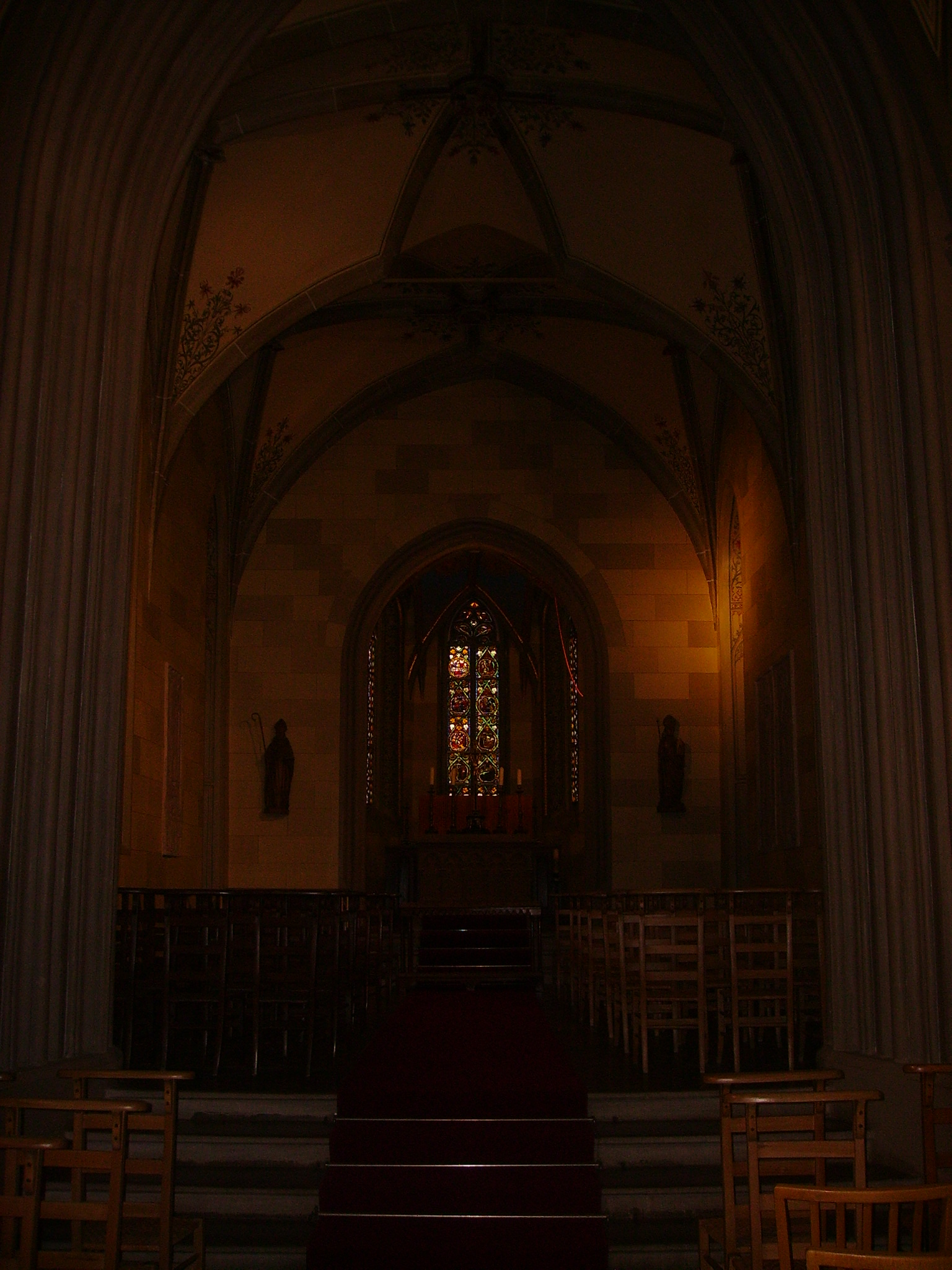
The Catholic chapel of Hohenzollern, dedicated to Saint Michael, is one of the oldest surviving elements associated with the site, and it forms a link to the earlier castles that once stood on the mountain. Richly decorated and full of atmosphere, it served the Catholic members of the family and stands as a reminder of the ancient roots of the dynasty and its faith.
The presence of two chapels, side by side, makes Hohenzollern unusual among the great castles of Germany and reflects the particular history of the family that built it. In an age when religious division had so often led to conflict and war, the peaceful coexistence of the two faiths within a single castle, both branches of one family worshipping under one roof, carries its own quiet message of unity and reconciliation.
Together, the two chapels form an important part of the experience of visiting Hohenzollern, and they help to explain the complex history of the dynasty whose seat this is. They remind the visitor that the great House of Hohenzollern was not a single, uniform entity but a family of many branches and beliefs, united by their common descent from the mountain and by their pride in their shared ancestral home.
The survival of elements from the earlier castles, incorporated into the nineteenth-century building, gives Hohenzollern a genuine historical depth beneath its romantic recreation. The chapel of Saint Michael, with its links to the medieval past, reminds the visitor that this is no mere fantasy but the ancestral seat of a real and ancient dynasty, whose roots on the mountain reach back many centuries before the present castle was built.
The Prussian Crown and Its Treasures
Among the greatest treasures kept at Hohenzollern Castle are the crown jewels and heirlooms of the Prussian royal house, displayed in the castle’s treasury. The most famous of these is the crown of the Prussian kings, a magnificent symbol of the power to which the dynasty rose from its humble origins on the mountain. To see it is to be reminded of the extraordinary journey of the Hohenzollerns, from Swabian counts to kings and emperors.
The castle also holds personal belongings of some of the most famous members of the dynasty, above all the great king Frederick the Great, the brilliant soldier and statesman who made Prussia a major European power in the eighteenth century. Among the treasures associated with him are personal effects and mementoes that bring the great king vividly to life, connecting the visitor directly to one of the most remarkable rulers of his age.
These treasures make Hohenzollern not just a beautiful castle but a museum of the history of one of Europe’s greatest dynasties. In its rooms and its treasury, the whole story of the Hohenzollerns is told, from their origins on the mountain to their rise to imperial power, and the visitor comes away with a vivid sense of the family whose ancestral home this is, and of the great events in which they played so central a part.
Frederick the Great remains one of the most fascinating figures in German history, a warrior-king who was also a gifted musician, writer and patron of the Enlightenment, a friend of philosophers and a brilliant general. The treasures associated with him at Hohenzollern, from his personal effects to mementoes of his reign, offer a tangible connection to this extraordinary ruler, whose achievements did so much to raise the Hohenzollern dynasty to greatness.
The Prussian crown displayed in the castle is a powerful symbol of the heights to which the family rose. Where their ancestors had been mere counts on a Swabian mountain, their descendants wore a royal and then an imperial crown, ruling over one of the greatest states in Europe. To see the crown in the ancestral castle is to grasp, at a glance, the whole astonishing trajectory of the dynasty, from the mountain to the imperial throne.

A Castle in the Clouds
Perhaps the most magical aspect of Hohenzollern is the way it interacts with the weather and the light. On misty mornings, when a sea of cloud fills the valleys below, the castle on its mountain-top rises clear above the fog, seeming to float in the sky, entirely cut off from the world beneath. This spectacle, much loved by photographers, has made Hohenzollern famous as a castle in the clouds.
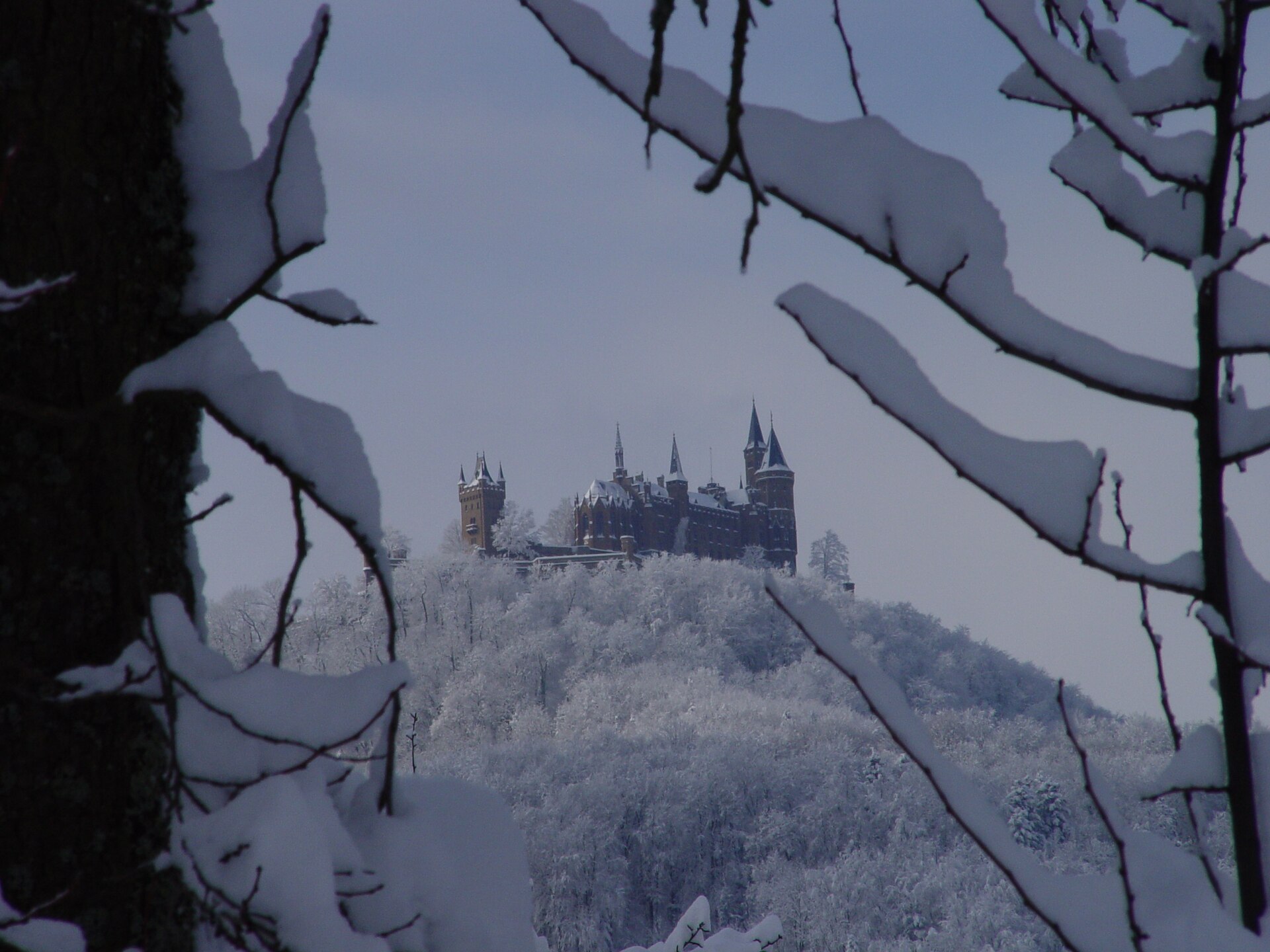
In winter, when snow covers the mountain and the surrounding country, the castle takes on a different but equally romantic character, its towers and roofs white against the sky, the whole scene like an illustration from a fairy tale. In every season and every light, the castle on its peak offers a spectacle of romantic beauty, and it is easy to see why it has become one of the most photographed and most admired castles in Germany.
This ever-changing interplay of castle, mountain, cloud and light is a large part of the magic of Hohenzollern. The castle was placed on its dramatic summit precisely to command such views and to make such a spectacle, and it succeeds triumphantly. Few buildings anywhere are so perfectly married to their setting, or so completely fulfil the romantic ideal of the castle on the mountain.
The phenomenon of the castle floating above a sea of cloud, known in German as a temperature inversion, occurs when cold, moist air settles in the valleys while the mountain-tops remain clear above. On such mornings, Hohenzollern appears to hover in the sky, an island of stone above an ocean of white, and photographers travel great distances in the hope of capturing the spectacle. It is one of the most magical sights that any castle in Europe can offer.
A Living Family Seat
Unlike many great castles that have passed entirely into the hands of the state, Hohenzollern remains closely tied to the family whose name it bears. The Hohenzollern family, the descendants of the kings of Prussia and emperors of Germany, still own the castle, and it continues to serve as a monument to their history and a symbol of their dynasty, even in an age when their political power has long since passed away.
In the twentieth century, members of the family enriched the castle with historically significant collections and worked to preserve it and open it to the public, creating a museum of the dynasty’s history within its walls. The castle thus continues its role as a shrine to the Hohenzollern past, cared for by the family and shared with the many visitors who come to admire it each year.
This continuing connection between the castle and the living family gives Hohenzollern a special character. It is not a dead monument but a place still bound up with the identity of a great dynasty, a seat that has passed down through the generations and that remains, after so many centuries, the symbolic home of the House of Hohenzollern. In this, as in so much else, it is a castle unlike most others.
The continuing ownership of the castle by the Hohenzollern family sets it apart from the many great castles that have become purely state monuments or museums. There is a special resonance in visiting a castle that is still the seat of the dynasty whose history it tells, and whose descendants still care for it and cherish it as the cradle of their house. This living connection gives Hohenzollern a warmth and an authenticity that few other great castles can match.
The story of the Hohenzollerns did not end happily as reigning monarchs, for the German monarchy fell at the close of the First World War, and the family lost the imperial throne to which they had risen. Yet they kept their ancestral castle, and in it they preserved the memory of their long and remarkable history, so that Hohenzollern remains today what it has always been: the enduring symbol and the true home of one of the greatest dynasties Europe has ever known.

Visiting Hohenzollern Castle
Today Hohenzollern Castle is one of the most popular castles in Germany, drawing visitors from all over the world to marvel at its dramatic setting and to explore its history. Reached by a climb or a shuttle up the mountain from the car parks below, the castle offers guided tours of its interiors, including the treasury with the Prussian crown, as well as the chance to wander its courtyards, walk its ramparts and drink in the spectacular views.
A visit rewards both the lover of history and the lover of beautiful places. Within the castle, the whole story of the House of Hohenzollern is told, from its origins on the mountain to its rise to imperial power, while outside, the setting on the lonely peak offers some of the finest views and most romantic vistas in all of Germany. To catch the castle floating above a sea of morning mist is an experience never to be forgotten.
You will find Hohenzollern Castle near the town of Hechingen, in the state of Baden-Württemberg in southern Germany, within easy reach of Stuttgart. For exact directions, here is a map link to guide you there: 48.3236, 8.9678. Climb the mountain, pass through the winding gates, and step into the ancestral seat of the kings of Prussia and the emperors of Germany.
The castle is beautiful in every season, from the fresh green of spring and the golden light of autumn to the snows of winter and the famous morning mists, and each brings its own particular magic. Many visitors return again and again in the hope of seeing the castle in different moods, and the surrounding countryside of the Swabian Alb, with its hills, forests and walking trails, offers much to those who wish to linger and explore the region around the great mountain castle.

Castles Nearby
The Crown of Swabia
Hohenzollern Castle is a place where landscape, history and legend come together in perfect harmony. On its lonely mountain in the hills of Swabia, it stands as the ancestral seat of one of the greatest dynasties in the history of Europe, the family that rose from these southern hills to become kings of Prussia and emperors of Germany. The castle we see is a nineteenth-century dream of the medieval past, but it rests on centuries of real history, and it remains, to this day, the symbolic heart of the House of Hohenzollern.
To see it rise above the clouds, or gleam white against a winter sky, is to understand why this mountain was chosen as the cradle of a dynasty, and why its castle has stirred the imagination of so many. Grand, romantic and steeped in the story of a great family, Hohenzollern is one of the most beautiful and evocative castles in all of Germany, a fitting monument to the dynasty that took its name from the crown of all the castles of Swabia.
You May Like
Mafra, the Palace a King Built From a Vow


One thought on “Hohenzollern Castle: The Ancestral Seat of Prussia’s Kings”