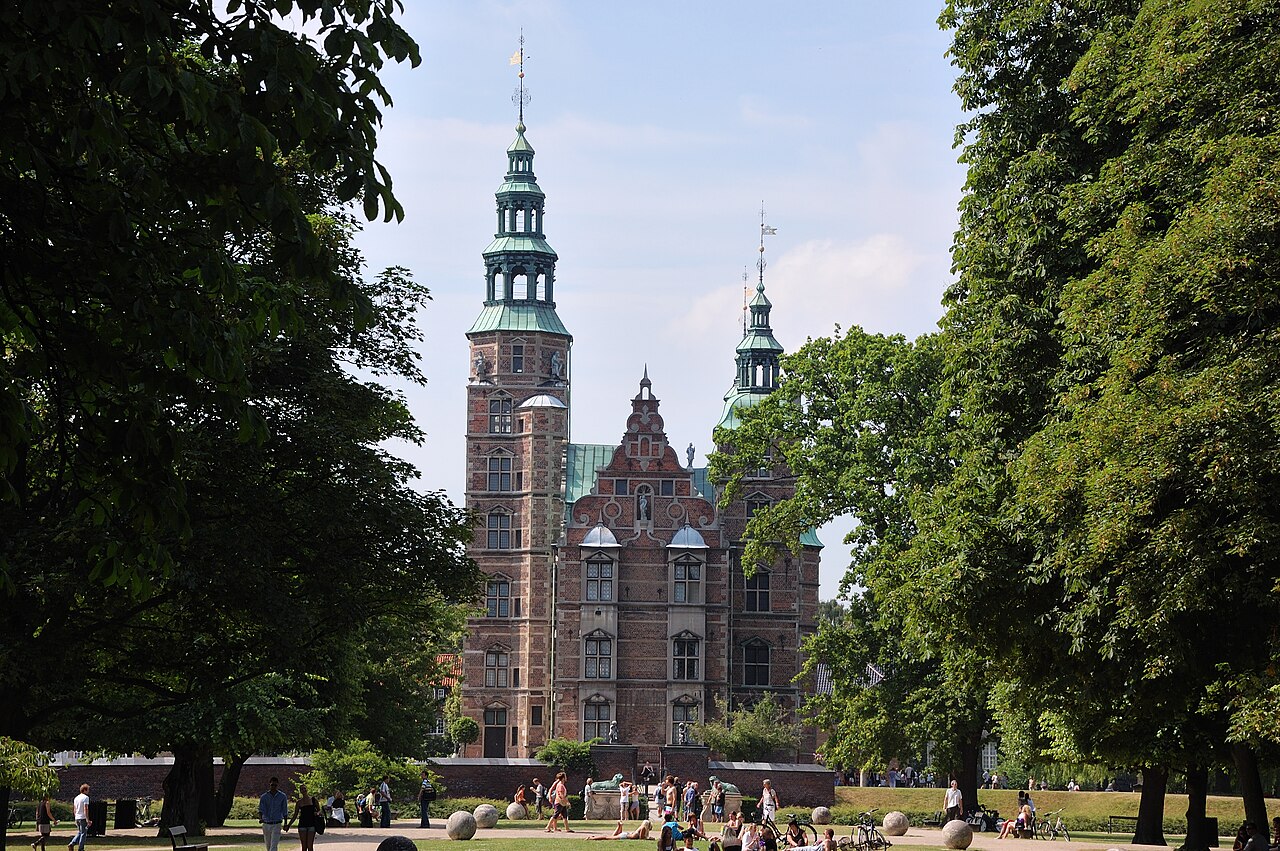
In the middle of Copenhagen, surrounded by one of the city’s most beloved parks, stands a castle that looks as though it stepped out of a fairy tale. Rosenborg, with its red brick walls, its green copper spires, and its Renaissance towers, rises above the trees of the King’s Garden like a vision from an earlier age. Yet for all its storybook charm, this is a real royal castle, and it guards some of the most precious treasures in all of Denmark.
Rosenborg was built in the early seventeenth century as a summer retreat and pleasure palace for one of Denmark’s most famous kings, and it still bears his personality in every room. Where later palaces grew vast and formal, Rosenborg remains relatively intimate, a castle on a human scale whose richly decorated chambers feel personal rather than overwhelming. To walk through it is to feel close to the kings and queens who lived and dreamed here.
Today the castle is a museum, home to the Royal Danish Collection, and it tells the story of the Danish monarchy across some four centuries. Its greatest draw lies below ground, in the treasury, where the crown jewels and the royal regalia are kept, but the castle above is a treasure in itself, its rooms crowded with the art, furniture, and curiosities that generations of monarchs gathered around them.
In this guide you will explore Rosenborg from its origins under the king who built it, through its remarkable architecture, its famous Long Hall with the coronation thrones and their silver lions, the dazzling crown jewels in the treasury, and its surrounding gardens, to what it is like to visit today. By the end you will understand why this small castle holds such a large place in the heart of Denmark.
In This Article
- Christian IV and His Pleasure Palace
- A Jewel of the Dutch Renaissance
- The King’s Garden, Copenhagen’s Oldest Park
- Inside the Royal Chambers
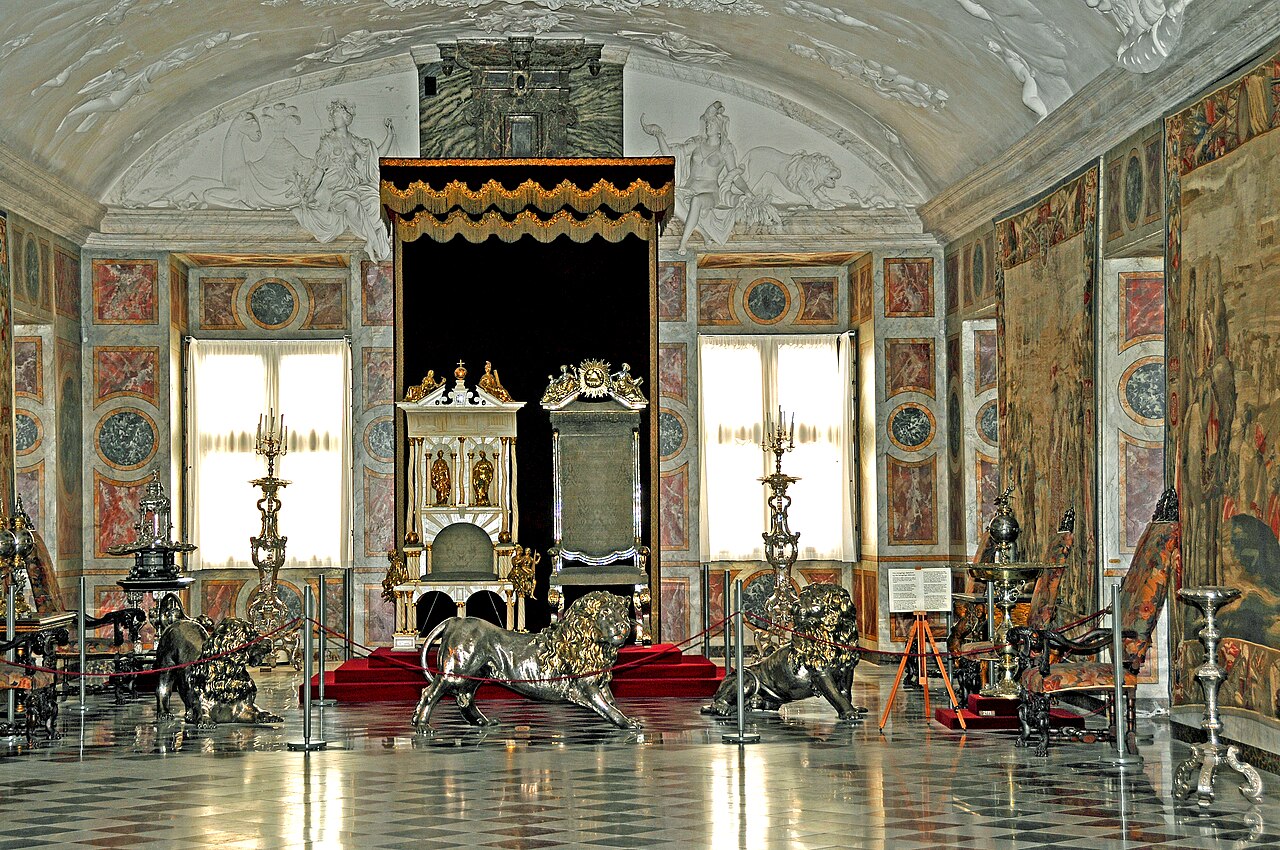
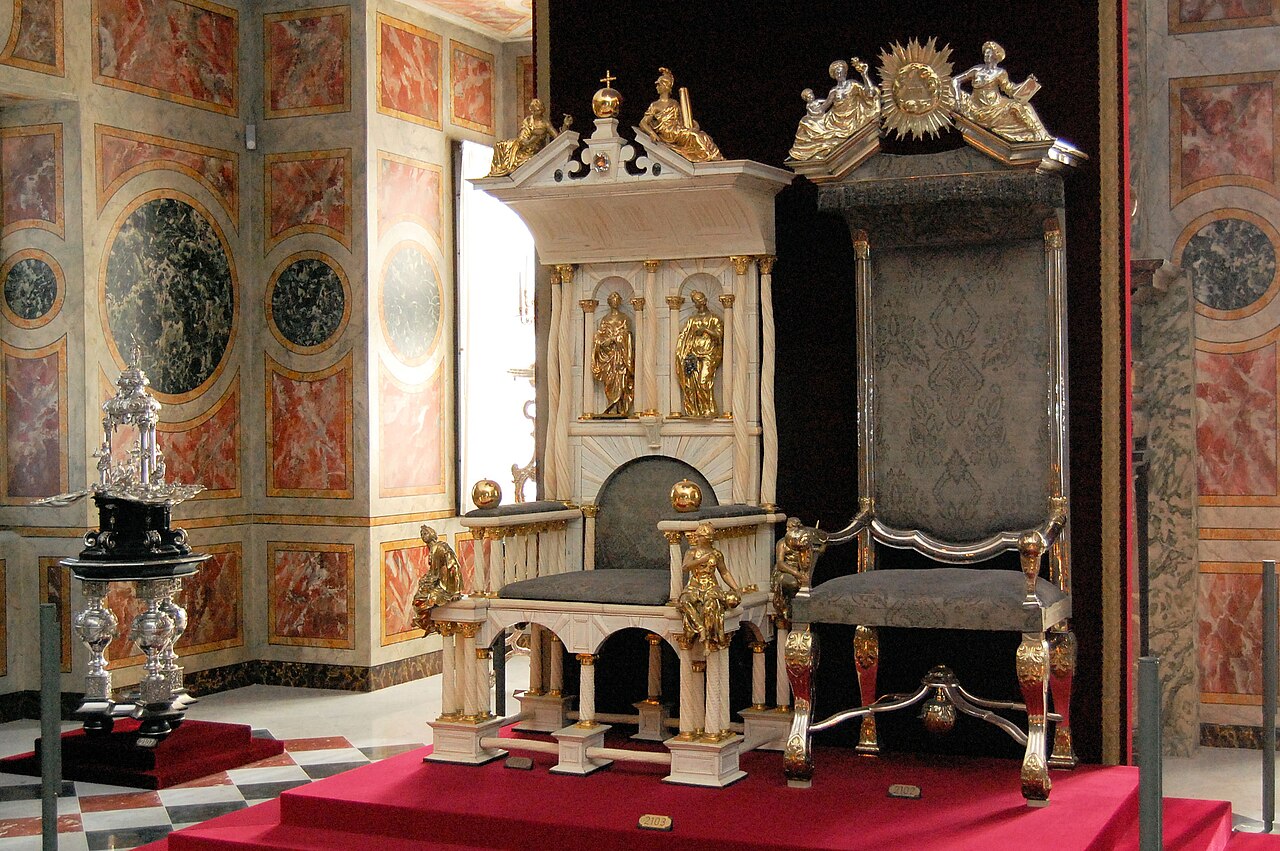
- The Long Hall and the Coronation Thrones
- The Silver Lions That Guard the Throne
- The Crown Jewels in the Treasury
- The Rooms of a Remarkable King
- A Chronicle of the Danish Monarchy
- From Royal Residence to National Museum
- The Castle, the Guard, and City Life
- Planning Your Visit to Rosenborg
- See Rosenborg for Yourself
Christian IV and His Pleasure Palace
Rosenborg is inseparable from the king who built it, Christian IV, one of the most colourful and energetic monarchs in Danish history. Ruling for more than half a century in the seventeenth century, Christian was a prodigious builder who reshaped Copenhagen and left his mark across his kingdom, and Rosenborg was among his most personal projects, a place he loved and returned to throughout his long life.
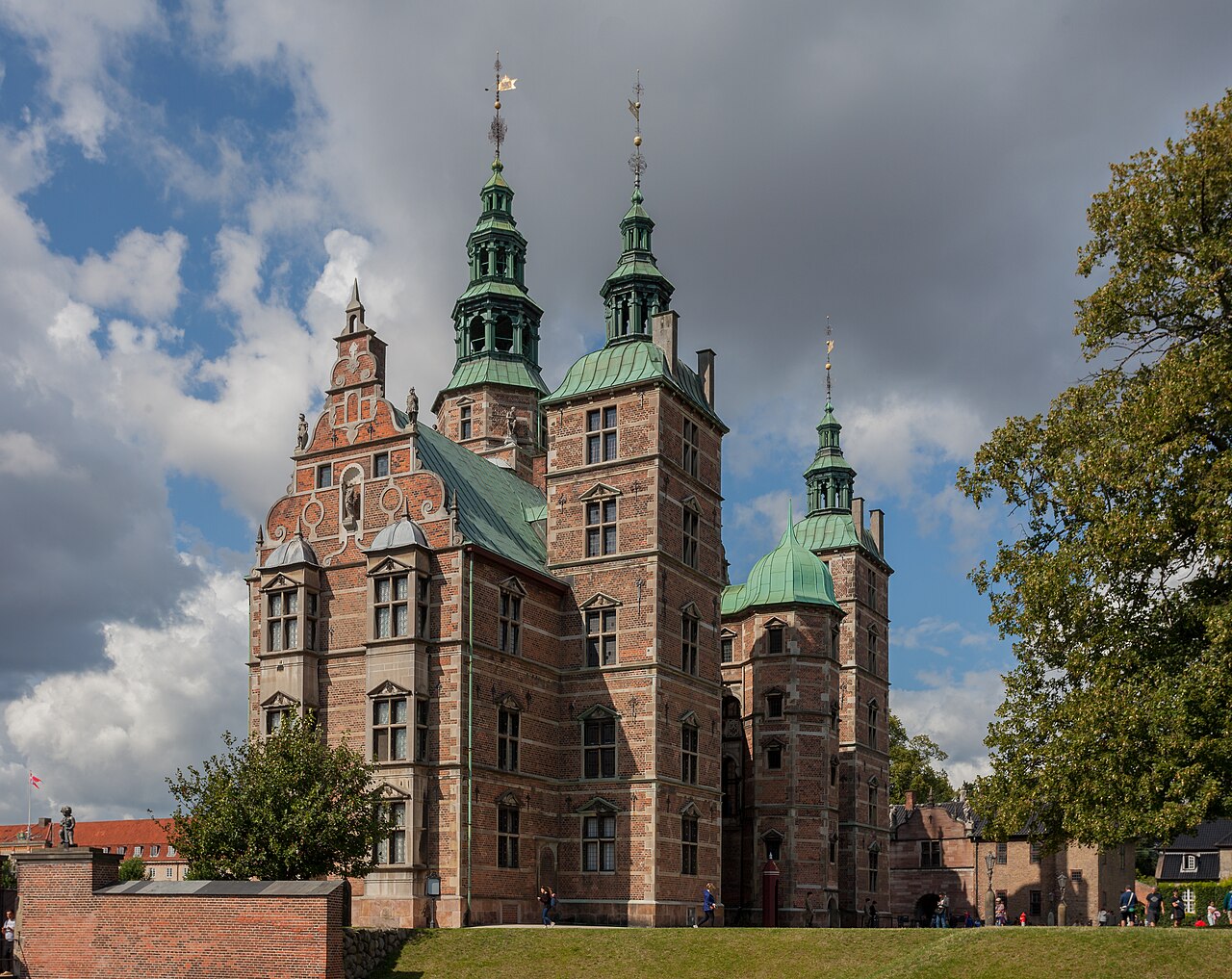
The castle began not as a grand palace but as a modest summerhouse on the edge of the city, a country retreat where the king could escape the formality of court. Over the years Christian expanded and enriched it, adding towers and rooms until the summerhouse had grown into the elegant castle we see today. Its gradual development gives Rosenborg an organic, personal quality quite unlike a palace built to a single grand plan.
For Christian IV, Rosenborg was a pleasure palace in the truest sense, a place for relaxation, entertainment, and the enjoyment of beautiful things. He filled it with art and curiosities, designed spaces for feasting and festivity, and made it a setting for the private pleasures of a king with a restless, creative mind. The castle reflects his tastes and enthusiasms at every turn.
His attachment to Rosenborg lasted to the end of his life; it was here that the old king died, in the castle he had built and loved. That personal history clings to the place, and it is part of what makes Rosenborg so evocative. More than most royal residences, it feels like the home of a particular person, a monument to one remarkable king as much as to the monarchy in general.
Christian IV’s reign coincided with a period of great ambition for Denmark, which was then among the leading powers of northern Europe. The king poured the wealth of the crown into building, founding towns, raising churches and palaces, and reshaping his capital. Rosenborg belongs to this burst of royal creativity, and it survives as one of the most complete and personal expressions of a monarch who wanted to leave his kingdom transformed.
A Jewel of the Dutch Renaissance
Architecturally, Rosenborg is a splendid example of the Dutch Renaissance style that flourished in northern Europe in the seventeenth century and that Christian IV favoured for his buildings. Its red brick walls, sandstone detailing, decorative gables, and slender spired towers are hallmarks of this style, giving the castle its distinctive and instantly recognisable silhouette.
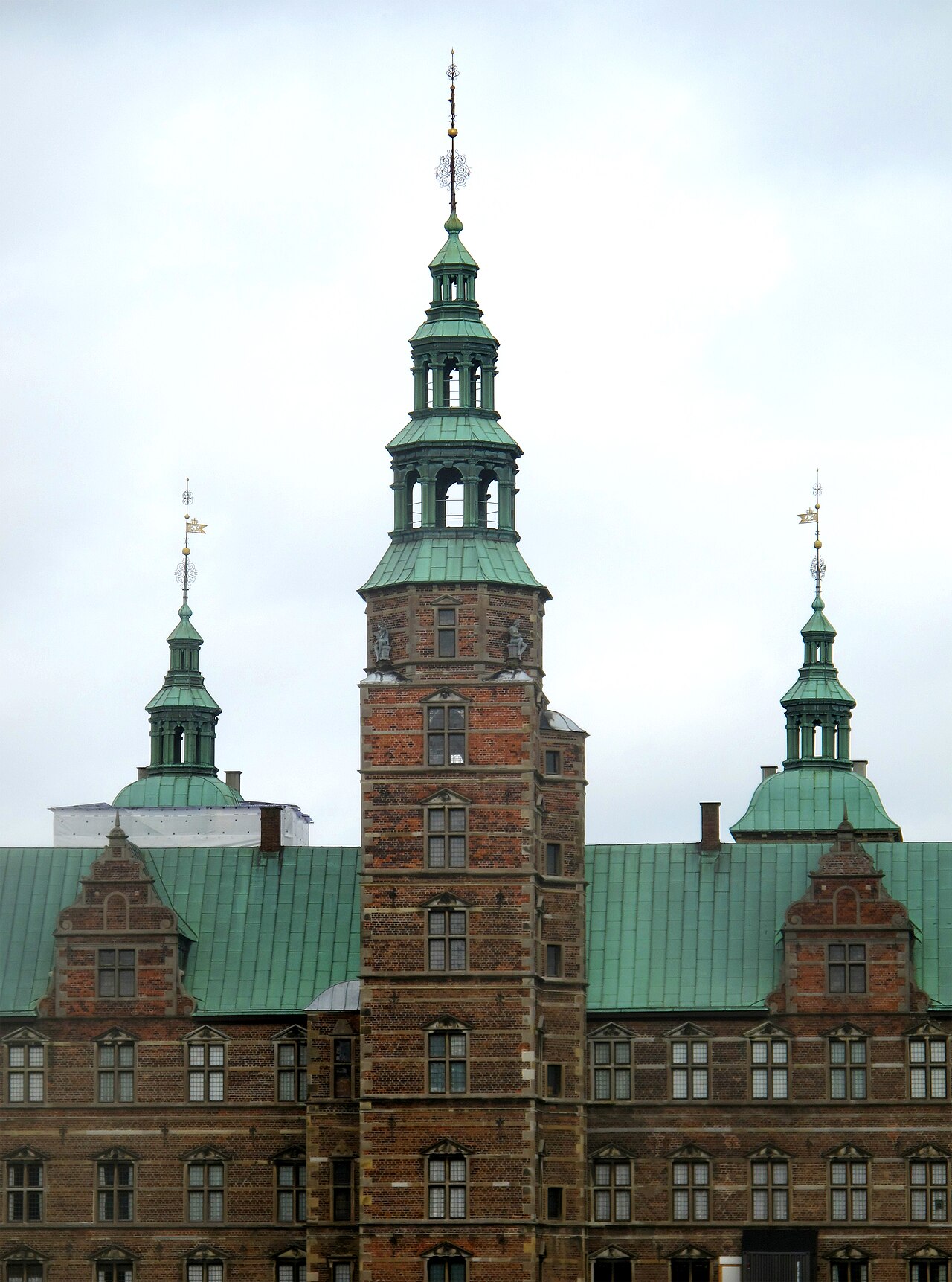
The Dutch Renaissance manner suited both the climate and the tastes of the region, combining solidity with ornament and a certain playful elegance. At Rosenborg the style produces a building that is grand yet approachable, richly detailed yet harmonious, its towers and gables creating a lively skyline against the greenery of the surrounding park. The effect is romantic without being heavy.
The castle’s relatively compact form is part of its charm. Rather than sprawling across a vast site, Rosenborg gathers its rooms into a tight, tower-flanked block, so that the interior feels intimate and the exterior reads as a single jewel-like composition. This concentration of beauty is very different from the endless facades of later Baroque palaces, and it gives Rosenborg a special character.
Set in its garden, reflected in still water and framed by trees, the castle presents one of the most picturesque sights in Copenhagen. It has become an emblem of the city and of the era of Christian IV, a physical expression of a confident age when Denmark was a significant northern power and its king a builder of lasting monuments. Few buildings capture their moment so completely.
Look closely at the exterior and you can read the story of the castle’s growth. The way the towers relate to the main block, the placement of the great staircase tower, and the rhythm of the gables all reflect the stages by which a modest summerhouse became a castle. What might have been an awkward patchwork instead achieved a happy harmony, thanks to the consistency of the Dutch Renaissance style throughout the successive phases of building.
The King’s Garden, Copenhagen’s Oldest Park
Rosenborg sits at the heart of the King’s Garden, known in Danish as Kongens Have, which was laid out along with the castle and is the oldest royal garden in Denmark. Created originally as the private grounds of Christian IV’s pleasure palace, it has evolved over the centuries into one of the most cherished public parks in Copenhagen, loved by residents and visitors alike.
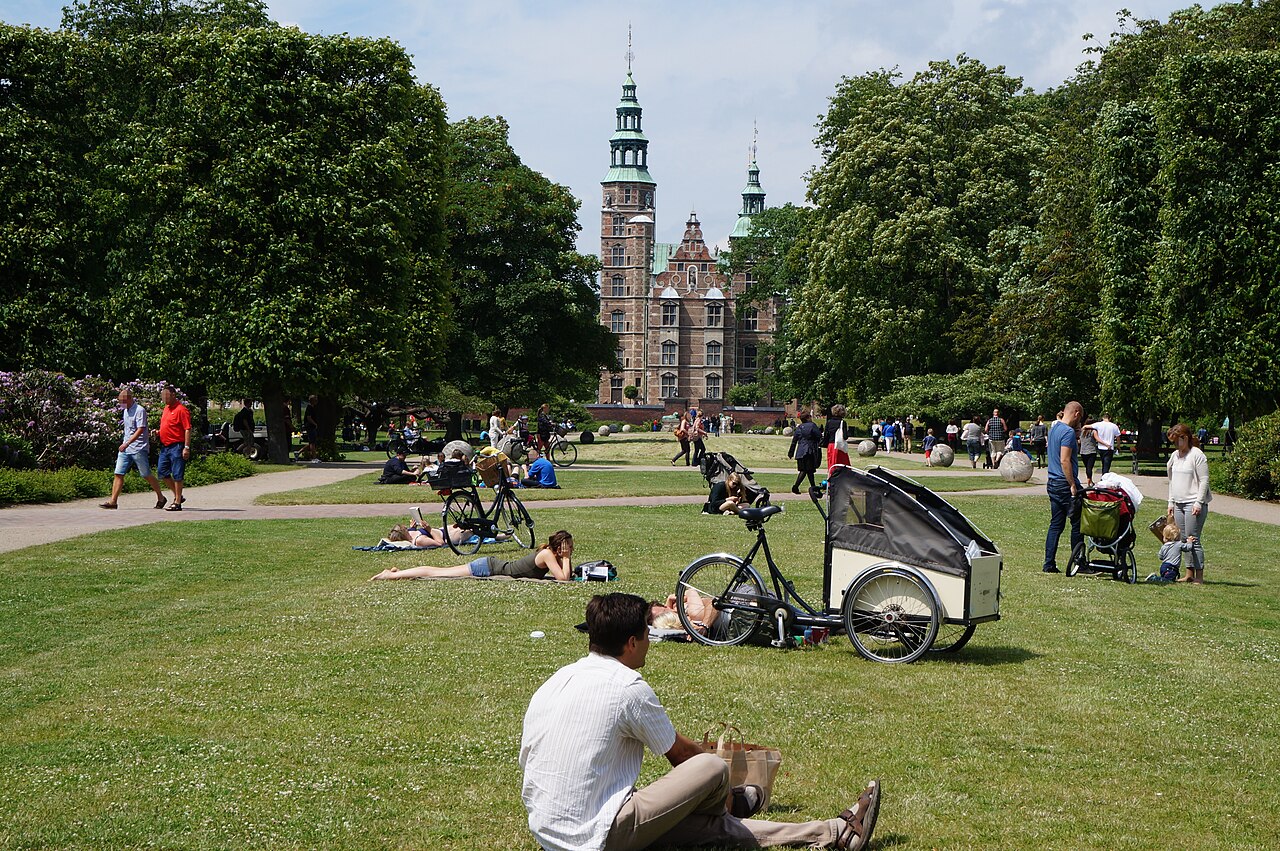
The garden began as a formal royal pleasure ground, with the geometric layouts and ornamental plantings typical of the age, designed to complement the castle and provide a setting for royal leisure. Over time its role changed, and it gradually opened to the public, becoming a green heart of the city where people come to stroll, picnic, and relax among lawns, flowerbeds, and avenues of trees.
Today the King’s Garden is a place of constant life. In fine weather its lawns fill with sunbathers and picnickers, families and students, all enjoying the rare pleasure of a great park in the middle of a busy capital. Ornamental features, sculptures, and seasonal displays add interest, and the castle rising among the trees gives the whole park a fairy-tale backdrop.
The garden and the castle belong together, two halves of a single vision that has outlived its royal origins to become a gift to the city. Where once only the king and his court could enjoy these grounds, now anyone may wander them freely, and the sight of Rosenborg above the greenery has become one of the enduring images of Copenhagen, a meeting of royal history and everyday urban life.
The King’s Garden also hosts events and traditions that keep it at the centre of Copenhagen life, from puppet theatres for children to concerts and seasonal gatherings. This living, everyday use is the modern chapter in the garden’s long history, and it shows how a space created for the private pleasure of a seventeenth-century king has become a shared amenity that belongs, in spirit, to everyone in the city.
Inside the Royal Chambers
Passing from the garden into the castle, you enter a world of richly decorated rooms that preserve the tastes of the Danish monarchy across several centuries. The interiors of Rosenborg are famous for their completeness and atmosphere, many of them retaining their original decoration, furniture, and objects, so that they feel less like museum displays than like rooms a royal family has only just left.
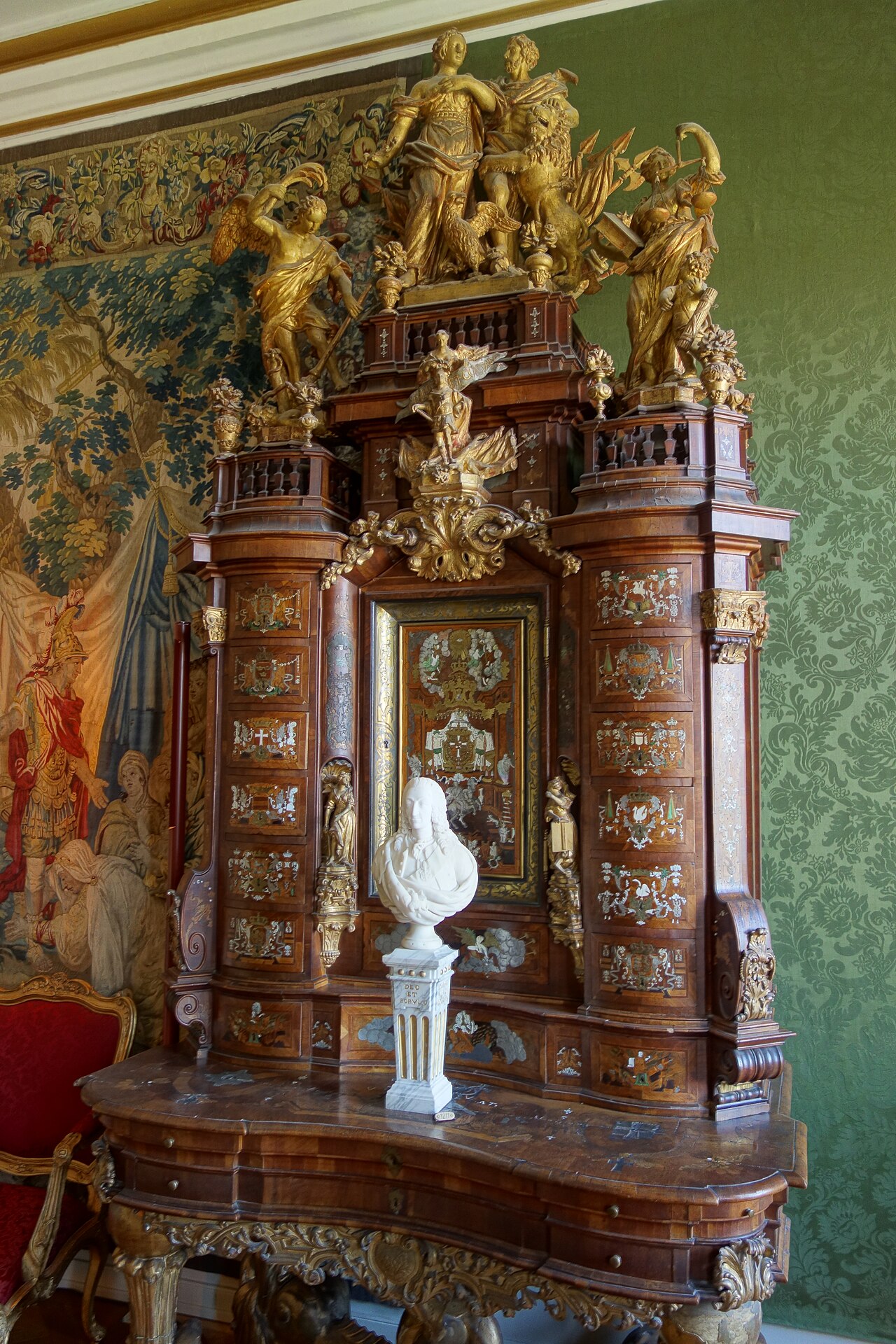
The chambers reflect the changing fashions of successive reigns, from the exuberant early rooms of Christian IV’s time to the more refined interiors added by later monarchs. Painted ceilings, tapestries, inlaid furniture, mirrors, and countless decorative objects fill the spaces, creating an impression of concentrated richness that rewards slow and careful looking.
Each room has its own character and its own treasures. Some are decorated in dark, warm woods and gilded leather; others gleam with mirrors and glass or glow with painted panels. Throughout, the castle is crowded with the personal possessions of kings and queens, from portraits and clocks to the curious and precious objects that delighted collectors of earlier ages.
Because so much survives in place, walking through Rosenborg gives an unusually vivid sense of royal domestic life. These were not just ceremonial spaces but rooms that were lived in, and the accumulation of objects across generations tells the story of a family and a dynasty. The intimacy of the castle makes this history feel close and human in a way that grander palaces rarely achieve.
Among the treasures of the interiors are the famous rooms lined with panels and the chambers hung with fine tapestries and mirrors. Some spaces were designed to display particular collections, such as porcelain or glass, arranged with the care of a connoisseur. These thematic rooms reveal how earlier ages thought about display and collecting, treating precious objects not as isolated exhibits but as part of a total decorative and symbolic scheme.
The Long Hall and the Coronation Thrones
The crowning glory of the castle’s interior is the Long Hall, a magnificent room running the full width of the upper floor and originally intended as a great ballroom. Today it serves as one of the most spectacular royal halls in Scandinavia, its length and grandeur making an immediate impression on everyone who enters.
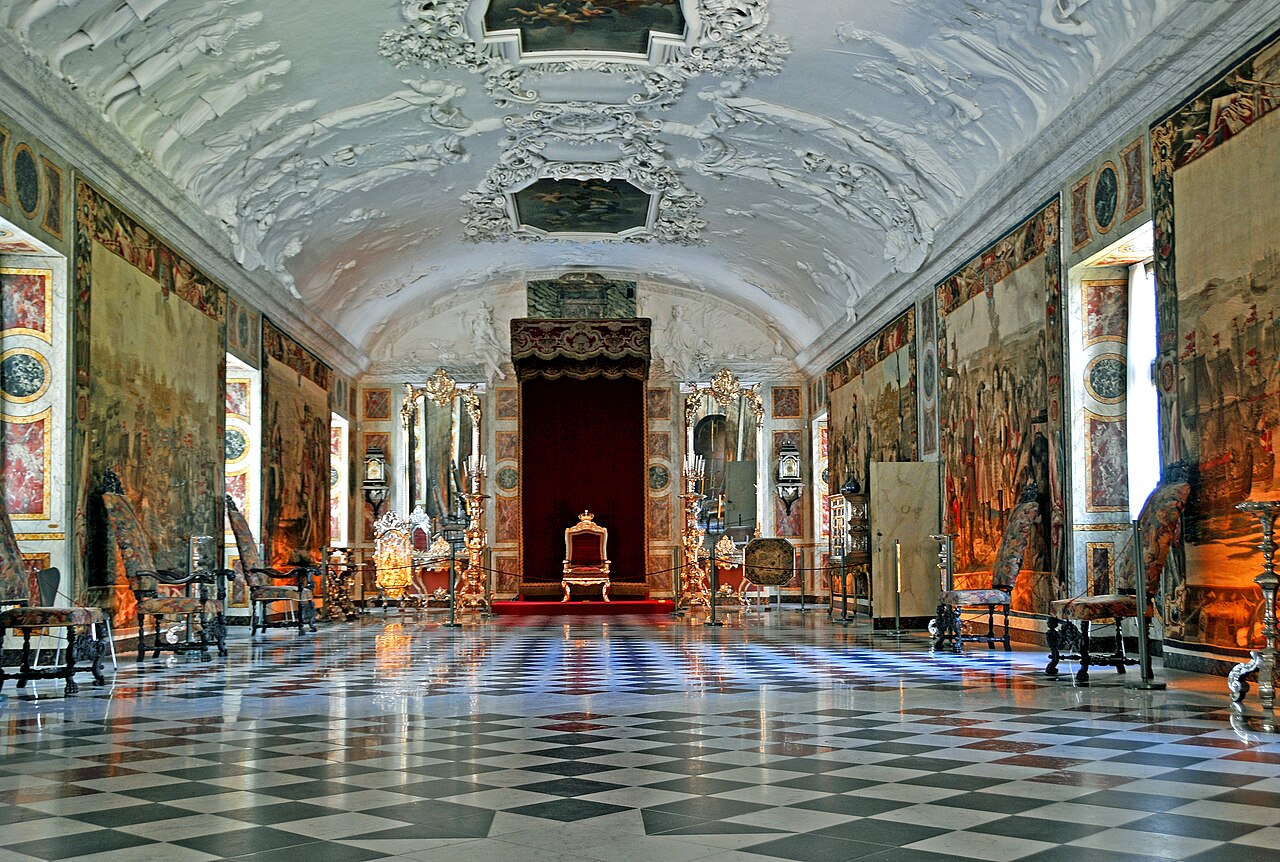
The hall is home to the coronation thrones of the Danish monarchs, the seats on which kings and queens were once enthroned in the ceremonies that confirmed their rule. These thrones are objects of extraordinary craftsmanship and symbolism, designed to embody the majesty and authority of the crown, and their presence gives the Long Hall a profound sense of history and ceremony.
Around the thrones the hall is richly decorated, with tapestries commemorating royal victories, stucco ornament, and a wealth of detail that reflects the importance of the space. It was here that the monarchy displayed itself at its most magnificent, and the room still conveys that sense of grandeur to visitors centuries later.
To stand in the Long Hall is to feel the weight of the Danish monarchy’s history. The thrones, the tapestries, and the sheer scale of the room combine to create an atmosphere of solemn splendour, a fitting climax to a tour of the castle and a reminder that Rosenborg, for all its intimacy, was a stage for the highest ceremonies of the realm.
The tapestries that line the hall deserve special notice, for they were woven to celebrate the military victories of the Danish crown and form a coherent series designed for this very space. Together with the stucco ceiling and the thrones, they make the Long Hall a carefully composed statement of royal power and glory, a room in which every element was chosen to impress upon visitors the greatness of the monarchy.
The Silver Lions That Guard the Throne
Among the most striking sights in the Long Hall are the three life-sized silver lions that stand guard before the thrones. Cast in solid silver and gleaming under the light, these magnificent beasts have watched over the coronation thrones for centuries, and they are among the most famous objects in the entire castle.
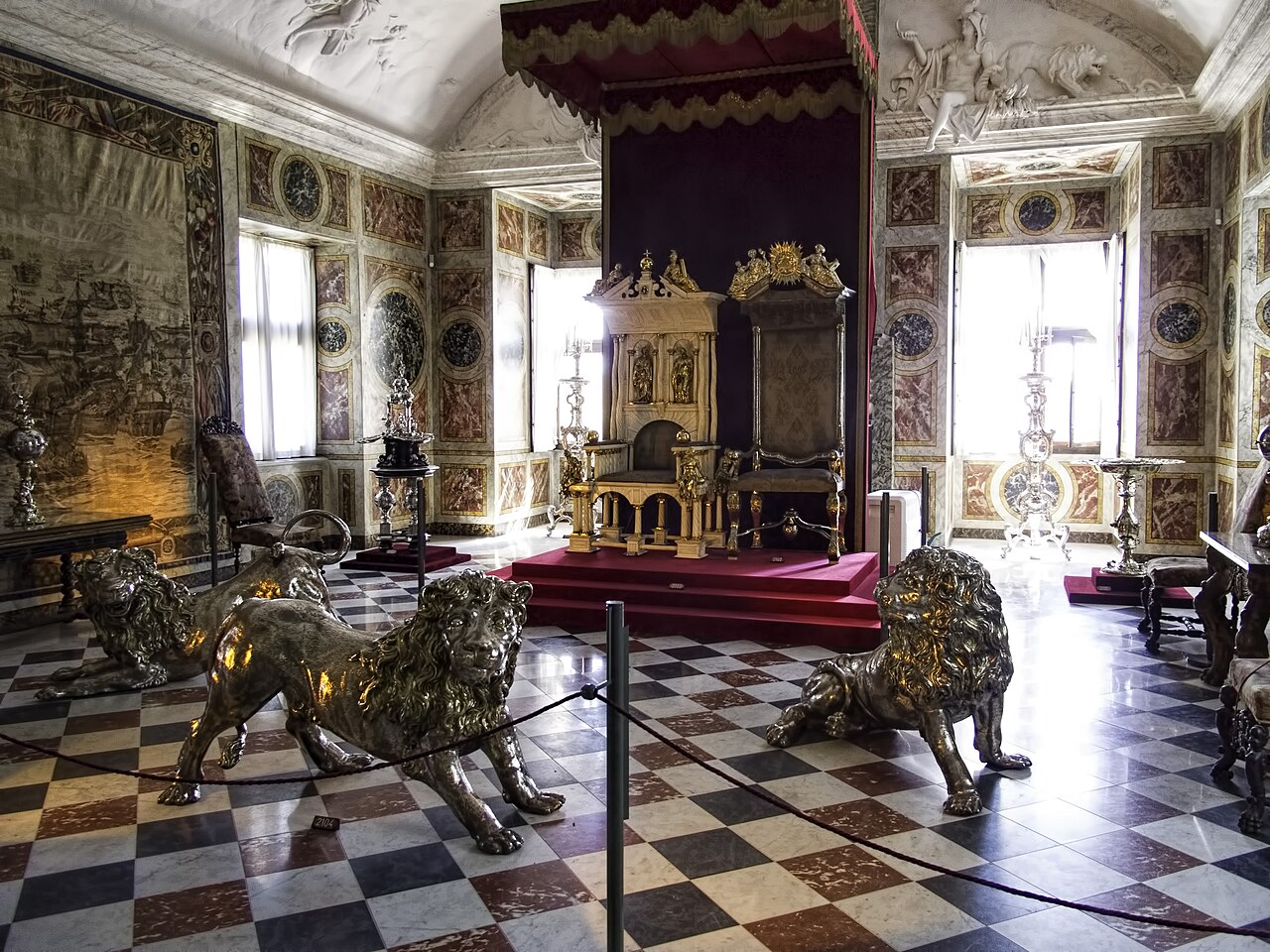
The lions are more than decoration; they are powerful symbols of royal strength and majesty. The lion has long been an emblem of kingship, and to place three of them, wrought in precious silver, before the throne was to surround the monarch with an aura of power and permanence. Their presence transforms the space around the thrones into a kind of sanctuary of royal authority.
Historically, the silver lions were brought out for the most solemn occasions, standing guard at coronations and, in later times, at the lying-in-state of deceased monarchs. In this way they marked the great thresholds of a reign, from the beginning of a king’s rule to its end, embodying the continuity of the crown across the generations.
For visitors today, the silver lions are one of the unforgettable images of Rosenborg. There is something both grand and slightly magical about these silver beasts keeping their eternal watch, and they capture perfectly the blend of splendour, symbolism, and craftsmanship that runs throughout the castle. They are guardians of a story that stretches back through the whole history of Denmark.
Craftsmanship of this order was itself a form of royal display. To commission life-sized beasts in solid silver was to demonstrate the wealth and reach of the crown, and to employ the finest artisans in its service. The lions thus carry a double meaning, symbolising both the strength of the monarchy and the resources it could command, and they remain a high point of the decorative arts in Denmark.
The Crown Jewels in the Treasury
Beneath the castle, in a secure treasury, lies Rosenborg’s most dazzling attraction: the Danish crown jewels and royal regalia. Here, behind glass and heavy security, are gathered the crowns, sceptres, swords, and jewels that symbolise the Danish monarchy, a collection of breathtaking richness and historical significance that draws visitors from around the world.
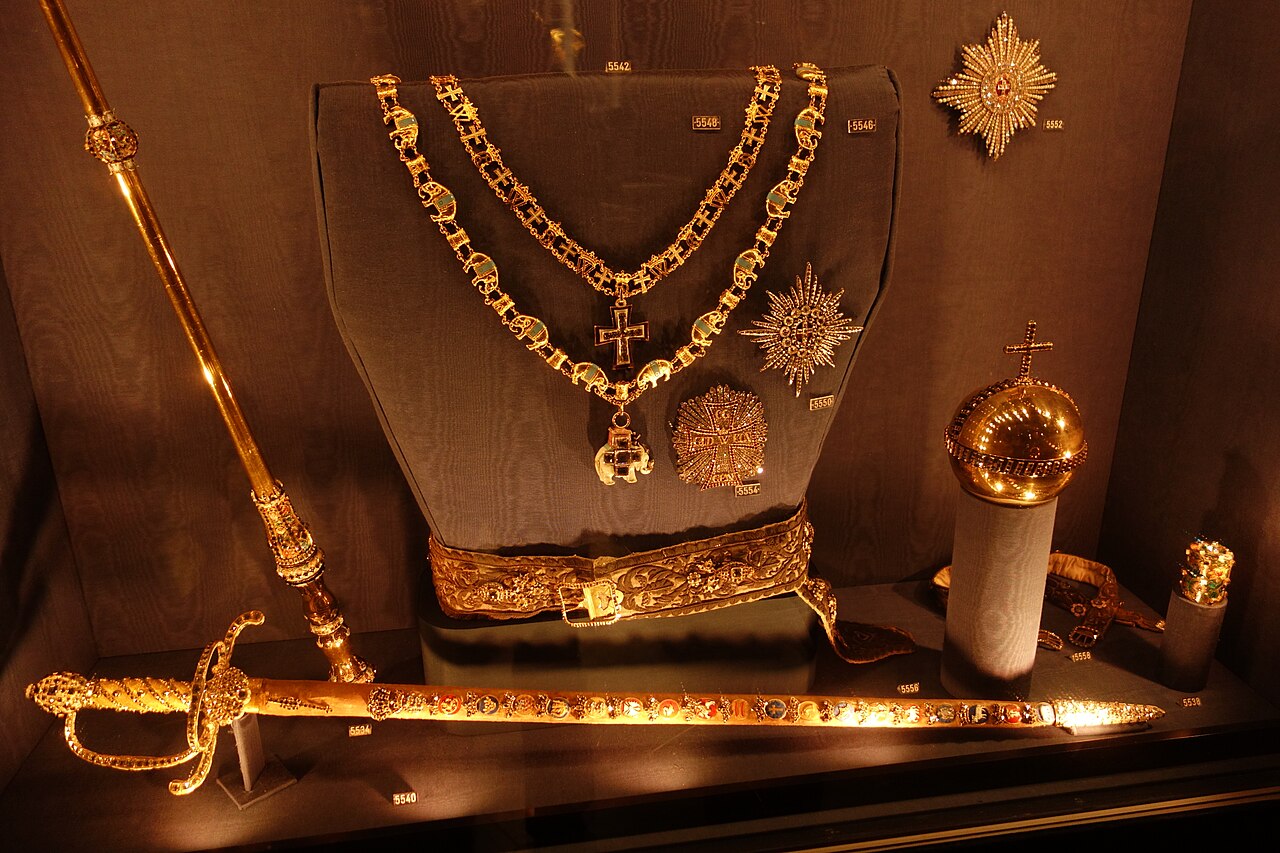
The regalia include the crowns used in the coronations and anointings of Danish kings and queens, masterpieces of the goldsmith’s and jeweller’s art encrusted with precious stones. Alongside them are the other symbols of sovereignty, the sceptre and orb and sword of state, each laden with meaning and each a treasure in its own right. Together they form one of the most important sets of royal regalia in Europe.
The treasury also holds the crown jewels proper, the jewelled sets still worn by the Danish queen on the greatest state occasions. Unlike museum pieces locked away forever, these jewels remain in living use, a direct link between the glittering displays in the treasury and the ceremonies of the present-day monarchy. Their beauty is matched by their continuing role.
Descending into the treasury is the climax of many visits to Rosenborg. After the warm, crowded rooms of the castle above, the cool, hushed vault with its gleaming treasures feels like entering the very heart of the monarchy. The concentration of wealth, craftsmanship, and history in this single space is extraordinary, and it explains why Rosenborg is regarded as one of the great treasure houses of Europe.
The security and reverence surrounding the treasury reflect the deep symbolic importance of what it holds. Crowns and regalia are not merely valuable objects; they are the physical embodiment of sovereignty itself, the very symbols through which power was conferred and legitimacy expressed. To see them gathered together is to look upon the material heart of a monarchy that has endured for centuries, one of the oldest in the world.
The Rooms of a Remarkable King
Throughout the castle, the spirit of Christian IV lingers, for so much of Rosenborg reflects his personality and his passions. His private chambers and the rooms he created are among the most atmospheric in the castle, decorated in the rich, dark style of his age and filled with objects that speak of his wide-ranging interests and his love of fine and curious things.
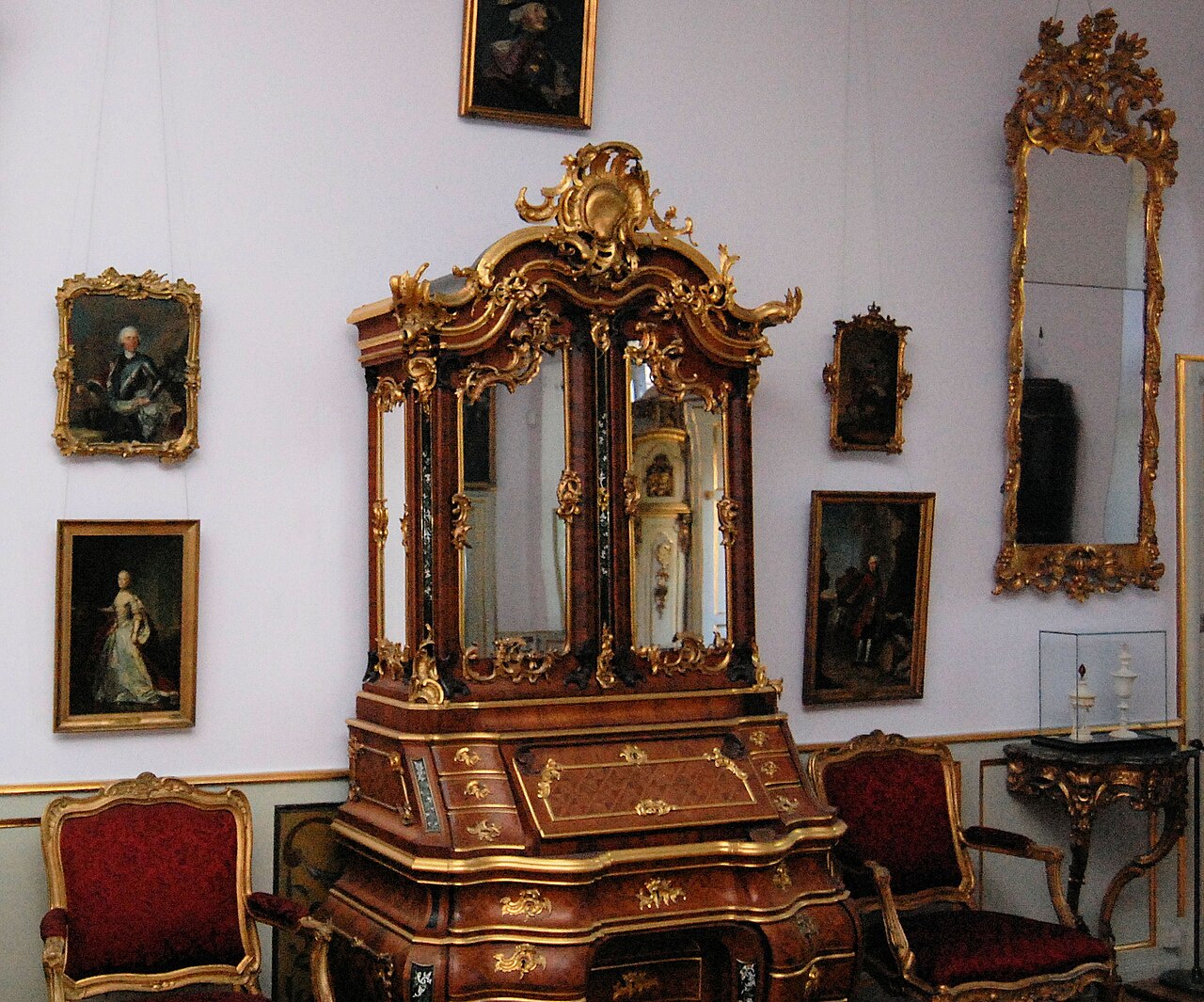
Christian IV was a man of many enthusiasms, fascinated by art, science, craftsmanship, and mechanical ingenuity, and the castle preserves traces of all of these. From intricate objects and ingenious devices to richly worked furniture and decoration, the rooms reveal a mind that delighted in skill and novelty as much as in grandeur.
The king’s rooms also carry the poignancy of his personal story. This was the setting for both the triumphs and the disappointments of a long and eventful reign, and it was here that the aged monarch spent his final days. Standing in these chambers, you feel the presence of the man himself, not just the institution of the monarchy, in a way that is rare and moving.
It is this personal dimension that gives Rosenborg much of its charm. Where many royal residences feel like monuments to an abstract idea of kingship, Rosenborg feels like the home and creation of a specific, vivid human being. Christian IV built himself into the very fabric of the castle, and his character remains its guiding presence to this day.
Christian IV’s building legacy extends far beyond Rosenborg, and visitors who fall under the castle’s spell often go on to seek out his other works across Copenhagen and the wider kingdom. Yet Rosenborg remains the most intimate and personal of them all, the place where his taste, his interests, and his love of beautiful things are most directly felt. It is, in many ways, the closest thing we have to a portrait of the king himself.
A Chronicle of the Danish Monarchy
Rosenborg is not only a beautiful castle but a carefully arranged chronicle of the Danish royal house. As part of the Royal Danish Collection, its rooms are organised to tell the story of the monarchy across the centuries, with each space reflecting a particular reign or period and displaying the treasures associated with it.
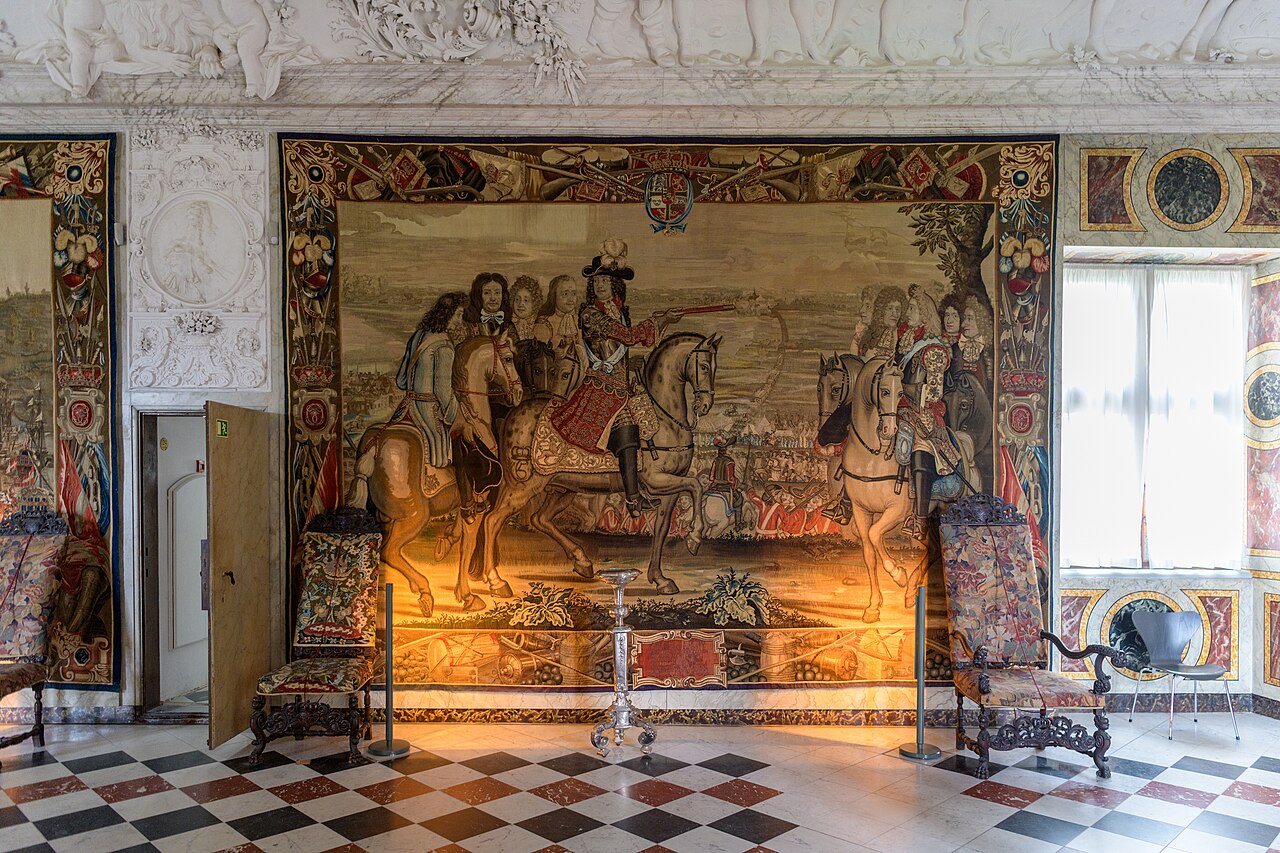
Walking through the castle in sequence, you move through Danish history itself, from the founding era of Christian IV through the reigns of his successors, each leaving their own rooms, portraits, and possessions. This chronological arrangement turns a visit into a journey through time, allowing you to trace the changing fortunes and fashions of the royal house.
The collection is extraordinarily rich in the personal and the everyday as well as the grand. Alongside crowns and thrones are portraits, clothing, jewellery, gifts, and curiosities that belonged to individual monarchs, giving a vivid sense of them as people. These objects bring the abstract sweep of history down to the human scale of the individuals who lived it.
In this way Rosenborg serves as a kind of national memory, preserving not just the treasures of the monarchy but its story and its human face. For anyone wishing to understand the long history of the Danish crown, there is no better place to begin, for here that history is made visible, tangible, and unforgettable, room by room and reign by reign.
The way the collection is displayed also tells its own story about how nations choose to remember their past. By preserving whole rooms rather than isolated objects, Rosenborg keeps the context in which these treasures were used, so that a crown is seen near the throne it accompanied and a portrait hangs in the setting its subject knew. This respect for context is part of what makes the castle so rewarding to those who look closely.
From Royal Residence to National Museum
Rosenborg served as a royal residence for a relatively short period in the grand scheme of its long life. Although Christian IV and his immediate successors used it as a home, later monarchs came to prefer other palaces, and over time the castle’s role shifted from living residence to treasure house and repository of royal history.
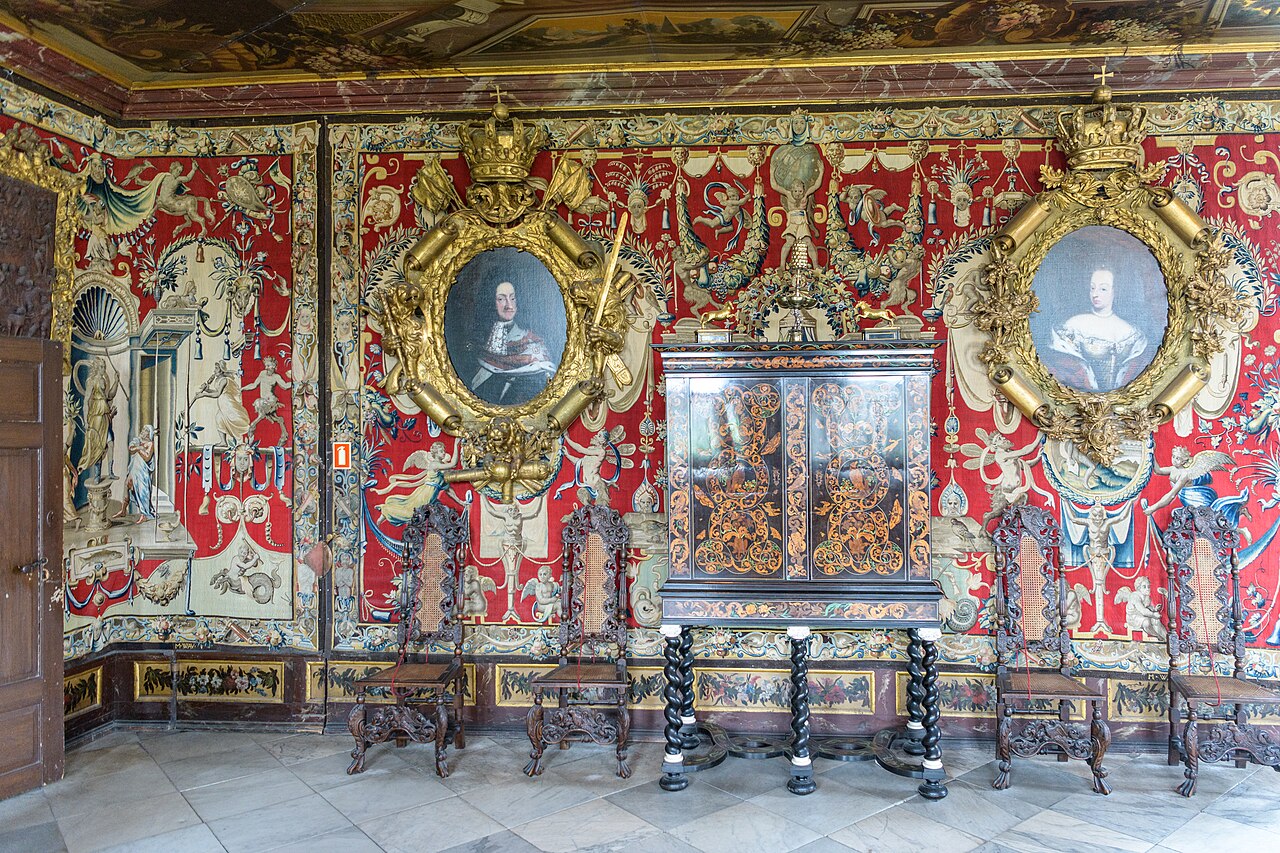
Rather than being abandoned or drastically altered, Rosenborg was preserved as a store for the crown’s most precious possessions and eventually opened to the public as a museum. This transition, from private royal home to public institution, allowed the castle and its contents to survive largely intact, sparing it the constant remodelling that transformed more actively used residences.
The decision to preserve Rosenborg and open it to visitors reflected a growing sense that the monarchy’s heritage belonged, in a sense, to the whole nation. By making the castle and its treasures accessible, the crown shared its history with its people, turning a private palace into a place of national pride and public enjoyment.
Today Rosenborg is one of Denmark’s most popular museums, welcoming visitors from around the world. Its journey from Christian IV’s beloved pleasure palace to a treasured public institution mirrors the wider story of how Europe’s royal heritage has been preserved and shared, and it ensures that the castle’s beauty and treasures will endure for generations to come.
The castle’s survival was helped, too, by the enduring affection in which Christian IV and his creation were held. Later generations recognised that Rosenborg was not just any royal property but a monument bound up with the identity of the nation, and this sentiment protected it through the changes of the centuries. In preserving the castle, Denmark preserved a piece of its own sense of itself.
The Castle, the Guard, and City Life
Rosenborg is not an isolated monument but a living part of Copenhagen, woven into the daily life of the city around it. The castle grounds are guarded by soldiers of the Royal Life Guards, whose presence connects Rosenborg to the ceremonial traditions of the Danish monarchy and adds a note of pageantry to a visit.
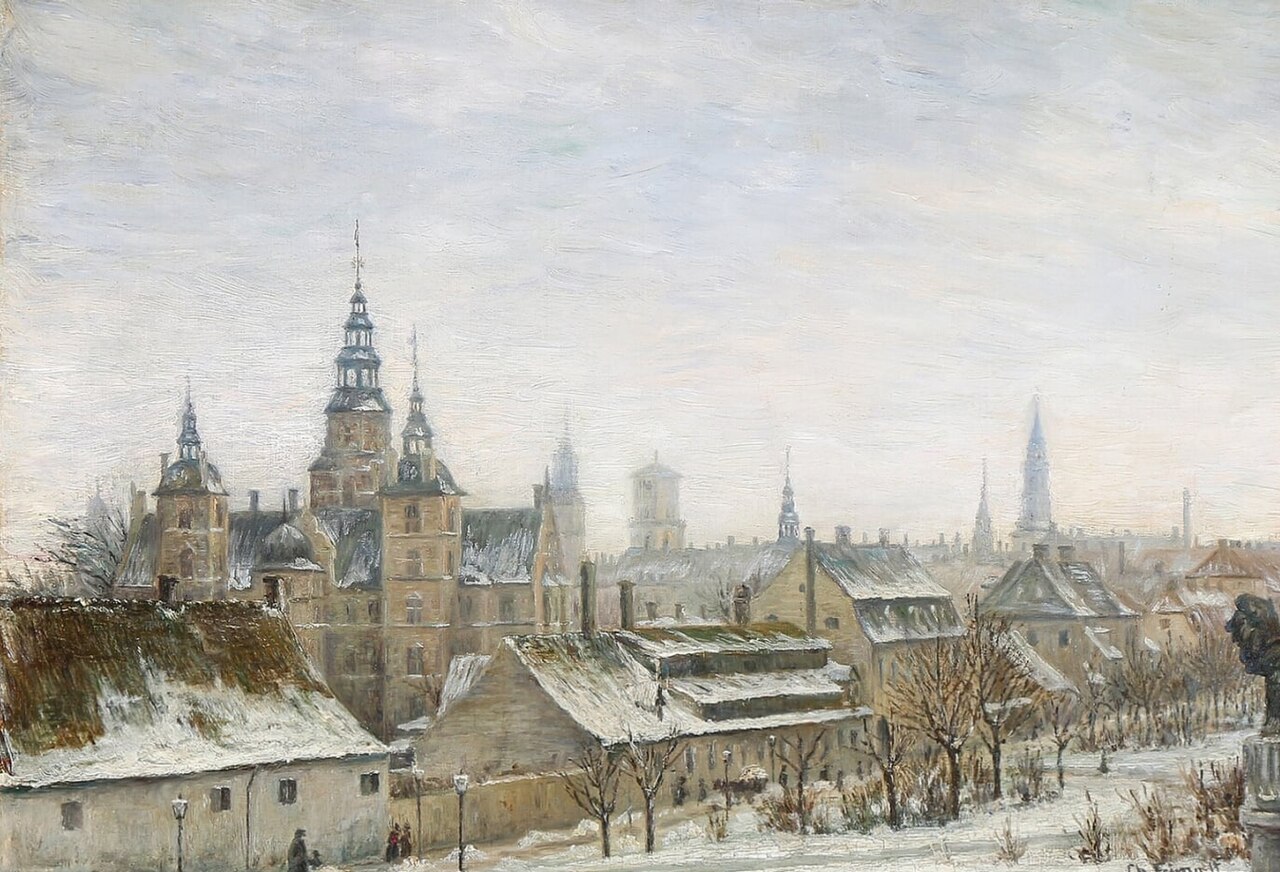
The guards, in their distinctive uniforms, are part of the same regiment that watches over the royal family, and their duties link the castle to the wider world of Danish royal ceremony. For visitors, catching sight of the guards adds a sense of living tradition, a reminder that Rosenborg remains connected to a monarchy that is very much alive.
Beyond the castle walls, the King’s Garden buzzes with the ordinary life of the city, and the two worlds meet at Rosenborg’s gates. Office workers on their lunch break, tourists with cameras, families with children, and history enthusiasts all pass through the same grounds, giving the castle a lively, democratic atmosphere quite unlike a remote or exclusive palace.
This integration into city life is part of what makes Rosenborg so appealing. It is a place where royal grandeur and everyday urban life coexist happily, where you can move in a few steps from a picnic on the grass to the crown jewels in the treasury. Few great royal sites are so thoroughly and pleasantly a part of the living city around them.
There is a pleasing symmetry in the way the castle brings together the highest and the most ordinary aspects of national life. The same grounds that hold the crown jewels also hold couples lying in the sun and children chasing pigeons, and no one finds the combination strange. That easy coexistence of the regal and the everyday is very Danish, and it is one of the quiet charms that visitors carry away from Rosenborg.
Planning Your Visit to Rosenborg
Rosenborg sits in central Copenhagen, easily reached on foot, by bicycle, or by public transport, and its central location makes it simple to combine with other sights in the city. A visit typically takes a couple of hours, allowing time to explore the castle’s rooms, descend to the treasury, and enjoy a stroll in the surrounding King’s Garden.
View Rosenborg Castle on Google Maps
The tour of the castle leads you through its richly decorated chambers in roughly chronological order, culminating in the Long Hall with its thrones and silver lions, before you descend to the treasury to see the crown jewels and regalia. Each part offers something different, from intimate rooms to grand ceremonial spaces to the glittering vault, and together they make for a wonderfully varied experience.
As with any popular museum, it is wise to check current opening hours and ticket arrangements before you go, since these can vary with the season, and the castle can be busy at peak times. Arriving earlier in the day often means quieter rooms and a more relaxed visit, especially in the treasury, where the crowds gather to see the jewels.
You can find the castle and plan your route using the map link below. Whether you come for the crown jewels, the history of the Danish monarchy, the charm of Christian IV’s rooms, or simply a walk in Copenhagen’s oldest park, Rosenborg offers one of the most rewarding experiences in the city. Give yourself time to enjoy both the treasures within and the greenery without.
It is also worth pairing a visit with a little reading about the monarchs whose treasures you will see, for the castle rewards those who arrive with some sense of the history it contains. Knowing even a little about Christian IV and his successors turns the rooms from beautiful displays into chapters of a gripping national story, and makes the crowns and thrones in the treasury far more than glittering objects behind glass.
See Rosenborg for Yourself
A castle as rich in detail and atmosphere as Rosenborg is best appreciated in motion, and the short film below offers a closer look at its rooms, its treasures, and its setting. It gives a sense of the castle’s intimate scale, the splendour of the Long Hall, and the dazzle of the crown jewels in the treasury below.
As you watch, keep in mind the story behind the beauty: a remarkable king who built a pleasure palace and filled it with wonders, a monarchy that made it the keeper of its greatest treasures, and a castle that has become a beloved part of Copenhagen. Rosenborg is a place where royal history feels close, human, and alive, and where the treasures of a nation are gathered under one fairy-tale roof.
Palaces Nearby
If Rosenborg has drawn you into Scandinavia’s royal heritage, two more northern palaces make natural companions, each with its own distinct character.
- Drottningholm, the Versailles of the North — a queen’s Baroque palace near Stockholm with a unique court theatre and Chinese pavilion.
- The Royal Palace of Oslo and the King Who Built It — Norway’s neoclassical royal residence at the head of Karl Johans gate.
You May Like
The Bardo, a Palace of the Beys Filled With Roman Mosaics


One thought on “Rosenborg, the Castle That Guards Denmark’s Crown Jewels”