On the shore of the Crimean peninsula, where the land meets the Black Sea, Dorian Greek settlers founded a city that would live for two thousand years: Chersonesus. From a Greek colony it grew into a proud republic bound by a famous civic oath, then a distant outpost of Rome, and finally a holy city of Byzantium where, according to tradition, a Rus prince was baptized and carried Christianity north to his people. Few cities have witnessed so many worlds pass across their stones. Today its ruins form an open-air museum on the Crimean shore. In this article we will discover the long life of Chersonesus, from its Dorian founders to its role in the conversion of an empire.
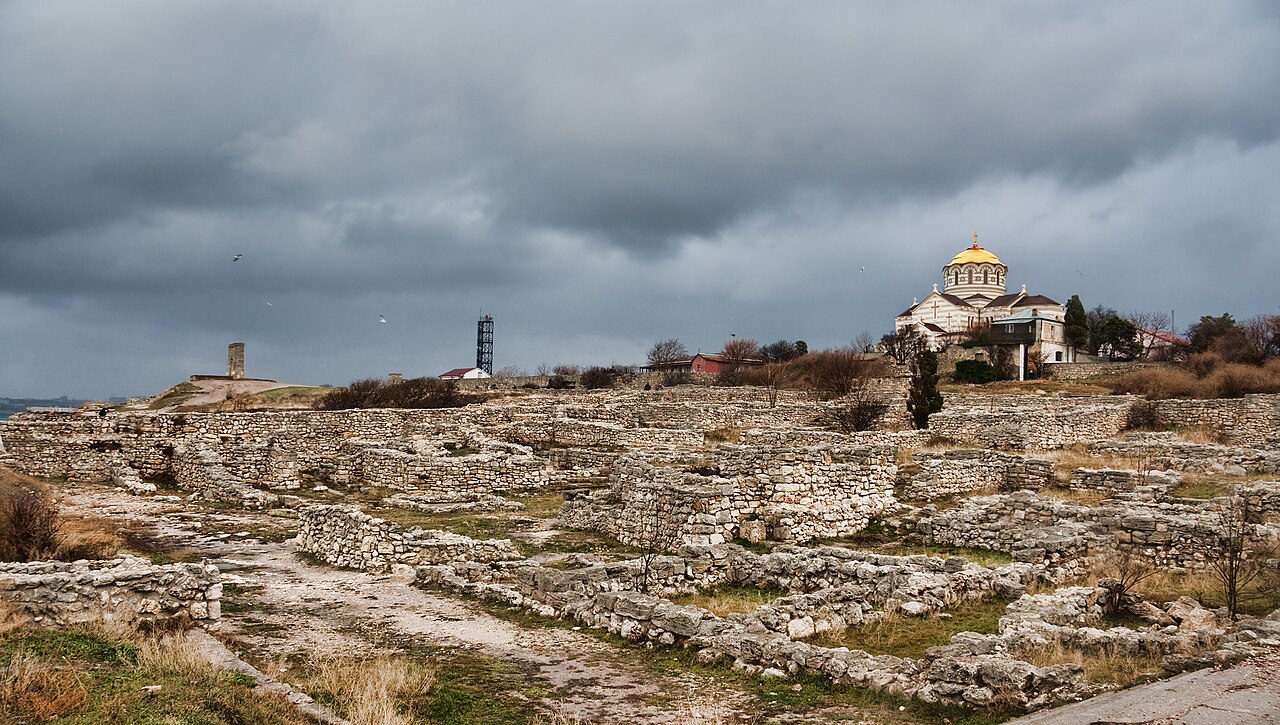
Table of Contents
- The Dorians’ City in the Crimea
- An Oath and a Republic
- Land Divided by Stone
- Rome’s Distant Outpost
- Byzantium’s Holy City
- The Baptism of an Empire
- An Open-Air Museum
- A Witness Two Thousand Years Old
- Life on Colonnaded Streets
- Walls and Sieges
- The Archaeology of Layers
- Nearby Places
The Dorians’ City in the Crimea
Chersonesus was founded by Dorian Greek settlers on the southwestern shore of the Crimea, part of the wave of colonization that spread Greek cities around the Black Sea. Its founders came seeking land and trade on a promising coast.
Unlike many of the region’s colonies, which were founded by Ionians, Chersonesus was a Dorian foundation, and this distinct heritage shaped its institutions and its character.
The settlers built their city on a defensible site by the sea, laying it out in the Greek fashion with an agora, temples, and the civic apparatus of a Greek polis.
The location offered good harbors and access to fertile land, the twin foundations on which a Greek colony could grow into a prosperous and independent city.
From its founding, Chersonesus developed as a self-governing polis, jealous of its independence and proud of the Greek identity its Dorian settlers had carried across the sea.
The city’s relationship with the peoples of the interior, including the steppe cultures of the Crimea, shaped its history from the start, alternating between trade and conflict.
As a Greek city on a distant frontier, Chersonesus maintained its ties to the wider Hellenic world while adapting to the realities of life on the edge of the steppe.
This Dorian city in the Crimea would prove remarkably durable, outlasting many of its neighbors and living on through a succession of ages that transformed the world around it.
The Dorian character of the colony set it apart from its Ionian neighbours around the Black Sea, and traces of that distinct dialect and tradition can be read in the city’s institutions and inscriptions.
From the outset the settlers seem to have intended a permanent, self-governing community rather than a mere trading post, and this ambition helped the city weather the storms of later centuries.
The harbours that first drew the settlers remained the foundation of the city’s fortunes, connecting it by sea to a Greek world that stretched all the way back to the Aegean.
An Oath and a Republic
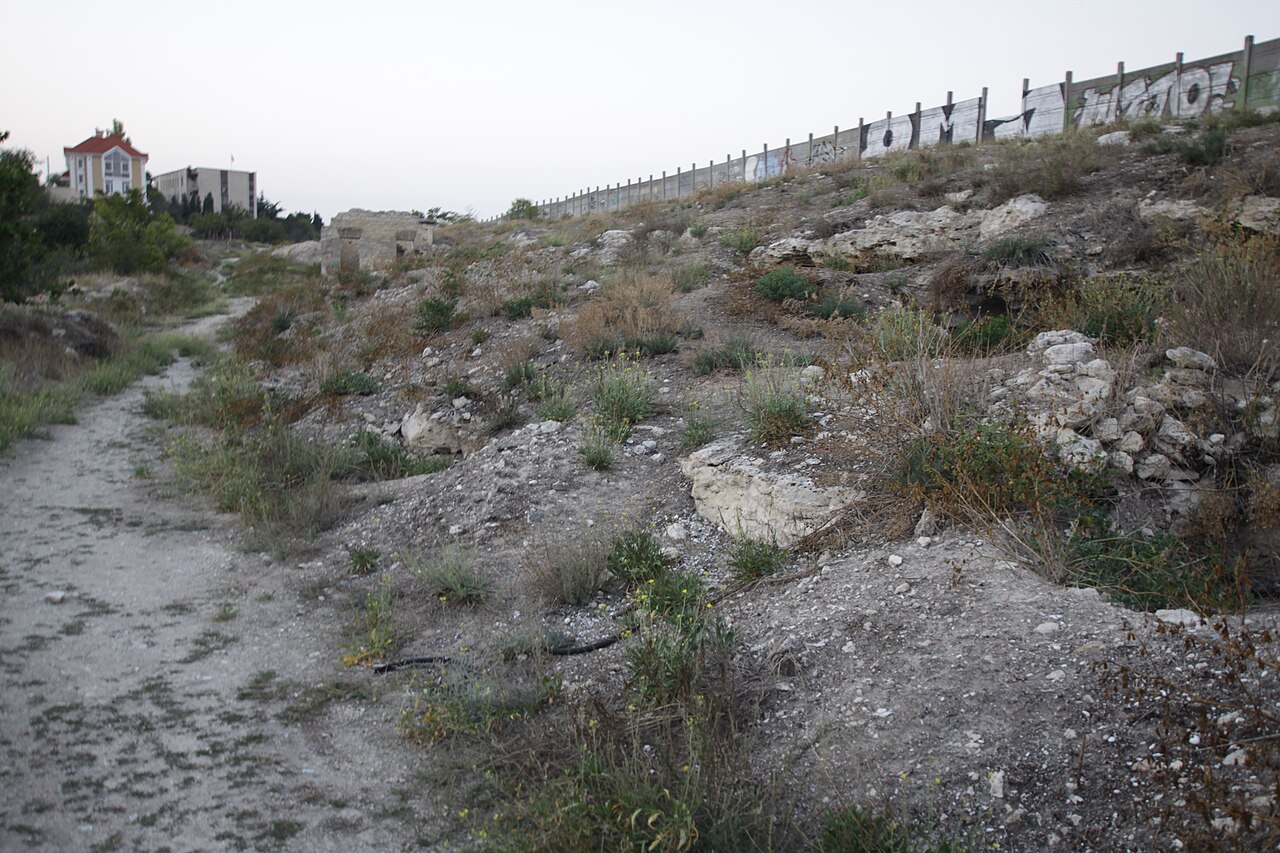
Chersonesus is famous for its civic oath, a remarkable inscription in which the citizens swore to uphold their democracy and defend their city, one of the most vivid documents of ancient civic life to survive from the Greek world.
The oath bound each citizen to loyalty, to the defense of the constitution, and to the interests of the community, expressing the fierce republican spirit of this frontier polis.
This document gives us a rare, direct glimpse into the political ideals of an ancient Greek city, its concern for democracy, unity, and the preservation of its independence.
As a republic, Chersonesus governed itself through the institutions of a Greek polis, with an assembly of citizens, magistrates, and the collective decision-making that defined Greek political life.
The oath’s emphasis on defense reflects the dangers of the city’s position, surrounded by potential enemies and always alert to threats from the interior and from rival powers.
The survival of the oath, inscribed in stone, is a stroke of archaeological fortune, preserving the words by which citizens pledged themselves to their city thousands of years ago.
It reveals a community deeply invested in its own self-government, proud of its freedom, and united by shared obligations sworn before the gods.
Through its oath and its republican institutions, Chersonesus stands as a striking example of the Greek city-state ideal, transplanted to the Crimean shore and defended by its citizens for generations.
The text of the oath, recovered on a stone slab, reads almost like a manifesto of civic loyalty, and it remains one of the most quoted documents in the study of ancient Greek political life.
Such an explicit commitment to defending the constitution against those who might overthrow it hints at real political struggles within the young republic.
Land Divided by Stone
One of the most remarkable features of Chersonesus is the ancient division of its agricultural land, still visible in the landscape as a grid of plots marked out by stone walls, one of the best-preserved examples of ancient land division anywhere.
The territory around the city was carefully surveyed and parceled into regular plots, each allotted to citizens, in a systematic organization of the countryside that reflects the ordered mind of the Greek polis.
These plots were used for farming and above all for viticulture, and the remains of ancient vineyards, walls, and farmhouses map the rural economy that sustained the city.
This land division, preserved over two thousand years, offers archaeologists an extraordinary window onto ancient agriculture and the relationship between a Greek city and its territory.
The stone-walled plots show how the citizens of Chersonesus organized their landscape, turning the countryside into a rational grid that fed and enriched the urban community.
Wine production was central to this economy, and the exported wine of Chersonesus, shipped in distinctive amphorae, was a mainstay of its trade around the Black Sea.
The survival of this ancient field system is a rare gift, for such divisions are usually erased by later farming, yet here the stone walls have endured across the centuries.
Land divided by stone thus remains one of the treasures of Chersonesus, a fossilized landscape that lets us read the rural life of an ancient Greek city with unusual clarity.
Aerial photography and survey have traced the full extent of this ancient field grid, revealing a countryside organised with a precision that still astonishes modern researchers.
The uniformity of the plots also speaks to a strong communal ideal, in which citizens shared not only in the government of the city but in an ordered division of its land.
Rome’s Distant Outpost
As Roman power expanded across the ancient world, Chersonesus came within its orbit, becoming a distant outpost of the empire on the far northern shore of the Black Sea, valued for its strategic position.
Roman garrisons were stationed in the city at various times, defending it against the threats of the interior and anchoring imperial influence in the region.
Under Roman protection, Chersonesus retained much of its Greek character and a measure of self-government, adapting to the new order while preserving its ancient identity.
The city served Roman interests as a base for monitoring the steppe peoples and securing the trade and grain routes of the northern Black Sea.
Roman-era remains—fortifications, buildings, and inscriptions—attest to this long period, when the distant polis lived under the shadow and shelter of the empire.
The relationship was one of mutual benefit: Rome gained a foothold on a strategic coast, and Chersonesus gained protection against the dangers that surrounded it.
For centuries the city endured as an imperial outpost, its Greek life continuing beneath the wider framework of Roman power in the region.
As Rome’s distant outpost on the Crimean shore, Chersonesus bridged the classical Greek world and the imperial age, carrying its ancient identity into a new era.
The presence of imperial troops brought new architecture and new customs, subtly reshaping the life of the old Greek polis without erasing its essential character.
For Rome, holding this remote city was a matter of watching the steppe and protecting the vital sea routes that linked the empire’s scattered northern interests.
The blend of Greek civic tradition and Roman imperial oversight produced a distinctive provincial culture, neither wholly one thing nor the other.
Byzantium’s Holy City
With the transformation of the Roman world into the Byzantine Empire, Chersonesus entered a new and glorious chapter, becoming an important Byzantine city and a major center of Christianity on the northern Black Sea.
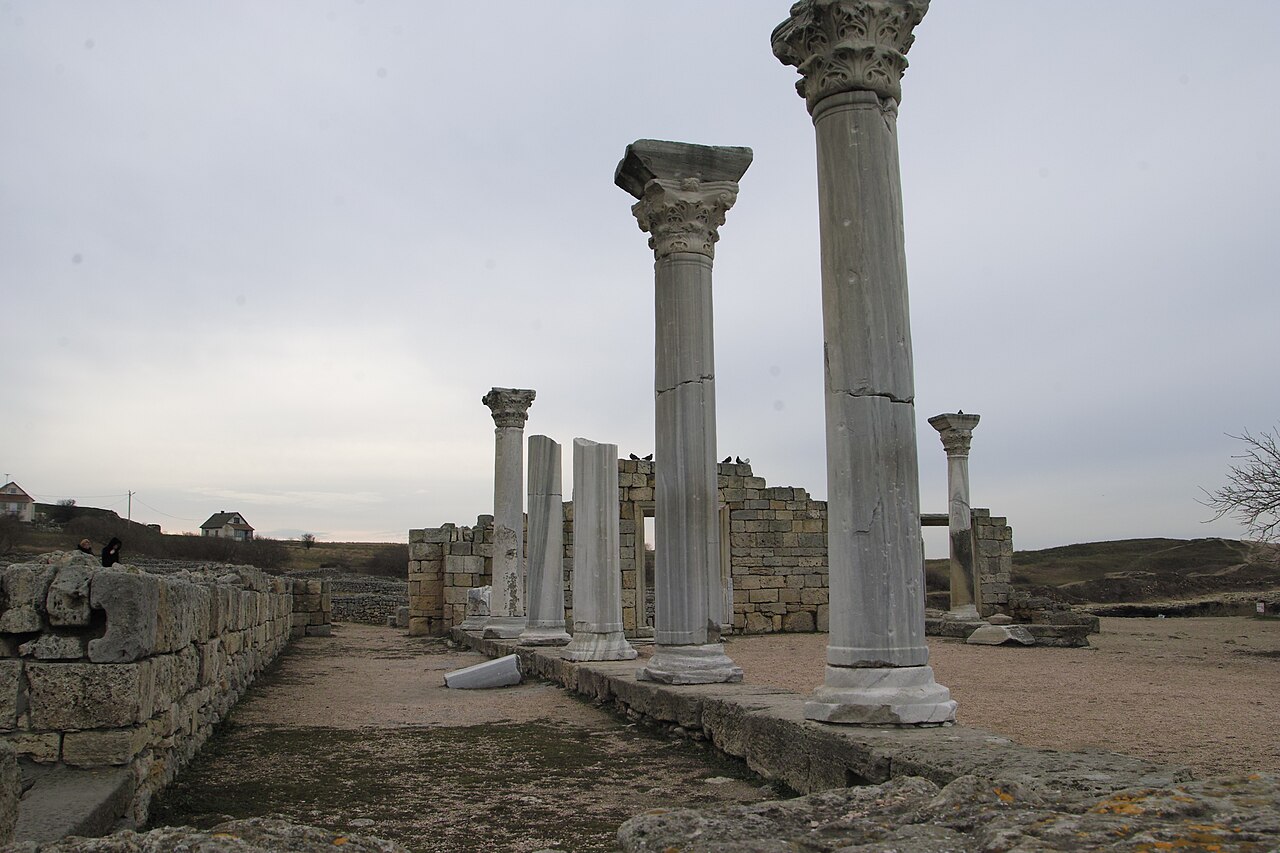
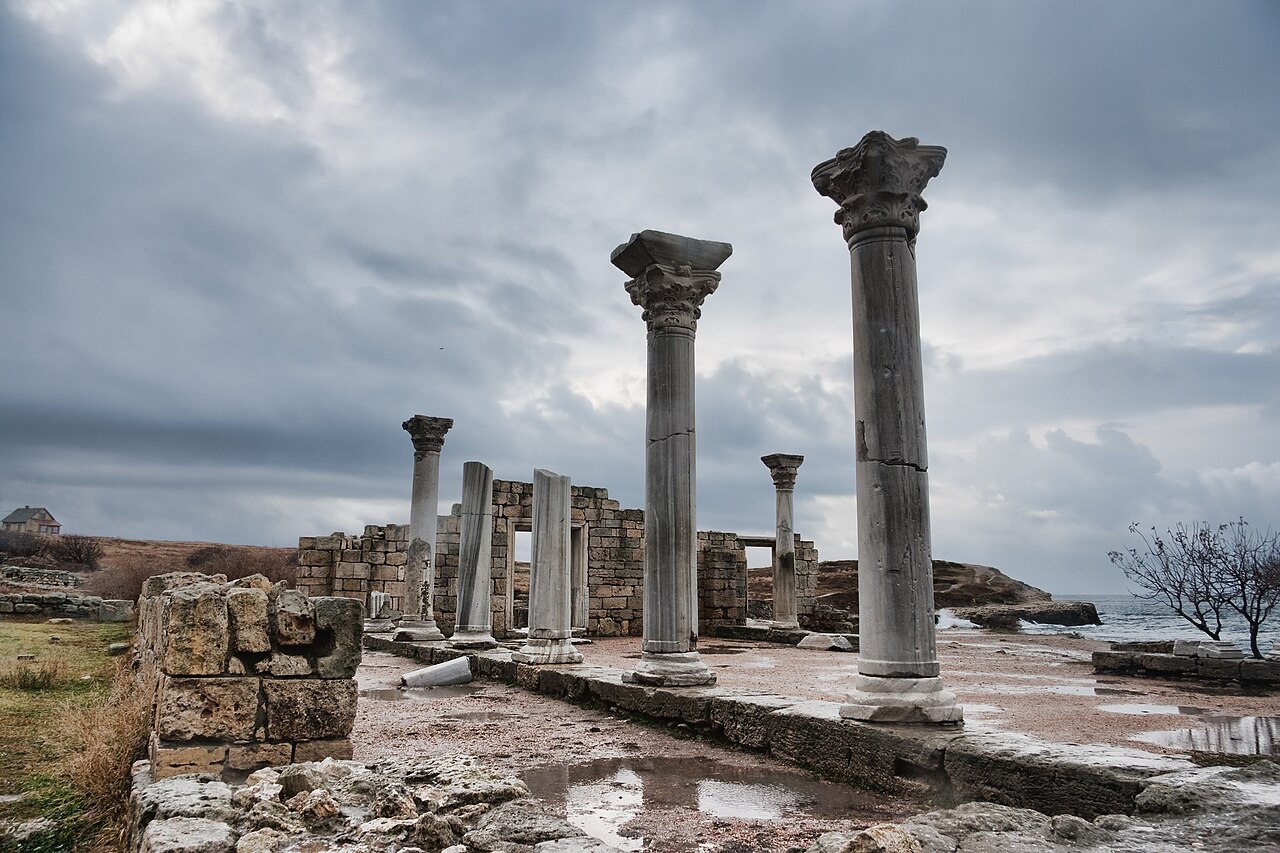
Churches rose throughout the city, and Chersonesus became a bishopric and a stronghold of the faith, its skyline transformed by basilicas whose ruins still stand today.
As a Byzantine outpost, the city served as a link between the empire and the peoples to the north, a window through which imperial influence and the Christian religion flowed into the steppe.
The many churches of Byzantine Chersonesus, with their mosaics and marble, testify to the wealth and religious importance the city attained in this period.
The city also served as a place of exile for those who fell foul of the imperial court, a remote yet significant corner of the Byzantine world.
Through the Byzantine centuries, Chersonesus remained a vital frontier city, defending the empire’s northern interests and spreading its faith among the surrounding peoples.
The ruins of its Byzantine basilicas are among the most evocative remains on the site, marking the era when the ancient Greek polis became a Christian holy city.
As Byzantium’s holy city on the Crimean shore, Chersonesus reached a new height of importance, poised to play a decisive role in the conversion of the peoples to its north.
The conversion of the city into a Christian centre was gradual, but by the height of the Byzantine period its churches dominated the skyline where temples had once stood.
As a bishopric, Chersonesus took its place within the ecclesiastical structure of the empire and became a beacon of orthodoxy on the northern edge of the Christian world.
The mosaics and marble that once adorned these churches, fragments of which survive, speak of a city that remained wealthy and important deep into the medieval period.
The Baptism of an Empire
Chersonesus holds a place of extraordinary significance in the history of the Slavic world, for according to tradition it was here that a Rus prince was baptized, an event that carried Christianity north and transformed the destiny of a people.
The story tells how the ruler of the Rus, after campaigning against the city, embraced the Christian faith and was baptized within its walls, then brought the new religion home to his realm.
This event, whatever its precise historical details, became a foundational moment in the Christianization of the eastern Slavs, and Chersonesus is remembered as the place where it occurred.
The baptism linked the fate of a great northern realm to this ancient Greek city, giving Chersonesus a lasting importance in religious and national memory far beyond its size.
For the peoples who traced their conversion to this moment, Chersonesus became a sacred site, the cradle of their Christian faith and a place of deep spiritual meaning.
The tradition transformed the city from a Byzantine outpost into a place of pilgrimage and reverence, its ruins later marked with monuments commemorating the great event.
Whether the details unfolded exactly as the tradition holds, the association has endowed Chersonesus with a symbolic weight that few ancient cities can match.
Through the baptism of an empire, this Greek city on the Crimean shore became a hinge of history, the point at which Christianity turned north and reshaped the future of a vast region.
The memory of this event was carefully preserved and later magnified, so that the city came to occupy a central place in the founding story of an entire Christian nation.
Monuments raised on the site in later centuries mark the spot associated with the baptism, turning the ancient ruins into a place of pilgrimage.
An Open-Air Museum
Today the ruins of Chersonesus form an open-air museum on the Crimean shore, one of the most impressive archaeological landscapes of the Black Sea region, where two thousand years of history lie exposed beneath the sky.
Visitors can walk the ancient streets, see the remains of temples and churches, and trace the walls that defended the city, experiencing the layered history of the site in a single visit.
The famous bell and the ruins of the great basilica have become iconic images of the site, standing against the sea as symbols of the city’s long and varied life.
The preserved land division stretches out beyond the urban core, allowing visitors to see not only the city but the ancient countryside that sustained it.
As a museum, Chersonesus preserves and presents its extraordinary heritage to the public, protecting the ruins while making their story accessible to all.
The site’s recognition as a place of outstanding cultural value reflects its importance to the history of the ancient and medieval worlds and the exceptional preservation of its remains.
Walking among the ruins, one moves through Greek, Roman, and Byzantine layers, a rare chance to trace the passage of civilizations in a single place.
As an open-air museum, Chersonesus keeps its long history alive, inviting each visitor to witness the many worlds that rose and fell upon this Crimean shore.
The setting itself adds to the experience, for the ruins stand directly on the shore, with the sea beyond the fallen columns lending the whole site a poignant beauty.
Careful conservation work seeks to balance the preservation of the fragile remains with the desire to share this extraordinary heritage with visitors from around the world.
A Witness Two Thousand Years Old
Chersonesus is a witness two thousand years old, a city that lived through the classical Greek age, the Roman era, and the Byzantine centuries, watching civilizations rise and fall from its place on the Crimean shore.
Its legacy is this extraordinary continuity, a single site that preserves the imprint of so many worlds, layered one upon another in its streets and buildings.
The famous civic oath, the preserved land division, and the Byzantine basilicas together tell a story that spans the whole arc of ancient and medieval Mediterranean history.
As the place associated with the baptism that brought Christianity north, Chersonesus holds a significance in religious history far beyond what its size would suggest.
For archaeologists, the site is a treasure, its deep and well-preserved layers offering an unmatched record of urban life across two millennia.
The city’s ruins connect the modern world to a chain of vanished civilizations, from Dorian settlers to Byzantine bishops, all of whom left their mark on the same ground.
Its endurance is itself its greatest lesson, a reminder that some places, by fortune and position, become the meeting ground of ages.
As a witness two thousand years old, Chersonesus stands among the great historical sites of the Black Sea, a city whose stones remember more history than almost any other on that long and storied coast.
Few archaeological sites offer such an unbroken thread of history, and this continuity is precisely what makes Chersonesus so valuable to scholars of the ancient and medieval worlds.
Life on Colonnaded Streets
Daily life in Chersonesus unfolded along its streets and around its agora, in a city that combined the routines of a Greek polis with the rhythms of a busy Black Sea port.
The city was laid out on a regular plan, with streets crossing at right angles and lined with houses, shops, and public buildings, giving order to the bustle of urban life.
Homes ranged from modest dwellings to comfortable houses, and the objects recovered from them—pottery, tools, and ornaments—reveal the domestic world of the citizens.
The economy revolved around trade, fishing, and above all wine, produced on the surrounding land and exported across the Black Sea in the city’s distinctive amphorae.
The agora and public spaces were the heart of civic life, places of commerce, politics, and social gathering where the community came together.
Religious life filled the calendar with festivals and rituals, first in honor of the Greek gods and later, in the Christian era, in the churches that rose throughout the city.
Over the centuries the character of daily life changed as the city passed from Greek to Roman to Byzantine hands, yet the basic rhythms of a port city endured.
Life on the streets of Chersonesus was the life of a resilient community, adapting to each new age while preserving the continuity that let the city survive for two thousand years.
The transition from pagan to Christian life left its mark on the domestic world too, visible in the small objects of personal devotion recovered from the houses.
Walls and Sieges
Chersonesus was a fortified city, ringed by walls and towers that defended it against the many dangers of its exposed position on the frontier of the Greek and later the Byzantine world.
The defenses were built and rebuilt over the centuries, adapting to new threats and new methods of warfare as the city passed through its long succession of ages.
The famous civic oath itself emphasizes the defense of the city, reflecting the constant awareness of danger that shaped the mentality of its citizens.
Over its long history, Chersonesus faced sieges and assaults from the peoples of the interior and from rival powers, and its survival depended on the strength of its walls.
The remains of the fortifications are among the most impressive on the site, tracing the line of defense that protected the city for two thousand years.
Roman and Byzantine garrisons reinforced these defenses at various times, integrating the city into the wider strategic frameworks of the empires that held it.
The walls were not only military structures but symbols of the city’s determination to endure, physical expressions of the resolve embodied in its citizens’ oath.
Through walls and sieges, Chersonesus defended its long life against the perils of the frontier, and the endurance of its defenses is written into the very stones that still stand today.
Excavation of the defensive circuit has revealed successive phases of rebuilding, each responding to the particular dangers of its age.
The gates and towers that survive give a vivid sense of how the city presented itself to the world: proud, guarded, and determined to endure.
The Archaeology of Layers
Chersonesus is a site defined by its layers, for two thousand years of continuous occupation have stacked Greek, Roman, and Byzantine remains one upon another in a deep and complex stratigraphy.
Excavating such a site is a demanding task, requiring archaeologists to disentangle the successive phases of the city and to read the story recorded in each layer of earth.
The long occupation means that later builders often reused the stones and foundations of earlier ages, creating a palimpsest that rewards careful study.
Each layer preserves the life of a different era, from the classical Greek polis through the Roman outpost to the Byzantine holy city, all present in the same ground.
Generations of archaeologists have worked at Chersonesus, gradually revealing the plan of the city and the sequence of its transformations across the centuries.
Inscriptions, coins, and architecture recovered from the layers anchor the site in documented history, giving names and dates to its long and varied story.
Modern techniques continue to refine the picture, extracting new information from the well-preserved deposits and adding detail to the chronicle of the city’s life.
The archaeology of layers at Chersonesus is, in the end, the archaeology of endurance, a record of how a single city lived through the rise and fall of the ancient and medieval worlds.
The reuse of older stones in later buildings, while a challenge for excavators, is itself a form of history, showing how each generation built literally upon the achievements of those before.
Piecing together this layered record is like reading a book whose pages have been bound out of order, demanding patience and skill from every archaeologist who works there.
Nearby Places
- The Greek Metropolis on the Edge of the Steppe, Now Beneath Land and Sea: The Story of Phanagoria
- The Northern Capital Where Greek Columns Met Scythian Gold: The Story of Panticapaeum
- The Northernmost Greek City, Where Wine Met the Steppe: The Story of Tanais
Final Word
Chersonesus lived for two thousand years, and few cities have witnessed so much. Founded by Dorian Greeks and bound by a famous civic oath, it became a proud republic, then a distant outpost of Rome, and finally a holy city of Byzantium where, according to tradition, a Rus prince was baptized and carried Christianity north. Its stone-walled fields, its basilicas, and its walls still stand on the Crimean shore as an open-air museum, layer upon layer of Greek, Roman, and Byzantine history. In its endurance, Chersonesus is a witness like no other—a single city that watched the ancient and medieval worlds rise and fall around it.
You May Like
Mafra, the Palace a King Built From a Vow


2 thoughts on “Chersonesus: A Greek City That Survived Millennia in Crimea”