The world knows the Louvre as the greatest museum on earth, the home of the Mona Lisa and countless other treasures, visited by more people than any other art gallery in existence. But long before it held a single painting for the public, the Louvre was something else entirely: a royal palace, one of the principal residences of the kings of France for centuries, and a building whose stones tell the story of the French monarchy from the Middle Ages to the age of revolution.
To see the Louvre only as a museum is to miss half its meaning. This vast complex of wings and courtyards beside the Seine grew over some eight hundred years, beginning as a grim medieval fortress and evolving, reign by reign, into a magnificent royal palace before its final transformation into a temple of art. Every part of it was shaped by kings and emperors, and the palace itself is as much a masterpiece as anything hanging on its walls.
The history of the Louvre is, in many ways, the history of Paris and of France, for the great building stood at the heart of the capital and the kingdom through centuries of triumph and turmoil. Here medieval kings guarded their treasure, Renaissance monarchs built galleries of astonishing beauty, and a revolution transformed a royal palace into the property of the people. Few buildings have witnessed so much or changed so completely.
In the pages ahead you will explore the Louvre as a palace, tracing its journey from fortress to royal residence to public museum, meeting the kings who built it and the revolution that reinvented it. This is the story behind the world’s most famous museum, the tale of the great palace that the treasures now inhabit, and it is every bit as remarkable as the art it holds.
In This Article
- A Fortress on the Edge of Paris
- From Fortress to Renaissance Palace
- The Grand Design of the Kings
- The Square Court and the Colonnade
- The Gallery of Apollo
- A Royal Residence in the Heart of Paris
- A Stage for Dark and Glorious Days
- When the King Left the Louvre
- The Revolution Makes a Museum
- Emperors and the Completion of a Dream
- The Palace That Vanished
- The Pyramid and the Modern Louvre
- Experiencing the Palace Today
A Fortress on the Edge of Paris
The Louvre began not as a palace but as a fortress, a grim stronghold built to defend medieval Paris. In an age when the city was vulnerable to attack, a king raised a mighty castle on the edge of the settlement, complete with a great round keep, thick walls, and towers, to guard the approach along the river. This military origin is the seed from which the entire vast complex would eventually grow.
The medieval fortress was a serious piece of military architecture, its massive tower a symbol of royal authority as well as a practical defence. Within its walls the king could store his treasure and his archives, secure behind stone, and the castle served as a stronghold of the crown at a time when royal power was still contested and the city itself needed protection from enemies.
For its first period of existence, then, the Louvre was a place of defence rather than display, its character forbidding rather than magnificent. It belonged to a Paris that was smaller and more dangerous, a walled medieval city for which a great riverside fortress was a genuine necessity. The splendours to come lay far in the future.
Yet even in ruin and transformation, traces of this original fortress survive, and visitors to the Louvre today can descend to see the foundations of the medieval castle preserved beneath the later palace. These massive stones are a reminder of how the great building began, a martial stronghold that would, over the centuries, be utterly transformed into one of the most beautiful royal residences in Europe.
The contrast between these martial beginnings and the palace of art the Louvre would become could hardly be greater. It is worth remembering, as you admire its elegant facades, that the whole enormous complex grew from a single defensive tower raised in an age of danger. That a fortress meant to repel enemies should end as the most welcoming museum on earth is one of the great transformations in the history of any building.
From Fortress to Renaissance Palace
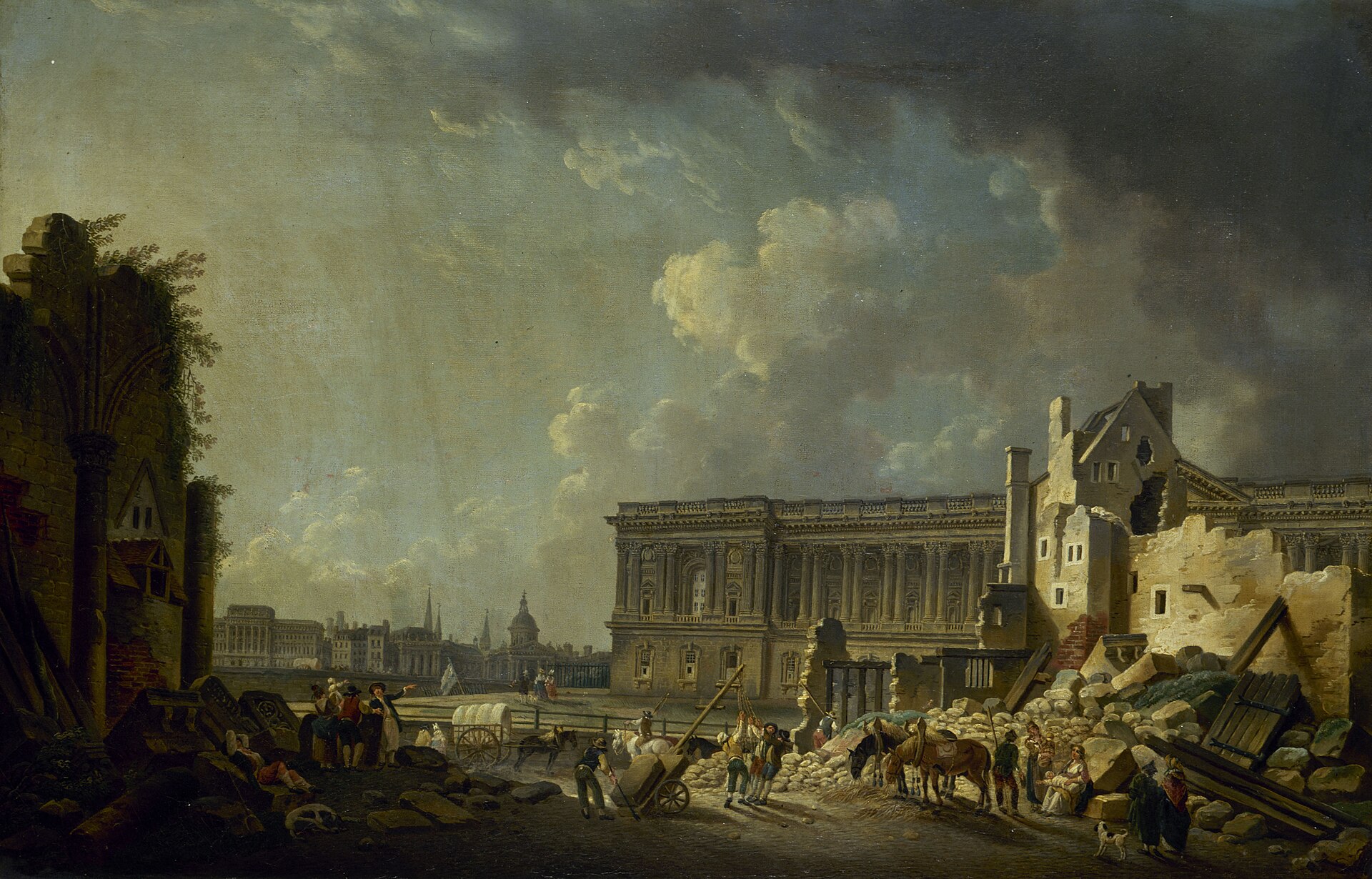
The transformation of the Louvre from medieval fortress to Renaissance palace began when a king determined to modernise the old castle and make it a residence worthy of a sophisticated monarchy. The forbidding medieval keep was demolished, and in its place rose elegant new wings in the graceful style of the Renaissance, replacing the grim fortress with the beginnings of a splendid palace.
This was the same cultural revolution that transformed royal architecture across France, the embrace of the new Italian-inspired style with its ordered classical detail and refined ornament. At the Louvre, gifted architects and sculptors created facades and interiors of great beauty, turning the old stronghold into a showcase of the new taste and a fitting seat for a king who wished to be seen as a patron of art and learning.
The rebuilding of the Louvre was a project that would occupy monarch after monarch, each adding new wings and courtyards according to the fashion of the day. What had been a compact medieval castle grew steadily into a sprawling palace, its plan expanding as successive kings pursued ever more ambitious schemes for the royal residence at the heart of their capital.
This long transformation gave the Louvre the layered character that still marks it today, a building in which the styles of several centuries meet and blend. From the first Renaissance wings onward, the palace was continually reshaped and enlarged, and the story of its architecture became inseparable from the story of the French monarchy and its changing ambitions.
The decision to demolish the mighty medieval keep was itself a powerful statement, for that tower had long symbolised the raw power of the crown. Replacing it with graceful Renaissance architecture announced a new kind of kingship, one that expressed its authority through beauty and cultivation rather than through sheer military might, and it set the tone for everything the Louvre would become.
The Grand Design of the Kings
As the Louvre grew, the kings of France conceived ever grander plans for it, dreaming of a palace that would rival any in Europe. One of the most ambitious of these schemes aimed to join the Louvre to a second palace nearby, creating an immense royal complex that would stretch along the river and enclose vast courtyards, a project so vast that it would take centuries to complete.
Central to these plans was a great gallery running along the Seine, an enormously long wing that would link the different parts of the royal residence. This gallery, one of the longest in the world, was a statement of royal ambition on a colossal scale, and it gave the Louvre a river frontage of extraordinary grandeur, a facade of galleries and pavilions facing the water.
The scale of these ambitions reflected the growing power and confidence of the French monarchy, which sought to express its greatness through architecture on the largest possible scale. The Louvre was to be not merely a residence but a monument, a demonstration in stone of the might of the crown, and the kings poured resources into realising their vision across generation after generation.
These grand designs were pursued fitfully over a very long period, interrupted by wars, financial troubles, and shifting royal priorities, so that the great scheme remained unfinished for centuries. Yet the ambition never entirely died, and the vision of a vast, unified royal palace by the river would eventually be realised, long after the kings who first dreamed it had passed into history.
The persistence of this vision across so many reigns is remarkable in itself. Kings who agreed on little else shared the ambition to complete the great palace, each taking up the work where his predecessors had left it. The Louvre thus became a project that transcended individual reigns, a collective enterprise of the French monarchy pursued doggedly across the centuries.
The Square Court and the Colonnade
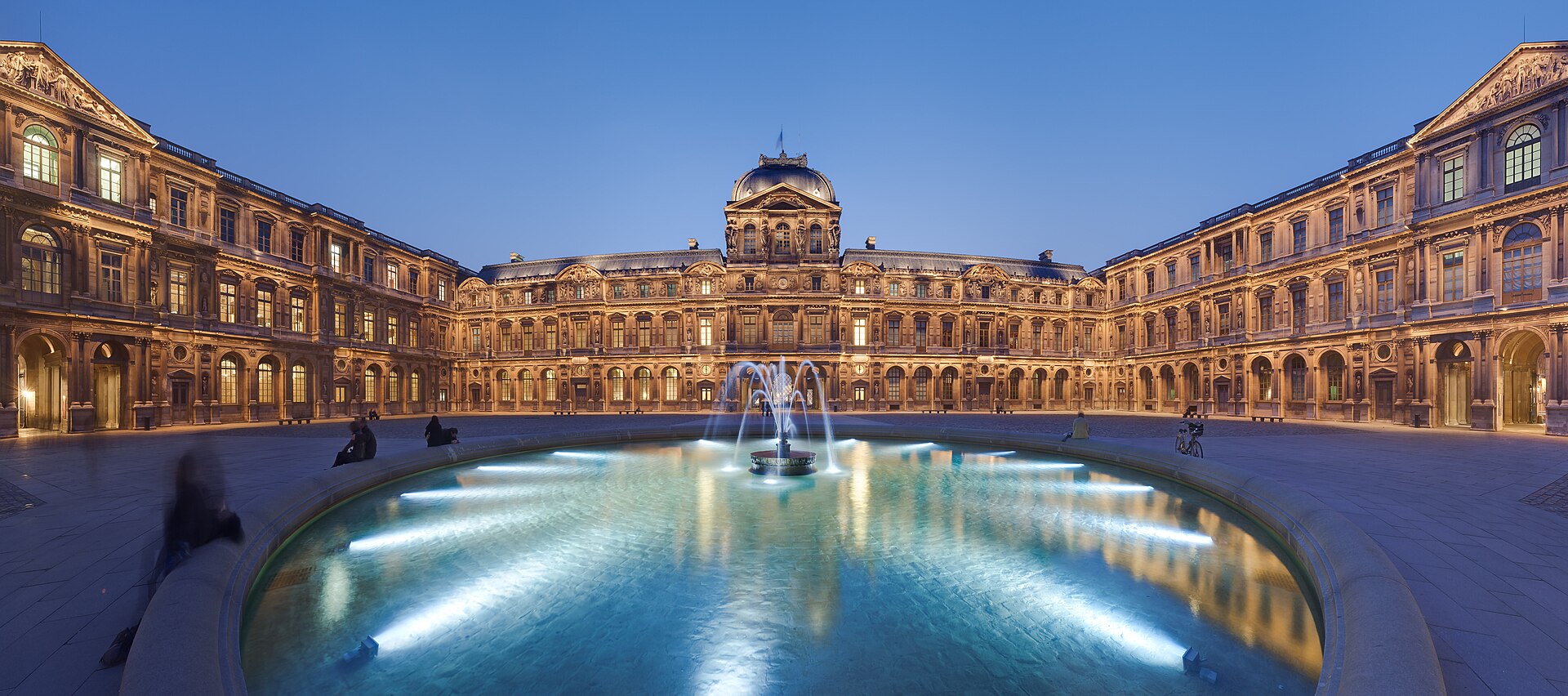
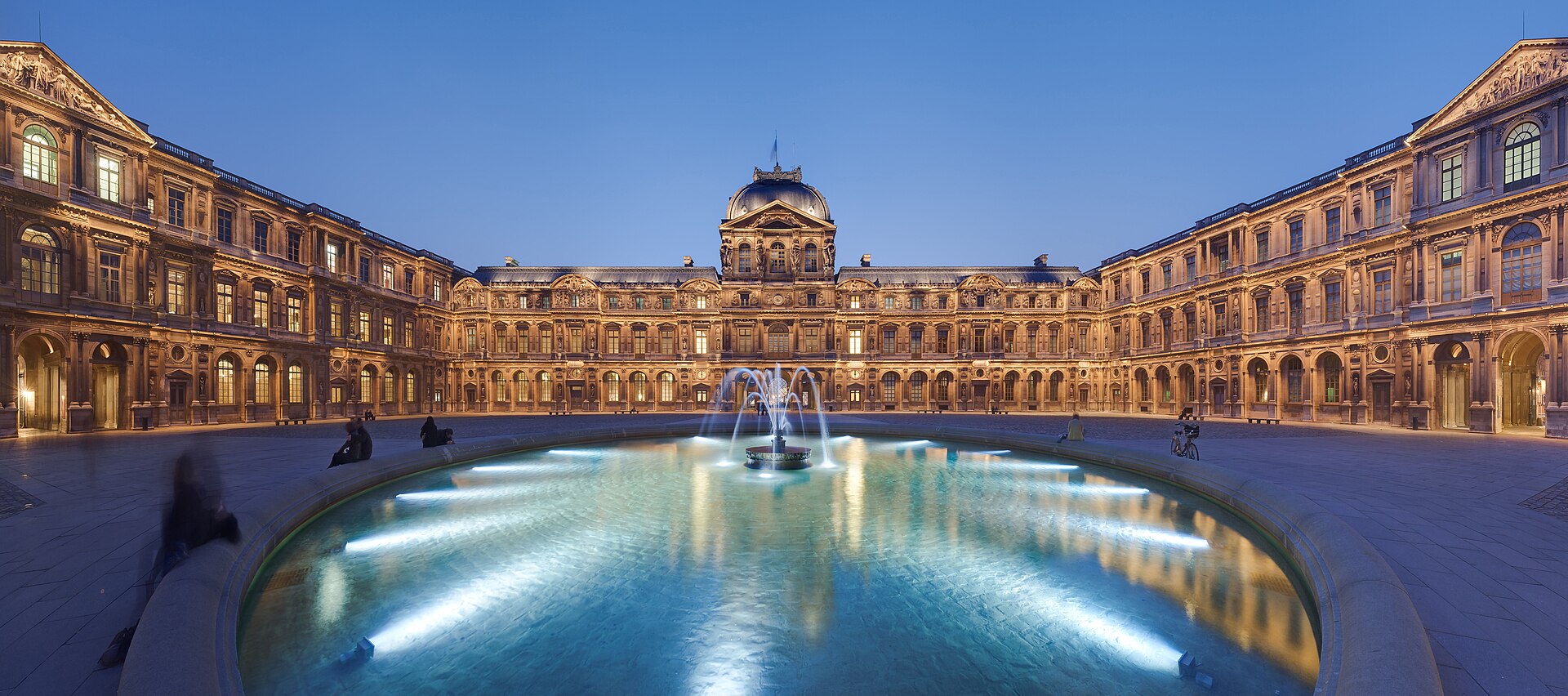
At the heart of the old Louvre lies one of its most beautiful spaces, a grand square courtyard enclosed by elegant classical facades. This court, developed over many reigns, represents the Renaissance and classical Louvre at its finest, its harmonious proportions and refined decoration making it one of the noblest architectural spaces in Paris, a serene enclosure at the centre of the great palace.
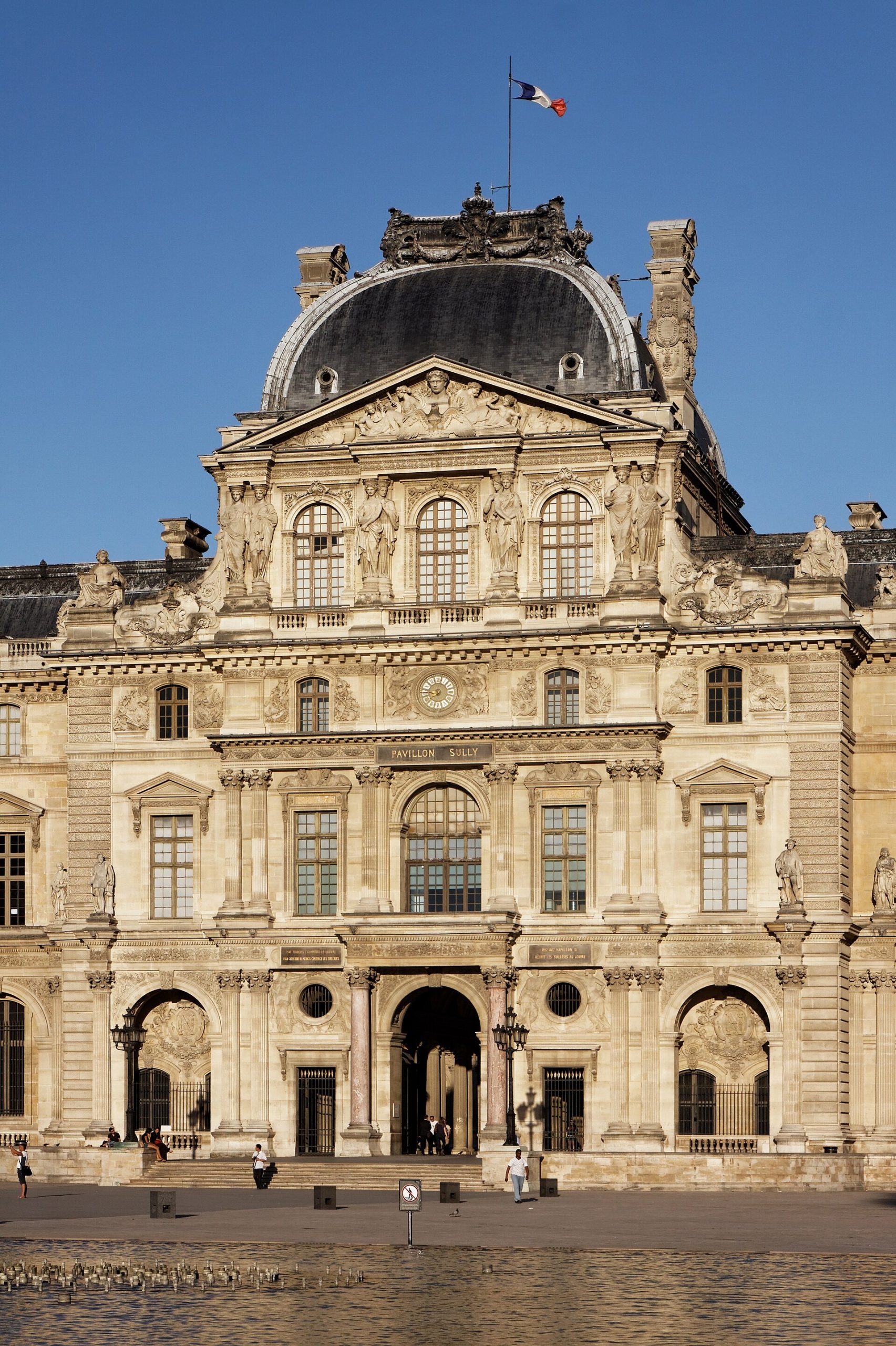
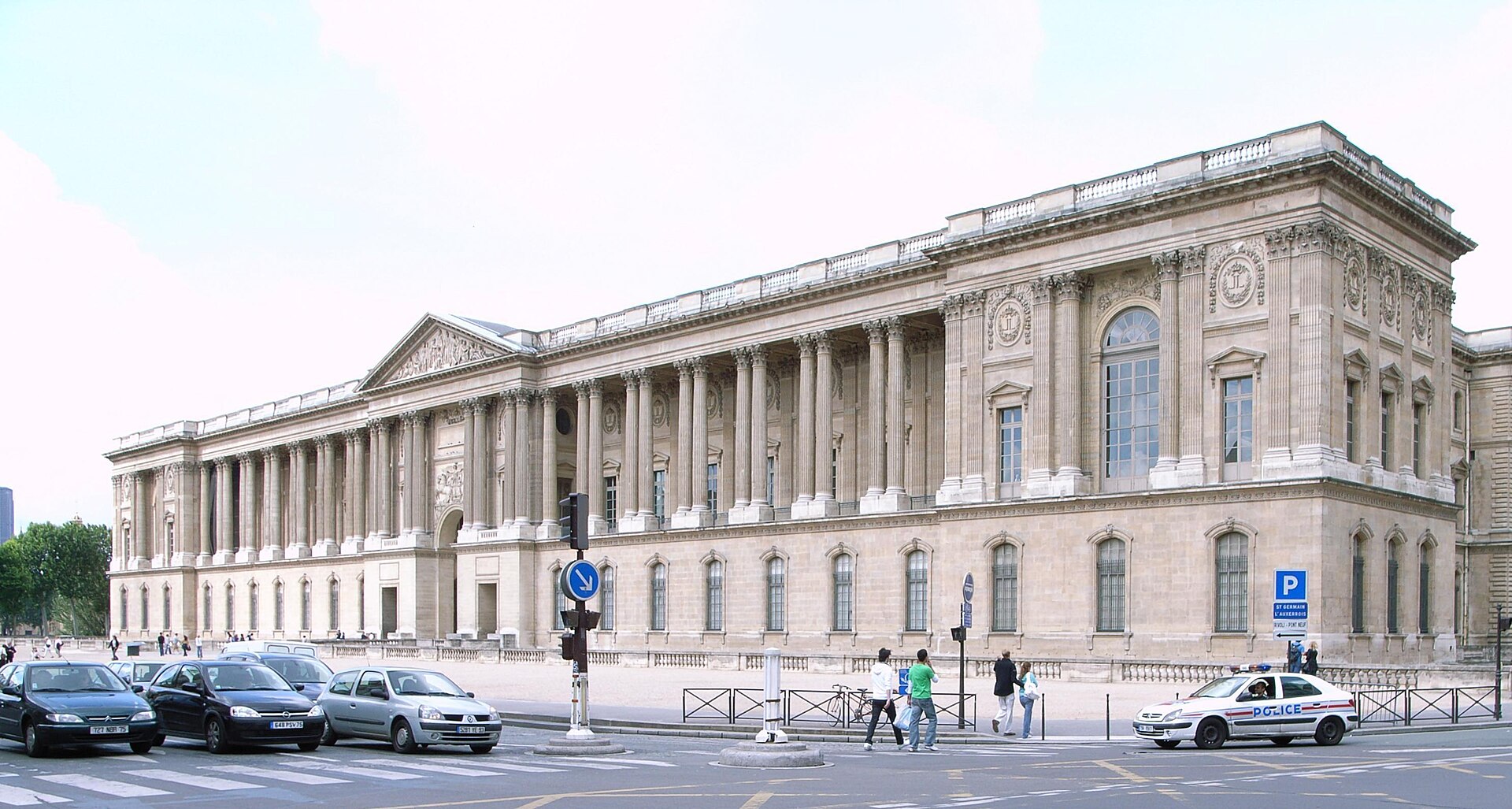
The eastern face of this part of the palace is graced by one of the masterpieces of French classical architecture, a majestic colonnade of paired columns that forms a grand and dignified frontage. Created under the greatest of the French kings, this colonnade was intended as a suitably imposing entrance to the royal palace, and it remains one of the most admired works of classical architecture in France.
The creation of the colonnade involved some of the finest architectural minds of the age, who debated and refined the design to produce a facade of perfect classical dignity. The result was a frontage that expressed the grandeur and order of the monarchy at its height, a stately screen of columns that announced the royal palace to the city with sober magnificence.
Together the square court and the colonnade represent the Louvre at the summit of its development as a royal palace, the achievement of the classical vision that successive kings had pursued. These spaces, beautiful and dignified, embody the ambition to make the Louvre a fitting seat for the most powerful monarchy in Europe, and they remain among the greatest glories of the whole complex.
Spending a few quiet moments in the square court, away from the crowds around the pyramid, is one of the great pleasures of a visit to the Louvre. Here the proportions and detail of the classical palace can be appreciated at leisure, and the harmony of the enclosing facades gives a powerful sense of the ordered grandeur that the monarchy sought to project through its architecture.
The Gallery of Apollo
Among the most dazzling interiors of the Louvre is a gallery created to celebrate the sun, a fitting theme for a monarchy that took the sun as its emblem. This richly decorated gallery, with its gilded ceiling crowded with allegorical paintings and its walls covered in ornament, is one of the supreme achievements of French decorative art and a direct expression of the glory of the monarchy at its height.
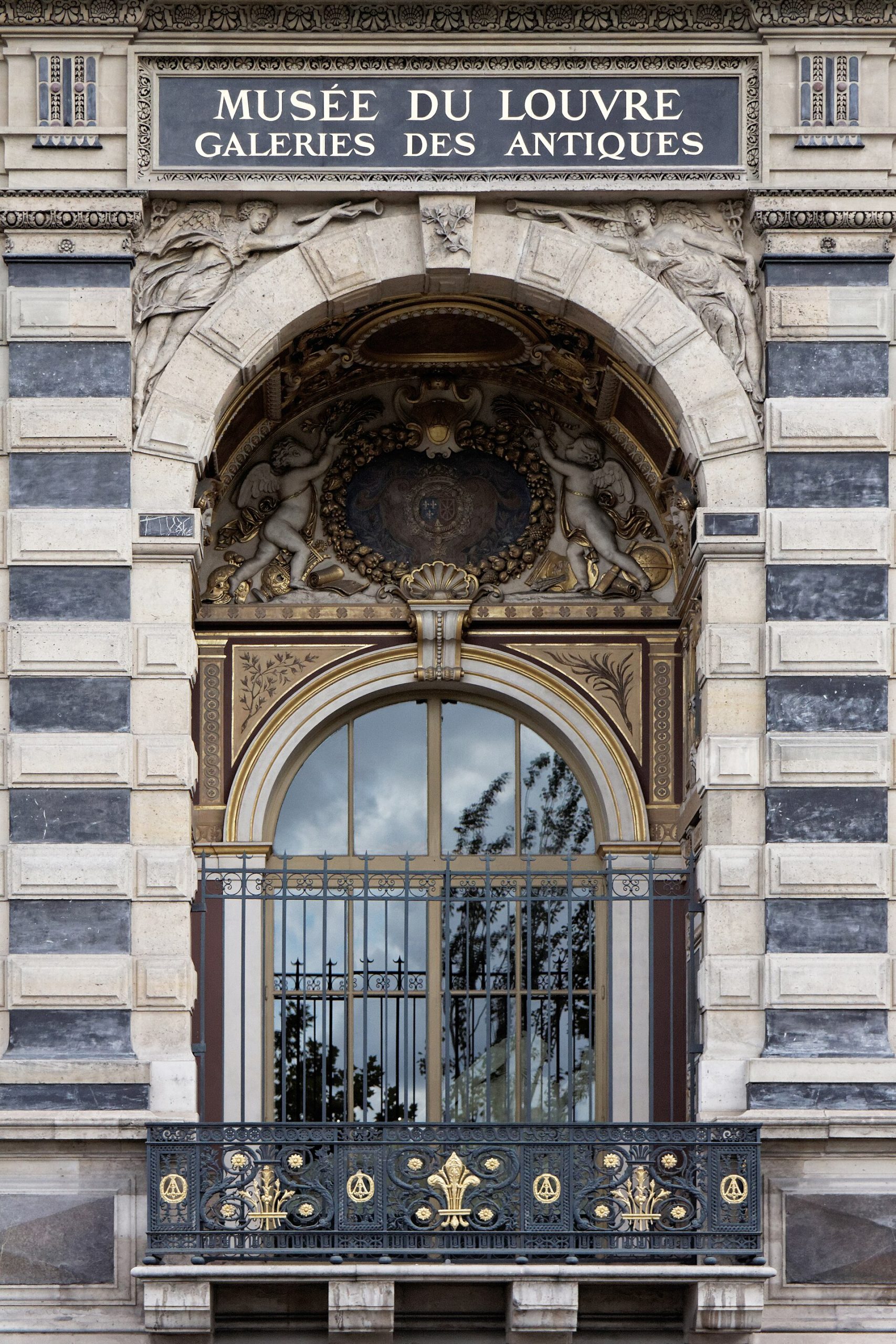
The gallery was conceived as a celebration of royal magnificence, its decoration weaving together painting, sculpture, and gilding into a single overwhelming display of splendour. The theme of the sun ran through the whole scheme, linking the room to the image of the king as a radiant, life-giving power at the centre of his kingdom, and the gallery served as a showcase of the crown’s wealth and taste.
The decoration of this gallery was influential far beyond the Louvre, providing a model for the great decorated galleries that would follow in other palaces. The idea of a long room adorned with a unified program of allegorical splendour, so brilliantly realised here, would be taken up and developed elsewhere, making the gallery a landmark in the history of interior design.
Today the gallery is home to some of the crown’s most precious treasures, its splendid setting the perfect showcase for objects of great value and beauty. To walk through it is to experience the magnificence of the French monarchy at its peak, a room designed to overwhelm the visitor with the glory of the crown and still capable, centuries later, of taking the breath away.
The gallery also stands as a reminder that the Louvre was, from early on, as much a treasure house as a residence. The kings gathered precious objects, paintings, and works of art within its walls, and the impulse to collect and display beauty that would culminate in the great museum was already present in the royal palace, woven into its very fabric.
A Royal Residence in the Heart of Paris
For long stretches of its history, the Louvre was a working royal residence, home to the kings of France and the setting for the life of their court. Unlike a palace set apart in the countryside, the Louvre stood in the very heart of the capital, and its life was bound up with the life of Paris, the great city pressing close around the royal walls.
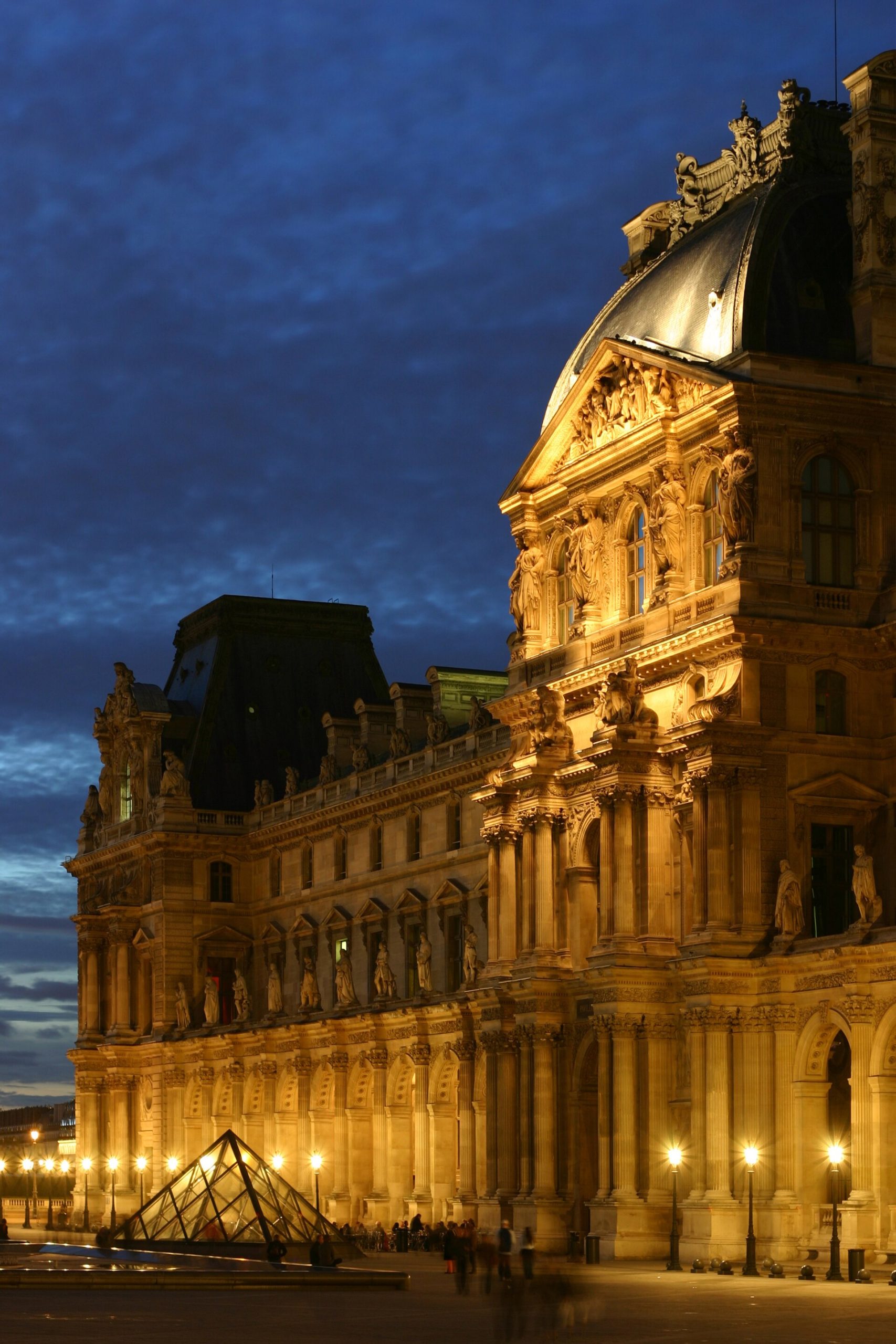
Within the palace, the monarchy conducted its business and its ceremonies, the court gathering around the king in the elaborate rituals that governed royal life. The Louvre witnessed councils and receptions, celebrations and intrigues, its rooms filled with the nobility and officials who orbited the crown. For centuries it was a principal stage on which the drama of the French monarchy was played out.
Being in the centre of Paris gave the Louvre a character quite different from a country palace, more urban and more exposed to the currents of the city. The proximity of the capital’s population, with all its energy and its dangers, meant that the royal residence was never entirely insulated from the world outside, a fact that would prove significant when the monarchy fell into crisis.
This role as an urban royal residence in the heart of the capital is a key part of the Louvre’s identity. It was here, amid the bustle of Paris, that the kings of France lived and ruled for much of their history, and the palace’s central location tied it intimately to the fortunes of the city and the nation in a way that a more secluded residence never could.
A Stage for Dark and Glorious Days
As a royal residence in the heart of the capital, the Louvre was the setting for some of the most dramatic events in French history, moments of both splendour and horror. Its halls hosted magnificent celebrations, royal weddings, and grand receptions, occasions on which the monarchy displayed its power and magnificence to the world in a blaze of ceremony and festivity.
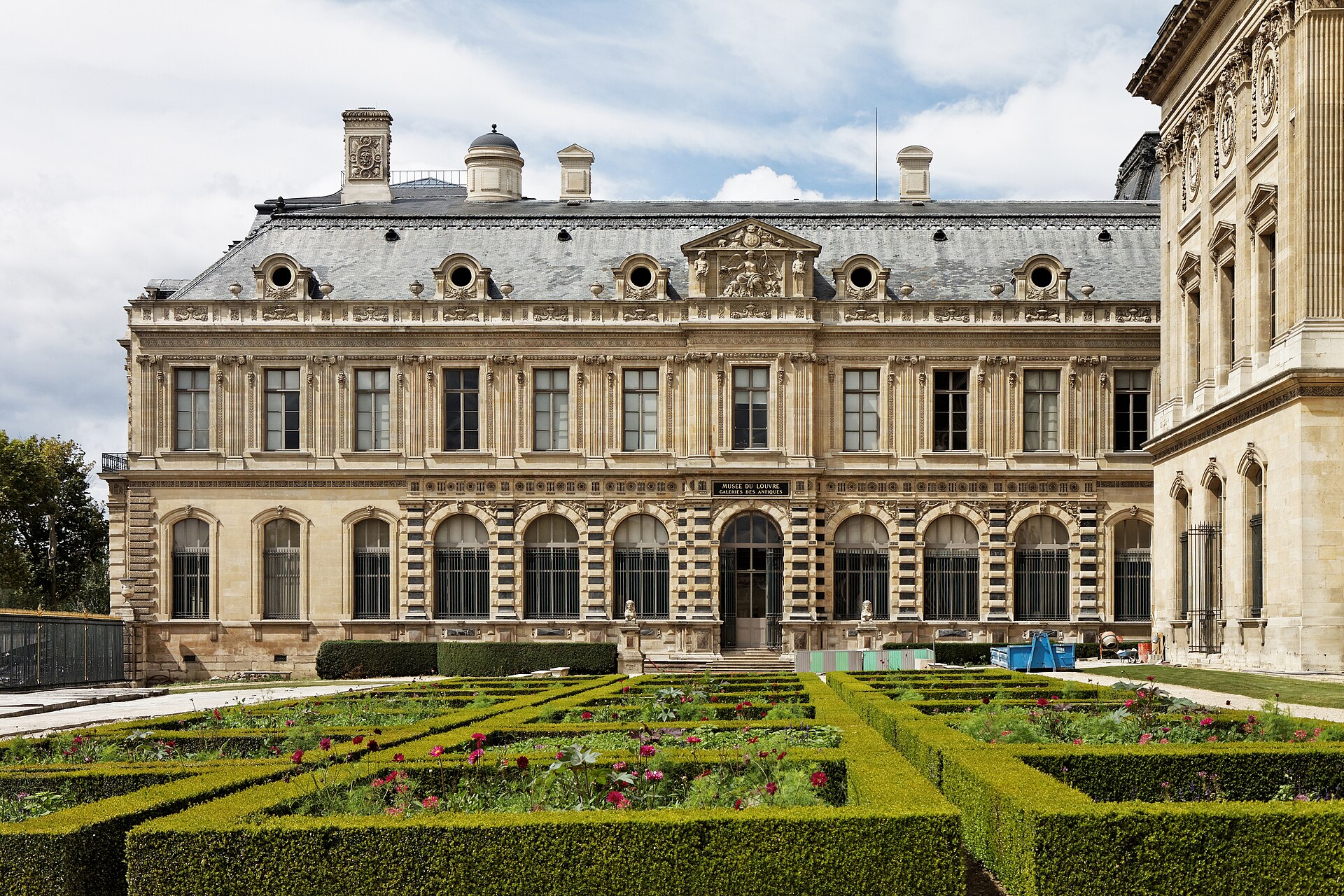
Yet the same walls witnessed darker episodes, for the Louvre stood at the centre of the political and religious struggles that convulsed France. In an age of bitter conflict, the palace was bound up with intrigue, violence, and the ruthless exercise of power, and events that unfolded in and around it left deep scars on the memory of the nation.
These contrasting scenes, of glittering celebration and terrible violence, capture the dual character of the Louvre as a royal residence at the heart of a turbulent capital. Unlike a secluded country palace, it was exposed to the full force of the passions that swept through Paris, and its history is accordingly richer and more dramatic, a mirror of the tumultuous times through which it passed.
To walk through the Louvre with these events in mind is to sense the weight of history that the palace carries. Beneath the serene beauty of its architecture lies a past filled with drama, and the great building stands as a witness to centuries of French history in all its glory and its darkness, a silent participant in the making and unmaking of the nation’s fortunes.
The memory of these events lingers about the Louvre, adding a dimension of depth to a building often visited only for its art. To know that these courtyards and halls were once the setting for the highest ceremonies of state and the fiercest struggles for power is to see the palace with different eyes, aware of the human drama that its serene stones have quietly absorbed across the centuries.
When the King Left the Louvre
The Louvre’s long career as the principal royal residence was interrupted by a momentous decision, when the greatest of the French kings chose to move his court away from Paris to a magnificent new palace in the countryside. This departure left the Louvre without its royal master, and the great palace in the heart of the capital entered a strange period of partial abandonment.
The reasons for this move were bound up with the king’s desire for a setting entirely of his own making, away from the crowds and dangers of the capital. In building his new palace, he drew the court and the government after him, and the Louvre, for so long the beating heart of the monarchy, found itself sidelined, its grand schemes left unfinished as royal attention turned elsewhere.
Yet the Louvre did not fall empty and silent. In the absence of the court, its vast spaces were given over to new uses, becoming home to academies, artists, and craftsmen who took up residence in the royal palace. The building thus acquired a new character as a centre of art and learning, a foretaste of the role it would eventually play as the greatest museum in the world.
This period of the king’s absence was crucial to the Louvre’s transformation, for it loosened the palace’s exclusive association with the monarchy and opened it to the world of art. The seeds of the future museum were sown in these years, as the great royal palace, no longer the king’s chief residence, began its long evolution into a public treasure house.
In hindsight, the king’s departure was one of the most consequential moments in the palace’s history. Had the court remained, the Louvre might have stayed a purely royal residence, closed to the public and bound to the fate of the monarchy. Instead, the king’s absence opened a space for art and learning to take root, quietly preparing the palace for the extraordinary future that awaited it.
The Revolution Makes a Museum
The French Revolution transformed the Louvre as profoundly as it transformed France itself, turning the royal palace into a museum belonging to the nation. In the upheaval that swept away the monarchy, the idea took hold that the treasures of the crown and the church should belong to the people, and the Louvre was chosen as the place to display them, opening its doors as a public museum.
This was a revolutionary act in every sense, the conversion of a symbol of royal power into an institution for the education and enjoyment of ordinary citizens. Where once the palace had served the glory of kings, it would now serve the public, its galleries filled with art that all could come to see. The Louvre thus became one of the great expressions of the revolutionary ideal that culture belonged to everyone.
The new museum grew rapidly as the collections expanded, enriched by treasures gathered from across France and, in the years that followed, from far beyond its borders. The palace that had been a royal residence became a repository of the artistic heritage of civilisation, its rooms increasingly given over to the display of paintings, sculpture, and antiquities for the benefit of the public.
The transformation of the Louvre into a public museum was one of the most important cultural developments to emerge from the Revolution, and it gave the old palace an entirely new purpose that would define its future. The building that had embodied the power of the monarchy now embodied a different ideal, the belief that the treasures of art should be the shared inheritance of all humanity.
There is a striking symbolism in the timing of this transformation, for it was at the very moment the monarchy fell that the Louvre found its new and enduring purpose. The palace of the kings became the museum of the people almost in the same breath, as if the building had simply exchanged one form of greatness for another, passing from the service of the crown to the service of all.
Emperors and the Completion of a Dream
After the Revolution, the Louvre continued to grow and change under the emperors who ruled France in the nineteenth century, who took up the ancient royal ambition of completing the great palace. Under their direction, new wings were built and the long-cherished dream of uniting the different parts of the complex into a single grand whole was finally brought close to realisation.
The first emperor enriched the museum enormously, filling it with treasures gathered during his campaigns and adding to the fabric of the palace itself. The building bore his mark as it had borne the mark of the kings before him, the age of empire adding its own layer to the long architectural history of the Louvre and swelling the collections that made it famous.
It was under a later emperor that the vast scheme first dreamed of centuries earlier was at last substantially completed, the wings extended and the great courtyards enclosed to create the immense unified palace that the kings had envisioned. After so many generations of fitful building, the Louvre finally achieved something like the grand form its royal patrons had long imagined.
This completion of the great design brought the architectural story of the Louvre as a palace to its culmination, the realisation of ambitions that had spanned centuries. The building that resulted was one of the largest palaces in the world, a monument to the persistence of a vision passed down from king to king and finally fulfilled in the age of the emperors.
The completion of the great palace under the emperors also gave the Louvre the essential form it retains today, the vast complex of wings and courtyards that visitors now explore. The building that the kings had begun and the emperors finished stands as one of the largest and most magnificent palaces ever raised, a fitting home for the treasures it would come to hold.
The Palace That Vanished
The story of the Louvre is shadowed by the fate of its companion, the second great palace to which it had been joined, which met a violent end. During the turmoil of a later revolution, this neighbouring palace was set ablaze and gutted, and its ruined shell was eventually cleared away entirely, leaving a great gap where a royal residence had stood.
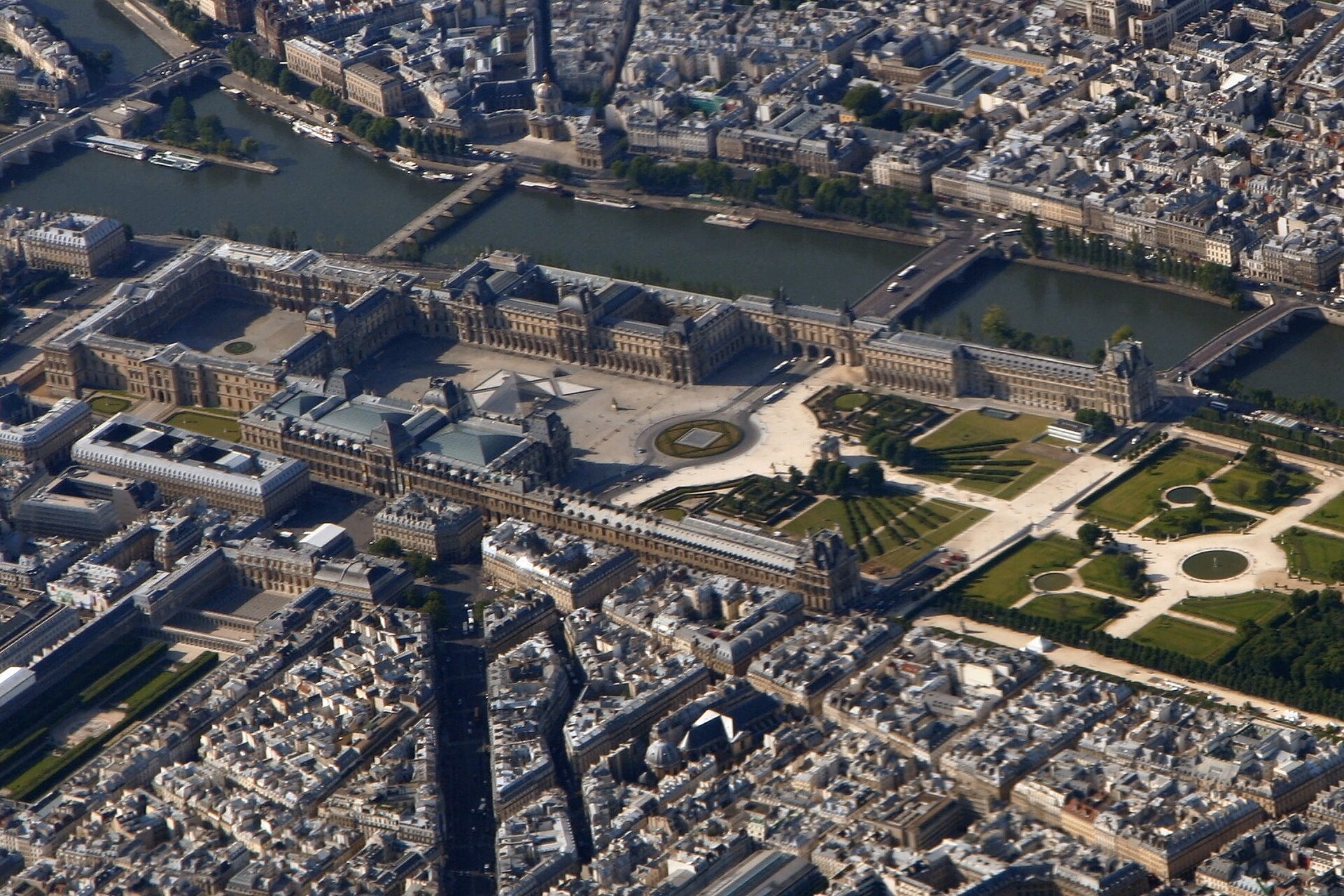
The destruction of this palace changed the whole aspect of the Louvre complex, opening up the vista that visitors see today, where the great courtyard opens toward gardens and the city beyond. What had been an enclosed royal precinct became a more open space, the loss of the neighbouring palace transforming the setting of the Louvre in a way that still shapes the experience of the place.
The vanished palace had been an important royal residence in its own right, the scene of significant events in French history, and its loss was keenly felt. Yet its destruction also, in a sense, freed the Louvre, removing the residence most closely associated with the fallen monarchy and leaving the older palace to pursue its new destiny as a museum unencumbered by its royal twin.
Today the absence of this palace is itself part of the story of the Louvre, the great open vista a reminder of what once stood there. The dramatic end of the neighbouring residence is a vivid illustration of the upheavals through which the Louvre passed, and of the way revolution and destruction, as much as royal ambition, shaped the great complex we know today.
The vanished palace is a poignant reminder that not everything survives the turbulence of history, and that the Louvre we admire today is in part the product of loss as well as of building. The great open perspective that runs from the courtyards of the Louvre through the gardens and beyond exists because a palace once stood there and was destroyed, its absence now an accepted and even celebrated feature of the heart of Paris.
The Pyramid and the Modern Louvre
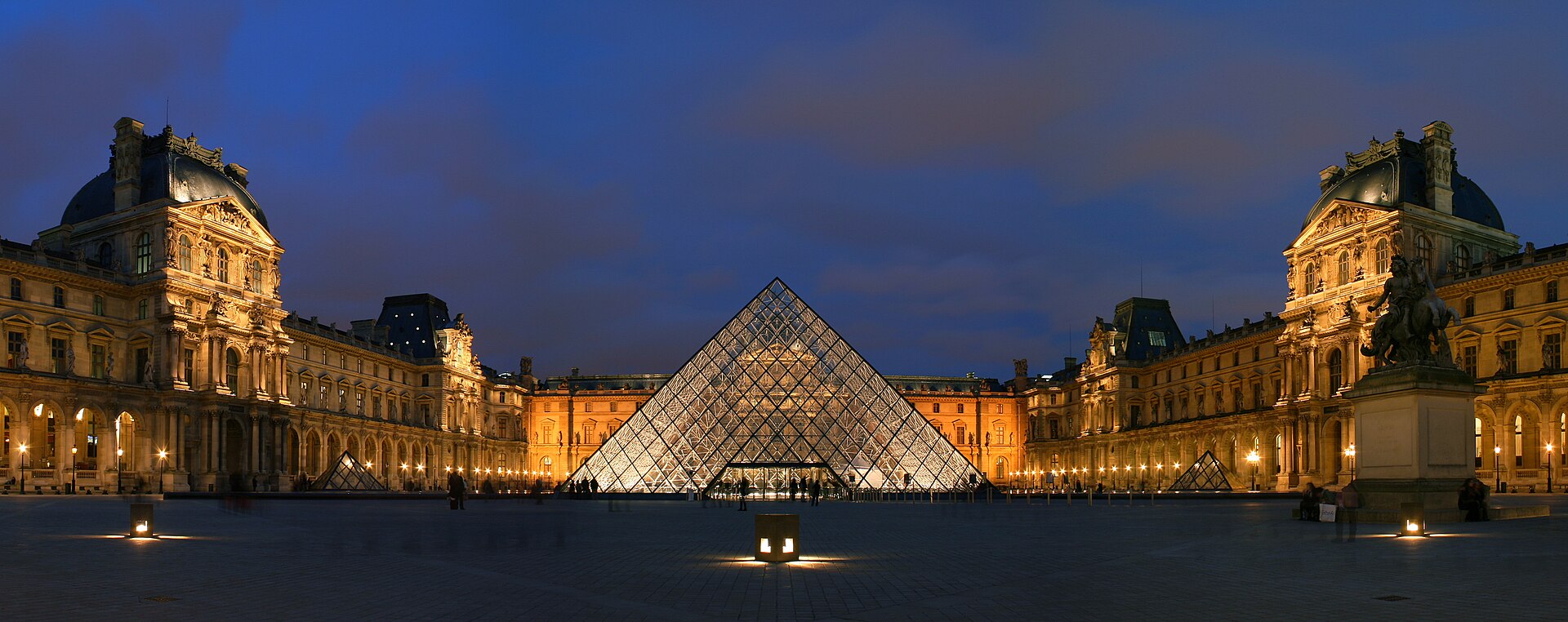
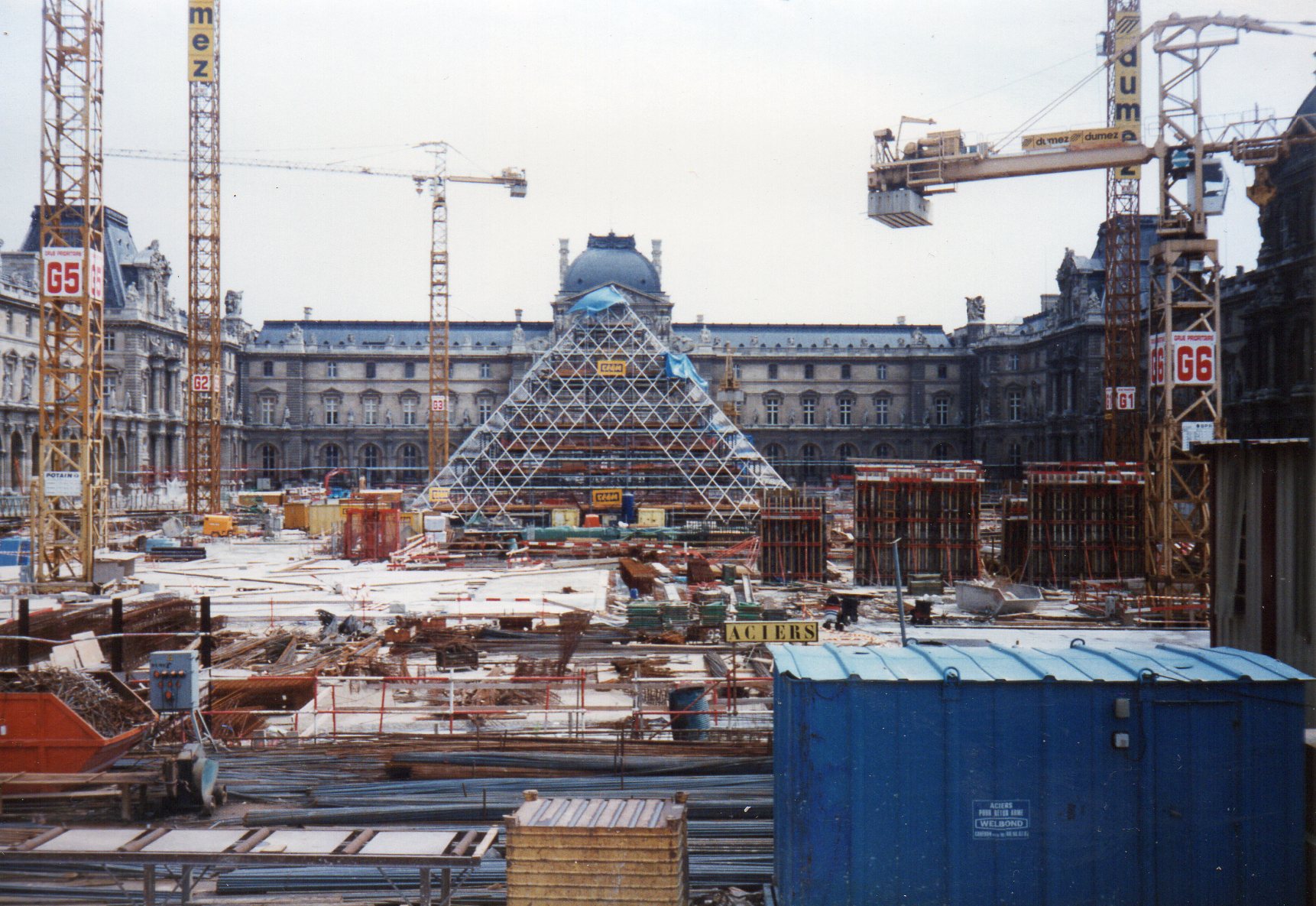
In the late twentieth century, the Louvre entered a new phase with a bold modern addition that transformed the way visitors experience the ancient palace. A striking glass pyramid was raised in the great central courtyard, creating a dramatic new entrance and a modern heart for the vast museum, a startling contrast to the historic facades that surround it.
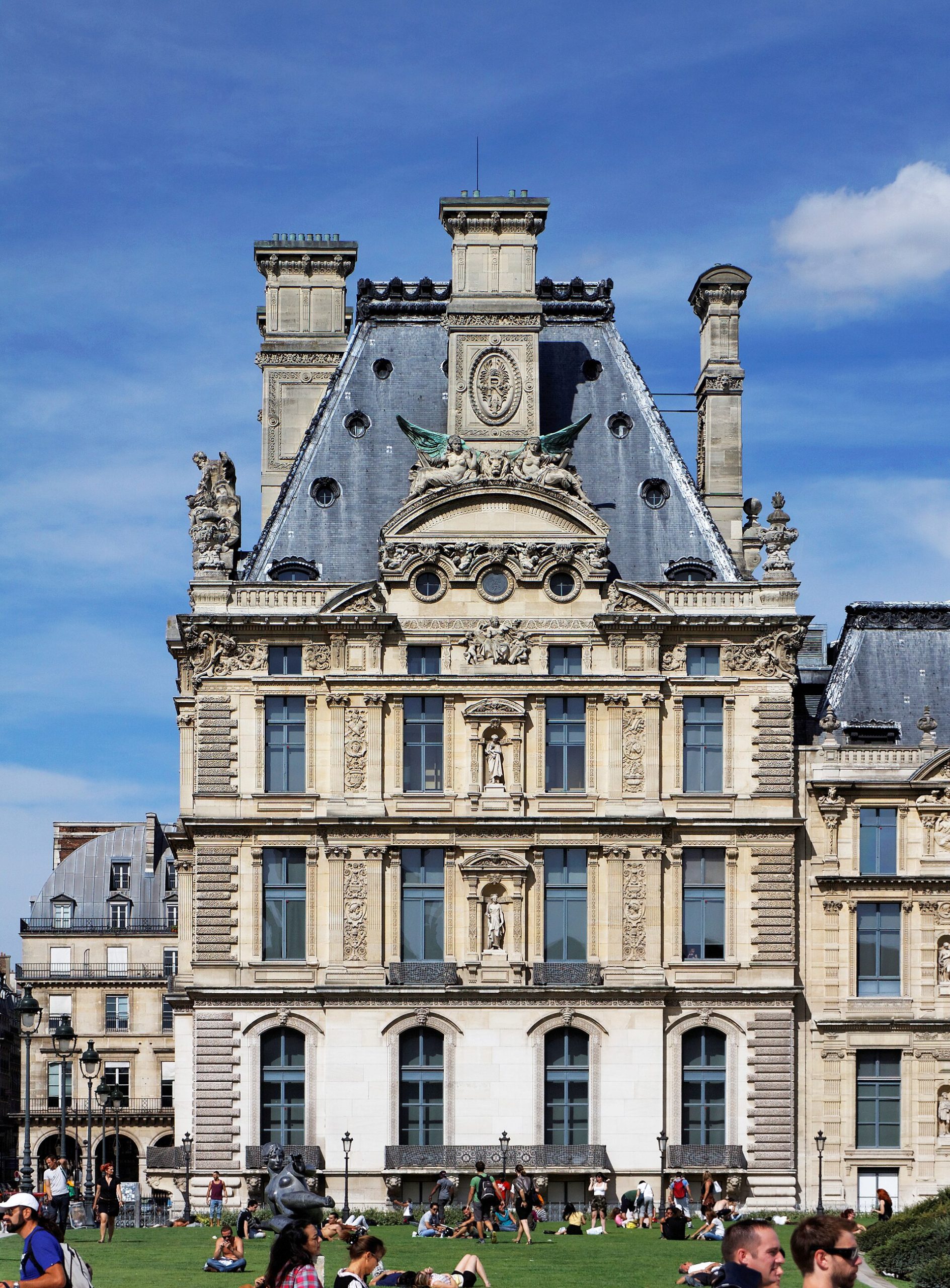
The pyramid was controversial when it was first proposed, its uncompromisingly modern form seeming to some a jarring intrusion upon the historic palace. Yet it was designed with great care to complement rather than compete with the old buildings, and in time it won acceptance and even affection, becoming one of the most recognisable landmarks in Paris and a symbol of the museum itself.
Beyond its striking appearance, the pyramid served a practical purpose, providing a spacious modern entrance and underground facilities to serve the enormous numbers of visitors who flock to the Louvre. It transformed the functioning of the museum, allowing the historic palace to cope with the crowds while preserving the dignity of its ancient courtyards and facades.
The addition of the pyramid marked the Louvre’s confident embrace of its role as a great modern museum, a place that honours its long history while serving the present. The juxtaposition of the sleek glass structure with the venerable palace captures something essential about the Louvre today, an ancient royal residence transformed into a living institution at the heart of the modern world.
The pyramid also came to symbolise a broader renewal of the museum, part of a great modernisation that reorganised and expanded the Louvre for a new era. In embracing so bold a modern gesture at the heart of its historic courtyards, the Louvre affirmed that it was not a relic frozen in the past but a living institution, confident enough to add a striking new chapter to its long architectural story.
Experiencing the Palace Today
To visit the Louvre is to experience one of the world’s great buildings, and it rewards the visitor who takes the time to appreciate it as a palace and not only as a museum. Amid the crowds drawn by its famous treasures, it is worth pausing to take in the architecture itself, the courtyards, facades, and galleries that tell the long story of the French monarchy.
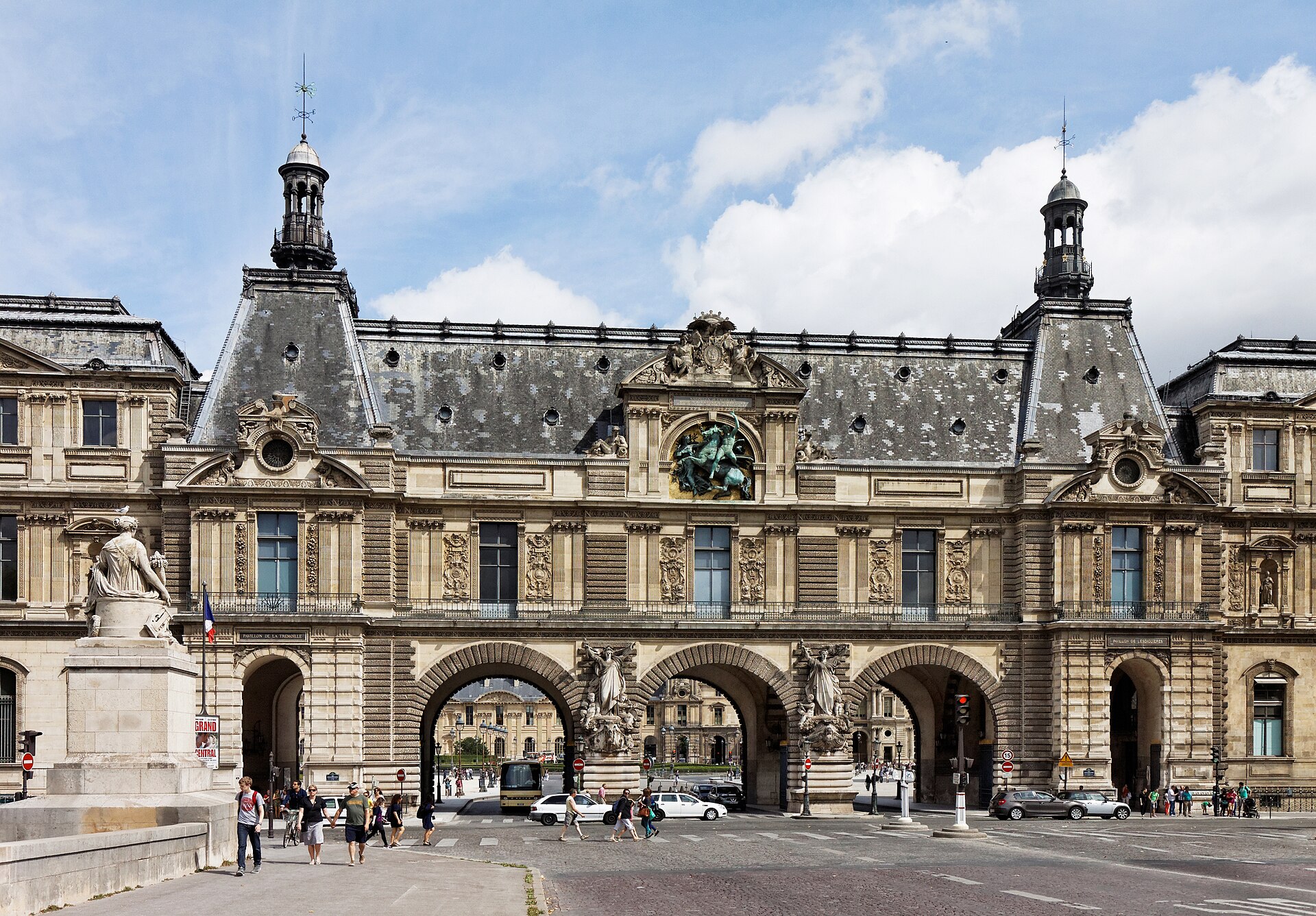
The historic spaces of the palace are among its greatest attractions, from the beautiful square court and the majestic colonnade to the dazzling gallery of the sun and the medieval foundations preserved beneath the building. These reward exploration in their own right, offering a journey through the architectural history of France from the Middle Ages to the age of the emperors.
The setting of the Louvre is magnificent, its great courtyards opening toward gardens and the heart of Paris, the glass pyramid gleaming at the centre of the historic facades. To stand in the courtyard and take in the sweep of the palace around you is to appreciate the immense scale of the ambition that created it, the work of many centuries and many rulers.
View the exact location on Google Maps
However you approach it, the Louvre offers an experience of extraordinary richness, a place where the history of a nation and the treasures of civilisation come together in a single great building. To understand it as a palace deepens the visit immeasurably, revealing the centuries of royal ambition behind the world’s most famous museum, and making the Louvre not just a gallery of art but a monument to the long and dramatic history of France.
It is wise, too, to accept that no single visit can hope to exhaust the Louvre, and to choose a few things to see well rather than trying to see everything. Whether your interest lies in the art or in the palace itself, a focused visit that leaves time to appreciate the architecture will prove far more rewarding than an exhausting dash through endless galleries in pursuit of the most famous names.
Palaces Nearby
If the Louvre has drawn you into the world of France’s royal palaces, two more great residences lie within easy reach:
You May Like

The Hofburg: The Imperial Palace at the Heart of Habsburg Vienna


2 thoughts on “The Louvre: The Royal Palace Behind the World’s Greatest Museum”