On a bend of the Don River, where the grasslands stretched away toward the Volga, the Khazars raised a white fortress unlike anything else on the steppe. Sarkel was built with the help of Byzantine engineers sent from Constantinople, its walls of fired brick guarding a vital river crossing on the frontier of a powerful nomadic empire. For a time it stood as a symbol of Khazar power and of the surprising reach of Byzantine skill, until it fell to the rising Rus and, centuries later, vanished forever beneath the waters of a modern reservoir. In this article we will discover the story of Sarkel, the white fortress built for the Khazars and now lost beneath a man-made sea.
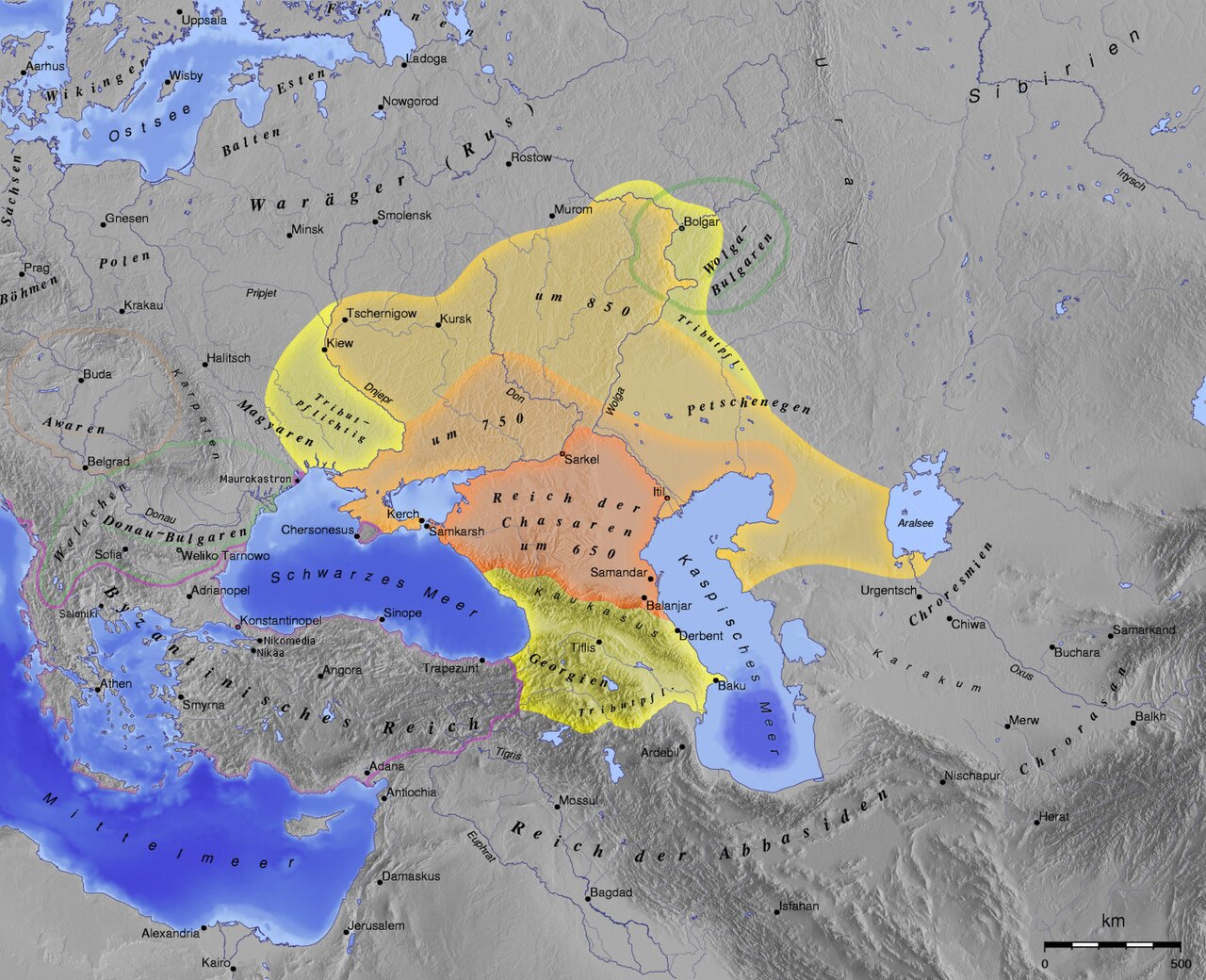
Table of Contents
- The Empire of the Steppe: The Khazars
- A Fortress Built by Byzantine Engineers
- A Strategic Point on the Don
- Where the Caravans Passed
- Life Inside the Fortress
- The Fall of a Fortress
- History Beneath the Waters
- The Memory of the White Fortress
- An Empire of Three Faiths
- Between Byzantium and the Steppe
- A Rescue Operation
- Nearby Places
The Empire of the Steppe: The Khazars
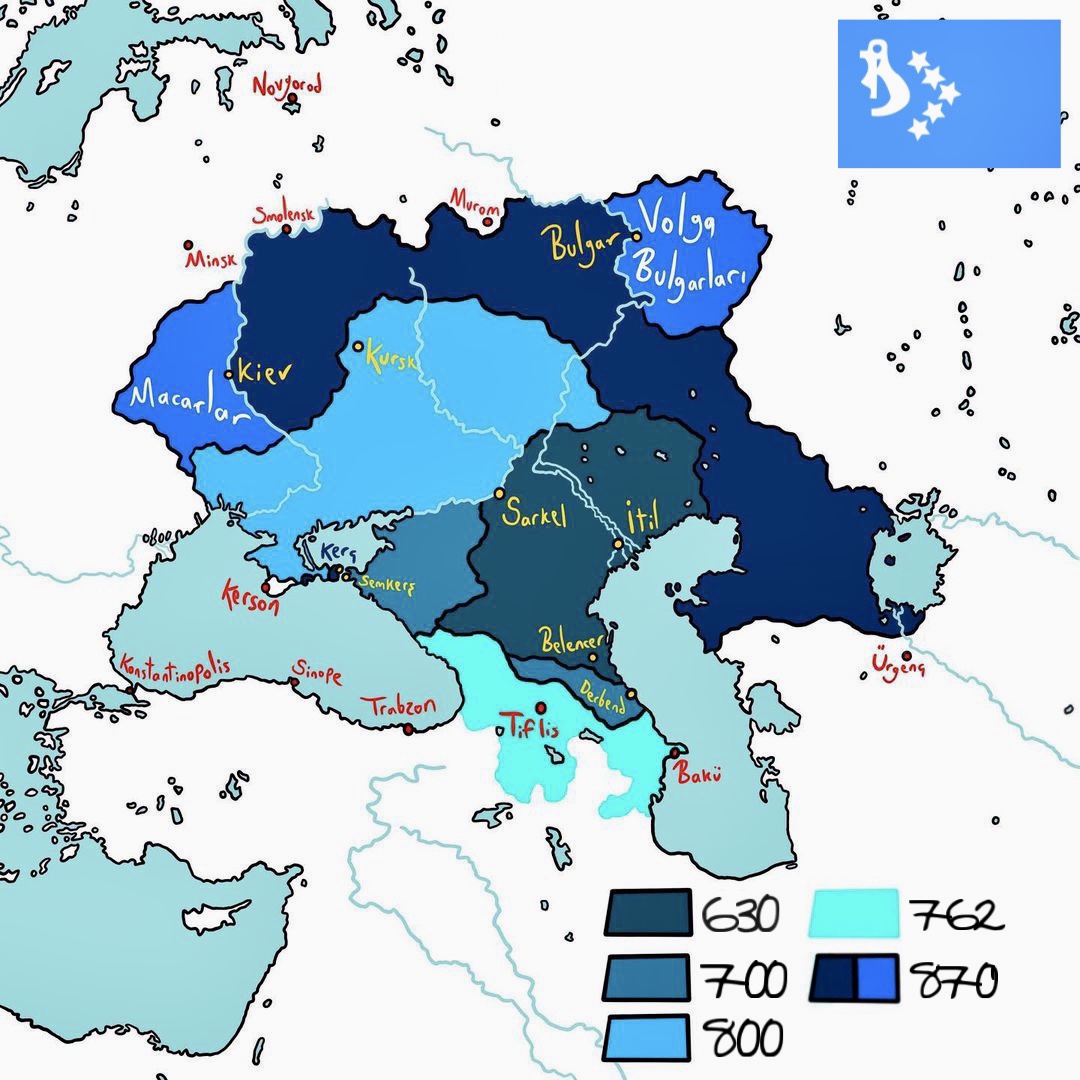
The Khazars were one of the great powers of the early medieval steppe, a nomadic people who built an empire that dominated the lands between the Black Sea and the Caspian for centuries. From their heartland they controlled vast territories and the trade routes that crossed them.
At the height of their power, the Khazars held sway over a diverse array of peoples and commanded the crossroads where the steppe met the settled worlds of Byzantium, the Islamic caliphate, and the emerging Slavic principalities.
The Khazar state was remarkable for its wealth, its military strength, and its role as a stabilizing power on the northern frontier of the great civilizations of the age, holding back other nomads and channeling trade.
The empire’s prosperity rested on its control of trade, drawing wealth from the goods that passed through its territory between north and south, east and west.
Sarkel was a product of this empire, a fortress built to guard its frontier and to secure the trade routes on which its power depended, a physical expression of Khazar strength.
The Khazars maintained a complex web of relations with their neighbors, at times allied with Byzantium against common enemies, at times in tension with the growing powers around them.
For centuries the Khazar empire was a major force in the region, and its influence shaped the history of the peoples who lived in its shadow and on its borders.
It was in this world of steppe power and international trade that Sarkel was raised, a fortress that embodied the reach and ambition of one of the great empires of the early medieval world.
The Khazars occupy a fascinating and somewhat mysterious place in medieval history, a people whose power was immense yet whose story survives mainly through the accounts of their neighbors.
Their empire functioned as a great pivot of the early medieval world, balancing the ambitions of Byzantium, the caliphate, and the northern peoples against one another.
A Fortress Built by Byzantine Engineers
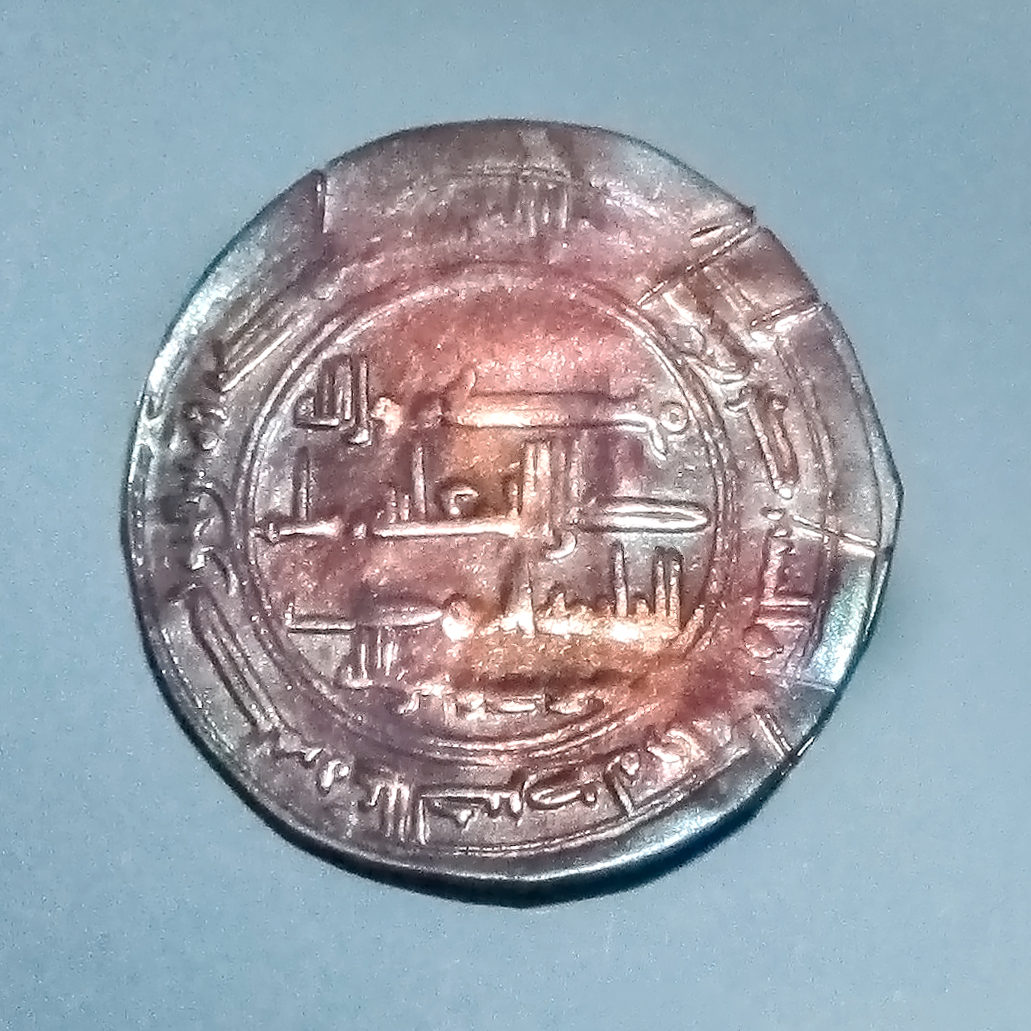
One of the most remarkable features of Sarkel is that it was built with the help of Byzantine engineers. According to the historical accounts, the Khazars requested skilled builders from Constantinople, and the Byzantine emperor sent experts to raise a fortress in the modern manner.
This collaboration produced a fortress of fired brick, an unusual material on the steppe, where such construction was rare, and it gave the fortress its distinctive white appearance and its lasting name.
The involvement of Byzantine engineers is a striking illustration of the reach of Constantinople’s influence and of the value both powers placed on controlling this stretch of the Don.
The fortress was designed according to the best military architecture of the age, with strong walls, towers, and a plan intended to withstand assault and to command the surrounding territory.
The use of brick, produced on site, required considerable organization and skill, and the fortress stood as a monument to the technical mastery brought from the Byzantine world.
This cooperation between a steppe empire and the great civilization to its south reflects the complex diplomacy of the age, in which fortresses could be built through alliances that crossed cultural boundaries.
The white walls of Sarkel would have been visible from far across the flat grasslands, a striking symbol of Khazar power and of the Byzantine skill that had helped to raise it.
A fortress built by Byzantine engineers for a steppe empire, Sarkel was a unique product of its age, embodying the meeting of two very different worlds on the banks of the Don.
The very name of the fortress, associated with its white walls, preserved the memory of this distinctive brick construction long after the building itself was gone.
That a nomadic empire would commission such a fortress from a distant civilization speaks to the sophistication and ambition of Khazar statecraft.

A Strategic Point on the Don
Sarkel was built to guard a strategic point on the Don River, at or near a crossing that controlled movement across the steppe and along the river routes that linked the great waterways of the region.
The Don was a vital artery, and the point where Sarkel stood commanded the traffic that moved between the Volga and the Black Sea, giving the fortress control over an important junction.
This location made Sarkel a key to the defense of the Khazar frontier, a stronghold that could monitor and control the movement of peoples and goods across a crucial stretch of territory.
The fortress guarded against threats from the west and secured the trade routes that brought wealth to the Khazar empire, standing sentinel over a contested and valuable region.
The choice of site reflects a sophisticated understanding of geography and strategy, placing the fortress where it could exert the greatest control over movement and trade.
The Don crossing was a natural chokepoint, and whoever held Sarkel held a measure of control over the wider network of routes that crossed the steppe.
This strategic value made Sarkel important not only to the Khazars but to all the powers that contended for influence in the region, and its control was a prize worth fighting for.
A strategic point on the Don, Sarkel occupied a position whose importance far exceeded its size, guarding a crossing that shaped the movement of peoples and the flow of trade.
The flatness of the surrounding steppe made the crossing all the more important, for there were few natural obstacles to control movement across the plain.
In such a landscape, a well-placed fortress could dominate a vast territory, and Sarkel was positioned to do exactly that.
Where the Caravans Passed
Sarkel stood on the trade routes that crossed the steppe, and the caravans that carried goods between the great civilizations of the age passed within reach of its white walls, bringing wealth and traffic to the region.
The trade that flowed through the Khazar lands connected the north to the Islamic world and the Byzantine empire, and Sarkel guarded a portion of this lucrative network.
Furs, slaves, silver, and a host of other goods moved along these routes, and control of the crossings and roads brought revenue and influence to those who held them.
The fortress served both to protect and to tax this trade, securing the routes for the Khazar empire and drawing profit from the goods that passed through the region.
This commerce was one of the foundations of Khazar power, and Sarkel’s position on the trade roads made it an important instrument of the empire’s wealth and control.
The passing caravans linked the fortress to a world of long-distance exchange, and the goods that reached it came from lands far beyond the steppe.
Archaeology has recovered evidence of this trade at the site, with objects and materials from distant regions testifying to Sarkel’s role on the international routes.
Where the caravans passed, wealth followed, and Sarkel stood as both guardian and beneficiary of the trade that crossed the steppe on its way between worlds.
The wealth that flowed along these routes was the true prize that Sarkel existed to protect, and its guardianship of the trade was inseparable from its military role.

Life Inside the Fortress
Within the white walls of Sarkel, a community lived out its days in the service of the fortress and the empire it protected. The garrison, their families, and those who supplied and supported them made up the population of this frontier stronghold.
The fortress housed soldiers who guarded the crossing and the frontier, and the life of the community was shaped by its military purpose and its position on the edge of the steppe.
Everyday objects recovered from the site reveal the domestic world of those who lived there, from the pottery of their meals to the tools of their trades and the ornaments they wore.
The population was likely diverse, reflecting the mixed character of the Khazar empire, with people of various origins living together within the fortress and its surroundings.
Life at Sarkel combined the routines of a garrison with the activities of a settlement that served the trade and traffic passing through the region.
The fortress would have been a busy place, with soldiers, traders, and travelers passing through, and the rhythms of military duty mixing with those of commerce and daily life.
The finds from the site help archaeologists reconstruct this world, giving a picture of the people who manned the frontier and lived within the white walls.
Life inside the fortress was the life of a frontier community, its days shaped by the demands of defense, trade, and survival on the exposed edge of a great steppe empire.
The mixing of soldiers, traders, and travelers within the walls would have made the fortress a lively and cosmopolitan place, for all its remote setting.

The Fall of a Fortress
The power of the Khazar empire did not last forever, and as it waned, new forces rose to challenge it. Chief among these were the Rus, whose growing strength brought them into conflict with the Khazars and their strongholds.
In the tenth century, a Rus ruler campaigned against the Khazars and captured Sarkel, dealing a heavy blow to the empire and marking a turning point in the balance of power on the steppe.
The fall of the fortress was part of the wider collapse of Khazar power, as the Rus and other rivals dismantled the empire that had dominated the region for so long.
With its capture, Sarkel passed out of Khazar hands, and the white fortress that had guarded the frontier became a prize of the rising Rus power.
The event was significant enough to be recorded in the historical sources, marking the moment when the old order of the steppe gave way to the new power of the Rus.
The fall of Sarkel thus symbolized a broader transformation, the decline of the Khazars and the rise of the peoples who would shape the future of the region.
Under new masters, the fortress continued to be occupied for a time, its strategic value outlasting the empire that had built it.
The fall of the fortress marked the end of an era, closing the Khazar chapter of Sarkel’s history and opening a new one under the ascendant power of the Rus.
The campaign that took Sarkel was remembered as a signal achievement, a moment when the balance of power on the steppe visibly shifted toward the Rus.
The loss of such a strategic fortress was a blow from which the declining Khazar empire could not recover.
History Beneath the Waters
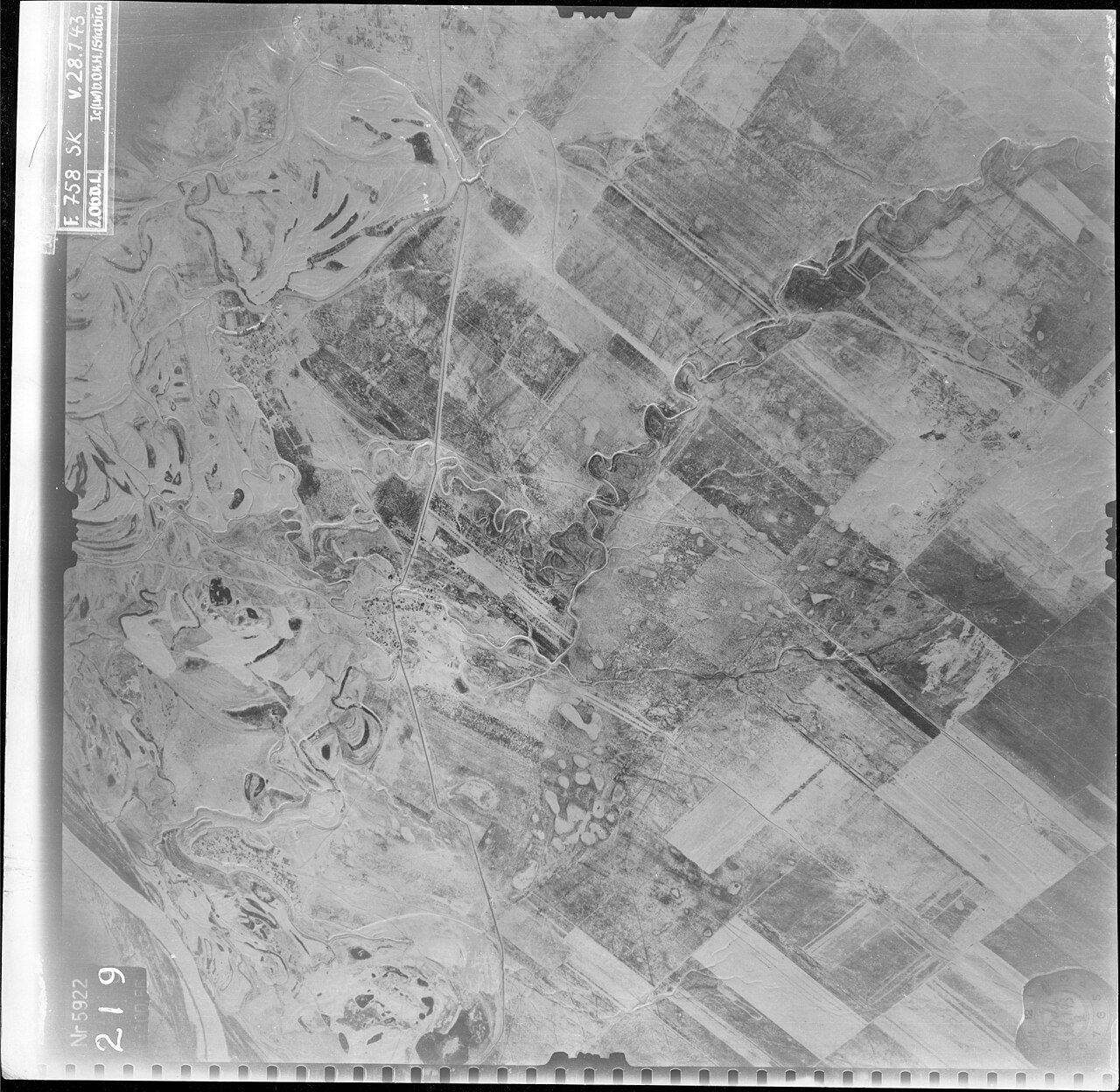
The final chapter of Sarkel’s story is one of the most poignant in the archaeology of the region, for the site of the fortress now lies submerged beneath the waters of a modern reservoir, lost forever to the surface of the earth.
The construction of a great reservoir in the twentieth century flooded the area where Sarkel had stood, and the ruins that had survived for a thousand years disappeared beneath the artificial sea.
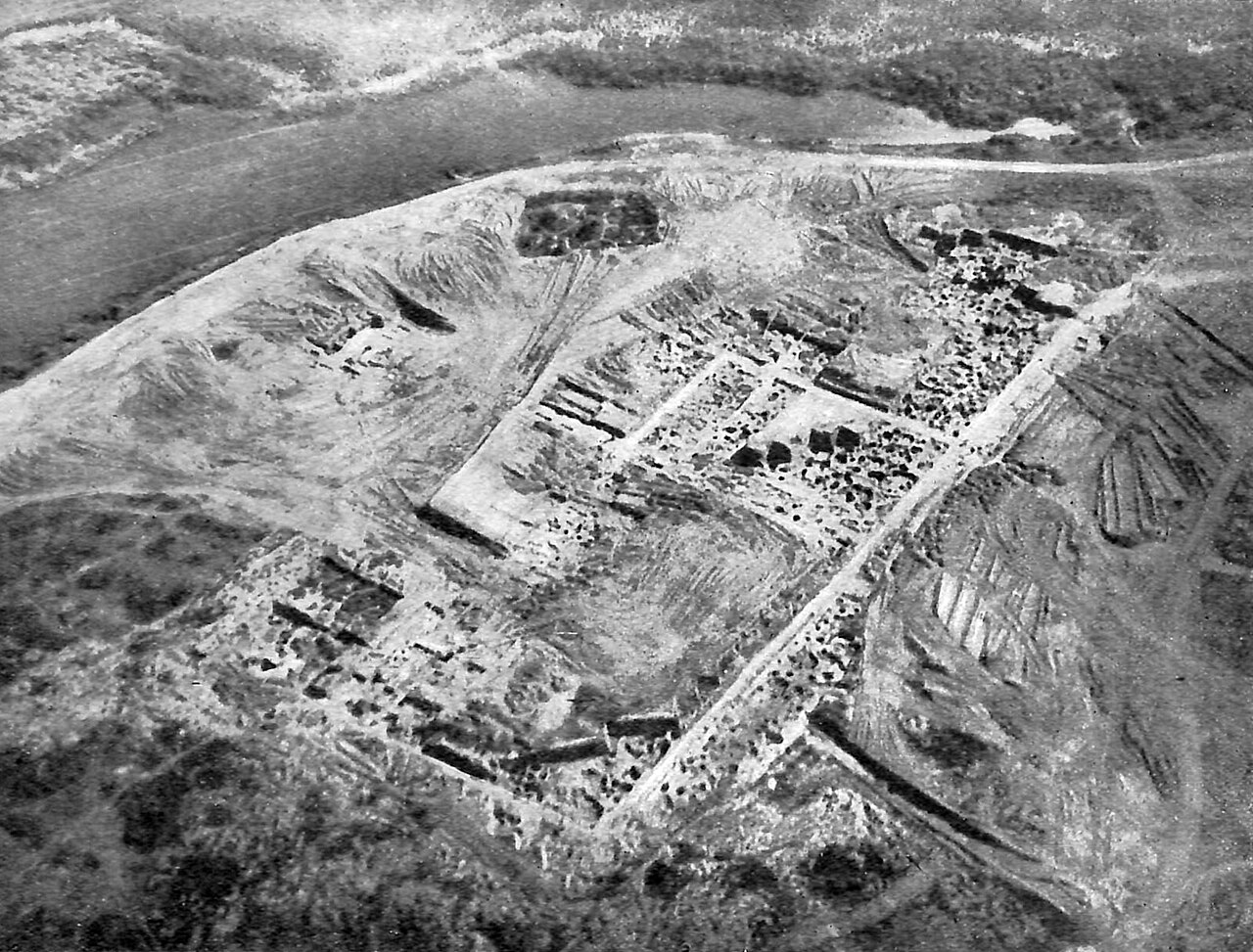
Before the flooding, archaeologists worked urgently to excavate and record what they could, racing against the rising waters to preserve the memory of the fortress.
The result is that Sarkel is now known almost entirely through the records of those excavations, its physical remains inaccessible beneath the reservoir that covers them.
This submerged fate gives Sarkel a peculiar poignancy, a fortress that survived conquest and the fall of an empire only to vanish beneath the waters of a modern project.
The loss of the site underscores the importance of the archaeological work carried out before the flooding, which captured a record of the fortress that would otherwise have been lost entirely.
Today the white fortress exists only in excavation reports, in the objects recovered from its soil, and in the historical accounts that describe it, its actual site hidden beneath the reservoir.
History beneath the waters, Sarkel is a fortress remembered rather than seen, a vanished stronghold whose story survives only because it was recorded before the flood.
There is a bitter irony in the fortress’s fate: it outlasted the empire that built it and the conquerors who took it, only to be undone by the engineering of the modern age.
The Memory of the White Fortress
Though Sarkel has vanished beneath the waters, its memory endures in the historical record and in the work of the archaeologists who studied it before it was lost. The white fortress lives on as a symbol of a vanished world.
Its legacy is bound up with the story of the Khazars, that remarkable steppe empire whose history is preserved in fragments, and Sarkel is one of the most vivid of those fragments.
The fortress also stands as a testament to the surprising reach of Byzantine engineering, a reminder that even on the distant steppe the skill of Constantinople could leave its mark.
As a monument to the meeting of Byzantine and steppe worlds, Sarkel holds an important place in the history of the region and of the cultural exchanges that shaped it.
For scholars, the excavation records remain a valuable source for the study of Khazar architecture, trade, and frontier life, preserving knowledge of a fortress that no longer exists.
The story of Sarkel is also a lesson in the fragility of heritage, showing how even long-surviving monuments can be lost to the projects of the modern world.
Yet through the records and the memory, the white fortress continues to speak, telling of a steppe empire, a Byzantine collaboration, and a strategic crossing on the Don.
The memory of the white fortress endures, a vanished monument that lives on in the accounts of those who recorded it and in the history of the peoples who built, held, and lost it.
An Empire of Three Faiths
The Khazar empire was famous for its religious diversity, a realm where the faiths of the steppe met those of the surrounding civilizations, and where the beliefs of many peoples coexisted under a single power.
The Khazar elite were renowned for their religious openness, and the empire became a place where Judaism, Christianity, and Islam all had a presence, alongside the traditional beliefs of the steppe.
This diversity reflected the empire’s position at the crossroads of worlds, where the trade routes brought not only goods but also religions, and where a policy of tolerance helped hold together a varied realm.
Sarkel, standing on the frontier, would have mirrored this diversity, hosting a mingling of faiths that reflected the character of the empire it served.
The religious openness of the Khazars is one of the most distinctive features of their history, setting them apart from many of their contemporaries and reflecting the pragmatic tolerance of a trading empire.
The coexistence of several faiths within the empire was both a source of strength and a reflection of its cosmopolitan character, bound together by trade and by the authority of the Khazar rulers.
This religious diversity has fascinated historians, offering a rare example of a medieval state where several great faiths met and coexisted under a single power.
An empire of three faiths, the Khazar realm was a meeting ground of religions, and Sarkel on its frontier was a small window onto this remarkable diversity of belief.
The Khazar example is often cited as a rare medieval instance of genuine religious pluralism, a striking contrast to the more rigid orthodoxies of many contemporary states.
Between Byzantium and the Steppe
Sarkel embodied the meeting of two very different worlds: the settled, sophisticated civilization of Byzantium and the mobile, powerful empire of the steppe. The fortress stood at the point where these worlds touched.
The collaboration that built the fortress reflects the complex relationship between the Khazars and Byzantium, at times allies against common enemies, at times rivals for influence in the region.
Byzantium valued the Khazars as a buffer against other steppe powers and as a partner in trade and diplomacy, and the building of Sarkel was one fruit of this relationship.
For the Khazars, the alliance with Byzantium brought access to the technical skill and prestige of one of the great civilizations of the age, embodied in the white walls of their new fortress.
The fortress thus stood as a physical expression of a diplomatic partnership, a monument to the meeting of Byzantine skill and Khazar power on the frontier of the steppe.
This relationship was always shifting, and the balance between cooperation and rivalry changed with the fortunes of both powers, but Sarkel remained its enduring symbol.
The meeting of Byzantium and the steppe at Sarkel illustrates the interconnectedness of the medieval world, where a fortress on the Don could be built through the collaboration of distant powers.
Between Byzantium and the steppe, Sarkel occupied a unique position, a fortress that belonged to the world of the nomads yet bore the unmistakable stamp of the great civilization to the south.
The episode of Sarkel’s construction is one of the best-documented moments of Khazar-Byzantine cooperation, preserved in the historical sources with unusual clarity.
A Rescue Operation
The excavation of Sarkel before its flooding was one of the great rescue operations in the archaeology of the region, a race against the rising waters to record a fortress that was about to be lost forever.
Archaeologists worked to uncover the plan of the fortress, its walls and buildings, and the objects that revealed the life within it, knowing that once the reservoir filled, the site would be beyond reach.
The results of this work are the foundation of everything we know about Sarkel today, capturing a detailed record of the fortress in the years before it disappeared beneath the water.
The excavation revealed the layout of the brick fortress, confirming the historical accounts of its construction and shedding light on its role and its history.
The finds recovered during the operation, from architecture to everyday objects, preserved a picture of Khazar frontier life that would otherwise have been lost entirely.
This rescue archaeology stands as an example of the effort to preserve knowledge in the face of modern development, capturing what could be saved before the site was submerged.
The records and finds from the excavation remain a valuable resource for scholars, keeping the memory of the fortress alive long after its physical remains vanished.
A rescue operation carried out against the clock, the excavation of Sarkel ensured that a vanished fortress would still have a story to tell, preserved in the record before the flood.
The urgency of the work, conducted in the shadow of the approaching flood, lent the excavation a drama rarely matched in the archaeology of the region.
Nearby Places
- Where the North First Met Islam, a Metropolis on the Volga: The Story of Bolgar
- Where Vikings, Slavs, and Silver Met on the Road to Byzantium: The Story of Gnyozdovo
- The Rus Capital That Fell to the Mongols in a Single Winter: The Story of Old Ryazan
Final Word
Sarkel was the white fortress that Byzantine engineers built for the Khazars, a stronghold of fired brick guarding a vital crossing on the Don at the heart of a great steppe empire. It stood as a symbol of Khazar power and of the surprising reach of Byzantine skill, until it fell to the rising Rus and, centuries later, vanished beneath the waters of a modern reservoir. Today the fortress survives only in excavation reports and in memory, a vanished monument to a lost empire and to the meeting of Byzantium and the steppe on the banks of the Don.
You May Like
Mafra, the Palace a King Built From a Vow


3 thoughts on “Sarkel: The Khazar Fortress Now Lost Beneath a Reservoir”