On the bank of the Oka River, a little away from the modern city of Ryazan, a magnificent medieval city once lay beneath a broad field: Old Ryazan. One of the important principalities of the Kievan Rus period, it grew rich on river trade and craft, crowned itself with white stone churches, and then, in a single terrible winter, was stormed and destroyed by the Mongol army. Because it was never fully rebuilt, its ruins were sealed in the earth, preserving the exact moment of catastrophe. In this article we will discover the story of Old Ryazan, from its rise as a Rus capital to its fall and its afterlife as a haunting monument to a vanished world.
Table of Contents
- A Principality on the Oka
- Churches and Ramparts
- A Center of Trade and Craft
- Treasures Buried in the Earth
- A City of Faith
- 1237: The Year of Catastrophe
- The Abandoned Capital
- A Monument to a Catastrophe
- Nearby Places
A Principality on the Oka
When the princes of the Rurikid line carved their inheritance into separate principalities, Ryazan found itself in an exposed position that would define its entire history. It sat on the southeastern frontier of the Rus lands, the point where the forested world of the Slavic princes gave way to the open grasslands that belonged to nomads. This meant that Ryazan grew wealthy on trade and river traffic, but it also meant that every wave of horsemen sweeping out of the steppe reached its walls first, before any other Russian city had time to prepare.
The principality took shape during the twelfth century as the grip of Kiev loosened and regional centers began asserting their own authority. Ryazan’s rulers were ambitious and often quarrelsome, clashing repeatedly with the powerful princes of Vladimir-Suzdal to the north. These rivalries were not mere family squabbles; they shaped alliances, marriages, and the balance of power across the whole eastern Rus world, and they left Ryazan without dependable friends when the greatest threat of all finally appeared on the horizon.
To understand why Ryazan mattered so much, it helps to picture the shape of the Rus world in the thirteenth century. There was no single unified state but a patchwork of principalities, each ruled by a branch of the same sprawling dynasty, bound together by language, faith, and kinship yet divided by ambition. Ryazan was one of the more independent of these, jealously guarding its autonomy and its lucrative position on the trade routes.
This independence had a price. Because Ryazan quarreled so often with its neighbors, especially the dominant princes of Vladimir, it could not count on swift aid in a crisis. When the Mongols came, the appeals that Ryazan sent to other Rus rulers for a united defense went largely unanswered, and the city that had guarded the frontier for so long was left to face the greatest army of the age essentially alone.
The name itself has caused confusion for centuries, since the modern city of Ryazan sits some distance from the original site. Historians therefore speak of Old Ryazan to distinguish the destroyed medieval capital from its living successor. Walking the two locations, one can sense the logic of the move that came later: the survivors chose safety and continuity over the ghost-haunted grandeur of the old bluff.
The princes of Ryazan left their mark in the chronicles as figures of considerable pride and stubbornness, men who valued their independence above the caution that might have saved them. In the years before the invasion, they had fought and negotiated, expanded and retrenched, playing the dangerous game of frontier politics with the confidence of rulers who believed their walls and their wealth would always see them through.
That confidence, tragically misplaced, is part of what makes their story so affecting in hindsight. They ruled a rich and vigorous city at the edge of the known world, and they governed it as though the storms of the steppe would always break somewhere else.

Churches and Ramparts
The city that archaeologists uncover today was far larger than the modern town that borrowed its name. Old Ryazan occupied a high bluff above the Oka River, protected on several sides by steep slopes and on the others by an enormous system of earthen ramparts topped with timber walls. Within these defenses stood a dense urban world of wooden houses, workshops, churches built of white stone, and the busy quarters of merchants and craftsmen who gave the city its pulse.
Excavations have revealed that the fortified area covered a remarkable expanse, making Old Ryazan one of the largest cities in all of the Rus lands during its heyday. The ramparts alone represented a staggering investment of labor, raised and maintained by generations of townsfolk who understood that their survival depended on the height of the earth between them and the grasslands beyond.
Life inside the walls followed the rhythms of a medieval river city. Craftsmen hammered and cast in their workshops, merchants haggled in the markets, priests chanted in the stone churches, and the prince and his retinue governed from the fortified heart of the settlement. The archaeological record preserves the tools of these trades, the pottery of everyday meals, and the ornaments people wore, allowing us to reconstruct a surprisingly vivid picture of who these vanished citizens were.
The ramparts deserve special attention, because they are what survives most vividly today. Raised in stages as the city grew, they enclosed an area that would have taken a determined walker a considerable time to circle. Timber walls and towers once crowned their summits, and gates controlled the flow of people and goods in and out of the city. Even reduced to grassy banks, they convey the ambition of a community that measured its security in the tons of earth it was willing to move by hand.
The white stone churches rose above the wooden roofs of the ordinary townsfolk as statements of power and permanence. Built from limestone in an age when most construction was in timber, they proclaimed the wealth and piety of a confident city, and their foundations still trace the outlines of a settlement that meant to endure.
Reconstructions based on the excavations allow us to imagine walking the streets of the living city: past the timber houses with their smoking hearths, through markets loud with bargaining, toward the white cathedrals gleaming above the rooftops, with the Oka glinting below the ramparts and the endless grasslands stretching away to the south.
It was a world both familiar and utterly lost, and the ground beneath the modern site still holds the traces from which that world can be, piece by piece, imagined back into being.

A Center of Trade and Craft
Rivers were the highways of medieval Rus, and Ryazan sat astride one of the most important. The Oka carried goods deep into the interior and connected the city to the mighty Volga trade routes that linked the north to the markets of the Islamic east. Furs, honey, wax, and slaves flowed outward from the forests, while silver coins, fine textiles, and luxury goods flowed back in, and Ryazan’s merchants took their share of the wealth that moved through their harbor.
The prosperity of the city can still be measured in the ground. Craftsmen worked in bronze, silver, and gold, producing jewelry and ornaments of exceptional quality, while imported objects from distant lands testify to the reach of the city’s commercial connections. This was not a provincial backwater but a thriving hub whose wealth was visible in its churches, its fortifications, and the treasures its inhabitants buried in the ground when catastrophe finally came.
The location that made Ryazan rich also made it a listening post at the edge of two worlds. Through its markets passed news as well as goods, word of what was stirring far out on the steppe, of new powers rising among the nomads and old alliances shifting. The merchants who traded with distant lands would have carried back rumors of the Mongol advance long before the armies themselves appeared, giving the city a warning it was ultimately powerless to act upon.
Coins recovered from the site help trace the economic connections of the city, showing links to the silver streams that flowed up from the south and east. In an age before paper credit, silver was the lifeblood of long-distance trade, and its presence in Ryazan confirms that the city was plugged directly into the great commercial arteries of the medieval world rather than sitting at their neglected margins.
This wealth, of course, was exactly what made the city such a tempting prize. A city rich in silver, craft, and stored goods was a magnet for any power strong enough to take it, and Ryazan’s prosperity was in the end inseparable from its vulnerability.
The decline of the river trade after the city’s fall is itself a measure of how much Ryazan had contributed to it. With the great market town gone, the patterns of exchange along the Oka were disrupted, and the wealth that had once concentrated on the bluff dispersed or vanished.
The successor settlement upriver would in time rebuild a commercial life of its own, but the particular golden age of the old capital, that brief brilliant era of enameled treasures and white stone churches, was gone for good.

Treasures Buried in the Earth
Among the most extraordinary discoveries at Old Ryazan are the buried hoards, caches of precious objects hidden by desperate hands in the last hours before disaster. The most famous of these contained magnificent gold ornaments studded with enamel and precious stones, items of a craftsmanship so refined that they rank among the greatest treasures of medieval Rus goldsmithing. Someone concealed them intending to return, but no one ever did.
These hoards are more than beautiful artifacts; they are frozen moments of terror. Each one marks the spot where a family, sensing the end was near, chose to trust the earth with their most valuable possessions rather than let them fall into the hands of an approaching enemy. That they were never recovered tells us everything about the fate of the people who buried them, and it lends the glittering objects a weight of tragedy that pure beauty could never carry.
The style of the Ryazan treasures speaks to a sophisticated artistic tradition that fused local Rus taste with influences drawn from Byzantium and the wider medieval world. The enameling techniques, the delicate filigree, and the iconography of the ornaments reveal craftsmen working at the highest level of their art, serving a wealthy elite that expected beauty and status in equal measure.
That such workshops flourished here underlines just how far Ryazan stood from any notion of a rough frontier outpost. This was a city that could commission and appreciate objects of the highest refinement, a place where wealth was translated into art.
When these treasures are displayed today, they draw crowds who marvel at their beauty without always grasping the darkness of their origin. Every hoard was an act of hope, a wager that the owner would live to dig it up again. The fact that so many remained in the ground until modern archaeologists found them is the clearest possible proof that the people who hid them did not survive.
Comparisons with hoards found at other Rus sites destroyed in the same campaign reveal a grim pattern repeated across the region. Wherever the Mongol armies passed, terrified inhabitants performed the same desperate ritual of concealment, and wherever the destruction was total, the treasures stayed hidden until modern times.
Old Ryazan’s hoards are among the richest of these, but they belong to a wider archaeology of catastrophe that maps, treasure by buried treasure, the exact path of the invasion across the doomed principalities.

A City of Faith
Christianity had come to the Rus lands generations earlier, and by Ryazan’s golden age the city was firmly a Christian center, crowned with stone cathedrals that rose above the wooden roofs of the ordinary townsfolk. These churches were not only places of worship but statements of power and permanence, built from white limestone in an age when most construction was in timber, and their foundations still trace the outlines of a confident, God-fearing city.
The clergy played a central role in the life of the principality, keeping records, advising princes, and binding the community together through shared ritual and belief. When the chroniclers later described the destruction of Ryazan, they wrote in the language of scripture and lament, framing the catastrophe as a trial visited upon a Christian people and preserving the memory of the fallen in words that still carry the grief of those who survived to write them down.
The white stone churches of Old Ryazan represented an enormous commitment of resources and skill. Quarrying, transporting, and dressing limestone was slow and costly work, and raising a masonry cathedral was a project that could span years and consume the wealth of princes. That Ryazan built several such churches is a measure of both its prosperity and its piety.
The excavated foundations allow scholars to trace the architectural ambitions of a city determined to leave a mark in stone that would outlast its timber houses. These were buildings meant for eternity, raised by people who could not imagine how soon their city would fall.
The chroniclers who recorded Ryazan’s fall were themselves products of this religious culture, monks and clerics who saw history through the lens of faith. Their accounts blend factual detail with lamentation and moral reflection, mourning the dead as martyrs and interpreting the catastrophe within a Christian framework of suffering and endurance.
These texts are among our most important sources for the event, and their emotional power has ensured that the memory of Ryazan reached far beyond the community that first grieved for it.
Faith, then, was woven into every layer of the city’s life and death: in the churches that defined its skyline, in the clergy who guided its people, and in the very words through which its destruction was remembered and mourned.
1237: The Year of Catastrophe
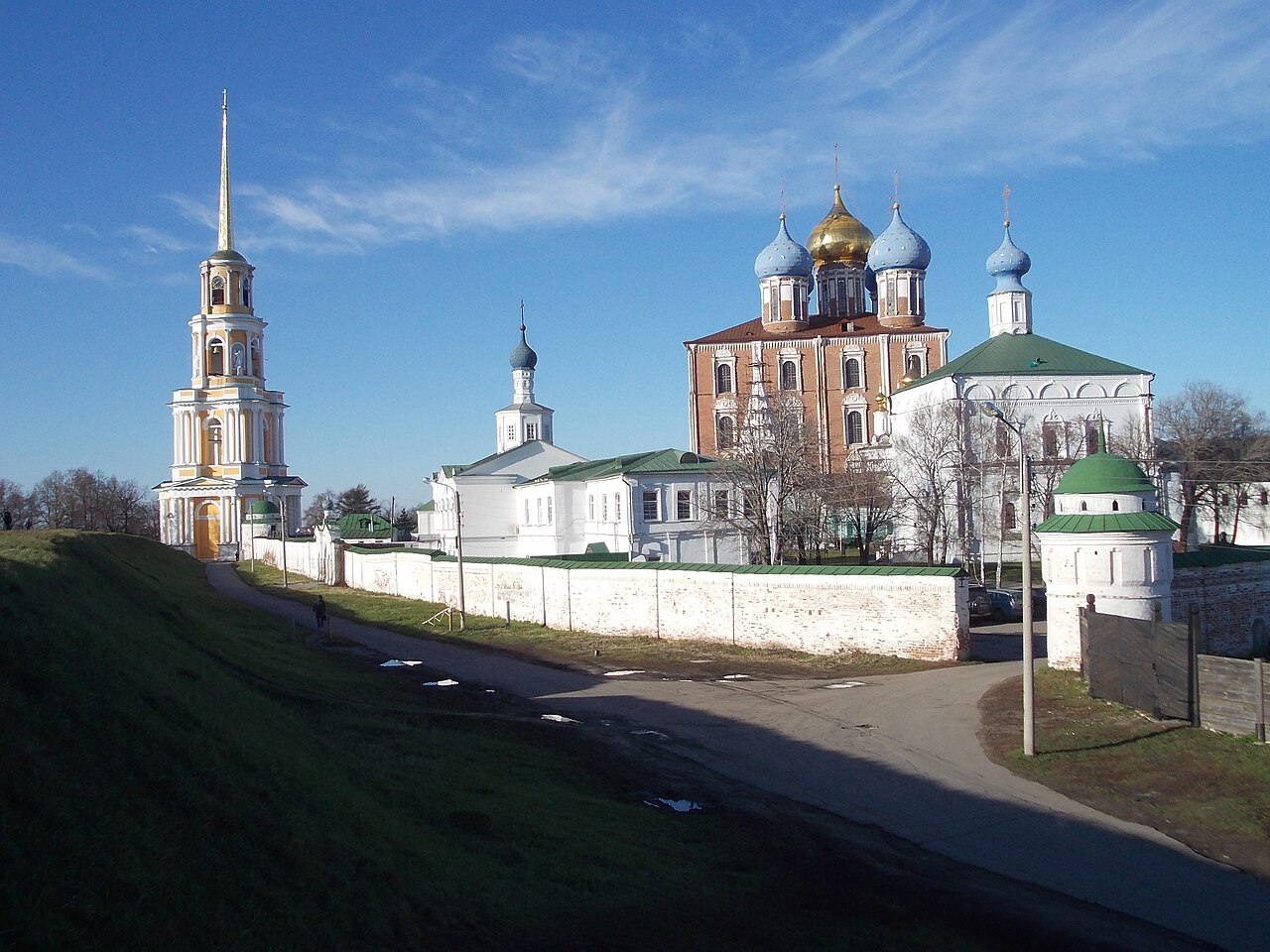
In the winter of the late 1230s, the storm that Ryazan had always feared finally broke. The armies of the Mongol Empire, having already shattered the nomadic powers of the steppe, turned north into the Rus lands, and Ryazan stood directly in their path. According to the chronicles, the princes of Ryazan sent envoys and even offered tribute, but the demands of the invaders were impossible to meet, and negotiation gave way to siege.
The Mongols surrounded the city and battered its defenses with a discipline and ferocity the defenders had never encountered. For several days the townsfolk held out behind their great ramparts, but the walls that had turned back so many raids from the steppe could not withstand a full imperial army equipped with siege engines and driven by relentless determination. When the defenses finally broke, the assault that followed was total.
The chronicles describe the fall in harrowing terms: the city was stormed, its churches burned, and its people slaughtered without mercy. The prince, his family, and the defenders perished, and a city that had counted itself among the greatest in the Rus lands was reduced to smoking ruin in a matter of days. It was one of the first great Russian cities to fall in the Mongol onslaught, and its destruction announced the catastrophe about to engulf the entire region.
The speed of the collapse stunned contemporaries. A city that had stood for generations, that had turned back countless raids and grown fat on trade, was undone in a matter of days by an enemy whose methods of war were unlike anything the Rus had faced. The Mongols combined mobility, discipline, siege technology absorbed from the civilizations they had already conquered, and a psychological strategy of overwhelming terror.
Out of this catastrophe grew one of the most powerful pieces of medieval Russian literature, the tale associated with the boyar Evpaty Kolovrat, who according to legend returned to find his city destroyed and gathered a small band of survivors to pursue the Mongol host. The story of his doomed, defiant counterattack, whether history or heroic invention, captured the anguish and pride of a people who had lost everything.
It is worth pausing on the human scale of what happened. Behind the chroniclers’ formulaic phrases about slaughter and burning lay thousands of individual deaths, families torn apart, children lost, a whole community extinguished in a few days of violence. The archaeological evidence, the burned layers and the hastily buried treasures, brings this reality home more directly than any text.
The fall of Ryazan was thus not an isolated disaster but the first blow of a transformation that would shape Russian history for centuries to come.
The Abandoned Capital
The Mongols did not stay to occupy the ruins; they moved on to devastate other cities, leaving behind a landscape of ash and death. In the aftermath, the survivors faced an impossible choice: rebuild among the graves of their kin on a site that had proven fatally exposed, or abandon the ancient capital and start again elsewhere. Slowly, the center of the principality shifted away from the doomed bluff toward a safer location upriver.
That new center eventually took on the name of the old city, and it is this successor settlement that grew into the modern city of Ryazan. The original capital, meanwhile, was never fully rebuilt. Its ramparts still stood, but the dense urban world they had once protected did not return, and over the centuries the great fortified site slipped from a living city into a field of memory and buried ruins.
For the region as a whole, the destruction marked the end of one era and the beginning of another that would last for generations. The Rus lands that survived did so under the shadow of the khans, their princes reduced to tributaries and their fortunes tied to the will of a distant court. Ryazan’s smoking ruin was, in a sense, the threshold of this new age.
The gradual abandonment of the old site was itself a kind of verdict on its position. The very location that had made Ryazan a rich frontier capital, close to the trade routes and the open grasslands, had also made it fatally exposed, and the survivors chose not to repeat the gamble.
There is a poignancy to the slow emptying of the old bluff. The ramparts that had failed to save the city outlived it, standing guard over grass and rubble long after the people they were built to protect were gone.
In choosing safety over grandeur, the survivors let the ancient capital pass quietly into the realm of ruins and remembrance, a decision that inadvertently preserved it for the archaeologists of a distant future.
The abandoned capital thus became, without anyone intending it, one of the most complete records of a medieval Rus city ever to survive, precisely because life moved elsewhere and left it undisturbed.

A Monument to a Catastrophe
For historians and archaeologists, the very completeness of Ryazan’s destruction became a strange kind of gift. Because the city was never built over by later generations, its remains lay largely undisturbed beneath the soil, a sealed layer preserving the exact moment of catastrophe. Excavations here offer an unusually clear window into the material life of a major Rus city at the height of its power, frozen at the instant the Mongols brought it to an end.
Today Old Ryazan is a protected archaeological site, its great ramparts still tracing the outline of the vanished city against the sky above the Oka. Visitors walking the earthen banks are following the same defenses the townsfolk raised and died to hold, and the treasures recovered from beneath their feet now sit in museums as reminders of a civilization that shone brightly and was extinguished in a single terrible winter.
There is a poignancy to standing on the ramparts of Old Ryazan that few archaeological sites can match. The scale of the earthworks makes plain how great the city once was, while the empty fields within them speak of how completely it was erased. It is a place that holds both the confidence of a thriving medieval capital and the silence of its sudden end.
The story of Old Ryazan has also lived on in Russian cultural memory far beyond the world of scholarship. The chronicles of its destruction and the legend of its defenders became part of the national imagination, retold in literature and celebrated as an emblem of courage in the face of overwhelming odds.
The legend of Evpaty Kolovrat, in particular, has proven remarkably durable, resurfacing across the centuries in poetry, prose, and eventually film. Whether or not such a man ever rode against the Mongol host, the story he anchors expresses something the Russian imagination has always cherished: the idea that even in total defeat, defiance itself is a kind of victory.
Modern archaeology continues to add to the picture, with each season of excavation refining our understanding of the city’s size, its buildings, and the lives of its people. Because the destruction layer is so clearly defined, researchers can date finds with unusual precision and reconstruct the final phase of the city’s existence in remarkable detail.
In this way the city that vanished in a single winter achieved a kind of immortality, remembered not for how it fell but for the defiance with which its people met their end, and preserved, layer by buried layer, as a monument to one of the great catastrophes of the medieval world.
Nearby Places
- Where the North First Met Islam, a Metropolis on the Volga: The Story of Bolgar
- The White Fortress Byzantine Engineers Built for the Khazars, Now Beneath a Reservoir: The Story of Sarkel
- Where Vikings, Slavs, and Silver Met on the Road to Byzantium: The Story of Gnyozdovo
Final Word
Old Ryazan holds both the grandeur and the fragility of the medieval Rus world in a single place. A rich capital of white stone churches and enameled treasures, it was stormed and destroyed by the Mongol army in a single winter and never fully rebuilt. Because life moved elsewhere, its ruins were sealed in the earth, preserving the exact moment of its end. Today its great ramparts still trace the outline of the vanished city above the Oka, and its story—of prosperity, catastrophe, and defiant remembrance—endures as one of the most haunting chapters in the history of early Russia.
You May Like
Mafra, the Palace a King Built From a Vow


3 thoughts on “Old Ryazan: The Rus Capital the Mongols Destroyed in a Winter”