On the upper reaches of the Dnieper, where the rivers of the Russian plain gathered the traffic of the north, there grew one of the most remarkable sites of the early medieval world: Gnyozdovo. Here, on the great water road that ran from the Baltic to Byzantium, Vikings, Slavs, and other peoples met, traded, and were buried beneath thousands of mounds. Silver flowed through its markets, craftsmen worked in its quarters, and warriors from Scandinavia mingled with the local population in a place that stands close to the very origins of the Rus. In this article we will discover Gnyozdovo, the great crossroads where the peoples of the north met on the road to Byzantium.
Table of Contents
- The Road from the Varangians to the Greeks
- The Vikings of the East
- Thousands of Burial Mounds
- A Trading Metropolis
- Workshops and Masters
- The Cradle of Early Rus
- The Archaeology of the Kurgans
- Where Cultures Merged
- Daily Life at a Crossroads
- Fire, Boat, and Burial
- Two Centuries of Research
- Nearby Places
The Road from the Varangians to the Greeks
Gnyozdovo owed its importance to its position on the great water road that medieval sources call the route from the Varangians to the Greeks, the network of rivers and portages that linked the Baltic Sea to the Black Sea and Byzantium.
This route was one of the great arteries of the medieval world, carrying goods, people, and ideas between the Scandinavian north and the wealthy south, and Gnyozdovo stood at a crucial point along it.
The site lay near the headwaters and portages of the river system, where boats had to be dragged between waterways, making it a natural stopping point and a hub of activity.
Along this road traveled the Varangians, the eastern Vikings, who used the rivers to reach the markets of Byzantium and the Islamic world, and Gnyozdovo grew up to serve their trade.
The wealth that flowed along the route made Gnyozdovo prosperous, and its position on the water road was the foundation of its role as a great trading and craft center.
The road from the Varangians to the Greeks was more than a trade route; it was a channel of cultural exchange, and Gnyozdovo was one of the places where that exchange was most intense.
Control of, or access to, this route brought power and wealth, and the growth of Gnyozdovo reflects the importance of the traffic that passed along the rivers.
The road from the Varangians to the Greeks thus made Gnyozdovo what it was, a crossroads on one of the great routes of the medieval world, where the peoples of the north met on the way to Byzantium.
The system of rivers and portages that made up this road demanded skill and endurance, for boats had to be hauled overland between waterways at the watersheds.
It was precisely at such a portage zone that Gnyozdovo arose, ideally placed to profit from the labor and commerce of the crossing.
The Vikings of the East
The Vikings are often imagined raiding the coasts of Western Europe, but they also turned east, and these eastern Vikings, the Varangians, played a central role in the history of the rivers of the Russian plain and in the story of Gnyozdovo.
The Varangians traveled the water roads in search of trade and plunder, reaching the markets of Byzantium and the Islamic world and carrying back silver, silk, and other luxuries to the north.
At Gnyozdovo, the presence of these eastern Vikings is written in the graves, where Scandinavian weapons, ornaments, and burial customs appear alongside those of the local Slavic population.
The Varangians were traders, warriors, and settlers, and their activity along the rivers helped shape the political and cultural landscape of the region in the crucial centuries of the early Middle Ages.
Their role in the emergence of the early Rus state has long been debated, but their presence at sites like Gnyozdovo is undeniable, attested by the abundant Scandinavian finds.
The eastern Vikings brought with them the culture and connections of the Scandinavian world, blending them with those of the peoples they met along the rivers.
Gnyozdovo offers some of the richest evidence for this Varangian presence in the east, a place where the material culture of Scandinavia appears far from its homeland.
The Vikings of the east were thus central to the story of Gnyozdovo, one of the peoples who met and mingled at this great crossroads on the road to Byzantium.
The eastward turn of the Vikings is sometimes overlooked, yet it was every bit as consequential as their more famous ventures to the west.
Along the rivers of the plain, the Varangians became traders and state-builders as much as raiders, and Gnyozdovo bears witness to that transformation.
Thousands of Burial Mounds
One of the most striking features of Gnyozdovo is its vast cemetery, one of the largest concentrations of burial mounds in the region, with thousands of kurgans spread across the landscape around the settlement.
These mounds are the graves of the people who lived and traded at Gnyozdovo, and their sheer number testifies to the size and importance of the community over the generations it flourished.
The burials vary widely, reflecting the diverse population of the site, with graves that follow Scandinavian customs, others that follow Slavic ones, and many that blend the two.
The contents of the graves—weapons, ornaments, tools, and everyday objects—have provided an extraordinary wealth of information about the people of Gnyozdovo and their connections.
The great cemetery is one of the richest sources for understanding the early medieval world of the Russian rivers, a vast archive of graves that maps the life of a crossroads community.
The scale of the burial ground underlines the importance of Gnyozdovo, for only a substantial and enduring community could have produced so many mounds over the centuries.
Each excavated kurgan adds to the picture, revealing details of belief, status, and cultural identity that together build a portrait of a diverse and dynamic society.
Thousands of burial mounds thus surround the site, a landscape of graves that preserves the memory of the peoples who met and lived at this great river crossroads.
Walking among the surviving mounds today, one senses the scale of the community that once thronged this crossroads, its dead numbered in the thousands.
Each mound is a small archive, preserving in its contents the identity and connections of the person laid beneath it.
A Trading Metropolis
Gnyozdovo was above all a trading center, a metropolis of commerce on the great water road, where goods from across the medieval world changed hands in busy markets.
Silver flowed through Gnyozdovo in abundance, arriving as coins from the Islamic world in exchange for the furs, slaves, and other goods that the north supplied, and hoards of this silver have been found at the site.
The trade connected Gnyozdovo to a vast network stretching from Scandinavia to Byzantium and the Islamic caliphate, and the finds from the site reflect this extraordinary reach.
Weights, scales, and coins recovered from Gnyozdovo attest to the commercial activity that made it prosperous, the everyday tools of merchants who dealt in silver and goods.
The market drew people of many origins, and the wealth of the trade supported a substantial and diverse community that lived and worked at the crossroads.
This commerce was the engine of Gnyozdovo’s importance, for the traffic that passed along the water road brought both wealth and the connections that made the site a hub.
The scale of the trade is reflected in the richness of the finds, from imported luxuries to the tools of commerce, painting a picture of a genuine trading metropolis.
A trading metropolis on the road to Byzantium, Gnyozdovo drew its wealth and importance from the commerce that flowed along the rivers between the north and the south.
The silver dirhams that reached Gnyozdovo had often traveled thousands of kilometers from the mints of the Islamic world, a vivid measure of the reach of its trade.
In this respect Gnyozdovo belonged to the same vast network of silver and furs that linked the whole of the early medieval north.
Workshops and Masters
Gnyozdovo was not only a place of trade but also of production, home to workshops where skilled craftsmen worked in metal, bone, and other materials, producing goods for local use and for the wider market.
The craftsmen of Gnyozdovo made ornaments, tools, and weapons, and the evidence of their work—from workshop debris to finished objects—has been recovered in abundance from the site.
The quality of the craftsmanship reflects a sophisticated community with access to materials and skills drawn from across the trading network that Gnyozdovo served.
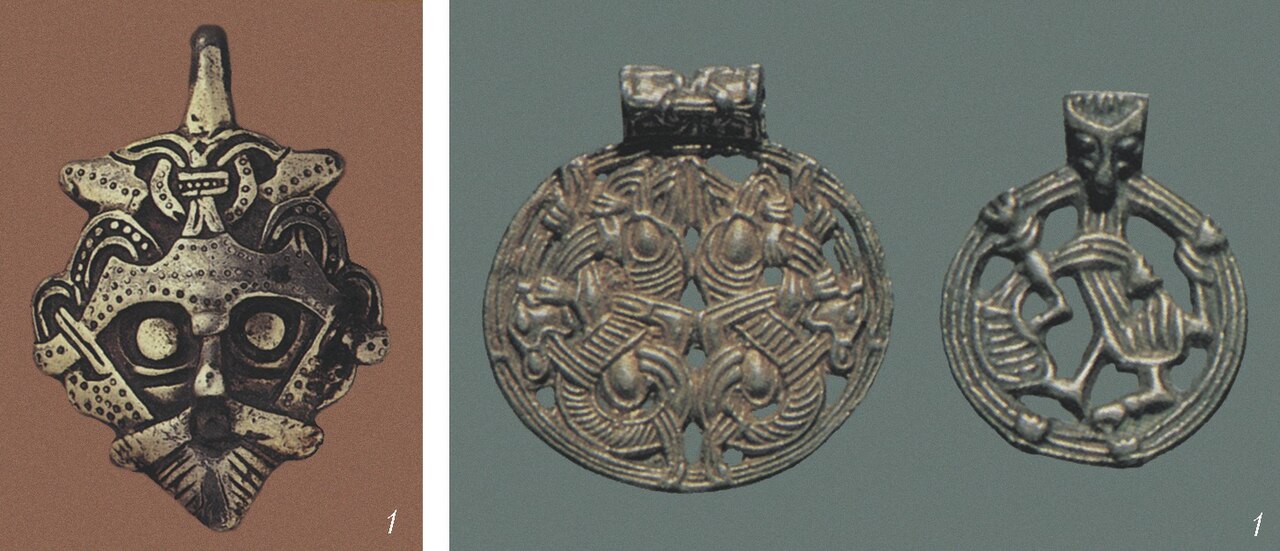
Metalworking in particular flourished, and the products of these workshops blended influences from Scandinavia, the Slavic world, and beyond, reflecting the crossroads character of the site.
The presence of skilled masters underlines that Gnyozdovo was a genuine center of production as well as exchange, a place where goods were made as well as traded.
The workshops served the needs of a diverse and prosperous community and produced goods that entered the trade flowing along the water road.
The craft finds from Gnyozdovo help archaeologists understand the technologies and artistic traditions of the early medieval world of the Russian rivers.
Workshops and masters made Gnyozdovo a center of skill as well as commerce, a place where the goods of many traditions were produced by the hands of its craftsmen.
The blending of decorative styles in the products of these workshops is itself a form of evidence for the cultural fusion that defined the site.
The Cradle of Early Rus
Gnyozdovo stands close to the origins of the Rus, the people and state from which Russia, Ukraine, and Belarus would eventually emerge, and it offers some of the richest evidence for the formative period of that world.
The blending of Scandinavian and Slavic elements at Gnyozdovo mirrors the processes that scholars believe lay behind the emergence of the early Rus, making the site a key witness to those crucial centuries.
The finds from Gnyozdovo illuminate the society in which the Rus took shape, a world of trade, warfare, and cultural fusion along the great rivers of the plain.
Its proximity to a major early center gives Gnyozdovo particular importance in the debate over the origins of the Rus and the roles of the various peoples who contributed to their emergence.
The site preserves, in its graves and its finds, the material record of the mixed society from which the early Rus state would grow, a society neither purely Scandinavian nor purely Slavic.
For historians of the early Rus, Gnyozdovo is an indispensable source, offering direct evidence for a period that is otherwise known mainly from later and often unreliable texts.
The importance of the site lies not only in its wealth but in its position at a formative moment, close to the very beginnings of one of the great states of the medieval and modern world.
As a cradle of the early Rus, Gnyozdovo holds a significance that reaches far beyond its own history, standing near the origins of nations that would shape the future of a vast region.
The debate over the origins of the Rus has long been one of the most contested in the history of the region, and Gnyozdovo sits at the very heart of it.
Whatever position one takes, the evidence of the site shows beyond doubt that Scandinavians and Slavs lived and were buried together at this crucial crossroads.
The Archaeology of the Kurgans
The archaeology of Gnyozdovo has centered on its great cemetery, and the excavation of the thousands of kurgans has been one of the major undertakings in the study of the early medieval Russian rivers.
Generations of archaeologists have opened and studied the mounds, recording the burials and the objects they contained, and building up a detailed picture of the community that produced them.
The excavations have revealed the diversity of the burials, from Scandinavian to Slavic to blended forms, and the wealth of grave goods that testify to the trade and status of the buried.
The finds have included weapons, ornaments, tools, and everyday objects, as well as evidence for burial customs such as cremation and the use of boats in the funerary rites.
The scale of the cemetery has made its study a long-term project, with each season adding new graves and new information to the growing body of knowledge.
The archaeology of the kurgans has been complemented by the study of the associated settlement, giving a fuller picture of the life as well as the death of the community.
The results have made Gnyozdovo one of the best-studied sites of its kind, a reference point for the archaeology of the early Rus and the Viking east.
The archaeology of the kurgans thus lies at the heart of what we know about Gnyozdovo, a vast burial ground whose careful study has illuminated a formative age.
The careful recording of grave contents over many decades has allowed researchers to trace patterns across the whole cemetery, revealing the structure of the community.
Where Cultures Merged
Gnyozdovo’s legacy is above all as a place where cultures merged, where Scandinavians, Slavs, and others met and mingled along the great water road, producing the fusion that lay at the heart of the early Rus world.
The site preserves the material evidence of this merging, with objects and burial customs from different traditions appearing side by side and blending into new forms.
This cultural fusion was not merely a mixing of goods but a meeting of peoples, whose interaction along the rivers helped shape the society and eventually the state of the Rus.
As a witness to this process, Gnyozdovo holds an important place in the history of the region, illuminating the formative encounters that produced a new civilization.
The blending of cultures at Gnyozdovo reflects the interconnectedness of the medieval world, where a site on the Dnieper could bring together the peoples of Scandinavia, the Slavic lands, and beyond.
For scholars, the site is a treasure, its finds offering direct evidence for the cultural interactions that are otherwise difficult to trace in the historical record.
The legacy of Gnyozdovo is thus a legacy of encounter and fusion, of the meeting of peoples that shaped the early history of a vast region.
Where cultures merged, a new world was born, and Gnyozdovo preserves the memory of that merging, a crossroads where the peoples of the north met on the road to Byzantium.
Daily Life at a Crossroads
Daily life at Gnyozdovo revolved around the river and the trade it carried, with the settlement swelling and quieting according to the seasons and the movement of boats along the water road.
The community was diverse, home to traders, craftsmen, and warriors of various origins, and the rhythms of commerce and craft shaped the days of its inhabitants.
Craftsmen worked in their quarters, merchants weighed silver and bargained over goods, and travelers passed through on their way along the great route between the Baltic and Byzantium.
The everyday objects recovered from the site—combs, weights, beads, tools, and ornaments—bring the daily life of this crossroads community vividly to life.
Food and household goods reflect the mixed population and the connections of the site, drawing on local resources and on the goods that flowed through the trade.
Life at Gnyozdovo was as much that of a waystation as of a permanent home, a place shaped by the constant movement of people and goods along the rivers.
The blending of customs is visible even in the details of daily life, where the traditions of Scandinavia and the Slavic world met and mingled.
Daily life at the crossroads was the life of a diverse, mobile, and prosperous community, its routines shaped by the trade and traffic of the great water road.
The seasonal rhythm of the river trade meant that the settlement’s population swelled and shrank through the year, giving it the character of both a home and a waystation.
Fire, Boat, and Burial
The burial customs of Gnyozdovo are among the most fascinating aspects of the site, revealing a rich variety of funerary practices that reflect the diverse origins of its people.
Cremation was widespread, and many of the mounds cover the remains of funeral pyres, a practice associated with both Scandinavian and local traditions of the age.
Some burials show evidence of the use of boats in the funerary rites, a custom with strong Scandinavian associations, underlining the Viking presence at the site.
The grave goods placed with the dead—weapons, ornaments, tools, and vessels—reflect the status, identity, and beliefs of the buried, and the connections of their community.
The variety of burial forms, from cremation to inhumation, from Scandinavian to Slavic customs, maps the diversity of the population and the blending of their traditions.
These funerary practices offer a window onto the beliefs of the people of Gnyozdovo, their ideas about death and the afterlife, expressed in fire, boat, and mound.
The care and richness of the burials testify to a community that honored its dead and that possessed the wealth to provide them with elaborate grave goods.
Fire, boat, and burial thus mark the graves of Gnyozdovo, a rich funerary tradition that reflects the diverse and dynamic society of this river crossroads.
The variety of funerary rites, sometimes side by side in the same cemetery, is one of the clearest signs of the mixed and tolerant society that flourished here.
Two Centuries of Research
Gnyozdovo has been the subject of archaeological research for around two centuries, one of the longest-studied sites of its kind, and this sustained attention has produced an immense body of knowledge.
Early investigations drew attention to the great cemetery and its rich finds, and successive generations of archaeologists have expanded and refined the study of the site.
The long history of research has seen the excavation of many hundreds of mounds and the study of the associated settlement, building a detailed picture over time.
Changing methods and questions have shaped the research, from the early focus on spectacular finds to the modern interest in the society, economy, and cultural interactions of the site.
The accumulated results have made Gnyozdovo a reference point for the archaeology of the early Rus and the Viking east, its finds cited in countless studies.
Modern techniques continue to add to the picture, extracting new information from old finds and new excavations alike, and refining our understanding of the site.
The two centuries of research have transformed Gnyozdovo from a landscape of mysterious mounds into one of the best-understood sites of its age.
Two centuries of research have thus made Gnyozdovo a cornerstone of our knowledge of the early medieval Russian rivers, a site whose long study continues to bear fruit.
The remarkable continuity of research at Gnyozdovo means that finds made long ago can be re-examined with modern methods, continually enriching our understanding.
Nearby Places
- Where the North First Met Islam, a Metropolis on the Volga: The Story of Bolgar
- The White Fortress Byzantine Engineers Built for the Khazars, Now Beneath a Reservoir: The Story of Sarkel
- The Rus Capital That Fell to the Mongols in a Single Winter: The Story of Old Ryazan
Final Word
Gnyozdovo was the great crossroads where Vikings, Slavs, and silver met on the road to Byzantium. On the upper Dnieper, along the water road that ran from the Baltic to the Black Sea, it grew into a trading metropolis and a center of craft, surrounded by thousands of burial mounds that preserve the memory of its diverse people. Standing close to the origins of the Rus, it offers some of the richest evidence for the fusion of cultures from which a new civilization arose. Two centuries of research have made it one of the best-understood sites of its age, a place where the peoples of the north merged on the great road to the south.
You May Like
Mafra, the Palace a King Built From a Vow


3 thoughts on “Gnyozdovo: Where Vikings and Slavs Met on the Road to Byzantium”