On a green island in a lake west of modern Stockholm, sheep now graze among grassy mounds where, more than a thousand years ago, one of the busiest marketplaces of the Viking world once stood. This is Birka, Sweden’s first town, a bustling trading center of the Viking Age where furs from the northern forests, silver from the distant caliphate, silk from the Byzantine world, and slaves, weapons, and craft goods all changed hands. For some two centuries Birka was a node in a trade network that stretched from the North Atlantic to the Middle East, a place where the Scandinavian north connected to the wealth of the wider world, and it was here, too, that Christianity first reached the Swedes.
Birka is one of the most important archaeological sites of the Viking Age, and its significance far exceeds its modest physical remains. The town itself is long gone, leaving little above ground but the grassy ramparts of its defenses and the vast field of burial mounds that surrounds it, but beneath the soil and in those graves lies a wealth of evidence that has done more than almost anything else to illuminate the world of Viking Age trade, craft, and daily life. To understand how the Vikings were not only raiders but traders, craftsmen, and travellers connected to half the known world, there is no better place to begin than Birka.
Contents
- The Island of Björkö
- Sweden’s First Town
- A Crossroads of the Viking World
- Furs for Silver: The Eastern Trade
- Inside the Town: Craft and Daily Life
- A Landscape of the Dead
- The Warrior Grave That Surprised the World
- Ansgar and the Coming of Christianity
- The Sudden End of Birka
- Excavating the Viking Town
- Birka Today
- Nearby Places
- Final Word
The Island of Björkö
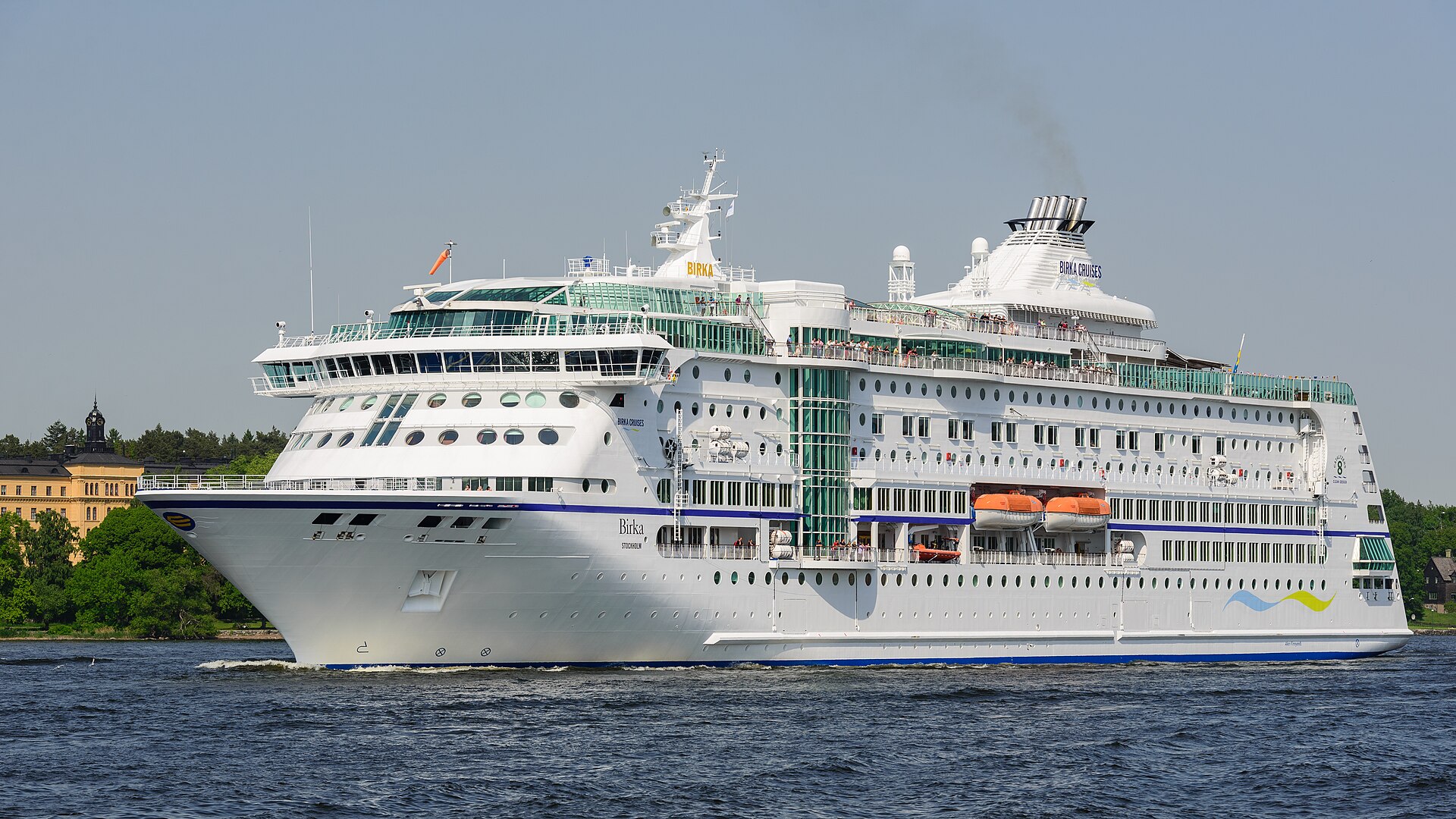
Birka stood on the island of Björkö, whose name means birch island, in Lake Mälaren, the large lake that reaches inland from the Baltic Sea to the west of present-day Stockholm. In the Viking Age the geography of the region was somewhat different from today, for the land has risen since then in the slow rebound that followed the melting of the Ice Age glaciers, and water levels were higher, making the island more accessible by boat and its harbor deeper than the shallow shoreline that now surrounds it. The position was carefully chosen: an island was defensible, and Lake Mälaren connected, through its outlet to the Baltic, to the great sea routes of the Viking world.
This location gave Birka both security and access. Set on an island, the town was protected from easy overland attack, yet its harbor opened onto a network of waterways that led out to the Baltic and from there to the wider world: south to the lands of the Slavs and the routes down the great rivers of Russia toward Byzantium and the Islamic east, west toward Denmark, the North Sea, and the Atlantic, and across the Baltic to the trading centers of its eastern and southern shores. Birka sat at a hub where the waterways of the Mälaren region met the sea lanes of the north, ideally placed to become a center of trade.
The island setting also shaped the character of the place. Birka was, above all, a maritime town, oriented toward its harbor and the water, its life bound up with ships and the goods they carried. Boats drawn up on the shore, merchants and travellers arriving and departing, cargoes being loaded and unloaded, these were the everyday realities of the town. The rise of the land since the Viking Age has left the old harbor high and dry and turned Björkö into the quiet, pastoral island it is today, but in Birka’s heyday the water was everything, the source of the connections that made the town rich and important.
Sweden’s First Town
Birka is often called Sweden’s first town, and with good reason. It was founded in the eighth century AD, around the year 750, and for roughly the next two centuries it was the most important urban center in the region, a true town in a land that had previously known only farms, villages, and seasonal markets. This makes Birka a place of great importance in the history of Scandinavia, marking the beginnings of urban life in Sweden and the emergence of the kind of permanent, specialized, trade-based community that the term town implies. Its foundation was part of a wider development of trading towns across the Viking world.
The town seems to have been a planned settlement, probably established under royal authority to serve as a center for trade, and it was closely connected to the power of the early Swedish kings, whose seat lay nearby. The proximity of royal power was no accident: a trading town was a source of wealth through the taxes and tolls that could be levied on commerce, and it was in the interest of rulers to found, protect, and control such places. Birka was defended by an earthen rampart around the town and by a hillfort on the high ground beside it, and its harbor was equipped for the ships that were the lifeblood of its trade.
At its height Birka was home to perhaps several hundred to around a thousand permanent inhabitants, a substantial community by the standards of the time and place, swelled at trading seasons by visiting merchants and travellers. Its population included not only traders but a wide range of craftspeople and specialists, the kind of concentrated, non-agricultural population that defines a town. Birka was thus not merely a market but a genuine urban community, the first of its kind in Sweden, and its emergence marks a turning point in the social and economic development of the region, the moment when Scandinavia began to develop towns of its own.
A Crossroads of the Viking World
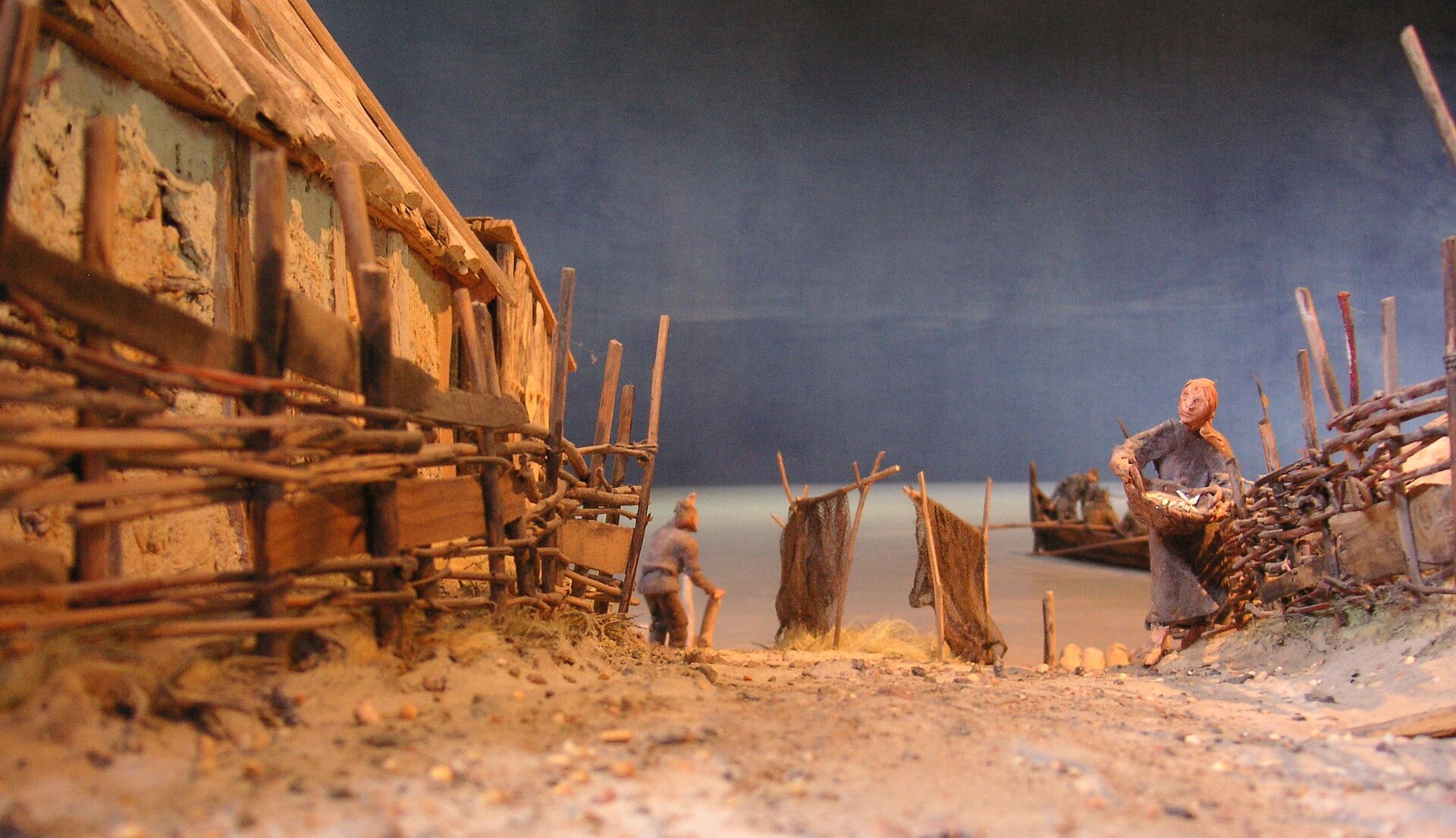
The whole purpose of Birka was trade, and its remains testify to a commerce that reached across an astonishing expanse of the medieval world. The Vikings are often remembered chiefly as raiders, and raiding was indeed part of their world, but they were also among the most enterprising traders of their age, and towns like Birka were the peaceful, commercial face of the Viking expansion. Through Birka flowed the goods of the north, exchanged for the products of distant lands, in a network that linked Scandinavia to western Europe, to the Slavic and Baltic lands, and, most spectacularly, to the wealth of the Islamic caliphate and the Byzantine Empire far to the east and south.
The finds from Birka’s graves and settlement read like an inventory of the medieval world’s trade. There is silver from the Islamic lands, much of it in the form of the dirham coins that flowed north in enormous quantities in exchange for northern goods. There is silk and other luxury textiles from the Byzantine world and beyond, glass, fine metalwork, beads of many origins, and objects and materials from across Europe and Asia. These exotic imports, found on a small island in a Swedish lake, are vivid proof of how far Birka’s connections reached and how deeply the Viking north was integrated into the trade networks of the wider world.
In return, the north supplied goods that were prized elsewhere, above all the products of its forests and wild lands. Furs, from squirrel and marten to more valuable pelts, were a staple export, in demand in the markets of the south and east. There were also products such as walrus ivory, amber, honey, wax, and iron, and, in the darker currents of Viking commerce, slaves, captives taken in raids and sold in the markets of the south and east. Through this exchange of northern raw materials for southern silver and luxuries, Birka grew rich, a small but vital hub in the vast commercial world of the Viking Age.
Furs for Silver: The Eastern Trade
The most remarkable of Birka’s trade connections ran eastward, along the great river routes that led from the Baltic through the lands of the Slavs to the Black and Caspian Seas and the rich markets beyond. It was along these routes that Scandinavian traders and adventurers, known in the east as the Rus, travelled south, carrying northern goods to exchange for the silver of the Islamic caliphate. This eastern trade was one of the defining features of the Viking Age in Scandinavia, and Birka was one of its principal northern terminals, a place where the wealth of the east entered the Swedish world.
The scale of this trade is measured above all in silver. Vast quantities of Islamic silver coins, dirhams, flowed north in the ninth and tenth centuries in exchange for furs, slaves, and other northern goods, and they have been found in enormous numbers across Scandinavia and the Baltic. At Birka, this silver appears in graves and hoards, and the town clearly thrived on the trade that brought it. The Vikings valued the silver largely by weight, using it as bullion, cutting coins and ornaments into pieces and weighing them on the small folding scales that are themselves a characteristic find of Viking trading sites, including Birka.
This eastern connection tied Birka into a chain of trading centers that stretched along the rivers of what is now Russia and Ukraine, places where Scandinavians, Slavs, and others met and exchanged goods on the road to Byzantium and the Islamic world. Birka was the western Baltic end of this great artery of commerce, drawing the silver of the caliphate into the heart of Sweden. The town’s prosperity, and much of the wealth displayed in its graves, ultimately derived from this remarkable long-distance trade, which linked a Swedish island to the markets of Baghdad and Constantinople across thousands of miles of river, sea, and steppe.
Inside the Town: Craft and Daily Life
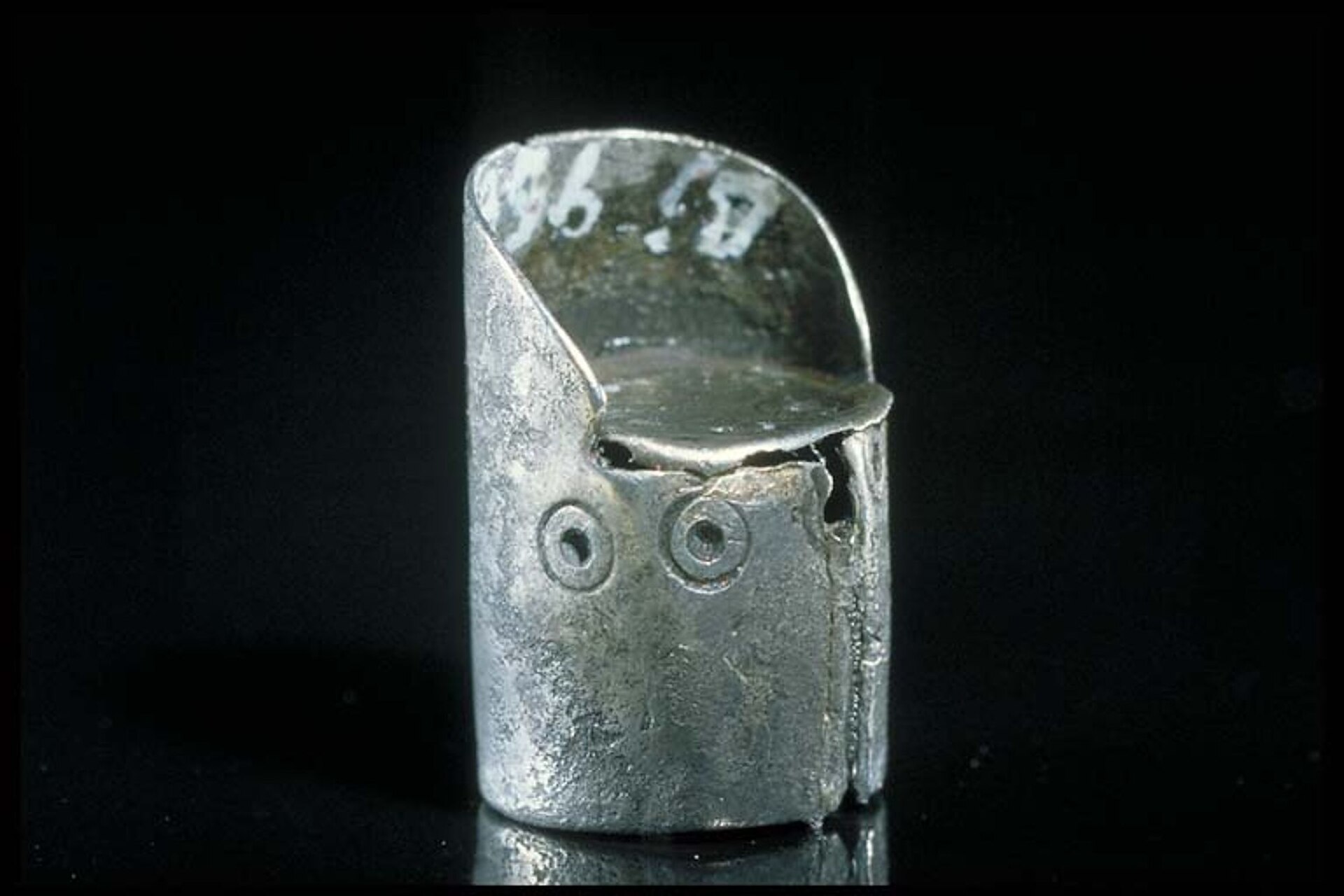
Birka was not only a marketplace but a center of production, home to a community of skilled craftspeople whose work has left abundant traces in the archaeological record. The settlement area, known as the Black Earth from the dark, occupation-rich soil that marks it, has yielded evidence of a wide range of crafts practiced in the town. Here worked smiths, jewelers, comb-makers, bead-makers, and other artisans, turning imported and local raw materials into finished goods for trade and for the inhabitants themselves. The debris of their workshops, the offcuts, failed pieces, tools, and raw materials, allows archaeologists to reconstruct the crafts of the Viking town in detail.
Among the most characteristic products were combs made from antler and bone, a ubiquitous item of Viking daily life, and beads and ornaments made from glass, amber, and other materials. Metalworkers produced jewelry and fittings, sometimes of fine quality, and the town’s craftspeople worked in a variety of materials drawn from both local sources and the far-flung trade networks that supplied Birka. This concentration of specialized craft production is one of the marks of a true town, where people made their living not from farming but from manufacture and trade, and it distinguishes Birka sharply from the rural society around it.
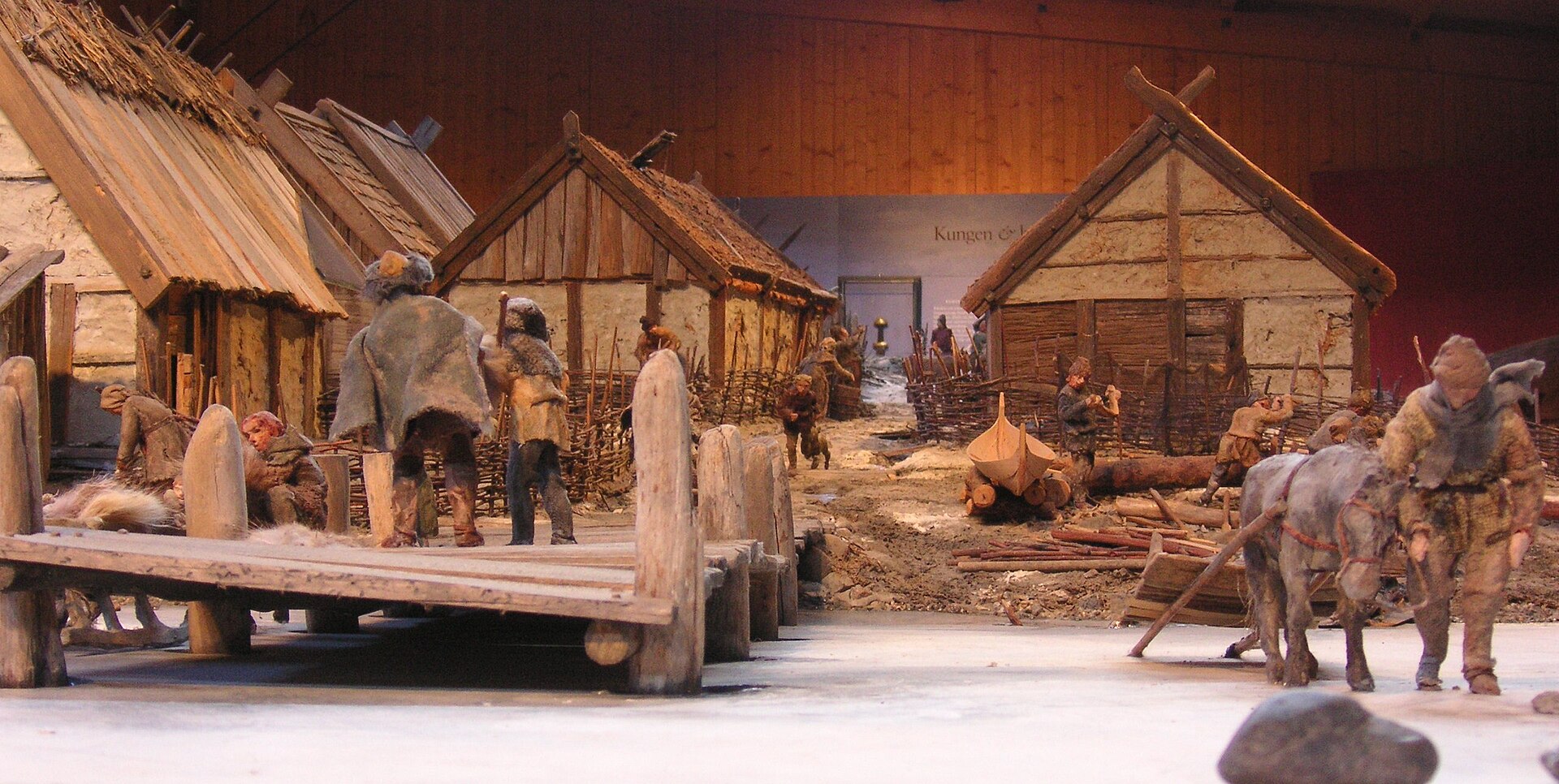
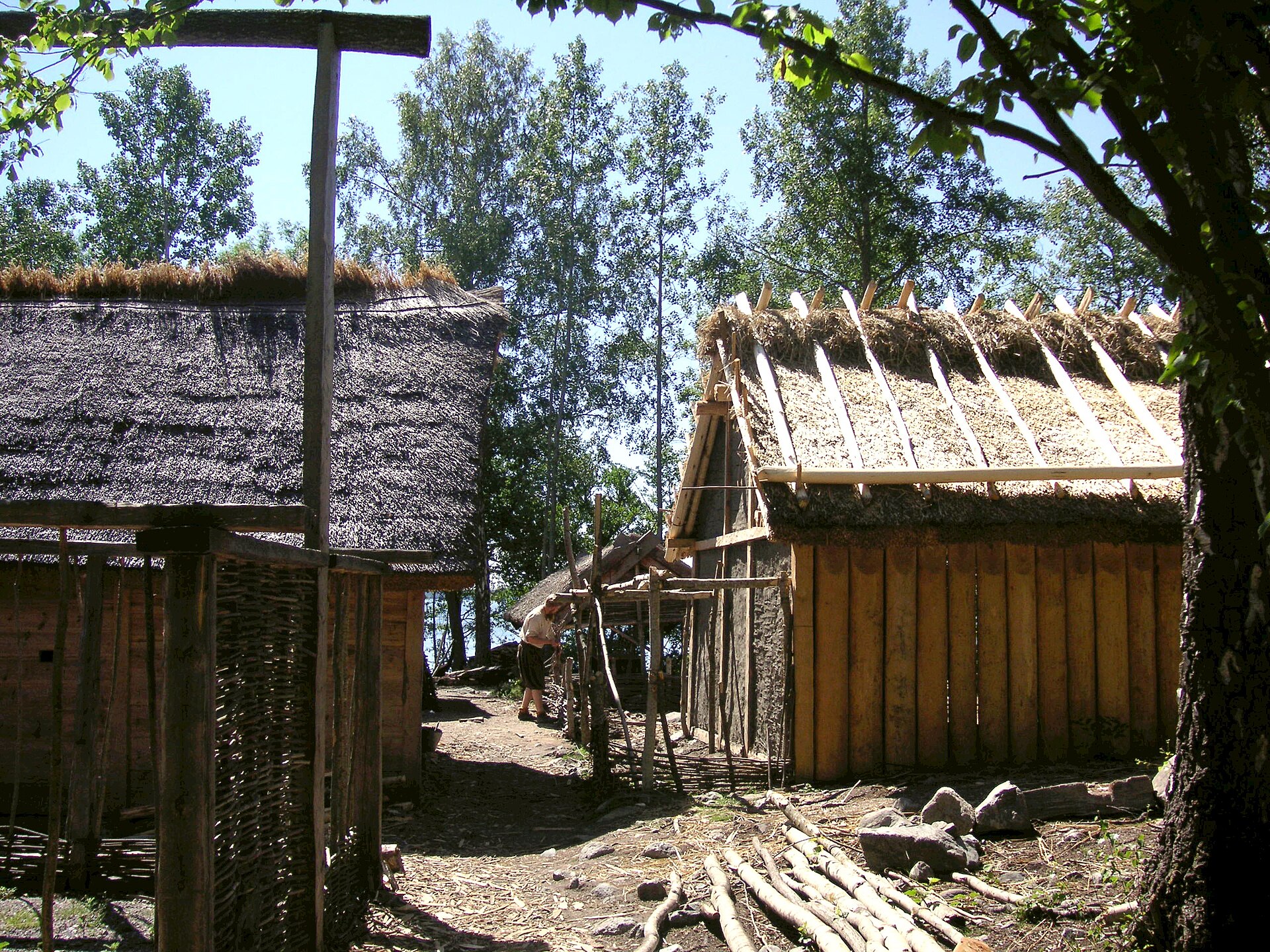
Daily life in Birka can be reconstructed from the finds in the settlement and graves: the houses people lived in, the food they ate, the clothes they wore, the tools they used, and the objects they treasured. The inhabitants lived in timber buildings clustered within the town’s rampart, close to the harbor and their workshops. They were a mixed and cosmopolitan population, including not only Scandinavians but visitors and perhaps residents from other lands, reflecting the town’s role as an international marketplace. Through the archaeology of Birka, the ordinary life of a Viking Age town, its work, its trade, and its people, comes vividly into view.
A Landscape of the Dead
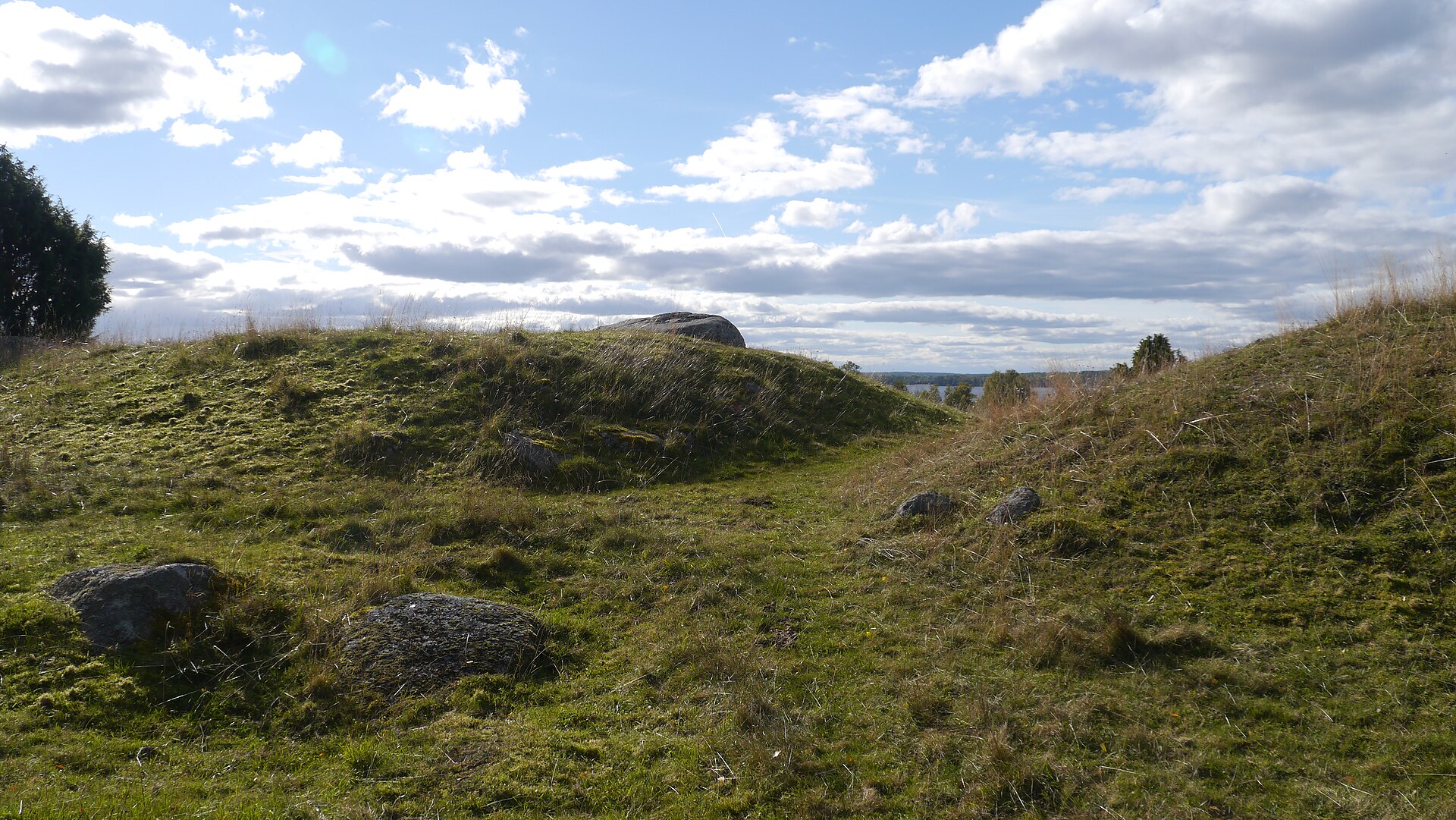
The most visible remains of Birka today are not the town itself but the graves that surround it, for the island is covered with one of the largest and most important Viking Age cemeteries known. Around and beyond the settlement lie well over a thousand burial mounds, along with other graves, spread across several grave fields, of which the great cemetery known as Hemlanden is the largest. These grassy mounds, rising in their hundreds across the island, form a remarkable landscape of the dead, and they have been the source of much of what we know about Birka and about the Viking Age more generally.
The graves of Birka reflect the diversity and connections of the town’s population. The dead were buried in a variety of ways, including both cremation, common in the Scandinavian tradition, and inhumation, burial of the unburned body, which became more frequent over time and may reflect outside influences and the arrival of new customs. Some were buried in simple graves, others with considerable wealth, and the range of burial practices and grave goods reveals differences of status, origin, and belief within the community. The presence of both traditional pagan burials and graves showing possible Christian influence captures Birka at a moment of religious transition.
The grave goods recovered from these burials are the treasure of Birka. Weapons, jewelry, tools, imported luxuries, coins, and everyday objects accompanied the dead, and together they provide an unrivalled cross-section of Viking Age material culture and trade. It is from these graves that much of the exotic material, the eastern silks, the Islamic silver, the beads and ornaments from distant lands, has come, along with the weapons and tools that reveal the lives of the town’s inhabitants. The cemetery of Birka is, in effect, a vast archive of the Viking Age, and its excavation has been fundamental to the study of the period.
The Warrior Grave That Surprised the World
One grave at Birka has become world-famous, and its story illustrates both the richness of the site and the way modern science continues to transform our understanding of the past. In the late nineteenth century, excavators uncovered a grave, known by its catalogue number as Bj 581, that was clearly the burial of a high-status warrior. It was furnished with a full set of weapons, a sword, an axe, a spear, arrows, a knife, and shields, along with two horses and, strikingly, a set of gaming pieces and a board, objects associated with the strategy and command of warfare. By every conventional measure, it was the grave of a professional warrior of high rank.
For more than a century it was assumed, without question, that the occupant was a man, for the assumption that a Viking warrior must be male was deeply ingrained. But in the twenty-first century, careful osteological analysis followed by DNA testing of the skeleton produced a startling result: the person buried in this classic warrior grave was biologically female. The finding, published to considerable attention and debate, challenged long-held assumptions about gender and warfare in the Viking Age and sparked an intense scholarly and public discussion about what the grave meant and how it should be interpreted.
The case of Bj 581 has become a touchstone in debates about women’s roles in Viking society, about the relationship between the sex of a body and the gender roles it may have held in life, and about the assumptions that archaeologists bring to their interpretations. Scholars continue to discuss exactly what the grave tells us, and interpretations vary, but the essential point is powerful and undisputed: a body buried with the full honors of a warrior at Birka was female. Whatever the full explanation, the grave stands as a vivid reminder that the past was more complex than our assumptions, and that new science can overturn certainties a century old.
Ansgar and the Coming of Christianity
Birka holds a special place in the religious history of Sweden, for it was here that Christianity first came to the Swedes. In the ninth century, a Frankish monk named Ansgar, later honored as the Apostle of the North, travelled to Birka on a mission to bring the Christian faith to the pagan Scandinavians. His journeys and work at Birka are recorded in a biography written by his successor, which is one of the most important written sources for the town and one of the very few contemporary accounts of Viking Age Sweden, giving us a rare glimpse of Birka through the eyes of a visitor from the Christian south.
Ansgar’s mission met with mixed success. He was permitted to preach and to build a church, and he made some converts, including people of importance, but Christianity did not take firm or lasting root in Birka during his lifetime, and the old pagan religion remained strong. The town stood at a genuine crossroads of belief, where the traditional gods of the north and the new faith from the south met, and the graves of Birka, with their mixture of pagan and possibly Christian practices, reflect this moment of religious encounter and transition. The full conversion of Sweden would come only later, but it was at Birka that the process began.
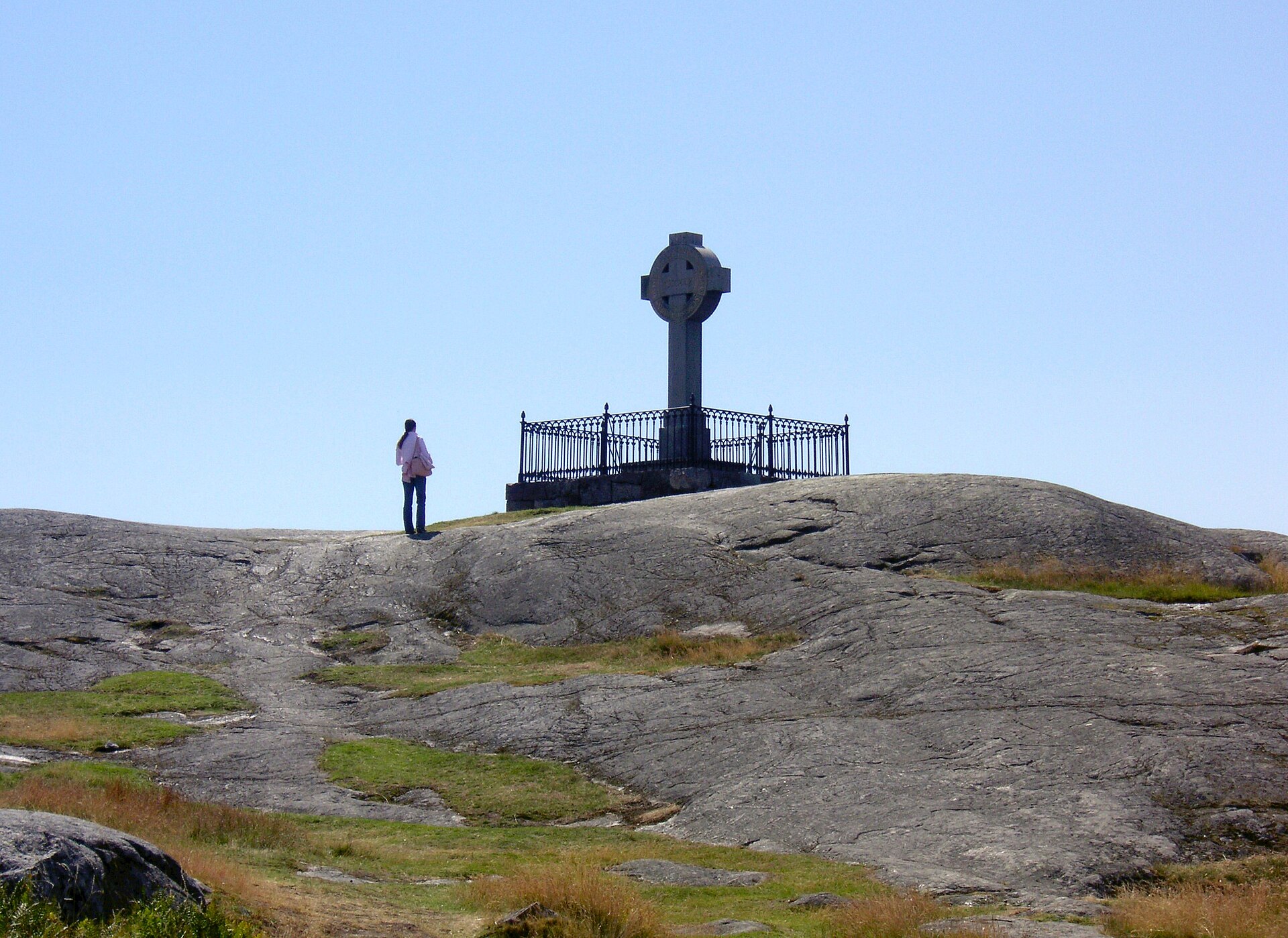
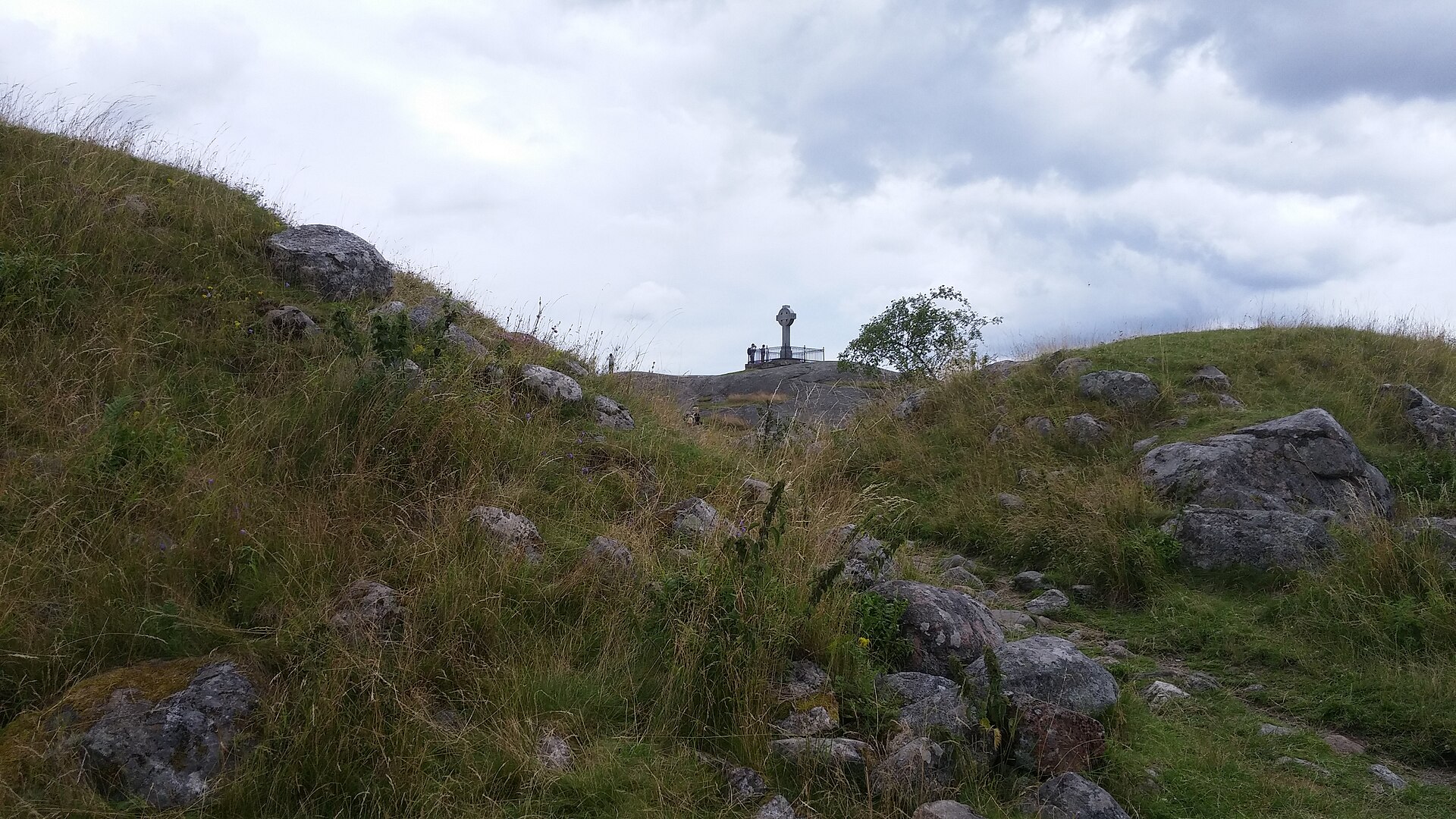
The memory of Ansgar’s mission is preserved at Birka today by a monument, a large cross raised on the heights of the island in the nineteenth century to commemorate the coming of Christianity to Sweden through his work. Standing above the grave fields and the site of the vanished town, it marks Birka’s importance as the place where the Christian faith first reached the Swedes, a significance quite apart from its role as a trading center. The written account of Ansgar’s mission and the archaeological evidence of religious change together make Birka a key site for understanding the slow, complex Christianization of the Viking north.
The Sudden End of Birka
After some two centuries of prosperity, Birka came to an end in the second half of the tenth century, and its decline appears to have been relatively rapid. Around the year 970 or so, the town seems to have been largely abandoned, and it was never revived. The reasons for this sudden end are not entirely certain and have been much discussed, but several factors likely contributed, combining to undermine the conditions that had made Birka flourish and to render its position no longer viable as a center of trade.
One important factor was almost certainly the changing geography of the land itself. The slow rebound of the land after the Ice Age was gradually raising the level of the ground relative to the water, and over time this made the waterways around Birka shallower and its harbor harder to use for the ships on which its trade depended. As the approaches silted and the water retreated, the island became less accessible, undermining the maritime connections that were the town’s lifeblood. What had been an ideal harbor was slowly becoming unusable, a serious problem for a town that lived by the sea.
Changes in the wider patterns of trade also played a part. The flow of Islamic silver that had enriched the Viking world diminished in the later tenth century as conditions in the east changed, disrupting the eastern trade on which Birka had thrived. At the same time, the rise of a new trading center nearby, the town of Sigtuna, which took over Birka’s role in the region, drew commerce away. Whatever the exact combination of causes, geographic, economic, and political, the result was that Birka was abandoned, its functions passing to other places, and Sweden’s first town fell silent, leaving its grave fields and ramparts to the grass.
Excavating the Viking Town
Because Birka was abandoned and never built over, its remains lay undisturbed beneath the island’s soil, and this has made it an archaeological treasure of the first importance. The site has attracted the attention of antiquarians and archaeologists since the seventeenth and eighteenth centuries, but the great campaigns of excavation began in the nineteenth century, when the Swedish archaeologist Hjalmar Stolpe undertook extensive digging at Birka, above all in the grave fields. Over many years Stolpe excavated more than a thousand graves, recording his work and recovering the vast quantity of finds that form the foundation of Birka studies to this day.
Stolpe’s excavations of the cemeteries brought to light the weapons, jewelry, imported luxuries, and everyday objects that revealed the wealth, connections, and daily life of the Viking town, and they established Birka as a key site for the study of the Viking Age. Later archaeologists extended the work to the settlement area, the Black Earth, and to the harbor and defenses, using increasingly sophisticated methods to reconstruct the town, its trade, and its inhabitants. Modern research has applied scientific techniques, from the analysis of skeletons and DNA to the study of trade goods and their origins, continually deepening and sometimes overturning earlier understandings, as the famous case of the female warrior grave dramatically showed.
Much of Birka still remains unexcavated, preserved beneath the ground for future study, and research continues at the site. The finds from Birka are held in Swedish museums, above all the Swedish History Museum in Stockholm, where the treasures of the Viking town can be seen. Together, the long history of excavation and the ongoing research have made Birka one of the best-studied and most important Viking Age sites in the world, a place whose buried evidence has illuminated not only the history of Sweden’s first town but the whole character of the Viking Age as an era of trade, craft, and far-reaching connection.
Birka Today
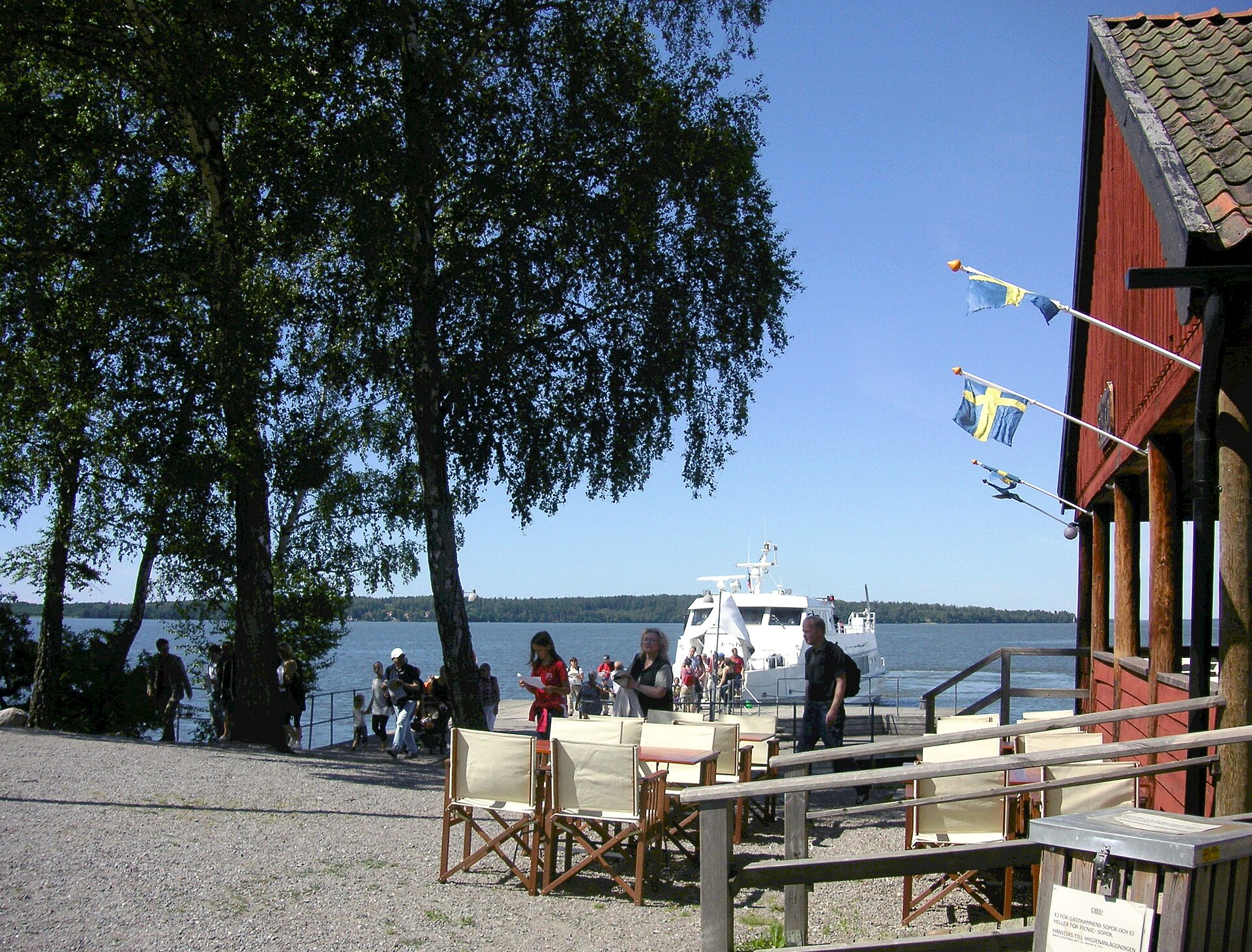
Today Birka is a peaceful, beautiful place, a green island in Lake Mälaren reached by boat from Stockholm, and one of Sweden’s most cherished heritage sites. Visitors arriving at Björkö find not the bustling town of the Viking Age but a tranquil landscape of meadows and grassy burial mounds, with the ramparts of the old defenses and the hillfort still traceable on the ground, and the great cross commemorating Ansgar rising on the heights. A museum on the island tells the story of Birka and displays finds and reconstructions, helping visitors imagine the vanished town, and reconstructed Viking Age buildings give a sense of what life there was like.
The experience of visiting Birka is one of atmosphere and imagination as much as of standing monuments. Walking among the hundreds of burial mounds of the Hemlanden grave field, with the lake all around and the sites of the town and harbor nearby, one senses the depth of the place’s history and the scale of the community that once lived and was buried here. It is a landscape that rewards reflection, where the quiet of the modern island overlies the memory of one of the busiest marketplaces of the Viking north, and where the graves of a thousand years ago still shape the very contours of the ground.
Birka, together with the neighboring site of Hovgården on an adjacent island, which was connected to the royal power that oversaw the town, was inscribed as a UNESCO World Heritage site in 1993, recognized as an exceptionally complete and well-preserved example of a Viking Age trading settlement and for its importance in the history of trade and of the Christianization of Scandinavia. For anyone wishing to understand the Viking Age not through the clichés of raiding and warfare but through the reality of trade, craft, travel, and connection, Birka is among the most important and evocative places in the entire Viking world.
Nearby Places
- Staraya Ladoga: Where Russia May Have Begun
- Gnyozdovo: Where Vikings, Slavs, and Silver Met
- Ale’s Stones: Sweden’s Great Stone Ship
Final Word
Birka was the great marketplace where the Viking north met the wealth of the world. Sweden’s first town, founded on an island in Lake Mälaren around 750, it thrived for two centuries as a hub of trade that reached from the Atlantic to the caliphate, exchanging northern furs, iron, and slaves for the silver of Baghdad and the silk of Byzantium, and it was here that Christianity first came to the Swedes through the mission of Ansgar. Abandoned when its harbor silted and its trade shifted away, it survived as an unbuilt-over landscape of ramparts and burial mounds whose excavation has done more than almost anything else to reveal the Viking Age as an era not only of raiding but of commerce, craft, and connection. To walk its grave fields today, quiet beneath the northern sky, is to stand at the birthplace of urban Sweden and at one of the great crossroads of the Viking world.
You May Like
Mafra, the Palace a King Built From a Vow