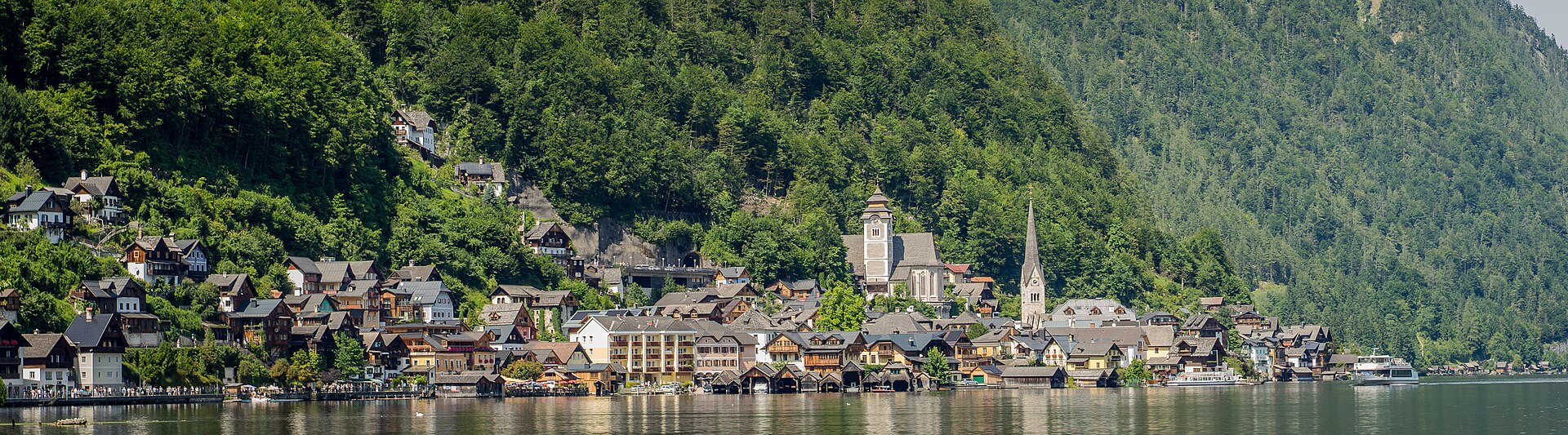
High in the Austrian Alps, a picture-perfect village of steep-roofed houses clings to a narrow strip of shore between a dark mountain and a still green lake. Hallstatt is one of the most photographed places in Europe, a scene of almost impossible prettiness that draws visitors from around the world. But beneath and above this postcard village lies something far older and far more important: the remains of a prehistoric community that mined salt from the mountain for thousands of years, buried its dead with astonishing wealth, and gave its name to an entire era of European prehistory. When archaeologists speak of the Hallstatt culture, they mean the civilization of the early Iron Age across much of central Europe, named after this single Alpine valley.
The reason a small mountain village lends its name to a whole age of European history lies in what was found in the high valley above the lake. There, in the nineteenth century, a vast prehistoric cemetery was discovered, its graves filled with objects of such richness and distinctiveness that they came to define an entire cultural phase. And the source of that wealth was the mountain itself, or rather what lay inside it: salt, the white gold of the ancient world, mined here on an industrial scale for over three thousand years. Hallstatt is the story of how salt made a mountain community rich enough to shape the prehistory of a continent.
Contents
- The Village on the Lake
- The White Gold of the Mountain
- The Oldest Salt Mines in the World
- A Cemetery That Named an Age
- What the Hallstatt Culture Was
- A Hub of European Trade
- What the Salt Preserved
- Hallstatt and the Coming of the Celts
- The Discovery of the Cemetery
- Hallstatt Today
- The Legacy of a Mountain Valley
- Nearby Places
- Final Word
The Village on the Lake
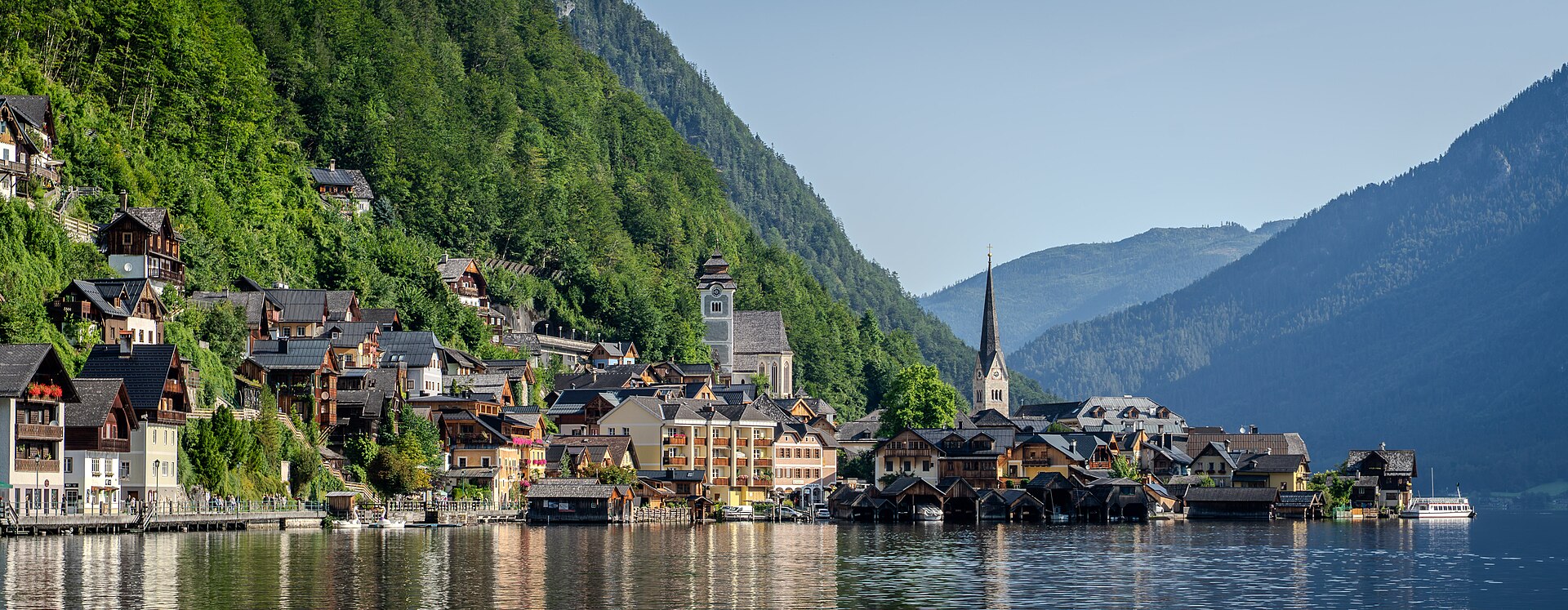
Hallstatt lies in the Salzkammergut, the lake district of the Austrian Alps, a region of mountains, valleys, and deep clear lakes east of Salzburg. The village occupies a spectacular but cramped position on the western shore of the Hallstätter See, wedged so tightly between the steep mountainside and the water that there was barely room to build. Its houses rise in tiers up the slope, connected by narrow lanes and steps, and for centuries the only easy way to reach the place was by boat across the lake, so hemmed in was it by the surrounding terrain. This dramatic isolation is part of what has preserved both the village’s charm and the archaeological treasures around it.
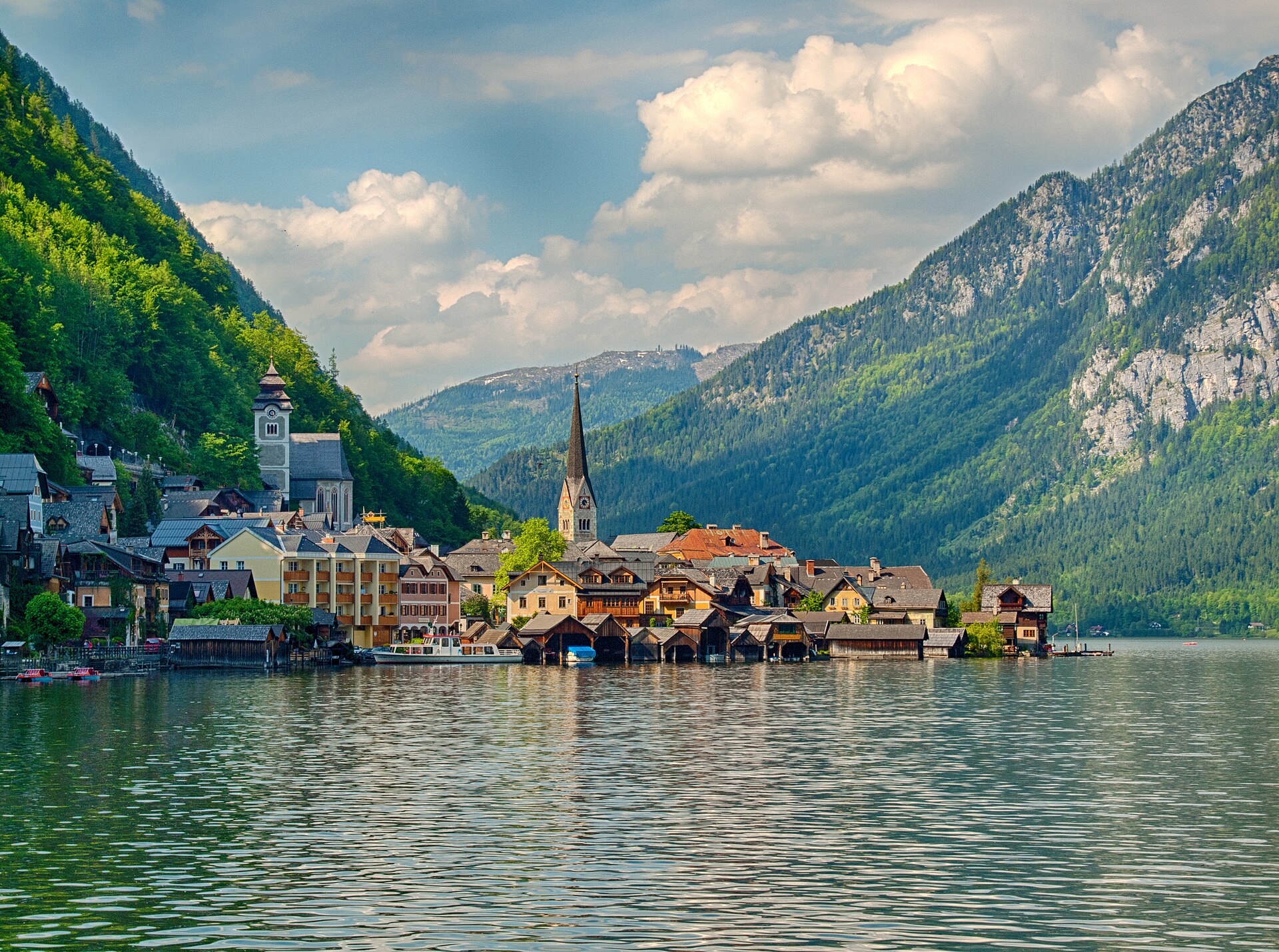
So little flat land was available that, according to a much-repeated local tradition, space in the village cemetery was so limited that bones had to be exhumed after a period and stored in a charnel house, where many decorated skulls are still kept, a striking testament to the constraints of life on this narrow shore. The village that visitors see today, with its steep-roofed houses reflected in the lake and its slender church spire, is largely a creation of recent centuries, but people have lived and worked in this valley for far, far longer, drawn by the one resource that made the difficult location worthwhile.
That resource lay not by the lake but high above it, in the mountain valley that opens in the heights behind the village. There, at an altitude that made life harsh and access difficult, generations of prehistoric miners dug into the rock in pursuit of salt, and there they buried their dead in the great cemetery that would one day give an age its name. The modern village on the lakeshore is only the latest chapter of a story that begins far above it, in the high valley where salt was mined thousands of years before the picturesque houses below were ever built.
The White Gold of the Mountain
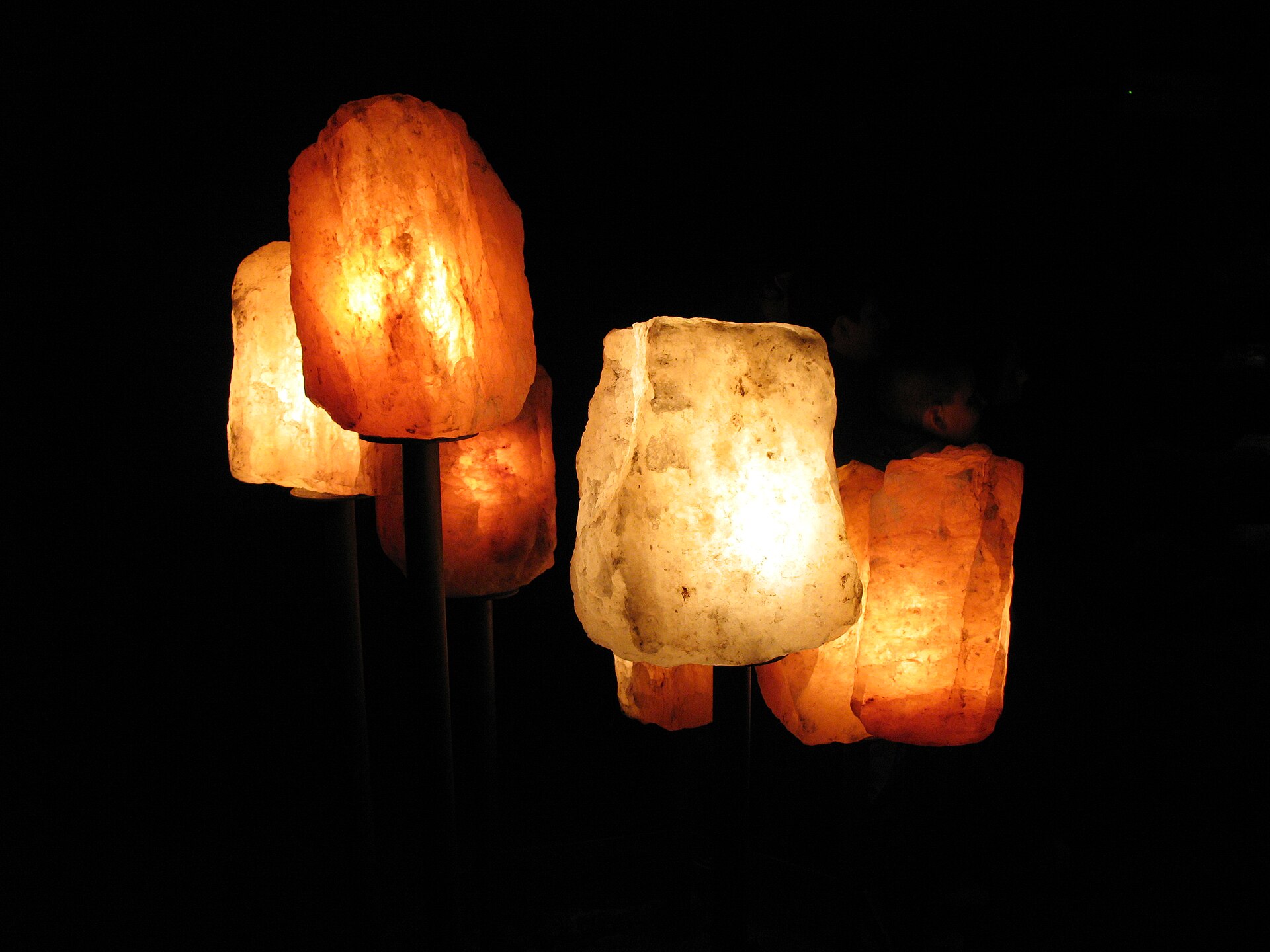
To understand Hallstatt, one must understand the value of salt in the ancient world. Today salt is so cheap and abundant that it is easy to forget how precious it once was. But for most of human history salt was a vital and often scarce commodity, essential not only for flavoring food but, far more importantly, for preserving it. Before refrigeration, salting was one of the few ways to keep meat and fish from spoiling, making it possible to store food through the winter and to trade it over distances. A reliable source of salt was therefore a source of great wealth and power, and the very name of the region, the Salzkammergut, and of nearby Salzburg, the salt-castle, preserves the memory of that importance.
The mountain above Hallstatt held one of the richest and most accessible deposits of rock salt in central Europe. Unlike sea salt, which had to be evaporated on the coast, this was solid salt locked in the rock, which could be mined directly, and the deposit was enormous. Controlling and exploiting this resource made the community of Hallstatt wealthy far beyond what its remote Alpine location might suggest, and that wealth is written vividly in the rich grave goods of its cemetery. The salt of the mountain was, quite literally, the foundation of Hallstatt’s prosperity and of the culture that bears its name.
The word salt itself echoes through the history and vocabulary of the place and of Europe more widely, a reminder of how central this humble mineral once was. Salt was traded across vast distances, exchanged for goods from far away, and its production and distribution shaped economies and settlements. Hallstatt sat at the source of this precious substance, and the community that mined it grew rich by supplying salt to a wide region. The story of Hallstatt is, at its heart, the story of how control of a single essential commodity could turn a remote mountain valley into a center of wealth and cultural influence in prehistoric Europe.
The Oldest Salt Mines in the World
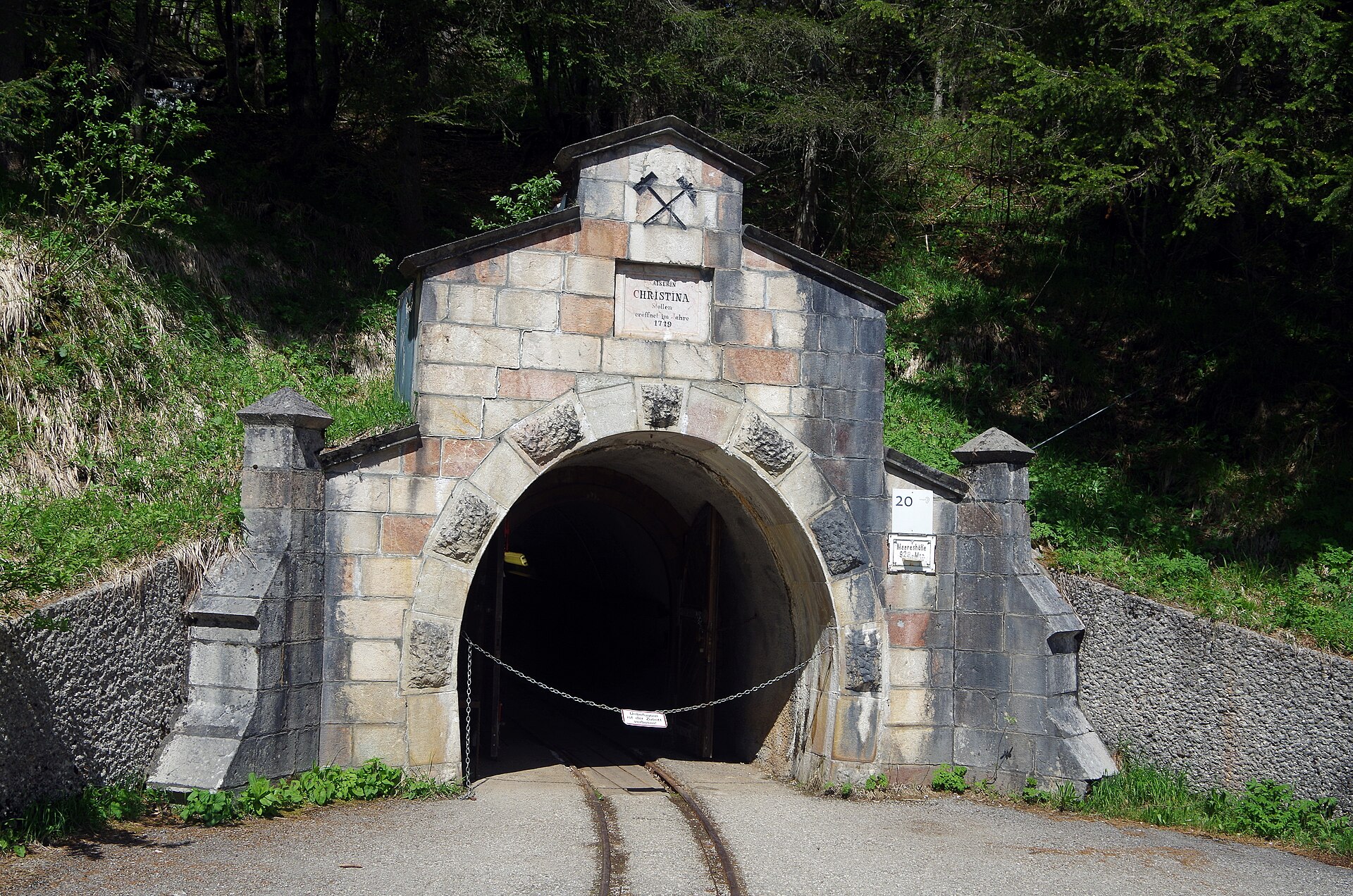
The salt mines of Hallstatt are among the oldest known anywhere in the world, and mining here reaches back into deep prehistory. Systematic extraction of salt from the mountain began in the Bronze Age, and by the early Iron Age, the period of the classic Hallstatt culture, it was being carried out on a remarkable scale, with deep galleries driven into the rock and an organized workforce laboring underground. The mines were worked, with interruptions, for thousands of years, from prehistoric times right up to the modern era, making Hallstatt one of the longest-operating industrial sites in human history.
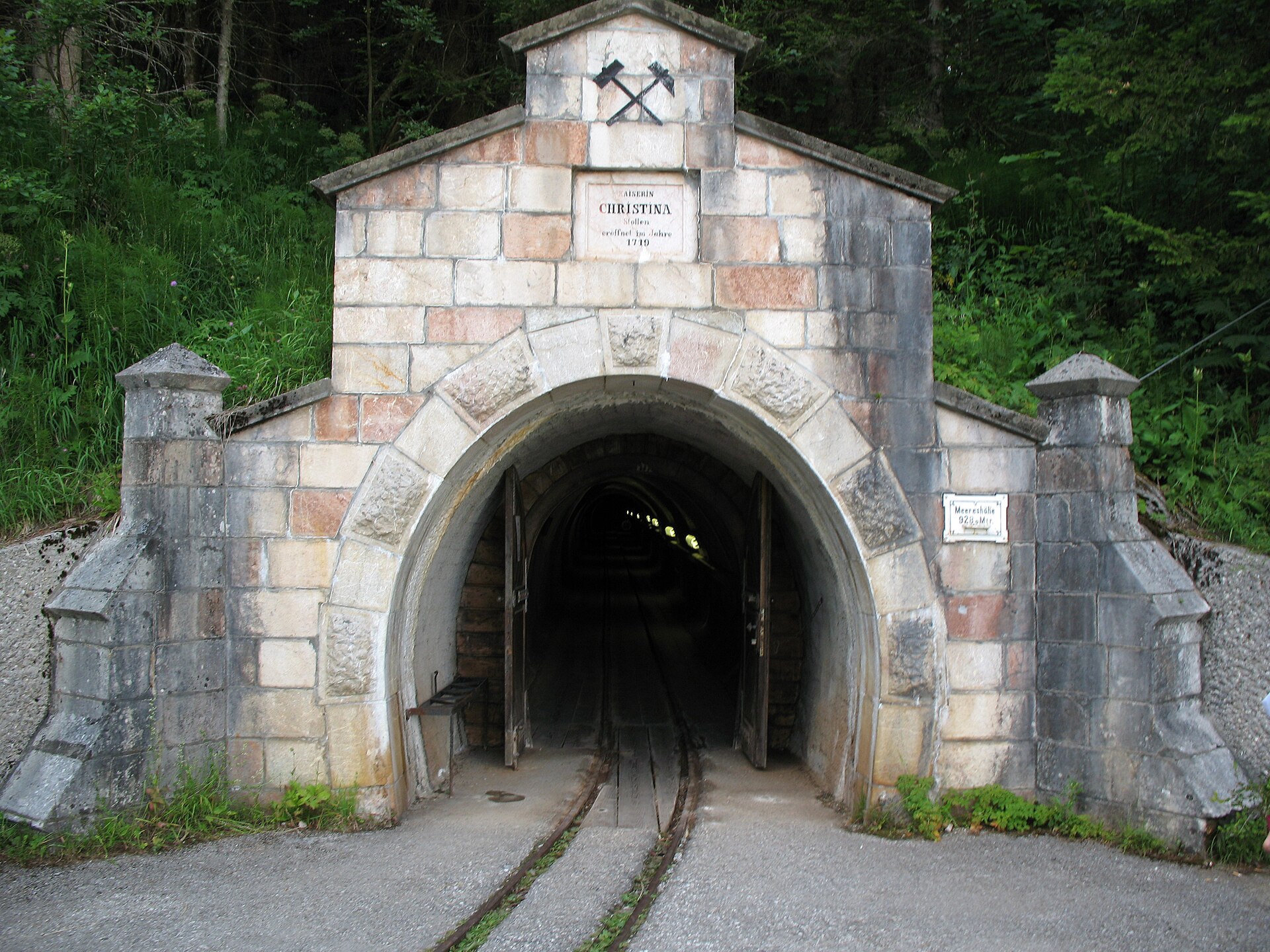
The prehistoric miners drove long galleries into the mountainside, following the seams of salt deep into the rock. They worked by the light of wooden torches and lamps, cutting the salt with bronze and later iron tools, and hauling it out in leather sacks and wooden containers. The scale of the operation was industrial by the standards of the age, requiring the coordinated labor of many workers and the support of a whole community to feed, equip, and organize them. Deep in the mountain, archaeologists have found the remarkable traces of this ancient work: tools, equipment, wooden structures, and even the miners’ clothing and food, preserved by the salt itself.
Mining salt deep underground was dangerous work, and the archaeology preserves evidence of the hazards the miners faced, including at least one prehistoric miner apparently killed by a rockfall and preserved by the salt. It was also highly organized: the layout of the galleries, the specialized tools, and the sheer quantity of salt extracted all point to a sophisticated and well-managed enterprise. The prehistoric salt mines of Hallstatt represent one of the earliest examples anywhere of large-scale, organized mining, an industry that sustained the community for millennia and generated the wealth reflected so vividly in the graves of the valley above.
A Cemetery That Named an Age
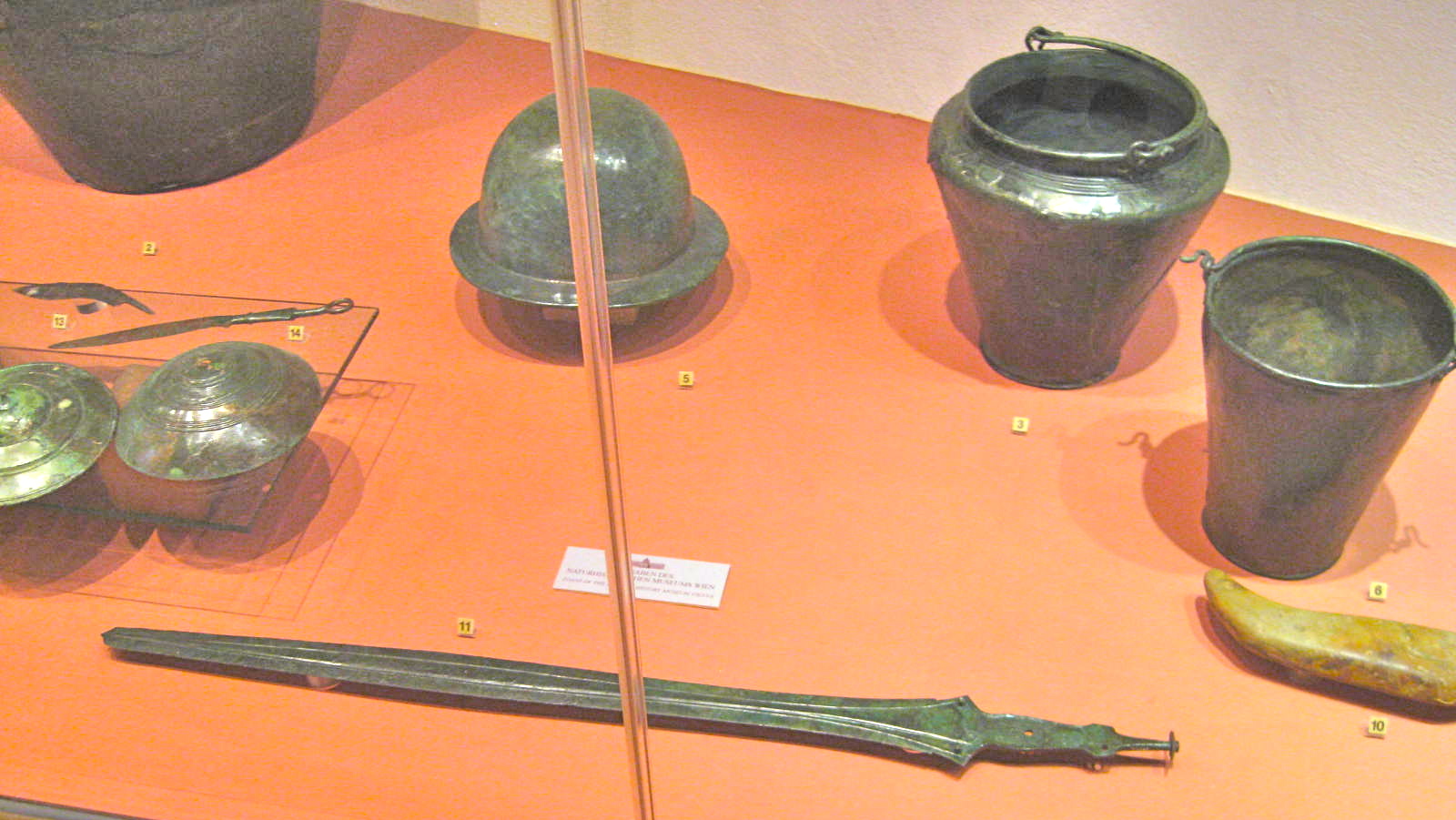
The discovery that made Hallstatt famous in the world of archaeology was its great prehistoric cemetery, found in the high valley above the village. Over the course of excavations beginning in the mid-nineteenth century, well over a thousand graves were uncovered, dating chiefly to the early Iron Age, and their contents were extraordinarily rich and varied. Here were buried, over centuries, the members of the salt-mining community, and the wealth generated by the salt trade was lavished on their burials, filling the graves with objects that have become the defining artifacts of an entire cultural phase.
The grave goods included weapons such as swords and daggers, often finely decorated; tools and implements; vessels of bronze and pottery; and, above all, a wealth of personal ornaments: brooches, pins, bracelets, belts, and other adornments, many of them beautifully crafted in bronze and sometimes in gold, amber, and other precious materials. Some graves contained imported objects from far away, evidence of the community’s wide trading connections. The dead were buried both by inhumation, laid in the ground, and by cremation, and the richest burials were furnished with an abundance of goods that spoke of considerable wealth and status.
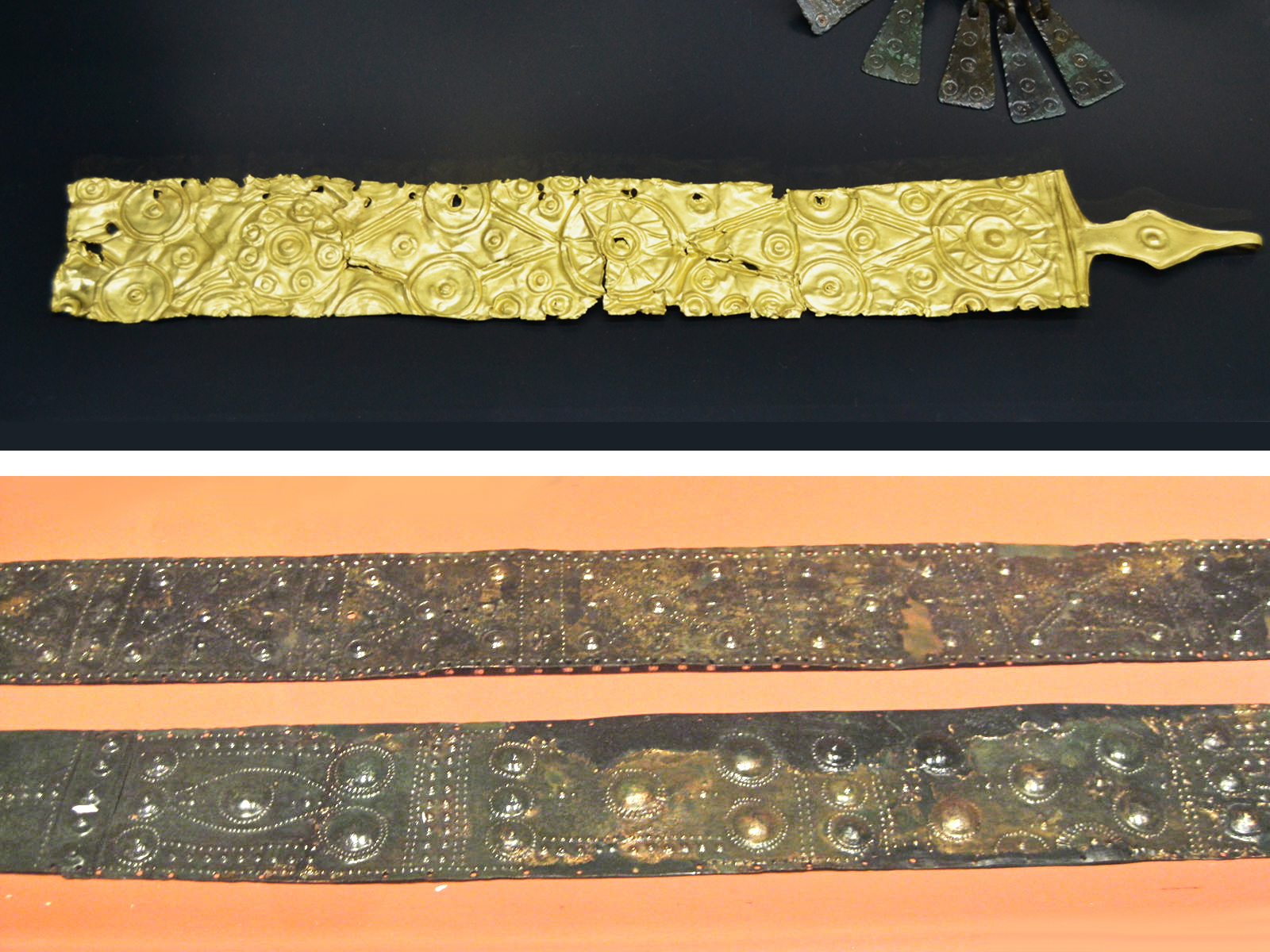
The sheer number, richness, and distinctive style of these finds made the Hallstatt cemetery a benchmark for the archaeology of the early Iron Age in central Europe. So characteristic were the objects that archaeologists adopted the name of the site to designate the whole culture and period they represented, and the early Iron Age of much of central Europe came to be known as the Hallstatt period. Few single sites have given their name to so broad a swath of prehistory, and it is the wealth of this cemetery, funded by the salt of the mountain, that earned Hallstatt this remarkable distinction.
What the Hallstatt Culture Was
The Hallstatt culture, named after the site, was the dominant culture of much of central and western Europe during the late Bronze Age and early Iron Age, roughly from around 1200 to 450 BC in its various phases. It spread across a wide area, from eastern France and the Alps through Austria and into the lands beyond, and it represents a crucial phase in European prehistory: the period during which iron came into widespread use and during which the societies that would develop into the historical Celtic peoples took shape. The Hallstatt culture is, in effect, the archaeological signature of early Iron Age Europe north of the Alps.
This was a period of increasing social complexity and stratification. The rich graves of Hallstatt and similar sites show a society with marked differences in wealth and status, dominated by an elite of warriors and chiefs who controlled trade, resources, and the labor of others. The economy rested on farming, herding, and, crucially, on the control of valuable resources such as salt and metals, and on the trade networks that distributed them. The elite displayed their power through fine weapons, imported luxuries, and lavish burials, and by the later Hallstatt period some of these leaders were buried in spectacular fashion under great mounds, in graves furnished with wagons, imported wine-drinking equipment, and other symbols of high status.
The Hallstatt culture eventually gave way to the succeeding La Tène culture, associated with the historical Celts and their distinctive flowing art style, but it was during the Hallstatt period that the foundations of Iron Age European society were laid. The spread of iron technology, the growth of a powerful warrior elite, the intensification of trade with the Mediterranean world, and the emergence of the social patterns that would characterize Celtic Europe all belong to this era. Hallstatt, the salt-mining valley whose cemetery defined the period, thus stands at the beginning of the Iron Age story of Europe.
A Hub of European Trade
Hallstatt was not an isolated mountain community turned in on itself but a node in a wide network of trade that connected central Europe to the Mediterranean and beyond. The salt it produced was traded over considerable distances, and in exchange the community received goods from far away, many of which ended up in its graves. Among the finds are objects made of amber from the Baltic, ivory from the south, and items of Mediterranean origin, showing that the salt of Hallstatt was exchanged along routes that reached to the shores of northern and southern seas alike. The valley’s wealth was built not just on producing salt but on its place in a far-flung system of exchange.
This trade intensified over the Hallstatt period as contact with the growing civilizations of the Mediterranean, the Greeks and the Etruscans, increased. The Mediterranean peoples sought raw materials from the north, including metals and other goods, and offered in return the products of their more urbanized societies, especially the equipment and customs of wine drinking, which became a prized status symbol among the northern elite. Fine bronze vessels and other imports from the south appear in the richest Hallstatt-period graves, evidence of a trade in luxuries that both reflected and reinforced the power of the elite who controlled it.
The position of Hallstatt and the broader Hallstatt culture astride the trade routes between the Mediterranean and central and northern Europe was central to their development. The wealth generated by this trade, and by the control of resources like salt and iron, funded the rise of the powerful chiefdoms whose lavish burials mark the period. Hallstatt itself, at the source of a precious commodity and connected to distant markets, exemplifies how the control of trade and resources shaped Iron Age European society, turning a remote Alpine valley into a place of wealth and wide connections whose influence reached across the continent.
What the Salt Preserved
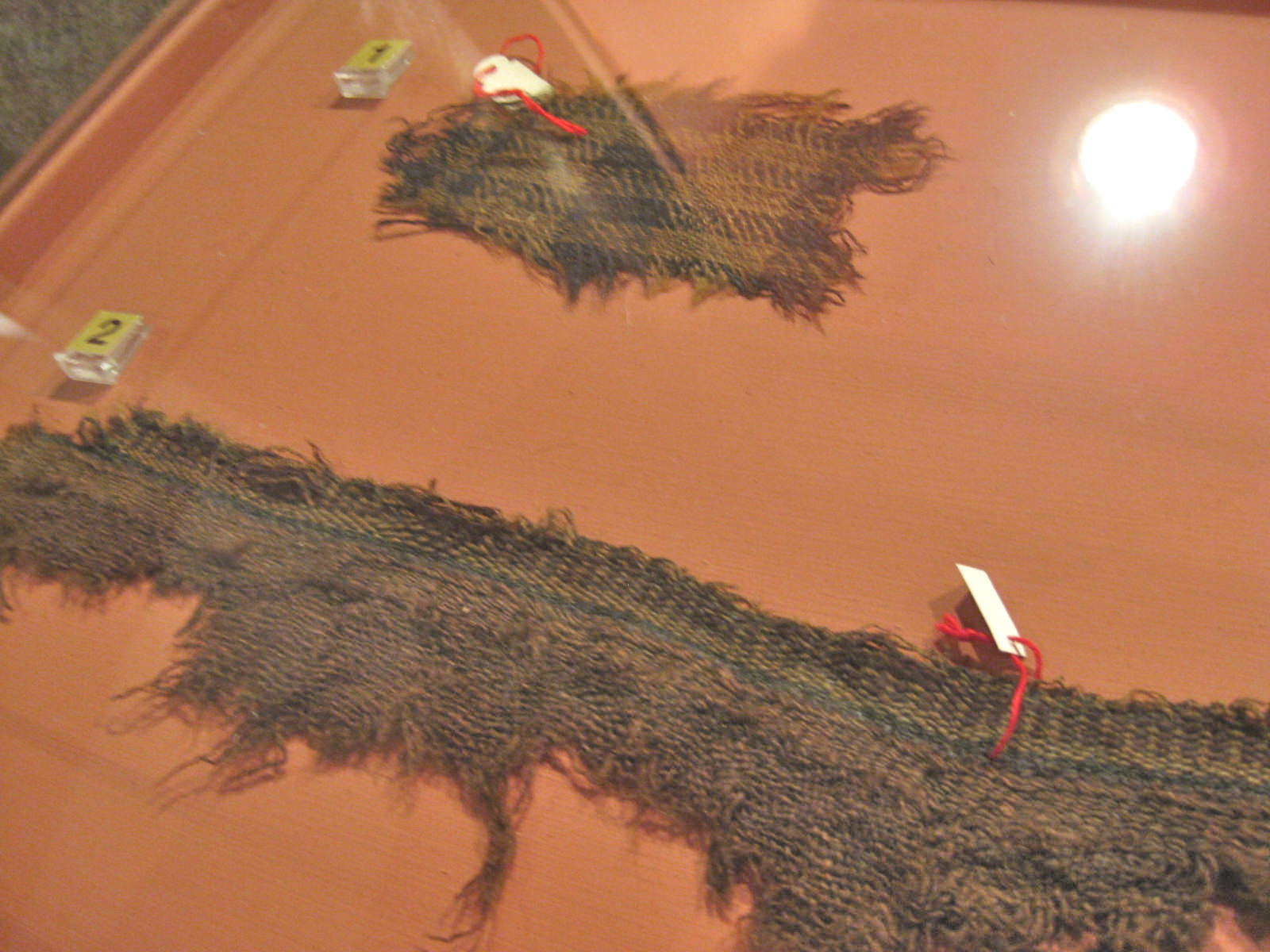
One of the most remarkable aspects of Hallstatt is the extraordinary preservation of organic materials in the salt mines, a gift of the salt itself. Salt is a powerful preservative, drawing moisture out of organic matter and inhibiting the decay that normally destroys perishable materials, and deep in the prehistoric galleries of Hallstatt it has preserved things that almost never survive from prehistory. Wood, leather, textiles, rope, food, and other organic objects, which would have rotted away entirely in ordinary conditions, have come down to us intact from thousands of years ago, offering an incomparably vivid picture of prehistoric life and work.
Among the finds are the tools and equipment of the ancient miners: wooden implements, leather sacks used to carry the salt, wooden staircases and structures from within the mine, and rope and other gear. There are also the miners’ own belongings and provisions, including remains of their food and even fragments of their clothing. Textiles are especially precious, for prehistoric cloth almost never survives, and the fabrics preserved in the Hallstatt mines, some of them woven in intricate patterns and dyed in various colors, are among the most important surviving examples of prehistoric European textiles, revealing a sophistication in weaving and dyeing that would otherwise be unknown.
These preserved organic materials transform Hallstatt from a site known chiefly for its rich graves into a uniquely detailed window onto everyday prehistoric life. Through them we can see not just the treasures buried with the dead but the actual tools, clothes, and food of the living, the working reality of the ancient salt miners. Few prehistoric sites anywhere offer such intimate and detailed evidence of daily life and labor, and it is the salt, the very substance that made Hallstatt wealthy, that has preserved this extraordinary record deep within the mountain, waiting for archaeologists to bring it to light.
Hallstatt and the Coming of the Celts
The Hallstatt culture is closely bound up with the question of the origins of the Celts, the peoples who would dominate much of Iron Age Europe and who appear in the accounts of Greek and Roman writers. While the relationship between archaeological cultures and named ethnic or linguistic groups is always complex and debated, the Hallstatt culture and its successor, the La Tène culture, are generally associated with the development of Celtic-speaking societies in central and western Europe. In the Hallstatt period we can see, in archaeological terms, the emergence of the kind of stratified, warrior-led, trade-connected society that would characterize the historical Celtic world.
The transition from the Hallstatt to the La Tène culture, around the middle of the first millennium BC, marks the emergence of the fully developed Celtic civilization familiar from later history, with its distinctive and beautiful curvilinear art, its powerful warrior aristocracy, and its expansion across a wide area of Europe. The roots of this world lie in the Hallstatt period, in the growth of the elite chiefdoms, the spread of iron, and the intensification of trade that the Hallstatt culture represents. To study Hallstatt is thus to study the formative phase of Celtic Europe, the seedbed from which the Iron Age societies of the continent grew.
This connection gives Hallstatt a significance far beyond its own valley. The culture named after this salt-mining community was ancestral, in a broad sense, to the Celtic peoples who would shape so much of European history before the Roman conquest, from the tribes Julius Caesar fought in Gaul to those of the British Isles and central Europe. The rich graves of the Hallstatt cemetery and the finds from its mines are, in this light, among the earliest chapters in the long story of Iron Age and Celtic Europe, and Hallstatt stands as a key to understanding the deep origins of the peoples who inhabited the continent on the eve of recorded history.
The Discovery of the Cemetery
The great prehistoric cemetery of Hallstatt came to light largely through the work of one dedicated man: Johann Georg Ramsauer, a mine official at Hallstatt who, from the mid-nineteenth century, undertook the systematic excavation of the graves in the high valley. Over the course of many years Ramsauer excavated close to a thousand graves, and, remarkably for his time, he kept careful records of his work, documenting the burials with detailed watercolor illustrations that recorded the position of the bodies and their grave goods. This documentation, unusually meticulous for the era, greatly increased the scientific value of the excavation and preserved a wealth of information that would otherwise have been lost.
The discoveries at Hallstatt caused a sensation in the developing field of prehistoric archaeology, and the site quickly became famous among scholars across Europe. The richness and distinctiveness of the finds, combined with Ramsauer’s careful recording, made Hallstatt a reference point for understanding the early Iron Age, and it was on the basis of these finds that the Hallstatt culture and period were eventually defined and named. The objects from the cemetery were studied, published, and distributed to museums, and Hallstatt took its place as one of the foundational sites of European prehistoric archaeology.
Excavation and research at Hallstatt have continued long since Ramsauer’s day, both in the cemetery and, importantly, in the salt mines themselves, where the study of the ancient workings and their preserved organic remains has added enormously to our understanding of the site. Modern archaeological techniques have been applied to the mines and graves, revealing ever more detail about the prehistoric community, its work, its trade, and its way of life. Hallstatt remains an active and important site of research, its treasures continuing to illuminate the Iron Age even a century and a half after the first great discoveries.
Hallstatt Today
Today Hallstatt is famous around the world as one of the most beautiful villages in Europe, a scene of such postcard perfection that it draws enormous numbers of visitors and has even been copied in a full-scale replica built abroad. The village on the lake, with its steep-roofed houses, its church, and its stunning Alpine setting, has become a symbol of idyllic European scenery. This fame brings both benefits and challenges, as the small and fragile village struggles to cope with the pressure of mass tourism, a modern problem for a place whose ancient wealth once came from salt rather than sightseers.
But beyond the picturesque village, Hallstatt offers the visitor a chance to encounter its extraordinary ancient history directly. The salt mine above the village is open to visitors, who can descend into the mountain and see the ancient workings, including the traces of prehistoric mining, in what is promoted as one of the oldest salt mines in the world. A museum in the village displays the treasures of the cemetery and the finds from the mines, telling the story of the Hallstatt culture and the salt that created it. And the high valley of the cemetery, reached by a funicular railway, commands spectacular views along with its archaeological significance.
The combination of natural beauty and profound antiquity makes Hallstatt a place of unusual interest. Most visitors come for the scenery, but the truly remarkable thing about Hallstatt is what lies beneath the beauty: thousands of years of salt mining, a cemetery that named an age of European prehistory, and a preserved record of ancient life found nowhere else. The whole area, embracing the village, the mines, the cemetery, and the surrounding landscape, is protected as a UNESCO World Heritage site, recognized for both its natural splendor and its extraordinary cultural and historical importance.
The Legacy of a Mountain Valley
The legacy of Hallstatt is out of all proportion to the size of the place. A single Alpine valley, its wealth drawn from the salt in its mountain, gave its name to an entire era of European prehistory and stands at the origins of the Iron Age and Celtic worlds. The rich graves of its cemetery defined the archaeology of early Iron Age central Europe; the ancient workings of its salt mines represent one of the oldest industries in human history; and the organic materials preserved in the salt offer an unmatched window onto prehistoric life and labor. Few sites have contributed so much to our understanding of the European past.
Hallstatt also illustrates a larger truth about the ancient world: how the control of a single vital resource could shape the destiny of a community and, through it, of a wider region. Salt, so ordinary today, was precious enough in antiquity to make a remote mountain valley rich and influential, funding the wealth displayed in its graves and connecting it to trade networks reaching across the continent. In the story of Hallstatt, the humble mineral that preserves our food is revealed as one of the engines of prehistoric European society, a reminder that the foundations of civilization often lay in the control of the most basic necessities.
Nearby Places
- Solnitsata: Europe’s Oldest Town, Built on Salt
- The Varna Necropolis: The Oldest Gold Ever Found
- Vinča: The Danube Culture That May Have Written First
Final Word
Hallstatt is the mountain valley that gave an age its name. Behind the postcard-perfect village on its Alpine lake lies one of the oldest salt-mining operations in the world, worked for thousands of years, and a prehistoric cemetery so rich that archaeologists named the entire early Iron Age of central Europe after it. The salt of the mountain made this remote community wealthy, connected it to trade routes reaching from the Baltic to the Mediterranean, and preserved deep in its galleries an unmatched record of prehistoric life, from miners’ tools and clothing to woven textiles thousands of years old. Standing at the origins of the Iron Age and Celtic worlds, Hallstatt shows how the control of a single precious resource could turn an Alpine valley into a cornerstone of European prehistory, and it remains, in its beauty and its depth, one of the most remarkable places on the continent.
You May Like
Mafra, the Palace a King Built From a Vow