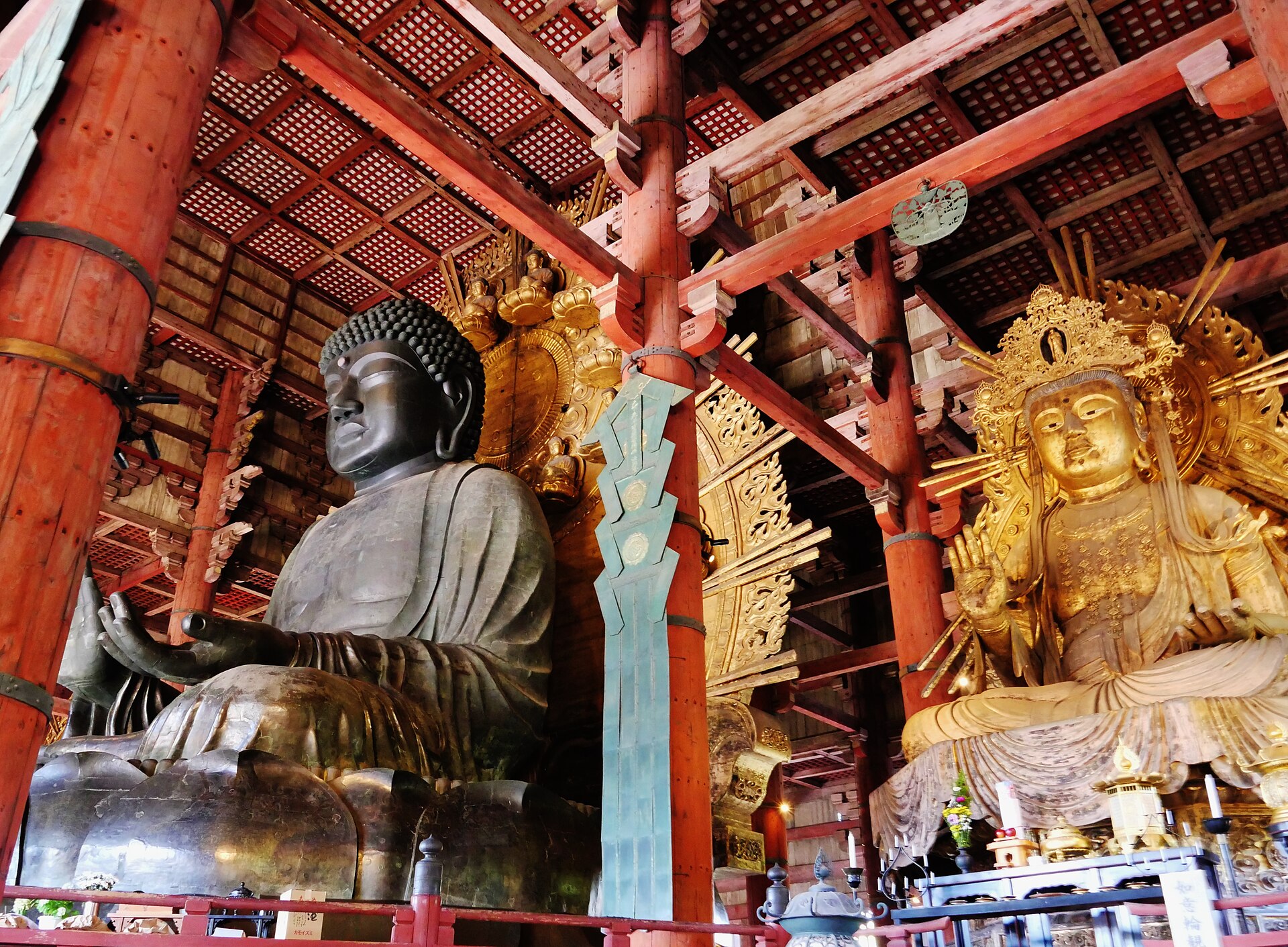
On the wooded eastern edge of Nara, past a great wooden gate guarded by two glowering giants, rises one of the most extraordinary buildings ever raised in wood. Inside the Daibutsuden of Todai-ji sits a bronze Buddha so vast that a grown adult can barely reach around its thumb. The hall around it has burned and been rebuilt more than once, yet even the present structure, smaller than its eighth-century original, remains among the largest wooden buildings on earth.
Todai-ji was conceived as more than a temple. When Emperor Shomu ordered its Great Buddha cast in the middle of the eighth century, he meant it to be the spiritual anchor of the entire nation, the head of a network of provincial temples binding the young Japanese state together under the protection of the cosmic Buddha. To walk its precinct today, among the bowing deer and the scent of cypress, is to stand at the point where imperial ambition, continental Buddhism, and the Japanese genius for building in timber all met.
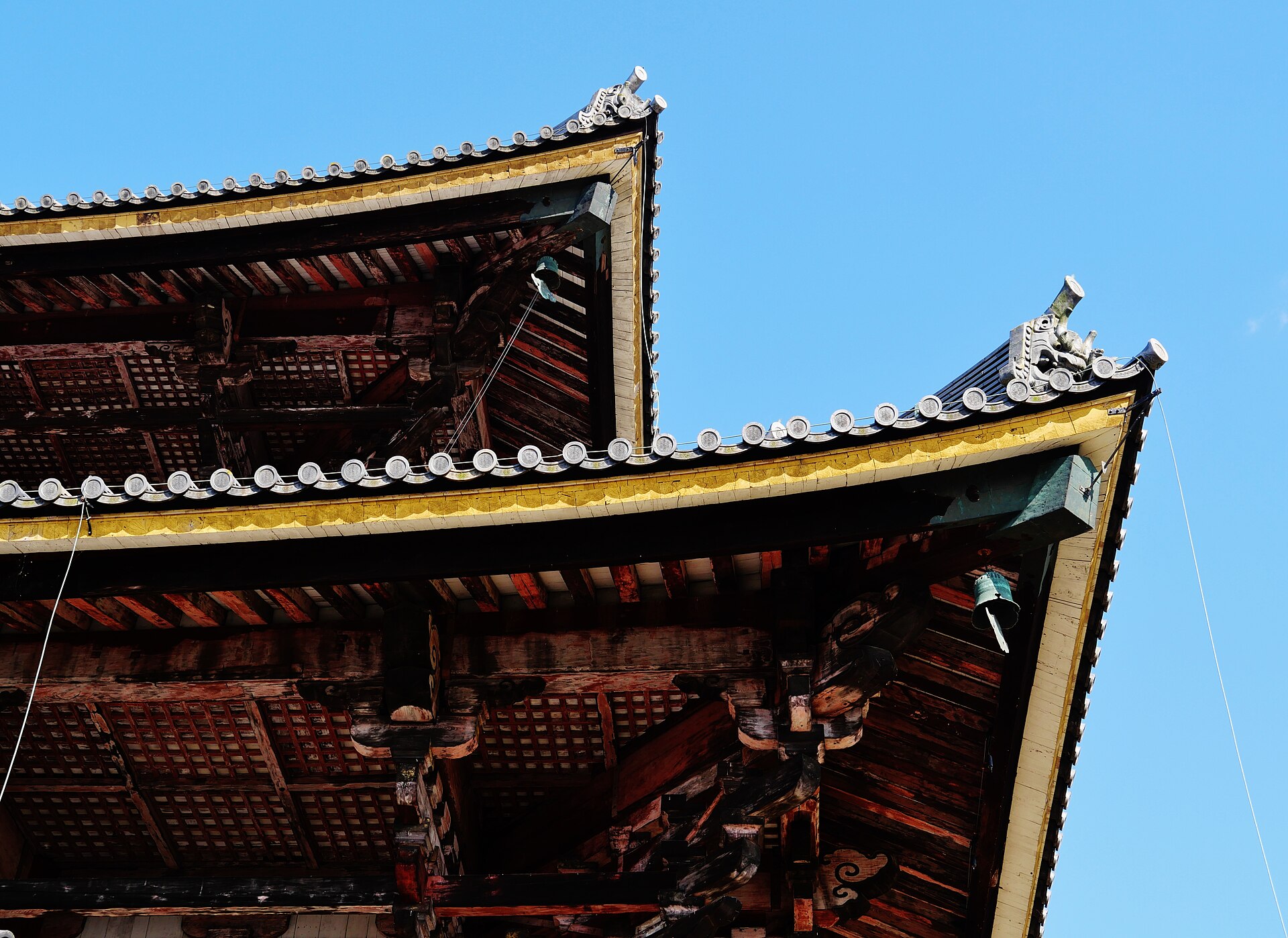
Table of Contents
- A Capital Named Heijo
- Emperor Shomu’s Vow
- Casting the Great Buddha
- The Daibutsuden
- Inside the Hall
- The Nandaimon and Its Guardians
- The Great Bell and the Precinct
- Nigatsu-do and the Fire Festival
- The Shosoin Treasure House
- The Deer of Nara
- Getting There
- Nearby Places
- Closing Thoughts
A Capital Named Heijo
For most of its early history Japan had no fixed capital. Custom held that a site was defiled by the death of an emperor, so the court moved with each reign. That changed in 710, when the court settled at Heijo-kyo, the city we now call Nara, and stayed for most of a century. Laid out on a grid modelled on the Chinese Tang capital of Chang’an, Nara became Japan’s first true city, a stage for a flowering of art, law, and religion.
The Nara period was short but decisive. In these decades the imperial court adopted Chinese writing, a centralized bureaucracy, and above all Buddhism as instruments of the state. Todai-ji was the crowning expression of that program, and its scale can only be understood against a capital deliberately built to rival the great cities of the mainland.
Emperor Shomu’s Vow
The temple owed its existence to Emperor Shomu, who reigned through a period of epidemic, famine, and rebellion. Devout and shaken by disaster, he came to believe that only the protection of the Buddha could secure his realm. In 741 he ordered every province to found a monastery and convent; two years later he vowed to raise a colossal image of Vairocana, the Buddha whose radiance was said to encompass all worlds.
Shomu framed the project as a shared act of merit. In his edict he invited the whole population to contribute, even if only a twig or a handful of earth, so that the great work would belong to all. The monk Gyoki, hugely popular among ordinary people, was enlisted to rally donations and labour, lending the imperial scheme a genuinely national character.
Casting the Great Buddha
The Daibutsu was a technical feat at the very limit of what eighth-century Japan could achieve. The seated bronze figure stands roughly fifteen metres tall and was cast in stages, layer upon layer, over several years. Contemporary records speak of enormous quantities of copper, tin, and gold, and of a workforce numbered in the hundreds of thousands across the whole enterprise.
When the image was finally complete, it was gilded with gold amalgam, a process that released mercury vapour and likely poisoned many of the workers. The eye-opening ceremony of 752, in which an Indian monk painted in the Buddha’s pupils to bring it to life, drew dignitaries from across Asia and marked the symbolic climax of Nara Buddhism.

The Daibutsuden
To shelter the Buddha, the builders raised the Daibutsuden, the Great Buddha Hall. The original was even wider than the present one, a structure of a scale scarcely attempted again in Japanese timber architecture. Fire destroyed it during the wars of the twelfth century and again in the sixteenth, and each rebuilding was a monumental undertaking in its own right.
The hall standing today dates from the early eighteenth century. Narrower than its predecessors but still immense, it demonstrates the bracketing systems and massive columns that allowed Japanese carpenters to span such spaces without a single nail holding the main frame. Inside, the Buddha is flanked by gilded attendant bodhisattvas and fierce guardian kings.
Inside the Hall
Stepping through the doors, visitors are met first by the sheer volume of the space and then by the calm bronze face rising into the shadows of the roof. The Buddha sits on a lotus throne whose petals are engraved with fine images of the Buddhist cosmos, some of them surviving from the original eighth-century casting.
Behind the great figure, a wooden pillar carries a hole near its base said to be the size of one of the Buddha’s nostrils. By tradition, those who can squeeze through it are assured of enlightenment, and the sight of children wriggling through has become one of the temple’s gentler rituals.
The Nandaimon and Its Guardians
The approach to the temple passes beneath the Nandaimon, the great south gate. Rebuilt around 1200 in a robust continental style imported from Song China, the gate is a masterpiece of exposed structural timber, its brackets stacked outward in dramatic tiers.
Set into its bays stand the two Nio, muscular guardian kings carved by the sculptor Unkei and his workshop in a matter of weeks. One roars with open mouth, the other seals his lips, together representing the beginning and end of all things. They are among the supreme achievements of Kamakura-period sculpture.

The Great Bell and the Precinct
Beyond the main hall the temple grounds climb the hillside, dotted with subsidiary buildings, ponds, and ancient trees. Among them hangs the temple’s great bell, cast in the eighth century and still one of the largest in Japan, its deep voice marking the hours over the old capital.
The wider precinct rewards slow wandering. Moss-covered lanterns, quiet subtemples, and stone paths lead the visitor away from the crowds around the Buddha and into corners where the atmosphere of the Nara period feels remarkably close.

Nigatsu-do and the Fire Festival
On the slope above the Daibutsuden stands the Nigatsu-do, a hall perched on a wooden platform with sweeping views over Nara. Each spring it becomes the focus of Omizutori, a set of rites more than twelve centuries old in which monks brandish great burning torches along the balcony, showering sparks on the crowd below for good fortune.
The ceremony is among the oldest continuously performed rituals in Japan, unbroken through war, fire, and political upheaval. Its persistence is a reminder that Todai-ji is not a museum but a living monastery whose calendar still turns as it did in the eighth century.

The Shosoin Treasure House
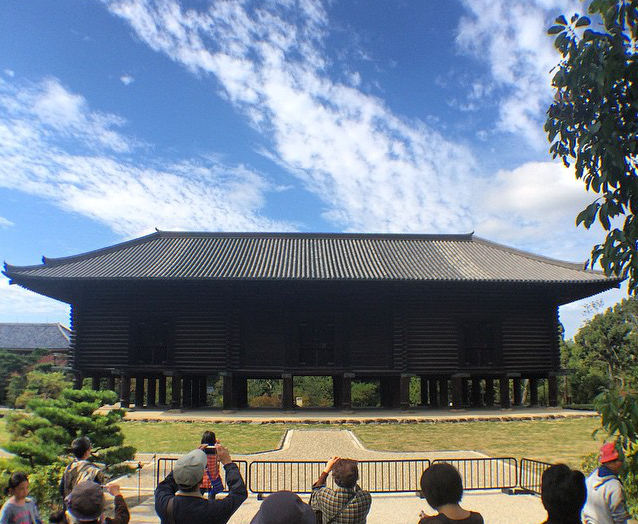
A short distance from the main hall stands the Shosoin, a log-built storehouse raised on tall pillars. For twelve hundred years it preserved the personal treasures of Emperor Shomu, dedicated to the Buddha by his widow after his death, along with objects used in the great dedication ceremony.
Its collection is astonishing: glass from Persia, lutes and mirrors from Tang China, textiles and masks that survive nowhere else. The Shosoin is effectively a time capsule of eighth-century Eurasian exchange, showing how the Silk Road’s goods reached the eastern end of Asia and were laid up in this Japanese repository.
The Deer of Nara
No account of Todai-ji is complete without its deer. More than a thousand sika deer roam Nara Park freely, wandering among the temple gates and bowing, in a learned trick, for the crackers sold to visitors. In Shinto belief they were long regarded as messengers of the gods and protected as sacred.
The deer give the precinct much of its distinctive character, blurring the line between temple, park, and wild landscape. For many travellers they are the first and most lasting impression of Nara, an unexpectedly tender counterpoint to the solemnity of the Great Buddha.

Getting There
Todai-ji lies in Nara, easily reached from Kyoto or Osaka in under an hour by train. From Kintetsu Nara or JR Nara station it is a pleasant walk of fifteen to twenty minutes through Nara Park to the temple gates, with deer accompanying you much of the way.
The temple stands in northern Nara at approximately 34.6890, 135.8398. You can open the exact location on Google Maps for directions to Todai-ji and its Great Buddha Hall.
Nearby Places
Closing Thoughts
Todai-ji endures because it was built to embody an idea larger than any one reign: that a nation might be held together under the compassion of the Buddha. The bronze figure at its heart has outlasted the emperors who commissioned it, the fires that consumed its halls, and the wars that swept over Nara.
To stand before the Daibutsu today, in a hall rebuilt by hands centuries removed from the original casters, is to feel the long continuity of Japanese devotion and craft. The deer still bow, the great bell still sounds, and the vow of an eighth-century emperor still shelters beneath a roof of cypress.
You May Like
Mafra, the Palace a King Built From a Vow


One thought on “Todai-ji: Nara’s Great Buddha and the Timber Hall That Shelters It”