For nearly a thousand years, from the first century before the common era to the tenth century after it, the kingdom of Silla ruled from a single valley in the southeast of the Korean peninsula. That valley, now the city of Gyeongju, holds so dense a concentration of tombs, temples, pagodas, and palace ruins that Koreans call it a museum without walls. Grassed royal mounds rise between modern streets; a stone observatory older than most in the world stands in an open field; and on a hill above the city sits one of the most perfect Buddha images ever carved in granite.
Silla’s rulers embraced Buddhism as a unifying faith and poured the kingdom’s wealth into monuments of astonishing refinement. At the height of their power in the eighth century they raised Bulguksa, the Temple of the Buddha Land, and the Seokguram Grotto that shelters its serene stone Buddha. Together with the tombs and towers scattered across the valley, they make Gyeongju one of the richest surviving landscapes of the ancient East Asian world.

Table of Contents
- The Kingdom of Silla
- Bulguksa, the Temple of the Buddha Land
- The Two Pagodas
- Bridges to the Buddha Land
- The Seokguram Grotto
- The Royal Tombs
- Cheomseongdae Observatory
- The Palace and Wolji Pond
- The Divine Bell
- Getting There
- Nearby Places
- Closing Thoughts
The Kingdom of Silla
Silla began as one of several small states competing for the Korean peninsula. Over centuries it outlasted its rivals, and in the seventh century, allied for a time with Tang China, it defeated the kingdoms of Baekje and Goguryeo to unify most of the peninsula for the first time. From its capital in the Gyeongju valley it governed a prosperous, deeply Buddhist society for nearly three hundred years more.
The unified kingdom traded along the sea routes that linked Korea to China, Japan, and beyond, and its aristocracy accumulated extraordinary wealth. That wealth funded the temples and tombs that still define Gyeongju, and it drew artists and monks whose work fused Chinese models with a distinctly Korean sensibility.

Bulguksa, the Temple of the Buddha Land
Bulguksa was built in its grand form in the middle of the eighth century under the minister Kim Daeseong, according to tradition as an act of devotion to his parents in this life and a former one. Its name means the Temple of the Buddha Land, and its layout was conceived to represent the paradise of the Buddha realized on earth.
The temple rests on great stone terraces whose masonry, fitted without mortar, has survived earthquakes and centuries of weather. Much of the wooden superstructure was destroyed during the Japanese invasions of the 1590s and rebuilt later, but the stone platforms, staircases, and pagodas are largely original Silla work.
The Two Pagodas
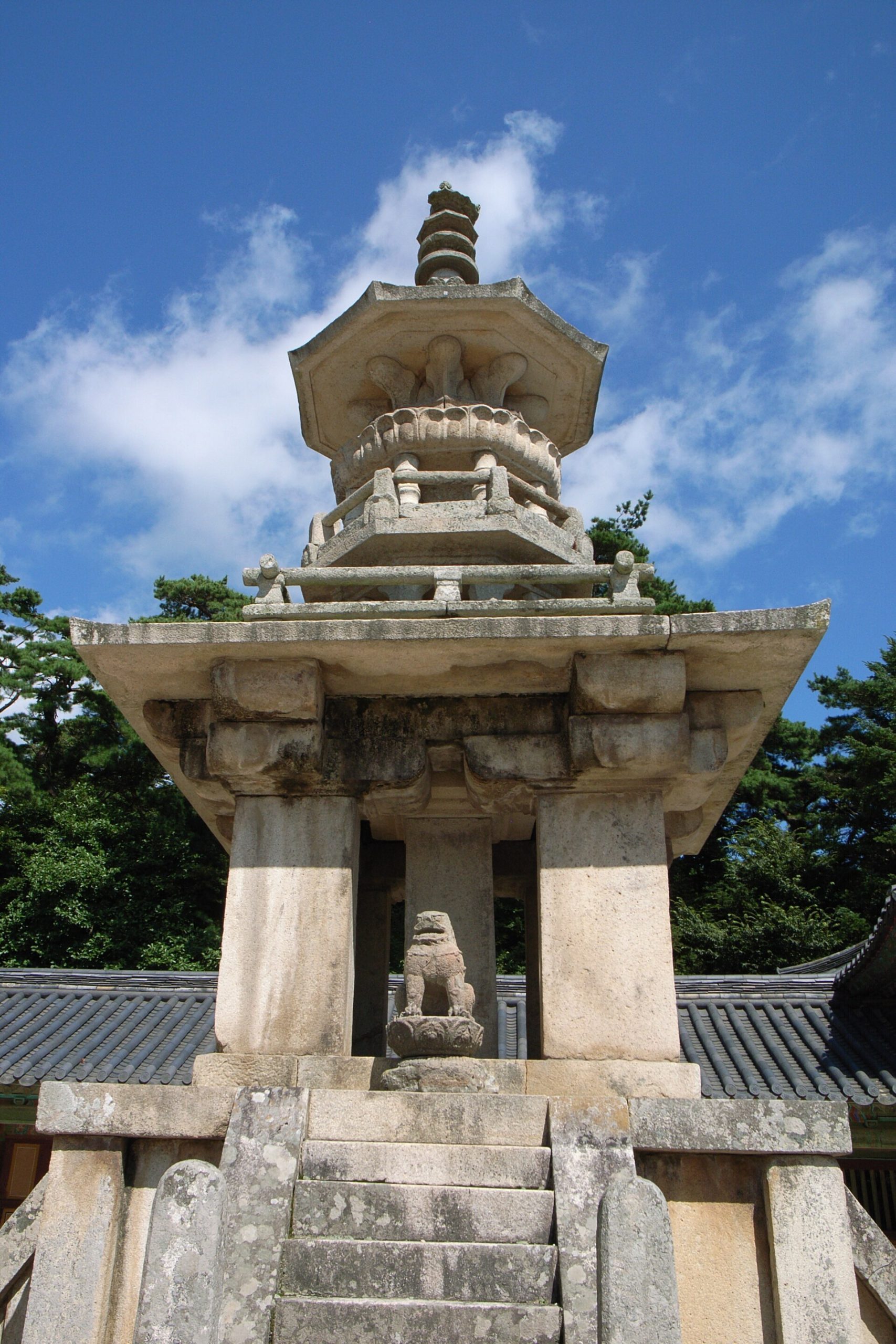
In the main courtyard of Bulguksa stand two stone pagodas of contrasting character. Seokgatap is austere and perfectly proportioned, embodying the ideal of restrained Silla form. Facing it, Dabotap is elaborate and intricate, its tiers of railings, stairs, and columns carved so delicately that they seem to imitate timber rather than stone.
The pair are considered among the greatest achievements of East Asian stonework. Dabotap in particular is so treasured that it appears on Korean coinage, a small ambassador for the artistry of the Silla capital.
Bridges to the Buddha Land
Two pairs of stone staircases lead up to the temple’s terraces, and in Silla thought they were understood not as mere steps but as bridges. To ascend them was symbolically to cross from the world of suffering into the pure land of the Buddha, and their names preserve this idea of passage.
The stonework of these stairways, arched underneath like true bridges, is among the finest surviving from the period. Worn smooth by centuries of pilgrims, they remain the ceremonial threshold of the whole complex.

The Seokguram Grotto
On the wooded slope of Mount Toham above Bulguksa lies Seokguram, an artificial grotto built at the same time as the temple. Inside a domed chamber of fitted granite sits a single Buddha, more than three metres tall, gazing out toward the East Sea. Around him, carved in relief on the walls, stand bodhisattvas, guardians, and disciples in exquisite detail.
The grotto is a marvel of both art and engineering. Its dome was assembled from hundreds of cut stones without mortar, and its orientation was calculated so that the rising sun would once have struck the Buddha’s face. Few works anywhere express the calm of Buddhist enlightenment so completely.

The Royal Tombs
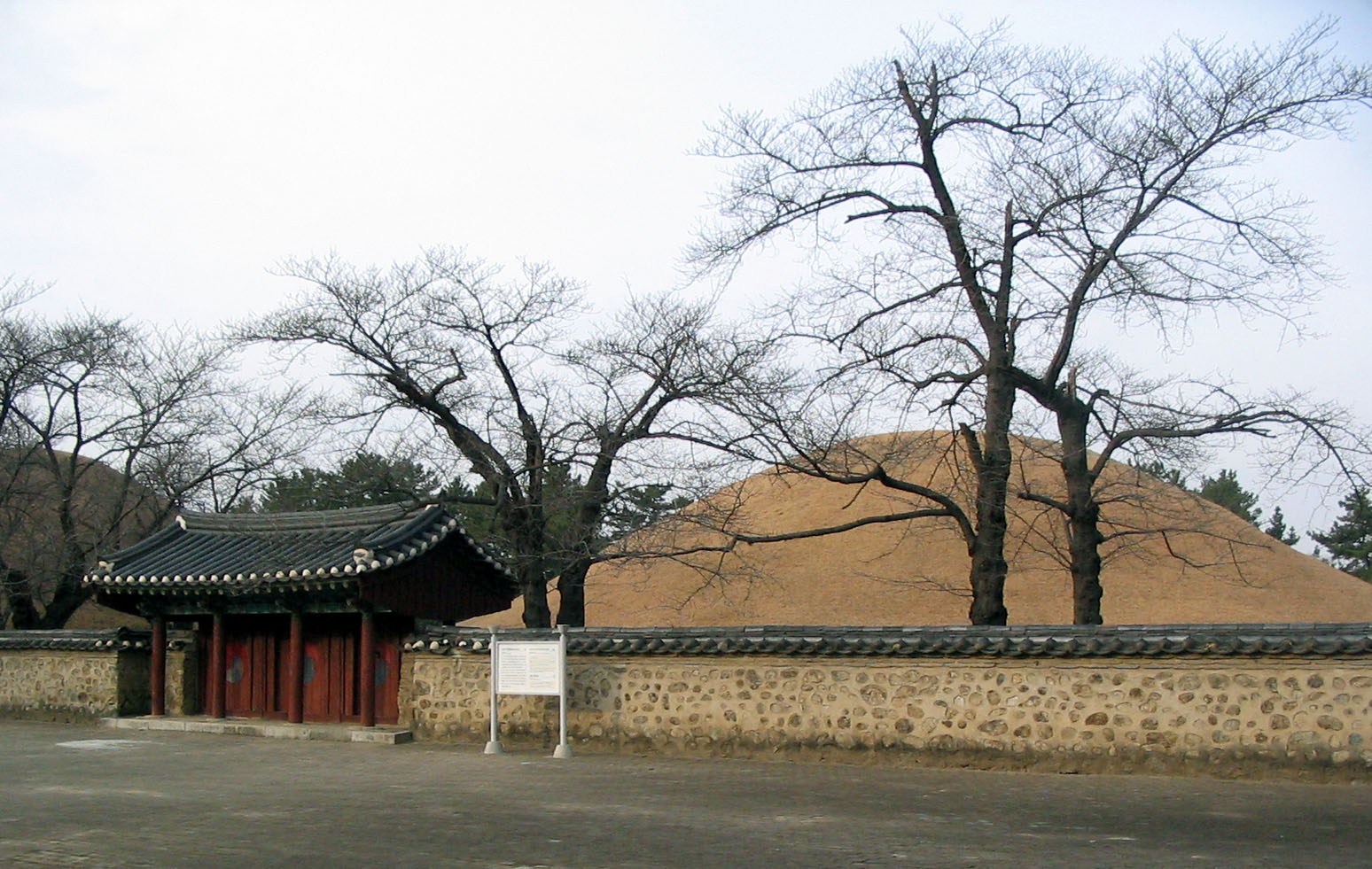
Scattered across Gyeongju, and clustered thickly in the Daereungwon park at its centre, are the great burial mounds of Silla’s kings and queens. Grassed domes of earth raised over stone and timber chambers, they range from modest hillocks to hills large enough to climb.
Excavation of some mounds has yielded spectacular grave goods, above all elaborate gold crowns adorned with jade and dangling ornaments, now among the treasures of Korea’s national collections. The tombs turned the living city into a landscape shared with its ancestors.
Cheomseongdae Observatory
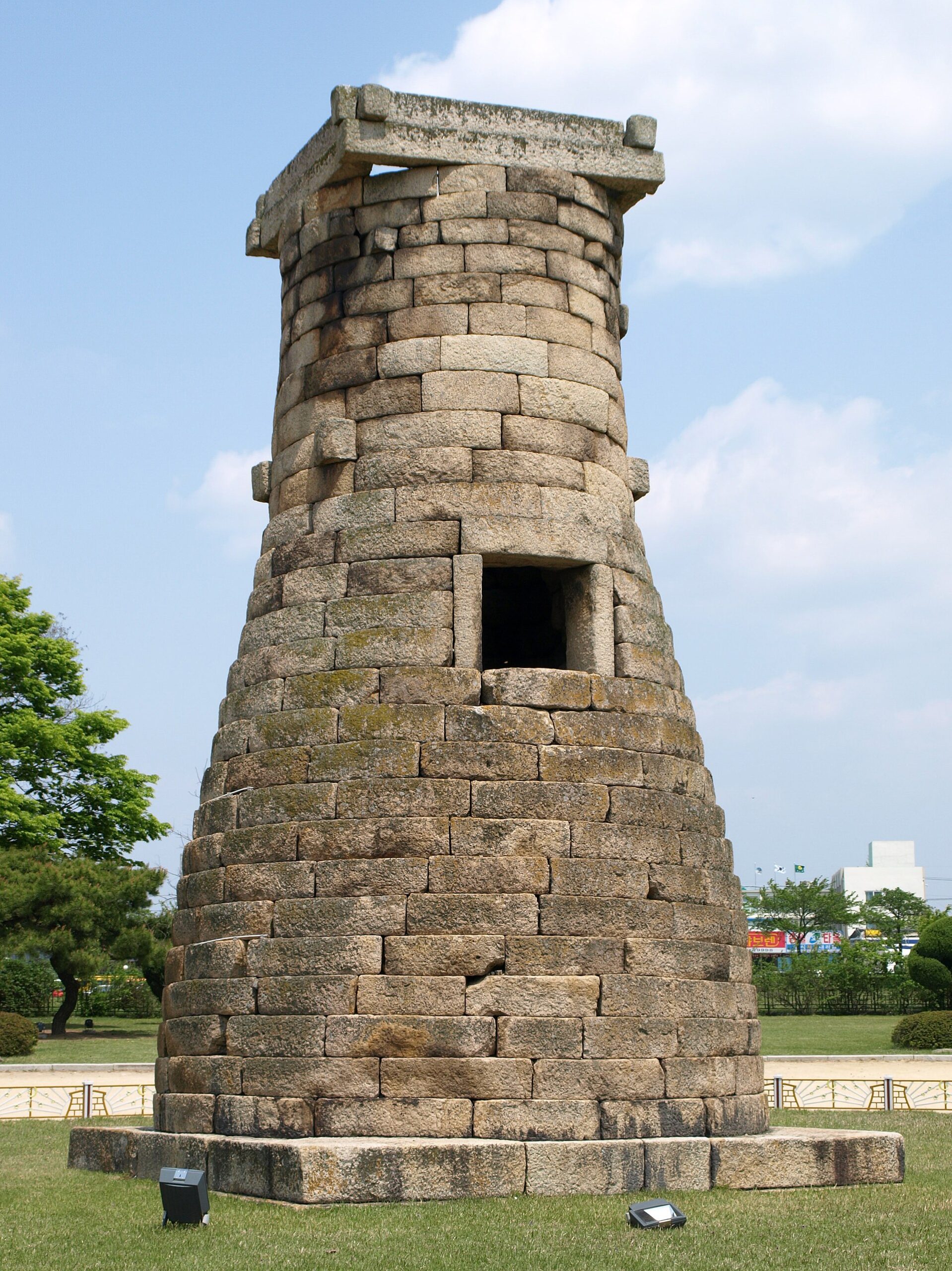
In an open field near the tombs stands Cheomseongdae, a gracefully tapering tower of fitted stone built in the seventh century under Queen Seondeok. Widely regarded as one of the oldest surviving astronomical observatories in East Asia, it was used to observe the heavens whose movements guided the agricultural and ritual calendar.
Its construction is rich in symbolism: the number of its stone courses and blocks is often linked to the days of the year and the signs of the zodiac. Whatever the precise intent, it stands as evidence of the sophistication of Silla science and statecraft.
The Palace and Wolji Pond
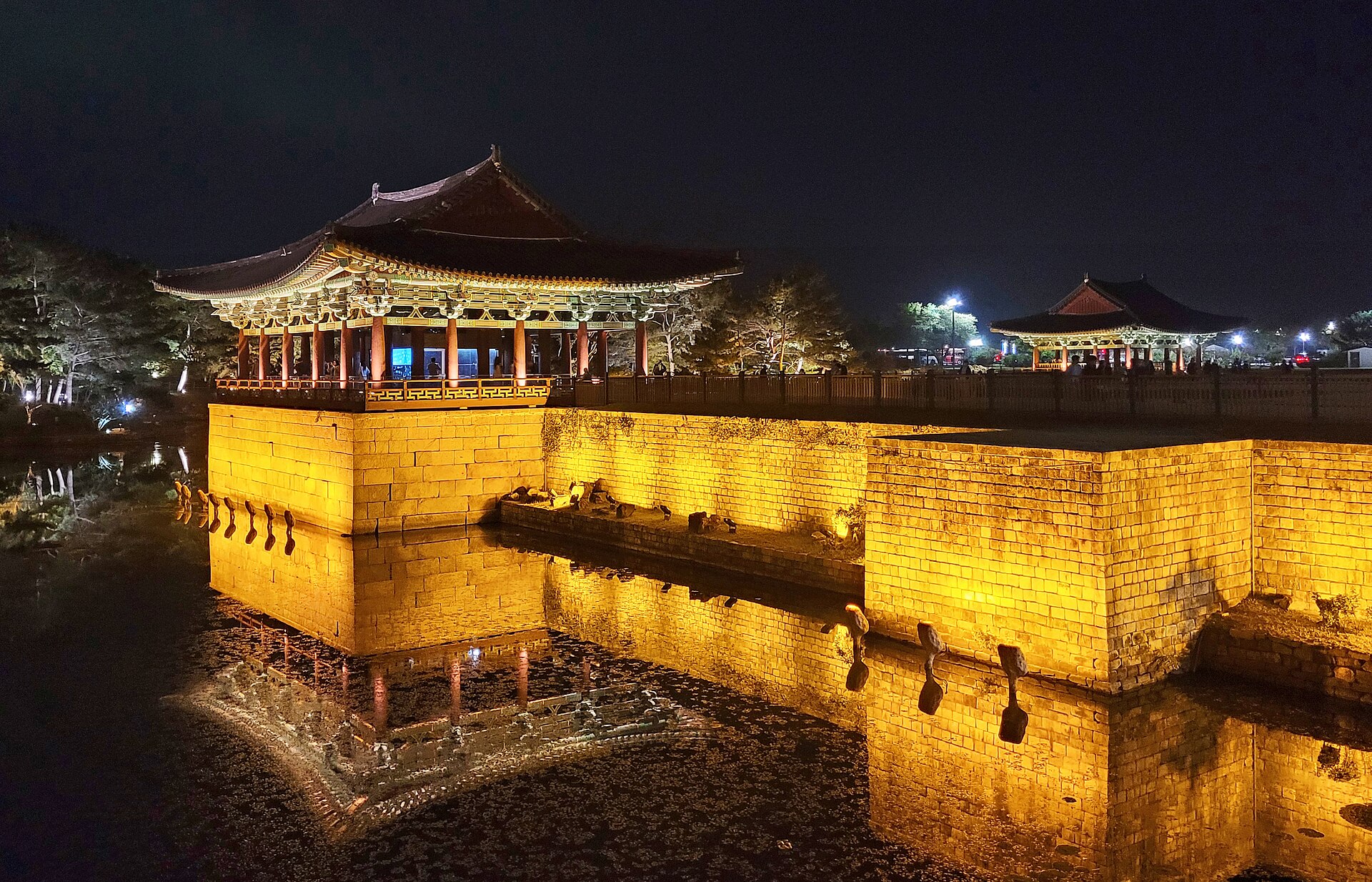
Near the old palace grounds lies Wolji, an artificial pond laid out as a pleasure garden for the Silla court, with islands and pavilions reflected in its water. Long silted over, it was excavated in the 1970s, yielding thousands of everyday objects that vividly illuminate courtly life.
Several of its pavilions have been reconstructed, and at night their illuminated forms mirrored in the still water have become one of the signature images of Gyeongju, a glimpse of the refinement the Silla aristocracy enjoyed.
The Divine Bell
Among the treasures of Silla is the great bronze bell cast in honour of King Seongdeok in the eighth century. Nearly three and a half metres tall and weighing many tonnes, it is celebrated for the extraordinary purity and length of its resonant tone, which lingers long after it is struck.
A haunting legend, almost certainly untrue but deeply rooted, claims a child was cast into the molten bronze to perfect its sound, and its cry is said to echo in the bell’s voice. The bell is a masterpiece of ancient metallurgy and among the finest to survive from anywhere in the medieval world.

Getting There
Gyeongju lies in southeastern South Korea and is reached in about two hours by high-speed train from Seoul to Singyeongju station, then a short bus or taxi ride into the city. Bulguksa and Seokguram sit on the eastern edge of town, while the tombs, observatory, and pond are within the central historic area.
The temple stands in northern Nara at approximately 35.7900, 129.3320. You can open the exact location on Google Maps for directions to Bulguksa and the Gyeongju historic area.
Nearby Places
Closing Thoughts
Gyeongju is unusual among ancient capitals in that its people never wholly abandoned it. Modern life goes on among the tomb mounds and beneath the pagodas, so the Silla past is not fenced off but woven into an ordinary Korean city.
To walk from a grassed royal tomb to a thousand-year-old observatory and up the hill to the Buddha of Seokguram is to trace the whole arc of a civilization in an afternoon. Few places hold so much of an ancient kingdom so intact, and fewer still let the visitor feel it so close at hand.
You May Like
Mafra, the Palace a King Built From a Vow


One thought on “Gyeongju: The Silla Capital That Became a Museum Without Walls”