Off the southern coast of Tanzania lies a low green island scattered with the ruins of domes, arches, and courtyards built from blocks of coral. For several centuries these were the streets and palaces of Kilwa Kisiwani, the richest and most powerful of the Swahili city-states that lined the East African seaboard. From here merchants controlled the gold that flowed out of the African interior and into the markets of the Indian Ocean, growing wealthy enough that a visiting Moroccan traveller called Kilwa one of the most beautiful towns in the world.
Kilwa was not a colonial outpost but an African creation, part of a chain of Muslim trading towns whose people spoke Swahili, a Bantu language enriched with Arabic and Persian words. Its stone mosques and palaces, among the earliest and grandest in sub-Saharan Africa, were raised by local masons using the sea’s own coral. The ruins that remain are the memory of a cosmopolitan world in which East Africa was a full and prosperous partner in the commerce of the medieval Indian Ocean.
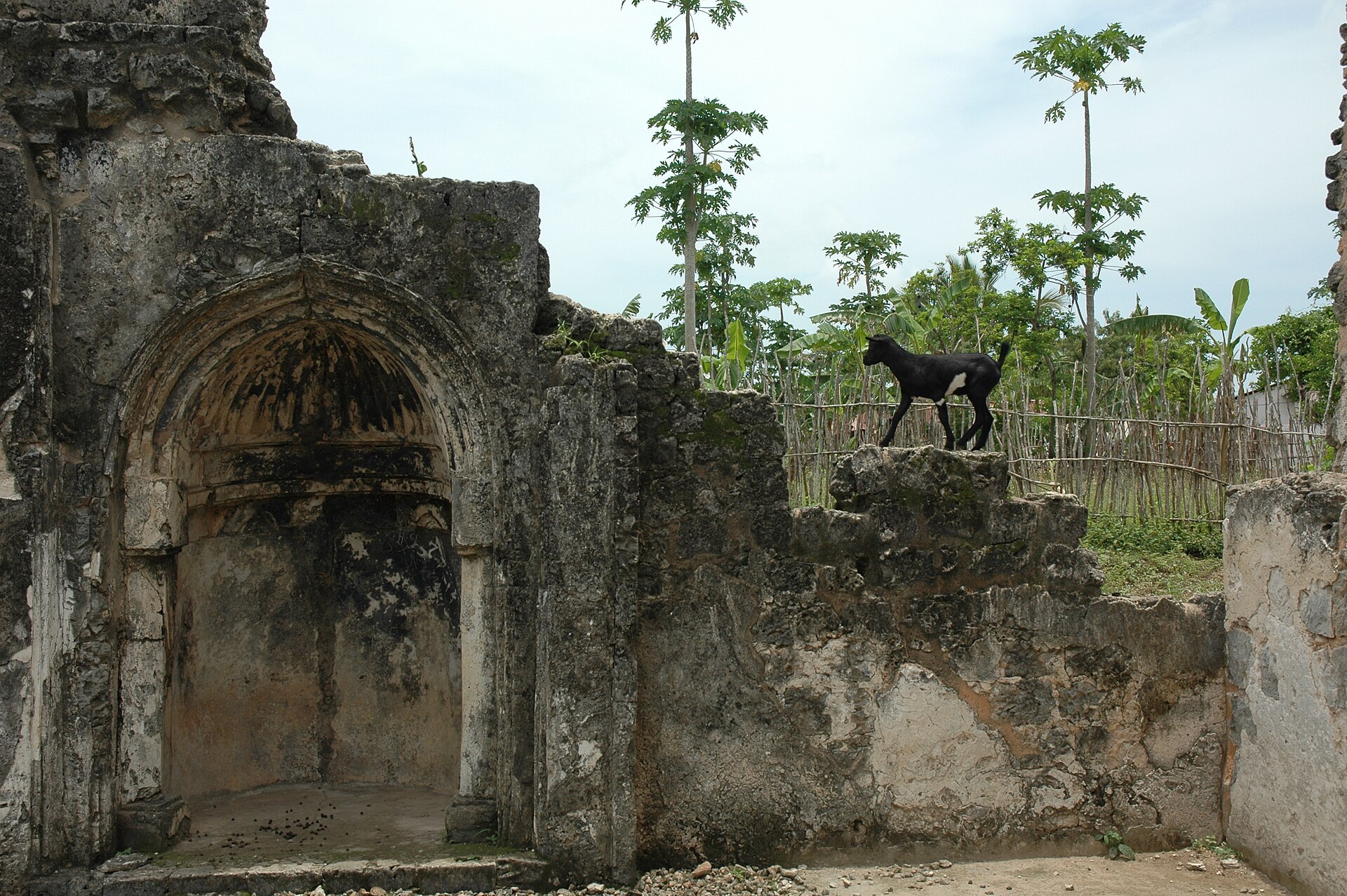
Table of Contents
- The Swahili Coast
- The Rise of Kilwa
- The Great Mosque
- Building in Coral
- Husuni Kubwa
- Coins and Commerce
- The Age of the Dhow
- Songo Mnara
- Decline and the Portuguese
- Getting There
- Nearby Places
- Closing Thoughts
The Swahili Coast
For more than a thousand years a string of towns stretched along the East African coast from Somalia to Mozambique, linked less to the African interior behind them than to the ocean in front. Their people, the Swahili, were African, Muslim, and maritime, and they built a shared urban civilization out of trade with Arabia, Persia, India, and ultimately China.
These towns were tied together by the monsoon winds, which blow steadily northeast for part of the year and southwest for the rest, allowing sailing vessels to cross the Indian Ocean and return with the seasons. Kilwa lay near the southern end of this network, ideally placed to command the trade that came up the coast from the gold country beyond the Zambezi.

The Rise of Kilwa
According to its own chronicles, Kilwa was founded by settlers from the Persian region of Shiraz, a foundation story common along the Swahili coast that expressed the towns’ connection to the wider Islamic world. Whatever the truth of the legend, by the thirteenth century Kilwa had grown from a modest settlement into the dominant power of the southern coast.
Its rise rested on a single strategic coup: control of the trade in gold from the interior, funnelled through the port of Sofala far to the south. By taxing and channelling this gold, Kilwa’s sultans accumulated the wealth that paid for their mosques and palaces and made their currency respected across the region.
The Great Mosque
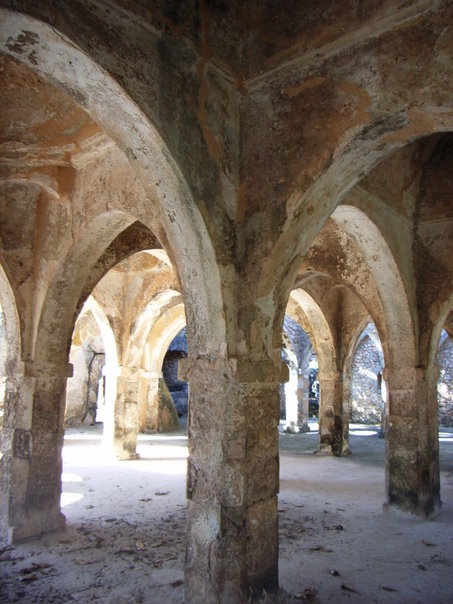
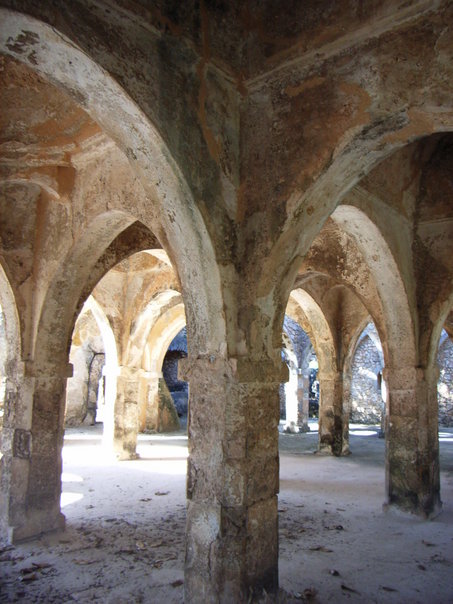
The finest surviving building at Kilwa is its Great Mosque, one of the earliest stone mosques in sub-Saharan Africa. Begun perhaps in the tenth or eleventh century and much enlarged later, it grew into a vast prayer hall roofed with domes and vaults carried on rows of stone and later coral columns.
The mosque’s scale and sophistication astonished medieval visitors and still impress today. Its construction in coral rag, quarried from the reef and cut while soft, then hardened in the air, is a hallmark of Swahili architecture and a technique perfected over generations of coastal building.

Building in Coral
Lacking abundant stone, Swahili masons turned to the reef itself. They cut porous coral into blocks, bound them with lime mortar made by burning more coral, and finished walls with a smooth white plaster. The material gave their buildings a distinctive texture and colour, and its behaviour shaped the forms they could raise.
The arches, vaults, and domes of Kilwa show a mature architectural tradition, one that absorbed influences from across the Indian Ocean while remaining recognizably its own. Decorative details, inset porcelain bowls, and carved inscriptions reveal both wealth and refined taste.
Husuni Kubwa
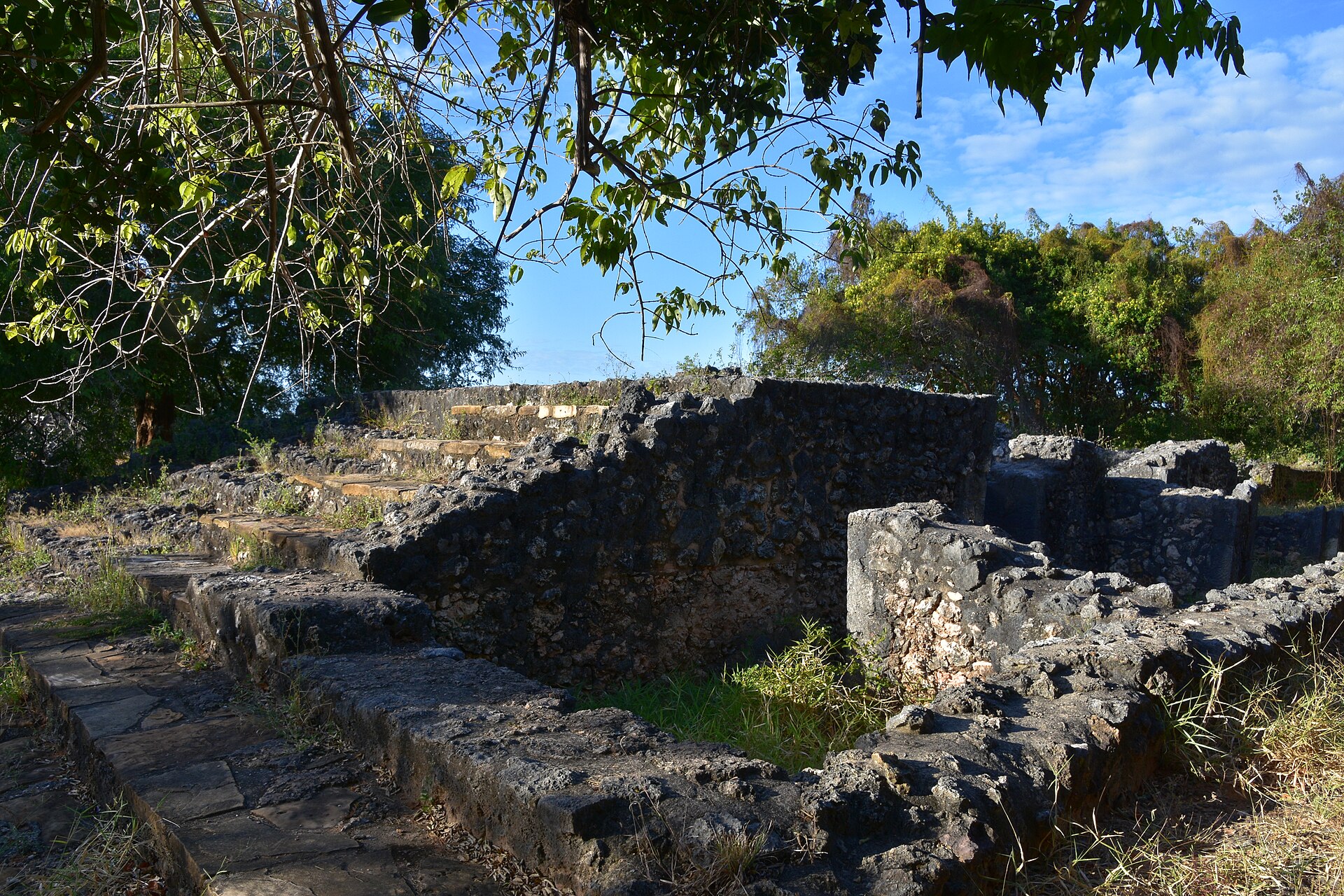
On a bluff above the shore stand the ruins of Husuni Kubwa, a palace and commercial complex built in the early fourteenth century by one of Kilwa’s most powerful sultans. Sprawling over a large area, it combined audience courts, domestic quarters, and a bank of storerooms for the goods that passed through the port, together with an ornamental octagonal bathing pool.
Husuni Kubwa is among the largest surviving stone structures from the medieval period in sub-Saharan Africa. Its ambition, never fully completed, reflects the confidence of Kilwa at its peak, when a single ruler could command the labour and wealth to raise so vast a residence.
Coins and Commerce
Kilwa was one of the few states in sub-Saharan Africa to mint its own coinage. Small copper coins bearing the names of its sultans have been found across the coast and even, remarkably, as far away as northern Australia, testimony to the reach of Indian Ocean trade.
Through its markets flowed gold and ivory from the interior, and in return came Indian cloth, Persian and Chinese ceramics, and glass beads. Fragments of Chinese porcelain still litter the ruins, silent evidence of a trading world that stretched from the African coast to the ports of the Far East.
The Age of the Dhow
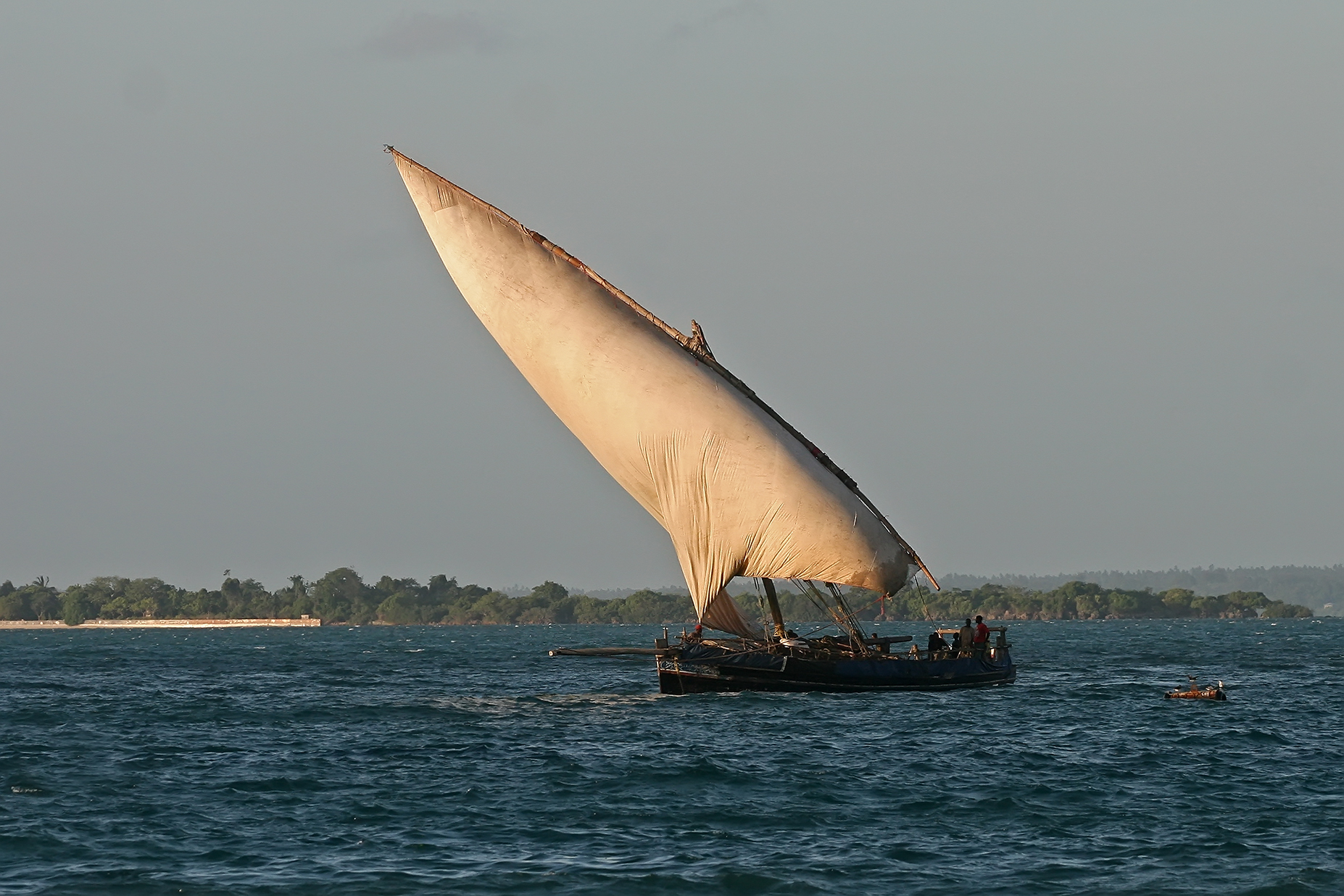
The lifeblood of Kilwa was the dhow, the lateen-rigged wooden sailing vessel of the western Indian Ocean. Riding the monsoon, dhows linked the Swahili ports to Arabia and India in a rhythm of seasonal voyages that had endured for centuries before Kilwa rose and continued long after it fell.
This maritime culture bound the coast into a single commercial and cultural sphere. Ideas, faith, language, and goods moved with the ships, and Kilwa’s prosperity was inseparable from the winds and vessels that carried its trade across the sea.
Songo Mnara
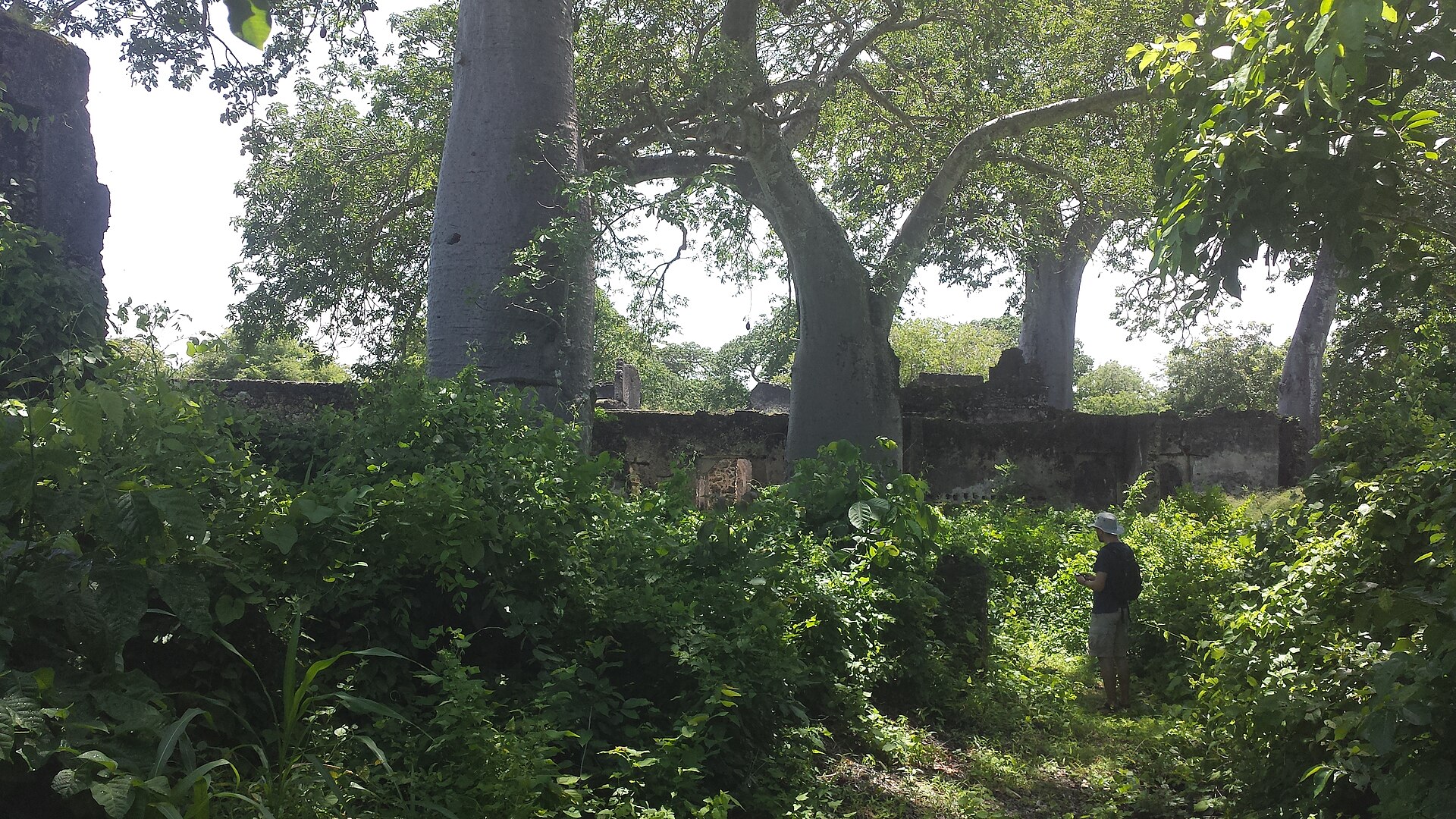
A short distance from Kilwa, on a neighbouring island, lie the ruins of Songo Mnara, a planned town of the fourteenth and fifteenth centuries. Its houses, mosques, and tombs, laid out around open spaces, offer one of the clearest pictures anywhere of how a Swahili stone town was actually organized.
Together Kilwa and Songo Mnara are inscribed as a single World Heritage site, and archaeological work at Songo Mnara in particular has illuminated the daily life, ritual, and domestic arrangements of the Swahili elite in ways the grander ruins of Kilwa alone cannot.
Decline and the Portuguese
Kilwa’s fortunes turned at the very end of the fifteenth century, when Portuguese fleets rounded Africa and forced their way into the Indian Ocean trade. In the early sixteenth century they seized Kilwa, built a fort, and disrupted the delicate networks on which the town’s wealth depended.
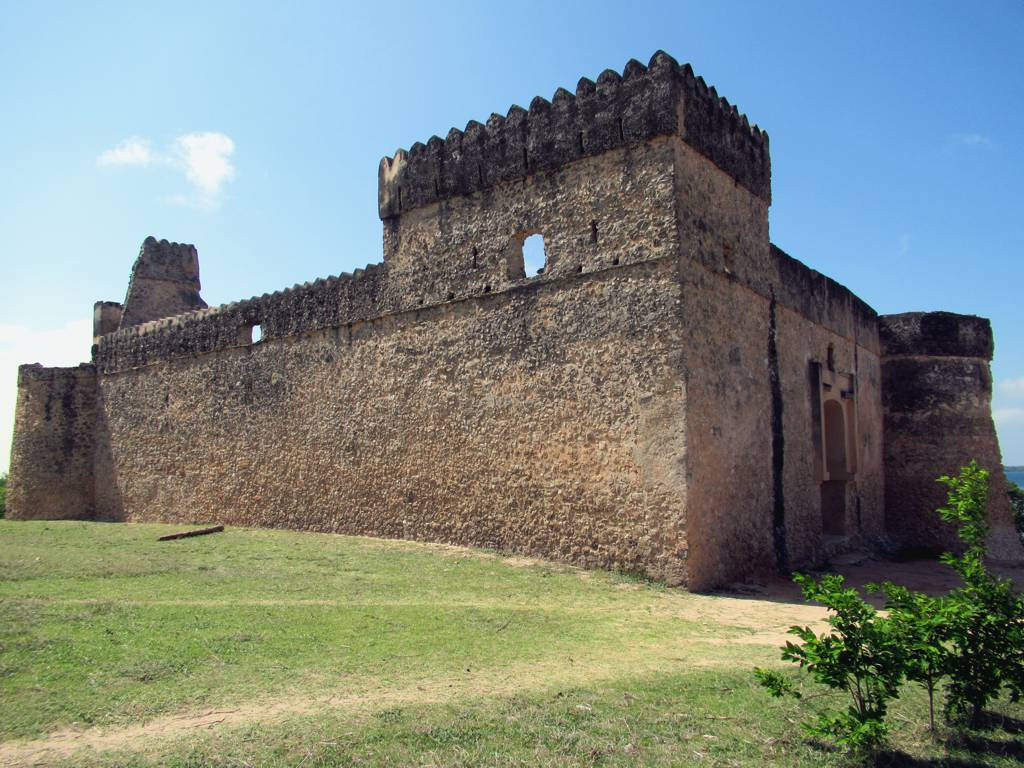
Deprived of its trade and its independence, Kilwa declined. Later it passed under Omani influence, and the harbour fort known as the Gereza was rebuilt in this period. By the modern era the once-great city had shrunk to a village amid its ruins.
Getting There
Kilwa Kisiwani lies off Kilwa Masoko on the southern coast of Tanzania, reached by road from Dar es Salaam in several hours and then by a short boat crossing to the island. Visits are arranged through the local antiquities office, and the ruins of Songo Mnara can be reached by a longer boat trip.
The temple stands in northern Nara at approximately -8.9575, 39.5075. You can open the exact location on Google Maps for directions to the ruins of Kilwa Kisiwani.
Nearby Places
Closing Thoughts
Kilwa is a corrective to any notion that sub-Saharan Africa stood outside the great currents of world history. Here was a wealthy, literate, Muslim, urban civilization, minting its own coins and building in stone, fully engaged in the commerce that spanned the Indian Ocean.
The domes and arches that survive on its quiet island are the ruins of that achievement. They speak of African merchants who read the monsoon like a calendar and grew rich on the trade between a continent’s interior and the wider world, in a chapter of history too often left untold.
You May Like
Buda Castle: The Crown of Budapest Above the Danube


2 thoughts on “Kilwa Kisiwani: The Coral City That Ruled the Indian Ocean Gold Trade”