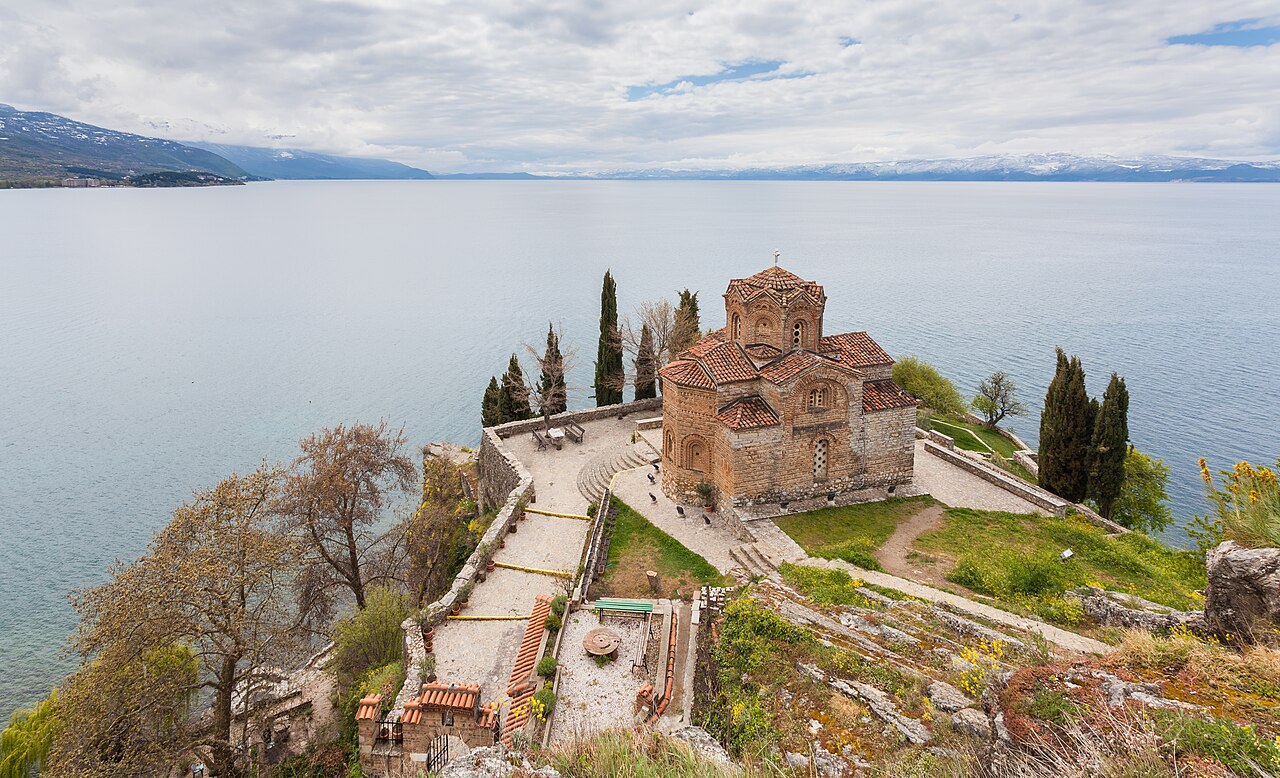
There is a small stone church on a cliff above Lake Ohrid that has become one of the most photographed sights in all the Balkans, and rightly so. It sits right on the edge of the rock, its terracotta dome glowing against the impossible blue of the lake and sky, with nothing behind it but water and mountains. But that single famous church is only the beginning. The old town of Ohrid, on its hillside above the lake, is said once to have held a church for every day of the year, and the whole area is so dense with ancient Christian sites that people have long called it the Jerusalem of the Balkans. This is one of the cradles of Slavic Christianity, the place where a whole civilisation learned to read and write its own faith.
To grasp why this quiet lakeside town matters so much, you have to go back to two brothers, an alphabet, and the pupils who carried their work into the heart of the Balkans.
The lake where the Slavs learned to read
In the ninth century, two missionary brothers, remembered as Saints Cyril and Methodius, set out to bring Christianity to the Slavic peoples in their own language. To do so they created an alphabet capable of writing the Slavic tongue, and translated the scriptures and the liturgy into it, an act of extraordinary consequence that opened the Christian faith to millions who had been shut out of it by the barrier of unfamiliar languages. When the brothers died and their work came under pressure elsewhere, their disciples carried it onward, and the most important of them settled here, by Lake Ohrid.
Two of those disciples, remembered as Saints Clement and Naum, made Ohrid into a great centre of learning. Here they taught, wrote, and trained generations of clergy in the new Slavic letters, effectively founding what some describe as one of the earliest Slavic universities. The script and the literary tradition they nurtured spread out from this lakeside town across the Slavic Orthodox world, shaping the religious and cultural life of Bulgaria, Serbia, Russia, and beyond. To stand in Ohrid, then, is to stand at one of the wellsprings of an entire civilisation, the place from which the written word of the Slavic Orthodox faith flowed outward.
A town of saints and churches
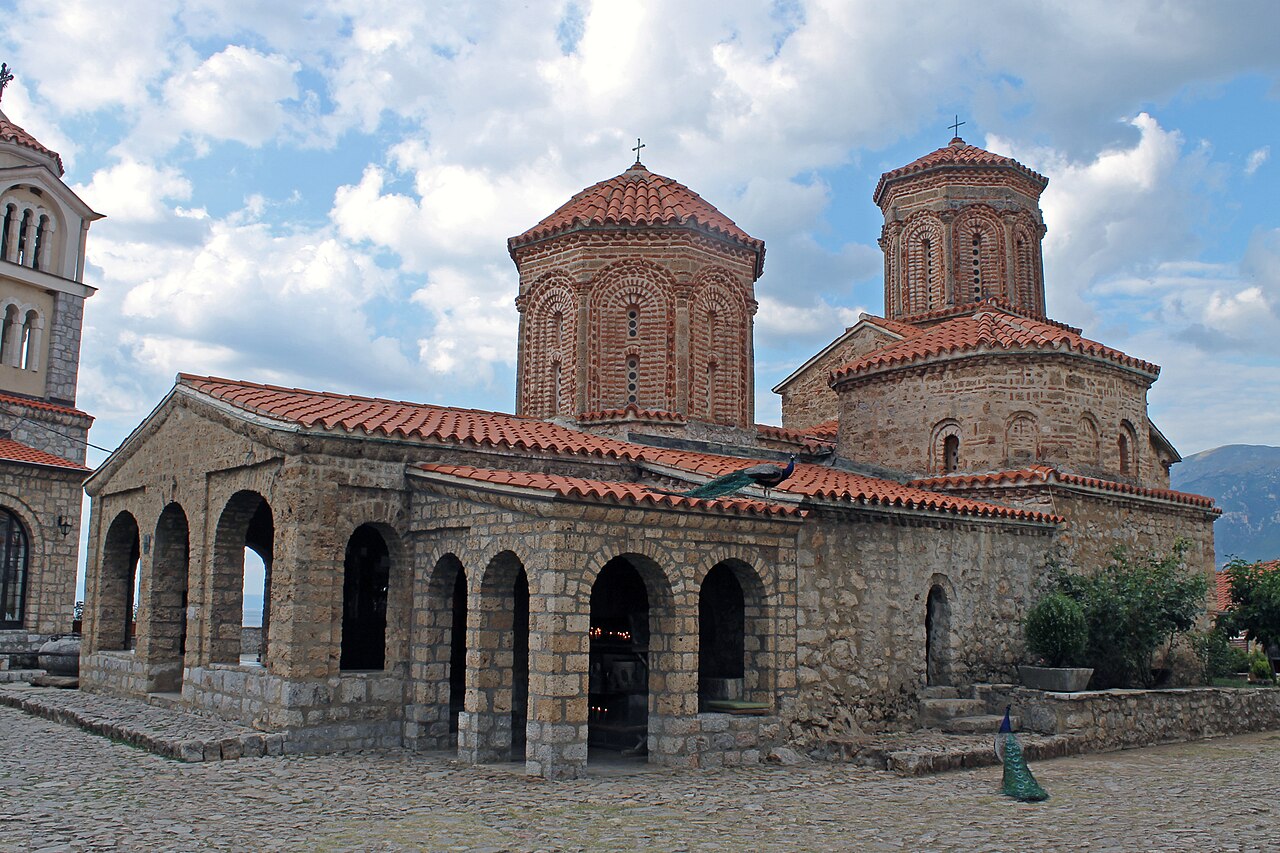
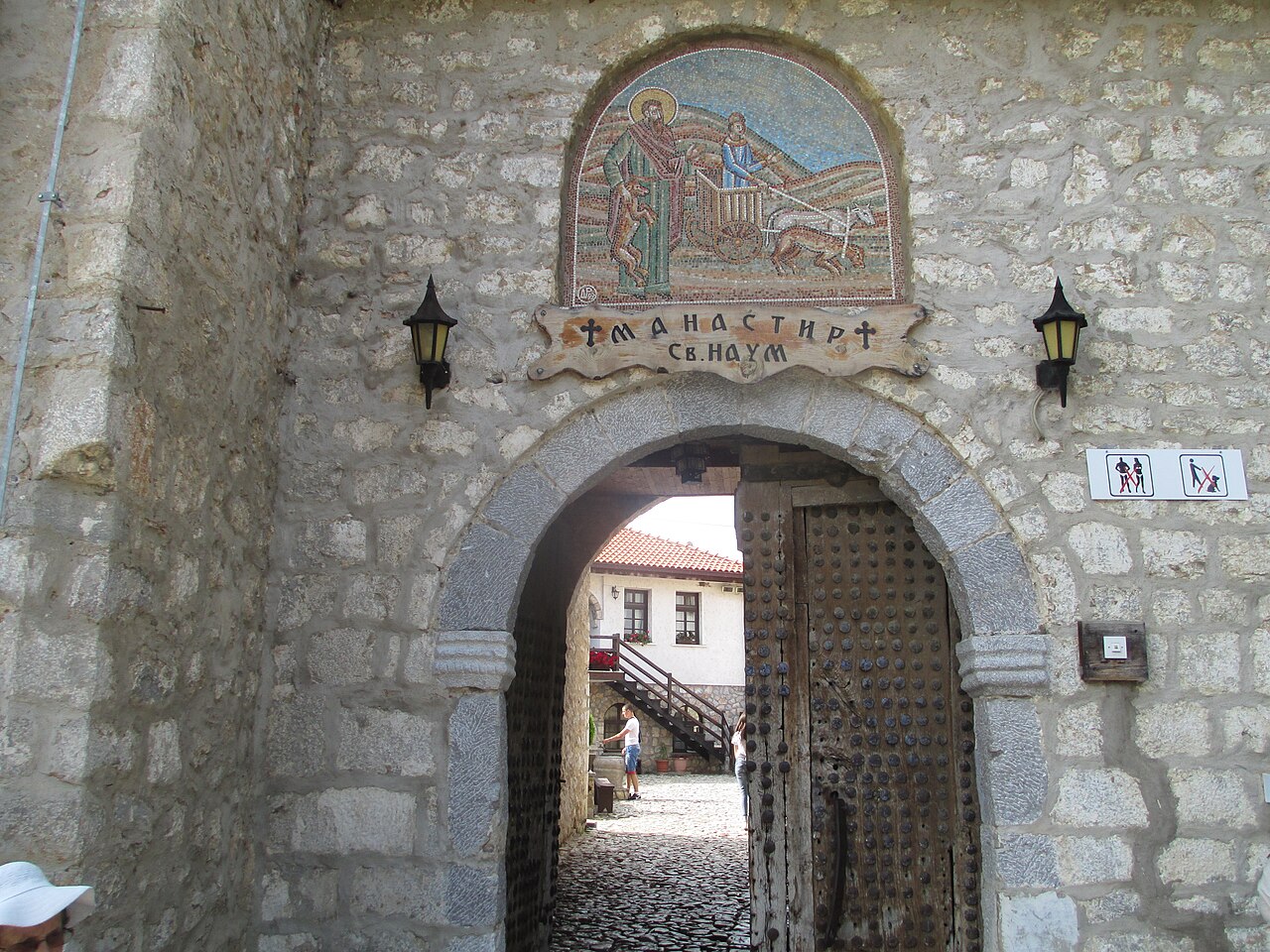
The legacy of that golden age is written all over the landscape. At the southern end of the lake stands the monastery of Saint Naum, founded by the disciple himself, its church holding his tomb, where visitors still press their ear to the stone in the hope of hearing, as the tradition promises, the faint beating of the saint’s heart. The setting is idyllic, with springs feeding the lake and peacocks wandering the grounds, and it remains a place of genuine pilgrimage as well as great beauty.
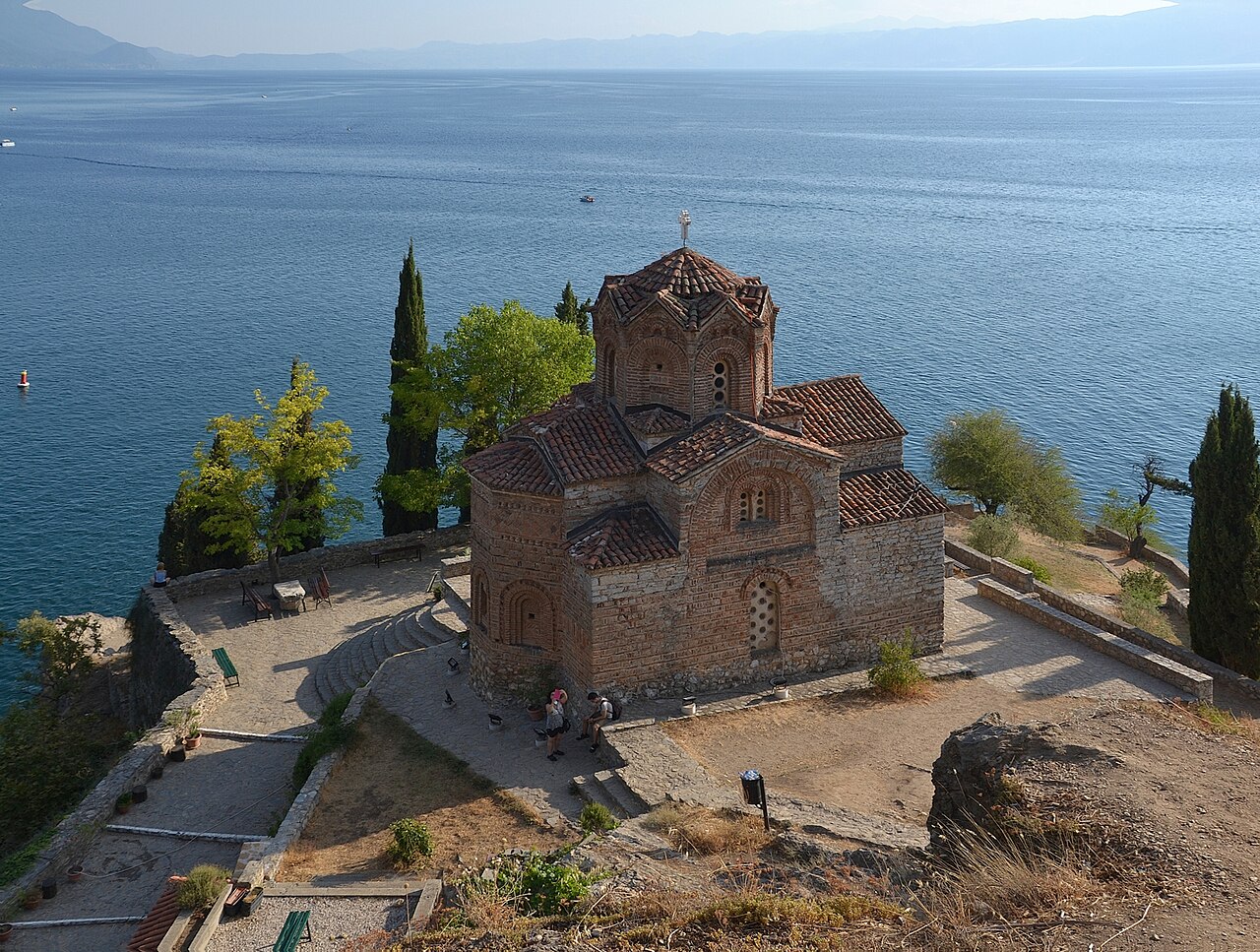
Back in the old town, churches and remains from many centuries crowd the hillside, including a venerable cathedral that preserves some of the most important medieval frescoes in the Orthodox world, and the foundations of an ancient basilica with early mosaics from the very first centuries of Christianity in the region. And then there is the little church of Saint John at Kaneo, perched on its cliff, modest in size but perfect in its setting, which has become the emblem of Ohrid and indeed of the whole country. The sheer concentration of sacred history packed around this one lake is what earned Ohrid its grand comparison to the holy city itself.
Where it sits in the Christian world
Ohrid belongs to the world of Eastern Orthodox Christianity, and it occupies a special place in it as a foundation of the specifically Slavic branch of that tradition. The churches here are Orthodox, with their icons, their sung liturgies in the old Slavic tongue, and their deep reverence for the saints who made this faith possible in the Slavic world. The town was for centuries the seat of an important archbishopric, a centre of authority whose influence reached across the southern Slavic lands, which only deepened its standing.
What makes Ohrid distinctive even within Orthodoxy is its role as a birthplace of Slavic literacy and worship. The Orthodox tradition has always placed great value on praying in the language of the people, which is one of the things that historically distinguished it from the medieval Western church, where Latin long held sway. The work begun by Cyril and Methodius and carried forward at Ohrid embodies that principle, and it is why the script and the liturgy nurtured here became the foundation of religious life for so many Orthodox nations. The mosaics, the frescoes, and the manuscripts that survive here trace the artistic and spiritual world of Byzantine and Slavic Christianity across more than a thousand years.
By the shore of the lake
For all its weight of history, Ohrid is also simply one of the loveliest places in the Balkans, and a visit here is as much a pleasure as a pilgrimage. The lake itself is ancient and vast, one of the oldest in the world, its clear waters ringed by mountains, and the old town tumbles down toward it in a maze of stone houses, cobbled lanes, and, around every other corner, another small old church. You can spend days wandering between the churches and the lakeside, and the gentle rhythm of the place, the water, the light, the bells, becomes part of the experience.
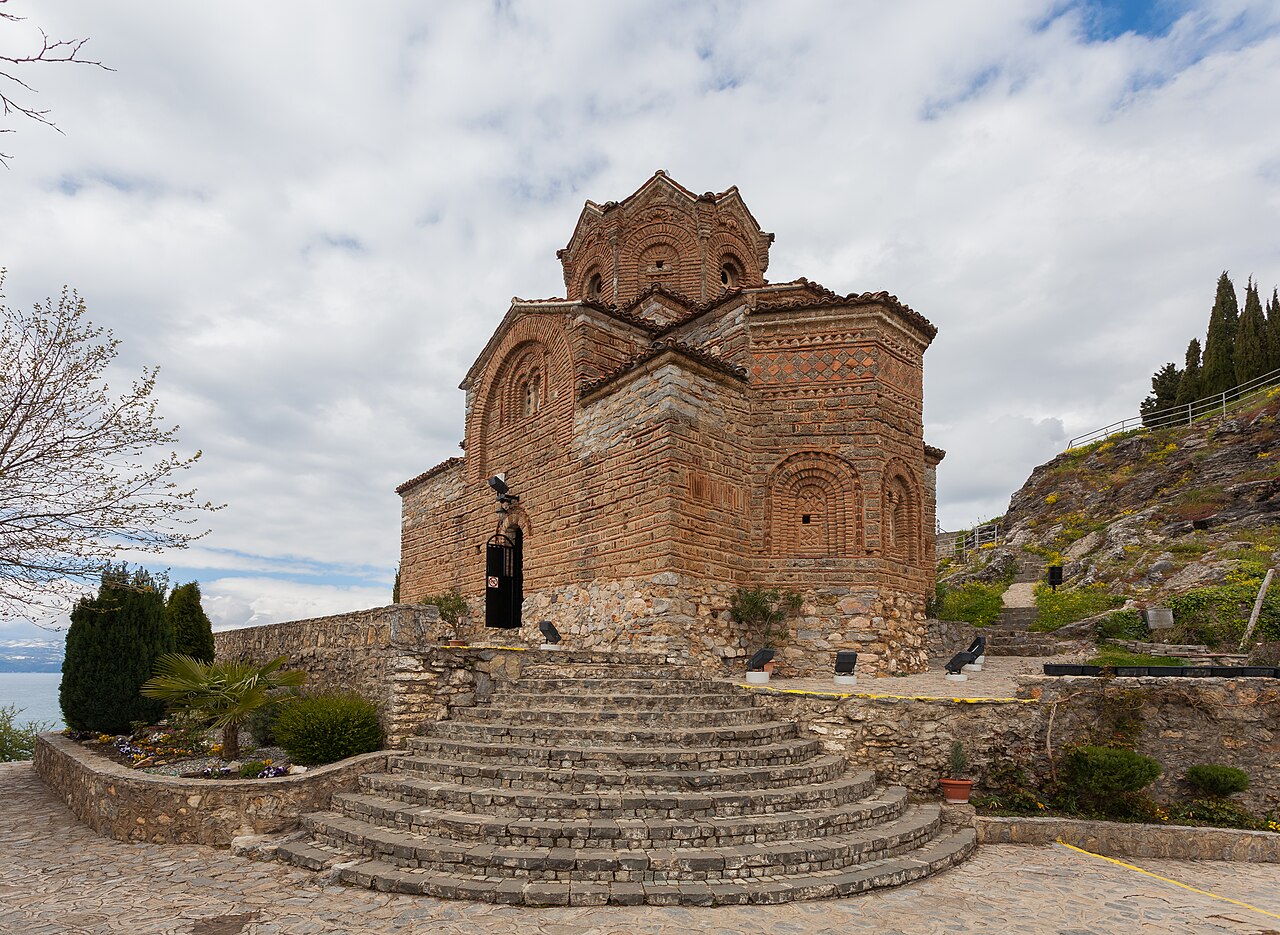
The famous church at Kaneo is best reached by a footpath along the shore or by a short boat ride across the bay, and arriving by water, watching it grow on its cliff ahead of you, is the most magical approach. The monastery of Saint Naum, at the far end of the lake, makes a perfect day’s outing, with its tranquil grounds and its tomb where the curious still listen for a heartbeat. Whether you come as a believer or simply as a traveller drawn by the beauty, it is hard not to feel, in this town of a hundred churches by its luminous ancient lake, the presence of the long centuries of faith and learning that made Ohrid what it is, and that quietly shaped a whole world far beyond its shores.


