Ring the great Taklamakan desert, one of the most forbidding wastelands on the planet, and you will find them: a chain of green oasis towns strung like beads around a sea of sand, watered by rivers born in distant mountains and by tunnels dug by hand deep beneath the earth. For well over a thousand years these oases have been home to the Uyghurs, a Turkic-speaking, largely Muslim people whose culture grew up at the meeting point of China, Central Asia, and the wider Islamic world. Theirs is a civilization of the Silk Road, built on trade, faith, music, and the patient art of coaxing life from the desert.
The Uyghurs number somewhere above ten million, the great majority living in the vast northwestern region of China that they call their homeland, with communities scattered across neighboring Central Asian states and a diaspora spread by migration and, in recent years, by flight. They are a people whose faces, language, food, and faith set them distinctly apart from the Han majority of China, closer in many ways to the peoples of the Central Asian republics to the west than to their fellow citizens to the east.
This account follows the Uyghurs through the whole arc of their world, and it does so with an awareness that their recent history is painful and contested. We will look at where they came from and how their identity formed; the language they speak and write; the desert oases that made their home; the old life of farmers and traders; the society of the mahalla and the mosque; their Islamic faith; the extraordinary musical tradition of the muqam; their crafts; their food; their festivals; the long history of their land; and the difficult present. Here is what lies ahead:
- Between the Steppe and the Oasis
- The Return of an Old Name
- A Turkic Tongue of the Silk Road
- Green Towns Around a Desert Sea
- Farmers, Traders, and the Caravan
- The Mahalla, the Mosque, and the Bazaar
- A Muslim People of the Far East
- The Muqam and the Soul of a People
- Silk, Carpets, and the Jade Cutter
- A Table of Bread and Pilaf
- Feasts, Fairs, and the Sunday Market
- Kingdoms, Caravans, and Conquests
- The Uyghurs in a Hard Present
Between the Steppe and the Oasis

The Uyghurs are a people formed at a crossroads, and their origins reflect the meeting of two very different worlds: the nomadic Turkic tribes of the northern steppe and the settled oasis-dwellers of the Tarim Basin. In the early medieval period a Uyghur nomadic power rose on the steppe, a formidable state that played a major role in the politics of Inner Asia. When that steppe empire fell, groups bearing the Uyghur name migrated south and west into the oases, where they mingled with the existing populations.
Those earlier oasis peoples were themselves an ancient and cultured population, speakers of Iranian and other tongues who had built a brilliant civilization along the Silk Road, adorned with Buddhist monasteries, wall paintings, and manuscripts in many languages and scripts. The incoming Turkic groups gradually blended with these settled peoples, adopting oasis agriculture and urban life while imparting their Turkic language, and out of this fusion the modern Uyghurs slowly took shape over the centuries.
The result is a people who are, genetically and culturally, a blend of steppe and oasis, of Turkic and Iranian and other elements, reflecting the many currents that flowed through this great crossroads of Asia. The Uyghurs are heirs both to the mobile, martial traditions of the steppe nomads and to the sophisticated, literate culture of the Silk Road cities, and this double inheritance gives their civilization its particular richness and depth.
For much of their history the people of these oases did not think of themselves primarily as a single nation but as the inhabitants of particular towns, the people of Kashgar, of Turpan, of Khotan, each oasis a world unto itself with its own character and pride. The sense of a single Uyghur people uniting all the oases is in some ways a more modern development, though it is built on the deep and genuine cultural kinship that the oasis dwellers had long shared.
The Return of an Old Name
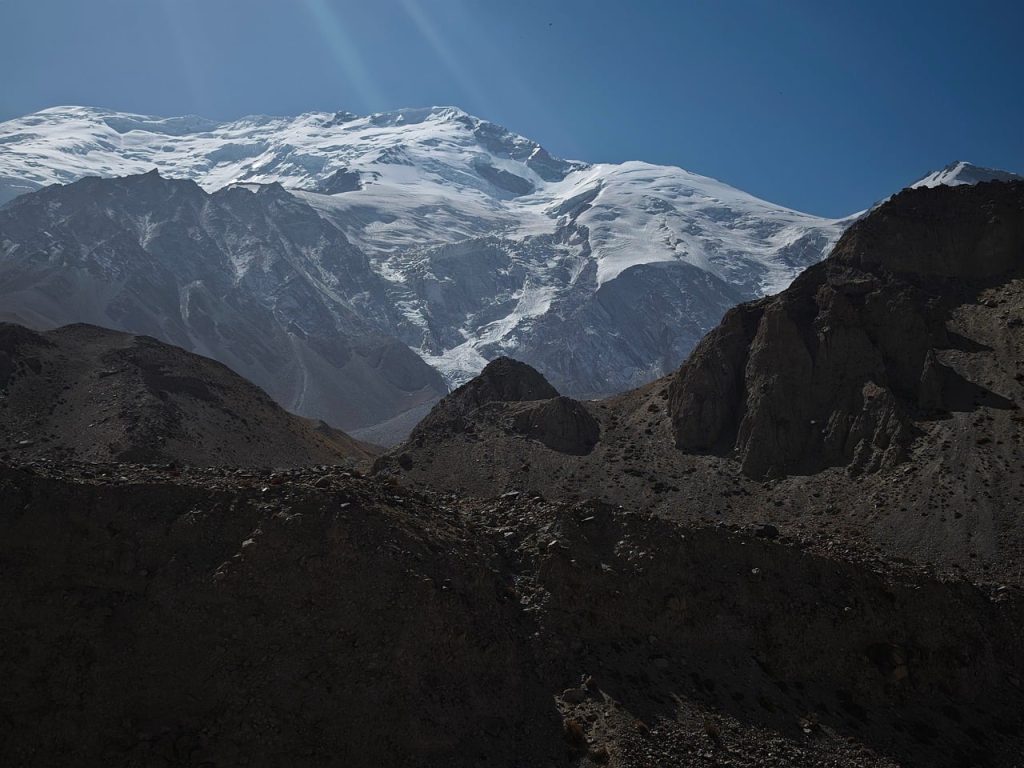
The name Uyghur has a curious history, for it is both very old and, in its modern application, relatively recent. It belonged first to the steppe people who founded the early medieval Uyghur empire, and it was carried by their descendants who settled in the oases. But over the long centuries that followed, the name faded from common use, and the oasis dwellers came to identify themselves chiefly by their towns and by their faith as Muslims rather than by a single ethnic label.
It was in the early twentieth century that the old name was revived and applied to the settled Turkic-speaking Muslims of the oases as a whole, giving a single national name to a people who had long thought of themselves in more local terms. This revival was part of the broader awakening of national consciousness across the region in the modern era, and it gave the Uyghurs a unifying identity that drew on the memory of their ancient namesakes and their shared culture.
The name thus carries a double weight, linking the modern people both to the deep past of the steppe empire and to the more recent formation of a national identity. To be Uyghur today is to belong to this people defined by their Turkic language, their Islamic faith, their oasis homeland, and their distinct culture, set apart from the other peoples of the region and, above all, from the Han majority of the state in which they live.
The adoption of a common name was more than a matter of labels, for it expressed and reinforced a growing sense that the people of the oases were one nation with a shared destiny. This national consciousness has been central to Uyghur history in the modern era, shaping their aspirations and their relationship with the state, and making the name Uyghur a marker not only of culture but of a distinct peoplehood asserted with pride.
A Turkic Tongue of the Silk Road
The Uyghur language belongs to the Turkic family, kin to the tongues spoken across a great band of Asia from Turkey through Central Asia, and it is the deepest marker of Uyghur identity. A speaker of Uyghur can grasp much of the speech of the neighboring Central Asian peoples, for these languages are close relatives, and this linguistic kinship links the Uyghurs to a wide world of Turkic culture stretching far to the west, well beyond the borders of the state in which they live.
Over its long history the language has been written in a remarkable succession of scripts, reflecting the many cultural influences that passed through the oases. In the distant past an older Uyghur script was used, itself descended from the alphabets of the Silk Road; later, with the coming of Islam, the Arabic script was adopted and adapted to the sounds of the language. Today Uyghur is most commonly written in a modified Arabic script, a visible link to the wider Islamic world.
The language carries a rich literary heritage, for the oases were centers of learning and culture where poets, scholars, and mystics composed works of lasting value. The tradition of classical poetry, drawing on the wider Persian and Turkic literary worlds, produced revered masters whose verses are still cherished, and the language is famous among its speakers for its expressiveness and beauty. To speak and write Uyghur well has long been a mark of cultivation and belonging.
In the modern era the language has faced growing pressures, as the dominant language of the state has expanded in schools, government, and public life, and Uyghur has increasingly been pushed toward the private sphere of home and community. For the Uyghurs, the maintenance of their language has become bound up with the survival of their identity itself, and its preservation, in speech, in writing, in song, and in the digital world, is felt as a matter of profound importance to a people determined to endure.
Green Towns Around a Desert Sea
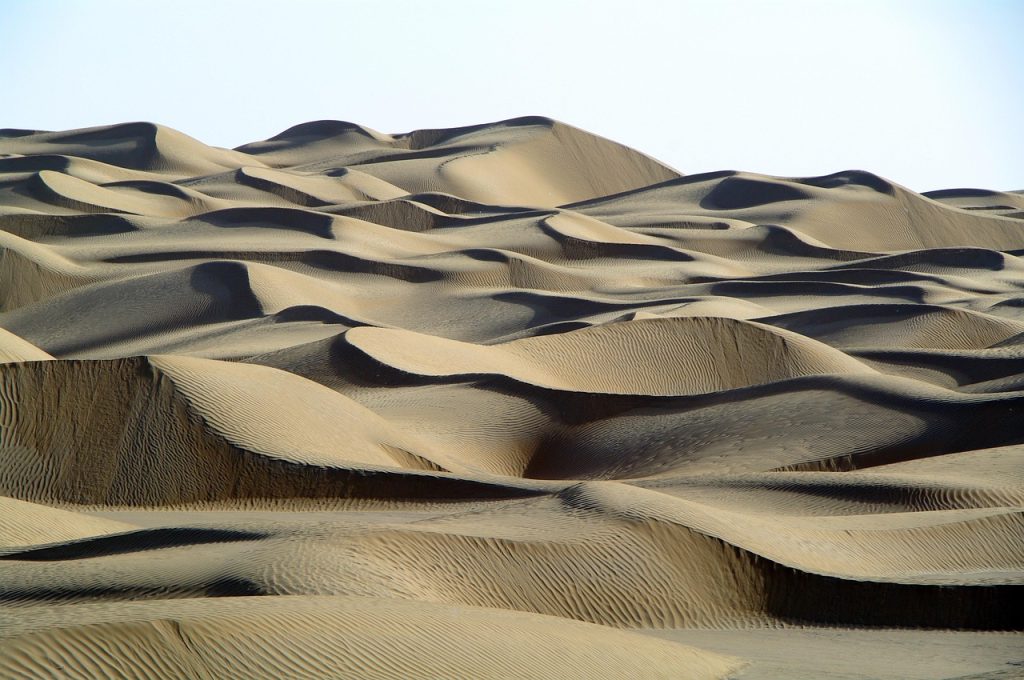
The Uyghur homeland is dominated by one overwhelming feature: the Taklamakan, a vast desert of shifting sand dunes so hostile that its name is said to warn that those who enter may not return. Around this dead heart of the Tarim Basin runs a ring of oases, where rivers flowing down from the encircling mountains bring water to the desert’s edge, and it is on this thin green rim, and along the rivers, that Uyghur life has always clustered. The oases are islands of cultivation in an ocean of sand.
The genius that made these oases flourish was the mastery of water in a land of almost no rain. The Uyghurs and their predecessors built ingenious systems of underground channels that carried the precious meltwater from the mountains across the desert to the fields, minimizing the loss to evaporation in the fierce heat. These hidden waterways, dug and maintained by generations of labor, turned the desert margins into gardens of grapes, melons, cotton, and grain.
The great oasis towns, each a Silk Road city of ancient fame, became the centers of Uyghur civilization. Kashgar in the west, a meeting point of routes from China, India, and Central Asia; Turpan in a scorching depression below sea level, famous for its grapes; Khotan in the south, renowned for jade and silk, each was a world of bazaars, mosques, orchards, and mud-brick homes, humming with the commerce of the caravan trade that passed through.
Beyond the oases and the desert, the homeland also encompasses high mountains and grasslands where other ways of life prevailed, and the region as a whole is one of enormous scale and dramatic contrasts, from burning desert to snow-capped peaks. But it is the oases, strung around the Taklamakan, that form the true heartland of the Uyghurs, the green towns that gave rise to their culture and that remain the enduring home of their people.
Farmers, Traders, and the Caravan
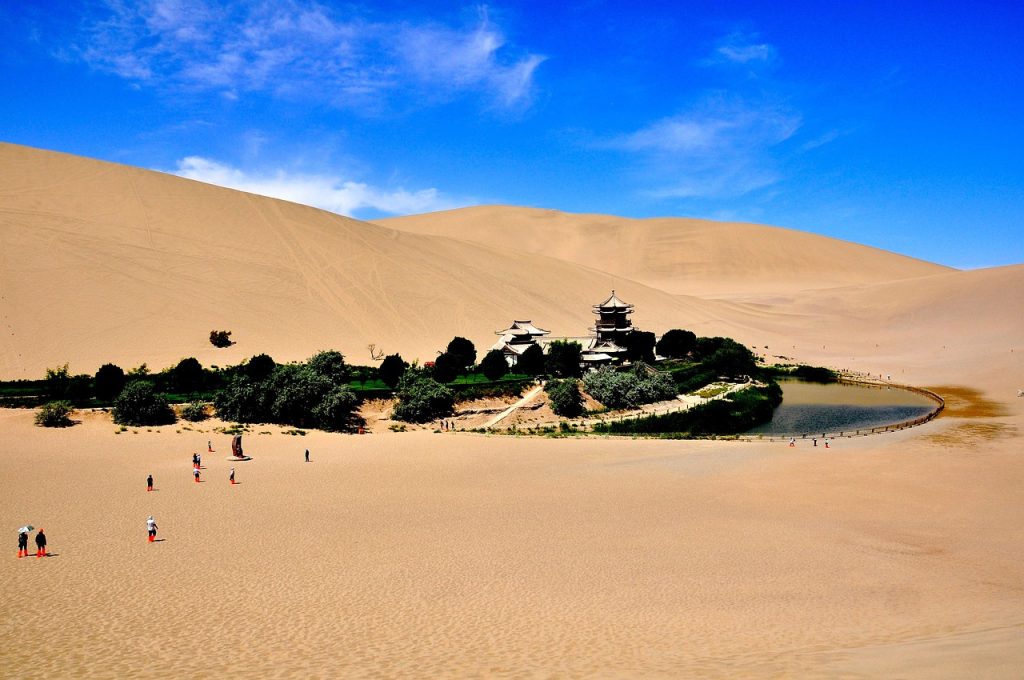
For most of their history the Uyghurs lived as oasis farmers, cultivating the irrigated fields and orchards that the underground channels made possible. They grew wheat and maize, cotton for cloth, and above all the fruit for which the oases were famed: grapes dried into raisins in the dry heat, melons of legendary sweetness, apricots, pomegranates, and figs. The abundance of the oasis gardens, wrung from the desert by careful irrigation, was the foundation of Uyghur life.
The oases owed much of their prosperity to their position astride the Silk Road, the network of routes that carried goods, ideas, and travelers between China and the West for two thousand years. The Uyghur towns were vital way stations on this great highway, and their people prospered as traders, guides, and hosts to the caravans that passed through. The bazaar was the beating heart of the oasis town, and commerce was woven deeply into Uyghur culture and character.
This mercantile tradition made the Uyghurs a people accustomed to the meeting of cultures, for the caravans brought contact with China, India, Persia, and the lands beyond, and the oases became places where goods, religions, and artistic influences from across Eurasia mingled. The cosmopolitan heritage of the Silk Road left its mark on Uyghur culture, which absorbed and blended elements from many sources into its own distinctive whole.
Alongside the settled farmers and traders of the oases, the mountains and grasslands of the region supported herders who moved with their flocks, and the interplay between the oasis and the pasture, the town and the steppe, was part of the fabric of regional life. But it was the oasis, with its gardens, its bazaars, and its caravan trade, that defined the Uyghur way of life, a settled, commercial, garden civilization at the heart of Asia.
The Mahalla, the Mosque, and the Bazaar

Traditional Uyghur society was organized around the neighborhood community, the mahalla, a close-knit urban quarter centered on its mosque and bound by ties of kinship, faith, and mutual support. Within the mahalla, neighbors shared in the events of life, the weddings and funerals, the festivals and the everyday exchanges, and the community provided a network of belonging and security. The intimate world of the neighborhood was the basic social unit of the oasis town.
The mosque stood at the center of the community, not only as a place of worship but as a focus of social and cultural life, and the religious scholars and leaders held positions of respect and authority. Islamic learning and piety were woven into the fabric of society, and the great mosques of the oasis towns were landmarks of enormous significance, gathering the community for the Friday prayers and the great festivals of the faith.
The bazaar was the other great center of Uyghur life, a bustling marketplace where the produce of the oasis gardens, the crafts of the artisans, and the goods of distant lands were bought and sold. The bazaar was not merely an economic institution but a social one, a place of meeting, news, and sociability, and the great markets, especially the famous Sunday bazaars, drew people from across the oasis and beyond in a swirl of color, sound, and commerce.
The values of Uyghur society emphasized hospitality, community solidarity, and devotion to family and faith, qualities nurtured in the intimate world of the mahalla. Generosity to guests was a point of honor, and the bonds of neighborhood and kinship provided support in a demanding environment. This rich communal life, centered on the mosque, the bazaar, and the neighborhood, gave Uyghur society its distinctive character and its deep sense of shared identity.
A Muslim People of the Far East

The Uyghurs are Sunni Muslims, and Islam is central to their identity, distinguishing them sharply from the Han majority and linking them to the wider Muslim world to the west. The faith came to the oases gradually over the centuries, spreading along the Silk Road and eventually replacing the Buddhism, Manichaeism, and other religions that had earlier flourished there. By the later medieval period Islam had become the dominant faith of the oases, and it has defined Uyghur life ever since.
Uyghur Islam has long carried a strong Sufi coloring, with orders of mystics and the shrines of revered saints forming an important part of religious life. Pilgrimage to these shrines, the veneration of holy figures, and the devotional practices of the Sufi orders added a rich and tender strand to the faith, alongside the observance of prayer, fasting, and the great festivals. The tombs of saints scattered across the oases were places of blessing and pilgrimage.
Faith shaped the rhythms of Uyghur life, from the daily prayers and the fast of the holy month to the naming of children and the burial of the dead, and the religious calendar structured the year. Islamic learning was cultivated in the schools attached to the mosques, and the ideal of piety was woven into the culture. For the Uyghurs, as for many peoples, religion was not a separate compartment of life but the frame within which the whole of existence was understood.
In the modern era religion has become a particularly sensitive dimension of Uyghur identity, bound up with the tensions between the people and the state, and the practice of the faith has faced significant restrictions in recent years. For many Uyghurs, their Islam is inseparable from their sense of who they are, a core element of the identity that sets them apart, and the pressures on religious practice are felt as pressures on the very heart of their peoplehood.
The Muqam and the Soul of a People
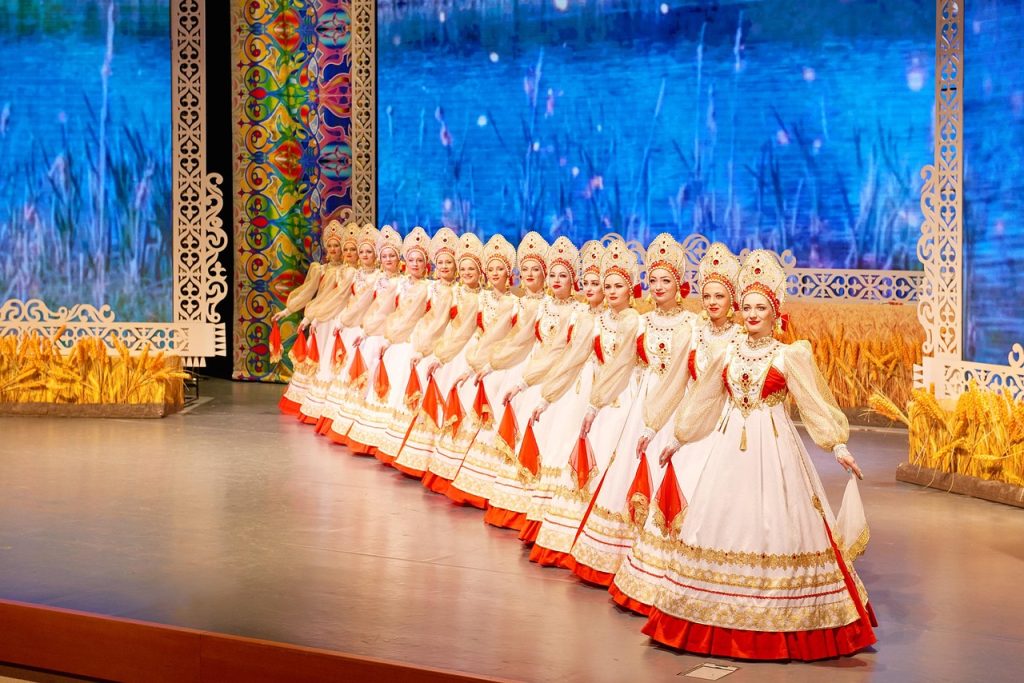
If any single art expresses the soul of the Uyghurs, it is the muqam, a magnificent and complex tradition of classical music that ranks among the great musical achievements of humanity. The muqam is a vast cycle of suites, each combining sung poetry, instrumental music, and dance into an extended performance that can last for hours, weaving together the classical and the folk, the sacred and the sensual, into a rich tapestry of sound. It is the crowning glory of Uyghur culture.
The poetry sung within the muqam draws on the classical literary tradition, on the works of the great poets and mystics, and its themes range from divine love to earthly passion, from philosophical reflection to the joys and sorrows of life. Performed by ensembles of singers and instrumentalists playing lutes, fiddles, and drums characteristic of the region, the muqam carries the accumulated artistic wisdom of centuries, passed down from master to student through long apprenticeship.
Alongside the classical muqam flourishes a rich tradition of folk music, song, and dance that fills the everyday life of the oases, the weddings, festivals, and gatherings where people sing and dance with abandon. Uyghur dance, graceful and expressive, with its characteristic movements of the hands, wrists, and neck, is a beloved art performed at every celebration, and music and dance are woven into the very fabric of Uyghur social life.
This musical heritage is a source of immense pride and a vital vessel of identity, carrying the language, the poetry, and the emotional life of the people. In a time of pressure on their culture, the muqam and the wider musical tradition have taken on added significance as expressions of Uyghur identity and continuity, and Uyghur musicians, at home and in the diaspora, work to preserve and transmit this precious inheritance to new generations.
Silk, Carpets, and the Jade Cutter
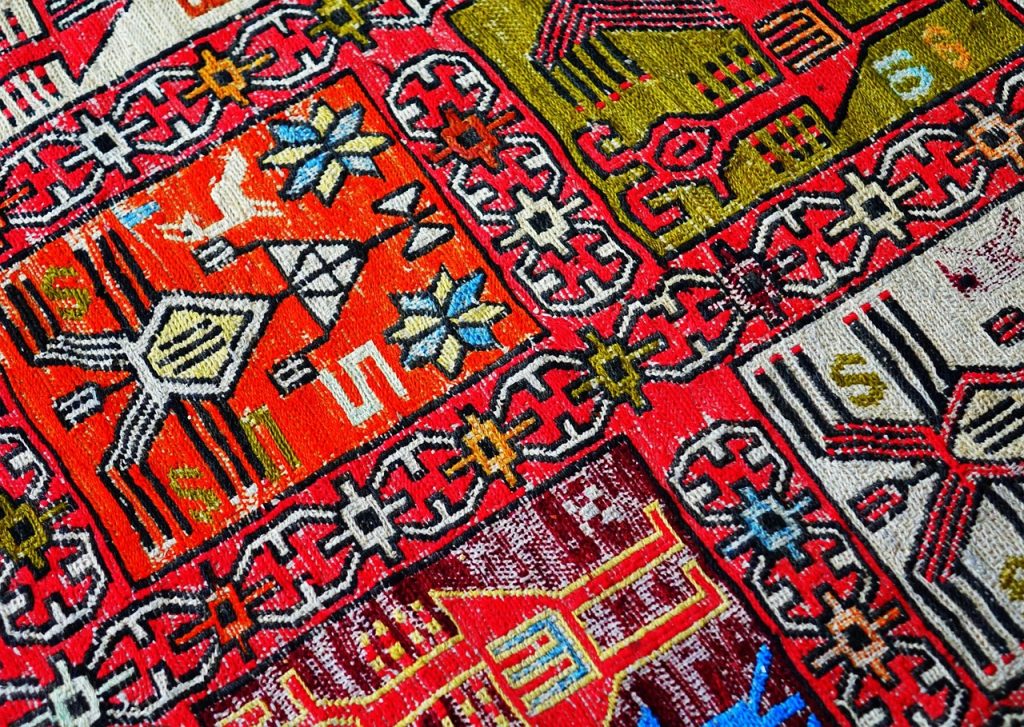
The oases of the Uyghur homeland have long been famed for their crafts, and none more than the working of silk, an art that the region shared in from the ancient days of the Silk Road. Uyghur silk weaving produced the distinctive atlas cloth, a shimmering fabric of vivid, flowing patterns created by a tie-dyeing technique, worn by women as a mark of beauty and identity. The making of this cloth is a treasured skill, and its bright designs are emblematic of Uyghur culture.
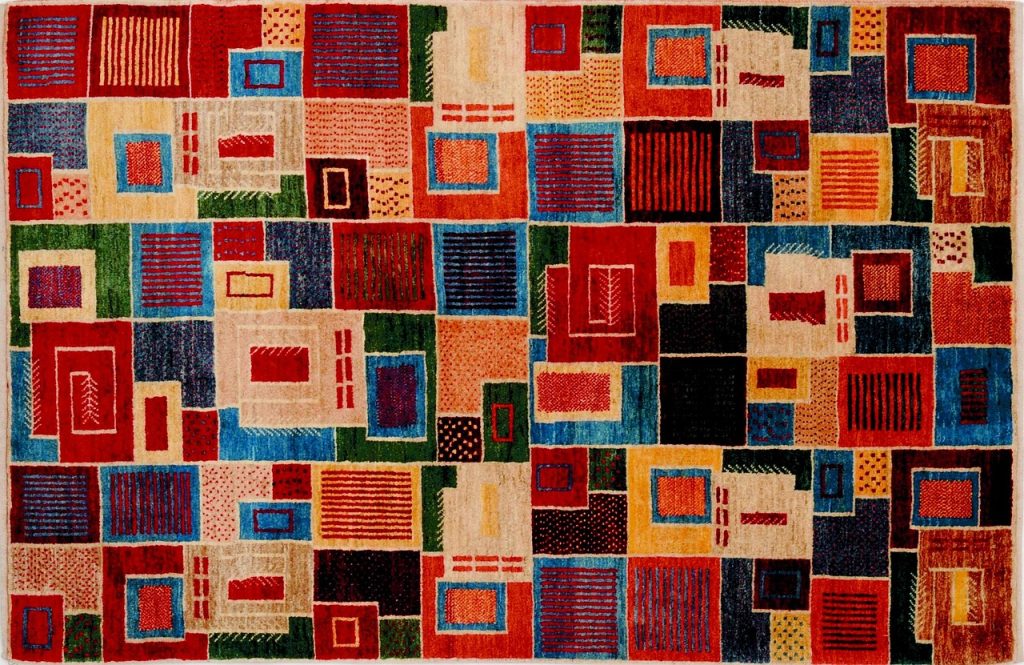
Carpet weaving is another glory of Uyghur craft, and the carpets of the oases, with their distinctive designs and rich colors, have been prized for centuries. Woven on looms in homes and workshops, these carpets carry patterns passed down through generations, and a fine one represents both an object of beauty and a store of wealth. The carpet-making tradition links the Uyghurs to the wider world of Central Asian weaving, of which they are distinguished masters.
The oasis of Khotan was renowned above all for jade, the precious stone gathered from its rivers and worked by skilled craftsmen into objects of great value, and the jade of the region was traded to China from the most ancient times, prized by emperors and connoisseurs. The working of jade, alongside other crafts in metal, wood, and leather, formed part of the rich material culture of the oases, sustained by artisans whose skills were passed down within families.
The bazaars of the oasis towns were the stage on which these crafts met the world, offering silk and carpets, jade and metalwork, alongside the produce of the gardens and the goods of distant caravans. In the modern era Uyghur crafts remain a source of pride and identity, and the atlas cloth, the carpets, and the other traditional arts are cherished as expressions of a heritage that the Uyghurs are determined to preserve.
A Table of Bread and Pilaf
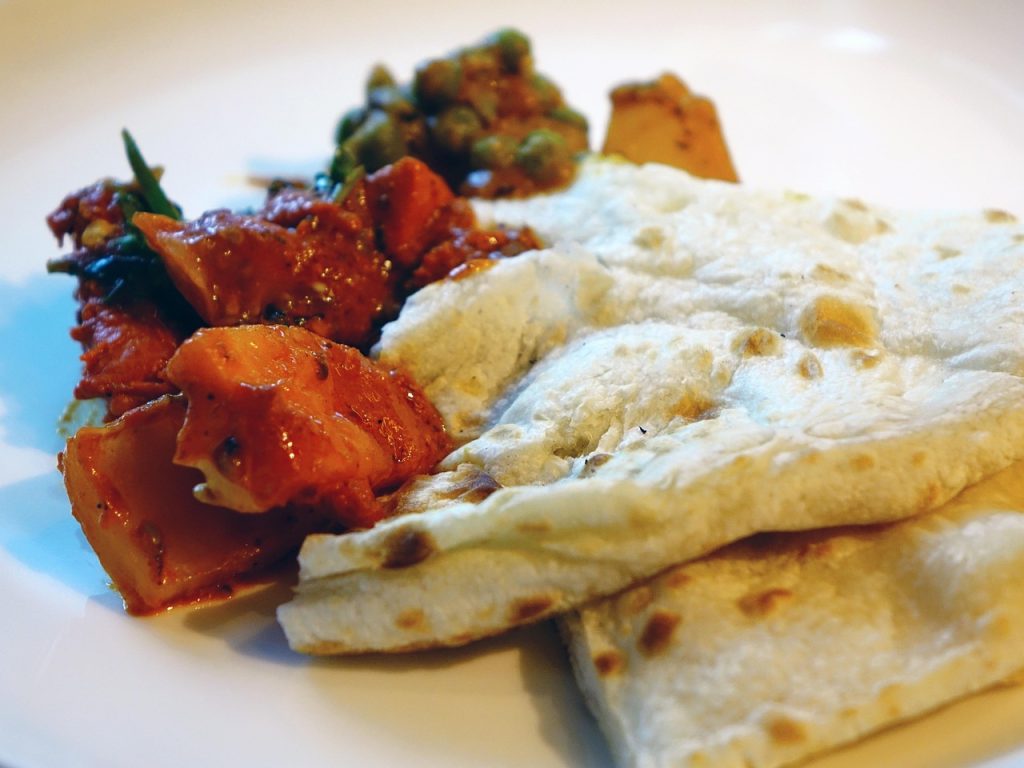
Uyghur cuisine is one of the treasures of Central Asian cooking, hearty, flavorful, and distinct from the food of the Han majority, reflecting the oasis environment and the wider Turkic and Islamic culinary world. At its center is bread, the round naan baked in a clay oven and eaten with nearly every meal, its surface stamped with patterns, warm and fragrant, the humble foundation of the Uyghur table.
The most celebrated Uyghur dish is polu, a rich pilaf of rice cooked with mutton, carrots, and onions, glistening with fat and often crowned with raisins, a festive food served to guests and at celebrations. Hand-pulled noodles, stretched and swung by skilled cooks into long strands and served with a savory topping of meat and vegetables, are another beloved staple, and skewers of grilled mutton, seasoned with cumin and chili, fill the air of the bazaars with their smoke and aroma.
The fruit of the oases is legendary, above all the grapes of Turpan, dried into sweet raisins, and the melons whose fame spread across Asia, and dried fruits and nuts are offered to guests and traded through the markets as a staple of hospitality. Tea accompanies every meal and every gathering, poured for guests as the first gesture of welcome, and the sharing of food is central to the Uyghur ideal of hospitality.
Uyghur food has spread well beyond the oases, carried by Uyghur migrants to the cities of China and beyond, where Uyghur restaurants introduce their distinctive cuisine to new audiences. The polu, the noodles, the kebabs, and the naan have become ambassadors of Uyghur culture, a delicious and accessible expression of a rich tradition, and for Uyghurs far from home, the taste of these foods is a treasured link to the oases of their homeland.
Feasts, Fairs, and the Sunday Market
The great festivals of the Uyghurs follow the Islamic calendar, and the two Eids are the high points of the year. The Eid that ends the holy month of fasting brings feasting, new clothes, visiting, and joy after weeks of discipline, and the streets fill with people in their finest dress, with music and dancing, and with the special foods prepared for the occasion. The Eid of sacrifice, tied to the pilgrimage season, centers on the sharing of meat with family, neighbors, and the poor.
These religious festivals are occasions of great communal celebration, drawing the community together in worship and festivity, and they are among the most important expressions of Uyghur identity and faith. The gatherings at the great mosques, the feasts in the homes, and the music and dancing in the streets make the Eids the brightest points in the Uyghur year, moments of shared joy and renewal that bind the community together.
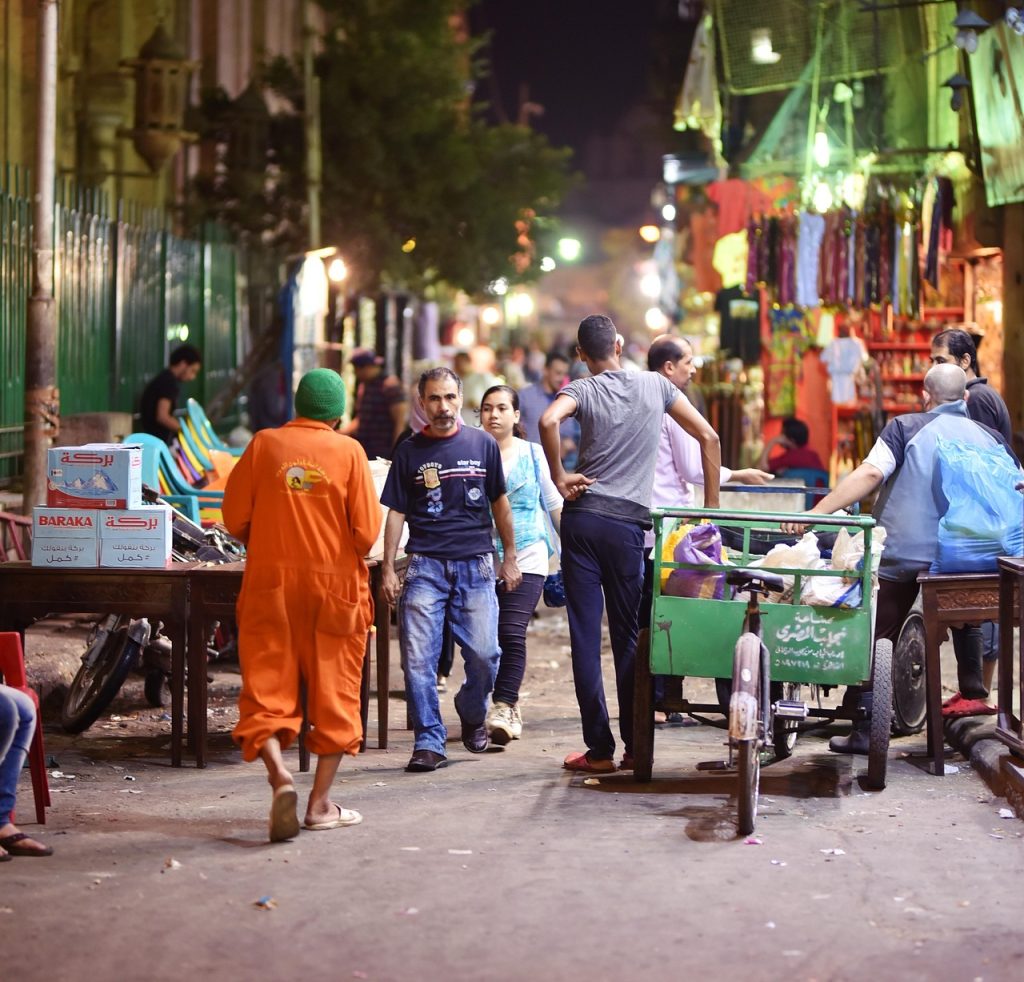
Beyond the religious festivals, the great weekly bazaars, especially the famous Sunday markets, were occasions of a different but no less important kind, drawing people from across the oasis and the surrounding countryside in a vast swirl of commerce and sociability. The Sunday bazaar was a spectacle of color and noise, where livestock, produce, crafts, and goods of every kind were traded, and where people met, gossiped, and renewed the bonds of community.
Weddings, as everywhere, are grand and joyful affairs among the Uyghurs, multi-day celebrations filled with music, dancing, feasting, and the display of finery, mobilizing the extended family and the neighborhood. These celebrations, with their muqam and their dancing, their polu and their communal joy, express the deepest values of Uyghur culture, and the round of festivals, fairs, and family celebrations gives the Uyghur year its rhythm and its warmth.
Kingdoms, Caravans, and Conquests
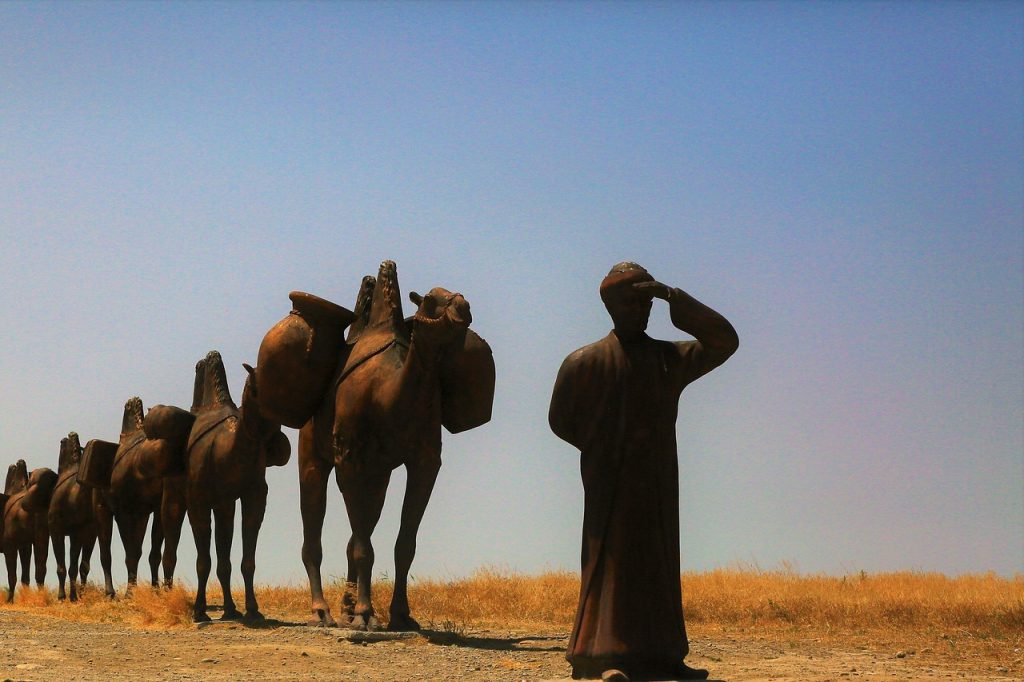
The history of the Uyghur oases stretches back into deep antiquity, when they were home to a brilliant Silk Road civilization of Buddhist kingdoms, whose monasteries and cave temples, adorned with exquisite art, were among the wonders of Asia. Through these oases passed the caravans that linked China to the West, and with them came the religions, art, and ideas of many cultures, making the region one of the great meeting points of the ancient world.
The coming of the Turkic peoples and, later, of Islam transformed the oases over the centuries, and the region saw the rise and fall of a succession of states and dynasties, some local, some imposed from outside. The oases were coveted by the great powers that surrounded them, the Chinese empires to the east, the nomadic powers of the steppe to the north, and the Islamic states of Central Asia to the west, and control of the region shifted many times over the long span of its history.
In the later centuries the region was incorporated into the Chinese empire, though its remoteness and its distinct population meant that its relationship with the center was often loose and troubled, marked by periods of revolt and autonomy. The modern name of the region, meaning new frontier, reflects this history of incorporation, and the tension between the distinct identity of the oasis peoples and their inclusion in a larger state has run through the region’s history into modern times.
The twentieth century brought profound upheaval, with brief periods of independence amid the chaos of the age, followed by the firm incorporation of the region into the modern Chinese state. The decades since have been marked by tension between Uyghur aspirations and the policies of the state, by waves of migration that have changed the population of the region, and by the growing pressures on Uyghur culture and identity that have made the recent history of the people a painful one.
The Uyghurs in a Hard Present
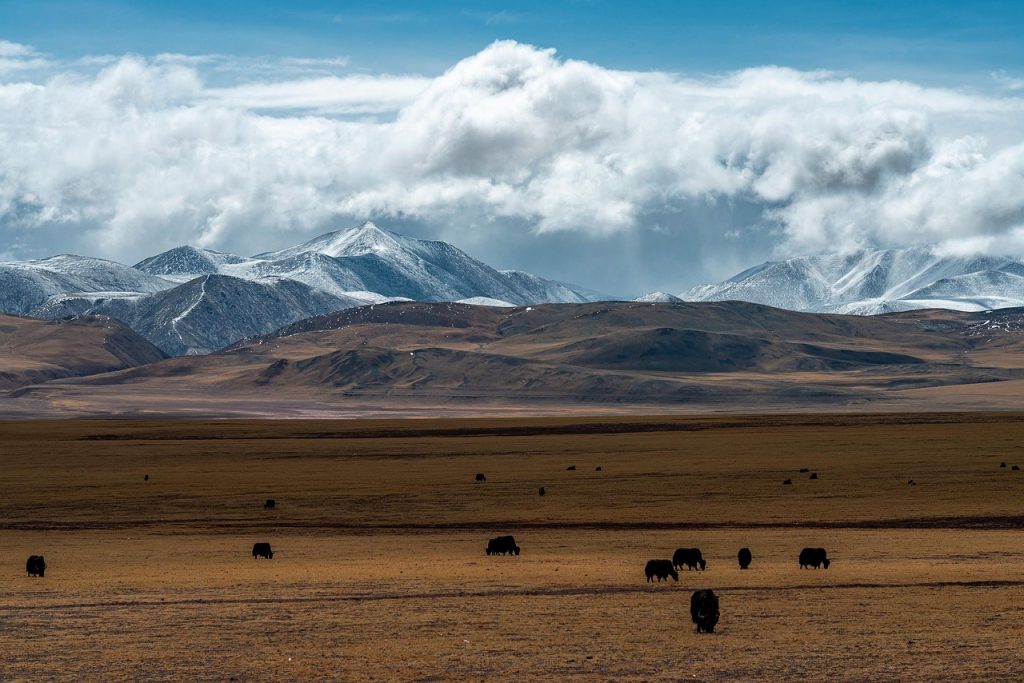
Today the Uyghurs remain concentrated in their northwestern homeland, where they form a large part of the population, alongside a substantial diaspora in the Central Asian republics, Turkey, and increasingly in the West. Their recent situation has drawn international attention and concern, for the Uyghurs have faced far-reaching restrictions on their religious practice, their language, and their cultural life, and reports of mass detention and repression have made their plight a subject of grave controversy on the world stage.
These pressures have placed the Uyghurs’ distinct identity under severe strain, affecting the transmission of their language, the practice of their faith, and the continuity of their traditions, and they have driven many Uyghurs into exile abroad. For a people whose identity is bound up with their language, their religion, and their oasis homeland, the challenges of the present are felt as an existential matter, a threat to the survival of their culture and their peoplehood.
Yet Uyghur culture endures, sustained at home in countless private ways and carried into the world by the diaspora, which works to preserve the language, the music, the food, and the memory of the homeland. Uyghur communities abroad maintain their traditions, teach their children the language, perform the muqam, and keep alive a sense of national identity, and the culture of the oases finds new expression in the wider world even amid the difficulties of the present.
The story of the Uyghurs is thus, at this moment, a story of a rich and ancient civilization under great pressure, a people of the Silk Road oases striving to preserve their identity in trying times. Their homeland lies at the meeting of many worlds, and their neighbors across the region, on the high plateau to the south, follow ways of life as distinct and as deeply rooted as their own. It is to those people of the high mountains, the Tibetans, that our journey turns next.
You May Like
The Zaza, a Mountain People of Eastern Anatolia


2 thoughts on “A Civilization of the Silk Road Oases, the Story of the Uyghurs”