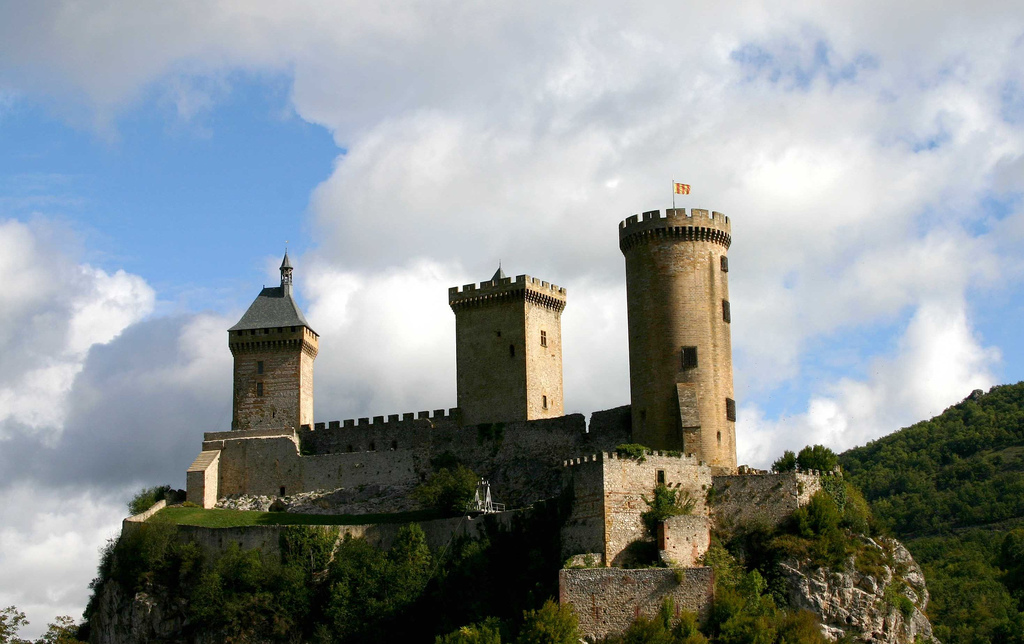
High on a rocky spur above the little town of Foix, where two mountain rivers meet at the foot of the Pyrenees, three great towers rise against the sky. This is the Château de Foix, the ancient stronghold of the counts of Foix, one of the most spectacularly sited castles in all of France. Its silhouette, so bold and so perfectly placed on its crag, has become the very emblem of the mountainous region of the Ariège.
For centuries this was the seat of a proud and independent line of counts who ruled the surrounding lands almost as sovereign princes, defying kings and popes alike. The castle sheltered heretics during the crusade against the Cathars, resisted the armies sent to crush it, and was home to one of the most brilliant and flamboyant noblemen of the entire Middle Ages, the count known as Gaston Fébus, the Sun Prince.
Grim and grey against the green of the mountains, the Château de Foix is a fortress that seems to grow straight out of its rock, a place of resistance and pride that never fell to an enemy. Let’s climb the crag to Foix and discover the story of its three towers and the remarkable counts who ruled from them.
In This Article
- A Castle on a Crag
- The Proud Counts of Foix
- The Cathars and the Crusade
- The Fortress That Never Fell
- The Three Towers
- Gaston Fébus, the Sun Prince
- The Book of the Hunt
- From Foix to the Throne of France
- A Prison in the Mountains
- The Castle Museum Today
- The Town at the Castle’s Feet
- Arms, Armour and the Medieval World
- Visiting the Château de Foix
A Castle on a Crag
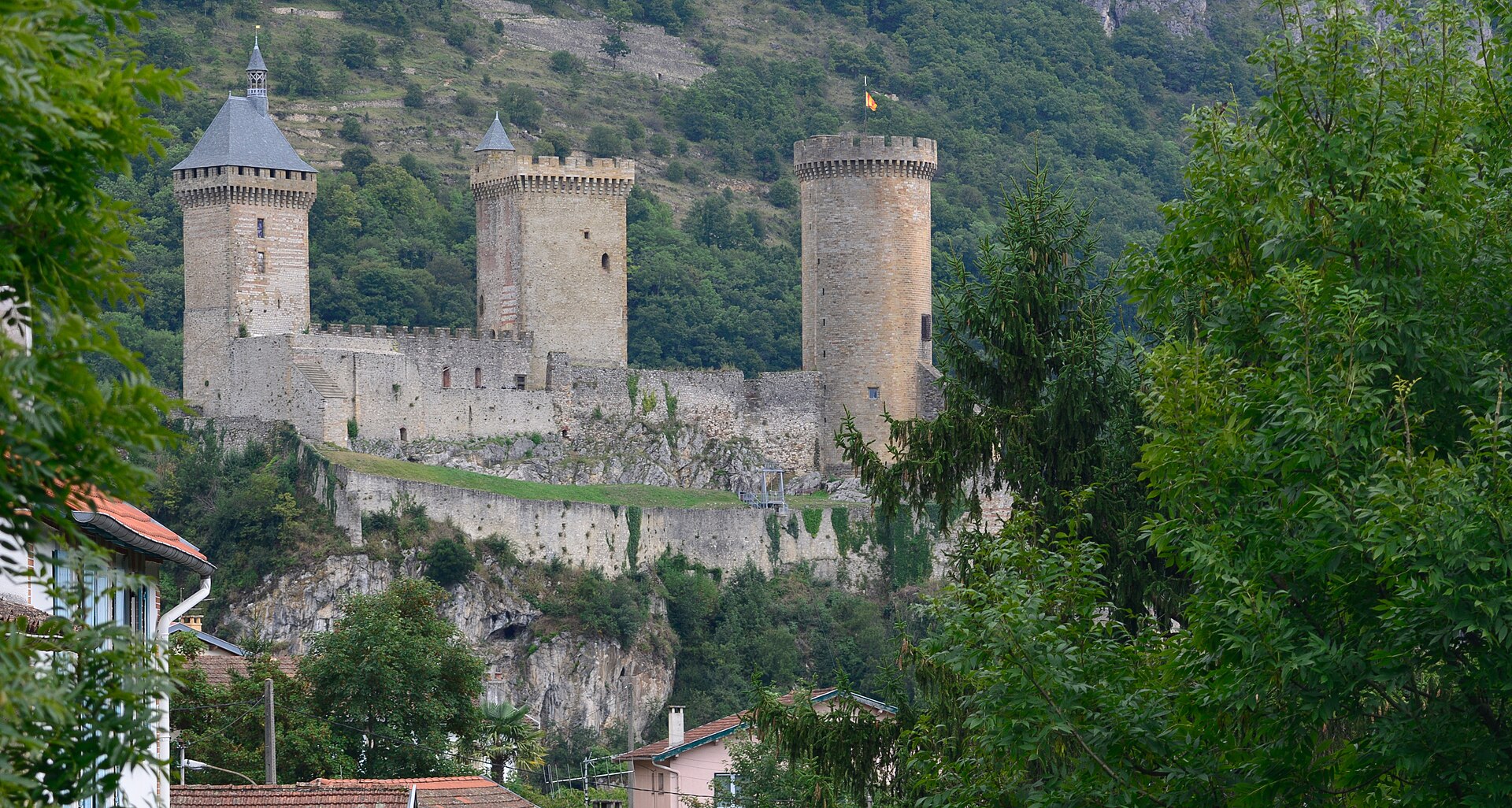
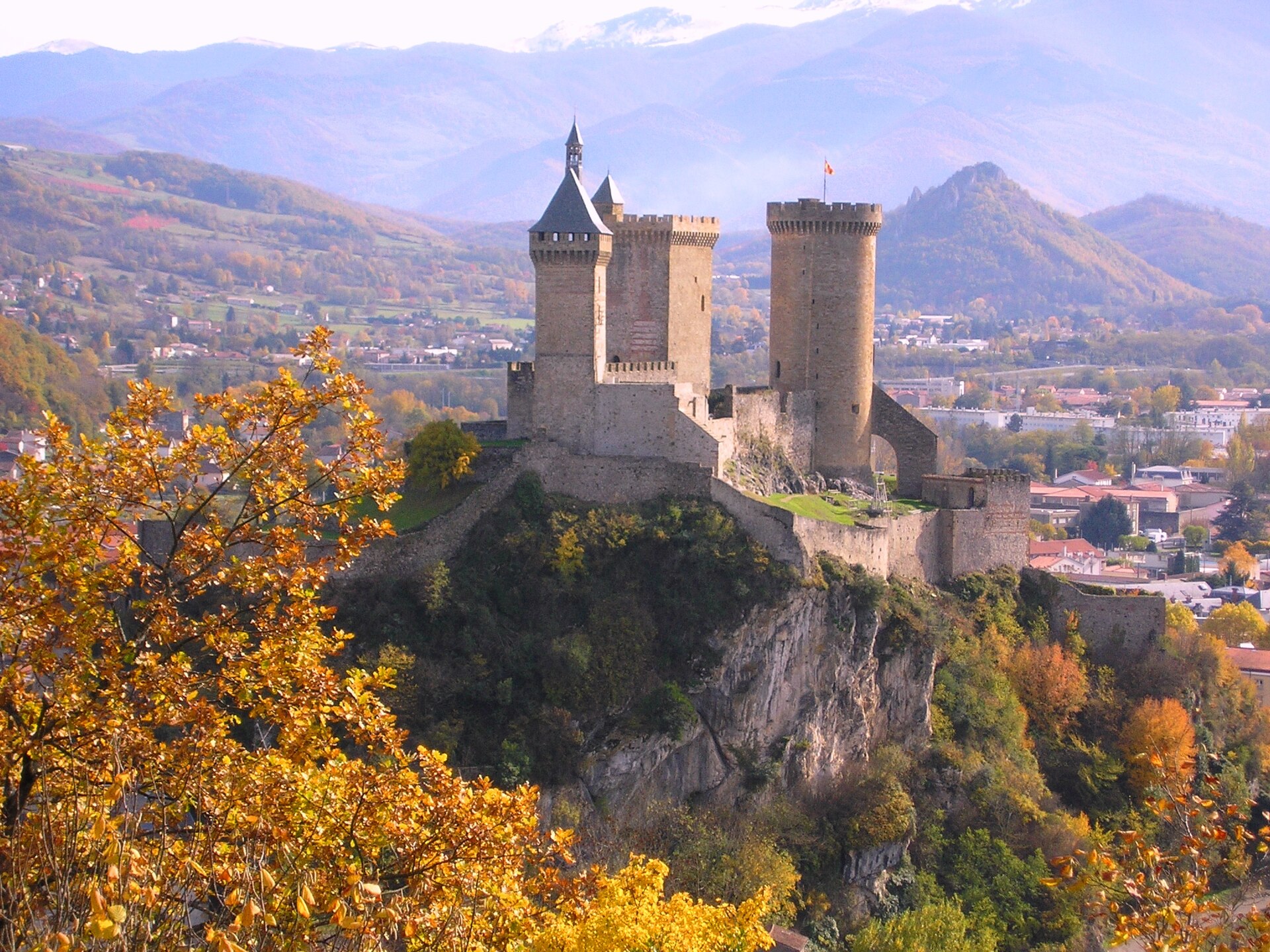
The setting of the Château de Foix is everything. The castle stands on a steep rocky outcrop that rises abruptly above the town, at a point where the River Arget flows into the larger Ariège, guarding the valley routes that lead up into the high Pyrenees. In an age when control of the mountain passes meant power, whoever held this crag held the key to a whole region, and the counts of Foix held it for many centuries.
The rock itself provided much of the castle’s defence. Steep and difficult on almost every side, it made the stronghold immensely hard to attack, so that the builders could rely on nature to do much of the work of fortification. Perched high above the town, the castle could watch over everything that moved in the valleys below, dominating the landscape both physically and symbolically.
To this day, the first sight of Foix is unforgettable: the grey towers rising sheer from the rock, the town huddled at its feet, the mountains rolling away behind. It is the very picture of a medieval mountain fortress, and it explains at a glance why the counts of Foix were able to maintain their independence for so long. Their castle was, quite simply, one of the strongest natural strongholds in the whole of the south.
The meeting of the rivers Arget and Ariège at the foot of the castle rock was no accident of geography but the very reason the stronghold was built here. River valleys were the natural routes through the mountains, and a castle placed at their junction could control movement in several directions at once. Foix guarded the gateway between the plains to the north and the high passes of the Pyrenees to the south, a position of real strategic weight.
The steepness of the approach meant that any attacking force had to funnel up narrow, exposed paths, giving the defenders every advantage. Missiles could be rained down from the towers, and there was nowhere for an enemy to marshal a large assault in safety. In an age before heavy artillery could easily be dragged up mountain slopes, a castle like Foix was as close to impregnable as any stronghold could be.
The Proud Counts of Foix
The counts of Foix were among the most powerful and independent-minded nobles in medieval France. From their eyrie above the town, they ruled a mountainous domain that straddled the Pyrenees, and they guarded their independence fiercely, playing the great powers of the age, the kings of France, the kings of Aragon, and the popes, off against one another to preserve their own freedom of action.
This was a family that bowed to no one lightly. Time and again the counts of Foix defied kings and resisted attempts to bring them to heel, relying on the strength of their mountain fastness and the loyalty of their people. Their court was a centre of the culture of the south, of the troubadours and the langue d’oc, and their power reached far beyond the borders of their small county.
The independence of the counts was rooted in the strength of their castle. As long as Foix stood unconquered on its rock, the counts could defy their enemies with impunity, retreating to their stronghold whenever danger threatened. The history of the county and the history of the castle are therefore inseparable: the one made the other possible, and together they form one of the great stories of the medieval Pyrenees.
The geography of their county gave the counts of Foix a natural advantage in their long struggle for independence. Set among the high valleys of the Pyrenees, their lands were difficult for outside armies to penetrate and easy for the counts and their followers to defend. This rugged terrain, combined with the great fortress at its heart, allowed a relatively small mountain lordship to punch far above its weight in the politics of the medieval south.
The counts were also shrewd diplomats, and much of their success came not from war but from the careful management of alliances and marriages. By binding themselves to powerful neighbours and playing rivals against one another, they preserved their freedom through generations of upheaval. The castle was the anchor of this policy, the strong point that made the counts worth allying with and dangerous to attack.
The story of the counts is also the story of the wider south, of a region that long resisted absorption into the growing kingdom of France and that clung fiercely to its own language, culture and traditions. In defending their independence, the counts of Foix were defending a whole way of life, and their castle stood as its guardian. The slow drawing of the county into the French crown, centuries later, marked the end of that long chapter of southern autonomy.
The Cathars and the Crusade
Like the rest of the south of France, the county of Foix was drawn into the terrible drama of the Cathars and the crusade launched to destroy them. The Cathar faith, condemned as heresy by the Church, had many followers in the region, and the counts of Foix, like many southern lords, were sympathetic to the heretics or at least unwilling to persecute them, which brought them into direct conflict with the crusaders from the north.
When the Albigensian Crusade swept through the south in the early thirteenth century, the county of Foix became a battleground. The count of the day, Raymond-Roger, was a fierce opponent of the crusaders and a defender of his people against the invaders, and his lands suffered greatly in the fighting. Yet through it all, the great castle on its rock remained a symbol of resistance to the crusade.
For those fleeing the crusaders, the mountains of Foix and the neighbouring lands became a refuge, dotted with castles where the Cathars and their protectors could hold out. The Château de Foix stood at the heart of this world of resistance, a stronghold of the south against the armies of the north, and its survival through those terrible years is central to its enduring fame.
The Cathar faith had taken deep root in the towns and castles of the county, and its believers included members of the comital family itself, according to some accounts. This closeness between the counts and the heretics made the region a particular target for the crusaders, who saw the lords of the south as protectors of heresy who had to be brought to heel. The struggle at Foix was thus not only military but religious, a clash between two very different visions of the world.

The Fortress That Never Fell
The greatest boast of the Château de Foix is that it never fell to an enemy. During the Albigensian Crusade, the dreaded Simon de Montfort, the ruthless leader of the crusaders who had sacked so many other strongholds of the south, turned his attention to Foix. But the castle on its rock proved too strong even for him, and he was unable to take it by force. Foix shrugged off the crusade and remained in the hands of its counts.
This reputation for impregnability was hard-won and jealously guarded. In an age when even the mightiest fortresses could fall to a determined siege, a castle that had never been taken held a special aura, a proof of the strength of both its walls and its defenders. For the counts of Foix, the unconquered status of their castle was a source of enormous pride and a powerful symbol of their independence.
The secret of the castle’s strength lay in its position. Set on a steep, isolated rock, difficult to approach and easy to defend, Foix could hold out where other castles fell. No army could easily surround it or bring siege engines to bear against its walls, and its defenders could rely on the natural strength of the site to see off attack after attack. It is this, above all, that made Foix the fortress that never fell.
The failure of even Simon de Montfort to take Foix was a remarkable testament to its strength, for de Montfort was among the most feared and successful commanders of the age, a man who had stormed some of the greatest strongholds of the south. That Foix defied him added enormously to its reputation and to the prestige of its counts, who could point to their unconquered castle as proof of their power and the favour they enjoyed.
In the centuries that followed, Foix maintained its record of never falling to an enemy, a distinction shared by very few castles anywhere. Its combination of a near-impregnable natural site and determined defenders meant that, again and again, would-be conquerors were forced to turn away. In a violent age when castles changed hands constantly, the unbroken record of Foix stands out as truly exceptional.
There is a lesson in the story of Foix about the enduring importance of position in warfare. However advanced the weapons or numerous the attackers, a fortress placed on a strong enough natural site could defy them all, and Foix, perched on its steep and isolated rock, was blessed with just such a position. Its survival across so many turbulent centuries is, above all, a triumph of geography as much as of engineering or courage.
The Three Towers
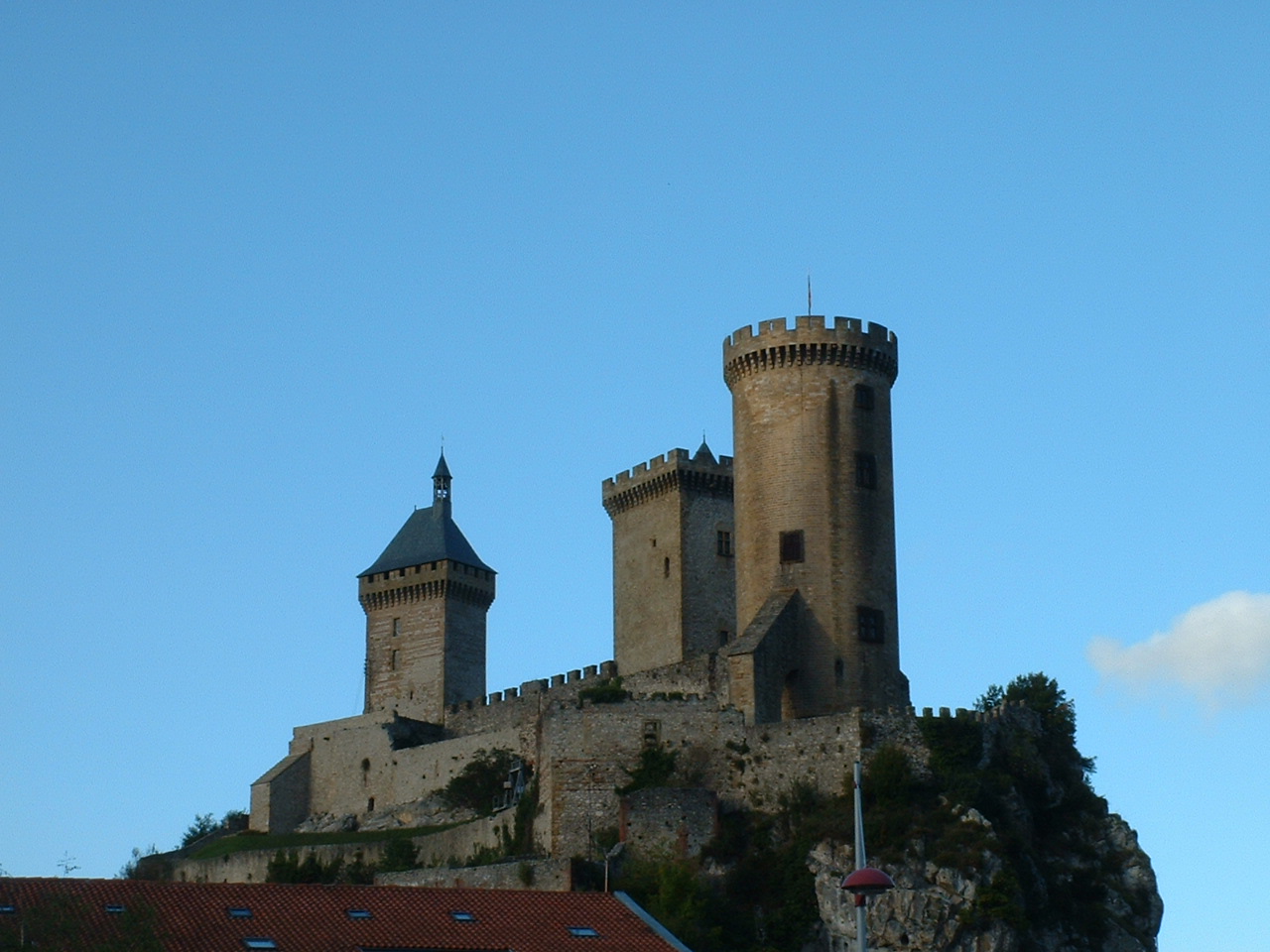
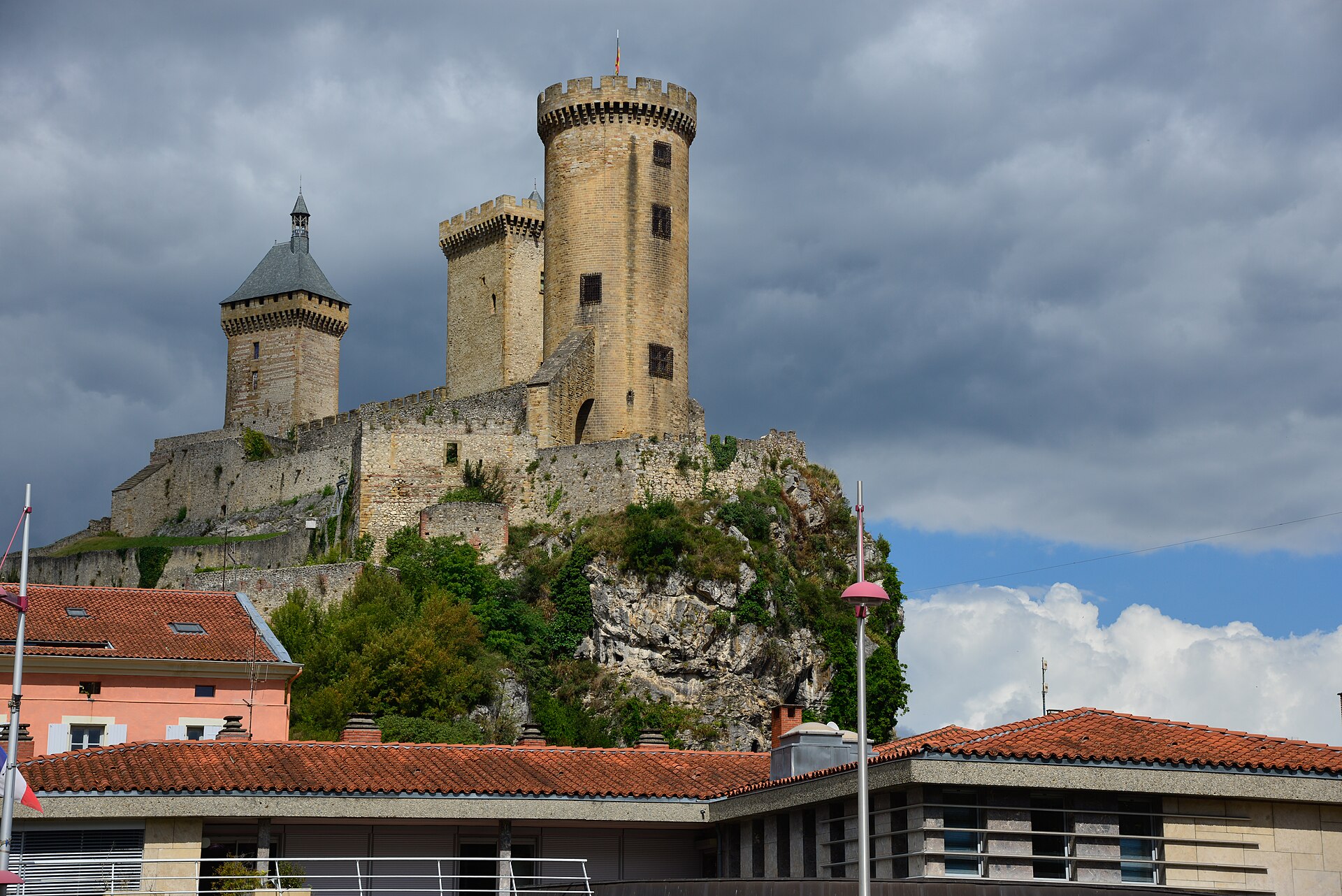
The most striking feature of the Château de Foix is its trio of great towers, which give the castle its distinctive and instantly recognisable silhouette. Two of the towers are square and one is round, and they were built at different times over several centuries, so that together they tell the story of the castle’s long development from the early Middle Ages onward.
The two square towers are the older, sturdy medieval keeps of a kind common in the earlier castles of the region, their thick walls and simple, powerful forms speaking of an age when defence was everything. The round tower, added later, reflects the developing art of fortification, for round towers were harder to undermine and gave better all-round coverage than square ones. Reading the three together is like reading a history of castle-building in stone.
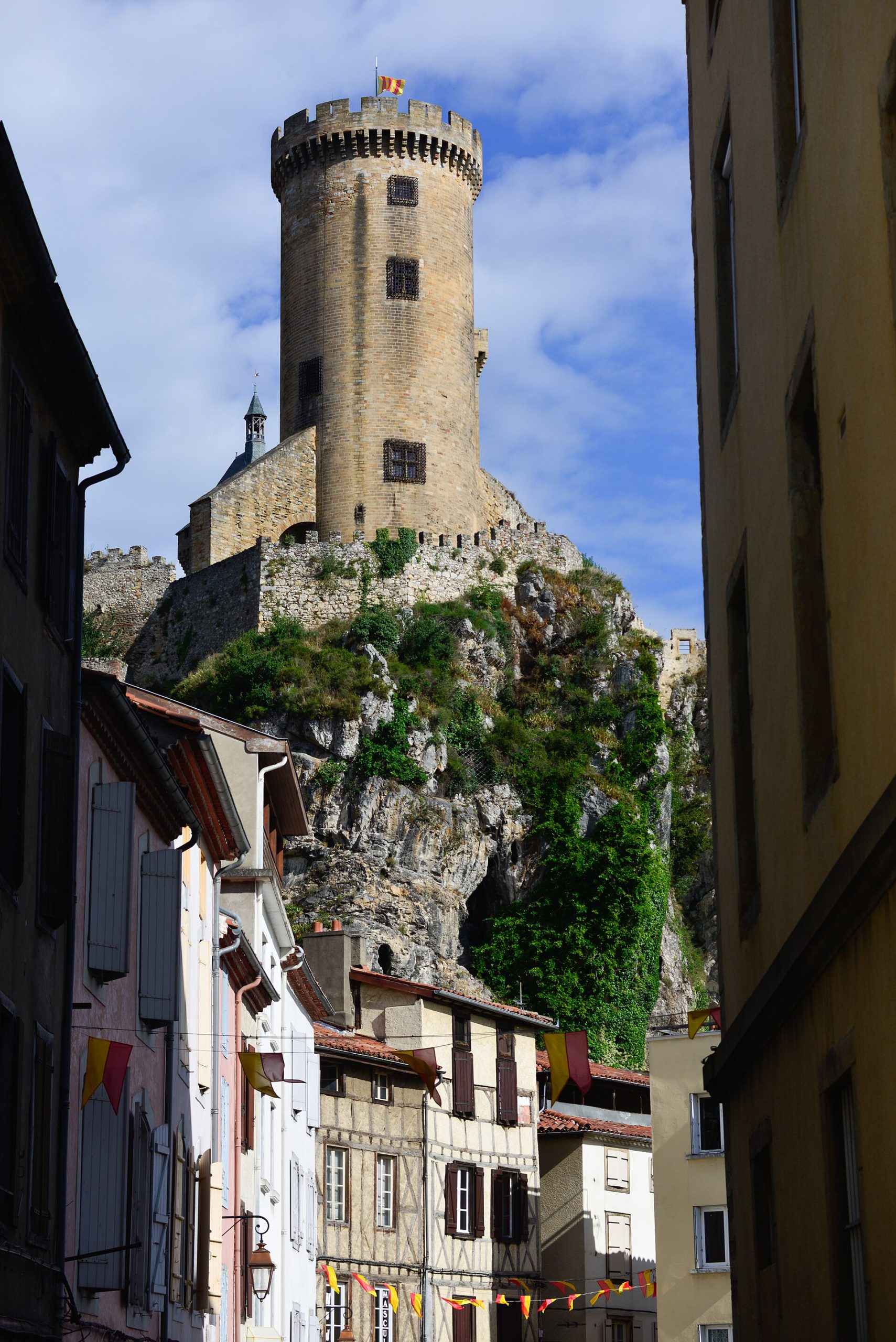
Standing on the rock, the three towers dominate the whole landscape, visible from far up and down the valleys. They have become the emblem of Foix and indeed of the whole Ariège region, appearing on countless images and marking the town from a great distance. Few castles are so completely identified with a single striking feature, and the three towers of Foix are known and loved throughout the south of France.
The gradual addition of the towers over several centuries reflects the way castles evolved to meet changing threats and changing tastes. Each generation added to or strengthened the defences according to the military thinking of its day, so that a great castle like Foix was never truly finished but constantly adapted. The result, at Foix, is a harmonious yet varied group of towers that together embody the long span of the castle’s active life as a fortress.
Gaston Fébus, the Sun Prince
The most famous of all the counts of Foix was Gaston III, better known by the dazzling nickname he gave himself: Fébus, from the sun god Phoebus. A larger-than-life figure of the fourteenth century, Gaston Fébus was one of the most brilliant, powerful and flamboyant noblemen of his age, a warrior, a statesman, a patron of the arts and a passionate huntsman, who made his court one of the most splendid in Europe.
Gaston Fébus was a man of many talents and boundless ambition. He greatly increased the power and wealth of his house, ruling his lands with a firm hand and playing a significant part in the wider politics of the age. He surrounded himself with magnificence, kept a brilliant court, and cultivated the image of a golden prince, choosing the sun itself as his emblem and his name.
But he is remembered above all for a single remarkable work. A devoted and expert hunter, Gaston Fébus wrote a famous treatise on the subject, the Book of the Hunt, which became one of the most celebrated and beautifully illustrated works of the Middle Ages. Through this book, and through the legends that gathered around him, Gaston Fébus made the name of Foix known far beyond the mountains, and he remains the most celebrated figure ever to rule from its castle.
Gaston Fébus cultivated his own legend with great care, and much of what we know of him comes filtered through the glamour he deliberately created. He was famously proud of his golden hair, which lay behind his choice of the sun as his emblem, and he presented himself as a prince without equal, brilliant, powerful and magnificent. This self-mythologising was itself a kind of political art, designed to enhance his prestige and that of his house.
Yet behind the glittering image lay a ruler of real substance. Gaston Fébus governed his lands ably, defended them vigorously, and left them stronger and richer than he found them. He was also a complex and at times dark figure, and his life was touched by tragedy as well as triumph. The combination of brilliance, ambition and shadow has made him one of the most fascinating characters of the whole Middle Ages, and the castle of Foix is forever associated with his memory.
The court of Gaston Fébus attracted visitors and admirers from across Europe, among them the famous chronicler Jean Froissart, who left a vivid account of the count and his household. Through such witnesses, the brilliance of the court of Foix was recorded for posterity, and the image of Gaston Fébus as a prince of exceptional splendour and ability was fixed in the memory of the age. His castle, then as now, was inseparable from his legend.

The Book of the Hunt
The Book of the Hunt that Gaston Fébus wrote is far more than a practical manual. It is a work of real literary quality and deep knowledge, drawing on the count’s own lifetime of experience in the forests and mountains of the Pyrenees. In it he describes the animals of the chase, the training of hounds, the techniques of the hunt, and the whole culture of this great aristocratic passion, with an enthusiasm and expertise that shine through every page.
The book became enormously popular and was copied many times, often in luxurious illustrated versions whose miniatures are among the treasures of medieval art. These paintings, showing hunters and hounds, deer and boar, forests and mountains, give us a vivid picture of the aristocratic world of the fourteenth century, and they helped to spread the fame of Gaston Fébus and his castle across the whole of Europe.
That a count of a small Pyrenean county should have produced one of the great books of the Middle Ages says much about the culture of his court and the breadth of his interests. Gaston Fébus was a man of action and a man of learning, a warrior who was also an author, and his Book of the Hunt remains a lasting monument to the brilliant, cultivated world that once flourished within the walls of Foix.
The finest surviving copies of the Book of the Hunt are illuminated manuscripts of extraordinary beauty, their pages alive with scenes of the chase set against the forests and mountains that Gaston Fébus knew so well. These images are among the most charming and detailed depictions of medieval outdoor life to survive, and they have been reproduced and admired for centuries, carrying the fame of the count and his castle down to our own day.
From Foix to the Throne of France
The county of Foix did not remain forever an independent mountain lordship. Through a series of marriages and inheritances, the counts of Foix acquired other titles and lands, including, in time, the crown of the small Pyrenean kingdom of Navarre. The house of Foix rose steadily in importance, its rulers becoming players on the wider stage of European royalty.
The most momentous of these developments came when the line of Foix and Navarre produced a claimant to the throne of France itself. Henri of Navarre, a descendant of the counts of Foix, became King Henri IV of France, one of the most celebrated of all French kings, the founder of the Bourbon dynasty that would rule France for centuries. Through him, the blood of the counts of Foix entered the royal house of France.
With Henri IV’s accession, the county of Foix was united with the French crown, and the great castle on its rock passed from the hands of independent counts into those of the kings of France. The proud stronghold that had defied so many kings now belonged to one, and a new and quieter chapter in its long history began.
The journey of the house of Foix from a mountain county to the throne of France is one of the most remarkable rises in European history. Through patient accumulation of titles and lands, and through a series of fortunate marriages, a family of Pyrenean counts became kings, first of Navarre and then, astonishingly, of France itself. Few noble houses ever climbed so high from such modest beginnings.
A Prison in the Mountains
Once the county was absorbed into the kingdom of France and the frontier had moved south, the Château de Foix lost its role as the seat of independent counts and as a frontier fortress. Like so many great castles that outlived their military purpose, it found a new use as a prison, its strong towers and remote mountain setting making it an ideal place to hold captives securely.
For a long period the castle served this grim function, its once-lordly chambers turned into cells and its great towers into places of confinement. Prisoners held here have left their mark in the form of graffiti carved into the walls, poignant reminders of the men who spent long years within the fortress that had once been a proud comital residence. It was a humble fate for so historic a stronghold.
Yet this long period as a prison, unglamorous as it was, helped to ensure the castle’s survival. A building that continued to serve a purpose was maintained rather than abandoned, and so the great fortress of Foix came through the centuries when many other castles fell into ruin. When the time finally came to recognise its historic value, the castle was still standing, ready to begin its latest life as a monument.
The graffiti left by prisoners on the walls of the castle are among its most moving features, a direct and personal trace of the men who were confined here across the centuries. Names, dates, crosses and simple drawings scratched into the stone speak of long hours of boredom, despair and hope, and they remind us that behind the grand history of counts and kings, the castle also held ordinary human stories of confinement and loss.

The Castle Museum Today
In its modern life, the Château de Foix has become the departmental museum of the Ariège, telling the story of the castle, the counts and the whole surrounding region. Within its ancient walls and towers, displays of archaeology, arms and armour, and history bring the past to life, and visitors can climb the great towers for spectacular views over the town, the rivers and the mountains beyond.
The museum makes the most of the castle’s dramatic setting and long history. Medieval demonstrations, from combat to crafts, are staged for visitors, helping to conjure up the world of the counts of Foix and the age of Gaston Fébus. To explore the castle is to move through the centuries, from the sturdy square towers of the early Middle Ages to the round tower of a later age, all the while surrounded by the story of the Ariège.
Climbing to the top of the towers, the visitor is rewarded with one of the finest views in the Pyrenees, out over the confluence of the rivers, the roofs of the town, and the great mountains rising beyond. It is a view that the counts of Foix knew well, a panorama of the domain they ruled and defended for so long, and it brings home, better than any display, the commanding strength of their mountain fortress.
The transformation of the fortress into a museum has allowed its long and varied history to be told and celebrated, from its origins as a comital stronghold through its years as a prison to its present role as the pride of the Ariège. In caring for the castle and opening it to visitors, the region honours not just a building but a whole history of independence, resistance and culture that the great fortress on its rock has come to represent.
For visitors, the greatest reward of all is simply the experience of the place: to stand within the walls where the counts of Foix once ruled, to climb the towers that Simon de Montfort could not take, and to gaze out over the same mountains that Gaston Febus knew. Few castles bring the medieval past so vividly and so movingly to life, and fewer still do so in a setting of such natural grandeur.
The Town at the Castle’s Feet
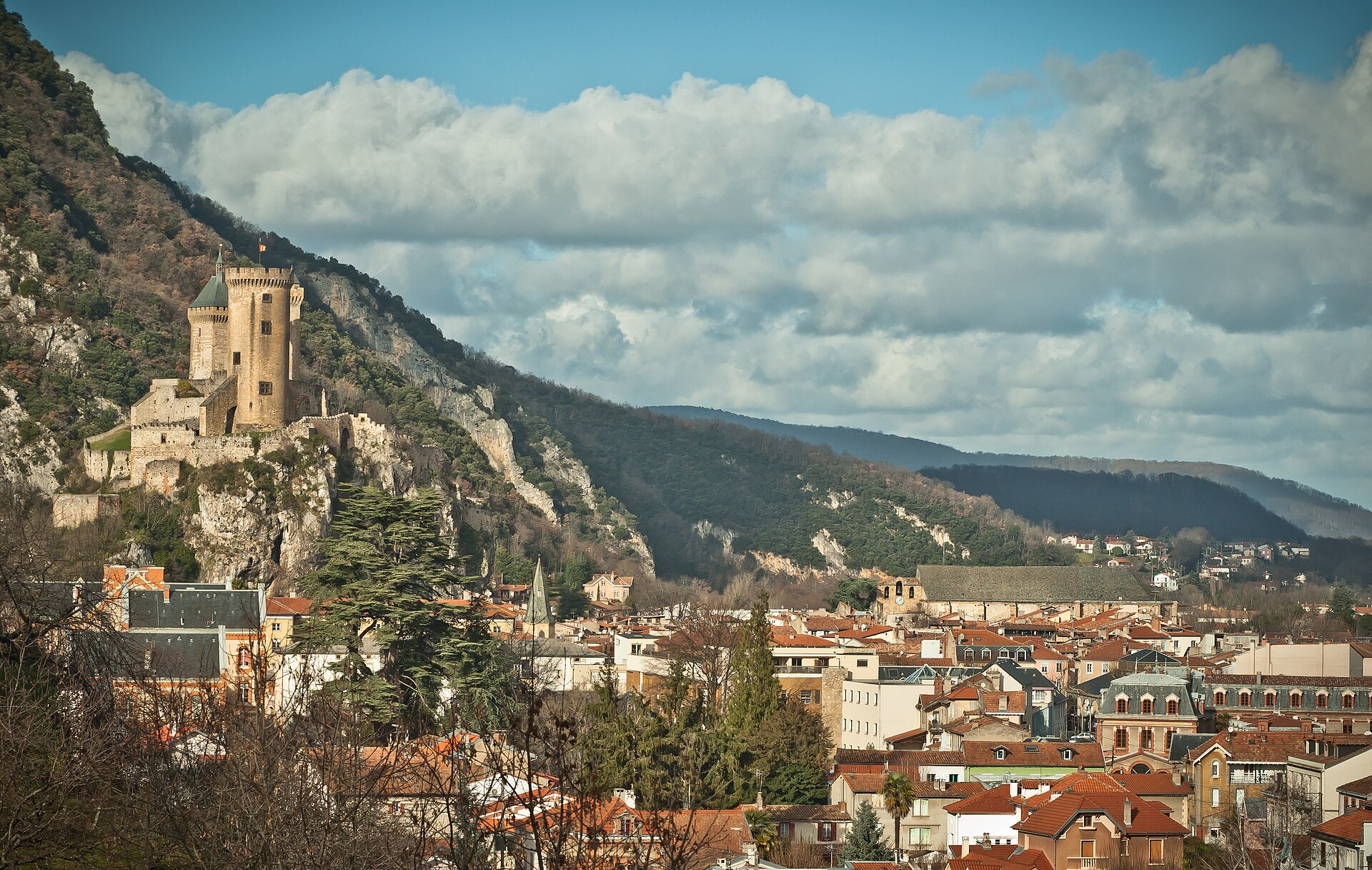
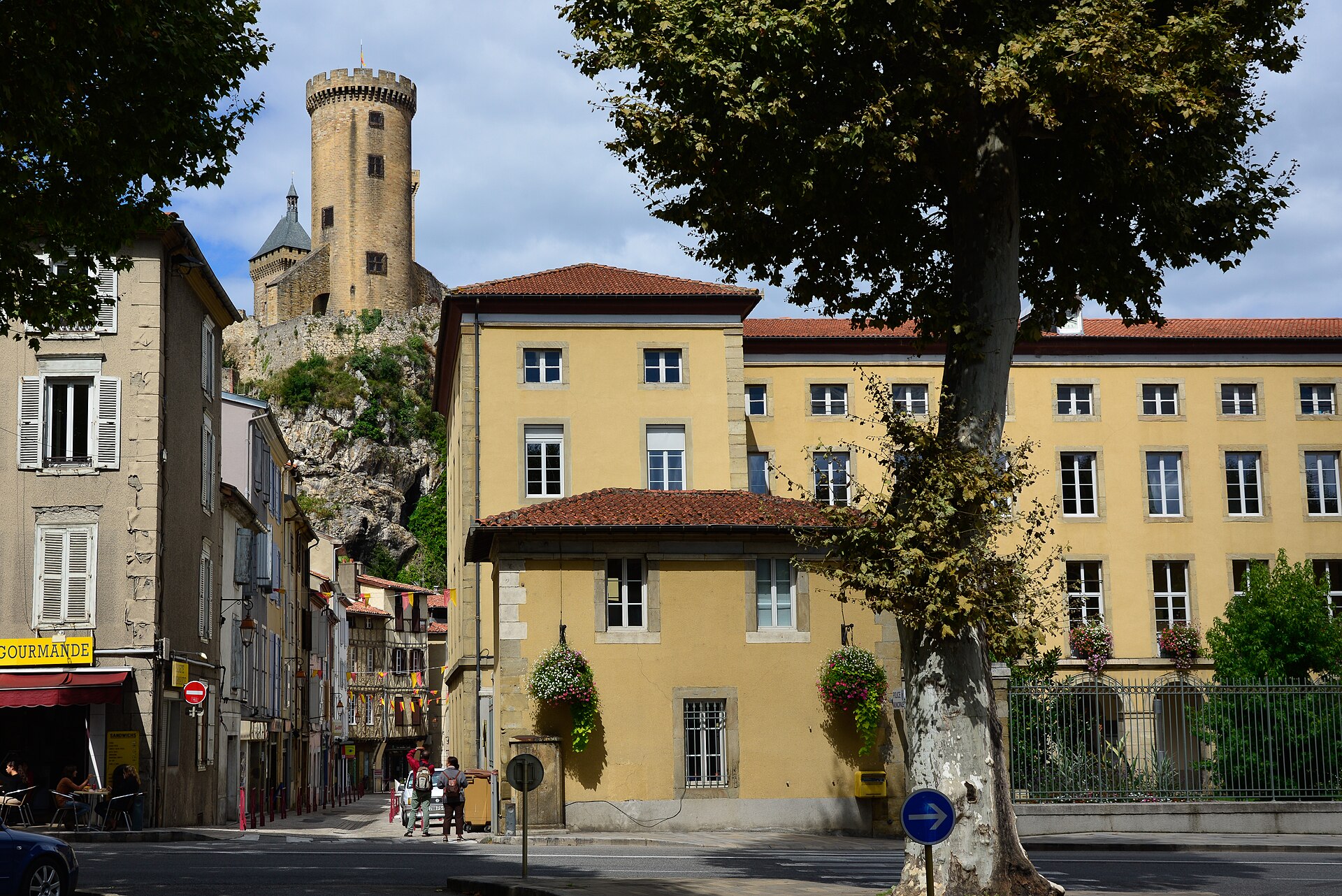
Below the castle spreads the pleasant town of Foix, the capital of the Ariège, its streets winding at the foot of the great rock. The town grew up under the protection of the counts and their fortress, and its fortunes were long bound up with theirs. Today it is a lively market town, a gateway to the Pyrenees, and a delightful place to explore before or after a visit to the castle.
From almost every corner of the town, the three towers of the castle are visible overhead, a constant reminder of the fortress that gave the town its importance and its identity. The relationship between castle and town, the stronghold on its rock and the streets clustered at its foot, is one of the classic patterns of the medieval world, and it is beautifully preserved at Foix.
The town also makes an excellent base for exploring the wider region, a land of mountains and caves, of Cathar castles and Pyrenean scenery, steeped in the history of the medieval south. The Château de Foix stands at the heart of all this, the greatest and most famous of the castles of the Ariège, and a fitting introduction to a region rich in history and natural beauty.
Foix has served as the administrative capital of its region for a very long time, a role it inherited from its days as the seat of the counts. This continuity of importance, from medieval comital capital to modern departmental town, is unusual and speaks to the enduring significance of the site. The castle above and the town below have grown old together, their fortunes intertwined across the better part of a thousand years.
A stroll through the streets of Foix, with the towers watching overhead at every turn, is one of the pleasures of a visit, and the town retains much of the character of its long history. Old houses, quiet squares and the ever-present sound of the mountain rivers give it a charm all its own, and it serves as a perfect introduction to the wider Ariege, a region still relatively undiscovered by many travellers to France.
Arms, Armour and the Medieval World
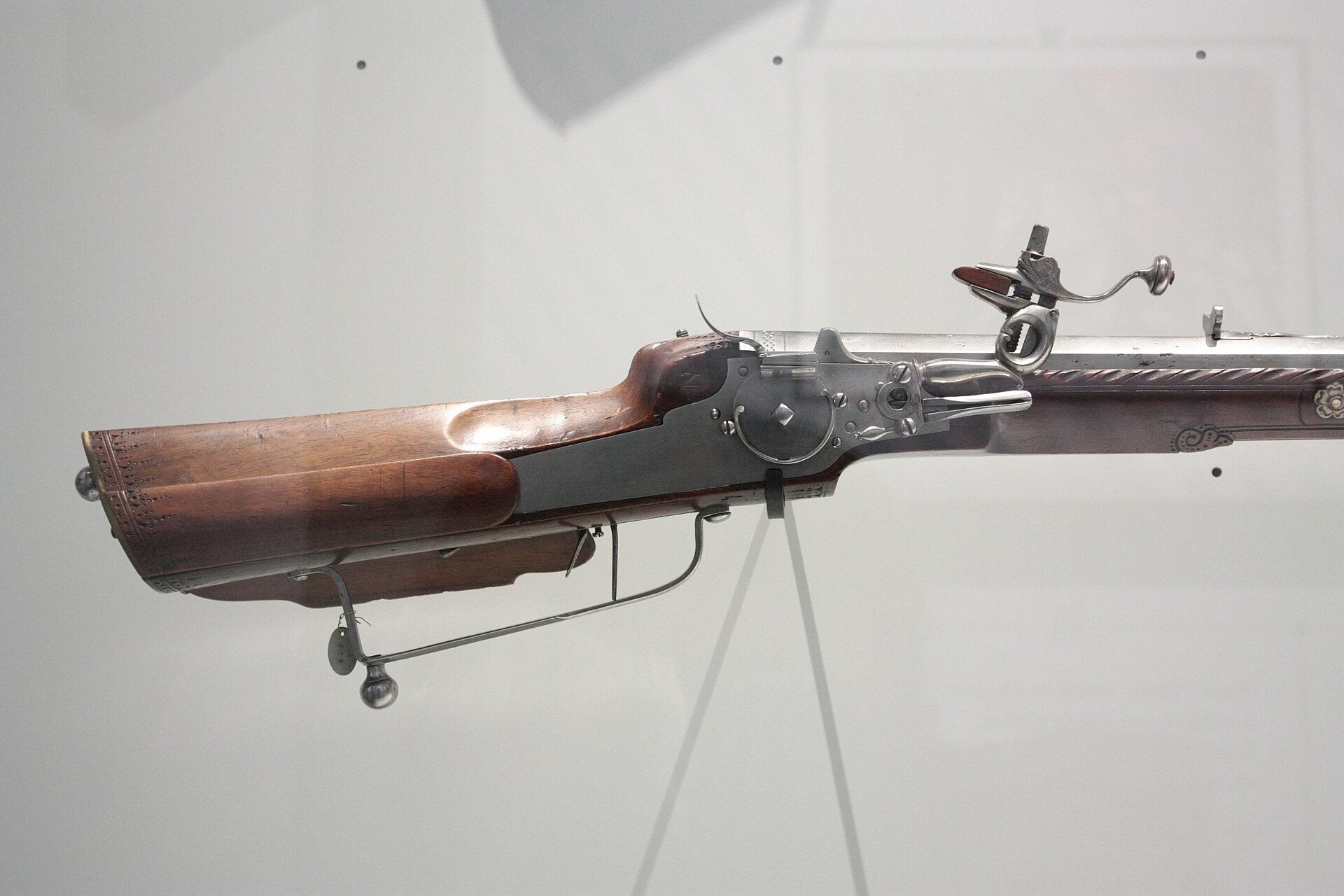
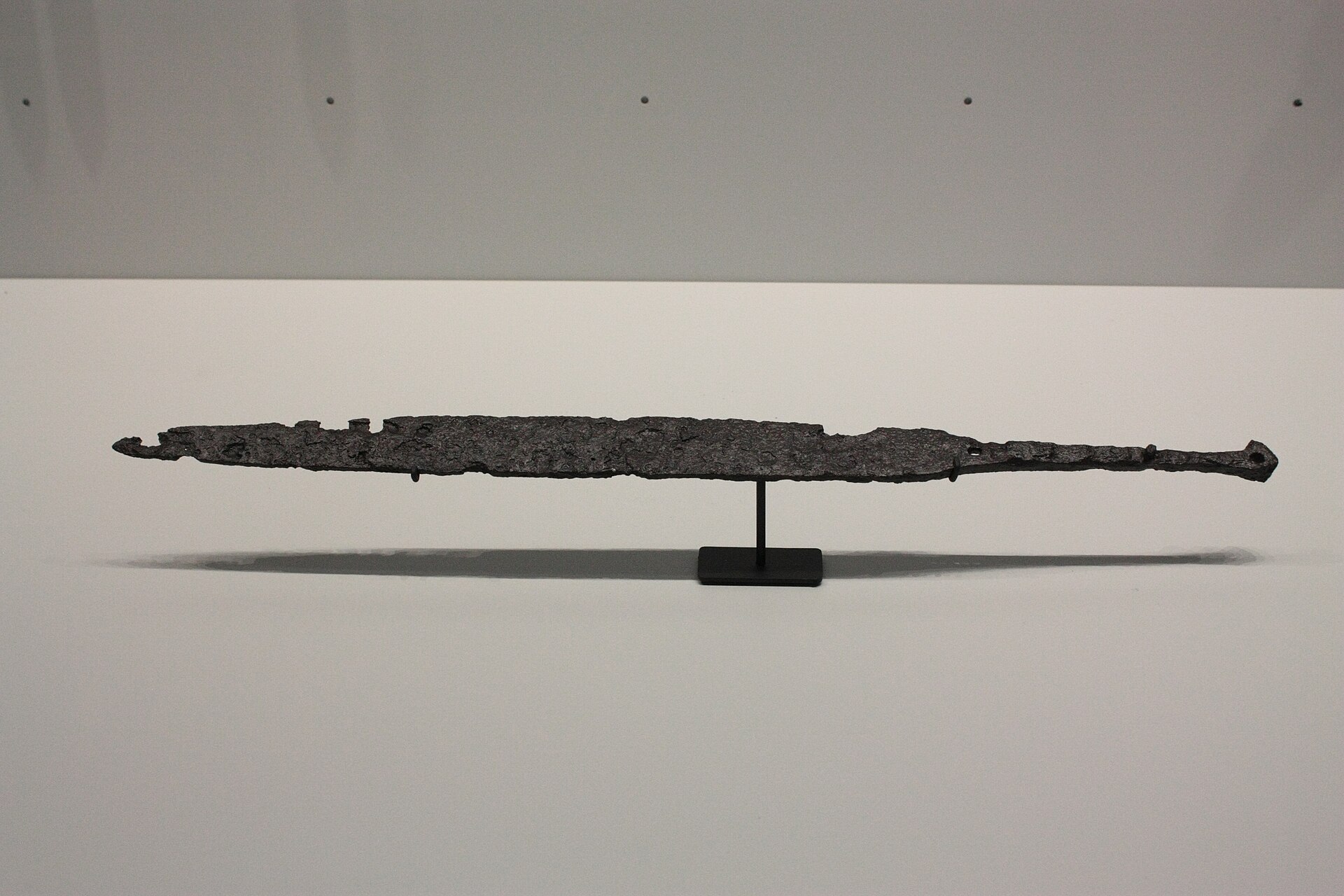
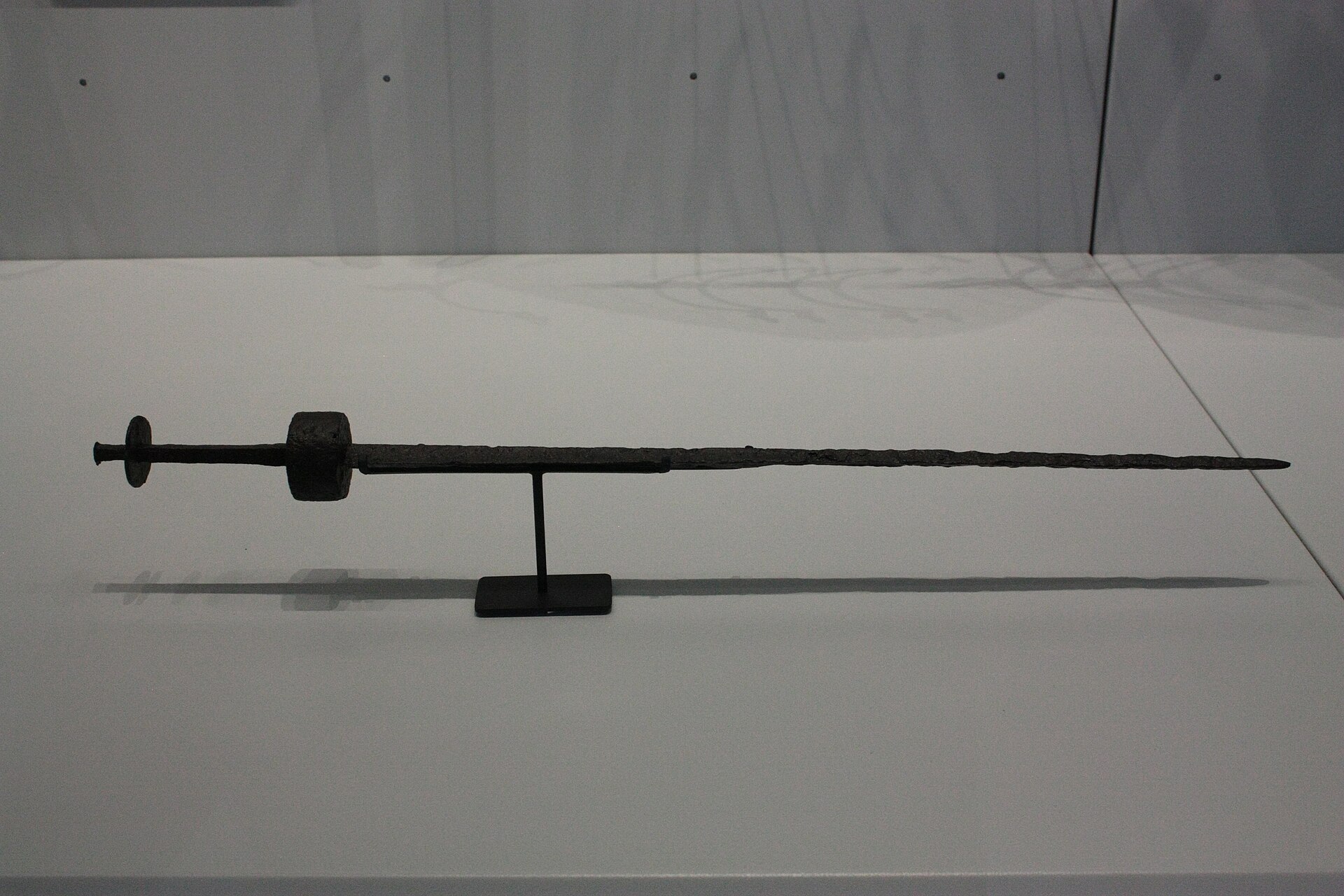
Among the treasures displayed within the Château de Foix are collections of medieval arms and armour, which help to bring the martial world of the counts vividly to life. Swords and spears, helmets and mail, the tools of the warrior aristocracy that ruled from this rock, allow the visitor to picture the soldiers who once garrisoned the towers and the knights who rode out from its gates.
These displays are more than mere curiosities. They are a direct link to the age when the castle was a working fortress, when its towers bristled with defenders and its walls had to be ready to repel attack at any moment. To handle, or even to see up close, the weapons and armour of the period is to understand something of the physical reality of medieval warfare that no written account can quite convey.
The castle also tells the story of the wider region, of the archaeology and history of the Ariège from the earliest times, so that a visit is an education in the whole long past of this corner of the Pyrenees. From prehistoric remains to the age of the counts, the displays weave together the many threads of the region’s history, with the great castle itself as the central and most impressive exhibit of all.
Seeing the weapons and armour of the age gathered within the very walls where they might once have been used gives them a special power. The castle is not a neutral gallery but the authentic setting for these objects, the kind of place where such arms were kept, maintained and wielded. This unity of object and setting is one of the great strengths of the museum at Foix, and it helps the visitor to imagine the fortress not as a ruin but as the living stronghold it once was.
Visiting the Château de Foix
Today the Château de Foix is open to visitors throughout much of the year, and it makes a magnificent destination for anyone exploring the Ariège and the Pyrenees. You can climb its three great towers, explore the museum housed within its walls, enjoy the medieval demonstrations staged for visitors, and above all drink in the spectacular views from its rock, out over the town, the rivers and the mountains.
The climb up to the castle from the town is part of the experience, building anticipation as the great towers loom ever larger overhead. Allow time to explore fully, for the castle rewards a leisurely visit, and try if you can to see it both by day, when the mountains are spread out below, and by night, when the floodlit towers stand out dramatically against the dark sky.
You will find the Château de Foix in the town of Foix, capital of the Ariège department, in the far south of France close to the Pyrenees and the Spanish border. For exact directions, here is a map link to guide you there: 42.9656, 1.6053. Climb the crag, stand beneath the three towers, and step into the proud story of the counts of Foix and the fortress that never fell.
Castles Nearby
The Fortress That Never Fell
The Château de Foix is one of the great mountain fortresses of France, a stronghold so perfectly placed on its rock that it never fell to an enemy in all its long history. For centuries it was the proud seat of the independent counts of Foix, a refuge in the age of the Cathars, and the home of one of the most brilliant noblemen of the Middle Ages, Gaston Fébus, the Sun Prince who wrote the great Book of the Hunt.
Grey and unyielding against the green of the Pyrenees, its three towers still dominate the town and the valleys below, just as they have for a thousand years. To climb to the castle and look out over the mountains is to understand at once the strength and the pride of the counts who ruled from here, and to feel the enduring power of a fortress that, alone among so many, never knew defeat.
You May Like
Mafra, the Palace a King Built From a Vow