In the center of Abu Dhabi, surrounded now by the glass towers of a modern metropolis, stands a low white fort that is the oldest and most important building in the city. Qasr Al Hosn, the palace of the fort, began as a simple watchtower raised to guard a precious well of fresh water, and grew over two centuries into the seat of the rulers of Abu Dhabi and the birthplace of the emirate. Its whitewashed walls and round towers are the foundation stone of the city and the nation, a monument to the origins of the modern United Arab Emirates.
Qasr Al Hosn is a very different palace from the others in this series, for it is not a monument of overwhelming splendor but of humble and heroic beginnings, the fort from which a small pearling and fishing community grew into one of the wealthiest cities on earth. Its story is the story of Abu Dhabi itself, from the discovery of fresh water in the desert to the rise of the ruling family and, in time, the age of oil.
For some two centuries, from the eighteenth century until the 1960s, the fort was the home of the ruling Al Nahyan family and the seat of the rulers of Abu Dhabi. Within its walls the affairs of the emirate were conducted, its rulers held court, and the decisions were taken that would shape the future of the region, making the fort the political heart of the emirate through its long transformation.
This is the third palace of a group of royal and princely residences of the Middle East in this series, joining the mountain court of Beiteddine and the Damascene paradise of the Azm Palace, and it completes a portrait of the palaces of the Arab world. To stand before the white walls of Qasr Al Hosn, amid the towers of modern Abu Dhabi, is to encounter the humble and heroic origin of a great city, the fort where a nation began.
In This Article
- The Foundation Stone of a City
- The Founding of Abu Dhabi
- The Original Watchtower
- The Al Nahyan Dynasty
- The Inner Fort
- The Outer Palace
- The Age of Pearls
- Building with Coral and Sea
- The Seat of the Rulers
- The Majlis and the Life of the Court
- The Age of Oil and Transformation
- Conservation and Rebirth
- Qasr Al Hosn Today
The Foundation Stone of a City
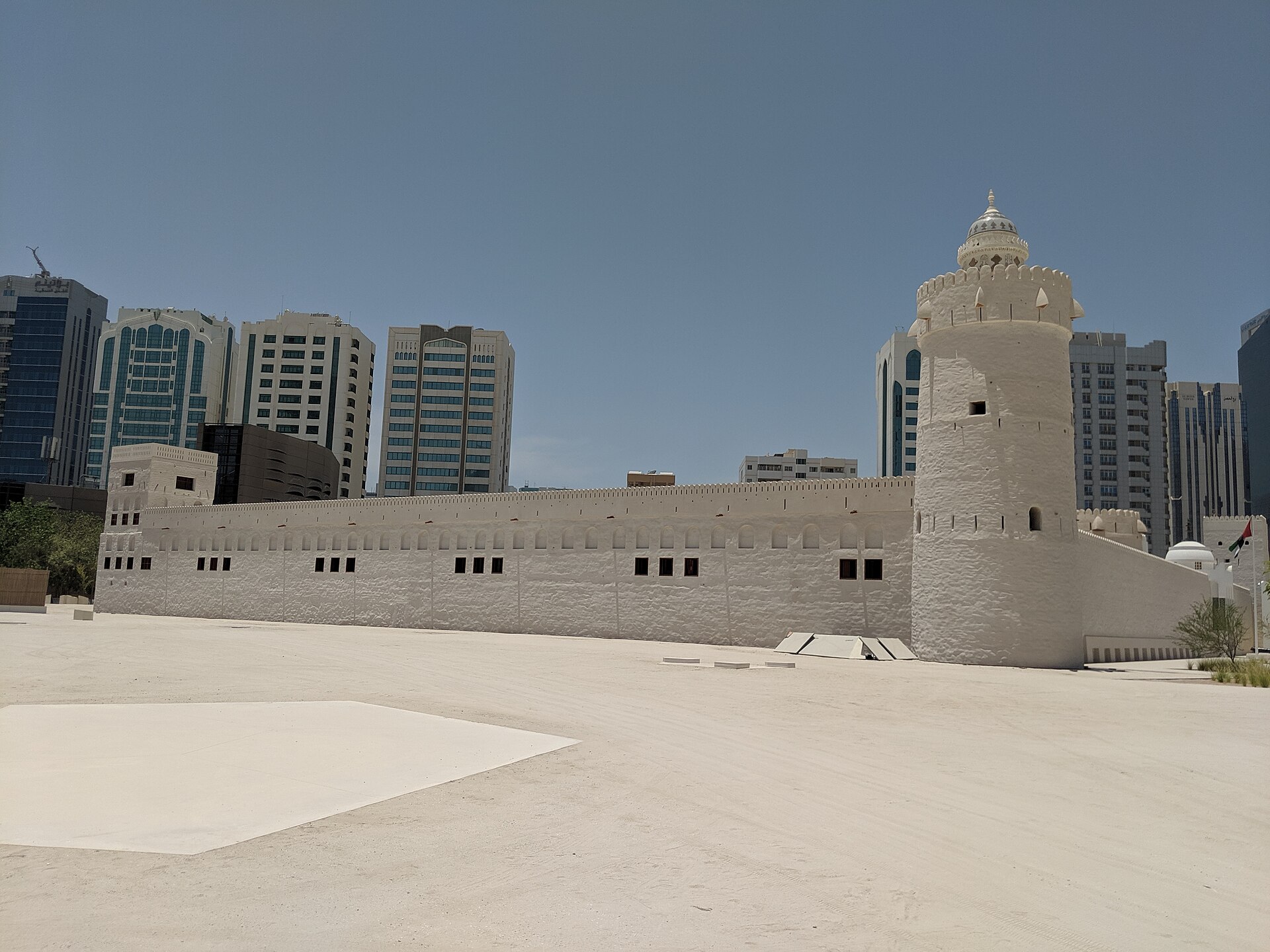
Qasr Al Hosn is a fort and palace complex in the heart of Abu Dhabi, consisting of an older inner fort and a larger outer palace built around it, all enclosed within white walls. It is the oldest stone building in the city, and for most of Abu Dhabi’s history it was its largest and most important structure.
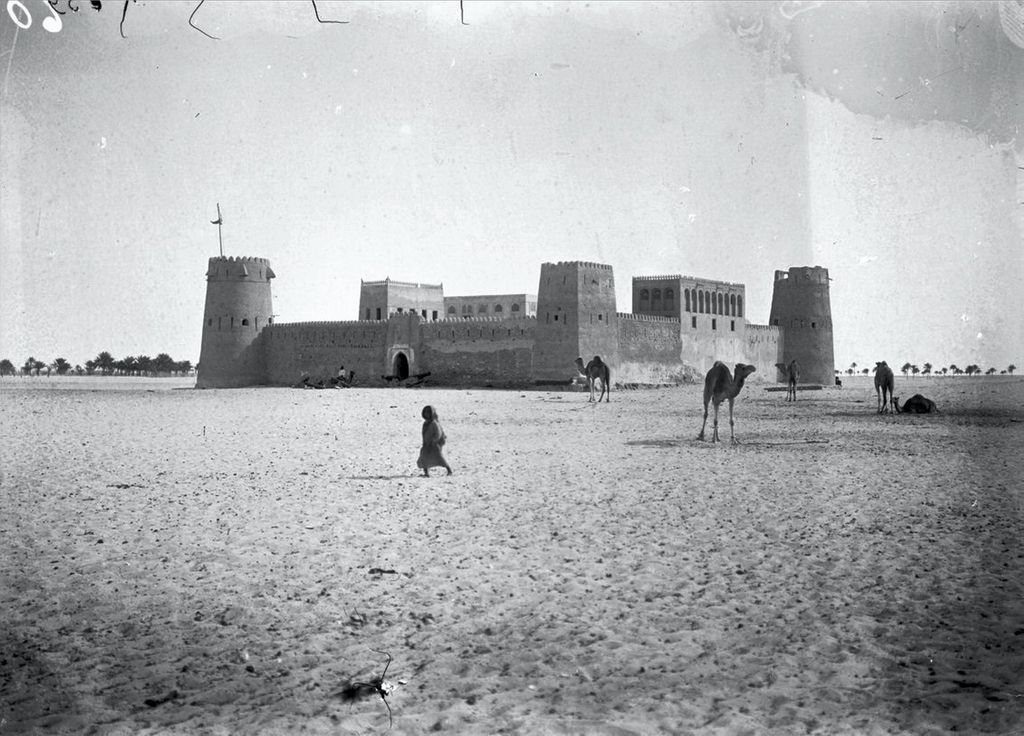
The complex has two main parts, the original inner fort, the oldest structure, which grew from a single watchtower, and the outer palace, a larger enclosure with round corner towers built in the twentieth century. Together they trace the growth of the fort from a simple defensive tower into the seat of a ruling dynasty.
The buildings are constructed in the traditional manner of the Gulf coast, using coral stone and sea materials, and finished in white, giving the fort its characteristic pale, gleaming appearance. This construction, adapted to the materials and climate of the coast, is itself a record of the building traditions of the region.
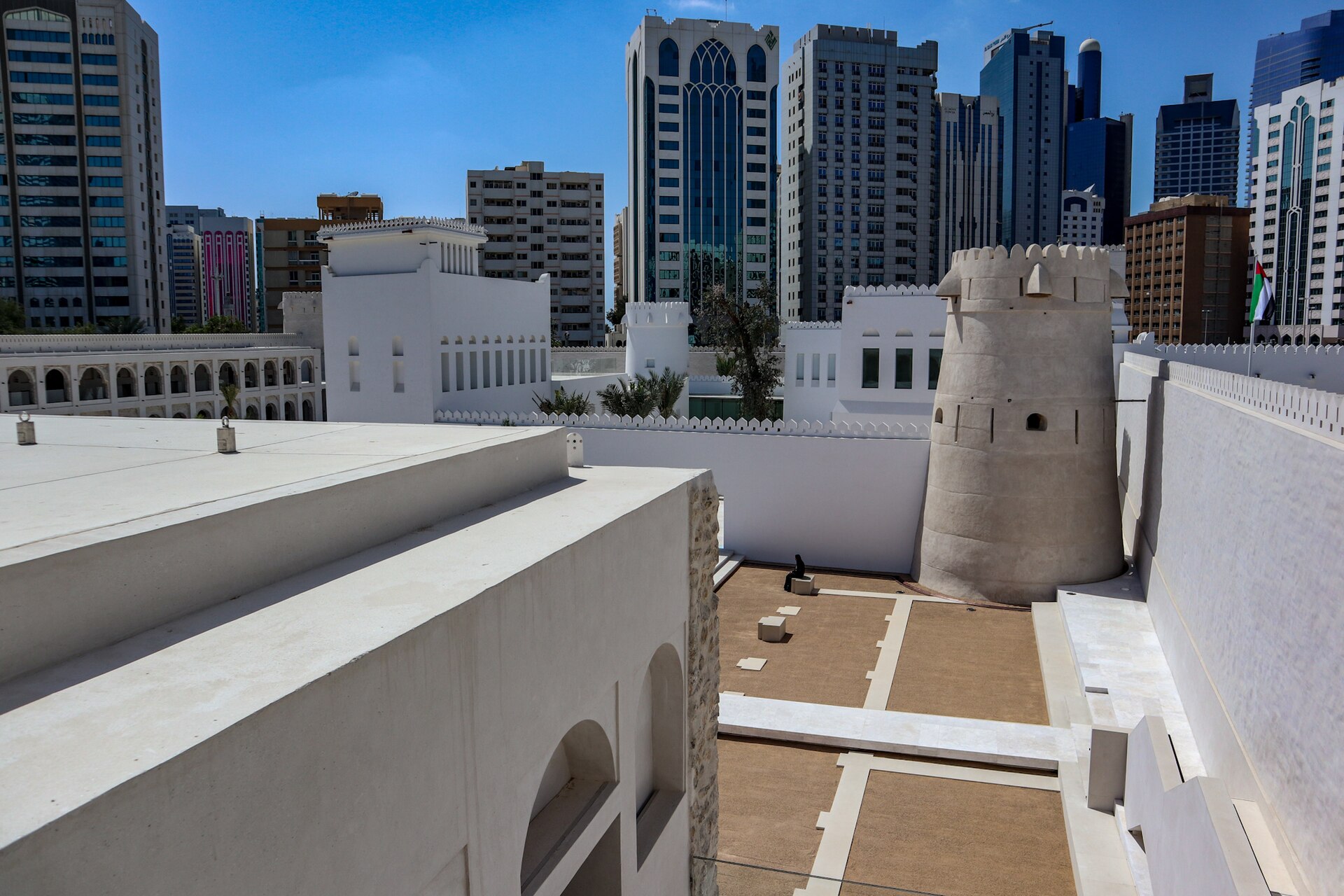
Around the fort, where once there was only desert and sea, has grown the modern city of Abu Dhabi, so that the low white walls now stand surrounded by skyscrapers. This juxtaposition of the old fort and the new city is one of the most striking sights in the emirate, a vivid image of the transformation of Abu Dhabi.
For the visitor, Qasr Al Hosn offers the origin story of Abu Dhabi in built form, the humble fort from which a great city grew. Its white walls and towers preserve the memory of the emirate’s beginnings, and its museums tell the story of the transformation from a small coastal settlement to a modern metropolis.
Among the palaces in this series, Qasr Al Hosn stands almost alone in what it represents, for it is a monument not to inherited splendor but to humble origins and astonishing transformation. Where the Alhambra or the Azm Palace embody civilizations at their height, this white fort embodies a beginning, the modest seed of a society that would change beyond recognition within a single lifetime. Its power lies not in ornament but in the story it tells, of a well in the desert that became a nation.
The Founding of Abu Dhabi
The story of Qasr Al Hosn is the story of the founding of Abu Dhabi, which by tradition began with the discovery of fresh water on the island where the city now stands. In a land of desert and sea, a source of fresh water was precious beyond measure, and it drew people to settle on the island.
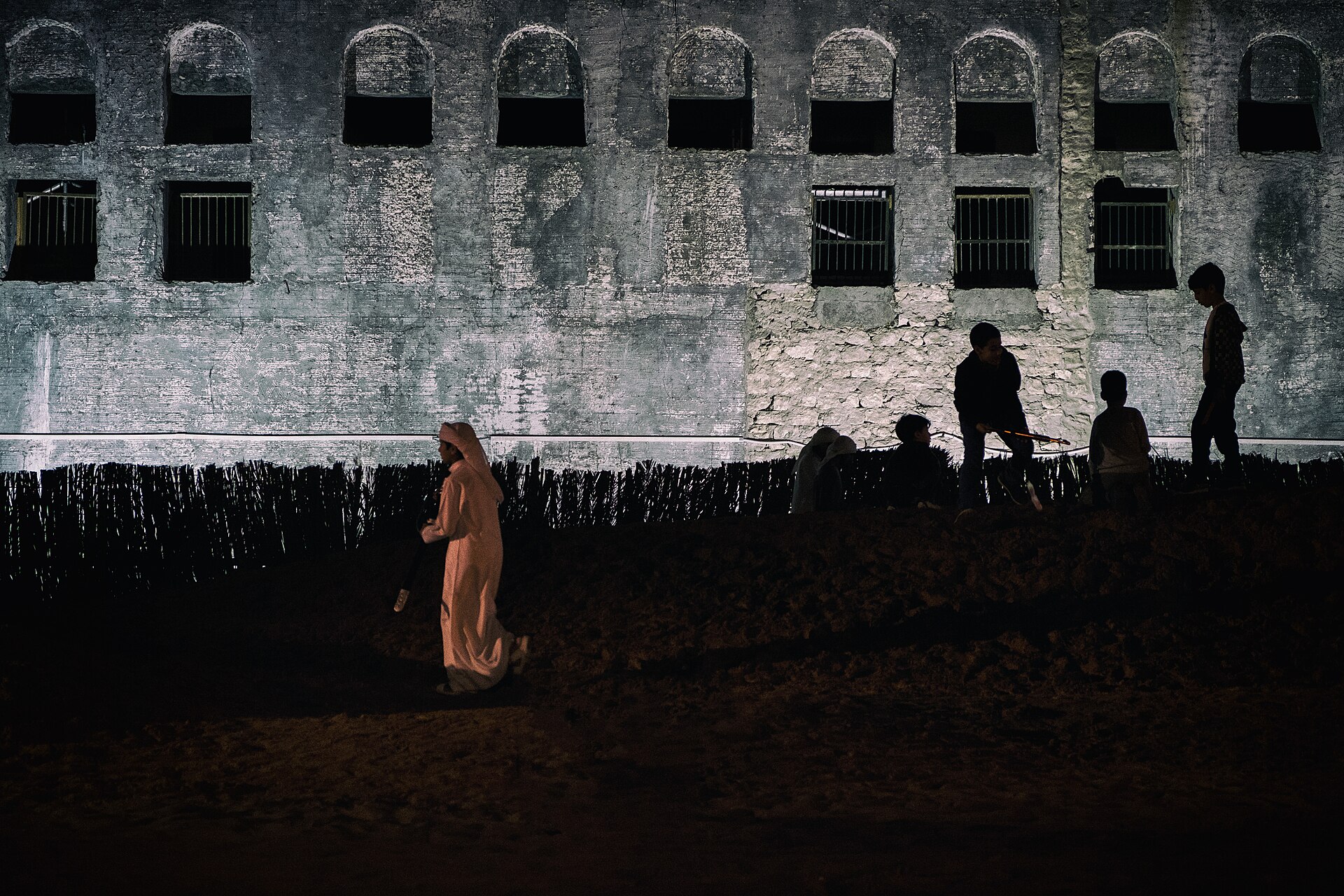
According to the traditional account, members of the Bani Yas tribal confederation, following game across the desert, discovered fresh water on the island of Abu Dhabi in the eighteenth century. The discovery of this well made settlement on the island possible and led to the founding of the community that would become the city.
To protect the precious well, a watchtower was built, the origin of Qasr Al Hosn, guarding the water source that was the lifeblood of the settlement. This simple act of building a tower to guard the well was, in effect, the founding of Abu Dhabi, and the fort grew from that first tower.
The early settlement was a modest community of fishing and pearling, dependent on the sea and the desert for its livelihood, and gathered around the fort and its well. From these humble beginnings, over two centuries, would grow the great city and the wealthy emirate of the modern age.
The founding of Abu Dhabi around the well and its guardian tower gives Qasr Al Hosn its profound significance as the birthplace of the city. The fort is not merely an old building but the very origin of the emirate, the place where the community that became a nation first took root in the desert island.
The tradition that Abu Dhabi began with hunters following a gazelle to a spring of fresh water has the quality of a founding myth, and like all such stories it captures a deeper truth, that in this land water was life, and the control of water was the foundation of everything. The name Abu Dhabi is often understood to mean father of the gazelle, tying the city’s very name to this story of discovery, and Qasr Al Hosn, the tower that guarded the water, is where that story took solid form.
The Original Watchtower
The oldest part of Qasr Al Hosn, and the origin of the whole complex, was a single round watchtower built in the eighteenth century to guard the fresh water well on the island. This simple defensive tower was the first permanent stone structure in Abu Dhabi, the seed from which the fort and the city grew.
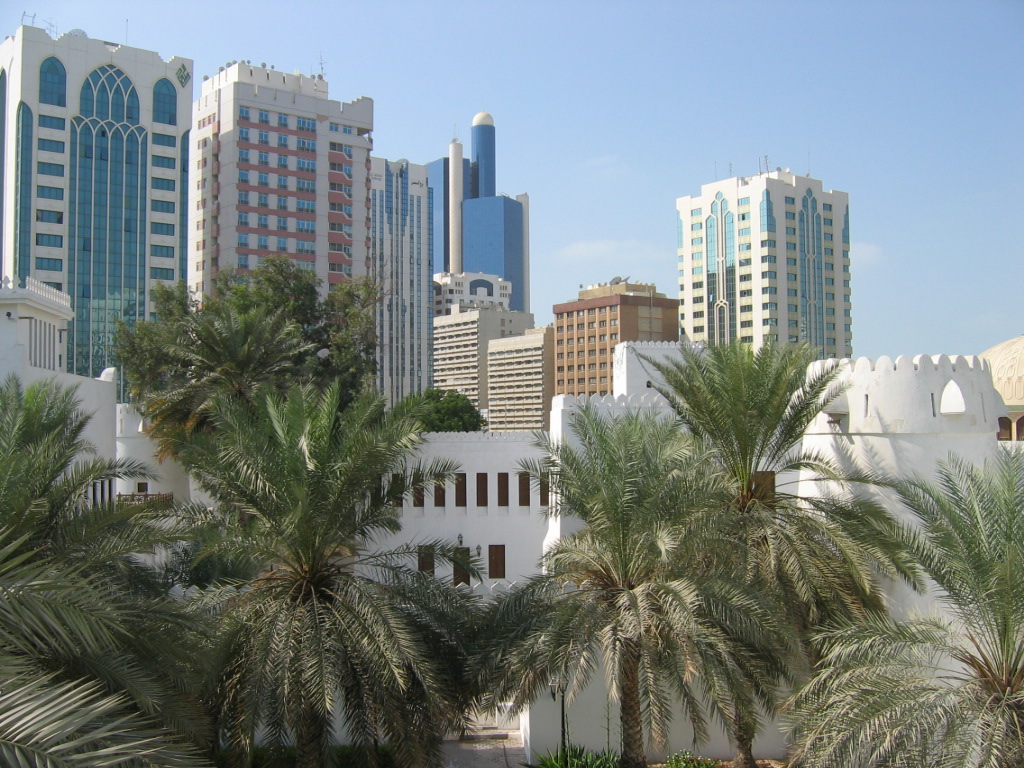
The watchtower stood guard over the well, allowing the small community to protect its vital water source against raiders and rivals. In the harsh environment of the Gulf coast, where fresh water was scarce and precious, the defense of the well was a matter of survival, and the tower was its guardian.
Over time, as the settlement grew and the ruling family established itself, the tower was expanded into a small fort, and then into the larger complex that survives today. But the original tower remained at the heart of the fort, the ancient core around which everything else was built.
The watchtower embodies the humble and practical origins of Qasr Al Hosn, a structure built not for splendor but for survival, to guard the water on which the community depended. Its simple, sturdy form is a world away from the ornate palaces elsewhere in this series, and all the more moving for it.
From this single tower, guarding a well in the desert, grew the fort, the ruling dynasty, and eventually the great city of Abu Dhabi. The watchtower is the true foundation stone of the emirate, and its survival at the heart of the complex preserves the memory of the modest beginnings from which a nation arose.
There is something deeply fitting in the fact that the nation’s foundation stone was a tower built to guard water rather than a monument built to display power. It speaks to the values of a desert and coastal people, for whom survival, vigilance, and the careful husbanding of scarce resources were the first virtues. The whole later history of Abu Dhabi, and the wealth that would one day flow from beneath its sands, rests, symbolically, on that first humble act of guarding a well.
The Al Nahyan Dynasty
Qasr Al Hosn became the seat of the Al Nahyan family, the ruling dynasty of Abu Dhabi, who established themselves as the leaders of the settlement and made the fort their home and their capital. The Al Nahyan, a branch of the Bani Yas confederation, have ruled Abu Dhabi from that time to the present day.
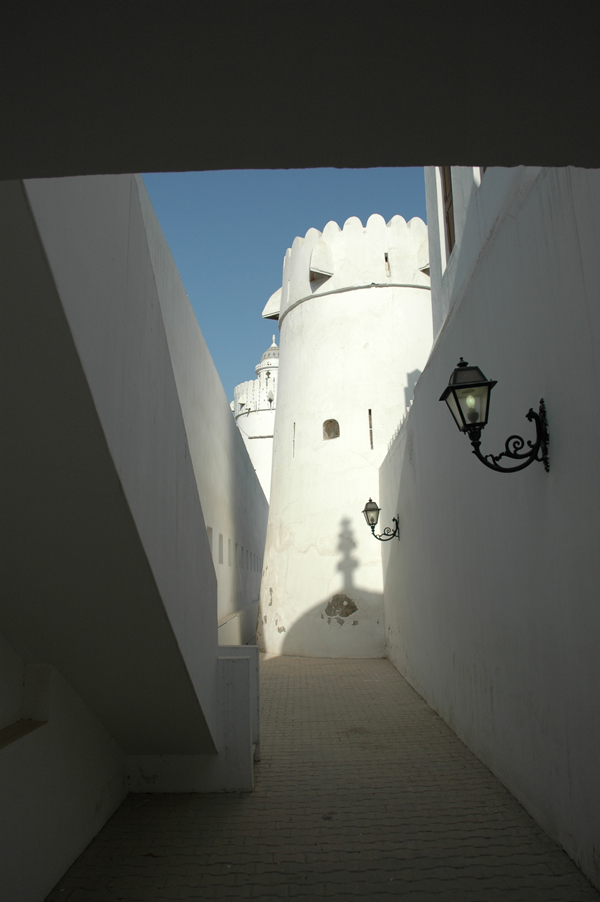
The ruling family moved their seat to the fort and governed the emirate from within its walls, conducting the affairs of the community, leading its people, and defending its interests. For some two centuries the fort was the home of the rulers and the center of the emirate’s life.
Under the Al Nahyan, Abu Dhabi grew from a small settlement into a significant power on the Gulf coast, its economy based on pearling, fishing, and trade. The rulers guided the emirate through the challenges of its environment and the shifting politics of the region, from within the walls of Qasr Al Hosn.
The dynasty’s long rule from the fort gave Qasr Al Hosn its role as the political heart of the emirate, the seat from which Abu Dhabi was governed through the centuries of its growth. The history of the fort is inseparable from the history of the ruling family that made it their home.
The Al Nahyan continue to rule Abu Dhabi and to lead the United Arab Emirates, of which Abu Dhabi is the capital, so that the dynasty whose seat was Qasr Al Hosn remains at the head of the nation. The fort is the ancestral home of the ruling family and a monument to the origins of their rule.
The continuity of Al Nahyan rule from the eighteenth century to the present is remarkable in a region and an age of upheaval, and it gives Qasr Al Hosn a living significance that few historic forts possess. The family that governs the United Arab Emirates today traces its authority directly back to the rulers who held court in this fort, so that the white walls are not the relic of a vanished dynasty but the ancestral seat of a house that still leads the nation.
The Inner Fort
The heart of the complex is the inner fort, the older structure that grew from the original watchtower into a small fortress. Compact and sturdy, with its towers and walls, it was the stronghold of the ruling family and the defensive core of the settlement in its early centuries.
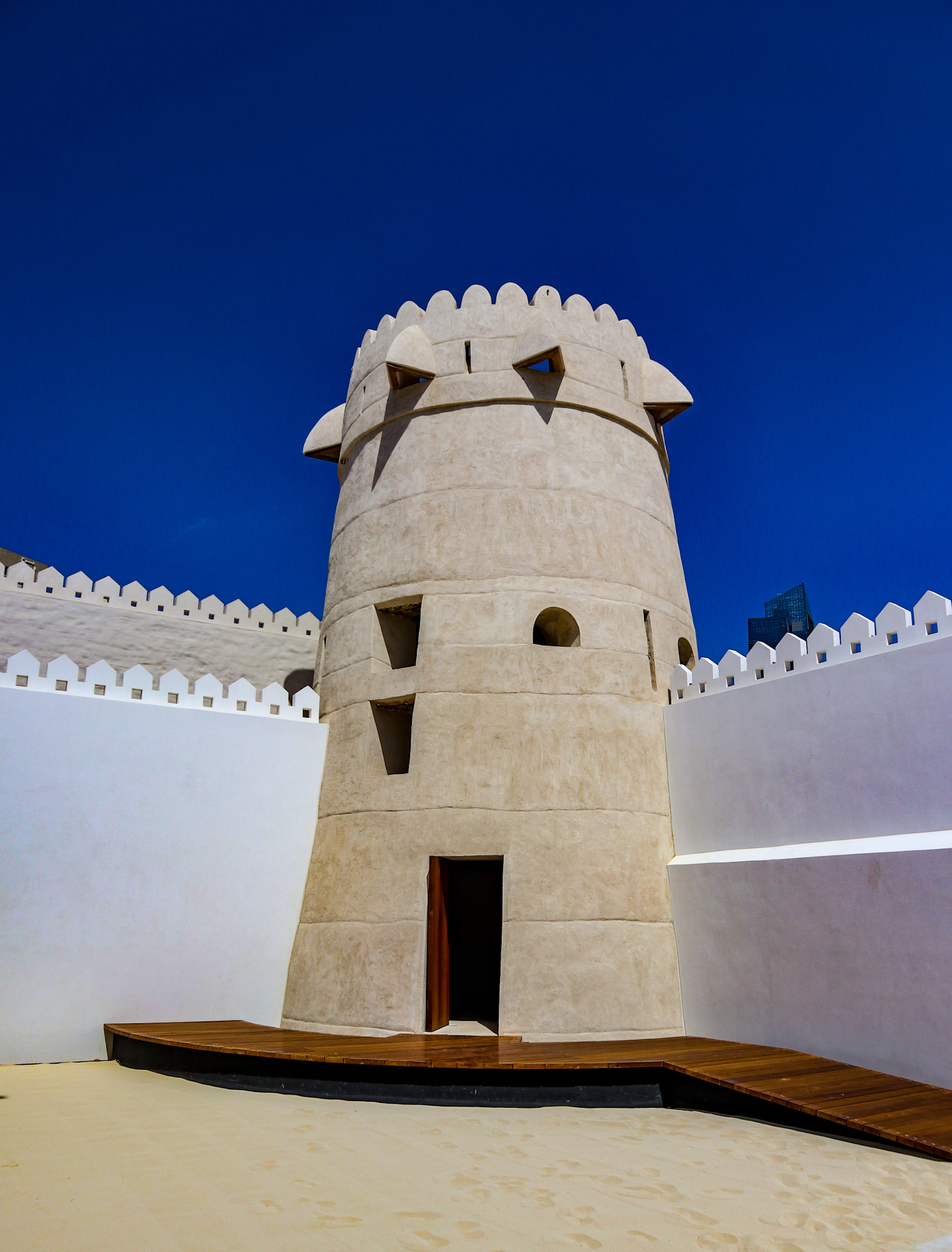
The inner fort contained the essential functions of the ruler’s seat, the rooms where the family lived, where the ruler held court and received his people, and where the affairs of the emirate were conducted. It was a working fortress and residence, adapted to the needs of the community and its rulers.
Built of coral stone and sea materials in the traditional manner, the inner fort embodies the building traditions of the Gulf coast, adapted to the harsh climate and the available materials. Its thick walls provided defense and kept out the heat, and its form reflects the practical wisdom of coastal building.
The inner fort was the seat of the rulers through the early history of the emirate, the center from which Abu Dhabi was governed and defended. Its rooms and towers witnessed the growth of the settlement and the establishment of the ruling dynasty over the generations.
Preserved and restored, the inner fort is the ancient heart of Qasr Al Hosn, the oldest and most historic part of the complex. Within its walls, the visitor is closest to the origins of Abu Dhabi, in the fortress that grew from the watchtower and became the seat of the emirate.
The Outer Palace
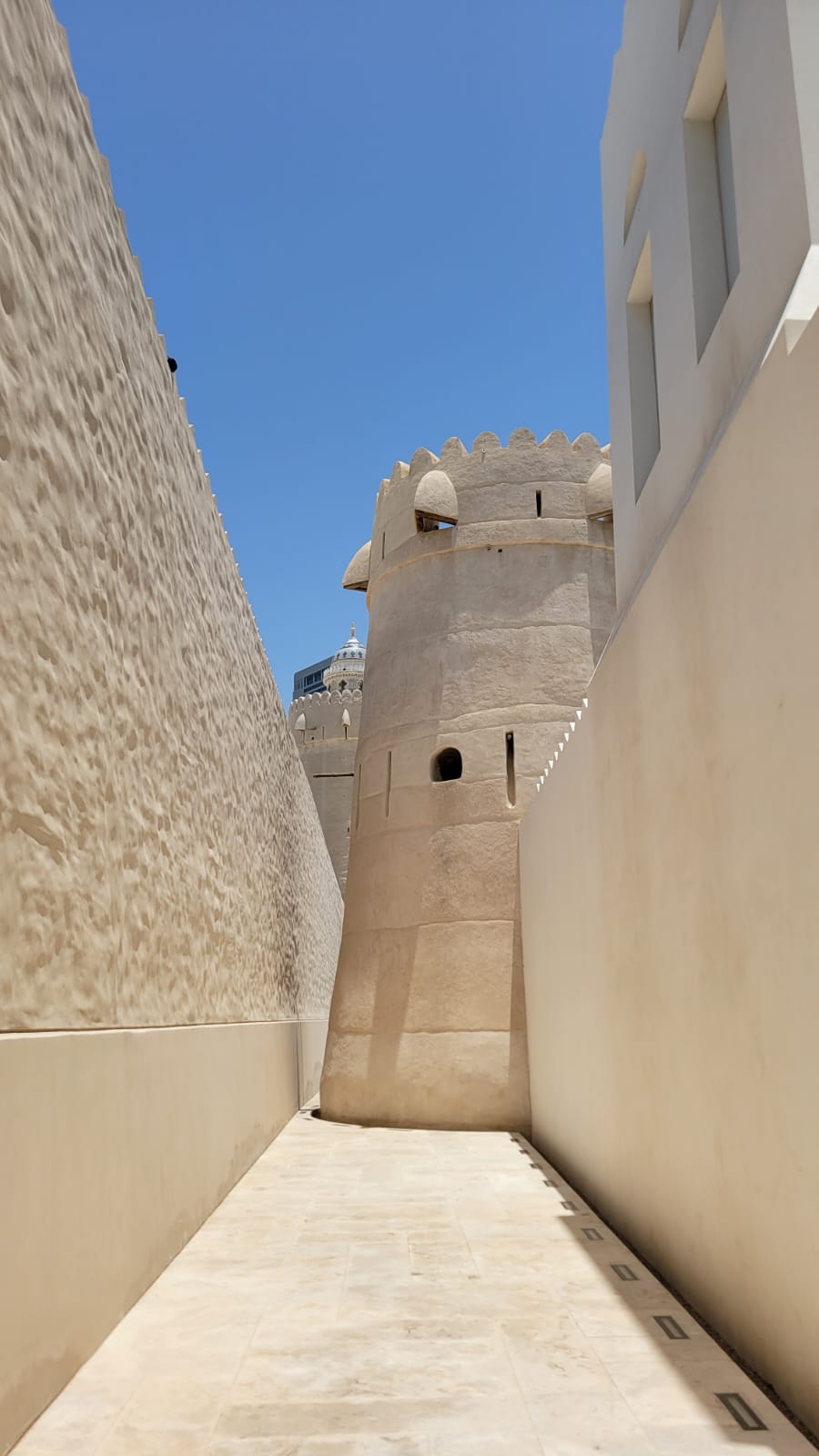
In the twentieth century, as the fortunes of Abu Dhabi grew, the inner fort was enclosed within a much larger outer palace, a grand new enclosure with high walls and round corner towers built around the old fortress. This expansion transformed the modest fort into a palace worthy of the ruler of a growing emirate.
The outer palace was built in the years around the middle of the twentieth century, a period when the discovery of oil was beginning to change the fortunes of the region. Its construction reflected the increasing wealth and ambition of the emirate on the eve of its great transformation.
The new palace provided greatly expanded accommodation for the ruler and his household, with rooms, courtyards, and the round corner towers that give the complex its distinctive silhouette. It enclosed the old inner fort, preserving the ancient core within the grander new walls.
The building of the outer palace marked the transition of Qasr Al Hosn from a defensive fort to a true palace, the residence of the ruler of an emirate on the threshold of the oil age. It represents the last phase of the fort’s growth before the rulers eventually moved to new residences.
The outer palace, with its white walls and round towers, is the face that Qasr Al Hosn presents to the modern city, enclosing the historic inner fort within. Together the two, the ancient core and the grander enclosure, trace the whole growth of the fort across the centuries of Abu Dhabi’s history.
The Age of Pearls
For most of its history, before the discovery of oil, Abu Dhabi lived from the sea, and above all from the pearl. The pearling industry was the mainstay of the economy of the Gulf coast, and the fortunes of Abu Dhabi and its rulers depended on the annual diving for pearls in the waters of the Gulf.
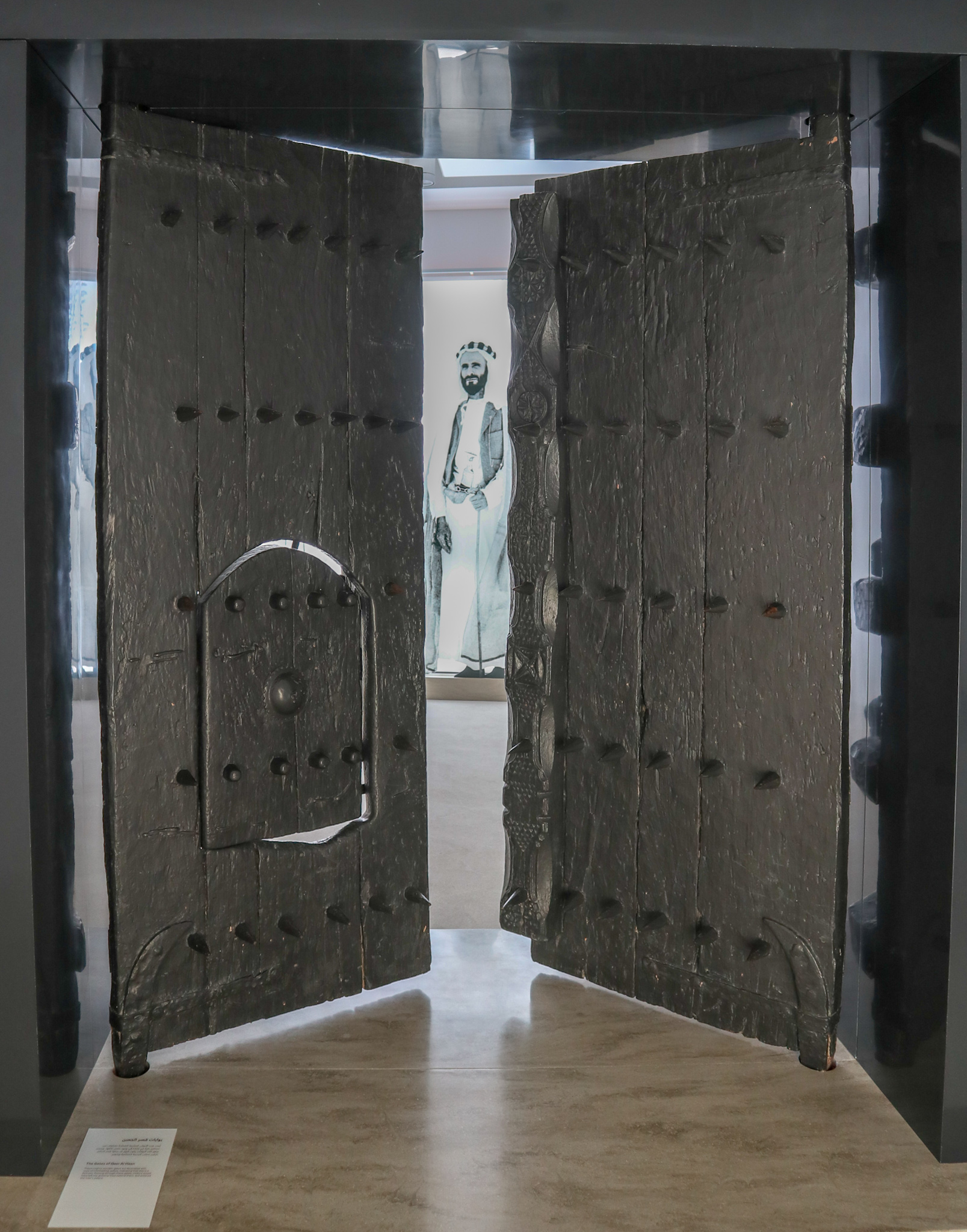
Each year the pearling fleets set out for the banks, and the divers descended, without breathing equipment, to gather the oysters from the sea floor in a dangerous and demanding trade. The pearls they brought up were sold to merchants and traded across the world, the chief source of wealth for the coast.
The pearl economy shaped the life of Abu Dhabi and the rule of the Al Nahyan, who governed a community bound to the rhythms of the diving season and the fortunes of the trade. Qasr Al Hosn was the seat of the rulers through this age of pearls, the center of an economy drawn from the sea.
The pearling economy declined sharply in the early twentieth century, with the advent of cultured pearls and the disruptions of the wider world, bringing hardship to the communities of the coast. This was a difficult period for Abu Dhabi, before the discovery of oil transformed its fortunes.
The age of pearls is an essential part of the story of Qasr Al Hosn, for it was the world in which the fort served as the seat of the rulers for most of its history. The museums of the fort tell the story of this maritime economy, the world of the sea and the pearl from which Abu Dhabi grew.
The hardship of the pearling life is difficult to overstate, for the divers risked their lives on every descent, working through long seasons at sea for uncertain reward, and the whole community lived at the mercy of the trade. Remembering this is essential to understanding what the transformation of the oil age meant, for it lifted a people from a life of danger and scarcity to one of extraordinary wealth within a generation, a change whose scale can only be grasped against the background of the age of pearls.
Building with Coral and Sea
The construction of Qasr Al Hosn reflects the building traditions of the Gulf coast, using the materials available in a land of desert and sea. The fort was built of coral stone and beach rock, bound with mortar and finished with a coating that gave it its characteristic white appearance.
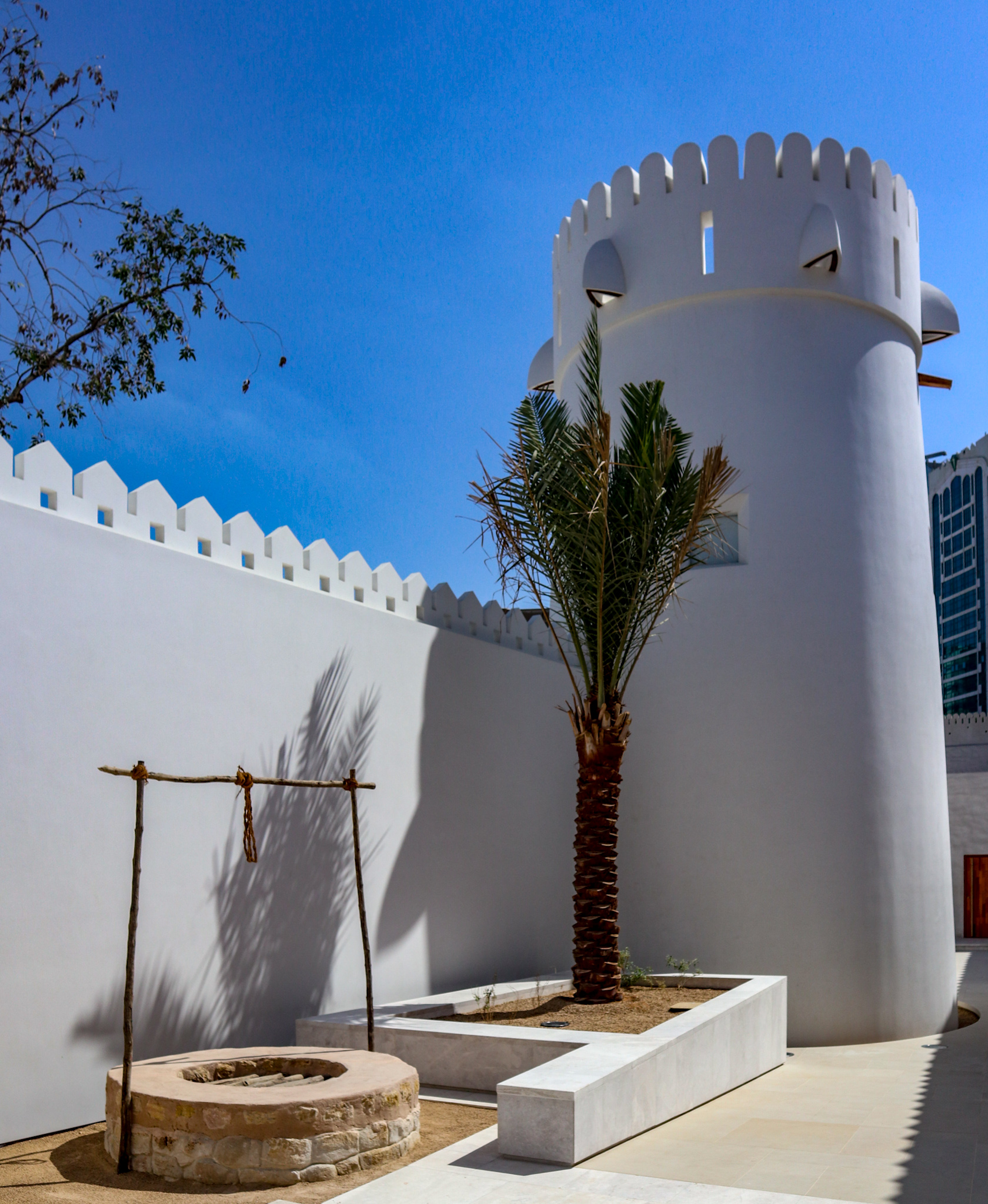
Coral stone, quarried from the sea, was a principal building material of the coast, cut into blocks and used for walls and structures. Combined with beach rock, mangrove timber, and palm materials, it allowed the people of the coast to build in a land poor in conventional building stone and wood.
The white finish that gives the fort its name and appearance was a coating of lime plaster, which protected the coral stone and reflected the fierce sun. The gleaming white walls of Qasr Al Hosn are a hallmark of the traditional architecture of the Gulf, adapted to the intense heat and light of the coast.
The thick walls and small openings of the fort were designed for defense and for the climate, keeping out the heat of the day and providing security. The round towers, the walls, and the enclosed courtyards all reflect the practical demands of building in the harsh environment of the coast.
This architecture, using the coral and sea materials of the Gulf, is itself a record of the world from which Abu Dhabi grew, a world in which people built with what the sea and the desert provided. Qasr Al Hosn preserves these traditions, a monument to the building culture of the coast before the age of concrete and glass.
The traditional building methods preserved at Qasr Al Hosn are increasingly precious as a record of a way of building that has almost entirely vanished, swept away by concrete, steel, and glass. The coral-stone walls and lime plaster of the fort embody a whole vernacular architecture perfectly adapted to its environment, and the conservation of the fort has become, in part, an effort to preserve the knowledge of these old techniques before they are lost.
The Seat of the Rulers
For some two centuries, Qasr Al Hosn was the seat of the rulers of Abu Dhabi, the place from which the emirate was governed and where its rulers lived and held court. Within its walls the affairs of the community were conducted and the decisions taken that shaped its history.

The ruler held court in the fort, receiving his people, hearing their concerns, and dispensing justice in the traditional manner of the Arab ruler, accessible to his community. The fort was the center of this personal, direct form of rule, where the ruler and his people met.
The great decisions of the emirate’s history were taken within the fort, from the management of the pearl economy to the relations with neighboring powers and, in time, the momentous choices of the oil age. Qasr Al Hosn was the political heart of Abu Dhabi through its long transformation.
The rulers who governed from the fort guided Abu Dhabi through the centuries of the pearl economy, the hard years of its decline, and the beginning of the age of oil. Their seat at Qasr Al Hosn witnessed the whole arc of the emirate’s history before the modern age.
As the seat of the rulers, Qasr Al Hosn was the birthplace of the modern emirate and, in time, of the nation, for it was the Al Nahyan rulers who would lead Abu Dhabi into the federation of the United Arab Emirates. The fort is the cradle of the political history of the emirate and the country.
The Majlis and the Life of the Court
At the heart of life in Qasr Al Hosn was the majlis, the council or gathering place where the ruler met his people, an institution central to the traditional governance of the Gulf. In the majlis, the ruler received his subjects, heard their concerns, settled disputes, and took counsel with the leading men of the community.
The majlis embodied a personal and accessible form of rule, in which the ruler was directly available to his people and governed through consultation and consensus as much as command. This tradition, deeply rooted in the culture of the region, shaped the way Abu Dhabi was governed from the fort.
Hospitality was central to the life of the court, and the sharing of coffee and food with guests and petitioners was an essential ritual of the majlis. The traditions of Arab hospitality, the serving of dates and coffee, the welcome of the guest, were practiced in the fort as the foundation of social and political life.
The daily life of the fort revolved around these gatherings and the rhythms of the household, the ruler, his family, their attendants, and the many people who came to the fort on the business of the emirate. It was a busy, living center, the hub of the community’s political and social life.
The majlis tradition, preserved in the memory of Qasr Al Hosn, illuminates the character of rule in Abu Dhabi before the modern age, a personal and consultative form of leadership rooted in the culture of the desert and the coast. The fort was the great majlis of the emirate, where ruler and people met.
The Age of Oil and Transformation
The history of Abu Dhabi was transformed in the middle of the twentieth century by the discovery of oil, which turned the poor pearling emirate into one of the wealthiest states in the world. This transformation, one of the most dramatic in modern history, changed everything, including the role of Qasr Al Hosn.
The discovery and export of oil brought immense wealth to Abu Dhabi, funding the building of a modern city and state where before there had been a small coastal settlement. The transformation was astonishingly rapid, and within a few decades the emirate was utterly changed.
Under the leadership of Sheikh Zayed, who became ruler of Abu Dhabi and the founding father of the United Arab Emirates, the wealth of oil was used to build the infrastructure, institutions, and prosperity of a modern nation. In 1971 Abu Dhabi joined with other emirates to form the United Arab Emirates, with Abu Dhabi as its capital.
As the modern city rose around it, Qasr Al Hosn ceased to be the residence of the rulers, who moved to new palaces befitting the transformed emirate. The old fort, once the largest building in Abu Dhabi, was gradually surrounded by the towers of the new city.
The age of oil thus ended the fort’s role as the seat of the rulers, even as it transformed the emirate beyond recognition. Qasr Al Hosn became a monument to the world that existed before the transformation, the humble origin from which the wealthy modern nation had grown with astonishing speed.
The speed of Abu Dhabi’s transformation is almost without parallel in human history, for people who were born in a society of pearl divers and desert herders lived to see their city become a global metropolis of skyscrapers and wealth. Qasr Al Hosn is the still point at the center of that whirlwind, the one building that remained while everything around it changed utterly, and this is precisely what gives the modest fort its extraordinary emotional power for the people of the emirate.
Conservation and Rebirth
As Abu Dhabi modernized, the importance of Qasr Al Hosn as the birthplace of the city and the nation came to be recognized, and the old fort was preserved and restored as a monument of national heritage. A major program of conservation returned the fort to its historic appearance.
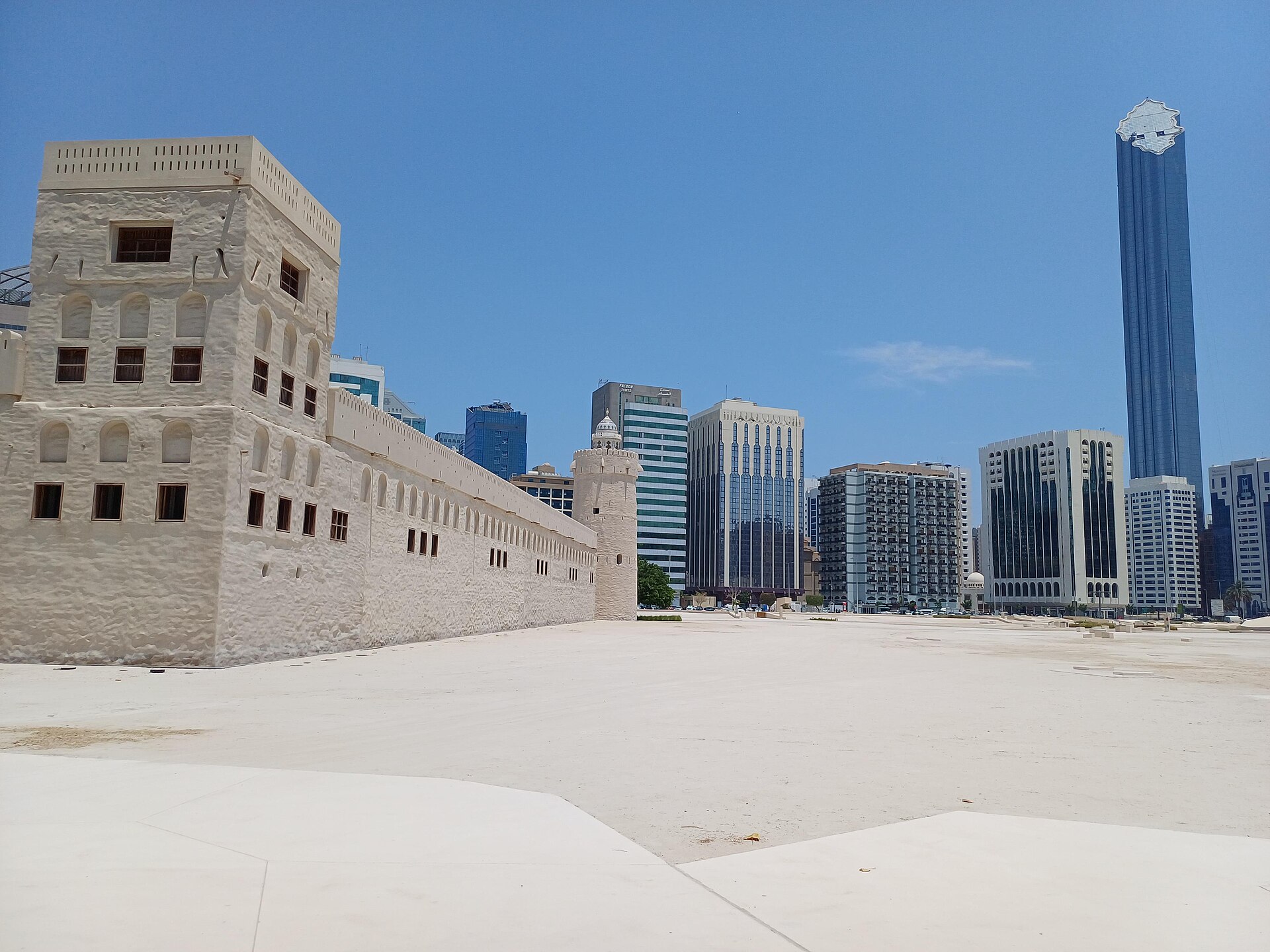
The restoration involved careful study and conservation of the historic fabric, using traditional materials and techniques where possible to preserve the authenticity of the fort. The work uncovered and protected the various phases of the building, from the original watchtower to the outer palace.
The conservation of Qasr Al Hosn was part of a wider effort in Abu Dhabi to preserve and celebrate the heritage of the emirate, to remember the world that existed before the age of oil. The fort became the centerpiece of this effort, the physical link to the origins of the nation.
The restored fort was opened as a cultural site and museum, its rooms and towers made accessible to the public and its history told through exhibitions. The preservation of the fort ensured that the story of Abu Dhabi’s origins would not be lost amid the transformation of the modern city.
The rebirth of Qasr Al Hosn as a monument and museum gave the old fort a new role in the modern emirate, as the keeper of the nation’s memory. Preserved amid the towers of the new city, it stands as a reminder of the humble beginnings from which Abu Dhabi grew.
Qasr Al Hosn Today
Today Qasr Al Hosn is a cultural site and museum in the heart of Abu Dhabi, telling the story of the city and the emirate from their origins to the present day. Its rooms and towers house exhibitions on the history of Abu Dhabi, the ruling family, and the life of the coast before the age of oil.
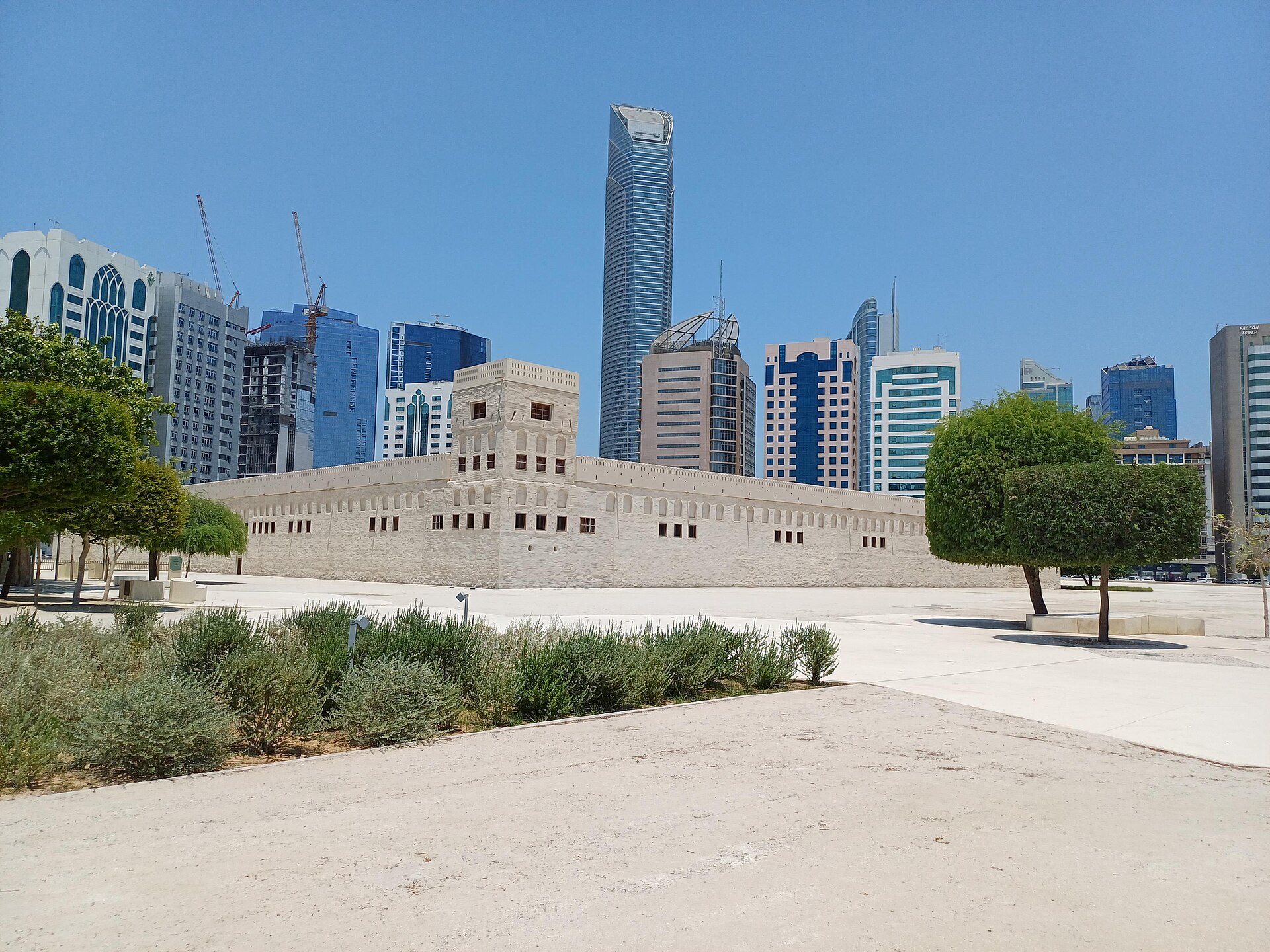
The fort stands within a cultural precinct that includes other institutions, and it has been the setting for the Qasr Al Hosn Festival, a celebration of the heritage and traditions of the emirate. In this way the old fort has become a living center of culture and memory in the modern city.
The museums of the fort display the history of Abu Dhabi, from the discovery of the well and the founding of the settlement, through the age of pearls, to the transformation of the oil era. Together they tell the remarkable story of the emirate’s rise from a coastal community to a modern nation.
For the people of Abu Dhabi and the United Arab Emirates, Qasr Al Hosn is a cherished symbol of national identity and origins, the birthplace of the city and the ancestral seat of the ruling family. It stands as a reminder of the humble beginnings from which the wealthy modern nation grew.
To stand before the white walls of Qasr Al Hosn, amid the gleaming towers of modern Abu Dhabi, is to encounter the origin of a great city and a nation. The fort that began as a watchtower guarding a well in the desert endures as the foundation stone of the emirate, a monument to the extraordinary journey from the age of pearls to the modern world.
To visit Qasr Al Hosn today, and then to step out into the surrounding city of towers and highways, is to experience the whole story of Abu Dhabi in a single afternoon. The contrast is the lesson, and the emirate has been wise to preserve the fort precisely so that the contrast can be felt, ensuring that in the rush toward the future the memory of the well in the desert, and the world it made possible, is not lost.
Palaces Nearby
Qasr Al Hosn completes a trio of royal and princely residences of the Middle East. Travel to the mountain court of the Lebanese emirs, or to the hidden Damascene paradise of the Azm Palace, to continue the journey through the courts of the Arab world.
You May Like

Mafra, the Palace a King Built From a Vow