Akslepion is the first health center to be encountered at the entrance to Bergama. Akslepion, the God of Health, preserved its importance until the Christian era. He found health for many people in the health dormitories built in his name. In addition to their religious features, Akslepes continued to function as schools where the research and experiments they carried out in the field of medicine were carried out and where famous doctors were trained. Pergaman Akslepion, which is determined to be established in the 4th century BC in the place where the holy water dedicated to the God of Health Akslepion is located, developed in the Hellenistic period and lived its brightest age in the Roman period. While the patients who recovered with various methods applied in Akslepion where hundreds of patients are sheltered every day, they also visited the Akslepion Temple and made donations according to their powers. Emperor Carakalla got sick and was brought to Pergamon Akslepion and when he recovered there, he donated to the city and rebuilt the Temple of Dionysus.
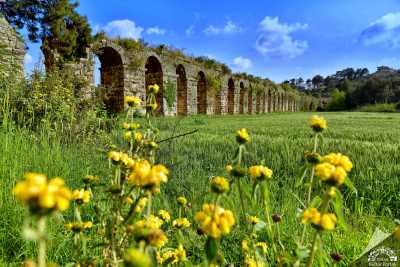
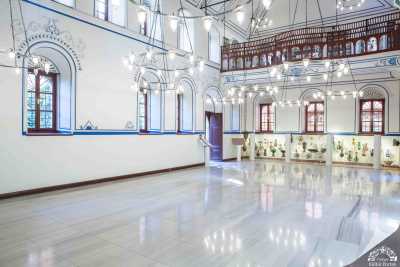
The Amphitheater Health Center is 300 m. Away from the Viran gate, which is the beginning of the sacred road to Akslepion. The presence of only two examples of this magnificent building, which was built by the Romans on Tellidere to perform water games while it is located in the north, together with Kyzikos in Anatolia emphasizes its importance. The vaults of the work with a capacity of 50 thousand people, which are visible today, on the stream bed, and the Carea legs await excavations. There is the sacred road coming from the Viran Gate and the small square in front of the Propylon, the library to the east, and the Monoptheros temple Zeus Akslepios to the west. Bergama Museum, which is located on the left side of the road while approaching the city center, is known as one of the first warehouse museums of the young Republic of Turkey. The museum building has been restored in recent years and the presentation of the works has been arranged. Most of the works exhibited in the museum today consist of works unearthed as a result of excavations in Acropolis, Akslepion and Basilica and Gryneion (New Chakran), Pitane and Kestel. The “Kale Fountain”, known as the fountain that flowed in the city for 2000 years, the “Ulucami” with a single minaret built by Yıldırım Beyazıt in 1399, the “Fingered Mescit” with its stone and brick masonry, two rows of 6 domes 16-17. Century’s work “Bedesten” and historical buildings and “Gazipaşa School”, which attracts attention with their architecture, and Bergama High School can be seen.