Rising on a hill above the Danube, its white walls and four corner towers visible for miles, Bratislava Castle is the great landmark of the Slovak capital and one of the most recognizable buildings in central Europe. A fortress and a palace, a coronation seat and a national symbol, it has watched over the river and the city through centuries of triumph and disaster.
The castle has had many lives, from an ancient stronghold guarding a crossing of the Danube to a grand royal residence of the Habsburgs, from a burned-out ruin to a carefully reconstructed symbol of the nation. Its distinctive silhouette, often likened to an upturned table, dominates the city and embodies its long and eventful history.
This is the first of three articles on the grand castles and palaces of Slovakia, and Bratislava Castle makes a commanding place to begin. By the end you will understand why this great white castle above the Danube, a coronation seat of kings and now a symbol of the nation, holds such an important place in the history and identity of Slovakia.
In This Article
- Arriving at the Castle on the Hill
- A Strategic Site Above the River
- Ancient and Medieval Origins
- The Coronation City of a Kingdom
- A Grand Residence Under Maria Theresa
- The Castle of Four Towers
- Crown, Treasury, and Royal Symbols
- The Great Fire and a Century as a Ruin
- A Twentieth-Century Reconstruction
- A Home for the Nations Collections
- The Baroque Garden and the Views
- Bratislava Castle on Film
- Visiting Bratislava Castle Today
Arriving at the Castle on the Hill
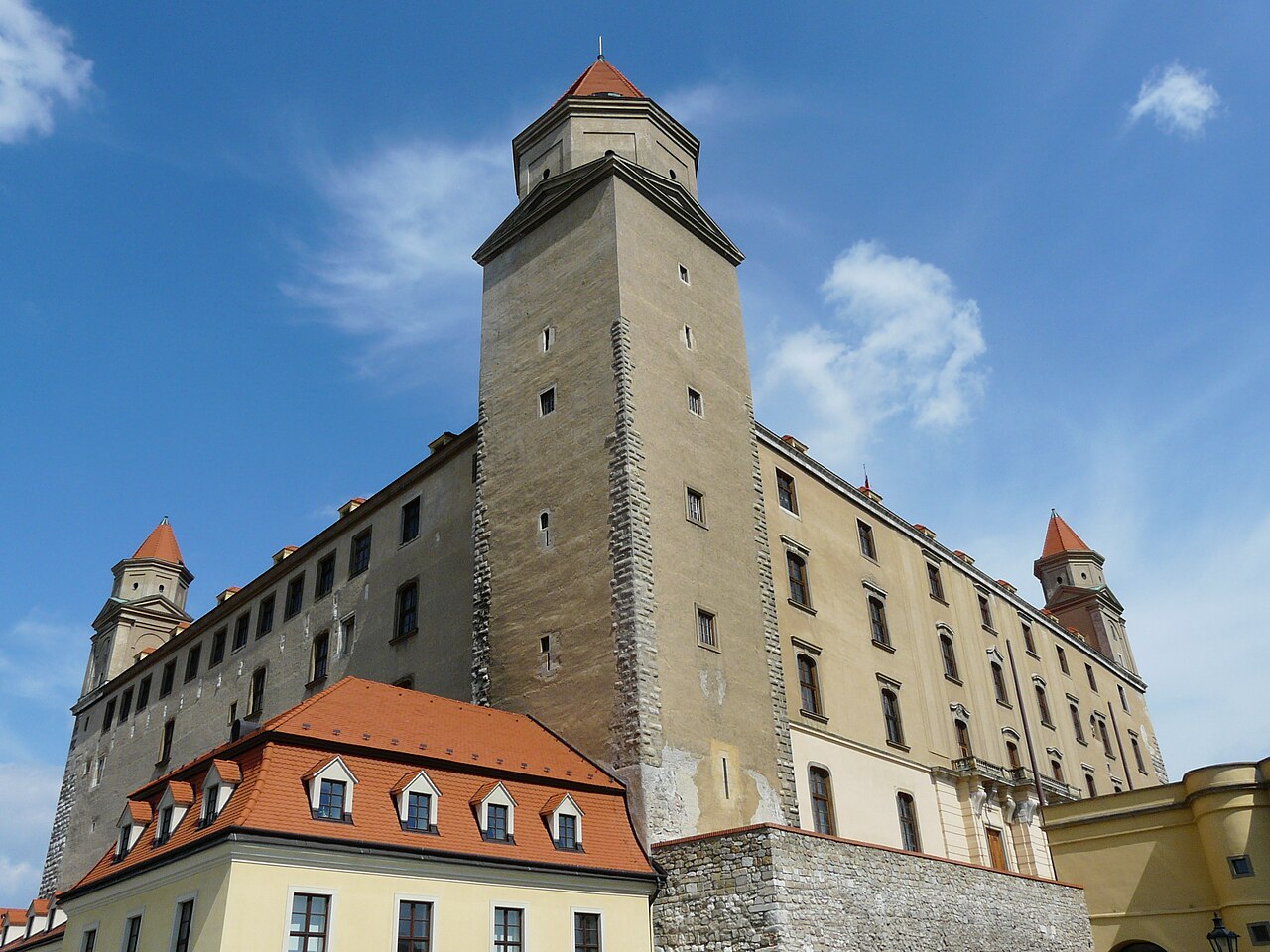
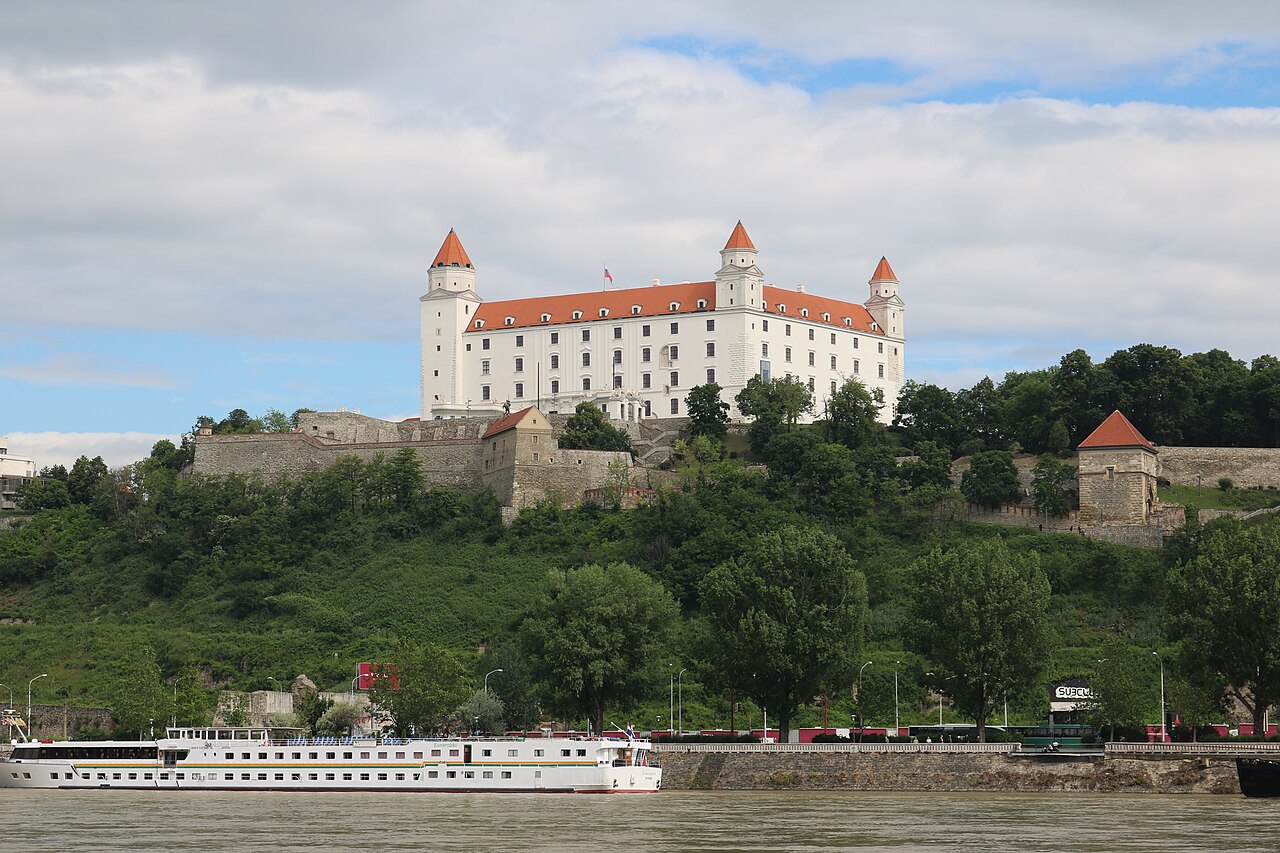
The first sight of Bratislava Castle is striking, a large white building crowning a hill above the Danube, its four corner towers giving it a distinctive and memorable silhouette. Visible from across the city and the river, it is the dominant landmark of the capital and an unmistakable symbol of Slovakia.
The castle’s commanding position, high above the river and the old town, reflects its long history as a fortress guarding a strategic crossing of the Danube. From its hilltop it surveys the city below and the surrounding landscape, a reminder of the military importance that shaped its early history.
The building itself, a large rectangular structure with towers at its corners, has a simple, powerful form that has become iconic. Its white walls, restored in modern times, gleam above the city, and the whole composition has an air of dignity and permanence befitting its role as a national symbol.
As you arrive, take in the castle’s commanding position and its distinctive form above the Danube. Understanding Bratislava Castle as both a fortress and a palace, a coronation seat and a national symbol, prepares you for the long and eventful history that this great building has to tell.
There is a reason the castle appears on so many images of Bratislava. Its commanding position and iconic form make it the defining symbol of the city, and the first sight of the white castle above the Danube is one that stays with every visitor to the Slovak capital.
Illuminated at night, the white castle glows above the dark river, a beautiful sight that has become one of the signature images of Bratislava after dark. By day or night, the castle dominates the scene and draws the eye, the unmistakable heart of the city.
A Strategic Site Above the River

The site of Bratislava Castle has been important since ancient times, a hilltop commanding a strategic crossing of the Danube at the meeting point of major routes. This position made it a natural place for a stronghold, and the hill has been fortified and occupied for thousands of years.
The Danube was one of the great highways of Europe, and the point where it could be crossed here made the site valuable to successive peoples and powers. Whoever held the castle controlled an important passage, and the hill changed hands many times over the long course of its history.
The commanding position also gave the castle its dramatic appearance, rising above the river and the city. The relationship between the castle, the Danube, and the old town below is central to the character of Bratislava, and the view from the castle over the river remains one of the great sights of the city.
Understanding the strategic importance of the site helps explain the long history of the castle. It was the natural strength of the hilltop above the river crossing that made this a place of power for millennia, from ancient times through the medieval and Habsburg eras to the present day.
The hill has been a place of power for an extraordinarily long time, its strategic value recognized by every people who held it. This continuity of occupation, from ancient fortifications to the modern castle, gives the site a depth of history matched by few other places in the region.
The meeting of routes at this point on the Danube made the site a crossroads of peoples and cultures over the centuries, adding to its historical richness. The castle has witnessed the passage of empires and the shifting of borders, a silent observer of the long history of central Europe.
Ancient and Medieval Origins

The history of the castle hill reaches back into antiquity, with evidence of settlement and fortification from ancient times. In the early medieval period it was an important center, associated with the early Slavic states of the region, and it continued to grow in importance through the Middle Ages.
Over the centuries a succession of fortifications rose on the hill, as the castle developed from an early stronghold into a substantial medieval fortress. Its importance grew with that of the kingdom it served, and it became a key royal castle guarding the frontier and the river crossing.
The medieval castle was repeatedly rebuilt and strengthened to meet the needs of its age, reflecting the turbulent history of the region. Its role as a frontier fortress and royal seat made it a place of considerable importance long before its transformation into a grand residence.
Understanding these deep origins is key to appreciating the castle. Bratislava Castle is not merely a palace of a single era but the latest form of a stronghold that has occupied this hill for a very long time, carrying layer upon layer of history from antiquity to the present.
Archaeological discoveries on the castle hill have revealed traces of its ancient past, from prehistoric settlement to Roman-era presence and the important early Slavic period. These layers of history, uncovered beneath the later castle, testify to the enduring importance of the site across the millennia.
The Coronation City of a Kingdom

For a long and important period, Bratislava, then known by other names, served as the capital and coronation city of the Kingdom of Hungary, and the castle was central to this role. When other parts of the kingdom were under threat, the city became the seat of government and the place where kings and queens were crowned.
This elevated status brought great importance to the city and its castle, which became associated with the monarchy and the ceremonies of state. The coronations held in the city were occasions of the highest significance, and the castle played its part in the life of the kingdom during this era.
The role as coronation city reflected the turbulent history of the region, when invasions and conflicts shifted the center of the kingdom to this more secure location on the Danube. For generations, the city and its castle stood at the heart of the kingdom’s political and ceremonial life.
Understanding this period is essential to appreciating the significance of the castle. During its time as a coronation seat, Bratislava Castle was at the center of the life of a great kingdom, a status that shaped its development and left a lasting mark on its history and prestige.
During this era, the city hosted the coronations of numerous kings and queens, grand ceremonies that drew the nobility of the realm to the Danube. The castle and the city basked in the prestige of this role, which placed them at the very heart of the kingdom’s life for generations.
The grand coronation processions wound through the streets of the city below the castle, a spectacle of royal pageantry that drew crowds and dignitaries from across the realm. The memory of these ceremonies remains a proud part of the city’s heritage, recalling an era when it stood at the center of a kingdom.
A Grand Residence Under Maria Theresa

The castle reached the height of its splendor in the eighteenth century, when it was transformed into a grand royal residence, especially associated with the great empress Maria Theresa. Under her, the castle was rebuilt and embellished as a magnificent palace, a setting for court life and a symbol of royal power.
The empress was a frequent and beloved presence, and the castle flourished as a center of courtly life during her reign. Grand apartments and reception rooms were created, and the castle became a residence worthy of one of the most powerful rulers of the age, filled with the splendor of the Habsburg court.
This era marked the castle’s transformation from fortress to palace, as the needs of defense gave way to the demands of grand residence and ceremony. The rebuilding gave the castle much of its present form and dignity, establishing it as a royal palace of the first rank.
Understanding this golden age helps explain the grandeur of the castle. The Bratislava Castle of today owes much to this period of royal splendor, when it was transformed into a magnificent residence and became a brilliant center of courtly life under one of the great rulers of European history.
The presence of the great empress and her court brought a brilliance to the castle that it had never known before, and the surrounding city flourished as a center of courtly life. This golden age left a deep impression on the history and identity of Bratislava, remembered as a high point in its story.
The empress’s attachment to the castle and the city reflected its importance in her realm, and her patronage brought lasting benefits to Bratislava. The era of her reign is remembered as a time of prosperity and cultural flourishing, with the castle at its heart as a symbol of royal favour.
The Castle of Four Towers
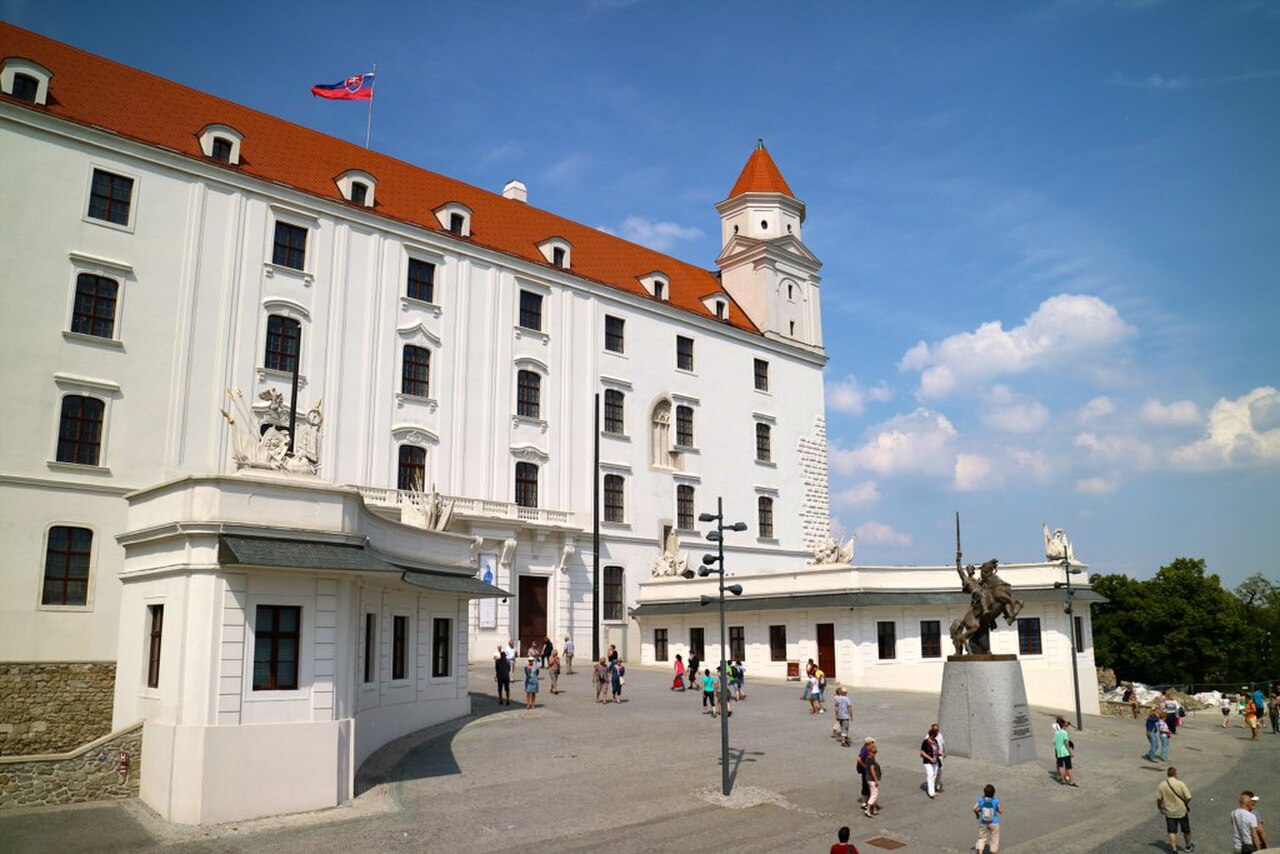
One of the most distinctive features of Bratislava Castle is its form, a large rectangular building with a tower at each corner, a shape that has led to its popular description as an upturned table. This simple, powerful form has become iconic, instantly recognizable as the symbol of the city.
The four-tower design gives the castle a strong and balanced appearance, dignified and imposing without being fussy. The towers frame the main block and give the building its characteristic silhouette, dominating the skyline of the city and the view from the river.
This distinctive form is the result of the castle’s long development, culminating in the grand rebuilding that gave it its present shape. The design combines the strength of a fortress with the dignity of a palace, perfectly suited to the castle’s dual role and its commanding position.
For visitors, the iconic four-tower form is one of the defining images of Bratislava, reproduced on countless postcards and photographs. It captures the character of the castle, strong, dignified, and unmistakable, a fitting symbol for the capital of Slovakia.
The simplicity of the form belies the long and complex history that produced it, the result of centuries of building, destruction, and reconstruction. That so distinctive a shape should have emerged from such a turbulent past is part of what makes the castle so compelling a symbol.
The affectionate nickname reflects the warmth with which the people of Bratislava regard their castle, a beloved symbol rather than a distant monument. Its familiar shape is woven into the identity of the city, instantly evoking the capital for Slovaks and visitors alike.
Crown, Treasury, and Royal Symbols
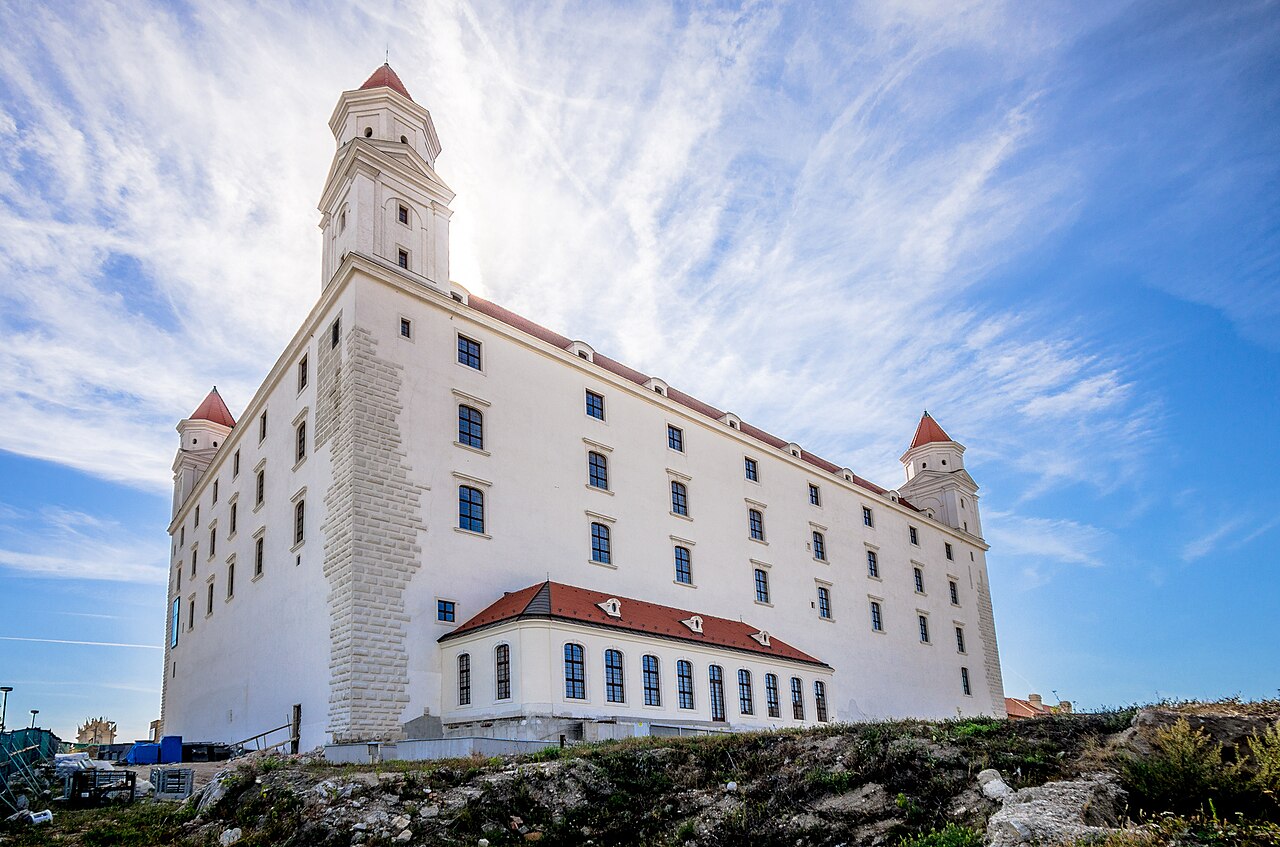
During its time at the heart of the kingdom, the castle was associated with the royal regalia and treasures, including a period when the crown and symbols of the monarchy were kept here for safekeeping. This role connected the castle to the deepest symbols of royal power and legitimacy.
The safekeeping of the regalia reflected the castle’s importance and security, making it a place of the highest trust. The presence of the crown and royal symbols underscored the castle’s central role in the life of the kingdom during its era as a coronation seat and royal residence.
A tower of the castle is traditionally associated with the keeping of the crown, a reminder of this important historical role. The connection to the royal regalia adds to the historical weight of the castle, linking it to the ceremonies and symbols that defined the monarchy.
For visitors, this aspect of the castle’s history deepens its significance, connecting it to the royal regalia and the ceremonies of state. It is a reminder that Bratislava Castle was not merely a residence but a place at the very heart of the kingdom’s identity and power.
The association of the castle with the crown and regalia connects it to the deepest symbols of legitimacy and continuity in the kingdom. In an age when such objects carried immense significance, their keeping here marked the castle as a place of the highest importance and trust.
The Great Fire and a Century as a Ruin

The castle’s long history took a disastrous turn in the early nineteenth century, when a great fire destroyed the grand palace, leaving it a burned-out shell. The catastrophe ended the castle’s era of splendor, and for more than a century it stood as a ruin above the city, a melancholy reminder of its former glory.
The fire gutted the magnificent residence that had flourished under the Habsburgs, and the ruined walls dominated the skyline as a stark silhouette for generations. The castle that had been a coronation seat and royal palace became an empty shell, its future uncertain.
For over a hundred years the ruin loomed over Bratislava, a powerful and somber presence. The sight of the four ruined towers became part of the city’s identity, even in decay, a reminder of the castle’s long and eventful history and of the disaster that had befallen it.
This long period as a ruin is a dramatic chapter in the castle’s story, a stark contrast to its earlier splendor. The eventual decision to rebuild it would restore the castle to the city, but the memory of its years as a ruin remains part of its remarkable history.
The cause of the fire and the long failure to rebuild reflected the changing fortunes of the city, which had lost its role as a coronation seat as the kingdom’s center shifted elsewhere. The ruined castle became a poignant symbol of faded glory, looming over the city for generations.
Paintings and photographs from the long period of ruin show the gaunt silhouette of the burned castle dominating the city, a haunting image that became part of Bratislava’s identity. The eventual reconstruction would transform this melancholy ruin back into a proud symbol.
A Twentieth-Century Reconstruction

In the twentieth century, the decision was made to rebuild the castle from its long-standing ruin, restoring the great landmark to the city. Over the following decades the castle was reconstructed, its walls and towers rebuilt, and its interiors recreated, bringing the building back to life after more than a century of decay.
The reconstruction returned the iconic silhouette to the skyline and gave the city back its great symbol. The rebuilt castle, with its white walls and four towers, once again dominated the hill above the Danube, restored to something of its former grandeur.
The rebuilding was an important act of national significance, reclaiming a symbol of the country’s history and identity. The restored castle became a source of pride and a focus of national life, its recovery from ruin mirroring the broader story of the nation.
Understanding this reconstruction helps explain the castle visitors see today. The gleaming white castle is largely a modern recreation of the historic building, raised from ruin to serve as a national symbol and a home for the country’s cultural institutions.
The reconstruction was carried out over many years and involved extensive research into the castle’s historic appearance. The result restored the beloved silhouette to the skyline and gave the nation back one of its most important symbols, a source of pride and identity.
The rebuilt castle has since undergone further renovation to refine its appearance and adapt it to its modern roles. These ongoing efforts reflect the continuing importance of the castle to the nation, which cares for it as a cherished symbol of its history and identity.
A Home for the Nations Collections

Today the restored castle houses parts of the Slovak National Museum, with exhibitions presenting the history and culture of the nation. The castle has thus taken on a new role as a center of culture and heritage, its grand spaces filled with collections that tell the story of the country and its people.
The museum collections allow visitors to explore the history of the region and the castle itself, from ancient times through the eras of kings and emperors to the modern nation. The castle serves as both a historic monument and a cultural institution, preserving and presenting the heritage of Slovakia.
This role as a home for the national collections gives the castle a living purpose, connecting its long history to the cultural life of the present. The grand halls that once hosted the court now welcome visitors to learn about the nation’s past, a fitting new chapter for the historic building.
For visitors, the museum adds greatly to the experience of the castle, offering collections and exhibitions to explore alongside the architecture and the views. It confirms the castle’s role as a center of national culture and a key destination for understanding the history of Slovakia.
The exhibitions range across the history and culture of the region, from archaeology and medieval history to the arts and the modern era. They make the castle a place of learning as well as a monument, offering visitors a rich introduction to the heritage of Slovakia.
The castle also hosts temporary exhibitions and cultural events, keeping it active as a living institution rather than a static monument. This vibrant cultural life connects the historic building to the present, ensuring that it remains a focus of national life.
The Baroque Garden and the Views
The castle is complemented by a recreated baroque garden, laid out in formal style on the terraces below the building, restoring an element of the grand residence of the Habsburg era. The garden provides a beautiful setting for the castle and a pleasant place to walk, with fine views over the city and river.
The baroque garden, with its geometric beds, paths, and ornamental features, recalls the formal gardens that accompanied the castle in its era of splendor. Its recreation has added to the beauty of the site and enhanced the experience of visiting, framing the castle in formal greenery.
From the castle and its terraces, visitors enjoy magnificent views over Bratislava, the Danube, and the surrounding landscape, extending in clear weather to neighboring countries. These panoramic views are among the great attractions of the castle, rewarding the climb to its hilltop position.
For visitors, the garden and the views are highlights of a visit, complementing the architecture and the museum. They restore something of the grandeur of the castle’s heyday and offer the pleasure of beautiful surroundings and sweeping panoramas over the capital and the great river.
On a clear day the views from the castle terraces extend across the Danube to the plains beyond, reaching toward neighbouring countries in a sweeping panorama. This vantage point, high above the city, is one of the great pleasures of a visit and a reminder of the castle’s strategic importance.
Bratislava Castle on Film

Because Bratislava Castle is defined by its commanding position and iconic form, a video walkthrough is a fine way to appreciate it. On film you can take in the white castle and its four towers above the Danube, explore the museum collections within, and enjoy the views over the city and river.
As you watch, notice the distinctive silhouette and the commanding position that make the castle the symbol of the city. Seeing the castle and its setting in motion conveys its dominance of the skyline and its relationship to the Danube and the old town below.
Video also helps convey the history of the castle, from its ancient origins through its royal splendor to its ruin and reconstruction. Following a camera through the castle and its grounds, you gain a vivid sense of why Bratislava Castle is the great landmark and symbol of the Slovak capital.
Visiting Bratislava Castle Today

Today Bratislava Castle is open to visitors, offering the chance to explore the restored building, the museum collections within, the baroque garden, and the magnificent views over the city and the Danube. As the great landmark and symbol of the capital, it is a highlight of any visit to Slovakia.
The castle stands on its hill above the old town, easily reached on foot or by road, and its commanding position makes it a natural focus of a visit to Bratislava. Its combination of history, architecture, museum collections, and views ensures a rewarding visit for a wide range of interests.
Because the castle houses museum exhibitions and the garden and terraces are open for exploration, it is worth allowing time to enjoy both the interior and the setting. The views alone reward the climb to the hilltop, especially on a clear day, and the museum offers insight into the nation’s history.
You will find Bratislava Castle on its hill above the Danube in the Slovak capital; see the map below to help plan your route: see the map below. Whether you come for the iconic white castle, the museum collections, the baroque garden, or the sweeping views over the city and river, Bratislava Castle offers a commanding and memorable experience at the heart of Slovakia.
For visitors to Bratislava, the castle is an essential destination, combining history, architecture, museum collections, and magnificent views. Its role as the symbol of the city and the nation makes it a meaningful as well as a beautiful place to visit, central to understanding the Slovak capital.
Allowing time to explore the museum, walk the baroque garden, and simply enjoy the views makes for a rewarding visit. The castle rewards an unhurried approach, and its position at the heart of the capital makes it easy to combine with the attractions of the old town below.
View the location on Google Maps
Palaces Nearby
If you are exploring the grand castles and palaces of Slovakia, these two pair naturally with a visit here:
You May Like
Konopiste the Bohemian Castle of a Doomed Archduke