Sarıgerme, located within the borders of Ortaca district of Muğla province, is a paradise newly discovered by our Turkish guests with its uniquely beautiful nature, beach and historical importance from past to present.
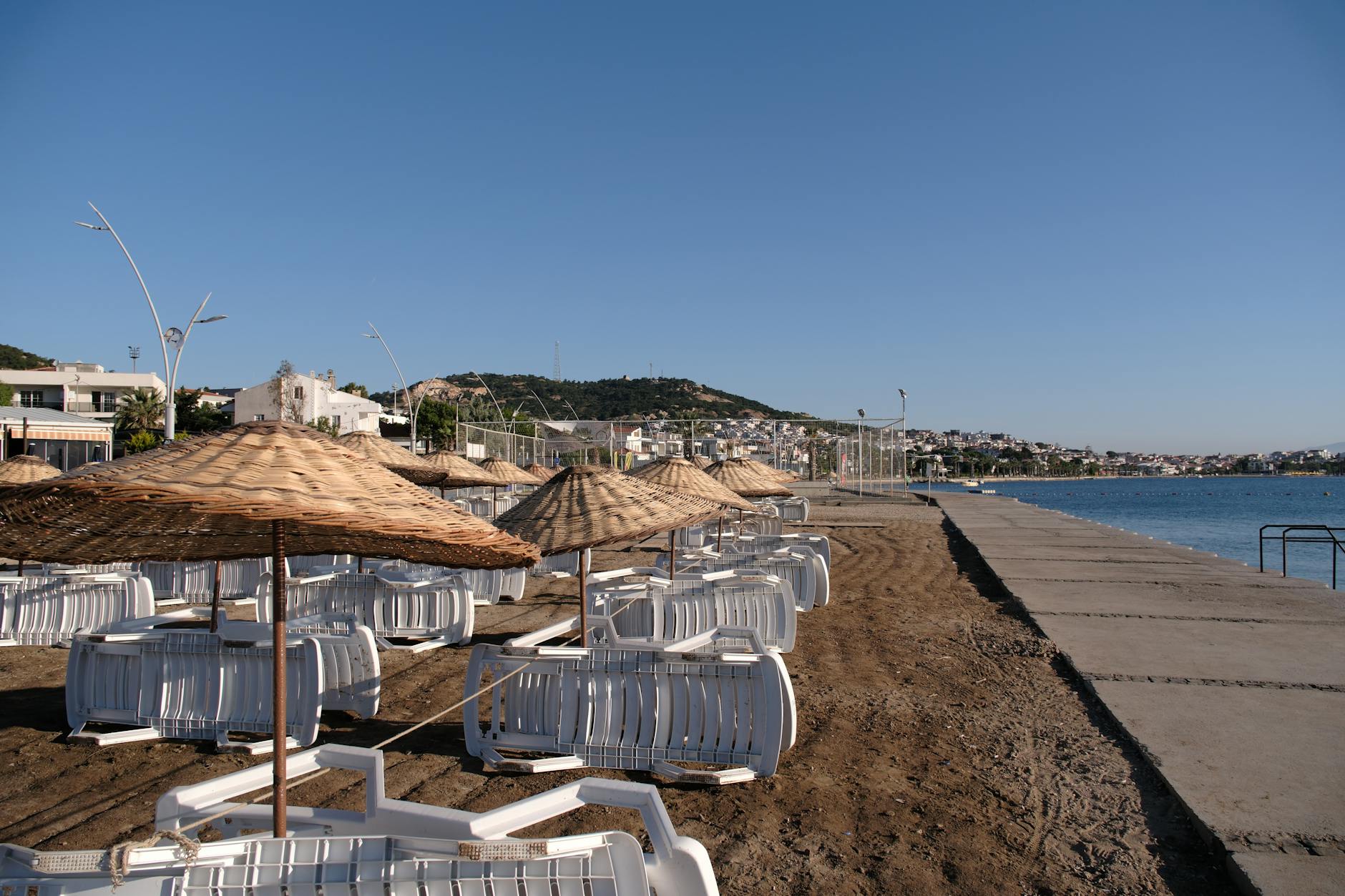
In Sarıgerme, where nine months of the year are sunny, you can swim in the blue flag sea for seven months of the year. You can get out of the crystal clear sea and sip your drink under the decades-old pine trees. The most beautiful feature of Sarigerme is that you do not encounter any concrete structures on its very fine, golden yellow beach. The forest suddenly embraces you, and you feel like you are reborn as its fresh air fills your lungs.
For an unforgettable holiday, you can stay in Sarıgerme’s 5-star hotels or other accommodation facilities and explore the region with local travel agencies. You can eat local flavors and delicious dishes to suit every palate at the restaurants on the main street.
No one will disturb you while walking around Sarigerme. The tradesmen are friendly and helpful. In Sarıgerme, there are many shops selling textile products, souvenir shops, bag shops, markets where you can find cheap and quality products, bars, discos, leather shops, tailors, taxi cooperatives and a public (Touristic) market that is held every Sunday.
The first tourism investment in Sarıgerme appears to be İberotel Sarıgerme Park. Over the years, the importance of Sarıgerme has increased, and its unique beach has attracted the attention of all major local and foreign investors. Although Sarıgerme is a village, it has many 4 and 5 star accommodation facilities. In addition, 2 and 3 star hotels, boutique hotels, apartments and hostels also provide services.
You can find detailed information about hotels.
You can find more information about Sarıgerme in our menu on the left.
Places to Visit
Four crops are harvested a year in Sarıgerme, which is sunny for nine months of the year. The temperature does not fall below 7 degrees in summer and winter, and the orange flowers that bloom in February and March spread perfume to the environment. There are two bays on the left and right of Sarıgerme, which cannot be explained.
Sarsıla Bay and Aşı Bay… The “Station building”, which was intended as a hunting lodge by the Egyptian Khedive Abbas Pasha, is now used as a state breeding farm and brings joy to those who come with its funny story and natural environment.
The sea connection of the Dalaman Stream was closed so that the logs carried on it did not escape into the sea. This process is called “Stretching”. “Sarisu”, one of the branches of Dalaman Stream, is the stream of the region.
Here, “Sarı” and “Germe” were combined to form the golden sandy name Sarıgerme, which developed and became more beautiful in 4 years. The main settlement is Osmaniye Village, located 850 meters from the coast. In Sarıgerme, which is sunny 9 months a year, crops are harvested 4 times a year. The temperature does not fall below +7 degrees, and the environment turns into a perfume warehouse with orange flowers blooming in February and March. After the hot rain at the end of the season, the pine trees spread around. I can’t get enough of inhaling the scent of its trees. If we start drawing Sarıgerme in Muğla’s Ortaca district with sentences, it is 7 km away from the beach.
The beach, whether shallow or wide, continues into the sea. Opposite “Babaada” is not far.
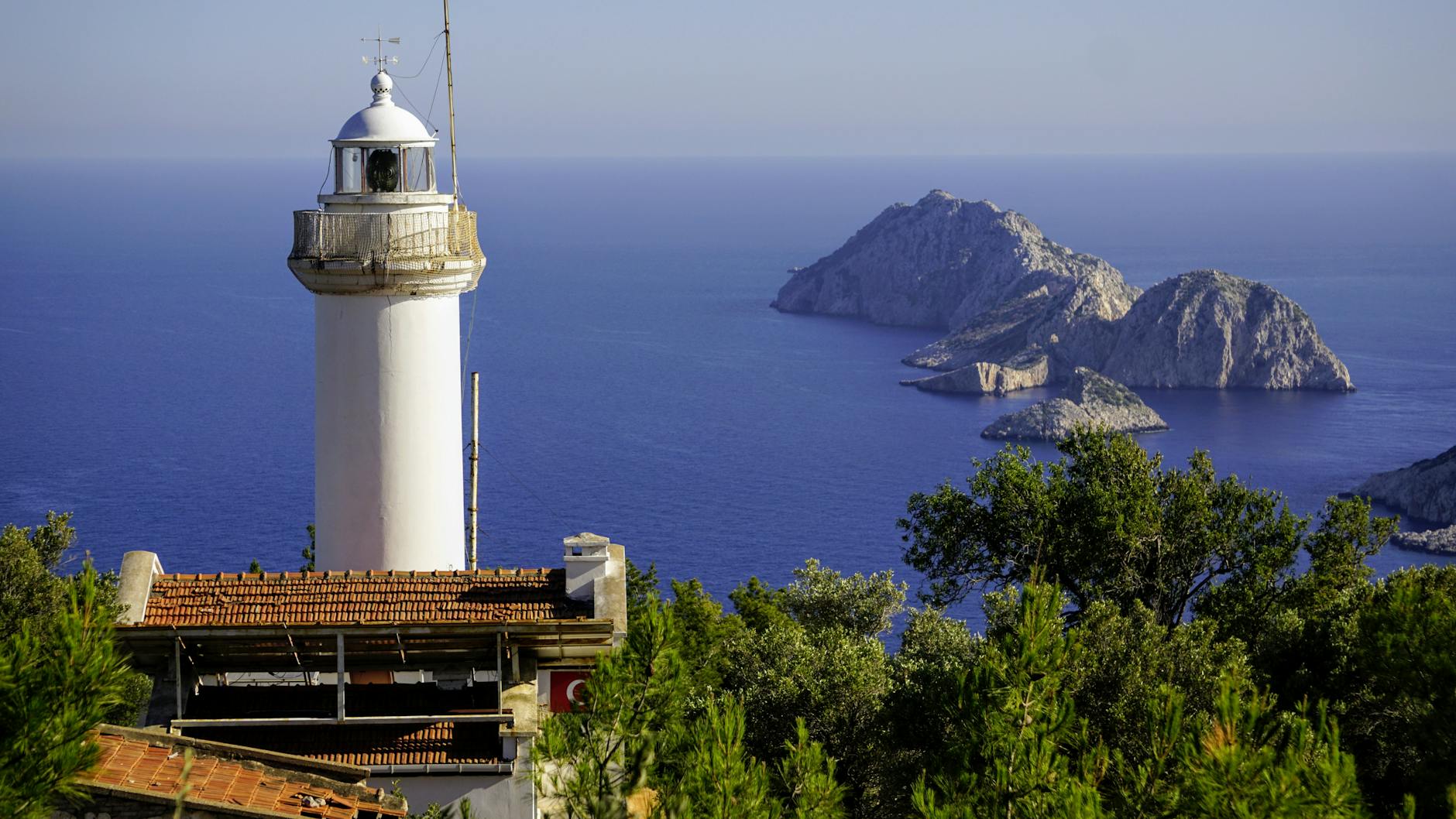
It gives great pleasure to climb to the top and watch the waves rushing to the Sarıgerme beach, sit under the trees with roofs from their branches close to the ground, and listen to and smell the filtered wind coming from the sea. While Babaada protects the coast like a breakwater, water circulation occurs around it. The different salt concentrations are remarkable at this meeting point of the Aegean and the Mediterranean.
The Sarıgerme side of Babaada is also a shelter for yachts. The back is a diver’s paradise with magnificent rocks.
You can walk for kilometers along the Sarıgerme coastline in water a few inches deep. The sand on the water floor, which does not exceed your ankles and knees, gives a natural massage to your feet, strengthens your leg muscles and takes away all the electricity and stress from the body. The shallow sea is considered ideal for non-swimmers and children.
The area between Sarıgerme beach, where I came many years ago, the İber Hotel with the ancient city of Pisilis in its garden, and the Magic Life Hotels at the far end of the beach, was an area that looked like a derelict garbage dump. At that time, saying “Go to this beach” actually risked a backlash from readers.
However, in 1995, people with different appearances belonging to various parties of Sarıgerme focused on a single purpose and founded “SARGED” (Sarıgerme Environmental Education Association) under the chairmanship of Cengiz İlhan. The association, which was shown as a pilot project by the Ministry of Tourism, started to organize the beach and provide services such as buffets, showers, toilets, sun loungers, umbrellas and cabins to the entrance fee area, as well as rickshaw connections to Osmaniye Village.
In this way, you can find the same services that luxury hotels provide to tourists on this daily-use beach.
WHERE TO SEE, WHAT TO DO? Sarigerme coast and Osmaniye Village are located 19 km away from Ortaca. In Sarıgerme, with its kilometers-long beach, you can open the sea season earlier than anywhere else without getting cold, as the early warming water of the shallow sea is carried by the wavelets hitting the shore.
Those who walk on the coarse-grained beach or in shallow water, which acts as a foot massage, can get rid of the stress and electricity accumulated on them and strengthen their leg and stomach muscles, while they can tan without getting overwhelmed and sweating in a short time with the effect of the constant breeze and sun. You can go to the summit of Baba Island, which provides air corridors and water circulation to the region across the beach, and relax by watching the Sarıgerme beach and blue cruise boats with the sound of the wind that is as impressive as the sound of water on the human body. You can also relax by watching the filtered sea on the sea. The clean, iodine-scented air gives you vitality. Babaada shores also allow you to do underwater diving, surfing, sailing, parasailing, banana, canoe and water skiing.
Places to see around: Abbas Pasha Mosque, the historical building in Dalaman, which was ordered by the Egyptian Governor Abbas Pasha as a Hunter’s Mansion and was mistakenly built as a train station to be built in Egypt as a result of the confusion of projects, and is now used as a State Breeding Farm, can be visited. Aşı Bay, one of the neighboring bays close to Sarıgerme, and Sarsıla Bay, as well as Sulfur lakes, are worth seeing.
Around Ortaca, Sandras Mountains and Yuvarlakçay are some of the other alternatives.
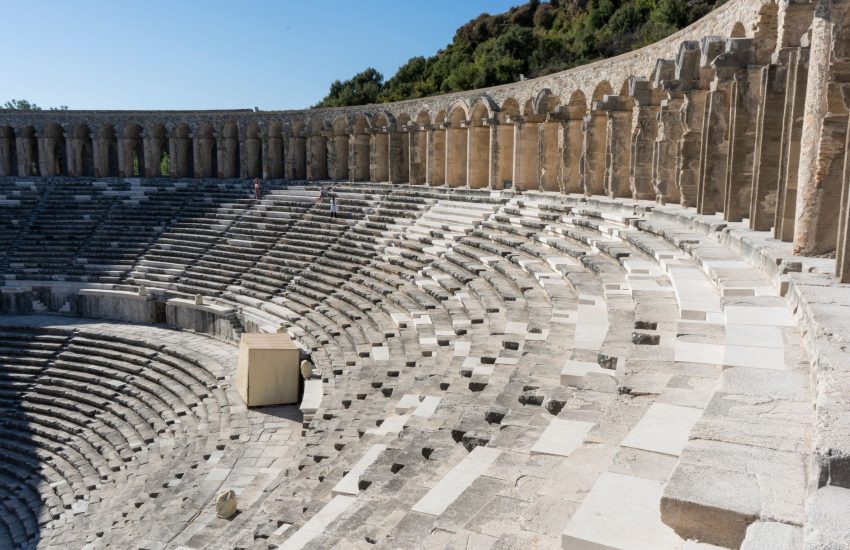
Ancient City PisilisThe monuments in Iberotel Sarıgerme Park are most likely the ruins of the ancient city Pisilis. Geographer Strabo (B.C.) mentioned the small settlement on the Carian coast at the end of the century. This bay, which was close to the mouth of the river called Indos at that time (today: Dalaman Stream) and protected from the wind, formed a safe harbor. During the time of the Roman king Julian (AD.
361-363) only one article about Pisilis has survived to the present day. The reports that can still be seen are divided into the walled city center (4th-6th century AD), a few large buildings (monumental tombs dating back to the 1st-3rd century AD) and the cemetery section (1st-3rd century AD). In the city center, which is located on a rocky hill, there are narrow avenues and alleys, close to each other, narrow and generally two-storey houses.
There are stables on the ground floors and living rooms on the upper floors. Some of them had external stairs. The outer walls, 50-70 cm thick, are made of stone, broken bricks and horasans (Roman concrete = Opus Caementitium), and the roofs are made of wooden planks. (Planks can still be seen frequently) and were built from timber. Drinking water was transferred from the mountains via an aqueduct or rainwater was collected in underground cisterns.
The height of the city walls was approximately 10 m and their thickness was 3 m, and they were built of Roman concrete.
(2 outer shells are made of stone and khorasan like the inside of the wall) Approximately a quarter of the city is covered with migratory dunes coming from the southeast. Outside the city walls, in the section where the hotel bungalows are located, there is the imposing stone mass-foundation of a monumental tomb (Tomb temple”, perhaps the family tomb of a rich Roman, most likely from the time of the kingdom and the remains of a wall (presumably from the new Romans) to the east of the restaurant. The remains of the triple basilica are located to the west of the western wall and the “Great Nischen” – “Basilica” ruins are located to the north of the north wall.
The ruins of the cemetery (presumably the necropolis of the time of the kingdom) can be seen on the hill southeast of the hotel bungalows, with barrel-vaulted houses and a large hall in the rocky terrain. There are also ruins of a Roman cemetery on the Baba island in front of the beach. (The family cemetery of a rich merchant?) The square-shaped mausoleum contains a cell and a pyramid-shaped tile roof.
You May Like
Amasya Hotel Pension Accommodations